Top News

Top news of today about travel

Trump says US will ‘run’ Venezuela after Nicolas Maduro seized | Donald Trump News

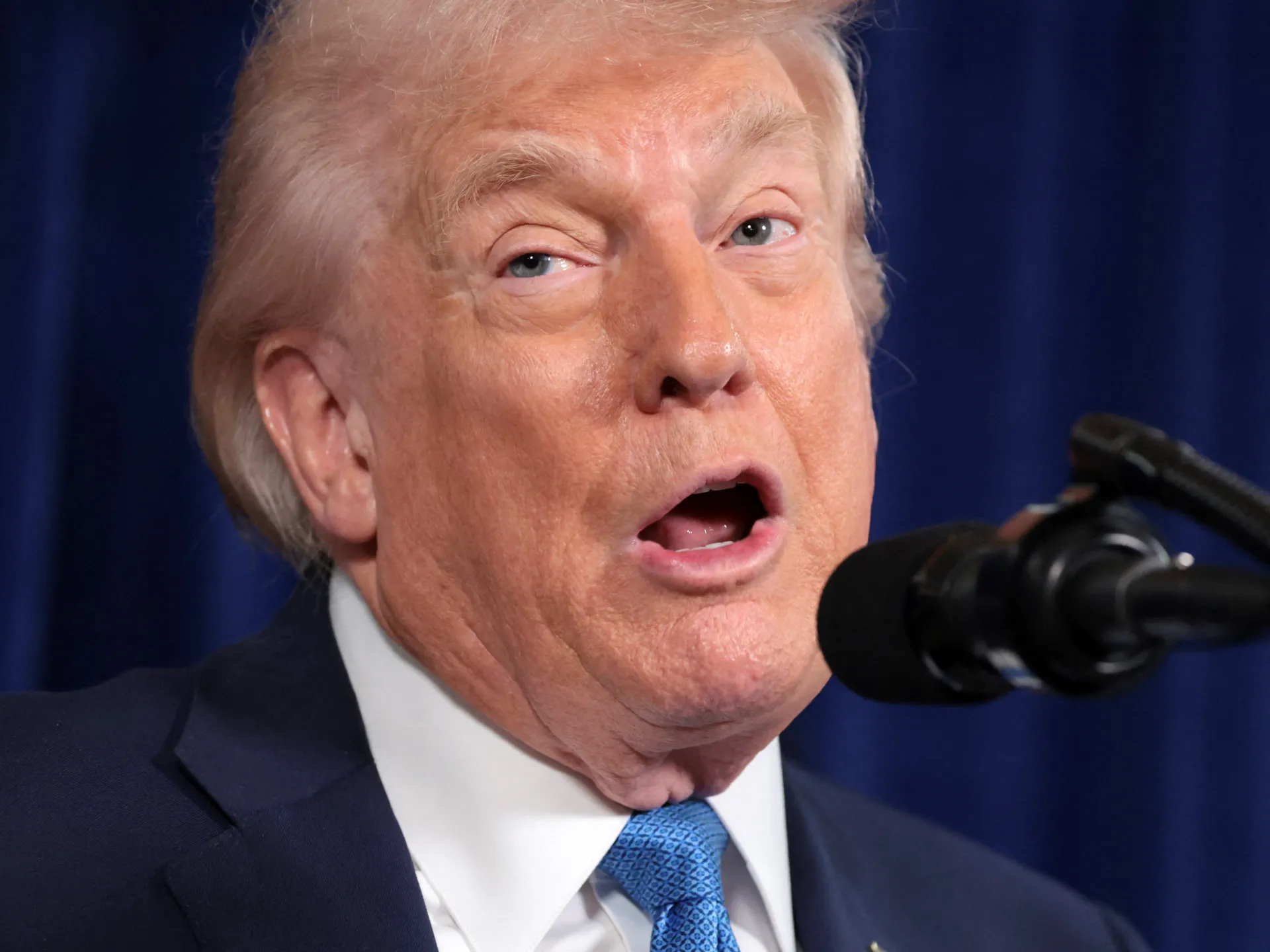
United States President Donald Trump has said that Washington will “run” Venezuela until a political transition can take place, hours after US forces bombed the South American country and “captured” its president, Nicolas Maduro.

Speaking during a news conference on Saturday, Trump said the US would “run the country until such time as we can do a safe, proper and judicious transition”.

Recommended Stories

list of 3 itemsend of list

“We don’t want to be involved with having somebody else get in, and we have the same situation that we had for the last long period of years,” he said.

The Trump administration launched attacks on Venezuela’s capital, Caracas, and seized Maduro and his wife in the early hours of Saturday.

A plane carrying the Venezuelan leader landed in New York state on Saturday evening, according to US media.

Footage broadcast by CNN, Fox News and MS Now showed US officials escorting a person they identified as Maduro off a plane at the Stewart international airport, about 97 kilometres (60 miles) northwest of New York City.

Maduro’s capture took place after a months-long US pressure campaign against his government, which included US seizures of oil tankers off the Venezuelan coast, as well as deadly attacks on alleged drug-smuggling boats in the Caribbean. The attacks were widely denounced as extrajudicial killings.

Washington had accused the Venezuelan leader, who has been in power since 2013, of having ties to drug cartels. Maduro had rejected the claim, saying the US was working to depose him and take control of Venezuela’s vast oil reserves.

During Saturday’s news conference, Trump said that “very large United States oil companies” would move into Venezuela to “fix the badly broken… oil infrastructure and start making money for the country”.

He added that his administration’s actions “will make the people of Venezuela rich, independent and safe”.

The Trump administration has defended Maduro’s “capture, saying the left-wing leader faced drug-related charges in the US.

These charges include “narco-terrorism conspiracy, cocaine importation conspiracy, possession of machine guns and destructive devices, and conspiracy to possess machine guns and destructive devices against the United States”, US Attorney General Pam Bondi said.

“They will soon face the full wrath of American justice on American soil in American courts,” she added in a post on X.

A Justice Department official told the Reuters news agency that Maduro is expected to make an initial appearance in Manhattan federal court on Monday.

‘Illegal abduction’

But legal experts, world leaders and Democratic Party lawmakers in the US have condemned the administration’s actions as a violation of international law.

“Attacking countries, in flagrant violation of international law, is the first step towards a world of violence, chaos, and instability, where the law of the strongest prevails over multilateralism,” Brazilian President Luiz Inacio Lula da Silva wrote on X.

Ben Saul, the United Nations special rapporteur on human rights and counterterrorism, slammed what he called Washington’s “illegal abduction” of Maduro. “I condemn the US’ illegal aggression against Venezuela,” Saul wrote on social media.

A spokesperson for UN chief Antonio Guterres said he was “deeply alarmed” by the situation, describing the US’s actions as setting “a dangerous precedent”.

“The Secretary-General continues to emphasize the importance of full respect – by all – of international law, including the UN Charter. He’s deeply concerned that the rules of international law have not been respected,” Guterres’s office said in a statement.

Earlier on Saturday, Venezuela’s defence minister released a defiant statement in response to the US attacks, urging people to remain united.

“We will not negotiate; we will not give up,” Vladimir Padrino Lopez said, stressing that Venezuela’s independence is not up for negotiation. “We must maintain calm and [be] united in order to prevail in these dire moments.”

Uncertainty prevails

It remains unclear how exactly the US plans to “run” Venezuela, and how long the purported transitional period will last.

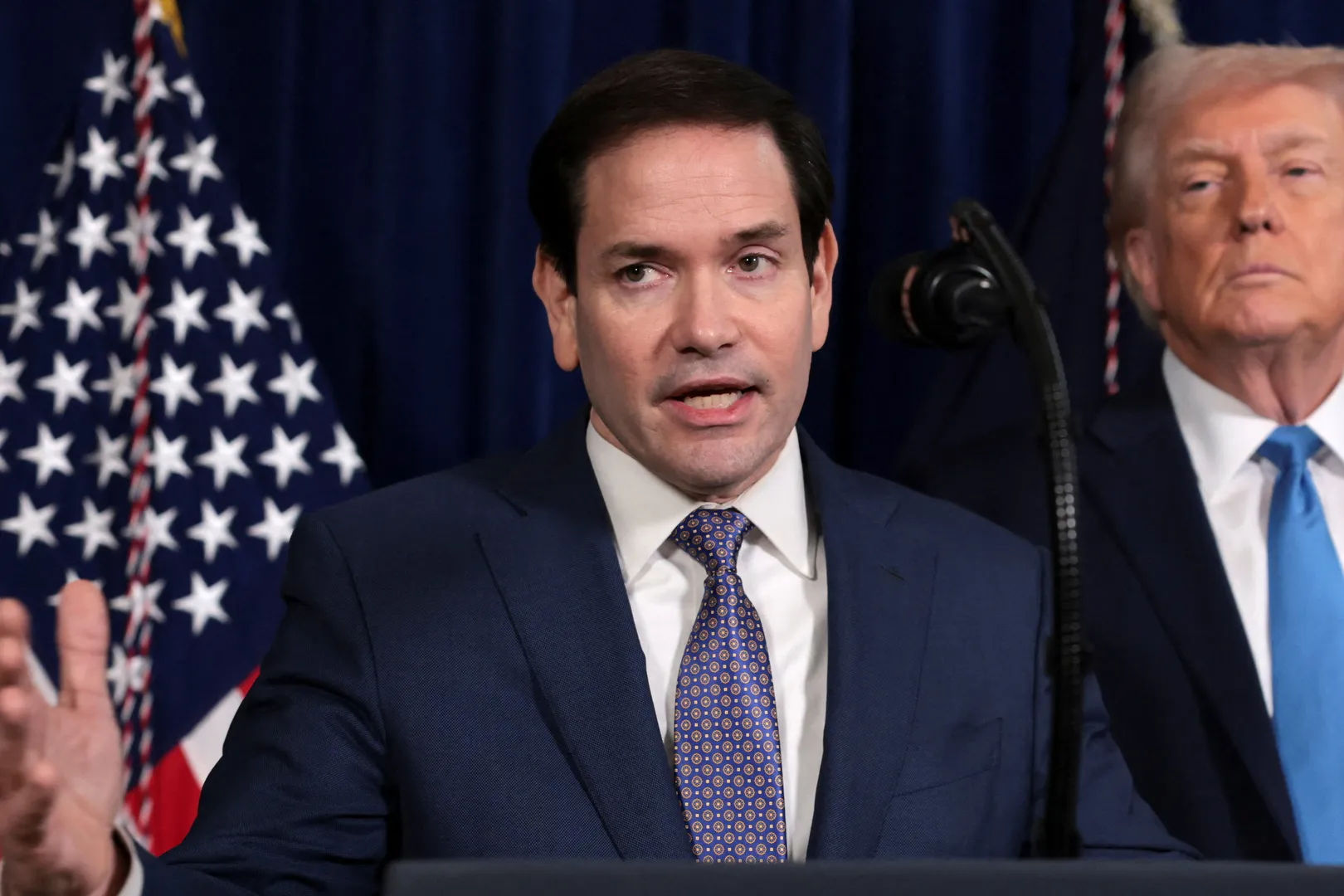
During Saturday’s news conference, Trump said that US Secretary of State Marco Rubio had spoken with Venezuelan Vice President Delcy Rodriguez.

“She was sworn in as president just a little while ago,” Trump told reporters. “She had a long conversation with [Rubio], and she said, ‘We’ll do whatever you need’. I think she was quite gracious, but she really doesn’t have a choice.”

Rodriguez appeared to contradict that in a news conference in Caracas later in the day.

“We demand the immediate release of President Nicolas Maduro and his wife. The only president of Venezuela is President Nicolas Maduro,” she said.

“We are ready to defend Venezuela. We are ready to defend our natural resources, which should be for national development,” she added.

Al Jazeera’s Latin America editor Lucia Newman, reporting from Chile, said that, if Rodriguez is “on board” with the US plan for Venezuela, as Trump and Rubio have suggested, “she certainly didn’t sound like it” during her address.

“She sounded like her typical, fiery self, very much on the side of… Maduro, demanding that he be released and saying that Venezuela would not be a colony of the United States,” Newman said.

The events of the day have brought “a rollercoaster of emotions” to “Venezuelans both inside and outside of the country”, said Caracas-based journalist Sissi de Flaviis.

“When we first heard that Maduro was taken out of the country, there was a mix of reactions,” she said. “A lot of people couldn’t believe it. Other people were pretty much celebrating. Other people were kind of on standby, waiting.”

After Trump’s news conference announcing US plans to run Venezuela, “there’s been a shock”, de Flaviis added.

“People are a bit concerned about what this will actually mean for us, what this will mean for the government and who is going to lead us in the next few days, months and years.”

Meanwhile, Harlan Ullman, a former US naval officer, told Al Jazeera that “the notion of America taking over Venezuela is going to explode in our faces”.

“When Trump says, ‘We’re going to run the country’: We’re not capable of running America, how are we going to be able to run Venezuela?” Ullman said.

“I do not believe that we have a plan for dealing with Venezuela,” he added. “A country is extraordinarily complex. We lack the knowledge, understanding and all the logistics to do this.”
Source link

US Republicans back Trump on Venezuela amid faint MAGA dissent | US-Venezuela Tensions News

Since coming down the escalator in 2015 to announce his first presidential run, Donald Trump has presented himself as a break from the traditional hawkish foreign policy in the United States.

The US president has even criticised some of his political rivals as “warmongers” and “war hawks”.

Recommended Stories

list of 3 itemsend of list

But Trump’s move to abduct Venezuelan President Nicolas Maduro and announce that the US will “run” the Latin American country has drawn comparisons with the regime change wars that he built a political career rejecting.

Some critics from Trump’s Make America Great Again (MAGA) movement, who backed his message of focusing on the country’s own issues instead of conflicts abroad, are criticising Washington’s march to war with Venezuela.

Still, Trump’s grip on Republican politics appears to remain firm, with most legislators from the party praising Trump’s actions.

“To President Trump and his team, you should take great pride in setting in motion the liberation of Venezuela,” Senator Lindsey Graham wrote in a social media post.

“As I have often said, it is in America’s national security interest to deal with the drug caliphate in our backyard, the centrepiece of which is Venezuela.”

Graham’s reference to a “drug caliphate” seems to play on Islamophobic tropes and promote the push to liken the US attacks on alleged drug traffickers in Latin America to the so-called “war on terror”.

The US senator heaped praise on the winner of the FIFA Peace Prize – handed to Trump by the association’s chief, Gianni Infantino, in December – and called him “the GOAT of the American presidency”, which stands for “the greatest of all time”.

Muted criticism

While it was expected that Graham and other foreign policy hawks in Trump’s orbit would back the moves against Venezuela, even some of the Republican sceptics of foreign interventions cheered the abduction of Maduro.

Former Congressman Matt Gaetz, one of the most vocal critics of hawkish foreign policy on the right, poked fun at the “capture” of the Venezuelan president.

“Maduro is gonna hate CECOT,” he wrote on X, referring to the notorious prison in El Salvador where the Trump administration sent hundreds of suspected gang members without due process.

Libertarian Senator Rand Paul, who has been a leading voice in decrying Congress’s war-making power, only expressed muted disapproval of Trump’s failure to seek lawmakers’ authorisation for military action in Venezuela.

“Time will tell if regime change in Venezuela is successful without significant monetary or human cost,” he wrote in a lengthy statement that mostly argued against bringing “socialism” to the US.

“Best though, not to forget, that our founders limited the executive’s power to go to war without Congressional authorisation for a reason – to limit the horror of war and limit war to acts of defence. Let’s hope those precepts of peace are not forgotten in our justified relief that Maduro is gone and the Venezuelan people will have a second chance.”

Early on Saturday morning, Republican Senator Mike Lee questioned the legality of the attack. “I look forward to learning what, if anything, might constitutionally justify this action in the absence of a declaration of war or authorisation for the use of military force,” he wrote on X.

Lee later said that Secretary of State Marco Rubio told him that US troops were executing a legal arrest warrant against Maduro.

“This action likely falls within the president’s inherent authority under Article II of the Constitution to protect US personnel from an actual or imminent attack,” the senator said.

Dissent

Republican Congresswoman Marjorie Taylor Greene was one of the few dissenting voices.

“Americans’ disgust with our own government’s never-ending military aggression and support of foreign wars is justified because we are forced to pay for it and both parties, Republicans and Democrats, always keep the Washington military machine funded and going,”  Greene wrote on X.

Greene, a former Trump ally who fell out with the US president and is leaving Congress next week, rejected the argument that Trump ordered Maduro’s “capture” because of the Venezuelan president’s alleged involvement in the drug trade.

She noted that Venezuela is not a major exporter of fentanyl, the leading cause of overdose deaths in the US.

She also underscored that, last month, Trump pardoned former Honduran President Juan Orlando Hernandez, a convicted drug trafficker who was serving a 45-year sentence in a US jail.

“Regime change, funding foreign wars, and American’s [sic] tax dollars being consistently funneled to foreign causes, foreigners both home and abroad, and foreign governments while Americans are consistently facing increasing cost of living, housing, healthcare, and learn about scams and fraud of their tax dollars is what has most Americans enraged,” Greene said.

Congressman Tomas Massie, another Republican, shared a speech he delivered in the House of Representatives earlier this month, warning that attacking Venezuela is about “oil and regime change”.

“Are we prepared to receive swarms of the 25 million Venezuelans, who will likely become refugees, and billions in American treasure that will be used to destroy and inevitably rebuild that nation? Do we want a miniature Afghanistan in the Western Hemisphere?” Massie said in the remarks.

“If that cost is acceptable to this Congress, then we should vote on it as a voice of the people and in accordance with our Constitution.”

While Massie and Greene are outliers in their party, Trump’s risky moves in Venezuela were a success in the short term: Maduro is in US custody at a minimal cost to Washington.

Similarly, few Republicans opposed the US war in Iraq when then-President George W Bush stood under the “mission accomplished” sign on the aircraft carrier USS Abraham Lincoln after toppling Iraq’s leader, Saddam Hussein, in 2003.

But there is now a near consensus across the political spectrum that the Iraq invasion was a geopolitical disaster.

The fog of war continues to hang over Venezuela, and it is unclear who is in charge of the country, or how Trump will “run” it.

The US president has not ruled out deploying “boots on the ground” to Venezuela, raising the prospect of a US occupation and the possibility of another Vietnam, Iraq or Afghanistan.

“Do we truly believe that Nicolas Maduro will be replaced by a modern-day George Washington? How did that work out in… Libya, Iraq or Syria?” Massie warned in his Congress speech.

“Previous presidents told us to go to war over WMDs, weapons of mass destruction, that did not exist. Now, it’s the same playbook, except we’re told that drugs are the WMDs.”
Source link

Wisconsin judge Hannah Dugan resigns after ICE obstruction conviction

Jan. 3 (UPI) — Former Milwaukee County (Wisc.) Judge Hannah Dugan resigned on Saturday following her federal felony conviction for obstruction of law enforcement in April.

Dugan, 66, submitted her resignation letter to Wisconsin Gov. Tony Evers on Saturday and said it is effective immediately.

“Behind the bench, I have presided over thousands and thousands of cases — with a commitment to treat all persons with dignity and respect, to act justly, deliberatively and consistently, and to maintain a courtroom with the decorum and safety the public deserves,” Dugan said in the resignation letter.

She said that she is the “subject of unprecedented federal legal proceedings” that “present immense and complex challenges that threaten the independence of our judiciary.”

A federal jury found her guilty of obstruction last month for her effort to help an “undocumented immigrant” from Mexico elude Immigration and Customs Enforcement agents when they arrived at the county courthouse to arrest him.

Dugan is appealing her conviction, but she is resigning amid a potential impeachment effort by Wisconsin Assembly Republicans.

“The Wisconsin citizens that I cherish deserve to start the year with a judge on the bench in Milwaukee County Branch 31 rather than have the fate of that court rest in a partisan fight in the state legislature,” she told Evers.

Dugan served on the bench for nine years, and Evers’ spokesperson, Britt Cudaback said the governor acknowledged receiving the letter of resignation on Saturday and won’t delay in filling the vacant bench seat.

Source link

Ten-man Mali beat Tunisia on penalties to book AFCON quarterfinal place | Football News

Mali win penalty shootout after a 1-1 last-16 draw to set up Africa Cup ‍of Nations quarterfinal with Senegal.

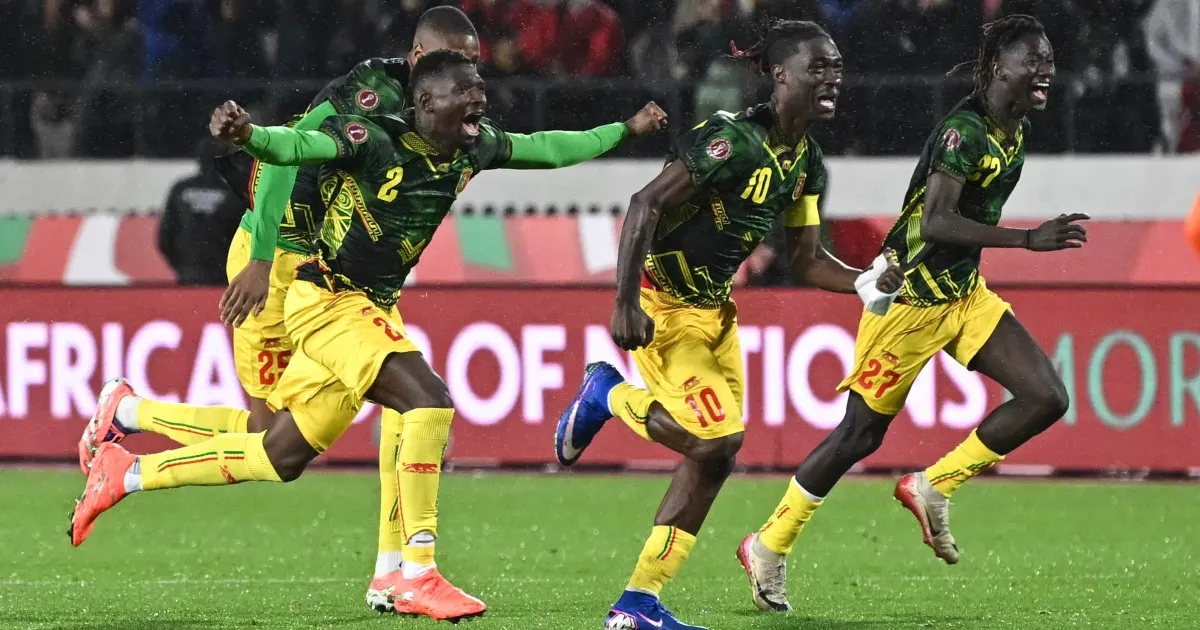
El Bilal Toure scored the winning spot-kick as a 10-man Mali beat Tunisia 3-2 on penalties to reach the Africa Cup of Nations quarterfinals after their last-16 tie had finished 1-1 at the end of extra time.

It looked as if Tunisia had got the job done on Saturday against a Mali side forced to play most of the game a man down when substitute Firas Chaouat headed the Carthage Eagles in front in the 88th minute.

Recommended Stories

list of 4 itemsend of list

Mali had defender Woyo Coulibaly sent off in the 26th minute at the Mohammed V Stadium in Casablanca, but earned a reprieve when they were awarded a stoppage-time penalty.

Lassine Sinayoko converted from the spot to take the tie to extra time and, eventually, on to the decisive shootout.

Captain Yves Bissouma, the Tottenham Hotspur midfielder, blazed Mali’s first kick over the bar, but Ali Abdi then missed for Tunisia before Eagles goalkeeper Djigui Diarra saved two further penalties and Toure won it.

Tom Saintfiet’s Mali advanced to a quarterfinal next Friday in Tangier against West African neighbours Senegal, after the 2022 champions came from behind to beat Sudan 3-1 earlier.

Mali have never won the Cup of Nations, and their prospects here were not helped when right-back Coulibaly, currently based in Italy’s Serie A with Sassuolo, was shown a straight red card for raking his studs down the back of Hannibal Mejbri’s calf.

Yet, the game remained goalless and extra time was looming when Tunisia finally made their numerical superiority count as Elias Saad flighted a ball into the box and Club Africain striker Chaouat stole a march on his marker to head home.

That goal was celebrated by the majority of the 41,982 crowd in Morocco’s largest city, with many locals choosing to give their backing to their fellow North Africans.

And yet, a tie that appeared to be over took a dramatic twist in injury time, with South African referee Abongile Tom pointing to the spot when the ball struck the arm of Tunisia defender Yassine Meriah inside the area.

Auxerre forward Sinayoko kept his cool through a long delay as the official consulted with the VAR team before converting the penalty, with the match in the 96th minute.

Tunisia toiled to create chances in extra time as heavy rain fell. The conditions forced many spectators in the largely uncovered stadium to abandon their seats.

Chaouat had the ball in the net again at the start of the second period of extra time, but was this time denied by the offside flag.

A penalty shootout appeared inevitable, and so it transpired, with Bissouma and Nene Dorgeles failing from the spot for Mali.

However, Abdi’s miss and Diarra’s saves from Elias Achouri and Mohamed Ali Ben Romdhane allowed Mali to win it, when Toure, who had failed to score a penalty in the same stadium against Zambia in the group stage, stepped up to score.

Source link

Prosecutors unseal narco-terrorism indictment against Maduros and others

Venezuelan President Nicolas Maduro, right, and Venezuelan first lady Cilia Flores, left, are accused of narco-trafficking and related crimes in a federal indictment unsealed Saturday in the U.S. District Court for Southern New York. Photo by Miguel Gutierrez/EPA-EFE

Jan. 3 (UPI) — Venezuelan President Nicolas Maduro and his wife, Cilia Flores, are indicted on federal charges accusing them of narco-terrorism conspiracy and three related charges.

They also are accused of cocaine importation conspiracy, possession of machine guns and destructive devices, and conspiracy to possess machine guns and destructive devices in a federal grand jury indictment in the U.S. District Court for Southern New York.

“For over 25 years, leaders of Venezuela have abused their positions of public trust and corrupted once-legitimate institutions to import tons of cocaine into the United States,” said Jay Clayton, U.S. Attorney for Southern New York, in the federal indictment.

Maduro “is at the forefront of that corruption and has partnered with his co-conspirators to use his illegally obtained authority and the institutions he corroded to transport thousands of tons of cocaine into the United States,” Clayton said.

He said Maduro has “tarnished every public office he has held” by engaging in narco-trafficking while protected by Venezuelan law enforcement since at least 1999.

Clayton accuses Maduro of partnering with criminal organizations, including the Sinaloa and Zetas cartels in Mexico and Tren de Aragua in Venezuela, and Colombian Marxist rebel groups Fuerzas Armadas Revolucionarias de Colombia aka FARC and Ejercito de Liberacion Nacional aka ELN to engage in narco-trafficking.

He said Maduro provided drug traffickers with diplomatic passports and diplomatic cover for planes used by money launderers to retrieve drug proceeds from Mexico and fly them to Venezuela.

Maduro “now sits atop a corrupt, illegitimate government that for decades has leveraged government power to protect and promote illegal activity, including drug trafficking,” Clayton argued.

He said Maduro illegitimately claimed to have won the 2018 Venezuelan election for president after succeeding former President Hugo Chavez, who died in 2013, while Maduro was vice president.

Maduro also falsely claimed to have won Venezuela’s 2024 election and never has been a legitimately elected president, according to Clayton.

Maduro’s wife, Flores, also been a highly placed politician in Venezuela and was president of the National Assembly and attorney general before marrying Maduro in 2013.

Both are accused of participating in, perpetuating and protecting a “culture of corruption in which powerful Venezuelan elites enrich themselves through drug trafficking and the protection of their partner drug traffickers,” Clayton said.

Venezuela has been a safe haven for drug traffickers who paid for protection and support corrupt Venezuelan officials and military members, who enable them to operate outside the reach of Colombian law enforcement and armed forces that receive anti-narcotics help from the United States.

They ship processed cocaine from Venezuela to the United States “via transshipment points in the Caribbean and Central America, such as Honduras, Guatemala and Mexico,” Clayton said.

State Department officials estimate between 200 and 250 tons of cocaine are trafficked through Venezuela every year.

“The defendants, together and with others, engaged in a relentless campaign of cocaine trafficking” and distributed “thousands of tons of cocaine to the United States,” according to Clayton.

The Maduro’s son, Nicolas Ernesto Maduro Guerra aka Nicolasito aka The Prince also is among four other defendants named in a 25-page federal indictment that was unsealed on Saturday.

None of the other four indicted are in U.S. custody as of Saturday.

Also indicted is Hector Rusthenford Guerrero Flores aka Nino Guerrero who is the alleged leader of the Tren de Aragua gang that originated in Venezuela.

Diosdado Cabello Rondon, Venezuela’s minister of Interior, Justice and Peace of Venezuela, and Ramon Rodriguez Chacin, who formerly held the same position and is a former naval officer and government liaison with cocaine-producing Marxist FARC rebels in Colombia, also are named in the indictment.

Maduro and his wife likely will be arraigned in federal court next week.

Source link

Minnesota officials say child care centers were ‘operating as expected’

Jan. 3 (UPI) — Nine child care centers shown in a viral video alleging fraud were inspected and operating normally, Minnesota officials said on Friday.

Officials with Minnesota’s Department of Children, Youth and Families in a news release said state inspections of the daycare centers showed those that were open had children inside of them and were operating as expected.

“Children were present at all sites except for one — that site was not yet open for families for the day when inspectors arrived,” DCYF officials said.

They did not indicate if the inspections provided advanced notice to the respective daycares, and the news release referenced does not appear on the department’s webpage for news releases.

The most recent news release available is dated for Oct. 27, 2025, and department officials did not immediately respond to a UPI request for comment and access to the cited news release.

DCYF officials also provided information on the nine child care centers and the amounts they received through the state’s Child Care Assistance Program during the 2025 fiscal year that ended on Sept. 30.

The Future Leaders Early Learning Center received $3.68 million, followed by Minnesota Best Child Care Center, $3.4 million, and Minnesota Child Care Center, $2.67 million. All three are located in Minneapolis.

Quality Learning Center received $1.9 million, Mini Child Care Center $1.6 million, and Sweet Angel Child Care $1.54 million.

The Tayo Daycare received $1.09 million, ABC Learning Center $1.04 million and Super Kids Daycare Center $471,787.

The DCYF said the Mako Child Care Center closed in 2022.

The agency said investigators are taking a closer look at four of the nine daycare centers listed but did not identify which ones.

The DCYF released the information on the nine child care centers featured in the YouTube video posted by Nick Shirley that was titled: “I Investigated Minnesota’s Billion Dollar Fraud Scandal.”

The 42-minute video had more than 3.1 million views eight days after it was posted to the social media site.

The video spurred the Health and Human Services Department halt all funding to Minnesota child care centers pending a federal review.

The FBI and Department of Homeland Security investigate fraud claims.

“The onus is on the state to provide additional verification,” Andrew Nixon, HHS deputy assistant secretary for media relations, told CNN.

Minnesota officials have until Friday to provide the Trump administration with information verifying the names of children enrolled at the respective child care centers and their parents.

HHS officials also are requiring supporting evidence from day care centers that receive federal funding in all states to better ensure no fraud is occurring.

Source link

‘Act of war’: Expert rejects Trump rationale for Venezuela attack | News

US President Donald Trump and his allies have defended the US attacks on Venezuela and the removal of President Nicolas Maduro from power amid widespread condemnation that the actions violate international law.

Trump told reporters on Saturday that Maduro was “captured” after US military strikes on the Venezuelan capital, Caracas, for carrying out a purported “campaign of deadly narco-terrorism against the United States”.

Recommended Stories

list of 3 itemsend of list

He said the US government would “run” the South American country during a political transition, promising the Venezuelan people that they would become “rich, independent and safe”.

But Claire Finkelstein, a professor of law at the University of Pennsylvania, has rejected the Trump administration’s arguments in defence of the attacks and removal of Maduro, as well as its plans to exert control over Venezuela.

“I don’t think there’s any basis under international law for the action that occurred overnight by the US government,” Finkelstein told Al Jazeera, describing the attacks as an “illegal use of force [and] a violation of Venezuelan sovereignty”.

“Maduro has personal jurisdiction rights, so not only is it a violation of Venezuelan sovereignty, but it’s a violation of his personal, international rights,” she said.

Numerous statutes of international law – including the UN Charter – prohibit states from attacking another country without provocation.

“All Members shall refrain in their international relations from the threat or use of force against the territorial integrity or political independence of any state, or in any other manner inconsistent with the Purposes of the United Nations,” the UN Charter says.

The US actions came amid a months-long pressure campaign against Maduro, whom the Trump administration accused, without evidence, of being linked to drug traffickers.

Washington had carried out deadly strikes on alleged drug-smuggling boats in the Caribbean, seized vessels carrying oil off the Venezuelan coast, sanctioned members of Maduro’s family, and threatened to launch attacks on the country’s soil.

“Nicolas Maduro wasn’t just an illegitimate dictator, he also ran a vast drug-trafficking operation,” US Congressman Tom Cotton, a top Trump ally, wrote on social media on Saturday, welcoming the moves against the Venezuelan leader.

Before he was seized, Maduro had said he was open to dialogue with the US on drug trafficking. He also had accused the Trump administration of seeking to depose him and seize control of Venezuela’s vast oil reserves.

‘No imminent threat’

Democratic Party lawmakers in the US had been demanding answers from the Trump administration about its aims in Venezuela, accusing the Republican president of seeking to unlawfully carry out acts of war without congressional oversight.

Under the US Constitution, only Congress has the power to declare war.

But that authority has been weakened over the last several decades, with the US carrying out military strikes around the world during its so-called “war on terror” based on loosely-interpreted congressional authorisations.

On Saturday, Gregory Meeks, the top Democrat on the House of Representatives Foreign Affairs Committee, said that, despite the Trump administration’s claims, “there was no imminent threat to the United States” from Venezuela, “certainly not one that justified military action without congressional authorization”.

“These actions violate both US and international law and, by Trump’s own admission, this is not a limited operation,” Meeks said in a statement shared on social media.

This was echoed by the University of Pennsylvania’s Finkelstein, who said there was no “immediate threat” to the US that would justify the executive branch carrying out attacks without notifying Congress.

“It was an act of war against Venezuela, and we did not have the kind of self-defence justification that would normally justify bypassing Congress,” she told Al Jazeera.

“Even if you believe the US is at grave danger because of drug trafficking, there isn’t the kind of imminence there that would justify the president moving unilaterally and not turning to Congress and trying to get them on board.”

Finkelstein also rejected Trump’s plans for the US to “run” Venezuela as “incredibly illegal”.

“States have sovereignty rights, and you cannot just invade them and take them over,” she said.

“Even if Maduro were to fall of his own accord and we had not brought that about, we don’t have the right to go in and start running their government,” Finkelstein said.

“Democracy is premised on the idea that the people are sovereign and the people choose their own leaders, and that’s something we should be promoting in Latin and South America, not trying to undermine.”

Source link

South Africa vs Cameroon: AFCON 2025 – team news, start time, lineups | Africa Cup of Nations News

Who: South Africa vs Cameroon
What: CAF 2025 Africa Cup of Nations
Where: Al Barid Stadium, Rabat, Morocco
When: Sunday, January 4, 8pm (19:00 GMT)
How to follow: We will have all the buildup on Al Jazeera Sport from 16:00 GMT in advance of our text commentary stream.

A crunch encounter awaits in arguably the tie of the round in the last 16 at the 2025 CAF Africa Cup of Nations (AFCON) between South Africa and Cameroon.

The showdown at the compact Al Medina Stadium in Rabat has the makings of a fascinating contest between a Bafana Bafana side building towards the World Cup and a Cameroon team that entered the AFCON in disarray.

Cameroonian football federation president and Indomitable Lions legend Samuel Eto’o sacked national team coach Marc Brys just weeks before the competition started, replacing him with David Pagou.

His opposite number on Sunday, Hugo Broos, led Cameroon to an unlikely 2017 AFCON title

Al Jazeera Sport takes a look at the mouth-watering match-up.

How did South Africa reach the 2025 AFCON last 16?

South Africa’s 2-1 victory against near neighbours Angola was the first time they opened an AFCON with a win in 21 years.

Oswin Appollis had given South Africa the lead, but Show had Angola level by the break, before Lyle Foster netted the winner from outside the box.

Mohamed Salah led 10-man Egypt to a 1-0 win against South Africa in the second group stage match, and in doing so, he secured the Pharaohs’ place in the next round.

The Liverpool player converted a penalty on 45 minutes, but South Africa were denied a spot kick late in the second half, when Yasser Ibrahim appeared to handle the ball inside the box.

The crunch game came against another neighbouring country for Bafana Bafana as Appollis scored a penalty in the ‍final ‍10 minutes to hand South Africa a 3-2 victory over Zimbabwe.

South Africa finished with six points in the group, one behind ‍winners Egypt. ⁠

How did Cameroon reach the 2025 AFCON last 16?

Cameroon opened with a 1-0 win against Gabon as Karl Etta Eyong, assisted by Bryan Mbeumo, settled the game with his sixth-minute strike.

A point was rescued against defending champions Ivory Coast in their second match after Amad Diallo gave the Ivorians the lead in the 51st minute, only for Ghislain Konan to put through his own net five minutes later – Konan had laid on the assist for Diallo only moments earlier.

Cameroon again had to come from behind in their final group stage match against Mozambique, with a thunderbolt from Christian Kofane delivering a 2-1 victory.

Ivory Coast and Cameroon finished level on seven points, and both had a plus-two goal difference. The Ivorians topped the table because they scored five goals to Cameroon’s four.

Who will South Africa or Sudan face in the AFCON 2025 quarterfinals?

The winner will face the victor of the match between the hosts, Morocco, and Tanzania in Rabat on January 9.

Who are South Africa’s key players?

Foster is the main man for Bafana Bafana, and has already netted one crucial goal with his late winner in his side’s opening match against Angola.

Sipho Mbule has been given a role of greater-than-expected responsibility at the tournament, starting high up the park, along with Foster, in an attack-minded setup.

At the other end of the pitch, Ronwen Williams remains a pillar of strength in South Africa’s goal.

Who are Cameroon’s key players?

With seven goals across all competitions, Bryan Mbeumo headed into the tournament as Manchester United’s standout performer in an otherwise mixed and chaotic season for the Red Devils.

An injury kept Mbeumo out of the previous AFCON, but this time, the 26-year-old has a golden opportunity to clinch his first trophy with Cameroon.

Carlos Baleba arrived at AFCON without any major-tournament experience, but the 21-year-old has already produced performances that belie his age.

Have South Africa ever won an AFCON?

South Africa have won the tournament only once, when they were the hosts in 1996. Bafana Bafana were also finalists in 1998, while they were the bronze medallists at the last AFCON.

Have Cameroon ever won an AFCON?

Cameroon lifted two out of three AFCONs between 1982-1986, beating Nigeria in both finals. The 1984 title went to Egypt, with the Indomitable Lions the defeated finalists.

Back-to-back titles were secured in 2000 and 2002, while a further defeat to Egypt came in the 2008 final, before Cameroon lifted their fifth and last title in 2017.

When did South Africa and Cameroon last meet?

The last encounter between the sides ended in a 0-0 draw in a qualifier for the 2016 ACFON.

The match was played in South Africa, while the reverse qualifier in Cameroon ended in a 2-2 draw.

The sides have drawn their last three encounters.

Have South Africa and Cameroon ever played at an AFCON finals before?

The only meeting between the teams at an AFCON event was in the 1996 edition, hosted and won by South Africa.

Bafana Bafana, making their debut at the tournament, were 3-0 winners in the group stage encounter, which was also the opening game of that edition.

When did South Africa first meet Cameroon?

The first match between the sides was of particular note, given it was South Africa’s first match after apartheid ended.

Bafana Bafana claimed a 1-0 win in the match on July 7, 1992, which was played in Durban.

It was the first of a three-game series between the sides, which saw South Africa claim two wins to Cameroon’s one.

Head-to-head

This is the 10th meeting with the draw being the overall winner in previous encounters, accounting for five of the results between the African giants.

Bafana Bafana have claimed victory on three occasions, however, leading Cameroon with just one win in matches between the sides.

South Africa team news

Broos confirmed that Sphephelo Sithole’s omission against Zimbabwe was a tactical decision and not injury-related.

Relebohile Mofokeng and Bathusi Aubaas are both battling for a place.

South Africa predicted starting lineup

Williams, Mudau, Modiba, Mbokazi, Ngezana, Mokoena, Aubaas, Mbule, Mofokeng, Appollis, Foster

Cameroon team news

Captain Nouhou Tolo was forced off with a hamstring injury against Mozambique. He was replaced in defence by Christopher Wooh, who will be on standby once more, should Tolo fail to recover.

Mbeumo and Baleba were both removed at half-time in that game so as to avoid bookings that would have led to suspensions for this match.

Cameroon predicted starting lineup

Epassy, Tolo, Kotto, Malone, Yongwa, Baleba, Namaso, Tchamadeu, Ebong, Mbeumo, Kofane

Source link

Magnitude 6.5 earthquake rocks the Acapulco area of Mexico

A magnitude 6.5 earthquake shook buildings in Acapulco, Mexico, on Friday morning but caused no reported casualties or damage. Image Courtesy of the U.S. Geological Survey

Jan. 3 (UPI) — A magnitude 6.5 earthquake was recorded at 7:58 a.m. local time near Rancho Viejo. Mexico on Friday morning and shook buildings in the resort city of Acapulco along the Pacific Coast.

The earthquake, which was linked to more than 500 aftershocks, occurred during Mexican President Claudia Sheinbaum’s first press briefing of 2026, has caused at least two deaths, The Washington Post reported.

The earthquake’s epicenter was 2.5 miles north-northwest of Rancho Viejo and 21.75 miles beneath the Earth’s surface, according to the U.S. Geological Survey.

The USGS reported little to no landsliding was expected and little to no population exposure to landsliding hazards from the event.

Some liquefaction is estimated with limited exposure to local populations, but some ground failure might still occur, according to the USGS.

Rancho Viejo is about 6 miles east of Acapulco in southern central Mexico, and strong shaking was reported in both locales, with some movement also felt 235 miles to the north in Mexico City.

No tsunami warnings were issued, and none occurred, although aftershocks are anticipated and could occur days or possibly weeks afterward and be of a similar magnitude, according to The New York Times.

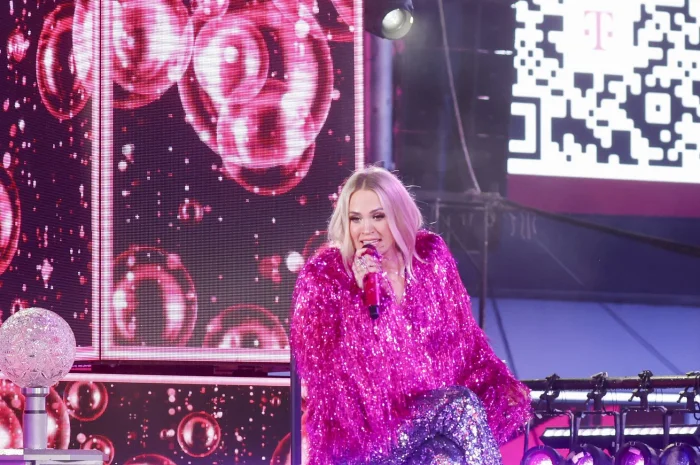
Carrie Underwood performs in Times Square on New Year’s Eve on December 31, 2024, in New York City. Photo by John Angelillo/UPI | License Photo

Source link

Real Madrid to ‘push deadline’ for Mbappe to make Atletico Super Cup return | Football News

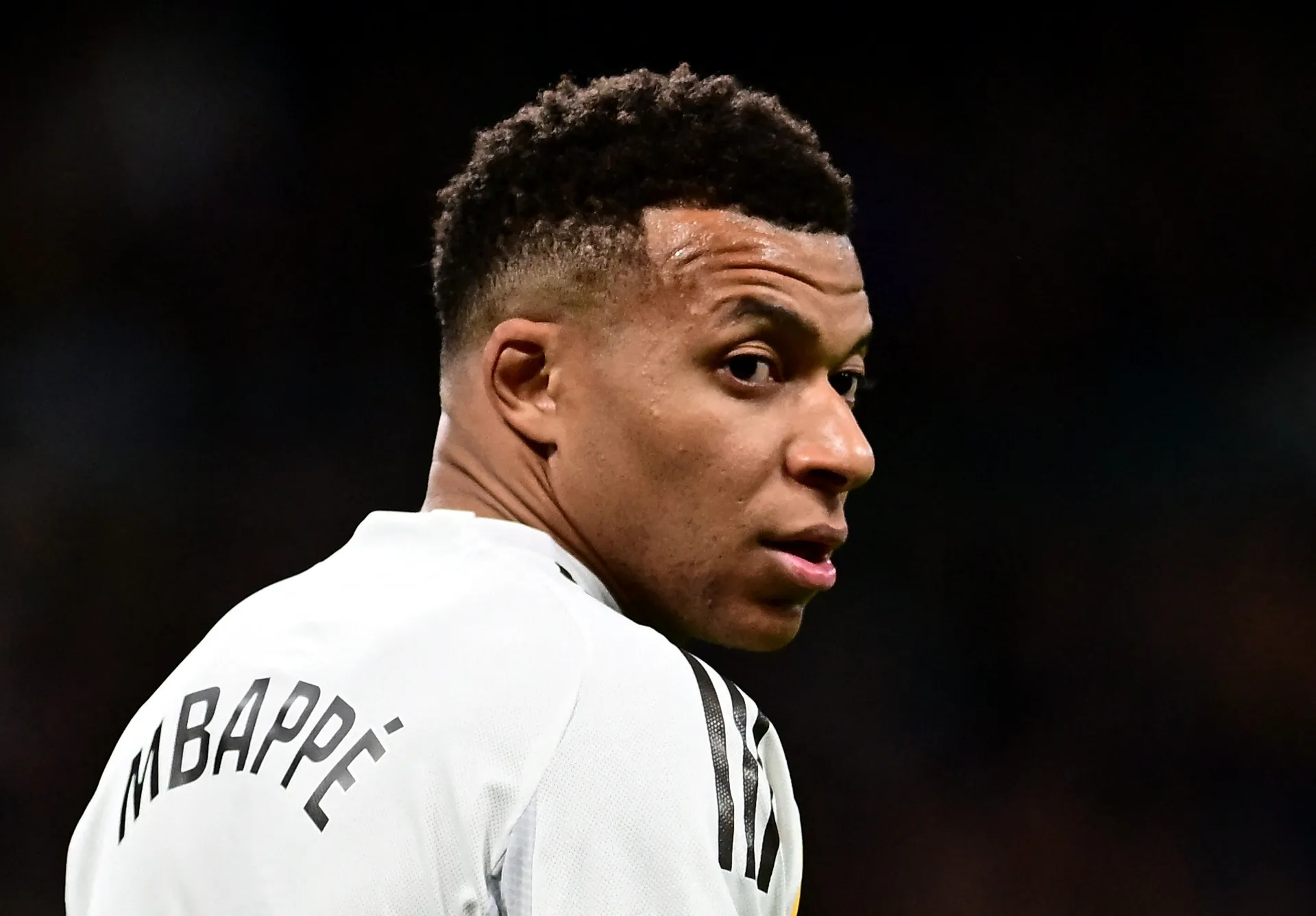
Real Madrid’s Kylian Mbappe is out of Sunday’s Real Betis clash in La Liga, but could be fast tracked for return in Atletico Super Cup derby.

Real Madrid forward Kylian ‌Mbappe will miss Sunday’s La Liga home game against Real Betis due ‍to a knee ‍injury but is pushing to be available for next week’s Spanish Super Cup semifinal against Atletico Madrid, manager Xabi Alonso has said.

The 27-year-old France captain, who equalled Cristiano Ronaldo’s club record of 59 ⁠goals in a calendar year for Real in their 2-0 La Liga win over Sevilla ​on December 20, has a sprain in his left knee.

Recommended Stories

list of 4 itemsend of list

The initial assumption was that such an injury would mean a spell of at least three weeks on the sidelines.

“We’ll ‍definitely miss Kylian,” Alonso told reporters on Saturday. “We have to have a lot of faith in those who are going to play tomorrow.

“Now we’ll see. We have to wait and see how things ‍develop, and ⁠we’ll do everything we can to get him back as soon as possible.

“We’re going to be pushing the deadlines; it’s very much a matter of feelings. When is as soon as possible? That’s the question. I don’t know. The Super Cup? We hope.”

Alonso’s men were five points clear at the top before their form took a downturn in November. They ​drew three league games in a row before suffering ‌a shock loss to Celta Vigo at home in December, allowing defending champions Barcelona to surge four points ahead in the title race.

Real’s dip in form has coincided with a goalless run ‌for forward Vinicius Jr. The 25-year-old Brazilian winger, who scored 22 goals last season, has struck just five times ‌across all competitions this term and has not ⁠found the net since October.

When asked how Vinicius is doing after being booed by a section of fans in their last match against Sevilla at the Bernabeu, Alonso said: “Vini looks fine to me, ‌cheerful and smiling. The break has been good for all of us to recharge our batteries.

“Tomorrow, we are the ones who have to give in order to ‍receive, to spread that enthusiasm and rhythm that we need. If that flows in both directions, we will enjoy ourselves.”

Source link

South Africa manager to show ‘no mercy’ to Cameroon at AFCON 2025 | Africa Cup of Nations News

Hugo Broos lead Cameroon to the 2017 AFCON title but will have be no room for sentimentality with his South Africa side.

South Africa coach Hugo Broos has promised to show “no mercy” to Cameroon when he comes up against his former side in the last 16 of the Africa Cup of Nations on Sunday.

Broos will lead Bafana Bafana out at Al Medina Stadium in Rabat against the nation he led to an unexpected AFCON triumph in Gabon in 2017.

Recommended Stories

list of 4 itemsend of list

“Tomorrow’s game is surely a special game for me. If you win an AFCON with a country, then a part of them stays in your heart, but tomorrow I can’t have mercy for them because I am the coach of South Africa now and I want to win the game,” Belgian Broos told reporters Saturday in the Moroccan capital.

“They are a very good team, a young team, and they have a good fighting spirit and mentality, which means if we want to beat them, we will have to be at our best.”

Cameroon took seven points from a possible nine in the group stage in Morocco despite a chaotic build-up to the tournament.

Coach Marc Brys was sacked by football federation president and Indomitable Lions legend Samuel Eto’o only a few weeks before their opening game, with David Pagou appointed as his replacement.

“I would have preferred to face Cameroon in the final – maybe now is a little too soon,” Broos said.

“I was curious to see Cameroon with all the changes in their team, and I have been surprised. They did not have much preparation time, but the coach has done a good job, and for us it will be a difficult match.”

He added, “No mercy tomorrow! You can be sure. I have to win that game, that is all that counts.”

South Africa upset with Morocco AFCON setup before Cameroon test

Meanwhile, the 73-year-old expressed anger at tournament organisers for forcing his side to train at the Moroccan national team’s facility, a 45-minute drive away from their hotel in Rabat.

Whoever wins on Sunday will face Morocco in the quarterfinals, should the hosts see off outsiders Tanzania in their last-16 tie.

“I don’t understand why CAF [the Confederation of African Football] allowed that. I have to say that because it makes me unhappy,” Broos complained.

Bafana Bafana, who have qualified for this year’s World Cup, are hoping to at least match their run to the semifinals at the last Cup of Nations in the Ivory Coast in 2024.

But their coach admits that could be a tall order given the depth of quality left in the competition.

“It was the ambition when we came here to do at least as well as two years ago, but I said this tournament would be much more difficult.

“At the last AFCON, a lot of big teams were knocked out early, but this time they are all here, which means to get to the final, even the semifinals, it will be much more difficult, but our ambition remains intact.”

Source link

Judge denies pretrial release for alleged D.C. pipe bomber

Jan. 2 (UPI) — A Washington, D.C., federal magistrate judge ruled Friday that a man who allegedly set pipe bombs outside of political party headquarters on Jan. 5, 2021, must stay behind bars before his trial.

Brian Cole Jr., 30, faces charges of transporting an explosive device and attempted malicious destruction by means of explosive materials. The charges have a maximum sentence of 30 years.

He allegedly placed two bombs in front of the Democratic National Committee and Republican National Committee headquarters, though the bombs never detonated. He was arrested Dec. 4 and hasn’t entered a plea.

Assistant U.S. Attorney Charles Jones filed a request on Dec. 30 to keep Cole in jail while he awaits trial. Cole’s attorneys wanted him released into the custody of his grandmother.

Judge Matthew Sharbaugh wrote in his ruling filed on Friday: “Although home incarceration and a GPS monitor would provide some check against Mr. Cole’s ability to carry out any menacing or dangerous conduct in the community, the Court is simply not satisfied these conditions rise to the necessary level.

“This is particularly true based on the severity of the potential danger Mr. Cole is alleged to pose, given his alleged persistent acquisition and retention of so-called ‘bombmaking parts,’ and given his reported penchant and capacity to create explosive devices and deploy them in public settings.

“If the plan had succeeded, the results could have been devastating: creating a greater sense of terror on the eve of a high-security Congressional proceeding, causing serious property damage in the heart of Washington, D.C., grievously injuring DNC or RNC staff and other innocent bystanders, or worse,” Sharbaugh wrote.

Sharbaugh announced Dec. 30 that Cole was indicted on the two charges but that he has not yet accepted the indictment because the Justice Department’s move seeking federal charges from a local grand jury is part of an ongoing debate in the courts. That case is pending in the federal appeals court.

According to a court filing, Cole told investigators that he disliked both political parties and was “watching everything, just everything getting worse.”

He believed the allegation that the 2020 election was stolen.

“If people feel that their votes are like just being thrown away, then … at the very least someone should address it,” Cole said, according to the filing.

“According to the defendant, he was not really thinking about how people would react when the bombs detonated, although he hoped there would be news about it,” the filing said.

“The defendant stated that he had not tested the devices before planting them. He claimed that when he learned that the devices did not detonate, he was ‘pretty relieved,’ and asserted that he placed the devices at night because he did not want to kill people.

“The defendant denied that his actions were directed toward Congress or related to the proceedings scheduled to take place on January 6,” the filing said.

Cole is from Woodbridge, Va., where he lives with his mother and other family members.

The case baffled law enforcement for almost five years. The pipe bombs were made of 1-inch galvanized pipes, 8 inches long with end caps, homemade black powder, wires, metal clips and a kitchen timer. The FBI has said the bombs were viable and could have hurt people nearby if they had detonated. The bombs sat for 15 hours before being discovered.

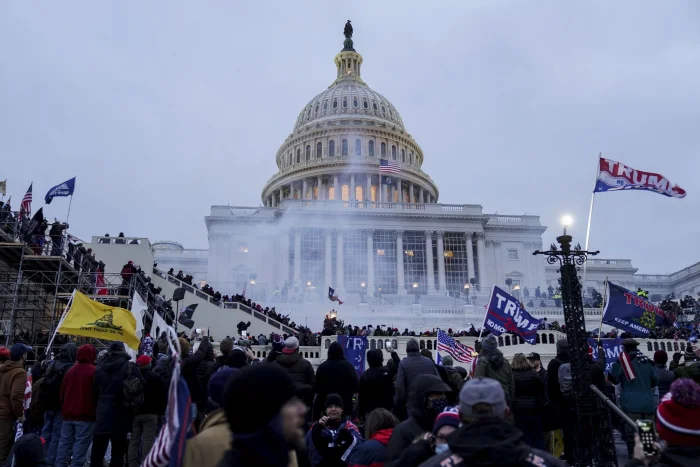
Supporters of President Donald Trump riot against the Electoral College vote count on January 6, 2021, in protest of Trump’s loss to President-elect Joe Biden, prompting a lockdown of the Capitol Building. Photo by Leigh Vogel/UPI | License Photo

Source link

Jake Paul loses WBA cruiserweight ranking after loss to Anthony Joshua | Boxing News

Jake Paul’s defeat by Anthony Joshua in their heavyweight bout in December has seen American boxer lose his WBA ranking.

Jake Paul has slipped out of the WBA cruiserweight rankings after the YouTuber-turned-boxer was soundly beaten by former world heavyweight champion Anthony Joshua last month.

Paul’s jaw was broken in two places and the American needed surgery to repair the damage after Joshua’s sixth-round knockout victory in a heavyweight bout in Miami.

Recommended Stories

list of 4 itemsend of list

The event had drawn criticism ahead of the bout due to the disparity in the sheer size and experience of the boxers, while Paul spent much of the fight dancing around the ring rather than engaging Joshua.

Paul (12-2, 7 KOs) had entered the WBA’s cruiserweight rankings at No 14 in July shortly after he beat 39-year-old Julio Cesar Chavez Jr by unanimous decision in Anaheim, California.

He was at No 15 entering the bout against Joshua. Bosnia’s Edin Puhalo has taken Paul’s place in the top 15, having recorded his 29th career win in December.

The WBA ranking announcement and changes were for the period ending December 31.

Source link

U.S. captures Venezuela’s president Nicolas Maduro

The United States early Saturday morning staged a mission to apprehend Venezuelan President Nicolás Maduro, pictured in November, and his wife, both of whom have been indicated in the United States for narco-terrorism. File Photo by Venezuelan President Office/UPI | License Photo

Jan. 3 (UPI) — The United States early Saturday morning staged a daring “large strike against Venezuela,” during which the country’s president, Nicolas Maduro, was captured and flown out of the country.

President Donald Trump announced on Truth Social that Maduro and Maduro’s wife had been captured, with the New York Times reporting that they were flown by helicopter to the USS Iwo Jima and that both will eventually face charges in the Southern District of New York.

“The United States of America has successfully carried out a large scale strike against Venezuela and its leader, President Nicolas Maduro, who h as been, along with his wife, captured and flown out of the country,” Trump said in the Truth Social post. “This operation was done in conjunction with U.S law enforcement.”

Trump said that a news conference will be held at 11 a.m. EST from Mar-a-Lago, his golf club in Florida.

This is a developing story. Please check back for updates.

President Donald Trump holds a signed executive order reclassifying marijuana from a schedule I to a schedule III controlled substance in the Oval Office of the White House on Thursday. Photo by Aaron Schwartz/UPI | License Photo

Source link

Trump bombs Venezuela, US ‘captures’ Maduro: All that we know | Nicolas Maduro News

United States President Donald Trump announced on Saturday morning that his country’s forces had bombed Venezuela and captured the South American nation’s president, Nicolas Maduro, and First Lady Cilia Flores in a dramatic overnight military attack that followed months of rising tensions.

Venezuela’s government said that the US had struck three states apart from the capital, Caracas, while neighbouring Colombia’s President Gustavo Petro released a longer list of places that he said had been hit.

The operation has few, if any, parallels in modern history. The US has previously captured foreign leaders, including Iraq’s Saddam Hussein and Panama’s Manuel Noriega, but after invading those countries in declared wars.

Here is what we know about the US attacks and the lead-up to this escalation:

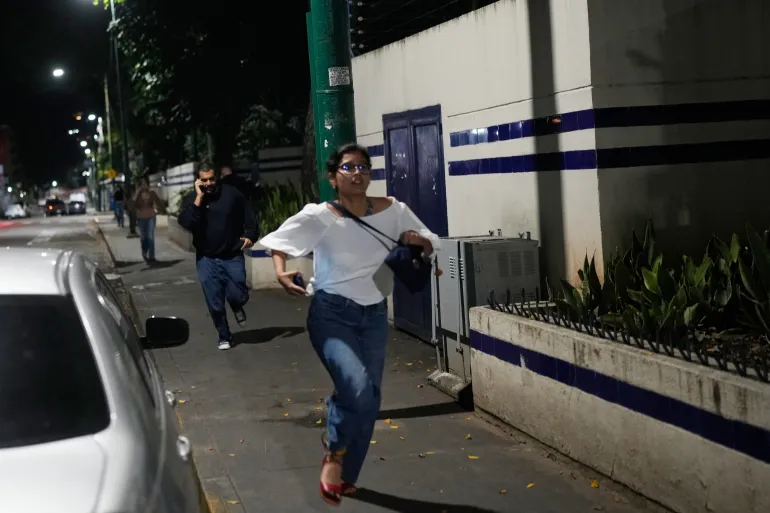
Pedestrians run after explosions and low-flying aircraft were heard in Caracas, Venezuela, Saturday, Jan. 3, 2026. (AP Photo/Matias Delacroix)
Pedestrians run after explosions and low-flying aircraft were heard in Caracas, Venezuela, on Saturday, January 3, 2026 [Matias Delacroix/ AP Photo]

How did the attack unfold?

At least seven explosions were reported from Caracas, a city of more than three million people, at about 2am local time (06:00 GMT), as residents said they heard low-flying aircraft. Lucia Newman, Al Jazeera’s Latin America editor, reported that at least one of the explosions appeared to come from near Fort Tiuna, the main military base in the Venezuelan capital.

Earlier, the US Federal Aviation Administration had issued instructions to American commercial airlines to stay clear of Venezuelan airspace.

Within minutes of the explosions, Maduro declared a state of emergency, as his government named the US as responsible for the attacks, saying that it had struck Caracas as well as the neighbouring states of Miranda, Aragua and La Guaira.

The US embassy in Bogota, Colombia, referred to the reports of the explosions and asked American citizens to stay out of Venezuela, in a statement. But the diplomatic mission did not confirm US involvement in the attacks. That came more than three hours after the bombings, from Trump.

Supporters of Venezuelan President Nicolás Maduro embrace in downtown Caracas, Venezuela, Saturday, Jan. 3, 2026, after U.S. President Donald Trump announced that Maduro had been captured and flown out of the country. (AP Photo/Cristian Hernandez)
Supporters of Venezuelan President Nicolas Maduro embrace in downtown Caracas, Venezuela, on Saturday, January 3, 2026, after US President Donald Trump announced that Maduro had been captured and flown out of the country [Cristian Hernandez/ AP Photo]

What did Trump say?

In a post on his Truth Social platform, Trump said, a little after 09:00 GMT that the US had “successfully carried out a large scale strike against Venezuela and its leader, President Nicolas Maduro, who has been, along with his wife, captured and flown out of the Country”.

Venezuela has not yet confirmed that Maduro was taken by US troops — but it also has not denied the claim.

Trump said that the attack had been carried out in conjunction with US law enforcement, but did not specify who led the operation.

Trump announced that there would be a news conference at his Mar-a-Lago resort in Florida at 11am local time (16:00 GMT) on Friday, where more details would be revealed.

INTERACTIVE - US attacks on Venezuela map-1767437429

Where did the US attack in Venezuela?

While neither the US nor Venezuelan authorities have pinpointed locations that were struck, Colombia’s Petro, in a social media post, listed a series of places in Venezuela that he said had been hit.

They include:

  • La Carlota airbase was disabled and bombed.
  • Cuartel de la Montana in Catia was disabled and bombed.
  • The Federal Legislative Palace in Caracas was bombed.
  • Fuerte Tiuna, Venezuela’s main military complex, was bombed.
  • An airport in El Hatillo was attacked.
  • F-16 Base No 3 in Barquisimeto was bombed.
  • A private airport in Charallave, near Caracas, was bombed and disabled.
  • Miraflores, the presidential palace in Caracas, was attacked.
  • Large parts of Caracas, including Santa Monica, Fuerte Tiuna, Los Teques, 23 de Enero and the southern areas of the capital, were left without electricity.
  • Attacks were reported in central Caracas.
  • A military helicopter base in Higuerote was disabled and bombed.
The U.S. Navy’s Gerald R. Ford Carrier Strike Group, including the flagship USS Gerald R. Ford, USS Winston S. Churchill, USS Mahan and USS Bainbridge, sail towards the Caribbean Sea under F/A-18E/F Super Hornets and a U.S. Air Force B-52 Stratofortress, in the Atlantic Ocean November 13, 2025.
The US Navy’s Gerald R Ford Carrier Strike Group, including the flagship USS Gerald R Ford, USS Winston S Churchill, USS Mahan and USS Bainbridge, sail towards the Caribbean Sea, in the Atlantic Ocean, on November 13, 2025  [US Navy/Petty Officer 3rd Class Tajh Payne/Handout via Reuters]

What led to these US attacks on Venezuela?

Trump has, in recent months, accused Maduro of driving narcotics smuggling into the US, and has claimed that the Venezuelan president is behind the Tren de Aragua gang that Washington has proscribed as a foreign terrorist organisation.

But his own intelligence agencies have said that there is no evidence that Maduro is linked to Tren de Aragua, and US data shows that Venezuela is not a major source of contraband narcotics entering the country.

Starting in September, the US military launched a series of strikes on boats in the Caribbean Sea that it claimed were carrying narcotics. More than 100 people have been killed in at least 30 such boat bombings, but the Trump administration is yet to present any public evidence that there were drugs on board, that the vessels were travelling to the US, or that the people on the boats belonged to banned organisations, as the US has claimed.

Meanwhile, the US began its largest military deployment in the Caribbean Sea in at least several decades, spearheaded by the USS Gerald Ford, the world’s largest aircraft carrier.

In December, the US hijacked two ships carrying Venezuelan oil, and has since imposed sanctions on multiple companies and their tankers, accusing them of trying to circumvent already stringent American sanctions against Venezuela’s oil industry.

Then, last week, the US struck what Trump described as a “dock” in Venezuela where he claimed drugs were loaded onto boats.

INTERACTIVE - Crude oil reserves vs exports-1756989578

Could all this be about oil?

Trump has so far framed his pressure and military action against Venezuela and in the Caribbean Sea as driven by a desire to stop the flow of dangerous drugs into the US.

But he has increasingly also sought Maduro’s departure from power, despite a phone call in early December that the Venezuelan president described as “cordial”.

And in recent weeks, some senior aides of the US president have been more open about Venezuela’s oil: the country’s vast reserves of crude, unmatched in the world, amounted to an estimated 303 billion barrels (Bbbl) as of 2023.

On December 17, Trump’s top adviser Stephen Miller claimed that the US had “created the oil industry in Venezuela” and that the South American country’s oil should therefore belong to the US.

But though US companies were the earliest to drill for oil in Venezuela in the early 1900s, international law is clear: sovereign states — in this case Venezuela — own the natural resources within their territories under the principle of Permanent Sovereignty over Natural Resources (PSNR).

Venezuela nationalised its oil industry in 1976. Since 1999, when socialist President Hugo Chavez, Maduro’s mentor and predecessor, came to power, Venezuela has been locked in a tense relationship with the US.

Still, one major US oil company, Chevron, continues to operate in the country.

The Venezuelan opposition, led by Nobel Peace Prize laureate Maria Corina Machado, has publicly called for the US to intervene against Maduro, and has pointed to the oil reserves that American firms could tap more easily with a new dispensation in power in Caracas.

Oil has long been Venezuela’s biggest export, but US sanctions since 2008 have crippled formal sales and the country today earns only a fraction of what it once did.

Venezuelan Vice President Delcy Rodriguez speaks to the press at the Foreign Office in Caracas, Venezuela, Monday, Aug. 11, 2025. (AP Photo/Ariana Cubillos)
Venezuelan Vice President Delcy Rodriguez speaks to the media at the Foreign Office in Caracas, Venezuela, on August 11, 2025 [Ariana Cubillos/AP Photo]

How has Venezuela’s government reacted?

While Venezuela has not confirmed Maduro’s capture, Vice President Delcy Rodrigues told state-owned VTV that the government had lost contact with Maduro and First Lady Flores and did not have clarity on their whereabouts.

She demanded that the US provide “proof of life” of Maduro and Flores, and added that Venezuela’s defences were activated.

Earlier, in a statement, the Venezuelan government said that it “rejects, repudiates and denounces” the attacks.

It said that the aggression threatens the stability of Latin America and the Caribbean, and places the lives of millions of people at risk. It accused the US of trying to impose a colonial war, and force a regime change — and said that these attempts would fail.

(COMBO) This combination of pictures created on August 07, 2025 shows US President Donald Trump (L) in Washington, DC, on July 9, 2025, and Venezuelan President Nicolas Maduro (R) in Caracas on July 31, 2024. The United States doubled its bounty on Venezuelan President Nicolas Maduro -- who faces federal drug trafficking charges -- to $50 million on August 7, 2025, a move Caracas described as "pathetic" and "ridiculous". (Photo by Jim WATSON and Federico PARRA / AFP)
This combination of pictures created on August 7, 2025 shows US President Donald Trump in Washington, DC, on July 9, 2025, and Venezuelan President Nicolas Maduro, right, in Caracas on July 31, 2024 [Jim Watson and Federico Parra/AFP]

What happens to Maduro next?

In a statement posted on X, Trump’s Attorney General Pam Bondi announced that Maduro and his wife have been indicted in the Southern District of New York.

Maduro has been charged with “Narco-Terrorism Conspiracy, Cocaine Importation Conspiracy” among other charges, Bondi said. It was unclear if his wife is facing the same charges, but she referred to the Maduro couple as “alleged international narco traffickers.”

“They will soon face the full wrath of American justice on American soil in American courts,” she added.

Mike Lee, a Republican senator from Utah, earlier posted on X that he had spoken to US Secretary of State Marco Rubio, who had told him that Maduro had been “arrested by US personnel to stand trial on criminal charges in the United States, and that the kinetic action we saw tonight was deployed to protect and defend those executing the arrest warrant.”

In 2020, US prosecutors had charged Maduro with running a cocaine-trafficking network.

But US officials remain silent on the illegality of Maduro’s capture and the attacks on Venezuela, which violate UN charter principles of sovereignty and territorial integrity of nations.

Russia and Cuba, close Maduro allies, condemned the attack. Colombia, which neighbours Venezuela and has itself been in Trump’s crosshairs, said that it “rejects the aggression against the sovereignty of Venezuela and of Latin America” – even though Bogota itself does not recognise Maduro’s government.

Most other nations have been relatively muted in their response to the US aggression so far.

Venezuela's Interior Minister Diosdado Cabello, left, Defense Minister Vladimir Padrino Lopez, second from left, Vice President Delcy Rodriguez, center, and Russian Ambassador to Venezuela Sergey Melik-Bagdasarov, second from right, inaugurate a monument commemorating the 80th anniversary of the Soviet Union's victory over Nazi Germany in World War II in Caracas, Venezuela, Tuesday, May 13, 2025.(AP Photo/Cristian Hernandez)
Venezuela’s Interior Minister Diosdado Cabello, left, Defence Minister Vladimir Padrino Lopez, second from left, and Vice President Delcy Rodriguez, centre, seen here at a ceremony commemorating the 80th anniversary of the Soviet Union’s victory over Nazi Germany in World War II in Caracas, Venezuela, on Tuesday, May 13, 2025. Rodriguez, Cabello and Lopez are among the leaders widely seen as Maduro’s closest aides [Cristian Hernandez/AP Photo]

What’s next for Venezuela?

Constitutionally, Rodriguez, the vice president, is next in line to take charge if Maduro indeed has been plucked out of Venezuela by the US.

Other senior leaders seen as close to Maduro and influential within the Venezuelan hierarchy include Interior Minister Diosdado Cabello, National Assembly President — and Delcy’s brother — Jorge Rodriguez, and military chief General Vladimir Padrino López.

But it is unclear whether the state apparatus that Chavez and Maduro carefully built over a quarter century will last without them.

“Maduro’s capture is a devastating moral blow for the political movement started by Hugo Chavez in 1999, which has devolved into a dictatorship since Nicolas Maduro took power,” Carlos Pina, a Venezuelan analyst based in Mexico, told Al Jazeera.

If the US does engineer — or has already engineered — a regime change, the opposition’s Machado could be a front-line candidate to take Venezuela’s top job, though it is unclear how popular that might be. In a November poll in Venezuela, 55 percent of participants were opposed to military intervention in their country, and an equal number were opposed to economic sanctions against Venezuela.

Trump might be mistaken if he thinks the US can stay out of the chaos that’s likely to follow in a post-Maduro Venezuela, suggests Christopher Sabatini, a senior research fellow for Latin America, the US and North America programme at Chatham House.

“Assuming even if there is regime change – of some sort, and it’s by no means clear even if it does happen that it will be democratic – the US’s military action will likely require sustained US engagement of some sort,” he said.

“Will the Trump White House have the stomach for that?”

Source link

Venezuelan President Nicolás Maduro denies drug trafficking

Jan. 2 (UPI) — Venezuelan President Nicolás Maduro said claims that his government engages in drug trafficking are lies, and he is willing to meet with President Donald Trump amid rising tensions.

Maduro on Thursday accused the Trump administration of knowingly making false claims of drug trafficking, including recent comments by Trump saying Venezuela’s alleged drug trafficking is akin to using weapons of mass destruction

“Since they cannot accuse me, since they cannot accuse Venezuela of having weapons of mass destruction, since they cannot accuse us of having nuclear rockets, of preparing a nuclear weapon, of having chemical weapons, they invented an accusation that the United States knows is as false as that accusation of weapons of mass destruction, which led them to an eternal war,” Maduro said while referencing the Iraq War.

The Venezuelan president offered to work with U.S. officials to oppose drug trafficking and repeated his prior offers to meet with Trump to discuss the U.S. military targeting alleged drug vessels, seizing oil tankers and blockading Venezuelan ports.

“The U.S. government knows, because we’ve told many of their spokespeople that, if they want to seriously discuss an agreement to combat drug trafficking, we’re ready,” he said in a taped interview on Venezuela’s state-owned channel teleSUR.

The Venezuelan president also suggested his country and the United States could work together to enable U.S. firms to invest in Venezuela’s oil industry “whenever they want it, wherever they want it and however they want it.”

Maduro refused to comment on a recently reported U.S. strike on an alleged drug-processing facility located among docks on Venezuela’s Caribbean coastline.

The CIA also has refused to comment on the strike, which Trump announced on Monday and said “knocked out” a drug facility on Saturday night.

The president in October announced he authorized the CIA to undertake operations in Venezuela but did not say what kind.

The Defense Department also sent a carrier strike group to the Caribbean to stop alleged drug-trafficking fast boats from transporting drugs intended for the United States and Europe and more recently to blockade Venezuelan ports amid seizures of sanctioned vessels.

The White House has said the strikes on the alleged drug boats are intended to stop South American drug cartels from sending drugs to the United States, which has some U.S. officials questioning the legality of such strikes.

The U.S. Southern Command announced two more boat strikes that killed five in international waters on New Year’s Eve.

The United States began striking the alleged drug boats in September and has sunk at least 36 and killed at least 115.

Most of the drug boat strikes, 23, have occurred in the eastern Pacific Ocean and away from Venezuela, while 11 others occurred in the Caribbean Sea, with another two in undisclosed locations.

The United States also has placed a $50 million bounty on Maduro and recently sanctioned some of his family members for their alleged roles in drug trafficking.

Trump also has accused Maduro of intentionally sending criminals and others to the United States during the Biden administration, including members of the Venezuela-based Tren de Aragua gang that he has designated as a foreign terrorist organization.

Source link

Pakistani court sentences journalists and influencer for ‘digital terrorism’

Seven Pakistanis were tried in absentia and sentenced to life in prison on Friday for “digital terrorism” amid riots following the 2023 arrest of former Pakistan Prime Minister Imran Khan. File Photo by Rahat Dar/EPA

Jan. 2 (UPI) — An anti-terrorism court in Islamabad, Pakistan, on Friday sentenced five journalists, a YouTube influencer and a military officer to two life sentences each for “digital terrorism” crimes.

Anti-Terrorism Court Judge Tahir Sipra announced the verdicts for the defendants, who were tried in absentia.

Pakistani law allows for trials in absentia, but their verdicts must be confirmed by the Islamabad High Court.

Those who were sentenced were Akbar Hussain, Wajahat Saeed Khan, Haider Raza Mehdi, Moeed Pirzada, Shaheen Sehbai, Sabir Shakir and Adil Raja.

Raja is a YouTube influencer, while Khan, Shakir, Sehbai, Mehdi and Pirzada are journalists. Hussain is a former Pakistan army officer.

The court found that the seven defendants encouraged riots on May 9, 2023, after former Pakistani Prime Minister Imran Khan was arrested briefly in Islamabad for alleged corruption.

Imran Khan’s supporters attacked governmental buildings and military facilities in several locations.

Prosecutors brought 24 witnesses against the defendants and said they used their respective digital media channels to incite riots, enable attacks and amplify the violence against governmental institutions.

If their sentences are upheld, each faces up to life in prison plus a $5,500 fine for criminal conspiracy.

Each also could be sentenced to another 10 years in prison and fined more than $2,200 for waging or attempting to wage or abetting in waging war against Pakistan.

Additionally, each defendant has been sentenced to 15 years in prison for three counts of violating the Anti-Terrorism Act of 1997 and fined nearly $7,000.

All sentences are to run concurrently if upheld by the higher court.

Source link

Severe weather in Gaza hits vulnerable and wounded most in Israel’s war | Israel-Palestine conflict News

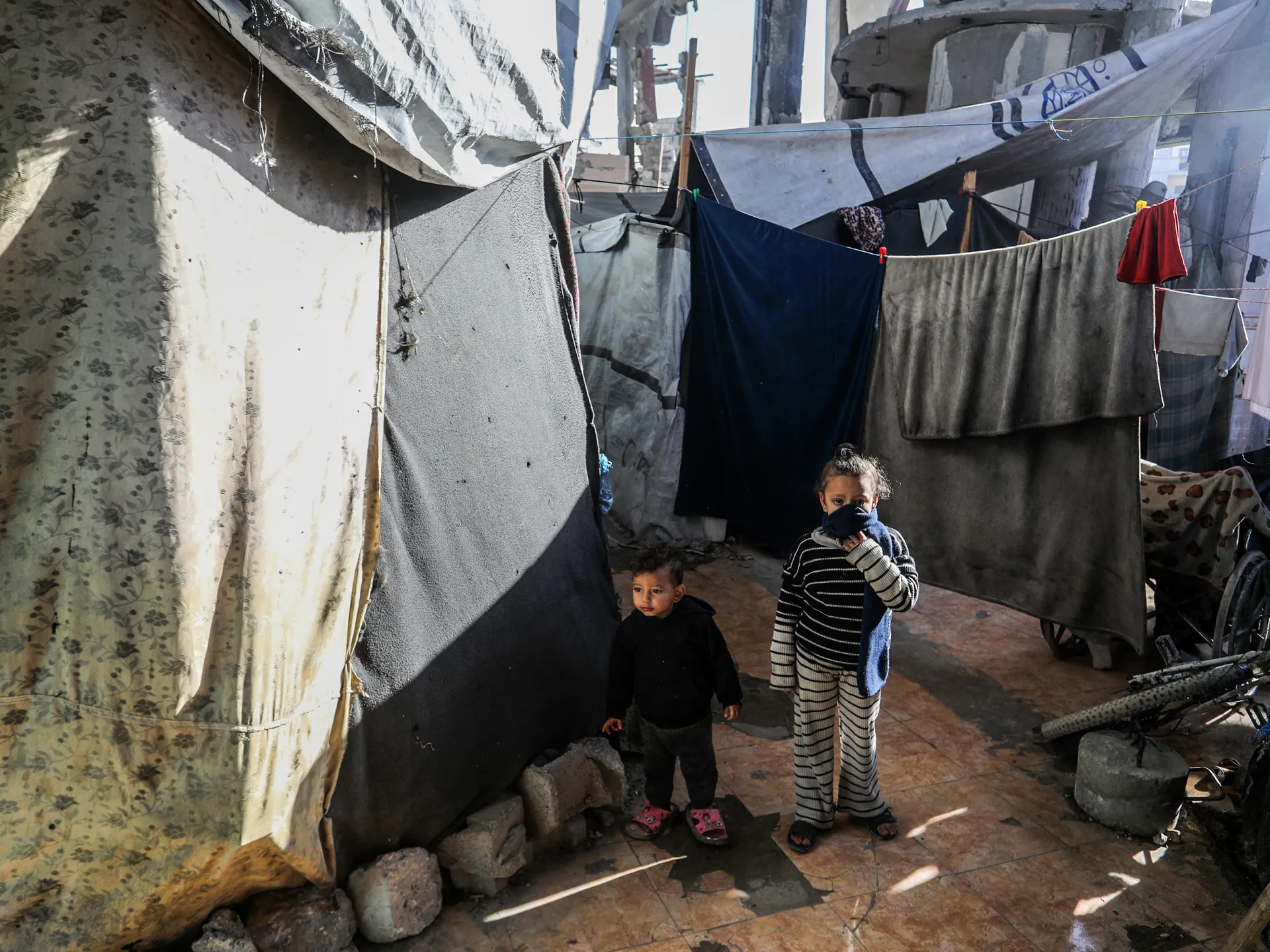
The winter has made a life of relentless suffering worse for the people of Gaza, particularly for the wounded, children and elderly, with hundreds of thousands in the Palestinian territory displaced by Israel’s genocidal war desperately trying to survive on the scant humanitarian aid Israel is allowing in.

Nine-year-old Assad al-Madhna lost his left hand when Israeli fire hit a group of children playing in al-Zuwayda in central Gaza. The same attack also wounded him in the leg.

Recommended Stories

list of 4 itemsend of list

Now, as winter envelops the besieged enclave, Assad’s pain increases as the metal rods and pins holding his leg in place stiffen in the cold, making every step slower and agonising.

“I can’t play with other children as in winter, my legs and hands hurt a lot,” he told Al Jazeera.

“I haven’t received any prosthetic, struggle to change my clothes, and going to the toilet in this cold is a real challenge,” he said, adding: “Without my parents, I can’t manage it. At night, the severe cold becomes unbearable.”

A truce between Israel and Hamas since October 10 has been fragile, a ceasefire in name only, according to Palestinians and rights groups, after two years of destructive war.

Despite the truce, Palestinians in crowded camps – often in damaged tents and surrounded by mud – still face severe humanitarian conditions, trying to survive with few or no resources, making life the hardest for the most vulnerable.

‘No heating at all’

Eighteen-year-old Waed Murad survived an attack that wiped out her entire family – seven relatives in one strike.

She now lives with a life-altering injury, and when the temperatures drop, her nerve pain intensifies, sleep slips away, and the little recovery she had is threatened.

“I can’t keep myself warm because of the severe cold with the metal bars and pins always freezing,” she told Al Jazeera.

“I am living in a tent with no heating at all. Every time I hear the wind, I feel the pain will get worse, as the cold will affect the metal fixation devices even more.”

In the enclave, temperatures at night have ranged between eight and 12 degrees Celsius (46 and 53 degrees Fahrenheit) in recent days.

Nearly 80 percent of buildings in the Gaza Strip have been destroyed or damaged by the war, according to United Nations data.

About 1.5 million of Gaza’s 2.2 million residents have lost their homes, said Amjad Shawa, director of the Palestinian NGO Network in Gaza.

Of more than 300,000 tents requested to shelter displaced people, “we have received only 60,000,” Shawa told the AFP news agency, pointing to Israeli restrictions on the delivery of humanitarian aid into the territory.

Israel slammed for banning NGOs

Meanwhile, the international community has condemned Israel’s recent announcement of a suspension of the operations of several international nongovernmental organisations in the occupied Palestinian territory.

UN Secretary-General Antonio Guterres said he was deeply concerned and called for the measure to be reversed.

“This announcement comes on top of earlier restrictions that have already delayed critical food, medical, hygiene and shelter supplies from entering Gaza.”

“This recent action will further exacerbate the humanitarian crisis facing Palestinians,” Stephane Dujarric, spokesman for the secretary-general, said in a statement.

Several countries in the Middle East and Asia called on Israel to allow “immediate, full, and unhindered” deliveries of humanitarian aid to the Gaza Strip as winter storms lash the bombarded Palestinian enclave.

In a statement on Friday, the foreign ministers of Qatar, Egypt, Jordan, Saudi Arabia, the United Arab Emirates, Turkiye, Pakistan and Indonesia warned that “deteriorating” conditions in Gaza had left nearly 1.9 million displaced Palestinians particularly vulnerable.

“Flooded camps, damaged tents, the collapse of damaged buildings, and exposure to cold temperatures coupled with malnutrition, have significantly heightened risks to civilian lives,” the statement read.

Earlier this month, Gaza experienced a similar spell of heavy rain and cold.

The weather caused at least 18 deaths due to the collapse of war-damaged buildings or exposure to cold, according to Gaza’s civil defence agency.

On December 18, the UN’s humanitarian office said 17 buildings collapsed during the storm, while 42,000 tents and makeshift shelters were fully or partially damaged.

Source link

Saudi Arabia welcomes request from Yemen to help resolve southern battle | Conflict News

Saudi Arabia’s foreign ministry has welcomed a request from Yemen’s Saudi-backed Presidential Leadership Council (PLC) for a forum in Riyadh to resolve a deadly factional rift in the country’s south that has stoked armed conflict there and triggered tensions between Gulf Arab nations.

In a statement on Saturday, the Saudi foreign ministry called on southern factions to participate in the forum in the Saudi capital to “formulate a comprehensive vision for fair solutions to the southern cause”.

Recommended Stories

list of 3 itemsend of list

Earlier on Saturday, PLC Chairman Rashad al-Alimi appealed to the different groups and figures in southern Yemen to come together for a meeting in Riyadh, according to Saba News Agency.

Saba quoted al-Alimi as underlining the “justness and centrality of the southern cause” and “rejected any unilateral or exclusionary solutions” to resolve the ongoing conflict.

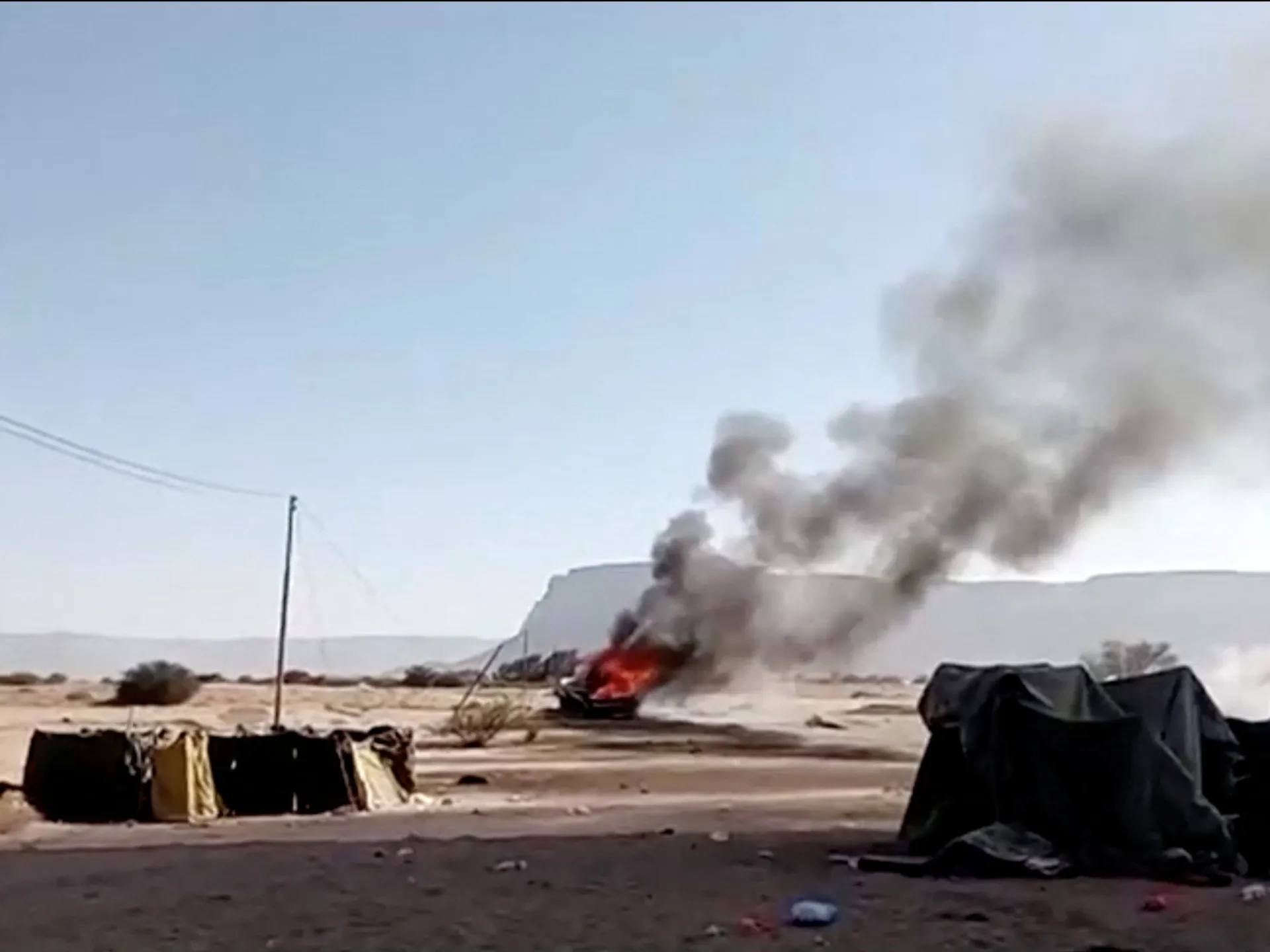
Deadly tensions have erupted in recent days, after the separatist group Southern Transitional Council (STC) launched a major offensive in Yemen’s Hadramout and al-Mahra provinces, which make up nearly half of Yemen’s territory.

Oil-producing Hadramout borders Saudi Arabia, and many prominent Saudis trace their origins to the province, lending it cultural and historical significance for the kingdom. Its capture by the STC last month was regarded by the Saudis as a threat.

The STC is part of the anti-Houthi coalition in Yemen’s south. But it is said to harbour plans to carve out its own nation in southern Yemen, causing conflict with its partner, the internationally recognised Yemeni government led by the PLC.

The Saudis have accused its coalition partner, the United Arab Emirates (UAE), of arming the STC, whose military operation is now threatening to split Yemen into three, while also posing problems to Riyadh’s own national security.

The UAE has denied those allegations, insisting that it supports Saudi Arabia’s security.

In a statement on Saturday, the UAE expressed its “deep concern” over the ongoing escalation and called on the Yemenis “to prioritise wisdom and exercise restraint to ensure security and stability in the country”.

The Saudi-backed coalition was formed in 2015 in an attempt to dislodge the Iran-backed Houthi rebels from Yemen’s north.

But after a brutal, decade-long civil war, the Houthis remain in place while the Saudi and Emirati-backed factions attack each other in the south.

On Friday, air strikes by a Saudi-led coalition killed 20 people, according to the STC.

Late on Friday, the UAE announced the return of all Emirati armed forces personnel from Yemen, signalling a possible detente with Saudi Arabia.

The UAE’s defence ministry said that the withdrawal of its forces from Yemen is in accordance with its decision “to conclude the remaining missions of counter-terrorism units”.

“The process has been conducted in a manner that ensured the safety of all personnel and carried out in coordination with all relevant partners,” the ministry said in a statement published on the Emirates News Agency website.

Amid the UAE’s announcement of a withdrawal, the STC unilaterally declared that it aims to hold a referendum on independence from the north in two years.

In an interview with Al Jazeera, former Yemeni diplomat and parliament member Ali Ahmed al-Amrani, however, dismissed the idea of secession as a solution to the Yemeni crisis, saying it “does not reflect a national consensus”.

Meanwhile, Hisham Al-Omeisy, a political and conflict analyst focusing on Yemen with the European Institute of Peace, warned that if not resolved, the latest violence in the south could mark the start of a dangerous new phase in the war, with rival forces seeking to reshape control on the ground.

“We’re going to be basically seeing a bloody conflict, at least in the coming few days, to draw a new map in the south,” he added.

“This is prolonged fighting,” Al-Omeisy told Al Jazeera, describing a situation in which “warring factions are trying to gain territory and secure the upper hand.

“This is a proxy war within a proxy war,” he said, adding that the consequences could extend far beyond Yemen’s borders.

Source link

S. Korea raises median income 6.5% in 2026, expanding eligibility

Exterior view of the Ministry of Health and Welfare building in Sejong, South Korea. Photo by Asia Today

Jan. 1 (Asia Today) — South Korea will raise its median income standard by 6.5% this year, the largest increase on record, expanding eligibility for basic livelihood benefits and related support programs, the government said Wednesday.

The Ministry of Health and Welfare said the median income for a four-person household in 2026 will be set at 6,494,738 won per month ($4,900), up 6.51% from a year earlier. The higher benchmark will be used to calculate eligibility for benefits under the National Basic Living Security System.

Under the revised criteria, the selection threshold for a four-person household will rise to 2,078,316 won per month ($1,570), from 1,951,287 won last year. For a one-person household, the threshold will increase to 820,556 won ($620), up from 765,444 won.

Actual benefit payments are determined by subtracting a household’s recognized income from the applicable selection threshold, the ministry said.

The government will also expand income deductions aimed at encouraging youth employment and self-reliance. Eligibility for additional deductions on earned and business income will be extended from those aged 29 and under to those aged 34 and under. The maximum additional deduction will increase to 600,000 won ($450) from 400,000 won.

New special provisions will address state compensation payments. Lump-sum compensation received by beneficiaries who are victims of unlawful state actions will be excluded from asset calculations for three years, a move intended to prevent beneficiaries from losing eligibility due to compensation payouts.

The ministry said it will also tighten oversight of fraudulent benefit claims. Mandatory prosecution will apply to cases where recovered fraudulent payments exceed 10 million won ($7,500), and authorities will be required to submit prosecution results every six months to strengthen supervision and transparency.

Health and Welfare Minister Chung Eun-kyung said the changes are expected to add about 40,000 new recipients in 2026.

“We will continue to closely review and improve the system so that low-income citizens can live stable and dignified lives,” Chung said.

— Reported by Asia Today; translated by UPI

© Asia Today. Unauthorized reproduction or redistribution prohibited.

Source link