Northumberland village is one of the UK’s most picturesque fishing villages, boasting charming cottages, sweeping views of the sea and plenty of fresh air — perfect for a serene getaway.
08:00, 05 Jan 2026Updated 08:11, 05 Jan 2026
It’s the perfect tranquil getaway(Image: Getty Images)
Tucked away in the heart of the Northumbrian coast lies a charming fishing village with a dark history, seemingly frozen in time.
Located approximately six miles east of the lively market town of Alnwick, this historic fishing hamlet is a must-see for those looking to experience the UK’s natural splendour away from the masses. As the next village up the coast from Alnmouth, it offers a stark contrast to Alnmouth’s abundant facilities and leisure spots.
This captivating village is famed for its picturesque chocolate-box cottages and iconic blue coble fishing boats, which have been a hallmark of the region for centuries and are still utilised by local fishermen today. Interestingly, this fishing village doesn’t have a formal harbour, so boats are hauled ashore by tractors, making it an ideal location for rock pooling and coastal walks.
The beautiful coastal village of Boulmer boasts a small population (likely less than 120 residents) and primarily consists of a long row of cottages and houses providing uninterrupted views of the North Sea. It’s regarded as one of Northumberland’s last authentic fishing villages, and little has altered within its confines over the past century.
The tranquil village is an ideal spot for those seeking to escape the hustle and bustle of tourist hotspots, offering a peaceful setting for relaxation. However, Boulmer doesn’t offer much in terms of recreational activities, reports Chronicle Live.
The Fishing Boat Inn is the only place to eat and drink in this village. Despite its somewhat murky history, akin to Boulmer itself, it’s now a favourite haunt for locals looking for a pint and a bite to eat. Indeed, there isn’t a single retail shop in Boulmer, so anyone hoping for a shopping spree would need to travel approximately a mile and a half to the village of Longhoughton or 13 miles to the town of Alnwick.
Historically, a significant shift in the village’s routine came with the opening of the Royal Air Force (RAF) base in Boulmer. Located on the outskirts of the fishing village, RAF Boulmer became operational during World War II and is arguably more renowned than the village itself.
The base continues to play a crucial role in the UK’s defence and serves as a key search and rescue base for the Royal Air Force.
Aside from the arrival of the Royal Air Force, little has changed in Boulmer over the past century. It remains one of the few traditional fishing villages still found along Northumberland’s coast.
Nefarious past
Boulmer could be dubbed the smuggling hub of the North, given its rich and complex history with smugglers and pirates. The 18th and 19th centuries marked the height of smuggling activities in Boulmer, as pirates and smugglers from across the Northumbrian coast and Scotland flocked to the small fishing village to trade their illicit goods.
The Fishing Boat Inn was at the epicentre of this unlawful activity, serving as a base for these criminals.
In fact, during the 18th century, William Faa – also known as the King of the Gypsies and one of Britain’s most infamous smugglers – resided just 35 miles away from Boulmer, in the Scottish village of Kirk Yetholm. Reportedly, the landlords of the Fishing Boat Inn were quite accommodating during Boulmer’s smuggling heyday.
Nowadays, Boulmer is a tranquil fishing village boasting picturesque views, with the Fishing Boat Inn being its main attraction.
How to get there
Boulmer can be accessed by car via the village of Longhoughton or from the south through the village of Lesbury. Parking is available in the Fishing Boat Inn’s car park and directly on the seafront.
A limited bus service operates through the village, so visitors relying solely on public transport should check the latest updates and schedules before planning their trip.
Twice in club history, the Chargers lost playoff games at New England. It was the AFC championship game in the 2007 season and a divisional game in 2018.
That’s little more than a trivia answer, though, as the two teams are entirely different now. This matchup features two outstanding coaches in Jim Harbaugh and New England’s Mike Vrabel, and two elite quarterbacks in Justin Herbert and Drake Maye.
The Patriots haven’t seen many elite quarterbacks this season, instead beating a ho-hum collection of passers that includes Cam Ward, Spencer Rattler, Dillon Gabriel and 40-year-old Joe Flacco. New England did beat Kansas City’s Patrick Mahomes, and Buffalo star and reigning NFL MVP Josh Allen, knocking off the Bills in Week 5 before blowing a 21-0 lead to them in Week 15.
Of course, you play who’s on your schedule in the NFL, so you don’t pick the quarterbacks you face. And the Patriots have routinely gotten the job done. It’s just that Herbert could present a significant challenge.
That said, Herbert has yet to win a playoff game in six seasons, and he has been hit more than any quarterback in the league (witness his broken left hand).
The Patriots figure to lean heavily on their solid running attack to play ball-control in the frigid cold and make it three-for-three against their AFC foes from the opposite corner of the country.
DENVER — Sometimes, the punching bag punches back.
That was the case Sunday as the Chargers, playing their backups, put up an impressive fight against the division-rival Denver Broncos, vying for the top seed in the AFC.
The Broncos won, 19-3, but both teams were smothering on defense while failing to establish anything close to an offensive rhythm.
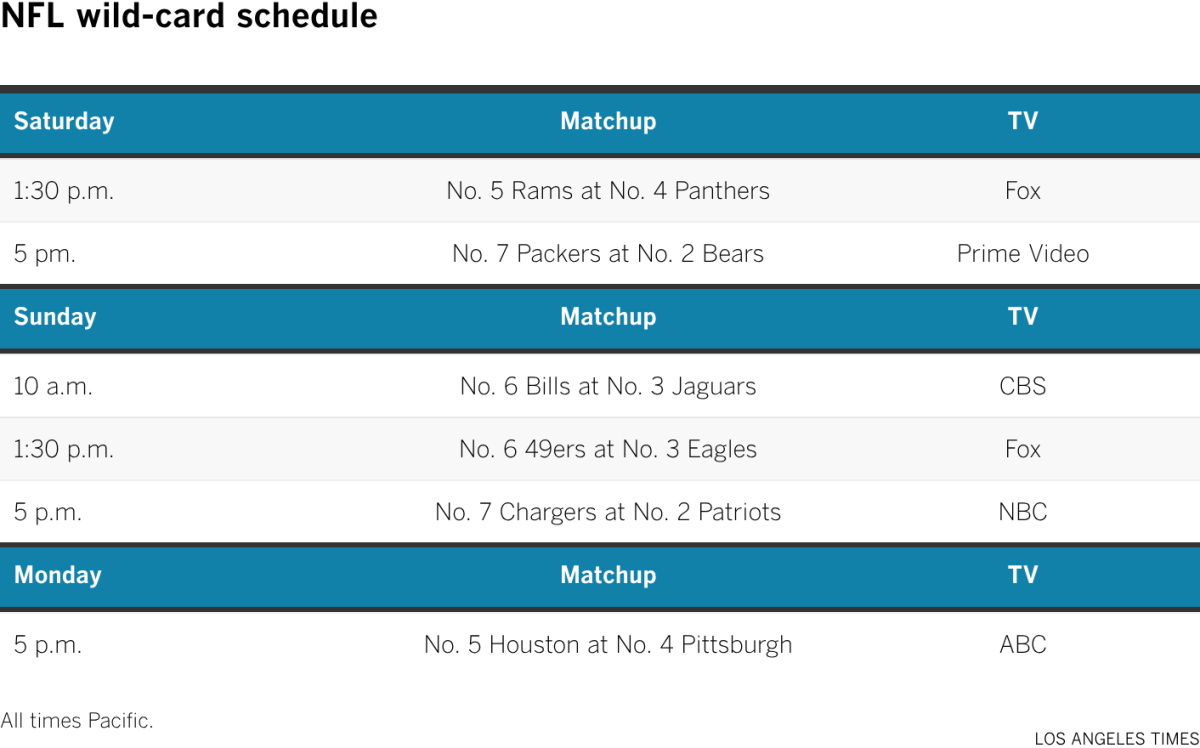
The seventh-seeded Chargers (11-6) will play a wild-card game at second-seeded New England (14-3), which rolled over Miami, 38-10, in Sunday’s finale.
Denver (14-3) gets a week off and home-field advantage throughout the postseason. The other AFC playoff matchups feature No. 6 Buffalo (12-5) at No. 3 Jacksonville (13-4) and No. 5 Houston (12-5) at the winner of Sunday night’s game between Pittsburgh and Baltimore.
Sunday’s game was far more competitive than the rollicking crowd at Empower Field might have suspected, with the second-string Chargers defense battling them at every turn.
On an unseasonably warm afternoon, the Broncos were disturbingly cold.
The Chargers rested 14 of their starters, including quarterback Justin Herbert, who has played his way into the Most Valuable Player conversation. But they couldn’t generate much offense with backup Trey Lance at the helm.
Lance completed 20 of 44 passes for 136 yards with an interception. He led all rushers with 69 yards, however, and in the waning moments had his team in position to score the game’s only offensive touchdown.
The outcome was never really in doubt because Denver’s defense didn’t budge. But the Broncos offense never got in sync.
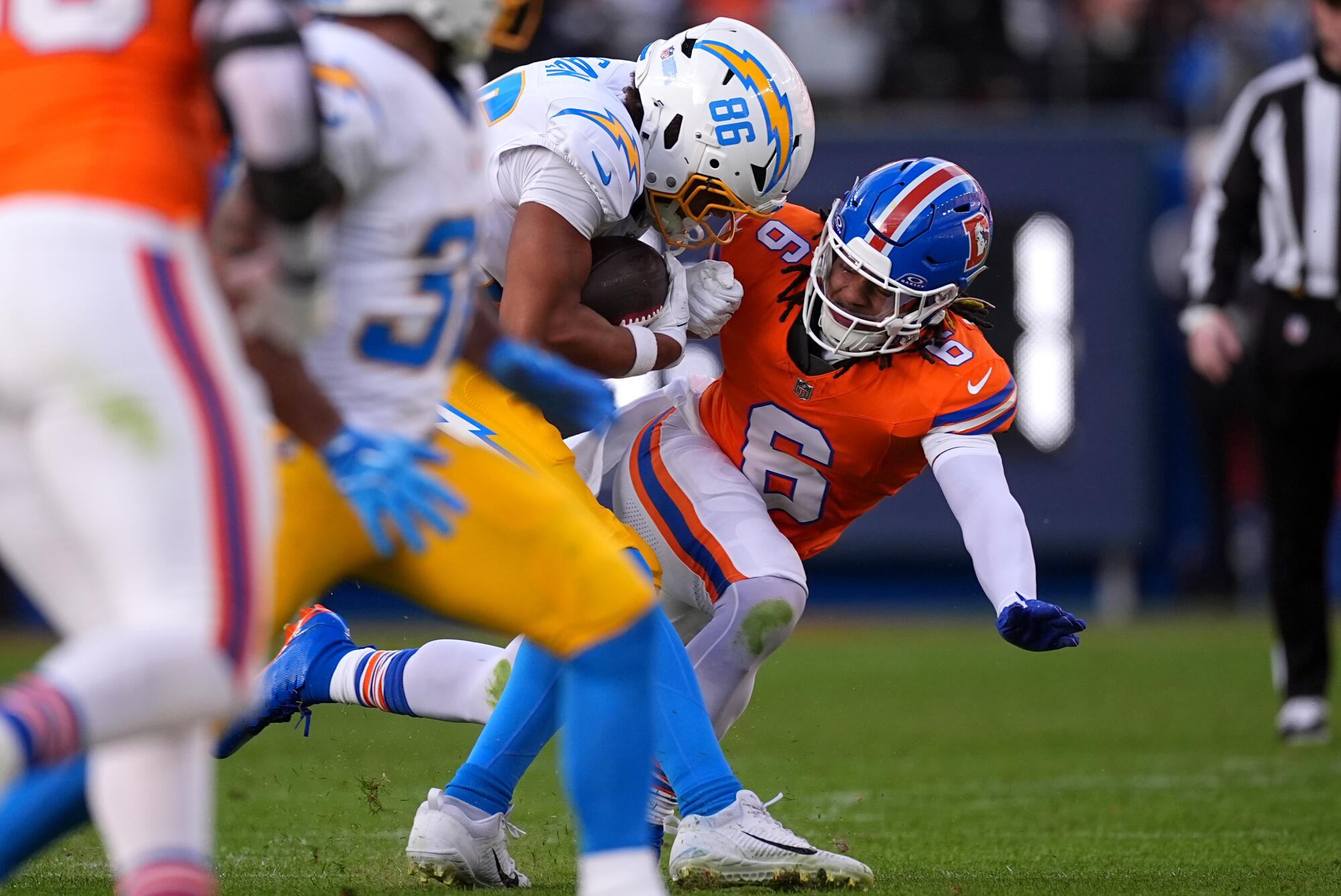
Chargers tight end Oronde Gadsden II catches a pass against Denver Broncos safety P.J. Locke during the first half Sunday.
(David Zalubowski / Associated Press)
Denver failed to score a touchdown on offense — their lone such score came on a pick-six — and got four field goals from Wil Lutz.
It was the lowest-scoring game for the Broncos since a 10-7 win over Las Vegas in Week 11.
The matchup was the Chargers’ Next Man Up versus a down Bo Nix, who threw for 141 yards with a lackluster 78.4 passer rating.
Each quarterback was sacked four times.
Denver came into the game with the NFL’s second-ranked defense, behind Houston, with a club-record 64 sacks already in the books. The Broncos wore throwback uniforms from 1977 — blue helmets, orange jerseys, white pants — and their defense swarmed like those “Orange Crush” days of yesteryear.
Granted, it’s now a 17-game season, but the Broncos got to 14 victories for the first time since 1998, the final season of Hall of Fame quarterback John Elway.
But these Chargers are no pushovers. They were looking to go undefeated in AFC West games, and got to 5-0 with an array of understudies, particularly along the offensive line.
This game was only huge for one Chargers regular: receiver Keenan Allen, who needed six receptions and nine yards to hit contract bonuses totaling $1 million. He achieved both.
Besides Herbert, members of the Chargers offense who didn’t play included receivers Ladd McConkey and Quentin Johnston, and the entire starting line.
On defense, the Chargers sat starters Derwin James, Khalil Mack, Daiyan Henley and Elijah Molden.
Denver running back RJ Harvey is tackled by Chargers defenders during the second half Sunday.
(C. Morgan Engel / Getty Images)
Basically, they had no business being in this game, and the score was 10-3 at halftime. The Broncos rolled up 81 yards on their opening drive… and a total of 32 yards the rest of the half.
With so much at stake for his team, Broncos coach Sean Payton was determined to keep precision football the focus. That included an extra padded practice in the week leading up to the game, and no crowd-distracting games on the videoboard. He wanted the crowd to be as loud and zeroed-in as possible.
At once, the Broncos were uncompromising — they were determined to win — and unconvincing.
Who: Nigeria vs Mozambique What: CAF Africa Cup of Nations Where: Fez Stadium in Fez, Morocco When: Monday at 8pm (19:00 GMT) How to follow: We’ll have all the build-up on Al Jazeera Sport from 16:00 GMT in advance of our text commentary stream.
Fun, flair and fragility sum up Nigeria’s ongoing campaign at AFCON 2025.
Recommended Stories
list of 3 itemsend of list
As the tournament’s leading attacking force, Nigeria have laid down an early marker as title contenders but while the West Africans boast impressive squad depth, they still need to shore up a leaky defence.
The Super Eagles have moved on swiftly from the heartbreak of missing out on the FIFA World Cup and have been flying high in Morocco on the back of a talented squad featuring Ademola Lookman, Raphael Onyedika, Victor Osimhen and Alex Iwobi.
As one of only two teams to maintain a perfect group-stage record, the former champions now face Mozambique, who for the first time advanced past the group stage, for a place in the quarterfinals.
Ranked 102nd in the world, Mozambique are up for a historic knockout appearance, facing the daunting task of taking on a side ranked 74 places above them.
Here’s everything you need to know about Nigeria vs Mozambique:
How did Nigeria reach the round of 16?
The African powerhouse soared into the knockouts as the table toppers of Group C, registering victories over Tunisia, Uganda and Tanzania. Nigeria were the first team to reach the last 16 with a 100 percent record.
How did Mozambique reach the round of 16?
Mozambique advanced as one of the four best third-placed sides. The Mambas lost two Group F games and won one, against Gabon, which ended their 40-year wait for a victory at the continental tournament. They are making their first appearance in AFCON’s knockout stages.
Who will the winner face in the next round?
The winner of the Nigeria and Mozambique match will travel to Marrakesh to face the winner of the Algeria and Democratic Republic of the Congo match in the quarterfinal on January 10.
Fez Stadium has hosted all of Nigeria’s matches so far and will also be the venue for the fixture against Mozambique [Abdel Majid Bziouat/AFP]
Who are Nigeria’s best players?
With two goals and two assists, forward Lookman has been one of Nigeria’s standout players at the tournament. The 28-year-old was the architect of the team’s victories in their opening two games, equally influential as both a playmaker and a finisher.
Rested for the final group match, Lookman is expected to come out all guns blazing against their East African opponents.
Midfielder Onyedika, who scored twice in the last match, is another key contributor while Iwobi has been pulling the strings in the midfield, and striker Osimhen remains one of the most feared attackers in the competition.
Who are Mozambique’s best players?
Winger Geny Catamo has scored two of Mozambique’s four goals at the tournament and has been central to their historic qualification. Forward Faisal Bangal and right back Diogo Calila have also found the net.
Nigeria and Mozambique form guides
Nigeria: W-W-W-L-L
Mozambique: L-W-L-L-D
Nigeria finished the group stage with eight goals, the highest tally in the competition, while also recording the highest average possession rate (66 percent).
Nigeria have won all three of their group games for the first time since 2021.
Mozambique’s victory over Gabon is their only win in 18 AFCON matches (D4 L13).
Mozambique are yet to keep a clean sheet at AFCON, conceding in all 18 games.
Head-to-head
Nigeria and Mozambique have met in five previous encounters across competitive and friendly games.
Nigeria dominate the head-to-head record with four wins and a draw.
When did Nigeria and Mozambique last meet?
The teams last met in a friendly in Albufeira, Portugal, in October 2023 when Nigeria won 3-2.
Nigeria vs Mozambique – stat attack
Monday’s game will be their second meeting at AFCON. Their previous AFCON encounter came in the final group game of the 2010 edition when Nigeria ran out 3-0 winners.
This is Nigeria’s 16th successive appearance in the knockout rounds, having last failed to progress beyond the group stage in 1982.
Have Nigeria ever won an AFCON title?
Nigeria are three-time AFCON champions, having lifted the trophy in 1980, 1994 and 2013.
They also finished as runners-up five times. This is their 21st appearance at the continental championship.
Have Mozambique ever won an AFCON title?
No. This is their sixth appearance at the tournament, and the 2025 edition already marks their best finish.
Nigeria team news
Cyriel Dessers, who is yet to feature, and Ryan Alebiosu, who made his debut in the previous game, are both ruled out through injury. Their absence is unlikely to have a major impact because neither is a regular starter.
Coach Eric Chelle could retain Onyedika in midfield after his brace in the last game, which earned him the player of the match award.
Nigeria’s predicted lineup
Stanley Nwabili (goalkeeper); Bright Osayi-Samuel, Semi Ajayi, Calvin Bassey, Bruno Onyemaechi; Samuel Chukwueze, Wilfred Ndidi, Onyedika, Iwobi; Osimhen, Lookman
Mozambique team news
Mozambique will be without Calila, who was taken off in the last game after only 15 minutes due to an injury. Nene, who scored an own goal against Cameroon, is also injured.
Mozambique’s predicted lineup
Ivane Urrubal (goalkeeper); Infren Nani, Mexer, Reinildo Mandava, Bruno Langa; Guima, Manuel Kambala; Catamo, Elias Pelembe, Witi; Bangal
On Sunday morning he posted two pictures on Instagram, one which shows him sitting alongside his mother and three women, with one holding a photograph of Ghami.
The post has the caption: “My Brothers Keeper.”
Driver Adeniyi Mobolaji Kayode, 46, was charged at Sagamu Magistrates’ Court on Friday. Police sources told the BBC the charges included causing death by dangerous driving.
The defendant was granted bail of 5m naira (£2,578) and remanded pending his bail conditions being met. The case has been adjourned until 20 January.
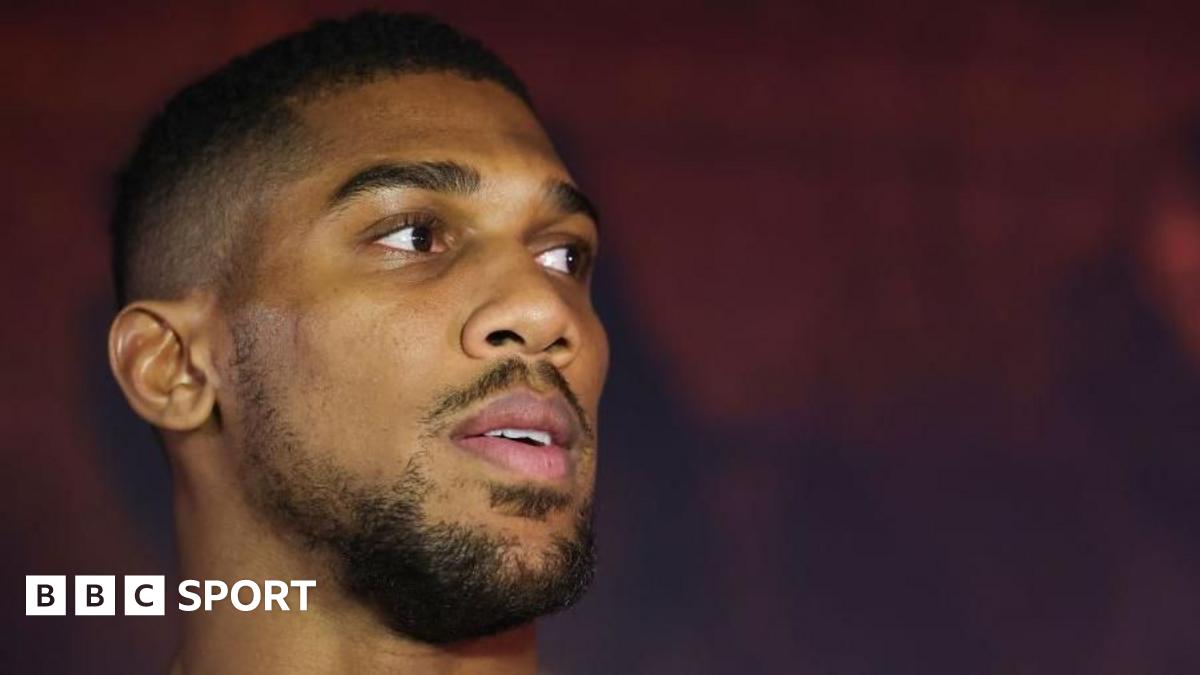
Joshua, who was born in Watford, has family roots in Sagamu – a town in Ogun state, near the crash site.
The 2012 Olympic champion was on his way to visit relatives for New Year celebrations in the town at the time of the collision, a family member told the BBC.
The boxer had been spending time in Nigeria after his recent victory over American YouTuber-turned-boxer Jake Paul on 19 December.
Quinton Byfield had a goal and an assist, Samuel Helenius scored his first goal of the season, and the Kings beat the Minnesota Wild 5-4 in a shootout on Saturday night.
Adrian Kempe and Corey Perry also scored, Darcy Kuemper made 24 saves, and the Kings were able to respond after wilting late in similar circumstances in a 5-3 loss to Tampa Bay on Thursday.
Matt Boldy scored late to salvage a point for the Wild. Jake Middleton, Joel Eriksson Ek and Brock Faber each had a goal, and Minnesota is 3-0-3 in its past six games. Jesper Wallstedt made 34 saves.
Kempe and Brandt Clarke scored in the four-round shootout, and Kuemper saved attempts by Kirill Kaprizov and Vladimir Tarasenko.
The Kings took the lead four times, only for the Wild to tie it up each time, with Boldy making it 4-4 with 2:57 remaining by getting to the right post where Faber’s shot went in off his upper body.
The Kings went back in front 3-2 early in the third period when Byfield sent the puck caroming off the boards back into the crease, Wallstedt lost it in his skates off his line, and it was eventually knocked in by an errant Minnesota stick.
Faber tied it 3-3 at 7:33 with an easy tap in from Danila Yurov off the rush.
Helenius scored on a wrist shot from the left circle at 12:09 of the third to put the Kings back up 4-3, with the fourth-line center coming free after entering the zone late off a line chance and putting in Kevin Fiala’s pass.
Up next for the Kings: vs. the Wild again on Monday night at Crypto.com Arena.
MANCHESTER United midfielder Mason Mount has found love.
I can reveal that the England international was seen with his arm around marketing executive Jordan Porter on a family trip to Lapland in Finland over the Christmas period.
Sign up for the Showbiz newsletter
Thank you!
Mason Mount has gone public with his new girlfriend Jordan PorterThe Manchester United player was seen with his arm around Jordan on a family trip to LaplandCredit: supplied
It is understood that the couple met through Mason’s pal Ben Harris who is engaged to Jordan’s sister Jodie.
A source said: “Mason and Jordan have been friends for a long time after being introduced through Ben.
“Family is important to Mason so having Jordan on the Lapland trip meant a lot.
“Mason’s performance on the pitch has also improved so it looks like Jordan is a keeper.”
Mason shared a snap of himself with his arm around Jordan at Lapland with his 5.6million followers last month.
The footie ace also posted a glimpse of two red stockings under his Christmas tree, embroidered with an M for Mason and J for Jordan. His brother Lewis also shared a picture of their family to his 16,600 Instagram followers.
Mason was pictured next to Jordan and with his arm around his dad Tony.
The pair were first linked in February 2024 when they were both pictured with a group of friends at the v.
Mason and Jordan also joined Ben and Jodie on their trip to Ibiza in July.
Jordan is Head of Experiences for London-based event planning service, GP Management, and grew up in South East London.
Mason had previously stated that football was his number one priority over finding loveCredit: Getty
Asked about his relationship status, he said: “Football is my priority.”
It sounds like Jordan is his new No1.
Tim’s scored Ad
MOVIE star Timothee Chamalet is a huge football fan, supporting both Chelsea FC and French club AS Saint-Etienne – and now I can reveal he has been signed up by sports giant Adidas to film a huge World Cup ad.
The actor, who is dating Kylie Jenner, shot a top-secret campaign last month in Barcelona alongside Puerto Rican rapper Bad Bunny, ex of Kylie’s sister Kendall, and British Real Madrid midfielder Jude Bellingham.
A source tells me: “Adidas bosses were chuffed to bring Timothee on to the ad and paid a lucrative fee.
“It is believed the film will drop during the lead-up to the World Cup.”
Timothee has recently been on an epic press tour for his latest flick Marty Supreme, while mostly donning movie merch.
He’ll have to mix that up once the ad drops.
Jossa is strong for family
JACQUELINE JOSSA is determined to start 2026 in strong spirits, despite a probe into online death threats against her.
EastEnders actress Jacqueline Jossa had been sent menacing messages on social mediaCredit: BBC
But Jac who shares two daughters with husband Dan Osborne, is focusing her energy on her family and work.
A source said: “She trusts the police to investigate. She is not changing her routine and she is still fulfilling her commitments with family and work.
“She is very calm and content in the knowledge the police are dealing with it.”
Jacqueline posted Instagram snaps with the children and Dan in London’s Covent Garden last month.
She wrote: “I love this time of year so much. I love the age the kids are now. They are older but the magic is still here, it’s just different.”
It comes as the actress, who plays Lauren Branning in Albert Square, feared for her character when the soap’s top boss called her in for a meeting last year.
Of the flash-forward episode that aired on New Year’s Day, she said: “It’s always scary when you get called up to a meeting.
It’s either, ‘You’re going to be thrown off the roof of the Vic’ or it’s just a catch-up.”
Leo’s worry
LEONARDO DiCAPRIO says the film industry is “changing at lightning speed”.
The Hollywood star has bemoaned documentaries vanishing from cinemas and the fact viewers prefer to watch on streaming services.
In The Times’ Culture Mag, he added: “Do people still have the appetite?
“Or will cinemas become silos, like jazz bars?”
Tina will Corrie on
Tina O’Brien signed her new Coronation Street contract just before Christmas, it can be revealedCredit: Getty
CORRIE star Tina O’Brien has signed a new contract keeping her on the cobbles for another year.
The star, who began playing Sarah Platt in 1999, had a tough 2025, splitting from her husband Adam Crofts – father of her son Beau – after seven years of marriage.
Tina who also has daughter Scarlett with her former co-star Ryan Thomas, then revealed in November her beloved dad Steven had died.
A Corrie source said: “Tina had a very difficult 2025, so bosses wanted to reassure her there was nothing to worry about where her job was concerned. She put pen to paper just before the Christmas break.
“Obviously, there have been a lot of changes over the last few months and the last thing they wanted was for her to worry about her role on Corrie.
“She is very much adored on set and her character has got some big things coming up this year.”
Hopefully, 2026 is off to a better start . . .
Hannah Hope’s annual 2026 showbiz calendar
Cynthia Erivo and the Wicked: For Good cast will be hoping to triumph at the Golden Globe AwardsCredit: Getty
JAN: Dust off your sequins as 2026 season kicks off with the 83rd Golden Globe Awards in Los Angeles on January 11.
Comedian Nikki Glaser will return as host, with Cynthia Erivo and Ariana Grande in the running for gongs for their roles in Wicked: For Good, while Kpop Demon Hunters are up for their catchy track, Golden.
Rock band All Time Low will begin the UK leg of their Everyone’s Talking Tour on January 20 in Glasgow.
FEB: For the first time in its history, The Brit Awards will be heading up north to Manchester on February 28.
Jack Whitehall is back as host with pop star Tate McRae rumoured to perform at the star-studded show at the city’s Co-op Live Arena.
Fresh from the Strictly final, West End star Amber Davies will return to the stage as Elle Woods in the Legally Blonde musical at Leicester’s Curve Theatre on February 7.
The 2026 Grammys will hit Los Angeles on February 1 at the Crypto.com Arena.
Britain’s brand new boyband December 10 will release their debut single. The band consists of Cruz 19, Danny, 17, Hendrick, 19, John, 17, Josh, 17, Nicolas, 16, and Sean, 19.
Wolf Alice will be performing at the Teenage Cancer Trust Gigs at London’s Royal Albert HallCredit: Alamy
MAR: After the success of her album West End Girl, Lily Allen is set to kick off her album tour in Glasgow on March 2.
Strictly Come Dancing: The Professionals returns in May for a nationwide tourCredit: BBC/Ray Burmiston
MAY: Strictly Come Dancing: The Professionals returns in dazzling style.
Fans can see 11 pros – including Vito Coppola and Nancy Xu – take to the dance floor for the ultimate night out.
The nationwide tour, which travels around the country throughout May, kicks off at the Globe Theatre in Stockton-on-Tees on April 29.
Meanwhile, the glamour of the South of France will come alive with the 79th edition of The Cannes Film Festival on May 12.
JUN: A Glastonbury-shaped hole will be filled with the Isle of Wight Festival.
Lewis Capaldi, Calvin Harris and The Cure form the incredible line-up for the four-day festival which starts on June 18.
Following the global success of Wicked, pop star Ariana Grande will return to the stage for The Eternal Sunshine Tour, which begins on June 6 at the Oakland Arena in California.
Lewis Capaldi will perform at the Isle of Wight Festival with Glastonbury taking a year outCredit: Getty
JUL: Michael Bublé proves he does not just defrost for the festive season – as he headlines Blenheim Palace Festival in Oxfordshire on July 4.
Rapper Pitbull – aka Mr Worldwide – returns to the UK with special guest Kesha on July 10 for BST Hyde Park in London.
Lewis Capaldi will also be performing at the festival on July 11 and 12.
AUG: All Points East in London’s Victoria Park will see our favourites Zara Larsson, PinkPantheress and Lorde headline the festival on August 22.
The Edinburgh Festival Fringe runs for three weeks from August 7, filling the city with the best theatre, comedy and music.
Zara Larsson will be performing at All Points East in London’s Victoria ParkCredit: Getty
SEP: The 31st National Television Awards will see your fave soap stars battle it out to be crowned the winner on September 8 at London’s O2 Arena.
Meanwhile the 2026 Emmy Awards are set to take place on September 14 at the Peacock Theater in Los Angeles. The nominations will be revealed on July 8.
Watch it
The long awaited sequel to The Devil Wears Prada is one of the films to look forward to in 2026Credit: Getty
ANNE HATHAWAY and Meryl Streep return in The Devil Wears Prada 2 on May 1.
Valentine’s Day just got even more romantic as Margot Robbie stars alongside Jacob Elordi in a new adaptation of Wuthering Heights, which is out on February 13.
Supergirl: Woman Of Tomorrow starring Milly Alcock will hit cinemas on June 26.
Buzz, Woody, Jessie and the gang return in Toy Story 5 on June 19.
Cillian Murphy stars in 28 Years Later: The Bone Temple which is out on January 14.
Who: South Africa vs Cameroon What:CAF 2025 Africa Cup of Nations Where: Al Barid Stadium, Rabat, Morocco When:Sunday, January 4, 8pm (19:00 GMT) How to follow: We will have all the buildup on Al Jazeera Sport from 16:00 GMT in advance of our text commentary stream.
A crunch encounter awaits in arguably the tie of the round in the last 16 at the 2025 CAF Africa Cup of Nations (AFCON) between South Africa and Cameroon.
The showdown at the compact Al Medina Stadium in Rabat has the makings of a fascinating contest between a Bafana Bafana side building towards the World Cup and a Cameroon team that entered the AFCON in disarray.
Cameroonian football federation president and Indomitable Lions legend Samuel Eto’o sacked national team coach Marc Brys just weeks before the competition started, replacing him with David Pagou.
His opposite number on Sunday, Hugo Broos, led Cameroon to an unlikely 2017 AFCON title
Al Jazeera Sport takes a look at the mouth-watering match-up.
How did South Africa reach the 2025 AFCON last 16?
South Africa’s 2-1 victory against near neighbours Angola was the first time they opened an AFCON with a win in 21 years.
Oswin Appollis had given South Africa the lead, but Show had Angola level by the break, before Lyle Foster netted the winner from outside the box.
Mohamed Salah led 10-man Egypt to a 1-0 win against South Africa in the second group stage match, and in doing so, he secured the Pharaohs’ place in the next round.
The Liverpool player converted a penalty on 45 minutes, but South Africa were denied a spot kick late in the second half, when Yasser Ibrahim appeared to handle the ball inside the box.
The crunch game came against another neighbouring country for Bafana Bafana as Appollis scored a penalty in the final 10 minutes to hand South Africa a 3-2 victory over Zimbabwe.
South Africa finished with six points in the group, one behind winners Egypt.
How did Cameroon reach the 2025 AFCON last 16?
Cameroon opened with a 1-0 win against Gabon as Karl Etta Eyong, assisted by Bryan Mbeumo, settled the game with his sixth-minute strike.
A point was rescued against defending champions Ivory Coast in their second match after Amad Diallo gave the Ivorians the lead in the 51st minute, only for Ghislain Konan to put through his own net five minutes later – Konan had laid on the assist for Diallo only moments earlier.
Cameroon again had to come from behind in their final group stage match against Mozambique, with a thunderbolt from Christian Kofane delivering a 2-1 victory.
Ivory Coast and Cameroon finished level on seven points, and both had a plus-two goal difference. The Ivorians topped the table because they scored five goals to Cameroon’s four.
Who will South Africa or Sudan face in the AFCON 2025 quarterfinals?
The winner will face the victor of the match between the hosts, Morocco, and Tanzania in Rabat on January 9.
Who are South Africa’s key players?
Foster is the main man for Bafana Bafana, and has already netted one crucial goal with his late winner in his side’s opening match against Angola.
Sipho Mbule has been given a role of greater-than-expected responsibility at the tournament, starting high up the park, along with Foster, in an attack-minded setup.
At the other end of the pitch, Ronwen Williams remains a pillar of strength in South Africa’s goal.
Who are Cameroon’s key players?
With seven goals across all competitions, Bryan Mbeumo headed into the tournament as Manchester United’s standout performer in an otherwise mixed and chaotic season for the Red Devils.
An injury kept Mbeumo out of the previous AFCON, but this time, the 26-year-old has a golden opportunity to clinch his first trophy with Cameroon.
Carlos Baleba arrived at AFCON without any major-tournament experience, but the 21-year-old has already produced performances that belie his age.
Have South Africa ever won an AFCON?
South Africa have won the tournament only once, when they were the hosts in 1996. Bafana Bafana were also finalists in 1998, while they were the bronze medallists at the last AFCON.
Have Cameroon ever won an AFCON?
Cameroon lifted two out of three AFCONs between 1982-1986, beating Nigeria in both finals. The 1984 title went to Egypt, with the Indomitable Lions the defeated finalists.
Back-to-back titles were secured in 2000 and 2002, while a further defeat to Egypt came in the 2008 final, before Cameroon lifted their fifth and last title in 2017.
When did South Africa and Cameroon last meet?
The last encounter between the sides ended in a 0-0 draw in a qualifier for the 2016 ACFON.
The match was played in South Africa, while the reverse qualifier in Cameroon ended in a 2-2 draw.
The sides have drawn their last three encounters.
Have South Africa and Cameroon ever played at an AFCON finals before?
The only meeting between the teams at an AFCON event was in the 1996 edition, hosted and won by South Africa.
Bafana Bafana, making their debut at the tournament, were 3-0 winners in the group stage encounter, which was also the opening game of that edition.
When did South Africa first meet Cameroon?
The first match between the sides was of particular note, given it was South Africa’s first match after apartheid ended.
Bafana Bafana claimed a 1-0 win in the match on July 7, 1992, which was played in Durban.
It was the first of a three-game series between the sides, which saw South Africa claim two wins to Cameroon’s one.
Head-to-head
This is the 10th meeting with the draw being the overall winner in previous encounters, accounting for five of the results between the African giants.
Bafana Bafana have claimed victory on three occasions, however, leading Cameroon with just one win in matches between the sides.
South Africa team news
Broos confirmed that Sphephelo Sithole’s omission against Zimbabwe was a tactical decision and not injury-related.
Relebohile Mofokeng and Bathusi Aubaas are both battling for a place.
Captain Nouhou Tolo was forced off with a hamstring injury against Mozambique. He was replaced in defence by Christopher Wooh, who will be on standby once more, should Tolo fail to recover.
Mbeumo and Baleba were both removed at half-time in that game so as to avoid bookings that would have led to suspensions for this match.
When the Chargers lost to Houston, it foreclosed on some options for them. The division race and bid for the No. 1 seed were out the window. Now, this finale is about getting out of Denver healthy and prepared for the playoffs.
Still on the table, though, is a chance for an unblemished record in AFC West play. The Chargers swept Las Vegas and Kansas City, and posted a 23-20 victory over the Broncos in Week 3.
This is a more polished and confident Denver team than earlier in the season, however, and the Broncos since have won 13 of 14.
The AFC’s No. 1 seed is Denver’s to lose, so if they beat the Chargers, the road to the Super Bowl will go through the Mile High City.
How the Chargers can win: With Justin Herbert sitting out, the Chargers’ path to winning shifts dramatically. The emphasis will be on ball control, field position and avoiding mistakes. Trey Lance’s mobility becomes a weapon if the Chargers lean into it, using the run game, designed quarterback movement and play-action to keep Denver’s pass rush zeroing in. The Broncos are vulnerable to explosive plays when teams stay patient and force them out of their comfort zone. If the Chargers can establish even a modest run game, it opens opportunities downfield off misdirection and play-action. Defensively, Los Angeles must do what it’s done best under Jim Harbaugh: limit big plays, force long drives and make Denver settle for field goals. If the Chargers protect the ball and avoid penalties, they are capable of keeping the game close into the fourth quarter, and in a low-possession game, that’s all they need.
How the Broncos can win: Denver’s formula is simple and familiar: play clean, disciplined football and force the Chargers into a low-scoring game, which is much easier with a backup at quarterback. The Broncos have thrived in tight games by limiting mistakes, relying on their pass rush and letting their defense control tempo. They lead the league in sacks and consistently generate pressure without blitzing, which will be especially important against a Chargers offense starting Lance. If Denver can stop the run early, force Lance into obvious passing situations and avoid costly penalties, it can dictate the game. Bo Nix doesn’t have to be spectacular. He just needs to protect the ball and take advantage of short fields. The Broncos are comfortable winning games 20-17 or 23-20, and they will be happy to be in one of those with the Chargers.
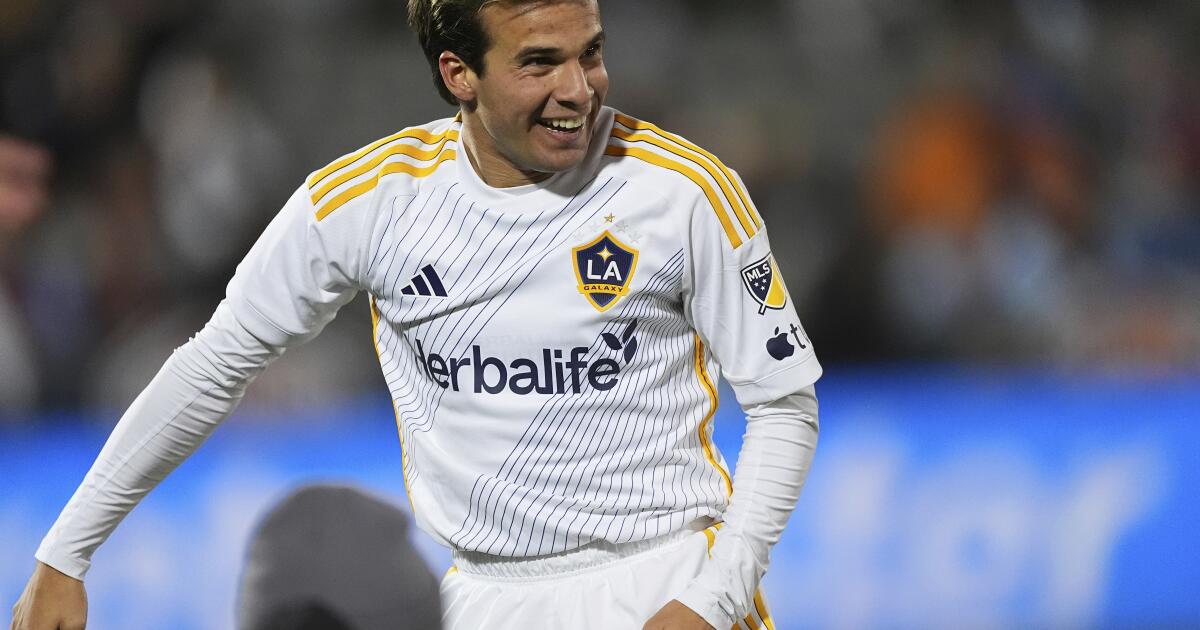
The Galaxy could be without Riqui Puig for a second straight season, with the team confirming Friday that the midfielder will undergo a second surgery Saturday to repair the torn ACL that caused him to miss all of 2025.
Puig, 26, tore the ligament in his left knee in the 2024 MLS Western Conference final with Seattle. A week later the Galaxy won its sixth league title. But playing without Puig in 2025, the team stumbled through the worst season in franchise history, winning just seven games.
Puig, a product of Barcelona’s famed La Masia youth academy, returned to training with the Galaxy in the fall. But the Galaxy said he had a setback in his recovery after returning to Spain for the holidays. After consulting with the club’s medical staff and outside specialists, the Galaxy and Puig agreed to a second surgery.
The timeline for Puig’s return will not be determined until after the operation, but losing him for any amount of time will be another significant blow for the team since last year’s performance proved Puig is the Galaxy’s most irreplacable player.
Puig had career highs for goals (13) and assists (15) in 2024, when he also led the league in touches and passes, helping the Galaxy set an MLS record with four players scoring 10 or more times. Without him, the team’s possession-based attack suffered, scoring 23 fewer goals and seeing just one player, winger Joseph Paintsil, reach double figures in scoring.
The Galaxy did not place Puig on the season-ending injury list last season, hoping he would return at some point. If doctors determine he is unlikely to play this season, it’s unlikely the team would make the same mistake since shelving Puig would open up a designated-play spot. Puig, who made $5.78 million last season, the eight-largest contract in MLS, is signed through 2027.
Before the Puig news the Galaxy had enjoyed a productive offseason, acquiring Jakob Glesnes, a former MLS defender of the year, in a trade with the Philadelphia Union and signing defender Justin Haak to a free-agent contract.
WEST PALM BEACH, Fla. — President Trump has spent much of his two-week vacation in Florida golfing. But when he gets back to the White House, there’s a military golf course that he’s never played that he’s eyeing for a major construction project.
Long a favored getaway for presidents seeking a few hours’ solace from the stress of running the free world, the Courses at Andrews — inside the secure confines of Joint Base Andrews in Maryland, about 15 miles from the White House — are known as the “president’s golf course.” Gerald Ford, Ronald Reagan, George H.W. Bush, Bill Clinton, George W. Bush and Joe Biden have spent time there, and Barack Obama played it more frequently than any president, roughly 110 times in eight years.
Trump has always preferred the golf courses his family owns — spending about one of every four days of his second term at one of them. But he’s now enlisted golf champion Jack Nicklaus as the architect to overhaul the Courses at Andrews.
“It’s amazing that an individual has time to take a couple hours away from the world crises. And they’re people like everybody else,” said Michael Thomas, the former general manager of the course, who has golfed with many of the presidents visiting Andrews over the years.
Andrews, better known as the home of Air Force One, has two 18-hole courses and a 9-hole one. Its facilities have undergone renovations in the past, including in 2018, when Congress approved funding to replace aging presidential aircraft and to build a new hangar and support facilities. That project was close enough to the courses that they had to be altered then, too.
Trump toured the base by helicopter before Thanksgiving with Nicklaus, who has designed top courses the world over. The president called Andrews “a great place, that’s been destroyed over the years, through lack of maintenance.”
Other golfers, though, describe Andrews’ grounds as in good shape, despite some dry patches. Online reviews praise the course’s mature trees, tricky roughs, and ponds and streams that serve as water hazards. The courses are mostly flat, but afford views of the surrounding base.
‘They all like to drive the cart’
The first president to golf at Andrews was Ford in 1974. Thomas began working there a couple years later, and was general manager from 1981 until he retired in 2019.
He said the Secret Service over the years used as many as 28 golf carts — as well as the president’s usual 30-car motorcade — to keep the perimeter secure.
“It’s a Cecil B. DeMille production every time,” said Thomas, who had the opportunity to play rounds with four different presidents, and with Biden when he was vice president.
He said the commanders in chief generally enjoyed their time out on the course in their own unique ways, but “they all like to drive the cart because they never get an opportunity to drive.”
“It’s like getting your driver’s license all over again,” Thomas laughed.
Trump golfs most weekends, and as of Friday, has spent an estimated 93 days of his second term doing so, according to an Associated Press analysis of his schedules.
That tally includes days when Trump was playing courses his family owns in Virginia, around 30 miles from the White House, and near his Florida estate Mar-a-Lago, where he’s spending the winter holidays. It also includes 10 days Trump spent staying at his golf club in Bedminster, N.J., where his schedule allowed time for rounds of golf.
Trump has visited Andrews in the past, but the White House and base have no record of him playing the courses.
Another of Trump’s construction projects
Andrews’ military history dates to the Civil War, when Union troops used a church near Camp Springs, Md., as sleeping quarters. Its golf course opened in 1960.
The White House said the renovation will be the most significant in the history of Andrews. The courses and clubhouse need improvements due to age and wear, it said, and there are discussions about including a multifunctional event center as part of the project.
“President Trump is a champion-level golfer with an extraordinary eye for detail and design,” White House spokesman Davis Ingle said in a statement. “His vision to renovate and beautify Joint Base Andrews’ golf courses will bring much-needed improvements that service members and their families will be able to enjoy for generations to come.”
Plans are in the very early stages, and the cost of — and funding for — the project haven’t been determined, the White House said. Trump has said only that it will require “very little money.”
The Andrews improvements join a bevy of Trump construction projects, including demolishing the White House’s East Wing for a sprawling ballroom now expected to cost $400 million, redoing the bathroom attached to the Lincoln bedroom and replacing the Rose Garden’s lawn with a Mar-a-Lago-like patio area.
Outside the White House, Trump has led building projects at the Kennedy Center and wants to erect a Paris-style arch near the Lincoln Memorial, and has said he wants to rebuild Dulles International Airport in northern Virginia.
On Wednesday, meanwhile, the Trump administration ended a lease agreement with a nonprofit for three public golf courses in Washington — which could allow the president to further shape golfing in the nation’s capital. The White House, however, said that move isn’t related to the plans for Andrews.
Presidential perks of golfing at Andrews
When the president is golfing, Andrews officials block off nine holes at a time so no one plays in front of him, allowing for extra security while also ensuring consistent speed-of-play, Thomas said.
That’s relatively easily done given that the courses aren’t open to the public. They’re usually reserved for active or retired members of the military and their families, as well as some Defense Department-linked federal employees.
Thomas remembers playing a round with the older President Bush, a World Golf Hall of Fame inductee known for fast play, while first lady Barbara Bush walked with Millie, the first couple’s English Springer Spaniel. George W. Bush also played fast, Thomas said, and got additional exercise by frequently riding his mountain bike before golfing.
When he wasn’t golfing at Andrews, Obama tried to recreate at least part of the experience back home. He had a White House golf simulator installed after then-first lady Michelle Obama asked Thomas how they might acquire a model that the president had seen advertised on the Golf Channel. Thomas gave her a contact at the network.
Obama famously cut short a round at Andrews after nine holes in 2011 to hustle back to the White House for what turned out to be a top-secret review of final preparations for a Navy SEAL raid on the compound of Osama bin Laden.
But, while Thomas was golfing with presidents, he said he never witnessed play interrupted by an important call or any major emergency that forced them off the course mid-hole. There also were never any rain-outs.
“If there was rain coming, they’d get the weather forecast before we would,” Thomas said. “They would cancel quick on that.”
“As you know, I need time,” he said. “Give me time and you’re going to see what I do. You can already see what I did before because I didn’t start yesterday.
“I’m going to be a liar if I say, ‘everything is happy, everything is good’. No, it’s not the case, but I knew that before.
“That’s why I’m calm during all the questions you ask me. I’m not pleased to hear people don’t like me, but they have the right to say it because in terms of results, this is not what we want.
“Tomorrow is a big game. But the context is that I’ve only had 13 training sessions with my team. Usually we have four weeks of pre-season.
“It’s totally normal that you guys kill me. I’m fine with that because I know where I want to go. Judge me in a few weeks or months. If you want to judge me now, you can do it. I didn’t have the results we wanted – it’s a fact, I cannot deny that.”
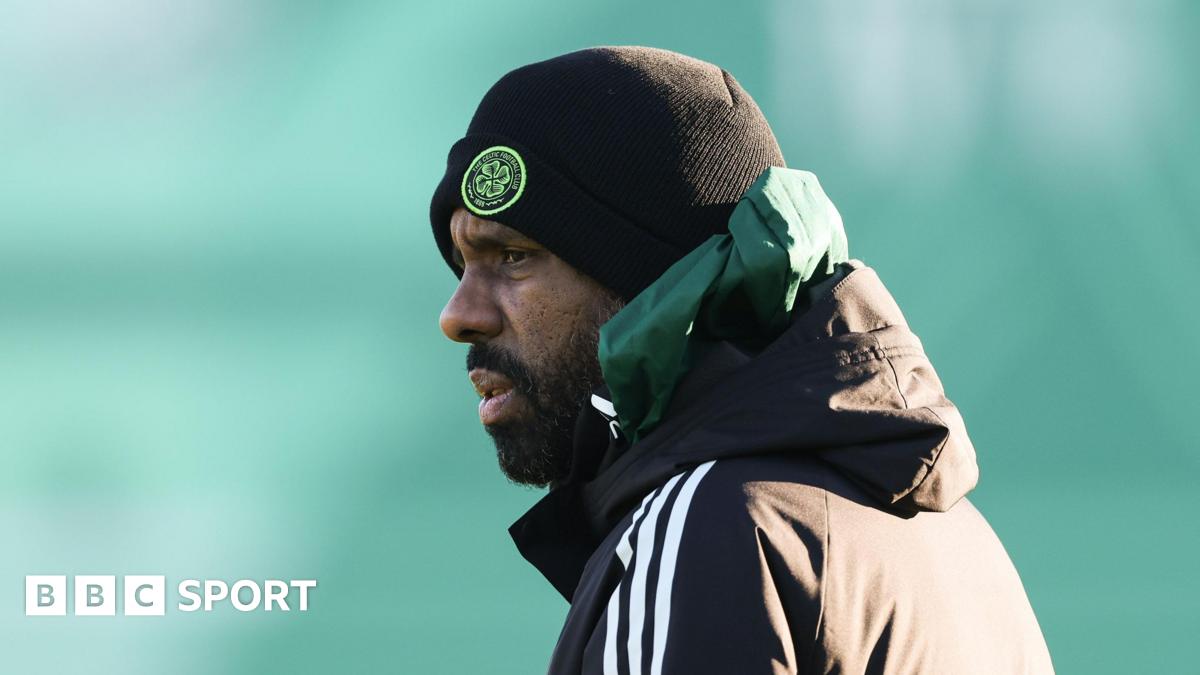
Nancy says he will “die” to achieve his goals at Celtic and believes results under him have not reflected performances.
“It’s totally normal my players need a bit of time and are confused at certain moments,” he explained.
“It’s a process. I don’t like the word process because people think I am going to hide behind ‘process’, but it’s true.
“Judge me, no problem, but have a look at the games since I have been here and analyse if we should have won or lost. Do it.
“I am a clear guy. For the moment, I cannot talk because results are not good enough. I shut my mouth and I take it, but I know where we are going. After that, if it’s going to work or not, I don’t know. We are going to do everything to do it and I am here for that.
“Yes, I want to win every game. Yes, I want to win titles. I want to create a legacy here. I am going to die for this club, for sure.”
Who: Senegal vs Sudan What: CAF Africa Cup of Nations Where: Ibn Batouta Stadium in Tangier When: Saturday, January 3, 5pm (16:00 GMT) How to follow: We’ll have all the build-up on Al Jazeera Sport from 13:00 GMT in advance of our text commentary stream.
The AFCON round of 16 begins with a clash between the heavyweights and minnows, as title favourites Senegal face Sudan, the lowest-ranked side remaining in the competition.
Recommended Stories
list of 4 itemsend of list
Boasting considerable attacking firepower in Nicolas Jackson and Sadio Mane, Senegal stormed their way into the knockouts, affirming their place among the title favourites as the AFCON 2021 champions seek their second title.
The 117th-ranked Sudan, on the other hand, needed a helping hand to qualify and will play in the knockout stages for the first time in 14 years. Reaching the round of 16 represents a significant achievement for Sudan, whose footballing progress has defied ongoing turmoil at home.
Here’s everything you need to know about Senegal vs Sudan:
What’s going on in Sudan?
Sudan has been ravaged by war since fighting broke out between the Sudanese Armed Forces (SAF) and the paramilitary Rapid Support Forces (RSF) in April 2023.
The conflict has killed tens of thousands, displaced more than 12 million people and triggered famine in several parts of Sudan, a situation the United Nations has described as the “world’s worst humanitarian crisis”.
Sudan’s goalkeeper, Mohamed Abooja, had to deal with the anguish of his brother being taken prisoner by the RSF. “Of course, the team has been impacted. Everyone has just tried to get through this period, but it has been difficult with the tension all over Sudan,” Abooja told AFP news agency.
“In the end, our results on the pitch are what make the people happy and boost their morale.”
How did Sudan reach the 2025 AFCON round of 16?
Sudan’s team progressed to the last 16 as one of the four best third-placed teams, collecting three points in Group E courtesy of a 1-0 victory over Equatorial Guinea: a result that marked only their second-ever win at the tournament since lifting the trophy in 1970.
That historic victory was aided by a moment of good fortune, with an own goal from Equatorial Guinea’s Saul Coco proving decisive.
How did Senegal reach the round of 16?
Senegal, Africa’s second-highest-ranked nation at 19th in the world, finished top of Group D with seven points after two wins and a draw, edging DR Congo on goal difference.
They finished the group stage with the joint-second highest goal tally (seven, alongside Algeria), just one behind Nigeria.
Who will the winner face in the next round?
The winner of the Senegal and Sudan match will stay in Tangier to face the winner of the Mali and Tunisia match in the quarterfinals on January 9.
Who are Senegal’s best players?
Striker Nicolas Jackson made an impressive start with two goals in the opening match against Botswana, while Cherif Ndiaye also has two goals to his name – both scored after coming on as a substitute.
The experienced winger Sadio Mane is another star player of Senegal, alongside midfielders Iliman Ndiaye and Idrissa Gana Gueye.
Mane has been involved in 17 AFCON goals (10 goals, 7 assists), the most by any player since 2010.
Who are Sudan’s best players?
Midfielders Walieldin Khidir and Ammar Toaifour, along with defender Sheddy Barglan, have been Sudan’s standout performers at the tournament.
Senegal and Sudan form guides
All matches, most recent result last:
Senegal: W-D-W-W-L
Sudan: L-W-L-L-L
Senegal are on a 14-match unbeaten run at AFCON (W9 D5).
Senegal have kept 17 clean sheets at AFCON since 2017, more than any other team.
Sudan have conceded six goals, the most of any team to reach the round of 16.
Sudan won just one of their last seven AFCON matches (D1 L5).
Head-to-head
Senegal and Sudan have met in seven previous encounters, across competitive and friendly games.
Senegal boast an unbeaten record, having won four times and drawn three times.
When did Senegal and Sudan last meet?
The teams recently met in a 2026 FIFA World Cup qualifying match in September when Senegal won 2-0.
Senegal vs Sudan – stat attack
Saturday’s game will be their first meeting at AFCON and fifth overall in a span of a year.
Senegal have never lost to an East African opponent at AFCON, having played five matches, winning four and drawing one.
Have Senegal ever won an AFCON title?
This is Senegal’s 18th appearance at the AFCON finals, with their best result being the 2021 title they won in Cameroon. They have also finished runners-up twice: in 2002 and 2019.
Have Sudan ever won an AFCON title?
Sudan are making their 10th appearance this year. Since their debut in 1957, they have finished runners-up twice – in 1959 and 1963 – and won their only trophy in 1970.
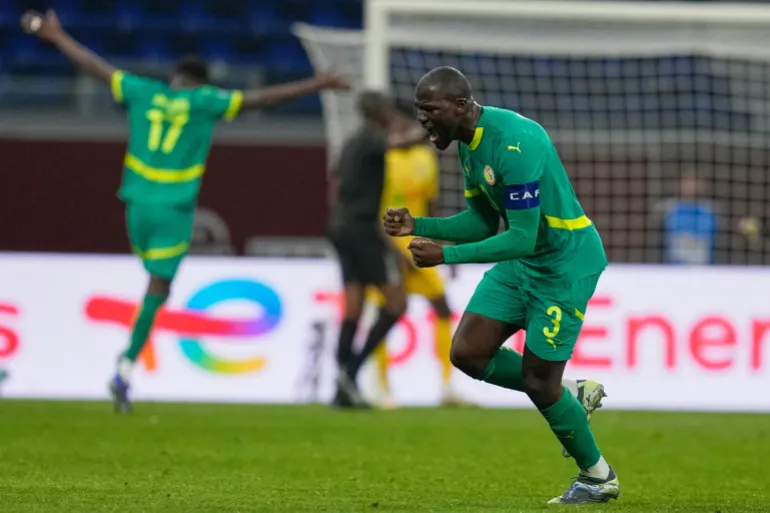
Senegal captain Kalidou Koulibaly, a key member of their defence, will miss the match against Sudan after his sending off in the last match [File: Themba Hadebe/AP]
Senegal team news
Senegal coach Pape Thiaw will be without his captain, Kalidou Koulibaly, who is suspended for this match, having picked up a red card in their final group game.
Senegal’s predicted lineup
Edouard Mendy; Krepin Diatta, Abdoulaye Seck, Moussa Niakhate, Ismail Jakobs; Idrissa Gana Gueye, Pape Gueye; Ismaila Sarr, Iliman Ndiaye, Sadio Mane; Nicolas Jackson
Sudan team news
Sudan coach Kwesi Appiah will be without midfielders Salah Adil, Abo Eisa and Abuaagla Abdalla, who are injured.
Sudan’s predicted lineup
Monged El Neel; Sheddy Barglan, Mohamed Ereng, Mustafa Karshom, Bakhit Khamis; Walieldin Khidir, Abdelrazig Omer, Ammar Taifour; Aamir Abdallah, Mohammed Abdel-Rahman, Mohamed Eisa
When musician Cary Brothers found out that the Hotel Cafe was shutting down, he felt like he’d been told his parents were selling his childhood home.
The beloved music venue, which kick-started the careers of then-little-known singer-songwriters Adele, Sara Bareilles and Damien Rice, is closing its doors in early 2026, its co-founders Marko Shafer and Max Mamikunian announced in November. For those like Brothers, who considered the Hotel Cafe a second home, the news of the closure was a heavy blow.
Luckily for them, Shafer and Mamikunian plan to open a new location in the nearby Lumina Hollywood tower in early 2027. Brothers said it provides consolation, but not complete comfort.
“Yeah, they’re buying a great new house, but it’s not our house,” he said.
Share via
Elected the “mayor of the Hotel Cafe,” Brothers discovered the Hollywood haunt before it even had a liquor license. In those days, the cafe had a BYOB policy and sold buckets of ice for visitors to chill the alcohol they brought in with them, and jazz legends pouring out of local bars after last call capped off their nights with a 3 a.m. jam session in the Hotel Cafe’s piano room (or smoking room, depending on whom you ask).
Every penny they made went back into the venue, Shafer said.
Brothers has always likened the Hotel Cafe in that era to “‘Cheers’ with guitars,” where he could show up any night and a dozen of his closest friends would be there. Eagles songwriter Jack Tempchin used to say it was the closest thing to the front bar at the Troubadour in the ’70s.
“Nobody became the Eagles, sure, but the spirit was the same,” Brothers said.
Dave Navarro, left, and Billy Corgan perform with Spirits in the Sky at the Hotel Cafe in 2009. The venue was a launching pad for many prominent singer-songwriters in the late 2000s and early 2010s.
(Tiffany Rose / WireImage via Getty Images)
Beginnings on Cahuenga Boulevard
The owners attribute much of Hotel Cafe’s success to good timing.
At the turn of the century, Mamikunian said, “Word on the street in Los Angeles was, it’s an industry town and music venues don’t work here.”
Mamikunian, on the other hand, believed the city was teeming with raw talent, but there was no place for it to develop. Judging by the laundry list of musicians who flocked to the Hotel Cafe in those early years, his hunch was spot-on.
“We hit it right when it needed to happen,” he said.
For independent artist Kevin Garrett, the Hotel Cafe was a “gym” where he could flex his creative muscles and experiment with his sound, judgment-free. For local folk singer Lucy Clearwater, it was her sign that moving to L.A. was the right decision for her career.
And for Ingrid Michaelson, the spot was ahead of its time in championing female artists. When the Hotel Cafe asked Michaelson to headline its 2008 all-female tour, she thought, “When does that ever happen, except for Lilith Fair?”
In Michaelson’s native New York, there were a handful of venues that cradled early-career musicians: the Living Room, the Bitter End, Kenny’s Castaways.
“But in L.A., there really was just the Hotel Cafe,” Michaelson, behind such 2000s hits as “The Way I Am” and “You and I,” said. “So it was this distilling of all the singer-songwriters in L.A., kind of coming through this one port.”
Patrons enter the Hotel Cafe through a back alleyway along Cahuenga Boulevard.
(Gina Ferazzi / Los Angeles Times)
Through the musical generations
In its 25 years of operation, the Hotel Cafe has seen several generations of musicians shuffle through the space, Shafer said. Production manager Gia Hughes calls them the “graduating classes.”
In Brothers’ days, it was Joshua Radin, Bareilles, Meiko and other late 2000s singer-songwriters whose music regularly landed on shows like “Grey’s Anatomy” — or in Brothers’ case, the indie cult classic “Garden State,” directed by and starring fellow Northwestern alum Zach Braff.
Next came residencies from breakouts Johnnyswim and JP Saxe, and later, folksters Clearwater and her close confidant Rett Madison. Clearwater said that during her tenure, she would often join her fellow performers onstage to sing backing vocals or play a violin solo.
“Every four years it’s like a different kind of community that comes about,” Hughes said. “And it’s different, but it’s also not.”
It’s why Shafer and Mamikunian aren’t worried about losing the magic they created on Cahuenga. In their eyes, it was never confined to the space itself.
“I remember when we first talked about expanding the Hotel Cafe and everybody said, ‘Don’t do it. You’re going to ruin what you have,’” Shafer said, referencing the venue’s 2004 acquisition of additional space next door. (They expanded again in 2016 with their Second Stage annex, about half the capacity of the main stage.)
“When we did it, it changed the room so much for the better, and gave us access to bigger artists but still didn’t lose the intimacy,” he said about the expansion.
Shafer and Mamikunian thought they’d outgrown the Cahuenga space and had long been pondering a move. This year, the logistics lined up, Mamikunian said.
“It wasn’t anything dramatic,” he said. It was just time.
Hughes called the move “an opportunity to pursue a space that can check a lot more boxes for us, for the long term”: more parking, increased room capacity, greater accessibility.
L.A. singer-songwriter Maris performs in the Second Stage performance room at the Hotel Cafe.
(Gina Ferazzi / Los Angeles Times)
A new beginning around the corner
Zoning clearances are still pending for the new location in Lumina Hollywood on Sunset Boulevard, a high-rise apartment building set to be upgraded by Morguard Corp. And although the new venue is slated for a 2027 opening, the timeline depends on an upcoming zoning hearing, expected in March or April, Mamikunian said.
But Shafer and Mamikunian opted to announce the closure while details were still being worked out rather than wait and risk information leaking to the public. Plus, this way, both artists and patrons have time to say their goodbyes.
After Clearwater heard the news, she rushed to a “Monday Monday” weekly showcase and immediately felt like she’d been transported back to 2017, when she spent four-plus nights a week at the joint.
“So many of my old friends from that time — some of [whom] I had fallen out of touch with — I saw all of them there,” the Bay Area-bred folk singer said. “You could feel everybody loving it so much.”
The singer said she couldn’t help but wonder whether things would have panned out differently had people shown out like that before Shafer and Mamikunian made their choice. But sipping red wine in the green room that night, she felt lucky just to be there.
“It’s the wood, it’s the bar, the backstage chairs, the little lanterns,” she said. “I’m just going to miss what it looks and smells like, but the people, that’s never gonna go away.”
The Hotel Cafe hosted its annual holiday showcase on Dec. 19, with proceeds benefiting the Recording Academy’s nonprofit arm, MusiCares.
(Gina Ferazzi / Los Angeles Times)
Farewell for now
Earlier this month, the Hotel Cafe hosted its last-ever holiday event at the Cahuenga location. Hughes, with the help of her interior designer sister, Nina Hughes, spent hours that day decking the halls with carnival lights and ribbons galore.
Even before the night’s performances began, attendees were clinking glasses and giving lingering hugs — the kind befitting the last day of summer camp.
“It’s going to be a love fest,” Hughes predicted.
As heartfelt as that night’s musicians were in their speeches, bartender Dan Shapiro said waxing sentimental onstage has been the norm for weeks.
“People are always doing eulogies to the place,” Shapiro said with a chuckle. As he surveyed the lineup posted at the bar, he said he’d put his money on performer Lily Kershaw shedding a few tears. Fellow bartender Dave Greve concurred.
Against the odds, Kershaw didn’t cry as she led the crowd through a rendition of Crosby, Stills, Nash & Young’s “Our House” a few hours later. Subsequent performers stayed on theme with songs composed of resonant lyrics like “So long stranger / I like to think I know you best” and “Hold on tight / don’t let go.”
As Brothers crooned his own tribute, he closed his eyes, as though praying.
“It’s never gonna be what it was, but it’ll be something new and different, and I’m really excited to see what that is,” Lucy Clearwater said about the Hotel Cafe’s relocation to Sunset Boulevard.
(Gina Ferazzi / Los Angeles Times)
James Babson, a longtime doorman at the Hotel Cafe, said its staff and attendees alike have always been reverent toward performers. For some, he said, the listening experience is “spiritual.”
“Maybe they’re not churchgoers, so they have this sense of community and transcendence, where that song touches them on this level, which takes them somewhere else,” he said.
Peter Malek felt it the first time he stepped inside the Hotel Cafe 20 years ago. Hooked on that feeling, he started visiting the venue several times a week. Sometimes, he never even made it inside, content to chat with Babson for hours at the door; other evenings he spent in the staff offices, cramming for his medical school exams.
According to Malek’s last tally, he’s been to the Hotel Cafe 1,333 times. Although he was saddened when he heard the news of the relocation — several months before almost everyone else found out — he said he isn’t expecting Shafer and Mamikunian to replicate what they built at the Cahuenga site.
Instead, Malek said, he’s left “happy that he witnessed it.”
The Hotel Cafe was packed with regulars and first-time attendees at its farewell holiday performance in December.
(Gina Ferazzi / Los Angeles Times)
All night at the Hotel Cafe’s holiday party, attendees wondered whether penultimate performer Dan Wilson, of the pop-rock band Semisonic, would play “the song.” No one had to name it.
When Wilson finally sang the magic words, “Closing time, open all the doors / And let you out into the world,” the room erupted into cheers.
It was the closest Brothers came to crying, but he held it in. There would be time for that later.
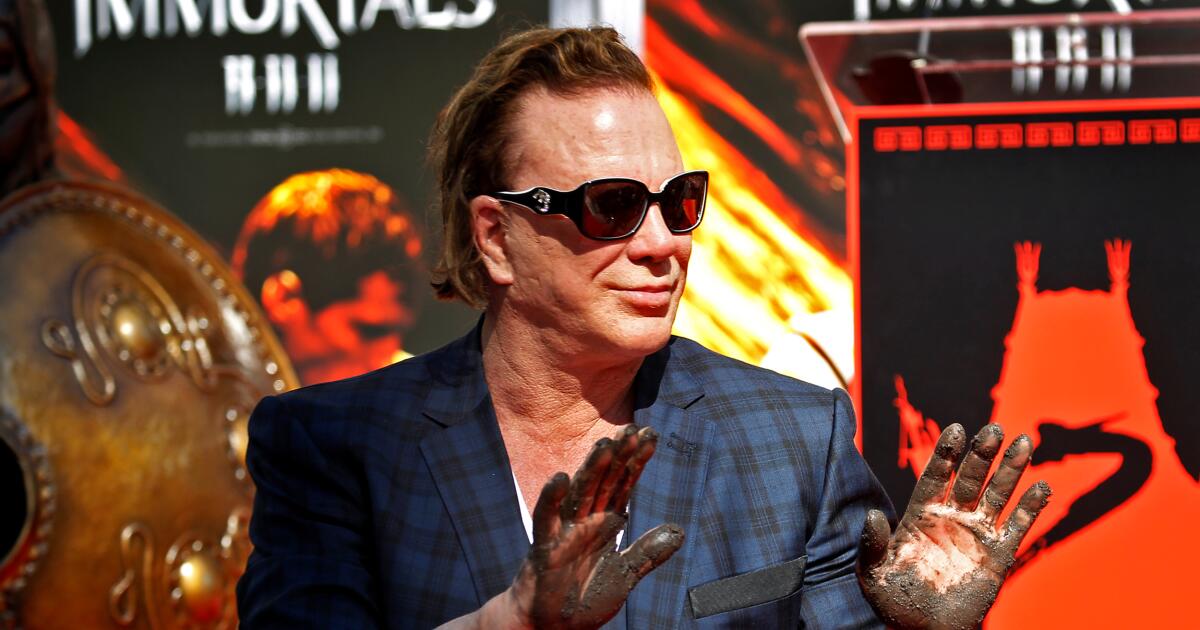
Actor Mickey Rourke faces eviction from his Los Angeles home after failing to pay rent.
Rourke, whose birth name is Philip Andre Rourke Jr., received a three-day notice to pay rent or vacate the premises on Dec. 18 and had failed to comply, according to court documents filed in Los Angeles Superior Court on Monday.
At the time of the notice, he owed $59,100 in unpaid rent.
A representative for Rourke did not immediately respond to a request for comment.
In March, Rourke signed a lease for the three-bedroom, 2.5-bath house for $5,200 a month; it was subsequently raised to $7,000 a month, states the court filings.
A Zillow listing describes the property as a “nicely upgraded Spanish bungalow” built in 1926. Raymond Chandler was said to have resided there for two years in the 1940s.
The property’s owner, Eric Goldie, is requesting compensation for attorney‘s fees and for damages. A lawyer for Goldie was unavailable for comment.
A former boxer, Rourke, 73, turned to acting with small roles in the 1980 film “Heaven’s Gate” and “Body Heat” a year later, before earning acclaim for his role in 1982’s “Diner.”
After a slate of leading roles in a number of movies including “The Pope of Greenwich Village,” “9 1/2 Weeks” and “Rumble Fish,” Rourke‘s film career took a nosedive, with his off-screen antics frequently overshadowing his acting.
“I lost everything. My house, my wife, my credibility, my career,” he told The Times in an interview in 2008. “I just all had all this anger from my childhood, which was really shame, not anger, and used it as armor and machismo to cover up my wounds. Unfortunately, the way I acted really frightened people, although it was really just me who was scared. But I was like this person who was short-circuited and I didn’t know how to fix myself.”
In 2005 he reemerged with the neo-noir action thriller “Sin City.”
Three years later, Rourke’s portrayal of aging, washed up wrestler Randy “The Ram” Robinson, in the Darren Aronofsky film “The Wrestler,” earned him a Golden Globe and an Oscar nomination for lead actor.
Rourke’s return to the big screen has not been an entirely smooth ride.
In April, he agreed to exit “Celebrity Big Brother UK” after producers warned him over the use of “inappropriate language and instances of unacceptable behavior,” according to a statement a spokesperson for the show released at the time.
Following his departure from the reality show, his manager announced that he was pursuing legal action over a pay dispute, claiming that the show had disrespected her client by “publicly embarrassing him” and declined to pay him, according to People.
Kicker Harrison Mevis aims to get back on track when the Rams play the Atlanta Falcons on Monday night at Mercedes-Benz Stadium in Atlanta.
Mevis, signed by the Rams in November, made all eight of his field-goal attempts before missing from 48 yards late in the fourth quarter of the Rams’ 38-37 overtime defeat by the Seattle Seahawks on Dec. 18 in Seattle.
“Just continuing to keep firing away,” Mevis said. “I’m not going to be perfect in my career — nobody is. And it’s all about how you respond and bounce back and make the next kick.”
Share via
Gary Klein breaks down everything you need to know heading into Monday night’s matchup between the Rams and the Atlanta Falcons.
Three of the Rams’ four losses have resulted from major kicking-game miscues, and Blackburn’s firing was just the latest change made to solve the issues.
When the Rams signed Mevis to replace Joshua Karty — who last week was signed by the Arizona Cardinals off the Rams practice squad — they also brought in veteran snapper Jake McQuaide to replace Alex Ward.
The game against the Falcons will serve as Ben Kotwica’s debut as interim special teams coordinator.
Kotwica has worked in the NFL for most of the last 18 years, and he coached with McVay on Washington’s staff. Kotwica was the Denver Broncos special teams coordinator in 2023 and 2024 before joining the Rams staff as a special teams assistant.
“We’ve had a couple of plays that have cost us during the course of the year, but I love the way that our guys are going about the business,” Kotwica said. “They understand the urgency. We’re part of a championship football team and we’re just ready to contribute to holding up that Lombardi [Trophy] early next year.”
Key injuries
Rams: OL Kevin Dotson (ankle, out); DB Josh Wallace (ankle, out); WR Davante Adams (hamstring, doubtful); OL Alaric Jackson (knee, questionable); DL Braden Fiske (ankle, questionable but expected to play); CB Roger McCreary (hip, expected to be activated to roster from injured reserve).
Falcons: CB Mike Hughes (ankle, out); CB Clark Phillips III (triceps/illness, out); DL Sam Roberts (knee/ankle, out); WR Drake London (knee, questionable).
How to watch and listen to Rams vs. Falcons
The Rams (11-4) and the Atlanta Falcons (6-9) will play at 5:15 p.m. PST Monday. The game will be shown on ABC in the Los Angeles area and nationally on ESPN and ESPN Deportes. In Southern California, fans can listen to the game on 710 AM, 93.1 FM and 1330 AM (Español).
Betting odds and lines for Rams vs. Falcons
Who will win Rams vs. Falcons?
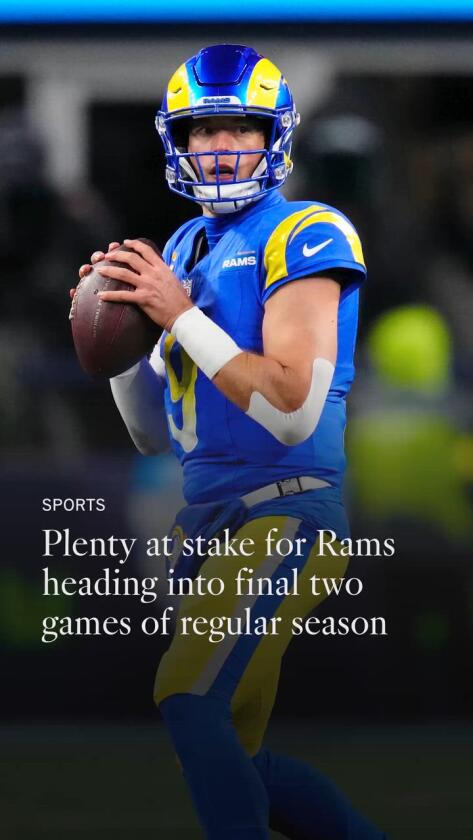
Gary Klein’s pick: A few weeks ago, this looked like a potential easy victory for the Rams. Now it could be more difficult. Still, Rams quarterback Matthew Stafford will outduel Kirk Cousins. Rams 30, Falcons 24
WASHINGTON — The Department of Justice has expanded its review of documents related to the convicted sex offender Jeffrey Epstein to 5.2 million as it also increases the number of attorneys trying to comply with a law mandating release of the files, according to a person briefed on a letter sent to U.S. attorneys.
The figure is the latest estimate in the expanding review of case files on Epstein and his longtime girlfriend Ghislaine Maxwell that has run more than a week past a deadline set in law by Congress.
The Justice Department has more than 400 attorneys working on the review, but does not expect to release more documents until Jan. 20 or 21, according to the person briefed on the letter who spoke on condition of anonymity because they were not authorized to discuss it.
The White House did not dispute the figures laid out in the email, and pointed to a statement from Todd Blanche, the deputy attorney general who said the administration’s review was an “all-hands-on-deck approach.”
Blanche said Wednesday that lawyers from the Justice Department in Washington, the FBI, the Southern District of Florida and the Southern District of New York are working “around the clock” to review the files. The additional documents and lawyers related to the case were first reported by the New York Times.
“We’re asking as many lawyers as possible to commit their time to review the documents that remain,” Blanche said. “Required redactions to protect victims take time but they will not stop these materials from being released.”
Still, Atty. Gen. Pam Bondi is facing pressure from Congress after the Justice Department’s rollout of information has lagged behind the Dec. 19 deadline to release the information.
“Should Attorney General Pam Bondi be impeached?” Rep. Thomas Massie, a Kentucky Republican who helped lead the effort to pass the law mandating the document release, asked on social media this week.
Democrats also are reviewing their legal options as they continue to seize on an issue that has caused cracks in the Republican Party and at times flummoxed President Trump’s administration.
Senate Democratic leader Chuck Schumer said on social media that the latest figures from the Department of Justice “shows Bondi, Blanche, and others at the DOJ have been lying to the American people about the Epstein files since day one” and pointed out that the documents released so far represent a fraction of the total.
It’s been called an “epidemic” of loneliness and isolation. The “bowling alone” phenomenon.
By any name, it refers to Americans’ growing social disconnection by many measures.
Americans are less likely to join civic groups, unions and churches than in recent generations. They have fewer friends, are less trusting of each other and less likely to hang out in a local bar or coffee shop, recent polling indicates. Given all that, it’s not surprising that many feel lonely or isolated much of the time.
Such trends form the backdrop to this Associated Press report on small groups working to restore community connections.
They include a ministry pursuing “trauma-informed community development” in Pittsburgh; a cooperative helping small farmers and their communities in Kentucky; an “intentional” community of Baltimore neighbors; and organizations seeking to restore neighborhoods and neighborliness in Akron, Ohio.
Loneliness and its health risks
In 2023, then Surgeon General Vivek Murthy reported on an “ epidemic of loneliness and isolation,” similar to his predecessors’ advisories on smoking and obesity.
Isolation and loneliness aren’t identical — isolation is being socially disconnected, loneliness the distress of lacking human connection. One can be alone but not lonely, or lonely in a crowd.
But overall, isolation and loneliness are “risk factors for several major health conditions, including cardiovascular disease, dementia, depression, and premature mortality,” the report said.
Murthy says he’s encouraged by groups working toward social connection through local initiatives ranging from potluck dinners to service projects. His new Together Project, supported by the Knight Foundation, aims to support such efforts.
“What we have to do now is accelerate that movement,” he said.
The pandemic temporarily exacerbated social isolation. There’s been some rebound, but often not back to where it was before.
Scholars and activists have cited various potential causes — and effects — of disconnection. They range from worsening political polarization to destructive economic forces to rat-race schedules to pervasive social media.
Murthy said for many users, social media has become an endless scroll of performance, provocation and unattainably perfect body types.
“What began perhaps as an effort to build community has rapidly transformed into something that I worry is actually now actively contributing to loneliness,” he said.
Bowling alone, more than ever
Harvard’s Robert Putnam, 25 years ago, described the decline in civic engagement in a widely cited 2000 book “Bowling Alone.” It was so named because the decline even affected bowling leagues. The bowling wasn’t the point. It was people spending time together regularly, making friends, finding romantic partners, helping each other in times of need.
Memberships in many organizations — including service, veterans, scouting, fraternal, religious, parental and civic — have continued their long decline into the 21st century, according to a follow-up analysis in “The Upswing,” a 2020 book by Putnam and Shaylyn Romney Garrett.
While some organizations have grown in recent years, the authors argue that member participation often tend to be looser — making a contribution, getting a newsletter — than the more intensive groups of the past, with their regular meetings and activities.
A reaction against institutions
Certainly, some forms of social bonds have earned their mistrust. People have been betrayed by organizations, families and religious groups, which can be harshest on their dissenters.
But disconnection has its own costs.
“There’s been such a drive for personal autonomy, but I think we’ve moved so far past wanting not to have any limits on what we can do, what we can believe, that we’ve become allergic to institutions,” said Daniel Cox, the director of the Survey Center on American Life and a senior fellow in polling and public opinion at the American Enterprise Institute.
“I’m hoping we’re beginning to recognize that unbounded personal autonomy does not make us happier and creates a wealth of social problems,” said Cox, co-author of the 2024 report “ Disconnected: The Growing Class Divide in American Civic Life.”
By the numbers
1. About 16% of adults, including around one-quarter of adults under 30, report feeling lonely or isolated all or most of the time, according to a 2024 survey by the Pew Research Center.
2. Just under half of Americans belonged to a religious congregation in 2023, a low point for Gallup, which has tracking this trend since 1937.
3. About 10% of workers are in a union, down from 20% four decades ago, the Bureau of Labor Statistics reports.
4. Around half of Americans regularly spent time in a public space in their community in 2025, such as a coffee shop, bar, restaurant or park. That’s down from around two-thirds in 2019, according to “America’s Cultural Crossroads,” another study by the Survey Center on American Life.
5. About two in 10 U.S. adults have no close friends outside of family, according to the “Disconnected” report. In 1990, only 3% said that, according to Gallup. About one-quarter of adults have at least six close friends, down from nearly half in 1990.
6. About 4 in 10 Americans have at most one person they could depend on to lend them $200, offer a place to stay or help find a job, according to “Disconnected.”
7. About one-quarter of Americans say most people can be trusted — down from about half in 1972, according to the General Social Survey.
Exceptions and a stark class divide
Some argue that Putnam and others are using too limited a measurement — that people are finding new ways of connecting to replace the old ones, whether online or other newer forms of networking.
Still, many numbers depict an overall decline in connection.
This hits hardest on those who are already struggling — who could most use a friend, a job referral or a casserole at the door in hard times.
Those with lower educations, which generally translates to lower incomes, tend to report having fewer close friends, fewer civic gathering places in their communities and fewer people who could help out in a pinch, according to “Disconnected.”
Responses to the crisis
Across the country, small organizations and informal groups of people have worked to build community, whether through formal programs or less structured events like potluck dinners.
Murthy will continue to be visiting such local groups in his “Together Project,” supporting such efforts.
Another group, Weave: The Social Fabric Project at the Aspen Institute, has a searchable database of volunteer opportunities and an online forum for connecting community builders, which it calls “weavers.” It aims to support and train them in community-building skills.
“Where people are trusting less, where people are getting to know each other less, where people are joining groups less, there are people still in every community who have decided that it’s up to them to bring people together,” said its executive director, Frederick J. Riley.
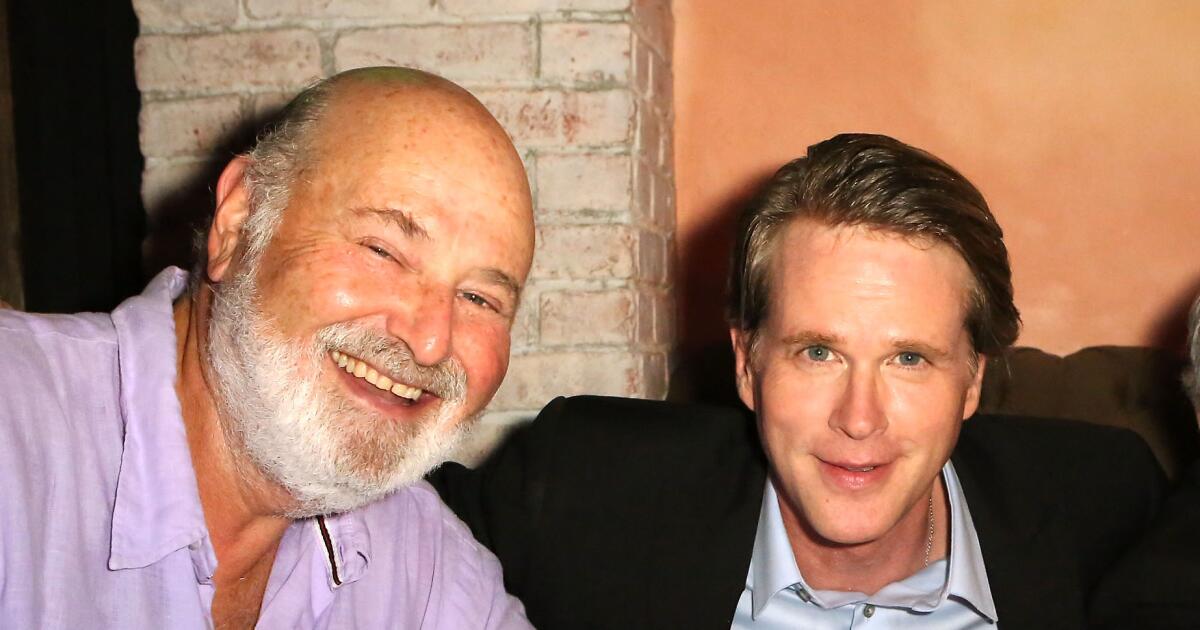
“The Princess Bride” star Cary Elwes says he will remain in mourning long after the shocking deaths of beloved friend Rob Reiner and his wife, Michele Singer Reiner, earlier this month.
“Because my heart still aches every time I think of you, I know the grief of losing you too soon will likely never go away,” Elwes wrote Tuesday in an Instagram tribute to his longtime friends.
Elwes published his heartfelt remembrance of the Reiners more than two weeks after they were found dead in their Brentwood home on Dec. 14. “Enough time has passed that I can finally put my grief into words,” Elwes began his post.
The actor, 63, looked back on his time working with Reiner on 1987’s “The Princess Bride” and their relationship over the years since then, sharing behind-the-scenes footage from filming and a charming snippet from a reunion celebrating the 25th anniversary. He recalled meeting Reiner nearly 40 years ago when he was cast as Westley, the farmboy-turned-hero of the beloved fantasy film.
Elwes, who had been a Reiner fan before working with the filmmaker, wrote that “from that very first meeting I fell in love with him.”
The “When Harry Met Sally…” and “Stand By Me” director was “someone I wanted in my life,” Elwes continued, recalling the filmmaker’s authenticity and efforts to find the best in people. Looking back on his time with Reiner on “The Princess Bride,” Elwes wrote, “I can’t remember a single day without laughter.”
The actor’s social media post also paid tribute to the Reiners’ relationship and their longtime devotion to progressive political causes. “In a town where many talk the talk, they truly walked it,” Elwes wrote.
Elwes celebrated Reiner’s effortless comedy and dedication to “finding the joy.” He also compared making Reiner laugh to winning the lottery.
“His laugh was one of the greatest sounds I’ve ever known,” Elwes wrote, “so heartfelt it still rings in my ears.”
Elwes and Reiner maintained a bond long after “The Princess Bride” and collaborated again in 2015 on “Being Charlie.” Nick Reiner, the filmmaker’s second son, co-wrote the movie about a successful actor with political ambitions and a son addicted to drugs. The younger Reiner, 32, has been charged with murdering his parents after years of struggling with addiction and other issues.
Elwes, the latest Hollywood figure to salute the Reiners, concluded his post channeling a memorable line from his “Princess Bride” character.
“Sure, death cannot stop true love,” he wrote, “but life is pain without you.”
If you buy books linked on our site, The Times may earn a commission from Bookshop.org, whose fees support independent bookstores.
As the new year begins, novelists send characters to great heights in Tibet and Wyoming, to the great depths of the 19th century Atlantic and back in time, to early 20th century Pakistan. Meanwhile, nonfiction authors contemplate a Spanish shipwreck, a racially motivated murder, the origins of great ideas and how laughter can change our lives. Happy reading!
Guo, whose 2017 memoir “Nine Continents” detailed her difficult road to personal and artistic freedom, pours that experience into Ishmaelle, a young woman from England’s coast who joins the crew of a whaling ship named the Nimrod. Yes, it’s a retelling of Herman Melville’s “Moby Dick” and yes, it’s well worth your time. By adding in new characters while adhering to the original story, the author creates something new, strange and thrilling.
Set in 1869, when Europeans were forbidden to enter Tibet, this slow-paced yet tense novel follows the perspectives of Balram, an Indian surveyor, and Katharine, a woman of mixed English and Indian heritage, as they both attempt expeditions for different purposes. During their treks both characters meet a man named Chetak, whose eerie folkloric tales underscore the power structures they’ll each have to surmount before reaching their goals.
While most of this stunning book takes place in Pakistan, an important section leads two brothers to college at Dartmouth in the United States, a place about as far in every respect from their Rawalpindi origins as possible. Mueenuddin, whose gift for satire shines whether he’s describing society matrons or gangsters, never loses sight of his theme: How do any of us ever manage to justify our treatment of the underserved?
Crux: A Novel By Gabriel Tallent Riverhead: 416 pp., $30 (Jan. 20)
A “crux” refers to the toughest point in a climb; it also means a decision point, as well as a place where two things cross. For Tallent’s sophomore novel, two characters who are climbers have reached an important moment in their teenage lives. Daniel and Tamma (he’s straight, she’s queer) have been close friends for years, scrabbling all over Joshua Tree peaks, but as their home lives and individual paths diverge, their bond wavers.
Vigil: A Novel By George Saunders Random House: 192 pp., $28 (Jan. 27)
It seems unfair that, after his spectacular “Lincoln in the Bardo,” Saunders returns with not just another novel featuring a ghost, but with a new novel even more spectacular than the last. “Who else could you have been but exactly who you are?” says the newly incarnated Jill “Doll” Blaine, sent to comfort nefarious oil tycoon K. J. Boone in his last hours alive — a statement that in no way diminishes the political urgency of this spare, lovely book.
We’ve all heard that laughter is the best medicine; funny stuff isn’t merely diversion, but essential to our health. Author Duffy, who hosts the TED Talks podcast “How to Be a Better Human,” believes that anyone, from age 10 to age 103 (he gives examples of each), can make you laugh, help you form community and even lead you to make better decisions. One of the latter? Learn to laugh at yourself; it can signal “general intelligence and verbal creativity.”
By Sylvester Allen Jr. and Belle Boggs University of North Carolina Press: 296 pp., $30 (Jan. 27)
The titular Outlaw was the first Black constable of Graham, N.C. In 1870, he was killed by lynching by members of the local Ku Klux Klan, no doubt in part due to his efforts to build coalition between members of different races and social classes. Allen, a native of Graham and a playwright who wrote a drama based on Outlaw’s legacy, and Boggs, a scholar, connect the terrorism and hatred behind this man’s murder to the present day.
By George Newman Simon & Schuster: 304 pp., $30 (Jan. 27)
So many cartoons depict great ideas using light bulbs that we’ve forgotten many of the greatest ideas come about from long deliberation and careful winnowing. Canadian professor Newman uses archaeological terms for the process: surveying, gridding, digging and sifting. Who knew that Jordan Peele rewrote “Get Out” 400 times, or that Paul Simon composed his “Graceland” album by combing through all of his previous work?
In 1708 the San José, a treasure-laden Spanish galleon, sunk off the coast of Colombia. In 2015 a man named Roger Dooley found the galleon’s wreck and brought back artifacts proving it. Unfortunately, with little education, few bona fides and a sketchy reputation, Dooley received no credit for the discovery. Sancton tracked down Dooley — now in his 80s and somewhat reclusive — and thus is able to provide a fascinating conclusion to the tale.
By Jennifer Breheny Wallace Portfolio: 288 pp., $30 (Jan. 27)
Loneliness pervades our society and to heal it, people need to feel that they actually matter to others — something author Wallace saw when she researched and wrote her 2023 bestseller “Never Enough,” which focused on adolescents and burnout. Now Wallace shares her findings from talking with people of all ages and hearing what a difference it makes when connections are made and individuals are recognized for even the smallest contributions.
Patrick is a freelance critic and author of the memoir “Life B.”
As an editor, the lion’s share of my job is about identifying the awards season’s most compelling stories and conveying them to our readers. But I do reserve a small sliver of time for the joys of advocacy, championing work that I love and hoping that converts readers into viewers, and perhaps even voters.
So, with no new issue this week, my New Year’s Eve newsletter felt like the perfect time to reflect on the movies and TV shows that moved me in 2025. And if you give them another look before you cast your awards ballots, all the better.
MOVIES
1. ‘A Little Prayer’ and ‘The Testament of Ann Lee’
David Strathairn and Jane Levy in “A Little Prayer.”
(Music Box Films)
I am not terribly spiritual myself, but I encountered transcendence twice at the movies this year. As quiet and beseeching as its title, Angus MacLachlan’s chamber drama “A Little Prayer,” about a family man (David Strathairn) navigating marital trouble between his son (Will Pullen) and his daughter-in-law (Jane Levy), uncovers varieties of religious experience in 19th century landscape painting and small, memorable kindnesses. As sweeping as the extraordinary life it depicts, Mona Fastvold’s biographical portrait “The Testament of Ann Lee,” which follows the Shaker leader (Amanda Seyfried) and her devotees from the textile mills of Manchester to the wilderness of colonial New York, carves sensuous art from the exalted song and dance of evangelical faith. But whether the scale is intimate or epic, both capture, to quote “A Little Prayer,” that rare thing: “a powerful sense of the sublime.”
2. ‘Sinners’
Michael B. Jordan in “Sinners.”
(Warner Bros. Pictures)
“Sinners” has rightly been praised for its novel twist on the vampire genre, its deep investment in African and African American music, its blockbuster box office in an era largely dominated by franchise IP. But perhaps the highest compliment I can give director Ryan Coogler may be that the Jim Crow Mississippi he conjures is so richly textured, so allergic to cant or cliche, that I’d have been just as riveted if the bloodsuckers had never shown up. That’s what it’s like to be in the hands of a master.
3. ‘Sorry, Baby’
Eva Victor in “Sorry, Baby.”
(Philip Keith / A24)
Eva Victor is not the first filmmaker to face trauma with a sense of humor, but few have done it with such a gentle, humane touch. As Victor’s Agnes moves through life in the aftermath of a sexual assault on her college campus, the writer-director-star focuses squarely on the slow, ungainly, ultimately profound work of healing — and includes some of the best gags about academia this reformed graduate student has ever seen. No apology needed: “Sorry, Baby” marks the arrival of a major talent.
4. ‘One Battle After Another’
Leonardo DiCaprio in “One Battle After Another.”
(Warner Bros. Pictures)
With elements of action, satire, political thriller and family melodrama, Paul Thomas Anderson’s wild yarn about the members of a revolutionary group — and the fallout that comes when the past catches up with them — is well-nigh indescribable. But it’s also unforgettable. Combining high-wire filmmaking with electric performances, it never relinquishes its grip on the viewer and invites multiple viewings. Which is just as well, considering that this one is going to be on the tip of our tongues all the way through the Oscars.
5. ‘Nouvelle Vague’
Zoey Deutch as Jean Seberg and Guillaume Marbeck as Jean-Luc Godard in “Nouvelle Vague.”
(Jean-Louis Fernandez)
The purest delight of the season is Richard Linklater’s mash note for the French New Wave, a zippy comedy of errors about the making of one of the most influential films of all time. As Jean-Luc Godard (the rakishly charming Guillaume Marbeck) tries to put “Breathless” together with spit, glue and attitude on the streets of Paris, “Nouvelle Vague” becomes as confident a caper as the original, with Jean-Paul Belmondo (Aubry Dullin) and Jean Seberg (a beguiling Zoey Deutch) as the French director’s oft-befuddled collaborators — and sometimes foils. To overlook a film with this much cinematic joie de vivre would be a crime.
6. ‘Sirât’
The rave sequence that opens “Sirât.”
(Neon)
The less said the better about Spain’s acclaimed Oscar submission, which takes such twists and turns as it wends its way through the Moroccan desert that it left me frozen, after my first screening, in a sort of defensive crouch. I simply suggest that you go on the journey with filmmaker Oliver Laxe as he follows a father (Sergi López) and son (Bruno Núñez Arjona) on their search for a missing loved one, beginning with a rave so lifelike it almost had me dancing in the aisles.
7. ‘Hedda’
Tessa Thompson, center, in “Hedda.”
(Matt Towers / Prime Video)
I must admit I went warily into “Hedda.” An awards-season Ibsen adaptation had, I feared, all the makings of a fusty, dour costume drama. Mea culpa, Nia DaCosta. Mea culpa. The filmmaker’s sharp, fresh take on “Hedda Gabler,” featuring mesmerizing performances from Tessa Thompson as the devious title character and Nina Hoss as her (gender-swapped) former lover, renders the play as provocatively, and vividly, for today’s viewer as it must have been for attendees at the Munich premiere in 1891 — and in the process reminds us why the original is an enduring classic.
8. ‘Sentimental Value’
Stellan Skarsgård and Elle Fanning in “Sentimental Value.”
(Kasper Tuxen)
No film this year has left me more eager for a rewatch than Joachim Trier’s delicate family drama, and I was rewarded with the sense that “Sentimental Value” is really two films, woven together so deftly that they can’t quite be unraveled. One is the story of two sisters (Renate Reinsve and Inga Ibsdotter Lilleaas) bonded by generational trauma. The other is about a filmmaker, their father (Stellan Skarsgård), recruiting a sympathetic outsider (Elle Fanning) to tell the story of his own. By the time these strands reach their conclusion, on a soundstage built to resemble the family manse, Trier’s thoughtful architecture pays off in the understanding that you really can go home again, because home is a state of mind.
9. ‘The Alabama Solution’
A still from “The Alabama Solution.”
(HBO Documentary Films)
In an especially strong year for documentaries, particularly those that appreciate, emulate or chronicle the work of investigative journalism, it seems a shame to single out just one. But from the moment of its Sundance Film Festival premiere, the movie by Andrew Jarecki and Charlotte Kaufman registered as a prime example of nonfiction storytelling’s unmatched ability to “comfort the afflicted and afflict the comfortable,” starting with its unflinching use of Alabama state prison inmates’ contraband cellphone footage of the shocking conditions they’re forced to endure. As advocacy, as exposé, as portrait of the fight for justice, no documentary has stuck with me this year quite like “The Alabama Solution.”
10. ‘All That’s Left of You’ and ‘The Voice of Hind Rajab’
Scenes from “All That’s Left of You,” left, and “The Voice of Hind Rajab.”
(Watermelon Pictures; Venice Film Festival)
One expands its tale of the Palestinian experience across continents and decades, the other condenses its saga to just 90 minutes, balanced on a knife’s edge between documentary and drama. But for all their stark stylistic differences, both “All That’s Left of You” and “The Voice of Hind Rajab” — along with films such as “Palestine 36” and “Put Your Soul on Your Hand and Walk” — urgently communicate, in specific human terms, the life-and-death consequences of a struggle for self-determination too often abstracted in the West to its “complicated” or “thorny” geopolitics. Whether the setting is Jaffa or Gaza, the subject a multigenerational family pushed to its breaking point or the fate of a single little girl, both will leave you shaken. As they should.
TV SHOWS
1. ‘Andor’
Diego Luna and Genevieve O’Reilly in “Andor.”
(Lucasfilm Ltd. / Disney)
Turning its portrait of reluctant rebel Cassian Andor (Diego Luna) into a kaleidoscopic thriller about a simmering revolution reaching the boil — and the authoritarian forces set on stopping them — “Andor’s” second season emerged, by degrees, as the year’s most astounding political allegory — on any size of screen. Aided by an ingenious structure, which divided its four-year arc into four, three-episode miniseries, it ensnared even avowed “Star Wars” skeptics, and featured both the best action set piece and the best monologue of the year.
2. ‘The Rehearsal’
Nathan Fielder in “The Rehearsal.”
(John P. Johnson / HBO)
Another sophomore step up, this iteration of “The Rehearsal” — which bordered on cavalier about its civilian subjects in Season 1 — finds impresario Nathan Fielder with more skin in the game, and so becomes a revelatory meta-comedy that lives up to its immense ambition. Come for the elaborate re-creation of American airports, stay for a surprisingly vulnerable Fielder investigating the possibility that he’s on the autism spectrum, and be wowed by the series’ real-world implications for pilot communication. Whatever aspect of “The Rehearsal” grabs you first, it’s the inimitable, inexpressible whole that makes it essential viewing.
3. ‘Adolescence’
Stephen Graham, left, and Owen Cooper in “Adolescence.”
(Netflix)
It would be easy to be jaded about “Adolescence,” which seems likely to follow in the footsteps of “Baby Reindeer” and win just about every award it’s eligible for. (It’s already notched eight Emmys.) But from the moment I first laid eyes on its extraordinary one-shots, I was persuaded that the series’ technical wizardry was no gimmick. As written by Jack Thorne and Stephen Graham and directed by Philip Barantini, in style and substance “Adolescence” captures polite society’s hold on young men spiraling out of control — and invests its central figure, Owen Cooper’s 13-year-old Jamie, with both the childishness and the menace to match.
4. ‘Elsbeth’
Carrie Preston in “Elsbeth.”
(Michael Parmelee / CBS)
I was glad to hear that CBS plans to campaign “Elsbeth” as a comedy at the Emmys in 2026, in part because it may improve Carrie Preston’s chances at a nod for her turn as irrepressible investigator Elsbeth Tascioni, and in part because the designation highlights what has always shined most in the legal universe of Robert and Michelle King. Here, it’s broader and brighter than the acerbic satire of “The Good Wife” and “The Good Fight,” and embedded in a “Columbo”-esque case-of-the-week structure, but the pair’s sense of humor — always keyed to punching up — continually works wonders, especially in a world where so much crime media is unrelentingly grim.
5. ‘The Pitt’
Noah Wyle in “The Pitt.”
(Warrick Page / HBO Max)
Given that “ER” was the first show my mom let me stay up late to watch, I wasn’t surprised to like “The Pitt.” But even with my high expectations, I was dazzled by the series’ ability to introduce such a wide array of characters in the pilot episode, and then to develop them all in a seemingly infinite variety of directions while solving one medical crisis after another. Indeed, forced by its “real-time” structure to keep the focus tight even as the stakes ratchet skyward, “The Pitt” registers as even richer, subtler and more relevant than its predecessor. May its heyday last just as long.
6. ‘Dying for Sex’
Jenny Slate, left, Sissy Spacek and Michelle Williams in “Dying for Sex.”
(Sarah Shatz / FX)
Since first seeing it in the spring, I haven’t been able to get out of my head the most hilarious moment in “Dying for Sex.” When Molly (Michelle Williams), early in a journey of sexual self-discovery prompted by a recurrence of cancer, falls victim to an online ransomware scam, she drops to the floor to escape the sight of her laptop camera — soon to be joined by her loyal but scattered bestie, Nikki (Jenny Slate), who is not much help but is great company. It had me doubled over with laughter, like so much of Liz Meriwether and Kim Rosenstock’s adaptation of the real-life story. The miniseries never pulls a comic punch despite the heavy subject matter, and is peppered with idiosyncratic choices and memorable performances that make it sing. Special shout out to Rob Delaney for turning a total slob named Neighbor Guy into one of the romantic heroes of the year.
7. ‘Forever’
Michael Cooper Jr. and Lovie Simone in “Forever.”
(Elizabeth Morris / Netflix)
The Emmy success of “The Studio” and the buzz around “I Love L.A.” may have somewhat overshadowed “Forever,” but they have given me consistent opportunities in 2025 to recommend my favorite L.A.-set show of the year. Mara Brock Akil’s warmhearted, meticulously wrought teen romance, channeling Judy Blume’s condescension-free interest in young people, paints a portrait of places in the city where those other series rarely go, and does so with uncommon sensitivity. I could watch “Forever,” well, forever. Plus, it features one of the year’s finest dramatic performances: Like the series as a whole, Karen Pittman’s protective mother transforms an archetype that could easily ring with cliches into a lived-in, multilayered portrait. Give me more, Netflix!
8. ‘The Gilded Age’
Audra McDonald, left, and Denée Benton in “The Gilded Age.”
(Karolina Wojtasik / HBO)
After two enjoyably low-stakes seasons, HBO’s New York-set spin on the upstairs/downstairs drama, created by “Downton Abbey’s” Julian Fellowes, breaks out of the (opera) box in Season 3. With ruined women, roguish men and more geegaws than you can shake a stick at — not to mention a character known to the internet as Clock Twink (Ben Ahlers) — the series remains a deliciously campy prime-time soap, but it now features moments of genuine romance, or regret, to accompany the social climbing. With Peggy (Denée Benton) finding love, Ada (Cynthia Nixon) finding fortune and conniver in chief Bertha Russell (Carrie Coon) finding herself on the outs with her wealthy husband (Morgan Spector), “The Gilded Age” has reached glorious maturity by developing a subplot for just about every taste, even one as lofty as the Van Rhijns’.
9. ‘The Paper’
Domhnall Gleeson in “The Paper.”
(Aaron Epstein / Peacock)
Call me a homer if you like for putting a show about the survival of local newspapers on this list. And when it comes to the indignities of 21st century journalism, “The Office” spin-off, from Greg Daniels and Michael Koman, certainly passes my fact-check. But more importantly, and sustainably, Peacock’s mockumentary treats the Toledo Truth Teller as the setting for a rock-solid workplace comedy, replete with a winsome editor in chief (Domhnall Gleeson), an ace reporter (Chelsea Frei) and a perfect foil, in the form of managing editor/aspiring influencer Esmeralda Grand (Sabrina Impacciatore, in perhaps the year’s funniest performance). Sure, I’m liable to root for any film of TV show that qualifies as a “love letter” to my chosen profession, but you can’t fake credibility. “The Paper” has the goods.
10. ‘Pluribus’ and ‘Paradise’
Sterling K. Brown in “Paradise,” and Rhea Seehorn in “Pluribus.”
(Disney; Apple TV)
One is full of jaw-dropping plot twists, the other meditative, often silent. One imagines the end of the world as we know it in terms of natural disaster, the other in the form of an extraterrestrial’s utopia. What Dan Fogelman’s “Paradise” and Vince Gilligan’s “Pluribus” share, though, is far more important than what sets them apart: a commitment to postapocalyptic storytelling rooted in flawed, compelling characters, not the minutia of megavolcanoes and mRNA. Indeed, as “Paradise’s” hero, Xavier Collins (Sterling K. Brown), squares off against the power-mad Sinatra (Julianne Nicholson) in an underground bunker, or “Pluribus’” Carol Sturka (Rhea Seehorn) clashes with stubborn ally Manousos Oviedo (Carlos Manuel Vesga) on an Earth overtaken by happy lemmings, what becomes clear about both series — and I mean this as a high compliment — is how ordinary they are. If you want to know how you might handle doomsday, you could do worse than starting here.
It had seemed like Arsenal were starting to wobble.
After starting December with defeat by Aston Villa, they were far from convincing as they beat Wolves, Everton and Brighton by narrow margins.
But the Gunners ground out vital results and they answered any lingering doubts over their title credentials with an emphatic 4-1 home victory over Villa on Tuesday.
It not only kept Unai Emery’s in-form side at bay in third place, it served as a powerful statement to any team hoping to derail their trophy ambitions.
Arsenal head into 2026, and the second half of the campaign, at the top of the league – five points clear of second-placed Manchester City, with Villa a further point behind.
“Arsenal doing what they did to Villa tells you where they are,” former Aston Villa striker Dion Dublin told BBC Radio 5 Live.
“It’s all going right for them because everyone is contributing – the manager, the players, the staff.”
Speaking on Match of the Day, ex-England midfielder Danny Murphy added: “Arsenal‘s performance was a big statement. It was powerful, full of quality and showed their strength in depth.”
But, with a history of letting the title slip from their grasp following three successive runners-up finishes, can Arsenal finally make it count this season and be champions for the first time since 2004?