A fan-favourite star from Stranger Things took on a minor Game of Thrones role before becoming a household name
Joseph Quinn, known for his role in Stranger Things, had a minor part in HBO’s smash-hit fantasy series Game of Thrones, and fans are just now discovering this unexpected link.
The British actor is most recognised for his portrayal of the standout character Eddie Munson in the fourth series of Netflix’s popular supernatural horror drama.
He has since secured the iconic role of Johnny Storm, also known as the Human Torch, in Marvel’s The Fantastic Four: First Steps and will be playing George Harrison in the eagerly awaited four-part Beatles cinematic event.
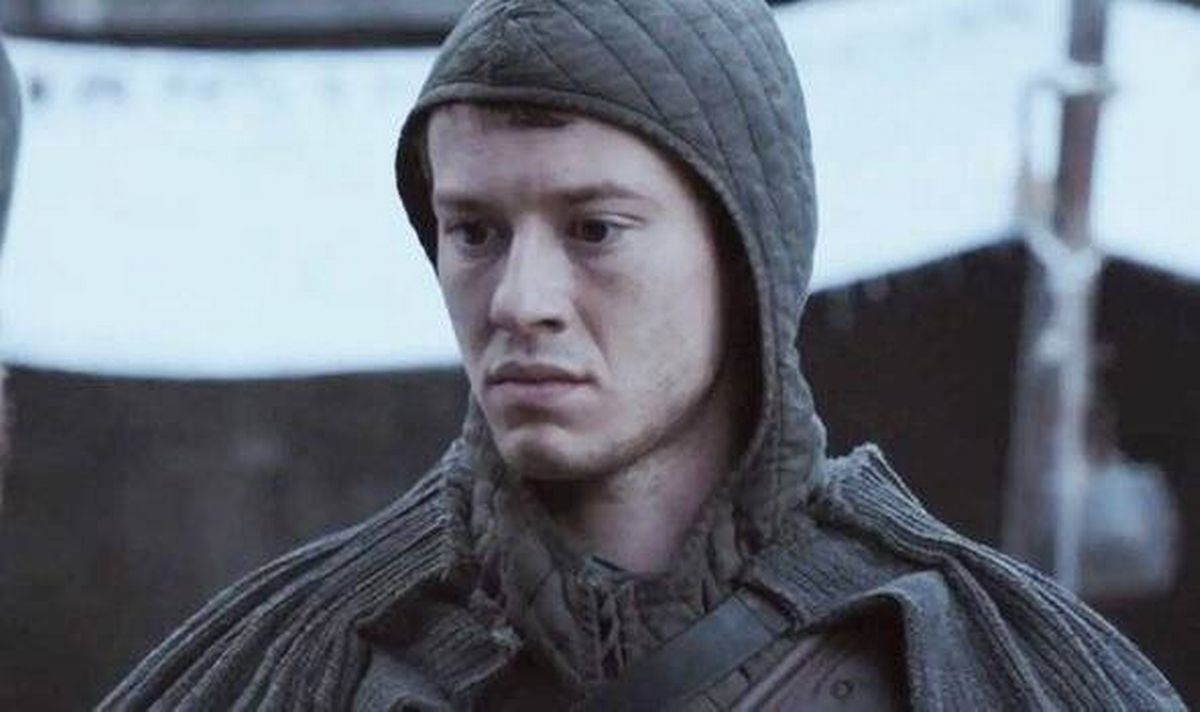
However, before he became a familiar face, he played a small role in the seventh and penultimate season of Game of Thrones as Koner, a soldier loyal to House Stark.
In the episode titled The Spoils of War, Koner is seen guarding Winterfell’s gate alongside fellow soldier Henk (played by Danny Kirrane) when Arya Stark (Maisie Williams) arrives and insists on being let in, reports the Express.
The soldiers mock her and dismiss her, believing Arya to be dead, and instruct her to leave when she requests to see Jon Snow (Kit Harington), who they inform her is thousands of miles away.
Eventually, Arya manages to bypass the soldiers by warning them of severe repercussions if her sister and the castle’s head, Sansa Stark (Sophie Turner), learns of their refusal to let her in.
Koner and Henk argue over who will accompany her to Sansa, while Arya seizes the opportunity to sneak through the gates.
Viewers who haven’t watched the episode since its original broadcast in 2017 were left gobsmacked after a recent Reddit discussion jogged their memories about the Stranger Things actor’s early television role.
“I was today years old when I realized that Joseph Quinn (who plays Eddie in Stranger Things) was also in GoT!” one fan wrote.
Another viewer on X recently made the connection as well, writing: “Love when you go back to an older show and notice a now established actor in the start of their career.
“Joseph Quinn in Game of Thrones. Never realised he was in it.”
Watch Stranger Things on Netflix for free with Sky
This article contains affiliate links, we will receive a commission on any sales we generate from it. Learn more
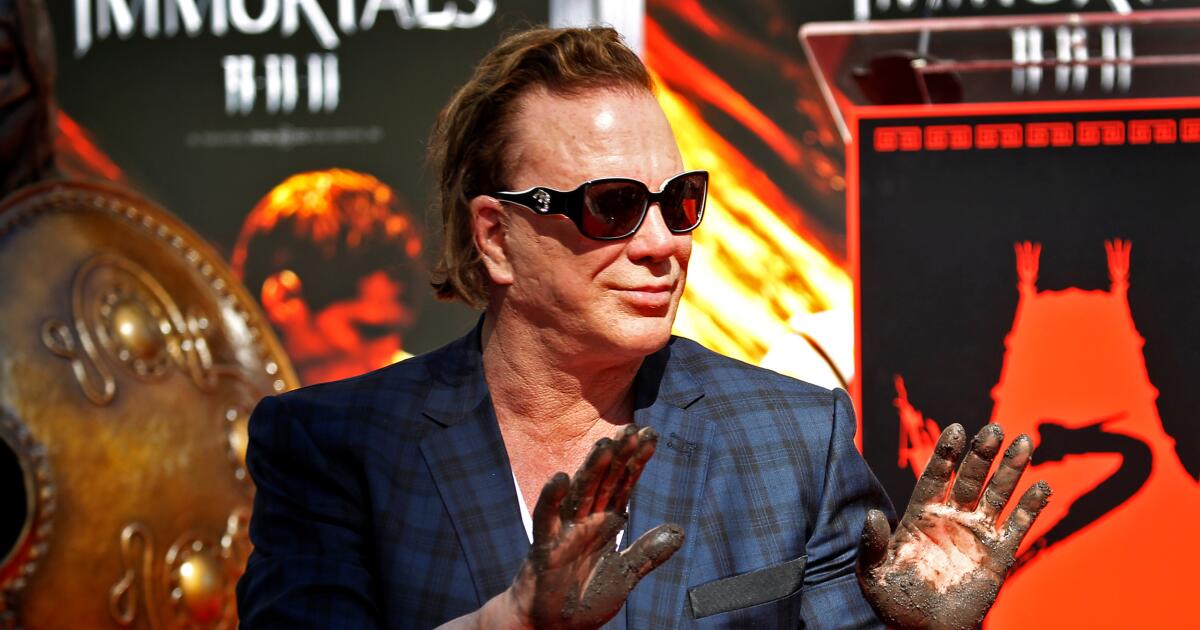
A fundraiser aimed at keeping Mickey Rourke housed has hit the brakes temporarily after the Oscar-nominated actor rejected more than $100,000 from fans and supporters earlier this week.
On Thursday, the GoFundMe page had a “donations paused” tag on it while Kimberly Hines, Rourke’s manager of nine years, addressed the situation in an update.
“Thank you so much for your generosity and for standing with Mickey during this time,” she wrote. “Your support truly means a great deal to us, and we are grateful for every donation. We remain committed to finding a resolution and are working with Mickey to determine the next steps.”
Rourke, 73, said in a video posted Monday that he didn’t know who set up the campaign. The effort, ostensibly aimed at keeping Rourke in his home when he faced eviction because of nearly $60,000 in unpaid rent, was set up Sunday by members of his management team and raised more than its $100,000 goal by Tuesday morning. Dozens of the more than 2,700 people who donated also posted messages about how much the actor’s films had meant to them over the years.
“I wouldn’t know what a GoFund foundation is in a million years,” said Rourke, who was a leading man in the 1980s with movies including “Barfly” and “Angel Heart” and was Oscar-nominated for his work in 2008’s “The Wrestler.” “My life is very simple and I don’t go to outside sources like that.”
He said later in the video that he “would never ask strangers or fans for a nickel. That’s not my style. You ask anyone who knows me. It’s humiliating and it’s really f— embarrassing.”
Rourke said that he wound up in “a really bad situation” with the house he had been renting for years in Beverly Grove. New owners bought the place, wouldn’t fix anything, he said, and raised the rent to $7,000 a month from $5,200. He alleged that the floors were rotted, there was no running water in a couple of places there should have been and the place was infested with rodents.
Rourke was served with notice of eviction in December, with the landlords also looking to recapture $59,100 in unpaid rent for 2025. Ricardo Villalobos, the attorney representing owner Eric Goldie in the eviction case, did not reply to The Times’ request for comment about Rourke’s allegations. The eviction paperwork, reviewed by The Times, was filed Dec. 29.
Hines did not respond to The Times’ request for comment but spoke with the Hollywood Reporter on Tuesday, telling the trade that it wasn’t true that Rourke didn’t know the origins of the fundraiser. She validated some of the things he said about the condition of the property and added a few details of her own. In her GoFundMe update Thursday, she included a link where donors who wanted a refund could submit a claim. The fundraiser lists Hines as the beneficiary.
She told the trade outlet that she and her assistant ran the fundraiser idea past Rourke’s assistant and everyone thought it might be helpful. Hines and her assistant arranged for movers and a U-Haul to help Rourke, got the “Iron Man 2” villain and his three dogs out and into a nearby hotel and secured an apartment for him to move into soon in Koreatown, she said, before his landlords were to change the locks that day on what she called an “uninhabitable” house.
“Nobody’s trying to grift Mickey. I want him working. I don’t want him doing a GoFundMe,” said Hines, who fronted the money Rourke needed in an “emergency” situation. “The good thing about this is that he got four movie offers since yesterday. People are emailing him movie offers now, which is great because nobody’s been calling him for a long time.”
The actor “doesn’t know the word moderation,” she told THR. “So he either has a lot or has nothing. He lives check to check.” Hines said it was time for a reality check with her client about living within his means off Social Security and income from any work that might come his way.
In his video, Rourke took some responsibility for his situation.
“Listen, I’ve done a really terrible job in managing my career. I wasn’t very diplomatic. I had to go to over 20 years of therapy to get over the damage that was done to me years ago, and I worked very hard to get through that,” the “9½ Weeks” star said. “I’m not that person anymore.”
After telling supporters they should get their money back, he added, “Like all storms, this’ll pass, and I’ll go to work and things will get back to whatever normal is.” Until then, don’t worry about him, he said, because he’s grateful for what he has.
“I’ve got a roof over my head, I’ve got food to eat. … I don’t need anybody’s money, and I wouldn’t do it this way. I’ve got too much pride. This ain’t my style.”
The total amount pledged to the fundraiser had dropped from more than $100,000 earlier this week to a little less than $97,000 Thursday after it was paused. Late Wednesday, Rourke’s Instagram page reposted a World Boxing News story summing up the reason for the pause.
A snapshot of fire-ravaged Altadena is laid out before me, hovering like a diorama. My eyes zero in on a red door, its frame one of the few surviving remnants of a home. I pull it closer to me, and in moments I see a fraction of the house as it once was — now I’m in a cozy kitchen with blurred but welcoming pictures in the background and a grandfather celebrating a birthday. A voice-over tells me that it was Alexander, a grandfather, who painted the door red.
It’s as if a memory has sprung to life and exists solely in the ether in front of me. But in seconds it’s gone, and I see only rubble — scattered bricks and tiles, tree branches and wooden boards.
I shed a tear, but it’s obscured by the virtual reality headset I’m wearing. I am experiencing a work-in-progress segment of the multimedia documentary “Out of the Ashes,” which will be previewed Friday evening at a Music Center event demonstrating how emerging technologies can help people process collective experiences such as the L.A. fires.
Musician David Low and his family in virtual reality film “Out of the Ashes,” which shows the destruction — and reconstruction — of the Palisades and Eaton fires.
(The Mercantile Agency)
Filming is continuing on the project, which began just days after the flames ignited. Filmmaker, academic and virtual reality pioneer Nonny de la Peña secured media access to the burn zones for her and a small team via her role as the program director of narrative and emerging media at Arizona State University, which she operates out of offices in downtown Los Angeles. “I knew that this was going to be transitory type of situation, that it was going to change quickly,” says De la Peña, co-director on the film with Rory Mitchell. “I’ve covered enough disaster stories to know how huge this was.”
De la Peña has long been at the forefront of merging immersive technologies and journalism. Her 2012 project “Hunger in Los Angeles,” for instance, was the first VR documentary to screen at Sundance. “I think this technology is unique,” De la Peña says. “I’ve seen a lot of helicopter footage, but when you’re right there in it, it’s a different perspective as to what happened.” For this documentary, she partnered with Mitchell, an independent filmmaker, whose augmented-reality tabletop experience “The Tent” premiered at SXSW last year.
In my preview of “Out of the Ashes,” one segment whisks me to the coastline. If I angle my head down, I see the glistening lights of the Santa Monica Pier. Look up ever so slightly, however, and the sky is charred red and black. I hear a cello, and soon musician David Low stands before me, recounting the day the flames began and the rush to remove his young son from school to help rescue a smattering of heirlooms.
The family saved a few plushies and a couple prized musical instruments, but in the urgency to leave, not much else. He sits at a kitchen table, reconstructed in VR from family photos, but the rest of the home has vanished. As I see glimpses of Low’s home before and after the fires, I again feel as if I’m standing in a liminal space, a remembrance but also a reminder. Low exists only as a 3D figure before me, but I wish I could reach out my hand.
The instinct to extend a hand feels natural in virtual reality, as it’s visceral and creates a sense of presence. And it also seems a part of the mission for “Out of the Ashes,” a work as much about the effects of the fires as it is a vessel for collective grief and empathy. “Sometimes, you just need someone to say, ‘Hey, I’m sorry that happened to you.’ Sometimes you just need someone to hug you,” says De la Peña. “When you lose that much, it’s sometimes hard to fathom.”
Landscape architect Esther Margulies discusses which trees did and didn’t burn in the Palisades and Eaton fires in the virtual reality film “Out of the Ashes.”
(The Mercantile Agency)
Adds Mitchell, “We understand the numbers and acreage,” he says before rattling off a host of fire statistics. “But it’s only through story that we can begin to wrap our hearts and brains the scale of the emotional devastation, and the psychic pain that the city has gone through. Maybe this can provide a way into this collective pain and a way to talk about it.”
Another aspect of “Out of the Ashes” is augmented reality, which will also be shown at the Music Center event. The tech is used to capture short snapshots of scenes from Altadena and the Palisades.
Retired professor Ted Porter, for instance, recalls buying a loaf of his late wife’s favorite bread when the winds first started, thinking he may need something to nibble on if the power went out. Melissa Rivers talks of grabbing photos of her late father, and running for her mother’s Emmy, recalling how meaningful the award was to Joan. “I don’t know why I grabbed what I grabbed,” Rivers says. “It’s just what I did.” They’re short scenes in which a small item floats before us, and they’re reflective of life’s unpredictability, but also how, in times of stress, our minds race to the symbols that truly matter to us.
“Part of what this process is, is trying to provide a space for the folks directly affected by it, who are trying to rebuild their lives and explain to their children what happened,” Mitchell says. “Everyone is going to process at difference speeds and in different ways, but to do that collectively and communally is the hope with this.”
The Friday event, officially dubbed the Music Center’s Innovation Social: Reflections on Loss, Hope and Renewal, will also include a live musical performance by survivors of the Eaton fire. Guests will additionally have the ability to learn how to use 3D scanning tools via their smartphones to begin to create their own short, memory-filled clips. Acorns will also be given away as representations of resilience, and audio interviews of those who experienced the fires will be collected into a sound collage.
The Music Center’s Innovation Social: Reflections on Loss, Hope and Renewal
De la Peña and Mitchell say they have more work to do on the film, which, when completed, can be brought to festivals or become its own touring exhibition. “We want people to know what we’ve gone through,” Mitchell says.
And what we continue to experience. One virtual reality segment centers on landscape architect Esther Margulies discussing the effects of climate change and the importance of planting California live oaks — “ember catchers,” says Mitchell — rather than palm trees. In the headset, we see Mitchell standing amid fire-burned trees, a stark, dreadful landscape. This contrasts soon, however, with the surviving oaks, shown standing grandly among empty, otherwise deserted streets. Amid much despair, they’re framed as one small symbol of hope.
On the scene at A Concert for Altadena, featuring fire victims Dawes and many other acts to mark the anniversary of the Eaton fire.
When Liz Wilson saw the Eaton fire advancing, from her home in Pasadena last year, she knew that life would never be the same in her corner of Southern California. On Wednesday, the one-year anniversary of the disaster, A Concert for Altadena felt like the most optimistic place to be.
“People didn’t just lose their homes, they lost their community,” Wilson said, in the lobby of the Pasadena Civic Auditorium where scores of local acts had gathered for the benefit show. Organizers booked it to raise funds for the Altadena Builds Back Foundation, and to give locals something hopeful to attend on the painful day of Jan. 7.
“This is not just a fundraiser, but a way to reconnect and show support for community that’s surviving,” she said. “Altadena was and is an arts community, that’s a big part of it. We have so many friends and neighbors continuing to figure out if they’re coming back, if they’re able to rebuild. The more distant you get from it, you may forget. But we haven’t.”
The anniversary of the Eaton and Palisades fires, beginning one of the city’s most difficult years in recent history, was largely marked by quieter reflections on the loss and how much work still laid ahead. But Altadena in particular was a historic community for musicians and artists. For them, getting together for a show felt like a natural way to honor the occasion and look ahead.
Kevin Lyman, the Vans Warped Tour founder and USC music industry professor, is a two-decade Altadena resident who was displaced from his home for four months after the Eaton fire. He organized the concert for the community to use the day to reconnect, and keep focus on the work left to do.
“In this business, I’ve got to be an optimist, and every day I see more trucks coming into Altadena with lumber and workers. You go away for a few days and see a frame of a new home. But then you go to the next block, and there are five empty lots,” he said.
“One of the hardest parts is that if you’re living up there, you can go two miles away and life just goes on,” he added. “You’ve got to remind people that we’re still here, people still can still use help. Artists that survived and reestablished themselves are here supporting artists that haven’t been.”
Altadena resident and actor John C. Reilly hosted the night, noting the resilience of rebuilding efforts and tossing barbs at the utility company Southern California Edison, whose equipment ignited the fire: “A company that prioritized profits for shareholders over improving infrastructure,” as he put it. He pilloried President Trump’s reactions to the blaze: “He told us to go rake leaves? Go f— yourself, dude.”
The night highlighted ground-level activism from organizers like Heavenly Hughes of My Tribe Rise, who led the crowd in a raucous chant of “Altadena’s not for sale.” But the live performances found poignancy in the city’s spirit as a music town. L.A. Latin rock group Ozomatli started the night with a jubilant jam down the aisles, while Everclear’s Art Alexakis noted between riffs that after the Eaton fire displaced him, “I had to live in a hotel for five months, but I’m lucky.”
Travis Cooper drove down from Northern California for the show, moved by the ways Altadena held to its cultural identity after the Eaton fire. His parents lost a home in a fire in Redding a few years back, so “I can relate to how devastating that feels,” he said. “Even the threat of it growing up was horrific, so to have that actually happen was another level. But my parents had people donate clothes, places to stay, and that meant a lot to them, so we wanted to come support this community too.”
The headline act of the night was the Altadena folk-rock group Dawes, whose founders lost homes and gear in the Eaton fire. They’ve become emissaries for the neighborhood within the music industry, performing at last year’s Grammys just weeks after the fire.
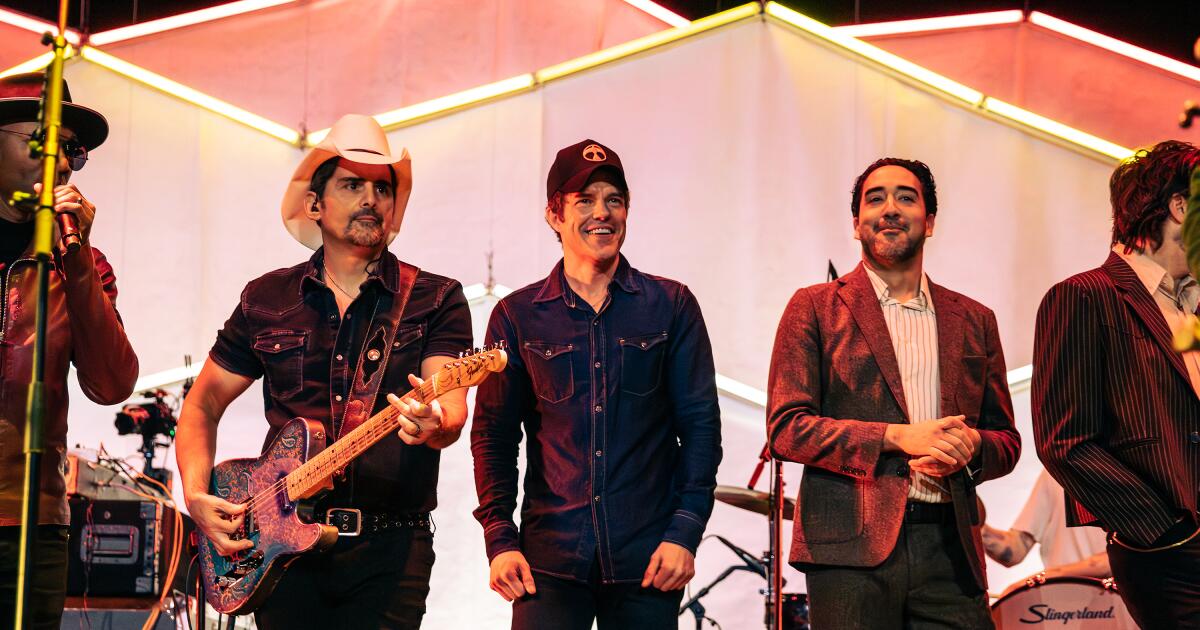
At the Pasadena Civic Auditorium, they led a round robin of acts including Brad Paisley, the Killers’ Brandon Flowers, Aloe Blacc, Jenny Lewis and Rufus Wainwright. They were accompanied by vocal virtuosos Lucius and blues-rock rippers Judith Hill and Eric Krasno, each fixtures in the local music community trying to rebuild itself in the wake of the Eaton fire.
Altadena is a deeply intergenerational community, and the crowd felt the decades of L.A. music history in Stephen Stills coming out for Buffalo Springfield’s “For What It’s Worth” next to a younger act like Lord Huron covering the Kinks’ “Strangers.”
Dawes is a veteran L.A. act, and songs like “All Your Favorite Bands” had new texture in the light of how the fire upended the lives of so many artists. “I hope the world sees the same person that you always were to me,” Taylor Goldsmith sang. “May all your favorite bands stay together.”
For those bands still trying to stay together, the night was redemptive. Jeffrey Paradise, the Poolside frontman who lost his home in the Palisades fire, DJed the concert’s official after-party. He’s since relocated to Glassell Park, and acknowledged that the fires are still a challenging topic, for him and for friends trying to support those displaced.
“It’s hard to talk about because so many things are mixed up in it,” he said. “It was the worst year of my life, but also great and heartwarming to see support from people. It’s so hard to answer how you’re doing because I don’t have an easy answer,” he said.
A concert like this was one way to acknowledge the gravity of last year’s loss, but also to raise money to help everyone get back to the land, people and music they love.
“It’s a disaster, and we’re getting through a disaster. I want to be resilient and help others, and do what I can to move forward,” he said. “It forces you to reinvent who you are and redefine what matters. I don’t have an option not to.”
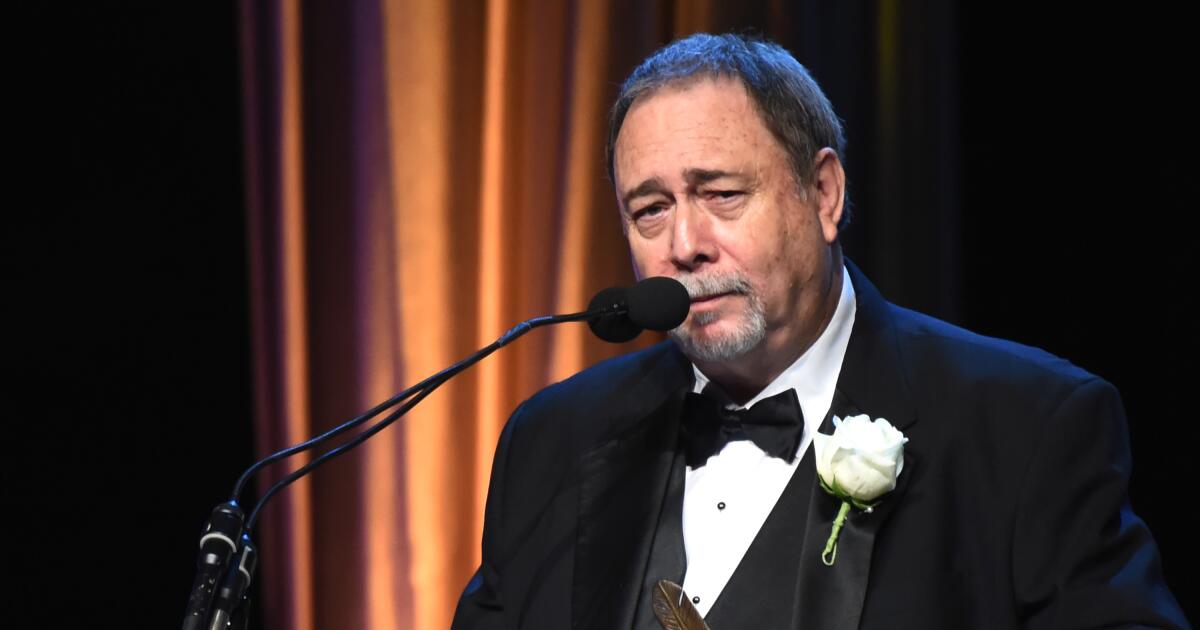
Jim McBride, the Grammy-nominated country songwriter who partnered with singer Alan Jackson on songs including “Chattahoochee” and “Chasin’ That Neon Rainbow,” died Tuesday. He was 78.
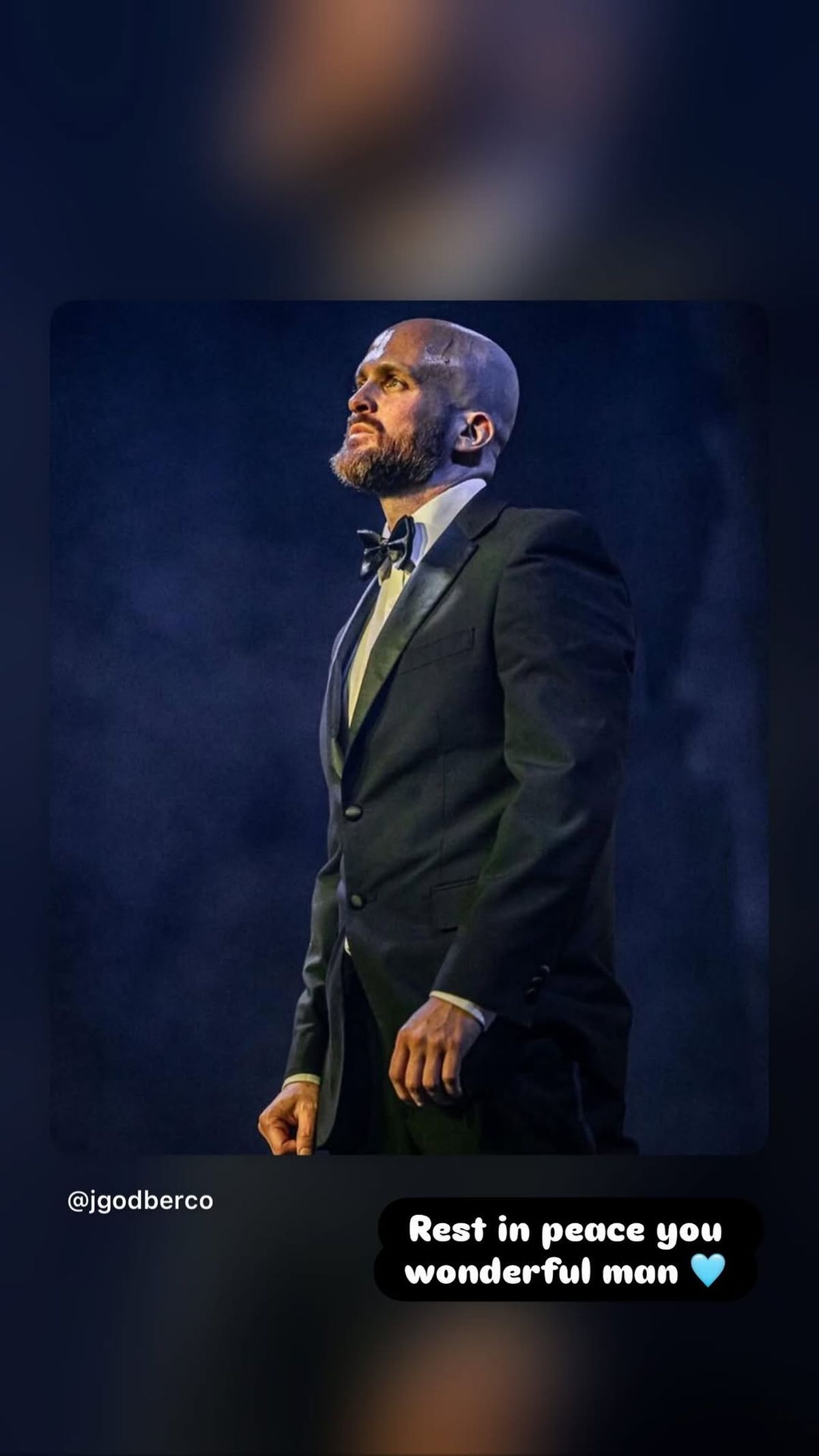
“Jim was a good man and a great and genuine songwriter,” Jackson wrote on Thursday in an Instagram story. “He understood country music and touched many with his songs. Jim and I wrote some of my favorite songs together and I don’t know if my career would have ended up quite the same without his help, inspiration, and encouragement in my early years. Thank you Jim, rest in peace.”
Jackson’s photo showed him and McBride as younger men, smiling and holding ASCAP certificates. In 1994, “Chattahoochee” won the Country Music Assn.’s award for song of the year and they were nominated for the Grammy for country song of the year as well.
“I am in shock. I am devastatingly sad. My phone has been ringing and dinging all day, so I hope my friends will understand I’m just not able to talk right now,” songwriter and close friend Jerry Salley wrote Wednesday on Facebook, noting that McBride died after a fall on Monday. McBride had texted Salley just hours before falling, the latter said.
“I’ll never know why he took a chance to write with me” when they met in Nashville in the early 1980s, Salley wrote, “but man, we hit it off, became instant friends, and loved being in the writing room together. He always brought out the very best in me.”
Though best remembered for his Jackson collaborations, McBride’s songs were also recorded by artists including Conway Twitty, Johnny Lee, Johnny Cash, George Jones, Reba McEntire, Alabama, Willie Nelson, Charley Pride, Kris Kristofferson, Randy Travis, Toby Keith and Dwight Yoakam.
“We will greatly miss Mr. McBride — may his legacy live on forever,” the Alabama Music Hall of Fame said Wednesday on Instagram. The hall remembered the songwriter as a “beloved Alabamian, songwriter, friend, mentor, and so much more.”
Born Jimmy Ray McBride in Huntsville, Ala., on April 28, 1947, he began writing songs a child, but didn’t get one recorded until much later.
“The songs just started coming in my head and after a while I decided to try it,” he said in an interview published by American Songwriter at the end of 1997. “I just thought I’d write some songs and bring them to Nashville and see what happened.”
He said he was always drawn to anything about music and learned early on that “that little bitty name beneath the song was the person who wrote the song.”
McBride’s first bid sending songs to Nashville didn’t result in instant success. He knew only one guy in town, songwriter Curly Putman, who served as a mentor.
“Curly gave me good advice and he was always very honest. He told me, ‘Unless I’m honest I can’t help you,’” McBride told American Songwriter. “I’d play him a song and he’d tell me what was wrong with it and he was always right. But if there was something there, he would be sure and let me know that I had done something right. And he always encouraged me to get another opinion, but I never did; his opinion was always good enough for me.”
He saw several of his songs performed in the early 1970s on the show “Hee Haw,” but in the mid-’70s he wound up tucking his dreams away and staying at his job with the U.S. Postal Service. Even then, he kept writing songs with Roger Murrah, who would be a Grammy nominee in the early 1990s for “Don’t Rock the Jukebox,” recorded by Jackson.
He promised Murrah and others that he would return to Nashville if he got “that big lick.” Then came Conway Twitty, who wanted the song “A Bridge That Just Won’t Burn.”
“Roger called me one night and said, ‘I guess you need to pack your bags, we’ve got Conway’s next single,’” McBride told American Songwriter. “I quit the post office the day after Christmas, 1980, and then started work the first of January with Bill Rice and Jerry Foster. The only other writer they had was Roger Murrah.”
Events at that time were bittersweet for McBride, whose mother — his biggest musical influence growing up — died of cancer in 1981. She was buried the same day he was supposed to get his first music award, for “A Bridge That Just Won’t Burn.”
That September he had his first No. 1 hit, “Bet Your Heart On Me,” with singer Johnny Lee. And he fine-tuned his songwriting.
“I don’t think I’d ever had a bridge in a song until I moved here,” he told American Songwriter. “Another thing I had to unlearn was that I wasn’t Kristofferson. I cut back on the poetic stuff. I was writing a lot of stuff where every line had to be brilliant. Through the years, I learned to write conversational lines.”
McBride didn’t have a hit single again for six years, until Waylon Jennings recorded “Rose in Paradise,” his last No. 1 track, in 1987.
“I had songs on 14 albums and couldn’t get a single,” McBride told Huntsville’s News19 in 2023. “Randy Travis kinda kicked the door open and Waylon.” After that, McBride said, “Things started picking up.”
That’s when he met Alan Jackson, with whom he would have four No. 1 hits, “Chattahoochee” being the biggest of them.
“He said, ‘Will you write with me?’ And I said, ‘Yeah, let’s get together,’” McBride told News19. “So, we got together and hit it off just like that. It was like writing with myself, really.”
McBride was inducted into both the Nashville Songwriters Hall of Fame and the Alabama Music Hall of Fame in 2017 and was a past president of the Nashville Songwriters Assn. International.
But for more than 30 years, that hit song “Chattahoochee” was a part of his life — especially the one line at the beginning where it talks about it getting “hotter than a hoochie coochie” down on the Chattahoochee River, which borders Alabama and Georgia. Everyone wanted to know what that meant, apparently.
“Alan got tired of everyone asking him,” McBride told News19. “He told everybody to call me, and they did. When the county fair would come to town, there was always a side show with the hoochie coochie girls. So that’s what I was thinking. And the deal was if you were a young man, you’d try to get in there before you were 18.”
And why, pray tell?
“They’ll show you a little bit,” he said, “but you’re going to have to pay if you see any more.”
McBride is survived by his second wife, Jeanne Ivey, and sons Brent and Wes from a previous marriage.
The contemplative cinema of Béla Tarr was as excruciatingly beautiful as it was brazenly original, often conjuring comparison to the work of a master painter.
His stark black-and-white imagery in assiduously long takes with creeping camera movements — hallmarks of his filmmaking — demanded that the viewer pause to look, to see, as one might in regarding a Picasso or a Bruegel.
Tarr’s revolution in form, however, cannot be separated from the radical humanity of his filmmaking. In a concentrated collection of 10 features over less than four decades, his gaze was fixed on the resolute dignity of his marginalized and downtrodden characters, which elevated his work beyond the realm of cinephile contemplation.
With the death of the Hungarian master on Tuesday at age 70, that enduring humanity makes his work as essential as ever.
“I despise stories,” Tarr once explained to an interviewer, “as they mislead people into believing that something has happened. In fact, nothing really happens as we flee from one condition to another. … There are only states of being — all stories have become obsolete and cliched, and have resolved themselves. All that remains is time.”
His films typically did not concern themselves with the plot of individual lives, which in reality are revealed in retrospect, if at all. They focused instead on human experience as it unfolds, moment by uncertain moment, capturing everyday foibles, errors and foolishness in the face of quotidian ruthlessness. As in Samuel Beckett’s tragicomic theater and novels, Tarr’s movies, by turns funny and heartbreaking, dignify human struggle with an uncommon tenacity of vision and empathy.
Some of Tarr’s most memorable scenes feature landscapes, often bleak and despairing settings of decaying Hungarian towns, punctuated with close-ups of characters’ faces. Asked by film historian David Bordwell about this juxtaposition, Tarr replied: “But the face is the landscape.”
Tarr arrived in the late 1970s declaring his intention to “kick in the door” of contemporary cinema. He did so, more than once.
He announced himself with a trilogy of domestic dramas. “Family Nest,” “The Outsider” and “The Prefab People” focused on couples and individuals trapped by commonplace struggles and social constraints, a thematic affront to late-communist Hungary. Featuring handheld camerawork and frequent close-ups, these early works evoke the quasi-improvisational style of John Cassavetes smothered in claustrophobia.
Tarr followed with a TV adaptation of “Macbeth” (1982), filmed in two shots, the second lasting more than an hour. After a brief experimentation two years later with a wild palette of color in “Almanac of Fall,” he returned to his discoveries in “Macbeth,” a stylistic transformation that would define the rest of his career.
“Damnation” (1988) opens with an extended shot of a system of towers and cables transporting vast buckets of mining materials across a desolate plain. A harsh grinding of the elevated cable system is the only sound. (In Tarr films, sound features as evocatively as image.) Slowly the camera pulls back to reveal an interior window, and then the back of a man’s head in silhouette, as our protagonist watches the monotonous procession.
The audience experiences the scene of agonizing beauty as the man does. We remain with him throughout the movie, as we follow his futile pursuit of a married cabaret singer with whom he is irrevocably in love. The story does not unfold as a typical narrative, but in a series of scenes that feel distinct yet unified, like a collection of short stories.
Tarr worked with a common team of filmmakers in nearly all his films, including his longtime partner and editor, Ágnes Hranitzky, cinematographer Fred Kelemen, composer Mihály Víg and a core group of actors.
“Damnation” marked Tarr’s first collaboration with his friend László Krasznahorkai, the Hungarian novelist and 2025 Nobel Prize in Literature winner. The pairing of literary and filmmaking masters, which spanned five features over a quarter of a century, recalled that of Graham Greene and Carol Reed, but nothing in movie history quite compares.
Tarr’s two greatest works, “Sátántangó” (1994) and “Werckmeister Harmonies” (2000), were based on Krasznahorkai‘s novels (the latter derived from his “The Melancholy of Resistance”). The books are cornerstones of Krasznahorkai’s Nobel-winning oeuvre, and the films are two of the defining movies of their era and established Tarr as a giant of cinema.
“Sátántangó” is an epic equivalent in running time to some four feature films, which Susan Sontag called “devastating, enthralling for every minute of its [more than] seven hours.” It often appears on critics’ lists among the greatest films ever made.
The movie follows a group of petty cheats, liars and drunks who are duped by nefarious opportunists who visit their crumbling town. Tarr employs the extended take to even greater lengths, creating an exquisite manipulation of our sense of time, and some of the most memorable scenes in modern filmmaking.
In “Werckmeister Harmonies,” another opportunist visits another desperate town, this time accompanying a traveling exhibit of a preserved whale. The depictions of mob violence are chilling evocations of the darkest moments of the 20th century. The culminating episode, as the mob smashes and ransacks a hospital and terrorizes its patients, ultimately reveals a frail elderly man, standing naked and alone in an empty bathtub as the club-wielding assailants approach. His appearance, stopping them in their tracks, is one of the most heartrending moments of any movie.
Tarr followed with “The Man From London,” which he and Krasznahorkai adapted from a novel by Georges Simenon, about a seaside railway signalman who confronts a moral quandary involving a murder mystery.
In 2012 came “The Turin Horse,” in which director and novelist reimagined the story of the whipping of a horse in the Italian city that was said to have triggered philosopher Friedrich Nietzsche’s mental breakdown. The movie follows the unfortunate horse as it is led away by its owner to his rural home he shares with his daughter. Their repetitive routines and the young woman’s daily burdens are reminiscent of Chantal Akerman’s classic “Jeanne Dielman.”
After the release of the film, among his most acclaimed, Tarr stunned the film world by announcing it would be his last feature. He was just 56 at the time.
He went on to open an international film school in Sarajevo, Bosnia-Herzegovina, known as film.factory, which continued until 2017, and he produced a number of movies.
Tarr was long outspoken in denouncing authoritarian governments, whether Hungary’s old communist model or the current populist nationalism of Hungarian Prime Minister Viktor Orbán, France’s Marine Le Pen and President Trump. He supported students at the University of Theatre and Film Arts in Budapest — his former school — who had occupied their campus in 2020 in protest of Orbán’s policies.
In 2019, Tarr embarked on one more film-related project, “Missing People,” an exhibition at the annual Vienna Festival. The film portion of the program, according to reports about the event, featured the faces of some 270 homeless people living in the Austrian capital.
The project appeared a few months after Orbán’s adoption of a Hungarian law that essentially criminalized homelessness. A final act in the radical humanity that was the art of Béla Tarr.
The Directors Guild of America announced its nominations Thursday for outstanding directorial achievement in theatrical feature film, offering one of the clearest snapshots yet of the Oscar race for director as guild voters begin to weigh in.
Nominated for the DGA’s top film award are Paul Thomas Anderson for “One Battle After Another,” Ryan Coogler for “Sinners,” Guillermo del Toro for “Frankenstein,” Josh Safdie for “Marty Supreme” and Chloé Zhao for “Hamnet.”
Winners will be announced at the 78th annual DGA Awards on Feb. 7 at the Beverly Hilton.
The DGA award remains one of the strongest predictors of Oscar success. Twenty of the last 23 recipients of the guild’s top directing prize have gone on to win the Academy Award for best director. Last year’s DGA winner, “Anora” director Sean Baker, went on to repeat at the Oscars.
Several of this year’s nominees are familiar figures to the guild. Anderson’s nod for “One Battle After Another” marks his third time being recognized by the DGA in the top film category, following his earlier nominations for “There Will Be Blood” and “Licorice Pizza.” Zhao, who won both the DGA Award and the Oscar for “Nomadland,” receives her second nomination for the wrenching period drama “Hamnet,” making her one of a small group of women — including Jane Campion, Kathryn Bigelow and Greta Gerwig — to be recognized more than once by the guild.
Del Toro, who won the DGA Award for “The Shape of Water,” earns his second career nomination in the category for his long-gestating “Frankenstein” adaptation, while Safdie receives his first DGA nomination for theatrical feature film for his gonzo sports drama “Marty Supreme.”
The DGA nominations often track closely with the Oscars in part because of overlapping membership: most directors in the Academy are also members of the guild. While the groups vote independently, that shared base has made the DGA one of the most reliable bellwethers in the Oscar directing race.
This year’s DGA nominations overlap significantly with the Golden Globe nominations for directing, which also included Anderson, Coogler, del Toro and Zhao. The Globes additionally recognized Jafar Panahi for “It Was Just an Accident” and Joachim Trier for “Sentimental Value,” two filmmakers who didn’t appear in the DGA lineup. The differences highlight the contrasting makeup of the Globes’ voting body of international critics and the DGA’s more industry-focused membership.
The guild also announced nominees for the Michael Apted Award for outstanding directorial achievement in a first-time theatrical feature film, a category that has increasingly served as a spotlight for emerging talent. This year’s nominees are Hasan Hadi for “The President’s Cake,” Harry Lighton for “Pillion,” Charlie Polinger for “The Plague,” Alex Russell for “Lurker” and Eva Victor for “Sorry, Baby.” Last year’s Apted Award winner, RaMell Ross, went on to earn a best picture Oscar nomination for “Nickel Boys.”
Television, documentary and other DGA nominations were announced earlier this week, recognizing directing work across drama, comedy, limited series and nonfiction programming. In dramatic series, nominees included “Severance,” “Andor,” “The Diplomat” and HBO Max’s “The Pitt,” while comedy series nominees included “The Bear,” “Hacks,” “The White Lotus” and Apple TV+’s “The Studio.”
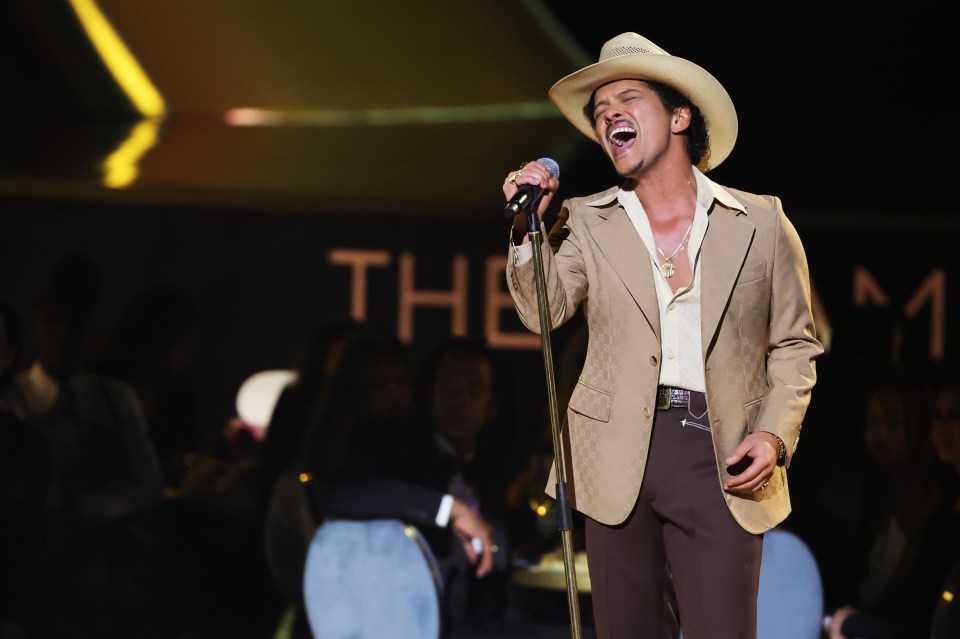
LOS ANGELES, CALIFORNIA – FEBRUARY 02: Bruno Mars performs onstage during the 67th Annual GRAMMY Awards at Crypto.com Arena on February 02, 2025 in Los Angeles, California. (Photo by Kevin Winter/Getty Images for The Recording Academy)Credit: Getty
All you need to know about the 24k Magic singer’s latest tour
Bruno Mars is back with a new project, a decade after his last solo release.
Sign up for The Sun newsletter
Thank you!
Bruno Mars at a party in 2022Credit: Getty
Here is everything you need to know about the tour dates and how you can get your hands on the hotly anticipated tickets.
Bruno Mars of Silk Sonic performs onstageCredit: GettyBruno Mars putting on a showCredit: GettyBruno Mars knows how to put on a showCredit: Getty
The tour is entitled ‘The Romantic tour’ and will show the Grenade singer showcasing songs from his new album ‘The Romantic’, which is released on February 27.
In between such pistol-packing antiheroes as Bonnie Parker and Luigi Mangione, financially-squeezed Americans rooted for Tony Kiritsis, a working stiff who took his mortgage lender hostage in 1977 Indianapolis, claiming that the loan company cheated him out of his land. “Dead Man’s Wire,” the title of Gus Van Sant’s wonky true crime caper, comes from Kiritsis’ weapon: a shotgun tied to a noose looped around the neck of his prisoner, Richard Hall. His hair-trigger homemade contraption pressured all three major networks into giving Kiritsis airtime to explain his grievances to the public. Pressing a sawed-off barrel to Hall’s head, the hot-tempered chatterbox told the cameras, “I am sorry I humiliated this man this way, even though he must’ve surely had it coming.”
To the establishment’s horror, many viewers sided with Kiritsis. “How about some Tony Kiritsis t-shirts, some Tony Kiritsis badges, a Tony Kiritsis fan club?” one supporter wrote to the local paper, the Indianapolis News.
Or how about a biopic that fires blanks?
Van Sant has long taken aim at the intersection of violence and mass media culture. Over his career, he’s attacked it from several angles, including the fame-seeking satire of “To Die For,” his elegy for the publicly out politician of “Milk” and the clinical ennui of “Elephant,” his take on the Columbine massacre, in which his pair of teen killers numb themselves with grisly entertainment. Kiritsis’ story is an irresistible target: an ignored man thrilled to have the attention of the spanking new Action News squads who barge onto the scene unprepared for the risk they might broadcast an on-air murder.
But this time, Van Sant seems more interested in the period-piece décor and the aesthetics of early video footage (the cinematography is by Arnaud Potier) than he is in the bleak humor of Kiritsis’ televised tirade cutting to a burger commercial. The result is a faintly comic curio that hurtles along without much impact.
The mishaps start when Kiritsis (Bill Skarsgård) storms Meridian Mortgage’s office only to discover his intended captive, the ruthless M.L. Hall (Al Pacino), is away vacationing in Florida. Hall’s cowed and coddled son Richard (Dacre Montgomery) will have to do, even though the real estate scion is so passive that he barely bothers to fight for his life. If you’ve seen the original footage of the bizarre press conference where Hall, a twitch from assassination, stares blankly past the flashbulbs, then you know that Van Sant and Montgomery (the “Stranger Things” bully cast against type) get their victim exactly right while robbing Kiritsis, and the audience, of a worthy adversary. In one cold yet weightless moment, the boy-man realizes his own dad might not care whether he survives.
At least the younger Hall’s dull demeanor — then coded as dignity, now as soullessness — makes Kiritsis seem more alive. The real Kiritsis was short-statured with a car salesman’s sideburns; he had the kind of face you only see onscreen during competitive bowling. Lanky, hunched and fragile, Skarsgård’s version isn’t quite as salt-of the-earth, although he’s captured his rapid patter and the burning menace in his eyes. He plays the role somewhere between a soapbox preacher and a “Scooby-Doo” episode that imagines Shaggy unmasking a money-grubbing bad guy and threatening to beat him to death.
Kiritsis is so convinced of his righteousness that he genuinely believes the mortgage company’s manipulations, not his own murder threat, to be the big story. When Hall proves too mute to debate, Kiritsis vents to a radio disc jockey named Fred (Colman Domingo), even though Fred is more interested in smooth tunes than hard news. (Springboarding from this and his perky TV host role in “The Running Man,” Domingo needs to star in his own comedy stat.) Won’t someone, even an inessential young reporter played by Myha’la, poke into the alleged scam?
Yet despite how often Austin Kolodney’s script has Kiritsis say he just wants to be heard, the soured mortgage deal is so impossible to follow that even the movie itself deems it unnecessary. Our attention pivots to the futility of this self-described “little guy” trying to get someone with clout to take him seriously. In this period, criminal psychology was just starting to go mainstream. An FBI agent (Neil Mulac) instructs the Indianapolis cops to think deeper about Kiritsis’ motivations, wielding chalk to illustrate how anger is rooted in humiliation and disrespect. Kiritsis is screaming mad and the police’s yawns aren’t helping.
Today, Kiritsis would have a podcast. But cranks like him seem especially at home in the 1970s — the mad-as-hell decade — when their polyester button-downs make them look extra itchy around the collar. It’s easy to picture Kiritsis exiting a double-feature of “Network” and “Dog Day Afternoon” and vowing that he, too, isn’t going to take it anymore.
Van Sant sees the parallels between Kiritsis and “Dog Day Afternoon’s” populist bank robber Sonny Wortzik — heck, he’s even stunt-cast Pacino as the fat-cat financier — but the film doesn’t appear to have the budget to examine how Kiritsis’ anger fires up the cash-strapped masses. It certainly can’t afford to include the real-life scene at an Indianapolis Pacers game where an arena of basketball fans cheered for his not-guilty verdict, although I would have settled for even a bit player who helps us understand why a jury of his peers let him off the hook.
Instead, the movie inexplicably squanders its energy on needle drops that act against the mood: the watery irony of Donna Summer’s “Love to Love You Baby” cooing over an image of Hall handcuffed in a bathtub. Better is Danny Elfman’s spartan and fraught score, particularly the dyspeptic drums.
Was Kiritsis a narcissistic madman or a schmuck who’d put too much trust in the American ideals of hard work and fair treatment? Van Sant alludes to the latter when the televisions keep showing John Wayne on other channels, the gunslinging Duke setting things right in a classic western or winning the 1977 People’s Choice statuette for best actor.
It’s no wonder that Kiritsis figured he’d be a hero, too — and that, in real life, many of the people watching at home agreed — although as obvious as that point is, it would have been nice if Van Sant explored it. At least we get Kiritsis’ sentimental, expletive-laden version of an awards speech which devolves into him thanking his family, Hall’s family and even the police academy before he gets hustled offstage. Kiritsis is certain he’s accomplished something great. We’re glumly aware of how many others are waiting their turn in the wings.
Black Ops, which originally launched in 2023, is making its comeback as viewers will see Gbemisola Ikumelo and Hammed Animashaun return as Dom and Kay.
The first series followed two East London police community support officers who unexpectedly found themselves working undercover.
Tasked with penetrating a criminal gang led by boss Tevin (Akemnji Ndifornyen), audiences were treated to a hilarious journey as the pair attempted to stay under the radar whilst Tevin grew increasingly suspicious, reports Wales Online.
Now, the cast reunite for a fresh series, which will feature appearances from Death in Paradise’s Cathy Tyson and Coronation Street’s Nigel Havers.
Discussing his return as Tevin, Akemnji revealed: “Series one was so nice, of course, we had to go and do it twice! Hugely excited to be going bigger, better and blacker for series two.
“Whatever is next for Dom, Kay – and of course Tevin – one thing is for certain, two things are for sure: it’s going to be a wild and thrilling comedy ride! Seatbelts, please!”
A synopsis for the second series reveals it begins with Dom and Kay working for MI5. Despite operating in the secretive world of espionage, their roles in the organisation are far from glamorous as they’re confined to administrative duties.
However, the situation shifts as an overview states: “All that changes when Dom meets a charismatic spy called Steve, offering the promise of more exciting, classified work.
“Dom and Kay soon find themselves embroiled in an escapade that tests their wits, their friendship, and their love of carnival to the limits.”
The series has received glowing reviews from viewers in the past, with one person commenting: “I find UK shows so much more my level of humour and cadence.. This show is excellent.”
**For the latest showbiz, TV, movie and streaming news, go to the new **Everything Gossip** website**
“The chemistry between the two main characters is spot on. It’s smart and funny and drama all at the same time. That’s hard to pull off. It’s a great storyline.”
Another viewer added: “Thought this was hilarious. The two main characters are a blast. And the series’ plot was twisting and gripping enough to also provided enough suspense to make me keep watching to the end. Loved it.”
Black Ops is available to watch on BBC One from 9:30pm
LIZZIE Cundy has revealed the heartbreaking news that her brother has died.
Sharing a picture of her sibling Peter, Lizzie wrote in an emotional tribute: “It is with a heavy heart and great sadness to tell you that my brother Peter has died.”
Sign up for the Showbiz newsletter
Thank you!
Lizzie Cundy has lost her brotherCredit: SuppliedShe announced her brother Peter has diedCredit: Instagram
The TV and radio presenter, 57, added: “We as a family are heartbroken.
“Peter was a much loved son, brother and uncle.
“He worked in theatre, film, had a great love of dogs and of Chelsea FC.
“A real character and a kind soul who will be very much missed.
He was first diagnosed with cancer back in 2000 and had to have one of his kidneys removed.
Then, in 2020, the TalkTV host revealed that the cancer had returned in his kidney, spine, brain and lungs.
Lizzie was friends with James for over three decades, and said at the time: “I got the phone call from his lovely wife Nadine and I just burst into tears. Because I knew this day was coming but I never wanted it to come.”
She also described James as a father figure, recalling: “He helped me through a lot of ups and downs, through my divorce.
“He told me when I was being an idiot, he told me straight and I loved that in James.”
Lizzie, who is a mum to sons Josh (pictured) and James, said the family are “heartbroken”Lizzie’s loss comes just five months after her best friend, TalkRadio star James Whale passed awayCredit: lizziecundy/Instagram
In the last episode of The Envelope video podcastbefore the 2026 Oscar nominations, Joel Edgerton describes the transformative experience of making “Train Dreams.” Plus, our hosts share the names they’d like to hear called on nominations morning.
Kelvin Washington: Hello and welcome to another episode of The Envelope. Kelvin Washington, Yvonne Villarreal, Mark Olsen, and it’s great to have you both here as usual and especially when this is our last episode before Oscar nominations. So I’ll start with you, Yvonne. It could be a movie, a director, or some rising star or just anything that you hope once they read those nominations that morning, you’re gonna hear.
Yvonne Villarreal: I’m not going to say the usual suspects because that’s covered. I really want to see Chase Infiniti get nominated for her role in “One Battle After Another.” I just think she’s been such a revelation for me as somebody who watched “Presumed Innocent.” Seeing her in this role — and I don’t want to spoil anything, but she really finds herself in a hairy situation in this film and the way she sort of rises to the occasion and really has a moment of triumph for herself, I think it was just striking to watch. And she’ll be in “The Handmaid’s Tale” spin-off “The Testaments.” I’m really looking forward to see what she does there. But also I’ll say, as somebody who got thrown into the bandwagon of “KPop Demon Hunters” because of my 6-year-old niece, I wanna see that get some love in the animated category.
Mark Olsen: And in the music categories. Best song.
Washington: It better! Do you know how much I have to hear that song in my house with three daughters, 9, 7 and 4 [years old]? Like, I’m going to be “Golden.”
Villarreal: Are they memorized?
Washington: That’s an understatement. It’s to the point I got concerned. Is it like some robotic AI that’s taking over my daughter’s brain? Instantly. That and 6-7. I have to deal with that every day.
All right. Mark, swing it to you. What do you have?
Olsen: Well, you know, the actress Rose Byrne for the movie “If I Had Legs I’d Kick You.” She won a lot of critics’ prizes leading up to the nominations. And I think it’d be so exciting if the filmmaker on that, Mary Bronstein, also got recognized either for the screenplay or as director. You know, Mary’s someone that she made her first film, “Yeast,” more than 15 years ago and had not gotten a second project going and had sort of been living a life and doing other things. And to see her sort of reemerge with this project in particular, which is so powerful and so specific, it would be really exciting — as great as it is to see Rose being rightfully recognized — to see Mary get some attention as well.
Washington: So I’m gonna jump in with a couple. One, because she’s been on the radar for years as just a multitude of things, she’s multifaceted: Teyana Taylor can dance, she can sing, she’s just all of that and now acting alongside Leonardo DiCaprio. Very impressive for her. And not a debut, but maybe for those who aren’t familiar. So I’d be interested to see, I have a feeling we’re gonna hear her name. And then I’m going super popcorn, Raisinets, Junior Mints, going to the theater. “F1,” for me, I know it was kind of —
Villarreal: Whoa, that’s a throwback.
Washington: I know, but hear me out. It was fun. It was just fun. And it’s kind of one of those movies like, you know, you forget that you go to the movies, it’s gonna be a little fun, maybe a little cheesy, but dang it, I’m here. I’ve got my popcorn. All of that. That for me was another one that was like, “Oh man, that’s kind of the moviegoing experience sometimes we’ve forgotten.”
Olsen: And it’s always good to see the Oscars recognize a film like that as well. I mean, it helps just for attracting audience to the telecast. But I think it is important that the Oscars recognize a breadth of filmmaking styles and one of the things that’s so exciting about the movies is that it can be so many different things, from like a really small personal story to some big high-tech film like “F1: The Movie.” And so I think, yeah, to see that recognized in some of the major categories would be really exciting.
Washington: You know why I like Mark? Because he tried to legitimize my choice. And I’m OK with that.
Olsen: There’s no try. You don’t need the help.
Washington: Look at how I look in the camera. You know, why? Because I know someone’s going to be highbrowin’ me right now. And I get it. And I am with you. However, as we know, we can get all the types of mergers and some things will happen. Are people going to be going into movies anymore? And I was sitting in it going, “Oh, yeah, this is kind of what that feels like.” So ha! Take that.
Villarreal: My reaction was more, it had been a while since I heard the title.
Washington: It felt the same.
Villarreal: Sorry!
Washington: I like what I like, OK? I enjoyed it. That’s all I have to say about that.
All right, Mark, coming to you now. We’re talking about Oscar buzz, and just buzz and a lot of traction that someone can get from a role. Talk about Joel Edgerton playing a logger in Netflix’s “Train Dreams.” What was that conversation like?
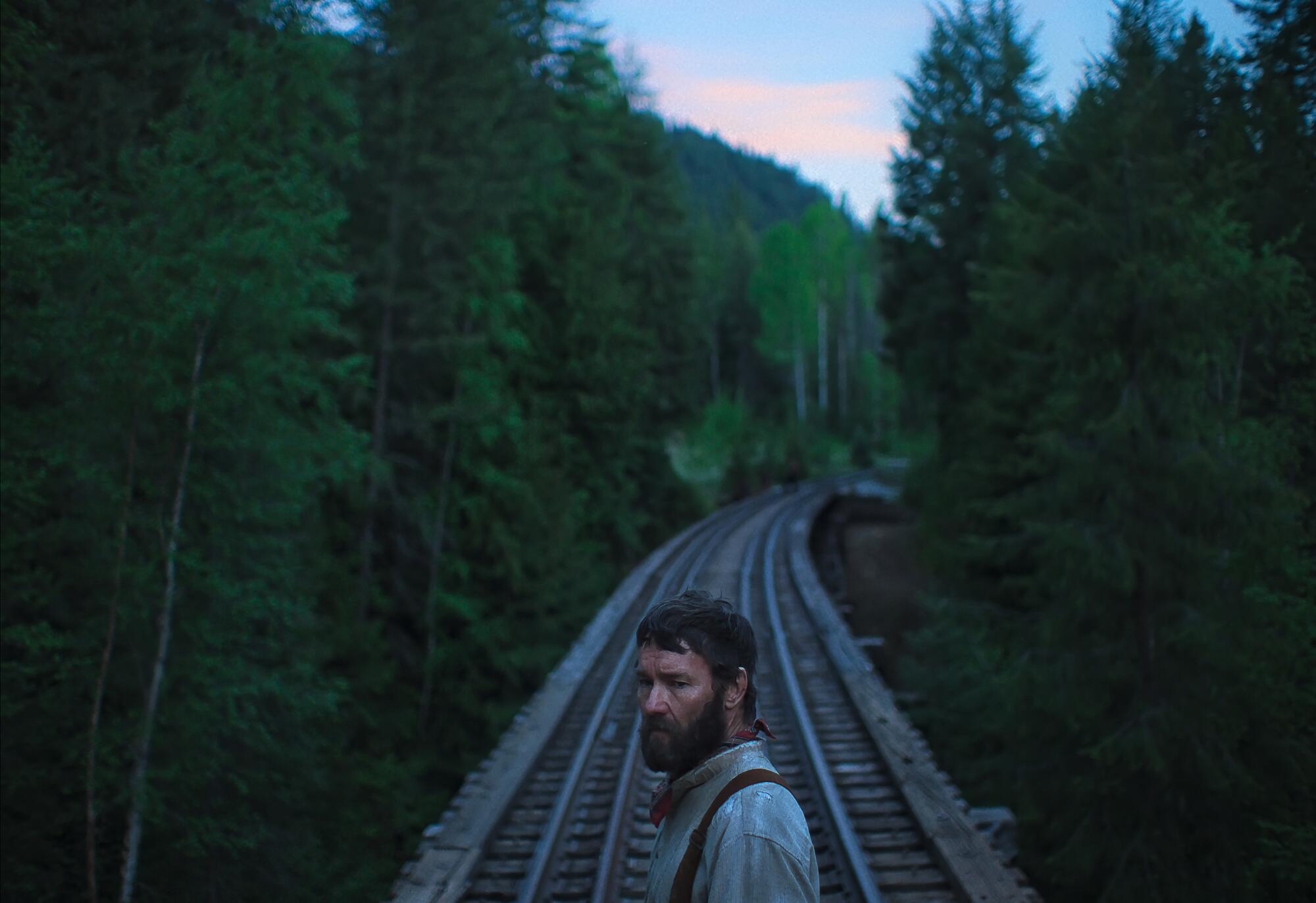
Olsen: It was a really terrific conversation. This is a movie that premiered at Sundance last year and was picked up by Netflix there. And even though it has that machinery behind it, there is still something that feels very organic about the success of this movie. It genuinely feels like it’s word of mouth that people have been discovering the film. And it has just a really quiet power too. And a lot of that comes from Joel’s performance. You know, he originally pursued the rights to this book himself and wasn’t able to get it, the rights were already taken. And so he sort of like thought, “Oh, well, that’s that.” And then years go by and the project comes back around and he’s offered this role that he’d been so interested in playing. And he feels like it’s hit him at a very specific time in his life.
The [story] is set in the early part of the 20th century. He plays a logger in the Pacific Northwest. And it really is just a portrait of a life. And the story deals with grief and family, and Joel, in the subsequent years, has become a father himself. And he said how, if he’d have played this a few years ago, he thinks it’d be totally different than the way that [he’s] playing it now. Also he is a guy who’s been in the business for a few years now. He has, I think, some really sharp opinions, views on like what this business is, what the industry is like right now and where it’s going. So it was a really terrific conversation to have with him.
Washington: It sounds like it. Let’s get straight to it. Here is Mark and Joel right now.
Joel Edgerton in “Train Dreams.”
(Netflix)
Mark Olsen: As we’re talking, the movie has been building this sense of momentum around it with reviews and awards. And while there is an awards campaign around the movie, there is something about it that feels very organic. This movie seems to be catching on through word of mouth, just people seeing it and responding to it. How do you feel about the response to the movie?
Joel Edgerton: It feels very good. Coming from an independent film background, I love it when small movies make a lot of noise. And I can’t really analyze or diagnose why, but I get this feeling with “Train Dreams” that it means different things for different people and it holds up a bit of a mirror to their own experience, being that the film is really this celebration of an ordinary life and shows the majesty in that. What my character goes through, they’re universal experiences and so people find something of their own experience in it and I think that’s part of the reason why. It’s a small movie but it’s also a very big movie.
Olsen: The other side of that, in a way, you were recently on a red carpet and you were asked about some comments that James Cameron had made regarding movies on streaming services and the awards race. And I don’t know if you want to say anything more about that, but also do you feel like people do somehow hold it against “Train Dreams” that it’s on Netflix?
Edgerton: Look, the world we live in now is so in the hands of the audiences because of social media. I feel like in the old days, well before I was born, we were told who our movie stars were. The studios would make those decisions for us, and things were very narrow. And now people have the power to choose what they want to watch, who they want to watch, they choose the movie stars. They speak about the movies, and Letterboxd, for example, is such a big thing. And in that same vein, it’s really interesting to hear what people, regular people, moviegoers think of how movies should be exhibited, how they feel, regardless of whether they know about the business side of things or not, or why things are the way they are. They have feelings, sometimes very passionate points of view on where and how we should watch movies. And of course, for all of the business side, if we put it aside, I do believe people want to go to the cinema and watch movies.
My comments come from understanding now where I am in my life. I’m all about creativity and all about story, but I do understand business, and I feel like I emerged out of my bubble in Sydney and felt like the whole world of cinema had suddenly changed. My views on streaming had started to evolve just after we showed a movie at Cannes called “The Stranger.” Another very small movie we made down in Adelaide and Netflix picked up the movie and I remember thinking, “Should we go with them?” So many people saw that movie because it was on a streamer. And so my feelings are very mixed and they’re very much tailored to what the movie is — and therefore according to what the movie is and how big or small it is, where it should live. I’m all for pushing to fight for keeping cinema alive and I believe a younger generation feels the same thing. But I also feel like there are chances that some people have that are narrow as they get their start in the business, which means sometimes the first things you can do, you’re not necessarily going to get a 2,000-screen release on your very first movie. So I have many, many opinions about it. But I feel like we all need to fight for cinema. We also sort of hopefully don’t allow streaming, as great as it can be, to take over everything. That’s my feeling.
Olsen: You’re also a producer as well. This feels like we’re in the middle of a transformative moment for the industry. What is it like for you as a person in the middle of that tide, just trying to navigate that for yourself?
Edgerton: Again, it’s all about what is the story and where should it live. My feeling always is that if I ever get behind making something, I want as many people as possible to see it. I also want to have an exchange at the cinema. One of the great things about “Train Dreams” is I’ve done about 50 Q&As so far — I haven’t counted them up, but around that, and we’ll do a bunch more. We’ve been to a number of festivals and we have an exchange with the audience. We get to watch and see people’s reaction to the film in like an analog way. Sometimes the feeling with letting a movie go on streamer without any fanfare is that it feels like it disappears with a whisper, and you don’t get to have that exchange. And I think that’s very important.
My dream would be to make a film exhibited at the cinema, knowing that at some point it will end up on TV screens and in people’s lounge rooms all over the world. And finding the right way to get a balance of both. There’s nothing better than sitting in the cinema and watching a movie with a bunch of other people. The sad thing at the moment [is] it seems — and again, I don’t know the full diagnostics of it — you get a cinema release and you’re there for like two weeks and then you’re replaced by something else. I’m old enough to remember the days where a movie would sit in the cinema for six, seven, eight weeks if it was good.
Olsen: I don’t want to belabor the point, but I’m so curious about this. I’m assuming when you went to the Gotham Awards you were not thinking “I’m going to give James Cameron a piece of my mind tonight.” Do you find in the time that you’ve been doing this, now you may show up to something and you have no idea what someone’s going to ask you, you have to be ready to talk about just about anything?
Edgerton: You’re right, and I never expect a red carpet is a mine field. I do go home sometimes and think, “What did I say?” I knew what I said. And I also stand by what I said. What I don’t love is the process of reduction of someone’s comments. Someone had sent me this thing that said that I “lashed out” or used a word that was quite a violent one, like I was lashing back at James Cameron. I was like, “No, I wasn’t doing that at all.” I actually had a fair and balanced opinion about the fact that James is, excuse the semi-pun, a titan. He is a pioneer and an inventor and we’ve seen that he’s created technology that has made movies better. He can exhibit movies in this broad scale because he’s dared to dream big. And I feel like there’s a world where there are people who are never going to get their first film on 2,000 screens because it’s a small story, movies like “Sorry, Baby.” They’re not 2,000-screen release movies. There’s a world where they live somewhere, whether it’s in small art house cinemas or whatever. So I was like, “All right, don’t make it feel like I’m putting the gloves on and have a fight with James Cameron, because he’s probably going to win if that’s the case.” And that’s certainly not what I was doing at all. Just saying my point of view is slightly different. And I also understand his point of view. But [comedic wrestler voice] “I’ll meet you on the top oval, James. Let’s do it.” I’m not trying to start a fight. I’m a lover, not a fighter.
Olsen: To start talking about “Train Dreams,” you’ve talked a lot about how you read the book around 2018 or so and the rights weren’t available so you set that idea aside —
Edgerton: Sulked a bit.
Olsen: What do you feel like you were responding to then in that book?
Edgerton: I’ve heard the term neo-western, which I understand now, but it didn’t really make sense to me at the time. When I first read the book, we come into the story with this violent act towards the Chinese worker, for anyone who’s seen the film. And I didn’t know Denis Johnson’s work at all at the time. The book had been gifted to me as a wrap gift on “Boy Erased.” I thought, “If someone gives you a book, it means they think there’s some meaning in it for you, that it will resonate with you,” and it did. But I thought, “Oh, this is a western.” And then within a handful of pages, I realized it was a different kind of western. It would look and feel like a western, but it was a rumination on a life itself. Not that it was going to answer the big elusive question of the meaning of life, but swirling questions of what is the purpose of a life and what is in the extraordinary details of a life we may never care to remember because the person is not the great inventor, the great general, the great president or superhero. I love the ordinariness, I love the idea that it resonated with something that my parents had always instilled in me, which is that every single human being has a great story to tell and that we all shouldn’t be considered insignificant. And I just was so moved by the sort of glimpses of one man’s entire life. Wanted to get my hands on it, couldn’t, and I’m happy to say that it’s good that I didn’t get my big fat lumberjack hands on it then. Mostly because I think [director and co-writer] Clint [Bentley] is a remarkably sensitive, excellent filmmaker [and] has done a much better job than I ever would if I was in control of things. And because in the four years since he reached out to me to be in the film, I’d become a dad. And that was like everything to me. And if you’ve seen the film and you know what’s inside of the film, I really believe that my performance, I don’t know what my performance would have been like pre-Joel the Dad, but now that I am a dad, it’s like there’s stuff inside of me that makes this performance possible.
Olsen: But when it came back to you, do you feel like you responded to it differently? Did you recognize that difference right away?
Edgerton: One hundred percent. And I know it, there was a significant moment. Clint came to meet me in Chicago, I was shooting “Dark Matter” and I was very excited that this had somehow come around to me, knowing that I loved the book and the character so much. Then I watched “Jockey” and knew that he was a really solid filmmaker. His adaptation was extraordinary. And then when I met him, I realized as a filmmaker he was like a director version of the central character of the film — kind, honest, generous, a really great observer. And I went home and I spoke to my wife, and she obviously, her two big questions every time I want to do a project [are] when and where. Because it means moving us around, uprooting our family. I told her and Spokane didn’t exactly make her click her heels, because her life is about being plugged into big cities. She said, what’s the story about? And I started trying to tell her the story, and when I got to the stuff that happens to Robert in the middle of the film, and my 1 1/2-year-old twins are in the other room, I couldn’t even finish telling her the story. And I realized then how much the story now kind of terrified me. But also was so much more connected for me. And she watched me, my chin was quivering and and she was like, “All right, I guess we’re going to Spokane.”
Olsen: Have you done a project that felt this personal before? And did that have its own kind of anxiety attached? Did you have any reluctance to do this for the reason that you were connecting to it so strongly?
Edgerton: I feel like I learn something about myself on every job and every time I approach a new job, I always describe it in rudimentary terms, like a toolkit. What aspects of myself do I bring to this? Which parts do I leave behind? And how would I approach this? For example, “Gatsby” for me felt like, “This is about me turning myself up to 11 out of 10, bringing something bigger.” And with “Train Dreams” what I’ve really learned was how much in the past I’ve tried to hide from myself. And I feel like it’s a trap a lot of actors fall into, is thinking they’re not enough and you have to adorn a performance to be really seen or heard or impress. And I realized how much I’ve avoided playing characters that are very much like me. And though Robert’s a lumberjack, I’m putting all the trappings of it aside on an emotional level. How much is a character like you? And I’m constantly trying to play dress ups and really interested in being people that I’m not and I think that my favorite actors have often been transformative character actors. So I felt like my task in my mind was always to do something different and run away from the idea of just showing my own self really. And I realized that as a husband, as a father and as a guy who’s constantly guilty and struggling with the idea of being away from my family for work, these are all things that Robert is [dealing with], just doing a different job. A contract worker, which I am too except I’m not chopping down trees. And I have my greatest fears around my kids and the safety of my kids. So it felt to me like this was a chance to be very open about my own feelings and bring that to the work without feeling like I had to put too much garnish on things. And that’s a bit scary for me. But it now makes me realize it’s probably a better path in the future to do a bit more of that, just be a bit more open rather than hiding who I am, if that makes any sense.
Olsen: Completely. Because a lot of reviews of the movie, I sort of said this myself, have noted how it feels almost as if your career has been building to this performance, leading to it somehow. Does it feel like that to you?
Edgerton: I know that in decades to come I’ll look back and say always that “Train Dreams” is one of the great experiences I’ve ever had. The process and the result. I think the movie’s fantastic, but what I got out of it personally, it was extraordinary. Look, I hope that I’m building towards something else extraordinary in the future, and it’s like a new mission with each film and each story and each character. But this one definitely feels special for me, and it feels like I use the word “suitable,” which feels so boring. But I played characters that are not suitable for me in the past, and I’ve really challenged myself to bend into shapes that are different from who I am, rhythms that are different from what I’m like, successfully or relatively unsuccessfully. I can’t really judge it for myself. But this felt really suitable. It felt like it belonged to me.
Olsen: You’re also a director, writer, producer. What is it like for you when you show up to a project and you’re just an actor? Does it allow you to focus more on your performance? Or are you always like, “I was thinking you could put the camera over there.”
Edgerton: It’s such a relief. I think directing is the best job in the world, but I wouldn’t want to be doing it every time I went to work, because there’s a lot of stress, a lot of responsibility. Many times I’ve described the difference between acting and directing. An actor is like a child. Literally you could turn up to work in your pajamas, somebody will put makeup on you, dress you, you have one — well, I don’t want to be reductive about it — but you have one job, to play your character and fit into the story, serve the story. As a director you’re running the household. You’ve got to do everything. You’ve got to stock the fridge, you’ve got to make all the decisions about everything in the household, and there’s so much responsibility to that.
I was curious after I directed my first film, how I would be walking onto another director’s set. And it would just be a sin to walk onto someone else’s set and start to look over their shoulder and check their homework and sort of impose yourself on that process. I realized the two things that fascinated me the most were what lens was being put on the camera according to what the shot was. So I just became like really quietly observant. Actors who direct get this sort of great luxury of visiting so many sets and watching other directors and learning from them, good and bad things. And behavioral stuff. It’s not just about how their craft works or how they apply themselves as filmmakers, but how they conduct themselves as people, how they treat their crew, how they elicit the best out of their heads of department and give them freedom or not. Like Clint, for example, on “Train Dreams” is amazing at deputizing his heads of department, giving them freedom, and I think that’s the greatest show of power as a director, the confidence of relinquishing control because you hired the great people and you’re trusting them to collaborate with you. So as an actor I love the freedom of just being there to serve the story. And then watching and putting little things in my ideas bag for next time if I’m lucky enough to be the director again.
Olsen: You were recently on [“Late Night With Seth Meyers”] and he said that he thought it was a very wonderful performance and he noted how you don’t have very much dialogue in the movie and you said you think it’s wonderful because there isn’t much dialogue. And you were kidding, but I wonder if you could unravel that a little bit. How do you think the lack of dialogue in the movie impacted your performance?
Edgerton: Words are there to confuse us in the world. There’s the things we say, what they actually mean, there’s so many layers to any conversation you have with any person. There’s something really interesting about people who don’t speak very much. There’s a mystery often to them. I think there’s a lot of mystery to men that I grew up with in my life. I find myself drawn to people that don’t speak very much because I’m wondering what they think, what do they think of me, what’s going on in their mind. As an actor, I guess I really cut my teeth on “Loving” with Jeff Nichols. He’s a character, again, a very good man who had a lot of feelings and a lot to say, but for whatever reason or for different reasons, with Richard Loving and with Robert, chooses not to say things or doesn’t know if he has the right to say certain things. As an actor I think what becomes the focus is knowing that the camera sees, is looking into your soul. The thought is the imperative, to put the thoughts in the right place, to just be present, knowing that the camera will read those things. And of course the story’s job is to help guide us along and we have a narration. But I was always hoping that the camera will see what’s on my mind and for me to then fill that with words would actually kind of be counter to what the character is, which is one of these very stoic nonverbal men that I think we can all identify with or that we’ve met in our lives. So it’s just putting the right thoughts in my head.
Olsen: It is remarkable how often in the movie it’s as if we’re just watching you feel, you’re sort of taking in your surroundings, you’re not really saying much, but it does feel like we’re in your head, that we can understand what the character is thinking and what you’re conveying as a performer.
Edgerton: Thank you. I was smiling because I was remembering the square root of eight. Do you know what I’m talking about? There’s an episode of “Friends” — is it Joey who’s the actor? — he’s like, “When you’ve got to act and you’ve got to look like you’re really trying to work something out, you’ve just got to think of the square root of eight.” It actually works. But I wasn’t using it in “Train Dreams.”
Olsen: The story does build to this scene with Kerry Condon where your character actually does explain himself. What was it like to flip the switch and have to be verbal and emotional in a more conventional way?
Edgerton: Talking about emotion was one of the tricky things with “Train Dreams.” Clint and I had many conversations, very cerebral conversations, theoretical conversations about story — and emotion was one of them. So Robert’s a character, one of these men who is not really willing to show his emotions. And when he does he’s very quick to put them down, or in the case of the film he apologizes for showing his grief. But it’s all building to this moment, and this is one of the things I love about the film, is that it illuminates the importance of human connection. Robert meets this character Claire that the audience feels like maybe there’s a romance about to happen, which I love that it doesn’t steer in that direction. These chance encounters with strangers that we maybe don’t know that we need to have met on our journey, that are a chance for us to express ourselves. And he has a chance to, whether he knows it or not, he’s going to tell her about his feelings of strange complicity in something he had no responsibility for. And we knew that we were building towards this and yet at the same time we’re still trying to keep a lid on the emotions, but finally Robert gets to speak and it makes so much more sense of his silence up until that point if he we finally hear him string more than a sentence together to try and talk about what’s inside of him and those scenes we shot them in a short one-and-a-half hour window of magic hour with Kerry, who’s just extraordinary. And it felt like time was standing still, even though you would think that there would be a sense that we were rushing. It felt like we had hours.
Olsen: As you’re making the movie, are you talking with Clint or William H. Macy or Felicity Jones, having these kind of big picture, thematic conversations? Because the movie invites these questions of, what makes a life? How do you define being a man? Are you having those conversations while you’re making the movie?
Edgerton: There’s something fascinating about “Train Dreams.” Something I say is so special about Clint is, I know this because I read so many screenplays and I think about story all the time, is this draw to tell an audience what to feel all the time. Whether it’s through words, the story itself, music. “Train Dreams” does this thing that as much as I can speak about it objectively, and it’s the same in the novella, these moments that aren’t telling you what to feel, they’re just layering on top of each other, and I feel like there’s some compression of all these things. It pulls something out of people in their own way. They find their own experience out of it, which can be quite emotional and quite cathartic in a good way. Particularly anyone who’s been through moments where they’re being knocked down in life. I think there’s some sort of hopefulness in watching Robert’s story. It’s hard to define, but there’s a confidence in the way Clint’s rendered it. It’s not telling you each time what to feel. Robert’s not telling you, it’s not screaming to the heavens. There’s nothing sort of overly melodramatic or cathartic about it. And yet these layers build and compress. I had a very similar experience watching “Into the Wild,” Sean Penn’s film. It’s another character isolating himself in in nature. The credits roll and something in me just was like it was like, “I needed to feel something.” I call them a happy cry movie. You know, you’re crying but also happy at the same time.
Olsen: There’s a a moment in the film that I find so haunting and I’ve been trying to unravel it for myself. It’s late in the film, it’s the 1960s, you’re portraying the character as an old man. And in the voice-over the narrator Will Patton says something like, “He never spoke on a telephone.” And there’s something about that I just find deeply moving and really haunting. And I’m struggling to even define for myself what it is about that idea that really gets me.
Edgerton: Because there’s these great things in the movie that I call little sidecars or whatever, this idea that the world is sort of moving so quickly it’s going to leave us behind. It reminded me of my grandmother, who when I pointed a video camera at her for the first time, she didn’t move because she was thinking I was taking a photo of her. And I was saying “It’s OK, this is a camera that’s gonna capture you moving.” She was like Robert. She never saw some of these things. She never experienced a lot of things. I think she went on an airplane, like a jumbo jet, once in her life. And there’s a great thing in the book actually, about Robert and his point of view on the world and as he’s aging, and it talks about his body and his spine and the way his shoulders moved. For example, that scene where Robert goes up to the window and realizes he’s staring at a man walking on the moon and he’s looking up at the sky, wondering, “How is that even possible?” There’s this sense of his physical dilapidation as he moves. It’s this guy that every time he turns his head has to move his entire body from all the hard work. But all this is sort of just a general sense of wonderment that I remember in my grandmother’s eyes when she would look at new things. But this sort of awe and childlike wonder at the world, which I found very special.
Olsen: Part of the story also deals with just how to know when your time has past. And you and I are about the same age and it’s something I grapple with a lot, wanting to be sure that I still have something meaningful to contribute. Do you worry about that for yourself? In a way it comes back to where we started this conversation, that there are people who would tell you that movies are on the way out.
Edgerton: Relevance is a weird thing. I always saw myself as the youngest person in the room. I started very young. I was young at drama school. I was always young, and now I’m not. The beauty of being an actor if we’re allowed to keep doing what we’re doing, if AI doesn’t mess everything up, as long as my brain keeps working, I can keep learning about the new versions of myself as I get older. You know, “Train Dreams” is a good chance for me to see myself in the middle of my life. But I wonder about relevance. I wonder about my character staring at a chainsaw in the movie and wondering how it’s going to affect his world. I wonder at that for myself, as I’ve never downloaded ChatGPT. I’m sort of terrified, but I also feel like I need to not turn a blind eye to it. I have young kids. I’ve got to accept this thing. But I do worry about what it’s going to do to movies. What I feel optimistic about [is] — I always evoke Jonathan Glazer’s film, “Zone of Interest.” Because I think the genius of that film is the beautiful human thought behind the point of view of setting a Holocaust film in the general’s house over the wall in an opulent setting. And I keep thinking, “I don’t think AI is going to come up with an idea like that, think outside the box.” I think it pushes us into more of a challenge of the unique thought, the unique piece of art, doing things that are bespoke. I don’t think we’ll ever want to stop watching human beings or listening to human stories told by humans, starring humans, music made by humans, paintings painted by humans. I hope. Yes, we can enjoy the wildness of what computers create for us. But I don’t think zeros and ones are going to entirely ruin our lives. But then I can be pessimistic too. I won’t rant on that.
Emmerdale star Amy Walsh shared sad news with her Instagram followers on Wednesday
Emmerdale star Amy Walsh has suffered a heartbreaking loss as fans rushed to support her. The 38-year-old actress, who plays Tracy Robinson on the ITV soap, took to Instagram to share sad news on Wednesday (January 7).
Amy shared a post on her Story which announced the death of actor Frazer Hammill. “Rest in peace you wonderful man,” she wrote alongside his picture.
Frazer was known for his appearances in Justice League, Last Laugh, Happy Valley and Abraham’s Point, as well as playing a prison guard in Emmerdale back in 2021.
The John Godber Theatre Company shared the devastating news on their official Instagram page, writing: “We are deeply saddened to announce the passing of Frazer Hammill. It is impossible to put into words how much he will be missed by all of us who had the absolute joy of working with him.”
The Yorkshire-based company added, “Frazer had a huge, loving heart and enormous talent. We are all heartbroken.”
A devastated Amy wrote in the comments: “There are no words,” alongside three broken heart emojis. Lots of other people shared their sadness, alongside memories they had of the former youth theatre member.
“Shocked and saddened to see this, sending my thoughts to his family and loved ones,” one person wrote, with another adding: “A gentle spirit and a huge heart. Love to all.”
A third said, “What a brilliant person and performer he was! We’re all deeply saddened to hear this,” with another sharing similarly, “Truly heartbroken.”
A fourth fan echoed the sentiment, saying: “Such sad news, I’ll always remember his lessons and his kind words. Thinking of his family and friends at this hard time,” with someone else writing: “What an absolute gem of a man. A true loss to the world. RIP Frazman.”
Amy joined the cast of Emmerdale in 2014. The star has been part of several memorable storylines during her time in the Dales. Tracy notably endured the death of her father, Frank Clayton (Michael Praed), embarked on an affair with Caleb Miligan (William Ash), and was caught up in last year’s horrific limo crash.
The shop worker also lost her husband, Nate Robinson (Jurell Carter), after he was murdered by killer John Sugden (Oliver Farnworth) in September 2024.
In a flashback clip, John, who was killed by his sister Victoria (Isabel Hodgins) in the Corriedale crossover this week, injected Nate with an unknown substance with the intention of “saving” him. However, Nate had an adverse reaction to the medication and tragically died.
John then drove Nate’s body to the bridge and pushed the concealed corpse into the lake, where the limo crash had notably taken place.
Since joining the ITV soap, Amy has been nominated for several awards for her portrayal of Tracy. She was nominated for Serial Drama Performance at the 25th National Television Awards, as well as Best Actress at the 2021 Inside Soap Awards and Best Soap Performance at the I Talk Telly Awards the same year.
Emmerdale airs weekday nights at 8pm on ITV1 and STV, and Coronation Street airs weekday nights at 8.30pm on ITV1 and STV as part of ITV’s new soap power hour scheduling pattern for Coronation Street and Emmerdale
“It feels like a punctuation mark that feels appropriate,” Sarah Jessica Parker tells The Times the day before receiving the Golden Globes’ Carol Burnett Award. “Not that I should even be getting this.”
There’s that trademark self-deprecating tone she shares with Carrie Bradshaw, her most indelible character that she played for the better part of three decades, first in “Sex and the City,” which ran for six seasons on HBO in the late 1990s and early 2000s, then in the reboot “And Just Like That…,” which concluded last year after its third season.
The Carol Burnett Award, presented at the “Golden Eve” special airing Thursday as part of the Globes’ “Golden Week” celebrations, honors excellence in television, which, for Parker, extends beyond the “Sex and the City” universe and into roles on “Square Pegs,” “Glee” and “Divorce.” In fact, she got her start at the age of 8 as the titular “Little Match Girl” on NBC’s “Young People’s Specials.”
Parker relishes the opportunity “to be forced to look at the last 52 years and to appreciate forevermore the journeyman, in many ways, career that I’ve been able to have” — even if she’s a little bit daunted by the prospect.
In addition to receiving the Globes honor, Parker spent 2025 judging the Booker Prize, for which she read 153 books. She also has a production company, Pretty Matches, which produced “And Just Like That…” and the new “The Family Stone” sequel.
This interview has been lightly edited and condensed for length and clarity.
It’s been a big year for you, with the final season of “And Just Like That…” and judging the Booker Prize. This must be a nice way to cap it off with the Carol Burnett Award.
It’s not a typical bookender, that’s for sure! I felt very content and grateful for the year. This is extraordinary and I’m deeply humbled. It’s a lovely and generous gesture from the Golden Globes.
Did you watch Carol Burnett growing up? Was she a big influence on you?
I did. We didn’t have a television for a lot of my younger years. I would invite myself over to a friend’s house who had a television and who would tune into CBS on Saturday nights for their lineup, which started with Carol Burnett. I would call my friend and ask if I could come over to watch Carol Burnett. She was a huge part of my childhood. She was kind of the gateway to exceptional comedy — physical comedy, intellectual comedy, and a wonderful absurdity but also quite often, in surprising ways, rather heartbreaking. She was and remains one of the great comedic persons.
My parents met in a production of “Once Upon a Mattress” and I went on and played that part on Broadway in the first revival after [Burnett’s] star-making 1967 turn as Winnifred. I grew up listening to the cast album. She’s been in my life in a lot of ways. She’s been an enormously influential person [to me] on- and off-screen for countless decades.
Have you met or worked with Carol before?
She came to see “Once Upon a Mattress” so I met her then, but other than that I have not had the opportunity to work with her. I’ve remained an admirer of her all these years like millions of others.
You already have six Golden Globes for your work on “Sex and the City.” What does it mean to you to be receiving this career achievement award for excellence in television?
I started in television. My first role was as the Little Match Girl when I was 8 years old for NBC. They used to do their “Young People’s Specials,” luckily for me, out of Cincinnati, Ohio. [Parker was born in Ohio.] This rather talented director named Tom Robertson wrote and directed these incredible “Young People’s Specials.” When I was 8 I stood in line with 500 other little girls at our local NBC affiliate in downtown Cincinnati and auditioned and got the role. That’s when I could understand this feeling that I possessed about being an actor. That was 52 years ago!
I feel I’ve had a very lucky, hard-fought-for, unimaginable career. I’ve had opportunities to work with some of the greats — actors, directors, writers — and some of the wonderful young talent that’s emerging; to play all sorts of different people from different places and leading different lives and having wonderfully different hopes and dreams. To ponder that in an attempt to try to communicate what this award means is momentarily mystifying; to be forced to look at the last 52 years and to appreciate forevermore the journeyman, in many ways, career that I’ve been able to have. I’ve found so much love and creative challenge in it and I’ve met so many singular people.
You really helped to pave the way for a lot of female-focused television we’ve seen in the years since “Sex and the City.” What does it mean to have played such an iconic character on such an iconic show?
It’s hard to find new words to describe the kind of gratitude and good fortune to play a role that was so colorful, so interesting to me and provided so many opportunities to do things I hadn’t done, and to work alongside the three other women for so long, who made the work better and so much more exciting, fun and important. To be shooting on the streets of New York — my hometown, a city that I love — and to shoot it in a way that painted it in much brighter colors but communicated an affection and romance that thus far hadn’t been portrayed in television. To work initially with Darren Star, and then spend the majority of the last 25 years with Michael Patrick King as my producing partner. To have HBO be our home and my professional family. All of it adds up to such riches. Most importantly of all, the goal of an actor is to share it, have people see it and have strong, passionate feelings about it — good and sometimes bad. To have connected with so many people for so many years is really your great hope as an actor.
Sarah Jessica Parker in “And Just Like That…,” which concluded last year after its third season.
(Craig Blankenhorn / HBO Max)
Is it a bit bittersweet to be receiving this award right after we’ve said goodbye to Carrie Bradshaw?
It doesn’t feel bittersweet; it feels like a punctuation mark that feels appropriate. Not that I should be getting this, but it feels like this nice wrapping around this as a special second layer that I could never have predicted or dreamed of.
Is there a chance Carrie Bradshaw could grace our screens again at some stage in the future?
I don’t have any reliable predictions about that. We pay attention to what intuition tells us — we’ll continue to listen to that.
It was just the 20th anniversary of “The Family Stone” and we unfortunately lost the incomparable Diane Keaton this past year, another groundbreaking comedian. What were your feelings when you heard the news?
Devastated. For her family, for the movies she was yet to make, for her general presence in our lives. Because of social media, we got to see more of her. It was such a massive loss that was deeply felt, because of her spectacular career in movies, but the way she looked at the world with curiosity and bemusement. She was a very special person — I always felt it, but when she passed was the opportunity to say so. I’ve worked with her more than once, but on “The Family Stone,” in particular, to watch her work, what mattered to her, that she cared and took it seriously but also found time to be silly and provocative and inquisitive and always create something very worthwhile on screen.
Is there anything you’re able to share about “The Family Stone” sequel?
We’re pretty far along. I loved working with [director] Tom Bezucha. The hardest part will be figuring out everybody’s schedules. And how to exist without Diane. Her presence will be felt in a very large way, no doubt.
Let’s talk about your literary imprint, SJP Lit. The books you’ve published over the past two and a half years are all so varied. How do you choose which books you’ll publish?
It’s a purely emotional response. You get a manuscript at 2 p.m. in the afternoon and you know you better read it fast so you can be part of the bidding. I feel compelled to compete when a book feels like a brand new voice, a story I’ve not heard, a place I’ve not been, people I don’t know, written oftentimes by debut authors who have such skill and you can just feel their careers 10 years from now and you just know they’re going to be one of the great American voices. Or a voice from another part of the world. Every book I’ve fallen in love with. Literary fiction is a particular interest of mine so I publish almost entirely literary fiction, but not exclusively.
Our most recent book, “I Am You,” was mentioned twice in the New York Times this week as “the most sumptuous fiction” and as a best book of the week. I got on the plane [to come to Los Angeles for the Golden Globes] and a woman stopped me to say she had “I Am You” to read on the flight! When you are experiencing readers feeling what you felt when you first read it, it’s such a thrill. When they’re meeting an author for the first time and become such devotees and stick with them and long for more. I look for all of that. I have to fight for it — I’m up against all the big publishing houses, so it’s very hard to compete. But I’ll always try.
And in case you weren’t busy enough this year, you also judged the Booker Prize. What was that experience like?
It was one of the gifts of a lifetime. It was thrilling and massively daunting. Every month was this parcel of books written by some of the most important names in fiction, and then all these new voices. I was deep inside really special storytelling. It was agonizing to have to let books go. To be having these deliberations with the other four judges — led by Gaby Wood, who is this dazzling, spectacular human being, who I came to know and love and respect and learn so much from — was one of the most exciting exercises I’ve ever done. Even if there were times when I thought I wasn’t going to make the deadline for deliberations, I always did — I couldn’t hide in the back of the class! To announce the winner on Nov. 10 and be in the room with all of the shortlisted nominees, all of whom had written such everlasting, perfectly unique stories, and to get to tell them so was one of the most exciting nights of my life.
Between the Booker Prize and SJP Lit, are you able to read for fun?
I never felt as if I wished I could be reading something else. If you’re a greedy reader, like all of us [who judged the Booker Prize] are, it’s a contract to say that you’re only allowed to do what you love best for the next 10 months. I experienced every one of those first pages as all optimism, all potential, all hope. Even if an author falls short, I don’t want that time back. It’s no burden.
Would you ever write a book yourself?
I don’t think I have that talent. I don’t have the discipline. I’m not able to be in a room alone for that long. I’m one of eight kids, so there was always chaos and activity around. I have three kids. I could never even brush my teeth alone. I always have to be with other people. I don’t know how [authors] do it. Judging the Booker, you can really appreciate how hard it is to write a great book.
Your “And Just Like That…” colleagues Cynthia Nixon and Kristin Davis are returning to the stage with “Marjorie Prime” and delving into the podcast world with “Are You a Charlotte?,” respectively. Will we see you back on stage or podcasting anytime soon?
I haven’t figured out the next year yet. There are a couple of movies that I’ve signed on to do so those will probably happen first. There’s a play that myself and my husband [Matthew Broderick] have been asked to do. Podcasts, I don’t know.
Leigh-Anne Pinnock has gone totally naked for a racy magazine shootCredit: Defined Magazine by Photographer Rachell SmithThe star bared all in the eye-popping images ahead of her album releaseCredit: Defined Magazine by Photographer Rachell SmithThe songstress recently got candid about her marriage struggles with Andre GrayCredit: Defined Magazine by Photographer Rachell Smith
But the star appears to have brushed off any more marital woes after she ditched all of her clothes for a raunchy new magazine shoot.
The 34-year-old went totally naked for a photoshoot with Defined Magazine in which she further got candid about her career setbacks and struggles after parting ways with her record label.
In one of the racy images, Leigh-Anne can be seen donning just black gloves and matching boots whilst totally exposing her nude body.
She uses her hands to cover her modesty as well as the use of clever lighting trickery not to show off too much.
Other racy snaps from the shoot see Leigh-Anne flash the flesh in a tiny white bikini top and a marching coloured tutu skirt.
Embracing the naked vibe, she also wowed her fans in a completely see-through bodysuit complete with only rhinestones and jewels.
Her eye-popping pictorial comes just weeks ahead of the release of her debut album, My Ego Told Me To, as well as her confession that all has not been well in her marriage to footballer Andre Gray.
The Little Mix alum, who shares her four year old twin daughters with the centre forward, 34, has shared details of a “weird time” in their relationship which saw her “lose trust”.
Leigh-Anne, 34, told how her spouse had left her “heartbroken” in a candid chat with fellow popstar Paloma Faith, 44, on her Mad Sad Bad podcast.
The chart star said: “I went through a bit of a weird time with my husband actually and I think that sort of not being totally honest and losing trust and that kind of betrayal.
“I think heartbreak is wild, it’s awful and especially someone that you’re so madly in love with and that they can hurt you.”
She added: “Well, I think that person has to want to change and he did.
“And I think you can go through things in a relationship, but if they aren’t willing to change for you, forget it.
“They have to do the work and they have to turn it around because again it’s not you, it’s not on you.”
She then told how her spouse, who plays for Turkish club Fatih Karagümrük, went to therapy to seek help.
The star has faced a slew of career setbacks and has now confessed her marriage has also been sufferingCredit: Defined Magazine by Photographer Rachell SmithLeigh-Anne confessed her husband left her heartbroken after a shocking betrayalCredit: InstagramShe admitted the trust disappeared from her marriageCredit: InstagramThe Little Mix singer opened up in a rare admissionCredit: Getty
AMANDA Holden has admitted her boobs have grown and shared the very unusual reason why.
Standing in the shade in Corfu with her close pal Alan Carr for their BBC series Amanda and Alan’s Greek Job, Amanda’s chest became the topic of conversation.
Sign up for the Showbiz newsletter
Thank you!
Amanda Holden has revealed why her boobs have got biggerCredit: GettyThe TV star credits an unusual food with bolstering her bustCredit: Instagram
Alan says: “Your breasts have got bigger since the last one.”
Amanda, wearing a low-cut summer dress, replies: “They have. It’s because of the Saganaki cheese.”
Funnyman Alan quickly quips, “Have you just been rubbing it straight in?,” prompting Amanda to burst out laughing.
One viewer wrote on Instagram: “Amanda’s laugh is pure filth and I’m here for it.”
Another posted: “Love these two, and Amanda’s cackle cracks me up.”
A third said: “Love these 2 and their renovations. Just what we all need – love and laughter!”
Just days ago Amanda, 54, wowed in a plunging dress, alongside Alan, as they rang in the New Year in Scotland with her husband Chris and lookalike daughters Lexi and Hollie.
Ageless Amanda wowed in the figure-hugging navy frock that showed off her cleavage and cinched at the waist.
She wore her hair down in her signature curly waves and beamed from ear to ear.
Daughters, Lexi, 19, and Hollie, 13, dressed up in sparkly gold and silver dresses which they both paired with matching boots.
Meanwhile, proud dad Chris stood with his family and opted for an all-black suit with a black shirt.
Amanda captioned the post: “Happy New year. From our family to yours…”
Her loyal followers flocked to the comments section to wish her and her family an early happy New Year.
Amanda also took to her stories to reveal that the family were joined by Celebrity Traitors winner Alan.
The pair posed for pictures, with Amanda planting a kiss on her pal’s cheek and the pair clinking champagne flutes.
Her hubby Chris’ arm was visible in the shot as she jokingly captioned: “Me and my husband, oh whoops, we managed to cut him out!”
Amanda and Alan are TV gold togetherCredit: BBC
Amanda and Alan host their own BBC travel show together which sees them travel to different locations including Italy, Spain and Greece and renovate a house from scratch.
The Sun previously revealed that ten well-known faces had been selected by the BBC to undergo look tests, with Alan, Bradley Walsh and Alex Jones being the frontrunners.
L.A. has a long, storied history of hotels with deep musical connections. From the Hyatt House (now the Andaz) on Sunset Boulevard, known as the infamous “Riot House” as remembered in Cameron Crowe’s Oscar-winning “Almost Famous,” to Chateau Marmont and the iconic Sunset Marquis, both famed homes to touring rock stars for decades. But few, if any, have ever been as ambitious musically as West Hollywood’s Sun Rose Hotel.
Opening as the Pendry Hotel in 2021 on the location of the former House of Blues, the Sunset Boulevard property established its music credentials immediately by including Live at the Sun Rose, a state-of-the-art music venue inside the hotel. Four years later, last August, the Pendry was rebranded as the Sun Rose Hotel and the entire hotel became a sort of musical destination according to Grammy-winning musician/creative director Adam Blackstone.
Inside the lobby at the Sun Rose West Hollywood
(The Sun Rose West Hollywood)
“We have the atrium, the downstairs foyer, we have a bowling alley. There are so many things we can offer to the music space that other venues can’t. We’re going to use the entire rooftop, sometimes maybe play on top of the pool. Things like that are going to be an attraction to people that allow us to do some very incredible things,” Blackstone says. As Grammy season approaches, Blackstone says the hotel/venue will be offering full shows and events that you don’t have to leave the property for and will include more one-of-a-kind performances. “People can come play a 90-minute set that is not what they did the night before. Whoever is in that room gets a once-in-a-lifetime experience.”
Blackstone, who has played with everyone from Rihanna, Janet Jackson and Demi Lovato to Eminem, Dr. Dre and Al Green, prides himself on bringing the same diversity and surprise to the Sun Rose. “That’s how my legacy shows have been going — you never know who’s going to pop up, but you don’t want to miss it.”
To back up his claim, he cites bringing in surprise guests like John Legend, multiple times, Stevie Wonder, Justin Timberlake and more, as well as Dre for a live Q&A. That is only the beginning of his ambitious plans to make the Sun Rose a treasure trove of unexpected musical moments. “I am so excited about this partnership with Sun Rose. I think we have the power to be expansive in a way bigger role than anything in L.A. It’s not a jazz spot, a country spot or a gospel spot — we can do whatever there. We could have a DJ with a salsa band; I’ve had a Q&A with Dr. Dre and Marsha Ambrosius. That’s one of the highlights, and attractions the Sun Rose brings to L.A. for me, any time you walk in there, if you don’t know what you’re going for, you’re going to be in for an experience,” he says.
As for what some of those experiences might be, Blackstone references his wide range of gigs, like a recent one working with Andrea Bocelli at the Vatican, as an example of how creative he can get. “All of these things that are in my mind I’m going to do for other people, I’m going to be able to do at my spot,” he says. “And it won’t be weird coming from me because that is who I am, that is who I embody in music, that is who I’ve been able to work with. I’m thankful the Sun Rose is welcoming that with the mindset I have to be as creative and expansive as possible.”
Bowie’s Piano Man, Mike Garson, at Live at The Sun Rose
(Michelle Shiers/The Sun Rose West Hollywood)
To their credit, the Sun Rose is embracing that kind of artistic expression. It starts with Sharyn Goldyn, who books the music at the venue. She set the tone early by making pianist Mike Garson, best known for his work with David Bowie, but well versed in jazz and classical, the first artist she spoke to. She says he is exactly the type of artist she wanted to build the venue on.
“I knew I wanted to have a backbone of the best musicians in the world, and of legacy artists. So, Mike was the first person I met with, and he was just so open to ideas and building something,” she says.
Garson, the venue’s artist in residence, loves the core of him, Blackstone and Goldyn, as well as not being on the road all year.
“Adam is a wonderful musical director, and we bring what we bring. I was flattered that I was the original person Sharyn came to. But I had done so much touring with Bowie alumni after he passed, I somewhat got burnt out on it. I’m 80, so it’s nice to be home in 20 minutes. I do 30 or 40 shows a year and I do 10 at the Sun Rose and there’s nothing being compromised about my music,” he says. “I do whatever I want at the Sun Rose because I open up most of the sets with a jazz piece because that is my roots, then we move into the vocals. The vocals become duets like I did with David and not just me accompanying some song. I look for, ‘What can I add to “Space Oddity’” today?’ I stretch the limits, which is what David would have wanted me to do. He never believed in the comfort zone.”
Bowie will be celebrated in a special three-night residency this Thursday, which is his birthday, Friday and Saturday, the 10-year anniversary of his passing. Just as Blackstone does, Garson will be bringing in a number of friends. “This club’s really special because we work it with great singers. I’ve had Judith Hill there, I’ve had Luke Spiller, Evan Rachel Wood and now of course for David’s birthday and the 10-year celebration, we have a lot of great people,” he says. “We’ll have Billy Corgan [on] Saturday night and Andra Day on Friday and Judith Hill and Luke Spiller’s coming again, and a lovely singer named Debby Holiday. I’ll have Chad Smith stop in on Saturday night to play some drums from the Red Hot Chili Peppers. And I’m going to do a lot of the Bowie hits and a few obscure ones.”
Garson will be traveling to Dublin in February and celebrating his near 50-year friendship and musical relationship with Bowie. But he is choosing to spend Bowie’s birthday at the Sun Rose. It is not only the proximity to his home that appeals to Garson. “I’ve been the resident artist there for three years and I’ve done 46 shows there. I like the intimacy, I like the piano in the center stage of the room and I love working with Sharyn. After playing the Hollywood Bowl and Madison Square Garden with Bowie and Duran Duran, whatever, Nine Inch Nails, Smashing Pumpkins, I like the small clubs now,” he says.
Similar to Vegas hotels that book the biggest music superstars, like Adele or Rod Stewart, for extended residencies, the Sun Rose will make the Bowie experience a weekend retreat in the whole hotel.
“We’re able to bring the Bowie experience to other things, such as Bowie cocktails named after different songs and maybe changing our menu and maybe changing the suite names of the hotels. This celebration, particularly, we’re doing a hotel package. Because Mike only plays these particular shows at the Sun Rose, a lot of people fly in for it,” Goldyn says.
Rooftop pool at the Sun Rose in West Hollywood
(The Sun Rose West Hollywood)
Fans can expect that more as the hotel takes on the identity of the club. “Now that the hotel has taken on the name of the music venue, they really want the music venue to be a focus and something that the hotel is really proud of and highlighting. We’re going to really try and push a full property experience so you can get tickets to the show, stay at the hotel and never really leave the property,” she says.
Blackstone believes the success of the music club, under his artistic guidance, is what ultimately inspired the hotel’s name change. “I think what prompted the name change of the hotel was just seeing how the music space has impacted the hotel space in a great way. So, if we can continue the music experience going throughout the whole hotel, what better way to do that than have me curate not just the music room, but curate the entire hotel space?” he says.
After so many years on the road with other artists, Blackstone is thrilled to have what he calls his “playground.” “It feels so incredible; I’m able to try out some new ideas. One of the first things I want to do is to use the rooftop or bowling alley to do an all-day showcase of new music, new styles and new genres in different areas of the hotel. We’re going to start that, I’m going to curate that, get some incredible artists that always end up being your new favorite artist once you hear them,” he says. “I think that’s the other component I failed to mention: My reach has been able to permeate the entire globe. Now I can bring that reach directly to the Sun Rose.”
Domingo sketch star, Marcello Hernandez, responding to swirling rumors regarding his relationship.
Sign up for the Showbiz newsletter
Thank you!
SNL star Marcello Hernandez responds to rumors he’s married to stunning architect girlfriend Ana Amelia Batlle CabralCredit: Instagram / marcellohdzAna Batlle Cabral and Marcello Hernandez at the Happy Gilmore 2 New York PremiereCredit: Getty
The Miami-born comedian posted a video with architect girlfriend, Ana Amelia Batlle Cabral, suggesting that the couple may have secretly tied the knot.
This buzz was ignited by a video posted on social media that captured the couple in a seemingly intimate moment.
In the video, Marcello gets dressed in a tuxedo, Ana wears a bedazzled gown, and friends join in to pop bottles of champagne.
The video posted on Instagram led many to believe they had made a significant commitment. where their playful interactions caught the attention of fans.
Marcello Hernandez in a wedding day tuxCredit: Instagram / marcellohdzSNL star of the Domingo sketch, Marcello Hernandez, responds to rumorsCredit: Instagram / marcellohdzHeidi Gardner, Sarah Sherman, Marcello Hernandez as Domingo, and Sabrina Carpenter as Sophie during the Domingo: Vow Renewal sketch on SNL50: THE ANNIVERSARY SPECIALCredit: Getty
The chemistry displayed in the clip prompted a wave of congratulations and speculation about their marital status on various platforms.
However, Marcello Hernandez took to Instagram to clarify the situation.
In a follow-up video, Hernandez explicitly stated that he and Batlle Cabral are not married.
He emphasized that the content shared was primarily focused on promoting his upcoming Netflix special, dispelling rumors that had seemingly taken on a life of their own.
The new video also features a blonde woman, sparking more questions.
But, as it turns out, the mystery woman was later identified as his mother.
One fan stated, “Is Domingo getting ready to ruin another wedding?” ribbing about his ongoing character that ruins relationships in a Saturday Night Live sketch.
“Did my Internet husband go and marry someone else?” another commenter wrote.
A third funny fan stated: “Only a little disappointed that Bad Bunny isn’t actually your mom.”
Marcello Hernandez has become a prominent figure on SNL, gaining recognition for his comedic talent and dynamic presence on the show.
His relationship with Ana Amelia Batlle Cabral, a rising talent in the architecture field, has caught the eye of both fans and media alike.
The couple’s public appearances and social media interactions often highlight their supportive dynamic, drawing praise from followers who appreciate their connection.
Batlle Cabral has been making strides in her architecture career, garnering respect for her work and contributions to the field.
As a couple, Hernandez and Batlle Cabral are learning to navigate the complexities of public life.
Moving forward, fans will undoubtedly remain interested in both Hernandez’s entertainment endeavors and Batlle Cabral’s architectural achievements.
SATURDAY NIGHT LIVE with Sarah Sherman, Ariana Grande, Marcello Hernández as Domingo, Heidi Gardner, and Ego NwodimCredit: GettyAshley Padilla, Marcello Hernández as Domingo, and host and musical guest Sabrina Carpenter during the Domingo SNL Cold OpenCredit: GettyMarcello Hernández and host Ariana Grande during the Choreographers sketch on Saturday Night LiveCredit: GettySNL star Marcello Hernandez and girlfriend Ana Amelia Batlle CabralCredit: Instagram / marcellohdzMarcello Hernández attends the 31st Annual Critics Choice AwardsCredit: Getty
K3 made the statement on an Ask Me Anything episode of Khloé In Wonder LandCredit: YouTube/ Khloe KardashianKhloe Kardashian’s selfie for Good AmericanCredit: Instagram/Khloe Kardashian
This statement has ignited discussions about aging, beauty standards, and the lengths individuals might go to maintain their youthful appearance.
Khloe confidently stated, “As soon as I can be frozen and preserved, sign me up,” reflecting her ambition to defy the natural aging process and live until the age of 104.
Khloe’s remarks highlight a growing trend in celebrity culture where the pressure to look youthful and beautiful is immense.
The Kardashian family, already known for their extensive cosmetic enhancements, continues to be at the forefront of discussions regarding beauty standards.
Khloe’s comments come after she has undergone a series of aesthetic procedures, and her desire to preserve her body could resonate with many individuals who share similar worries about aging.
She discussed the topic during and Ask Me Anything Episode of her show, sandwiched between her experiences with the paranormal, whether or not she Venmos her sisters, and rumors about planning her own baby shower.
Khloé Kardashian and Kris Jenner go for a walk in Venice, Italy, ahead the Jeff Bezos and Lauren Sanchez weddingCredit: GettyKris Jenner, MJ, and Khloe Kardashian pose in matching Christmas pajamas in years pastCredit: THE CHILDREN’S PLACE
This notion of “freezing” one’s body could refer to advancements in cryonics and other preservation technologies.
Cryonics is the practice of preserving individuals at very low temperatures with the hope that future medical advancements can bring them back to life or restore their health.
Most read in Entertainment
While the science is still in its infancy and remains largely theoretical, it raises intriguing ethical and philosophical questions about the lengths people might go to for immortality.
It also brings up memories of sci-fi movies like Jurassic Park, Encino Man, Alien 3, and Cryo.
Alongside her mother Kris Jenner, 70, and grandmother MJ, 91, who is seen as a vibrant near-centenarian, Khloe’s statements reflect a family legacy steeped in openness about beauty and aging.
The Kardashians have long faced scrutiny about their appearances and the messages they send to younger generations.
Supermodel sister Kendall has had rumors of a nose job, Kylie has publicly announced her breast implant size, and mama bear Kris is famous for her recent facelift.
Khloe’s comments are particularly pertinent in these discussions surrounding self-image and health.
While Khloe dreams of a youthful, preserved future, her call for body preservation sparks broader conversations about aging, the pressures of celebrity culture, and what it truly means to be “forever young.”
Khloe Kardashian looking iconic at the CFDA Fashion Awards in 2022Credit: GettyKhloé Kardashian, like many in her family, has been open about her relationship with plastic surgery and aesthetic preservationCredit: GettyKhloe KardashianCredit: Instagram
Former “Saturday Night Live” cast member Chris Redd is ready to be more open and vulnerable in 2026. He committed to the resolution by publicizing revelations about his “pill issues” and his relationship with comedian Kenan Thompson’s ex-wife.
“I saw everything that everybody said. Every single thing everybody said, I saw it,” Redd said in an emotional Instagram video shared Tuesday.
The 40-year-old comedian, whose tenure on the NBC sketch series lasted from 2017 to 2022, spoke candidly about how his “pill problems” during his time on “SNL” led to his relationship with Thompson’s ex-wife, Christina Evangeline, whom he did not name in his video. Redd explained in his video that the personal woes prior to his exit in September 2022 were a “very unique, nuanced thing that happened.”
In addition to struggling with substance abuse, the “Power Book III: Raising Kanan” actor said in his video that he sold pills to fellow “SNL” cast members. He kept their identities concealed, assuring them he wouldn’t “snitch on y’all.”
Redd, who said he suffered panic attacks behind the scenes, claimed his cast mates would talk about him behind his back and showed no concern for his health. “It’s crazy that somebody would watch you destroy yourself,” he said.
Evangeline, Redd simply called her “this lady,” was the only person to encourage him to seek treatment and therapy, he said. Her support and their bonding led to them falling in love.
“I felt bad from the start,” Redd said, adding that the relationship was an “emotional double-edged sword” given his collaborations with Emmy-winning “SNL” fixture Thompson.
He added: “I hate doing something to somebody that I know would hurt them.”
Thompson filed to divorce Evangeline in 2022 after more than a decade of marriage. They share two young daughters. That same year, Redd left “SNL” and celebrity gossip account Deuxmoi posted a blind item speculating on the circumstances of his departure. TMZ also reported on Redd and Evangeline’s romance, noting “there was no overlap or cheating” when the pair got together.
Redd said in his video that he chose love, though it made him “look terrible to people that I love and a lot of my fans.” The comedian spoke about his therapy revelations (“I realized I’m more sad than angry”) and assured followers he doesn’t feel “cool” about dating Thompson’s ex-wife. Still, he said, Evangeline was someone who made him “feel like I didn’t know what love was and I just felt like I couldn’t miss out on it.”
Though Redd acknowledged there was probably another way to balance his friendship with Thompson and his relationship with Evangeline, he said, “I was in love and I was spiraling out.”
Redd was known on “SNL” for his impressions of prominent figures such as former New York City Mayor Eric Adams and rapper Kanye “Ye” West. In recent years, he turned his focus back to stand-up comedy and is promoting an upcoming project set for Jan. 28.
Singer-songwriters Lisa Simmons-Santa Cruz and her husband Francisco Carroll Santa Cruz were going through a challenging time last March when they worked on Snoop Dogg’s 2025 gospel album, “Altar Call.”
“We were actually writing all those songs in a hotel, displaced,” Carroll Santa Cruz said.
The couple, who have worked in the entertainment industry for more than 29 years writing and producing music for artists like Kelly Rowland and television shows such as “Desperate Housewives,” had lost their Altadena home in the Eaton fire a few months earlier.
Still, the platinum singer-songwriters didn’t want to pass up the opportunity, which came up during the final week of their hotel stay when Simmons-Santa Cruz and Carroll Santa Cruz were introduced to Snoop Dogg through artists Charlie Bereal and Point 5ve. Although Snoop Dogg had also set up a donation center for fire victims, the couple chose not to share their own displacement with him or anyone else in the music industry.
“We needed something the fire couldn’t burn and that was our music,” Simmons-Santa Cruz said. “At that time, we needed something separate from the fire — something that the fire couldn’t touch, it was too traumatic to keep revisiting what we’d lost, so our work became our peace and our escape.”
Despite the loss of their home studio and the limitations of working from a hotel room, they successfully completed the project in a short amount of time. Simmons-Santa Cruz later described the experience as “divine intervention in the midst of tragedy,” saying the music gave them space to heal through faith while doing what they loved most.
“It was comforting, we didn’t have to focus on the fire or what was lost, the music gave us a moment to reflect on life, and it became a saving grace,” she said.
The couple had originally resided in the Altadena home with Simmons-Santa Cruz’s 77-year-old mother, who first bought the house in 1974. In the aftermath of the fires, the couple was forced to figure out where they were going to live as they also grappled with the immense paperwork, bills and insurance claims that came with the loss of their home.
MusiCares, a health and welfare charity for musicians founded by the Recording Academy in 1989, offered them assistance.
“They were like, the FEMA of the music industry,” Simmons-Santa Cruz said.
According to Theresa Wolters, executive director of MusiCares, the organization supports the music community through direct financial assistance for basic living, medical, mental health and substance use needs, as well as free preventive healthcare. One year after the Los Angeles wildfires, MusiCares has directed more than $15 million toward relief and recovery, reaching over 3,200 music professionals affected by the disaster.
When MusiCares stepped in to provide emergency funds for Simmons-Santa Cruz and her husband, it also offered to replace an important instrument for her. Her father, who died seven years ago, helped her pick her first guitar, but the guitar was left behind when the fire broke out.
“That guitar was very sentimental for me,” she said.
Nothing can ever replace the personal memory tied to the guitar, but Simmons-Santa Cruz says that MusiCares offered her hope through this deed, and the new guitar represents that.
“I just broke down, I just started crying, because I’m like, who replaces a guitar? … The last thing that was on my mind was replacing our equipment because we’re still in survival mode,” she said.
Drummer Darryl “JMD” Moore” getting fitted for custom ear molds for his live performances at MusiCares Altadena Health and Wellness Clinic at Grammy Museum L.A. Live
(Rebecca Sapp/Getty Images for The Recording Academy)
The couple is living in a rental and continuing to deal with the fallout of the fires, still unable to rebuild their house because of the financial costs. Since the fires, many other music professionals have faced similar hardships, like music producer and drummer Darryl “JMD” Moore, who still has to pay the mortgage on the home he lost while rebuilding another one “like for like” as mandated by the mortgage bank.
“I wanted to build a home for my children, and my grandchildren, my descendants, that would serve them financially and in every other way it could, because I know this property is valuable, my house doubled in value, it was worth twice what I paid for,” Moore said. “But our insurance is not paying us enough money to build the same house, it’s like hundreds of thousands of dollars short, so everybody like us, we’re in a scramble to get the money to fill in the gaps.”
After years of renting in Altadena, Moore finally bought his first home there in 2011, a purchase made possible thanks to his success in the music industry. Moore is known in both the jazz and hip-hop music scenes, having produced acts like the Pharcyde and Freestyle Fellowship while also drumming for jazz greats like Horace Tapscott. Moore originally grew up in South L.A., where he started playing drums at 13, focusing on R&B and funk before eventually being mentored by the renowned jazz saxophonist and singer Elvira “Vi” Redd.
When the Eaton fire began to crawl toward Moore’s house, he said he quickly packed his most important possessions. He took an archival hard drive which contained his music from 2004 to the present, but everything else burned: his recording studio, archival tapes and reels, and his favorite drum set, a vintage 1965 Rogers Holiday kit he bought in the ‘80s.
“I played on albums and records with that Rogers kit, when I moved to New York in ’89, I took that Rogers kit with me, and I pushed that kit down the street every night from the East Village to the West Village to work,” Moore said. “I can get one that looks just like it if I was willing to spend the $4,000, but was it in the back of the subway, did I play it on Bleecker Street?” the jazz drummer said.
Immediately after the fire took his home, Moore needed to work, but he no longer possessed the peripherals and equipment he required to record. MusiCares donated thousands of dollars’ worth of equipment he needed, including a drum set, and it also provided grants to help him pay both his mortgage and the rent where he’s currently staying. Moore has a long way to go before he completely recovers financially, but he says the organization made a significant impact in his life this past year, and he’s grateful.
“My studio’s back online, I’m able to practice, I’m able to work and do some gigs … it gave me my voice back, really, that was the beginning of everything,” the hip-hop producer said.
For Gwendolyn Sanford and Brandon Jay, a married couple raising a 16-year-old and a 9-year-old, the emotional weight has been just as significant as the financial burden that followed. The couple said they’ve been proactive in prioritizing the mental well-being and happiness of their children since losing their Altadena home.
“It was harder for them early on, when we were moving so frequently, we didn’t have any control over it, we were just trying to get somewhere stable to be, and I think they were processing the loss when they were sad that we didn’t have our home,” Sanford said.
Sanford and her husband are singer-songwriters and have scored music for television shows like “Weeds” and “Orange Is the New Black.” The couple is also in a children’s music band called Gwendolyn and the Good Time Gang, and they recently composed music for the off-Broadway show “Romy and Michele the Musical.”
Like many others, the couple lost their personal recording studio, making work difficult. The stress has been immense for the couple, but they said MusiCares was able to ease some of the financial burden when the organization offered them grants to cover their mortgage, which they are still on the hook for.
Darryl “JMD” Moore in front of his home that burned down in the wildfires, taken in 2023.
(Darryl “JMD” Moore)
“There’s all the red tape and hurdles and things we have to do just to rebuild our home, so that in itself is like a full-time job that we never wanted, on top of just our regular lives raising our kids and doing work,” Jay said. “So, to have the support of someone like that and have them say you don’t have to worry about this one aspect for a while, is invaluable.”
Recently, Sanford was asked to perform at a groundbreaking ceremony her former Altadena neighbor was having for a new house being built there. Sanford’s daughter had not wanted to go back to the neighborhood, but she decided to accompany her mother anyway. The return was cathartic.
“She was able to walk around our lot and have a private moment, and I asked her how she felt, and she said, ‘I feel safe here, this is my home,’” Sanford said.
At the event, Sanford sang a song she penned in 2011 called, “Acorn,” which was inspired by the grandeur of oak trees and what they symbolize in nature. The song has taken on a different meaning for her in the wake of the fires.
“The acorn is a metaphor, and I think that’s kind of where we all are right now, we have to start over, we have to start small, and eventually we’ll get back to where we were,” Sanford said.