Politics

Latest news about politics

Ukraine’s Zelensky meets with Trump at Mar-a-Lago

Ukrainian President Volodymyr Zelensky, pictured during a meeting at the White House with U.S. President Donald Trump in August, arrived at Mar-a-Lago on Sunday morning to work on a proposed 20-point peace plan between Russia and Ukraine. File Photo by Aaron Schwartz/UPI | License Photo

Dec. 28 (UPI) — Ukrainian President Volodymyr Zelensky on Sunday arrived at Mar-a-Lago in Palm Beach, Florida, to meet with U.S. President Donald Trump about a proposal for a cease-fire and end to Russia’s war in Ukraine.

Zelensky and his entourage arrived Sunday to discuss a 20-point plan — that may include conceding territory and shared operation of a nuclear power plant — to potentially end the war that started more than three years ago with Russia’s invasion of Ukraine.

Ahead of the meeting, Trump spoke with Russian President Vladimir Putin by phone for more than an hour, during which reportedly agreed that a long-term peace deal is preferable to a cease-fire, with Putin calling for Zelensky to make a “courageous, responsible political decision,” The New York Times reported.

Zelensky arrives for the meeting as Russia has amped up its attacks on Kyiv and other parts of Ukraine in recent days, which some have called a tactic on Russia’s part to force the Ukrainians hand in making a peace deal.

“Given the situation on the front lines, Kyiv must not delay making that decision,” Yuri Ushakov, one of Putin’s foreign policy aides, said during a press briefing on Sunday.

Trump told reporters when he welcomed Zelensky to Mar-a-Lago that he believes “we have the makings of a deal,” and that both Putin and Zelensky are both serious about making a peace deal, CNN reported.

Zelensky, Trump and representatives from both of their administrations are negotiating the 20-point peace plan that Zelensky reworked from a U.S.-proposed 28-point plan earlier this year.

Plans have also been drawn up for a three-party security guarantee between Ukraine, the U.S. and Europe, as well as a bilateral deal with the United States, in addition to economic cooperation to rebuild Ukraine, which has been brutally battered by Russia for the last three years, the Kyiv Independent reported.

According to the BBC, Putin and Trump are likely to speak later on Sunday after the meeting at Mar-a-Lago.

President Donald Trump holds a signed executive order reclassifying marijuana from a schedule I to a schedule III controlled substance in the Oval Office of the White House on Thursday. Photo by Aaron Schwartz/UPI | License Photo

Source link

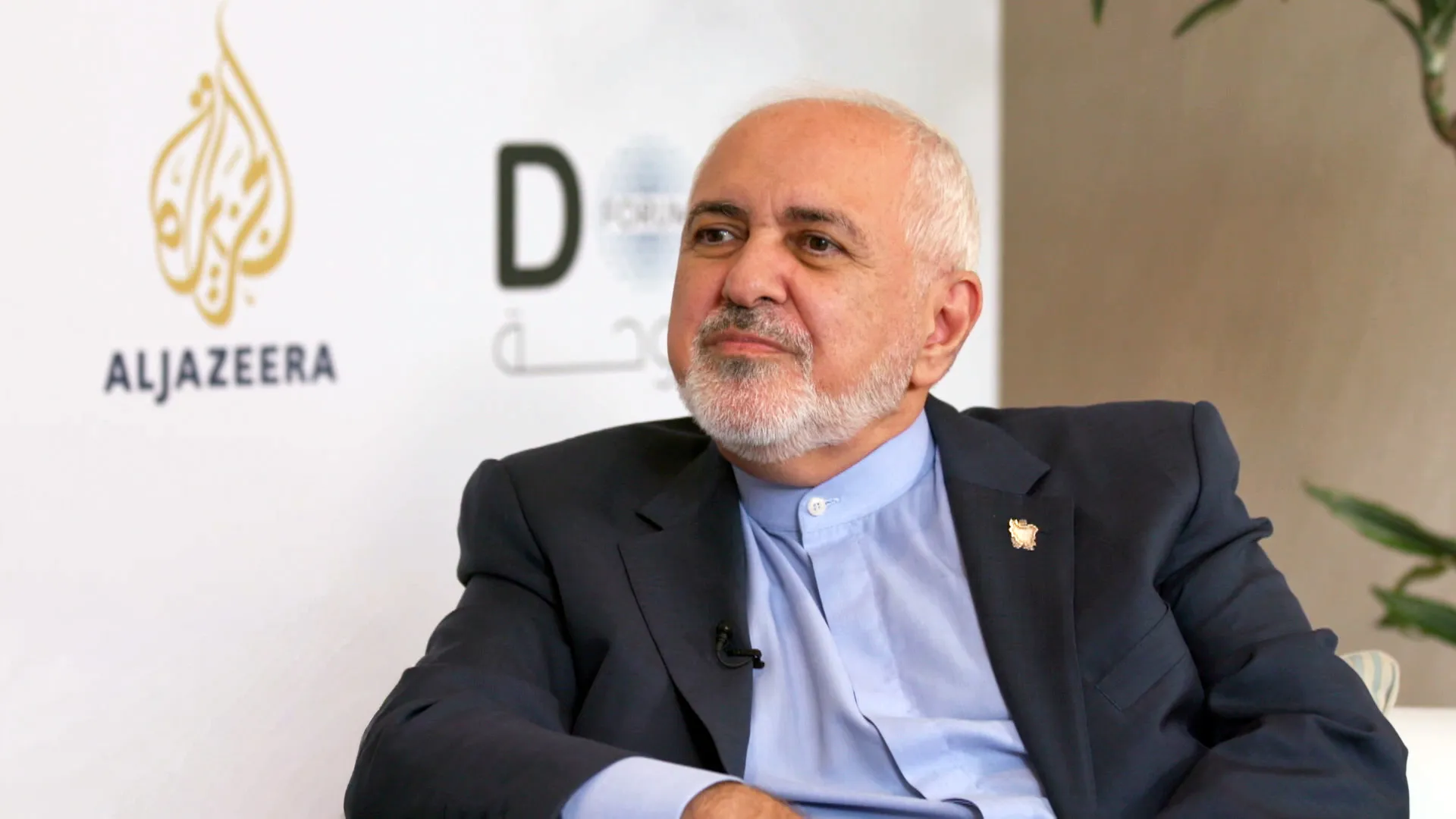
Javad Zarif: Main threat to the Middle East is Israel, not Iran | Israel-Iran conflict

Iran’s former foreign minister argues Israel, backed by the US, has killed every opportunity for peace.

Months after being attacked by the United States and Israel, Iran finds itself in the crosshairs again, with Israeli officials lobbying US President Donald Trump to address Tehran’s ballistic missiles.

Veteran Iranian diplomat Javad Zarif tells host Steve Clemons that “everybody lost any faith in diplomacy” after Israel and the US attacked Iran following five rounds of reconciliation talks between Washington and Tehran.

Zarif added that Israel has historically thwarted every opportunity for reconciliation between Iran and the US, and that Trump’s style of diplomacy is disastrous, as it creates “negotiations that end up in war”.

Source link

Columnists Anita Chabria and Mark Z. Barabak look back on 2025

Is there a dumpster somewhere to torch and bury this year of bedlam, 2025?

We near its end with equal amounts relief and trepidation. Surely we can’t be expected to endure another such tumultuous turn around the sun?

It was only January that Donald Trump moved back into the White House, apparently toting trunkloads of gilt for the walls. Within weeks, he’d declared an emergency at the border; set in motion plans to dismantle government agencies; fired masses of federal workers; and tariffs, tariffs, tariffs.

A crowd of demonstrators on the Capitol Mall flying an upside down American flag

Demonstrators at a No Kings rally in Washington, protesting actions by President Trump and Elon Musk.

(Jose Luis Magana / Associated Press)

By spring, the administration was attacking Harvard as a test case for strong-arming higher education. By June, Trump’s grotesquely misnamed Big Beautiful Bill had become law, giving $1 trillion in tax cuts to billionaires and funding a deportation effort (and armed force) that has fundamentally reshaped American immigration law and ended any pretense about targeting “the worst of the worst.”

Fall and winter have brought questionable bombings of boats in the Caribbean, a further backing away from Ukraine, a crackdown on opposition to Trump by classifying it as leftist terrorism and congressional inaction on healthcare that will leave many struggling to stay insured.

That’s the short list.

It was a year when America tried something new, and while adherents of the MAGA movement may celebrate much of it, our columnists Anita Chabria and Mark Z. Barabak have a different perspective.

Here, they renew their annual tradition of looking at the year past and offering some thoughts on what the new year may bring.

Chabria: Welp, that was something. I can’t say 2025 was a stellar year for the American experiment, but it certainly will make the history books.

Before we dive into pure politics, I’ll start with something positive. I met a married couple at a No Kings rally in Sacramento who were dressed up as dinosaurs, inspired by the Portland Frog, an activist who wears an inflatable amphibian suit.

When I asked why, the husband told me, “If you don’t do something soon, you will have democracy be extinct.”

A woman standing before an American flag during an anti-Trump protest in downtown Los Angeles.

Crowds participate in No Kings Day in downtown Los Angeles in October.

(Genaro Molina / Los Angeles Times)

I loved that so many Americans were doing something by turning out to not just protest policies that hit personally, but to rally in support of democracy writ large. For many, it was their first time taking this kind of action, and they were doing it in a way that expressed optimism and possibility rather than giving in to anger or despair. Where there is humor, there is hope.

Barabak: As in, it only hurts when I laugh?

In 2024, a plurality of Americans voted to reinstall Trump in the White House — warts, felony conviction and all — mainly in the hope he would bring down the cost of living and make eggs and gasoline affordable again.

While eggs and gas are no longer exorbitant, the cost of just about everything else continues to climb. Or, in the case of beef, utility bills and insurance, skyrocket.

Workers adding Donald Trump's name to the John F. Kennedy Memorial Center for the Performing Arts

The John F. Kennedy Memorial Center for the Performing Arts is another of the long-standing institutions Trump has smeared his name across.

(Jacquelyn Martin / Associated Press)

Meantime, the president seems less concerned with improving voters’ lives than smearing his name on every object he lays his eyes on, one of the latest examples being the John F. Kennedy Center for the Performing Arts.

(The only place Trump doesn’t want to see his name is in those voluminous Epstein files.)

I wonder: Why stop there? Why not brand these the United States of Trump-erica, then boast we live in the “hottest” country on Planet Trump?

Chabria: Stop giving him ideas!

You and I agree that it’s been a difficult year full of absurdity, but we’ve disagreed on how seriously to take Trump as a threat to democracy. As the year closes, I am more concerned than ever.

It’s not the ugly antics of ego that alarm me, but the devastating policies that will be hard to undo — if we get the chance to undo them.

The race-based witch hunt of deportations is obviously at the top of that list, but the demolition of both K-12 and higher education; the dismantling of federal agencies, thereby cutting our scientific power as a nation; the increasing oligarchy of tech industrialists; the quiet placement of election deniers in key election posts — these are all hammers bashing away at our democracy.

Now, we are seeing overt antisemitism and racism on the MAGA right, with alarming acceptance from many. The far right has championed a debate as dumb as it is frightening, about “heritage” Americans being somehow a higher class of citizens than nonwhites.

Vice President JD Vance speaks at a college campus event in front of a poster reading "This Is the Turning Point."

Vice President JD Vance speaks at the University of Mississippi in Oxford.

(Gerald Herbert / Associated Press)

Recently, Vice President JD Vance gave a speech in which he announced, “In the United States of America, you don’t have to apologize for being white anymore,” and Trump has said he wants to start taking away citizenship from legal immigrants. Both men claim America is a Christian nation, and eschew diversity as a value.

Do you still think American democracy is secure, and this political moment will pass without lasting damage to our democratic norms?

Barabak: I’ll start with some differentiation.

I agree that Trump is sowing seeds or, more specifically, enacting policies and programs, that will germinate and do damage for many years to come.

Alienating our allies, terrorizing communities with his prejudicial anti-immigrant policies — which go far beyond a reasonable tightening of border security — starving science and other research programs. The list is a long and depressing one, as you suggest.

But I do believe — cue the trumpets and cherubs — there is nothing beyond the power of voters to fix.

To quote, well, me, there is no organism on the planet more sensitive to heat and light than a politician. We’ve already seen an anti-Trump backlash in a series of elections held this year, in red and blue state alike. A strong repudiation in the 2026 midterm election will do more than all the editorial tut-tutting and protest marches combined. (Not that either are bad things.)

A poll worker at Los Angeles' Union Station.

A stressed-out seeming poll worker in a polling station at Los Angeles’ Union Station.

(Eric Thayer / Los Angeles Times)

The best way to preserve our democracy and uphold America’s values is for unhappy citizens to register their dissent via the ballot box. And to address at least one of your concerns, I’m not too worried about Trump somehow nullifying the results, given legal checks and the decentralization of our election system.

Installing lawmakers in Congress with a mandate to hold Trump to account would be a good start toward repairing at least some of the damage he’s wrought. And if it turns into a Republican rout, it’ll be quite something to watch the president’s onetime allies run for the hills as fast as their weak knees allow.

Chabria: OMG! It’s a holiday miracle. We agree!

I think the midterms will be messy, but I don’t think this will be an election where Trump, or anyone, outright tries to undo overall results.

Although I do think the groundwork will be laid to sow further doubt in our election integrity ahead of 2028, and we will see bogus claims of fraud and lawsuits.

So the midterms very well could be a reset if Democrats take control of something, anything. We would likely not see past damage repaired, but may see enough opposition to slow the pace of whatever is happening now, and offer transparency and oversight.

But the 2026 election only matters if people vote, which historically is not something a great number of people do in midterms. At this point, there are few people out there who haven’t heard about the stakes in November, but that still doesn’t translate to folks — lazy, busy, distracted — weighing in.

If proposed restrictions on mail-in ballots or voter identification take effect, even just in some states, that will also change the outcomes.

But there is hope, always hope.

Barabak: On that note, let’s recognize a few of the many good things that happened in 2025.

MacKenzie Scott donated $700 million to more than a dozen historically Black colleges and universities, showing that not all tech billionaires are selfish and venal.

The Dodgers won their second championship and, while this San Francisco Giants fan was not pleased, their seven-game thriller against the Toronto Blue Jays was a World Series for the ages.

And the strength and resilience shown by survivors of January’s SoCal firestorm has been something to behold.

Any others, beside your demonstrating dinos, who deserve commendation?

Pope Leo XIV waves after delivering the annual Christmas blessing.

Pope Leo XIV waves after delivering the Christmas Day blessing from the main balcony of St. Peter’s Basilica at the Vatican.

(Gregorio Borgia / Associated Press)

Chabria: Though I’m not Catholic, I have been surprisingly inspired by Pope Leo XIV.

So I’ll leave us with a bit of his advice for the future: “Be agents of communion, capable of breaking down the logic of division and polarization, of individualism and egocentrism.”

Many of us are tired, and suffering from Trump fatigue. Regardless, to put it in nonpapal terms, it may be a dumpster — but we’re all in it together.

Barabak: I’d like to end, as we do each year, with a thank you to our readers.

Anita and I wouldn’t be here — which would greatly please some folks — but for you. (And a special nod to the paid subscribers out there. You help keep the lights on.)

Here’s wishing each and all a happy, healthy and prosperous new year.

We’ll see you again in 2026.

Source link

GOP coalescing behind Vance as Trump privately dismisses third-term run

When Charlie Kirk was killed by an assassin this fall, Republican leaders credited the organization he founded for enabling President Trump’s return to power.

Now that organization is mobilizing behind Vice President JD Vance.

Uninterested in a competitive Republican primary in 2028, Turning Point USA plans to deploy representatives across Iowa’s 99 counties in the coming months to build the campaign infrastructure it believes could deliver Vance, a Midwesterner from nearby Ohio, a decisive victory, potentially short-circuiting a fractious GOP race, insiders said.

It is the latest move in a quiet effort by some in Trump’s orbit to clear the field of viable competitors. Earlier this month, Marco Rubio, the secretary of State previously floated by Trump as a possible contender, appeared to take himself out of the running.

“If Vance runs for president, he’s going to be our nominee, and I’ll be one of the first people to support him,” Rubio told Vanity Fair.

After Kirk’s widow, Erika, endorsed Vance on stage at Turning Point USA’s annual conference in Arizona last week, a straw poll of attendees found that 84% would support Vance in the coming primaries. Yet, wider public polling offers a different picture.

A CNN poll conducted in early December found that Vance held a plurality of Republican support for 2028, at 22%, with all other potential candidates, such as Rubio and Florida Gov. Ron DeSantis, registering in single digits.

The remaining 64% told pollsters they had “no one specific in mind,” reflecting an open field with plenty of room for other figures to gain ground.

While a recent Gallup poll found that 91% of Republicans approve of Vance’s job performance as vice president — an encouraging number entering a partisan primary — only 39% of Americans across party lines view him positively in the role, setting Vance up for potential challenges should he win the nomination.

Potential presidential candidates on both sides of the political aisle are expected to assess their chances over the next year, before primary season officially kicks off, after the midterm elections in November.

Closing out the Turning Point USA conference, Vance called for party unity amid escalating conflicts among right-wing influencers over the acceptability of racism and antisemitism within Republican politics.

“President Trump did not build the greatest coalition in politics by running his supporters through endless, self-defeating purity tests,” Vance said. “Every American is invited. We don’t care if you’re white or Black, rich or poor, young or old, rural or urban, controversial or a little bit boring, or somewhere in between.”

Charlie Kirk, he added, “trusted all of you to make your own judgment. And we have far more important work to do than canceling each other.”

Vance’s remarks drew criticism from some on the right for appearing to tolerate bigotry within the party. The vice president himself has been subjected to racist rhetoric, with Nick Fuentes — a far-right podcaster who has praised Adolf Hitler — repeatedly directing attacks at Vance’s wife and children over their Indian ancestry.

“Let me be clear — anyone who attacks my wife, whether their name is Jen Psaki or Nick Fuentes, can eat s—,” Vance said in an interview last week, referring to President Biden’s former press secretary. “That’s my official policy as vice president of the United States.”

In the same interview, Vance praised Tucker Carlson, another far-right podcaster who has defended Fuentes on free speech grounds, as a “friend of mine,” noting that he supported Vance as Trump’s vice presidential pick in 2024.

Trump has floated Vance as his potential successor multiple times without ever explicitly endorsing his nomination, calling him “very capable” and the “most likely” choice for the party.

“He’s the vice president,” Trump said in August. “Certainly he’s doing a great job, and he would be probably favored at this point.”

Several of Trump’s most ardent supporters have pushed the president to seek a third term in 2028, despite a provision of the Constitution, in the 22nd Amendment, barring him from doing so.

Trump himself has said the Constitution appears clear on the matter. But Steve Bannon, an architect of Trump’s historic 2016 campaign and one of his first White House strategists, continues to advocate a path forward for another run, reportedly disparaging Vance as “not tough enough” to lead the party to victory.

“He knows he can’t run again,” Susie Wiles, the president’s White House chief of staff, told Vanity Fair in a recent profile of her. “It’s pretty unequivocal.”

Trump, who will be 82 when he is slated to leave office, has told Wiles he understands a third term isn’t possible “a couple times,” she added.

Alan Dershowitz, a prominent constitutional law professor and a lawyer to Trump during his Senate impeachment trial, recently presented Trump with a road map to a third term in an Oval Office meeting, which he will publish in a new book slated for release next year.

Even he came away from their meeting believing Trump would pass on another bid.

“That is my conclusion based on what he has said in public,” Dershowitz told The Times.

“He has said in the past,” he added, “that it’s too cute.”

Source link

Brown, Garamendi Rally Orange County Democrats

State Treasurer Kathleen Brown and state Insurance Commissioner John Garamendi brought their gubernatorial campaigns to a convention of Orange County Democrats on Saturday, virtually ignoring each other and instead aiming their fire at Gov. Pete Wilson.

In a straw poll taken throughout the day, Brown beat Garamendi by 140 votes to 114. The third Democrat in the race, state Sen. Tom Hayden of Santa Monica, did not attend the meeting but received 27 votes.

The convention of about 500 Orange County Democrats served as a pep rally for the political party seeking to build momentum in a county controlled by the Republican Party, which holds an 18-point voter registration margin over Democrats.

Leading off a forum for statewide candidates, Brown said that until Wilson faced the pressure of an election year he did not fight the migration of California jobs to other states, that he cut education funding without trying to improve schools, and that he “talks tough on crime at the front door while he lets dangerous parolees out the back door.”

Californians, she said, do not feel safer and do not feel more economic security than they did before Wilson took office.

“And that’s why we need a change from the Rip Van Wilson who’s been sleeping and slumbering for the last three years in the governor’s office,” Brown told the delegates.

Garamendi, who has attracted attention in local communities throughout the state by “working” side-by-side with everyday workers such as jailers, teachers and factory workers, said Wilson “does not have a clue; does not have the foggiest understanding of what’s taking place” on issues such as worker safety and California’s choked transportation system.

Garamendi grew more passionate as he spoke about health care. His own plan for California, never approved, served as a starting point for development of President Clinton’s health care plan that has run into a firestorm of criticism.

“When I hear after 25 years of my crusade to establish a national health plan, when I hear the Republicans say to me that there’s no health crisis, oh boy, I’m telling you, we are in for a fight,” Garamendi said. “We will have a national health plan that provides health care to every single American, and it will be done.”

Earlier in the day, state Democratic Party Chairman Bill Press urged Orange County Democrats to help “get rid of that cruel and that cold and that callous, incompetent and poor excuse for a governor named Pete Wilson.”

Convention organizers said the convention should serve as a reminder to Democratic statewide candidates that Orange County should not be ignored–that Democrats here can cut into the huge margins that statewide Republican candidates often rely on to carry them over the top.

Source link

Arguing the Roberts’ case – Los Angeles Times

Re “Bush Order Lets Him Control Roberts’ Memos,” Aug. 11

I’m not being facetious: I really don’t understand. Please write an editorial and explain to me why, unless it’s truly a matter of national security, should any president be allowed to control access to a former president’s documents that were discharged as part of his official duties? Even the claim of lawyerclient privilege is specious unless it is from consultations with the president’s private, non-taxpayer-paid attorney. Otherwise, the public has retained the legal representatives, so any citizen should be allowed — in fact, have a right — to see the lawyers’ notes.

TOM OGDEN

Hollywood

*

Re “Roberts, misjudged,” Opinion, Aug. 11

Defending John Roberts’ 1980s position on the Voting Rights Act, Abigail Thernstrom argues that race should not be an issue in political districting. She quotes Roberts’ claim that we stand before the law “only as Americans” and Utah Republican Sen. Orrin Hatch’s claim that officials should “represent individual citizens” and not blocs. The sentiments are sure uplifting but ingenuous.

Citizens should stand before laws they have had some effect in creating and be represented by officials they have had some effect in electing. To prevent tyranny by the majority, minority interests should be represented in office, and not only racial interests, but also economic and demographic ones.

A wag in The Times’ Opinion section recently proposed that all political districting be based entirely on income levels, not geography. The proposal is amusing, but not entirely wrong.

DAVID EGGENSCHWILER

Los Angeles

Source link

He’s Taking Local Politics National : Derek Shearer, a Top Adviser to Bill Clinton, Learned a Lot at City Hall

Derek Shearer is in the big leagues now, but he cut his political teeth in Santa Monica.

Shearer, a top economic adviser to Democratic presidential nominee Bill Clinton, was a planning commissioner in Santa Monica for five years. He credits the city with teaching him about politics and about what an activist government can do.

Now busy with the Clinton campaign, Shearer can be found churning out memos, fielding press calls, lunching with Clinton supporters and doing a hundred other tasks necessary to run the campaign in California. He has been on leave since June from his position as a public policy professor at Occidental College.

The Santa Monica resident spends half his time on the road trying to get across to the electorate Clinton’s economic manifesto, which he helped craft along with Rhode Island businessman Ira Magaziner and Harvard economist Robert Reich. The booklet-length document outlines Clinton’s economic plan and is credited with helping revive the lagging Clinton campaign in June.

An old friend of Clinton, Shearer said the plan incorporates few of his own original ideas. “I don’t try to push my solutions” on the candidate, he said. Instead, he advises Clinton on a range of subjects, helping the candidate find information and expertise.

“Derek is the kind of person that thinks you should bring a lot of people together to discuss an issue,” said Manuel Pastor, an economics professor at Occidental and a fellow at the college’s International and Public Affairs Center, which Shearer directs.

But Shearer is a believer in the Clinton message.

“The core message is not that we need better tinkering with the Federal Reserve or we need to tinker a bit with this or that tax rate,” Shearer said. “It’s that there are structural problems in the economy. We need to deal with the institutions in the society, a lot of which are run down or decayed or not running very well.”

He points to SMASH, the alternative public school his children attended in Santa Monica, as an example of the country’s decaying infrastructure. Built in the 1930s, the school is “crumbling,” Shearer said.

Shearer and Clinton met in the late ‘60s when Shearer was working as a free-lance journalist in London and Clinton was on a Rhodes scholarship at Oxford. Both shared an opposition to the Vietnam War and a passionate interest in government. The two men, both 45, have remained friends since.

Shearer said that when they met Clinton was much the same as he is today–”a natural politician” and unrelentingly gregarious.

When Clinton visited Shearer’s home during the California primary, he stood out in the middle of the street and talked to neighbors, Shearer recalled.

And during an impromptu visit to the Venice beach boardwalk, Clinton took the opportunity to talk policy with roller-skaters. He attracted such a large crowd in a bookstore that he eventually had to make a quick getaway out the back door, Shearer said.

“He’s very at ease with people and always has been,” he said.

Even during the lowest points of the Clinton campaign–when charges of marital infidelity were flying–Shearer never lost faith in his chosen candidate.

And he had been there before. “I had been involved in the (Gary) Hart campaign four years before. I had always felt that Hart should not have withdrawn, that the American people want to hear about issues,” Shearer said. He felt the same way about Clinton.

Shearer has taught at UCLA, Tufts University in Massachusetts and the UC Santa Barbara. He moved to Occidental in 1981 and now directs its public policy program.

He tries to bring his zest for real world politics to the classroom, teaching about “how policy really gets made.” His students learn to deal with bureaucracies, write up policy decisions and even craft public relations brochures.

Shearer said he often invites journalists, campaign consultants and local politicians to talk to students, along with nationally known figures such as consumer advocate Ralph Nader and economist John Kenneth Galbraith.

By most accounts, Shearer is more liberal than Clinton. In fact, the Orange County Register in an Aug. 4 editorial singled out Shearer as evidence of the Clinton campaign’s leanings to the left.

But Shearer rejects the “liberal” label in favor of “progressive.”

“What being a progressive means is that you believe that government can make a difference in people’s lives,” he said.

To Shearer, the city in which he lives offers an example.

Smart planning and wise public investment have given Santa Monica its place in the sun, he said. He pointed to the Third Street Promenade–and the decision to zone it to encourage movie theaters to move to the area–as an example of good planning. The theaters attract lots of customers who patronize other businesses on the walkway, he said.

Although Santa Monica is touted by travel writers and urban planners alike as a pleasant and livable community, elections have always been contentious. Because of his experiences here, he is unfazed by the bruising presidential race.

Shearer recalled personal attacks when he ran on a reform slate in Santa Monica in 1981. When his wife, Ruth Goldway, served as mayor in the early ‘80s, she received death threats and had to have police protection, he said.

Shearer made the leap from local politics to the national scene quite some time ago. In fact, it seems as if the Yale graduate was destined for a role in government. His office at Occidental is full of photographs of himself with well-known political figures, among them Sen. Alan Cranston and, of course, Clinton. One black-and-white photo shows Shearer’s journalist father interviewing Lyndon Johnson.

Shearer served on the board of directors for the National Consumer Cooperative Bank during the Carter Administration, and in the 1970s, he was an economic adviser to Jerry Brown.

But Shearer refused to speculate about the role he would play in a Clinton administration.

“I’ve learned . . . that you don’t plan your life around the outcomes of campaigns,” he said.

Source link

Democrat Considered a Longshot in Conservative Stronghold

The first time Democrat Jon Lauritzen ran for the 38th Assembly District, his campaign made headlines when party volunteers charged Simi Valley police officers with harassing and intimidating them as they handed out leaflets supporting his election bid.

Back for another try four years later, Lauritzen, 62, said he and his supporters now feel more welcome in the largely conservative city because the local Democratic club has since taken on a higher profile, aggressively campaigning for Democratic candidates.

But even as a bevy of labor groups walk precincts on behalf of Lauritzen and other Democrats, the retired high school teacher concedes that he is facing long odds in his effort to succeed Republican Tom McClintock, forced from the seat by term limits.

Not only do Republicans greatly outnumber Democrats in the district, which covers Simi Valley, Fillmore and parts of the San Fernando and Santa Clarita valleys, his Republican opponent, physician Keith Richman, has trounced him in fund-raising.

So in the waning days before next week’s election, Lauritzen has his fingers crossed, saying he hopes that after the conservative politics of McClintock, voters in the district will have tired of Republican representation that can get little done in an Assembly controlled by Democrats.

“That’s the only chance I have,” Lauritzen said.

But Richman, 46, who bills himself as a moderate Republican, said voters are not likely to confuse him with McClintock.

The millionaire internist favors abortion rights, opposes Proposition 38 (the school voucher initiative) and advocates increased funding for public education.

“I’m constructive. I can work with people and get things done,” said Richman, who spent $420,000 of his own money to win a close-fought primary in March.

“The conservative wing of the Republican Party put in a lot of money against me, and I had to spend more than I planned,” said Richman, president of a Mission Hills-based medical group. He has raised $727,932, counting his own $420,000 contribution.

Meanwhile, Lauritzen, who has seen little support from Assembly leaders because of the district’s GOP leanings, has been forced to slug it out with the $38,282 he has raised to date, including $17,500 in loans.

The Chatsworth resident, who spent 34 years as a math and computer science teacher, plans to spend the remaining days of the campaign touting his proposals for improving education: strengthening emergency teaching credential requirements, modernizing school facilities, and requiring increased technology training for teachers.

Lauritzen also is calling for state oversight of the massive Newhall Ranch housing project to minimize its effect on roads, sewers, utilities and schools.

“The whole region needs to be looked at in terms of infrastructure,” he said.

Lauritzen calls his opponent a “decent guy,” but he questions Richman’s Republican credentials, because his positions appear to be so similar to Lauritzen’s own. He also takes particular delight in pointing out that Richman’s wife, Deborah, is a registered Democrat.

“He made a strategic move by declaring himself a Republican,” Lauritzen said. “He’d rather be a Democrat, if he thought he could win as one.”

Richman, who said he changed his party registration from Democrat to Republican in 1992, scoffs at Lauritzen’s assertion, and for evidence of his party loyalty he points to his tenure on Los Angeles’ Community Redevelopment Agency as an appointee of Republican Mayor Richard Riordan.

“I’m just a mainstream Republican,” said Richman, who added that he did not know which political party his wife is registered under.

McClintock endorsed Richman’s opponent in the primary, but he has since won the incumbent’s backing, as well as the support of Republican leaders from across Ventura and Los Angeles counties.

Among his top priorities, Richman said, is to push for massive spending on roads, highways and water systems.

“We need to make investments in our future,” Richman said.

And as a physician, Richman said he is keenly interested in health-care reforms that would make insurance more accessible and affordable.

He is also concerned that health-care providers are not being adequately compensated for their services, attributing the recent collapse of Simi Valley-based Family Health Care to insufficient reimbursements from health plans.

“We need to reduce the amount of uncompensated care that providers give,” said Richman, whose campaign received $16,039 from the California Medical Action Committee.

Richman, a Northridge resident and father of two, said he would leave his medical practice, Lakeside Medical Group, if elected. But he has not yet determined whether he would sell his interest in the 250-employee company.

“I see myself as a citizen legislator,” he said.

Also running for the seat is Libertarian candidate Philip Baron, who has raised nearly $3,000 to date. Starting today, his campaign will air commercials on cable channels in Simi Valley and the San Fernando Valley.

Source link

Majority of California voters want to repeal gas tax increase, poll finds

As a new poll found a majority of California voters want to repeal increases to the state’s gas tax and vehicle fees, Gov. Jerry Brown has begun campaigning to preserve them, arguing the sacrifice is needed to fix long-neglected roads and bridges and improve mass transit.

Repeal of the higher taxes and fees was supported by 51% of registered voters in the state, according to a new USC Dornsife/Los Angeles Times statewide poll.

The survey found 38% of registered voters supported keeping the higher taxes, 9% hadn’t heard enough to say either way and 2% said they wouldn’t vote on the measure.

The results bode well for a measure that Republican members of Congress hope to place on the November statewide ballot that could boost turnout of GOP voters by offering the chance to repeal the gas tax increase, said Bob Shrum, director of the Jesse M. Unruh Institute of Politics at USC.

“If it qualifies for the ballot it will be, I suspect, very hard to sustain it,” Shrum said of the tax. “It’s almost dead.”

At issue is Senate Bill 1, approved by the Legislature and governor in April 2017. It raised the gas tax by 12 cents per gallon, boosted the diesel fuel tax by 20 cents per gallon and increased vehicle fees. The new charges will raise $5.4 billion annually for road and transit projects.

In launching a campaign to preserve the taxes, Brown has come out swinging, calling the proposed repeal initiative “devious and deceptive” in a speech Friday to Southern California transportation leaders.

“The test of America’s strength is whether we defeat this stupid repeal measure, which is nothing more than a Republican stunt to get a few of their losers returned to Congress, and we’re not going to let that happen,” Brown told the transportation officials at Union Station in Los Angeles.

The California Transportation Commission has so far allocated $9.2 billion for transportation projects throughout California as a result of SB 1.

The governor’s comments drew a sharp rebuke as “disgraceful name-calling” from Carl DeMaio, a Republican leader of the initiative drive who is a former member of the San Diego City Council.

The poll results are encouraging, he said.

New poll finds a volatile race for second place »

“It just goes to show you that in order for Gov. Jerry Brown and his backers to prevail in keeping the tax in place they are going to have to pull out all stops, and the level of dishonesty is going to be breathtaking,” DeMaio said.

The governor and other supporters of the tax “might have a chance” to succeed, Shrum said, if they make the question about safe bridges, fixing the state’s crumbling roads and boosting the economy.

That is the tactic that seems to be emerging.

Caltrans officials held a news conference Tuesday in Oxnard to announce $68.6 million in SB 1 funds to build an overpass for Rice Avenue over busy rail tracks.

The project will end delays as cars wait for trains to pass and make safer an intersection that has been identified as one of the most dangerous in the state, officials said.

Brown had planned to attend the Oxnard event, but his flight from Sacramento was delayed. The governor plans similar events throughout the state, aides said, and he made his case to reporters in a conference call.

“It’s great to recognize this, one of many projects that SB 1 is going to finance,” Brown said. “It’s going to save lives. It’s going to make commuting and traveling easier and safer.”

That supporters of the tax are addressing voters outside of Los Angeles and San Francisco is also noteworthy. The poll found only 44% of voters in Los Angeles want to repeal the tax, but the number goes to 55% in the suburbs, 56% in the state’s Central Valley and 64% in Orange and San Diego counties and the Inland Empire.

Shrum said supporters of the tax should be concerned about the level of opposition by voters, including the poll findings that half of Latino voters want to repeal the taxes. “That’s not a promising number, given you have to use a Democratic base” to mount a campaign to keep the tax, he said.

“If Democrats are going to save this they are going to have to spend a lot of money,” Shrum added.

Coverage of California politics »

Hoping to boost turnout of GOP voters, Republican leaders providing major funding of the repeal initiative include House Speaker Paul D. Ryan of Wisconsin, House Majority Whip Steve Scalise of Louisiana and House Majority Leader Kevin McCarthy of Bakersfield, who, because he is poised to be the next speaker, has a lot on the line when it comes to who controls Congress.

The campaign against the initiative is backed by a coalition of deep-pocketed big businesses that often align with Republicans to fight higher taxes, and it also has support from labor, law enforcement and cities.

The “Fix Our Roads” coalition fighting repeal includes the Los Angeles Area Chamber of Commerce, the Bay Area Council, the Silicon Valley Leadership Group, the League of California Cities, the State Building & Construction Trades Council of California and the California Assn. of Highway Patrolmen.

A political committee set up to fight any attempt to repeal the gas tax has raised more than $1 million so far.

The poll did not shake the confidence of anti-repeal coalition leader Michael Quigley, executive director of the California Alliance for Jobs.

“This campaign will be about whether voters want to rip away thousands of local projects, whether they want unsafe, congested roads, and whether they want to let partisan politicians take us backward,” Quigley said.

The governor’s leading role could help to keep the gas tax on the books, but his ability to assist is limited, said Mike Murphy, a Republican strategist and consultant to the poll. “The governor’s numbers aren’t what they used to be.”

The poll found that 48% of voters approved of the job Brown has done and 40% disapproved.

The online survey was conducted from April 18 to May 18 and included 691 registered voters. The overall margin of sampling error is plus or minus 4 percentage points.

Jill Darling, survey director of the USC Dornsife Center for Economic and Social Research, contributed to this report.

patrick.mcgreevy@latimes.com

Twitter: @mcgreevy99


UPDATES:

10:15 a.m.: This article was updated with revised figures from state officials who reported that the California Transportation Commission has allocated a total of $9.2 billion from SB 1 funds for transportation projects.

This article was originally published at 12:05 a.m.


Source link

Will Foe Throw Tobacco Firms a Lifeboat?

Does Rep. Henry A. Waxman (D-Los Angeles), who has tormented the nation’s cigarette manufacturers for 15 years, now loom as the tobacco industry’s savior ?

This scenario, which would have been thought surreal only months ago, suddenly seems only mildly far-fetched. And it reflects how far the fortunes of the once-mighty tobacco lobby have fallen, particularly amid damaging revelations in recent months.

Ever since Waxman, himself a former smoker, took over the Energy and Commerce subcommittee on health and environment in 1979, he has used the post as a bully pulpit to attack cigarette makers. When he embarked on his then lonely crusade against one of the country’s richest and most powerful interests, it was considered hazardous to a lawmaker’s health.

Nonetheless, it was Waxman’s bill in 1984 that created the current series of rotating warning labels on cigarette packs and advertising. In 1990, he sought to severely restrict tobacco companies’ ability to link their brands with glamorous and appealing models in print ads and on billboards. But Congress wasn’t ready to go that far just yet.

Then last year, the Environmental Protection Agency issued a landmark report stating that secondhand tobacco smoke poses a significant health risk to nonsmokers and is responsible for about 3,000 lung cancer deaths a year in the United States. Waxman jumped back in.

He has held a series of high-profile hearings, including a historic session where the heads of seven cigarette companies testified for the first time. These carefully staged media events–which critics have likened to an inquisition–have rocked the industry.

At the same time, the Food and Drug Administration, armed with newly disclosed industry documents, began to pursue evidence to declare nicotine an addictive drug. This is the most profound threat ever faced by the tobacco companies.

In recent months, the two efforts have merged, with FDA Commissioner David A. Kessler testifying before Waxman’s panel. The most explosive information that has come out includes allegations that cigarette companies have known their products are addictive and have manipulated nicotine levels to keep their customers hooked.

The tobacco executives have denied these assertions under oath.

If the FDA determines nicotine is indeed a drug, under the law it would then have to declare it “safe and effective” or ban it. Waxman says the agency would have no choice but to outlaw cigarettes, which the government blames for more than 400,000 deaths each year.

This specter could force the $50-billion-a-year industry to ask Waxman and other longtime, powerfully positioned adversaries to help craft compromise legislation that would empower the FDA to regulate advertising, promotion, sales and nicotine levels–in exchange for keeping cigarettes on the market.

This would be fine with Waxman. He insists he is not seeking to prohibit smoking for the nearly 50 million Americans who do so. Rather, he says he wants “to discourage people from smoking” by restricting the $4-billion-a-year campaign to market cigarettes, especially to young people, who represent the industry’s future lifeblood.

And he has sponsored legislation, which has passed his subcommittee, to restrict smoking to rooms with separate exhaust systems in all public places except bars, restaurants and prisons.

The FDA’s inquiry into regulating nicotine has begun to alter the dynamics on Capitol Hill. Thomas E. Sandefur Jr., chief executive of Brown & Williamson Tobacco, has accepted Waxman’s invitation to meet privately to discuss “reasonable regulation.” Other executives may be interested as well. Such a meeting would be a first.

This doesn’t mean, of course, that the industry is ready to embrace the diminutive lawmaker who some tobacco officials previously derided as “Hollywood Henry” –a sobriquet meant to suggest a publicity hound who was out of touch with mainstream America.

Only this week, Walker Merryman, vice president of the Tobacco Institute, described Waxman’s anti-cigarette efforts as “unmitigated zealotry, no question about that. Sort of like an 18-wheeler without brakes on the Golden State Freeway during rush hour.”

But, privately, even some tobacco advocates acknowledge that the day may come when they need the relentless Waxman, of all people, to help keep them alive.

“It would be ironic,” an industry activist mused. “We live in interesting times.”

Source link

Patel planning permanent closure of FBI’s Hoover headquarters building

Dec. 27 (UPI) — The FBI Hoover headquarters in Washington soon will be vacant as the federal law enforcement agency prepares to make a permanent exit in favor of a more modern structure.

FBI Director Kash Patel plans to make a permanent move into the former headquarters of the recently closed U.S. Agency for International Development sometime soon, according to Bloomberg.

“After more than 20 years of failed attempts, we finalized a plan to permanently close the FBI’s Hoover headquarters and move the workforce into a safe, modern facility,” Patel said in a social media post on Friday.

Moving into the former USAID headquarters will save taxpayers almost $5 billion, which was allocated to build a new FBI headquarters that would not have opened until 2035, Patel said.

“We scrapped that plan,” he explained. “Instead, we selected the already-existing Reagan Building, saving billions and allowing the transition to begin immediately with required safety and infrastructure upgrades underway.”

When the improvements are done, Patel said the FBI staff will move into the Reagan Building, which is located at 1300 Pennsylvania Ave. N.W., between the White House and the Capitol. He did not say when the move might occur.

The Hoover Building will be shut down after the FBI vacates it, the FBI director added.

While Patel said the move will save taxpayers billions of dollars, Maryland lawmakers are not happy about the change in plans.

Congress had approved the allocation to build a new FBI headquarters in Maryland during the Biden administration, but the change in plans has canceled that.

“Not only was this decision final, [but] the Congress appropriated funds specifically for the purpose of the new, consolidated campus to be built in Maryland,” the state’s Democratic Party Congressional delegation said in a joint statement in July.

“Now the Administration is attempting to redirect those funds — both undermining Congressional intent and dealing a blow to the men and women of the FBI — since we know that a headquarters located within the District [of Columbia] would not satisfy their security needs,” the delegation said.

Maryland officials in November filed a federal lawsuit accusing the Trump administration of improperly diverting $555 million when it announced the change of plans for the FBI headquarters.

“These actions flouted Congress’s explicit direction to choose a site from the three specified sites, as well as other specific statutory directives concerning the selection of the site and the use of the funds,” state attorneys say in the federal lawsuit.

The J. Edgar Hoover Building opened in 1974 and has been the FBI’s headquarters for the past 50 years.

Prior to that, the FBI was headquartered in the Justice Department building.

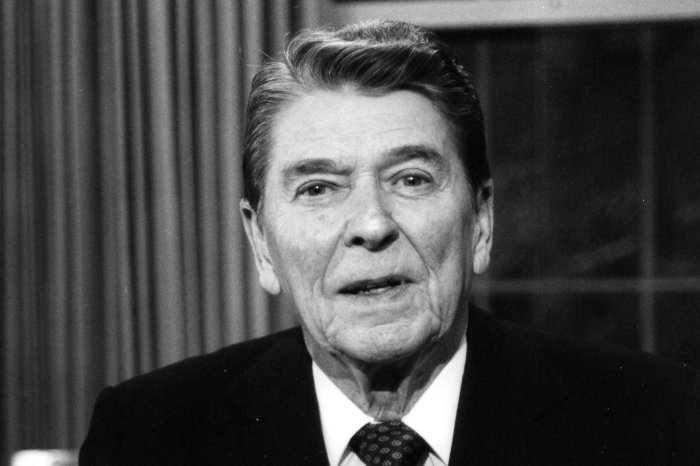
Former actor and sports broadcaster Ronald Reagan, known for films such as “Knute Rockne, All American” and “Kings Row,” is pictured in the Oval Office after delivering his farewell address to the nation on January 11, 1989. Reagan later served as the 40th president of the United States. Photo by Joe Marquette/UPI | License Photo

Source link

Ducking, Bobbing, Weaving: Is This What People Want? : The electorate may be more focused on reality than some spin doctors think

Democratic presidential nominee Bill Clinton says he still plans to show up in East Lansing, Mich., next Tuesday. But if he does, it looks as if the Arkansas governor will be making a solo appearance rather than confronting President Bush face to face as the bipartisan Commission on Presidential Debates had hoped. The commission’s terms for debate have been rejected by the Bush campaign, forcing cancellation of next week’s encounter and quite possibly of the two others the commission has tried to arrange. Partisans can argue who gains from all this. What ought to be clear to everyone is that voters are the big losers.

The commission, headed by former Democratic Party chairman Paul G. Kirk Jr. and former Republican Party chairman Frank J. Fahrenkopf Jr., was formed in 1987 with the idea of taking all the partisan squabbling out of debate arrangements.

The commission proposed three 90-minute presidential debates and one debate between the vice presidential candidates, with questions put by a single moderator. Clinton accepted; Bush wants questions to be asked by a panel of journalists. That latter format allows–almost requires–shorter answers while cutting down on the opportunity for follow-up questions aimed at drawing out precise rather than general responses. By insisting on playing by its rules or refusing to play at all, the Bush camp is negating the bipartisan commission’s purpose.

FORUM OF IDEAS: Voters lose, because here for the first time in this campaign would have been a chance to gauge the candidates’ ideas for dealing with the nation’s problems through something other than carefully prepared formal statements or sound bites largely without content.

Here would have been a chance to see how well Bush and Clinton do on their feet, not just in brief responses and retorts, but in sustained exposition. Anyone who doubts that there is a public hunger for serious talk about serious problems, and a disgust with the glitz and sloganeering that most campaigning has become, is not reading the popular mood accurately.

Certainly Ross Perot sensed that hunger, which is why he encouraged a movement in his name, and certainly he senses it still, which is why as he told The Times this week he may reactivate his campaign. Perot’s biggest complaint is that neither Bush nor Clinton is talking about how he would control the swelling federal deficit, arguably the greatest drag on economic growth. He’s right; the candidates are ducking the issue, because if they were to take it on honestly they would be forced to speak about what is conventionally regarded as politically unspeakable. They would have to tell voters that the deficit can be controlled only by cutting spending, which means reducing a lot of government programs people cherish, or by increasing revenues, which means raising taxes. They won’t say that. Perot would, and in doing so he might just force Bush and Clinton finally to get specific about the deficit crisis.

TIME OF TWISTS: That would be one more twist in a campaign year that can already be seen as one of the most unusual in modern times. Two major developments are already apparent: the reshuffle facing Congress–especially the House, where come January as much as one-third of the membership may be new–and the large number of women who have entered contests for state and national offices and the large number who at this point stand a good chance at election in November. A record 11, for example, have already won primaries for Senate seats.

There will be no end to analyses about what it all means, but some preliminary judgments can be made right now. People seem increasingly to have gone from being cynical about the political process to being angry.

Incumbents are one evident target of this anger, while women candidates benefit because, among other reasons, many of them tend to be relatively new entrants into the political arena. It would be comforting to think that the shallowness and dishonesty of so much of what passes for political discourse have become no less a target of righteous public wrath. Certainly that would be one of the most positive things to take place in our political life in a very long time.

Source link

Polls open in Myanmar as military holds first election since 2021 coup | Politics News

Polls have opened in Myanmar’s first general election since the country’s military toppled Nobel laureate Aung San Suu Kyi’s democratically elected government in a 2021 coup.

The heavily restricted election on Sunday is taking place in about a third of the Southeast Asian nation’s 330 townships, with large areas inaccessible amid a raging civil war between the military and an array of opposition forces.

Recommended Stories

list of 3 itemsend of list

Following the initial phase, two rounds of voting will be held on January 11 and January 25, while voting has been cancelled in 65 townships altogether.

“This means that at least 20 percent of the country is disenfranchised at this stage,” said Al Jazeera’s Tony Cheng, reporting from Myanmar’s largest city, Yangon. “The big question is going to be here in the cities, what is the turnout going to be like?”

In Yangon, polling stations opened at 6am on Sunday (23:30 GMT, Saturday), and once the sun was up, “we’ve seen a relatively regular flow of voters come in,” said Cheng.

“But the voters are generally middle aged, and we haven’t seen many young people. When you look at the ballot, there are only few choices. The vast majority of those choices are military parties,” he said.

The election has been derided by critics – including the United Nations, some Western countries and human rights ⁠groups – as an exercise that is not free, fair or credible, with anti-military political parties not competing.

Aung San Suu Kyi, who was deposed by the military ​months after her National League for Democracy (NLD) won the last general election by a landslide in 2020, remains in detention, and her party has been dissolved.

The pro-military Union Solidarity and Development Party (USDP) is widely expected to emerge as the largest party.

The military, which has governed Myanmar since 2021, said the vote is a chance for a new start, politically and economically, for the nation of 55 million people, with Senior General Min Aung Hlaing consistently framing the polls as a path to reconciliation.

The military chief cast his ballot shortly after polling stations opened in Naypyidaw, the country’s capital.

The polls “will turn a new page for Myanmar, shifting the narrative from a conflict-affected, crisis-laden country to a new chapter of hope for building peace and reconstructing ‌the economy”, an opinion piece in the state-run Global New Light of Myanmar said on Saturday.

‘A resounding USDP victory’

But with fighting still raging in many areas of the country, the elections are being held in an environment of violence and repression, according to UN human rights chief Volker Turk. “There are no conditions for the exercise of the rights of freedom of expression, association or peaceful assembly that allow for the free and meaningful participation of the people,” he said last week.

The civil war, which was triggered by the 2021 coup, has killed an estimated 90,000 people, displaced 3.5 million and left some 22 million people in need of humanitarian assistance.

According to the Assistance Association for Political Prisoners, more than 22,000 people are currently detained for political offences.

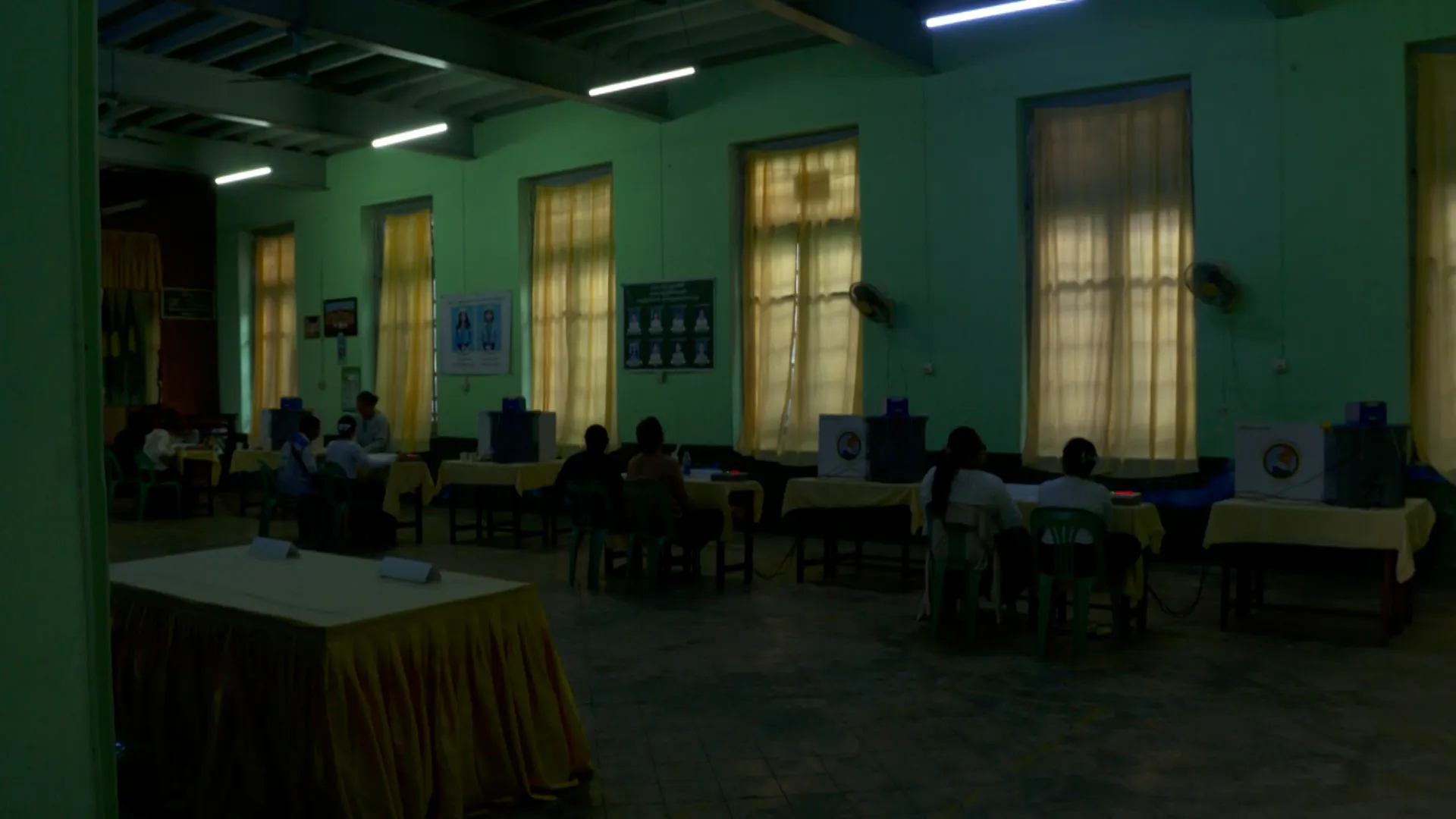
In downtown Yangon, stations were cordoned off overnight, with security staff posted outside, while armed officers guarded traffic intersections. Election officials set up equipment and installed electronic voting machines, which are being used for the first time in Myanmar.

The machines will not allow write-in candidates or spoiled ballots.

Among a trickle of early voters in the city was 45-year-old Swe Maw, who dismissed international criticism.

“It’s not an important matter,” he told the AFP news agency. “There are always people who like and dislike.”

In the central Mandalay region, 40-year-old Moe Moe Myint said it was “impossible for this election to be free and fair”.

“How can we support a junta-run election when this military has destroyed our lives?” she told AFP. “We are homeless, hiding in jungles, and living between life and death,” she added.

The second round of polling will take place in two weeks’ time, before the third and final round on January 25.

Dates for counting votes and announcing election results have not been declared.

Analysts say the military’s attempt to establish a stable administration in the midst of an expansive conflict is fraught with risk, and that significant international recognition is unlikely for any military-controlled government.

“The outcome is hardly in doubt: a resounding USDP victory and a continuation of army rule with a thin civilian veneer,” wrote Richard Horsey, an analyst at the International Crisis Group in a briefing earlier this month.

“But it will in no way ease Myanmar’s political crisis or weaken the resolve of a determined armed resistance. Instead, it will likely harden political divisions and prolong Myanmar’s state failure. The new administration, which will take power in April 2026, will have few better options, little credibility and likely no feasible strategy for moving the country in a positive direction,” he added.

People line up to vote inside a polling station during the first phase of Myanmar's general election in Yangon on December 28, 2025.Polling opened in Myanmar's heavily restricted junta-run elections, beginning a month-long vote democracy watchdogs describe as a rebranding of military rule.
The Southeast Asian nation of about 50 million is riven by civil war, and there will be no voting in rebel-held areas, which is more than half the country [Nhac Nguyen/AFP]

Source link

Bain Capital started with help of offshore investors

Washington Bureau

WASHINGTON — When Mitt Romney launched Bain Capital in 1984, he struggled at first to raise enough money for the untested venture. Old-money families like the Rothschilds turned down the young Boston consultant.

So he and his partners tapped an eclectic roster of investors, raising more than a third of their first $37-million investment fund from wealthy foreigners.

Most of the foreign investors’ money came through corporations registered in Panama, then known for tax advantages and unusual banking secrecy.

Previously unreported details, documented in Massachusetts corporate filings and other public records, show that Bain Capital was enmeshed in the largely opaque world of international high finance from its very inception.

The documents don’t indicate any wrongdoing, and experts say that such financial vehicles are common for wealthy foreign investors. But the new details come as President Obama has criticized Romney for profiting from Bain Capital’s own offshore investment entities, which are unavailable to most Americans.

The Romney campaign declined to comment on the specifics of Bain’s early investors. Romney has argued that his offshore investments are entirely proper, and that he has paid all the U.S. taxes that he owes. The offshore funds do provide tax advantages for foreign investors, allowing Bain to attract billions of dollars.

“The world of finance is not as simple as some would have you believe,” Romney said in an interview this week with National Review Online.

The first outside investor in Bain was a leading London financier, Sir Jack Lyons, who made a $2.5-million investment through a Panama shell company set up by a Swiss money manager, further shielding his identity. Years later, Lyons was convicted in an unrelated stock fraud scandal.

About $9 million came from rich Latin Americans, including powerful Salvadoran families living in Miami during their country’s brutal civil war.

That first investment fund — used to invest in start-up companies and leveraged buyouts — paid out a stunning 173% in average annual returns over a decade, according to a prospectus prepared by an outside bank. It was the start of the private equity powerhouse that ultimately fueled Romney’s political career. He now cites his experience at Bain as a chief qualification for the White House.

Romney faced unusual complications when he launched Bain Capital, a spinoff of Bain & Co., the Boston consulting firm he joined when he graduated from Harvard Business School.

At the time, U.S. officials were publicly accusing some exiles in Miami of funding right-wing death squads in El Salvador. Some family members of the first Bain Capital investors were later linked to groups responsible for killings, though no evidence indicates those relatives invested in Bain or benefited from it.

Romney has said he checked the foreign investors’ backgrounds. His campaign and Bain Capital declined to provide specifics.

Alex Stanton, a spokesman for Bain Capital, said confidentiality rules barred him from commenting on the investors.

“The hyperbole of political campaigns cannot change the fact that Bain Capital has operated with high standards of integrity and excellence, including compliance with all applicable laws and regulations regarding the vetting of our investors in consultation with experienced counsel and other advisors,” he said. “Any suggestion to the contrary is baseless.”

Matt McDonald, a spokesman for the Romney campaign, also declined to discuss details of the original fund. “There were many investors who saw the opportunity of a firm that could help fix broken companies and help them grow.”

But when Romney and his partners started the firm, Bain & Co. founder Bill Bain — worried the new venture could fail — barred them from soliciting current clients or corporations that would have to publicly disclose the investment, according to an early Bain Capital employee.

Bain partners put in $12 million of their own money, then sought the rest from wealthy individuals.

Records show the first investment in Bain Capital — $1.25 million in June 1984 — was in the name of Jean Overseas Ltd., registered in Panama by Marcel Elfen, a Swiss money manager. Later, the investment was doubled.

The Panamanian shell company apparently was a vehicle for Lyons, the British businessman and philanthropist. Lyons died in 2008.

His son, David Lyons of Quebec, said in a phone interview that he had never heard of Jean Overseas, but he confirmed that his father was “absolutely” an early investor in Bain Capital and said that Elfen, who died last year, was his father’s money manager.

David Lyons said that wealthy Europeans like his father often invested through offshore shell corporations. “It allowed some confidentiality,” he said. “It allowed a lot of things.”

Jack Lyons worked as an outside consultant for Bain & Co., but that ended when he and three others were charged in the Guinness Affair, a stock scandal that rocked Britain. Convicted of fraud in 1990, he was spared prison time due to his failing health, but was stripped of his knighthood.

Romney and his partners also won over the money manager for one of California’s wealthiest families, the Crockers, whose family trust put in $4.8 million. Romney “was the most confident executive I’ve ever come across,” said William Swanson, who at the time managed the family’s investments.

Other early investors included Robert Maxwell, the British publishing baron, who invested $2 million. After his drowning death in 1991, investigators discovered Maxwell had stolen hundreds of millions of dollars from his company’s pension funds.

But early on, the fundraising was still falling short. Harry Strachan, a Bain Capital partner who was born in Costa Rica to American missionary parents, knew Central American businessmen through his involvement in a Harvard-backed business school in Nicaragua. Why not pitch to them?

Romney and Bill Bain were initially “terrified of bringing in Central Americans,” Strachan told the Boston Globe in August 1994. “They were afraid of drug money.”

Reassured by Strachan, Romney flew to Miami to meet the group in 1984.

“My friends were impressed by Mitt and the team and signed up for 20% of the fund,” Strachan wrote in his self-published memoir, “Finding a Path.” He did not respond to requests for comment.

The group included some of El Salvador’s wealthiest people: coffee grower Miguel A. Dueñas; members of the De Sola family, also coffee exporters; and Ricardo Poma, whose family conglomerate now owns car dealerships and luxury hotels across Central America. Other investors included Frank Kardonski, who co-founded the Panama Stock Exchange, and Diego Ribadeneira, nowEcuador’sambassador to Peru.

Most of the money they put into Bain Capital was through corporations set up in Panama with names such as Velof Trust, Jolla and Universal Selling Co.

In the 1980s, Panama was “the country of choice for foreigners wanting to make investments on a confidential basis,” said Steven H. Hagen, a Miami lawyer who provides tax advice to offshore companies and international investors.

The use of an offshore corporation to invest in a U.S. business shields foreign investors from estate taxes, but not income taxes, Hagen said.

At the time, El Salvador was being torn apart in a civil war that ultimately left tens of thousands dead. The Bain investors — some of whom had their plantations seized and family members targeted — were waiting out the war in Miami.

“Many of them were trying to move their money elsewhere,” said Jeffery M. Paige, a University of Michigan professor who wrote a book about the Salvadoran ruling class. “It was a difficult transition, and of course their investment outlets were limited.”

Among the Bain investors were Francisco R.R. de Sola and his cousin Herbert Arturo de Sola, whose brother Orlando de Sola was suspected by State Department officials and the CIA of backing the right-wing death squads, according to now-declassified documents.

Orlando de Sola, who has denied supporting the death squads, is now serving a four-year prison term for unrelated fraud charges. In an interview at the prison in Metapan, El Salvador, he said he did not benefit from the family investment in Bain Capital.

Before Bain, the family’s holdings were based in El Salvador, he said. “I would say their relationship with Bain Capital was a step to diversify into foreign investments. But I insist to you, I was not part of it.”

The other Latin American investors declined or did not respond to requests to comment.

Other early investors were happy to talk about their lucrative early bet. Jack Hanley, former head ofMonsanto Co., put in $1 million.

“It seemed like a hell of a smart thing for me to do to ride their coattails,” said Hanley, now 83. “I got rich.”

joseph.tanfani@latimes.com

melanie.mason@latimes.com

matea.gold@latimes.com

Special correspondent Alex Renderos in Metapan, El Salvador, contributed to this report.
Source link

Iran president says US, Israel, Europe waging ‘full-fledged war’ on country | Israel-Iran conflict News

If Israel and the US were to attack Iran again, they would ‘face a more decisive response’, Pezeshkian warns.

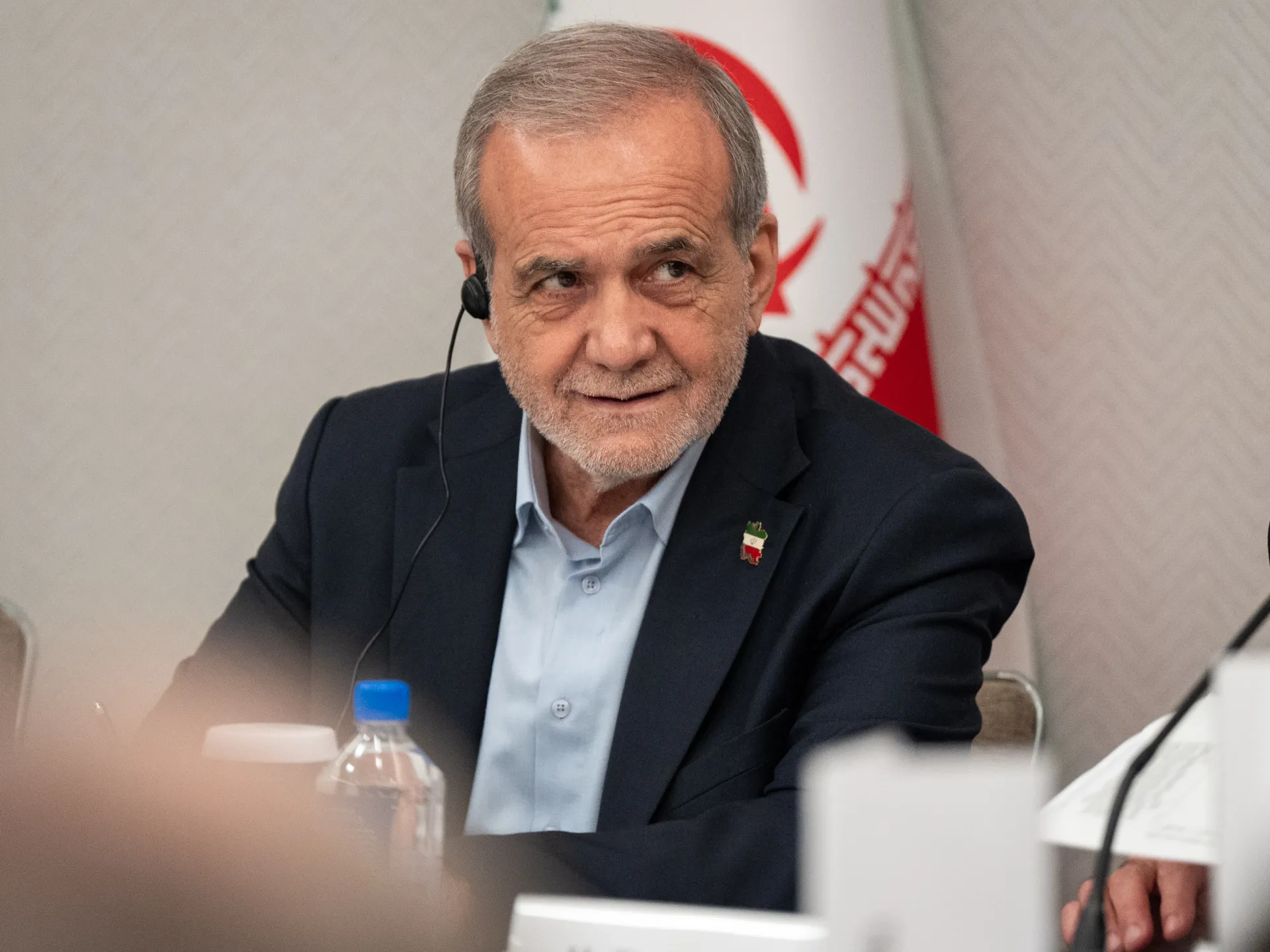
Iranian President Masoud Pezeshkian says that the United States, Israel and Europe are waging a “full-fledged war” against his country.

“In my opinion, we are in a full-fledged war with America, Israel and Europe. They do not want our country to stand on its feet,” Pezeshkian told the official site of Supreme Leader Ayatollah Ali Khamenei in an interview on Saturday.

Recommended Stories

list of 3 itemsend of list

The president’s remarks come ahead of Israeli Prime Minister Benjamin Netanyahu’s meeting on Monday with US President Donald Trump. They also come six months after Israel and the US launched strikes on Iran, and after France, Germany and the United Kingdom reimposed United Nations sanctions on Iran in September over its nuclear programme.

“Our dear military forces are doing their jobs with strength, and now, in terms of equipment and manpower, despite all the problems we have, they are stronger than when they [Israel and the US] attacked,” Pezeshkian said.

“So, if they want to attack, they will naturally face a more decisive response.”

The president said that “this war” is unlike past ones.

“This war is worse than Iraq’s war against us. If one understands it well, this war is far more complex and difficult than that war,” Pezeshkian said, referring to the 1980-1988 conflict between the neighbouring countries in which thousands were killed.

The US and its allies accuse Iran of seeking to acquire nuclear weapons, a claim Tehran has repeatedly denied.

Israel and Iran engaged in a 12-day war in June, triggered by an unprecedented Israeli attack on Iranian military and nuclear sites, as well as civilian areas.

The strikes caused more than 1,000 casualties, according to Iranian authorities.

The US later joined the Israeli operation, bombing three Iranian nuclear sites.

Washington’s involvement brought a halt to negotiations with Tehran, which began in April, over its nuclear programme.

Since returning to the White House in January, US President Donald Trump has revived his so-called “maximum pressure” policy against Iran, initiated during his first term.

That has included additional sanctions designed to economically cripple the country and dry up its oil revenues from sales on the global market.

According to recent reports, when Netanyahu visits Trump at his Mar-a-Lago resort in Florida this weekend, he will be pushing for more military actions against Iran, this time focusing on Tehran’s missile programme.

Source link

Frustrated Clinton Assails Falwell and Limbaugh : Interview: Mix of politics and religion feeds intolerance and cynicism, President says. He accuses televangelist of making baseless attacks.

President Clinton on Friday joined the growing cultural and political war between Democrats and their critics on the right, bitterly assailing Christian broadcasters and conservative radio talk-show hosts.

In unusually angry and aggressive remarks during a radio interview, Clinton attacked the Rev. Jerry Falwell and popular radio personality Rush Limbaugh by name, saying that their brand of politics and religion feed a spreading intolerance and cynicism across America.

The tenor and heat of his remarks showed what is increasingly becoming apparent–that for those in the roiling political battle, this is less a contest between strong adversaries with some mutual respect than a holy war fueled by bitterness and personal loathing.

Clinton spoke by telephone from Air Force One as he was flying to St. Louis to inaugurate a youth service program and headline a $1,500-a-plate fund-raiser for House Majority Leader Richard A. Gephardt (D-Mo.).

The President said that televangelist Falwell and other spokesmen for the religious right hide behind their fervent protestations of faith while engaging in baseless personal attacks and political demagoguery.

“I do not believe that people should be criticized for their religious convictions,” Clinton said. “But neither do I believe that people can put on the mantle of religion and then justify anything they say or do.”

The President called Falwell’s Christian values questionable when he uses his church and his access to television to promote a videotape attacking Clinton’s honesty and morality.

Clinton said that the Falwell tape, which includes lurid allegations about Clinton’s sex life, his personal finances and assorted skullduggery in Arkansas, is full of “scurrilous and false charges.”

“Remember,” Clinton said, “Jesus threw the money-changers out of the temple. He didn’t try to take over the job of the money-changers.”

In an interview with Cable News Network later Friday, Falwell dismissed Clinton’s criticism and invited the President to tape a personal rebuttal to the videotape for use on the “Old Time Gospel Hour,” which airs on 200 stations nationwide.

“While the President should really direct his denials and apparent anger at those making the charges, we will be happy to provide him a forum for rebutting those charges, assuming he has watched the video, knows what the charges are and addresses them specifically,” Falwell said.

Clinton’s growing frustration not only with his legislative difficulties but with the unanswered attacks on his character was evident in the 23-minute interview with radio station KMOX.

He was testy from the outset, then unloaded on radio interviewers Charles Brennan and Kevin Horrigan after they asked about the alleged pilfering of towels and bathrobes from the aircraft carrier George Washington by White House staff members on the President’s recent trip to Europe to commemorate the D-day anniversary.

“Look at all the things you could have asked me about and you just asked me about that,” Clinton said, his voice rising in wrath. “Did you know that there were other people on that aircraft carrier? Did you know that there were press people on the aircraft carrier? Did you know that the carrier had been fully reimbursed out of the private pocket of a White House staff member who was so upset about it. . . ? No. No.”

White House Press Secretary Dee Dee Myers went out of her way to insist that Clinton was not angry. He was shouting only to be heard over the engine noise of Air Force One, she said.

“He wasn’t angry and didn’t want to leave the impression that he was,” Myers said after reading wire service accounts that described the President as inflamed. “It sounded a lot harder than it was.”

She said that Clinton did not intend to point fingers at any individuals. “I think the President just spoke his mind,” she added.

Clinton’s assault on Falwell, Limbaugh and other critics elevated to a new plane a battle that Rep. Vic Fazio (D-West Sacramento) launched earlier this week with an attack on the Republican Party and its supporters from the “intolerant . . . religious right.”

Fazio warned that radical fringe groups are seizing control of the GOP in more than a dozen states and are threatening to become a major force in Congress.

Fazio’s comments were denounced by Republican leaders as “religious bigotry” and a “calculated smear campaign.”

It was clear Friday that Clinton would join Fazio’s line of attack as part of the Democratic Party strategy to demonize the right and stanch Democratic losses in the November mid-term elections.

The President said he respects the religious convictions of evangelicals but that he would not be silent “when people come into the political system and they say that anybody that doesn’t agree with them is Godless, anyone who doesn’t agree with them is not a good Christian, anyone who doesn’t agree with them is fair game for any wild charge, no matter how false, for any kind of personal, demeaning attack.”

The Falwell tape sells for $43, and tens of thousands reportedly have been sold. The people quoted on the tape are several longtime enemies of Clinton who, among other things, suggest that Clinton was involved in several murders in Arkansas.

Falwell aide Mark DeMoss has said that he does not know if the charges are true but believes they should be aired so they can be investigated.

House Republicans also responded to Clinton’s comments. “People who go to work on Monday and church on Sunday are not public enemies,” said Rep. Dick Armey (R-Tex.), who chairs the House GOP Conference. “Clinton should be putting an end to this McCarthyistic tactic now, rather than fanning the flames and setting up some religious right bogeyman.”

The mainstream media also did not escape Friday’s presidential ire. Clinton complained that the reporting on his Administration has emphasized its failures unfairly and ignored its accomplishments.

He said that news reporting today is “much more negative . . , much more editorial . . . and much less direct” than ever before.

And he said that the American people were subjected to a “constant unremitting drumbeat of negativism and cynicism” from talk radio–particularly Limbaugh and his many imitators.

Clinton noted that the three-hour Limbaugh show would follow him on the same radio station and that he would have no opportunity for response or challenge.

“And there’s no truth detector,” Clinton said. “You won’t get on afterwards and say what was true and what wasn’t.”

Limbaugh, in his show Friday, answered the President mockingly, “There is no need for a truth detector. I am the truth detector.”

Clinton said that he had given up hope of receiving better treatment from the press, the religious broadcasters and talk radio.

“So I decided instead of being frustrated, I needed to be aggressive and I’m going to be aggressive from here on in. I’m going to tell what I know the truth to be,” Clinton said.

So no more Mr. Nice Guy?

“I’m going to be very nice about it,” the President said, “but I’m going to be aggressive about it.”

Times staff writer Jeff Leeds in Washington contributed to this story.

Source link

Antony Blinken emerges as Biden’s pick for secretary of State

President-elect Joe Biden has turned to one of his most trusted and long-serving foreign policy advisors as his choice for secretary of State.

Biden is expected to nominate Antony Blinken, 58, a veteran diplomat and former senior official at the State Department and National Security Council, perhaps on Tuesday, according to a source familiar with the Biden transition planning.

For the record:

7:33 a.m. Nov. 24, 2020An earlier version of this article said Antony Blinken was the descendant of Holocaust survivors. His stepfather was a Holocaust survivor.

The Democratic president-elect has said he could announce his choices for several positions this week, as he moves to form a Cabinet and his administration more broadly despite President Trump’s refusal to concede his election defeat.

Blinken is seen as someone who could easily win Senate confirmation even if Republicans still control the chamber in the next Congress. Given the depth of his experience, he could hit the ground running, current and former diplomats said.

Blinken was a deputy national security advisor and deputy secretary of State in the Obama administration as well as national security advisor to Vice President Biden from 2009 to 2013.

The stepson of a Holocaust survivor, Blinken has leaned more toward intervention in world crises than some of his colleagues, but is also facile in readjusting his position to match that of the administration he serves. He is known as fiercely loyal to Biden.

Blinken has also advised Biden during his presidential campaigns, serving during the just-concluded campaign as Biden’s principal foreign policy advisor and spokesman.

“Joe Biden will benefit just by not being President Trump,” Blinken said in an interview with The Times during the summer. “That is the opening opportunity.”

Bloomberg, which first reported the likely Blinken nomination, also said Jake Sullivan, 43, formerly one of Hillary Clinton’s closest aides as well as an advisor to Biden, is likely to be named national security advisor, a White House staff position that does not require Senate confirmation.

Ron Klain, Biden’s incoming White House chief of staff, said Sunday that the president-elect would be making his initial cabinet announcements on Tuesday, but declined to specify which positions would be filled first. The people familiar with Biden’s selections asked not to be identified because he hasn’t yet made the announcements.

State is regarded as one of the most prestigious Cabinet posts. The secretary of State is the nation’s top diplomat, conducting meetings with foreign leaders across the globe.

The president’s national security advisor is one of the most important and powerful jobs in the White House, leading a staff of dozens of experts drawn from the government’s military, diplomatic and intelligence agencies who develop U.S. foreign and military policy.

Blinken and Sullivan didn’t respond to requests for comment. A Biden spokesman declined to comment.

When Biden was a senator and chairman of the Senate Foreign Relations Committee, Blinken served as his staff director before leaving to work on Biden’s short-lived 2008 presidential campaign. Blinken graduated from Harvard and from Columbia Law School.

After serving in the Obama administration, Blinken co-founded WestExec Advisors, a political strategy firm, with a top Obama-era Pentagon official, Michele Flournoy. She is a top candidate to be Biden’s Defense secretary; if named and confirmed, she would be the first woman to hold the job.

Biden met on Nov. 17 with defense and intelligence experts, including Blinken and others who worked for Obama when Biden was vice president. He gathered them together because the Trump administration has blocked him from getting the intelligence briefings traditionally granted the president-elect.

“We’ve been through a lot of damage done over the last four years, in my view. We need to rebuild our institutions and my workforce to reflect the full strength and diversity of our country,” Biden said at the briefing. “We need to focus on readiness for whatever may come.”

Times staff writer Evan Halper and Bloomberg News contributed to this report.

Source link

Bentsen Tells America: Wake Up, Go to Work : Depicts Democrats as New Party of Competence, Frugality in Speech Accepting VP Nomination

Lloyd Bentsen, a tall Texan with a mission to protect the Democratic Party’s right flank, was nominated for vice president Thursday night, and he had a message for America: It is time to wake up and go to work.

“My friends, America has just passed through the ultimate epoch of illusion: An eight-year coma in which slogans were confused with solutions and rhetoric passed for reality, a time when America tried to borrow its way to prosperity,” the 67-year-old U.S. senator told the Democratic convention delegates.

‘Epoch of Illusion’ Ending

In a speech that depicted the Democrats as a new party of competence and frugality, Bentsen said: “At long last the epoch of illusion is drawing to a close. America is ready for the honest, proven, hands-on leadership of Michael Dukakis backed up by the power of a united, committed Democratic Party.”

A Texas-Size Night

It wasn’t just a big night, it was a Texas-size night for Bentsen, a dapper politician who until now has seen more of the inner sanctums of the Senate than the national spotlight. Suddenly he is in the spotlight and on the ticket with the presidential nominee, Michael S. Dukakis, in what many believe is the most united Democratic Party in 24 years.

But Bentsen was ready, striding into the gaze of a curious public with the looks, the soothing voice and the self-assurance of a senator who might have been created by Hollywood. In the audience was his 94-year-old father, “Big Lloyd,” who reared his son to shoot straight and ride fast in the Rio Grande Valley.

Also in the audience were some delegates whose concern about Bentsen reflected what an odd couple he and Dukakis make. The senator disagrees with the governor on a number of major issues, including the MX missile and aid for the Nicaraguan Contras, both of which Bentsen supports and Dukakis opposes.

“I will support Bentsen on the ticket,” said Vernice Garrison, a California delegate who held up a “No on Contra Aid” sign. “But I want him to know how I feel about Contra aid.”

Lack of Enthusiasm Noted

There was a noticeable lack of enthusiasm for Bentsen among some supporters of the Rev. Jesse Jackson, who believed that their man should have been picked as vice president because he got 7 million votes, and won more than 1,200 delegates in the primaries and caucuses.

Some Jackson supporters in the New Jersey delegation wanted to stage a protest over Bentsen’s position on the Contras, but Jackson’s floor leaders were instructed to prevent that, according to Newark Mayor Sharpe James.

It was also clear that Bentsen’s plain speaking style will not upstage Dukakis in this campaign. Some delegates chatted through the entire address.

Dukakis picked the more conservative Bentsen in part to offset his more liberal Northeastern image. He also wants him to take the battle to Texas, the adopted home state of the expected GOP nominee, Vice President George Bush, where 29 electoral votes are at stake.

But Bentsen has never been known as an attacker and that was evident in his speech. He criticized the Reagan-Bush Administration without ridiculing it, zeroing in on what he believes are its flaws without dwelling too long on the downside.

And, although Bentsen has made fun of Bush on occasion and says he looks forward to challenging him on their home turf in the oil-producing states, his speech indicated that he does not intend to be overly harsh.

“Lloyd Bentsen is not going to be the hatchet man of this campaign,” said Texas political consultant George Christian, who helped Bentsen draft his speech.

‘They’re Good Friends’

“I was involved in Lloyd’s 1970 Senate race with Bush and to my knowledge he never did really attack Bush,” Christian said. “They’re good friends. But there is going to be good honest criticism of the Administration in this campaign, and it has to be done sharply.”

“Democrats agree that the American worker who has struggled for 20 years to support his or her family has earned 60 days’ notice if management plans to shut down that plant. But the Reagan-Bush Administration insists that a pink slip in the mail is notice enough,” Bentsen said in a reference to a plant-closing bill that the Reagan Administration recently opposed.

Bentsen and Dukakis believe the differences between the two political parties on that legislation could be crucial in luring back many working-class Democrats who supported Ronald Reagan in 1980 and 1984 and are expressing doubts about Bush in opinion polls.

Bentsen and Dukakis are aware, however, that they may have trouble convincing some middle class voters that these are difficult times, given the sustained economic growth and low unemployment under Reagan.

Targeting Specific Group

So, as Bentsen’s speech showed, they are aiming for that portion of the middle class that is struggling or is at least apprehensive about the future.

“I see the charts and numbers that suggest prosperity,” Bentsen said. “But I also talk with people and I hear what they have to say.

“I know that if you are a teacher or a factory worker, or if you are just starting a family, it’s almost impossible to buy a house–no matter how hard you work or how carefully you plan. A college education is slipping beyond the reach of millions of hard-working Americans.”

Then, in a sales job for Dukakis and his record as governor, Bentsen said: “Michael Dukakis . . . turned around the economy of Massachusetts, not by writing hot checks but by careful management of the taxpayers’ dollar and a healthy respect for the entrepreneurial system.”

Bentsen was nominated for vice president by longtime Bentsen ally Rep. Dan Rostenkowski of Illinois, chairman of the House Ways and Means Committee.

The nomination was seconded by former Texas Rep. Barbara Jordan, a widely admired black leader whom Bentsen aides described as one of the senator’s home state heroes, and by Sen. Tom Daschle of South Dakota, one of a group of young senators elected recently by the Democrats. Daschle’s home state is where Bentsen’s Danish forebears settled in the 19th Century. His father, Lloyd Sr., moved from South Dakota to Texas in the 1920s and built a ranching and real estate empire from scratch.

Introduced by Glenn

Bentsen was introduced by Ohio Sen. John Glenn, the No. 1 “bridesmaid” among those other Democrats Dukakis was considering for vice president. “I just knew I’d be making a speech tonight about the vice presidency,” Glenn joked, and then went on to praise his Senate colleague as “a real Texan” who is “superbly qualified for the job.”

Ironically, Glenn’s short, tough speech, which cheered Bentsen and ridiculed Bush, appeared to be one of the best he has ever given, the kind that, delivered sooner, could have put to rest the doubts of Dukakis’ aides about Glenn’s campaigning ability.

Glenn received a very enthusiastic reception, better than Bentsen’s. The delegates also cheered Jordan, who described Bentsen as a man with “an instinct for doing what is right,” an allusion to his civil rights record, which is much better than that of many Southern white leaders of his generation.

With the senator’s father in the convention hall were Bentsen’s wife, Beryl Ann, their sons, Lloyd III and Lan, and their daughter, Tina Bentsen Smith.

Bentsen wrote his speech with the help of his former Senate aide Stephen Ward. Christian, former press secretary to President Lyndon B. Johnson, helped hone the address. According to Christian and Jack DeVore, Bentsen Senate press secretary, the Dukakis campaign offered little in the way of suggestions.

Defers to Senator

“Dukakis trusts Lloyd,” Christian said. Reporters following the two men in the last week have found that, despite their differences on some key issues, they seem comfortable, if not gregarious, together. Dukakis has been seen deferring to the senator in several situations involving members of the House and Senate who are attending the convention.

At the end of his speech, Bentsen, a multimillionaire, thanks to real estate and other businesses, told his audience that his forebears had started out in a sod hut in South Dakota.

“They made their way in America,” Bentsen said. “That’s the American dream we have nourished for 200 years, the dream of freedom and opportunity, the chance for a step up in life. I want to help Michael Dukakis protect that dream for the next generation.”

Staff writers John Balzar, Bob Drogin, Patt Morrison, David Lauter and Henry Weinstein contributed to this story.

Source link

Big Bark, No Bite : Congress’ Power on Wall Street Peaked Years Ago

Jeffrey E. Garten is president of Eliot Group Inc., an investment banking firm in New York.

This week, the Senate Finance Committee took up hearings on mergers, takeovers, leveraged buyouts, corporate debt and other assorted sins often blamed on Wall Street.

Next week, the powerful House Ways and Means Committee follows suit, and at least seven other committees seem to be gearing up.

While it brings back memories of past inquisitions of investment bankers, by comparison this show is headed for an unspectacular run.

Only two previous congressional investigations stand out in American history for their far-ranging impact on the behavior of Wall Street and on public opinion. In 1912, Sen. Arsene P. Pujo of Louisiana turned a prolonged spotlight on alleged conspiracies among New York-based financiers to create and control big “money trusts” like U.S. Steel.

Despite its effective muckraking antics, the Pujo committee’s work did not in itself lead to new laws. But sweeping new banking legislation, including the establishment of the Federal Reserve System, followed soon after.

In 1933 the Senate Banking and Currency Committee launched the Pecora hearings–named not for a senator but for Ferdinand Pecora, the legal counsel–which put investment bankers on trial for fraud and other abuses during the booming 1920s. Pecora’s efforts led to milestone legislation that separated commercial lending from investment banking, created new rules for the securities business and set up the Securities and Exchange Commission.

There are, however, great differences between Congress’ past efforts and what will happen now.

Unlike today’s situation, the hearings of 1912 and 1933 were heavily driven by nonelected, firebrand prosecutors with independent political agendas. Pujo had Samuel Untermeyer, one of the country’s top trial lawyers who became wealthy creating mergers and then sought political fortune by tearing them apart. Pecora, a New Deal Democrat, had been a prominent Bull Moose Progressive in New York.

In the Pujo and Pecora eras, the balance of power between Washington and Wall Street was moving toward Pennsylvania Avenue. While in the early 1900s the House of Morgan and a few others single-handedly controlled American finance, by the second decade the government was wising up. Again in the 1920s private markets were running wild, but the Great Crash of ’29 ended all that.

In the late 1980s, however, the markets rule again. A deregulated, global financial casino that sees $200 billion of foreign currency speculation each day has the upper hand over governments. Congress recognizes this and is paranoid about setting off Wall Street’s hair trigger.

In the past, Congress could push for broad policy changes because financial regulations were so primitive. Pujo, for example, had no real authority to compel officials of Kidder, Peabody and other firms to disclose their business records. Before Pecora there were hardly any federal constraints on investment banking.

But today Washington maintains the world’s most elaborate regulatory regime, and hardly anyone advocates wholesale reform. Some measures, such as tax changes, may be required to reduce the attractiveness of financing deals with so much debt. But this will have to be done with great delicacy and, in any event, it is not technically a securities issue.

A common refrain for Pujo and Pecora was the evil of concentration and monopoly on Wall Street. It has always been good populist politics to wail about lack of competition among the investment banks and about the dominance of financiers over the industrial corporations that make goods and create jobs.

But these days the Merrill Lynches, the Shearsons and the Salomons compete ferociously. And few would challenge the need for size and concentration to compete with the Nomuras or the Deutschebanks.

As for whether Wall Street has the nation’s corporate titans on a leash, who can really say, when the management of so many companies and their investment bankers team up to take over someone else–or, as in the case of R.J.R. Nabisco, when they collaborate to buy management’s very own company from its public shareholders?

During past congressional hearings, the executive branch has not been a wallflower. Pujo could ride on the waves of Teddy Roosevelt’s trust busting and Woodrow Wilson’s crusading idealism. Pecora had Franklin D. Roosevelt and New Deal government activism. While President Bush has been making kinder and gentler noises about reexamining the LBO scene, its hard to envision dramatic departures. Its not just that Bush & Co. are moderates. But in today’s greed-glorifying culture, there is little push from outside the Washington Beltway to clobber the money men.

Finally, Pujo and especially Pecora were reacting to financial debacles, in one case the recurrent turn-of-the-century financial panics and, in the other, the Crash of ’29. With October of ’87 but a footnote in history, and with the Justice Department moving enthusiastically to lock up insider traders, there is today no real lightning rod for outrage.

Merger and LBO mania may be leading to severe problems, to be sure, especially if a recession hits and topples all those debt-laden firms. But Congress has never distinguished itself by locking the barn door early. That didn’t happen in Pujo’s or Pecora’s time, and who would bet that it will do so in ours?

Source link

Bessent, Trump urge ending the Senate filibuster; as 2026 budget looms

Dec. 27 (UPI) — President Donald Trump and Treasury Sec. Scott Bessent urged an end to the Senate filibuster rule ahead of an anticipated budget battle in January.

Bessent submitted an op-ed that The Washington Post published on Saturday and blames Senate Democrats and the filibuster for blocking passage of a resolution to keep the federal government open while negotiating the 2026 fiscal year budget and causing a record 43-day shutdown of the federal government.

“The American people are just now emerging from the longest and most devastating government shutdown in U.S. history,” Bessent said.

“While the blame lies squarely with Senate Democrats, we cannot ignore the weapon they used to hold the country hostage: the legislative filibuster,” Bessent wrote.

With the continuing resolution expiring on Jan. 30, Bessent said there is a strong likelihood that Senate Democrats again will use the filibuster to block passage of a budget and force the government to close again.

“Democrats inflicted tremendous harm on the nation, including $11 billion in permanent economic damage” as the federal government was “held for ransom by the left’s demands,” Bessent said.

He said the shutdown caused the nation to lose 1.5 percentage points in gross domestic product growth during the fourth quarter, triggered 9,500 canceled flights and caused 1.4 million federal workers to miss their paychecks.

He called the filibuster a “historical accident that has evolved into a standing veto for the [Senate] minority and a license for paralysis.”

The Constitution does not mention a filibuster, and its “framers envisioned debate, but they expect majority rule,” Bessent said.

He said the filibuster has its roots in an 1806 Senate rules decision that deleted a “previous question” motion, which unintentionally removed the Senate’s mechanism for ending debate with a majority vote.

Senators later realized they could “delay or block” legislative action with unending debate, and just the threat of a filibuster is enough to trigger the filibuster rule requiring a supermajority of 60 votes to end it, Bessent explained.

He said it is likely that Senate Democrats again will force the federal government to shut down at the end of January by blocking the 2026 fiscal year budget vote.

President Barack Obama called the filibuster a “‘Jim Crow relic,'” but Bessent said Senate Democrats always use it to their advantage whenever possible, and the president agrees.

“It’s time to end the filibuster,” Trump said while agreeing with Bessent in a social media post that includes Bessent’s op-ed.

He also told Politico that the GOP must end the filibuster when interviewed on Friday night.

Doing so will help his administration to undo damage that he said was caused by the Biden administration and led to very high inflation that he is trying to fix to make life more affordable in the United States, Trump said.

The president has urged Senate Republicans to end the filibuster as soon as possible and said Senate Democrats will do it the first chance that they get when they eventually win a majority in the Senate.

Senate Democrats in September and afterward overwhelmingly opposed a clean continuing resolution to keep the federal government open and instead submitted a resolution that would add $1.5 trillion in spending over the next 10 years to extend Affordable Care Act subsidies that expire at the end of December.

Senate Democrats control 47 seats, including two occupied by independents who caucus with Senate Democrats, while the GOP controls 53 seats, so neither party can overcome the filibuster rule without help from the other.

The Senate GOP could not muster the 60 votes needed to overcome the filibuster rule until eight Senate Democrats joined with most Senate Republicans to support the continuing resolution to end the 43-day government shutdown that began when the 2026 fiscal year started on Oct. 1.

Senate Democrats in 2022 tried to end the filibuster rule but could not obtain a simple majority due to opposition from Sens. Kyrsten Sinema of Arizona and Joe Manchin of West Virginia, both of whom were Democrats but have retired from politics.

Source link