oil

Trump says Venezuela to hand over up to 50 million barrels of oil to US | Donald Trump News

BREAKING,

US president says oil will be sold at market prices and that he will control resulting revenues.

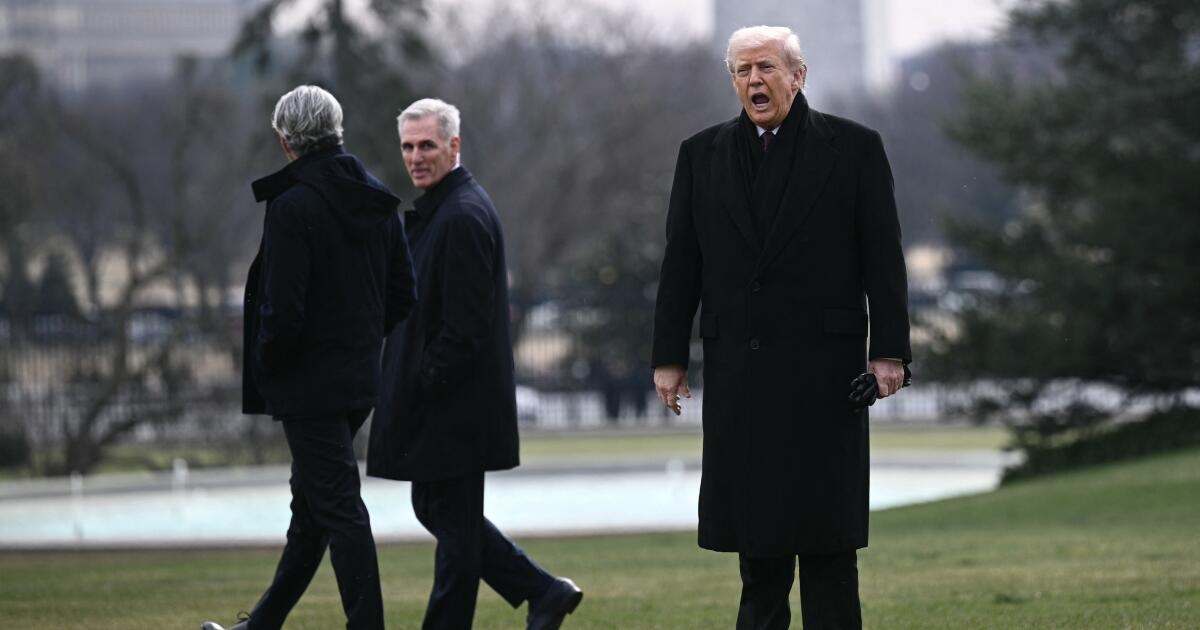
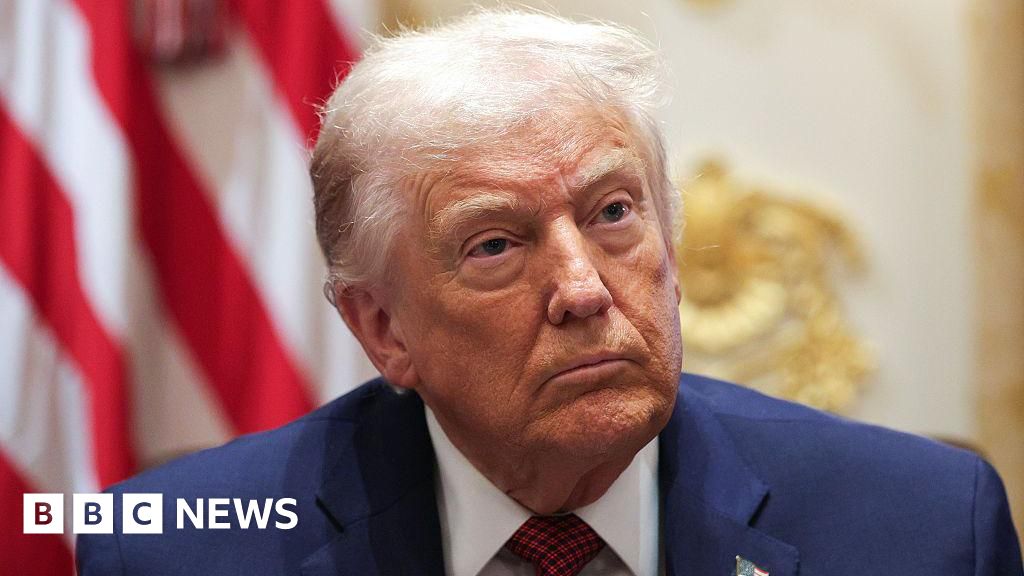
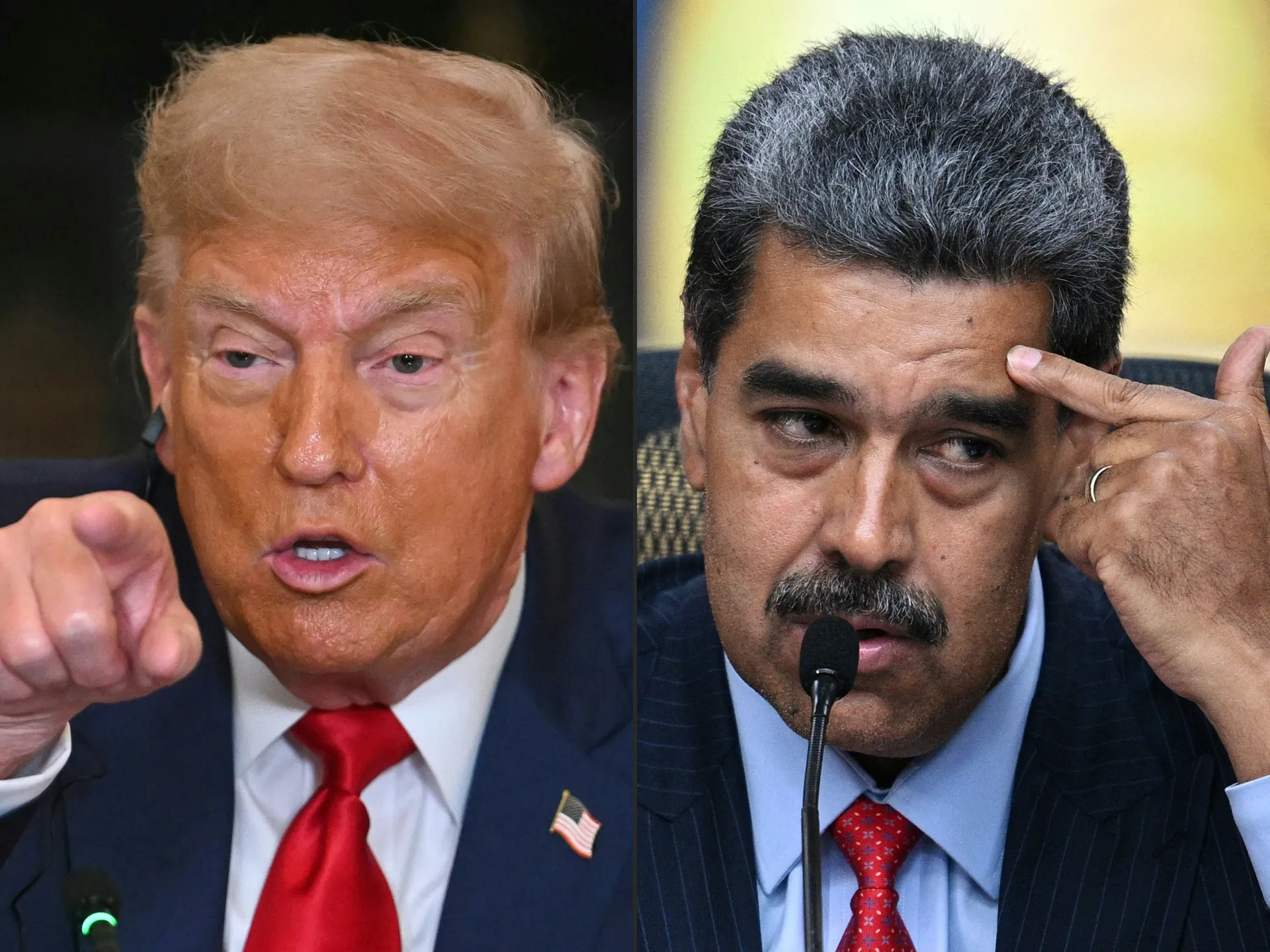
United States President Donald Trump has announced that Venezuela will turn over between 30 and 50 million barrels of sanctioned oil.

“This Oil will be sold at its Market Price, and that money will be controlled by me, as President of the United States of America, to ensure it is used to benefit the people of Venezuela and the United States!” Trump said on his platform Truth Social on Tuesday.

“I have asked Energy Secretary Chris Wright to execute this plan, immediately. It will be taken by storage ships, and brought directly to unloading docks in the United States.”

More to follow…

Source link

Trump administration sets meetings with oil companies on Venezuela: Report | Nicolas Maduro News

The administration of United States President Donald Trump is planning to meet with executives from US oil companies later this week to discuss boosting Venezuelan oil production after US forces abducted its leader, Nicolas Maduro, the Reuters news agency has reported, citing unnamed sources.

The meetings are crucial to the administration’s hopes of getting top US oil companies back into the South American nation after its government, nearly two decades ago, took control of US-led energy operations there, the Reuters news agency report said on Monday.

Recommended Stories

list of 4 itemsend of list

The three biggest US oil companies – Exxon Mobil, ConocoPhillips and Chevron – have not yet had any conversations with the Trump administration about Maduro’s ouster, according to four oil industry executives familiar with the matter, contradicting Trump’s statements over the weekend that he had already held meetings with “all” the US oil companies, both before and since Maduro was abducted.

“Nobody in those three companies has had conversations with the White House about operating in Venezuela, pre-removal or post-removal, to this point,” one of the sources said on Monday.

The upcoming meetings will be crucial to the administration’s hopes to boost crude oil production and exports from Venezuela, a former OPEC nation that sits atop the world’s largest reserves, and whose crude oil can be refined by specially designed US refineries. Achieving that goal will require years of work and billions of dollars of investment, analysts say.

It is unclear what executives will be attending the upcoming meetings, and whether oil companies will be attending individually or collectively.

The White House did not comment on the meetings, but said it believed the US oil industry was ready to flood into Venezuela.

“All of our oil companies are ready and willing to make big investments in Venezuela that will rebuild their oil infrastructure, which was destroyed by the illegitimate Maduro regime,” said White House spokesperson Taylor Rogers.

Exxon, Chevron and ConocoPhillips did not immediately respond to requests for comment from Reuters.

One oil industry executive told Reuters the companies would be reluctant to talk about potential Venezuela operations in group settings with the White House, citing antitrust concerns that limit collective discussions among competitors about investment plans, timing and production levels.

Political risks, low oil prices

US forces on Saturday conducted a raid on Venezuela’s capital, arresting Maduro in the dead of night and sending him back to the US to face narcoterrorism charges.

Hours after Maduro’s abduction, Trump said he expects the biggest US oil companies to spend billions of dollars boosting Venezuela’s oil production, after it dropped to about a third of its peak over the past two decades due to underinvestment and sanctions.

But those plans will be hindered by a lack of infrastructure, along with deep uncertainty over the country’s political future, legal framework and long-term US policy, according to industry analysts.

“While the Trump administration has suggested large US oil companies will go into Venezuela and spend billions to fix infrastructure, we believe political and other risks, along with current relatively low oil prices, could prevent this from happening anytime soon,” wrote Neal Dingmann of William Blair in a note.

Material change to Venezuelan production will take a lot of time and millions of dollars of infrastructure improvement, he said.

And any investment in Venezuelan infrastructure right now would take place in a weakened global energy market. Crude prices in the US are down by 20 percent compared with last year. The price for a barrel of benchmark US crude has not been above $70 since June, and has not touched $80 per barrel since June of 2024.

A barrel of oil cost more than $130 in the leadup to the US housing crisis in 2008.

Chevron is the only US major currently operating in Venezuela’s oil fields.

Exxon and ConocoPhillips, meanwhile, had storied histories in the country before their projects were nationalised nearly two decades ago by former Venezuelan President Hugo Chavez.

Conoco has been seeking billions of dollars in restitution for the takeover of three oil projects in Venezuela under Chavez. Exxon was involved in lengthy arbitration cases against Venezuela after it exited the country in 2007.

Chevron, which exports about 150,000 barrels per day of crude from Venezuela to the US Gulf Coast, meanwhile, has had to carefully manoeuvre with the Trump administration in an effort to maintain its presence in the country in recent years.

A US embargo on Venezuelan oil remained in full effect, Trump has said.

The S&P 500 energy index rose to its highest since March 2025, with heavyweights Exxon Mobil rising by 2.2 percent and Chevron jumping by 5.1 percent.

Source link

U.S. Special Ops Aircraft Arriving In UK Could Point To Looming Oil Tanker Boarding Operation

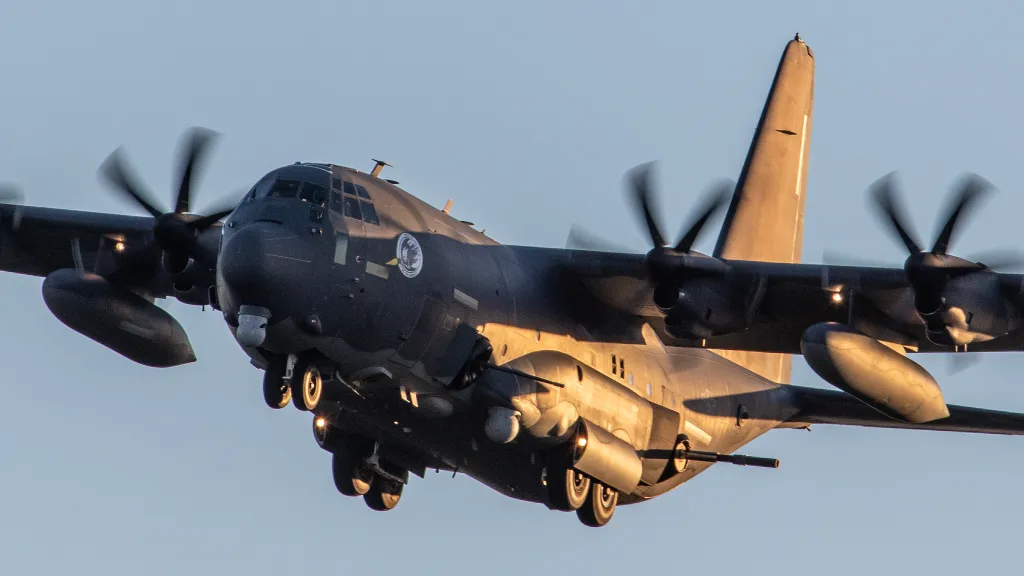
Open-source tracking data and spotters on the ground are showing a sudden surge of U.S. aircraft to Europe. The deployments include C-17 Globemaster III cargo jets, possibly packed with helicopters, emanating from the home of the 160th Special Operations Aviation Regiment (SOAR), AC-130J Ghostrider gunships, and a shadowy special operations turboprop aircraft. While U.S. aircraft routinely transit to and through that continent, the number of flights and their origin have raised speculation of potential future special operations missions in the region, and that speculation could be well founded.

The deployments of these aircraft increasingly seem like they are in support of a future operation to board the Russian-flagged Crude Oil Tanker Marinera, which until recently has been known as the Bella-1, and has been pursued by the Coast Guard since last month. CBS News on Monday afternoon reported that the U.S. will likely try to intercept the vessel, now in the North Atlantic. We’ll discuss that more later, including why the 160th SOAR may be needed for such an operation, in this story.

Here is what we have seen over the past 36 hours. Online flight tracking data shows that there were at least 10 Globemaster flights that left the U.S. for Europe on Jan. 3. At least four of these flights were from Fort Campbell in Kentucky, fueling unconfirmed speculation of an influx of U.S. special operations aviation assets. Fort Campbell is home to the 160th SOAR, also known as the Night Stalkers, the elite aviation unit that played a key role in locating and capturing Venezuelan dictator Nicolas Maduro and his wife. You can read more about that in our story about Operation Absolute Resolve here.

There are claims that several of the Night Stalkers’ highly modified MH-47 Chinooks and MH-60M Black Hawks, presumably dropped off by the C-17s, were seen at RAF Fairford; however, no visual evidence has emerged to confirm that. 

“As I think we have offered many times previously, we do not comment on the operational activity of other nations, including use of UK bases,” a U.K. Defense Ministry (MoD) official told us. “Likewise, neither the MOD or RAF would offer comment on speculation on what [U.S. bases in England] assets are or indeed are not doing.”

The 160th did not immediately respond to requests for comment.

Beyond the possibility of the helicopters being delivered, at least two AC-130J Ghostrider gunships landed Sunday at RAF Mildenhall, where they still remain, according to Andrew McKelvey, a local spotter who was kind enough to share his photos of the aircraft with us. U.S. Air Force Special Operations Command, which operates those aircraft, declined to comment.

(Andrew McKelvey)
(Andrew McKelvey)
(Andrew McKelvey)

AC-130 GUNSHIPS ARRIVE IN UK


One of the U.S. Air Force’s shadowy CASA CN-235 intelligence, surveillance, and reconnaissance planes was also deployed to RAF Fairford.

U.S. European Command, which oversees American military operations in that region, declined to offer any specifics about the nature of these flights.

 “U.S. European Command routinely hosts transient U.S. military aircraft (and personnel) in accordance with access, basing, and overflight agreements with Allies and partners,” the command told us in an early Monday morning email. “Taking into account operational security for U.S. assets and personnel, further details are not releasable at this time.”

While the nature of these flights remains unclear, there was a similar surge from Fort Campbell in the days leading up to Operation Absolute Resolve.

The 160th SOAR works across the globe on a daily basis, deploying for operational tasking to execute a huge array of mission sets. These include training and large-force exercises and combat operations. Night Stalker crews get experience all over the world in many environments. Movements of this kind are not that unusual, but after the Venezuelan mission, they certainly are drawing more attention.

U.S. President Donald Trump has confirmed that Venezuelan dictator Nicolas Maduro and his wife were flown first to the U.S. Navy's Wasp class amphibious assault ship USS Iwo Jima following their capture overnight.
A stock picture of an MH-47 Chinook belonging to the US Army’s 160th Special Operations Aviation Regiment operating from an amphibious assault ship. USN/Mass Communication Specialist Seaman Christopher Jones

The Marinera is another connection to Venezuela. The vessel is laden with Venezuelan oil and part of a so-called shadow fleet transporting oil for Russia, Iran and Venezuela in violation of sanctions imposed by the United States and other countries. The Trump administration said this weekend they would continue to interdict these vessels. The Coast Guard attempted to board the ship on Dec. 20, but the crew refused to allow it. As we saw last month, personnel fast-roping from helicopters played a key role in the seizure of the M/V Skipper, another sanctioned oil tanker. Night Stalker assets could very well assist in any attempt to capture the Marinera, which could be considered a more dangerous operation due to the intelligence gathered and interactions with its crew.

You can see video of the boarding of the Skipper below.

Today, the Federal Bureau of Investigation, Homeland Security Investigations, and the United States Coast Guard, with support from the Department of War, executed a seizure warrant for a crude oil tanker used to transport sanctioned oil from Venezuela and Iran. For multiple… pic.twitter.com/dNr0oAGl5x

— Attorney General Pamela Bondi (@AGPamBondi) December 10, 2025

Highlighting the potential danger of this kind of operation, CBS News reported that “Venezuelan officials had discussed placing armed military personnel on tankers — disguising them as civilians for defense purposes — as well as portable Soviet-era air defense systems.” The discussions took place before the capture of Maduro and his wife, the network added.

Night Stalkers are far better prepared for taking down a defended ship like this, including with their defensive systems and the ability to provide their own air support. The AC-130J is also capable of making pinpoint gun strikes on vessels for exactly this kind of operation as we have showcased in our previous reporting.

27th Special Operations Wing conducts sinking exercise during RIMPAC 2024


Bolstering the theory that a special operations boarding mission may be imminent, U.S. Navy P-8 Poseidon maritime patrol aircraft have been observed by online trackers following the Marinera.

A U.S. Navy P-8 Poseidon maritime patrol jet taking off from RAF Mildenhall on Jan. 4. (Andrew McKelvey)

Other nations are following the oil tanker. Irish Air Corps C-295W maritime search aircraft have also been observed by flight trackers operating near the location of the Marinera.

There are other potential reasons for the special operations aviation assets to be deployed to Europe. One possibility is a NATO exercise called Steadfast Dart 2026 that kicked off on Jan. 2.

The exercise “is a Joint Deployment Exercise to test and train the operational deployment and reinforcement of the [Allied Reaction Force] ARF 25 Elements to NATO Vigilance Area Center under peacetime conditions,” according to NATO. However, given that this was a long-planned exercise, the snap nature of the deployments from Fort Campbell and elsewhere makes it unlikely there is a connection.

Meanwhile, SOAR is also conducting a recruiting drive in Germany that begins Jan. 6, the regiment stated on X. It is unclear how many, if any, SOAR aircraft have been forward deployed for the recruitment effort. SOAR did not immediately respond to our request for comment.

KATTERBACH / ANSBACH,GERMANY. The 160th SOAR recruitment team will hold career opportunity briefs on 06 JANUARY 2026 at Katterbach/Ansbach. Looking to Go Beyond the Conventional in your military aviation career you’ll want to attend. Learn More & Apply at https://t.co/lM8G5cgcF9. pic.twitter.com/aTixBcpAm8

— Go160thSOAR (@Go160thSoar) January 4, 2026

Beyond these possibilities, there has been speculation that some U.S. assets might be heading to the Middle East ahead of a potential future conflict with Iran. We saw similar movements in the run-up to Operation Midnight Hammer, the June attack on Iran that saw U.S. Air Force B-2 Spirit stealth bombers drop 14 30,000-pound GBU-57/B Massive Ordnance Penetrator (MOP) bunker buster bombs on Iran’s Fordow and Natanz nuclear facilities.

It is also possible that the cargo flights to the Middle East are routine. There is a lot of air traffic back and forth from that region.

For example, five US Air Force C-17s landed in the region Wednesday, i didn’t even post about it because it is very normal, i dont do fearmongering pic.twitter.com/ZgfjXlJ0LS

— MenchOsint (@MenchOsint) January 4, 2026

Still, given that other major U.S. operations have followed these kinds of aircraft deployments, and the situation with the now Russian-flagged Marinera tanker and reports of it being a harder target than what has been seen in other recent boarding operations, the 160th SOAR may be back at it on a world stage very soon.

Contact the author: howard@thewarzone.com

Howard is a Senior Staff Writer for The War Zone, and a former Senior Managing Editor for Military Times. Prior to this, he covered military affairs for the Tampa Bay Times as a Senior Writer. Howard’s work has appeared in various publications including Yahoo News, RealClearDefense, and Air Force Times.


Source link

Trump’s bid to commandeer Venezuela’s oil sector faces hurdles, experts say | Business and Economy

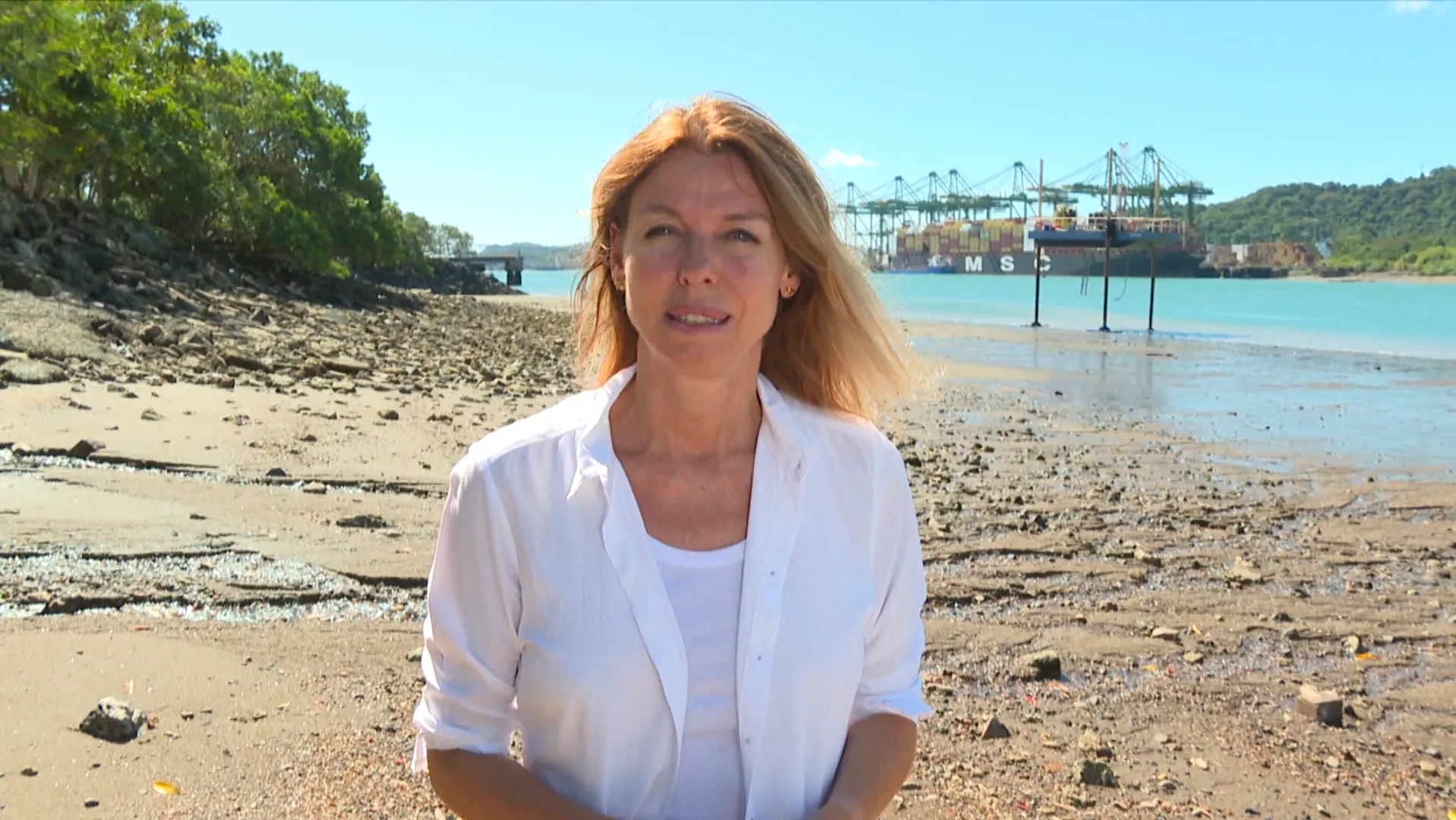
United States President Donald Trump has promised to “take back” Venezuela’s oil reserves and unleash them onto the global market after abducting Venezuelan President Nicolas Maduro.

But exploiting the Latin American country’s vast reserves would face a host of big hurdles, from decrepit infrastructure and legal obstacles to leadership uncertainty in Caracas and an excess supply of oil in the global market, experts say.

Recommended Stories

list of 4 itemsend of list

Venezuela possesses the world’s largest known oil reserves – estimated to be some 303 billion barrels – but currently produces only a tiny fraction of global output. Its estimated output was 860,000 barrels per day (bpd) in November, less than 1 percent of the world’s total, compared with 3.7 million bpd during peak production in 1970.

The oil sector’s decline has been blamed on the combined effects of US sanctions and years of underinvestment, mismanagement and corruption under Maduro and his left-wing predecessor, Hugo Chavez.

While the Trump administration could boost supply in the short term by lifting sanctions, restoring Venezuela’s output to anything near peak levels would require huge investment and likely take years, according to energy analysts.

‘Venezuela’s oil infrastructure is in poor shape’

Oil prices moved only slightly in trading on Monday amid market expectations that output would remain largely unchanged for the foreseeable future.

“Venezuela’s oil infrastructure is in poor shape overall, due to lack of maintenance for both equipment and oilfield wells,” Scott Montgomery, a global energy expert at the University of Washington, told Al Jazeera.

“The state oil company, PDVSA, is well known to suffer from corruption and lack of expertise – many well-trained people have left the country to work elsewhere – and has been unable to invest in the country’s petroleum sector,” Montgomery added.

Thomas O’Donnell, an energy and geopolitical analyst based in Berlin, Germany, estimated that Venezuela could return to peak production in five to seven years in the “absolute best” circumstances, including a peaceful transfer of power.

“Longer term, if things are sorted out, yes, Venezuela can become one of the world’s biggest producers of oil. As far as how long that takes, that has all to do with the transition and what is put in place to manage that – both the country’s security and also to manage the investments,” O’Donnell told Al Jazeera.

Mixed messaging from Trump administration

Trump’s administration has provided conflicting messages on Washington’s exact plans for Venezuela and its oil reserves.

On Saturday, Trump said the US would “run” Venezuela and that US oil companies were ready to invest billions of dollars to build up the country’s dilapidated infrastructure and “get the oil flowing”.

In interviews with US media on Sunday, US Secretary of State Marco Rubio sought to downplay Trump’s remarks about controlling the country, saying the president was referring to “running policy” and his plans related to spurring private investment, “not securing the oilfields”.

Trump later on Sunday said Washington was “in charge” of the country and was “dealing with” members of the acting administration without providing details.

Under international law, the US has no claim of ownership over Venezuela’s oil reserves, as sovereign states possess the right to control and use their natural resources under the United Nations-endorsed Principle of Permanent Sovereignty over Natural Resources.

Foreign investors, however, can claim compensation when authorities seize their assets.

ExxonMobil and ConocoPhillips were awarded $1.6bn and $8.7bn, respectively, in international arbitration following the Chavez government’s 2007 nationalisation of the oil sector. Caracas did not pay out in either case.

US oil giants, including Chevron, ExxonMobil, and ConocoPhillips, have not commented directly on Trump’s claims about planned investments in Venezuela.

Chevron is the only large US oil company currently operating in Venezuela, the result of an exemption to US sanctions first granted by the administration of former President Joe Biden.

Consultancy Rystad Energy, based in Oslo, Norway, has estimated that Venezuela’s oil sector would need about $110bn in capital investment to return to its mid-2010s output of about 2 million bpd.

Patrick De Haan, an analyst at energy price tracker GasBuddy, said companies may be reluctant to commit to large investments in the country when global oil prices are hovering around $60 a barrel due to a glut of supply.

“It will take a longer amount of time than many likely realise. Oil companies in a low-priced environment of today would likely be cautious investing billions with oil prices already low,” De Haan told Al Jazeera.

“In addition, Trump seizing Maduro could lead to loyalists sabotaging efforts to increase output. A lot would have to go right to yield the most optimistic timelines.”

US companies are likely to carefully weigh political developments in Venezuela following their experiences with the Chavez government’s expropriation of their assets.

“Oil companies are not likely to rush into a situation where the state is in turmoil, security is lacking, and no clear path forward for political stability exists,” the University of Washington’s Montgomery said.

Maduro due in court in New York

Interim President Delcy Rodriguez, who was Maduro’s deputy, is now leading the country following a ruling by Venezuela’s Supreme Court.

Maduro is scheduled to appear in a New York court on Monday to face charges related to alleged drug trafficking and working with criminal gangs.

Venezuela’s government has condemned the Trump administration over Saturday’s bombing and overthrow of Maduro, labelling his capture a “cowardly kidnapping”.

Russia, China, Iran and Brazil, among other countries, have accused Washington of violating international law, while nations including Israel, Argentina and Greece have welcomed Maduro’s forced removal.

OPEC, which sets limits on production for its 12 members, including Venezuela, is another factor in the Latin American country’s potential oil output.

“Venezuela is a member of OPEC, and like many countries, may become more actively subject to quotas if output climbs,” De Haan said.

Phil Flynn, a market analyst at the Price Futures Group, said reviving Venezuela’s oil production would face “significant challenges”, but he was more bullish about the near-term prospects than other analysts.

He said the market could conceivably see a couple of hundred thousand more barrels a day coming online in the coming months.

“We’ve not had a free Venezuela, and sometimes the US energy industry has the capability to do a lot more than people give them credit for,” Flynn told Al Jazeera.

Source link

Venezuela: Trump’s War for Oil and Domination is a War Crime

Following overnight U.S. airstrikes on Caracas, the seizure of President Nicolás Maduro, and President Donald Trump’s declaration that Washington will take control of Venezuela’s oil and effectively run the country, analysts Steve Ellner and Ricardo Vaz warn that the operation constitutes an unlawful use of force.

They cite the combination of military assault, extraterritorial abduction, resource seizure, and alleged extrajudicial killings at sea as violations of international law and Venezuelan sovereignty.

Source link

Peru approves emergency overhaul of state oil firm Petroperu | Business and Economy News

The move opens key assets to private investment and comes as Petroperu faces mounting losses and debt.

Peru’s government has approved an emergency decree allowing private investment in parts of the state-owned oil company Petroperu, as authorities move to stabilise a firm weighed down by mounting losses and debt.

President Jose Jeri announced the decision shortly before the beginning of the new year.

Recommended Stories

list of 4 itemsend of list

The measure permits the reorganisation of Petroperu into one or more asset units, opening the door to private participation in key operations. That includes those at the flagship Talara refinery, which recently underwent a $6.5bn upgrade.

Beyond the refinery, Petroperu operates or holds concessions for six crude oil blocks with limited production, alongside a nationwide fuel distribution and marketing network.

In a statement, Peru’s Ministry of Energy and Mines said the decree seeks to “ensure compliance with financial obligations through technical management of its assets, laying the foundation for Petroperu to become a self-sustaining company”.

The ministry said the company’s financial position “is particularly sensitive”, citing accumulated losses of $479m between January and October 2025, as well as debts to suppliers totalling $764m through December.

Those figures come on top of reported losses of $774m in the previous year.

Petroperu’s financial strain has been compounded by debt linked to the Talara refinery modernisation, which ultimately cost double its original estimate and led to the company losing its investment-grade credit rating in 2022.

Since then, the government has repeatedly stepped in to support the firm, providing about $5.3bn in financing between 2022 and 2024.

The company, which is seen as crucial to Peru’s energy security, has also faced environmental scrutiny.

Authorities declared an “environmental emergency” and launched an investigation following an oil spill along a stretch of the country’s northern coastline in 2024, affecting an estimated 47 to 229 hectares (about 116 to 566 acres).

The Petroperu restructuring effort comes amid persistent political instability in Peru. Several presidents have failed to complete full terms in recent years, including Dina Boluarte, who was impeached by Congress in October.

Her successor, Jeri, has struggled to steady leadership at Petroperu, appointing three board chairs in just three months.

The move comes as Peru faces continuing political volatility, economic uncertainty and public pressure for stronger oversight of state institutions.

Source link

US imposes more sanctions on tankers transporting Venezuelan oil | US-Venezuela Tensions News

The United States Department of the Treasury has issued a new round of sanctions aimed at isolating Venezuela’s oil industry, as part of President Donald Trump’s pressure campaign against the South American country.

The sanctions announced on Wednesday target four companies and their associated oil tankers, which are allegedly involved in transporting Venezuelan oil.

Recommended Stories

list of 3 itemsend of list

Trump has claimed that Venezuelan leader Nicolas Maduro leads a so-called “narco-terrorist” government that seeks to destabilise the US, a charge repeated in the latest sanctions announcements.

“Maduro’s regime increasingly depends on a shadow fleet of worldwide vessels to facilitate sanctionable activity, including sanctions evasion, and to generate revenue for its destabilizing operations,” the Treasury said on Wednesday.

Petroleum is Venezuela’s primary export, but the Trump administration has sought to cut the country off from its international markets.

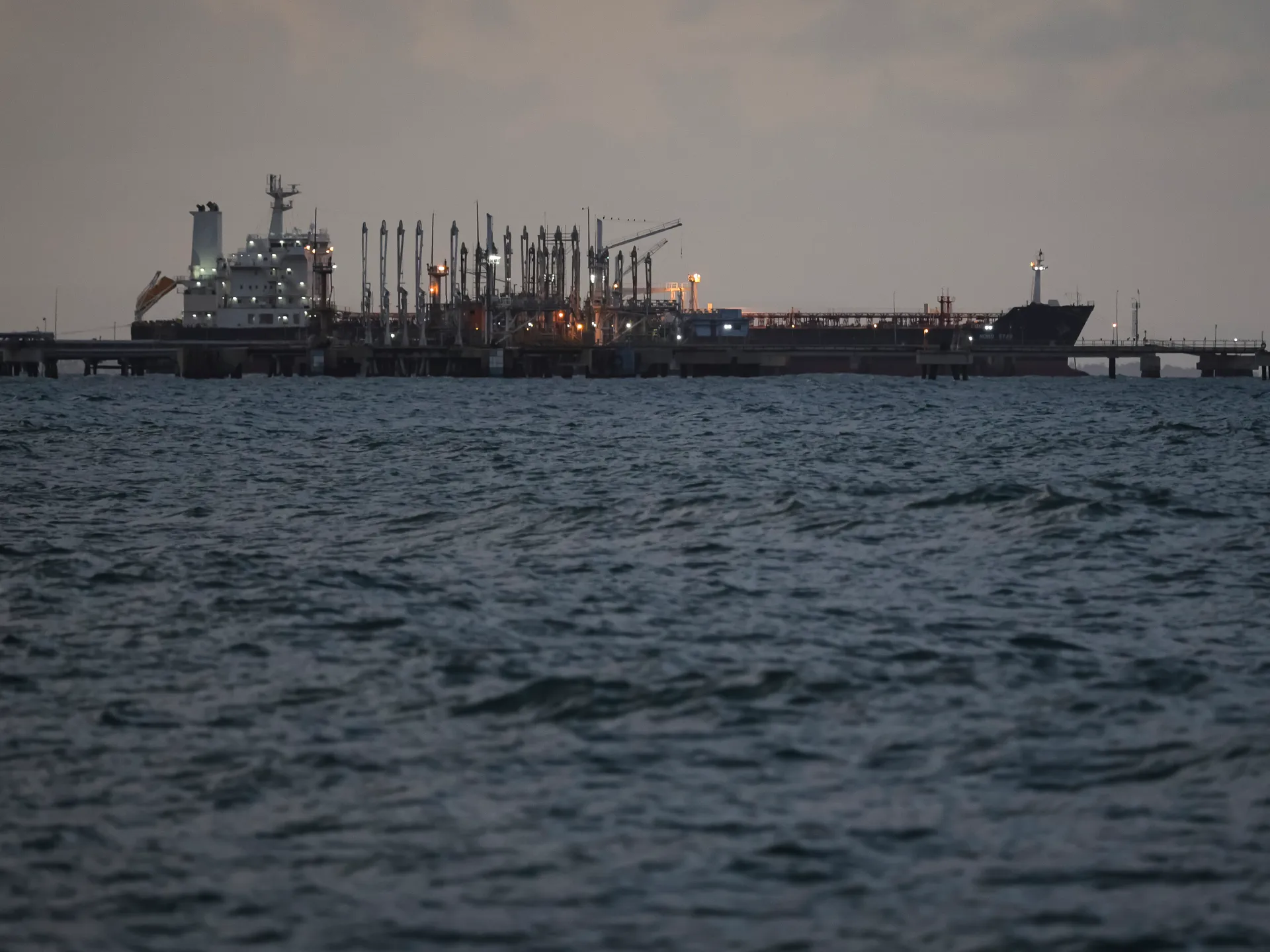
Wednesday’s notice accuses four tankers – the Nord Star, the Rosalind, the Valiant and the Della – of helping Venezuela’s oil sector to circumvent existing sanctions, thereby providing the “financial resources that fuel Maduro’s illegitimate narco-terrorist regime”.

“President Trump has been clear: We will not allow the illegitimate Maduro regime to profit from exporting oil while it floods the United States with deadly drugs,” said Treasury Secretary Scott Bessent.

“The Treasury Department will continue to implement President Trump’s campaign of pressure on Maduro’s regime.”


Claims on Venezuelan oil

The sanctions come a day after Washington imposed sanctions on a separate Venezuelan company it says assembled drones designed by Iran.

In recent months, the Trump administration has cited several motives for ratcheting up pressure against Venezuela, ranging from immigration to Maduro’s contested election in 2024.

Trump, for instance, has framed the pressure campaign as a means of stemming the trade of illegal drugs, despite Venezuela exporting virtually none of the administration’s main target, fentanyl.

Critics have also accused Washington of seeking to topple Maduro’s government to take control of the country’s vast oil reserves.

Trump officials have fuelled those suspicions with remarks seeming to assert ownership over Venezuela’s oil.

On December 17, a day after Trump announced a “total and complete blockade” of sanctioned oil tankers entering and leaving Venezuela, his top adviser, Stephen Miller, claimed that the US “created the oil industry in Venezuela”.

He suggested that the oil was stolen from the US when Venezuela nationalised its petroleum industry, starting in 1976.

That process accelerated after the 1998 election of socialist President Hugo Chavez, who reasserted state control over Venezuela’s oil sector, ultimately leading to the seizure of foreign assets in 2007.

That “tyrannical expropriation” scheme, Miller alleged, “was the largest recorded theft of American wealth and property”.

Still, one major US oil company, Chevron, continues to operate in the country.

Trump has echoed Miller’s claims, writing online that the US “will not allow a Hostile Regime to take our Oil, Land, or any other Assets”.

He added that all of those assets “must be returned to the United States, IMMEDIATELY”.

Military build-up in the Caribbean

In recent months, the Trump administration has tightened its focus on Venezuela’s oil industry, taking a series of military actions against tankers.

On December 10, the administration seized its first tanker, the Skipper, followed by a second seizure 10 days later.

The US military has reportedly been pursuing a third tanker as it crosses the Atlantic Ocean.

The attacks on the oil tankers come several months after the US began surging aircraft, warships and other military assets to the Caribbean region along Venezuela’s coast.

Since September 2, the US military has conducted dozens of bombing campaigns against alleged drug-smuggling boats in international waters in the Caribbean Sea and eastern Pacific, in what rights groups call extrajudicial killings.

More than 100 people have been killed, and the administration has offered scant legal justification for the attacks.

On Monday, Trump told reporters that the US had struck a “dock area” in Venezuela he claimed was used to load the alleged drug boats.

The dock bombing is believed to be the first of its kind on Venezuelan soil, though Trump has long threatened to begin attacking land-based targets.

While the administration has not officially revealed which agency was behind the dock strike, US media has widely reported it was conducted by the Central Intelligence Agency (CIA).

Source link

Venezuela Condemns US Tanker Seizure as ‘International Piracy’ as a Potential Oil Blockade Looms

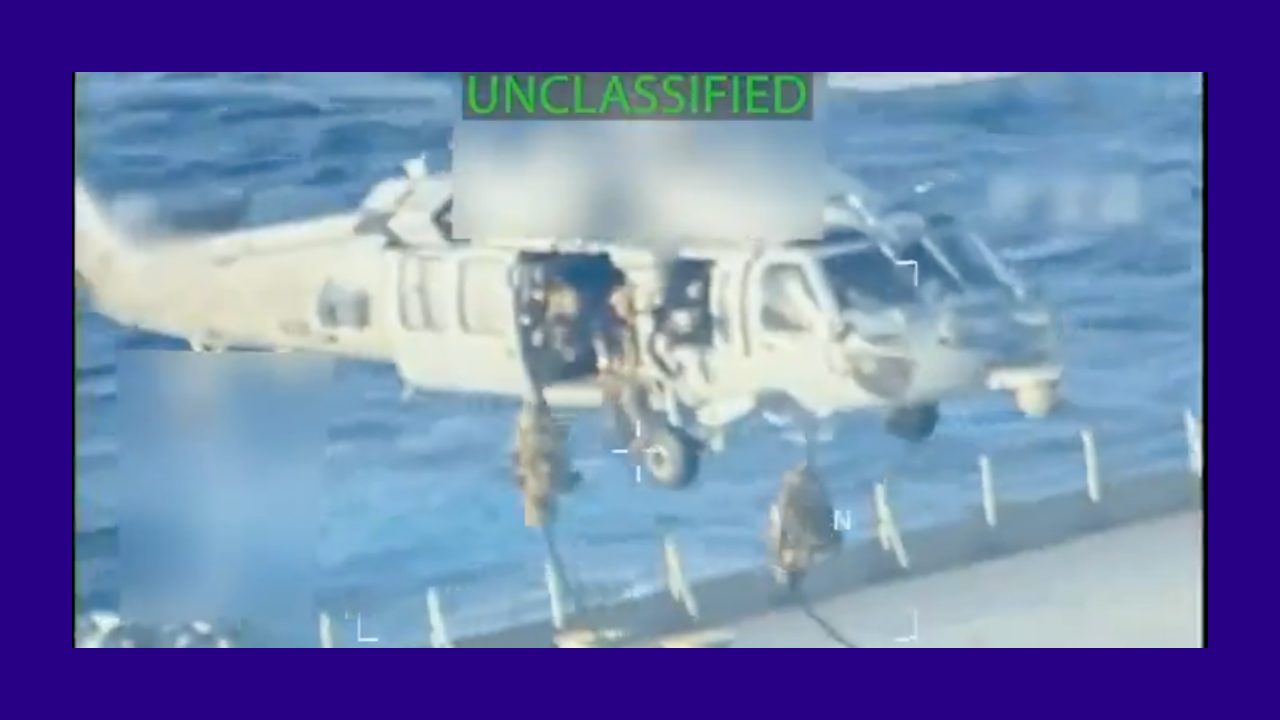
US troops descend from helicopters onto the “Skipper” tanker’s deck as part of an operation to seize the oil vessel. (Screen capture)

Mexico City, Mexico, December 11, 2025 (venezuelanalysis.com) – Venezuela accused the United States of committing “international piracy” after US authorities seized an oil tanker in the Caribbean, denouncing the action as part of a long-running US campaign to strip the country of its energy resources.

US President Donald Trump announced Wednesday that Washington seized an oil tanker sanctioned by the US off Venezuela’s coast. He described the vessel as the largest oil tanker ever seized and indicated that the United States would retain the crude aboard. 

The move was met with a sharp rebuke from Caracas.

“The Bolivarian Government will appeal to all existing international bodies to denounce this grave international crime and will defend its sovereignty with absolute determination,” read the communiqué. “Venezuela will not allow any foreign power to take from the Venezuelan people what belongs to them by historical and constitutional right.”

According to Reuters, the “Skipper” tanker loaded an estimated 1.8 million barrels of crude at Venezuela’s José terminal early this month before unloading 200,000 to a Cuba-bound ship. The remaining cargo was believed to be destined for Asian markets. The move was viewed as aggression against Cuba as well, which relies on Venezuelan oil shipments for energy and income.

Cuban Foreign Minister Bruno Rodríguez Parilla condemned “the vile act of piracy” as a violation of international law.

Michael Galant, member of the Progressive International Secretariat, said that calling the US seizure an act of piracy fell short.

“This is the deliberate immiseration of the Cuban people, already suffering debilitating fuel shortages, blackouts, and a chikungunya outbreak thanks to the US blockade,” wrote Galant on social media.

US Attorney General Pam Bondi posted a video on social media on Wednesday evening showing armed US forces boarding the vessel. There was reportedly no resistance from the crew nor any casualties. The assault involved Coast Guard members, Marines, and special forces who were seen in the video descending from helicopters onto the ship’s deck.

The seizure of the tanker comes only days after Delaware District Judge Leonard P. Stark approved the sale of Venezuela’s US-based refiner CITGO to Amber Energy, a process that Venezuela called a “barbaric theft” of a Venezuelan asset via a “fraudulent process.” 

In past years, the United States has intercepted shipments of Iranian fuel bound for Venezuela, ultimately taking control of the gasoline and selling it at auction. While US-led sanctions have created significant challenges for the sale of Venezuelan oil on international markets, Wednesday’s seizure marks the first time the US has directly impeded a crude shipment of from Venezuela. Reuters reported that buyers in Asia were demanding further discounts on Venezuelan crude as a result of the seizure.

Trump’s latest move is a significant escalation in the latest US effort to oust the Nicolás Maduro government from power. Since September, the US has built up its forces in the region, including the mobilization of the Gerard Ford Carrier Fleet, and has carried out deadly strikes on boats that the administration claims are tied to drug trafficking. 

Washington’s decision to seize the tanker drew scrutiny from US lawmakers who have questioned the true intentions behind military mobilization and campaign in the Caribbean.

“If Trump’s aggression in the Caribbean is about drugs, why did he just seize an oil tanker?” asked US Representative Nydia Velázquez. “This is yet another dangerous escalation that brings us closer to a regime change war.”

Senator Mark Warner, who serves as the top Democrat on the Senate intelligence committee, questioned how the US was able to seize an oil tanker but has opted to strike alleged drug smuggling boats from the skies without an effort to arrest the occupants or seize the purported contraband. 

Democratic Senator Chris Van Hollen spoke Wednesday on the floor of Congress to call on lawmakers to stop Trump’s ”regime change war” against Venezuela.

Caracas maintains that the US attacks are motivated by a desire for regime change in order to secure access to Venezuela’s natural resources.

Venezuelan opposition leader María Corina Machado, speaking from Oslo where she traveled to receive her Nobel Peace Prize, publicly endorsed the seizure of the tanker as a “very necessary step.”

Juan González, Joe Biden’s former chief Latin America adviser and the architect behind the former president’s Venezuela policy, said that a US Naval blockade was “potentially a viable option” despite admitting that it would constitute an act of war against Venezuela.

The White House has repeatedly threatened further escalation, including land strikes. The New York Times reported that US officials expected additional seizures in the coming weeks. This action would constitute an act of force and place additional pressure against Venezuela’s oil industry.

The United Nations (UN) Charter expressly prohibits all Member States from using or threatening force against the territorial integrity or political independence of another state. Blockades imposed without a declaration of war or that are not sanctioned by the UN Security Council are not considered legal. Likewise, UN independent experts have consistently maintained that the extraterritorial application of unilateral sanctions is contrary to international law.

Edited by Ricardo Vaz in Caracas.

Source link

The Theft That Never Was: Inside Venezuela’s 1976 Oil Takeover

Last week, the Deputy Chief of Staff for Policy and Homeland Security offered a sharply different account of Venezuela’s 1976 oil nationalization. It is provocative, but it does not hold up to the record.

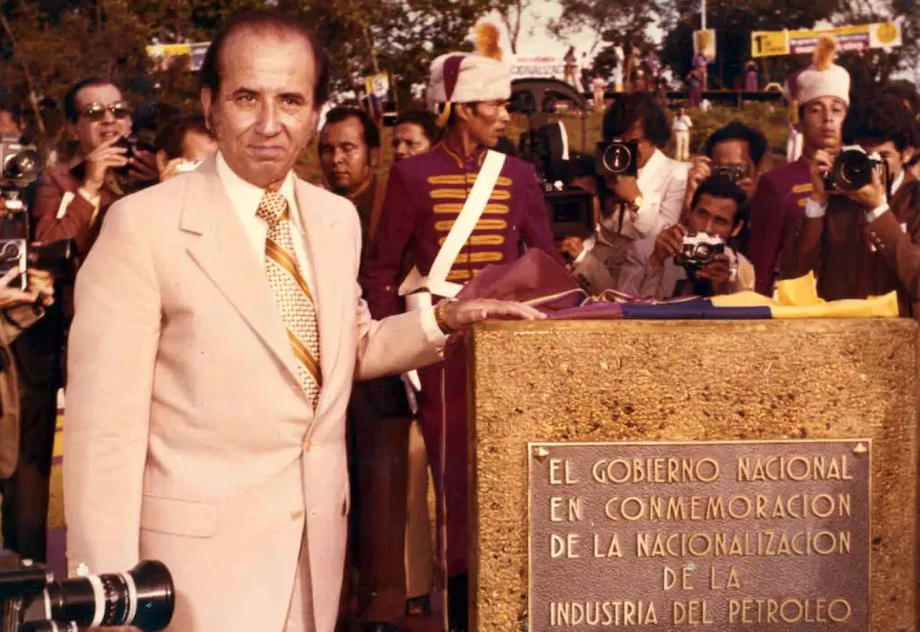
President Carlos Andrés Pérez (1974-1979) proclaimed the takeover of the petroleum industry on January 1, 1976. The announcement occurred at the Mene Grande oilfield in Zulia. Crucially, the transfer from private control to a state-run model went smoothly. The major multinationals were compensated, invited to work with the new state-owned company, Petróleos de Venezuela (PDVSA), as service and technology providers, and the process triggered no diplomatic incident with the United States. A brief look at the facts does not support claims of “theft of American wealth and property,” since “the tyrannical expropriation” was precisely engineered to avoid the kind of rupture Miller describes.

The nationalization of the Venezuelan petroleum industry responded to global events unfolding in the Middle East around 1970. To be sure, Venezuelan politicians had long dreamed of granting the state full control over the most important sector of the country’s economy. However, plans for an eventual state takeover of the oil fields remained nebulous, a goal set for a distant future. Muammar Qaddafi (1969-2011) in Libya, of all figures, provided Venezuelan lawmakers with a concrete horizon for materializing full control over the hydrocarbon sector. The Libyan strongman unilaterally increased royalties and taxes on multinationals, with Iran pursuing a similar approach. OPEC then formalized this push for higher prices at its December meeting that year. What followed in 1971 sent shock waves across the world: Libya nationalized its oil industry, followed by Algeria and Iraq. This process quickly expanded to the rest of the Middle East, setting the backdrop for the fuel shortages of that decade and the energy crisis of 1973. 

This global context greeted President Rafael Caldera (1969-1974), a Christian Democrat of COPEI, who was intent on capitalizing on these favorable winds. Soon, every political faction in Congress sought to outdo the other in displaying their anti-corporate credentials. Caldera stood at the top as the most nationalist of the pack, passing an unprecedented package of bills and decrees destined to expand government control over the industry significantly. By the time he handed power to Carlos Andrés Pérez from Acción Democrática (AD), de facto state control over the entire industry was already in place. Nationalization became the only politically safe position when the electoral campaign of 1973 started. Once elected, Carlos Andrés Pérez authorized the creation of a Presidential Commission in charge of studying the state takeover and proposing a bill to that effect, to be approved by Congress in 1975. Ordinary Venezuelans shared this renewed fervor for ownership over the national riches of the country, though in a conflicted way.

Polls by the weekly political magazine Resumen showed broad support for nationalization. Yet respondents also rated working conditions at the foreign oil companies very favorably and many wanted foreign capital to remain involved after the takeover because they trusted the firms’ experienced managers. At the same time, they doubted the state’s capacity to run complex industries, while still believing it could improve over time and that a state-run oil sector was in the nation’s interest. That nuance rarely appeared in Congress.

The nationalization became a fait accompli without antagonism with the U.S. government or the multinationals

COPEI and a constellation of center-left and leftist organizations pushed for an immediate, total takeover without any foreign role. Some opposed compensation altogether and even welcomed a showdown if necessary, seeing local employees working for these multinationals as threats to a “genuine” nationalization of the industry. Venezuelan managers soon came under attack from politicians accused of having “their minds colonized” by the American and British firms. They were also viewed as “centers of anti-Venezuelan activity.” Insults in the press and public spaces galvanized domestic employees to take action. Led by Venezuelan mid-level managers such as Gustavo Coronel from Royal Dutch Shell, the managerial class came together to form Agrupación de Orientación Petrolera (AGROPET). The nonprofit aimed to help the country prepare to take full responsibility for the hydrocarbon sector.

From March 1974 through 1975, AGROPET ran a public campaign for an orderly, compensatory nationalization built on continuity, not a politicized break. Their activities included appearing on radio programs, giving TV interviews, publishing in newspapers, and participating in public forums, including congressional meetings, and talks with members of the  Presidential Commission mandated by President Pérez. The irony of this body is that it gathered representatives from prominent sectors of society. And yet the Commission excluded the people who actually ran the industry.

AGROPET quickly steered the nationalization debate back toward a technocratic solution. The organization’s pivotal moment came in January 1975, when its leaders met with President Pérez and laid out what became the blueprint for the 1976 nationalization. They argued for an industry built on administrative efficiency, technological progress, apoliticism, and sound management not a politicized rupture. Their model envisioned a holding company with four affiliates that would absorb concessionaire operations. The new organizational culture would blend practices inherited from the Creole Petroleum Corporation and Shell, and the nationalized industry would retain ties to its foreign predecessors. Under this proposal, Petróleos de Venezuela (PDVSA) became, in effect, the direct descendant of the multinationals that built Venezuela’s modern oil industry. It perpetuated the business philosophy of the multinationals. Persuaded by Venezuelan managers, Pérez sided with the technocrats and sent an amended nationalization bill to Congress, crucially allowing foreign capital to return under Article 5. The AD-dominated legislature defended the bill and enacted it in August 1975. Two months later, Creole and the other firms accepted a compensation package of about $1 billion for their expropriated assets.

The nationalization became a fait accompli without antagonism with the U.S. government or the multinationals. It constituted less a watershed than a continuation of relationships the Venezuelan state and foreign oil companies had built across the twentieth century on new terms. PDVSA quickly signed service and technology agreements with the very companies it had expropriated. What’s more striking is that this smooth outcome became, in part, an unintended consequence of Venezolanization: the deliberate integration of Venezuelans at every level of the corporate ladder, a policy initiated by Creole and Shell in the 1940s. Unusual in the industry at the time, it stood out as a strand within a broader set of corporate social responsibility practices these companies implemented in Venezuela. Locals trained through that system helped make the transition to state control orderly and broadly beneficial.

For much of the political opposition, however, the outcome felt bittersweet. They denounced its chucuta nature (a “half-baked” nationalization) and framed Article 5 as outright betrayal. Many wanted the kind of dramatic showdown associated with Cárdenas in Mexico, Mossadegh in Iran, or Velasco Alvarado in Peru, cases where claims of expropriation and “theft” of U.S. property could at least be mounted. Venezuela in 1976 stood far away from that drama, and once the transfer was complete, business continued as usual despite the lamentations of certain congressmen. Venezuela’s 1976 oil nationalization was engineered to preclude confrontation. Getting the history right matters. If the current U.S. administration wants to cite this episode to justify pressure, escalation, or exceptional measures, it has chosen a poor example, precisely because the process avoided the kind of rupture Mr. Miller invokes. So, por este camino no es.

Source link

Venezuela: Trump Administration Ramps Up Oil Sanctions, Targets Tankers

The Trump administration is escalating its “maximum pressure” sanctions campaign by targeting shipping companies. (Reuters)

Caracas, December 12, 2025 (venezuelanalysis.com) – The US Treasury Department levied new sanctions against the Venezuelan oil industry as the Trump White House looks to strangle the Caribbean nation’s most important revenue source.

On Thursday, the Treasury’s Office of Foreign Assets Control (OFAC) blacklisted six shipping companies for allegedly transporting Venezuelan crude. OFAC likewise identified six tankers, one from each sanctioned firm, as blocked property.

“Today’s action also targets Venezuela’s oil sector, which continues to fund Maduro’s illegitimate regime,” the US Treasury stated in a press release.

The Trump administration’s latest coercive measures mark an escalation in its efforts to target Venezuela’s oil industry. During his first term, Trump introduced a “maximum pressure” campaign that included financial sanctions, an export embargo and secondary sanctions against Venezuela’s oil sector.

In his second term, the White House withdrew Chevron’s license to extract and export crude from its ventures in Venezuela before issuing a new, limited waiver in May.

The latest sanctions come amid a large-scale US military buildup and deadly operations in the Caribbean under a self-declared anti-narcotics mission. However, reports from specialized agencies have contradicted the White House’s “narcoterrorism” accusations against Caracas.

Trump has issued repeated threats to attack purported drug targets inside Venezuelan territory. Analysts and political figures have argued that Washington’s true goal is regime change in order to take control of Venezuelan natural resources.

On Wednesday, the US Coast Guard led the seizure of an oil tanker carrying Venezuelan crude. The Skipper, which had been blacklisted by the US Treasury in 2021 for allegedly transporting Iranian crude, was commandeered in international waters while carrying an estimated 1.6 million barrels of crude bound for Asian markets. 

Caracas condemned the move as “international piracy” and vowed to denounce it before international bodies. US officials told Reuters that more seizures are expected in the near future, while former Biden administration advisor Juan González raised the prospect of a naval blockade against the South American country.

Washington’s tanker drew widespread rejection, with US anti-war collective Code Pink calling it “21st century piracy.” The American Association of Jurists likewise issued a statement condemning US actions as illegal and a violation of international law.

US authorities had previously seized Venezuela-bound Iranian fuel in 2020. In November, a US warship blocked the path of a Russian tanker, forcing it to make a U-turn before eventually reaching its destination in eastern Venezuela.

Thursday’s coercive measures likewise included individual sanctions against Ramón Carretero, Carlos Malpica, Efrain Campo and Franqui Flores. Carretero, a Panamanian national, was targeted for alleged involvement in Venezuelan oil sales.

Malpica, Campo and Flores are nephews of Venezuelan First Lady and National Assembly Deputy Cilia Flores. Malpica had been previously designated in 2017 before being withdrawn from OFAC’s List of Specially Designated Nationals and Blocked Persons (SDN List) in 2022. Campo and Flores were serving 18-year sentences on drug trafficking charges when they were released by the Biden administration in a prisoner exchange in 2022.

The sanctioned companies and individuals will see any US-based assets frozen, while US persons and firms are barred from conducting any business with them.

Oil production remains stable

Amidst recent US threats and escalatory actions, Venezuela’s oil sector has maintained a steady output level.

According to OPEC, production stood at 934,000 barrels per day (bpd) in November, slightly below 961,000 bpd in October, as measured by secondary sources. Venezuela’s oil industry recovered from decades-low output levels in 2020 but has not managed to surpass the 1 million bpd threshold.

In contrast, state oil company PDVSA reported a higher output of 1.14 million bpd in November. The direct and secondary measurements have differed over time due to disagreements on the inclusion of natural gas liquids and condensates.

The recent tanker seizure is expected to hit Venezuelan oil revenues through higher shipping and insurance costs. PDVSA is forced to rely on intermediaries and levy significant discounts in order to place crude cargoes in international markets.

An oversupply of sanctioned crude from Iran and Russia has likewise cut into PDVSA’s profit margins in recent weeks.

Edited by Cira Pascual Marquina in Caracas.

Source link

S Korea’s state oil reserves top 100 million barrels, ministry says

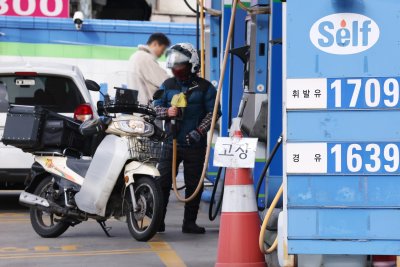
A gas station in Seoul is seen Dec. 14 as weekly average gasoline and diesel prices in South Korea fell for the first time in seven weeks. Photo by Yonhap News Agency

Dec. 22 (Asia Today) — South Korea has surpassed 100 million barrels in government-held oil reserves as it seeks to bolster energy security against global supply disruptions, the industry ministry said Monday.

The Ministry of Trade, Industry and Energy said the government’s secured stockpile exceeded 100 million barrels after the final tanker shipment of the year arrived at the Korea National Oil Corporation’s Geoje oil reserve base.

Including about 95 million barrels held by private companies, South Korea now has enough oil to cover more than 210 days under International Energy Agency standards in an emergency, the ministry said.

South Korea, which relies on imports for its oil, adopted a national stockpiling plan in 1980 and has expanded reserves over about 45 years after experiencing global supply shocks during past oil crises, the ministry said.

The country now holds the fourth-largest oil reserves among the agency’s member countries, the ministry said, describing the stockpile as an energy safety net that can help respond to supply crises.

The ministry said it plans to strengthen crisis response capabilities and shift focus from simply expanding volume to improving the quality of reserves.

In its fifth petroleum stockpiling plan prepared earlier this month, the ministry said it would restructure reserves to prioritize oil grades better suited to domestic demand.

An industry ministry official said oil reserve bases operate under strict safety requirements and the government will phase out aging equipment and strengthen disaster response systems.

– Reported by Asia Today; translated by UPI

© Asia Today. Unauthorized reproduction or redistribution prohibited.

Source link

U.S. Coast Guard pursuing third oil tanker in the Caribbean

Dec. 21 (UPI) — The U.S. Coast Guard is chasing down a third foreign oil tanker in the Caribbean, which refused to be boarded amid President Donald Trump‘s pressure campaign against Venezuela, reports said Sunday.

“The U.S. Coast Guard is in active pursuit of a sanctioned dark fleet vessel that is part of Venezuela’s illegal sanctions evasion,” an unnamed official told NBC News. “It is flying a false flag and under a judicial seizure order.”

The tanker Bella 1 was placed under U.S. sanctions in June 2024 under counterterrorism authorities, according to the Treasury Department, which said the vessel was part of a shipping network linked to Sa’id al-Jamal, a U.S.-designated Houthi financial facilitator.

Vessels in that network have been used to transport sanctioned oil, including Iranian crude, and the proceeds are directed to militant groups, U.S. officials have said in describing the basis for the sanctions.

Separately, U.S. officials said federal authorities obtained a seizure warrant from a magistrate judge authorizing them to take possession of the Bella 1, The New York Times reported. Officials cited Bella 1’s alleged prior involvement in the Iranian oil trade rather than any alleged links to Venezuela.

The ship was allegedly not flying a valid national flag when U.S. forces approached it, which would allow for it to be boarded at sea under international law. But the ship refused to be boarded and continued sailing, one official told The New York Times as another called it “an active pursuit.”

If seized, the Bella 1 would become the third tanker apprehended by U.S. authorities. On Saturday, the U.S. Coast Guard seized another tanker in international waters near Venezuela after Trump declared a blockade of Venezuela.

That tanker was flying a Panamanian flag and was carrying Venezuelan oil that it expected to sell in Asia, officials alleged.

Last Wednesday, a sanctioned oil tanker called The Skipper was also seized after it left a Venezuelan port. The ship was diverted to Texas and was allegedly flying the flag of Venezuela’s neighbor, Guyana, which said the ship is not among those registered there.

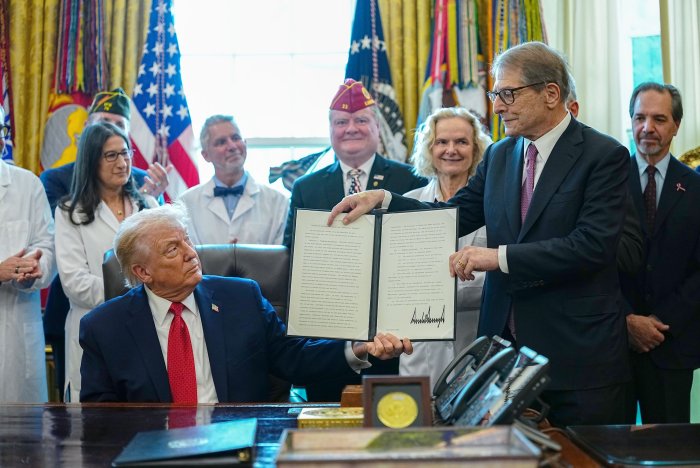
President Donald Trump holds a signed executive order reclassifying marijuana from a schedule I to a schedule III controlled substance in the Oval Office of the White House on Thursday. Photo by Aaron Schwartz/UPI | License Photo

Source link

US reportedly pursuing third oil tanker linked to Venezuela

The US Coast Guard is in “active pursuit” of another vessel in international waters near Venezuela as tensions in the region continue to escalate.

US authorities have already seized two oil tankers this month – one of them on Saturday.

Sunday’s pursuit related to a “sanctioned dark fleet vessel that is part of Venezuela’s illegal sanctions evasion”, a US official said. “It is flying a false flag and under a judicial seizure order.”

Washington has accused Venezuela of using oil money to fund drug-related crime, while Venezuela has described the tanker seizures as “theft and kidnapping”.

US President Donald Trump last week ordered a “blockade” of sanctioned oil tankers entering and leaving the country.

Venezuela – home to the world largest proven oil reserves – has accused the Trump administration of trying to steal its resources.

US authorities have not yet officially confirmed Sunday’s pursuit, and the exact location and name of the tanker involved is not yet known.

As of last week, more than 30 of the 80 ships in Venezuelan waters or approaching the country were under US sanctions, according to data compiled by TankerTrackers.com.

Saturday’s seizure saw a Panamanian-flagged tanker boarded by a specialised tactical team in international waters.

That ship is not on the US Treasury’s list of sanctioned vessels, but the US has said it was carrying “sanctioned PDVSA oil”. In the past five years the ship also sailed under the flags of Greece and Liberia, according to records seen by BBC Verify.

“These acts will not go unpunished,” the Venezuelan government said in response to Saturday’s incident. It added that it intended to file a complaint with the United Nations Security Council and “other multilateral agencies and the governments of the world”.

Venezuela is highly dependent on revenues from its oil exports to finance its government spending.

In recent weeks, the US has built up its military presence in the Caribbean Sea and has carried out deadly strikes on alleged Venezuelan drug-smuggling boats, killing around 100 people.

Sanctions also were placed on some of President Maduro’s relatives and on businesses associated with what the US calls his illegitimate regime.

Secretary of State Marco Rubio told reporters on Friday: “It is clear that the current status quo with the Venezuelan regime is intolerable for the United States.”

He added that the goal of the Trump administration is to change that dynamic.

His comments were criticised by Venezuela’s foreign minister who accused Rubio dragging the US down the path of “regime changes”.

It has provided no public evidence that these vessels were carrying drugs, and the military has come under increasing scrutiny from Congress over the strikes.

The Trump administration has accused Venezuelan President Nicolás Maduro of leading a designated-terrorist organisation called Cartel de los Soles, which he denies.

Source link

US pursues another oil tanker near Venezuela: Reports | News

The vessel was flying a false flag and under a judicial seizure order, according to US officials cited by US media.

The United States is pursuing an oil tanker in international waters near Venezuela, US media reported, in what would be the second such operation in two days and the third in less than two weeks.

“The United States Guard is in active pursuit of a sanctioned dark fleet vessel that is part of Venezuela’s illegal sanctions evasion,” a US official told the Reuters news agency on Sunday.

Recommended Stories

list of 4 itemsend of list

“It is flying a false flag and under a judicial seizure order.”

Another official told the agency that the tanker was under sanctions, but added that it had not been boarded so far and that interceptions can take different forms – including sailing or flying close to vessels of concern.

The officials, who were speaking on condition of anonymity, did not give a specific location for the operation or name the vessel being pursued.

The pursuit of the tanker was also reported by The Associated Press news agency, which cited an official briefed on the operation separately.

The official, who also spoke on condition of anonymity, said Sunday’s pursuit involved “a sanctioned dark fleet vessel that is part of Venezuela’s illegal sanctions evasion.”

The official also said that the vessel was flying a false flag and under a judicial seizure order.

Two tankers seized

The pursuit comes after the US seized an oil tanker off Venezuela on Saturday as part of a “blockade” ordered by US President Donald Trump.

US Homeland Security Secretary Kristi Noem said on Saturday that the coastguard apprehended the vessel with support from the Pentagon.

“The United States will continue to pursue the illicit movement of sanctioned oil that is used to fund narco terrorism in the region,” she wrote.

“We will find you, and we will stop you,” she added.

The operation marked the second time in recent weeks that the US has seized a tanker near Venezuela, and it comes amid a large US military build-up in the region.

Trump, whose administration has continued to ramp up pressure on Venezuelan President Nicolas Maduro, ordered on Tuesday a “total and complete blockade” of all sanctioned oil tankers entering and leaving the South American country.

Trump’s pressure campaign on Maduro has also included a ramped-up military presence in the region and more than two dozen military strikes on alleged drug trafficking vessels in the Pacific Ocean and Caribbean Sea near the South American nation. At least 100 people have been killed in the attacks.

The two oil tankers that were seized were operating on the black market and providing oil to countries under sanctions, Kevin Hassett, director of the White House’s National Economic Council, said in a TV interview on Sunday.

Source link

U.S. seizes second oil tanker near Venezuela amid blockade

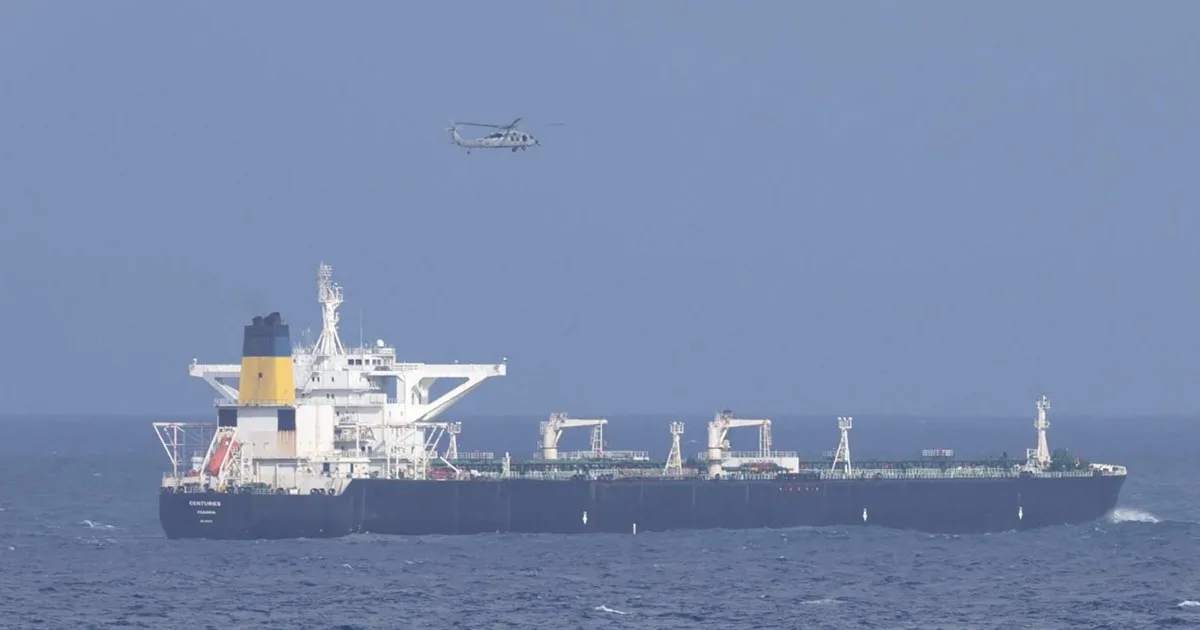
A U.S. military helicopter hovers over an oil tanker seized early Saturday morning in international waters near Venezuela. Photo Courtesy of the U.S. Coast Guard

Dec. 20 (UPI) — The U.S. Coast Guard led another seizure of an oil tanker in international waters near Venezuela on Saturday after President Donald Trump declared a blockade of Venezuela.

The U.S. Navy and other federal entities participated in the seizure of the oil tanker, which is not among those sanctioned by the federal government, the Wall Street Journal, CBS News and CNN reported.

Armed U.S. personnel on military helicopters descended onto the tanker’s deck during the early morning hours on Saturday and seized it, Homeland Security Sec. Kristi Noem said in a social media post.

No one aboard the oil tanker resisted, and the United States seized it for carrying sanctioned Venezuelan oil.

The seized tanker displayed a Panamanian flag and was carrying Venezuelan oil that it was to offload in Asia.

Much of Venezuela’s oil is shipped to China, which has privately owned teapot refineries that often buy and refine illicit oil from Venezuela, Iran and other sanctioned nations.

The president on Tuesday ordered a “total and complete blockade” of all sanctioned oil tankers as they enter or leave Venezuelan waters.

Saturday’s raid shows the blockade could affect any vessel that carries Venezuelan oil, as affirmed by Noem.

The United States on Wednesday seized a sanctioned oil tanker after it departed a Venezuelan port and diverted it to Texas, where Trump said the United States could keep the oil in its hold.

That tanker, The Skipper, was flying the flag of Venezuela’s neighbor, Guyana, officials for which said the vessel is not among those registered there.

Such activities are typical of a shadow fleet that uses deceptive tactics to hide where respective vessels are located and transport illicit oil, which often benefits Iran, Russia and other sanctioned states.

Venezuelan President Nicolas Maduro‘s government called The Skipper’s seizure an act of “piracy” and “robbery” and said the blockade is a “grotesque threat” that violates international law, according to CBS News.

Maduro’s regime accuses the United States of trying to “appropriate the oil, land and minerals of the country through gigantic campaigns of lies and manipulations.”

The blockade and tanker seizures are in addition to U.S. military strikes on alleged drug boats carrying illicit drugs destined for the United States and Europe.

Both tactics are efforts to isolate the Maduro regime, which Trump seeks to force out of power by depriving it of its primary revenue sources.

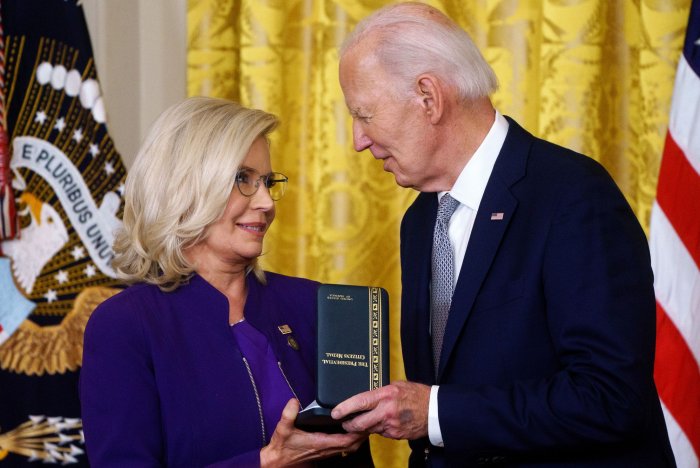
Former President Joe Biden presents the Presidential Citizens Medal to Liz Cheney during a ceremony in the East Room of the White House in Washington, on January 2, 2025. The Presidential Citizens Medal is bestowed to individuals who have performed exemplary deeds or services. Photo by Will Oliver/UPI | License Photo


Source link

US seizes second oil vessel off Venezuela coast, officials say | Business and Economy News

BREAKING,

The incident marks the second time in recent weeks that the US has seized an oil tanker near Venezuela.

The United States has seized an oil tanker off the coast of Venezuela in international waters, according to officials quoted by international news agencies.

The incident comes just days after US President Donald Trump announced a “blockade” of all sanctioned oil tankers entering and leaving Venezuela.

Recommended Stories

list of 3 itemsend of list

This also marks the second time in recent weeks that the US has seized a tanker near Venezuela and comes amid a large US military build-up in the region as President Donald Trump continues to ramp up pressure on Venezuelan President Nicolas Maduro.

Three officials, who were speaking to the Reuters news agency on the condition of anonymity, did not say where the operation was taking place but added the Coast Guard was in the lead.

Two officials, speaking to The Associated Press news agency, also confirmed the operations. The action was described as a “consented boarding”, with the tanker stopping voluntarily and allowing US forces to board it, one official said.

Al Jazeera’s Heide Zhou-Castro said that there was no official confirmation from the US authorities on the operation.

“We are still waiting for confirmation from the White House and Pentagon on the details, including which ship, where it was located, and whether or not this ship was beneath the US sanctions,” she said.

More soon…

Source link

BP taps Woodside’s Meg O’Neill as CEO as it pivots back to fossil fuels | Oil and Gas News

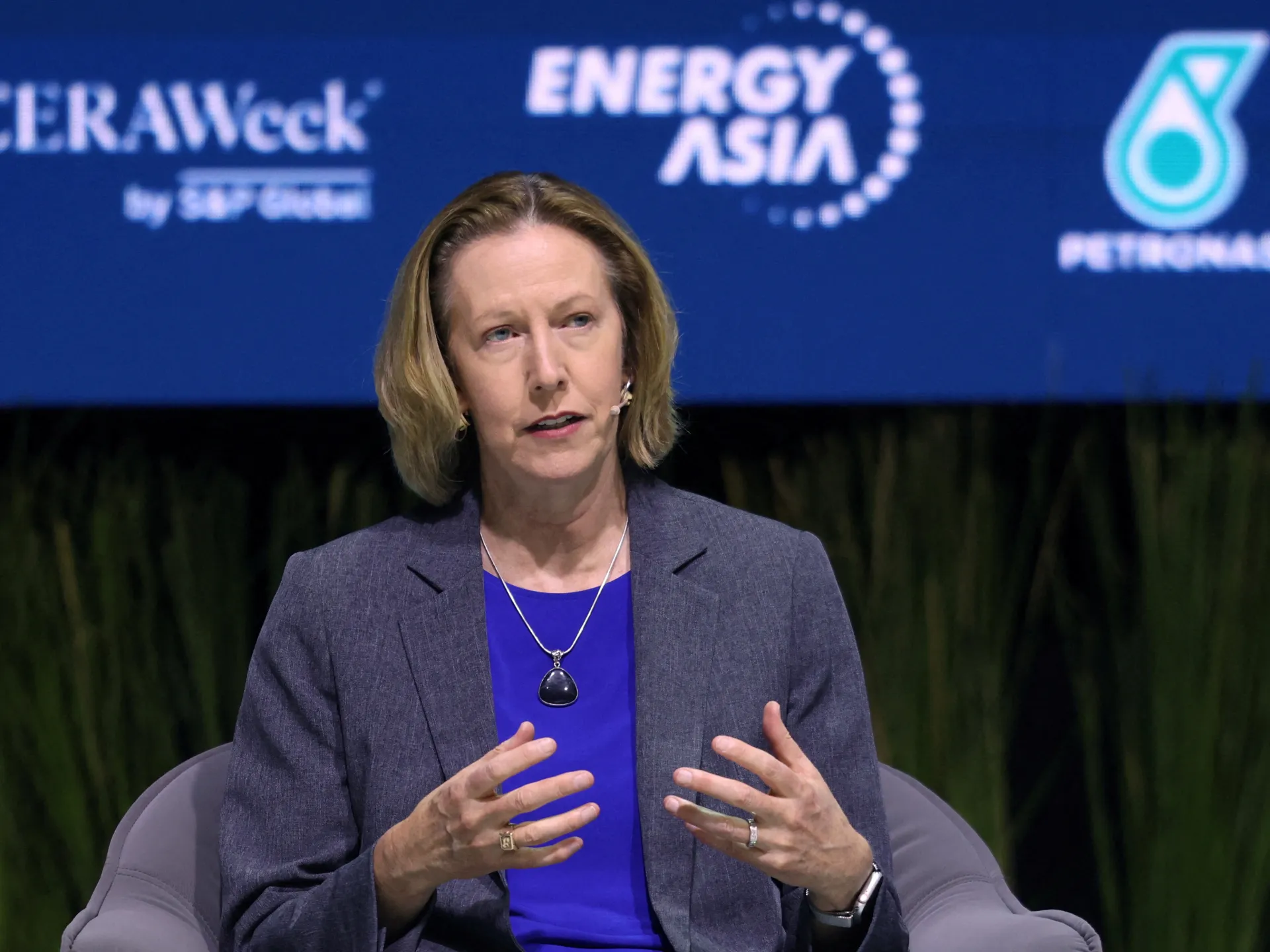
BP has tapped Woodside Energy’s Meg O’Neill as its next CEO, its first external hire for the post in more than a century and the first woman to lead a top-five oil major as the firm pivots back to fossil fuels.

O’Neill, an Exxon veteran, will take over in April following the abrupt departure of Murray Auchincloss, the second CEO change in just over two years as the British oil major strives to improve its profitability and share performance, which for years has lagged competitors like Exxon.

Recommended Stories

list of 4 itemsend of list

The company embarked on a major strategy shift earlier this year, slashing billions in planned renewable energy initiatives and shifting its focus back to traditional oil and gas. BP has pledged to divest $20bn in assets by 2027, including its Castrol lubricants unit, and reduce debt and costs.

“Progress has been made in recent years, but increased rigour and diligence are required to make the necessary transformative changes to maximise value for our shareholders,” new BP Chair Albert Manifold said in a statement.

When Manifold took up his post in October, he emphasised the need for a deeper reshaping of BP’s portfolio to increase profitability and faced pressure from activist investor Elliott Investment Management, one of BP’s largest shareholders, which called for him to urgently address the company’s shortcomings.

Elliott saw the change of CEO as a sign of BP’s willingness to act swiftly to deliver cost cuts and divestments, a person familiar with the situation said.

An external change

O’Neill, a 55-year-old American from Boulder, Colorado, and the first openly gay woman to helm a FTSE 100 company, headed Woodside since 2021, having previously spent 23 years at Exxon.

Under O’Neill’s leadership, Woodside merged with BHP Group’s petroleum arm to create a top 10 global independent oil and gas producer valued at $40bn and doubled Woodside’s oil and gas production.

The acquisition took the company to the US, where it embarked on a major Louisiana liquefied natural gas project, which it is progressing in an LNG market braced for oversupply.

BP spent more than 40 percent of its $16.2bn investment budget in the United States last year and plans to boost its US output to 1 million barrels of oil equivalent per day by the end of the decade.

Markets react

Woodside shares fell as much as 2.9 percent after news of O’Neill’s departure. At BP, shares were up 0.3 percent, compared with a broader index of European energy companies.

Like BP, Woodside shares have underperformed rivals. In absolute terms, though, the stock has risen about 10 percent during O’Neill’s tenure.

BP’s executive vice president, Carol Howle, will serve as interim CEO. Auchincloss, 55, will step down on Thursday and serve in an advisory role until December 2026.

BP said O’Neill’s appointment was part of its long-term succession planning, though it had not publicly announced a search process.

Auchincloss became CEO in 2024, taking over from Bernard Looney, who was fired after lying to the board about personal relationships with colleagues.

After an ill-fated foray into renewables under Looney, BP has promised to increase profitability and cut costs while re-routing spending to focus on oil and gas, launching a review in August of how best to develop and monetise oil and gas production assets.

During BP’s third-quarter earnings call last month, the company did not give an update on the closely watched sale process for its Castrol lubricants unit, the centrepiece of its $20bn asset-sale drive to slash its debt pile.

“We question whether this is set to change BP’s thinking once again on key strategic initiatives – should they defer the sale of Castrol? We think yes. Should they cut the buyback to zero and repair the balance sheet further? We think yes,” said RBC analyst Biraj Borkhataria.

Woodside said in a separate statement that O’Neill was leaving immediately, and it had appointed executive Liz Westcott as acting CEO, while intending to announce a permanent appointment in the first quarter of 2026.

Source link

‘We want it back’: Trump asserts U.S. claims to Venezuelan oil and land

President Trump has ordered a partial blockade on oil tankers going to and from Venezuela, potentially crippling the nation’s already battered economy, and accused Caracas of stealing “oil, land other assets” from the United States — a significant escalation of Washington’s unrelenting campaign against the government of President Nicolás Maduro.

Asked about Venezuela on Wednesday, Trump said the United States will be “getting land, oil rights and whatever we had.”

“We want it back,” Trump said without further elaboration. It was unclear if Trump planned to say more about Venezuela in a televised address to the nation late Wednesday night.

The blockade, which aims to cripple the key component of Venezuela’s faltering, oil-dependent economy, comes as the Trump administration has bolstered military forces in the Caribbean, blown up more than two dozen boats allegedly ferrying illicit drugs in both the Caribbean and the Pacific, and threatened military strikes on Venezuela and neighboring Colombia.

“Venezuela is completely surrounded by the largest Armada ever assembled in the History of South America,” Trump said in a rambling post Tuesday night on his Truth Social site. “It will only get bigger, and the shock to them will be like nothing they have ever seen before.”

Not long after Trump announced the blockade Tuesday night, the government of Venezuela denounced the move and other Trump efforts as an attempt to “rob the riches that belong to our people.”

Leaders of other Latin American nations called for calm and United Nations Secretary-General Antonio Guterres, after a phone call with Maduro, called on U.N. members to “exert restraint and de-escalate tensions to preserve regional stability.”

Also Wednesday, Trump received rare pushback from the Republican-dominated Congress, where some lawmakers are pressuring the administration to disclose more information about its deadly attacks on alleged drug boats.

The Senate gave final approval to a $900-billion defense policy package that, among other things, would require the administration to disclose to lawmakers specific orders behind the boat strikes along with unedited videos of the deadly attacks. If the administration does not comply, the bill would withhold a quarter of Defense Secretary Pete Hegseth’s travel budget.

The bill’s passage came a day after Hegseth and Secretary Marco Rubio came to Capitol Hill to brief lawmakers on the U.S. military campaign. The briefings left lawmakers with mixed reaction, largely with Republicans backing the campaign and Democrats expressing concern about it.

The White House has said its military campaign in Venezuela is meant to curb drug trafficking, but the U.S. Drug Enforcement Administration data shows that Venezuela is a relatively minor player in the U.S.-bound drug trade.

Trump also declared that the South American country had been designated a “foreign terrorist organization.” That would apparently make Venezuela the first nation ever slapped with a classification normally reserved for armed groups deemed hostile to the United States or its allies. The consequences remain unclear for Venezuela.

Regional responses to the Trump threats highlight the new ideological fault lines in Latin America, where right-wing governments in recent years have won elections in Chile, Argentina and Ecuador.

The leftist leaders of the region’s two most populous nations — Brazil and Mexico — have called for restraint in Venezuela.

“Whatever one thinks about the Venezuelan government or the presidency of Maduro, the position of Mexico should always be: No to intervention, no to foreign meddling,” Mexican President Claudia Sheinbaum said Wednesday, calling on the United Nations to look for a peaceful solution and avoid any bloodshed.

Brazilian President Luiz Inácio Lula da Silva has also urged Trump to pull back from confrontation. “The power of the word can outweigh the power of the gun,” Lula said he told Trump recently, offering to facilitate talks with the Maduro government.

But Chile’s right-wing president-elect, José Antonio Kast, said he supports regime-change in Venezuela, asserting that it would reduce migration from Venezuela to other nations in the region.

“If someone is going to do it, let’s be clear that it solves a gigantic problem for us and all of Latin America, all of South America, and even for countries in Europe,” Kast said, referring to Venezuelan immigration.

In his Tuesday post, Trump said he had ordered a “complete blockade of all sanctioned oil tankers going into, and out of, Venezuela.” While potentially devastating to Venezuela’s economy, the fact that the blockade will only affect tankers already sanctioned by U.S. authorities does give Venezuela some breathing room, at least for now.

Experts estimated that only between one-third and one-half of tankers transporting crude to and from Venezuela are likely part of the so-called “dark fleet” of sanctioned tankers. The ships typically ferry crude from Venezuela and Iran, two nations under heavy U.S. trade and economic bans.

However, experts said that even a partial blockade will be a major hit for Venezuela’s feeble economy, reeling under more than a decade of of U.S. penalties. And Washington can continue adding to the list of sanctioned tankers.

“The United States can keep sanctioning more tankers, and that would leave Venezuela with almost no income,” said David A. Smilde, a Venezuela expert at Tulane University. “That would probably cause a famine in the country.”

The growing pressure, analysts said, will likely mean the diminishing number of firms willing to take the risk of transporting Venezuelan crude will up their prices, putting more pressure on Caracas. Purchasers in China and elsewhere will also likely demand price cuts to buy Venezuelan oil.

Trump has said that Maduro must go because he is a “narco-terrorist” and heads the “Cartel de los Soles,” which the While House calls is a drug-trafficking syndicate. Trump has put a $50 million bounty on Maduro’s head. Experts say that Cartel de los Soles is not a functioning cartel, but a short-hand term for Venezuelan military officers who have been involved in the drug trade for decades, long before Maduro or his predecessor and mentor, the late Hugo Chávez, took office.

In his comments on Tuesday, Trump denounced the nationalization of the Venezuelan oil industry, a process that began in the 1970s, when Caracas was a strong ally of Washington.

Echoing Trump’s point that Venezuela “stole” U.S. assets was Stephen Miller, Trump’s homeland security advisor, who declared on X: “American sweat, ingenuity and toil created the oil industry in Venezuela. Its tyrannical expropriation was the largest recorded theft of American wealth and property.”

Among those believed to be driving Trump’s efforts to oust Maduro is Secretary of State Maro Rubio, the son of Cuban immigrants to Florida. Rubio has long been an outspoken opponent of the communist governments in Havana and Caracas. Venezuelan oil has helped the economies of left-wing governments in both Cuba and Nicaragua.

Christopher Sabatini, a senior fellow for Latin America at Chatham House, said Rubio has been on a long-time campaign to remove Maduro.”He has his own political project,” Sabatini said. “He wants to get rid of the dictators in Venezuela and Cuba.”

Staff writers McDonnell and Linthicum reported from Mexico City and Ceballos from Washington. Contributing was special correspondent Mery Mogollón in Caracas.

Source link

Trump says he’s ordering blockade on oil tankers in and out of Venezuela

US President Donald Trump has said he is ordering a “a total and complete” blockade of all sanctioned oil tankers going into and out of Venezuela.

In a post on Truth Social, he said Venezuelan leader Nicolás Maduro’s government had been designated a foreign terrorist organisation and accused it of stealing US assets, as well as “Terrorism, Drug Smuggling, and Human Trafficking”.

“Therefore, today, I am ordering A TOTAL AND COMPLETE BLOCKADE OF ALL SANCTIONED OIL TANKERS going into, and out of, Venezuela,” he added.

His remarks came a week after the US seized an oil tanker off the coast of Venezuela. In a statement, Venezuela’s government said it rejected Trump’s “grotesque threat”.

In his post, Trump said Venezuela was “completely surrounded by the largest Armada ever assembled in the History of South America”.

He added that it will “only get bigger” and “be like nothing they have ever seen before”.

Trump also accused Maduro’s government of using stolen oil to “finance themselves, Drug Terrorism, Human Trafficking, Murder, and Kidnapping”.

The Trump administration has repeatedly accused Venezuela of drug smuggling, and since September the US military has killed at least 90 people in strikes on boats it alleged were carrying fentanyl and other illegal drugs to the US.

In recent months, the US has also moved warships into the region.

Venezuela – home to some of the world’s largest proven oil reserves – has, in turn, accused Washington of seeking to steal its resources.

The US, under both Trump and former President Joe Biden, has opposed the Maduro government for years and pressed for him to be removed by instituting stringent sanctions.

Last week, the US imposed fresh sanctions on six more ships it said were carrying Venezuelan oil.

Sanctions were also placed on some of President Maduro’s relatives and on businesses associated with what the US called his illegitimate regime.

A day earlier the US said it had seized a tanker off Venezuela’s coast.

The White House said the seized vessel, called the Skipper, had been involved in “illicit oil shipping” and would be taken to an American port.

Venezuela’s government denounced the seizure, with Maduro saying the US “kidnapped the crew” and “stole” the ship.

The US had built up its military presence in the Caribbean Sea, which borders Venezuela to the north, in the days before the raid.

It involved thousands of troops and USS Gerald Ford – the world’s largest aircraft carrier– being positioned within striking distance of Venezuela.

Source link

Trump orders ‘total’ blockade of sanctioned Venezuela oil tankers | Donald Trump News

BREAKING,

The order comes a week after the US military seized an oil tanker off Venezuela’s coast.

United States President Donald Trump has ordered “a total and complete” blockade of all US-sanctioned oil tankers entering and leaving Venezuela.

“Venezuela is completely surrounded by the largest Armada ever assembled in the History of South America,” Trump said in a post on his social media platform Truth Social.

Recommended Stories

list of 4 itemsend of list

“For the theft of our Assets, and many other reasons, including Terrorism, Drug Smuggling, and Human Trafficking, the Venezuelan Regime has been designated a FOREIGN TERRORIST ORGANIZATION,” Trump said.

“Therefore, today, I am ordering A TOTAL AND COMPLETE BLOCKADE OF ALL SANCTIONED OIL TANKERS going into, and out of, Venezuela,” he said.

Trump’s comments come a week after US forces seized a sanctioned oil tanker off the coast of Venezuela and as Washington has ordered a huge build-up of US military forces off the Venezuelan coast in an operation said to target drug smuggling.

The US military has killed at least 90 people since September in attacks on dozens of vessels in the eastern Pacific Ocean and Caribbean Sea near Venezuela, in what international law experts have criticised as extrajudicial killings.

Washington claimed the vessels were involved in drug trafficking but has provided no evidence to support its allegations.

Caracas has long said the deployment of US forces to the region was aimed at allowing “external powers to rob Venezuela’s immeasurable oil and gas wealth“.

Despite holding the world’s largest proven oil reserves, Venezuela has faced severe restrictions on its exports in recent years under US sanctions first imposed during the first Trump presidency.

This is a breaking news story. More to follow shortly.

Source link