Al Jazeera takes a look at the third Ashes Test between Australia and England, which is being played in Adelaide.
England face a series-defining third Ashes Test in Australia, knowing defeat will see their hosts retain the famous urn, but also have the chance of whitewashing their old enemy.
The match begins in Adelaide on Tuesday, where an unassailable 3-0 lead is in sight for the Aussies.
Australia won the first Test inside two days in Perth as Travis Head’s century made short work of his side’s target, while the Aussies needed only four days in Brisbane to secure the second match of the series.
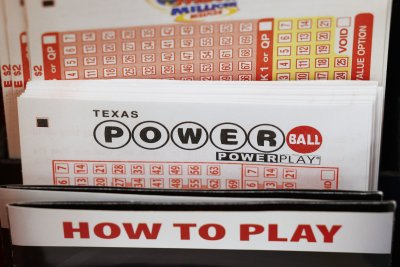
Powerball lottery ticket cards are on a rack at a gas station in Houston, Texas, in 2022. The Powerball jackpot reached an estimated $1.1 billion for Monday’s pick after 42 consecutive drawings with no winner. File Photo by John Angelillo/UPI | License Photo
Dec. 14 (UPI) — The Powerball jackpot has risen to an estimated $1.1 billion after there was no winner in Saturday’s drawing, among the largest prizes in the game’s history. The next drawing is scheduled for Monday night.
While there was no Powerball grand prize winner Saturday, ticket holders in 7 states won at least $1 million. Those tickets were sold in California. Florida, Michigan, New Jersey, North Carolina, Pennsylvania and Virginia.
Monday’s Powerball winner, should there be one, would have the choice between annual payments totaling $1.1 billion, or a one-time $503.4 million lump sum payout.
Two tickets in Missouri and Texas split the $1.787 billion Powerball prize on Sept. 6, the last time anyone claimed the grand prize. Since then, there have been 42 consecutive drawings with no winners.
The odds of winning the jackpot are 1 in 292.2 million, according to Powerball. Tickets are $2 each. Monday’s drawing is scheduled to happen just before 11 p.m. EST in the Florida Lottery draw studio in Tallahassee.
Powerball is available in 45 states, Washington, D.C., Puerto Rico and the Virgin Islands.
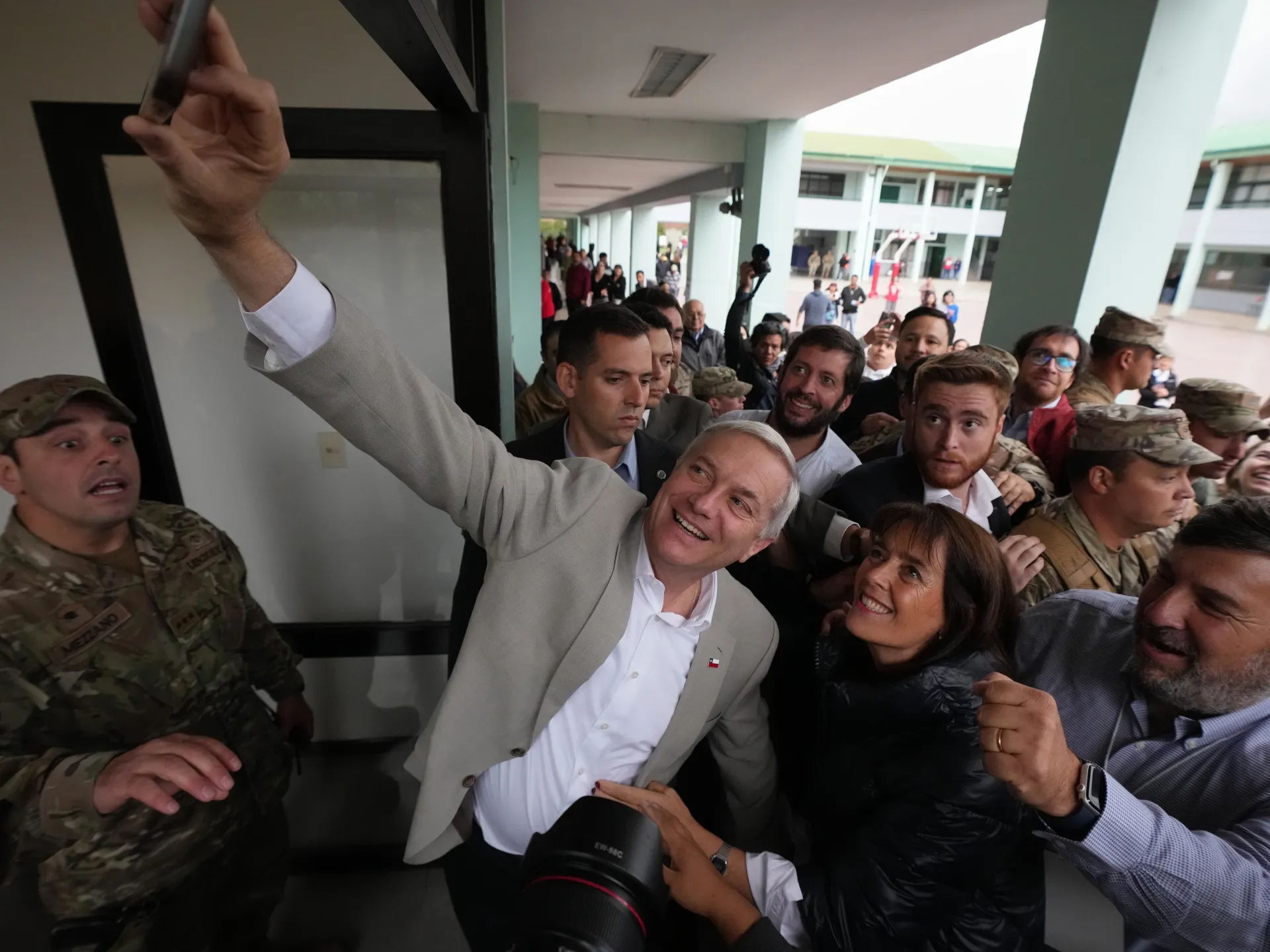
Far-right candidate Jose Antonio Kast has won a run-off election to become Chile’s 38th president, ousting the centre-left government currently in power.
On Sunday, with nearly all the ballots counted, Kast prevailed with nearly 58 percent of the vote, defeating former Labour Minister Jeannette Jara, a Communist Party politician who represented the governing centre-left coalition.
Recommended Stories
list of 3 itemsend of list
Jara and her coalition, Unity for Chile, conceded defeat shortly after the polls closed in the South American country.
“Democracy has spoken loud and clear. I have just spoken with President-elect [Kast] to wish him success for the good of Chile,” Jara wrote on social media.
“To those who supported us and were inspired by our candidacy, rest assured that we will continue working to build a better life in our country. Together and standing strong, as we always have.”
The result marks the latest victory for the far right in Latin America, which has seen a streak of right-wing leaders once considered political outsiders rise to power in countries like Argentina and Ecuador.
The tally also marks a significant comeback for Kast himself, the 59-year-old leader of the Republican Party. The 2025 election marks his third attempt to win the presidency — and his first successful bid.
During the last election, in 2021, he was trounced by outgoing President Gabriel Boric, who won by nearly a 10-point margin.
But Boric, a former student leader who became Chile’s youngest president, had seen his popularity slump to about 30 percent by the end of his four-year term. He was also ineligible to run for a second term under Chilean law.
In public opinion polls, voters also expressed frustration with recent spikes in crime and immigration, as well as a softening of Chile’s economy.
Kast, meanwhile, campaigned on the promise of change. He said he would address voter concerns by carrying out crackdowns on crime and immigration, including through a campaign of mass deportation, similar to what United States President Donald Trump has done in North America.
His security platform — dubbed the “Implacable Plan” — also proposes stiffer mandatory minimum sentencing, incarcerating more criminals in maximum security facilities, and putting cartel leaders in “total isolation” to cut them off from any communication with the outside world.
“Today, while criminals and drug traffickers walk freely through the streets, committing crimes and intimidating people, honest Chileans are locked in their homes, paralyzed by fear,” Kast writes in his security plan.
Kast has also taken a hard right stance towards social and health issues, including abortion, which he opposes even in cases of rape.
But those hardline policies earned Kast criticism on the campaign trail. Critics have also seized upon his own sympathetic comments about Chile’s former dictator, military leader Augusto Pinochet.
In 1973, Pinochet oversaw a right-wing military coup that ousted the democratically elected leader, Salvador Allende. He proceeded to rule the country until 1990. His government became known for its widespread human rights abuses and brutal oppression of political dissent, with thousands executed and tens of thousands tortured.
While Kast has rejected the label “far right”, he has repeatedly defended Pinochet’s government. Of Pinochet, Kast famously quipped, “If he were alive, he would vote for me.”
Opponents also sought to draw attention to Kast’s family ties: His father, Michael Martin Kast, was born in Germany and had been a member of the Nazi Party. The elder Kast immigrated to Chile in 1950.
Reporting from a polling site in the capital of Santiago, Al Jazeera correspondent Lucia Newman noted that Sunday’s victory was a historic one for Chile’s far right. But, she noted, Kast has sought to moderate his platform to better appeal to voters in the current election cycle.
“This is the first time since 1990 — since the military dictatorship before 1990, when Chile returned to democracy — that such a conservative government will be in power,” Newman explained.
“It’s really not certain just how conservative it will be. Jose Antonio Kast was a supporter of former dictator General Augusto Pinochet. He has shirked away from that in recent years, and certainly in this campaign.”
In the wake of Kast’s election victory, right-wing leaders from across the Americas offered their congratulations in statements on social media.
“Congratulations to Chilean President-Elect [Jose Antonio Kast] on his victory,” Trump’s Secretary of State Marco Rubio wrote. “The United States looks forward to partnering with his administration to strengthen regional security and revitalize our trade relationship.”
Argentina’s libertarian leader Javier Milei likewise chimed in, hailing it as a major win for his conservative political movement.
“FREEDOM IS ADVANCING,” Milei wrote, echoing his own campaign rallying cry.
“Enormous joy at the overwhelming victory of my friend [Jose Antonio Kast] in the Chilean presidential elections! One more step for our region in defense of life, liberty, and private property. I am sure that we will work together so that America embraces the ideas of freedom and we can free ourselves from the oppressive yoke of 21st-century socialism…!!!”
Ecuador’s right-wing President Daniel Noboa, meanwhile, said that “a new era is beginning for Chile and for the region”.
This year’s presidential race was the first time since 2012 that voting had been compulsory in the country. There are approximately 15.7 million eligible voters in the South American country.
Kast originally came in second place during the first round of voting on November 16. He scored about 23.9 percent of the vote, compared with Jara’s 26.8 percent.
But polls had widely favoured him to win in the run-off. While Chile’s left wing held a primary in June and coalesced around its victor, Jara, right-wing parties did not hold a primary to choose a coalition nominee.
The result was a fractured right in the first round of voting. But in the final contest, Kast was able to sweep up votes that had previously gone to his right-leaning adversaries, earning him a comfortable win.
Still, Kast faces a divided National Congress, which is expected to blunt some of his more hardline proposals. Kast will be sworn in on March 11.
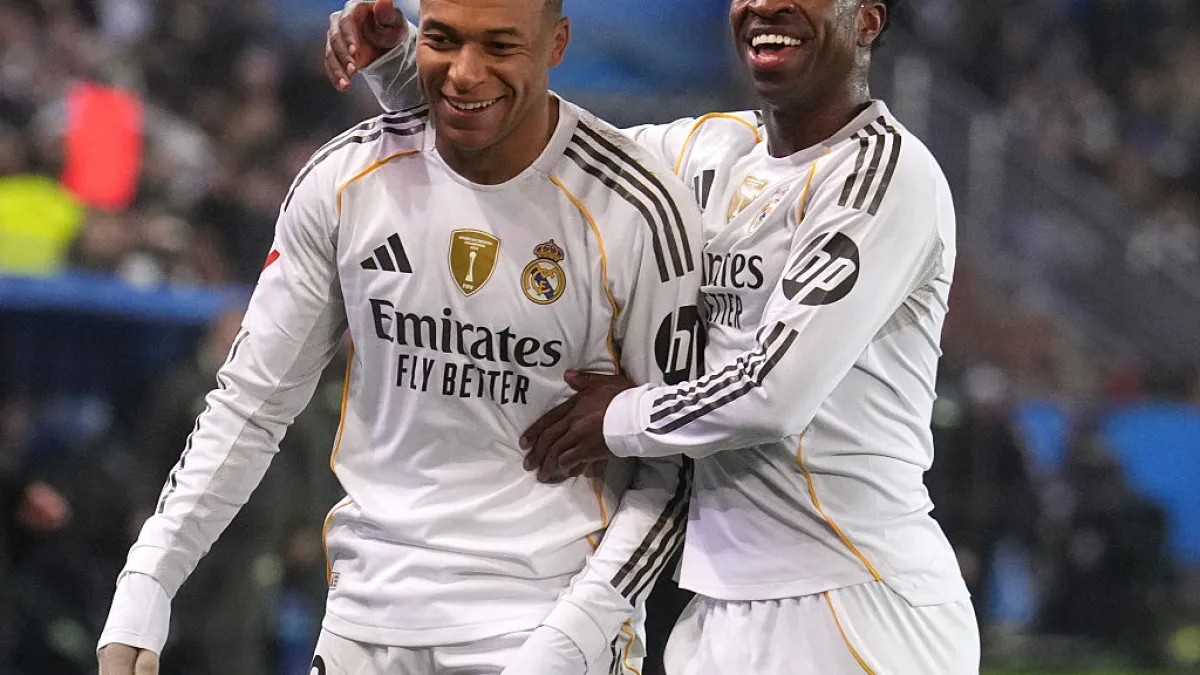
French superstar Kylian Mbappe scores on his return from injury to help Real Madrid to a crucial 2-1 win at Alaves.
Kylian Mbappe’s and Rodrygo Goes’s goals earned Real Madrid a tense 2-1 win at Alaves in La Liga to potentially keep coach Xabi Alonso in his job.
Madrid, second, reeled league leaders Barcelona’s advantage back to four points and recorded only their third victory in the last nine games across all competitions.
Recommended Stories
list of 4 itemsend of list
After a home defeat by Manchester City in the Champions League on Wednesday, Spanish media reported that anything but a victory would cost Alonso his position.
Following Mbappe’s superb opener on Sunday, Carlos Vicente pulled Alaves level in the second half, but Rodrygo secured the visitors a much-needed victory at Mendizorrotza Stadium.
Alonso was able to bring his key player, Mbappe, back into the side after he could only watch the defeat by City from the bench due to knee discomfort.
The coach also handed a debut to Victor Valdepenas at left-back, with both Alvaro Carreras and Fran Garcia suspended, and Ferland Mendy being one of several players out injured.
Mbappe appeared to be feeling his knee and hobbling in the first few minutes, but despite that, he was the game’s most influential player.
The forward had a shot deflected wide and then fired narrowly over as Alaves sat deep and tried to keep the 15-time European champions at bay.
By the time Mbappe opened the scoring in the 25th minute, his discomfort seemed to have cleared up.
Released by Jude Bellingham, Mbappe drove towards goal at full tilt and whipped a shot into the top right corner for his 17th league goal of the campaign.
England international Bellingham then blasted home from close range, but his strike was ruled out for a handball, as the ball had struck his arm.
Needing to fight back, Alaves moved onto the front foot and took control of the game before the break, almost pulling level.
Madrid goalkeeper Thibaut Courtois made a fine save with his head, even if he knew little about it, to deny Pablo Ibanez from close range.
Los Blancos were dangerous again soon after the interval, with Alaves goalkeeper Antonio Sivera saving well from Mbappe and then Vinicius Junior.
They came to rue those misses when Vicente pulled Alaves level after 68 minutes.
The forward got in behind Antonio Rudiger, controlled former Madrid midfielder Antonio Blanco’s chipped pass, and whipped a shot past Courtois.
Eduardo Coudet’s side almost took the lead when Vicente’s low cross from the right was nudged wide by Toni Martinez, who was shifted off-balance as he shot by Raul Asencio’s pressure.
Instead, Madrid pulled back in front, with Vinicius breaking in down the left and crossing for Rodrygo to finish from 6 yards out.
It was the Brazilian’s second goal in two games after going the previous 32 matches without finding the net, and Alonso celebrated vehemently, knowing his future could depend on it.
Vinicius had appeals for a penalty turned down, and Bellingham came close in stoppage time as Madrid tried in vain to put the game to bed and ease their nerves.
Third-place Villarreal’s visit to face Levante was postponed due to a weather warning in the Valencia region. Real Oviedo, 19th, sacked coach Luis Carrion after a 4-0 hammering at Sevilla.
On Saturday, champions Barcelona beat Osasuna 2-0 to win a seventh straight La Liga game and ensure they will lead the table into 2026, regardless of what happens in the final round of fixtures before the winter break.
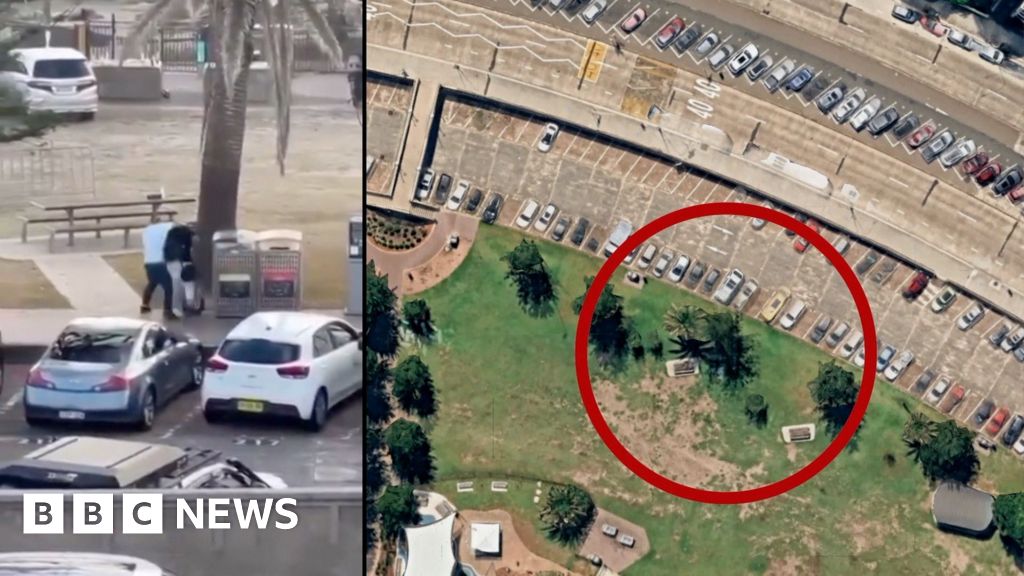
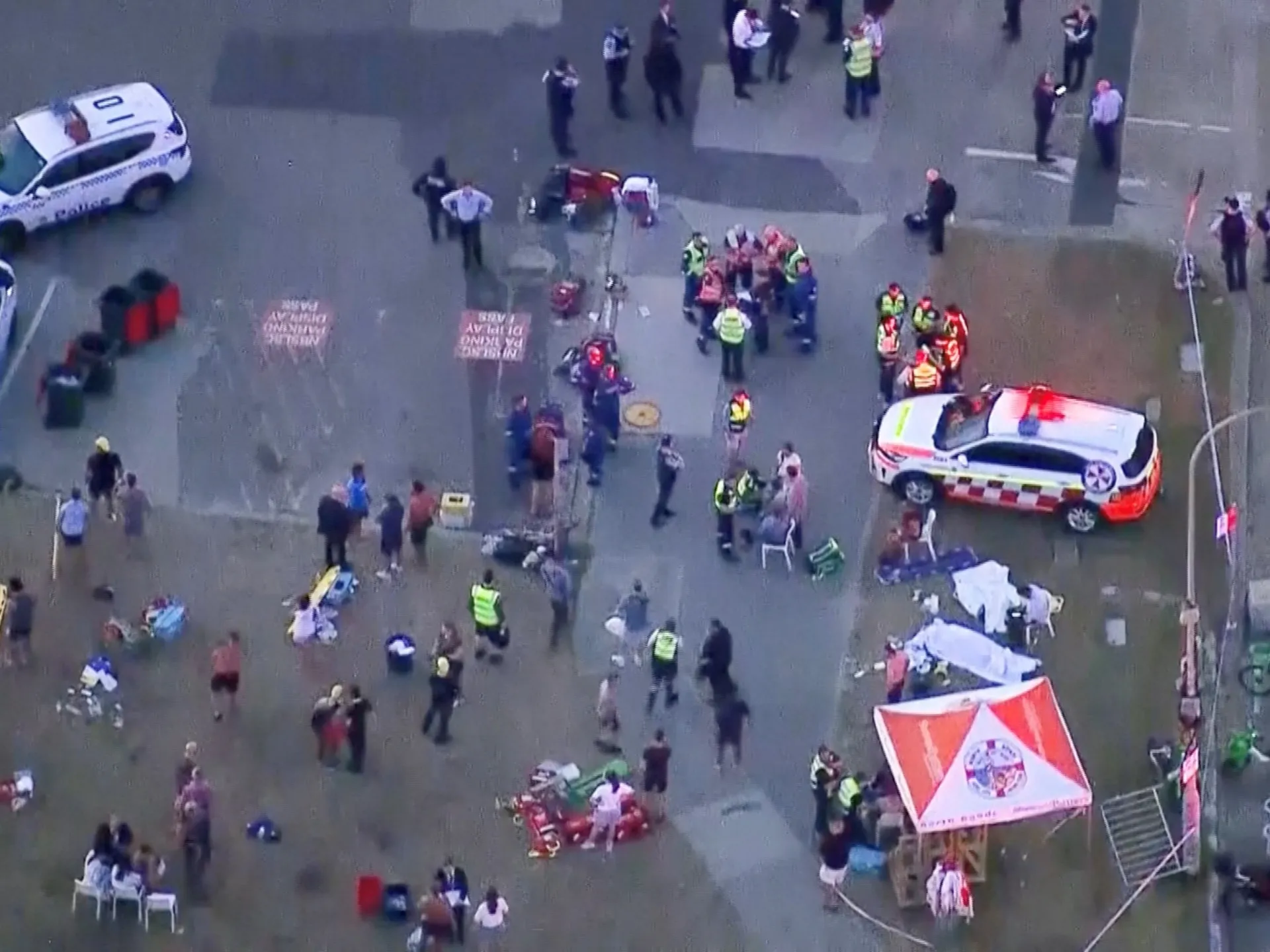
At around 18:47 local time (07:47 GMT) on Sunday, New South Wales Police received reports that shots had been fired at a park in Bondi Beach, Sydney.
In the minutes that followed, footage filmed by bystanders shows two gunman appearing to fire a volley of shots towards a park from a bridge.
Police say 15 people, including 10-year-old girl, were killed in the shooting. One of the gunman is also dead.
World news correspondent Joe Inwood pieces together verified footage of the incident to show how Australia’s worst mass shooting in nearly three decades unfolded.
Jimmy Lai, founder of Apple Daily, is escorted by police after he was arrested at his home in Hong Kong in August 2020. File Photo by Vernon Yuen/EPA-EFE
Dec. 14 (UPI) — A Hong Kong court is scheduled to deliver its verdict Monday in the national security case against media founder and former publisher Jimmy Lai, one of the city’s most prominent pro-democracy figures and the founder of the now-defunct newspaper Apple Daily.
Lai, 78, whose Chinese name is Lai Chee-ying, is charged alongside several companies linked to Apple Daily, including Apple Daily Limited, Apple Daily Printing Limited and AD Internet Limited, according to the court’s docket.
Prosecutors allege that Lai conspired to collude with foreign forces, an offense punishable by as much as a life sentence in prison under Hong Kong’s national security law.
Court records show the case is listed for verdict at 10 a.m. local time in the Court of First Instance at the West Kowloon Law Courts Building.
The Hong Kong Judiciary issued special public seating and ticketing arrangements for the hearing, citing high demand. According to court notices, admission tickets will be distributed on a first-come, first-served basis beginning 45 minutes before the hearing, with overflow seating and live broadcasts provided in multiple courtrooms.
The case has also drawn international attention, with governments and press freedom groups warning that the prosecution reflects a broader erosion of civil liberties and press freedom in Hong Kong since the national security law was imposed in 2020.
Lai has pleaded not guilty to two counts of “conspiracy to collude with foreign forces” and a separate count of conspiracy to publish seditious material in Apple Daily, The New York Times reported. He has been jailed since his arrest five years ago.
Weekly insights and analysis on the latest developments in military technology, strategy, and foreign policy.
A new escalation in the clashes between Thailand and Cambodia has seen Royal Thai Air Force (RTAF) F-16 fighters deliver airstrikes along the disputed border between the two countries. The nations are now blaming each other for breaching a ceasefire deal that was brokered by U.S. President Donald Trump.
In a statement, the RTAF said it had struck Cambodian “military targets” in several areas along the roughly 500-mile border. At the same time, it accused Cambodia of mobilizing heavy weaponry and repositioning combat units. A Thai military official told Reuters that the targets included long-range artillery positions. The Thai military also released imagery that it said showed airstrikes against a Cambodian military position, as seen below.
#Thailand / #Cambodia 🇹🇭🇰🇭: “Thai Air Forces” reportedly bombed a casino building which was being used by the “Cambodian Army” on the border.
Thai Army possibly used F-16(A/B) fighter aircraft with Mark 82 (MK-82) aerial bomb with Precision-Guided Glide Bomb system. pic.twitter.com/8uYfWaC5Yw
The RTAF has a relevant fleet of F-16s, comprising 36 single-seat F-16As and 14 two-seat F-16Bs. These are the survivors from a total of 52 F-16A/Bs that were delivered by the United States under four separate orders plus seven more F-16A/Bs that were donated by Singapore.
Massive explosion on the Cambodian side of the Cambodia Thailand border from an F-16 airstrike from Thailand
Local reporters say Thai forces have struck again around Ta Krabei temple, sending Cambodian families fleeing into air raid shelters in the O’Smach area of Oddar Meanchey. This comes on top of this morning’s shelling and air strikes along the border, including reported F-16… pic.twitter.com/qNXgrjfhQj
TWZ has approached the U.S. government for clarity on whether Washington approved the use of the F-16s against Cambodia. Thailand is a major U.S. ally in the region.
In terms of Cambodian heavy weaponry, Thailand has highlighted the presence of what it says are Chinese-made PHL-03 multiple rocket launchers, only six of which are understood to be in use. These systems are within range of a provincial airport and a state-run district hospital, according to Thai Ministry of Defense spokesman Rear Admiral Surasant Kongsiri. He added that Cambodia had also deployed Soviet-era BM-21 multiple rocket launchers.
“Based on our intelligence as well, there have been attempts … to lock on the coordinates of these facilities,” the spokesman added, without providing evidence of how this was determined.
Thailand’s military said the latest airstrikes were launched after one of its soldiers was killed and another four were wounded in fighting along the tense border this morning.
Earlier today, there were unconfirmed reports that a Thai Army unit had taken control of the village of Pairachan/Prey Chan in the disputed zone. Security-camera imagery purportedly from the area showed the Royal Thai Army moving in M113 series armored personnel carriers.
BREAKING: Thailand Army soldiers crossed into Cambodia and seized the disputed Pairachan (Prey Chan) village in Banteay Meanchey after two days of border clashes.
Thailand says it acted in self-defense after Cambodian attacks.
Other footage showed a Royal Thai Army Scorpion light tank opening fire on Cambodian positions.
For its part, the Cambodian Ministry of Defense blames Thailand for the escalation, accusing Thai forces of launching attacks on its troops on Monday. The ministry said that Cambodia had not retaliated, despite “provocative actions for many days.”
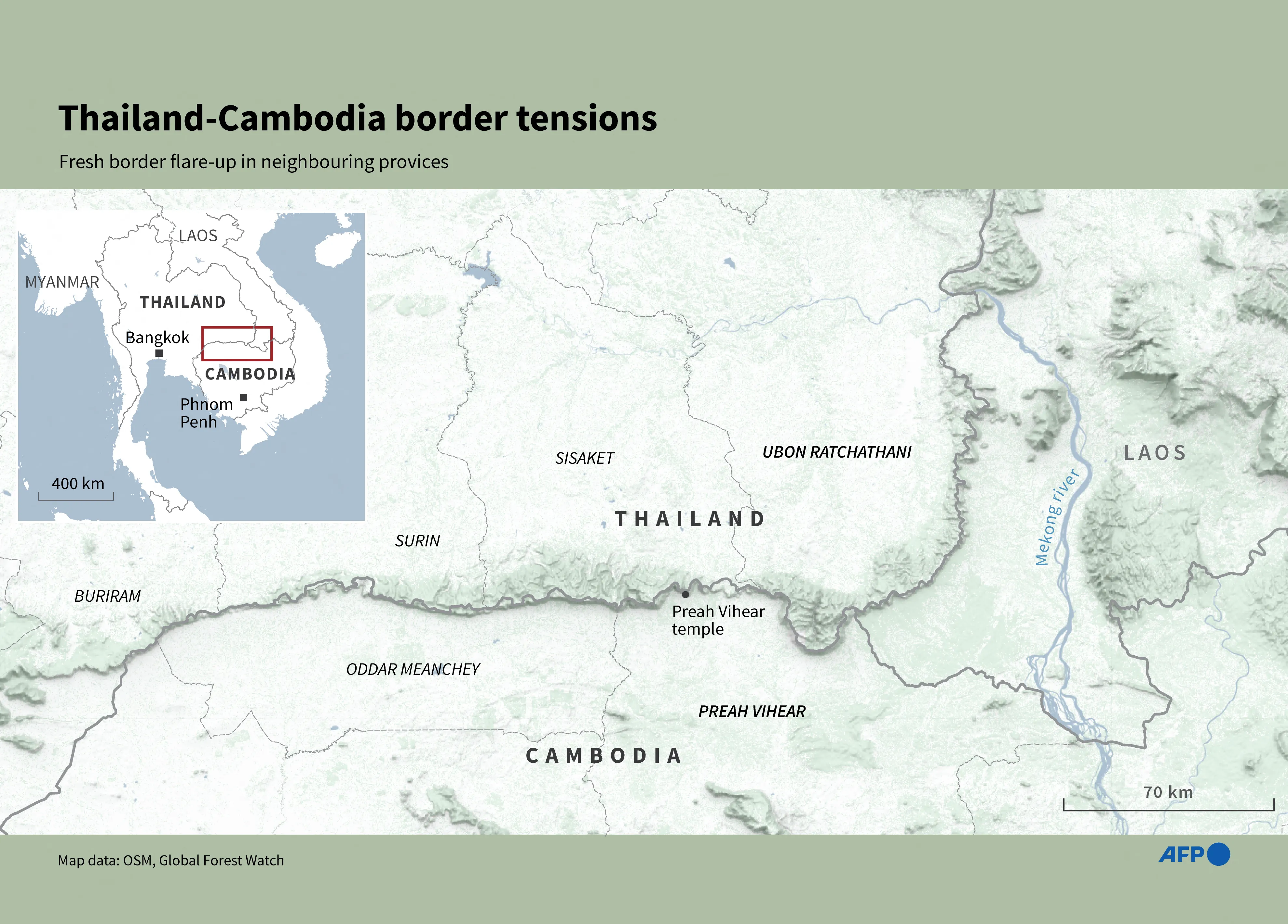
Infographic map showing the area on the Thailand-Cambodia border where fresh violence flared on December 8, 2025. Graphic by John SAEKI and Nicholas SHEARMAN/AFP JOHN SAEKI; NICHOLAS SHEARMAN
The latest clashes have also seen the deaths of four Cambodian civilians. They were killed in Oddar Meanchey and Preah Vihear provinces, according to Cambodia’s information minister, Neth Pheaktra.
Meanwhile, tens of thousands of people have been forced to flee their homes in the border region.
Based on statements from Thai authorities, more than 385,000 civilians have been ordered to evacuate from border areas across four provinces. Of those, around 35,000 people were registered at shelters as of Monday morning, they added.
Cambodian soldiers ride their motorbike as local residents evacuate following clashes along the Cambodia-Thailand border in Preah Vihear province on December 8, 2025. Photo by AFP STR
People have also fled villages on the Cambodian side of the border. The Cambodian Ministry of Information says that 1,157 families have been evacuated to safe areas.
There is now an escalating war of words on the political side.
In a statement, Thai Prime Minister Anutin Charnvirakul said the country did not want violence and refuted claims that his country had initiated the conflict. “However, Thailand will not tolerate violations of its sovereignty and will proceed rationally and with due regard for the principles of peace, security, and humanity,” he said.
The former prime minister of Cambodia, Hun Sen, who remains a very influential figure, called upon his country’s forces to exercise restraint, but blamed Thailand for trying to “pull us into retaliation.”
“The red line for responding has already been set. I urge commanders at all levels to educate all officers and soldiers accordingly,” Hun Sen said in a Facebook post.
A Thai soldier wounded by gunfire from Cambodian soldiers is taken to a hospital by helicopter for medical treatment in Thailand on December 8, 2025. Photo by Royal Thai Army / Handout/Anadolu via Getty Images Anadolu
The fighting between Thailand and Cambodia was one of the “eight raging conflicts” that were “settled” by the Trump administration, according to the newly released National Security Strategy.
Theceasefire came after a previous spike in tensions in May, including an exchange of fire between troops in a contested area, which left one Cambodian soldier dead. Then came a series of tit-for-tat actions by both governments, including airstrikes, leading to a full-blown conflict over five days in July. This killed at least 48 people and forced another 300,000 to flee their homes.
Tensions have remained high despite the ceasefire agreement, with both sides accusing each other of violations, and Thailand announcing in November that it was suspending the deal.
Trump then intervened, and a ceasefire was agreed around six weeks ago. Washington applied pressure by threatening to suspend trade talks unless a peace deal was brokered. Malaysia and China also both pushed for a settlement.
The U.S. president said he’d “stopped a war” through the use of tariffs and said, “I think they’re gonna be fine.”
However, the ceasefire never looked particularly strong, and last month Thailand said it was suspending the deal. In stepping away from the settlement, Thailand accused Cambodia of laying more landmines along the border. One of these wounded a Thai soldier, Bangkok said.
The border dispute has a long history, dating back to the period of French colonial rule, at the beginning of the 20th century, when a boundary was drawn up to separate Cambodia, which it ruled until 1953, from Thailand. Since then, there have been periodic tensions between the two countries, resulting from disagreements over where the border should lie.
A pair of F-16s from the Royal Thai Air Force fly in formation during Exercise Thai Boomerang 2019. Australian Department of Defense Unknown
Anwar Ibrahim, the prime minister of Malaysia, who helped broker the original ceasefire, called upon Thailand and Cambodia to avoid further escalation. He said the latest violence risked “unravelling the careful work that has gone into stabilizing relations between the two neighbors.”
“We urge both sides to exercise maximum restraint, maintain open channels of communication, and make full use of the mechanisms in place,” Anwar said.
So far, Trump has not responded to the renewed fighting.
For now, however, both sides show little interest in appeasement.
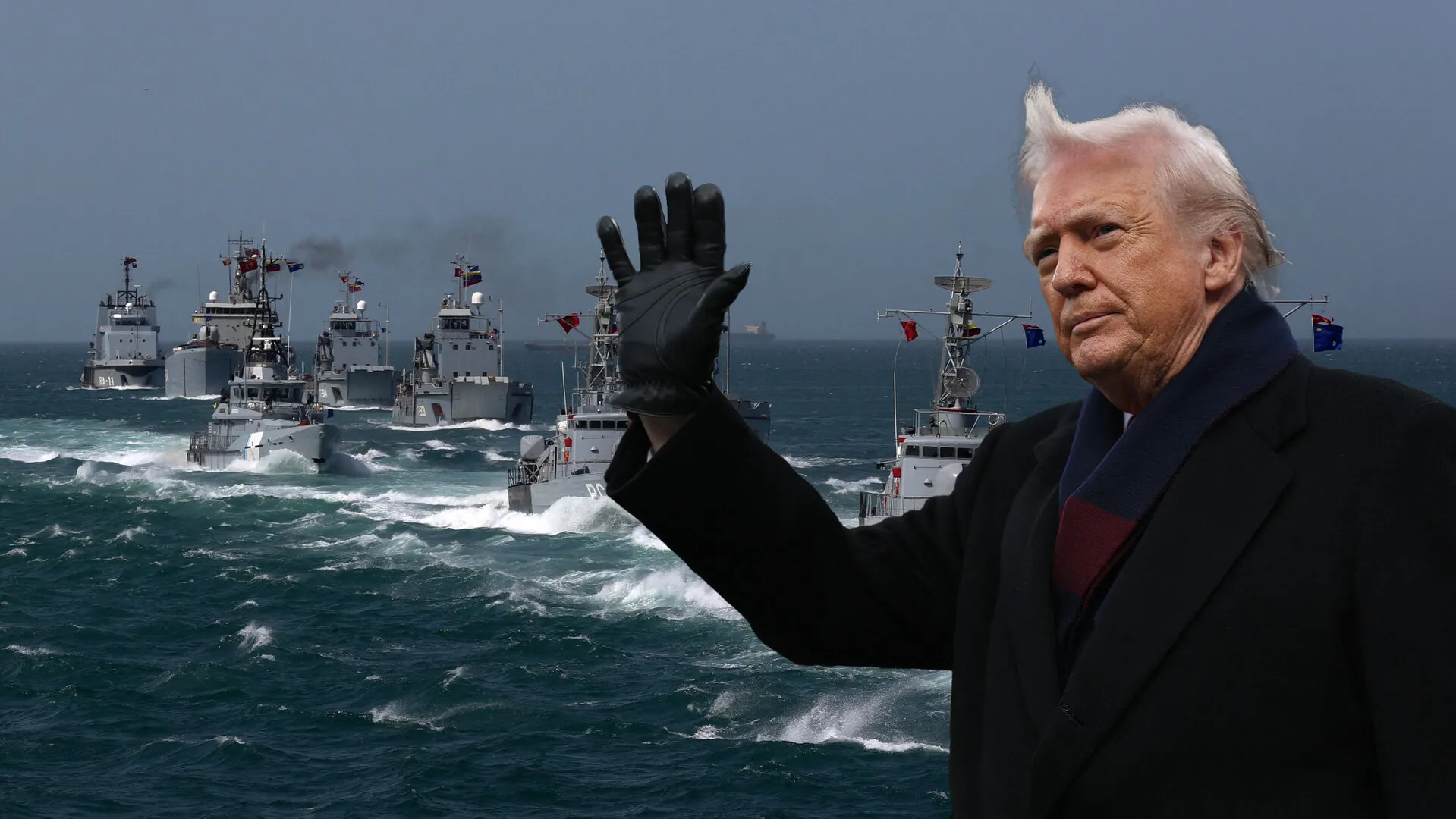
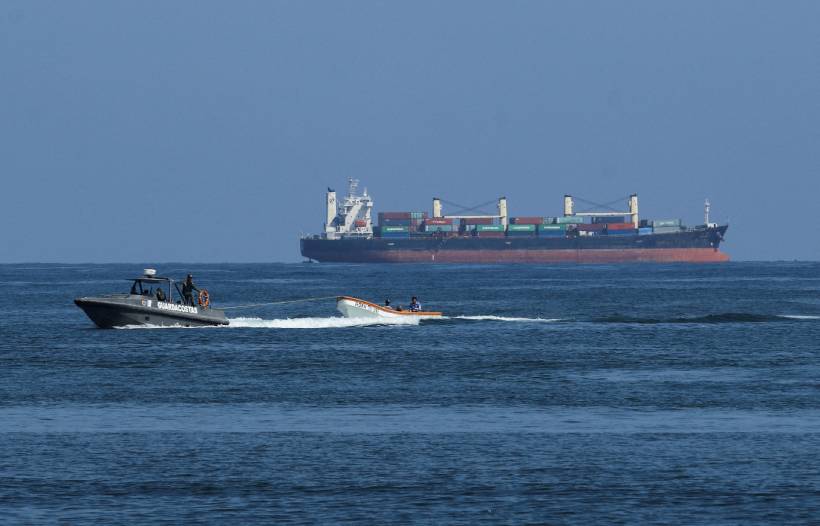
The United States has fully commited to its enforcement of sanctions on Venezuela by seizing a large oil tanker off its coast. President Donald Trump publicly announced the operation on December 10th and authorities said a joint FBI/Homeland Security/Coast Guard team executed a court-ordered seizure of the vessel, which was transporting Iranian and Venezuelan crude in violation of U.S imposed sanctions.
This is reportedly the first U.S. seizure of a Venezuelan oil shipment since sanctions began way back in 2019. “We’ve just seized a tanker on the coast of Venezuela, a large tanker, very large, largest one ever seized, actually,” says Donald Trump.
Trying to maintain the credibility of U.S. sanctions at a time when their enforcement have increasingly been challenged by other international actors such as Russia or Iran. Now, The U.S. is willing to take direct action beyond economic wars, even at the risk of diplomatic and military escalation.
Reactions from Caracas
Venezuela publicly denounced the action and accused Washington of blatant theft describing the seizure as “an act of international piracy”. Venezuelan President Nicolás Maduro has long cast himself as the victim of a U.S. led campaign to oust him from the country in order to seize the vast oil wealth on the country’s shores. He reiterated that the U.S. military buildup, which started this summer, including carrier strike groups and bases is directly aimed at overthrowing him.
Maduro’s supporters rallied in the streets against foreign aggression even as officials prepared diplomatic protests to international bodies. For the time being, he faces limited other practical options for retaliation as Venezuela’s navy is in no position to challenge U.S. maritime dominance, and legal recourse through international courts would likely take years.
Russia’s Offers Full Support
Moscow reaffirmed its backing for Maduro, emphasising the legitimacy of Venezuela’s government and condemning what it described as unilateral U.S. actions. An ally in South America provides Russia opportunities for energy investment, and a way to challenge U.S. influence.
The tanker seizure allows Moscow to frame Washington as overreaching and destabilising, a narrative it also applies to recent U.S. actions in Eastern Europe and the Middle East. While Russia is unlikely to escalate militarily, its political backing is significant.
China’s Strategic Role, A Potential Mediator?
Avoiding direct confrontation with Washington over the seizure, Beijing has reiterated its general opposition to unilateral sanctions and calling for international dialogue. However, China remains Venezuela’s most important economic partner and oil consumer, giving it substantial influence over any talks in the region.
Chinese companies have adapted to sanctions by purchasing Venezuelan crude oil at discounted prices, often through intermediaries. For Beijing, Venezuela is also part of a broader strategy to diversify energy supplies and expand its economic reach to the Americas.
Impact on Oil Markets
The announcement caused a modest spike in oil prices around the globe; for example: Brent crude briefly rose about 0.4% to around $62 a barrel, before returning to normal levels in the following few days.
The incident also highlighted Venezuela’s export challenges: under sanctions, its oil trades at a deep discount for its main trade partners, China and Russia. American oil companies with Venezuelan ties reported no immediate trouble. Chevron the U.S. firm that co-owns Venezuela’s largest oil project said its operations there continue normally, and U.S. imports of Venezuelan crude have even ticked up slightly in recent months.
Broader Consequences
Neighbouring countries such as Cuba and other Caribbean states depend on Venezuelan oil and could feel its effects. Sanctioning Venezuela was intended to pressure the regime into political concessions, yet Maduro remains firmly in power.
Enforcement actions like this tanker seizure may increase short-term pressure, but they also come with great risk for the stability of the Caribbean. Venezuela’s experience mirrors that of Iran and Russia, suggesting that sanctions alone may be insufficient to produce regime change, particularly when the targeted government is provided external backing.
Possible Future Scenarios and Implications
One scenario is a continuation of this low-level rise in tensions, with the U.S. stepping up enforcement and Venezuela responding through diplomatic protests while relying on Russian support.
Another is a negotiated de-escalation, potentially linked to limited sanctions relief in exchange for political concessions, though past efforts suggest this would be difficult to achieve with the current White House administration.
A more destabilising scenario would involve a potential confrontation at sea and broader disruption to energy markets. However, this scenario remains unlikely for the time being.
I’m Glenn Whipp, columnist for the Los Angeles Times and host of The Envelope newsletter, wondering if you’ve felt that 1% decrease in traffic congestion this year. I had plenty of time to contemplate its veracity the other day while inching my way down the 405 Freeway on my drive home. Let’s just say I’m unconvinced.
Let’s think happier thoughts — the continued, sweeping success of the year’s best movie, “One Battle After Another.”
Sign up for The Envelope
Get exclusive awards season news, in-depth interviews and columnist Glenn Whipp’s must-read analysis straight to your inbox.
I spoke with the women of Paul Thomas Anderson’s acclaimed epic, “One Battle After Another,” on a rainy day last month in the midst of that atmospheric river that washed through the city. You want to talk traffic congestion? Try going down San Vicente during rush hour on the way to a premiere at the Academy Museum.
The only movie worth that effort this year might be … “One Battle After Another.”
For our Envelope digital cover story, we gathered stars Regina Hall, Chase Infiniti and Teyana Taylor for a stunning photo shoot with Times contributor Bexx Francois, followed by a conversation accompanied by a slate of appetizers that evoked memories of the night before when Taylor’s French fries went missing at their Governors Awards table.
“I went to the bar during the dinner and came back,” Taylor says. “And Regina’s like, ‘Somebody took my plate.’ And I look down and say, ‘Somebody ate my fries.’” She motions at Hall. “Goldilocks over here.”
There were no beefs over the apps that day, just the kind of camaraderie evident by the care Infiniti showed her co-stars, helping them keep their immaculate outfits pristine. “One Battle After Another” feels like a lock for a Screen Actors Guild Award (now known as the Actors) ensemble nomination, in no small part due to the exemplary work of these three women, along with co-stars Leonardo DiCaprio, Sean Penn and Benicio Del Toro.
Taylor won a supporting actor prize Sunday from the Los Angeles Film Critics Assn. for her portrayal of Perfidia Beverly Hills, the revolutionary leader of the French 75. The character dominates the movie’s 35-minute opening section, an extended prologue that ends with Perfidia betraying members of her group to avoid prison and abandoning her daughter in the haze of postpartum depression.
“Perfidia anchors this movie,” Taylor says. “We got a boat ride to the middle of the ocean and we gonna anchor this boat, and when we anchor this boat, I’m done.” She turns to Hall. “Then I need you to get on your jet ski and go.”
Taylor loves Perfidia, as do Infiniti and Hall. She’s protective of the character, admitting that, yes, Perfidia is selfish. But also: She has her reasons.
We talked about a scene that Anderson cut from the film featuring Perfidia and Hall’s steadfast Deandra, another member of the French 75. Perfidia calls Deandra from custody, Sean Penn’s Lockjaw lurking in the background, and tells Deandra, “Remember those baby socks I was telling you about? I need you to go out and get them.”
It’s code: Perfidia wants Deandra to make sure that she takes care of her baby, Willa, and get out of town.
“When people have certain opinions of Perfidia, that’s the part of her that they didn’t see,” Taylor says. “People write her off, but she made that phone call.”
“Perfidia and Deandra are best friends,” Hall says. “Watching the movie, you can feel that. But that scene made it clear.”
“But in hindsight,” Taylor says, “artistically that scene would not have made sense. We needed Perfidia to be selfish.”
“She’s not selfish,” Infniti, who plays Willa, interjects. “She was doing the only thing she felt she could do.”
“That’s true,” Taylor replies. “But she’s also selfish. That’s why I think Paul is a f— genius. He is a mad scientist. He really knew what to do with this movie to create a healthy dialogue. He got people talking.”
Paris says EU member states cannot vote on the trade agreement in its current state.
Published On 14 Dec 202514 Dec 2025
Share
France has urged the European Union to postpone a vote on a trade deal with the South American bloc Mercosur, saying conditions are not yet in place for an agreement.
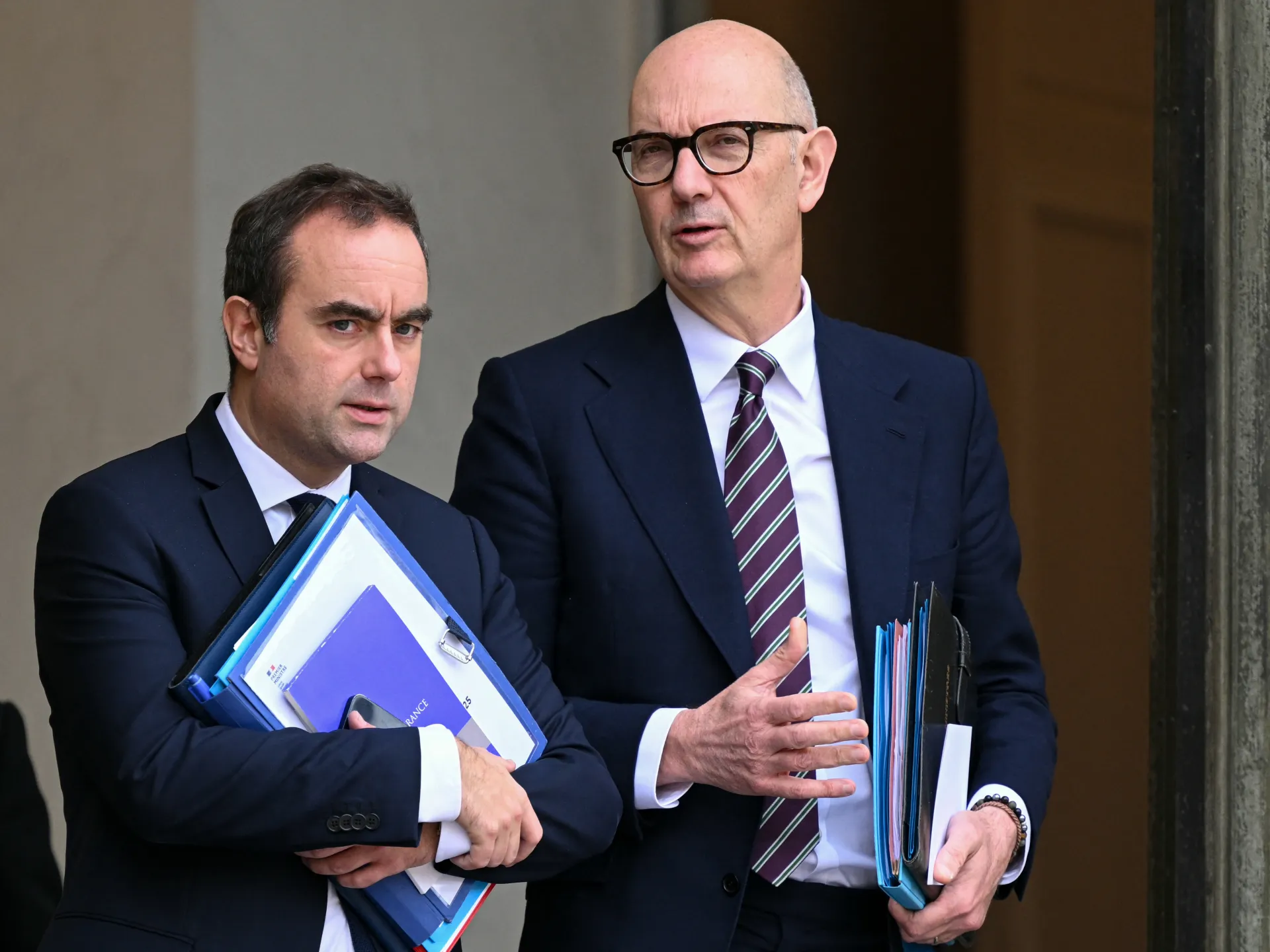
In a statement from Prime Minister Sebastien Lecornu’s office on Sunday, Paris said that EU member states cannot vote on the trade agreement in its current state.
Recommended Stories
list of 3 itemsend of list
“France asks that the deadlines be pushed back to continue work on getting the legitimate measures of protection for our European agriculture,” the statement added.
European Commission President Ursula von der Leyen is due to visit Brazil on Monday to finalise the landmark trade pact, which the 27-member union has been negotiating with the Mercosur trade bloc for more than 20 years. The agreement is being negotiated with four Mercosur members: Argentina, Brazil, Paraguay and Uruguay.
But the Commission first has to get the approval of the EU member states before signing any trade deal, and Paris has made its objection to the deal with the Mercosur countries clear.
“Given a Mercosur summit is announced for December 20, it is clear in this context that the conditions have not been met for any vote [by states] on authorising the signing of the agreement,” the statement from Paris said.
Earlier on Sunday, in an interview with the German financial daily Handelsblatt, French Minister of the Economy and Finance Roland Lescure also said that the treaty as it stands, “is simply not acceptable”.
He added that securing robust and effective safeguard clauses was one of the three key conditions France set before giving its blessing to the agreement.
He said the other key points were ensuring that the same production standards that EU farmers face are implemented and proper “import controls” are established.
Farmers in France and some other European countries say the deal will create unfair competition due to less stringent standards, which they fear could destabilise already fragile European food sectors.
“Until we have obtained assurances on these three points, France will not accept the agreement,” said Lescure.
European nations are expected to vote on the trade pact between Tuesday and Friday, according to EU sources.
The European Parliament will also vote on Tuesday on safeguards to reassure farmers, particularly those in France, who are fiercely opposed to the treaty.
The EU is Mercosur’s second-largest trading partner in goods, with exports of 57 billion euros ($67bn) in 2024, according to the European Commission.
The EU is also the biggest foreign investor in Mercosur, with a stock of 390 billion euros ($458bn) in 2023.
If a trade deal is approved later this month, the EU-Mercosur agreement could create a common market of 722 million people.
Officials, social media users hail bystander, identified by Australian media as Ahmed al Ahmed, who disarmed gunman.
Published On 14 Dec 202514 Dec 2025
Share
A bystander who has been filmed tackling and disarming an assailant during a shooting in which at least 15 people were killed at a Jewish holiday event in Sydney, Australia, has been praised as a hero whose actions may have saved lives.
Footage uploaded to social media on Sunday shows a man in a car park running up to a man holding a rifle. He then tackles the armed man, wrestles the rifle away from him and points the weapon back at him.
Recommended Stories
list of 3 itemsend of list
The video then shows the disarmed man losing his footing and backing away towards a bridge where another shooter was located while the bystander places the gun down on the ground.
One suspected attacker was killed and another was in a critical condition after Sunday’s shooting while police said they were investigating whether a third gunman was involved.
The footage of the bystander’s intervention was shared widely on social media, and many users praised the man for his bravery, saying his actions may have saved lives.
According to Australian media reports, the bystander was identified as Ahmed al Ahmed, a 43-year-old Sydney man.
Al Jazeera was unable to immediately confirm his identity.
A cousin of al Ahmed was quoted as telling the Australian television news service 7News that he was shot twice during the incident.
“He’s in hospital, and we don’t know exactly what’s going on inside,” the man named Mustafa told the outlet.
“We do hope he will be fine. He’s a hero 100 per cent.”
Al Ahmed was due to undergo surgery on Sunday night, he said.
“Australian hero (random civilian) wrestles gun off attacker and disarms him. Some people are brave and then some people are … whatever this is,” one person said in a post on the X platform that shared the video.
“This Australian man saved countless lives by stripping the gun off one of the terrorists at Bondi beach. HERO,” another said.
Chris Minns, the premier of New South Wales state, where Sydney is located, said it was the “most unbelievable scene I’ve ever seen”.
“That man is a genuine hero, and I’ve got no doubt that there are many, many people alive tonight as a result of his bravery.”
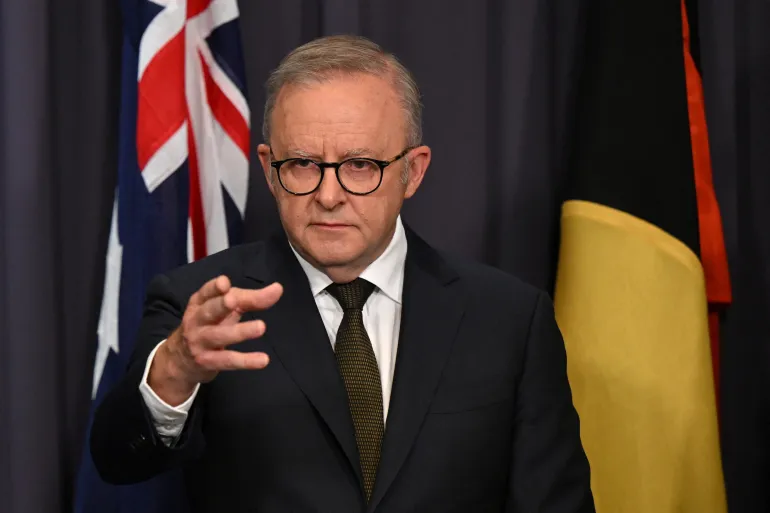
Prime Minister Anthony Albanese praised the actions of Australians who had “run towards danger in order to help others”.
“These Australians are heroes and their bravery has saved lives,” he said at a news conference.
The presidential candidate of the Chilean Republican Party presidential candidate Jose Antonio Kast, pictured at an election event in 2021, was leading in polls as Chile conducted its presidential election on Sunday. Photo by Elvis Gonzalez/EPA-EFE
Dec. 14 (UPI) — Chileans head to the polls Sunday in a presidential runoff election in which the son of a Nazi party member, who has pledged to build a border wall to keep migrants out of the country, is the leading candidate.
Far right former congressman Jose Antonio Kast, 59, built his campaign on a promise to remove tens of thousands of undocumented migrants from the country. He faces Jeannette Jara, 51, a former labor minister in the administration of center-left president Gabriel Boric.
Jara, the leading candidate of the left-wing coalition, finished the first round of polling with 27%, but right-wing candidates, including Kast, secured more than half of the votes.
Kast is a known admirer of Chilean military strongman Augusto Pinochet, and a staunch opponent of abortion rights and same sex marriage.
The campaign has featured a bitter fight between Jara and Kast, with each attacking the other’s ability to address crime, migration problems and a lagging economy.
Jara has pledged to attract more investment in the country and to secure the border while also addressing health care needs. Kast has campaigned on corporate tax cuts, deregulation and departing undocumented migrants.
Both are using the approval rating of the outgoing Boric’s approval rating, hovering at 30%, as a platform for their campaigns, pledging to improve on the job he has done.
Chile has seen a sharp upturn in murder and other violent crime in recent years as international criminal groups have stepped into a country that has long been considered relatively docile.
The feat has spread to other Latin American countries, including Costa Rica and Ecuador.
Boric is considered to have failed to fulfill most of his stated agenda to strengthen public services. He also failed to address problems brought on by organized crime, election watchers have said.
Voters have called for more migration reform, tighter security and for the country to distance itself from Boric’s failed policies.
A mass shooting at a Jewish festival at Bondi Beach in the Australian city of Sydney has killed at least 11 people and wounded 29 in what was a grisly, rare occurrence for the country.
Authorities said the “terrorist” incident on Sunday was “designed to target Sydney’s Jewish community on the first day of Hanukkah” as hundreds of people gathered for an event called Chanukah by the Sea.
The Australian leader condemned the “targeted” attack, saying: “What was unleashed today is beyond comprehension.”
Albanese also addressed the Jewish community directly.
“As prime minister, on behalf of all Australians, to the Jewish community: We stand with you, we embrace you and we reaffirm tonight that you have every right to be proud of who you are and what you believe,” Albanese said. “You have the right to worship and study and work and live in peace and safety.
“You should never have to endure the loss that you have suffered today. We will dedicate every resource required to make sure you are safe and protected.”
Australian Prime Minister Anthony Albanese attends a press conference following a shooting at Bondi Beach, at Parliament House in Canberra, Australia, December 14, 2025 [Lukas Coch/AAP via Reuters]
New Zealand
In neighbouring New Zealand, Chris Luxon, its prime minister, reiterated the two countries’ close bond.
“Australia and New Zealand are closer than friends. We’re family. I am shocked by the distressing scenes at Bondi, a place that Kiwis visit every day. My thoughts and the thoughts of all New Zealanders are with those affected,” Luxon said.
United States
The US “strongly condemns” the attack, Secretary of State Marco Rubio said.
“Antisemitism has no place in this world. Our prayers are with the victims of this horrific attack, the Jewish community, and the people of Australia,” he wrote in a post on X.
United Nations
UN Secretary-General Antonio Guterres said he was “horrified” by the “heinous” shooting.
“I am horrified and condemn today’s heinous deadly attack on Jewish families gathered in Sydney to celebrate Hanukkah,” he posted on X.
“My heart is with the Jewish community worldwide on this first day of Hanukkah.”
Israel
Israeli President Isaac Herzog described the attack as “cruel”.
“Our brothers and sisters in Sydney have been attacked by vile terrorists in a very cruel attack on Jews who went to light the first candle of Hanukkah on Bondi Beach,” Herzog said in a statement.
“Time and again we called on the Australian government to take action and fight against the enormous wave of antisemitism that is plaguing Australian society,” he also said in a post on X.
At least one Israeli national is among those who have been killed in the shooting, according to a statement by Israel’s Foreign Ministry.
It also said that an Israeli national was wounded.
Palestine
The Palestinian Foreign Ministry condemned the shooting and said it “reiterates its firm rejection of all forms of violence, terrorism and extremism, which contradict humanitarian values”.
It expressed its “full solidarity” with “friendly Australia”.
United Kingdom
Keir Starmer, the UK’s prime minister, stated: “Deeply distressing news from Australia. The United Kingdom sends our thoughts and condolences to everyone affected by the appalling attack in Bondi Beach.”
Britain’s King Charles
Charles, the ceremonial head of state for Australia, reacted to the deadly shooting in Bondi Beach.
“My wife and I are appalled and saddened by the most dreadful antisemitic terrorist attack on Jewish people attending Chanukah celebration at Bondi Beach,” the king said in a statement posted on X.
Germany
Friedrich Merz, Germany’s chancellor, said he was shocked by the incident.
“The anti-Semitic attack at Bondi Beach during Hanukkah leaves me utterly shocked. My thoughts are with the victims and their families. This is an attack on our shared values. We must fight anti-Semitism – here in Germany and around the world,” Merz said.
France
Emmanuel Macron, France’s president, said his country would continue to fight against anti-Semitism.
“France extends its thoughts to the victims, the injured and their loved ones. We share the pain of the Australian people and will continue to fight relentlessly against anti-Semitic hatred, which hurts us all wherever it strikes,” Macron said.
The Netherlands
Dick Schoof, the Dutch prime minister, stated: “Shocking and alarming reports from Australia of a horrific attack in Sydney that has left many people dead or injured. I have conveyed my sympathy and support to Prime Minister Albanese on this dark day for Australia.”
Finland
Alexander Stubb, Finland’s president, extended his condolences to Australia’s Jewish population.
“Tonight’s terrorist attack on the Hanukkah celebration at Bondi Beach was shocking and devastating. Our thoughts are with the families and loved ones of the victims as well as the whole Jewish community in Australia,” Stubb said.
Police work on a street after a shooting incident at Bondi Beach in Sydney on December 14, 2025 [David Gray/AFP]
Iran
Tehran denounced the “terror” incident, Ministry of Foreign Affairs spokesman Esmaeil Baghaei said.
“We condemn the violent attack in Sydney, Australia. Terror and killing of human beings, wherever committed, is rejected and condemned,” Baghaei said on X.
European Union
European Commission President Ursula von der Leyen said she was “shocked” by the shooting.
“I send my heartfelt condolences to the families and loved ones of the victims.”
Kaja Kallas, the EU’s foreign policy chief, said the “appalling act of violence against the Jewish community must be unequivocally condemned”.
Norway
Jonas Gahr Store, Norway’s prime minister, said he was “shocked by the horrific attack at Bondi Beach, Australia, during a Jewish Hanukkah event”.
Italy
Giorgia Meloni, Italy’s prime minister, said she “firmly” condemns “any form of violence and anti-Semitism”.
“Italy expresses its sorrow for the victims, stands in solidarity with their relatives, the injured and the Jewish communities, and renews its friendship towards the Australian people,” Meloni said.
Spain
Jose Manuel Albares, Spain’s foreign minister, said he was “horrified” by the attack.
“My solidarity with the victims and their loved ones, with the people and government of Australia. Hate, anti-Semitism and violence have no place in our societies.”
Republic of Ireland
Helen McEntee, Ireland’s foreign minister, said: “I want to express my shock and horror at the anti-Semitic attack on a Jewish community celebrating first day of Hanukkah. … All my thoughts are with the victims and their loved ones and the people of Australia.”
Qatar
Qatar’s Ministry of Foreign Affairs denounced the attack and extended its condolences to the families affected.
“Qatar renews its position condemning violence, terrorism and criminality whatever the motives,” the ministry said.
Turkiye
The Turkish Foreign Ministry “strongly condemned” the attack.
It offered condolences to the families of those who lost their lives and to the Australian people, and wished a speedy recovery to the injured.
“As Turkiye, we reiterate our principled stance against all forms and manifestations of terrorism and our commitment to cooperation in combating this global threat,” the ministry said in a statement.
Lebanon
Lebanese President Joseph Aoun said: “Just as we condemn and reject attacks on any innocent civilian in Gaza, southern Lebanon, or any region of the world, we condemn, by the same principle and duty, what happened in Sydney.
“The responsibility for these tragedies lies with the systems that spread ideas of hatred, extremism, rejection of the other, and the violent pursuit of religious, ethnic, or political monopoly systems … Just as it falls on what fuels those contexts of injustice, oppression, and absence of justice in our current world.”
UK’s chief rabbi
The UK’s chief rabbi has called the shooting an “unspeakable tragedy”.
In a social media post, Ephraim Mirvis, who serves as the head rabbi for the United Hebrew Congregations of the Commonwealth, said: “Absolutely heartbreaking news is emerging of an unspeakable atrocity.”
The rabbi called for people to “join me in praying for everyone affected by this heinous act.”
Australian National Imams Council
A major Australian Muslim organisation condemned the Bondi Beach shooting as a “horrific” act of violence.
“Our hearts, thoughts and prayers are with the victims, their families, and all those who witnessed or were affected by this deeply traumatic attack,” the Australian National Imams Council said in a statement.
“This is a moment for all Australians, including the Australian Muslim community, to stand together in unity, compassion, and solidarity,” it added.
Muslim World League
The Muslim World League said it “strongly condemns the terrorist attack targeting a gathering of Australian citizens in Sydney”.
In a statement, the international non-governmental Islamic organisation quoted its Secretary General Mohammad bin Abdulkarim Al-Issa as saying that Muslim people “reject terrorism and violence in all their forms”.
Saudi Arabia
The Saudi Foreign Ministry said the kingdom condemns the “terrorist attack” in Sydney and reaffirmed its stance against all “forms of violence, terrorism and extremism”.
The kingdom said it wished a speedy recovery to those injured.
United Arab Emirates
The UAE’s Foreign Ministry said the country “strongly condemns such criminal acts” and maintains its consistent rejection of “all forms of violence and terrorism” aimed at undermining security and stability.
“The Ministry also expressed its sincere condolences and sympathy to the families of the victims, and to the government and people of Australia, as well as its wishes for a speedy recovery for the injured,” it said in a statement.
Jordan
Jordan’s Foreign Ministry condemned the attack, with ministry spokesperson Fouad al-Majali affirming the country’s full solidarity with “friendly Australia” and its rejection of “all acts of violence and terrorism” that seek to destabilise security.
New York City Mayor-elect Zohran Mamdani
Mamdani called the attack a “vile act of anti-Semitic terror”.
“Another Jewish community plunged into mourning and loss, a holiday of light so painfully reduced to a day of darkness,” he said. “This attack is merely the latest, most horrifying iteration in a growing pattern of violence targeted at Jewish people across the world.”
Media mogul Lai was arrested in 2020 under a national security law imposed by China.
Published On 14 Dec 202514 Dec 2025
Share
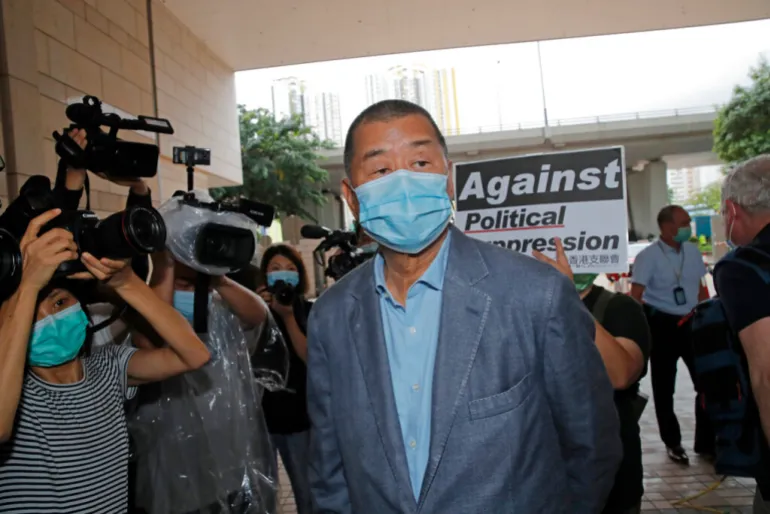
Supporters of Hong Kong democracy activist and media mogul Jimmy Lai have begun queuing overnight outside a Hong Kong court ahead of a verdict in his lengthy trial.
The verdict will be delivered by a three-judge panel in a hearing that begins at 10am local time (02:00 GMT) on Monday and comes amid international calls to release Lai, who has already spent five years in jail.
Recommended Stories
list of 3 itemsend of list
On Sunday night, Lai’s supporters formed a queue more than a block long outside the courthouse. Some even had camping gear as they tried to secure a spot among the 507 tickets to the courthouse — 58 tickets are for Lai’s courtroom and the rest are for viewing in a separate overflow room by video link.
Dozens of police officers have been deployed around the area in preparation for Monday’s verdict.
Pro-democracy activists, including Jimmy Lai , centre, arrive at a court in Hong Kong [File: Kin Cheung/AP]
Lai, 78, the multi-millionaire founder of the now-shuttered Apple Daily newspaper, was arrested in 2020 under a national security law imposed by Chinese authorities to quell anti-government protests that rocked Hong Kong in 2019.
Lai’s family says his health has worsened after more than 1,800 days in solitary confinement, and that he suffers from diabetes, high blood pressure and heart palpitations.
Earlier this month, his daughter Claire Lai told the AFP news agency in Washington, DC that her father has lost “a very significant amount of weight” and noted that he has become “a lot weaker than he was before.”
“His nails turn almost purple, grey and greenish before they fall off, and his teeth are getting rotten,” she added.
Countries including the United States and the United Kingdom, as well as rights groups, have said Lai’s 156-day trial is politically motivated and have called for his immediate release.
US President Donald Trump also raised Lai’s case with Chinese President Xi Jinping in a meeting in South Korea in October and has said he would do his utmost to “save” Lai.
But Beijing has called Lai “an agent and pawn of anti-China foreign forces”, describing him as the main planner behind disruptive activities in the city.
The Chinese and Hong Kong governments have also said the tycoon is receiving a fair trial and that the national security law treats all equally. They say no freedoms are absolute when it comes to safeguarding national security.
“Jimmy Lai has endured five years in prison under appalling conditions simply for doing his job as a founder of one of the most renowned and independent media outlets in Hong Kong,” the media advocacy group Reporters Without Borders said in a statement.
“The trial can only be described as a sham and has nothing to do with the rule of law.”
After Monday’s verdict, if Lai is convicted, he could be sentenced in the near future. He can, however, appeal the outcome.
US President Donald Trump is promoting his nation’s economic record, insisting prices are falling and investment is surging – but the data, and rising cost-of-living pressures, tell a different story. Jillian Wolf checks the facts.
Subscribe to our channel: http://bit.ly/AJSubscribe Follow us on X : https://twitter.com/AJEnglish Find us on Facebook: https://www.facebook.com/aljazeera Check our website: http://www.aljazeera.com/ Check out our Instagram page: https://www.instagram.com/aljazeeraenglish/ Download AJE Mobile App: https://aje.io/AJEMobile
Historian Alan McPherson tells Marc Lamont Hill how the US is carrying out a regime change campaign in Venezuela.
Is the United States orchestrating regime change in Venezuela? Could this spark an all-out war?
This week on UpFront, Marc Lamont Hill speaks to Alan McPherson, an author and history professor at Temple University who specialises in US-Latin American relations.
The US is continuing the largest military build-up in Latin America in decades and has seized an oil tanker off the coast of Venezuela. US President Donald Trump has also threatened to attack Venezuela by land “very soon”, while the Pentagon continues to strike alleged drug boats in the Caribbean and Pacific. At least 87 people have been killed in what human rights groups have called extrajudicial killings and murder.
The Trump administration has made clear that it wants Venezuelan President Nicolas Maduro out of power, and has thrown its support behind opposition figure and Nobel Peace Prize laureate Maria Corina Machado. She supports foreign intervention and wants to privatise Venezuelan oil, leaving many to question how much the ideologies of US politicians and the interests of oil companies are driving the push for regime change inside Venezuela.
Watch: Police release CCTV of Brown University shooting suspect
A person of interest has been detained in connection with a shooting at Brown University in the US which left two people dead, police said.
Nine others were injured after a gunman opened fire at the university in Providence, Rhode Island, on Saturday.
Police said the detained suspect was in his 20s, but have not named him.
Providence Mayor Brett Smiley said seven people who were injured in the incident remained in a stable condition, one of them was in critical but stable condition, and another was discharged.
The gunman opened fire in a classroom at around 16:00 local time (21:00 GMT) on Saturday at the Holley engineering building at the eastern end of Brown’s campus, according to officials.
The identities of those killed or injured have not yet been released, but Brown University President Christina Paxson told reporters on Saturday that all the victims, including those killed and wounded, were students.
In a statement released by the university on Sunday, Paxson said some areas of campus were still restricted as police continued their investigations.
Around 2,000 students were relocated to safe locations overnight, she said, adding that she was “deeply moved” by students and locals who opened up their homes.
Paxson said the families of the two students killed were being supported.
“There are not enough words of comfort for families who lose a child, but we will do all we can,” she added.
In a news conference on Sunday, Smiley said an earlier order for residents to shelter had now been lifted.
The mayor said he had met with victims and their families in the hospital and was “overwhelmed” by their “courage, hope, and gratitude”.
A vigil will be held on Sunday evening for the community.
Getty Images
Police had earlier released CCTV footage of a male suspect walking away from the scene wearing all black clothing. Officers said a firearm was not found in a sweep of the building.
In a post on X, FBI director Kash Patel said the suspect was detained at a hotel in Coventry, Kent County, in the early hours of Sunday morning based on a lead from Providence Police.
Providence Police Chief Oscar Perez confirmed on Sunday that officers were not looking for anyone else and were working with prosecutors to collect evidence.
Hundreds of police officers and federal agents were sent to Providence on Saturday to find the suspect.
Speaking to reporters at the White House on Saturday, President Donald Trump said the shooting was a “terrible thing”.
The attack on the Ivy League university brings the number of mass shootings to 389 in the US for this year, according to the Gun Violence Archive.
It defines mass shootings as having four or more victims killed or injured, not including the attacker.
“Both aircraft were recovered intact,” a Navy official told TWZ on Tuesday morning.
“All recovered aircraft components are being transported to a designated U.S. military installation in the Indo-Pacific region for detailed analysis,” the Navy’s 7th Fleet also said in a press release. Officials have not released details about exactly where in the South China Sea the aircraft went down and were subsequently retrieved.
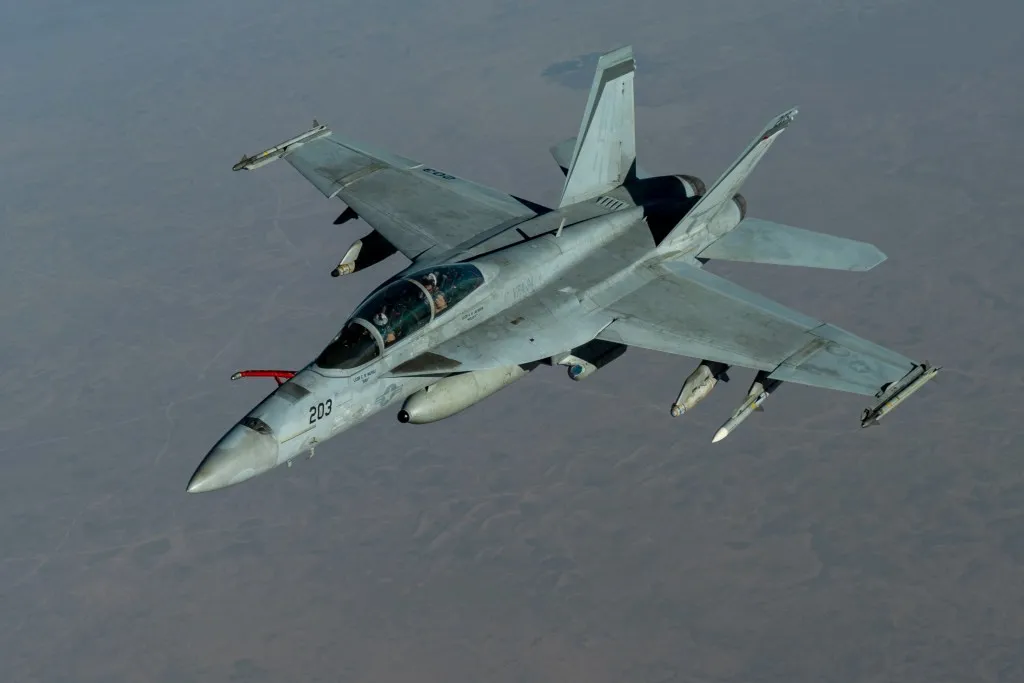
A U.S. Navy F/A-18F Super Hornet deployed aboard the aircraft carrier USS Nimitz in 2020. (U.S. Air Force photo by Staff Sgt. James Merriman) An MH-60R Seahawk helicopter. (USN)
The retrieval effort was conducted by Commander, Task Force 73 (CTF 73); Task Force 75; the Naval Sea Systems Command’s Supervisor of Salvage and Diving (SUPSALV); and CTG 73.6’s Mobile Diving and Salvage Unit, according to the Navy’s release. Task Force 73 is responsible for logistics activities within the 7th Fleet’s area of responsibility, while Task Force 75 oversees diving and salvage units and other expeditionary capabilities.
In addition, the Navy says it employed a “contracted Vessel of Opportunity, equipped with a government-owned, contractor-operated unmanned system, to lift and recover the aircraft.” The 7th Fleet release did not name that ship, and we have reached out for additional details. Contracted vessels have assisted in the recovery of U.S. military aircraft in the past, including in the South China Sea.
On Nov. 20, the Navy had told TWZ that the USNS Salvor (T-ARS 52), a Safeguard class salvage ship operated by Military Sealift Command, was “on-scene conducting operations in support of the recovery efforts.” It is unclear at the moment what role that ship might ultimately have played in retrieving the lost aircraft. It was seen docked in Singapore on Dec. 7, according to the MarineTraffic ship tracking website.
(U.S. Coast Guard photo by Air Station Barbers Point Public Affairs/Released)
“This recovery was a true Navy team effort across CTF 73, SUPSALV, Task Force 75, HSM 73 [Helicopter Maritime Strike Squadron 73], VFA 22 [Strike Fighter Squadron 22], and our Mobile Diving and Salvage Unit,” Navy Lt. Cmdr. Christopher Andersen, the CTF 73 officer who led the salvage mission, said in a statement. “Everyone involved brought critical expertise ensuring we could safely and successfully bring these aircraft back under U.S. custody. This operation highlights the importance of naval integration, readiness, and the unmatched capability of our salvage and diving teams.”
As we have previously noted, the tense and contested nature of the South China Sea and its proximity to China would have put additional emphasis on ensuring the aircraft, or components from them, were not recovered by the Chinese. Like the United States, China has foreign materiel exploitation, or FME, programs aimed at recovering weaponry for intelligence analysis and developmental purposes. Both crashed Navy aircraft have a number of sensitive components that would be of particular interest to a major global competitor like China. You can read more about that here.
The aircraft from Nimitz that went down in the South China Sea were recovered a day after the Navy released results of investigations into the separate losses of three F/A-18s from the aircraft carrier USS Truman. Those incidents included one in which a Super Hornet was shot down by the Ticonderoga class guided missile cruiser USS Gettysburg. Unlike the case of the Nimitz aircraft, those jets were never recovered, a Navy official previously confirmed to us.
The cause of the crashes of the Nimitz aircraft in October remains unknown. President Donald Trump previously suggested that the mishaps could have been caused by “bad fuel,” and you can read more about potential fuel issues in our initial coverage here. Navy officials have also previously confirmed to us that they believe there are no “nefarious” circumstances behind the crashes.
With the F/A-18F and MH-60R now recovered, the investigations into their crashes are continuing, the Navy said on Tuesday.
The Ukrainian president says Kyiv could drop its long-held ambition of joining NATO in exchange for Western security guarantees.
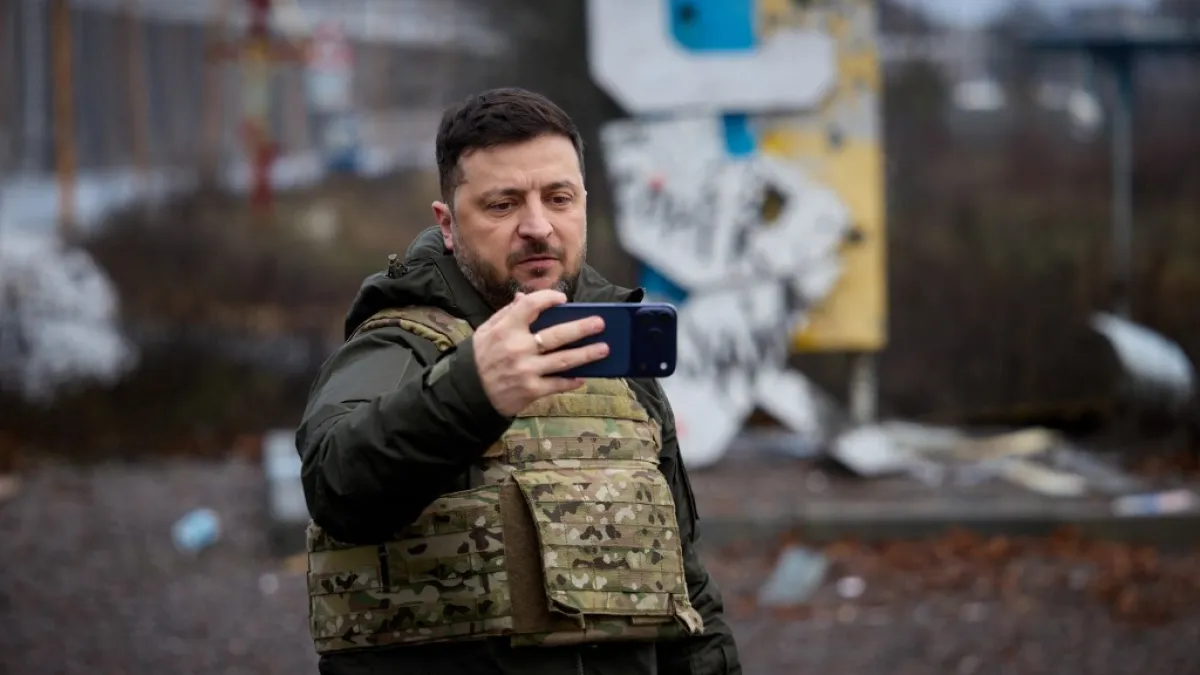
Ukraine has indicated it is prepared to drop its long-held ambition of joining NATO in exchange for Western security guarantees, President Volodymyr Zelenskyy has said ahead of meetings with US envoys and European allies in Berlin.
Zelenskyy described the proposal on Sunday as a concession by Kyiv, after years of pressing for NATO membership as the strongest deterrent against future Russian attacks. He said the United States, European partners and other allies could instead provide legally binding security guarantees.
Recommended Stories
list of 3 itemsend of list
“From the very beginning, Ukraine’s desire was to join NATO; these are real security guarantees. Some partners from the US and Europe did not support this direction,” Zelenskyy said in response to questions from reporters in a WhatsApp chat.
“Thus, today, bilateral security guarantees between Ukraine and the US, Article 5-like guarantees for us from the US, and security guarantees from European colleagues, as well as other countries – Canada, Japan – are an opportunity to prevent another Russian invasion,” he said.
“And it is already a compromise from our part,” Zelenskyy added, stressing that such guarantees must be legally binding.
The shift would mark a significant change for Ukraine, which has long sought NATO membership despite Moscow viewing the alliance’s expansion as a threat.
While the move aligns with one of Russia’s stated war objectives, Kyiv has continued to reject demands to cede territory.
Zelenskyy said he was seeking a “dignified” peace and firm assurances that Russia would not launch another attack, as diplomats gathered to discuss what could become Europe’s deadliest conflict since World War II. He also accused Moscow of prolonging the war through sustained attacks on Ukrainian cities and critical infrastructure.
Pressure to reach a settlement
The talks come amid pressure from US President Donald Trump to reach a settlement. Trump’s envoy Steve Witkoff and his son-in-law Jared Kushner on Sunday arrived in the German capital city of Berlin for discussions involving Ukrainian and European representatives.
The decision to send Witkoff, who has previously led negotiations with both Kyiv and Moscow, suggested Washington saw scope for progress.
Zelenskyy said Ukraine, Europe and the US were reviewing a 20-point plan that could culminate in a ceasefire, though he reiterated that Kyiv was not holding direct talks with Russia. He said a truce along current front lines could be considered fair, while noting that Russia continues to demand a Ukrainian withdrawal from parts of Donetsk and Luhansk still under Kyiv’s control.
Despite diplomatic efforts, Russian attacks have continued, leaving thousands without electricity in recent strikes. Ukrainian officials say Moscow is deliberately targeting the power grid to deprive civilians of heat and water during winter.
Fighting has also intensified in the Black Sea. Russian forces recently struck Ukrainian ports, damaging Turkish-owned vessels, including a ship carrying food supplies. An attack on Odesa set grain silos ablaze, according to Deputy Prime Minister Oleksii Kuleba. Zelenskyy said the strikes “had no … military purpose whatsoever”.
Turkish President Recep Tayyip Erdogan warned against further escalation, saying the Black Sea should not become an “area of confrontation”.
“Everyone needs safe navigation in the Black Sea,” Erdogan said, calling for a “limited ceasefire” covering ports and energy facilities. Turkiye controls the Bosphorus Strait, a vital route for Ukrainian grain and Russian oil exports.
The seventh Moscow Interior and Design Week has emerged as a major draw for entrepreneurs from the Middle East, underscoring shifting international interest in Russia’s design and creative industries.
Organizers and exhibitors said that while previous editions of the event were dominated by visitors from China and European countries, this year saw a notable increase in business delegations from the United Arab Emirates and Saudi Arabia. Attendees from the region praised the exhibition’s organization and the creative approach to showcasing design concepts.
“We had long heard that Moscow is becoming a global center for interior design, but the fact that this event is now in its seventh year convinced us to come as part of a large business mission,” said Mona Negm, chief executive officer of Masahat Interior & Architectural Design. Demand from clients for distinctive, one-of-a-kind interiors is growing, she said, adding that Moscow-based manufacturers demonstrated an ability to compete with leading international studios. Negm described the exhibition as “the most beautiful in the world.”
In addition to business visitors, the event also attracted a growing number of tourists from the Middle East, according to participants. Visitors frequently noted the distinctive aesthetic approach of Moscow designers, particularly in decorative elements.
Exhibitors said guests from the UAE showed strong interest in living room furniture, ceramics and floor lamps—items they view as versatile for both residential and office interiors. As a result, unique design pieces are finding buyers not only among professional procurement specialists but also individual tourists.
“In previous years, foreign visitors to our stand were mostly tourists from China and Western Europe,” said Semen Ivanov, founder of Burg&Glass. “This time, we were surprised by the strong interest from visitors from the Middle East. Many said they came to see Moscow ahead of the New Year holidays and decided to visit the city’s main furniture and décor exhibition as a priority.” Several visitors, he added, described the event as the most beautiful design week they had attended.
The seventh Moscow Interior and Design Week is being held from Dec. 11 to Dec. 14 in the Russian capital. Alongside the main exhibition, the event features an extensive business program with expert-led sessions. Speakers include Reem Bin Karam, chief executive officer of the UAE’s Irthi Contemporary Crafts Council, who is scheduled to speak on Dec. 13 about how professional designers combine styles, forms, textures and patterns to create cohesive interiors.












![Various of groups of pro-democracy activists including Jimmy Lai , center, arrives at a court in Hong Kong, Tuesday, Sept. 15, 2020. Prominent activists Jimmy Lai and Joshua Wong were among more than two dozen activists appearing in court after being charged of participating in unlawful assembly. They were charged for joining a vigil last June 4 to commemorate the anniversary of the 1989 Tiananmen crackdown. While the event has been held every year, authorities did not grant permission for the gathering this year citing concerns over the spread of coronavirus. [AP Photo/Kin Cheung]](https://i0.wp.com/occasionaldigest.com/wp-content/uploads/2025/12/AP20259260530041-1732140237.jpg?w=640&ssl=1)