News

South Korea ruling party leader calls for second special probe

Jeong Cheong-rae, leader of the Democratic Party, speaks during the party’s fourth Central Committee meeting at the National Assembly in Seoul on Dec. 15. Photo by Asia Today

Dec. 15 (Asia Today) — Democratic Party leader Jeong Cheong-rae, whose party holds the presidency, on Monday called for a second, wide-ranging special investigation into an alleged insurrection case, raising questions about Supreme Court Chief Justice Cho Hee-dae after courts rejected arrest warrants for several figures tied to the probe.

Jeong made the remarks at a party Supreme Council meeting at the National Assembly in Seoul, as the mandate of a special prosecutor was set to end. He said the special prosecutor made progress byre-arresting former President Yoon Suk-yeol and referring 24 people to trial, but argued the investigation was constrained by court decisions, including warrant denials.

Jeong said the rejection of warrants for figures such as Choo Kyung-ho was “difficult to accept,” and claimed it fueled suspicions that the judiciary was blocking steps that could lead to broader legal consequences for the People Power Party. He also said the circumstances raised questions about whether Chief Justice Cho may have been involved, citing a meeting on Dec. 3, the day martial law was declared.

Jeong said the Democratic Party would work with the government and presidential office to push for what he called a “second comprehensive special investigation,” and urged a tougher approach without leniency. He said a follow-up probe should also examine allegations involving first lady Kim Keon-hee and issues the current special prosecutor did not fully resolve.

He additionally questioned court case assignment procedures, citing media reports that the treason-related trial was assigned through unusual in-person discussions rather than random distribution. He said the party would pursue legislation to create a specialized court for sedition-related cases.

Jeong also criticized the People Power Party’s use of filibusters, including on bills he said were bipartisan or originally proposed by the party, and said the Democratic Party would seek revisions to parliamentary rules governing the tactic. He offered condolences to victims of a collapse at a construction site at the Gwangju Central Library and called fora thorough investigation.

– Reported by Asia Today; translated by UPI

© Asia Today. Unauthorized reproduction or redistribution prohibited.

Source link

Ukraine Claims World’s First Underwater Drone Attack On Russian Submarine

Ukraine’s state security service (SBU) said it carried out the first-ever uncrewed underwater vehicle (UUV) attack on a Russian vessel. The strike was on a Project 636 Varshavyanka class, or Improved Kilo class diesel-electric submarine, in the Black Sea naval stronghold of Novorossiysk. It would mark a historic first successful use of a UUV as an anti-ship attack weapon.

The SBU released a video it says shows the submarine docked at Novorossiysk along with several other ships. The video pans from right to left and at about the 16-second mark, the submarine erupts in an explosion. That means the UUV, which is not visible in the video, was able to navigate a packed harbor to strike a specific vessel. While we cannot independently verify the SBU claim about the use of a UUV in the strike, they did confirm that assertion to us directly.

Russia, meanwhile, denies any damage was caused by the attack.

The information disseminated by special services of Ukraine about the alleged ‘destruction’ of one of the Russian submarines in the bay of the Black Sea Fleet’s Novorossiysk naval base does not correspond to reality,” the Russian Defense Ministry (MoD) claimed on Telegram. “Not a single ship or submarine as well as the crews of the Black Sea Fleet stationed in the bay of the Novorossiysk naval base were damaged as a result of the sabotage. The watercraft serve normally.”

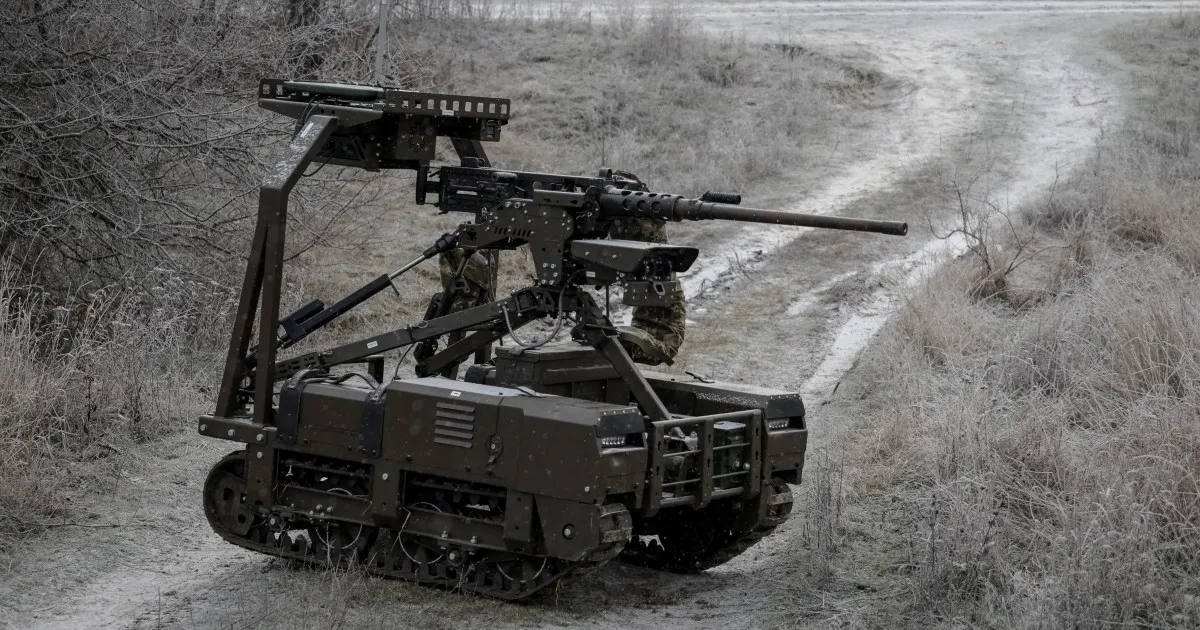
Today’s UUV attack appears to be the culmination of Ukraine’s development of these weapons and once again shows that the war-torn country is at the forefront of modern drone warfare innovation. Little is known about the Sub Sea Baby UUV, not to be confused with the highly adaptable Sea Baby uncrewed surface vessels (USVs) that have wreaked havoc on the Russian Navy.

Ukraine is developing several UUVs, at least that we know of. It released images in September 2023 of a UUV dubbed Marichka, designed to launch kamikaze attacks against ships and maritime infrastructure. That followed the announcement earlier that year of another UUV known as Toloka, which you can see in the following video.

Автономний підводний дрон TOLOKA


Being able to operate underwater not only helps greatly in avoiding detection and destruction, but it can also potentially mitigate some defensive barriers Russia has already built around ports as a result of Ukraine’s uncrewed surface vessel (USV) campaign. This onslaught has already kept Russia’s Black Sea Fleet (BSF) at bay, forcing it to retreat from Crimea to Novorossiysk. Ukrainian USVs have also damaged enemy military facilities in occupied Crimea and the Kerch Bridge, You can see one Ukrainian USV being destroyed below.

Russian Defense Ministry announced that Ukraine attempted to attack the Ivan Khurs signals intelligence ship of the Russian Navy with 3 unmanned surface vessels (USVs) in the Black Sea this morning.

Moscow released footage allegedly showing the destruction of one of the USVs. pic.twitter.com/YfS7xWSGWw

— Status-6 (Military & Conflict News) (@Archer83Able) May 24, 2023

The U.S., China and many other nations are developing their own UUVs for missions like the one that struck the Improved Kilo class submarines. UUVs can provide the ability to strike vessels and other targets at long distances and can be launched from submarines and motherships, extending their range. They can also be used for reconnaissance and mine laying, among other duties. You can read more about these vessels in our catalogue of stories here.

In the case of the Improved Kilo class boat, “the vessel suffered critical damage and was effectively put out of action,” the SBU claimed. “On board the submarine were four launchers for ‘Kalibr’ cruise missiles, which the enemy uses to strike at the territory of Ukraine.”

ISTANBUL, TURKEY - FEBRUARY 13: The Russian Navy’s Kilo-class submarine Rostov-na-Donu B-237 transits the Bosphorus Strait en route to the Black Sea on February 13, 2022 in Istanbul, Turkey. Russia has been reinforcing its Black Sea Fleet over the past week as a Russian military invasion of Ukraine being reported as imminent. With the arrival of the Rostov-na-Donu, the Russian Black Sea Fleet will have four improved Kilo-class submarines equipped with Kalibr land-attack missiles deployed in the Black Sea. (Photo by Burak Kara/Getty Images)
The Russian Navy Improved Kilo class submarine Rostov-on-Don transited the Bosphorus Strait en route to the Black Sea on February 13, 2022 in Istanbul, Turkey (Photo by Burak Kara/Getty Images) BURAK KARA

The submarine damaged by the Sea Baby UUVs is one of six Improved Kilo class boats that were operated by the Russian Black Sea Fleet, a retired Russian Navy officer who uses the @Capt_Navy X handle told The War Zone.

These submarines are quite capable and can be very hard to detect when dived and running on battery power. These submarines carry Kalibr long-range cruise missiles that have frequently been used to attack Ukraine.

The Sub Sea Baby UUV attack “was a joint operation of the 13th Main Directorate of Military Counterintelligence of the SBU and the Naval Forces of Ukraine,” SBU explained, adding that the estimated cost of one of the Russian submarines is about $400 million.

Ukraine says it struck a Russian submarine with an uncrewed underwater vehicle (UUV) in Novorossyisk, Russia. (Google Earth)

This incident also marks the second time an Improved Kilo class submarine in Crimea was attacked by Ukraine. In September 2023, the Rostov-on-Don was severely damaged during a combined missile and uncrewed surface vessel (USV) attack on Sevastopol. Ukraine later claimed it was destroyed. You can see the damage to that submarine below.

One of two photos of the damage to the Improved Kilo class submarine apparently first published by the Conflict Intelligence Team. CIT via X A picture showing damage to a Kilo class submarine following a Ukrainian cruise missile strike on Sevastopol in September 2023. CIT via X

If today’s attack did damage the submarine significantly, Russia would be left with four examples operating as part of the Black Sea Fleet.

While much about the Sub Sea Baby UUVs remains a mystery, a proven ability to use them as weapons holds Russian vessels at even greater risk. Novorossiysk was seen as something as a relative safe haven for the Black Sea Fleet, although aerial and sea drone attacks have occurred there. But the idea that Ukraine can use underwater drones to strike ships in port there changes this calculus, if that is indeed the true method of the attack. As a result, we will also be seeing a change in Russia’s defensive posture at the sprawling port located on the northeastern edge of the Black Sea.

At the same time, if this attack was executed by a UUV, it would be another world first and is likely a harbinger of things to come. Hitting ships in port over great distances via underwater drone attack is an asymmetric capability. It’s also one that America’s adversaries are investing in heavily, and especially China.

With all this in mind, the attack on the submarine serves as another reminder that the war in Ukraine has become a conflict where theory and development are put into practice.

Contact the author: howard@thewarzone.com

Howard is a Senior Staff Writer for The War Zone, and a former Senior Managing Editor for Military Times. Prior to this, he covered military affairs for the Tampa Bay Times as a Senior Writer. Howard’s work has appeared in various publications including Yahoo News, RealClearDefense, and Air Force Times.


Source link

Russia-Ukraine war: List of key events, day 1,391 | Russia-Ukraine war News

These are the key developments from day 1,391 of Russia’s war on Ukraine.

Here is where things stand on Tuesday, December 16:

Fighting

  • A Russian drone attack killed a 62-year-old Ukrainian man as he was riding a bicycle in the Velyka Pysarivka community of Ukraine’s Sumy region, Governor Oleh Hryhorov said in a post on the Telegram messaging app.
  • Russian forces launched 850 attacks on Ukraine’s Zaporizhia region in a single day, injuring 14 people and damaging houses, cars and infrastructure, Governor Ivan Fedorov said on Telegram.
  • Russian forces injured five people in attacks on Ukraine’s Dnipropetrovsk region, and six people in the Kherson region in the past day, local officials said, according to the Ukrainian news agency Ukrinform.
  • In Dnipropetrovsk, those injured included a firefighter and factory worker, hurt after Russian forces launched a second attack on a factory in the Synelnykivskyi district, as rescuers tried to respond to a fire caused by an earlier Russian attack, the State Emergency Service of Ukraine reported on its website.
  • Russian attacks caused power outages in Ukraine’s capital, Kyiv, as well as the Donetsk and Dnipropetrovsk regions, the Ukrainian energy company NPC Ukrenergo said on Facebook.
  • Ukraine claimed that underwater drones had, for the first time in the war, struck a Russian submarine docked in the Black Sea port of Novorossiysk.
  • The head of Russia’s Black Sea Fleet press service, Aleksei Rulyov, denied that the underwater drone attack was successful. “Not a single ship or submarine of the Black Sea Fleet located at the base in Novorossiysk Bay was damaged,” he said. “The enemy’s attempt at sabotage through underwater drones failed to achieve its aims.”

Ceasefire talks

  • US President Donald Trump said a deal to end Russia’s war in Ukraine was “closer than ever” after American, Ukrainian, European and NATO leaders met in Berlin for hours of talks on a potential settlement, hosted by German Chancellor Friedrich Merz.
  • European leaders issued a joint statement after the talks, saying that any decisions on potential Ukrainian territorial concessions to Russia can only be made by the people of Ukraine, and once robust security guarantees are in place for Kyiv.
  • They also said that US and European leaders had agreed to “work together to provide robust security guarantees”, including a European-led “multinational force” made up of nations willing to assist “in securing Ukraine’s skies, and in supporting safer seas, including through operating inside Ukraine”.
  • Speaking at a news conference after the talks, Merz said that the US had offered “considerable” security guarantees, and that although there is now a “chance for a real peace process”, “territorial settlement remains a key question”.

Regional security

  • Russian Minister of Foreign Affairs Sergey Lavrov called “the EU’s aggressive actions the main threat in the world at the moment”, and claimed that the US is trying to put Europe “in its place”, in an interview with Iranian state television.
  • Germany’s lower house of parliament, the Bundestag, suffered a major email outage. Officials told UK newspaper The Financial Times that they suspect it was a cyberattack, while the Ukraine ceasefire talks were taking place in Berlin.
  • Air Chief Marshal Sir Richard Knighton, the new head of the UK’s armed forces, has called for “national resilience” in the face of a “growing” risk from Russia. “It means more people being ready to fight for their country,” Knighton said of the threat from Moscow, while also referring to recent comments from his French counterpart, Fabien Mandon, who said France must be ready to “lose its children”.

Source link

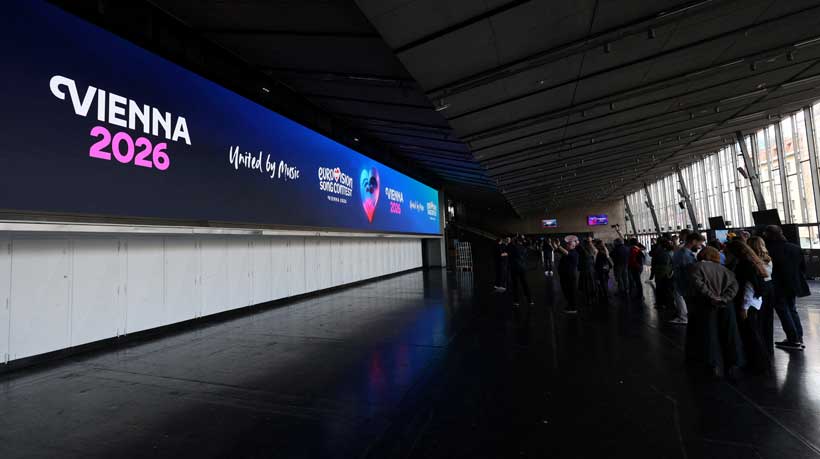
Eurovision 2026: Identity, Norms, and Digital Activism in Europe’s Cultural Diplomacy

The Eurovision likes to sell itself as a glittering exercise in European unity, colorful, loud, proudly diverse, and (officially) above politics. Yet anyone who has watched the contest with both eyes open knows that “apolitical” has always been more of a brand promise than a lived reality. In late 2025, that gap widened into a full-blown crisis, as a number of broadcasters reported across outlets that Spain, Ireland, Slovenia, the Netherlands, and Iceland signaled they would not take part in Eurovision 2026 after the European Broadcasting Union (EBU) decided not to exclude Israel amid the ongoing war in Gaza, Palestine.

This episode is not simply “politics invading culture.” It reflects a shift in how legitimacy is demanded and contested in Europe’s cultural diplomacy, particularly when public broadcasters operate under constant online scrutiny. A constructivist lens helps explain why withdrawal can become socially “appropriate” not only because of interests, but because identities, norms, and public expectations set the boundaries of acceptable action.

Eurovision’s political DNA

Eurovision was launched in 1956 as a post-war cultural bridge. Its origin story is important: a shared stage was meant to build familiarity, and familiarity was meant to soften rivalry. That heritage still shapes the contest’s self-image. But Eurovision has long functioned as a stage where politics appears in coded ways through voting patterns, representation debates, and symbolic messaging.

In 2026, the argument is no longer coded. The EBU’s insistence that Eurovision must remain apolitical is being tested by publics who increasingly expect cultural institutions to reflect basic humanitarian values. This tension has been building for years, but the Palestine crisis and the EBU’s decisions have turned it into a legitimacy problem, not merely a public relations headache.

Why withdrawal became “appropriate”

Constructivism in international relations focuses on how identities and norms shape behavior. States and national institutions do not act only from material interests; they also act from what is socially acceptable, what fits their self-image, and the expectations of their audiences.

Three dynamics stand out.

Identity signalling, domestically and externally

For several withdrawing countries, participation carried an identity cost. Public broadcasters—especially those that see themselves as guardians of civic values—operate within national narratives about solidarity, rights, and moral responsibility. Remaining in the contest while public debate framed Israel’s participation as incompatible with humanitarian concerns risked looking like complicity or indifference. Withdrawal, by contrast, functioned as a signal: this is who we are, and this is the line we will not cross.

Importantly, this signalling was not addressed only to external audiences. It was also addressed inward towards domestic publics, artists, and civil society networks. In many European societies, those constituencies are no longer passive consumers of cultural events; they are active participants in the reputational economy surrounding public institutions.

Norm cascades and moral momentum

Once a few broadcasters moved towards withdrawal, the decision quickly gained social momentum. This is what Finnemore and Sikkink described as a “norm cascade”: when a norm shifts from being optional to being expected, and the reputational cost of non-compliance rises. In practical terms, it can start to feel safer to leave than to stay—because staying invites condemnation, while leaving can be framed as moral coherence.

This is also why the dispute escalated so quickly. A single broadcaster withdrawing is a story. Multiple broadcasters withdrawing is a pattern, and patterns trigger moral comparisons. The question changes from “Why did they leave?” to “Why are you still staying?”

The ‘apolitical’ norm is under strain because it looks selective.

The apolitical claim does not collapse simply because people become more emotional. It collapses when it appears inconsistent. Critics repeatedly pointed to Russia’s exclusion in 2022 after the invasion of Ukraine and asked why a different standard was being applied now. The EBU, for its part, has emphasized the contest’s non-political ethos and introduced new rules aimed at insulating Eurovision from government influence.

But in the public sphere, the argument is not purely procedural. It is moral and comparative: if Eurovision can act decisively in one case, why not in another?

Constructivism predicts that institutions struggle when the norms they rely on no longer align with the moral intuitions of their audiences. That is exactly what this crisis reveals.

Digital activism as a legitimacy engine

If this controversy had happened twenty years ago, it would likely have moved more slowly, mediated by newspapers and official statements. Today it unfolds in a real-time digital public sphere where narratives travel quickly across borders and reputational costs escalate fast. Online mobilization—through petitions, artist statements, and hashtag campaigns—helped turn Eurovision into a symbolic battleground, pressuring broadcasters to respond to highly visible moral claims.

Two effects matter most. First, digital dynamics accelerate moral consolidation, which means once “selective neutrality” becomes a dominant frame, hesitation itself is read as a political stance. Second, institutions face continuous visibility. Decisions are no longer a single event but an ongoing justification process, renewed by viral moments and high-profile protest actions linked to Israel’s inclusion.

For cultural diplomacy, this shifts the logic of soft power from image-making towards moral credibility under public scrutiny.

Withdrawal as cultural diplomacy

Withdrawal from Eurovision is, in a strict sense, symbolic. But symbolism is precisely what cultural diplomacy trades in. The act of leaving, particularly when done by public broadcasters, served three strategic functions.

First, moral signalling, which meansbroadcasters and states communicated alignment with humanitarian values and a refusal to normalize perceived injustice.

The second one is reputation management.  In a digital environment, silence can be more costly than action. Withdrawal can reduce domestic backlash and preserve trust in public institutions.

Last, this is ethical positioning as soft power.  The logic of soft power is shifting from colorful branding to ethical coherence. A state may gain credibility not by appearing “fun,” but by appearing consistent with its professed values.

These functions help explain why the controversy is bigger than Eurovision. What is being tested is the idea that cultural platforms can remain insulated from global crises. Many audiences no longer accept that separation.

The EBU’s dilemma: rules, legitimacy, and consistency

The EBU now sits at the center of competing demands. On one side is the institutional need for predictability: rules that keep Eurovision from becoming an arena for state-to-state confrontation. On the other side is the public demand for moral consistency: rules that do not appear selective or politically convenient.

The EBU’s recent approach of avoiding an immediate exclusion decision while adjusting rules—may be defensible from a governance perspective.

Yet governance solutions do not automatically restore legitimacy, because legitimacy is also emotional and relational. It depends on whether audiences believe the institution is acting in good faith and applying standards fairly.

This is where cultural diplomacy meets a hard truth: neutrality is not simply declared; it is earned. And in the digital age, it is re-earned continuously.

What this means for Europe’s cultural diplomacy

Three implications stand out.

First, moral expectation is becoming structural.  European publics increasingly demand moral coherence not only from governments but from cultural institutions as well. Cultural diplomacy is being asked to carry ethical weight.

Second, “European values” are being operationalized. They are no longer abstract slogans. They are used as benchmarks to judge institutions and to accuse them of hypocrisy when they fall short.

Third, public opinion has become a strategic force, not background noise.  Digital mobilization can shape state behavior indirectly by pressuring broadcasters, artists, and institutions that sit at the heart of national identity.

Policy takeaways

If the EBU seeks to protect Eurovision’s legitimacy without turning it into a geopolitical tribunal, three steps would help. First, it should clarify participation principles by defining what “neutrality” means operationally and what thresholds trigger institutional action. Second, it should build a credible consistency mechanism, as audiences will continue comparing cases and demanding transparent reasoning. Third, the EBU should treat the digital sphere as part of governance: proactive engagement and rapid clarification now shape institutional survival as much as formal rule-making.

Conclusion

Eurovision 2026 is not simply a cultural controversy with political noise attached. It is a case study in how identity, norms, and digital activism are reshaping Europe’s cultural diplomacy. Constructivism helps explain why withdrawal became not only possible but, for some, necessary: it aligned state-linked institutions with the moral expectations of their publics.

Eurovision was built to bridge Europe after war. Ironically, its newest crisis shows that unity today is conditional: audiences increasingly expect cultural institutions to be transparent, consistent, and ethically credible, especially when global suffering is impossible to ignore.

Source link

Trial begins for Milwaukee judge accused of obstructing ICE agents

Dec. 15 (UPI) — The trial for Milwaukee County Circuit Court Judge Hannah Dugan began Monday, with prosecutors playing audio of the judge saying she’ll “get the heat” by showing an undocumented defendant how to leave her courtroom to avoid immigration officials.

Dugan pleaded not guilty earlier this year to federal charges including one count of obstructing and official proceeding and concealing a person from arrest and another of concealing an individual to prevent his discovery and arrest.

The case stems from an incident on April 18, when Immigration and Customs Enforcement officials came to her courtroom and notified her they planned to arrest undocumented immigrant Eduardo Flores-Ruiz. They said she sent the agents to the chief judge’s office before going back to her courtroom, pushing Flores-Ruiz’s case to the front of her docket, then helped him and his lawyer leave from a private jury door.

The ICE agents ultimately found and arrested Flores-Ruiz.

During Monday’s trial, Assistant U.S. Attorney Keith Alexander played audio from the day appearing to depict Dugan speaking with the court reporter, Joan Butz, who offers to show Flores-Ruiz the private door. Dugan says, “I’ll do it. I’ll get the heat.”

Alexander said Dugan’s actions were tantamount to formulating an escape plan for Flores-Ruiz, according to the Milwaukee Journal Sentinel.

“The judicial robe the defendant wore that morning did not put her above the law,” Alexander said in his opening statements.

Dugan’s lawyer, former U.S. Attorney Steven Biskupic, said the private jury door Dugan showed Flores-Ruiz wasn’t hidden and was less than 12 feet away from the public doors of the courtroom. He said she didn’t seek to thwart ICE agents.

“Not even as far as your jury box,” he said. “There was a federal agent to the left and to the right.”

Biskupic said that instead of arresting Flores-Ruiz, the federal agents chose to follow him outside and arrest him after a foot chase, NBC News reported.

“Now, after the fact, everyone wants to blame Judge Dugan,” he said.

Source link

Israel to demolish 25 homes in occupied West Bank’s Nur Shams camp | Occupied West Bank News

Rights groups say the demolition order, which will affect 100 Palestinian homes, is an attempt to ‘cage in’ Palestinians.

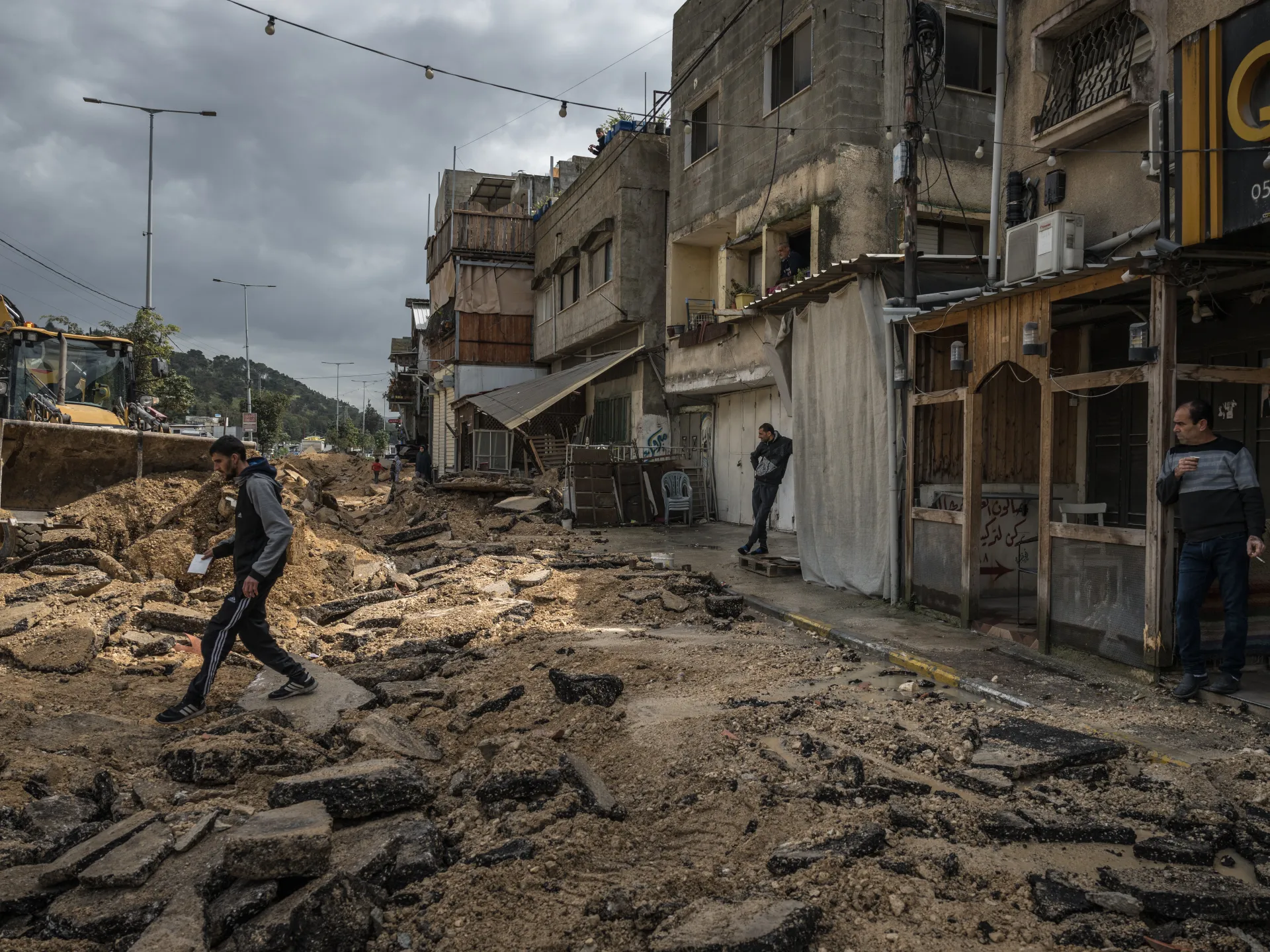
The Israeli military will demolish 25 residential buildings in the occupied West Bank’s Nur Shams refugee camp this week, according to local authorities.

Abdallah Kamil, the governor of the Tulkarem governorate where Nur Shams is located, told the AFP news agency on Monday that he was informed of the planned demolition by the Israeli Defence Ministry body COGAT.

Recommended Stories

list of 4 itemsend of list

Faisal Salama, the head of the popular committee for the Tulkarem camp, which is near Nur Shams, said the demolition order would affect 100 family homes.

Israel launched Operation Iron Wall in the occupied West Bank in January. It says the campaign is aimed at combating armed groups in refugee camps in the northern West Bank.

Human rights organisations have warned that Israel is using many similar tactics it used in its genocidal war against the Palestinian people in Gaza to seize and control territory across the occupied West Bank.

“This is part of a wider campaign that has persisted for about a year, targeting three refugee camps and demolishing or damaging a total of about 1,500 homes in the past year, and forcibly displacing 32,000 Palestinians,” said Al Jazeera’s Nour Odeh, reporting from the West Bank’s Ramallah.

Palestinians and human rights organisations say such demolitions are an attempt to “cage in” Palestinians and alter the geography in the West Bank, she added.

On Monday, a dozen displaced Nur Shams residents held a demonstration in front of armoured Israeli military vehicles blocking their way back to the camp. They protested against the demolition orders and demanded the right to return to their homes.

The head of the Palestinian National Council, Rouhi Fattouh, said that the Israeli decision is part of “ethnic cleansing and continuous forced displacement”, the Palestinian news agency Wafa reported.

‘Social death’

Omer Bartov, a professor of holocaust and genocide studies at Brown University, told Al Jazeera that Israel was “dehumanising” the Palestinian population in the occupied West Bank.

“[It is creating] a growing situation of social death, which is a term that was used to describe what happened to Jewish populations in Germany in the 1930s. That is, that your population, the Jewish population of Israel, increasingly has no contact with the people on the other side, and it exists as if they don’t exist,” he said.

“It dehumanises the population because you treat it as a population that has to be controlled, and it dehumanises the people doing it because they have to think of that population as being lesser than human.”

Aisha Dama, a camp resident whose four-floor family home, housing about 30 people, is among those to be demolished, told the AFP she felt alone against the military.

“On the day it happened, no one checked on us or asked about us,” she said.

“All my brothers’ houses are to be destroyed, all of them, and my brothers are already on the streets,” said Siham Hamayed, another camp resident.

Nur Shams, along with other refugee camps in the West Bank, was established after the 1948 Nakba, when hundreds of thousands of Palestinians were forcibly displaced from their homes in what is now Israel.

With time, the camps they established inside the West Bank became dense neighbourhoods. Residents pass on their refugee status from one generation to the next.

Source link

Trump says deal to end Ukraine war ‘closer than ever’ after Berlin talks | Russia-Ukraine war News

US President Donald Trump has said that an agreement to end Russia’s war on Ukraine is “closer than ever” after key leaders held talks in Berlin, but several officials said that significant differences remain over territorial issues.

Trump told reporters in the Oval Office on Monday that he had “very long and very good talks” with Ukrainian President Volodymyr Zelenskyy and the leaders of France, Germany, the United Kingdom and NATO.

Recommended Stories

list of 4 itemsend of list

“We’re having tremendous support from European leaders. They want to get it [the war] ended also,” he said.

“We had numerous conversations with President [Vladimir] Putin of Russia, and I think we’re closer now than we have been, ever, and we’ll see what we can do.”

Zelenskyy had earlier said that negotiations with US and European leaders were difficult but productive.

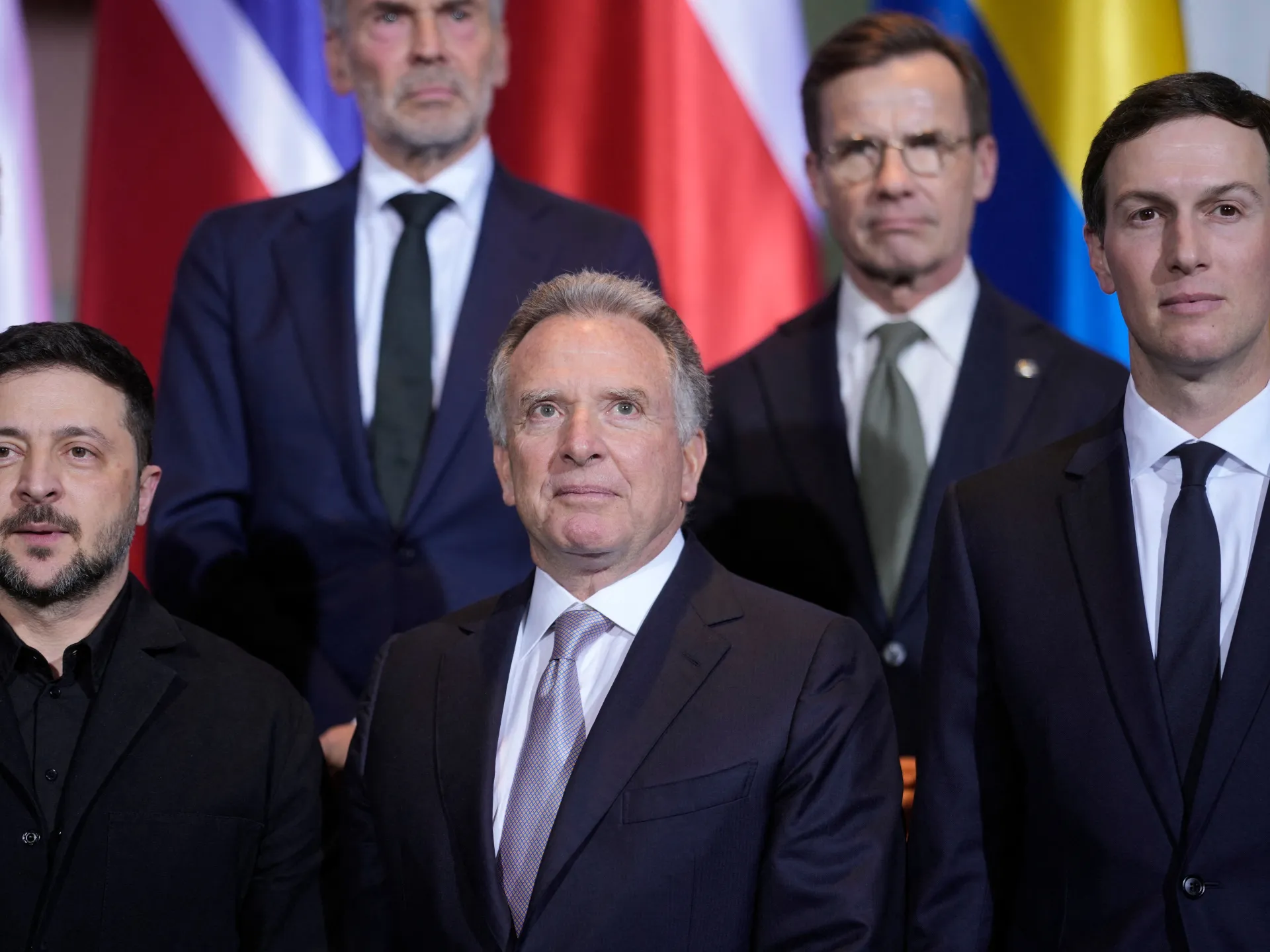
The high-level discussions, involving Zelenskyy, a US delegation led by envoy Steve Witkoff, Trump’s son-in-law, Jared Kushner, and European leaders, took place in Berlin over two days amid mounting pressure from Washington for Kyiv to make concessions to Moscow to end one of Europe’s deadliest conflicts since World War II.

In a statement following the talks, European leaders said they and the US were committed to working together to provide “robust security guarantees” to Ukraine, including a European-led “multinational force Ukraine” supported by the US.

They said the force’s work would include “operating inside Ukraine” as well as assisting in rebuilding Ukraine’s forces, securing its skies and supporting safer seas. They said that Ukrainian forces should remain at a peacetime level of 800,000.

Two US officials, speaking to the Reuters news agency, described the proposed protections as “Article 5-like”, a reference to NATO’s Article 5 mutual defence pledge.

Ukraine had earlier signalled it may be willing to abandon its ambition to join the NATO military alliance in exchange for firm Western security guarantees.

Speaking to reporters in Berlin, Zelenskyy said that Kyiv needed a clear understanding of the security guarantees on offer before making any decisions on territorial control under a potential peace settlement. He added that any guarantees must include effective ceasefire monitoring.

Ukrainian officials have been cautious about what form such guarantees could take. Ukraine received security assurances backed by the US and Europe after gaining independence in 1991, but those did not prevent Russia’s invasions in 2014 and 2022.

German Chancellor Friedrich Merz said Washington had offered “considerable” security guarantees during the Berlin talks.

“What the US has placed on the table here in Berlin, in terms of legal and material guarantees, is really considerable,” Merz said at a joint news conference with Zelenskyy.

“We now have the chance for a real peace process,” he said, adding that territorial arrangements remain a central issue. “Only Ukraine can decide about territorial concessions. No ifs or buts.”

Merz also said it was essential for the European Union to reach an agreement on using frozen Russian assets to support Ukraine to demonstrate to Moscow that continuing the war is futile. He warned that EU members must share the risks involved in appropriating those assets, or risk damaging the bloc’s reputation.

Meanwhile, the EU has adopted new sanctions targeting companies and individuals accused of helping Russia circumvent Western restrictions on oil exports that help finance the war.

In Moscow, Kremlin spokesperson Dmitry Peskov said that Putin was “open to peace and serious decisions” but opposed to what he described as “temporary respites and subterfuges”.

Reporting from Berlin, Al Jazeera’s Dominic Kane said the outcome of the talks remains unclear.

“We know American emissaries were speaking to Ukrainians here in Berlin yesterday and today. Talks between those two groups have finished, according to a statement by Zelenskyy’s office,” Kane said.

“What we don’t yet know is how much of the US-led 28-point plan – parts of which were acceptable to Moscow but strongly opposed by Kyiv and EU officials – remains intact.”

Kane added that the German government has presented a separate 10-point proposal focused on military and intelligence cooperation rather than a peace settlement. European leaders are expected to continue discussions on the remaining areas of disagreement.

Fighting continues

Meanwhile, Ukraine said on Monday that Russia launched 153 drones overnight, with 17 striking their targets.

Russia’s Ministry of Defence said its forces destroyed 130 Ukrainian drones over Russian territory.

Kyiv said its underwater drones struck a Russian submarine docked at the Black Sea port of Novorossiysk. Ukraine has stepped up naval attacks in recent weeks on what it has described as Russia-linked vessels in the Black Sea.

Russian forces have continued to target the Ukrainian port city of Odesa, with two Turkish cargo ships hit in recent days. Kyiv said the strikes were aimed at Russian targets.

Zelenskyy also accused Moscow of using its attacks as leverage in peace negotiations.

He said Russia has struck every power station in Ukraine as part of its campaign against the country’s energy infrastructure.

Source link

How will US respond to the killing of three of its soldiers in Syria? | Syria’s War

Washington has blamed ISIL (ISIS) for the attack and promised retaliation.

Three US soldiers have been killed in an attack in Syria’s central city of Palmyra.

It is the first known deadly attack on US forces since former Syrian President Bashar al-Assad was deposed last year. Washington has accused the ISIL (ISIS) group of carrying out the assault.

The government in Damascus has expanded its ties with Washington and joined a coalition to fight the ISIL group.

But how much of a security challenge is ISIL in Syria?

Will the US now reinforce its military presence? What risks could that pose?

Presenter: Dareen Abughaida

Guests:

Colin Clarke – executive director of The Soufan Center

Dareen Khalifa – senior adviser at the International Crisis Group

Orwa Ajjoub – PhD candidate in global politics, focusing on armed groups in Syria

Source link

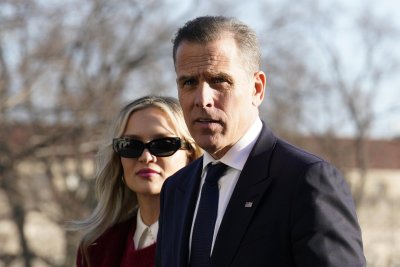
Hunter Biden disbarred in Connecticut after losing license in D.C.

Dec. 15 (UPI) — A judge in Connecticut on Monday ordered the disbarment of Hunter Biden after his convictions on federal gun and tax charges and then pardoned by his father, Joe Biden, as president.

In Waterbury, Judge Trial Referee Patrick Carroll III suspended him from practicing law in the state after finding he violated the rules of professional conduct for attorneys.

In April, Biden voluntarily surrendered his license to practice law in Washington, D.C.

The judge found he violated several ethical rules for lawyers, including engaging in conduct for “dishonesty, fraud, deceit or misrepresentation. Carroll also cited the Washington disbarment in his decision.

During the virtual hearing, Biden, 55, didn’t contest the decision and didn’t speak. He appeared with his lawyer, Ross Garber.

Biden graduated from Yale Law School and passed the bar one year later in 1997. But Biden apparently hadn’t practiced law in recent years with no cases in state or civil court.

A reciprocal discipline was imposed in the District of Columbia, where Biden lives and consented to disbarment. There were two other grievances filed by private individuals after Biden’s federal convictions on tax and gun charges last year.

Paul Dorsey, a private attorney who filed a grievance, objected to the proposed resolution because Biden does not admit to the criminal acts.

“It was very frustrating, very odd, and frankly, I don’t think the court should accept the proposed disposition as it is written because it doesn’t comply with the Practice Book. He has to admit to it, and he’s not doing that,” Dorsey said.

The proposed disposition does not include the admission of a crime because of Biden’s pardon by his father on Dec. 1, Leanne M. Larson, first assistant chief disciplinary counsel, said.

In Delaware federal court, he was found guilty of purchasing a gun in 2018 while allegedly lying on a federal form about not illegally using or being addicted to drugs. He was scheduled to be sentenced before the pardon, facing up to 25 years in prison. As a first-time offender, he could have stayed out of prison.

Biden also faced charges in California for not paying at least $1.4 million in federal taxes. He agreed to plead guilty to misdemeanor and felony charges hours before jury selection was scheduled to begin in September 2024.

After the pardon, U.S. District Judge Maryellen Noreika closed the gun case, though she didn’t toss out the conviction.

The federal pardon covered the gun and tax offenses and any “offenses against the United States which he has committed or may have committed or taken part in during the period from January 1, 2014, through December 1, 2024.”

“Today, I signed a pardon for my son Hunter,” Biden said in a statement. “From the day I took office, I said I would not interfere with the Justice Department’s decision-making, and I kept my word even as I have watched my son being selectively, and unfairly, prosecuted.”

Biden said it was clear that his son was “treated differently” than other people who have faced similar circumstances, and that Hunter Biden was “singled out because he is my son.”

The younger Biden said in a statement that he has taken accountability and responsibility for his mistakes “during the darkest days of my addiction.”

“I will never take the clemency I have been given today for granted and will devote the life I have rebuilt to helping those who are still sick and suffering,” he said.

Source link

Epstein’s UK flights had alleged British abuse victims on board, BBC finds

Chi Chi Izundu,

Olivia Daviesand

Will Dahlgreen,BBC News Investigations

US Department of Justice/PA Jeffrey Epstein, a man with grey hair wearing a bright blue polo shirt and an orange anorak, smiling broadly as he stands in front of his private plane - a black jet with chrome detailing on the wings and around the engines, with five porthole-style windows visible on the right-hand side.US Department of Justice/PA

Epstein took dozens more flights to the UK than were previously known

Almost 90 flights linked to Jeffrey Epstein arrived at and departed from UK airports, some with British women on board who say they were abused by the billionaire, a BBC investigation has found.

We have established that three British women who were allegedly trafficked appear in Epstein’s records of flights in and out of the UK and other documents related to the convicted sex offender.

US lawyers representing hundreds of Epstein victims told the BBC it was “shocking” that there has never been a “full-scale UK investigation” into his activities on the other side of the Atlantic.

The UK was one of the “centrepieces” of Epstein’s operations, one said.

Testimony from one of these British victims helped convict Epstein’s accomplice Ghislaine Maxwell of child sex-trafficking in the US in 2021. But the victim has never been contacted by UK police, her Florida-based lawyer Brad Edwards told the BBC.

The woman, given the name Kate in the trial, was listed as having been on more than 10 flights paid for by Epstein in and out of the UK between 1999 and 2006.

The BBC is not publishing further details about the women in the documents because of the risk this might identify them.

US lawyer Sigrid McCawley said the British authorities have “not taken a closer look at those flights, at where he was at, who he was seeing at those moments, and who was with him on those planes, and conducted a full investigation”.

US Attorney's Office SDNY Epstein, a man with grey hair and glasses perched on his head, sitting on a bench outside a log cabin on the Balmoral estate, wearing a pale sweatshirt. His left arm is around Maxwell's shoulder, who rests her hand on his knee. Maxwell has short brown hair and wears and blue checked shirt.US Attorney’s Office SDNY

More information has emerged about Epstein, pictured here with Maxwell, and his UK links

Under the Jeffrey Epstein Transparency Act, the deadline to release all US government files on the sex-offender financier is Friday.

But the flight logs were among thousands of documents from court cases and Epstein’s estate which have been already made public over the past year, revealing more about his time in the UK, such as trips to royal residences.

The BBC examined these documents as part of an investigation trying to piece together Epstein’s activities in the UK.

It revealed that:

  • The incomplete flight logs and manifests record 87 flights linked to Epstein – dozens more than were previously known – arriving or departing from UK airports between the early 1990s and 2018
  • Unidentified “females” were listed among the passengers travelling into and out of the UK in the logs
  • Fifteen of the UK flights took place after Epstein’s 2008 conviction for soliciting sex from a minor, which should have raised questions from immigration officials

Although Epstein died in jail in 2019, before his trial on charges of trafficking minors for sex, legal experts have told the BBC a UK investigation could reveal whether British-based people enabled his crimes.

Two months ago the BBC sent the Metropolitan Police, which has previously examined allegations about Epstein’s activities in Britain, publicly available information about the UK flights with suspected trafficking victims on board.

Later, we sent the Met a detailed list of questions about whether it would investigate evidence of possible British victims of Epstein trafficked in and out of the UK.

The Met did not respond to our questions. On Saturday, it released a broader statement saying that it had “not received any additional evidence that would support reopening the investigation” into Epstein and Maxwell’s trafficking activities in the UK.

“Should new and relevant information be brought to our attention”, including any resulting from the release of material in the US, “we will assess it”, the Met said.

Sigrid McCawley, a woman with wavey blond hair and wearing a black dress, pictured in close-up in an office, looking to the left of the camera, with the background out of focus.

Sigrid McCawley, who represents hundreds of Epstein victims, criticised the Met for declining to investigate

US lawyer Brad Edwards, who has been representing Epstein victims since 2008, told us “three or four” of his clients are British women “who were abused on British soil both by Jeffrey Epstein and others”.

Other victims were recruited in the UK, trafficked to the United States and abused there, he said.

Mr Edwards said he is also representing women of other nationalities who say they were trafficked to the UK for abuse by Epstein and others.

Our analysis shows Epstein used commercial and chartered flights, as well as his private planes, to travel to the UK and to arrange transport for others, including alleged trafficking victims.

More than 50 of the flights involved his private jets, mostly flying to and from Luton Airport, with several flights at Birmingham International Airport, and one arrival and departure each at RAF Marham in west Norfolk and at Edinburgh Airport.

Limited records of commercial and chartered flights taken by Epstein, or paid for by him, show dozens more journeys, mainly via London Heathrow, but also Stansted and Gatwick.

In a number of the logs of Epstein’s private planes, including some detailing trips to the UK, women on the flight are identified only as unnamed “females”.

A graphic showing entries in a page of the Epstein flight logs with airport codes in one column, the flight number in another and a column with notes which includes details of the passengers in most cases and the word "reposition" in two cases. The names of the people on board have been redacted, except for the initials JE and GM - Jeffrey Epstein and Ghislaine Maxwell - on all of the flights with passengers named. One note is highlighted, with the text spelling out that the cramped handwriting says simply "1 FEMALE".

“He’s absolutely choosing airports where he feels it will be easier for him to get in and out with victims that he’s trafficking,” said Ms McCawley.

Private aircraft did not have to provide passenger details to UK authorities before departure in the same way as commercial aircraft during the period covered by the documents we examined. The Home Office told us they were “not subject to the same centralised record-keeping”.

That loophole was only closed in April last year.

Kate, the British woman who testified against Maxwell, was on some of the commercial flights in the records we examined. She described in court that she had been 17 when Maxwell befriended her and introduced her to Epstein – who then sexually abused her at Maxwell’s central London home.

In the 2021 trial, she described how Maxwell gave her a schoolgirl outfit to wear and asked her to find other girls for Epstein. As well as the dozen flights to and from the UK, Kate told the court she had been flown to Epstein’s island in the US Virgin Islands, New York and Palm Beach in Florida, where she says the abuse continued into her 30s.

Reuters A court sketch of Kate testifying in Ghislaine Maxwell's trial. Kate is shown as wearing a black shirt and having fair hair but her face is blurred in the sketch to protect her identity. She stands in the witness box with a judge wearing a black Covid-era face mask to the left of her. In front of her is the stenographer and one of the attorneys, a woman with a long brown ponytail. Ghislaine Maxwell is pictured in the foreground, frowning under her own black face mask, and looking away from the witness.Reuters

Kate, pictured on the right with her face blurred, testified at Maxwell’s trial

Mr Edwards, her lawyer, told BBC News that even after that testimony, Kate has “never been asked” by any UK authorities any questions about her experience – “not even a phone call”.

He said that if British police were to launch an investigation into Epstein’s activities and his enablers, Kate would be happy to help.

Prof Bridgette Carr, a human-trafficking expert at the University of Michigan Law School, said trafficking cases usually require many people working together.

“It’s never just one bad person,” she said. “You don’t think about the accountant and the lawyer and the banker – or all the bankers – and all these people that had to implicitly, and sometimes explicitly, be OK with what was happening for it to continue.”

There are also questions about how Epstein was able to travel freely to the UK after his 2008 conviction for soliciting a minor for sex, which meant he had to register as a sex offender in Florida, New York and the US Virgin Islands.

Epstein was released from prison in 2009 after serving 13 months. Documents suggest Epstein took a Virgin Atlantic flight from the US to London Heathrow in September 2010, just two months after he completed his probation on house arrest.

A graph showing the number of Epstein-related flights to the UK by year, starting at one flight a year in the early 1990s and sometimes rising, sometimes falling until it reaches a peak of 17 flights in 2006. There is a gap then until after his release from prison in 2009, when there are 15 flights scattered among the years up until 2018.

Home Office rules at the time said foreign nationals who received a prison sentence of 12 months or more should, in most cases, have been refused entry.

But immigration lawyer Miglena Ilieva, managing partner at ILEX Law Group, told us that US citizens did not usually require a UK visa for short stays, so there was no application process where they would be asked about criminal convictions.

“It was very much at the discretion of the individual immigration officer who would receive this person at the border,” she said.

The Home Office said it does not hold immigration and visa records beyond 10 years and added “it is longstanding government policy that we do not routinely comment on individual cases”.

During the 1980s, Epstein also used a foreign passport – issued in Austria with his picture and a false name – to enter the UK as well as France, Spain and Saudi Arabia, according to US authorities.

Epstein also listed London as his place of residence in 1985, when he applied for a replacement passport, ABC News has previously reported.

Brad Edwards, a man with short brown hair and a determined look on his face, pictured in a close-up portrait with the background blurred. He wears a navy suit, a pale blue shirt and a blue and grey tie.

Brad Edwards says his British client Kate has never been contacted by UK police

In its statement on Saturday, the Met said it had contacted “several other potential victims” when it examined 2015 allegations by Virginia Giuffre that she had been trafficked for sexual exploitation by Epstein and Maxwell.

Ms Giuffre also said she was forced to have sex with Andrew Mountbatten-Windsor on three occasions, including when she was 17 at Maxwell’s home in London, in 2001. The former prince has consistently denied the allegations against him.

The Met said its examination of Ms Giuffre’s claims “did not result in any allegation of criminal conduct against any UK-based nationals” and it concluded that “other international authorities were best placed to progress these allegations”.

That decision was reviewed in August 2019 and again in 2021 and 2022 with the same result, it said.

But for lawyer Sigrid McCawley, the message the Met is sending to victims is “that if you come to law enforcement and this is a powerful person you’re reporting on… it will not get investigated.”

Source link

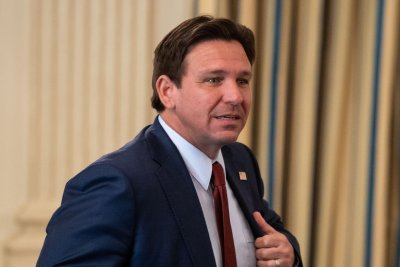
Gov. DeSantis: Florida to have AI regulations despite Trump order

Dec. 15 (UPI) — Florida Gov. Ron DeSantis on Monday said President Donald Trump’s executive order last week seeking national rules on artificial intelligence doesn’t prevent states from imposing laws on the use of the technology.

Speaking at an AI event at Florida Atlantic University, DeSantis said Florida will move forward on AI policies he has dubbed a “Citizen Bill of Rights for Artificial Intelligence.”

“The president issued an executive order. Some people were saying, ‘well, no, this blocks the states,'” DeSantis said, according to The Hill. “It doesn’t.”

Trump signed an executive order Thursday seeking to give the United States a “global AI dominance through a minimally burdensome national policy framework.”

“To win, United States AI companies must be free to innovate without cumbersome regulation,” the order says. “But excessive state regulation thwarts this imperative.”

Politico reported the Trump administration has said it’s prepared to file lawsuits and without funding to states that interfere with federal AI plans.

DeSantis said, though, that an executive order can’t block states.

“You can preempt states under Article 1 powers through congressional legislation on certain issues, but you can’t do it through executive order,” he said.

“But if you read it, they actually say a lot of the stuff we’re talking about are things that they’re encouraging states to do. So even reading very broadly, I think the stuff we’re doing is going to be very consistent. But irrespective, clearly we have the right to do this.”

Source link

Schools Closed As Militia Violence Deepens in DR Congo

For over a month, schools in Vikindwe, a locality 10 kilometres from Musienene in North Kivu, Democratic Republic of the Congo, have been closed due to the activities of the Wazalendo militia group. The primary schools in Vikindwe and Vuketi, along with the Viseya Institute, have been particularly affected by this educational disruption.

According to Kakule Syanghuswa Arsen, the headmaster of Vikindwe Primary School, events began to escalate in February this year when members of the Wazalendo militia assaulted a student from the school. This incident created tension between the militia and the local community. Following this, there were death threats directed at specific individuals in the area, as well as sporadic gunfire during school hours, severely disrupting the teaching and learning process.

Since October, the situation has become so tense that some students have experienced convulsions. The headmaster has now urged the authorities in the education sector to intervene with the provincial governor, hoping to have the Wazalendo militia removed from Vikindwe to restore normalcy.

In a related development, the resumption of classes in Njiapanda, as requested by the sub-provincial education committee, has been relatively cautious. This tentative return to classes comes three weeks after classes were suspended at the request of civil society organisations in Manguredjipa.

On  Monday, Dec. 15, only a few students were present in several schools in the area. In Kambau, Mbunia Kisenge, the headmaster of a secondary school, reported that no students were attending school. He attributed this situation to the concerns and fears of parents regarding the security situation within the Bapakombe tribal group, which has been marked by repeated attacks on the population by fighters from the Union of Patriots for the Liberation of Congo (UPLC).

In Njiapanda, some schools located in the centre of town have cautiously resumed operations. However, schools on the outskirts have reported a high rate of student absences, even though several teachers are present in the classrooms. Only the final year students are attending school.

Militia members associated with the Wazalendo are frequently accused of various abuses against civilians in Musienene and Baszagha. The main complaints from the people include looting, rape, arbitrary arrests, illegal tax collection, and the establishment of unauthorised roadblocks.

On Nov. 12, a young student was killed by gunshots during clashes between two factions of the Wazalendo militia at the Musimba market. Although these groups are considered allies of the Congolese army in its fight against Rwandan aggression, particularly in the conflict with the M23/AFC rebels, they are frequently accused of serious human rights abuses. Because they operate without proper oversight and often follow distinct commands, they frequently evade the attention of local authorities.

Schools in Vikindwe, DRC, have been closed for over a month due to disruptions caused by the Wazalendo militia group. Incidents began escalating in February when a student was assaulted, leading to tensions, death threats, and disruptions from gunfire.

The headmaster of Vikindwe Primary School has called for intervention to remove the militia and restore normalcy.

Classes are cautiously resuming in nearby Njiapanda, despite the suspension requested by civil society groups. Attendance remains low due to security fears associated with the Bapakombe tribal group. Additionally, Wazalendo members are accused of human rights abuses such as looting and illegal activities.

These groups, though allies of the Congolese army against external aggression, often evade local authority oversight due to fragmented command structures.

Source link

India Can’t Give Up Its Jaguar Strike Aircraft

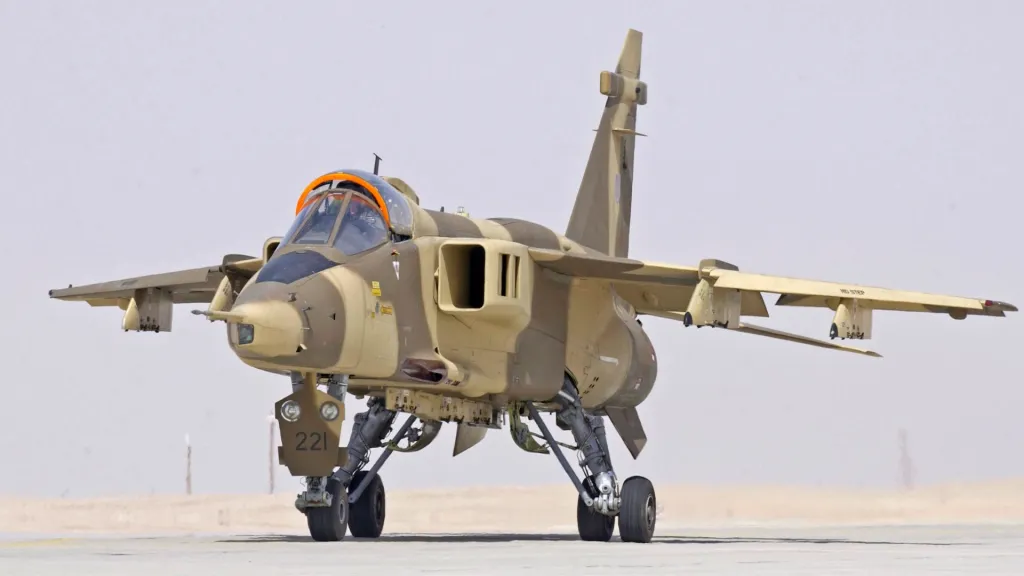
India, now the sole operator of the Anglo-French SEPECAT Jaguar strike aircraft, is to acquire surplus examples of the Cold War-era jets from Oman, which retired the type in 2014. The decision reflects the continued value of the Jaguar to the Indian Air Force (IAF) but also points to the service’s shrinking fighter force and delays in acquiring new equipment.

A Royal Air Force of Oman Jaguar, taxies towards the runway at Thumrait, Oman. The aircraft was taking part in Exercise Magic Carpet 2005. The exercise was an opportunity for RN, RAF, Omani, French Air Force, USAF and USN squadrons to deploy and practice heavy-weapon bomb drops, utilising the extensive ranges and relatively clear airspace available over Oman. There were a variety of aircraft which took part, including our own Sea Harriers, GR7s and SKASaC, USN F18 and S3 Viking, USAF F16, French Mirage 2000 and RAF Tornado F3, Jaguar, VC10 air to air refuelling and E3D AWACS. In total around 60 aircraft were in theatre, allowing for realistic exercising of coalition forces. The participation of HMS Invincible with her Tailored Air Group (TAG) gave an excellent opportunity to prove the Strike Carrier concept within a controlled exercise environment and gain some useful general warfare training. It was a good opportunity for the ship's company to progress training in an exercise environment.
Now retired, a Royal Air Force of Oman Jaguar taxies toward the runway at Thumrait, Oman, during Exercise Magic Carpet 2005. Crown Copyright

Multiple reports indicate that India and Oman have come to a deal that will put an undisclosed number of former Omani Jaguars into Indian hands. Starting in 1977, the Royal Air Force of Oman (RAFO) received a total of 27 British-made Jaguars, comprising 20 single-seaters, five two-seaters, and two ex-U.K. Royal Air Force aircraft used as attrition replacements. At least 13 of these were involved in various accidents, which would leave a maximum of ‘intact’ airframes 14 for India. Potentially, some further components could also be harvested from Omani aircraft that were written off while in service.

An air-to-air right side view of a Sepecat Jaguar aircraft approaching a Soviet I1-38 May maritime patrol aircraft.
A Royal Air Force of Oman Jaguar intercepts a Soviet Navy Il-38 May maritime patrol aircraft in 1987. Public Domain

As for the IAF, the service selected the Jaguar for its Deep Penetration Strike Aircraft (DPSA) in 1978 and received 18 aircraft from U.K. Royal Air Force stocks as ‘interim’ equipment, 40 ‘flyaway’ aircraft direct from British Aerospace (BAe), plus around 128 more that were license-built in India under a transfer-of-technology agreement with Hindustan Aeronautics Limited (HAL).

The ex-Omani jets won’t be inducted into IAF service but will be broken down into spare parts to support the aging but still in-demand Indian Jaguar inventory. TWZ contributor and IAF historian Angad Singh told us that the jets will be dismantled in Oman and then shipped to India for ease of transport.

The IAF’s demand for increasingly hard-to-find Jaguar spares saw India turn to France in 2018–19. France, which retired its last Jaguars in 2005, shipped 31 complete airframes plus various spare parts to India, with New Delhi paying only for the cost of transport.

A Tennessee Air National Guard KC-135 Stratotanker refuels a French SEPECAT Jaguar. Both aircraft were operating out of Aviano Air Base, Italy, supporting NATO missions in the Balkans during the 1990s. U.S. Air Force

These airframes and spares are being used to support the IAF’s current six Jaguar squadrons, each of which has between 18 and 20 aircraft on strength. However, the fleet is being slowly eroded by attrition, with three Jaguar losses this year alone.

The last new Jaguar to be built in India came off the HAL production line in 2008; British and French production had long since ceased by this date. Since then, obtaining spare parts and components, including new or refurbished engines, has become much more complex. Already, India is reportedly having to cannibalize some aircraft to keep the others in the air.

Further evidence of the importance of the Jaguar to the IAF’s plans comes from the continued efforts to upgrade the jets, the oldest of which are now around 45 years old.

INDIAN OCEAN (March 28, 2021) – An F/A-18E Super Hornet, assigned to the “Blue Diamonds” of Strike Fighter Squadron (VFA) 146, top, flies in formation with an Indian Air Force Su-30MKI, middle, and Jaguar over the aircraft carrier USS Theodore Roosevelt (CVN 71) March 28, 2021. The Theodore Roosevelt Carrier Strike Group is on a scheduled deployment to the U.S. 7th Fleet area of operations. As the U.S. Navy’s largest forward-deployed fleet, 7th Fleet routinely operates and interacts with 35 maritime nations while conducting missions to preserve and protect a free and open Indo-Pacific Region. (U.S. Navy photo by Mass Communication Specialist 3rd Class Carlos W. Hopper)
A U.S. Navy F/A-18E, top, flies in formation with an Indian Air Force Su-30MKI Flanker, middle, and Jaguar over the aircraft carrier USS Theodore Roosevelt (CVN 71) in the Indian Ocean in March 2021. U.S. Navy photo by Mass Communication Specialist 3rd Class Carlos W. Hopper

At the center of this effort is the Display Attack Ranging and Inertial Navigation (DARIN) modernization program for the Indian Jaguars, which first began in the 1980s and which has since progressed through three rounds of upgrades.

The first of these, DARIN I, kept the Jaguar’s original ‘chisel’ nose profile but added a new Sagem navigation/attack system, a combined map and electronic display, and a head-up display and weapon-aiming computer. A new Mil Std 1553B databus was added, making it easier to integrate new weapons and sensors. This would pay dividends during the 1999 Kargil War with Pakistan, during which Jaguars employed laser-guided bombs.

Full Dress Rehearsal of IAF Fire Power demonstration Exercise 'Iron Fist 2013' at Pokharan, Jaisalmer, Rajasthan on February 19, 2013.
Indian Air Force Jaguars prepare for the Iron Fist firepower demonstration at Pokharan, Jaisalmer, Rajasthan, in February 2013. The two-seater leads four single-seaters with the original ‘chisel’ nose configuration. Indian Ministry of Defense

Starting in the early 2000s, DARIN II changed the nose profile, with a new Thales laser targeting and designation system fitted. Other new additions included an Israeli-made Elbit head-up display, an inertial navigation/GPS system, and a multifunction display in the cockpit. Self-protection was enhanced with an Israeli-made Elta EL/L-8222 jammer, locally made Tarang radar warning receivers, and new countermeasures dispensers. New weapons included the ASRAAM air-to-air missile and the Textron CBU-105 Sensor Fuzed Weapon.

In a category of their own are India’s Jaguars tasked with maritime strike. These were originally fitted with a radar nose accommodating an Agave radar, used in conjunction with Sea Eagle anti-ship missiles. Under DARIN II, these items were replaced with the Elta EL/M-2032 and the AGM-84 Harpoon Block II, respectively.

An Indian Air Force Jaguar IM tasked with maritime strike. This upgraded aircraft is armed with an AGM-84 Harpoon Block II anti-ship missile. IAF

The most significant of the upgrades is DARIN III, begun in 2008, which includes a new active electronically scanned array (AESA) radar, the Israeli-made Elta EL/M-2052. The Jaguar became the first Indian combat jet to feature an AESA, and you can read more about the upgrade here.

The DARIN III program, led by HAL and informed by the Tejas Light Combat Aircraft program, saw the first flight of an upgraded Jaguar in 2012, but thereafter it suffered significant delays. Issues included integration of the locally developed open-system-architecture mission computer as well as a re-engining effort, which planned to replace the original Rolls-Royce Turbomeca Adour afterburning turbofans with Honeywell F125-INs. Replacement engines were finally canceled in 2019, after they were judged to be too expensive.

Other advanced DARIN III features include a fully ‘glass’ cockpit with three multifunction displays, an engine and flight instrument system (EFIS) digital display, and a digital head-up display. Also new is the Elbit Display and Sight Helmet (DASH), which is used to cue the ASRAAM missile. The ASRAAM, like the Magic 2 before it, is carried on the Jaguar’s unique overwing missile pylons.

Maintenance airmen from the Indian Air Force, 14 Fighter Squadron (FS) from Ambala Air Base, India, work to change a shock absorber on their Jaguar attack jet aircraft April 29, 2016, at Eielson Air Force Base, Alaska. The 14 FS is one of 23 units from around the world who participated in RED FLAG-Alaska 16-1, a Pacific Air Forces command directed field training exercise for U.S. and allied forces, to provide joint offensive counter-air, interdiction, close air support and large force employment training in a simulated combat environment. (U.S. Air Force photo by Staff Sgt. Shawn Nickel/Released
Maintainers from the Indian Air Force work to change a shock absorber on their Jaguar at Eielson Air Force Base, Alaska, during a Red Flag-Alaska exercise in April 2016. U.S. Air Force photo by Staff Sgt. Shawn Nickel/Released

The DARIN III program is planned to extend the life of at least some of the Indian Jaguars until 2050. However, the initial phase-out of the aircraft will begin before then. As Singh explained, the oldest (British-made) jets will not undergo the full upgrade, meaning that at least two of the IAF’s six Jaguar squadrons are due to disband in the near future.

Fabulous photos shared by Sanjay Simha, taken by his father, Mr TL Ramaswamy, in June 1982 — the maiden flight of the first Indian assembled Jaguar. Still in primer, piloted by HAL Chief Test Pilot Wg Cdr MW Tilak. Ferried out to Ambala on 21 Sep 1982, and still in service! pic.twitter.com/UcRxbapkPN

— Angad Singh (@zone5aviation) November 28, 2020

Even the India-made HAL jets are now getting long in the tooth, but with examples still going through the DARIN III upgrade, at least some of them will be able to see out another 10 years or more of service.

“The Jaguar is still useful as a strike aircraft, and has been kept relevant with upgrades to electronic warfare, nav-attack systems, standoff weapons, and so on,” Singh told TWZ.

The fact that New Delhi has pressed on with upgrades to the Jaguar is a testament to the rugged reliability and precision-attack capabilities of the jet, despite its age, but it also points to underlying problems in the IAF, especially in terms of the size of its combat jet fleet.

A DARIN III Jaguar recovers from a night-bombing mission during training. Angad Singh

Faced with the dual threats of Pakistan and China, the Indian government has said that the IAF needs at least 42 squadrons of combat aircraft. Currently, it has just 29, meaning the service is operating its smallest combat force since it went to war with China in 1962. The retirement of the veteran MiG-21 Fishbed has not helped matters in this regard.

Meanwhile, India’s plans to buy new off-the-shelf fighters are going nowhere fast.

After buying 36 Dassault Rafales, India announced a requirement for 114 fighters, initially specifying single-engine types. Subsequently, the competition appeared to be wide open, with the F-15EX, for example, now also being offered to India, and with the Rafale and the F/A-18E/F Super Hornet also in the running. If India decides to procure another single-engine fighter, after all, the Indian-specific F-21 configuration of the F-16 is also a viable candidate. But with no decision made, and with homegrown combat aircraft programs also proceeding slowly, the ‘squadron gap’ is only set to grow.

A DARIN II Jaguar launching with a pair of slick 1,000-pound free-fall bombs. Angad Singh

“The Indian Air Force is at 70 percent of its planned 42-squadron fighter strength — a number that was arrived at in the 1960s and will only be revised upward on any fresh assessment. Given this dire situation, the brass simply has no choice but to keep aircraft around, no matter how old,” Singh concluded.

Faced with this stark reality, it is less surprising that India is now searching far and wide for spare parts that will ensure its prozed Jaguars can see out their service life as maintaining them becomes ever more of a challenge.

Contact the author: thomas@thewarzone.com

Thomas is a defense writer and editor with over 20 years of experience covering military aerospace topics and conflicts. He’s written a number of books, edited many more, and has contributed to many of the world’s leading aviation publications. Before joining The War Zone in 2020, he was the editor of AirForces Monthly.


Source link

Trinidad and Tobago OKs U.S. military flights for logistical support

Dec. 15 (UPI) — Trinidad and Tobago announced Monday that it will open up its airport to U.S. military flights as tensions escalate between the United States and Venezuela.

The country’s foreign ministry announced it has “granted approvals” to military jets to use its airports, adding that the United States said the flights would be “logistical in nature, facilitating supply replenishment and routing personnel rotations.”

“The Ministry of Foreign and CARICOM Affairs maintains close engagement with the United States Embassy in Trinidad and Tobago,” an announcement from Trinidad and Tobago said.

“The honorable prime minister, Kamla Persad-Bissessar, has affirmed the government’s commitment to cooperation and collaboration in the pursuit of safety and security for Trinidad and Tobago and the wider region. We welcome the continued support of the United States.”

At its closest point, Trinidad is just 7 miles from Venezuela.

The country allowed the USS Graverly to dock Oct. 26 and conducted joint military drills with the U.S. 22 Marine Expeditionary Unit in October and November.

The U.S. military also installed a high-tech radar unit, AN/TPS-80 G/ATOR at the ANR Robinson International Airport in Crown Point, on Tobago, ostensibly to combat drug trafficking.

Persad-Bissessar initially denied reports of Marines being in Trinidad and Tobago. She retracted those statements last month, saying there were Marines working on the radar, runway and road.

Some on the island have expressed concern that it could be used as a launchpad for fighting with Venezuela, but Persad-Bissessar has denied that. She has voiced support of the U.S. attacks on boats in the Caribbean.

The United States has placed a large number of ships in the Caribbean, including warships, fighter jets, Marines and the USS Gerald R. Ford to show force against Venezuelan President Nicolas Maduro, a foe of President Donald Trump.

Source link

FBI Disrupts Domestic Terror Cell Planning New Year’s Eve Bombings

NEWS BRIEF The FBI has disrupted a domestic terror plot planned by the far-left, pro-Palestinian “Turtle Island Liberation Front,” which allegedly intended to bomb multiple locations in Los Angeles and Orange County beginning on New Year’s Eve. Four suspects have been charged with conspiracy and possession of an unregistered destructive device after allegedly acquiring bomb-making […]

The post FBI Disrupts Domestic Terror Cell Planning New Year’s Eve Bombings appeared first on Modern Diplomacy.

Source link

Honduras election official says ‘disturbances’ preventing vote recount | Elections News

Statement comes as regional body says no evidence of fraud in November vote that Trump-backed candidate Asfura leads.

The head of Honduras’s National Electoral Council (CNE) has decried acts preventing the ongoing recount of the Central American country’s presidential election, as a regional body said there was no reason to suspect fraud in the November 30 vote.

Ana Paola Hall’s statement on Monday came amid ongoing protests and unrest over the unresolved election. Nasry Asfura, a right-wing businessman publicly supported by US President Donald Trump, has held a razor-thin lead over his top opponent, Salvador Nasralla.

Recommended Stories

list of 3 itemsend of list

At least 99 percent of votes have already been counted, but CNE has said that nearly 2,800 ballots will need to be re-examined through a special recount.

In a post on X, Hall said disturbances seen in the country’s capital, Tegucigalpa, have “prevented the necessary conditions for the special recount to begin”.

Observers have said infighting at the CNE, which is run by three officials each representing one of the major political parties, has delayed reaching the final results.

Both Nasralla, a conservative, and outgoing left-wing President Xiomara Castro have alleged vote tampering, although several international missions have dismissed the claims.

On Monday, the Organization of American States (OAS), a regional body, said that despite a lack of expertise in overseeing the election, there was not “any evidence that would cast doubt on the results”.

The OAS mission “urgently calls on the electoral authorities to immediately begin the special recount and to explore all possible ways to obtain the official results as quickly as possible,” OAS official Eladio Loizaga said in a report he read to the group’s members.

“The current delay in processing and publishing the results is not justifiable,” he said in the report.

The OAS statement added that its mission of 101 observers from 19 countries “did not observe any malice or obvious manipulation of the electoral materials or computer systems”. The finding was in line with that of a parallel European Union mission.

The election in Honduras had been in turmoil even before polls opened, with several major parties, political figures, and foreign interference for months casting doubt on the election’s integrity.

The most prominent scandal involved an investigation by the attorney general into a member of Asfura’s National Party for allegedly discussing plans with a military officer to influence the vote.

The candidate for outgoing President Castro’s LIBRE party, Rixi Moncada, later told Reuters news agency that the alleged conspiracy proved the election was “the most rigged in history”.

Several candidates have also criticised the influence of Trump, who endorsed Asfura in the final stretch of the race and vowed to withhold US funding if his candidate did not win.

The US president also pardoned former Honduran President and National Party member Juan Orlando Hernandez, who had been convicted in the US of drug trafficking, two days before the vote.

Authorities in Honduras, a country of about 11 million, subsequently issued a fresh arrest warrant for Hernandez.

Source link

Gaza authorities struggle to recover bodies from rubble amid winter storms | Israel-Palestine conflict News

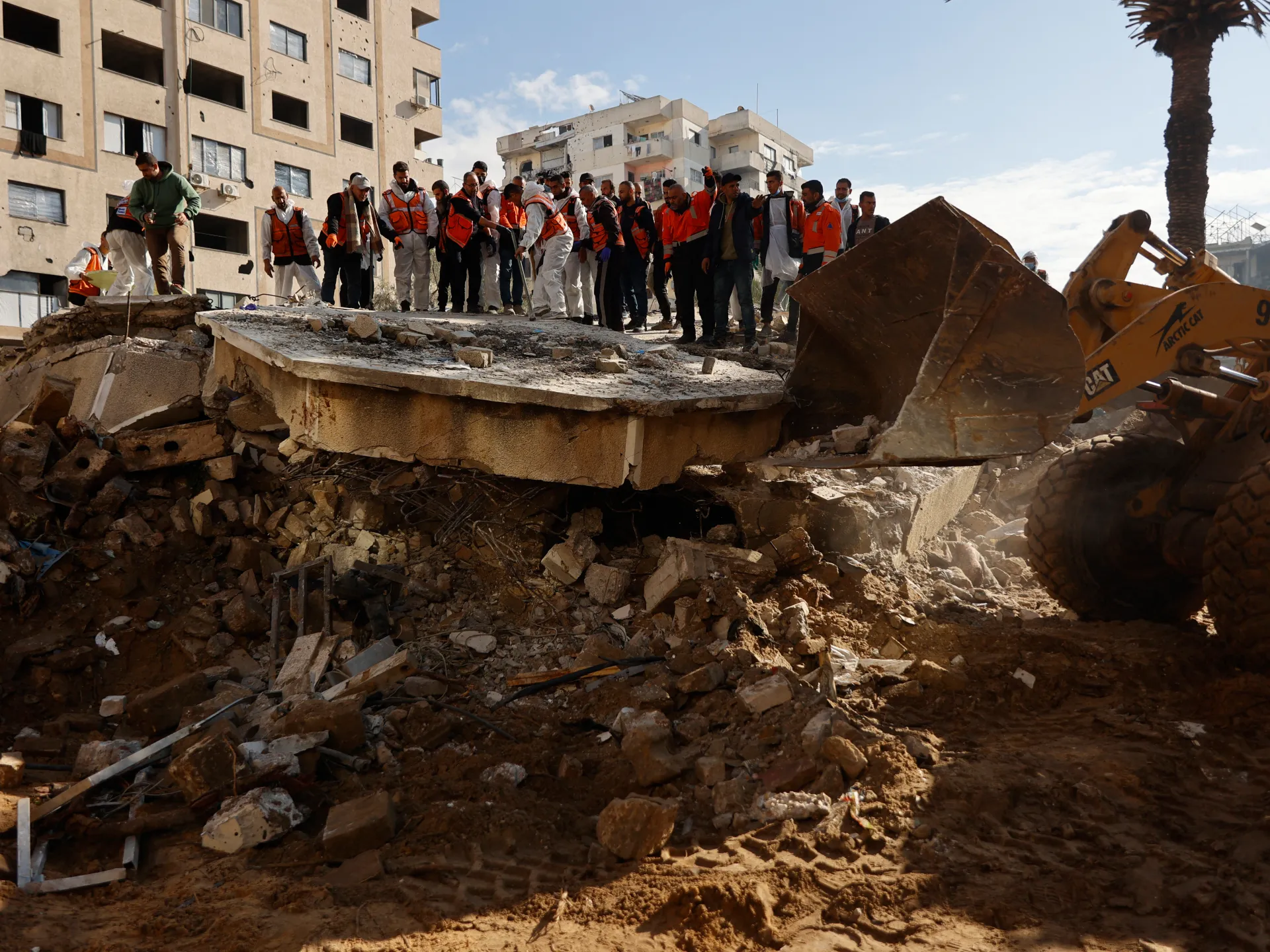
Authorities in Gaza have warned that stormy weather could spur more war-damaged buildings to collapse and heavy rains are making it more difficult to recover bodies still under the rubble.

Authorities sounded the alarm on Monday, three days after two buildings collapsed in Gaza, killing at least 12 people, during winter rains that have also washed away and flooded the tents of displaced Palestinians and led to deaths from exposure.

Recommended Stories

list of 4 itemsend of list

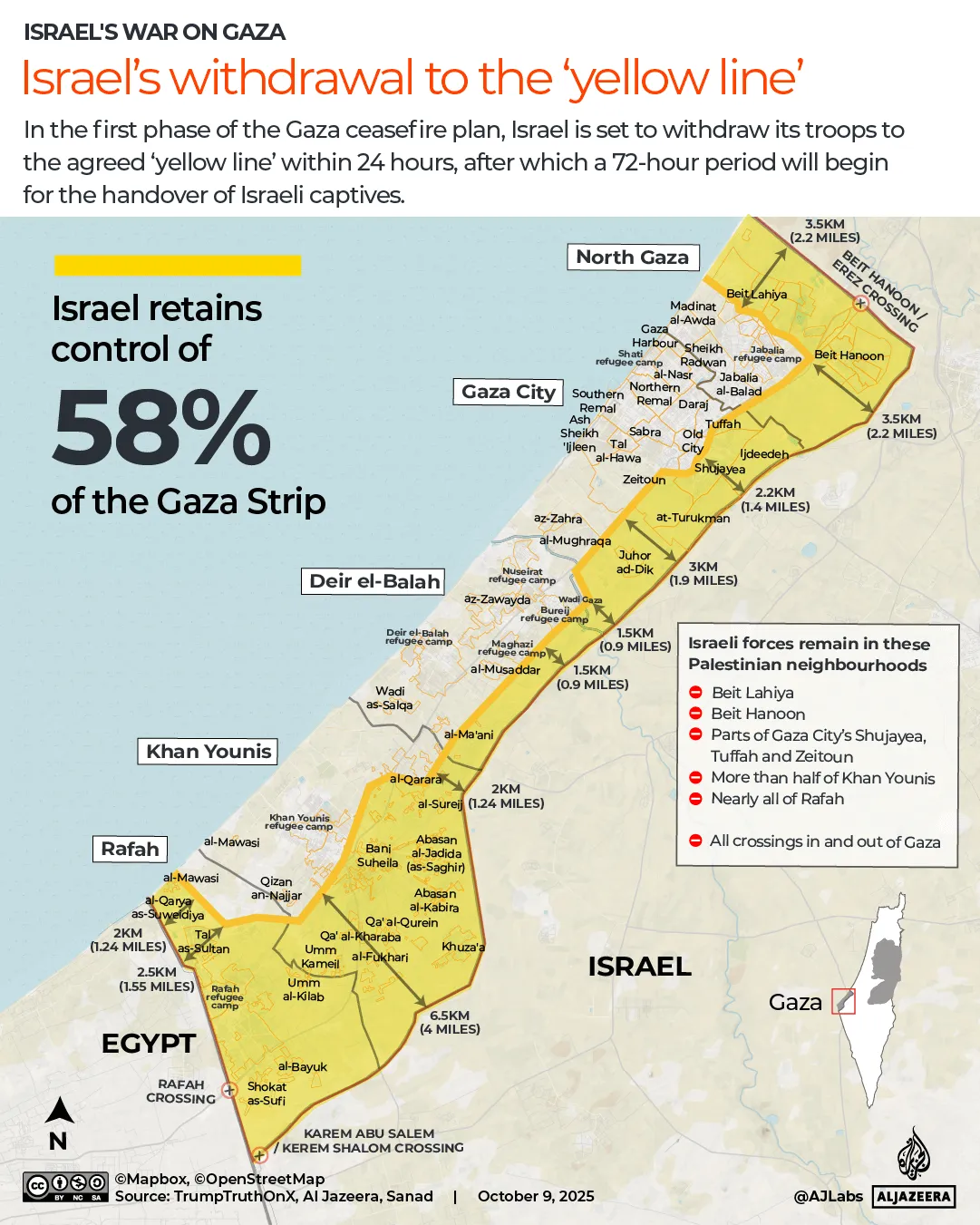
A ceasefire has been in effect since October 10 after two years of Israel’s genocidal war against the Palestinian people in Gaza, but humanitarian agencies said Israel is letting very little aid into the enclave, where nearly the entire population has been displaced.

Al Jazeera’s Tareq Abou Azzoum said despite a shortage of equipment and fuel and the weather conditions in the enclave, Palestinian Civil Defence teams retrieved the bodies of 20 people on Monday.

The bodies were recovered from a multistorey building bombed in December 2023 where about 60 people, including 30 children, were believed to be sheltering.

Gaza Civil Defence spokesman Mahmoud Basal called on the international community to provide mobile homes and caravans for displaced Palestinians rather than tents.

“If people are not protected today, we will witness more victims, more killing of people, children, women, entire families inside these buildings,” he said.

Father mourns children killed in building collapse

Mohammad Nassar and his family were living in a six-storey building that was badly damaged by Israeli strikes earlier in the war and collapsed in heavy rain on Friday.

His family had struggled to find alternative accommodation and had been flooded out while living in a tent during a previous bout of bad weather. Nassar went out to buy some necessities on Friday and returned to a scene of carnage as rescue workers struggled to pull bodies from the rubble.

“I saw my son’s hand sticking out from under the ground. It was the scene that affected me the most. My son under the ground and we are unable to get him out,” Nassar said. His son, 15, died as did a daughter, aged 18.

Exposure warning

The head of the United Nations agency for Palestinian refugees warned on Monday that more aid must be allowed into Gaza without delay to prevent putting more displaced families at serious risk.

“With heavy rain and cold brought in by Storm Byron [late last week], people in the Gaza Strip are freezing to death,” UNRWA Commissioner General Philippe Lazzarini posted on X.

“The waterlogged ruins where they are sheltering are collapsing, causing even more exposure to cold,” he added.

Lazzarini said UNRWA has supplies that have waited for months to enter Gaza that he said would cover the needs of hundreds of thousands of Gaza’s more than two million people.

UN and Palestinian officials said at least 300,000 new tents are urgently needed for the roughly 1.5 million people still displaced. Most existing shelters are worn out or made of thin plastic and cloth sheeting.

Gaza authorities, meanwhile, were still digging to recover about 9,000 bodies they estimated remain buried in rubble from Israeli bombing during the war, but the lack of machinery is slowing down the process, spokesman Ismail al-Thawabta said.

Azzoum reported that Civil Defence teams said they require a surge in heavy machinery to expedite the work.

“They are saying that they are still in need, initially, for 40 excavators and bulldozers in order to achieve some slight progress in the whole process on the ground,” Azzoum said, reporting from Gaza City.

Israel’s continuing ban on the entry of heavy machinery into the Gaza Strip is a violation of the ceasefire, he added.

Earlier on Sunday, Hamas said Israel’s continuing violations of the ceasefire risk jeopardising the agreement and progress towards the next stage of United States President Donald Trump’s plan to end the war.

Since the ceasefire began, Israel has continued to strike Gaza on a daily basis, carrying out nearly 800 attacks and killing nearly 400 people, according to authorities in Gaza, while blocking the free flow of humanitarian aid.

“There is no real sense of safety nor protection for families,” Azzoum said of the ongoing violations.

Source link

Spotify outage ‘all clear,’ music streamer says

A banner advertising Spotify’s public trading debut hangs in April 2018 from the facade of the NYSE in New York City, N.Y. The streaming platform Spotify experienced a brief disruption to its services in the morning hours, according to social media updates. File Photo by Monika Graff/UPI | License Photo

Dec. 15 (UPI) — Spotify said Monday an unknown glitch hampered service for thousands of users of the music streamer.

The streaming platform Spotify experienced a brief disruption to its services in the morning hours, according to updates on social media.

“All clear! Thanks for your patience,” Spotify Status posted on X at 10:34 a.m. local time.

Spotify first acknowledged the issue around 9:45 a.m. local time. But the cause remains unclear.

“We’re aware of some issues right now and are checking them out!” officials wrote in the morning.

At one point, Downdetector showed more than 10,000 reports on the issue.

The company followed up roughly an hour later confirming the outage had been resolved by 10:34 a.m. local time.

In May, Spotify announced that Apple had approved its app update following a federal court ruling that found the tech giant in violation of an earlier injunction.

Meanwhile, Spotify said Monday if users still experience issues they can find out more on a community support thread page it posted.

Company Kawasaki Heavy Industries presents its latest humanoid robot, “RHP Kaleido 9,” during the 2025 International Robot Exhibition in Tokyo on December 3, 2025. Photo by Keizo Mori/UPI | License Photo

Source link

Europe’s efforts to undermine Trump’s plan on Ukraine may backfire | Russia-Ukraine war

This week is shaping up to be crucial for the European Union’s policy on Ukraine. EU foreign ministers met in Brussels on Monday; EU heads of state will gather on Thursday. Ukrainian President Volodymyr Zelenskyy is meeting United States envoy Steve Witkoff. At the top of the agenda is the peace plan put forward by US President Donald Trump and continuing funding for Ukraine’s war effort.

The European strategy so far has been to alter the US-proposed peace plan in such a way that it becomes completely unacceptable to Russia. This, as European leaders hope, will reinforce the core narrative emanating from their capitals over the past two months – that Russian President Vladimir Putin is just playing games and doesn’t really want peace.

The idea behind it is to try to sway Trump to their side and have him apply additional military and economic pressure on the Kremlin rather than pressing Ukraine into signing an unsavoury peace deal right away. But this effort could easily backfire.

The main practical issue with regards to Ukraine’s capacity to withstand Russian aggression during 2026 is who is going to fund its army as well as its state and social welfare system. Trump proudly states that the US is no longer financing Ukraine’s war effort because, in his parlance, it is “Biden’s war” – ie, his predecessor Joe Biden is to blame.

The burden of funding is now squarely on Europe – the EU and rich non-EU countries, such as the United Kingdom and Norway. The US keeps providing weapons to Ukraine, but these are being paid for with money from European coffers. US intelligence support, crucial in Ukraine’s war planning, is currently available to Kyiv for free.

European leaders have been vocal and aggressive throughout the year in rejecting any realistic compromise that could end the war. But even as 2025 is ending, there is no clarity as to how they are going to back up their jingoistic rhetoric with sufficient funding that would allow Ukraine not just to stay afloat but tip the balance in the conflict in its favour.

Their plan A is what they call the reparations loan. It envisages using the assets of the Russian Central Bank frozen by European banks to fund the Ukrainian defence. This means that rather than spending the money on actual reparations – as in Ukraine’s post-war restoration – it would be spent on the war itself.

The thinking behind this plan is that once Russia suffers a strategic defeat, it would retroactively agree to the confiscation rather than demand its money back, so European governments would not have to reach into their coffers to return the money to the Russians.

The obvious problem here is that exactly nobody – except war cheerleaders who have been promising Russia’s defeat for the past four years – believes this outcome is even remotely realistic. Belgium, which holds the bulk of these assets, is equally sceptical, which is why it opposes this plan. It has been joined by a growing number of EU states, including the Czech Republic and Italy.

The other big problem is that Trump’s peace plan has radically different designs for the assets in question. It envisages using them as actual reparations, as in spending them on restoring Ukraine’s economy. Most crucially, Moscow has on numerous occasions signalled that it agrees with this part of the plan. It considers the money lost and wants to make sure neighbouring Ukraine does not turn into a failed state.

This means that if the reparations loan plan goes ahead, it would undermine the most attractive provision of Trump’s plan. If this happens, the US and the EU may find themselves more at odds with each other than they already are, and that would hardly sway Trump.

His administration has indicated on a number of occasions that it could walk out of the peace process if it is derailed, which means ending any help to Ukraine, be it with weapons or intelligence.

The reparations loan plan also comes with an enormous risk for the European economy. The confiscation of Russian assets would discourage any central bank in the world from keeping its money in Europe, meaning the European banking system stands to lose.

More importantly, this move cannot guarantee that Ukraine would be able to stop Russia’s slow but steady advancement. Securing funding for another year under the current circumstances basically means that more Ukrainian lives and territory will be lost in 2026.

This money cannot in effect counter the biggest threat to Ukraine and its neighbours right now: that of Russia precipitating a humanitarian catastrophe that could spill over into the region by devastating Ukraine’s energy infrastructure this winter. The latest blackout in Odesa when the whole city was left without water and heating in the middle of winter is a dark prelude of things to come.

All this warrants the question of why European leaders are acting the way they are now. Could their irrational radicalism be explained by their extensive political investment in delusional outcomes of this war that they have been selling to voters for the past four years? Or are they engaging in incessant moral posturing so as to avoid being scapegoated for the real outcome of the war?

There is probably a bit of both. But there is perhaps also an even more sinister motive, recently expressed by Wolfgang Ischinger, chairman of the Munich Security Conference: the idea that “as long as this war is being fought, … Europe is safe because the Ukrainians have successfully tied down this mighty Russian army.” In other words, there are some within the European political elite who perceive ending the war as being against European interests.

But regardless of what those on top think or are motivated by, the war fatigue in Europe is real. The rise of pro-Russia far-right groups in Germany and elsewhere, capitalising on the ruling elites’ shining ineptitude in handling the conflict with Russia, is a clear sign of that.

If the reparations loan scheme does not pass this week, the EU would have to go to plan B, which envisages loaning money from the EU budget. That, of course, would be met with fierce opposition from the European public.

The failure to secure funding for Ukraine may be seen as an embarrassing failure in Europe, but it would make things easier for Zelenskyy. With his administration losing popularity amid continuing military upsets and a major corruption scandal, Ukraine’s president is well on his way to becoming the chief scapegoat in this debacle.

But no more funding from Europe would allow him to declare that the West has betrayed Ukraine and proceed with the inevitable: accepting an unsavoury peace largely on Russia’s terms.

The views expressed in this article are the author’s own and do not necessarily reflect Al Jazeera’s editorial stance.

Source link

Israel demolishes more buildings in military-controlled Gaza: Analysis | Gaza News

Satellite images show ongoing demolitions behind the ‘yellow line’; experts warn actions likely violate Geneva Convention.

Satellite images reviewed by Al Jazeera’s Sanad fact-checking agency show that the Israeli military has continued to demolish buildings in areas of Gaza it has occupied since a ceasefire with Hamas went into effect.

The Palestinian group has decried such demolitions as a violation of the ceasefire deal, which went into force on October 10. Legal experts and United Nations officials have said throughout the war that the destruction of civilian infrastructure could constitute a war crime.

Recommended Stories

list of 3 itemsend of list

The Israeli military did not immediately respond to a request for comment from Al Jazeera, but officials have previously said such actions have been done within the ceasefire’s framework and were in response to active threats.

Israel has remained in control of about 58 percent of Gaza since the ceasefire began, withdrawing behind the so-called “yellow line” that divides coastal Gaza from its border regions.

Satellite images showed the latest demolitions took place between November 5 and December 13, with most concentrated in the Shujayea and the Tuffah neighbourhood in Gaza City.

INTERACTIVE - Gaza map Israel’s withdrawal in Trump’s 20-point plan yellow line map-1760017243

The images also appeared to show demolitions in the southern city of Rafah as well as the apparent destruction of agricultural facilities east of Deir el-Balah in central Gaza.

In an email to Al Jazeera, Adil Haque, a professor of law and armed conflict at Rutgers Law School, explained that under the Fourth Geneva Convention, “any destruction by an Occupying Power of private property is prohibited, except where such destruction is rendered absolutely necessary by military operations”.

“The exception is extremely narrow. The destruction must be absolutely necessary, not merely convenient or advantageous,” Haque said. “And the absolute necessity must arise from military operations, that is, from combat or direct preparations for combat.”

“With a general ceasefire in place, and only a few sporadic exchanges of fire, it is not plausible that such significant destruction of civilian property has been rendered absolutely necessary by military operations,” he added.

Violations continue

The Sanad analysis further found that Israel appears to have created a new advanced military outpost in Tal al-Za’atar in northern Gaza, with new tents and equipment added between November 5 and December 13.

Before its creation, there were 39 active Israeli military points inside the enclave, according to Sanad.

Israeli military operations have devastated Gaza throughout the war, with the UN Relief and Works Agency for Palestine Refugees (UNRWA) reporting last month that 282,000 housing units have been destroyed in the enclave, where about 1.5 million Palestinians remain displaced.

About 93 percent of schools have been destroyed or damaged throughout the war, with 63 percent of hospitals remaining out of commission as of December 9.

A UN Human Rights Council independent commission in September repeatedly cited attacks on civilian infrastructure, particularly medical facilities, in finding that Israel has committed genocide in Gaza.

INTERACTIVE - Where Israeli forces are positioned yellow line gaza map-1761200950

Meanwhile, Gaza’s Health Ministry has said that 391 Palestinians have been killed in Israeli attacks in the enclave since the ceasefire went into effect.

All told, at least 70,663 Palestinians have been killed in Gaza since the Hamas-led attack on southern Israel on October 7, 2023, which killed at least 1,139 people.

Last week, Hamas political bureau member Hossam Badram decried a reported statement by Israeli army chief Eyal Zamir in which the military official described the “yellow line” as the “new borderline” with Gaza.

At the time, Badran said that Hamas viewed Israeli demolitions in the area as a continuation of military operations.

Source link

England’s resident doctors to strike for five days | Health News

Physicians are seeking a return of salaries to their 2008-2009 levels before they were eroded by inflation.

Resident doctors in England will go ahead with a five-day strike this week after rejecting the government’s latest offer aimed at ending a long-running dispute over pay and working conditions.

Formerly known as junior doctors, the physicians, who make up nearly half of England’s medical workforce, will walk out from 07:00 GMT on Wednesday until 07:00 GMT next Monday.

Recommended Stories

list of 4 itemsend of list

The action follows an online survey by the British Medical Association (BMA) in which members voted to reject the proposal.

“Tens of thousands of frontline doctors have come together to say ‘no’ to what is clearly too little, too late,” BMA resident doctors committee chairman Jack Fletcher said in a statement, adding that members had rejected the government’s latest offer on working conditions.

Fletcher said the union remained willing to work towards a resolution.

Health Secretary Wes Streeting appealed to doctors to call off the strike.

“There is no need for these strikes to go ahead this week, and it reveals the BMA’s shocking disregard for patient safety,” he said, describing the action as “self-indulgent, irresponsible and dangerous”.

Speaking to Sky News, Streeting said the government was open to the BMA rescheduling the strike to reduce risks to patients during a surge in flu cases.

Flu-related hospitalisations in England rose by more than 50 percent in early December, reaching an average of 2,660 patients a day, the highest level for this time of year. Health leaders have warned there is still no clear peak in sight.

Across Europe, health authorities are grappling with an unusually early and severe flu season, warning of rising cases across the continent.

The BMA said 83 percent of resident doctors voted to reject the government’s offer with a turnout of 65 percent among its more than 50,000 members.

The offer, made on Wednesday, did not include new pay terms. The BMA has been campaigning for improved pay even before the Labour Party won last year’s general election.

Shortly after taking office, Streeting agreed a deal offering doctors a 22 percent pay rise, short of the 29 percent sought by the union.

The BMA has also called for improvements beyond the 5.4 percent pay increase announced earlier this year, arguing resident doctors continue to suffer from years of pay erosion.

Doctors are seeking “full pay restoration”, meaning a return of salaries to their 2008-2009 levels in real terms before they were eroded by inflation.

Source link