Scientists say up to 4,000 glaciers could melt annually if global warming is not curbed.
Published On 16 Dec 202516 Dec 2025
Share
The world could lose thousands of glaciers each year over the coming decades unless global warming is curbed, leaving only a fraction remaining by the end of the century, scientists warn.
A scientific study published on Monday in Nature Climate Change warned that unless governments take action now, the planet could reach a stage of “peak glacier extinction” by midcentury with up to 4,000 melting each year.
Recommended Stories
list of 3 itemsend of list
About 200,000 glaciers remain in the world, and about 750 disappear each year. That rate could rise more than fivefold if global temperatures soar by 4 degrees Celsius (7.2 degrees Fahrenheit) from pre-industrial levels and accelerate global warming, according to the report, which predicted only 18,288 glaciers would remain by the end of the century.
Even if governments meet their pledges to limit warming to 1.5C (2.7F) under the Paris Agreement, the world could still end up losing 2,000 glaciers a year by 2041. At that pace, a little more than half of the planet’s glaciers would be gone by 2100.
That best case scenario appears unlikely. The United Nations Environment Programme already warned last month that warming is on track to exceed 1.5C in the next few years. It predicted that even if countries meet promises they have made in their climate action plans, the planet will warm 2.3C to 2.5C (4.1F to 4.5F) by the end of the century.
Monday’s study was published at the close of the UN’s International Year of Glacier Preservation with the findings intended to “underscore the urgency of ambitious climate policy”.
“The difference between losing 2,000 and 4,000 glaciers per year by the middle of the century is determined by near-term policies and societal decisions taken today,” the study said.
Coauthor Matthias Huss, a glacier expert at ETH Zurich university, took part in 2019 in a symbolic funeral for the Pizol glacier in the Swiss Alps.
“The loss of glaciers that we are speaking about here is more than just a scientific concern. It really touches our hearts,” he said.
Philippine armed forces advance into Marawi city on the southern island of Mindanao amid fierce fighting with foreign Islamist fighters and local rebels allied to ISIS in May 2017. The then-President and former mayor of Davao City, Rodrigo Duterte, declared martial law in the region days later. Australian police believe the Bondi terror attack suspects received training from militants on the island. File photo by Francis R. Malasig/EPA
Dec. 16 (UPI) — The two suspects in the deadly mass terror attack in Bondi Beach in Sydney over the weekend spent most of November in the southern Philippines, where they allegedly received military-style training from Islamic militants.
The Philippine Bureau of Immigration told ABC News on Tuesday that the father and son, Sajid Akram, 50, and Naveed Akram, 24, arrived in the Philippines from Australia on Nov. 1, giving Davao on the southern island of Mindanao as their destination.
“They left the country on Nov. 28, on a connecting flight from Davao to Manila, with Sydney as their final destination,” said Immigration Bureau spokesperson Dana Sandoval.
Australian national security officials said investigators were now looking at the duo’s links to an international jihadist network after a senior counterterrorism officer said the pair underwent terrorist training on the island.
The development came hours after Prime Minister Anthony Albanese declared that the pair were motivated by “Islamic State ideology” after the discovery by police of flags of the jihadist group and improvised explosive devices in the suspects’ car.
Philippine and Australian officials said they were working together to establish exact details of where the pair stayed and their movements with Australian Foreign Minister Penny Wong and her Philippine counterpart Maria Theresa Lazaro vowing to “keep each other closely informed” of progress in the investigation into Sunday’s attack targeting Jews celebrating Hanukkah.
“The Philippines stands firmly in solidarity with Australia and underscores strong Philippine-Australia cooperation in security and law enforcement matters. We reaffirm our support for efforts that protect communities from intolerance, hatred, and violence,” said Lazaro.
The largely Muslim region of the predominantly Catholic country has been a base for Islamic militants for decades after terror camps relocated there from the Afghanistan-Pakistan border in the 1990s, with the Philippine military at war with the secessionist Moro Islamic Liberation Front and Moro Islamic Liberation Front before that.
In 2017, ISIS fighters laid siege to the city of Marawi in Mindanao for five months, prompting the central government in Manila to launch an all-out military offensive to regain control.
A New South Wales health department spokesman said 22 people were still being treated for their injuries in the hospital, nine of whom were in a critical condition following the shooting attack in which 15 people were killed.
The victims included children, survivors of the Holocaust and two rabbis.
Authorities said Akram Naveed, who was shot and wounded by police, had regained consciousness in the hospital. The elder Akram was shot dead by police at the scene.
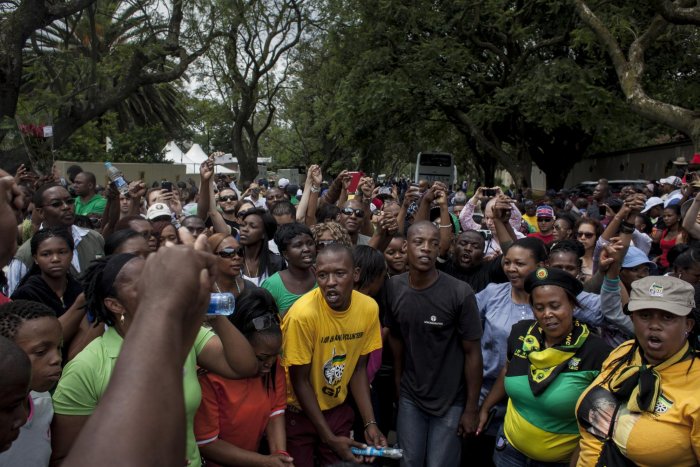
South Africans honor Nelson Mandela
Large crowds gather outside Nelson Mandela’s former home in the Johannesburg suburb of Houghton to pay their respects on December 7, 2013. Mandela, former South African president and a global icon of the anti-apartheid movement, died on December 5 at age 95 after complications from a recurring lung infection. Photo by Charlie Shoemaker/UPI | License Photo
Alex PopeBedfordshire, Hertfordshire and Buckinghamshire
Universal Destinations & Experiences/Comcast
The new theme park is expected to attract more than eight million visitors a year
Planning permission has been granted for the first Universal Studios theme park to be built in the UK, an MP has said.
Mohammad Yasin, the Labour MP for Bedford and Kempston, said the Secretary of State for Housing, Communities and Local Government had given the go-ahead for the complex to be constructed in Kempston Hardwick, close to Bedford.
Universal had sought planning permission through a special development order (SDO), which would allow the government to approve the project directly and bypass standard local planning procedures.
The entertainment company expects the park to attract more than eight million visitors a year and open by 2031.
Yasin said it was a “landmark moment for Bedford and the wider region”.
“The confirmation of planning permission for the Universal Destinations & Experiences Entertainment Resort Complex is transformational and will be felt for decades to come,” he said.
Bedford Borough Council said the park would provide £50bn of “economic benefit to the economy” and followed several years of close collaboration between Universal, councillors and council staff.
Universal and the government have been approached for comment.
‘James Bond and Paddington’
The site will be built on a former brickworks and was chosen for its nearby transport links, including rail services and London Luton Airport.
Planning documents released in July showed that structures reaching up to 377ft (115m) were proposed for the site, making them the tallest rides in Europe.
About 55,000 visitors are expected on peak days.
The plans showed that most structures at the park would range between 20m and 30m, with some taller structures creating a skyline with “visual interest”.
It would also include parking for more than 7,000 cars, additional spaces for hundreds of people to arrive by coach and bicycle and an entry plaza.
Details of the rides have not been released, but a source close to the project told the BBC that James Bond, Paddington and The Lord of the Rings-themed attractions could feature.
Manor Road in Kempston Hardwick runs through land bought by Universal Destinations and Experiences
Adam Zerny, the Independent leader of Central Bedfordshire Council, said it would bring “significant benefits to our area, creating new jobs and increasing income for many local businesses”.
Universal previously said the complex would feature a “theme park with several themed lands, visitor accommodation, as well as a range of retail, dining and entertainment uses” and would create 28,000 jobs.
It said 80% of employees were expected to come from Bedford, central Bedfordshire, Luton and Milton Keynes.
“The project will also help deliver several long-sought-after transportation upgrades, including an expanded Wixams railway station, direct slip roads from the A421 and other local road improvements,” it added.
Work to build a new railway station at Wixams started in August 2024, but it was put on hold to allow a bigger station to be built to accommodate Universal.
Last month, East West Rail Company (EWR Co) said a new railway station would be built to serve the park in Stewartby.
National Highways confirmed there would be upgrades to the transport network in the area, which would include a new link road off the A421.
Zerny said: “I have met with Universal to discuss the implications for our area, and I am encouraged by the acknowledgement that improvements to local road infrastructure will be necessary.”
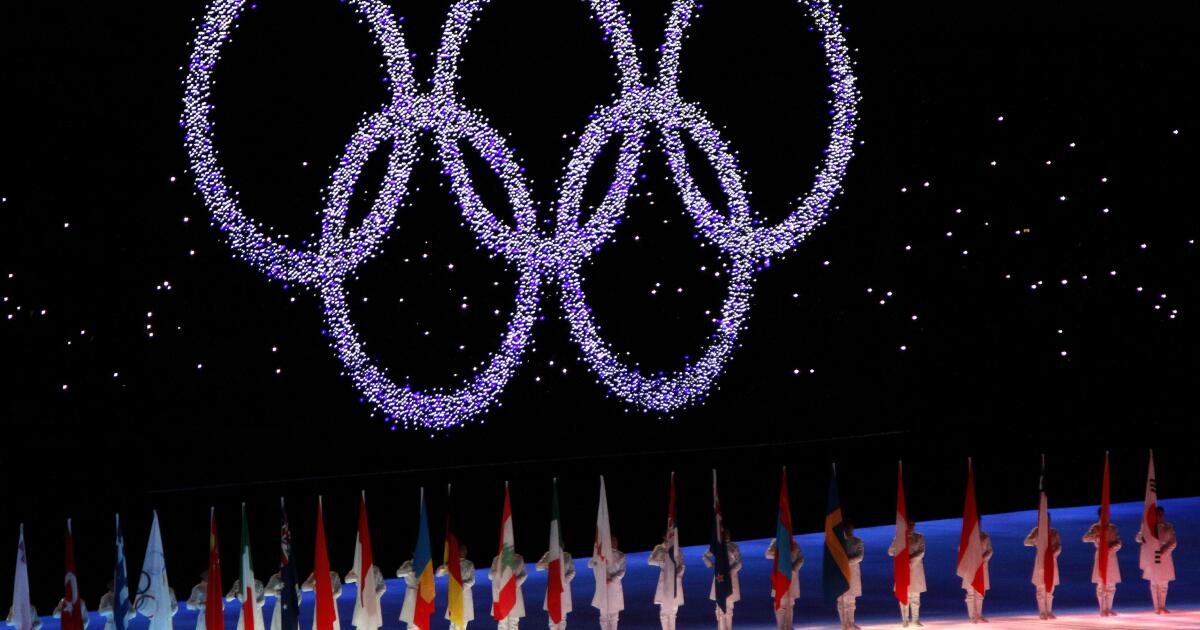
From Thuc Nhi Nguyen: LA28 announced the next step in its ticketing plan for the 2028 Olympic and Paralympic Games on Monday as ticket registration will open on Jan. 14.
Fans can start registering for tickets on Jan. 14 at la28.org, and the registration will remain open until March 18. All who sign up will be entered into a random draw to receive a time slot to purchase tickets. While registering, fans will enter their zip codes, and those who live in the Los Angeles and Oklahoma City areas near venues will be eligible to access the first time slots reserved for locals.
“The goal there is to make sure that we’re getting tickets into the hands, not just the fans, but of the local fans,” said Allison Katz-Mayfield, LA28’s senior vice president of Games delivery revenue. “Those that are going to be closest to the Games, really helping us host these Games in some ways.”
The 2028 Olympics will feature the largest Games schedule in history, with 36 sports and 11,198 athletes. The majority of the Games will be held in L.A., including major sports zones in downtown, Exposition Park and the Sepulveda Basin, but cities including Carson, Inglewood and Long Beach will also have multiple venues. Oklahoma City will host the softball and canoe slalom events at existing facilities.
From Steve Henson: Four years after the family of deceased Angels pitcher Tyler Skaggs filed a wrongful death suit against the Angels, and two months into often contentious testimony in an Orange County Superior Court courtroom, jurors are set to begin deliberations on whether Skaggs’ widow and parents deserve hundreds of millions of dollars.
During closing statements Monday, plaintiffs lawyer Daniel Dutko argued that the Angels were negligent in failing to supervise Eric Kay, the drug-addicted team communications director who gave Skaggs the fentanyl that killed him in 2019.
However, Angels lawyer Todd Theodora insisted that Skaggs was a selfish, secretive opioid addict who for years manipulated Kay into obtaining drugs for him. Theodora told the jury that he didn’t believe the Angels owe the Skaggs family an award.
Jaren Jackson Jr. scored 21 of his 31 points in the first half and Cam Spencer added a career-high 27 points as the Memphis Grizzlies beat the Clippers 121-103 on Monday night.
Jaylen Wells scored 16 points and rookie Cedric Coward had 12 as the Grizzlies earned a victory over the Clippers for the third time in less than three weeks. Ja Morant also scored 12 points for Memphis in his second game since returning from a calf injury.
James Harden was held to 13 points, while John Collins and Jordan Miller each had 10 for Los Angeles in its eighth straight home loss. The Clippers last won in their own building on Oct. 31.
USC (9-3), ranked No. 16 in the AP poll, is preparing to play Texas Christian (9-4) on Dec. 30 in the Alamo Bowl in San Antonio. USC finished 7-2 in its second season in the Big Ten and won four of its last five games, the only setback during that stretch being a 42-27 loss to Oregon, which is the No. 5 seed in the College Football Playoff.
From Kevin Baxter: Moments after Marc Dos Santos was formally introduced as the third head coach in LAFC history, he was led out of a news conference and onto the field at BMO Stadium to meet the most important constituency he’ll have to win over in his new job.
The fans.
Since the club entered MLS in 2018, no team has won more games, scored more goals, earned more points or won more trophies than LAFC. Yet as Dos Santos, a top assistant for five of those eight seasons, was hugging and mugging with some of the people who are soon to become his fiercest critics, another supporter approached general manager John Thorrington with a question.
“How do you separate [him] being a part of that coaching staff and telling the fans ‘look, it’s going to be different with this person?’” he asked.
Mikko Rantanen, Matt Duchene and Wyatt Johnston had a goal and an assist each and Casey DeSmith tied a Dallas record with his 11th consecutive game earning points as the Stars rallied past the Kings 4-1 on Monday night.
Oskar Back scored his first NHL winning goal for the Stars, who are second in the overall standings and avoided their first three-game losing streak since mid-October.
Kings goalie Anton Forsberg stopped 17 shots, entering play with four minutes left in the first period after starter Darcy Kuemper was hit high by Rantanen and sustained an upper-body injury.
Cutter Gauthier scored the go-ahead goal six minutes into the third period and got his second on an empty-netter, Lukas Dostal stopped 26 of the 27 shots he faced, and the Ducks beat the New York Rangers 4-1 on Monday night to end a two-game losing streak.
Gauthier’s first goal with one second left on a power play came off a perfectly placed pass from rookie Beckett Sennecke. Igor Shesterkin barely had a chance to react.
1918 — Jack Dempsey knocks out Carl Morris in 14 seconds in a heavyweight bout in New Orleans.
1930 — Golfer Bobby Jones wins the first James E. Sullivan Award. The award is given to “the most outstanding amateur athlete in the United States.”
1940 — Joe Louis knocks out Al McCoy in the sixth round at the Boston Garden to retain the world heavyweight title.
1945 — The Cleveland Rams beat the Washington Redskins 15-14 for the NFL championship. The deciding play turns out to be a first-quarter automatic safety when the Redskins’ Sammy Baugh passes from his own end zone and the wind carries the ball into the goal post.
1967 — Wilt Chamberlain of the Philadelphia Warriors scores 68 points in a 143-123 victory over the Chicago Bulls.
1973 — O.J. Simpson of the Buffalo Bills rushes for 200 yards in a 34-14 victory over the New York Jets and sets an NFL record with 2,003 yards rushing for the season. Simpson needed 61 yards to break Jim Brown’s NFL single season rushing record of 1,863 yards set in 1963.
1990 — Warren Moon passes for a 527 yards — the second-greatest passing day in NFL history — as the Houston Oilers beat Kansas City 27-10.
2003 — New Orleans Saints receiver Joe Horn is fined $30,000 by the NFL for making a choreographed cell-phone call in the end zone to celebrate a touchdown during the Saints’ 45-7 rout of the New York Giants on Dec. 14.
2006 — Morten Andersen becomes the greatest scorer in NFL history. The 46-year-old Andersen breaks Gary Anderson’s career scoring record of 2,434 points with the second of four extra points in the Atlanta Falcons’ 38-28 loss to the Dallas Cowboys.
2007 — Brett Favre passes for 227 yards in Green Bay’s 33-14 win over St. Louis, eclipsing Dan Marino to become the NFL career leader in yards passing. Favre, in his 17th season, finishes the game with 61,405 yards. Marino had 61,361 in 17 seasons.
2007 — Kikkan Randall becomes the first U.S. woman and second American to win a World Cup cross-country skiing race when she defeats world sprint champion Astrid Jacobsen of Norway in the final meters of a 1.2-kilometer freestyle race. Randall is the first American to win a World Cup cross-country race since Bill Koch in 1983.
2010 — American Ryan Lochte sets the first individual swimming world record since high-tech bodysuits were banned, winning the 400-meter individual medley at the short-course world championships in Dubai, United Arab Emirates.
2012 — Ryan Lochte wins two more races at the short-course world championships in Istanbul, finishing the event with six golds and one silver. The result matches his medal total from the last championships, in Dubai in 2010.
2013 — Justin Tucker makes six field goals, including a 61-yarder in the final minute, to give the Baltimore Ravens an 18-16 win over the Detroit Lions.
2014 — Nick Bjugstad scores the game-winning goal in the longest shootout in NHL history to lift the Florida Panthers over the Washington Capitals 2-1. Bjugstad’s goal comes in the 20th round of a shootout — on the 40th shot — and beats Braden Holtby on the right side.
2016 — James Harden gets his sixth triple-double of the season and the Houston Rockets make an NBA-record 24 3-pointers in a 122-100 win over the New Orleans Pelicans.
2019 — Drew Brees breaks Peyton Manning’s NFL record (539) for career touchdown passes as New Orleans Saints rout Indianapolis Colts, 34-7; Brees 29 of 30 for 307 yards & 4 TDs for record 96.7% pass completion.
2020 — Major League Baseball announces it is elevating the Negro Leagues to Major League status
Compiled by the Associated Press
Until next time…
That concludes today’s newsletter. If you have any feedback, ideas for improvement or things you’d like to see, email me at houston.mitchell@latimes.com. To get this newsletter in your inbox, click here.
A British driver who injured more than 130 people by ploughing his car into a crowd of Liverpool football fans during a championship victory parade in May has been sentenced to 21-and-a-half years.
Paul Doyle, 54, rammed his minivan into the mass of fans in the city of Liverpool simply because he lost his temper, according to prosecutors. Last month, he pleaded guilty to charges including nine counts of causing grievous bodily harm with intent and 17 counts of attempting to cause grievous bodily harm.
“The footage is truly shocking,” Judge Andrew Menary said on Tuesday.
“It is difficult if not impossible to convey in words alone the scenes of devastation you caused. It shows you deliberately accelerating into groups of fans, time and time again.”
Weekly insights and analysis on the latest developments in military technology, strategy, and foreign policy.
We have got what could be our first look at China’s CH-7 stealthy flying-wing drone in flight. While it’s no longer the biggest Chinese drone of this configuration, it’s still of impressive size and, as we have noted in the past, appears to be tailored for intelligence, reconnaissance, and surveillance (ISR), as well as possibly a secondary strike role.
One of the first officially sanctioned images showing the CH-7 in the air. via Chinese internet
Video and stills released by Chinese state media today show the drone, for the first time, being prepared for flight, taking off, and landing. The video includes air-to-air footage of the CH-7 and, overall, the suggestion is that Beijing is making a notable effort to promote the progress of this program, especially in contrast to other, far more secretive flying wing drone programs.
It’s also notable that the CH-7 appears to have made its first flight from Pucheng Airport in Shaanxi province, which also saw the recent maiden flight of the Jiutian heavyweight jet-powered ‘mothership drone,’ which you can read more about here. The Pucheng facility is operated by the China Flight Test Establishment (CFTE), underscoring its growing importance as a drone ‘center of excellence.’
The CH-7 over Pucheng Airport in Shaanxi province. via Chinese internet
The CH-7 seen in the new imagery retains the yellow-colored coat of primer that was seen in video and stills of the drone on the ground, released by Chinese state media earlier this year. Yellow primer is frequently seen on Chinese aircraft during their test phase. The drone also has air data probes on the leading edges of the wing and nose, again consistent with it being a prototype or perhaps a pre-production machine. Overall, the CH-7 has a ‘cranked-kite’ planform, of the kind that we have seen on various other Chinese drones. There are also various measures to reduce the radar and infrared signature, including a slot-like low-observable platypus engine exhaust, with the nozzle fully concealed from most angles of view, and serrated edges on doors and panels.
Interestingly, the attachment points previously seen on the upper surfaces of the rear of the drone have been removed in the new official imagery. It seems these were used to mount vertical tail surfaces.
Unofficial imagery, captured from an observer on the ground, suggests that the CH-7 was initially flight-tested with outward-canted tailfins, presumably to ensure stability during initial sorties, or otherwise to test an alternative aerodynamic configuration.
While the identity of this drone has not been confirmed, it appears to be the CH-7, with the outward-canted tailfins fitted. via Chinese internet
Compared to the previous imagery, we now also get to see some other details of the CH-7, including a distinctive small teardrop-shaped fairing mounted below the fuselage. This enclosure is very likely an air-to-ground datalink used for line-of-sight control of the drone and is a common feature on larger drones, including the U.S. MQ-9 Reaper. This very unstealthy feature would be removed for most operational uses once the aircraft has entered service.
via Chinese internet
We now have a much better look at the series of antennas that runs in a line along the spine, flanked by two air scoops. There are also two prominent blade aerials, above and below the fuselage. Below the fuselage, immediately behind the nose landing gear, there appears to be a large radio frequency sensor aperture, and there could also be space for conformal arrays under the inner wings.
via Chinese internetvia Chinese internet
As we presumed, the previous prominent gaps inboard of the trailing-edge flaps, where the wing meets the blended body section, were a temporary configuration and have now been filled.
The latest configuration of the CH-7, with the attachment points for tailfins deleted and with the gaps removed inboard of the trailing-edge flaps. via Chinese internetvia Chinese internetThis view of the CH-7 prototype on the runway reveals the previous gaps inboard of the trailing-edge flaps. via Chinese Internet
The CH-7 was previously assumed to have an internal payload bay. That is not immediately obvious in the new imagery, but there is a suggestion of a notably long and slender bay immediately inboard of the main landing gear on the right-hand side, presumably with a similar bay on the left-hand side, too. If these are indeed for weapons, then they would be able to accommodate smaller stores only. This could point to a secondary strike role, but that seems somewhat less than likely at this point.
An underside view of the drone reveals only limited evidence of internal stores bays. via Chinese internet
The CH-7 has already gone through several different iterations since it was first revealed, as a full-scale mockup in 2018, with the design being progressively adapted. Earlier changes included a less sharply swept wing compared to at least one early model, as well as an apparent growth in overall size.
The CH-7 (or Caihong-7, meaning Rainbow-7) has been developed by the state-owned China Aerospace Science and Technology Corporation (CASC), specifically by its 11th Research Institute. A high-altitude, long-endurance drone, it is generally understood to be optimized for penetrating into or very near hostile airspace. It achieves this through a combination of a low-observable (stealth) design and flying at high altitudes, leading it to operate for extended periods of time without being successfully engaged.
via Chinese internet
Published specifications for the CH-7 include a length of 10 meters (33 feet), a maximum takeoff weight of 10,000 kilograms (22,000 pounds), a maximum speed of 926 km/h (575 mph), and an endurance of up to 15 hours. Bearing in mind the various design changes, these figures should be considered very much as provisional.
Earlier this year, Chinese state-owned media reported that the CH-7 had completed testing and was scheduled to complete development in 2024. This would imply it had also completed the flight-test program by this date, which remains possible, and the new imagery may actually date back a year or so.
via Chinese internet
Regardless of the timeline, the CH-7 is a fascinating program.
It represents one part of China’s accelerated efforts to develop low-observable, long-endurance drones, and there is a general expectation that, once in service, it will be used for both ISR and as a UCAV. Official statements from Beijing claim that, as well as bringing back critical intelligence, the CH-7 should also be able to strike strategic targets.
When it was unveiled, the CH-7 was described as a high-altitude, long-endurance stealth combat drone. Its chief designer, Shi Wen, said the aircraft would be able to “fly long hours, scout, and strike the target when necessary.”
via Chinese internetvia Chinese internet
It should be noted, however, that the latest imagery doesn’t provide definitive evidence of an extensive internal payload capacity, which might throw some doubt on the strike role, at least as a primary mission.
Even if the CH-7 ends up being exclusively an ISR platform, it remains highly relevant within China’s growing portfolio of stealthy drones, especially since it is apparently tailored to penetrate into or very near hostile airspace at high altitudes. Flying ISR missions with this profile would be especially relevant for China in a naval context, with the drone potentially roaming far out into the Pacific, monitoring the movements of enemy ships and providing targeting data for ground-based long-range missiles, for example, as well as anti-ship missiles launched from warships and bombers. Other theaters of operation in which a drone of this kind would be valuable include around the islands of the South China Sea and along the border with India.
A rear three-quarter view of the CH-7. via Chinese internet
Furthermore, it seems that the CH-7 will be offered for export. This hypothesis might also be supported by the unusually open nature of the imagery that’s been released of the drone so far.
If the CH-7 were to be offered for foreign customers, it would come with advanced capabilities that no other country is currently pitching on the arms market. It would also come without the various restrictions that limit the sale of high-end U.S. and other Western defense products.
A still from an official video showing what is purported to be a control center used for the CH-7 testing. via Chinese internet
Not only is the United States not currently able to offer for export a stealthy long-endurance surveillance drone or UCAV, but it’s also possible that no uncrewed platform of this class is even under development in that country — the still-mysterious RQ-180 may have fit in this category, but its current status is unknown. The stark contrast between the U.S. and Chinese approaches to very stealthy uncrewed aircraft for independent strike missions is something that we have addressed before in this feature of ours.
At this point, we should remember that we don’t know exactly how far the development of the CH-7 has progressed and when it might end up being ready for service with China, let alone with export customers. It remains possible that they might have to wait for a downgraded or otherwise sanitized version of the drone.
Nevertheless, the CH-7 program remains very much one to watch. Provided it fulfills its promise, it could provide China with a multirole low-observable drone family that could also be offered for export. For now, the CH-7 stands as more evidence of the huge strides that China is making in terms of drone technology, and the particular focus being placed on stealthy uncrewed aircraft.
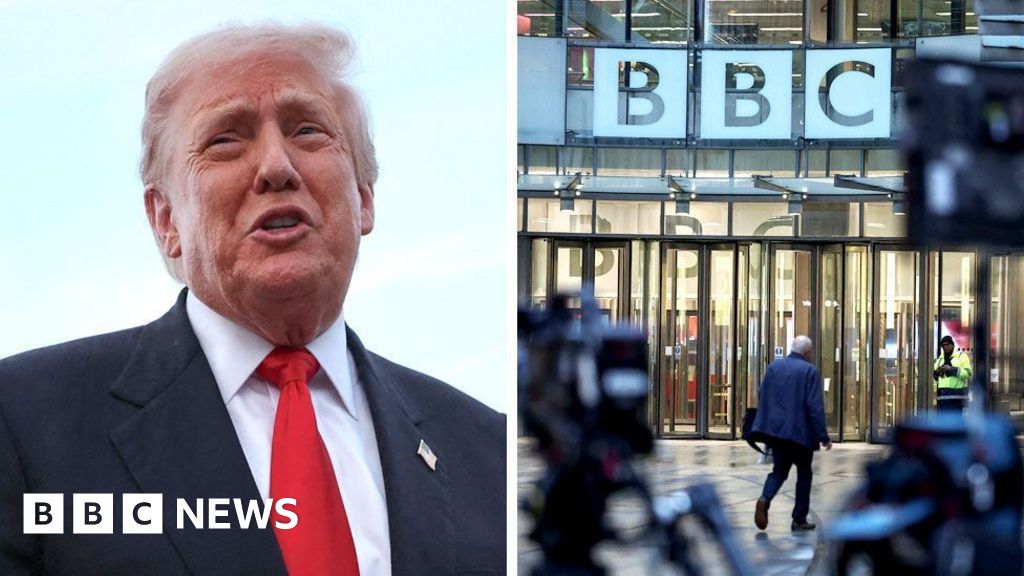
Dec. 16 (UPI) — President Donald Trump is suing the BBC for $10 billion, alleging it intentionally misrepresented a speech he gave before the Jan. 6 storming of Capitol Hill in order to influence the result of the 2024 presidential election.
The lawsuit was filed in a Florida court on Monday, more than a month after Trump threatened to bring litigation against Britain’s public broadcaster over the editing of a speech he gave to supporters in Washington on Jan. 6, 2021, in the documentary Trump: A Second Chance.
Trump’s lawyers described the documentary’s depiction of him as “false, defamatory, deceptive, disparaging, inflammatory and malicious,” alleging it was aired “in a brazen attempt to interfere in and influence the election’s outcome to President Trump’s detriment.”
The suit is for $5 billion in damages, plus interest, costs, punitive damages, attorneys’ fees and other relief the court finds appropriate.
The BBC declined to comment Tuesday but vowed it would fight the case.
“As we have made clear previously, we will be defending this case. We are not going to make further comment on ongoing legal proceedings,” said a spokesman.
The Panorama documentary aired in Britain on Oct. 28, 2024, just days ahead of the Nov. 5 election. The BBC stresses it was not broadcast in the United States and that it did not make it available to view there.
In the documentary, video of Trump’s speech was edited to piece together two comments the president made about 50 minutes apart, while omitting other parts of his speech.
“[T]he BBC “intentionally and maliciously sought to fully mislead its viewers around the world by splicing together two entirely separate parts of Trump’s speech on January 6, 2021,” his lawyers state in the lawsuit.
“The Panorama Documentary deliberately omitted another critical part of the Speech in such a manner as to intentionally misrepresent the meaning of what President Trump said.”
The claim refers to the splicing together of excerpts lifted from the video that made it sound as if Trump was inciting his supporters to march on the Capitol and fight:
“We’re going to walk down to the Capitol and I’ll be there with you. And we fight. We fight like hell,” was what viewers of the program saw, when Trump’s actual words were, “We’re going to walk down to the Capitol, and we’re going to cheer on our brave senators and congressmen and women.”
It wasn’t until 50 minutes later in the speech that Trump made the comments about fighting.
The infraction went unnoticed until early November when The Telegraph published an exclusive on a leaked internal BBC memo in which a former external ethics adviser allegedly suggested that the documentary edited Trump’s speech to make it appear he directed the Jan. 6 attack on Congress.
Following the report, the BBC’s director-general, Tim Davie, and head of news, Deborah Turness, resigned.
BBC chairman Samir Shah immediately apologized for what he called an unintentional “error of judgment.”
After Trump wrote the BBC demanding a correction, compensation and threatening a $1 billion lawsuit, the corporation formally apologized and issued a retraction that was the lead story across all of its news platforms on television, radio and online — but said it strongly disagreed “there is a basis for a defamation claim.”
To win the case, Trump’s legal team would need to convince the court the program had caused Trump “overwhelming financial and reputational harm.”
The BBC has said that since the program was not broadcast in the United States or available to view there, Trump was not harmed by it and the choices voters made in the election were not affected as he was re-elected days after.
However, Trump’s legal team alleges the BBC had a deal with a third-party media company that had rights to air the documentary outside of the United Kingdom.
The blunder has reignited a furious national debate about the BBC’s editorial impartiality and the institution itself, which is funded by a $229 annual license that households with a TV must pay.
It also comes as the future of the BBC is under review, with the renewal date of its royal charter approaching on the centenary of its founding in 2027.
Trump has won out-of-court settlements in a series of disputes with U.S. broadcasters, although largely at significantly reduced sums than those sought in the original lawsuit.
In July, CBS settled a $20 billion claim out of court for $16 million over an interview with Democratic presidential nominee Kamala Harris that aired four weeks before the election on Nov. 5.
ABC News paid Trump $15 million and apologized to settle a defamation suit over comments by presenter George Stephanopoulos that incorrectly stated Trump was “liable for rape.”
In 2022, CNN fought and successfully defended a $475 million suit alleging it had defamed Trump by dubbing his claim the 2020 election was stolen from him as the “Big Lie.” The judge ruled it did not meet the legal standard of defamation.
He has live cases pending cases against the Wall Street Journal and The New York Times.
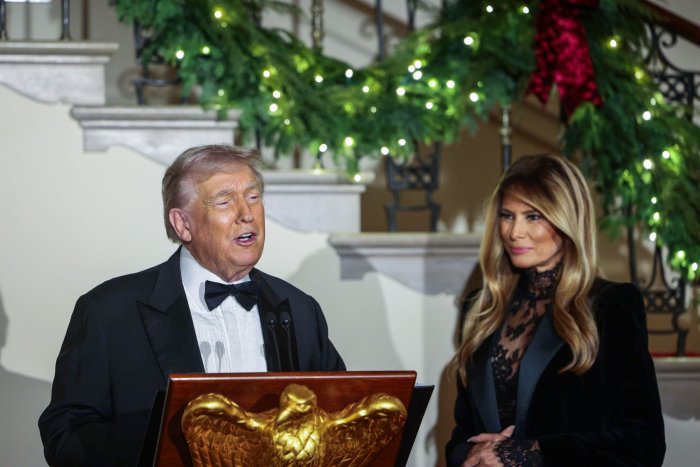
President Donald Trump and first lady Melania Trump attend the Congressional Ball in the Grand Foyer of the White House on Thursday. Photo by Shawn Thew/UPI | License Photo
Bangladeshi President Mohammed Shahabuddin, elected unopposed in 2023 as a nominee of the Awami League, has announced his intention to step down midway through his term following February’s parliamentary election. His decision comes amid tensions with the interim government led by Nobel laureate Muhammad Yunus.
Although the presidency in Bangladesh is largely ceremonial, Shahabuddin gained national prominence during the student-led uprising in August 2024, when Prime Minister Sheikh Hasina fled to New Delhi and parliament was dissolved. During this period, Shahabuddin remained the last constitutional authority in the country.
Conflict with Interim Government
Shahabuddin described feeling sidelined by Yunus, citing instances such as being excluded from meetings, the removal of his press department, and the sudden elimination of his portraits from Bangladeshi embassies worldwide. “A wrong message goes to the people that perhaps the president is going to be eliminated. I felt very much humiliated,” he told Reuters in his first media interview since taking office.
Despite these grievances, he affirmed that he would remain in office until elections are held, respecting constitutional norms, and would allow the next government to determine his successor.
Political Landscape Ahead of Elections
Opinion polls suggest the Bangladesh Nationalist Party (BNP) and hardline Jamaat-e-Islami are the leading contenders to form the next government. Shahabuddin has emphasized that no party has asked him to resign in recent months, and he maintains regular contact with Army Chief General Waker-uz-Zaman, who has assured him of no intention to seize power.
Military and Democratic Context
Bangladesh has a history of military intervention in politics, but Shahabuddin indicated that the army leadership is committed to democratic processes. During the August 2024 protests, the military largely stayed out of the conflict, which helped shape the political transition.
Personal Analysis
Shahabuddin’s planned resignation reflects a deeper struggle over the symbolic authority of the presidency amid political instability. Although the role is ceremonial, the treatment he received from the interim government appears to have eroded his sense of institutional respect. His public statements highlight not only personal frustration but also the fragility of democratic norms in transitional periods.
Furthermore, the situation underscores the delicate balance between civilian authority and the military in Bangladesh, where past interventions have shaped governance patterns. By signaling his willingness to step down while remaining constitutionally compliant, Shahabuddin seeks to preserve institutional legitimacy while avoiding direct confrontation, potentially smoothing the path for the incoming administration and reducing political friction in a tense electoral environment.
Overall, his resignation would mark a symbolic transition, emphasizing both the limitations of the presidency in Bangladesh’s political system and the ongoing influence of military and interim authorities in shaping the political landscape.
President Maduro’s rival was hurt as she sped on a boat through choppy waters in secret escape from hiding to reach Oslo ceremony.
Published On 16 Dec 202516 Dec 2025
Share
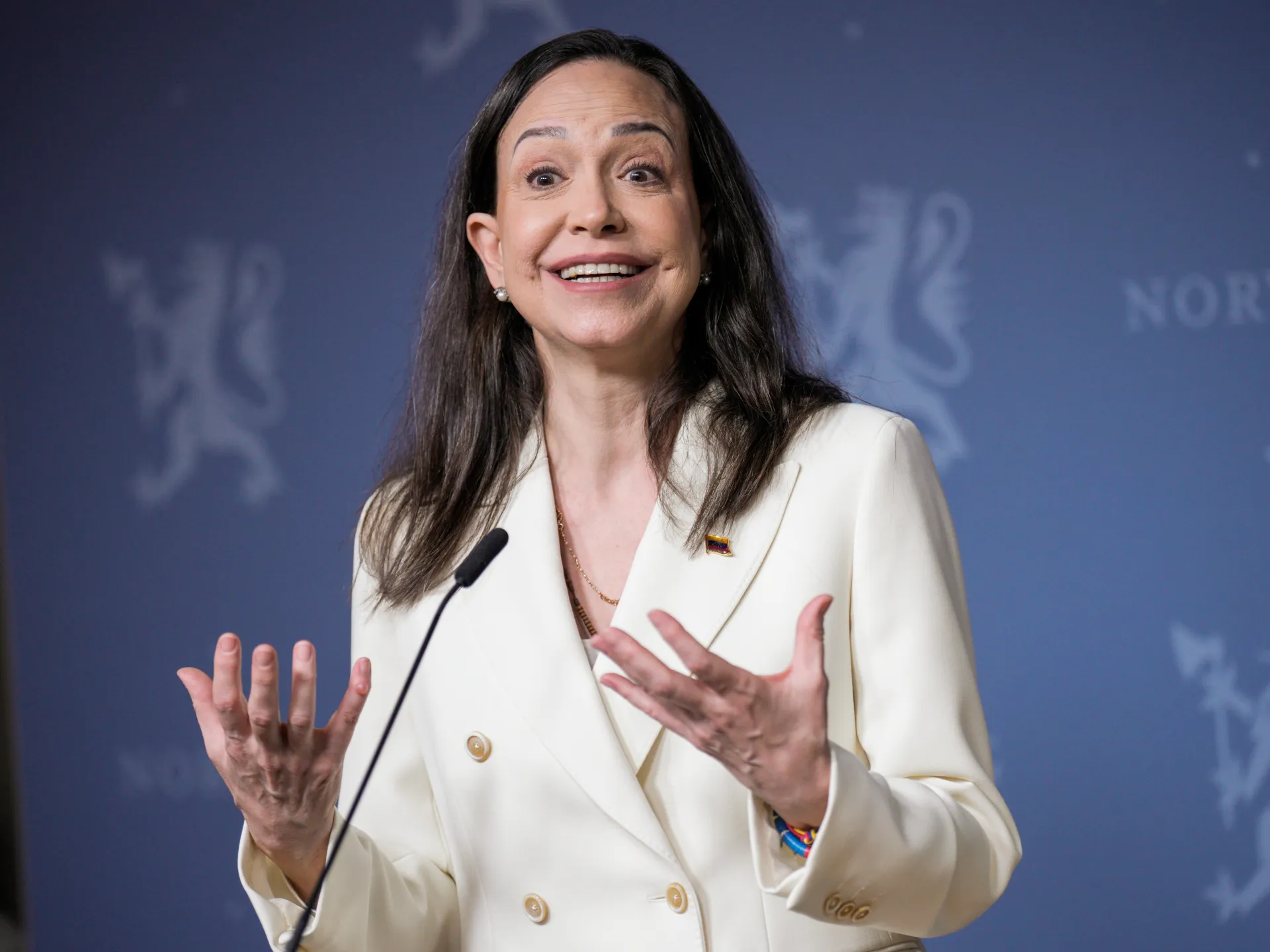
Venezuelan opposition leader Maria Corina Machado was injured as she made a clandestine dash to collect her Nobel Peace Prize last week, her spokesperson has said.
Claudia Macero said late on Monday that the right-wing opposition figure fractured a vertebra during a choppy boat ride that had formed part of a risky cloak-and-dagger journey to reach the Norwegian capital, Oslo, for the Nobel award ceremony.
Recommended Stories
list of 4 itemsend of list
Machado has been in hiding since she was banned from running in Venezuela’s July 24 presidential election, fearing that her life is under threat from long-time Venezuelan President Nicolas Maduro.
“The vertebra fracture is confirmed,” Macero told the AFP news agency, adding that no further details would be released beyond what had been reported in the Norwegian daily Aftonbladet.
The newspaper had earlier reported that the 58-year-old Machado sustained the fracture while crossing the sea in a small fishing boat battered by high waves.
The opposition leader was examined by doctors at Oslo University Hospital during her time in the city.
Dangerous dash
Media reports in the United States said Machado’s escape last week involved wearing a disguise, including a wig, and travelling from a small Venezuelan fishing village on a wooden boat to the island of Curacao, before boarding a private plane to Norway.
Machado has said she feared for her life during the voyage, which saw US forces situated in the Caribbean alerted to avoid a strike on the vessel.
Several similar boats have been attacked in recent months in a campaign that the Trump administration asserts is a bid to avert drug smuggling into the US.
Maduro has accused Washington of seeking to engineer regime change in the hope of seizing Venezuela’s large oil reserves.
The leader of the opposition Vente Venezuela party was attempting to reach the ceremony at which she was due to be presented with the Nobel Peace Prize.
She was announced the winner of the prestigious award in October, with the selection committee praising her role in the country’s opposition movement and her “steadfast” support for democracy.
‘Broken soul’
Despite her speedy trip, Machado failed to reach Oslo in time for the ceremony. Her daughter received the award on her behalf and delivered a speech that slammed Maduro and warned of the need to fight for democracy.
Hours after the ceremony, early on Thursday morning, Machado greeted supporters from an Oslo hotel balcony in what was her first public appearance in a year.
Despite the fracture, she climbed over a barrier to greet supporters outside the hotel, AFP reported.
Machado said authorities in Venezuela would have attempted everything possible to prevent her journey to Norway.
Appearing set to challenge Maduro in the vote, the opposition leader was barred from running in the country’s presidential election in July last year.
She then announced that she would be going into hiding within Venezuela due to fear for her life while Maduro is in power.
The Venezuelan president commented dismissively on the reports of Machado’s injury on television on Monday.
Machado “says she has a broken vertebra”, he said. “What’s broken is her brain and her soul because she’s a demon – she hates Venezuela.”
Hollywood filmmaker Rob Reiner and his wife Michele Singer Reiner were found dead in their Los Angeles home on Sunday. The police and investigators believe the couple suffered fatal stab wounds.
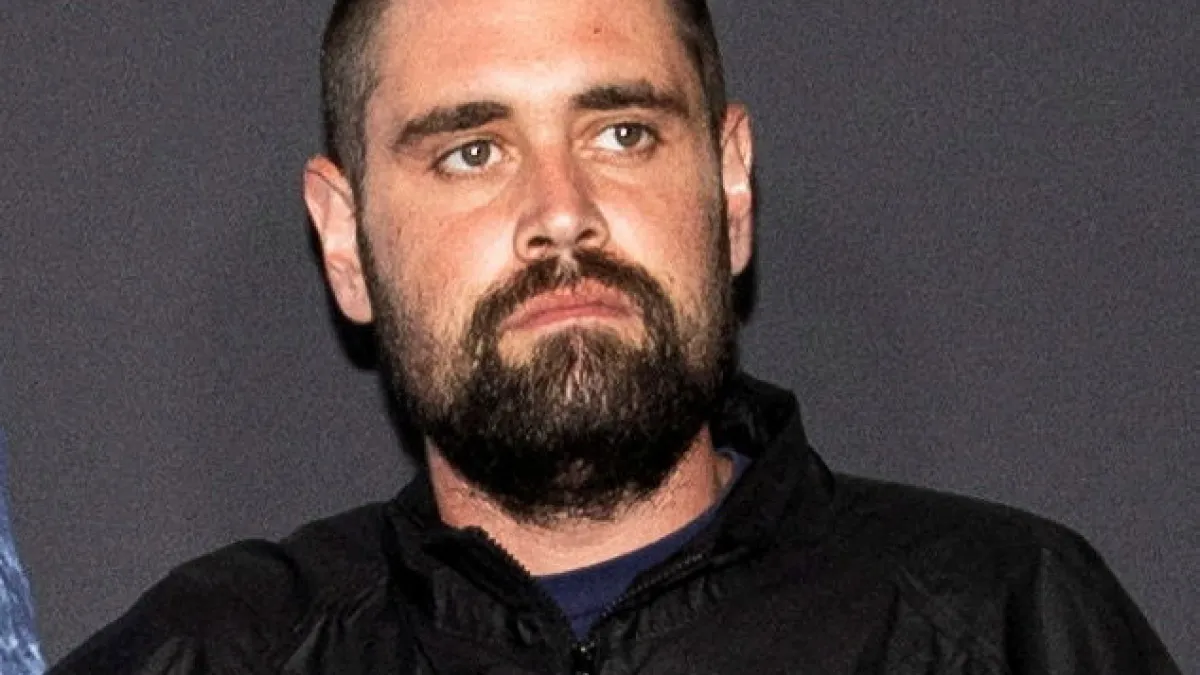
On Monday, police arrested the legendary director’s 32-year-old son, Nick Reiner, in connection with the deaths.
Recommended Stories
list of 3 itemsend of list
Rob Reiner directed several United States movie classics, including When Harry Met Sally and The Princess Bride. He was also a devoted activist for liberal causes and a frequent critic of US President Donald Trump.
So, what do we know about Nick Reiner, and what was his alleged involvement in his parents’ killing?
Who killed Rob Reiner and his wife?
Nick was revealed to be in Los Angeles police custody on Monday after the bodies of his parents were discovered inside their home in the upscale Brentwood neighbourhood.
The Los Angeles Fire Department said it responded to a medical aid request shortly after 3:30pm on Sunday [02:30 GMT Monday], and found a man and woman dead inside.
Rob Reiner’s daughter was the first to find the bodies of her parents and called the authorities, according to multiple reports.
In a statement, the Los Angeles Police Department said it was treating the deaths as homicides. Police have not released a full official timeline of how the killings occurred or the motivation behind them.
Nick Reiner remains in custody without bail. On Monday, Los Angeles Police chief Jim McDonnell said Nick Reiner was “booked for murder”.
Prosecutors will receive the case on Tuesday as they weigh whether to file formal charges against him.
Who is Nick Reiner?
Nick Reiner is the middle child of Rob and Michele Singer Reiner. They have two other children, Jake and Romy.
Nick’s struggles with substance abuse were longstanding, about which he had publicly spoken.
Rob Reiner, in a 2016 interview, said his son’s heroin addiction began about age 15, leading him into a cycle of dependency that persisted for years.
He underwent multiple rehabilitation stays, at least 17, by some accounts, and experienced periods of homelessness as a result of his addiction and the difficulties he faced in recovery.
His addiction issues inspired the 2015 semi-autobiographical movie Being Charlie, co-written by the father and son duo, and directed by Rob Reiner, about the struggles of a famous father and an addicted son.
The film was seen as an attempt to explore and heal aspects of their relationship, reflecting how deeply addiction had affected their family.
“It forced us to understand ourselves better than we had,” Rob Reiner told the AP news agency in 2016. During a YouTube interview series when the film was released, Nick Reiner reflected on his upbringing with his father, stating, “We didn’t bond a lot,” and acknowledged that collaborating on the film helped them “feel closer”.
Who was Rob Reiner?
Rob Reiner was a highly influential figure in US film and television. He was the son of comedy legend Carl Reiner, who died in 2020 at the age 98.
The Emmy-winning actor first gained fame as Michael “Meathead” Stivic in the 1970s TV sitcom, All in the Family. Rob Reiner went on to become a celebrated director, responsible for such classics as This Is Spinal Tap, Stand by Me, The Princess Bride, and A Few Good Men.
Legendary actress and Oscar winner Kathy Bates, who won the coveted award as the star of Rob Reiner’s 1990 film, Misery, said she “loved Rob”.
“He was brilliant and kind, a man who made films of every genre to challenge himself as an artist,” she said in a statement. “He changed the course of my life. Michele was a gifted photographer.”
Beyond filmmaking, Rob Reiner was an active political and social voice, often engaging in public debates on issues ranging from civil rights to public policy. He was a fierce critic of US President Trump.
During Trump’s first term, Reiner repeatedly described the president as “mentally unfit” and “unqualified” to serve in office.
What was Trump’s reaction?
On Monday, Trump made a social media post in which he described Reiner as “tortured and struggling” and claimed that both he and his wife had died, “reportedly due to the anger he caused” by opposing Trump during his presidency.
“He was known to have driven people CRAZY by his raging obsession of President Donald J. Trump,” he wrote on Truth Social.
Trump, who is known for aggressively targeting critics and commending allies, did not present any proof that Rob Reiner’s political stance was linked to the couple’s deaths.
The post was met with sharp condemnation from politicians across the political spectrum, including both Democrats and Republicans.
I think about Rob Reiner almost every time I put on my socks.
I am old enough to remember the famously hilarious (and largely improvised) bit from “All in the Family” in which Reiner’s Mike “Meathead” Stivic and Carroll O’Connor’s Archie Bunker argue about the correct order of donning footwear — both socks first (Archie’s method) or sock/shoe, sock/shoe (Mike’s).
The straight-faced back and forth was, and is, a pitch-perfect exhibition of how much time and energy we waste judging, and arguing about, personal differences that are none of anyone’s business and matter not at all.
I also think about Reiner whenever my now-adult children and I sit down for a movie night. When all other suggestions fail, at least one of his films — ”Stand by Me,” “The Princess Bride,” “A Few Good Men,” “When Harry Met Sally…,” “Misery” — will achieve consensus, in large part, because of that same understanding.
Reiner was, above all, a compassionate filmmaker, willing to excavate all manner of conflict and tension in search of the essential humanity that connects us all.
Reiner helped shape the culture of my youth and early adulthood with such brilliant empathy that his random appearances on television — as Jess’ (Zooey Deschanel) father in “New Girl” or, more recently, Ebra’s (Edwin Lee Gibson) business mentor on “The Bear” — sparked immediate reflexive delight, as if a beloved uncle had shown up unexpectedly at a family dinner.
It helped, no doubt, that I share his political leanings. Reiner’s advocacy for gay marriage and early education were well-known, as was, in recent years, his unvarnished criticism of President Trump, who Reiner, like many others, considered a danger to democracy.
That criticism should have prepared me for the chilling invective unleashed by some, including Trump, in the wake of the news that Reiner and his wife, Michele Singer Reiner, were found dead in their home on Sunday night, victims of a knife attack, and that their son Nick, who has a history of drug addiction, was in police custody.
Even as the millions who were touched by Reiner’s work struggled to process their shock, grief and horror, Trump responded with a post in which he claimed that the Reiners’ murders were “reportedly due to the anger he caused others through his massive, unyielding, and incurable affliction with a mind crippling disease known as TRUMP DERANGEMENT SYNDROME, sometimes referred to as TDS.”
Even so, between the shocking news of the Reiners’ deaths, the possible involvement of their son and the unhinged and cold-hearted response of the president of the United States, it is difficult to know how to react, short of tearing out one’s hair and screaming up to an indifferent sky.
No person’s life means intrinsically more than any other — many people are killed by violence each and every weekend, often by family members; that we seem to have become inured to mass shootings is another sort of horror.
But Reiner’s work, in film, television and politics, affected millions around the world personally and culturally. In “All in the Family,” his young leftie was far from the hero of the piece — Mike’s values were more humane and progressive than the bigoted Archie’s, but he could be just as narrow-minded as his father-in-law and just as capable of change.
As a director, Reiner championed independent filmmaking, which is to say smartly written movies that told interesting stories about characters that were recognizable in their humor and humanity (which is one reason he was so successful in adapting Stephen King’s work, including the novella “Stand by Me” is based on and “Misery”).
His political activism too was grounded in the desire to make life better for those historically marginalized by policy and culture. He campaigned against tobacco use and for Proposition 10, which increased the tax on cigarettes, and funded early education. In 2009, he used his considerable influence to co-found the American Foundation for Equal Rights and successfully fought to legally challenge Proposition 8, which banned same-sex marriage in California.
As an artist and a public figure, he put his money where his mouth was and remained invariably sincere, a powerful and compelling trait that has become increasingly rare in a time of the sound-bite inanities, muddy thinking, obvious contradictions and outright falsehoods that threaten our public and political discourse.
Reiner mastered many mediums and wielded a broad palette but his signature artistic trait was empathy. No story was too small, or too brutal, to be examined with kindness and an understanding that the most grave injustice we can commit is to choose apathy or revenge when connection and transcendence are always possible.
The news cycle surrounding the Reiners’ deaths is likely to get worse, as details emerge and reactions of all kinds continue. For a long while, it will be difficult to think of Reiner and his wife as anything but victims of a brutal crime of truly tragic proportions and the regrettable heartlessness that our political divisions have created.
Ironically, and mercifully, solace for this loss, and so many others, can be found in Reiner’s work, films and performances that are impossible to watch without feeling at least a little bit better.
As Hollywood and the world mourns, I will try to think of Reiner as I always have. After all, no matter the order, we all put on our shoes and socks one at a time.
And then, as his artistic legacy teaches us, we stand and try to do the best we can with whatever happens next.
SEOUL, Dec. 16 (UPI) — The likelihood of a renewed summit between U.S. President Donald Trump and North Korean leader Kim Jong Un has increased, even as Pyongyang presses ahead with nuclear weapons development, a South Korean think tank said Tuesday.
In an annual forecast released by the Foreign Ministry-linked Korea National Diplomatic Academy, analysts said Trump is expected to continue a top-down approach to North Korea under which leader-level talks could resume.
“The likelihood of a North Korea-U.S. summit has increased somewhat due to common ground in the two leaders’ desire to hold a summit, pursue peaceful coexistence and lower the priority of the denuclearization issue,” the report said.
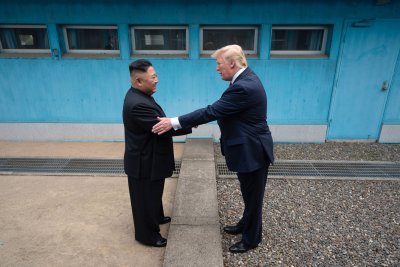
Trump met Kim three times during his first term — in Singapore in 2018, in Hanoi in 2019 and briefly at the Demilitarized Zone later that year — but talks collapsed amid disagreements over sanctions relief and steps toward denuclearization.
Since returning to office, Trump has floated another summit with Kim on numerous occasions, telling reporters in October he “would love” to meet the North Korean leader during a visit to South Korea.
Kim has also signaled a willingness to resume diplomacy with Washington, saying he has “fond memories” of Trump, while warning that any discussion of giving up his regime’s nuclear arsenal would be off the table.
Despite the prospect of renewed diplomacy, the KNDA report said engagement with Washington is unlikely to slow Pyongyang’s military buildup.
North Korea is expected to “accelerate the production of nuclear materials and the development and deployment of new missile systems” in 2026 as it works to operationalize a broader range of nuclear strike capabilities, the report said.
The academy added that a seventh nuclear test remains a “military and technological necessity,” although Pyongyang is likely to exercise restraint as it weighs the impact on its relations with China and the United States.
North Korea last conducted a nuclear test in September 2017 at its Punggye-ri site. During a period of detente with Seoul and Washington the following year, Pyongyang demolished the entrances to two test tunnels in a highly publicized move.
Those steps have since been reversed, however. The U.N. nuclear watchdog International Atomic Energy Agency said North Korea began restoring tunnels at the site in 2022, and a 2025 U.S. Defense Intelligence Agency assessment concluded the country is now “postured to conduct a seventh nuclear test at a time of its choosing.”
Prospects for inter-Korean relations remain dim, the report said, despite efforts by South Korean President Lee Jae Myung to rehabilitate ties since taking office in June
Communication between Seoul and Pyongyang is unlikely to resume as the North continues to promote its “hostile two-state doctrine,” which defines the two Koreas as permanently separate adversaries.
“The likelihood of inter-Korean dialogue reopening is not high,” the report said.
A new wave of Israeli policies is changing the reality and boundaries on the ground in the occupied West Bank.
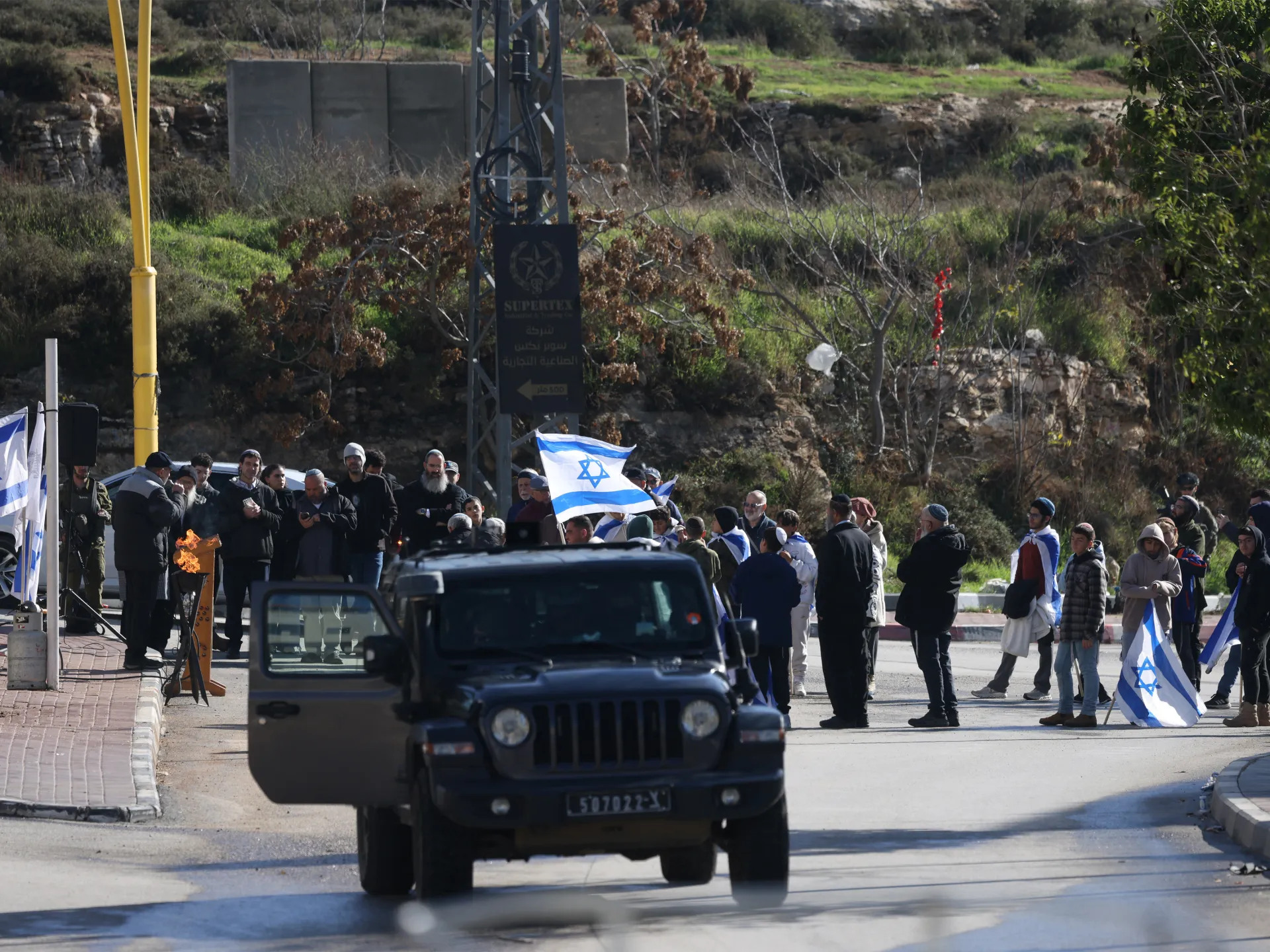
The Israeli government has approved the formalisation of 19 so-called settlement outposts as independent settlements in the occupied West Bank. This is the third wave of such formalisations this year by the government, which considers settlement expansion and annexation a top priority. During an earlier ceremony of formalisation, Finance Minister Bezalel Smotrich said, “We are advancing de facto sovereignty on the ground to prevent any possibility of establishing an Arab state in [the West Bank].”
Settlement outposts, which are illegal under international law, are set up by a small group of settlers without prior government authorisation. This does not mean that the settlers, who are often more ideological and violent, do not enjoy government protection. Israeli human rights organisations say that settlers in these so-called outposts enjoy protection, electricity and other services from the Israeli army. The formalisation opens the door to additional government funds, infrastructure and expansion.
Many of the settlement outposts formalised in this latest decision are concentrated in the northeastern part of the West Bank, an area that traditionally has had very little settlement activity. They also include the formalisation of two outposts evacuated in 2005 by the government of Israeli then-Prime Minister Ariel Sharon.
While these government decisions may seem bureaucratic, they are in fact strategic in nature. They support the more ideological and often more violent settlers entrenching their presence and taking over yet more Palestinian land, and becoming more brazen in their attacks against Palestinians, which are unprecedented in scope and effect.
The Israeli human rights organisation B’Tselem estimates that settler attacks against Palestinians have forcibly displaced 44 communities across the West Bank in the past two years. These arson attacks, vandalism, physical assault and deadly shootings are done under the protection of Israeli soldiers. During these settler attacks, 34 Palestinians were killed, including three children. None of the perpetrators has been brought to justice. In fact, policing of these groups has dropped under the direction of Israel’s national security minister, Itamar Ben-Gvir, who is a settler himself.
United Nations Secretary-General Antonio Guterres recently sounded the alarm about Israel’s record-breaking expansion of illegal settlements in the West Bank and the unprecedented levels of state-backed settler violence. In a briefing to the UN Security Council, Guterres reminded states that all settlements are illegal under international law. He also warned that they erode Palestinian rights recognised under this law, including to a state of their own.
In September, United States President Donald Trump said he “will not allow” Israel to annex the West Bank, without offering details of what actions he would take to prevent such a move.
But Israel is undeterred. The government continues to pursue its agenda of land grab, territorial expansion and annexation by a myriad of measures that fragment, dispossess and isolate Palestinians in the West Bank, including East Jerusalem, and continues its genocidal violence in Gaza.
More than 32,000 Palestinians have been forcibly displaced from their homes in three refugee camps in the occupied West Bank for nearly a year. The Israeli army continues to occupy Nur Shams, Tulkarem and Jenin refugee camps and ban residents from returning. Meanwhile, Israeli forces have demolished and damaged 1,460 buildings in those camps, according to a preliminary UN estimate. This huge, destructive campaign has changed the geography of the camps and plunged more families into economic and social despair.
This is the state hundreds of thousands of Palestinians across the West Bank find themselves in because of Israeli restrictions, home demolitions and land grabs. The Israeli army has set up close to 1,000 gates across the West Bank, turning communities into open-air prisons. This has a direct and devastating effect on the social fabric, economy and vitality of these communities, which live on land that is grabbed from under them to execute the expansion of illegal settlements, roads and so-called buffer zones around them.
According to the UN Conference on Trade and Development, Israeli practices and policies over the past two years have cost the Palestinian people 69 years of development. The organisation recently reported that the Palestinian gross domestic product (GDP) has shrunk to 2010 levels. This is visible most starkly in Gaza, but it is palpable in the West Bank as well.
The results of these policies and this reality are Palestinians leaving their homes and Israel expanding. During the summer, Israeli Prime Minister Benjamin Netanyahu told a local news station he was on a “historic and spiritual mission”, in reference to the vision of the Greater Israel that he said he was “very” attached to.
When armed soldiers in the small West African nation of Benin appeared on national television on December 7 to announce they had seized power in a coup, it felt to many across the region like another episode of the ongoing coup crisis that has seen several governments toppled since 2020.
But the scenes played out differently this time.
Recommended Stories
list of 4 itemsend of list
Amid reports of gunfire and civilians scampering to safety in the economic capital, Cotonou, Beninese and others across the region waited with bated breath as conflicting intelligence emerged. The small group of putschists, on the one hand, declared victory, but Benin’s forces and government officials said the plot had failed.
By evening, the situation was clear – Benin’s government was still standing. President Patrice Talon and loyalist forces in the army had managed to hold control, thanks to help from the country’s bigger neighbours, particularly its eastern ally and regional power, Nigeria.
While Talon now enjoys victory as the president who could not be unseated, the spotlight is also on the Economic Community of West African States (ECOWAS). The regional bloc rallied to save the day in Benin after their seeming resignation in the face of the crises rocking the region, including just last month, when the military took power in Guinea-Bissau.
This time, though, after much criticism and embarrassment, ECOWAS was ready to push back against the narrative of it being an ineffective bloc by baring its teeth and biting, political analyst Ryan Cummings told Al Jazeera.
“It wanted to remind the region that it does have the power to intervene when the context allows,” Cummings said. “At some point, there needed to be a line drawn in the sand [and] what was at stake was West Africa’s most stable sovereign country falling.”
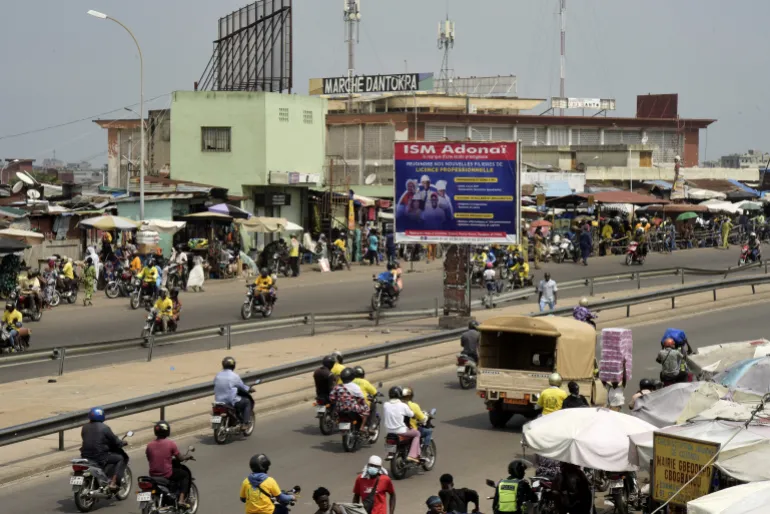
People gather at the market of Dantokpa, two days after Benin’s forces thwarted the attempted coup against the government, in Cotonou, December 9, 2025 [Charles Placide Tossou/Reuters]
Is a new ECOWAS on the horizon?
Benin’s military victory was an astonishing turnaround for an ECOWAS that has been cast as a dead weight in the region since 2020, when a coup in Mali spurred an astonishing series of military takeovers across the region in quick succession.
Between 2020 and 2025, nine coup attempts toppled five democratic governments and two military ones. The latest successful coup, in Guinea-Bissau, happened on November 28. Bissau-Guineans had voted in the presidential election some days before and were waiting for the results to be announced when the military seized the national television station, detained incumbent President Umaro Sissoco Embalo, and announced a new military leader.
ECOWAS, whose high-level delegation was in Bissau to monitor the electoral process when the coup happened, appeared on the back foot, unable to do much more than issue condemnatory statements. Those statements sounded similar to those it issued after the coups in Mali, Burkina Faso, Niger, and Guinea. The bloc appeared a far cry from the institution that, between 1990 and 2003, successfully intervened to stop the civil wars in Liberia and Sierra Leone, and later in the Ivory Coast. The last ECOWAS military intervention, in 2017, halted Gambian dictator Yahya Jammeh’s attempt to overturn the election results.
Indeed, ECOWAS’s success in its heyday hinged on the health of its members. Nigeria, arguably ECOWAS’s backbone, whose troops led the interventions in Liberia and Sierra Leone, has been mired in insecurity and economic crises of its own lately. In July 2023, when Nigeria’s President Bola Ahmed Tinubu was the ECOWAS chair, he threatened to invade Niger after the coup there.
It was disastrous timing. Faced with livelihood-eroding inflation and incessant attacks by armed groups at home, Nigerians were some of the loudest voices resisting an invasion. Many believed Tinubu, sworn in just months earlier, had misplaced his priorities. By the time ECOWAS had finished debating what to do weeks later, the military government in Niger had consolidated support throughout the armed forces and Nigeriens themselves had decided they wanted to back the military. ECOWAS and Tinubu backed off, defeated.
Niger left the alliance altogether in January this year, forming the Alliance of Sahel States (AES) with fellow military governments in Mali and Burkina Faso. All three share cultural and geographic affinities, but are also linked by their collective dislike for France, the former colonial power, which they blame for interfering in their countries. Even as they battle rampaging armed groups like Jama’at Nusrat al-Islam wal-Muslimin (JNIM), the three governments have cut ties with French forces formerly stationed there and welcomed Russian fighters whose effectiveness, security experts say, fluctuates.
Sierra Leone’s President Julius Maada Bio, who chairs ECOWAS, walks with Guinea-Bissau’s transitional president, Major-General Horta Inta-A, during a meeting in Bissau, Guinea-Bissau, on December 1, 2025 [Delcyo Sanca/Reuters]
But Benin was different, and ECOWAS appeared wide awake. Aside from the fact that it was one coup too far, Cummings said, the country’s proximity to Nigeria, and two grave mistakes the putschists made, gave ECOWAS a fighting chance.
The first mistake was that the rebels had failed to take Talon hostage, as is the modus operandi with putschists in the region. That allowed the president to directly send an SOS to his counterparts following the first failed attacks on the presidential palace at dawn.
The second mistake was perhaps even graver.
“Not all the armed forces were on board,” Cummings said, noting that the small group of about 100 rebel soldiers had likely assumed other units would fall in line but had underestimated how loyal other factions were to the president. That was a miscalculation in a country where military rule ended in 1990 and where 73 percent of Beninese believe that democracy is better than any other form of government, according to poll site Afrobarometer. Many take particular pride in their country being hailed as the region’s most stable democracy.
“There was division within the army, and that was the window of opportunity that allowed ECOWAS to deploy because there wasn’t going to be a case of ‘If we deploy, we will be targeted by the army’. I dare say that if there were no countercoup, there was no way ECOWAS would have gotten involved because it would have been a conventional war,” Cummings added.
Quickly reading the room, Benin’s neighbours reacted swiftly. For the first time in nearly a decade, the bloc deployed its standby ground forces from Nigeria, Ghana, the Ivory Coast, and Sierra Leone. Abuja authorised air attacks on rebel soldiers who were effectively cornered in a military base in Cotonou and at the national TV building, but who were putting up a last-ditch attempt at resistance. France also supported the mission by providing intelligence. By nightfall, the rebels had been completely dislodged by Nigerian jets. The battle for Cotonou was over.
At least 14 people have since been arrested. Several casualties were reported on both sides, with one civilian, the wife of a high-ranking officer marked for assassination, among the dead. On Wednesday, Beninese authorities revealed that the coup leader, Colonel Pascal Tigri, was hiding in neighbouring Togo.
At stake for ECOWAS was the risk of losing yet another member, possibly to the landlocked AES, said Kabiru Adamu, founder of Abuja-based Beacon Security intelligence firm. “I am 90 percent sure Benin would have joined the AES because they desperately need a littoral state,” he said, referring to Benin’s Cotonou port, which would have expanded AES export capabilities.
Nigeria could also not afford a military government mismanaging the deteriorating security situation in northern Benin, as has been witnessed in the AES countries, Cummings said. Armed group JNIM launched its first attack on Nigerian soil in October, adding to Abuja’s pressures as it continues to face Boko Haram in the northeast and armed bandit groups in the northwest. Abuja has also come under diplomatic fire from the US, which falsely alleges a “Christian genocide” in the country.
“We know that this insecurity is the stick with which Tinubu is being beaten, and we already know his nose is bloodied,” Cummings said.
Revelling in the glory of the Benin mission last Sunday, Tinubu praised Nigeria’s forces in a statement, saying the “Nigerian armed forces stood gallantly as a defender and protector of constitutional order”. A group of Nigerian governors also hailed the president’s action, and said it reinforced Nigeria’s regional power status and would deter further coup plotters.
Nigerian ECOWAS Ceasefire Monitoring Group (ECOMOG) soldiers guard a corner in downtown Monrovia during fighting between militias loyal to Charles Taylor and Roosevelt Johnson in Liberia in 1996. Between 1990-2003, ECOWAS successfully intervened to help stop the Liberian civil war [File: Reuters]
Not yet out of the woods
If there is a perception that ECOWAS has reawakened and future putschists will be discouraged, the reality may not be so positive, analysts say. The bloc still has much to do before it can be taken seriously again, particularly in upholding democracy and calling out sham elections before governments become vulnerable to mass uprisings or coups, Beacon Security’s Adamu said.
In Benin, for example, ECOWAS did not react as President Talon, in power since 2016, grew increasingly autocratic, barring opposition groups in two previous presidential elections. His government has again barred the main opposition challenger, Renaud Agbodjo, from elections scheduled for next April, while Talon’s pick, former finance minister Romuald Wadagni, is the obvious favourite.
“It’s clear that the elections have been engineered already,” Adamu said. “In the entire subregion, it’s difficult to point to any single country where the rule of law has not been jettisoned and where the voice of the people is heard without fear.”
ECOWAS, Adamu added, needs to proactively re-educate member states on democratic principles, hold them accountable when there are lapses, as in the Benin case, and then intervene when threats emerge.
The bloc appears to be taking heed. On December 9, two days after the failed Benin coup, ECOWAS declared a state of emergency.
“Events of the last few weeks have shown the imperative of serious introspection on the future of our democracy and the urgent need to invest in the security of our community,” Omar Touray, ECOWAS Commission president, said at a meeting in the Abuja headquarters. Touray cited situations that constitute coup risks, such as the erosion of electoral integrity and mounting geopolitical tensions, as the bloc splits along foreign influences. Currently, ECOWAS member states have stayed close to Western allies like France, while the AES is firmly pro-Russia.
Another challenge the bloc faces is managing potential fallout with the AES states amid France’s increasing closeness with Abuja. As Paris faces hostility in Francophone West Africa, it has drawn closer to Nigeria, where it does not have the same negative colonial reputation, and which it perceives as useful for protecting French business interests in the region, Cummings said. At the same time, ECOWAS is still hoping to woo the three rogue ex-members back into its fold, and countries like Ghana have already established bilateral ties with the military governments.
“The challenge with that is that the AES would see the intervention [in Benin] as an act not from ECOWAS itself but something engineered by France,” Adamu said. Seeing France instigating an intervention which could have benefitted AES reinforces their earlier complaints that Paris pokes its nose into the region’s affairs, and could push them further away, he said.
“So now we have a situation where they feel like France did it, and the sad thing is that we haven’t seen ECOWAS dispel that notion, so the ECOWAS standby force has [re]started on a contentious step,” Adamu added.
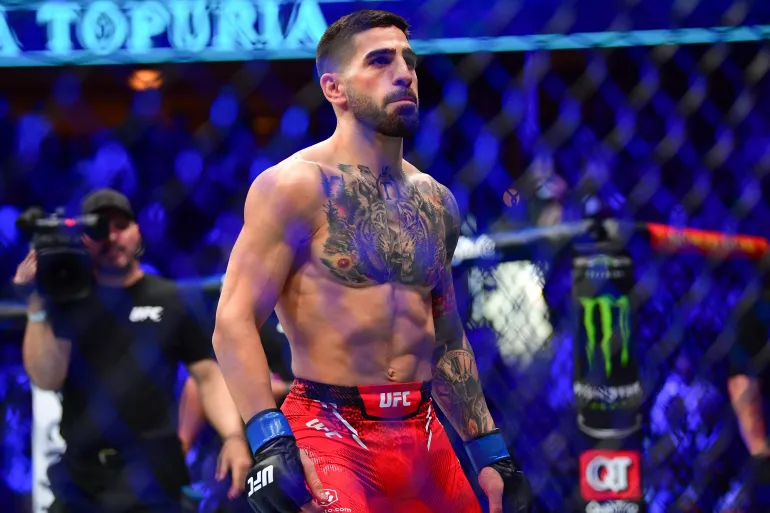
UFC title holder IIia Topuria took a break from the sport in November to fight what he is calling “attempted extortion”.
Published On 16 Dec 202516 Dec 2025
Share
Undefeated UFC lightweight champion Ilia Topuria explained his withdrawal from the UFC 324 title bout on Monday, alleging he is addressing an extortion attempt and will return to the cage at the appropriate time.
Topuria is not on the UFC 324 card. An interim lightweight championship bout between Justin Gaethje and Paddy Pimblett headlines the January 24 event in Paradise, Nevada.
Recommended Stories
list of 4 itemsend of list
The 28-year-old Georgian had already denied that an injury forced him out of a title defence. Topuria (17-0) said Monday he wanted to address rumours and speculation about his absence from the sport since November.
“Over the past several weeks, I have made the difficult decision to temporarily step away from defending my title. This was not a decision I took lightly. However, when circumstances arise that threaten your personal integrity, your family, and your reputation, there comes a point when you must address them directly,” Topuria said in a statement posted to Instagram on Monday.
“In recent months, I have been subjected to severe and unacceptable pressure, including threats to disseminate false allegations of domestic abuse unless financial demands were met. These allegations are entirely unfounded. The truth is not a matter of opinion – it is a matter of evidence. All relevant evidence has been carefully preserved and documented, including audio recordings, written communications, witness statements, and video material. This evidence has been submitted to the appropriate judicial authorities in order to pursue legal action for attempted extortion, falsification of evidence, misappropriation of funds and personal property, and multiple threats.”
Topuria has two knockout wins to defend the belt since he won it from Alexander Volkanovski in February 2024 with a knockout victory.
Topuria’s most recent fight was a June 28 knockout victory against Charles OIiveira at UFC 317 and made him the first undefeated two-division champion in UFC history.
Topuria has won UFC titles in two weight classes – flyweight and lightweight – and has been ranked as the No 1 pound-for-pound UFC fighter in the world [File: Gary A. Vasquez/USA TODAY Sports]
Pro-Palestine, antigovernment, anti-colonial group accused of targeting immigration agents and companies in ‘massive and horrific terror plot’.
Published On 16 Dec 202516 Dec 2025
Share
Federal authorities in the United States have arrested four members of an antigoverment left-wing group over an alleged bomb plot targeting immigration agents and companies, among others, in California, officials have said.
Announcing the arrests on Monday, US Attorney General Pam Bondi said the Justice Department and the Federal Bureau of Investigation had disrupted “a massive and horrific terror plot” being prepared by the Turtle Island Liberation Front.
Recommended Stories
list of 2 itemsend of list
“The Turtle Island Liberation Front – a far-left, pro-Palestine, anti-government, and anti-capitalist group – was preparing to conduct a series of bombings against multiple targets in California beginning on New Year’s Eve,” Bondi said in a statement.
She was careful to note that among the group’s planned targets were Immigration and Customs Enforcement (ICE) agents and their vehicles.
Audrey Illeene Carroll, 30; Zachary Aaron Page, 32; Dante Gaffield, 24; and Tina Lai, 41, have been charged with conspiracy and possession of an unregistered destructive device. Officials said additional charges are expected.
Desert meeting
The suspects, who are all from the Los Angeles area, were arrested on Friday in the Mojave Desert as they were working on the plot, First Assistant US Attorney Bill Essayli told a news conference.
Officials showed reporters’ surveillance footage of the suspects in the desert moving a large black object to a table. The group was arrested before they had the opportunity to build a functional bomb, the officials said.
Essayli said Carroll had created a detailed plan to bomb at least five locations. The plot included the targeting of two “Amazon-type” logistics centres operated by US companies in the Los Angeles area on New Year’s Eve.
Backpacks filled with IEDs that were to be detonated simultaneously at midnight were to be left at the locations. The group believed the explosions would be less likely to be noticed due to fireworks detonated during the celebrations.
Two of the suspects had discussed plans for attacks targeting ICE agents and vehicles with pipe bombs early next year, according to the complaint.
Officials said the suspects were an offshoot of a group dubbed the Turtle Island Liberation Front, which says it is for the “liberation of all colonised peoples”.
The group, which has a small social media following, describes itself on Facebook as a political organisation advocating for the “Liberation of occupied Turtle Island and liberation of all colonized peoples across the world”.
The term “Turtle Island” is used by some Indigenous peoples to describe North America in a way that reflects its existence outside the colonial boundaries put in place by the US and Canada. It comes from Indigenous creation stories where the continent was formed on the back of a giant turtle.
Activists affiliated with the group have previously organised campaigns against detentions and deportations by ICE, as well as anti-colonial issues.
Los Angeles Police Chief Jim McDonnell said while federal and local officials disagree on the Trump administration’s immigration raids, they still come together to protect residents.
US President Donald Trump has filed a $5bn (£3.7bn) lawsuit against the BBC over an edit of his 6 January 2021 speech in a Panorama documentary.
Trump accused the broadcaster of defamation and of violating a trade practices law, according to court documents filed in Florida.
The BBC apologised to Trump last month, but rejected his demands for compensation and disagreed there was any “basis for a defamation claim”.
Trump’s legal team accused the BBC of defaming him by “intentionally, maliciously, and deceptively doctoring his speech”. The BBC has not yet responded to the lawsuit.
Trump said last month that he planned to sue the BBCfor the documentary, which aired in the UK ahead of the 2024 US election.
“I think I have to do it,” Trump told reporters of his plans. “They cheated. They changed the words coming out of my mouth.”
In his speech on 6 January 2021, before a riot at the US Capitol, Trump told a crowd: “We’re going to walk down to the Capitol, and we’re going to cheer on our brave senators and congressmen and women.”
More than 50 minutes later in the speech, he said: “And we fight. We fight like hell.”
In the Panorama programme, a clip showed him as saying: “We’re going to walk down to the Capitol… and I’ll be there with you. And we fight. We fight like hell.”
The BBC acknowledged that the edit had given “the mistaken impression” he had “made a direct call for violent action”, but disagreed that there was basis for a defamation claim.
In November, a leaked internal BBC memo criticised how the speech was edited, and led to the resignations of the BBC’s director general, Tim Davie, and its head of news, Deborah Turness.
Before Trump filed the lawsuit, lawyers for the BBC had given a lengthy response to the president’s claims.
They said there was no malice in the edit and that Trump was not harmed by the programme, as he was re-elected shortly after it aired.
They also said the BBC did not have the rights to, and did not, distribute the Panorama programme on its US channels. While the documentary was available on BBC iPlayer, it was restricted to viewers in the UK.
In his lawsuit, Trump cites agreements the BBC had with other distributors to show content, specifically one with a third-party media corporation that allegedly had licensing rights to the documentary outside the UK. The BBC has not yet responded to these claims, nor has the company with the alleged distribution agreement.
The suit also claims that people in Florida may have accessed the programme using a VPN or by using streaming service BritBox.
“The Panorama Documentary’s publicity, coupled with significant increases in VPN usage in Florida since its debut, establishes the immense likelihood that citizens of Florida accessed the Documentary before the BBC had it removed,” the lawsuit said.
Dec. 16 (UPI) — President Donald Trump has awarded 13 soldiers and Marines the newly established Mexican Border Defense Medal for their contributions to safeguarding the U.S. southern border.
The service members are the first to receive the commendation, created Aug. 13 in a memo signed by Defense Secretary Pete Hegseth to honor those deployed to the U.S.-Mexico border.
The commander-in-chief awarded the medals to the service members at the White House.
“On day one of my administration, I signed an executive order making it [the] core mission of the United States military to protect and defend the homeland. And today, we’re here to honor our military men and women for their central role in the protection of our border,” Trump said during the ceremony.
Since returning to the White House in January, Trump has overseen crackdowns on immigration and crime that have included the deployment of troops to the U.S.-Mexico border.
More than 10,000 U.S. military service members attached to Joint Task Force Southern Border have been deployed to the U.S.-Mexico border in support of the Department of Homeland Security, with the missions to secure the border, disrupt transnational criminal organizations and respond to national security threats.
Trump said Monday that more than 25,000 service members have served in this “incredible and historic operation,” which has overseen 13,000 patrols along the border.
“They’ve spent night and day enduring scorching hot and bitter cold, and they’ve given up their holidays and their weekends, working with the offices of Customs and Border Protection,” Trump said.
“And today, we give these great warriors the recognition that they have earned — and they have really earned it.”
The medal, according to the Department of Defense, is identical to the Mexican Border Service Medal awarded for service in 1916 and 1917 in the Mexican state of Chihuahua as well as the U.S.-Mexico border regions in New Mexico and Texas.
It is bronze with a sheathed Roman sword hanging on a tablet on the front, which bears an inscription that reads: “For Service on the Mexican Border.”
Those eligible for the award must have been permanently assigned to a designated Department of Defense military operation supporting CBP within the area of eligibility for at least 30 consecutive or non-consecutive days from Jan. 20 of this year.
“We’re proud of this mission,” Hegseth said during the White House event. “We’re proud to defend the American people and pinning these medals on is an example of how important it is to us.”
The Trump administration states that its crackdown has resulted in more than 2.5 million undocumented migrants removed from the United States and the lowest level of illegal border crossings since 1970.
Four years after seizing power in a coup, Myanmar’s military junta is adapting to survive a grinding civil war that once appeared to be slipping beyond its control. In October, rebel fighters in central Myanmar described facing a level of intensity they had not seen before: sustained artillery fire, coordinated drone strikes, and repeated infantry assaults that came in relentless waves. After days of fighting near the village of Pazun Myaung, resistance forces were forced to withdraw, marking a rare tactical success for a military that had suffered major setbacks since 2023.
This shift follows Operation 1027, a coordinated rebel offensive that overran around 150 military outposts and handed resistance groups control of large swathes of borderland territory. Shaken by those defeats, the junta began reshaping its strategy. According to rebel fighters and security analysts interviewed by Reuters, the military has leaned on three pillars to stabilise its position: mass conscription, expanded use of drones and air power, and growing diplomatic and coercive support from China.
How the Junta Is Fighting Back
On the ground, resistance fighters report that the military is deploying “human-wave” tactics, sending repeated infantry units forward even as casualties mount. Rebels say some soldiers appear to be coerced into advancing, a stark contrast to earlier phases of the war when troops often retreated quickly after losses. These assaults are now closely integrated with artillery and drone strikes, creating pressure that smaller, lightly equipped resistance units struggle to withstand over time.
At the same time, the junta has rebuilt manpower through mandatory conscription introduced in February 2024. Despite widespread public fear and evasion, tens of thousands of recruits have reportedly entered the armed forces, stabilising a military that had shrunk dramatically since the coup. The command structure has also been reshuffled, with more experienced officers replacing those promoted through patronage, addressing one of the army’s long-standing weaknesses.
Air power has become more lethal as well. While conventional airstrikes remain central, they are now increasingly guided by reconnaissance drones, improving accuracy. Analysts say the military operates a diverse fleet of unmanned aerial vehicles sourced from China, Russia and Iran, giving it a technological edge over resistance groups that lack jamming equipment or air-defence systems. Lower-level commanders are also reportedly being granted faster access to air support, tightening coordination between ground assaults and aerial attacks.
China’s Quiet but Crucial Role
Beyond the battlefield, China has emerged as a decisive external factor in the junta’s partial resurgence. While Beijing maintains ties with certain ethnic armed groups, it continues to see Myanmar’s generals as the most reliable guarantors of stability along its border. Chinese officials have brokered ceasefires that have directly benefited the junta, including arrangements that returned strategically important towns to military control.
Pressure from Beijing has also constrained resistance groups’ access to weapons and financing. International researchers say China has leaned on allied militias to restrict arms flows and imposed financial and border measures to enforce compliance. In some areas, this has effectively frozen resistance operations, forcing groups into ceasefires due to shortages of ammunition and funds. For fighters on the ground, this external squeeze has compounded the military’s renewed offensive momentum.
Why It Matters
The junta’s evolving tactics do not signal outright victory, but they do mark a dangerous shift in a conflict that had increasingly favoured resistance forces. Myanmar’s frontlines remain fragmented, with no single actor dominating nationwide, yet the military’s ability to retake territory in parts of the country suggests the war is entering a new, more brutal phase. Civilians are likely to bear the cost, as intensified airstrikes, mass infantry assaults and prolonged clashes deepen humanitarian suffering and displacement.
This military push also coincides with a planned general election that international observers and rights groups have already dismissed as neither free nor fair. By reclaiming territory and projecting strength, the junta appears intent on manufacturing a sense of control and legitimacy, even as key opposition figures remain jailed and major political forces boycott the vote.
What Comes Next
Analysts expect fighting to intensify rather than subside. With conscription feeding new troops into the ranks, drones sharpening air power, and China discouraging resistance advances near its interests, the military is likely to continue probing for opportunities to retake ground. Resistance forces, meanwhile, face internal disparities in strength and growing external pressure, making coordinated nationwide offensives harder to sustain.
Over the next few years, Myanmar is likely to see a protracted stalemate punctuated by brutal offensives rather than a decisive resolution. The junta’s comeback is limited and uneven, but it is enough to prolong the conflict and raise the stakes for all sides involved.
Analysis
Myanmar’s war is no longer defined solely by a collapsing army versus a rising resistance. Instead, it is evolving into a grim contest of endurance. The junta’s use of human-wave assaults reflects both renewed confidence and underlying fragility: manpower is being substituted for legitimacy, and coercion for morale. Drones and foreign backing provide tactical advantages, but they do not resolve the political roots of the conflict. China’s role underscores how regional power politics can shape internal wars, often prioritising stability over justice. In this context, the junta’s battlefield adaptation may extend its survival, but it also deepens a cycle of violence that makes a negotiated political settlement ever more elusive.
New Delhi, India – A newly released Bollywood spy thriller is winning praise and raising eyebrows in equal measure in India and Pakistan, over its retelling of bitter tensions between the South Asian neighbours.
Sunk in a sepia tone, Dhurandhar, which was released in cinemas last week, is a 3.5-hour-long cross-border political spy drama that takes cinemagoers on a violent and bloody journey through a world of gangsters and intelligence agents set against the backdrop of India-Pakistan tensions. It comes just months after hostilities broke out between the two countries in May, following a rebel attack on a popular tourist spot in Pahalgam, in Indian-administered Kashmir, which India blamed Pakistan for. Islamabad has denied role in the attack.
The film stars the popular actor Ranveer Singh, who plays an Indian spy who infiltrates networks of “gangsters and terrorists” in Karachi, Pakistan. Critics of the film argue that its storyline is laced with ultra-nationalist political tropes and that it misrepresents history, an emerging trend in Bollywood, they say.
A still from the trailer of Dhurandhar [Jio Studios/Al Jazeera]
What is the latest Bollywood blockbuster about?
Directed by Aditya Dhar, the film dramatises a covert chapter from the annals of Indian intelligence. The narrative centres on a high-stakes, cross-border mission carried out by India’s Research and Analysis Wing (R&AW), and focuses on one operative who conducts operations on enemy soil to neutralise threats to Indian national security.
The film features a heavyweight ensemble cast led by Singh, who plays the gritty field agent tasked with dismantling a “terror” network from the inside. He is pitted against a formidable antagonist played by Sanjay Dutt, representing the Pakistani establishment, and gangsters such as one portrayed by Akshaye Khanna, while actors including R Madhavan portray key intelligence officers and strategists who orchestrate complex geopolitical manoeuvering from New Delhi.
Structurally, the screenplay follows a classic cat-and-mouse trajectory.
Beneath its high-octane set pieces, the film has sparked an angry debate among critics and audiences over the interpretation of historical events and some key figures.
A scene shown in the trailer of the new Bollywood film, Dhurandhar [Jio Studios/Al Jazeera]
Why is the film so controversial in Pakistan?
Despite the longstanding geopolitical tensions between the two countries, India’s Bollywood films remain popular in Pakistan.
Depicting Pakistan as the ultimate enemy of India has been a popular theme retold for years, in different ways, especially in Bollywood’s spy thrillers, however. In this case, the portrayal of Pakistan’s major coastal city, Karachi, and particularly one of its oldest and most densely populated neighbourhoods, Lyari, has drawn strong criticism.
“The representation in the film is completely based on fantasy. It doesn’t look like Karachi. It does not represent the city accurately at all,” Nida Kirmani, an associate professor of sociology at Lahore University of Management Sciences, told Al Jazeera.
Kirmani, who has produced a documentary on the impact of gang violence in Lyari of her own, said that like other megacities in the world, “Karachi had periods of violence that have been particularly intense.”
However, “reducing the city to violence is one of the major problems in the film, along with the fact the film gets everything about Karachi – from its infrastructure, culture, and language – wrong”, she added.
Meanwhile, a member of the Pakistan People’s Party (PPP) has taken legal action in a Karachi court alleging the unauthorised use of images of the late former prime minister, Benazir Bhutto, who was assassinated in 2007, and protesting against the film’s portrayal of the party’s leaders as supporters of “terrorists”.
Critics, including Kirmani, say the film also bizarrely casts gangs from Lyari into geopolitical tensions with India, when they have only ever operated locally.
Kirmani said the makers of the movie have cherry-picked historical figures and used them completely out of context, “trying to frame them within this very Indian nationalistic narrative”.
Mayank Shekhar, a film critic based in Mumbai, pointed out that the film “has been performed, written, directed by those who haven’t ever stepped foot in Karachi, and perhaps never will”.
“So, never mind this dust bowl for a city that, by and large, seems wholly bereft of a single modern building, and looks mostly bombed-out, between multiple ghettos,” Shekhar said.
He added that this is also in line with how Hollywood “shows the brown Third World in action with a certain sepia tone, like with Extraction, set in Dhaka, Bangladesh”.
Bollywood actor Ranveer Singh (centre) performs during the music launch of his upcoming Indian Hindi-language film Dhurandhar in Mumbai on December 1, 2025 [Sujit Jaiswal/AFP]
How has the film been received in India?
Dhurandhar has been a huge commercial success in India and among the Indian diaspora. However, it has not escaped criticism entirely.
The family of a decorated Indian Army officer, Major Mohit Sharma, filed a petition in Delhi High Court to stop the release of the film, which, they claim, has exploited his life and work without their consent.
The makers of the film deny this and claim it is entirely a work of fiction.
Nonetheless, the film’s storyline is accompanied by real-time intercepted audio recordings of attacks on Indian soil and news footage, film critics and analysts say.
People linger outside a movie theatre that is screening The Kashmir Files, in Kolkata, India, on March 17, 2022 [Debarchan Chatterjee/NurPhoto via Getty Images]
Is this an emerging pattern in Bollywood films?
Shekhar told Al Jazeera that focusing on a deliberately loud, seemingly over-the-top, hyper-masculine hero’s journey is not a new genre in Bollywood. “There’s a tendency to intellectualise the trend, as we did with the ‘angry young man’ movies of the 1970s,” he said, referring to the formative years of Bollywood.
In recent years, mainstream production houses in India have, however, favoured storylines that portray minorities in negative light and align with the policies of the Hindu nationalist government of Prime Minister Narendra Modi.
Kirmani told Al Jazeera that this frequently means “reducing Muslims across India’s borders and within as ‘terrorists’, which further marginalises Muslims in India culturally”.
“Unfortunately, people gravitate towards these kinds of hypernationalistic narratives, and the director is cashing in on this,” she told Al Jazeera.
Modi himself lavished praise on a recent film called Article 370, for what he said was its “correct information” about the removal of the constitutional provision that granted special autonomous status to the state of Jammu and Kashmir in 2019. Critics, however, called the film “propaganda” and said the film had distorted facts.
Another Bollywood film Kerala Story released in 2023 was accused of falsifying facts. Prime Minister Modi praised the film, but critics said it tried to vilify Muslims and demonise the southern Kerala state known for its progressive politics.
In the case of Dhurandhar, some critics have faced online harassment.
One review by The Hollywood Reporter’s India YouTube channel, by critic Anupama Chopra, was taken down after outrage from fans of the film.
Went looking for Anupama Chopra’s Dhurandhar review? It’s gone. The Hollywood Reporter India quietly made the video private.
For context, The Hollywood Reporter India was launched by RPSG Lifestyle Media, part of the RP-Sanjiv Goenka Group, which also owns Saregama –…
India’s Film Critics Guild has condemned “coordinated abuse, personal attacks on individual critics, and organised attempts to discredit their professional integrity”, in a statement.
“More concerningly, there have been attempts to tamper with existing reviews, influence editorial positions, and persuade publications to alter or dilute their stance,” the group noted.
Dec. 16 (Asia Today) — “Decade of the Spy” was a label used by U.S. media in the 1980s, when major espionage cases involving the former Soviet Union were uncovered year after year. In 2025, the phrase has resurfaced in a different context: most information is now digital, physical distance matters less, and the security environment has shifted toward a broader “all-against-all” competition.
Against that backdrop, South Korea is pushing amendments to Article 98 of the Criminal Act, commonly referred to as the Espionage Act. Enacted in 1953, the law has historically been applied primarily to North Korea, even as alleged espionage activity linked to other countriesh as increased. The proposed revision would allow espionage acts carried out on behalf of any foreign country to be prosecuted under the same statute.
But practitioners argue that changing the law is not enough. Bae Jeong-seok, an adjunct professor at Sungkyunkwan University’s Graduate School of National Strategy and a former National Intelligence Service counterespionage bureau chief with more than 30 years of experience, said revising the law is “normalization,” not a full upgrade of counterintelligence capacity.
In an interview with Asia Today on Dec. 8, Bae said counterespionage should be treated not only as a criminal matter but as a national security function that requires long-term operations and can carry diplomatic value.
-What structural limitations existed for counterespionage activities under the current legal framework?
“Today’s intelligence environment is not like the Cold War, when you mainly focused on one adversary. It involves many state actors. But in South Korea, activity linked to foreign intelligence services other than North Korea often could not be charged as espionage. It was handled under separate laws protecting military secrets or industrial technology. In counterintelligence, the core is recruiting sources and running counter-operations, including using double agents, to gather more information. If everything is treated only as a standard criminal case, it limits intelligence work that needs time and flexibility.”
-How does this revised espionage bill compare to major advanced nations?
“This is not ‘toughening’ the law so much as bringing South Korea in line with what many advanced countries already have. But legal tools to deal with influence operations are still limited. Efforts to shape public opinion, cultivate media ties, or influence policymaking can be hard to prosecute under traditional espionage charges. A separate reporting-based system like the U.S. Foreign Agents Registration Act, which requires disclosure of certain activities performed on behalf of foreign principals, is also needed.”
-What will change with this amendment?
“It can help deter and disrupt foreign intelligence activity. If recruiting agents or providing information to a foreign intelligence service is itself treated as espionage, authorities can investigate earlier and more directly. That reduces the risk of South Korean citizens being recruited. It also gives counterintelligence more room to run long-term operations instead of moving immediately to prosecution in every case.”
-What aspects of the amendment require further refinement?
“The most important point is allowing strategic decision-making. Counterespionage should not be limited to catching spies and quickly building a prosecution. It requires understanding how networks operate over time, then recruiting and turning sources. In some cases, captured agents can also be used as leverage in security and diplomatic channels. Without that kind of approach, you fall behind in modern intelligence competition.”
-Beyond legal amendments, what direction should counterespionage personnel, technology, and organizational culture take?
“Police are expanding counterespionage efforts, but the main responsibility should remain with the NIS, which has the specialized experience. Police, which have investigative authority, can focus on arrests and prosecution. Coordination between the two needs to improve. Over the long term, South Korea should consider a dedicated counterintelligence body. This work requires continuity, and the typical government job-rotation system is not well suited to long-term operations.”