News

US seizes vessel in international waters off Venezuela’s coast, officials say

The US has seized a vessel in international waters off the coast of Venezuela, US officials have told BBC News partner CBS.

It is the second time this month that the US has seized a ship off the country’s coast.

The move comes after US President Donald Trump on Tuesday said he was ordering a “blockade” of sanctioned oil tankers entering and leaving Venezuela.

Venezuela has not yet responded to the latest US seizure, but has previously accused Washington of seeking to steal its oil resources.

The BBC has contacted the White House for comment.

The operation was led by the US Coast Guard, similar to the operation earlier this month, CBS reports. The ship was boarded by a specialised tactical team.

In recent weeks, the US has been building up its military presence in the Caribbean Sea and has carried out deadly strikes on alleged Venezuelan drug-smuggling boats, killing around 100 people.

The US has provided no public evidence that these vessels were carrying drugs, and the military has come under increasing scrutiny from Congress over the strikes.

The US has accused Venezuela President Nicolás Maduro of leading a designated-terrorist organisation called Cartel de los Soles, which he denies.

The Trump administration accuses him of and the group of using “stolen” oil to “finance themselves, Drug Terrorism, Human Trafficking, Murder, and Kidnapping”.

Venezuela – which is home to the world’s largest proven oil reserves – is highly dependent on revenues from its oil exports to finance its government spending.

Trump’s announcement of a “blockade” came less than a week after the US seized an oil tanker believed to be part of the “ghost fleet” off the coast of Venezuela, which allegedly used various strategies to conceal its work.

The White House said the vessel in question, called the Skipper, had been involved in “illicit oil shipping” and would be taken to a US port.

Venezuela’s government decried the move, with Maduro saying the US “kidnapped the crew” and “stole” the ship.

Source link

Flooding dangers persist in the Pacific Northwest

Several areas of Oregon and Washington state have gone in and out of flood watches as the Pacific Northwest has been pounded with rain, including the Willamette Valley, where the Willamette River, pictured, is located. File Photo by Eitenne Laurent/EPA

Dec. 20 (UPI) — A flood watch is in effect in the greater Portland area and large portions of western Oregon and southwestern Washington as rainy conditions continue.

The National Weather Service issued the flood watch on Saturday morning, which is in effect until 4 p.m. PST and follows a week of heavy rainfall, Oregon Live reported.

Local flooding is likeliest in urban areas and in locations with relatively little water drainage, and the day’s forecast calls for an 80% chance of rainfall during the morning hours.

The Sandy and Clackamas rivers are especially vulnerable to flooding, and at least one person has died as many roads in western Oregon became covered by landslides and other weather-related damage, according to OPB.

“The Clackamas River in the last 24 hours, we’ve been seeing 3 to 4 inches [of rain] and in some cases even higher amounts southeast of Estacada,” NWS meteorologist Sebastian Westerink told OPB on Friday.

“Those amounts are certainly contributing to the rapid rise of the river,” he added.

Despite the continued rainy weather, most local evacuation orders were lifted on Friday in areas along and near the Clackamas River, KATU reported.

The river set a new record when it crested at 26.25 feet during the early morning hours on Friday. The prior record was 25.52 feet in 1972.

The rainy weather likely will continue through Sunday as a cool and moist airmass covers much of the region.

Hundreds of local residents have evacuated the area, and some flood waters have started to recede but many bodies of water will remain higher than normal into Sunday, NWS forecasters said.

Some, though, took advantage of rare whitewater kayaking opportunities afforded by the week’s weather.

Many traveled to Gladstone’s High Rocks Park, where local waters were flowing at a very high rate on Friday and could continue doing so through the weekend.

Source link

Iran’s Deadly Crackdown on Alleged Israeli Spies Intensifies

NEWS BRIEF Iran executed a man on Saturday accused of spying for Israel, the latest in an escalating series of death sentences carried out amid a deepening shadow war between Tehran and Jerusalem. The execution, described by human rights groups as based on coerced confessions, underscores Iran’s harsh response to perceived security threats and the […]

The post Iran’s Deadly Crackdown on Alleged Israeli Spies Intensifies appeared first on Modern Diplomacy.

Source link

Why has signing the EU-Mercosur deal been delayed? | International Trade

Sealing of deal postponed despite decades of preparation.

European farmers are protesting against the EU-Mercosur deal.

That is as signing has been postponed until January, due to disagreements in Europe.

The European-South American deal, planned for more than 25 years, would create the world’s largest free-trade zone.

So, why is there division?

Presenter: Folly Bah Thibault

Guests:

Pieter Cleppe – Editor-in-chief at BrusselsReport.eu
Ciaran Mullooly – Member of the European Parliament for the Independent Ireland group
Gustavo Ribeiro – Founder and editor-in-chief of the Brazilian Report online newspaper

Source link

Lebanon claims first phase of Hezbollah’s disarmament close to complete | Israel attacks Lebanon News

The PM says the part of the plan on south of the Litani River is ‘only days away from completion’.

Lebanon is close to completing the disarmament of Hezbollah in the south of the Litani River before a year-end deadline as part of a ceasefire deal with Israel, according to Prime Minister Nawaf Salam.

Saturday’s statement comes as the country races to fulfil the key demand in the US-backed deal agreed in November last year and ended more than a year of fighting between Israel and Hezbollah.

Recommended Stories

list of 3 itemsend of list

The agreement requires the disarmament of the Iran-aligned Lebanese armed group, starting in areas south of the river adjacent to Israel.

Lebanese authorities, led by President Joseph Aoun and Salam, tasked the US-backed Lebanese army on August 5 with devising a plan to establish a state monopoly on arms by the end of the year.

“Prime Minister Salam affirmed that the first phase of the weapons consolidation plan related to the area south of the Litani River is only days away from completion,” a statement from his office said.

“The state is ready to move on to the second phase – namely [confiscating weapons] north of the Litani River – based on the plan prepared by the Lebanese army pursuant to a mandate from the government,” Salam added.

Committee meeting

The statement came after Salam held talks with Simon Karam, Lebanon’s top civilian negotiator on a committee overseeing the Hezbollah-Israel truce.

In a meeting on Friday, the committee focused on how to return displaced people to their homes, addressing civilian issues to help prevent renewed war if the year-end deadline to disarm Hezbollah is not met.

The 15th meeting of the committee reflected a longstanding US push to broaden talks between the sides beyond monitoring the 2024 ceasefire.

At Friday’s meeting in the southern Lebanese coastal town of Naqoura, civilian participants discussed steps to support safe returns of residents uprooted by the 2023-24 war and advance economic reconstruction, the US Embassy in Beirut said.

Since the ceasefire, Israeli warplanes have repeatedly targeted parts of Lebanon, mostly southern Lebanon, but sometimes even the capital.

Israel says it is questioning the Lebanese army’s efforts to disarm Hezbollah.

Hezbollah, a Shia Muslim armed group, has tried to resist the pressure – from its mainly Christian and Sunni Muslim opponents in Lebanon as well as from the US and Saudi Arabia – to disarm, saying it would be a mistake while Israel continues its air strikes on the country.

Israel has publicly urged Lebanese authorities to fulfil the conditions of the truce, saying it will act “as necessary” if Lebanon fails to take steps against Hezbollah.

Source link

Dems: DOJ breaking law by not releasing all Epstein files by deadline

Dec. 19 (UPI) — House Democrats said they’re looking into legal options after U.S. Deputy Attorney General Todd Blanche said the Justice Department would release some but not all of the files related to its investigation of convicted sex offender Jeffrey Epstein on Friday, missing a congressional deadline.

Blanche, in an appearance on Fox News Friday morning, said the department will release the remaining files “over the next couple of weeks,” citing the length of time it has taken for officials to go through each document and redact the names of victims.

“I expect that we’re going to release several hundred thousand documents today,” he said.

“There’s a lot of eyes looking at these, and we want to make sure that when we do produce the materials that we’re producing, that we’re protecting every single victim.”

President Donald Trump signed the Epstein Files Transparency Act passed by Congress in November. The law gave the Justice Department 30 days to make the records “publicly available in a searchable and downloadable format.”

Rep. Jamie Raskin, the ranking Democratic on the Judiciary Committee, and Rep. Robert Garcia, the top Democrat on the Committee on Oversight and Government Reform, said the Justice Department was in violation of federal law by not releasing all documents Friday. In a statement, they accused the Trump administration of covering up facts about the case.

“Courts around the country have repeatedly intervened when this administration has broken the law,” they said in a joint statement.

“We are now examining all legal options in the face of this violation of federal law. The survivors of this nightmare deserve justice, the co-conspirators must be held accountable and the American people deserve complete transparency from DOJ.”

Both chambers of Congress were nearly unanimous in supporting the bill — all but Rep. Clay Higgins, R-La., voted in favor of it and five didn’t vote. The bill allowed for the Justice Department to redact the names of victims or information that would hinder active federal investigations. A summary of redactions, including the legal basis, must be provided to Congress.

Earlier in November, Democrats on the House Oversight and Government Reform Committee released some documents, which included emails between Epstein and Ghislaine Maxwell, who helped Epstein sex traffic girls.

While at least one of the references is somewhat cryptic in its reference to Trump, others more openly appear to discuss what the president knew about Epstein’s scheme to bring women and underage girls to his private island for his friends to sexually abuse.

The committee released more documents Thursday evening, this time 68 photos from Epstein’s private island estate.

Among the high-profile people seen in photos with Epstein were Trump, Republican strategist Steve Bannon, former President Bill Clinton, former Treasury Secretary Lawrence Summers, Microsoft co-founder Bill Gates and filmmaker Woody Allen. All have denied wrongdoing and none has been charged.

Epstein died by suicide in 2019 in a Manhattan prison while awaiting trial.

President Donald Trump holds a signed executive order reclassifying marijuana from a schedule I to a schedule III controlled substance in the Oval Office of the White House on Thursday. Photo by Aaron Schwartz/UPI | License Photo

Source link

AFCON moves to 4-year cycle as new Africa Nations League created | Football News

On the eve of the 2025 AFCON, football’s governing body in Africa create new four-year cycle and form a Nations League.

African football is getting a major shake-up with the creation of the African Nations League and conversion of the biennial Africa Cup of Nations to a four-year cycle.

Patrice Motsepe, the president of the Confederation of African Football, announced the changes Saturday during his news conference before the 2025 Africa Cup hosted by Morocco.

Recommended Stories

list of 4 itemsend of list

Motsepe said that the 2027 Africa Cup, to be hosted by Uganda, Kenya and Tanzania, will go ahead as planned and that the following edition – originally scheduled for 2029 – will be moved forward to take place in 2028. The next Africa Cup after that will be in 2032.

This would allow the first African Nations League to take place in 2029. Motsepe said it would involve each of the continent’s 54 members, divided into four geographical zones, with games in September and October before the finals are held in November.

“What is new is that … in Africa there’s going to be a competition every year where the best African players who play in Europe and worldwide will be with us on the continent,” Motsepe said.

CAF officials did not immediately specify if the African Nations League will be held on a biennial or annual basis.

Source link

Tens of thousands flood streets for Bangladeshi activist’s funeral | Protests

NewsFeed

Footage shows a massive crowd filling streets to honour Sharif Osman Hadi, a leader of the 2024 student-led uprising, who was shot dead by a masked gunman while leaving a Dhaka mosque. Bangladesh’s interim leader Mohammad Yunus joined mourners days after Hadi died in a Singapore hospital.

Source link

Israel launches new raids in Syria’s Quneitra, establishes checkpoints | Conflict News

Syrian state television denounces the Israeli incursion as another violation of the nation’s sovereignty.

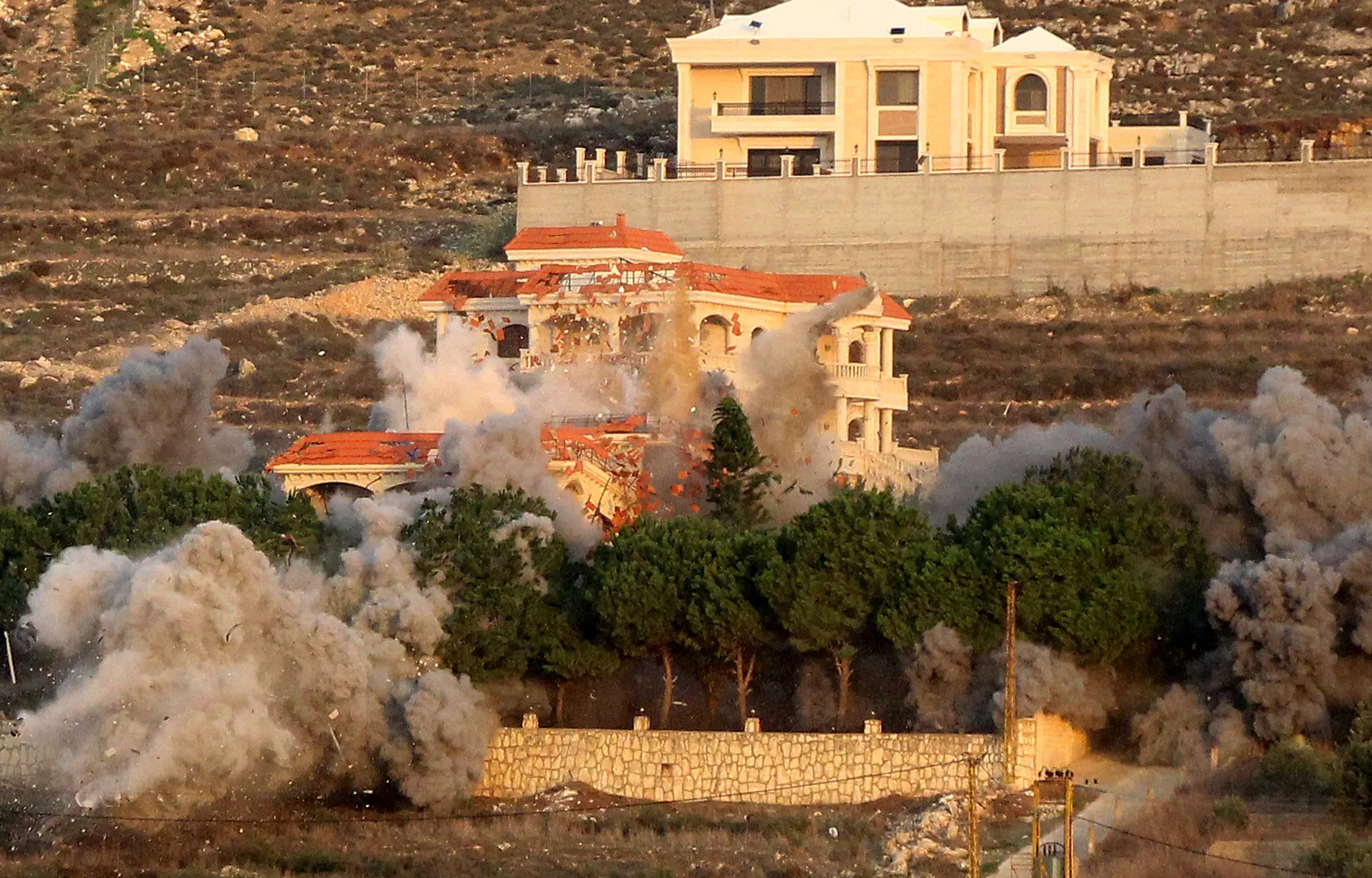
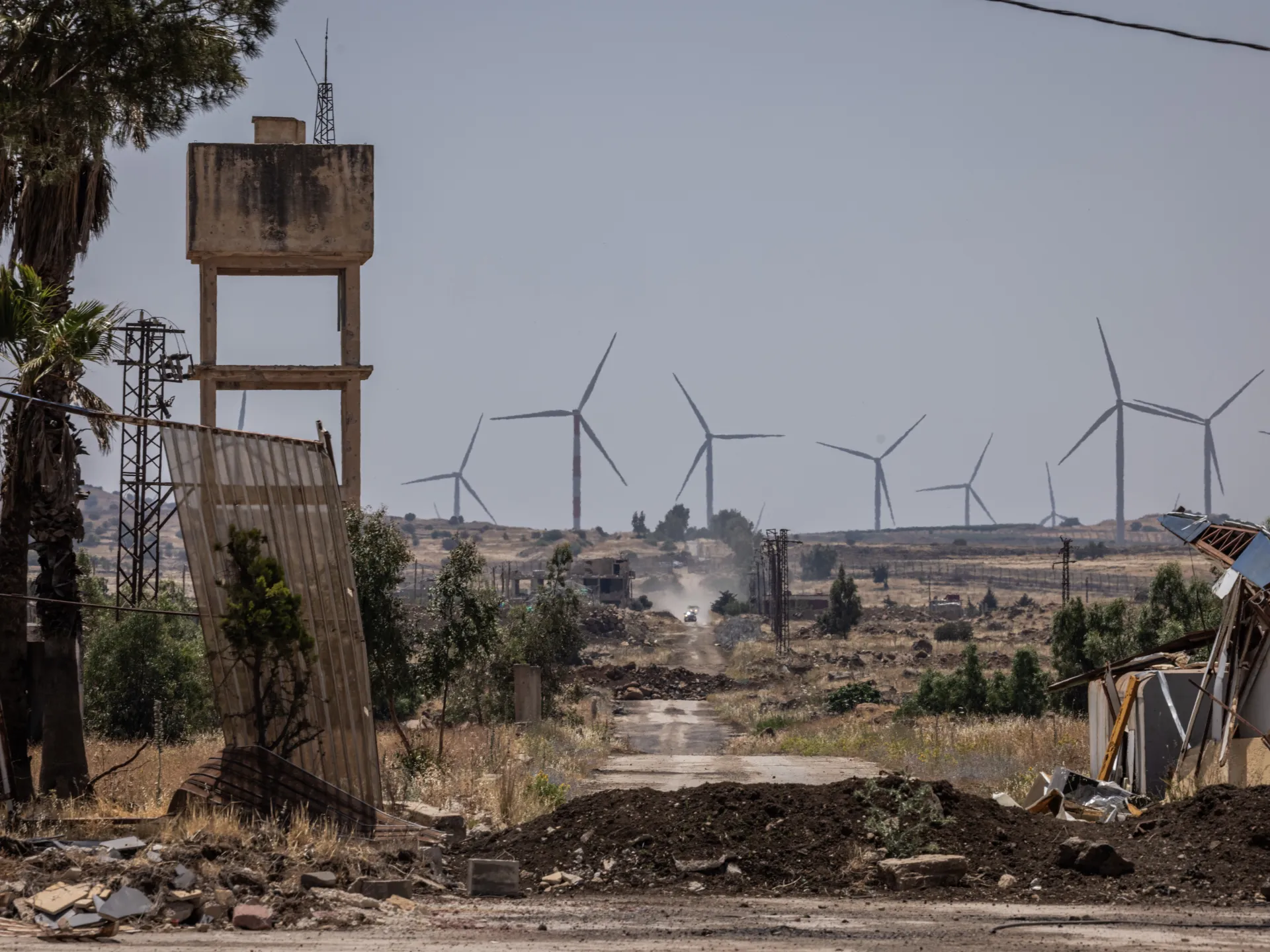
Israeli forces have advanced into the Quneitra area of Syria’s occupied Golan Heights and set up two military checkpoints, an Al Jazeera correspondent on the ground reports.

The Israeli military operation on Saturday took place in the villages of Ain Ziwan and al-Ajraf in the southern part of the country.

Recommended Stories

list of 4 itemsend of list

For months, Israeli forces have conducted near-daily incursions into southern Syria, particularly in the Quneitra governorate, carrying out arrests, erecting checkpoints, and bulldozing land, all of which have prompted growing public anger and unrest.

Syrian state television said the Israeli incursion was a violation of Syrian sovereignty, noting that the army used five military vehicles to set up the checkpoint in Ain Ziwan.

The latest raid comes one day after Israeli forces advanced towards the towns of al-Asha, Bir Ajam, Bariqa, Umm al-Azam and Ruwayhina in the southern Quneitra countryside, according to the Syrian News Agency (SANA).

Dozens of Syrians on Friday protested the Israeli incursion in the city of al-Salam in the Quneitra Governorate, condemning the ongoing Israeli attacks against citizens and their properties.

The demonstrators, part of a group called “Syrians with Palestine”, held banners denouncing what they stated were repeated Israeli violations of Syrian lands.

Despite a reduction in direct military threats, the Israeli army continues to carry out air raids that have caused civilian casualties and destroyed Syrian army sites and facilities.

Over the past year, Israel has launched more than 600 air, drone or artillery attacks across Syria, averaging nearly two attacks a day, according to a tally by the Armed Conflict Location and Event Data (ACLED).

Israeli military incursions have become more brazen, more frequent and more violent since Israel expanded its occupation of southern Syria following the ousting of President Bashar al-Assad in December 2024.

Disengagement accord

After al-Assad’s fall, Israel declared the 1974 Disengagement Agreement – brokered after the 1973 war, in which Syria failed to regain the occupied Golan Heights – void.

The agreement had established a UN-patrolled buffer zone, which Israel has since violated, advancing deeper into Syrian territory.

Citing al-Assad’s flight, Israel says the accord no longer applies, while carrying out air raids, ground incursions, reconnaissance flights; setting up checkpoints; and arresting or disappearing Syrians. Syria has not responded with attacks.

In September, Syrian President Ahmed al-Sharaa stated that Israel had conducted more than 1,000 air attacks and more than 400 ground incursions in Syria since al-Assad was overthrown, describing the actions as “very dangerous”.

Syrians believe that the continuation of these violations hinders efforts to restore stability in the region and undermines attempts to improve the economic situation in southern Syria.

Al Jazeera visited Quneitra in recent weeks and spoke to Syrians about Israeli incursions and abductions there, which have stoked fears.

Syria and Israel are currently in talks to reach an agreement that Damascus hopes will secure a halt to Israel’s air raids on its territory and the withdrawal of Israeli troops who have pushed into southern Syria.

In the background, the United States has been pushing diplomatic efforts to restore the 1974 deal.

Source link

Paris court rules against suspension of Shein after doll controversy

A man protests the opening of Shein’s first physical store in BHV building in Paris on Nov. 5. On Friday, a Paris court declined a government request to suspend the website’s operation in France. File Photo by Teresa Suarez/EPA

Dec. 19 (UPI) — A Paris court denied an effort by the French government to suspend the fashion website Shein from operating in the country after it was found to be selling “childlike” sex dolls.

The court called the three-month suspension “disproportionate,” but said the site must implement strong age-verification protocols to sell any “sexual products that could constitute pornographic content.” It said the fine for each breach would be $11,700.

The action was taken after the sex dolls and weapons were discovered by France’s consumer watchdog in November, causing an uproar in France.

Shein, based in Singapore, issued a statement on Nov. 4 saying it had removed the dolls and permanently banned “all seller accounts linked to illegal or non-compliant sex-doll products.”

The court noted that the company removed the items and that the issue was only for a small number of the hundreds of thousands of items on the site.

A Shein spokesperson told Euro News that the platform will not reopen in France right away. It’s doing an internal audit to find weaknesses in its marketplace operations.

Paris senator Marie-Claire Carrère-Gée of the conservative Les Républicains party told Euro News that “the issue with Shein or Temu goes far beyond these specific products. It is an entire business model that violates consumer rights, destroys our companies and jobs, and tramples on human rights, including environmental protection.”

The Paris prosecutor’s office has begun a criminal investigation and assigned it to France’s Office for the Protection of Minors. It includes other online retailers, including AliExpress, Temu, Wish and eBay.

The company opened its first-ever brick-and-mortar store in Paris on Nov. 5, soon after the controversy began. The store opened to chaos, as shoppers lined up to get in and protesters shouted at them, “Shame!”

The European Commission has requested information from Shein but hasn’t launched an investigation. It has begun investigating AliExpress and Temu.

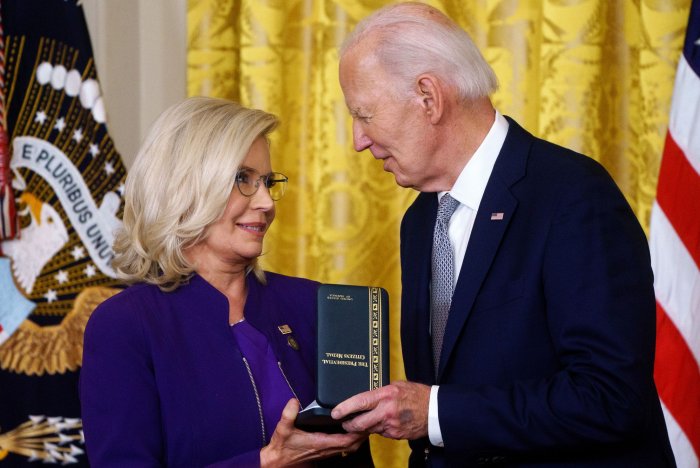
Former President Joe Biden presents the Presidential Citizens Medal to Liz Cheney during a ceremony in the East Room of the White House in Washington, on January 2, 2025. The Presidential Citizens Medal is bestowed to individuals who have performed exemplary deeds or services. Photo by Will Oliver/UPI | License Photo

Source link

Port of Dover Christmas getaway delays due to IT issues in Calais

Stuart Maisnerand

Simon Jones,South East

Gareth Fuller/PA Media Queues of traffic daytime on the road into the port of DoverGareth Fuller/PA Media

Queues of up to an hour formed at the entrance to the Port of Dover

Long queues of travellers formed earlier at the Port of Dover, which have been blamed on IT issues at French border controls.

The delays, which lasted into the afternoon, were described as “absolute chaos” by one traveller, and images of the port showed a long line of vehicles queuing at a standstill.

Eurotunnel was also experiencing lengthy delays at its Folkestone terminal on Saturday – at the start of a weekend which is expected to see the Christmas getaway reach its peak.

The Port of Dover reported that traffic was free-flowing just before 15:00 GMT, after several hours of delays.

The port is expected to see about 30,000 cars pass through it until Sunday.

One traveller had posted earlier on X: “Horrible experience at Port of Dover this morning. Absolute chaos.

“Traffic at a standstill for an hour. Worst start to holiday imaginable. Just missed our boat. Still stuck. Kids in car.”

One local resident told the BBC the town was “proper rammed”.

Gareth Fuller/PA Media Queues daytime of lorries and cars on M20 in Kent Gareth Fuller/PA Media

Holiday and freight traffic queue on M20 to use the Channel Tunnel

The port advised passengers not to arrive more than two hours before their sailing.

It said if customers do miss their scheduled sailing due to the wait times, their ferry operator will place them on the next available crossing.

Long queues were also seen on the roads leading into Dover.

A port spokesperson asked all port-bound traffic to remain on main roads “to allow the Dover community to travel to festive events and finish their Christmas shopping in the town”.

Eurotunnel said it had a waiting time of two and a half hours for cars and 60 minutes for freight at its Folkestone terminal due to “high demand”.

Meanwhile, public transport operators had experienced problems reaching the port.

Bus company Stagecoach said in a statement: “Due to heavy traffic at the docks the service will be unable to serve Eastern Docks at the moment.”

Source link

The eight key tasks of China’s economic work in 2026

The Central Economic Conference in Beijing in December 2025 identified eight key tasks for China’s economic work in 2026. Several of these areas particularly interest me as a China expert. Among the most important tasks for China’s economic work in 2026 is promoting a policy of supporting service exports through various measures to boost household income, raise basic pensions, and remove restrictions in the consumer sector. What struck me most during the Central Economic Conference meetings in Beijing in December 2025 was its emphasis on China’s continued opening up. This will provide tremendous global growth opportunities by expanding trade and investment, especially in the technology and renewable energy sectors, deepening integration into global value chains, and increasing demand for resources. This will drive the global economy in conjunction with China and create new partnerships, focusing on “high-quality development” and “high-level opening up” as fundamental pillars for mutual benefit and to stimulate innovation within the Chinese economy.

–            Main Tasks of the Beijing Economic Conference in December 2025

1)       Providing a huge market and investment opportunities: By increasingly encouraging the opening of its doors to foreign companies, China will create diverse opportunities in various sectors such as technology, innovation, and services.

2)       Making the Chinese economy an engine of global growth: The recovery and growth of the global economy depend heavily on China’s contribution, which accounts for a large share of the global economy.

3) Expanding free trade: China strongly supports free trade and the signing of regional agreements, reducing barriers and promoting trade exchanges.

4) Expanding the wheel of Chinese overseas investment: By significantly deepening the contribution of Chinese direct investment abroad to the economic development of other countries.

5)       Promoting innovation-led development in China to accelerate the development of new growth engines in 2026: This will bring significant benefits to foreign consumers and investors.  The meeting approved a package of policies aimed at strengthening the role of companies in innovation and implementing a new round of measures to develop high-quality key industrial chains, deepening and expanding fields such as artificial intelligence, which will bring more innovation opportunities to the world.

– Sectors in which China will expand in the future:

A) Innovation and Technology: China is a leader in fields such as artificial intelligence, renewable energy, and agricultural technology, driving global innovation.

B) Advanced Manufacturing: China’s rapid transition to high-quality development focuses on industrial upgrading and technological innovation, creating new products and services.

C)     Promoting Globalization: China opposes protectionism and supports inclusive economic globalization, creating a more interconnected and integrated global economy.

D)     Building a Community with a Shared Future for Mankind: The ultimate goal of China’s economic growth is to achieve common development and improve livelihoods for all, promoting win-win international cooperation.

–             Areas of China’s contribution to global development and the global economy in 2026, through:

1)       Product supply: As the “world’s factory,” with a focus on advanced technology.

2)       Demand stimulation: China’s enormous demand for commodities, energy, and raw materials supports other economies.

3)       Knowledge and technology transfer: Through investments and joint ventures.

4)       Support for sustainable development: By focusing on clean energy and green sectors.

   Accordingly, we understand that the main tasks for 2026, identified during the Central Economic Conference in Beijing in December 2026, are comprehensive and diverse. Chief among them is building a strong domestic market in China, reflecting a future strategic direction for the Chinese economy. This will promote sustainable development, support high-quality growth, foster innovation-led development, and uphold openness to the outside world. This means providing broader development opportunities for foreign investment and achieving growth that is synchronized with the development of the Chinese economy.

Source link

NEWS ANALYSIS : U.S. SENATE : Trailing Badly, Seymour Unable to Forge Image

When he was plucked by fate and his friend Pete Wilson from the political minor leagues to be a U.S. senator in January, 1991, John Seymour vowed to go back to Washington, shake up the congressional Establishment, make his mark for California and win election on his own.

After 22 months, the 54-year-old former Anaheim mayor is still struggling to forge a senatorial image of himself and his vision for California in the minds of voters.

His 59-year-old Democratic opponent, Dianne Feinstein, has coasted into the final week of the campaign with a commanding 54%-to-40% lead among likely voters surveyed by the Los Angeles Times Poll. Political experts credit her with building on her strong image from the 1990 contest for governor and conducting an error-free campaign that more often resembled that of a secure incumbent than the challenger.

The race for the U.S. Senate seat vacated by Wilson had shaped up as a classic California contest featuring a scrappy appointed incumbent and a strong challenger known to many voters as the tough officeholder “forged from tragedy” when she was thrust into the leadership of San Francisco by the shooting death of Mayor George Moscone in 1978.

Some experts thought it would be a close rerun of Feinstein’s 1990 battle with Wilson, which she lost by only 3.5%.

But so far the race hasn’t gotten that close.

Feinstein has demonstrated the immense benefits of having run an earlier campaign for major statewide office: Building an image among voters in a state of 30 million residents and the financial base needed to field such a campaign.

In analyzing the contest Tuesday, political experts credited Feinstein with running a consummate professional effort, if not a spectacular one. But even more emphatically, they characterized the Republican campaign as a missed opportunity that failed to follow a basic rule of politics: A candidate must define himself or herself to the voters before waging a negative campaign on the opponent.

Going into the last week of the campaign, one-fourth of California’s voters still did not know who John Seymour was, according to statewide opinion polls. Even more didn’t know much about him or why they should vote for him.

What’s more, Feinstein has demonstrated a Teflon resistance to attack. When Seymour attacked her, he often appeared strident or petty as Feinstein reacted indignantly and emerged all the stronger.

For 22 months, Seymour has been dogged and tireless, commuting regularly to Washington and campaigning throughout California with the tough can-do talk of a former Marine and a successful Orange County Realtor–the sort of man who’s not worried about the threat of Mexican competition under a free trade agreement because “we’ll kick their butts.”

He hounded Feinstein to hold more debates and pounded her with tough, largely negative television commercials.

His ads attacked her on all the perceived weaknesses of the tough 1990 campaign for governor: Her 1990 campaign’s legal problems, the potential conflict of interest of her banker-husband’s investments and her former position against the death penalty, which changed nearly 20 years ago.

Seymour added the hidden bomb of his opposition research: the fact that the five-member state women’s parole board on which Feinstein served from 1960 to 1966 paroled 21 convicted murderers out of more than 5,000 cases considered. By last week, Seymour even tried to link those 30-year-old decisions to the prospect that a convicted murderer like Robert Alton Harris, who was executed at San Quentin in April, might be set loose.

Essentially, Seymour duplicated the 1990 Wilson campaign playbook, Feinstein media adviser Bill Carrick said.

“But it’s 1992 not 1990,” Carrick said. “And in 1990, we never saw that crime as an issue made much difference. It’s less important in a Senate race.”

While Seymour tried to portray himself as an outsider, Feinstein attacked him as just another incumbent and, going to the heart of his failure to define himself to voters, asked: “How much do you know about Sen. John Seymour?”

Seymour, the ad said, was “a Washington big spender” who also had voted to raise his own pay four times. In fact, he had voted to raise his pay as a state senator, but not in the U.S. Senate, where he denounced the congressional pay raise and refused to accept it.

While Feinstein seemed relatively impervious to his ads, hers seemed to be finding the mark. The Times Poll found that in the last month, the number of respondents who had an unfavorable impression of Seymour had soared to 39%, an increase of 18 points.

“One has to infer they haven’t run a very good campaign,” Times Poll Director John Brennan said.

Veteran California pollster and analyst Mervin Field said: “He was unknown. He got appointed. He is unelected. He hasn’t distinguished himself in the Senate.”

UC Berkeley political science professor Bruce Cain said Seymour has been “invisible” as a senator and suffers “grayness” as a candidate.

Seymour insists he’s closing the gap. And on Tuesday, campaign manager Richard McBride said: “We’re fine, right where we are. Our tracking shows a lot of volatility among voters out there.”

But other polls point to a Feinstein victory Tuesday that would gain her some measure of revenge for her narrow loss of the governorship to Republican Wilson two years ago.

It was that loss that provided Feinstein her Senate opportunity. Before Wilson could take office as governor in January, 1991, he had to resign the Senate seat to which he was reelected for a six-year term in 1988. As governor, Wilson appointed a successor until the next general election. The winner Tuesday will serve the final two years of Wilson’s term and the seat will come up again in 1994 for a regular six-year stint.

Wilson angered GOP conservatives and puzzled nearly everyone else when he turned to Seymour, who had served eight years as a state senator but was not well known statewide. He had lost the Republican nomination for lieutenant governor in 1990 to a fellow Orange County senator.

Seymour bounded off to Washington, saying that to win the 1992 election, “John Seymour has got to perform and he’s got to make his mark very quickly.”

Seymour’s best opportunity to make a name for himself was to resolve two major California issues that had long simmered in Congress: the California desert wilderness bill and legislation to reform the federal Central Valley water project.

But Seymour presided over the death of the desert bill in 1991 because, Democratic critics contend, of his loyalty to ranching and mining interests.

In 1992, Seymour seized on Central Valley Project reform as his key issue. He bragged about muscling a water bill favorable to California agribusiness through the Senate over the objections of Senate giants like Bill Bradley (D-N.J.) and Bennett Johnston (D-La.). But Seymour’s measure was ignored in the House and Seymour was shut out of Senate-House conference sessions where the final version of the bill was drafted by others.

Seymour denounced the deal as being unfair to California farmers while he repeatedly misstated the dire effect it would have on California water supplies. With Wilson’s backing, Seymour implored President Bush to veto the measure. A final ignominy for Seymour would be Bush’s signature on the bill just a few days before the election.

Feinstein used her primary to reinforce the positive image and message of change she carried over from the 1990 race. She went after Seymour in the fall as an insider incumbent and capitalized on the “year of the woman,” but also was careful to avoid damaging mistakes.

Cain summed it up: “Dianne Feinstein has a formula which is well suited to California, which is a moderate to conservative Democrat who is pro-choice and pro-environment but also pro-business, for fiscal responsibility and the death penalty.”

“That formula has served her well,” Cain added. “She consolidated that image in 1990 and carried it into this campaign.”


Source link

Russian attack on Ukraine’s Odesa kills at least 8 as peace talks lumber on | Russia-Ukraine war News

A Russian ballistic missile strike on port infrastructure in Ukraine’s Odesa port in the south has killed at least eight people and wounded 27, as Moscow intensifies attacks on the strategic Black Sea region and talks to end the war remain in a critical stage.

The attack late on Friday hit critical logistics infrastructure, with some of the wounded trapped on a bus at the strike’s epicentre as trucks caught fire in a car park.

Recommended Stories

list of 2 itemsend of list

Ukrainian officials say the bombardment is part of a sustained Russian campaign against Odesa’s civilian infrastructure that has left more than two million people without electricity, water and heating for days amid freezing temperatures in the war’s fourth punishing winter.

Moscow struck the same port again on Saturday, hitting reservoirs in what Ukrainian Deputy Prime Minister Oleksii Kuleba described as deliberately targeting civilian logistics routes.

The escalation comes as both sides trade blows across multiple fronts, while United States-led negotiations and numerous high-level meetings in Europe to end the war lumber on without a breakthrough.

Russia claimed on Saturday to have seized the villages of Svitle in the eastern Donetsk region and Vysoke in the northeastern Sumy region, though the reports could not be independently verified.

Ukraine has responded with a widening campaign against Russian military and energy assets.

On Friday night, Ukrainian drones struck the Filanovsky oil rig belonging to Russian energy giant Lukoil in the Caspian Sea, along with a military patrol ship patrolling near the platform.

The attack marked the first officially acknowledged Ukrainian strike on Caspian drilling infrastructure, though the rig had been hit at least twice before in December.

Between December 14 and 15, Ukrainian forces used sea drones to strike a Russian Kilo-class submarine at the Novorossiysk Naval Base in the Black Sea, according to a United Kingdom Defence Intelligence assessment.

Miami talks

The attacks unfold as American and European officials gather in Miami for weekend talks aimed at ending the nearly four-year war, with Russian and Ukrainian teams also in attendance.

Russian envoy Kirill Dmitriev said on Saturday he was heading to Miami.

US Secretary of State Marco Rubio said Washington would not force Ukraine into any agreement, though he described the conflict as “not our war”.

Trump envoys Steve Witkoff and Jared Kushner are leading discussions with Ukrainian negotiator Rustem Umerov and officials from the UK, France and Germany. Russian representatives, including Kremlin key negotiator Dmitriev, are meeting separately with American officials.

The key obstacle remains territorial concessions, with reports suggesting Washington is pushing Kyiv to cede parts of the eastern Donetsk region.

Russian President Vladimir Putin showed no signs of compromise at his annual choreographed news conference on Friday, pledging to press ahead with military operations and predicting new successes before the year’s end.

Putin’s remarks were the latest in a drumbeat of often-repeated maximalist Russian positions nearly four years after he ordered troops into the neighbouring country.

The issue of territory gained, lost, to be ceded or not, delves into the heart of the matter on one of the most contentious issues in the talks to end the war so far.

Putin has demanded Ukraine cede all territory in four key regions his forces have captured and occupied, along with Crimea, which Moscow seized and annexed in 2014.

He also wants Ukrainian troops to withdraw from parts of eastern Ukraine that Russian forces have not yet taken in the eastern Donetsk region, where fighting remains attritional – conditions Kyiv has rejected outright.

As talks continue, so does the fighting, with Russia controlling large parts of Ukraine’s eastern and Black Sea coastal regions.

Putin projected confidence on Friday about battlefield progress, saying Russian forces had “fully seized strategic initiative” and would make further gains before the year ends.

However, that narrative is on shaky ground this week, as Moscow’s assertion of inevitable victory flew in the face of facts on the ground.

Ukraine steadily took back control of almost all of its northern city of Kupiansk after isolating Russian forces within it, belying Russian claims to have seized it.

Russian forces were also unable to dislodge Ukrainian defenders from the eastern city of Pokrovsk in the eastern area of Donetsk to back up Moscow’s claims of total control.

Ukraine received a boost on Friday when European leaders agreed to provide a 90 billion euros ($105bn) loan to cover military and economic needs for the next two years.

President Volodymyr Zelenskyy, who met Polish President Karol Nawrocki in Warsaw the same day to reinforce regional unity against Russia, said the funds would go towards defence if the war continues or reconstruction if peace is achieved.

Source link

Ex-Pakistan PM Imran Khan, wife sentenced to 17 years in corruption case | Imran Khan News

Khan and his wife have denied accusations that they misrepresented the value of state gifts, including jewellery, and profited from them.

Pakistan’s former Prime Minister Imran Khan and his wife Bushra Bibi have been sentenced to 17 years in prison after a Pakistani court found them guilty of illegally retaining and selling valuable state gifts.

The sentence, handed down on Saturday, capped a years-long saga that saw the duo accused of selling various gifts – including jewellery from the Saudi Arabian government – at far below market value. They have denied all charges.

In order to keep gifts from foreign dignitaries, Pakistani law requires officials to purchase them at market value and to declare profits from any sales.

But prosecutors claimed that the couple profited from the items after purchasing them at an artificially low price of $10,000, compared with their market rate of $285,521.

Khan’s supporters were quick to denounce the ruling, with his spokesperson Zulfikar Bukhari saying that “criminal liability was imposed without proof of intent, gain, or loss, relying instead on a retrospective reinterpretation of rules”.

His party, Pakistan Tehreek-e-Insaf, wrote on social media that the proceedings were a “sham” and criticised international media coverage of the case.

The 73-year-old former leader served as Pakistan’s prime minister from 2018 until April 2022, when he was ousted in a no-confidence vote.

He was imprisoned starting in August 2023 on various charges of corruption and revealing state secrets, all of which he has denied and claimed to be politically motivated. He has been acquitted of some charges.

An internationally famous cricket player in the heyday of his sporting career, Khan remains popular in Pakistan, with his imprisonment leading to protests throughout the last two years.

The former leader is now confined to a prison in the city of Rawalpindi and “kept inside all the time”, his sister, Uzma Khanum, told journalists earlier this month.

Khanum, a doctor who was the first family member allowed to visit Khan in weeks, described him as “very angry” about the isolation, saying that he considered the “mental torture” of imprisonment to be “worse than physical abuse”.

Source link

Low-cost airline group emerges in Mexico

Aero,exico remain Mexico’s flagship carrier, but faces competition from low-cost carriers. File Photo by Jose Mendez/EPA

Dec. 19 (UPI) — Mexican low-cost airlines Volaris and Viva Aerobus announced an agreement to create a new holding company through a merger of equals — a deal aimed at expanding low-fare air travel and strengthening Mexico’s air connectivity with the United States and Latin America.

The transaction will combine the parent companies of Volaris and Viva into a single entity, while each airline will continue to operate independently under its own brand, air operator certificate, leadership structure and route network.

Once the deal closes, shareholders of each company will hold 50% of the new group on a fully diluted basis. Viva shareholders will receive newly issued shares of Volaris’ holding company, while Volaris shareholders will retain their existing shares, according to DF SUD.

The boards of both airlines unanimously approved the transaction. The deal is subject to regulatory and shareholder approvals and is expected to close in 2026. Shares of the holding company will continue to trade on the Mexican Stock Exchange and the New York Stock Exchange.

The new group would become Mexico’s largest low-cost airline platform and a regional player with growing relevance for travelers seeking cheaper options across North America and Latin America.

Volaris shares jumped more than 20% after the announcement, driven by expectations of operational efficiencies and cost reductions.

Volaris is a publicly traded company backed by U.S.-based Indigo Partners, which also controls Frontier Airlines in the United States and JetSmart in Chile.

Viva Aerobus is privately held and controlled by Mexican transportation group IAMSA, led by businessman Roberto Alcantara Rojas, who will serve as chairman of the new holding company

Both airlines operate all-Airbus fleets and focus on a low-cost, point-to-point business model. Their main competitor in Mexico’s domestic market is Aeromexico, the country’s flag carrier.

The agreement comes amid a complex period for Mexican aviation and air relations with the United States. In October, the U.S. Department of Transportation rejected more than a dozen routes proposed by Mexican airlines, citing disputes over slot management at Mexico City’s main airport and the relocation of cargo operations to a more distant terminal.

In November, President Claudia Sheinbaum said Mexican airlines would give up some airport slots to U.S. competitors. U.S. airlines currently account for more than half of international passenger traffic between the two countries, while Mexican carriers represent less than 30%.

Industry analysts say the creation of the new holding could strengthen Mexico’s position in the regional market without, for now, triggering a full operational merger that could face stronger regulatory opposition.

Source link

Iran executes man accused of spying for Israel’s Mossad: State media | Israel-Iran conflict News

Aghil Keshavarz is the tenth person put to death for espionage since June conflict with Israel.

Iran has executed a man convicted of spying for Israel’s Mossad intelligence agency, judicial authorities announced, as Tehran continues a widening crackdown on alleged collaborators following the 12-day Israel-United States-Iran war earlier this year.

Aghil Keshavarz was put to death on Saturday morning after the Supreme Court upheld his conviction on espionage charges, according to Mizan, the judiciary’s official news agency.

Recommended Stories

list of 2 itemsend of list

The 27-year-old architecture student was arrested earlier this year in the northwestern city of Urmia after military patrols caught him photographing an army headquarters building.

The execution adds to a growing number of people put to death for espionage since the June conflict, with at least 10 executed by September alone.

In September, Iran executed a man it said was “one of the most important spies for Israel in Iran”.

In October, Tehran toughened legislation against alleged spies for Israel and the US, making espionage automatically punishable by death and asset confiscation.

According to the Mizan report, Keshavarz was accused of conducting more than 200 missions for Israeli intelligence services across Tehran, Isfahan, Urmia and Shahroud.

The missions allegedly included photographing target sites, conducting opinion polling, and monitoring traffic patterns at specific locations.

Authorities said he communicated with both Israel’s Mossad and military officials through encrypted messaging platforms, receiving payment in cryptocurrency after completing assignments.

The judiciary said Keshavarz had “knowingly cooperated” with Israeli services with the intention of harming Iran’s Islamic Republic.

The Oslo-based Iran Human Rights group has previously disputed similar espionage convictions, saying suspects are often tortured into false confessions.

Israel’s offensive in June involved 12 days of air attacks, including several against Iran’s top generals and nuclear scientists, as well as civilians in residential areas, for which Iran retaliated with barrages of missiles and drones. The US also carried out extensive strikes, on Israel’s behalf, on Iranian nuclear sites during the conflict. According to Amnesty International, Israeli attacks on Iran killed at least 1,100 people.

In response to the June war and protests in recent years over the state of the economy and women’s rights, as well as calls for regime change, Iran has sentenced more people to death.

Source link

Uruguay’s FM on US claims to police Latin America and rising tensions | Nicolas Maduro

Mario Lubetkin on Washington’s revived sphere-of-influence doctrine, Venezuela, and China’s growing footprint.

The United States is reviving a policy first set out in the 1800s that treats Latin America as its strategic sphere of influence. As Washington expands maritime operations in the Caribbean and eastern Pacific, critics warn of legal violations and rising regional instability.

Uruguay’s Foreign Minister Mario Lubetkin joins Talk to Al Jazeera to discuss US strikes, Venezuela, migration pressures, and China’s growing role in the region — and whether diplomacy can still prevent escalation in a hemisphere shaped once again by power politics.

Source link

MSF urges Israel to let critical aid into Gaza as children freeze to death | Israel-Palestine conflict News

Doctors Without Borders, known by its French initials MSF, has warned that babies and children in the Gaza Strip are dying from harsh winter weather, calling on Israel to ease its aid blockade as the military continues to violate the ceasefire and press on with its genocidal war.

Citing the death of a 29-day-old premature baby, Said Asad Abedin, from severe hypothermia in southern Gaza’s Khan Younis, MSF said on Friday that winter storms “combined with the already dire living conditions [are] increasing health risks”.

Recommended Stories

list of 4 itemsend of list

The death toll from extreme weather stood at 13 as of Thursday, according to Gaza’s Ministry of Health. Another two-week-old baby, Mohammed Khalil Abu al-Khair, froze to death without access to proper shelter or clothing earlier this week.

Ahmed al-Farra, head of the maternity paediatric department at Nasser Medical Complex, said in a video update that “hypothermia is very dangerous” for babies. “If nothing is offered for these families in the tents, for warming, for mobile homes, for caravans, unfortunately, we will see more and more” deaths, al-Farra said.

Children are “losing their lives because they lack the most basic items for survival,” Bilal Abu Saada, a nursing team supervisor at Nasser Hospital, told MSF. “Babies are arriving to the hospital cold, with near-death vital signs.”

In addition to the growing number of deaths, MSF said its staff has recorded high rates of respiratory infections that it expects to increase throughout the winter, posing a particular danger to children under five.

“As Gaza is battered by heavy rains and storms, hundreds of thousands of Palestinians continue to struggle in flooded and broken makeshift tents,” the organisation added. “MSF calls on Israeli authorities to urgently allow a massive scale up of aid into the Strip.”

No letup in Israeli attacks

Palestinian news agency Wafa, meanwhile, reported that Israeli forces demolished buildings, carried out artillery shelling and shot guns in areas east of Gaza City on Saturday morning, with more gunfire reported east of Khan Younis.

On Friday, an Israeli strike on a shelter for displaced Palestinians killed at least six people. The Israeli military claimed to be firing on “suspects”.

Graphic videos from the scene showed body parts and terrified civilians trying to carry wounded people out of danger.

Military vehicles also descended upon the town of az-Zawiya, located west of Salfit in the occupied West Bank, where forces severely beat and injured a number of citizens and stormed homes, the agency said.

‘I can still hear his tiny cries’

Heavy rain, high winds and freezing temperatures have battered Gaza in recent weeks, flooding or blowing away more than 53,000 tents that have served as makeshift shelters for displaced Palestinians.

With huge swaths of buildings and infrastructure destroyed, streets are quick to flood and sewage overflows. Displaced families have sought refuge in the shells of partially fallen-down buildings despite the risk of collapse, with 13 buildings caving in across Gaza last week.

The winter weather and Israel’s blocking of vital aid and mobile homes for shelter have proven deadly for children and babies.

Late in the evening of December 13, Eman Abu al-Khair, a 34-year-old displaced Palestinian living in al-Mawasi west of Khan Younis, found her sleeping baby Mohammed “cold as ice”, his hands and feet frozen and “his face stiff and yellowish”, she told Al Jazeera.

She and her husband couldn’t find transportation to get to hospital, and intense rain made it impossible to make the trek by foot.

After rushing Mohammed by animal-drawn cart to Red Crescent Hospital in Khan Younis at dawn, he was admitted to intensive care with a blue face and convulsions. He died two days later.

“I can still hear his tiny cries in my ears,” Eman said. “I sleep and drift off, unable to believe that his crying and waking me at night will never happen again.”

Mohammed “had no medical problems,” she added. “His tiny body simply couldn’t withstand the extreme cold inside the tents.”

Since the October 10 ceasefire took effect, Israel has continued to block the entry of humanitarian aid into the Gaza Strip despite calls from a host of United Nations agencies, international organisations and other states for it to stop.

The UN has said that Israel has prevented tents and blankets from reaching Palestinians, even as an estimated 55,000 families have seen their belongings and shelters damaged or destroyed in the storm.

Dozens of child-friendly spaces have also been damaged, affecting 30,000 children, according to the UN.

Natasha Hall, a senior advocate for Refugees International, told Al Jazeera that aid is entering Gaza in a “trickle” in part due to its opaque list of “controlled dual-use items” that has included nappies, bandages, tools, tents and other essentials.

“It’s unclear how those could be used as weapons or any kind of dual use,” Hall said.

Source link

November home sales show supply dipping

Dec. 19 (UPI) — Sales of previously owned homes rose 0.5% in November from October, reflecting a slowdown, due to high mortgage rates, high prices and less supply.

Home sales were 1% lower than November 2024, according to the National Association of Realtors. Sales came in at an annualized rate of 4.13 million units.

The numbers are based on closings, so contracts may have been signed in the preceding months when rates dipped slightly.

Supply fell in November after rising most of the year. The association said there were 1.43 million homes for sale at the end of the month, which is down 5.9% from October, but up 7.5 percent year-over-year.

That’s a 4.2-month supply. A six-month supply is considered balanced between buyer and seller.

The average 30-year fixed-rate mortgage rate was 6.24%, down from 6.25% in October and 6.81% from a year ago, showing slow change in rates.

The median existing-home price for all housing types was $409,200, up 1.2% from a year ago.

The median time on the market for properties was 36 days, up from 34 days last month and 32 in November 2024.

“Existing-home sales increased for the third straight month due to lower mortgage rates this autumn,” said the Association of Realtors’ Chief Economist Lawrence Yun in a statement. “However, inventory growth is beginning to stall. With distressed property sales at historic lows and housing wealth at an all-time high, homeowners are in no rush to list their properties during the winter months.”

Month-over-month sales increased in the Northeast and South, showed no change in the West, and fell in the Midwest. Year-over-year sales showed no change in the Northeast and South, and decreased in the Midwest and West.

“Wage growth is outpacing home price gains, which improves housing affordability. Still, future affordability could be hampered if housing supply fails to keep pace with demand,” Yun said. “As has been the case throughout the year, single-family home sales outperformed condominium sales in November. The typical price of a sold condo was 13.5% lower than the typical price of a single-family home. However, the purchase price does not include the condominium association fees, which are rising and making these purchases more expensive.”

Former President Joe Biden presents the Presidential Citizens Medal to Liz Cheney during a ceremony in the East Room of the White House in Washington, on January 2, 2025. The Presidential Citizens Medal is bestowed to individuals who have performed exemplary deeds or services. Photo by Will Oliver/UPI | License Photo

Source link

The Ashes: Zak Crawley unaware of Ben Stokes’ ‘weak men’ comment

Opener Zak Crawley suggested he was not aware of comments made by Ben Stokes when the England captain said his dressing room is “not a place for weak men”.

Stokes made the statement in multiple interviews following England’s defeat in the second Ashes Test against Australia earlier this month.

In the run-up to the third Test, in which England are set to be beaten to lose the series at the earliest opportunity, Stokes said he had let his message “drift around” his players.

“I’ve done all the talking over the past two days that I needed to have done,” said the all-rounder.

But after Crawley made 85 on the fourth day of the third Test in Adelaide, he said: “I didn’t see that.

“I didn’t see and wasn’t really looking out for it. We take everything that is said in the media with a pinch of salt.”

Stokes made the “weak men” comment after England were beaten in Brisbane to go 2-0 down.

The England squad subsequently went on holiday to Noosa between the second and third Tests.

Before this match in Adelaide, Stokes said his team had held “raw” conversations. The captain also asked his players to “show a bit of dog” in their battle to remain in the series.

But Kent’s Crawley stated the messaging from Stokes and head coach Brendon McCullum had remained consistent with their previous three years in charge.

“It’s been very positive, the same as always,” said Crawley. “[It’s] just trying to be optimistic, play our way, with lots of freedom. It felt like we could do something special going into this game.”

Source link