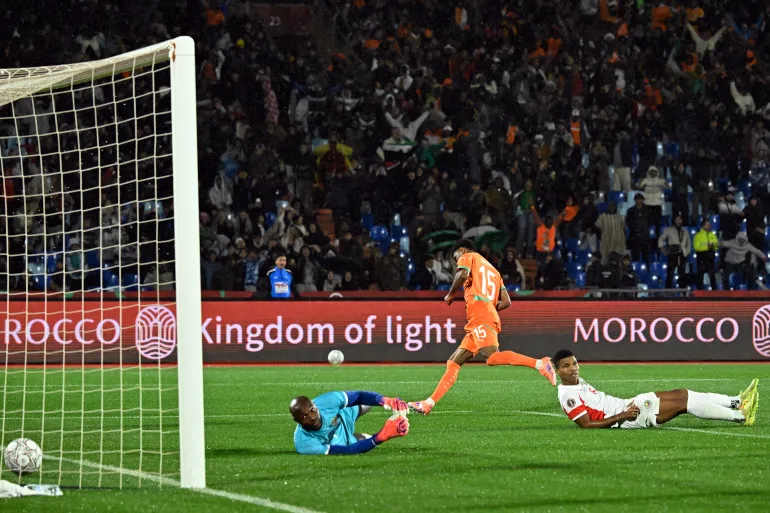
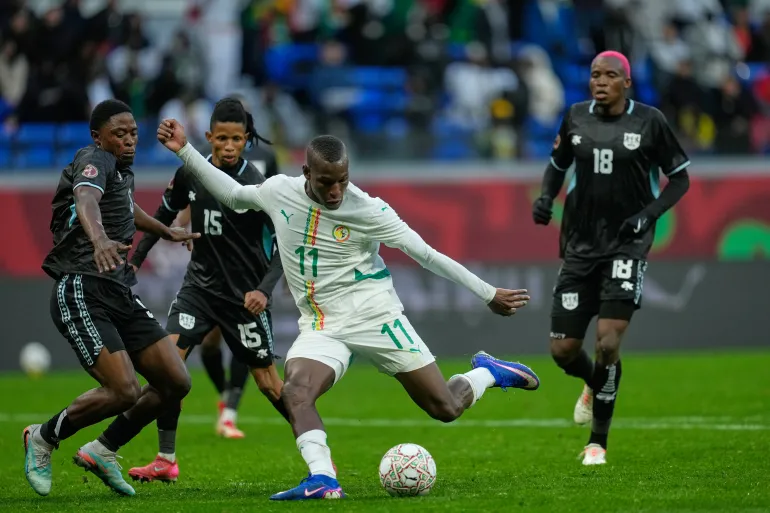
A lone goal by the Manchester United forward is enough for Ivory Coast to successfully begin their AFCON title defence.
Published On 24 Dec 202524 Dec 2025
Share
Holders Ivory Coast squandered a number of chances, but Amad Diallo’s goal early in the second half was enough to beat Mozambique 1-0 and give them a winning start to their Africa Cup of Nations (AFCON) title defence.
In the opening Group F game on Wednesday in Morocco, the Ivorians battled to break down their opponents in a competitive first half but took firm control after the break without converting the many chances they created.
Recommended Stories
list of 4 itemsend of list
Diallo side-footed the ball into the net in the 49th minute to ensure the three-point haul in rainy conditions, but the scoreline would have been a lot more emphatic had the Ivorians been sharper in front of goal.
Wilfried Zaha, playing his first international in more than two years after his surprise recall for the Cup of Nations finals, wasted several chances, and Franck Kessie had two point-blank efforts saved by Mozambique goalkeeper Ernan.
Ivorian substitute Vakoun Bayo also had an opportunity with an easy header in front of goal but somehow put it wide, and in the 89th minute, Bayo had an effort cleared off the line with Ernan caught well out of his goal.
Mozambique brought on winger Dominguez as a second-half substitute at the age of 42 years, one month and six days, making him the oldest outfield player in tournament history behind only former Egypt goalkeeper Essam El Hadary, who was 44 when he played in the 2017 final.
Mozambique are still to win a match at the finals, stretching back to their tournament debut in 1986. This is their sixth appearance with a record of four draws and 12 losses.
Diallo, centre, scores the only goal of the contest in the 49th minute [Khaled Desouki/AFP]
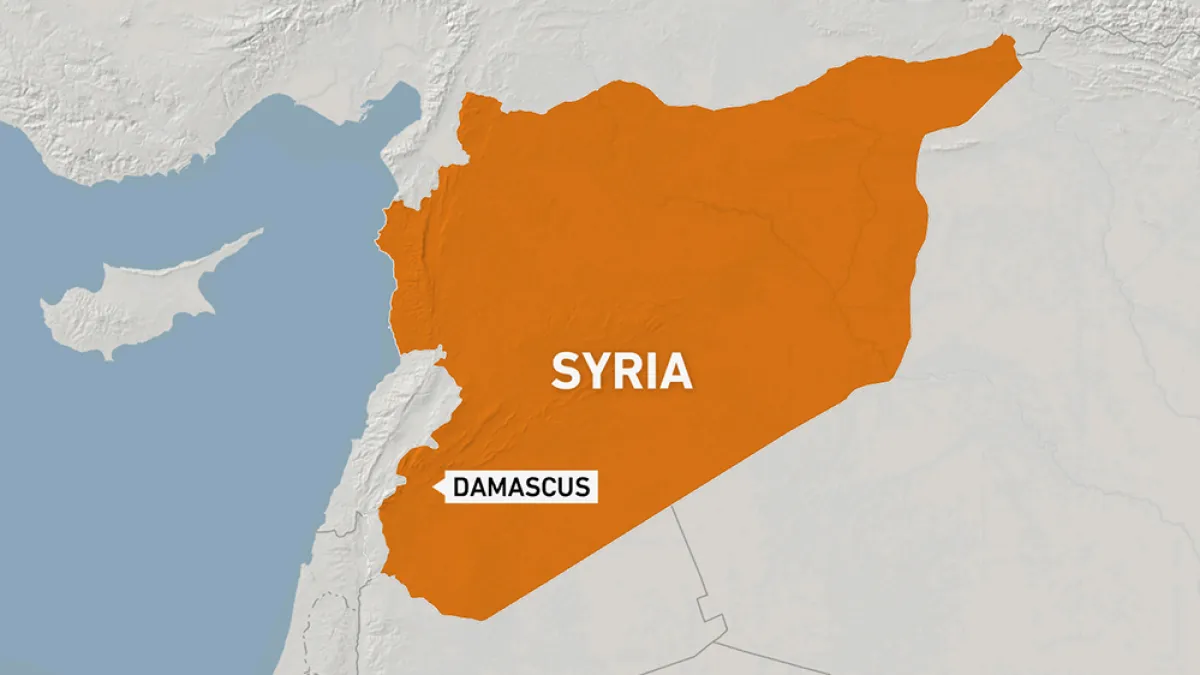
Syrian officials confirm the arrest of ISIL leader Taha al-Zoubi in a security operation near Damascus.
Published On 24 Dec 202524 Dec 2025
Share
Syria’s Ministry of Interior has announced the arrest of Taha al-Zoubi, a leading figure in the ISIL (ISIS) group, in the Damascus countryside, the country’s SANA news agency reported.
The report said a “tightly executed security operation” was carried out that led to the arrest of al-Zoubi, adding that “a suicide belt and a military weapon were seized in his possession”.
SANA quoted Brigadier General Ahmad al-Dalati, head of internal security in the Damascus countryside, as saying the raid targeted an ISIL hideout in Maadamiya, southwest of Damascus, and was carried out “in cooperation” with an anti-ISIL alliance that includes the United States-led coalition fighting the group.
The US Central Command (CENTCOM) has not publicly confirmed the operation.
Al-Dalati said al-Zoubi, also known as Abu Omar Tibiya, served as the group’s “wali”,or governor, of Damascus and that several alleged aides were also detained.
The official added that the arrest dealt a “crippling blow” to ISIL networks in the capital region and showed the “readiness of the security apparatus”.
“We send a clear message to anyone who dares to engage in the project of terrorism or lend support to ISIS: The hand of justice will reach them wherever they are,” al-Dalati said.
ISIL, which views the new government in Damascus as illegitimate, has mainly concentrated its activities against Kurdish forces in the north.
At its peak, ISIL ruled an area half the size of the United Kingdom, spanning across Iraq and Syria, with Raqqa in the latter being the capital of the armed group’s self-declared “caliphate”.
The group was notorious for its brutality, carrying out massacres of Syrians and Iraqis and beheadings of foreign captives.
ISIL was defeated in Iraq in 2017 and in Syria two years later, but its fighters and cadres of armed group members still carry out deadly attacks in both countries and elsewhere, including in Africa and Afghanistan.
Khartoum proposes plan to end the conflict, but the UN warns violence is worsening.
As 2025 comes to an end, there is still no sign of peace in Sudan.
The conflict between the army and paramilitary Rapid Support Forces (RSF) began more than two and a half years ago and has killed tens of thousands of people and displaced millions.
Recommended Stories
list of 3 itemsend of list
This week, the prime minister presented a peace plan to the United Nations Security Council. It would see the RSF give up its weapons and the territory it controls.
The RSF says the plan is “closer to fantasy than to politics”.
Where does this leave Sudan’s future?
Presenter: Sami Zeidan
Guests:
Ahmad Ibrahim – independent Sudan analyst
Cameron Hudson – former director of African affairs at the United States National Security Council
Khalid Medani – chairperson of the African studies programme at Canada’s McGill University
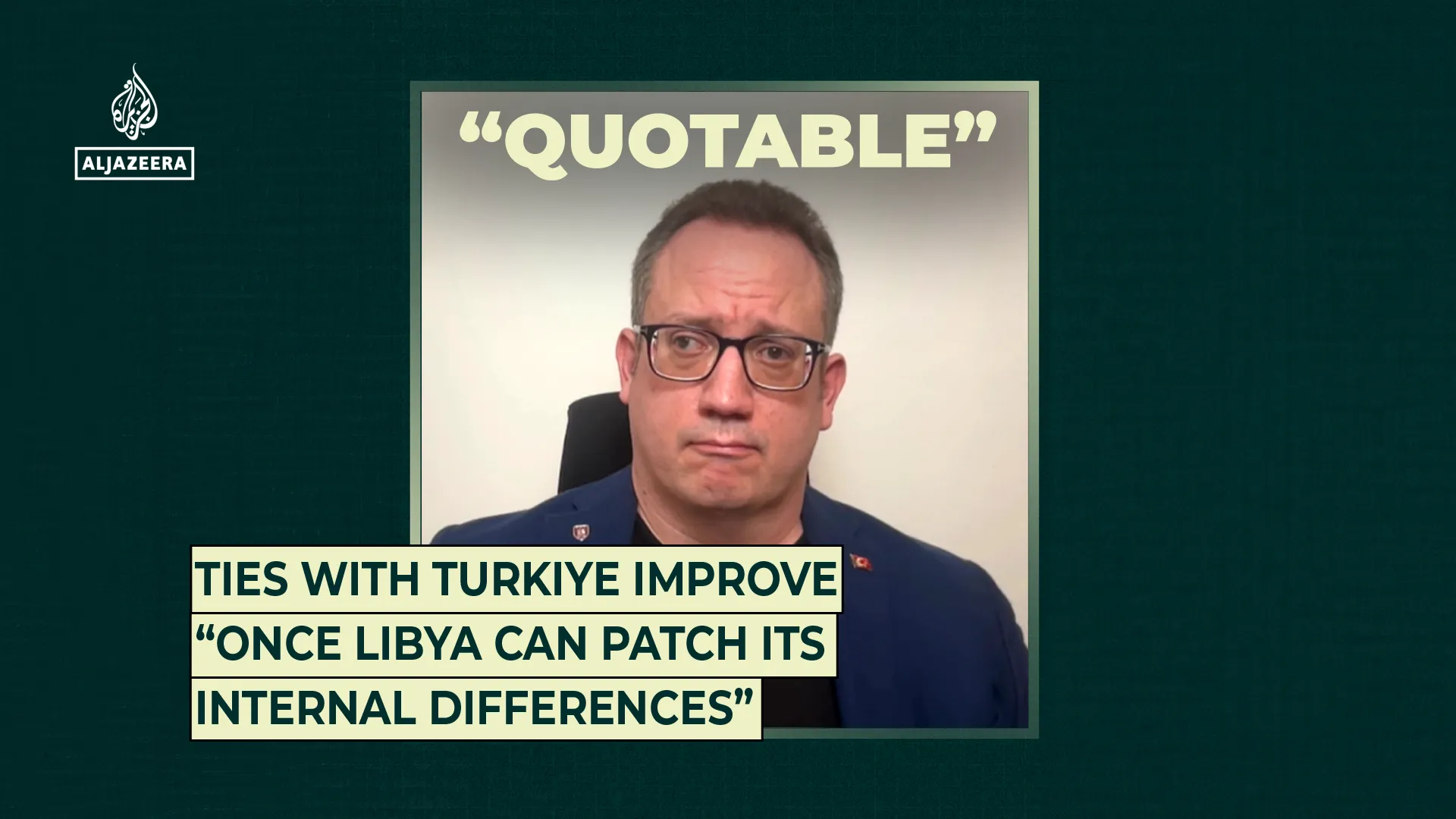
Barin Kayaoglu, of the Social Sciences University of Ankara, says that a Libyan general’s plane crash in Turkiye is unlikely to impact the broader framework of Turkiye’s role in Libya.
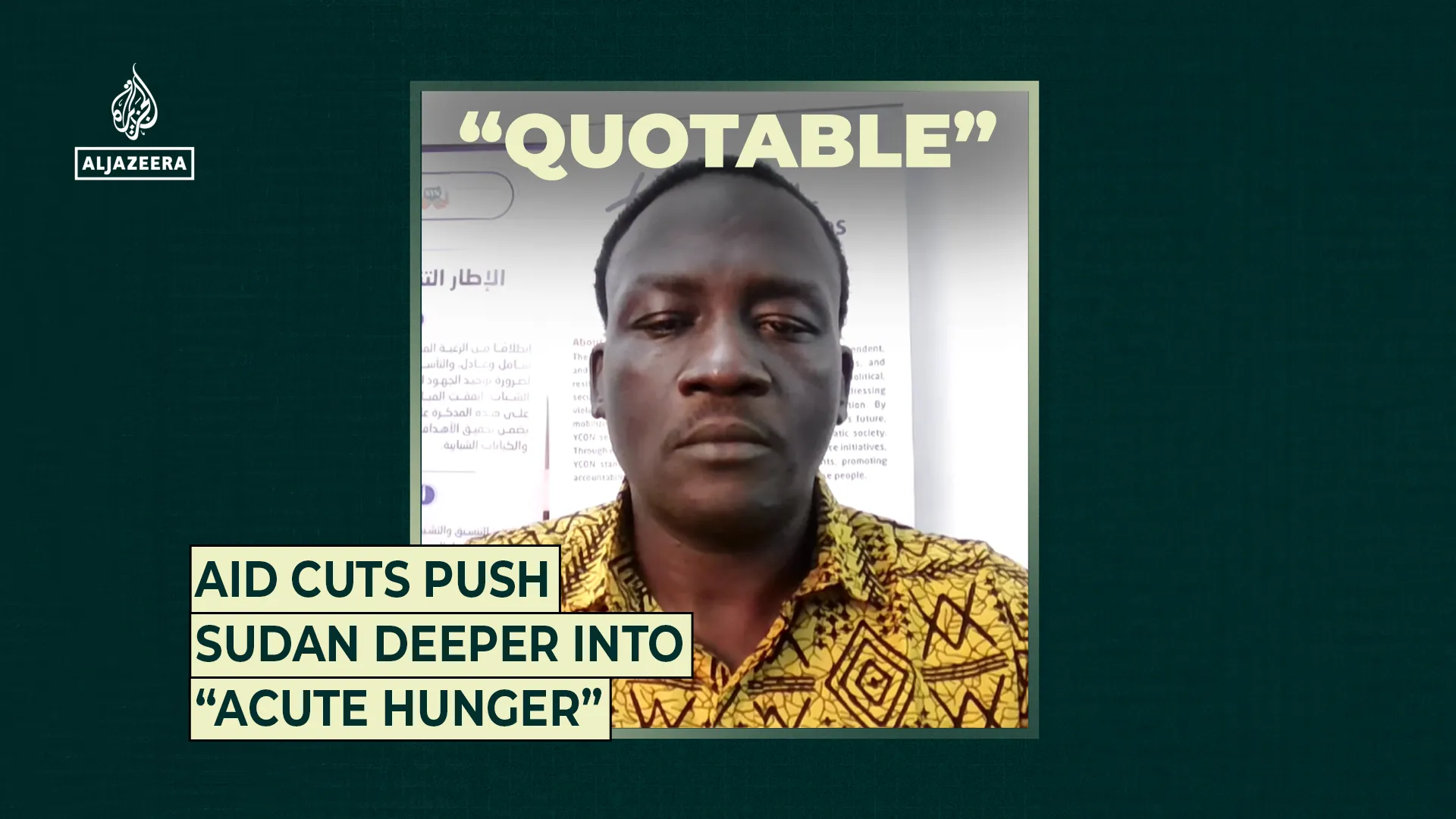
Khalid Mishain, from the Youth Citizens Observers Network, says cuts to humanitarian funding are deepening Sudan’s crisis, with famine spreading, aid groups pulling back, and hunger set to worsen without immediate action.
Every December, much of the Christian world enters a familiar cycle of celebration: carols, lights, decorated trees, consumer frenzy and the warm imagery of a snowy night. In the United States and Europe, public discourse often speaks of “Western Christian values”, or even the vague notion of “Judeo-Christian civilisation”. These phrases have become so common that many assume, almost automatically, that Christianity is inherently a Western religion — an expression of European culture, history and identity.
It is not.
Christianity is, and has always been, a West Asian / Middle Eastern religion. Its geography, culture, worldview and founding stories are rooted in this land — among peoples, languages and social structures that look far more like those in today’s Palestine, Syria, Lebanon, Iraq, and Jordan than anything imagined in Europe. Even Judaism, invoked in the term “Judeo-Christian values”, is itself a thoroughly Middle Eastern phenomenon. The West received Christianity — it certainly did not give birth to it.
And perhaps nothing reveals the distance between Christianity’s origins and its contemporary Western expression more starkly than Christmas — the birth story of a Palestinian Jew, a child of this land who was born long before modern borders and identities emerged.
What the West made of Christmas
In the West, Christmas is a cultural marketplace. It is commercialised, romanticised and wrapped in layers of sentimentality. Lavish gift-giving overshadows any concern for the poor. The season has become a performance of abundance, nostalgia, and consumerism — a holiday stripped of its theological and moral core.
Even the familiar lines of the Christmas song Silent Night obscure the true nature of the story: Jesus was not born into serenity but into upheaval.
He was born under military occupation, to a family displaced by an imperial decree, in a region living under the shadow of violence. The holy family were forced to flee as refugees because the infants of Bethlehem, according to the Gospel narrative, were massacred by a fearful tyrant determined to preserve his reign. Sound familiar?
Indeed, Christmas is a story of empire, injustice and the vulnerability of ordinary people caught in its path.
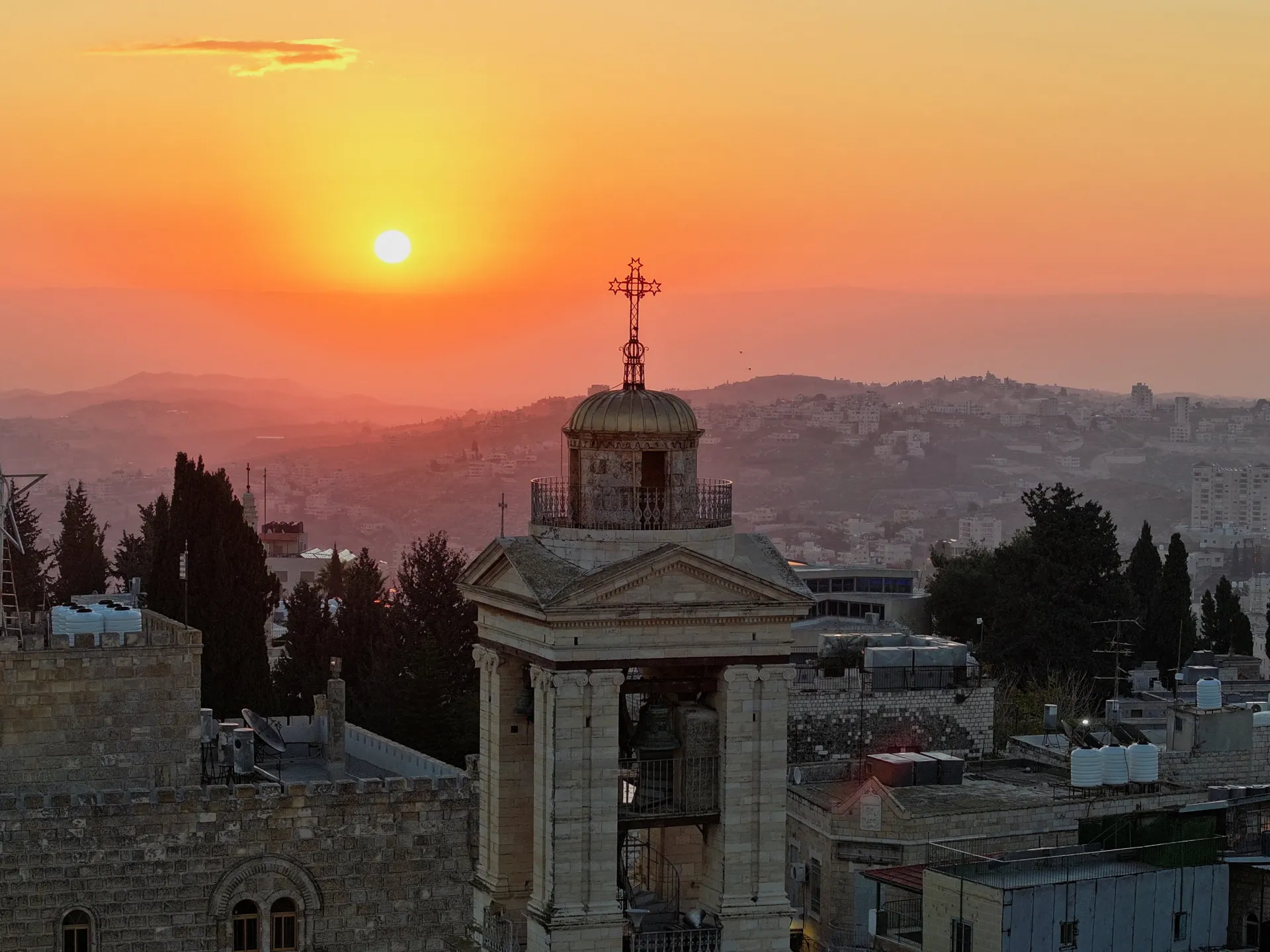
Bethlehem: Imagination vs reality
For many in the West, Bethlehem – the birthplace of Jesus – is a place of imagination — a postcard from antiquity, frozen in time. The “little town” is remembered as a quaint village from scripture rather than a living, breathing city with actual people, with a distinct history and culture.
Bethlehem today is surrounded by walls and checkpoints built by an occupier. Its residents live under a system of apartheid and fragmentation. Many feel cut off, not only from Jerusalem – which the occupier does not allow them to visit – but also from the global Christian imagination that venerates Bethlehem’s past while often ignoring its present.
This sentiment also explains why so many in the West, while celebrating Christmas, care little about the Christians of Bethlehem. Even worse, many embrace theologies and political attitudes that erase or dismiss our presence entirely in order to support Israel, the empire of today.
In these frameworks, ancient Bethlehem is cherished as a sacred idea, but modern Bethlehem — with its Palestinian Christians suffering and struggling to survive — is an inconvenient reality that needs to be ignored.
This disconnect matters. When Western Christians forget that Bethlehem is real, they disconnect from their spiritual roots. And when they forget that Bethlehem is real, they also forget that the story of Christmas is real.
They forget that it unfolded among a people who lived under empire, who faced displacement, who longed for justice, and who believed that God was not distant but among them.
What Christmas means for Bethlehem
So what does Christmas look like when told from the perspective of the people who still live where it all began — the Palestinian Christians? What meaning does it hold for a tiny community that has preserved its faith for two millennia?
At its heart, Christmas is the story of the solidarity of God.
It is the story of God who does not rule from afar, but is present among the people and takes the side of those on the margins. The incarnation — the belief that God took on flesh — is not a metaphysical abstraction. It is a radical statement about where God chooses to dwell: in vulnerability, in poverty, among the occupied, among those with no power except the power of hope.
In the Bethlehem story, God identifies not with emperors but with those suffering under empire — its victims. God comes not as a warrior but as an infant. God is present not in a palace but in a manger. This is divine solidarity in its most striking form: God joins the most vulnerable part of humanity.
Christmas, then, is the proclamation of a God who confronts the logic of empire.
For Palestinians today, this is not merely theology — it is lived experience. When we read the Christmas story, we recognise our own world: the census that forced Mary and Joseph to travel resembles the permits, checkpoints and bureaucratic controls that shape our daily lives today. The holy family’s flight resonates with the millions of refugees who have fled wars across our region. Herod’s violence echoes in the violence we see around us.
Christmas is a Palestinian story par excellence.
A message to the world
Bethlehem celebrates Christmas for the first time after two years without public festivities. It was painful yet necessary for us to cancel our celebrations; we had no choice.
A genocide was unfolding in Gaza, and as people who still live in the homeland of Christmas, we could not pretend otherwise. We could not celebrate the birth of Jesus while children his age were being pulled dead from the rubble.
Celebrating this season does not mean the war, the genocide, or the structures of apartheid have ended. People are still being killed. We are still besieged.
Instead, our celebration is an act of resilience — a declaration that we are still here, that Bethlehem remains the capital of Christmas, and that the story this town tells must continue.
At a time when Western political discourse increasingly weaponises Christianity as a marker of cultural identity — often excluding the very people among whom Christianity was born — it is vital to return to the roots of this story.
This Christmas, our invitation to the global church — and to Western Christians in particular — is to remember where the story began. To remember that Bethlehem is not a myth but a place where people still live. If the Christian world is to honour the meaning of Christmas, it must turn its gaze to Bethlehem — not the imagined one, but the real one, a town whose people today still cry out for justice, dignity and peace.
To remember Bethlehem is to remember that God stands with the oppressed — and that the followers of Jesus are called to do the same.
The views expressed in this article are the author’s own and do not necessarily reflect Al Jazeera’s editorial stance.
Palestinian, Jewish and Indigenous groups say they will launch constitutional challenge to anti-protest laws described as ‘rushed’.
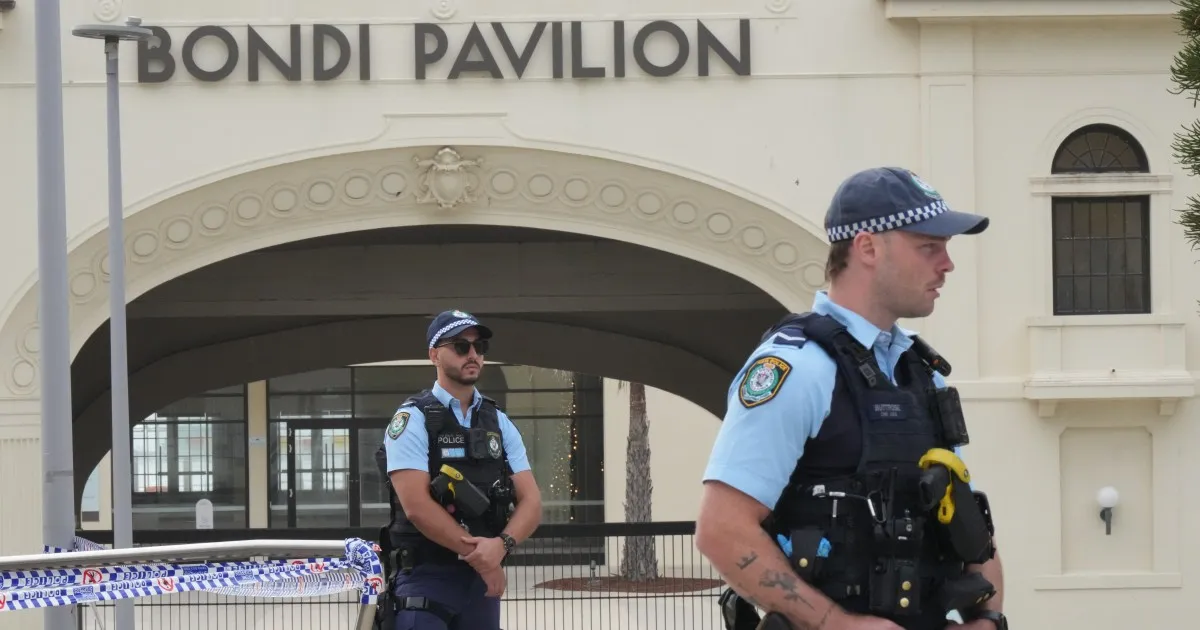
The state of New South Wales (NSW) will have the toughest gun laws in Australia as well as wide-reaching new restrictions on free speech in the wake of the Bondi Beach mass shooting, which left 15 people dead.
Less than two weeks after the attack on a Jewish celebration, new legislation was passed by the state’s legislative assembly in the early hours of Wednesday morning, including restrictions that appear to target speech in solidarity with Palestinians.
Recommended Stories
list of 4 itemsend of list
Notably, the Terrorism and Other Legislation Amendment Bill 2025 gives police powers to restrict public protests for up to three months “following a terrorism declaration”, while the public display of symbols of prohibited organisations will be banned.
“Once a declaration is made, no public assemblies can be authorised in designated areas, including by a court and police will be able to move people on if their behaviour or presence obstructs traffic or causes fear, harassment or intimidation,” the NSW government said in a statement.
In the statement, NSW Premier Chris Minns and other top officials said that the sweeping changes would involve a review of “hate speech” and the words “globalise the Intifada” were singled out as an example of speech that will be banned. The term is often used in solidarity with Palestinians and their civil struggle against Israeli military occupation and illegal settlement expansion, dating back to the 1980s.
Minns acknowledged that the new laws involved “very significant changes that not everyone will agree with” but he added, “our state has changed following the horrific anti-Semitic attack on Bondi Beach and our laws must change too.”
He also said that new gun laws, which restrict certain types of guns to use by farmers, would also help to “calm a combustible situation”.
Constitutional challenge
Three NSW-based pro-Palestinian, Indigenous and Jewish advocacy groups said on Tuesday, before the final vote on the legislation, that they would be “filing a constitutional legal challenge against the draconian anti-protest laws”.
Palestine Action Group Sydney said in a statement shared on Facebook that it was launching the challenge together with the Indigenous group Blak Caucus and Jews Against the Occupation ’48.
“These outrageous laws will grant NSW Police sweeping powers to effectively ban protests,” the Palestinian advocacy group said, accusing the NSW government of “exploiting the horrific Bondi attack to advance a political agenda that suppresses political dissent and criticism of Israel, and curtails democratic freedoms”.
Changes to the state’s protest laws also come just months after more than 100,000 people marched over the Sydney Harbour Bridge in protest against Israel’s genocidal war on Gaza, after a court overturned an attempt by the Minns government to try to stop the peaceful protest from taking place.
Following the huge display of public support for ending Israel’s war on Gaza, Australia joined more than 145 other UN member states in recognising Palestinian statehood at the United Nations in September this year, much to the outrage of Israeli officials.
Within hours of the Bondi attack, Israeli Prime Minister Benjamin Netanyahu, who is wanted for alleged war crimes by the International Criminal Court (ICC), linked the shooting to Australia’s recognition of Palestinian statehood.
UN special rapporteur Ben Saul, who is also an international law chair at the University of Sydney, criticised Netanyahu’s comments.
Saul, whose UN mandate focuses on ensuring human rights are protected while countering terrorism, called for a “measured response to the Bondi terrorist attack”.
“Overreach does not make us safer – it lets terror win,” Saul said in a post on social media.
Heroes to be honoured
Australia’s Prime Minister Anthony Albanese said on Wednesday that he plans to create a special honours list to recognise the people who rushed in to try to stop the two attackers as they targeted the Hanukkah celebration at Bondi Beach on December 14.
Australian public broadcaster the ABC reported those honoured would likely include Australian-Syrian shop owner Ahmed al-Ahmed, as well as Boris and Sofia Gurman, a local couple who tried to stop the gunmen but were among those killed in the attack.
While al-Ahmed has been widely hailed as a hero around the world, less is known about a second Muslim man who ran in to help, even as he was tackled by bystanders because he was mistaken for being an attacker.
The man’s lawyer, Alisson Battisson, says that her client, whom she did not name, is a refugee who is potentially facing deportation due to a past criminal record, despite his repeated attempts to help stop the Bondi attack.
Algeria’s parliament has begun debating a draft law that would criminalise France’s colonial rule from 1830 to 1962. Al Jazeera’s Nada Qaddourah explains what we know about the bill.
Talks held between Foreign Minister Asaad Hassan Al-Shaibani, Defence Minister Murhaf Abu Qasra and the Russian president.
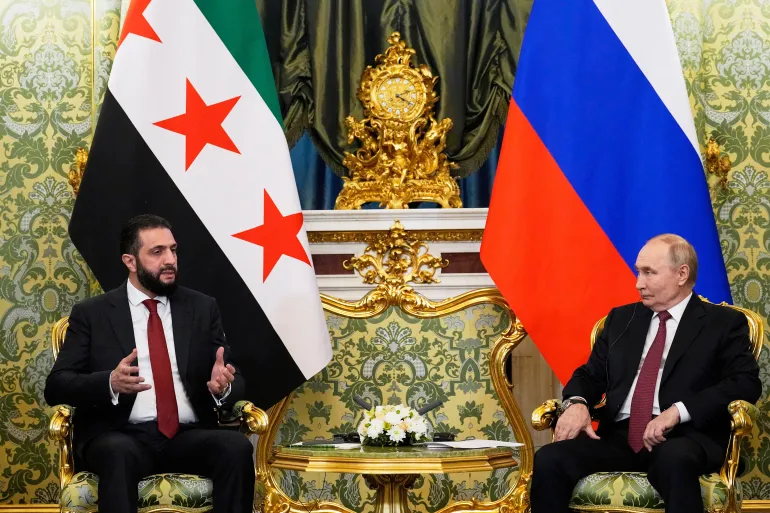
Syria’s foreign and defence ministers met Russian President Vladimir Putin in Moscow and held discussions on expanding “strategic cooperation in the military industries sector”, Syrian state media has reported.
The Syrian Arab News Agency (SANA) said that Putin’s meeting on Tuesday with Syrian Minister of Foreign Affairs Asaad Hassan Al-Shaibani and Minister of Defence Murhaf Abu Qasra focused on political, economic and military issues of “mutual interest”, but that “particular emphasis” was on defence.
Recommended Stories
list of 4 itemsend of list
According to SANA, Putin and the Syrian ministers discussed a range of defence-related matters, including developing military cooperation to strengthen the Syrian army’s capabilities and modernising its equipment, transferring expertise and cooperation in research and development.
“During the meeting, both sides reviewed ways to advance military and technical partnership in a manner that strengthens the defensive capabilities of the Syrian Arab Army and keeps pace with modern developments in military industries,” SANA reported.
The two sides also discussed political and economic issues, including the “importance of continued political and diplomatic coordination between Damascus and Moscow in international forums”, according to the news agency.
On the economic front, the talks addressed expanding Syrian-Russian cooperation, including in reconstruction projects, infrastructure development and investment in Syria.
Putin also reaffirmed Russian “steadfast support” for Syria and its territorial integrity, while renewing “Moscow’s condemnation of repeated Israeli violations of Syrian territory, describing them as a direct threat to regional security and stability”.
The ministers’ visit to Moscow is the latest by Syria’s new authorities since the removal from power last December of the country’s longtime ruler and Moscow’s former ally in Damascus, Bashar al-Assad.
Russia was a key supporter of al-Assad during Syria’s nearly 14-year civil war, providing vital military aid that kept the Assad regime in power, including Russian air support that rained air strikes on rebel-held areas.
Despite al-Assad and his family fleeing to Russia after the toppling of his regime, Moscow is eager to build good relations with the new government in Damascus.
Moscow, in particular, is hoping to secure agreements to continue operating the Khmeimim airbase and the Tartous naval base on Syria’s Mediterranean coast, where Russian forces continue to be present.
In October, Syria’s new president, Ahmed al-Sharaa, visited Russia, where he said his government would honour all the past deals struck between Damascus and Moscow, a pledge that suggested that the two Russian military bases were secure in the post-Assad period.
Putin said at the time of al-Sharaa’s visit that Moscow was ready to do all it could to act on what he called the “many interesting and useful beginnings” discussed by the two sides on renewing relations.
Russian state media on Tuesday quoted the country’s Ministry of Foreign Affairs spokeswoman, Maria Zakharova, as saying that Russian Foreign Minister Sergey Lavrov would also hold talks with his Syrian counterpart, Al-Shaibani, during the Syrian delegation’s visit.
During a visit to Moscow in July, Al-Shaibani said his country wanted Russia “by our side”.
“The current period is full of various challenges and threats, but it is also an opportunity to build a united and strong Syria. And, of course, we are interested in having Russia by our side on this path,” Al-Shaibani told Lavrov at the time.
Syrian President Ahmed al-Sharaa speaks during a meeting with Russian President Vladimir Putin at the Kremlin in Moscow, Russia, on October 15, 2025 [Pool: Alexander Zemlianichenko via Reuters]
Other countries, including Brazil, Colombia, Ireland, Mexico, Spain and Turkiye, have already joined the case in The Hague.
Published On 23 Dec 202523 Dec 2025
Share
Belgium has formally joined the case launched by South Africa at the International Court of Justice (ICJ) alleging Israel is committing genocide in the Gaza Strip.
In a statement on Tuesday, the ICJ – The Hague-based highest court of the United Nations – said Belgium had filed a declaration of intervention in the case.
Recommended Stories
list of 4 itemsend of list
Other countries, including Brazil, Colombia, Ireland, Mexico, Spain and Turkiye, have already joined the proceedings.
South Africa brought the case in December 2023, arguing that Israel’s war in Gaza violates the 1948 UN Convention on the Prevention and Punishment of the Crime of Genocide.
Israel has rejected the allegations and criticised the case.
While a final ruling could take years, the ICJ issued provisional measures in January 2024 ordering Israel to take steps to prevent acts of genocide in Gaza and to allow unimpeded access for humanitarian aid.
The court’s orders are legally binding although it has no direct mechanism to enforce them.
The ICJ also said Israel’s presence in occupied Palestinian territory is unlawful and its policies amount to annexation.
Israel has continued its assaults in Gaza and the occupied West Bank despite the rulings and growing international criticism while advancing plans to seize large parts of Palestinian territory.
Meanwhile, the United States and several of its European allies continue to provide military and financial support to Israel.
Washington has rejected the merits of South Africa’s case, and US lawmakers have criticised the country and issued threats against it.
The US has also imposed sanctions on members of the International Criminal Court (ICC), which has issued arrest warrants against Israeli Prime Minister Benjamin Netanyahu and former Defence Minister Yoav Gallant.
Belgium was also among a group of countries that recognised the State of Palestine in September. Nearly 80 percent of UN member states now recognise Palestine.
Since a ceasefire began on October 10, the Palestinian Ministry of Health in Gaza said, Israel has killed at least 406 Palestinians and injured 1,118 in the enclave. Since the start of the war on October 7, 2023, the ministry said, at least 70,942 Palestinians have been killed and 171,195 wounded.
Renewed fighting between army and SDF highlights volatility.
As the year comes to an end, a deal between the Syrian government and the Kurdish-led Syrian Democratic Forces was expected to come into force.
Instead, fighting has erupted between the two sides in the northern city of Aleppo.
They later agreed to stop the fighting, while blaming each other for the violence.
That deal was supposed to lead to the SDF integrating with the army, but it is stalling on how that should be implemented.
This renewed tension comes as Damascus faces other threats, ranging from ISIL (ISIS) to recurrent conflicts with the Druze community and continuing attacks by Israel.
So what does this complex security situation mean for Syria, a year after the fall of Bashar al-Assad?
Presenter: Dareen Abughaida
Guests
Haid Haid – Researcher at Chatham House
Steven Heydemann – Professor and Middle East Studies programme director at Smith College
Omer Ozkizilcik – Nonresident fellow for the Syria project in the Atlantic Council’s Middle East programme
Two goals in 18 minutes from forward Nicolas Jackson set the tone for Senegal’s Group D win over Botswana at AFCON 2025.
Published On 23 Dec 202523 Dec 2025
Share
Bayern Munich striker Nicolas Jackson grabbed a brace as Senegal eased to a 3-0 victory over Botswana in the Africa Cup of Nations (AFCON) on Tuesday.
Jackson, on loan at the Bundesliga giants from Chelsea, struck either side of half-time in Tangier, with Cherif Ndiaye completing the scoring late on.
Recommended Stories
list of 4 itemsend of list
The victory took Senegal to the top of the table in Group D on goal difference, ahead of the Democratic Republic of the Congo (DRC), who beat Benin 1-0 in Rabat earlier.
It was a predictable outcome to the first match of the tournament for both teams as Senegal are 119 places above Botswana in the world rankings.
Senegal and DRC, both former champions, are expected to fill the top two places and qualify for the round of 16.
Benin and Botswana will view their clash on Saturday as a must-win affair, giving potential victors a chance to fill one of four places in the knockout stage reserved for third-placed teams.
Torrential rain greeted the teams as they walked onto the pitch at the 75,000-seat stadium, the biggest by capacity of the nine being used in Morocco for the tournament.
Senegal had a great chance to take the lead within three minutes in a one-on-one situation, but goalkeeper Goitseone Phoko blocked a shot by Jackson.
Two-time African Player of the Year Sadio Mane, Iliman Ndiaye and Jackson all came close to breaking the deadlock as the Teranga Lions dominated possession, while the Zebras defended in depth.
Jackson scores during the match against Botswana [Mosa’ab Elshamy/AP Photo]
Botswana waste chance
While Senegal and former Chelsea goalkeeper Edouard Mendy was a mere spectator, Phoko was constantly in action, using his hands, feet and legs to keep the West Africans at bay.
But endless Senegalese pressure finally reaped a reward in 40 minutes when Germany-born Ismail Jakobs and Germany-based Jackson combined to put one of the title favourites ahead.
Jakobs cut in from the left and pulled the ball back to Jackson, who reacted instantly, using his left foot to steer the ball wide of Phoko and into the net.
Botswana, who qualified at the expense of the 2026 World Cup qualifiers Cape Verde, finally threatened to score in added time at the end of the opening half.
But they failed to take advantage of a free kick just outside the area. A weak shot was deflected for a corner that was overhit and went out of play beyond the far post without being touched.
A flowing move from midfield with quick, crisp passing set up Jackson to double the lead after 58 minutes.
When the ball was worked to him in the box, the 24-year-old rounded Mosha Gaolaolwe and tapped home.
Cherif Ndiaye put the cherry on the cake for Senegal as he finished smartly at the end of another fine team move in the 90th minute.
Confident his team were cruising to victory, Senegal coach Pape Thiaw introduced 17-year-old Ibrahim Mbaye from European champions Paris Saint-Germain midway through the second half.
The teenage striker last month became the youngest Senegalese scorer in an international when he netted in an 8-0 rout of Kenya in an AFCON warm-up match.
The Israeli government is cracking down on critical media outlets, giving it unprecedented control over how its actions are presented to its citizens.
Among the moves is the so-called Al Jazeera Law, which allows the government to shut down foreign media outlets on national security grounds. On Tuesday, the Israeli parliament approved the extension of the law for two years after it was introduced during Israel’s genocidal war on Gaza to essentially stop Al Jazeera’s operations in Israel.
Recommended Stories
list of 4 itemsend of list
Separately, the government is also moving to shut down the popular Army Radio network, one of two publicly funded Israeli news outlets. The radio station is often criticised by the Israeli right wing, which views Army Radio as being biased against it.
Israelis are still reliant on receiving their news from traditional outlets with about half relying on broadcast news for information on current affairs and about a third similarly relying upon radio stations.
The tone of the media that is allowed to publish and broadcast is important. According to analysts inside Israel, the selective broadcasting of Palestinian suffering during Israel’s war on Gaza has helped sustain the carnage and reinforced a sense of grievance that allows for Israel’s continued assaults on Gaza as well as regional countries, such as Syria, Yemen and Lebanon.
Despite what observers characterise as a media environment firmly rigged in its favour, the far-right government of Prime Minister Benjamin Netanyahu, which contains ministers convicted of “terrorism” offences and others who have repeatedly called for the illegal annexation of the occupied West Bank, is looking nevertheless to bypass legal checks on its control of the media and bring more of Israel’s information feed under its control.
Let’s take a closer look.
Because the government believes it is too critical.
Israeli politicians have long complained about how the war in Gaza has been covered in both the international and domestic media.
But the government added a new accusation in November, partly blaming the media for the Hamas-led attacks on southern Israel on October 7, 2023.
“If there hadn’t been a media entirely mobilised to encourage refusal [to volunteer to reserve duty] and reckless opposition to the judicial reform, there wouldn’t have been such a rift in the nation that led the enemy to seize the opportunity,” Communications Minister Shlomo Karhi said as he introduced a bill to increase government control of the news environment, referring to attempts by the Israeli government to reduce the independence of the judiciary.
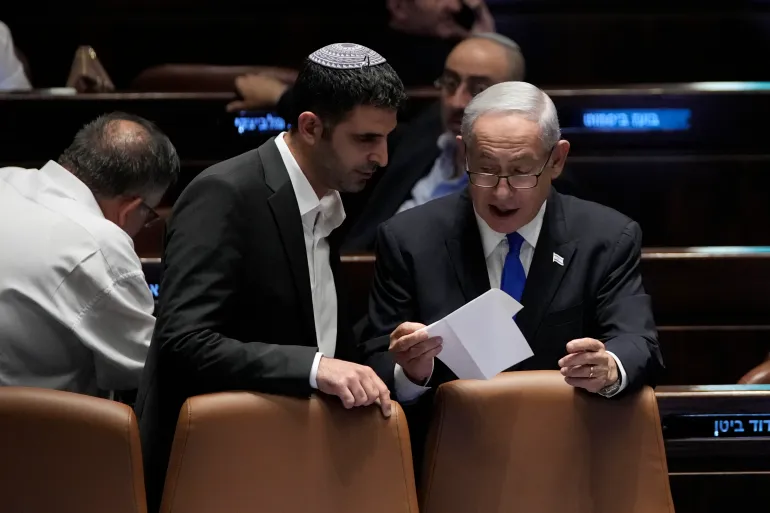
Israeli Prime Minister Benjamin Netanyahu, right, speaks to Minister of Communications Shlomo Karhi in the Knesset in West Jerusalem [File: Maya Alleruzzo/AP Photo]
In addition to the ‘Al Jazeera Law’, there are three items of legislation under way: a plan to privatise Israel’s public broadcaster, Kan, the move to abolish Army Radio, and an initiative to bring the media regulator under government control.
Both Army Radio and Kan, the other state-funded outlet with editorial independence, have carried numerous reports critical of the government.
This week, Kan aired an interview with Netanyahu’s former spokesperson Eli Feldstein, who told the broadcaster that the prime minister had instructed him to develop a strategy to help evade responsibility for the October 7 attacks.
Meanwhile, Israeli Defence Minister Israel Katz, justifying the move to shut down Army Radio, said on Monday that the outlet had become a platform to attack the Israeli military and its soldiers.
Israel is also potentially changing the way it regulates its media. In November, the Israeli parliament pressed ahead with a bill that would abolish existing media regulators and replace them with a new authority appointed by the government, potentially allowing for even greater state interference.
Israeli Attorney General Gali Baharav-Miara attends a cabinet meeting at the Bible Lands Museum in Jerusalem [Gil Cohen-Magen/Pool via Reuters]
Lastly, Israel has also codified into law the emergency legislation banning foreign media outlets whose output it disagrees with. It was first enacted as emergency legislation in May 2024 when Israel used it to ban Al Jazeera from its territory, and it was then used in the same month to halt the activity of The Associated Press after the government accused the United States-based news agency of sharing footage with Al Jazeera.
Under the new law, the communications minister – with the prime minister’s sign-off and the backing of a ministerial committee – may halt a foreign broadcaster’s transmissions if the prime minister accepts a professional assessment that the outlet poses a security threat. The minister can also shut the broadcaster’s offices, confiscate equipment used to produce its content and block access to its website.
Have the moves been criticised?
The International Federation of Journalists (IFJ) and the United Kingdom’s National Union of Journalists have criticised Israel’s decision to legislate against foreign media platforms it deems a security threat.
In a statement, IFJ General Secretary Anthony Bellanger said: “Israel is openly waging a battle against media outlets, both local and foreign, that criticise the government’s narrative: that is typical behavior of authoritarian regimes. We are deeply concerned about the Israeli parliament passing this controversial bill, as it would be a serious blow to free speech and media freedom, and a direct attack on the public’s right to know.”
The attempt to shutter Army Radio has also been heavily criticised with Israeli Attorney General Gali Baharav-Miara declaring the move unlawful and accusing Netanyahu’s coalition of making public broadcasting “weakened, threatened and institutionally silenced and its future shrouded in mist”.
Baharav-Miara has also criticised the move to place media regulation under government control, saying the bill “endangers the very principle of press freedom”.
Not very.
The Israeli media have overwhelmingly been a consistent cheerleader of the Israeli government’s actions in Gaza, where more than 70,000 Palestinians have been killed by Israel, and in the occupied West Bank.
The suffering of Palestinians is rarely shown, and when it is, it is often justified.
That means Israelis often don’t recogise the hypocrisy of their government’s statements.
An example came in June after Iran struck an evacuated hospital during the 12-day war between Israel and Iran. The Israeli government called the incident a war crime, and the Israeli media reflected that outrage.
But the attack came after Israel had been accused by a variety of organisations, including the United Nations, of systematically destroying Gaza’s healthcare system with medical workers targeted for arrest and frequently tortured despite their protection under international law.
“The Israeli media … sees its job as not to educate – it’s to shape and mould a public that is ready to support war and aggression,” journalist Orly Noy told Al Jazeera from West Jerusalem in the wake of the strike on the Israeli medical centre. “It genuinely sees itself as having a special role in this.”
Police say there is ‘insufficient evidence’ to bring charges after investigating comments made at Glastonbury festival.
Published On 23 Dec 202523 Dec 2025
Share
British police have said they will take no further action over comments made by punk-rap duo Bob Vylan about the Israeli military during a performance at the Glastonbury music festival in June.
Avon and Somerset Police said on Tuesday that the remarks did not meet the criminal threshold required for prosecution “for any person to be prosecuted”.
Recommended Stories
list of 4 itemsend of list
During the performance, the group’s lead singer – Pascal Robinson-Foster, known by his stage name Bobby Vylan – led chants of “death, death” directed at the Israeli military over its genocidal war in Gaza.
Police said there was “insufficient evidence to provide a realistic prospect of conviction”. The force added that it interviewed a man in his mid-30s and contacted about 200 members of the public as part of the investigation.
The chant, which was livestreamed by the BBC as part of its Glastonbury coverage on June 28, prompted a widespread backlash. The broadcaster later apologised for transmitting what it described as “such offensive and deplorable behaviour”, and its complaints unit found the BBC had breached editorial guidelines.
Avon and Somerset Police said it had considered the intent behind the words, the wider context, relevant case law and freedom of expression issues before concluding the investigation.
“We believe it is right this matter was comprehensively investigated, every potential criminal offence was thoroughly considered, and we sought all the advice we could to ensure we made an informed decision,” the statement said.
“The comments made on Saturday 28 June drew widespread anger, proving that words have real-world consequences.”
Following the performance, the United States revoked the visas of Bob Vylan, forcing the cancellation of a planned US tour scheduled to begin in October.
Bob Vylan have launched defamation proceedings against Irish broadcaster RTE, alleging it falsely claimed they led anti-Semitic chants during the Glastonbury performance.
In July, the British police also dropped an investigation into the Irish-language rap group Kneecap after chants of “Free Palestine” during a performance.
Detectives sought advice from the Crown Prosecution Service and decided to take no further action, citing “insufficient evidence to provide a realistic prospect of conviction for any offence”.
Commercial premises among buildings facing demolition as military incursions intensify near Qalandiya and Kafr Aqab.
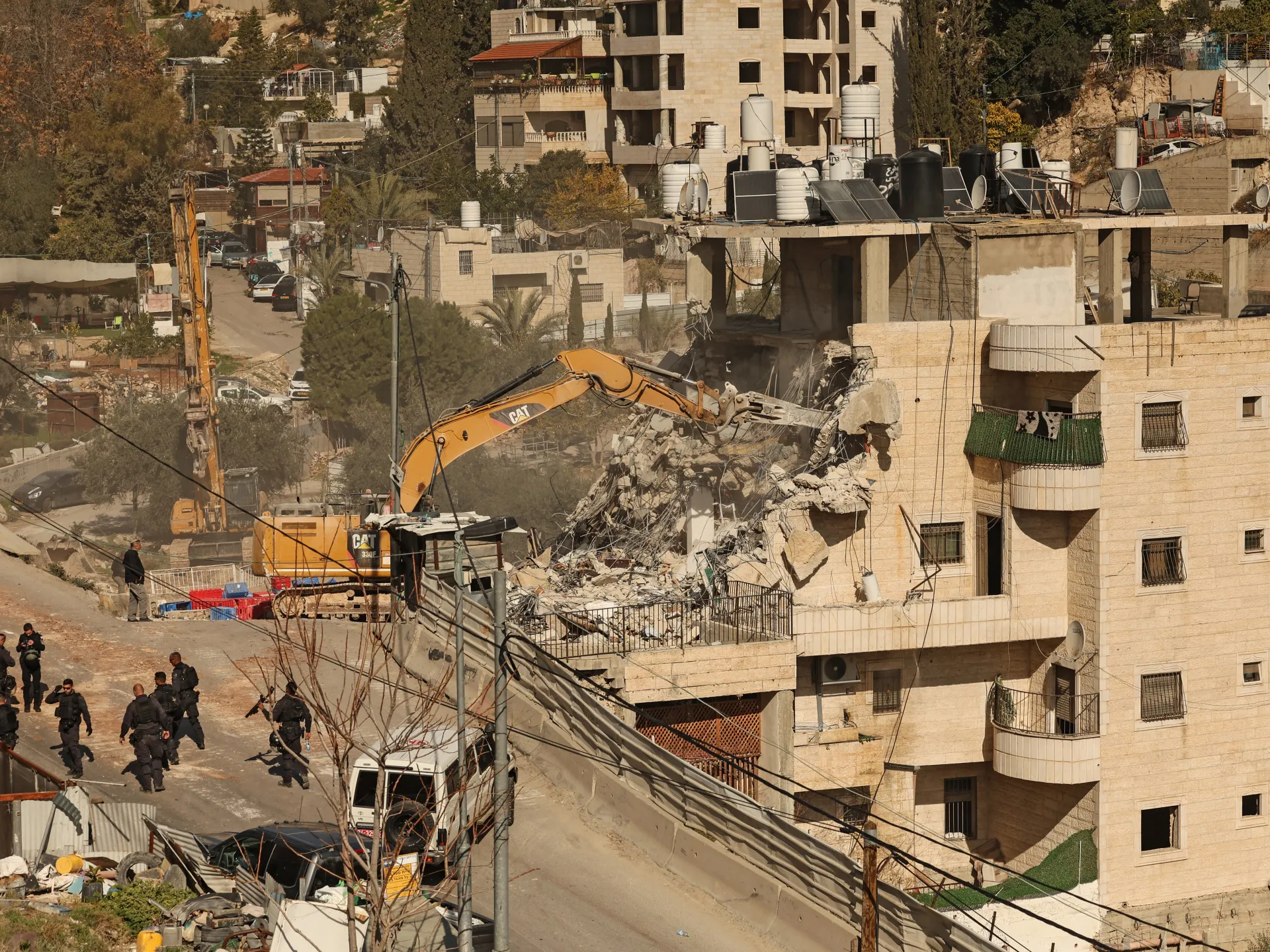
Israeli forces have begun demolishing shops in the vicinity of the Qalandiya refugee camp, north of occupied East Jerusalem, as part of a wider military incursion across several Palestinian neighbourhoods, witnesses and medical officials say.
The raids, which began early on Tuesday, have extended into the nearby town of Kafr Aqab, where Israeli troops deployed in large numbers, carried out house searches and forcibly evicted residents from their homes, according to local media reports.
Recommended Stories
list of 3 itemsend of list
The Palestine Red Crescent Society said its medical teams treated at least three people injured during the raids in Qalandiya and Kafr Aqab. The injuries included a bullet wound to the thigh, wounds caused by shrapnel from live ammunition, and injuries resulting from physical assault.
The Jerusalem governorate reported that at least three Palestinians were injured by Israeli forces’ gunfire, in addition to dozens of cases of suffocation caused by the firing of tear gas and stun grenades, the Palestinian Wafa news agency reported.
Several Palestinians were detained during the large-scale incursion that was also accompanied by the deployment of military vehicles and bulldozers.
Among those arrested are Anan Mohammed Taha and his father, Mohammed Taha, residents of the Qalandiya refugee camp, Wafa said.
‘Intimidation’ and ‘anxiety’
Residents said Israeli forces ordered several families to evacuate their homes, with at least three houses converted into temporary military outposts in Kafr Aqab. Homeowners were reportedly told the operation would continue until at least Wednesday morning.
Israeli forces also stormed the youth club inside the Qalandiya refugee camp and turned the facility into a military base, according to Al Jazeera Arabic’s correspondent.
Journalists covering the operation were also targeted, including Al Jazeera Arabic reporters, with Israeli forces firing stun grenades and tear gas canisters in their direction during the raid in Kafr Aqab.
According to the Jerusalem governorate authorities, stun grenades were also fired directly towards students in the area as they were returning home from school, while private surveillance cameras were seized.
Al Jazeera’s Nida Ibrahim, reporting from Kafr Aqab, said Israeli forces are continuing to “intimidate” Palestinians.
“They have raided Palestinian stores, Palestinian shops, and they’ve destroyed some of the plaques, some of the advertisement billboards that were here”, in an attempt to further cripple the Palestinian economy, Ibrahim said.
“This is part of the anxiety that Palestinians live through day in and day out as these Israeli raids continue on a daily basis,” she added.
Israeli incursions across the West Bank average “60 raids per day”, Ibrahim said.
In addition to the demolitions, Israeli forces confiscated goods from commercial shops in the Qalandiya refugee camp, Kafr Aqab and parts of northern Jerusalem, citing alleged unpaid municipal taxes.
Most Palestinians living in these areas hold Jerusalem residency identification cards. Residents say they are subject to high municipal taxes while receiving few basic services.
Separately, confrontations were also reported in the town of Beit Furik, east of Nablus in the occupied West Bank, after Israeli forces stormed the area.
Israel Katz says military units will be established inside the Palestinian enclave, in contravention of the truce agreement.
Published On 23 Dec 202523 Dec 2025
Share
Israeli Defence Minister Israel Katz has said the Israeli military will never fully withdraw from the Gaza Strip and that an army unit will be established inside the Palestinian enclave.
Speaking on Tuesday, Katz said Israeli forces would remain deployed throughout Gaza, despite a United States-backed peace plan signed by Israel and Hamas in October that calls for a full Israeli military withdrawal and rules out the re-establishment of Israeli civilian settlements in the territory.
Recommended Stories
list of 4 itemsend of list
“We are located deep inside Gaza, and we will never leave all of Gaza,” Katz said. “We are there to protect.”
“In due course, we will establish Nahal [an Israeli infantry brigade] outposts in northern Gaza in place of the settlements that were uprooted,” Katz added, according to Israeli media.
Hours later, he issued a statement in English to the Reuters news agency, saying Nahal units would be stationed in Gaza “only for security reasons”. The Israeli media reported that US officials were displeased with Katz’s initial comments and demanded clarification.
Nahal units are military formations that combine civilian service with army enlistment and have historically played a role in the creation of Israeli communities.
Katz was speaking at a ceremony in the occupied West Bank marking the approval of 1,200 housing units in the illegal Israeli settlement of Beit El.
Addressing settlement expansion in the West Bank, Katz said: “Netanyahu’s government is a settlements government … it strives for action. If we can get sovereignty, we will bring about sovereignty. We are in the practical sovereignty era.”
“There are opportunities here that haven’t been here for a long time,” he added.
Israel is expected to head into an election year in 2026, with illegal settlement expansion a key political issue. Far-right and ultranationalist members of Prime Minister Benjamin Netanyahu’s coalition have repeatedly said they intend to reoccupy Gaza and expand illegal settlements in the West Bank.
Under international law, all Israeli settlements in the occupied West Bank are illegal. The transfer of an occupying power’s civilian population into occupied territory is considered a war crime under the Rome Statute of the International Criminal Court.
Meanwhile, violence by Israeli forces and settlers has continued across the West Bank, while killings continue in Gaza despite the ceasefire. Palestinian officials say more than 1,100 Palestinians have been killed, about 11,000 wounded and more than 21,000 arrested.
The Palestinian Ministry of Health said that since a ceasefire began on October 11, at least 406 Palestinians have been killed and 1,118 injured. Since the start of Israel’s war on October 7, 2023, the ministry said, 70,942 Palestinians have been killed and 171,195 wounded.
A mother and her teenage son died in fighting between the Syrian military and Kurdish-led SDF forces in Aleppo. The violence began shortly after talks in Damascus on integrating SDF forces into the army. Al Jazeera’s Ayman Oghanna is in Aleppo, where a truce has been called.
When Qatar helped secure a peace deal to end ongoing conflict between the M23 rebel group and Democratic Republic of the Congo’s (DRC) government last month, there was hope among many Congolese that a permanent ceasefire would soon emerge to end the fighting that has uprooted close to a million people in the country’s troubled east, and give war-racked communities some respite as the new year rolls in.
Since late 2021, the group, which the United States and the United Nations say is backed by Rwanda, has clashed with the Congolese army in heavy offensives that have killed at least 7,000 people this year alone. Several regional attempts at resolution have failed. Still, when M23 representatives and Congolese government officials met for negotiations in Doha and proceeded to sign a peace deal in November, exhausted Congolese dared to hope. This deal, some reckoned, could be different.
Recommended Stories
list of 3 itemsend of list
So when the rebels launched yet another offensive and temporarily seized the strategic city Uvira this month, hopes for lasting peace were painfully crushed, as some concluded that those at the helm of the talks were playing politics.
“It’s clear that they don’t have any will to end this conflict,” Congolese lawyer and political analyst Hubert Masomera told Al Jazeera from the M23-held eastern city of Goma, blaming both sides. “Despite the number of deaths and the extent of the destruction, there is still procrastination over the implementation of the peace agreements and compliance with the ceasefire. People here feel abandoned to their sad fate.”
Fears that the conflict will not only continue, but that it could soon take on a regional dimension, are deepening, too – a sensitive prospect in a DRC where two civil wars in the past were prompted by its neighbours.
Uvira, the newly captured city the rebels then withdrew from as a “trust-building measure” following US pressure last week, is a major transport and economic hub in the huge South Kivu province. It’s strategically located on the border with Rwanda and is just 30 kilometres from the Burundian capital, Bujumbura. The city was the last eastern stronghold of the Congolese army and its allies – local “Wazalendo” militias and about 3,000 Burundian soldiers. Early this year, M23 also seized control of South Kivu’s capital city, Bukavu, as well as Goma, the capital of North Kivu province.
Experts say M23’s advance on Uvira widens the group’s area of control significantly, puts it at the mouth of the mineral-rich Katanga region, and positions Rwandan proxies right at Burundi’s doorstep at a time when both governments are ramping up a war of words and accusing each other of backing rebels.
Rwanda, for its part, continues to distance itself from accusations that it backs M23.
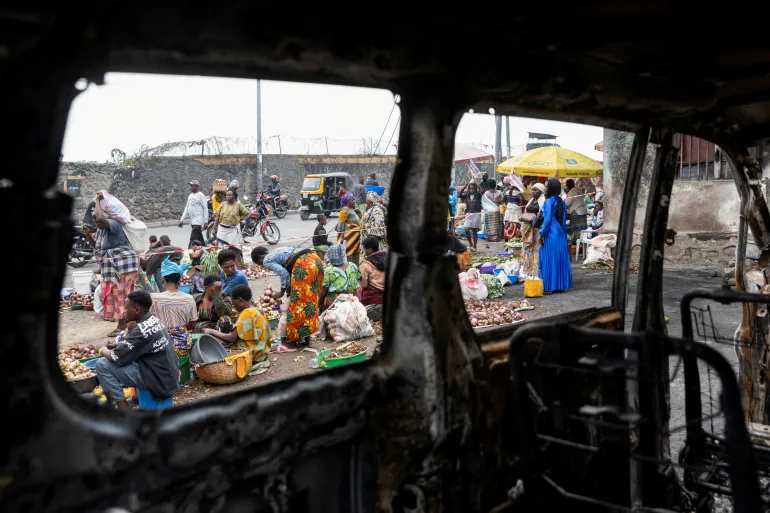
A view shows the remains of a vehicle hit by heavy and light weapons during the fighting in the town that led to the fall of Goma to M23 rebels, on February 5, 2025 [File: Arlette Bashizi/Reuters]
DRC conflict’s complex history
The recent scenes in eastern DRC appear like an eerie playback of a tragic tale, conflict monitors say.
Similar peace negotiations in late 2024, led by the African Union and Angola, seemed ready to deliver peace ahead of a new year. But they collapsed after a highly anticipated meeting between the presidents of Rwanda and DRC was called off. Both sides accused each other of foiling the talks.
“There’s a sense of deja vu,” Nicodemus Minde, East Africa analyst at the Institute for Security Studies (ISS), said. “It’s symbolic because we were exactly here last year … the prospects for peace are dire.”
Conflict in the DRC has long been mired in a complex mix of ethnic grievances, poor governance and interference from its much smaller neighbours. It goes back to the 1994 genocide of Tutsis and moderate Hutus in Rwanda, which displaced millions into neighbouring eastern DRC, making them a minority there. Rwanda has since viewed the DRC as a hiding place for Hutu genocidaires, however, and its hot pursuit of them toppled a government in Kinshasa and led to the first and second Congo wars (1996-2003). The UN also accused the Rwandan and allied Ugandan forces of looting the DRC’s vast mineral wealth, including gold, coltan and tin, during the conflict.
Scores of militias emerged as governments armed and counter-armed civilians in the wars, many of which are still active in the DRC. The M23 itself is only the latest iteration of a Tutsi militia that fought in the Congo wars, and whose fighters integrated into the DRC army. In 2012, these fighters revolted, complaining of poor treatment by the Congolese forces. Now, the M23 claims to be fighting the marginalisation of ethnic Tutsis, some of whom say they are systematically denied citizenship, among other complaints. The M23 and its allied Congo River Alliance (AFC) have not stated goals of taking Kinshasa, even though members of the group have at times threatened to advance on the capital. Officially, the rebels claim to be “liberating” eastern DRC communities.
In 2012, M23 initially emerged with enough force to take the strategic city of Goma, but was forced back within a year by Congolese forces and a special UN intervention force of troops from South Africa, Tanzania and Malawi. When the M23 resurfaced in late 2021, though, it was with much more ferocity, boosted by about 4,000 Rwandan troops in addition to its own 6,000 fighters, according to the UN. Lightning and intensely bloody offensives have since seen it control vast swaths of territory, including the major cities of Goma, Bukavu – and now, Uvira.
On the map, M23 appears to be eking out a slice of Congolese territory wedged between the DRC and neighbouring Rwanda, Uganda and Burundi. If it gains control of the two Kivus in their entirety, it would lord over a resource-rich area five times Rwanda’s size with easy access to Kigali and Kampala.
“They are trying to create some sort of buffer zone which the neighbouring countries, particularly Rwanda but also Uganda, have an interest in controlling,” analyst Paul-Simon Handy, also of the ISS, told Al Jazeera.
Kigali officially denies backing M23, but justifies its actions based on accusations that the DRC supports a Hutu rebel group, the Democratic Forces for the Liberation of Rwanda (FDLR). The FDLR did exist for many years in the DRC, but it simply no longer poses a significant threat to Kigali, analyst Minde said.
Rwanda’s tensions with Burundi have similar historic correlations, as Hutus who perpetrated the 1994 genocide similarly fled there, and Kigali alleges the government continues to back rebels. In 2015, Burundi accused Rwanda of sponsoring an abortive coup in Bujumbura. Kigali denies this.
US President Donald Trump hosts the signing ceremony of a peace deal with the president of Rwanda, Paul Kagame, left, and the president of the Democratic Republic of the Congo, Felix Tshisekedi, right, at the United States Institute of Peace in Washington, DC, on December 4, 2025 [Andrew Caballero-Reynolds/AFP]
Does the US deal have a chance?
Several African countries have attempted to help solve the crisis, militarily and diplomatically, but all have failed. The regional bloc, the East African Community, of which the DRC is a part, deployed about 6,500 Kenyan-led peacekeepers to stabilise eastern DRC, as Kenyan diplomats developed a Nairobi Peace Process in 2022 that was meant to see several rebel groups agree to a truce. The agreement collapsed only a year later, however, after Congolese President Felix Tshisekedi grew frustrated over the force’s refusal to launch offensives against M23.
Then, the Southern African Development Community (SADC), of which the massive DRC is also a part, deployed troops from South Africa, Tanzania and Malawi in May 2023. There was hope that the trio, which proved crucial in driving back the first M23 insurrection, would again record success. They appeared no match for the new M23, though, and withdrew this June.
Meanwhile, the Angola-led Luanda Peace Process collapsed after President Joao Lourenco stepped back in March, citing frustration with both sides amid constant finger-pointing.
Qatar and the US stepped in to broker peace in June this year, using a unique two-pronged approach. The Doha peace talks, on the one hand, have focused on negotiations between the DRC and M23, while the Washington talks focus on the DRC and the Rwanda governments. Some experts warned that Washington’s motivation – aside from President Donald Trump’s fixation on being a global peacemaker figure – was a clause in the deal that guarantees US extraction of rare earth minerals from both countries. The agreement was unlikely to hold on that basis, rights groups said.
After a few no-shows and wobbles, the M23 finally agreed to the Doha framework on November 15. The agreement includes eight implementation protocols, including one on ceasefire monitoring and another on prisoner exchange. On December 4, President Trump sat next to a smiling Paul Kagame and Tshisekedi as all three signed the US-peace deal in Washington, which mandated both Rwanda and DRC to stop supporting armed groups. There were pockets of fighting as the signatures were penned, but all was supposed to be largely peaceful from then on.
What happened in Uvira barely a week after was the opposite. The Congolese government said at least 400 people were killed and 200,000 others displaced as M23 fighters pressed on the city. Thousands more were displaced into Burundi, which already homes some 200,000 Congolese refugees. Fleeing Uvira residents shared accounts of bombed villages, summary killings and widespread sexual violence by both sides, according to medical group Doctors Without Borders (MSF).
Is there hope for peace?
Even though M23 began withdrawing from Uvira on Thursday, analysts are still scrambling to understand what the group was hoping to achieve by taking the city, shattering the peace agreements and angering Washington.
US Secretary of State Marco Rubio directly scolded Rwanda after Uvira’s capture, saying Kigali had violated the deal. Last week, Deputy Secretary of State Christopher Landau met with DRC Foreign Minister Therese Kayikwamba Wagner in Washington and promised that the US “is prepared to take action to enforce adherence” from Rwanda.
What that action looks like is unclear, but what’s certain, Minde said, was that the agreement seemed to favour Kigali more than Kinshasa.
“If you look at the agreement, the consequences [of either party breaching] were not forthright, and this points to the weakness of the deal,” he said, adding that there is much more at stake for DRC if there is a breach, including escalating conflict and mass displacement within the country. But that was not taken into account, the analyst explained.
Uvira’s fall, albeit on hold, is not only a blow to Trump’s peacemaker reputation but also sharpens tensions between Burundi and Rwanda, with analysts saying it could lead to direct clashes.
Bujumbura accuses Kigali of supporting the antigovernment Red Tabara rebels – a charge Rwanda and the rebels deny – and tensions between the two governments have led to border closures since last year. Last week, M23 announced that it captured hundreds of Burundian soldiers during the Uvira offensive.
Fears of a regional spillover also prompted the UN Security Council to extend the mandate of the MONUSCO peacekeeping mission for a year, ahead of its December 20 expiration. The 11,000 troop force has been in place since 1999, but has a complicated relationship with the DRC government, which says it has not done enough to protect civilians. MONUSCO forces initially began withdrawing in 2024, but then paused that move in July amid the escalating M23 offensive. Ituri, the force’s headquarters, is held by M23, meaning the troops are unable to do much.
Amid the chaos, the finger pointing, and the political games, it’s the Congolese people who are feeling the most despair at the turn of events so close to the new year, analysts say. After more than three decades of war that has turned the green, undulating hills of eastern DRC into a perpetual battlefield, Masameko in Goma said it’s locals, more than anyone else, with the most at stake.
“People have suffered enough and need to breathe, to sleep with the certainty that they will wake up tomorrow,” he said. “[They need] to live in their homes without fear of a bomb falling on them. That is all the people in this part of the republic need.”
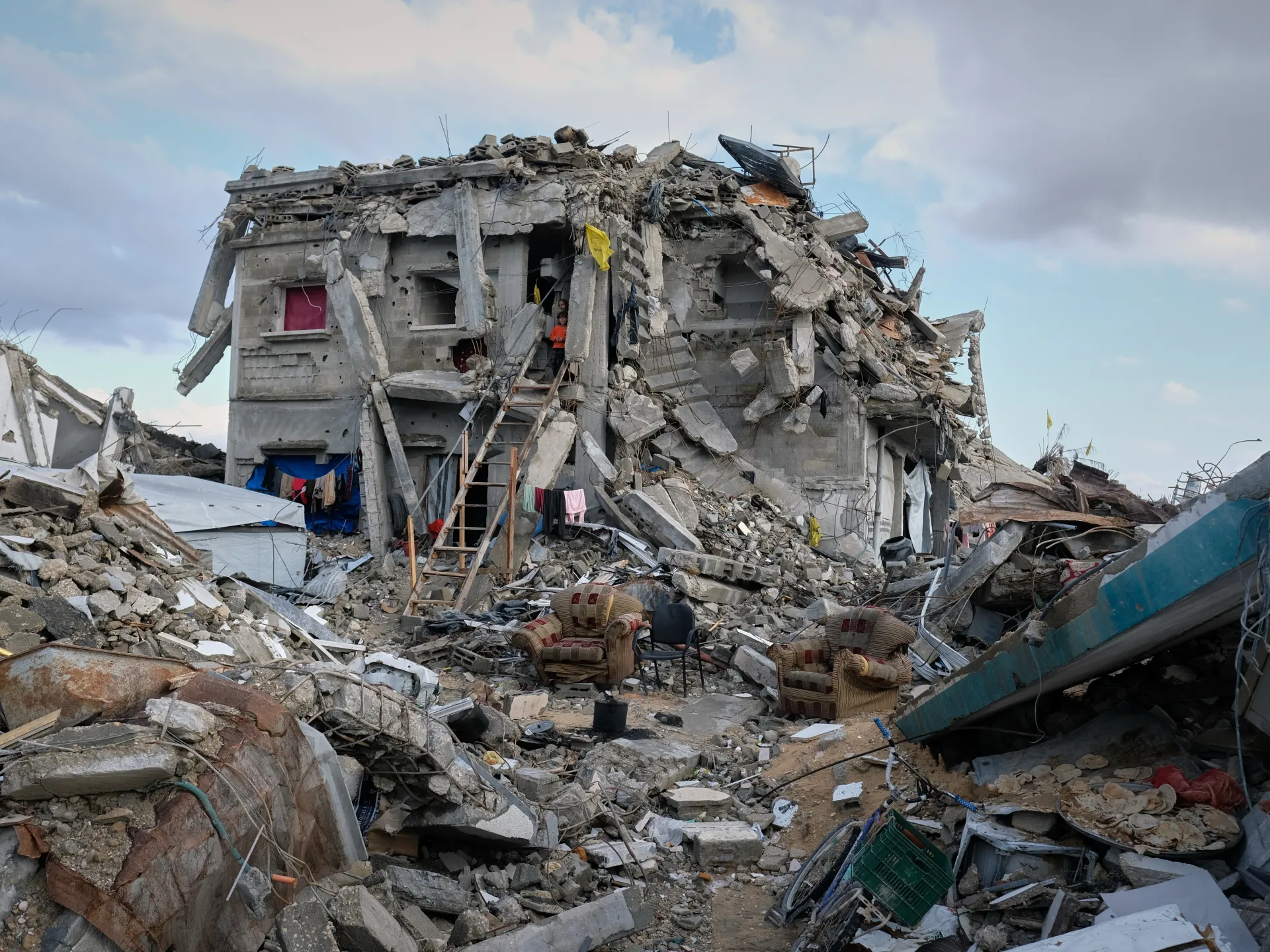
The Halawa family’s building still stands two storeys above the rubble in Gaza City, a rare survivor after two years of nonstop Israeli air attacks that levelled buildings across the besieged Palestinian enclave.
One section has collapsed, with bent metal rods protruding from where a roof once existed. The family built a narrow set of creaking wooden steps to access their home, though these makeshift stairs threaten to give way at any moment. Yet amid the destruction, it remains home.
Israel’s genocidal war on Gaza has killed more than 70,000 Palestinians, destroyed or damaged more than 70 percent of the buildings, and displaced most of the territory’s 2.3 million residents.
In October, Israel reached an agreement to cease fire, but its attacks have not stopped. It has killed more than 400 Palestinians since then, in violation of the truce agreement. It has also not allowed the full entry of aid.
Reconstruction has not begun and is projected to take years, as Israel has kept total control over what goes in and comes out of the enclave. This means families like the Halawas are struggling to rebuild their lives.
The family abandoned their home three months after the war began on October 7, 2023. They returned during the fragile calm established by the truce. Like many others, this family of seven found living in their damaged residence preferable to tent life, particularly as winter rains flooded tent shelters over the past weeks.
In one damaged room, Amani Halawa brewed coffee in a small tin over a fire while thin rays of light filtered through concrete fragments. Amani, her husband Mohammed, and their children have made repairs using concrete scraps, hanging backpacks from exposed metal rods and arranging pots and pans across the kitchen floor.
The home’s walls feature a painted tree and messages to family members separated by the conflict.
Throughout damaged apartments in Gaza City, daily life persists, even as families lie awake fearing their walls might collapse. Health officials report that at least 11 people died from building collapses in a single week in December.
In her home, Sahar Taroush swept dust from carpets placed over rubble. Her daughter Bisan’s face glowed in the light of a computer screen as she watched a movie beside gaping holes in the wall.
On another building’s cracked wall, a family displayed a torn photo of their grandfather on horseback from his time serving in the Palestinian Authority’s security forces during the 1990s. Nearby, a man reclined on a bed precariously balanced on a damaged balcony, scrolling through his phone above the devastated al-Karama neighbourhood.
Mohamed Salah puts Liverpool controversy behind him with dramatic winner against Zimbabwe in their AFCON opener.
Published On 23 Dec 202523 Dec 2025
Share
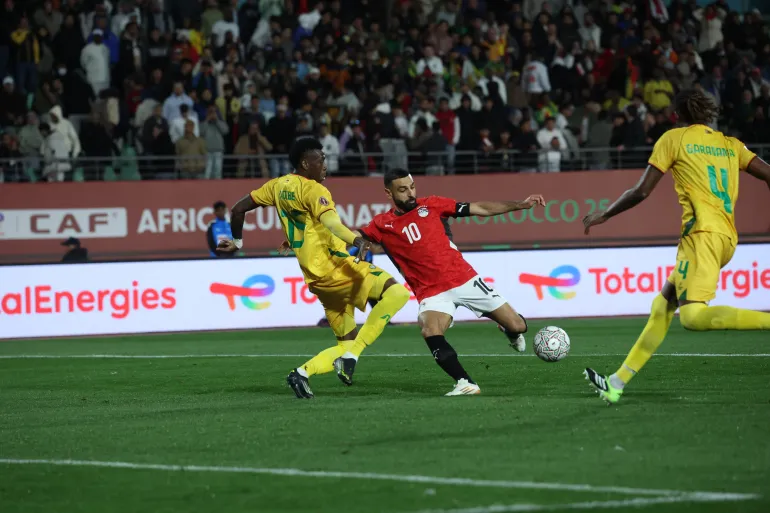
Mohamed Salah snatched a dramatic stoppage-time winner as Egypt came from behind to beat Zimbabwe 2-1 in their first fixture at the Africa Cup of Nations (AFCON) finals in Morocco on Monday.
Egypt’s captain, starting his first game after four successive matches on the bench at Liverpool, fired home a left-footed effort in the 91st minute to earn the seven-time champions a late victory after Zimbabwe had stunned them by going ahead in the first half.
Recommended Stories
list of 3 itemsend of list
Egypt laid an early siege to Zimbabwe’s goal, but it was the underdogs who netted first through Prince Dube in the 20th minute.
It was left to Egypt’s Premier League contingent of Omar Marmoush, who equalised in the 64th minute, and talisman Salah to see them to a last-gasp victory.
Salah had come into the tournament in Morocco under the spotlight following a fiery outburst after being dropped by the Premier League champions, and struggled to find his rhythm for most of the match at the Grande Stade d’Agadir. When it counted, however, he swept home the winner to see Egypt join South Africa, who beat Angola 2-1 earlier in Marrakesh, at the top of Group B.
It was as much as Egypt deserved, breaking a run of six successive draws over the last two editions of the Cup of Nations.
They had four good chances in the opening 10 minutes as they put Zimbabwe under intense pressure but fell behind when Emmanuel Jalai fed the ball inside for Dube, who turned in possession and placed his effort into the bottom left corner.
It could have been 2-0 as Daniel Msendami’s pace set up a scrambled chance for Washington Navaya that Egypt goalkeeper Mohamed El Shenawy managed to gather before it could be bundled over the line.
Salah, centre, puts Egypt ahead 2-1 in stoppage time [Stringer/Anadolu via Getty Images]
Marmoush sole effect
Marmoush equalised in the 64th minute, picking up a long pass on the left wing before cutting inside and firing home with his right foot from an acute angle for a superb solo goal.
“We created many chances without being able to score early, but in the end everything went well,” Marmoush said.
“We kept a good mindset and finished the match strongly. We will learn from everything that happened in tonight’s game.”
Substitute Ahmed Zizo should have headed home at the back post from Mohamed Hamdy’s inviting cross but put his effort wide, and missed again four minutes from the end when Salah teed him up with a good chance.
It was left to Salah to secure the three points, holding off his marker to bring the ball under control before steering it home for his first goal since early last month.
In the next set of Group B fixtures, Egypt meet South Africa in Agadir on Boxing Day while Zimbabwe and Angola clash on Friday in Marrakesh.
People escaping fighting, lack of essential supplies in Heglig area faced with tough humanitarian conditions in search for shelter and safety.
Published On 23 Dec 202523 Dec 2025
Share
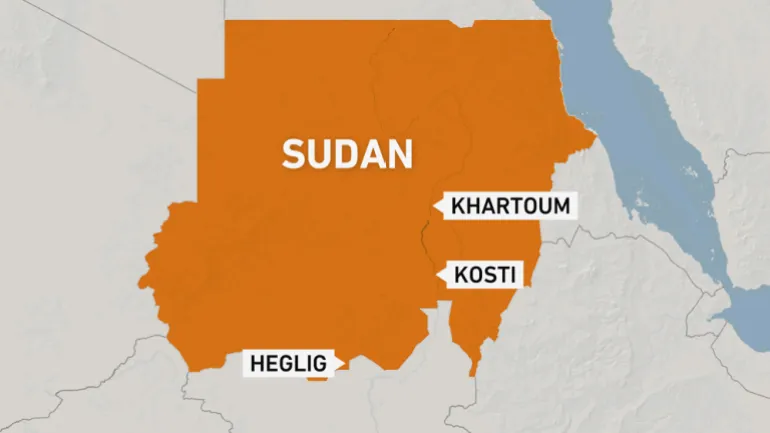
Kosti, Sudan – The flow of displaced people fleeing the fighting in Sudan shows no sign of slowing – the latest hailing from Heglig.
In early December, the paramilitary Rapid Support Forces (RSF) seized the strategic Heglig oilfield in West Kordofan province after its rival, the Sudanese Armed Forces (SAF), withdrew from the area.
Nearly 1,700 displaced people, most of them children and women, escaped the fighting in the southern region and the lack of basic necessities.
Some of them were fortunate enough to board trucks as they fled from their towns and villages in the area. After an arduous journey, the displaced people arrived at their new home – the Gos Alsalam displacement camp in Kosti, a city in the White Nile province.
“We left without anything … we just took some clothes,” said an elderly woman who appeared exhausted and frail.
Inside the camp, the people arriving are faced with extremely harsh humanitarian conditions. Tents are being pitched in haste, but as the number of displaced people grows, so do the immense humanitarian needs. Yet, humanitarian support remains insufficient to cover even the bare minimum.
“We have no blankets or any sheets, nothing. We are old people,” said a displaced elderly woman.
‘I gave birth in the street’
Nearly three years of war between the RSF and SAF have forced 14 million people to flee their homes in a desperate attempt to find shelter and safety away from the heavy fighting that has killed tens of thousands.
Some 21 million across the country are facing acute hunger, in what the United Nations calls the world’s largest humanitarian crisis.
In a small corner of the Gos Alsalam camp, Umm Azmi sits next to her newborn baby. She recalled how she was overtaken by labour on the road and delivered her baby in the open air without any medical assistance.
“I was trying for nine months … but I gave birth in the street – the condition is very difficult,” the mother said.
“I had just given birth, and I had nothing to eat. Sometimes we eat anything we find in the streets,” she added.