Middle East

Somalia demands Israel withdraw Somaliland recognition | Benjamin Netanyahu News

Somalia has demanded Israel reverse its recognition of the breakaway region of Somaliland, condemning the move as an act of “aggression that will never be tolerated”.

Ali Omar, Somalia’s state minister for foreign affairs, told Al Jazeera in an interview on Saturday that the government would pursue all available diplomatic means to challenge what it described as an act of “state aggression” and Israeli interference in the country’s internal affairs.

Recommended Stories

list of 4 itemsend of list

The sharp rebuke came a day after Israel became the first nation in the world to formally recognise Somaliland, triggering swift condemnation across African and Arab nations, and raising concerns about whether the move was part of an alleged Israeli plan to forcibly displace Palestinians.

Somaliland broke away from Somalia in 1991 following a brutal civil war but has never secured recognition from any United Nations member state. The self-declared republic has established its own currency, flag and parliament, though its eastern territories remain disputed.

“This will never be acceptable or tolerable to our government and people who are united in defending our territorial integrity,” Omar said. “Our government strongly advises the State of Israel to rescind its divisive actions and abide by international law.”

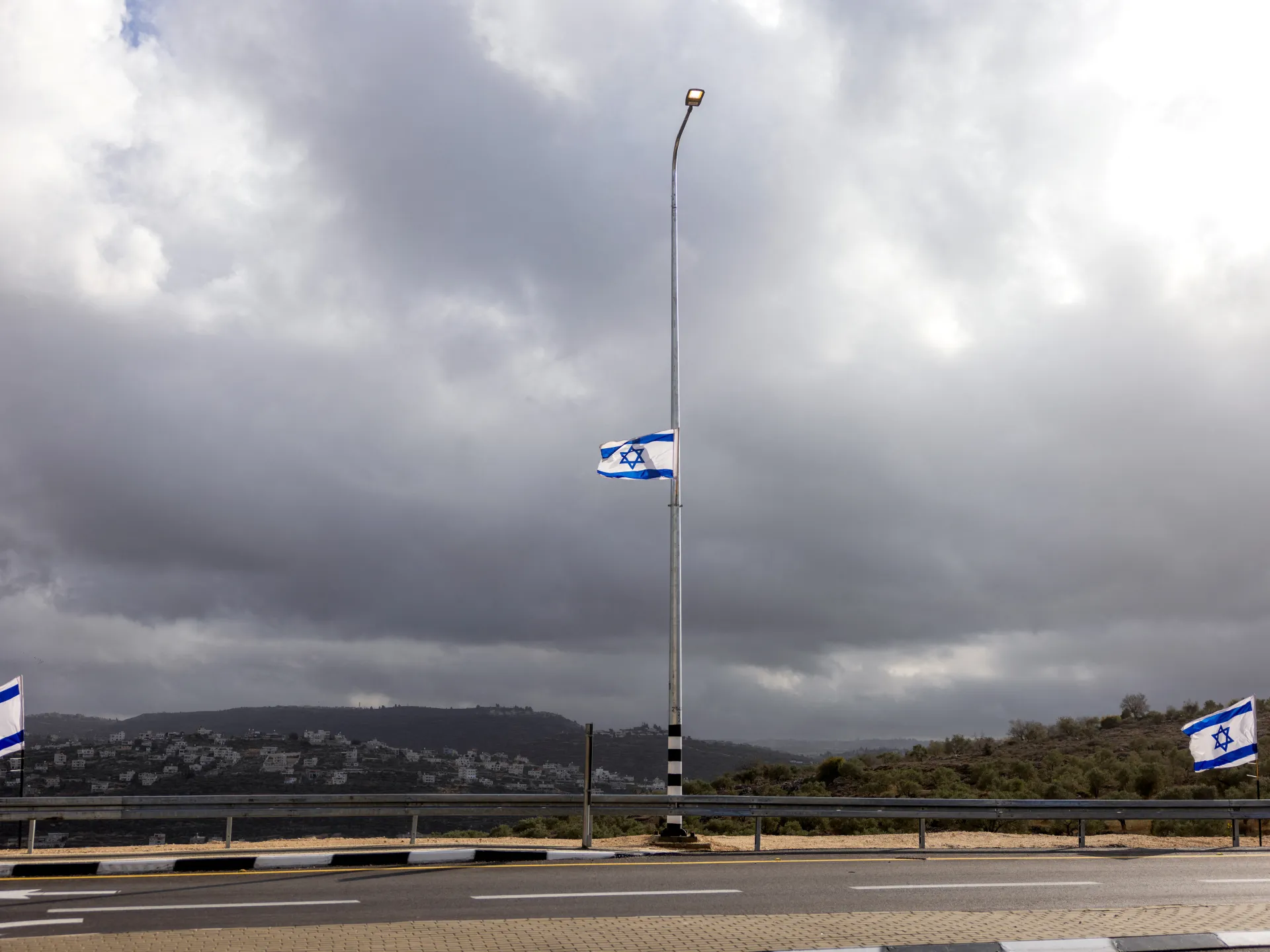
Somaliland President Abdirahman Mohamed Abdullahi, known locally as Cirro, had been signalling for weeks that recognition by an unnamed state was imminent, though he didn’t clarify which country. Somaliland’s capital Hargeisa had been dotted with billboards in recent weeks, telling residents that recognition was coming.

Omar said the strategic importance of the Horn of Africa was driving foreign interference and interest. “The importance of this region isn’t new. It is still important for international trade today,” he said.

‘Displacement of Palestinians’

Omar accused Israel of pursuing Somaliland’s recognition in order to further displace Palestinians from Gaza. “One of the motivating factors is the displacement of Palestinians from Gaza,” he told Al Jazeera. “It has been widely known – Israel’s goal on that issue.”

Palestine’s foreign ministry backed Somalia, recalling that Israel had previously identified Somaliland as a potential destination for forcibly displacing Palestinians from Gaza, which it described as a “red line”.

On Saturday, Somaliland’s Cirro defended the Israeli move, insisting it was “not directed against any state, nor does it pose a threat to regional peace”.

Hours after Israeli Prime Minister Benjamin Netanyahu announced the recognition on Friday, Somalia’s prime minister’s office issued a statement describing Israel’s action as a deliberate attack on Somalia’s sovereignty and an unlawful step, and emphasising that Somaliland remains an integral and “inseparable” part of the Somali territory.

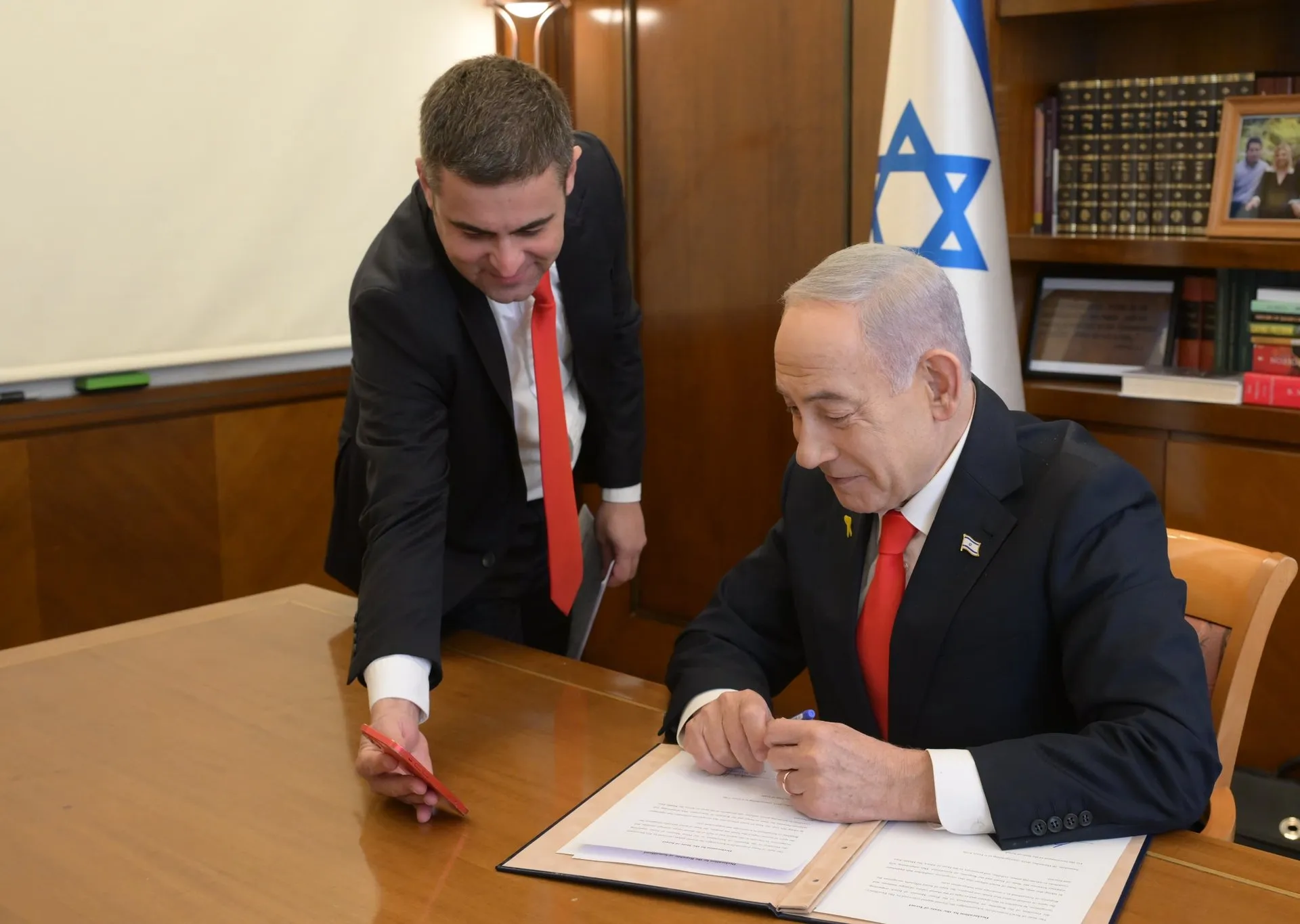
Netanyahu framed the diplomatic breakthrough with Somaliland as being in the spirit of the Abraham Accords and said he would champion Somaliland’s cause during his meeting with United States President Donald Trump on Monday. Netanyahu also invited Cirro to Israel, which the latter has accepted.

But Trump has distanced himself from close ally Netanyahu on the issue, telling The New York Post newspaper he would not follow Israel’s lead.

Somalia’s Public Works Minister Ayub Ismail Yusuf welcomed Trump’s stance, writing on social media: “Thank you for your support, Mr. President.”

Trump’s comments marked a shift from August, when he told a news conference his administration was working on the Somaliland issue. In recent weeks, the US president has frequently attacked the Somali community in the US and Somalia.

The US has also expressed frustration with Somalia, saying at a recent UN Security Council meeting that Somali authorities had failed in improving security in the country despite billions in aid, and signalling it will not continue to fund a costly peacekeeping mission.

Meanwhile, the African Union’s chairperson, Mahamoud Ali Youssouf, rejected any initiative aimed at recognising Somaliland as an independent nation, warning it would set a dangerous precedent with far-reaching implications. The continental bloc cited a 1964 decision on the intangibility of borders inherited at a country’s independence as a fundamental principle.

Arab League Secretary-General Ahmed Aboul Gheit also condemned what he described as a provocative Israeli assault on the sovereignty of an Arab and African state. He said the Israeli recognition was a clear violation of international law and a flagrant infringement of the principle of state sovereignty.

Despite the international reactions, thousands poured onto the streets of Hargeisa on Friday to celebrate what many saw as the end of 30 years of diplomatic isolation. The Israeli flag was emblazoned on the national museum as residents welcomed the breakthrough.

Somalia has historically had contentious relations with Israel, stemming from Israel’s historic ties with Somalia’s regional rival, Ethiopia.

During the Cold War, Israel provided Ethiopia with military training, intelligence and weapons, while Somalia, aligned with Arab states hostile to Israel, was defeated in the 1977 Ogaden War, a setback that helped fuel decades of civil unrest.

Somaliland declared independence from Somalia in 1991 following persecution under former leader Mohammed Siad Barre, but Somalia has never recognised the breakaway region.

Earlier this month, Israeli Deputy Foreign Minister Sharren Haskel revealed there had been communication with Somalia’s government about shared concerns over Houthi influence in the region.

But Omar, the Somali state minister for foreign affairs, strongly denied any ties with Israel, stating that the country’s position on Israeli policies remained unchanged.
Source link

UN renews Sudan ceasefire appeal over ‘unimaginable suffering’ of civilians | Sudan war News

UN Secretary-General Antonio Guterres appeals for immediate truce as fighting intensifies in Darfur and Kordofan regions.

United Nations Secretary-General Antonio Guterres has called for an immediate ceasefire in Sudan’s brutal civil war, which the UN says has created the world’s worst humanitarian crisis.

Guterres’s appeal, made late on Friday, follows a peace initiative presented by Sudan’s Prime Minister Kamil Idris to the UN Security Council on Monday, which called for the paramilitary Rapid Support Forces (RSF) to disarm.

Recommended Stories

list of 4 itemsend of list

The plan was rejected by the RSF as “wishful thinking”.

The war erupted in April 2023 when a power struggle broke out between the Sudanese army and the RSF paramilitary group. Since then, the conflict has displaced 9.6 million people internally and forced 4.3 million to flee to neighbouring countries, while 30.4 million Sudanese now need humanitarian assistance, according to UN figures.

UN Assistant Secretary-General Mohamed Khaled Khiari told the UNSC this week that fears of intensified fighting during the dry season had been confirmed.

“Each passing day brings staggering levels of violence and destruction,” he said. “Civilians are enduring immense, unimaginable suffering, with no end in sight.”

The conflict has shifted in recent weeks to Sudan’s central Kordofan region, where the RSF captured the strategic Heglig oilfield on December 8. The seizure prompted South Sudanese forces to cross into Sudan to protect the infrastructure, which Khiari warned reflects “the increasingly complex nature of the conflict and its expanding regional dimensions”.

The RSF has also launched a final push to consolidate full control over North Darfur state, attacking towns in the Dar Zaghawa region near the Chad border since December 24. The offensive threatens to close the last escape corridor for civilians fleeing the country to Chad.

The violence spilled across Sudan’s borders on Friday when a drone attack killed two Chadian soldiers at a military camp in the border town of Tine.

A Chadian military intelligence officer told Reuters news agency the drone came from Sudan, though it remained unclear whether it was launched by the army or the RSF. Chad has placed its air force on high alert and warned it would “exercise our right to retaliate” if the strike is confirmed as deliberate.

Despite the intensifying conflict, the UN achieved a rare breakthrough, saying on Friday that it conducted its first assessment mission to el-Fasher since the city fell to the RSF.

UN Humanitarian Coordinator Denise Brown said the mission followed “months of intense fighting, siege, and widespread violations against civilians and humanitarian workers,” adding that “hundreds of thousands of civilians have had to flee el-Fasher and surrounding areas”.

Earlier this month, Yale University released a report documenting systematic mass killings by the RSF in el-Fasher, with satellite imagery showing evidence of burning and the burial of human remains on a mass scale.

US Secretary of State Marco Rubio warned last week that the fighting was “horrifying” and “atrocious”, telling a news conference that “one day the story of what’s actually happened there is going to be known, and everyone involved is going to look bad”.

Rubio said he wanted the war to end before the New Year, but there is no strong indication that progress has been made.

Prime Minister Idris’s peace plan proposed an immediate UN-monitored ceasefire and complete RSF withdrawal from the roughly 40 percent of Sudan it controls. But an adviser to RSF leader Mohamed Hamdan “Hemedti” Dagalo dismissed the proposal as “closer to fantasy than to politics”.

Upon returning to Port Sudan on Friday, Idris laid down a red line, saying the government would reject international peacekeeping forces because Sudan had been “burned” by them in the past.

Source link

Salah seals Egypt qualification with win against South Africa at AFCON 2025 | Africa Cup of Nations News

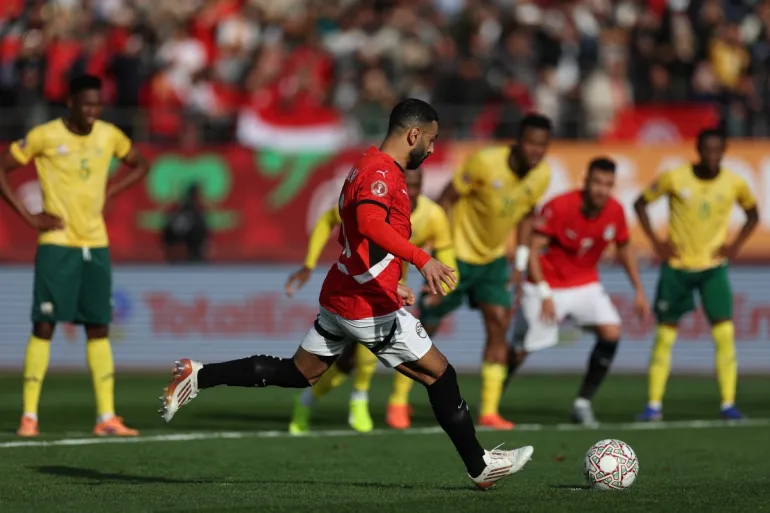
Mohamed Salah has scored as 10-man Egypt have beaten South Africa 1-0 in Agadir to become the first qualifiers for the knockout stage of the 2025 Africa Cup of Nations.

The Liverpool star converted a penalty on 45 minutes on Friday, and South Africa were denied a spot kick late in the second half when Yasser Ibrahim appeared to handle the ball inside the box.

Recommended Stories

list of 4 itemsend of list

Salah came to Morocco after not starting in five Liverpool matches and his omission leading to an outburst against manager Arne Slot.

Egypt were reduced to 10 men in first-half added time when right back Mohamed Hany was shown a second yellow card for a stamp, followed by a red.

After two rounds in Group B, record seven-time champions Egypt have six points and are guaranteed a top-two finish in the group stage and a place in the round of 16.

South Africa have three points and Angola and Zimbabwe one each after they drew 1-1 in Marrakesh earlier on Friday.

The first chance fell to Salah after 11 minutes, but he could not move forward quickly enough to connect with a low cross from Hany.

That the majority of the crowd were supporting the Pharaohs became obvious soon after when the Burundi referee ignored Zizo’s appeals for a free kick and loud whistling enveloped the stadium.

When Salah delivered a free kick into the heart of the South African area, three Egyptians darted forward, but none could connect with the ball.

Midway through the opening half, a pattern had developed. Egypt were pushing forward regularly while South Africa defended with calmness and solid tackling.

Egypt's forward #10 Mohamed Salah shoots from the penalty spot to score the team's first goal during the Africa Cup of Nations (CAN) Group B football match
Salah shoots from the penalty spot to score the team’s winner during the Africa Cup of Nations Group B match against South Africa [Franck Fife/AFP]

When South Africa’s Teboho Mokoena fouled Omar Marmoush just outside the D, he was yellow-carded. However, the Manchester City striker fired the resultant free kick wide.

As the first half progressed, the sun broke out in the southern coastal city – a welcome sight for players and spectators with many earlier group matches staged in torrential rain.

A rare South Africa attack ended disappointingly as Lyle Foster struck a weak shot that was comfortably saved by 37-year-old Mohamed El Shenawy.

Awarded a free kick close to the touchline, South Africa performed an intricate, multipass move that ended tamely as El Shenawy clutched a cross.

Salah was being closely policed by Aubrey Modiba, and as half-time drew near, the Liverpool star retreated into the Egyptian half to retain possession.

Then, as the Egypt captain chased a loose ball with Khuliso Mudau, the South African right back raised his left arm, striking Salah’s left eye.

Amid Egyptian protests, the Burundian referee viewed the incident on a VAR monitor and pointed to the penalty spot.

A lengthy delay before the kick was taken could not have eased the nerves of Salah, but he comfortably converted the penalty as Ronwen Williams dived in the wrong direction.

More drama erupted in added time when Hany stamped on Mokoena, leading to a second yellow card for the defender.

South Africa, with a numerical advantage, attacked more as the second half progressed, but Egypt came close to a second goal with Williams foiling substitute Emam Ashour after a quick free kick.

El Shenawy displayed his agility with 15 minutes remaining, using his right hand to tip to safety a low shot from Foster. It was one of several saves that kept Egypt ahead.

Angola and Zimbabwe keep alive AFCON hopes

Veteran Knowledge Musona scored as Zimbabwe came from behind to draw 1-1 with Angola in Marrakesh to kick off the second round of AFCON matches earlier in the day.

Gelson Dala put Angola ahead midway through the first half, and recalled Musona levelled deep in first-half added time.

A draw in Group B suited neither team, leaving both two points adrift of joint leaders Egypt and South Africa after having played one match more.

Only the top two finishers in each group automatically qualify for the knockout phase. The best four third-placed teams from the six mini-leagues also will advance.

Bill Antonio wasted a good chance to give Zimbabwe an early lead when he blazed wide from close range before a small crowd.

Angola recovered quickly to establish control and took the lead after 24 minutes through Qatar-based striker Dala.

A superb lobbed pass from To Carneiro dropped in front of Dala inside the box, and he squeezed the ball between the near post and 40-year-old goalkeeper Washington Arubi.

Musona, one of four changes to the Zimbabwe lineup after a 2-1 loss to Egypt in Agadir four days earlier, became increasingly involved as the Warriors sought an equaliser.

Musona wasted a free kick opportunity by hitting the ball into the defensive wall, then shot wide, much to the frustration of Romanian coach Marian Marinica, who repeatedly shook his head.

Hugo Marques, the 39-year-old Angola goalkeeper, had his head heavily bandaged before continuing after a collision with an opponent.

The perseverance of Musona finally paid off six minutes into added time at the end of the opening half when he equalised.

After Angola were dispossessed in midfield, Zimbabwe counterattacked swiftly, and a superb pass found Musona inside the box.

He struck a slow shot between the legs of Carneiro and just wide of the outstretched right leg of Marques into the net.

As both sides sought a second goal and the lead, Marques rescued Angola 12 minutes from the end of regular time with an acrobatic one-hand save of an attempt by substitute Tawanda Chirewa.

Source link

Two people dead in stabbing, car-ramming attack in Israel | Israel-Palestine conflict News

Attack comes a day after an Israeli army reservist in civilian clothes rammed his vehicle into a Palestinian man praying on the roadside.

Two people have died in a stabbing and car-ramming attack in northern Israel, officials say.

Israeli police and emergency workers said a Palestinian from the Israeli-occupied West Bank attacked and killed a man and a woman on Friday before he was shot and wounded.

Recommended Stories

list of 3 itemsend of list

The attack came a day after an Israeli military reservist dressed in civilian clothes rammed his vehicle into a Palestinian man who was praying on a roadside in the West Bank after earlier firing shots in the area.

“Footage was ⁠received of an armed individual running over a Palestinian ​individual,” the Israeli military said in a statement about Thursday’s attack, adding ‍that the Israeli reservist’s military service had been terminated. The Palestinian man went to hospital for checks after the attack before returning ​home.

In Friday’s incident, Israeli police said the attacker first crashed his vehicle into people in the northern city of Beit Shean, killing a 68-year-old man, and then sped onto a highway.

Later, he fatally stabbed a 20-year-old woman near the highway, “and the suspect was ultimately engaged with gunfire near Maonot Junction in Afula following intervention by a civilian bystander,” police said, adding that the attacker was taken to a hospital.

Both the victims were pronounced dead at the scene by paramedics, Israel’s rescue services said. A teenage boy was hospitalised with minor wounds sustained in the car-ramming, according to bystanders.

The Israeli military said the attacker had “infiltrated into Israeli territory several days ago”.

Since Israel’s genocidal war in Gaza began in October 2023, tens of thousands of Palestinians have been killed there.

At the same time, Israeli settlers have escalated violence in the West Bank, seizing Palestinian land and harassing civilians while Israeli forces conduct regular raids and arrests.

More than 1,000 Palestinians have been killed in the West Bank ‌since October 7, 2023, mostly in operations by security forces and some by settler violence, according ‍to the United Nations.

In the same period, 57 Israelis have been killed in Palestinian attacks.

After Friday’s incident, Israeli Defence Minister Israel Katz said he had instructed the military ​to respond forcefully in ‌the West Bank town of Qabatiya, where he said the assailant came from.

The Israeli military said it was “preparing for an operation” ‌in the area.

Source link

Iran’s government budget reveals tough road ahead as currency hits new low | Business and Economy News

Tehran, Iran – Iran’s currency has been registering new lows amid ongoing economic turmoil that is also reflected in a planned budget for next year that effectively shrinks public spending.

Each United States dollar was priced at about 1.36 million rials in the open market on Wednesday in Tehran, its highest rate ever, before the Iranian currency slightly regained ground on Thursday.

Recommended Stories

list of 3 itemsend of list

The embattled national currency has been rapidly declining over recent weeks as the US and its Western allies pile on their sanctions and diplomatic pressure, and the threat of another war with Israel lingers.

President Masoud Pezeshkian this week sent his administration’s finalised proposed budget to the hardline-dominated parliament for the upcoming Iranian calendar year, which starts in late March. The budget will then have to be greenlit by the 12-member Guardian Council before being ratified into law in the coming weeks.

The presented budget nominally grew by just over 5 percent compared with last year, but inflation currently stands at about 50 percent – indicating that the government envisions lower spending while managing a so-called “resistance economy” as it faces a massive budget crunch yet again.

But minimum wages are to be raised far below the inflation rate, too, at only 20 percent, meaning that Iranians are once more guaranteed to have far less spending power next year as the embattled national currency sinks.

epa12605803 Iranians view Yalda decorations as they prepare to celebrate the Yalda feast in Tehran, Iran, 20 December 2025. Yalda is an ancient tradition marking the onset of winter and the longest night of the year. The celebration goes back thousands of years to the time when Zoroastrianism was the predominant religion of ancient Persia. Watermelons and pomegranates, along with dried fruit, are the main specialties of the Yalda feast. EPA/ABEDIN TAHERKENAREH
Iranians view decorations as they prepare to celebrate the Yalda feast, an ancient tradition marking the onset of winter and the longest night of the year, in Tehran, Iran, on December 20, 2025 [Abedin Taherkenareh/EPA]

At the same time, the budget says the government sees taxes rising by a massive 62 percent next year, as authorities try to gradually decrease dependence on oil revenues amid US efforts to drive down Iranian exports, which are carried by a shadow fleet of ships mostly to China.

At the current exchange rate, the whole budget is worth about $106bn, several times lower than the projected 2026 budgets of regional players like Turkiye, Saudi Arabia and Israel.

Iran’s rent-distributing multi-tier exchange rate system is still at play, with the government proposing allocating a rate for customs duties, import valuation and budget accounting tables, and another closer to the open market rate used for oil revenue realisation.

An earlier subsidised exchange rate, which was far lower than the open market rate, has now been abandoned. Any excess cash resulting from this is expected to be doled out to low-income Iranians in the form of electronic coupons that can be used to buy essential items like food.

For the first time, the budget is drafted in new rials as four zeros are expected to be removed from the ailing national currency by the time the budget is operational for next year.

After years of back and forth, the parliament in October approved the government plan to lop off four zeros. The move is only cosmetic and will not help with the runaway inflation, but proponents argued it was necessary after years of currency devaluation.

Budget spells grim outlook

Several major factors have already been raising alarm over how bad the economic situation could become next year.

Iranians online reacted poorly to the fact that the government predicts wages will be far outpaced by inflation and tax collection. Others were concerned that eliminating the subsidised rate for essential goods could cause another price shock in the short term.

Many shared a video of Pezeshkian from last year running for president, when he said during a televised interview that the stark disparity between wage increases and inflation is a “grave injustice” being done to the Iranian people.

“Unfortunately, so long as we do not resolve the structural issues, we are making labourers and government workers poorer by the day while those with money get bigger and bigger,” Pezeshkian said at the time.

“This inflation is an additional tax on the poor and the disenfranchised.”

Iranian women shop in a local market as the value of the Iranian rial drops, in Tehran, Iran, December 20, 2025. Majid Asgaripour/WANA (West Asia News Agency) via REUTERS ATTENTION EDITORS - THIS PICTURE WAS PROVIDED BY A THIRD PARTY
Iranian women shop in a local market as the value of the Iranian rial drops, in Tehran, Iran, on December 20, 2025 [Majid Asgaripour/WANA (West Asia News Agency) via Reuters]

But successive governments have failed to eliminate budget deficits or rein in banks teetering on the brink of insolvency, therefore relying on the central bank to print more money to run the country and, in turn, exacerbate inflation.

Earlier in December, the government proceeded with increasing the price cap of petroleum despite repeated assurances it had no plans to that effect this year. The move has already led to increased transport costs, which will end up taking inflation higher.

There are now four price tiers for petroleum, with the cheapest and lowest quality that is available to most Iranians costing up to 50,000 rials per litre (about $1.19) and higher quality imported fuel delivered this week at 800,000 rials per litre ($19).

Hamid Pourmohammadi, who heads the Plan and Budget Organization of Iran, insisted that the government has devised a 20-point plan to be unveiled soon that will reduce pressure on the livelihoods of Iran’s 90 million population.

“The government is trying to adopt an active approach to address the economic challenges of the people, businesses and economists, so there is no perception of complacency in these economic conditions,” he said.

Source link

Sabalenka vs Kyrgios: Battle of the Sexes – start time, rules, how to watch | Tennis News

In a revamp of the 1973 mixed singles match, Aryna Sabalenka will play Nick Kyrgios on Sunday in Dubai.

Who: Aryna Sabalenka vs Nick Kyrgios
What: “Battle of the Sexes” exhibition tennis match
Where: Coca-Cola Arena in Dubai, United Arab Emirates
When: Sunday at 7.45pm (15:45 GMT)
How to follow: We’ll have all the build-up on Al Jazeera Sport from 13:00 GMT in advance of our live text commentary stream.

Women’s world number one Aryna Sabalenka will take on Australian maverick Nick Kyrgios in a “Battle of the Sexes” exhibition tennis match in Dubai on Sunday.

Recommended Stories

list of 4 itemsend of list

Sabalenka, 27, will face the 30-year-old former Wimbledon finalist in a modern rendition of tennis icon Billie Jean King’s 1973 showdown with fellow American Bobby Riggs, which turned out to be a watershed moment for both tennis and the women’s movement.

Here is all to know before their much anticipated showdown:

How did the Sabalenka-Kyrgios match come about?

Kyrgios, who was ranked as high as 13 in the world in men’s singles, threw down the gauntlet to Sabalenka during the US Open in September, saying in an interview he would easily dispatch the Belarusian without having to try “100 percent to win”.

He said women cannot return professional men’s serves and claimed he would defeat the world’s top-ranked female player.

Sabalenka responded by saying she was ready to “kick a**”, which eventually led to Evolve, the marketing agency that represents both players, organising this weekend’s matchup.

Aryna Sabalenka in action.
Aryna Sabalenka hits a backhand in the women’s singles final of this year’s US Open, which she won against Amanda Anisimova on September 6, 2025 [Mike Frey/Imagn Images via Reuters]

What’s the history behind the ‘Battle of the Sexes’?

The original “Battle of the Sexes” took place in 1973 between King, then 29, and Riggs, 55, at the Houston Astrodome.

King, a 12-time singles Grand Slam champion, made history when she defeated the former men’s world number one amateur player 6-4, 6-3, 6-3 in a matchup that drew an estimated 90 million TV viewers worldwide.

King’s straight-sets victory was considered a pivotal moment for women’s sport at the time and solidified her status as a sports and feminist icon of her generation.

What are the rules for ‘Battle of the Sexes’?

Sabalenka, speaking on the Piers Morgan Uncensored YouTube show on December 9, said it would be “really tough” to compete against a male player of Kyrgios’s standard using a full court and standard rules.

As a result, there are several rule modifications for this match:

  • The players will be limited to just one serve instead of two.
  • Sabalenka’s side of the court will be 9 percent smaller than a normal tennis court.
  • It will be a best-of-three-sets contest – with a 10-point tiebreaker in the final set if required.

What has Sabalenka said about the match?

“I’m proud to represent women’s tennis and to be part of this modern take of the iconic Battle of the Sexes match,” Sabalenka said in a news release.

“Dubai is my home, and I know this city loves big, entertaining events. I have a lot of respect for Nick and his talent, but make no mistake, I’m ready to bring my A-game.”

What has Kyrgios said about the match?

Kyrgios said he’ll defeat the four-time Grand Slam champion without having to try hard.

“I think she’s the type of player who genuinely thinks she’s going to win,” Kyrgios said.

“She is not gonna beat me. Do you really think I have to try 100 percent? I’m gonna try because I’m representing the men’s side. I’d say like 6-2 maybe.”

“I think I’m going to be OK. I’m going to go there, and I don’t want her to win. That’s for sure,” he added.

Nick Kyrgios reacts.
Nick Kyrgios, right, finished runner-up to Novak Djokovic at the 2022 Wimbledon men’s final [File: Peter van den Berg/USA Today Sports via Reuters]

Is oft-injured Kyrgios planning a return to professional tennis?

Kyrgios will compete at ‍next month’s ‍Brisbane International after receiving a wildcard entry, organisers said on Sunday, as he works towards a potential ​return to the 2026 Australian Open.

His career has been ravaged by injury over the past couple of ‍years, and ⁠he played only five singles matches in 2025, the most recent at the Miami Open in March.

Kyrgios, the 2018 Brisbane champion, is now ranked ​673rd in the ‌world with no protected ranking and will also need a wildcard to compete at Melbourne ‌Park.

How to watch the ‘Battle of the Sexes’

The match is being broadcast live and free in the United Kingdom on BBC 1 and streamed on BBC iPlayer.

Please check local guides for access in other countries.

Al Jazeera will provide live text commentary of the match.

Source link

RSF says Sudan’s army launches air strikes on paramilitary stronghold Nyala | Sudan war News

Drone attacks hit fuel market in city that serves as headquarters for RSF’s alternative government.

Sudan’s Rapid Support Forces (RSF) paramilitary group says the country’s army struck a fuel market in the city of Nyala, the RSF’s administrative capital, as part of an intensified aerial campaign against its positions in South Darfur.

For three consecutive days ending Thursday, military drones and warplanes pounded strategic RSF sites across Nyala, including the international airport, military positions and training facilities.

Recommended Stories

list of 2 itemsend of list

The strike on the fuel market triggered a huge blaze as barrels of fuel exploded, according to footage circulated on social media, sending thick plumes of black smoke into the air.

Youssef Idris Youssef, who heads the RSF’s civil administration in South Darfur, accused the army of deliberately targeting civilians. He described the attack as part of “a systematic policy” to punish Darfur residents for not resisting the RSF presence in their communities.

The Sudanese military has not issued any statement regarding the strikes.

Casualties were reported among both civilians and RSF members involved in the fuel trade.

In the aftermath, RSF intelligence services conducted mass arrests near the targeted site and Nyala’s main market, detaining civilians and military personnel on accusations of providing coordinates to the army, according to local sources.

Nyala holds particular strategic importance as the seat of the RSF’s parallel government, known as TASIS, which the group declared in July. Led by RSF commander Mohamed Hamdan “Hemedti” Dagalo, the alternative administration has been widely condemned as possibly fracturing Sudan, but controls significant territory across Darfur.

The city was struck by the army in October when it targeted the RSF and Nyala airport, which has been reportedly used by the RSF as a logistics hub for its forces.

Fighting continues across Darfur

Fighting has raged across Darfur since the RSF captured el-Fasher in October, an offensive marked by atrocities documented by rights groups.

The United States has said the RSF has committed genocide in Darfur.

This week, the RSF announced it had seized the Abu Qumra region in North Darfur and claimed advances towards Um Buru, though joint forces allied with the army disputed RSF assertions that they had also taken the town of Karnoi.

The attack on Nyala came just two days after Sudan’s prime minister, Kamil Idris, presented a peace proposal to the United Nations Security Council calling for RSF withdrawal from captured areas, disarmament in camps, and eventual elections.

The RSF rejected the plan, with spokesman Alaa el-Din Naqd telling Sudanese outlet Radio Dabanga it amounted to “wishful thinking”.

Sudan’s de facto leader, Abdel Fattah al-Burhan, was in Ankara for talks on Thursday with Turkish President Recep Tayyip Erdogan, at which Erdogan expressed his support for peace efforts and his opposition to dividing Sudan.

Hours earlier, a senior official in Sudan’s Transitional Sovereignty Council ruled out any negotiations, declaring there could be “no truce and no negotiation with an occupier”.

The war, which erupted in April 2023, has killed more than 100,000 people and displaced nearly 14 million, in what the UN describes as one of the world’s worst humanitarian crises.

Since the RSF seized el-Fasher – the last major army stronghold in Darfur – the conflict has shifted to Central Kordofan, splitting Sudan between territories controlled by the military and the RSF.

Source link

Explosion at mosque in Syria’s Homs kills at least six | Syria’s War News

DEVELOPING STORY,

Syrian state media says security forces have imposed a ​cordon around ‌the area and are investigating.

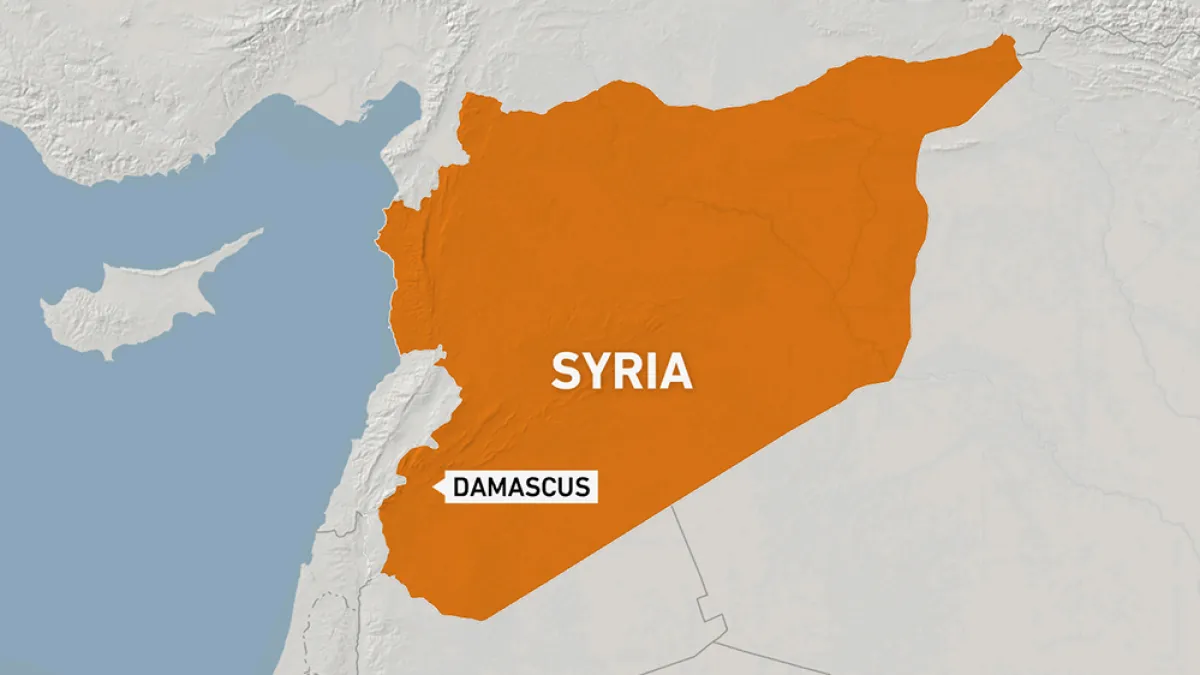
At least six ‍people ‍have been killed and more than 20 were injured when an explosion ⁠struck a mosque ​in Syria’s Homs province.

The attack targeted the Imam Ali bin Abi Talib Mosque in the Wadi al-Dahab neighbourhood of Homs shortly after Friday prayers, the Syrian Arab News Agency (SANA) reported.

Recommended Stories

list of 3 itemsend of list

Footage verified by Al Jazeera showed people fleeing the mosque in panic, placing some victims on stretchers and carrying others, wrapped in cloaks, to ambulances.

The blast appeared to have taken place in the corner of the mosque’s main prayer hall, leaving a small crater in the wall and scorching the surrounding area, with prayer carpets ripped and strewn with debris, and books and fragments scattered across the floor.

Local officials told the Reuters news agency the blast ‌may have been ‌caused by ⁠a suicide bomber or explosives placed there.

State media said security forces had imposed a ​cordon around ‌the area and were investigating.

Ayman Oghanna, Al Jazeera’s correspondent in Aleppo, noted that Homs is home to a diverse population of Alawites, Christians and Sunni Muslims. He said the attack targeted an Alawite mosque, warning it could “inflame sectarian tensions” across the country.

He said no group had claimed responsibility for the strike, but noted a recent surge in ISIL (ISIS) activity in Syria. He added that government forces had carried out an operation near Aleppo, arresting three alleged ISIL members.

Last week, the United States bombed ISIL positions in Syria in retaliation for the killings of two US soldiers and a civilian interpreter. Damascus also joined a global anti-ISIL alliance in November, pledging to crush the remaining elements of the group.

Friday’s attack underscores the country’s fragile security situation, as the new authorities in Damascus struggle to assert control.

Source link

Palestinian economy faces critical downturn amid escalating fiscal crisis | Israel-Palestine conflict News

Ramallah, occupied West Bank – The Palestinian economy is undergoing a severe downturn, driven by Israel’s continued assault on Gaza, intensified restrictions on movement and trade in the occupied West Bank, and a sharp decline in both domestic and external financial resources.

As the Palestinian government struggles to manage an escalating fiscal crisis, official data and expert assessments warn that the economy is approaching a critical threshold – one that threatens the continuity of state institutions and their ability to meet even basic obligations.

Recommended Stories

list of 3 itemsend of list

A joint report by the Palestinian Central Bureau of Statistics (PCBS) and the Palestine Monetary Authority (PMA), published in the Palestinian Economic Monitor for 2025, found that the economy remained mired in deep recession throughout the year.

According to the report, gross domestic product (GDP) in Gaza contracted by 84 percent in 2025 compared with 2023, while GDP in the occupied West Bank declined by 13 percent over the period. Overall GDP levels remain far below their pre-war baseline, underscoring the fragility of any potential recovery and the economy’s inability to regain productive capacity under current conditions.

The report documented a near-total collapse of economic activity in Gaza, alongside sharp contractions across most sectors in the West Bank, despite a modest improvement compared with 2024. It also recorded a decline in trade volumes to and from Palestine compared with 2023, while unemployment in Gaza exceeded 77 percent during 2025.

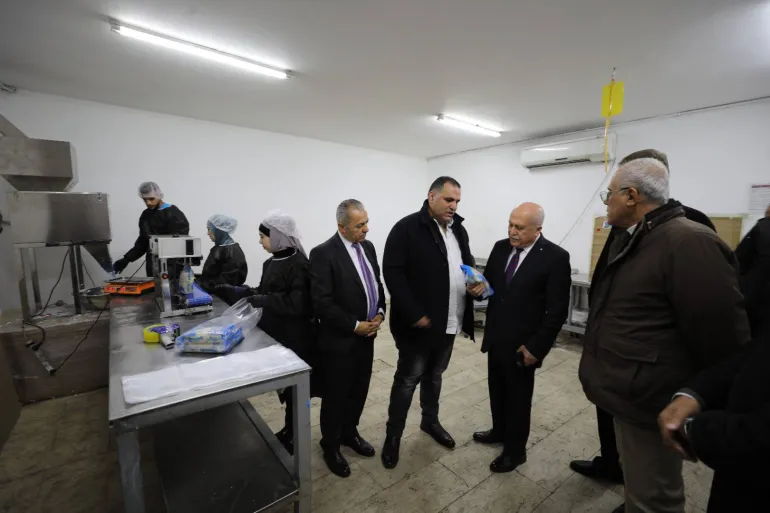
The Palestinian Minister of National Economy visits the Bethlehem Industrial Zone to assess the state of Palestinian industries, 10 December 2025. Photo: Palestinian Ministry of National Economy
Palestinian Economy Minister Mohammed al-Amour visits the Bethlehem Industrial Zone to assess the state of Palestinian industries, December 10, 2025 [Handout/Palestinian Ministry of National Economy]

Withheld revenues and mounting debt

Palestinian Economy Minister Mohammed al-Amour said Israeli authorities are withholding approximately $4.5bn in Palestinian clearance revenues, describing the move as a form of “collective punishment” that has severely undermined the Palestinian Authority’s (PA’s) ability to function.

“The total accumulated public debt reached $14.6bn by the end of November 2025, representing 106 percent of the 2024 gross domestic product,” al-Amour told Al Jazeera.

The minister said the debt includes $4.5bn owed to the International Monetary Fund, $3.4bn to the Palestinian banking sector, $2.5bn in salary arrears to public employees, $1.6bn owed to the private sector, $1.4bn in external debt, and $1.2bn in other financial obligations.

“These pressures have had a direct impact on the overall performance of the public budget,” al-Amour said, contributing to a widening deficit and sharply reduced capacity to cover operational spending and essential commitments.

All of that has led al-Amour to conclude that the Palestinian economy is undergoing “its most difficult period” since the establishment of the PA in 1994.

Official estimates show GDP contracted by 29 percent in the second quarter of 2025, compared with 2023, while GDP per capita fell by 32 percent over the period. These figures align with a recent report by the United Nations Conference on Trade and Development (UNCTAD), which concluded that the Palestinian economy has regressed to levels last seen 22 years ago.

In response, al-Amour said the government was implementing an “urgent package of measures”.

“The government is rolling out a series of actions that include strengthening the social protection system, supporting citizens’ resilience in Area C [of the West Bank], and backing small and medium-sized enterprises and productive sectors, particularly industry and agriculture,” al-Amour said.

Official data show a sharp drop across nearly all economic activities. Construction contracted by 41 percent, while both industry and agriculture declined by 29 percent each. Wholesale and retail trade fell by 24 percent.

The tourism sector has been among the hardest hit. Following the start of Israel’s genocidal war on Gaza in October 2023, the Ministry of Tourism reported daily losses exceeding $2m, as inbound tourism nearly collapsed. By the end of 2024, cumulative losses were estimated at approximately $1bn.

The Palestinian Economic Policy Research Institute (MAS), citing PCBS data, reported an 84.2 percent drop in hotel occupancy in the West Bank during the first half of 2024 compared with the same period a year earlier. Losses in accommodation and food services alone amounted to roughly $326m.

Despite the downturn, al-Amour said the Ministry of Economy is focusing on sustaining the private sector, substituting Israeli imports across seven key sectors, developing the digital and green economies, and improving the business environment. He noted that about 2,500 new companies continue to be registered each year.

Tourism collapsing

Samir Hazbun, a lecturer at al-Quds University and board member of the Palestinian Federation of Chambers of Commerce and Industry, said repeated crises have hollowed out the economy.

“Over the past five years, all economic sectors have entered successive crises, starting with the COVID-19 pandemic and followed by the war on Gaza,” Hazbun said. “Tourism, one of the most important sectors, has been especially affected, exhausting the local economy and weakening its ability to recover.”

Hazbun said preliminary estimates indicate tourism has suffered direct losses exceeding $1bn, alongside extensive indirect losses resulting from the paralysis of hotels, souvenir shops, travel agencies, tour guides and street vendors.

He added that hotel investments alone are estimated at $550m, with no financial returns for owners, forcing many workers out of the sector due to the absence of job security and safety nets.

Economic expert Haitham Daraghmeh described Palestinian debt as “accumulated debt that increases monthly”, owed to banks, suppliers, contractors, and the telecommunications and health sectors.

“The withholding of clearance revenues is no longer a temporary financial crisis; it has become a factor of complete economic paralysis,” he said.

With external aid frozen and domestic revenues at historic lows, Daraghmeh warned that the government was “no longer able to cover salaries or operational costs”.

“The government is operating like an ATM, with no real capacity for investment or economic stimulus,” Daraghmeh added.

Economic warnings

Daraghmeh said World Bank reports warn that continued failure to pay salaries and meet obligations could trigger comprehensive economic collapse. While some countries, including France and Saudi Arabia, have pledged support, he said none of that assistance has materialised.

He outlined three possible scenarios; the most likely is a continued gradual decline, driven by ongoing revenue withholding and shrinking resources. The second involves international intervention to prevent total collapse, particularly at a decisive political moment. The third scenario could see a conditional breakthrough, tied to European demands for financial reform, anticorruption measures, curriculum changes and elections.

Taken together, the data and expert assessments suggest the Palestinian economy is approaching a dangerous tipping point. Analysts warn that without an end to revenue withholding, renewed international financial support, and a shift in the political context, the economy risks sliding from prolonged crisis into outright collapse.

The question facing Palestinian officials and economists alike is how long the system can endure under siege-like conditions – and whether political and economic shifts will arrive in time to halt what many now describe as a slow and deliberate economic unravelling.

Source link

Palestine Action: Prison hunger strikes that shaped history | Israel-Palestine conflict News

Four members of the advocacy group Palestine Action have pledged this week to continue their hunger strike amid grave medical warnings and the hospitalisations of their fellow protesters.

The group’s members are being held in five prisons in the United Kingdom over alleged involvement in break-ins at a facility of the UK’s subsidiary of the Israeli defence firm Elbit Systems in Bristol and a Royal Air Force base in Oxfordshire. They are protesting for better conditions in prison, rights to a fair trial, and for the UK to change a July policy listing the movement as a “terror” group.

Recommended Stories

list of 4 itemsend of list

Palestine Action denies charges of “violent disorder” and others against the eight detainees. Relatives and loved ones told Al Jazeera of the members’ deteriorating health amid the hunger strikes, which have led to repeated hospital admissions. Lawyers representing the detainees have revealed plans to sue the government.

The case has brought international attention to the UK’s treatment of groups standing in solidarity with Palestinians amid Israel’s genocidal war in Gaza. Thousands of people have rallied in support of Palestine Action every week.

Hunger strikes have been used throughout history as an extreme, non-violent way of seeking justice. Their effectiveness often lies in the moral weight they place upon those in power.

Historical records trace hunger strikes back to ancient India and Ireland, where people would fast at the doorstep of an offender to publicly shame them. However, they have also proved powerful as political statements in the present day.

Here are some of the most famous hunger strikes in recent world history:

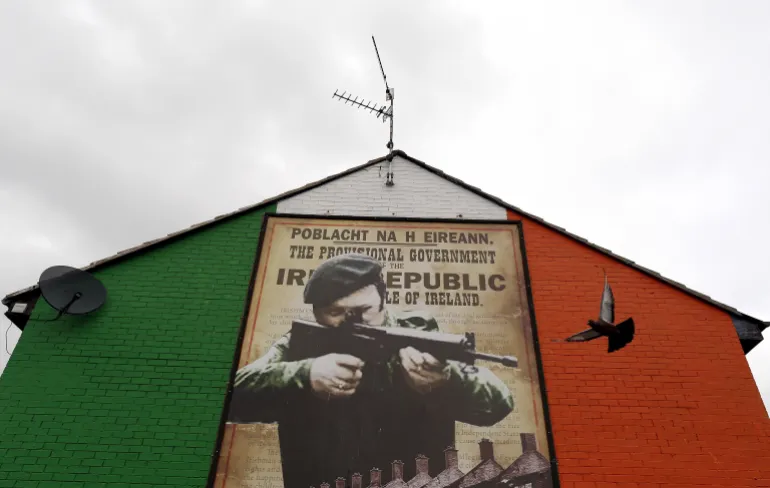
IRA mural
A pigeon flies past a mural supporting the Irish Republican Army in the Ardoyne area of north Belfast, September 9, 2015 [Cathal McNaughton/Reuters]

Irish Republican Movement hunger strikes

Some of the most significant hunger strikes in the 20th century occurred during the Irish revolutionary period, or the Troubles. The first wave was the 1920 Cork hunger strike, during the Irish War of Independence. Some 65 people suspected of being Republicans had been held without proper trial proceedings at the Cork County Gaol.

They began a hunger strike, demanding their release and asking to be treated as political prisoners rather than criminals. They were joined by Terence MacSwiney, the lord mayor of Cork, whose profile brought significant international attention to the independence cause. The British government attempted to break up the movement by transferring the prisoners to other locations, but their fasts continued. At least three prisoners died, including MacSwiney, after 74 days.

Later on, towards the end of the conflict and the signing of the Good Friday Agreement, imprisoned Irish Republicans protested against their internment and the withdrawal of political prisoner status that stripped them of certain rights: the right to wear civilian clothes, or to not be forced into labour.

They began the “dirty protest” in 1980, refusing to have a bath and covering walls in excrement. In 1981, scores of people refused to eat. The most prominent among them was Bobby Sands, an IRA member who was elected as a representative to the British Parliament while he was still in jail. Sands eventually starved to death, along with nine others, during that period, leading to widespread criticism of the Margaret Thatcher administration.

India’s Mohandas Karamchand Gandhi, who was later popularly known as Mahatma Gandhi, used hunger strikes as a tool of protest against the British colonial rulers several times. His fasts, referred to as Satyagraha, meaning holding on to truth in Hindi, were considered by the politician and activist not only as a political act but also a spiritual one.

Gandhi’s strikes sometimes lasted for days or weeks, during which he largely sipped water, sometimes with some lime juice. They achieved mixed results – sometimes, the British policy changed, but at other times, there were no improvements. Gandhi, however, philosophised in his many writings that the act was not a coercive one for him, but rather an attempt at personal atonement and to educate the public.

One of Gandhi’s most significant hunger strikes was in February 1943, after British authorities placed him under house arrest in Pune for starting the Quit India Movement back in August 1942. Gandhi protested against the mass arrests of Congress leaders and demanded the release of prisoners by refusing food for 21 days. It intensified public support for independence and prompted unrest around the country, as workers stayed away from work and people poured out into the streets in protest.

Another popular figure who used hunger strikes to protest against British rule in colonial India was Jatindra Nath Das, better known as Jatin Das. A member of the Hindustan Socialist Republican Association, Das refused food while in detention for 63 days starting from August 1929, in protest against the poor treatment of political prisoners. He died at the age of 24, and his funeral attracted more than 500,000 mourners.

Palestinian kids wave their national flag and hold posters showing Khader Adnan
Palestinian kids wave their national flag and hold posters showing Khader Adnan following his death on May 2, 2023 [Majdi Mohammed/AP Photo]

Palestinian prisoners in Israeli prisons

Palestinians held, often without trial, in Israeli jails have long used hunger strikes as a form of protest. One of the most well-known figures is Khader Adnan, whose shocking death in May 2023 after an 86-day hunger strike drew global attention to the appalling treatment of Palestinians by the Israeli government.

Adnan, who was 45 when he starved to death at the Ayalon Prison, leaving behind nine children, had repeatedly been targeted by Israeli authorities since the early 2000s. The baker from the occupied West Bank had once been part of the Palestinian Islamic Jihad group as a spokesperson, although his wife later stated publicly that he had left the group and that he had never been involved in armed operations.

However, Adnan was arrested and held without trial multiple times, with some estimates stating that he spent a cumulative eight years in Israeli prisons. Adnan would often go on hunger strike during those detentions, protesting against what he said was usually a humiliating arrest and a detention without basis. In 2012, thousands in Gaza and the West Bank rallied in a non-partisan show of support after he went 66 days without food, the longest such strike in Palestinian history at the time. He was released days after the mass protests.

In February 2023, Adnan was once again arrested. He immediately began a hunger strike, refusing to eat, drink, or receive medical care. He was held for months, even as medical experts warned the Israeli government that he had lost significant muscle mass and had reached a point where eating would cause more damage than good. On the morning of May 2, Adnan was found dead in his cell, making him the first Palestinian prisoner to die in a hunger strike in three decades. Former Palestinian Information Minister Mustafa Barghouti described his death as an “assassination” by the Israeli government.

Hunger strikes at Guantanamo

Following the 2002 opening of the Guantanamo Bay detention camp of the United States in Cuba, where hundreds of “terror” suspects were held prisoners, often with no formal charges, they used hunger strikes in waves to protest against their detention. The camp is notorious for its inhumane conditions and prisoner torture. There were 15 detainees left by January 2025.

The secret nature of the prison prevented news of earlier hunger strikes from emerging. However, in 2005, US media reported mass hunger strikes by scores of detainees – at least 200 prisoners, or a third of the camp’s population.

Officials forcefully fed those whose health had severely deteriorated through nasal tubes. Others were cuffed daily, restrained, and force-fed. One detainee, Lakhdar Boumediene, later wrote that he went without a real meal for two years, but that he was forcefully fed twice a day: he was strapped down in a restraining chair that inmates called the “torture chair”, and a tube was inserted in his nose and another in his stomach. His lawyer also told reporters that his face was usually masked, and that when one side of his nose was broken one time, they stuck the tube in the other side, his lawyer said. Sometimes, the food got into his lungs.

Hunger strikes would continue intermittently through the years at Guantanamo. In 2013, another big wave of strikes began, with at least 106 of the remaining 166 detainees participating by July. Authorities force-fed 45 people at the time. One striker, Jihad Ahmed Mustafa Dhiab, filed for an injunction against the government to stop officials from force-feeding him, but a court in Washington, DC rejected his lawsuit.

Protests against apartheid South Africa

Black and Indian political prisoners held for years on Robben Island protested against their brutal conditions by going on a collective hunger strike in July 1966. The detainees, including Nelson Mandela, had been facing reduced food rations and were forced to work in a lime quarry, despite not being criminals. They were also angry at attempts to separate them along racial lines.

In his 1994 biography, Long Walk to Freedom, Mandela wrote that prison authorities began serving bigger rations, even accompanying the food with more vegetables and hunks of meat to try to break the strike. Prison wardens smiled as the prisoners rejected the food, he wrote, and the men were driven especially hard at the quarry. Many would collapse under the intensity of the work and the hunger, but the strikes continued.

A crucial plot twist began when prison wardens, whom Mandela and other political prisoners had taken extra care to befriend, began hunger strikes of their own, demanding better living conditions and food for themselves. Authorities were forced to immediately settle with the prison guards and, a day later, negotiate with the prisoners. The strike lasted about seven days.

Later, in May 2017, South Africans, including the then Deputy President Cyril Ramaphosa, who was imprisoned in a different facility during apartheid, supported hunger-striking Palestinian prisoners by participating in a collective one-day fast. At the time, late Robben Island veteran Sunny “King” Singh wrote in the South African paper Sunday Tribune that hunger strikes in the prison never lasted more than a week before things changed, and compared it with the protracted situation of Palestinian strikers.

“We were beaten by our captors but never experienced the type of abuse and torture that some of the Palestinian prisoners complain of,” he wrote. “It was rare that we were put in solitary confinement, but this seems commonplace in Israeli jails.”

Source link

What are the consequences of Israel’s expanding illegal settlements? | Israel-Palestine conflict News

Israel is escalating the confiscation of Palestinian land in the occupied West Bank.

Israel has carried out the biggest land grab in the occupied West Bank since the signing of the Oslo Accords more than three decades ago.

Its right-wing government has accelerated the confiscation of Palestinian land to build new settlements, which are illegal under international law.

Recommended Stories

list of 3 itemsend of list

At the same time, Israeli settler attacks are increasing and intensifying.

For many Palestinians, this means all hopes of peace are dashed and, with them, the prospects of an independent state.

So what are Israel’s plans in the West Bank? And what are the implications of its policies?

Presenter:

Dareen Abughaida

Guests:

Xavier Abu Eid – political analyst and former adviser to the PLO negotiation team

Daniel Levy – president of the US/Middle East Project and a former Israeli negotiator

Yariv Oppenheimer – Israeli human rights activist and board member of the Peace Now advocacy group

Source link

‘No negotiation, no truce’ with RSF, says senior Sudan official | Sudan war News

Comments come days after PM Kamil Idris presented a plan to end the country’s nearly three-year war.

A senior official in Sudan’s Transitional Sovereignty Council (TSC) has ruled out any negotiations with the paramilitary Rapid Support Forces (RSF) as fighting continues to devastate the country.

“There is no truce and no negotiation with an occupier, and that the just peace that Sudan desires will be achieved through the roadmap and vision of its people and government,” Malik Agar Ayyir, deputy chairman of TSC, said in a statement on Thursday posted by the Ministry of Culture, Media and Tourism.

Recommended Stories

list of 3 itemsend of list

Speaking to ministers and state officials in Port Sudan, the eastern city where the government is based, he dismissed the narrative that the war is aimed at achieving “democracy”. Instead, he described the war as a “conflict over resources and a desire to change Sudan’s demographics” and emphasised an opportunity to strengthen national unity.

This comes days after Sudan’s Prime Minister Kamil Idris presented a plan to end the country’s nearly three-year war before the United Nations Security Council.

Consistent with the Sudanese army and the government’s position, the plan stipulates that RSF fighters must withdraw from vast areas of land that they have taken by force in the western and central parts of Sudan.

They would then have to be placed in camps and disarmed, before those who are not implicated in war crimes can be reintegrated into society.

The RSF has repeatedly rejected the idea of giving up territory, with Al-Basha Tibiq, a top adviser to commander Mohamed Hamdan “Hemedti” Dagalo, describing it as “closer to fantasy than to politics”.

RSF reports gains

The war, which has forcibly displaced about 14 million people, shows no signs of stopping as the RSF consolidates its hold over captured territory and expands attacks.

RSF fighters have continued to commit mass killings, systematic sexual violence, and the burying and burning of bodies in Darfur to cover up the evidence of war crimes over the past several months, according to international aid agencies working on the ground.

The humanitarian situation on the ground has only turned more disastrous after the capture of el-Fasher, capital of North Darfur state, in October.

The RSF announced on Thursday that its forces established control over the Abu Qumra region in North Darfur.

They “have continued their successful advancement to the Um Buru area, where they have completely liberated these areas”, the group claimed in a statement.

Despite the mounting evidence of widespread atrocities committed in western Sudan, the RSF claimed that the primary duty of its fighters is to “protect civilians and end the presence of remnants of armed pockets and mercenary movements”.

The group also released footage of its armed fighters, who claimed they were making advances towards el-Obeid, a strategic city in North Kordofan state.

Source link

Syria says senior ISIL commander killed in Damascus countryside raid | Armed Groups News

Interior Ministry says the raid killed Mohammed Shahadeh, describing him as one of ISIL’s senior commanders in Syria.

Syrian authorities say security forces have carried out a second operation against ISIL (ISIS) fighters near Damascus, killing a senior figure described as the group’s governor of Hauran.

In a statement on Thursday, the Ministry of Interior said the raid killed Mohammed Shahadeh, also known as Abu Omar Shaddad, calling him one of ISIL’s senior commanders in Syria and a direct threat to local security.

Recommended Stories

list of 3 itemsend of list

Officials said the operation followed verified intelligence and extensive surveillance and was carried out by specialised units, operating in the Damascus countryside, that conducted a targeted raid in the town of al-Buweida, near Qatana, southwest of the capital.

The operation also involved the General Intelligence Directorate and took place in coordination with international coalition forces, the ministry said.

‘Crippling blow’

The announcement came a day after Syrian internal security forces arrested another senior ISIL figure in a separate operation near Damascus, according to the state-run SANA news agency.

SANA reported that forces arrested Taha al-Zoubi during what it described as a “tightly executed security operation” in the Damascus countryside. The agency said officers seized “a suicide belt and a military weapon” during the arrest.

Brigadier General Ahmad al-Dalati, head of internal security in the Damascus countryside, told SANA that the raid targeted an ISIL hideout in Maadamiya, southwest of the capital.

ISIL, which considers the current authorities in Damascus illegitimate, has largely focused its remaining operations on Kurdish-led forces in northern Syria.

At the height of its power, the armed group controlled vast areas of Iraq and Syria, declaring Raqqa its capital.

Although ISIL suffered military defeat in Iraq in 2017 and in Syria two years later, its cells continue to carry out attacks in the region and beyond, including in parts of Africa and Afghanistan.

Source link

Turkiye and Libya intensify probe into deadly plane crash near Ankara | Aviation News

DNA testing delays funeral plans as investigators examine the wreckage of jet crash that killed Libyan army chief.

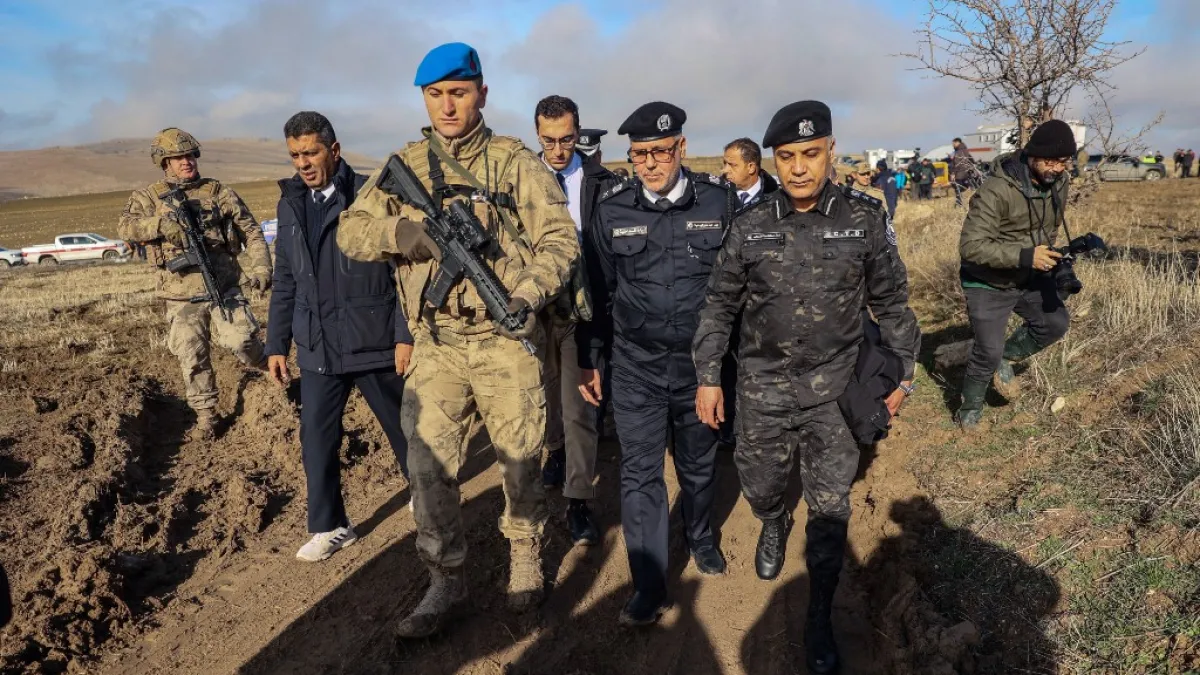
Officials from Libya and Turkiye have stepped up coordination over the investigation into a plane crash near Ankara that killed Libya’s army chief and seven other people as forensic work and preparations for repatriating the bodies are conducted.

Libya’s Criminal Investigation Department chief, Major General Mahmoud Ashour, led a delegation to the Ankara Chief Public Prosecutor’s Office on Thursday as part of the joint inquiry.

The visit followed discussions with Turkish prosecutors overseeing the case.

On Tuesday, a private jet carrying Libya’s army chief of staff, Mohammed Ali Ahmed Al-Haddad, reported an electrical malfunction shortly after taking off from Ankara Esenboga Airport.

According to Turkiye’s head of communications, Burhanettin Duran, the aircraft, bound for Tripoli, requested an emergency landing 16 minutes after takeoff.

Air traffic controllers redirected the Dassault Falcon 50 back towards Ankara’s airport, but radar contact was lost three minutes later as the jet descended.

The wreckage was found near the village of Kesikkavak in Ankara’s Haymana district. Eight people, including three crew members, were killed.

Search and rescue teams reached the site after Turkiye’s Ministry of Interior launched emergency operations while multiple authorities joined the investigation into the cause of the crash.

Funeral prayers delayed

Reporting from Misrata, Libya, Al Jazeera’s Malik Traina said preparations were under way for the return of Al-Haddad’s body although the timeline remains uncertain.

“Earlier today, we spoke to the minister of communications, and we were told the funeral prayer will be held tomorrow. That’s starting to change, now they’ve been receiving phone calls from government officials saying that it could likely be postponed till Saturday,” Traina said on Thursday.

Traina said the recovery process has taken longer due to the severity of the crash, which scattered remains across a wide area and necessitated DNA testing.

“There’s a lot of pressure for that process to finish as soon as possible. Whether or not that’ll happen, we’re gonna have to wait and see.

“He really was someone who tried to build up the military institutions, especially in western Libya, a place that is divided with powerful armed groups and militias controlling vast areas of land.”

Source link

Infant among Palestinians wounded in attacks by Israeli settlers, soldiers | Crimes Against Humanity News

Eight-month-old among multiple Palestinians wounded in attacks across the occupied West Bank.

Five Israeli settlers have been arrested over their alleged involvement in an attack on a Palestinian home that wounded an eight-month-old baby in the occupied West Bank.

The Palestinian news agency Wafa reported that the infant suffered “moderate injuries to the face and head” in the attack that took place late on Wednesday involving “a group of armed settlers” who were throwing stones at homes and property in the town of Sair, north of Hebron.

Israeli police on Thursday said five settlers were arrested after they received reports of “stones being thrown by Israeli civilians toward a Palestinian home”.

Israeli settlements and outposts are Jewish-only communities built on Palestinian land that are illegal under international law. They can range in size from a single dwelling to a collection of high rises. About 700,000 settlers live in the West Bank and occupied East Jerusalem, according to the Israeli advocacy group Peace Now.

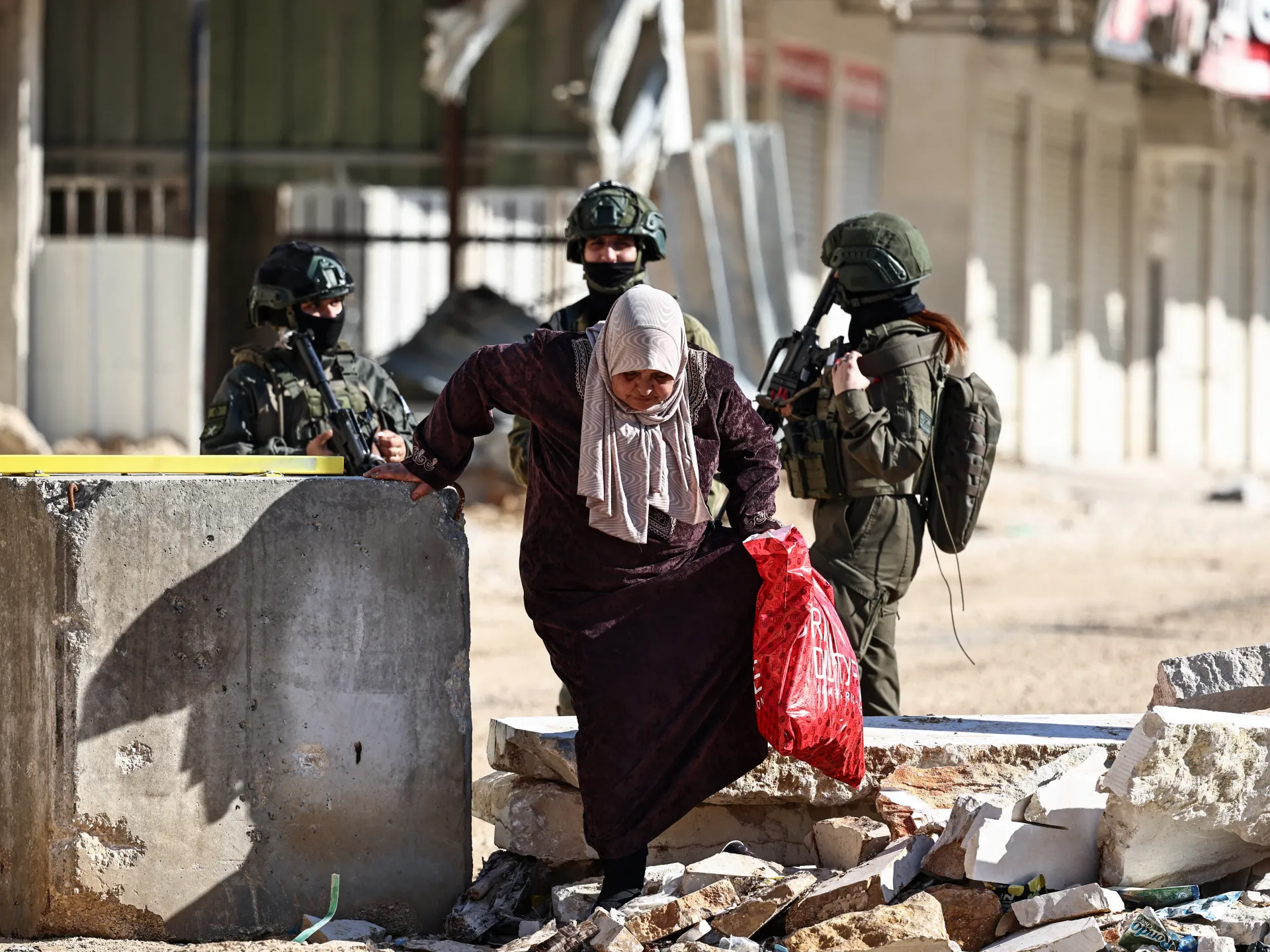
Elsewhere in the West Bank, a 17-year-old boy was shot and dozens of Palestinians suffered tear gas inhalation during an Israeli army raid in the town of Beit Furik, east of Nablus, Wafa reported.

The report added that “Israeli forces carried out a widespread incursion into the town, firing live bullets and tear gas canisters across its neighborhoods”.

Israeli forces also detained three Palestinians from Masafer Yatta, south of Hebron, after settler attacks.

Also in Masafer Yatta, Israeli forces raided homes and tents belonging to residents, searched them and vandalised their contents before detaining one resident.

Another Palestinian man was wounded in a settler attack in the town of Deir Jarir, east of Ramallah.

Local sources said armed settlers attacked homes near the village entrance, resulting in minor injuries to a young man.

Source link

Palestinian actor and filmmaker Mohammad Bakri dies at 72 | Gaza News

Celebrated director of ‘Jenin, Jenin’ documentary leaves behind legacy of artistic resistance.

Acclaimed Palestinian actor and filmmaker Mohammad Bakri has died in northern Israel, ending a five-decade career that established him as one of the most influential voices in Palestinian cinema.

Bakri died on Wednesday at Galilee Medical Centre in Nahariya after suffering from heart and lung problems, hospital officials said.

Recommended Stories

list of 2 itemsend of list

His passing removes a towering figure whose work directly challenged Israeli narratives and whose decades-long legal battles over censorship became a defining chapter in Palestinian cultural resistance.

The 72-year-old was best known for his 2002 documentary, Jenin, Jenin, which captured testimonies from Palestinian residents following a devastating Israeli military operation in the refugee camp that killed 52 Palestinians.

The film ignited years of controversy in Israel but elevated Bakri’s status as a creative and would overshadow the remainder of his life.

Israeli authorities banned the documentary from screening in 2021, with the Supreme Court upholding the prohibition in 2022, deeming it defamatory.

“I intend to appeal the verdict because it is unfair, it is neutering my truth,” Bakri told the Walla News website at the time.

Five soldiers sued Bakri, and courts eventually fined him hundreds of thousands of shekels while ordering all copies seized and online links removed.

In an interview with the British Film Institute earlier this year, Bakri said, “I don’t see Israel as my enemy … but they consider me their enemy. They see me as a traitor … for making a movie.”

Born in 1953 in the Galilee village of Bi’ina, Bakri was a Palestinian citizen of Israel who studied Arabic literature and theatre at Tel Aviv University. He made his striking film debut at age 30 in Costa-Gavras’s Hanna K, playing a Palestinian refugee attempting to reclaim his family’s home.

His role as a Palestinian prisoner in the 1984 Israeli film Beyond the Walls earned international acclaim and an Academy Award nomination for the production.

But it was Bakri’s commitment to telling Palestinian stories that defined his career. He appeared in more than 40 films and directed several documentaries examining the experiences of Palestinians living under occupation and within Israel.

His solo theatrical performance of The Pessoptimist, based on Emile Habibi’s novel about Palestinian identity, was performed more than 1,500 times worldwide and cemented his status as a cultural icon.

Bakri is survived by his wife Leila and six children, including actors Saleh, Ziad and Adam, who have followed him into cinema. His funeral was held the same day in Bi’ina.

Source link

Pope Leo laments suffering of Gaza Palestinians in first Christmas sermon | Religion News

Pope Leo has decried conditions ‍for Palestinians in ‍Gaza in his first Christmas sermon as pontiff, in an unusually direct appeal during what is normally a solemn, spiritual service on the day Christians across the globe celebrate the birth of Jesus Christ.

Leo, the first American ⁠pope, said on Thursday that the story of Jesus being born in a stable showed that God ​had “pitched his fragile tent” among the people of the world.

Recommended Stories

list of 3 itemsend of list

“How, then, ‍can we not think of the tents in Gaza, exposed for weeks to rain, wind and cold?” he asked.

Leo, celebrating his first Christmas after being elected in May by the ‍world’s cardinals to ⁠succeed the late Pope Francis, has a quieter, more diplomatic style than his predecessor and usually refrains from making political references in his sermons.

But the new pope has also lamented the conditions for Palestinians in Gaza several times recently and told journalists last month that the only solution in the decades-long conflict between Israel and Palestine must include a Palestinian state.

Israel ​and Hamas agreed to a ceasefire in October ‌after two years of intense bombardment and military operations in Gaza, but humanitarian agencies say there is still too little aid getting into the largely destroyed Strip, where nearly the entire population is homeless after being displaced by Israeli attacks.

In Thursday’s service with thousands in ‌St Peter’s Basilica, Leo also lamented conditions for the homeless across the globe and the destruction caused by the wars ‌roiling the world.

“Fragile is the flesh of defenceless ⁠populations, tried by so many wars, ongoing or concluded, leaving behind rubble and open wounds,” said the pope.

“Fragile are the minds and lives of young people forced to take up arms, who on the ‌front lines feel the senselessness of what is asked of them and the falsehoods that fill the pompous speeches of those who send them to their deaths,” he ‍added.

In a later appeal during the “Urbi et Orbi” (to the city and the world) message and blessing given by the pope at Christmas and Easter, Leo called for an end to all global wars, lamenting conflicts, ‌political, social or military, in Ukraine, Sudan, Mali, Myanmar, and Thailand and Cambodia, among others.

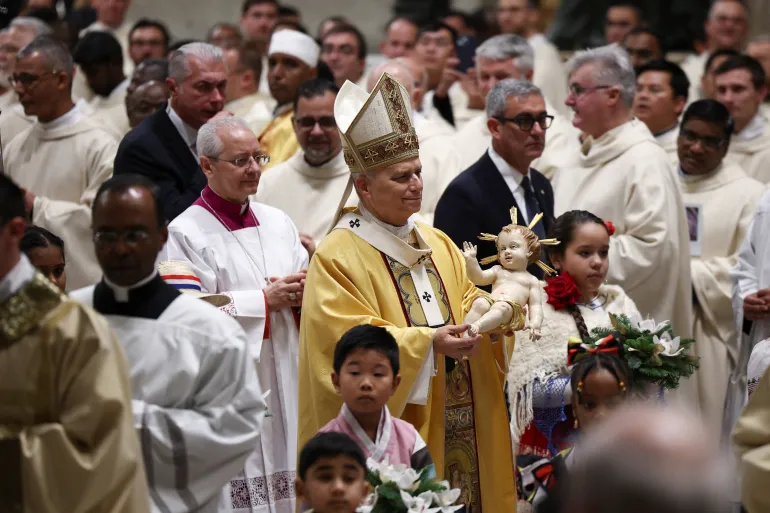
Pope Leo XIV performs the Christmas mass at St Peter's Basilica in the Vatican
Pope Leo XIV holds a figurine of baby Jesus during Christmas Eve Mass in St Peter’s Basilica at the Vatican, December 24 [Guglielmo Mangiapane/Reuters]

‘The wounds are deep’

Ahead of the pope’s mass, in Bethlehem in the occupied West Bank, the Christian community began celebrating its first festive Christmas in more than two years, as the Palestinian city and biblical birthplace of Jesus emerges from the shadow of Israel’s genocidal war on Gaza.

Throughout the war, a sombre tone had marked Christmases in Bethlehem. But celebrations returned on Wednesday with parades and music. Hundreds of worshippers also gathered for mass at the Church of the Nativity on Wednesday night.

With pews filled long before midnight, many stood or sat on the floor for the traditional mass to usher in Christmas Day.

At 11:15 pm (21:15 GMT), organ music rang out as a procession of dozens of clergymen entered, followed by Jerusalem’s Latin Patriarch Pierbattista Pizzaballa, who blessed the crowd with signs of the cross.

In his homily, Pizzaballa urged peace, hope and rebirth, saying the Nativity story still held relevance in the turbulence of modern times.

He also spoke of his visit to Gaza over the weekend, where he said “suffering is still present” despite the ceasefire. In the Strip, hundreds of thousands of people face a bleak winter in makeshift tents.

“The wounds are deep, yet I have to say, here too, there too, their proclamation of Christmas resounds,” Pizzaballa said. “When I met them, I was struck by their strength and desire to start over.”

In Bethlehem, hundreds also took part in the parade down the narrow Star Street on Wednesday, while a dense crowd massed in the square. As darkness fell, multi-coloured lights shone over Manger Square and a towering Christmas tree glittered next to the Church of the Nativity.

The basilica dates back to the fourth century and was built on top of a grotto where Christians believe Jesus was born more than 2,000 years ago.

Bethlehem residents hoped the return of Christmas festivities would breathe life back into the city.

Source link

Photos: Global stories of 2025 in pictures | Gaza News

From Israel’s genocide in Gaza and the Russia-Ukraine war to devastating global weather events – including floods, storms and earthquakes – this year was defined by turmoil and humanitarian crises.

Prolonged violence in Sudan, marked by attacks by the Rapid Support Forces (RSF), added to the mounting civilian toll and displacement across the country.

The year also saw heightened tensions between India and Pakistan, a deadly blaze in Hong Kong, United States and Israeli attacks on Iran, revelations from the Epstein files, and waves of “Gen Z” protest movements across multiple regions.

Together, these developments dominated international headlines, reflecting deepening political instability, social unrest and growing humanitarian needs worldwide.

View the gallery below for powerful photographs that documented and encapsulated these pivotal 12 months.

Source link

Jordan strikes drug, arms smugglers in Syria border region: Reports | Drugs News

Jordan’s military said the attacks ‘neutralised arms and drug traffickers’ and destroyed their laboratories and factories.

Jordan’s military has launched strikes on drug and weapons smugglers in the country’s northern border regions with Syria, targeting sites used as “launch points” by trafficking groups into Jordanian territory, according to reports.

The Jordan News Agency, Petra, said the strikes on Wednesday “neutralised a number of arms and drug traffickers who organise weapons and narcotics smuggling operations along the northern border of the Kingdom”.

Recommended Stories

list of 4 itemsend of list

Jordan’s armed forces destroyed “factories and workshops” used by the trafficking groups, Petra reports, adding that the attacks were carried out based on “precise intelligence” and in coordination with regional partners.

The Jordanian military did not name the partner countries involved in the strikes but warned that it would “continue to counter any threats with force at the appropriate time and place”, Petra said.

Syrian state broadcaster Al-Ikhbariah TV reported on its Telegram channel that the Jordanian army had carried out air strikes on locations in the southern and eastern countryside of Syria’s Suwayda governorate.

A resident of Syria’s Suwayda border region told the AFP news agency that the bombardment “was extremely intense and targeted farms and smuggling routes”, while the UK-based Syrian Observatory for Human Rights said jets and helicopters had reportedly taken part in the raid.

The observatory said photos taken at the scene of the attacks showed destruction at an abandoned military barracks of the former al-Assad regime in Suwayda.

There were no initial reports of casualties from the Jordanian attacks and no official comment from authorities in Damascus.

A farm believed to have been used for storing drugs was among the targets, according to the Zaman Al Wasl online news site, which also reported that similar Jordanian attacks had been carried out previously in a bid to stem the flow of captagon – an addictive, amphetamine-type stimulant.

Before the removal of Syria’s President Bashar al-Assad in December 2024, captagon had become the regime’s largest export and key source of funding amid the country’s years of grinding civil war.

Produced in vast quantities in Syria, the synthetic drug flooded the region, particularly the Gulf states, prompting neighbouring countries to announce seizures and call on both Lebanon and Damascus to ramp up efforts to combat the trade.

Although Damascus denied any involvement in the drug trade, analysts estimated that production and smuggling of captagon brought in billions of dollars for al-Assad, his associates and allies as they looked for an economic lifeline amid the civil war, which was fought between 2011 and the regime’s toppling last year.

INTERACTIVE - What is Captagon-1733989747

Source link