Europe

Moscow’s narrative wobbles as Ukraine takes back Kupiansk | Russia-Ukraine war News

Ukrainian military successes and Russian narratives clashed this week, as Moscow’s assertion of inevitable victory flew in the face of facts on the ground.

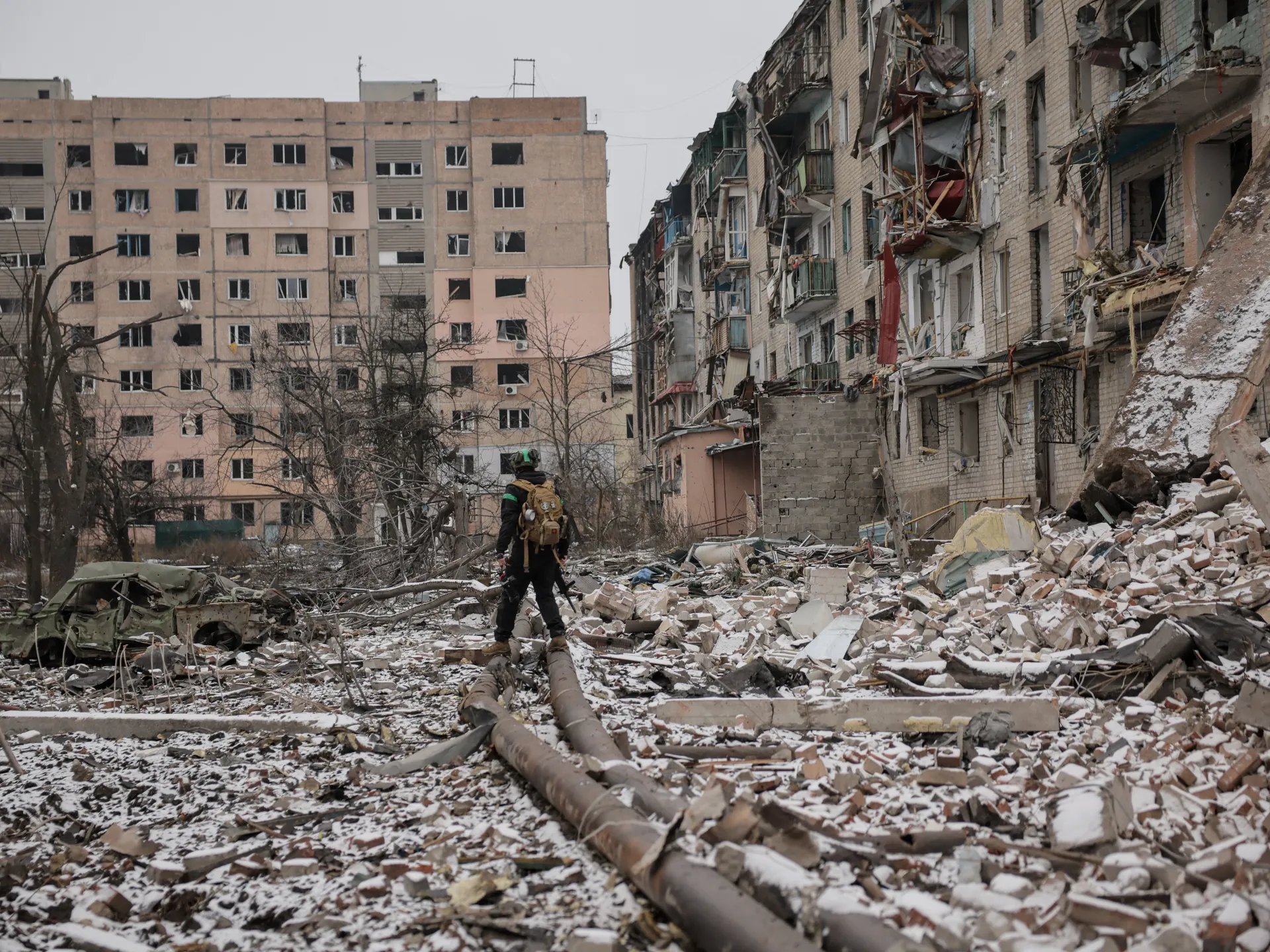
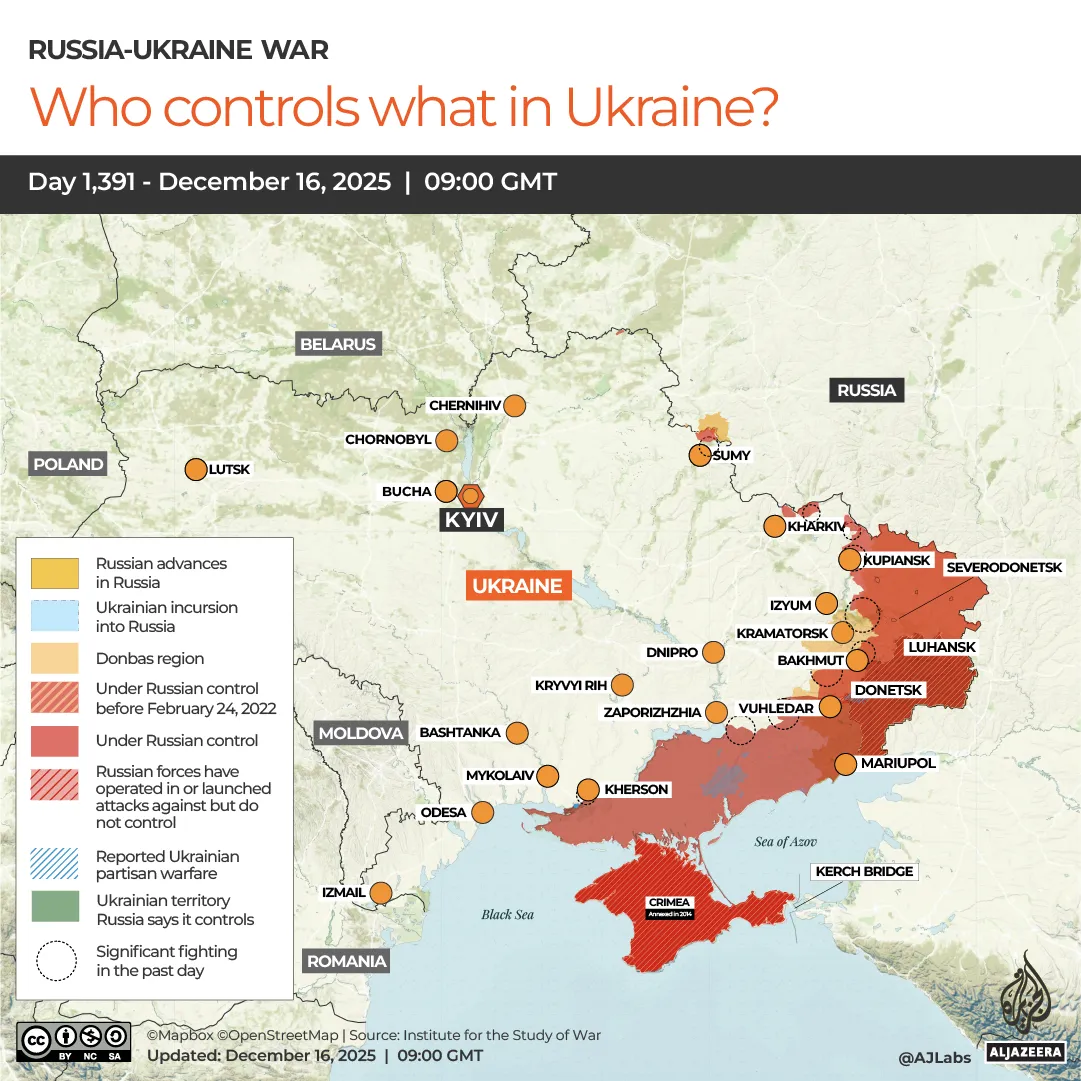
Ukraine steadily took back control of almost all of its northern city of Kupiansk after isolating Russian forces within it, belying Russian claims to have seized it.

Russian forces were also unable to dislodge Ukrainian defenders from the eastern city of Pokrovsk to back up Moscow’s claims of total control.

And Moscow attempted to deny Ukraine’s successful use of an underwater unmanned vehicle to severely damage a Kilo-class submarine, despite visual evidence.

Ukrainian forces operating in the northern Kharkiv region said they had cut Russian logistics to Kupiansk, surrounded a vanguard of 200 Russians inside it, and cleared Russian forces out of forests north of the city on December 12.

Geolocated footage showed Ukrainian forces advancing in the city the following day and taking back the southern suburb of Yuvileynyi, pushing Russian troops to the northern and western suburbs.

The Russian position had become more precarious by Monday. Ukrainian forces said they prevented reinforcements from entering the city through a gas pipeline, a tactic Russia had used in the siege of Chasiv Yar, and the isolated Russian troops were being supplied solely by drone. Ukraine’s General Staff said its forces were still repelling Russian attacks on Friday.

Russia’s Ministry of Defence insisted it had control of the situation. “Units of the Zapad Group of Forces exercise reliable control over all districts of liberated Kupiansk,” it said on Monday, claiming that Ukraine’s efforts to enter the city from the south were being suppressed.

“The only thing that can be said for sure is that the Russian Armed Forces are still holding part of the centre and north of Kupiansk, but most of it is already either in the grey zone or under the control of the Armed Forces of Ukraine,” wrote a Russian military reporter on the Telegram messaging app.

On Wednesday this week, Colonel General Oleksandr Syrskii, Ukraine’s Army commander-in-chief, told a Ramstein-format of Ukraine’s allies that his forces had taken back 90 percent of Kupiansk. At the same time in Moscow, Russian Defence Minister Andrei Belousov was telling Russian President Vladimir Putin that “the enemy is unsuccessfully trying to regain” the city.

“The Russian Defense Minister, Belousov, continues to lie that Russia controls Kupiansk,” wrote Andrii Kovalenko, head of Ukraine’s Center for Countering Disinformation, on Telegram. “In reality, most of the city is controlled by the Ukrainian Defense Forces, which are continuing to clear it of Russians. However, all of Putin’s officials, from [commander-in-chief Valery] Gerasimov, who was the first to lie about controlling the city, to Belousov, continue to lie in the presence of Putin himself.”

Contrary to the available evidence, Belousov also insisted that Russia had seized Pokrovsk, which Russia calls Krasnoarmeysk, and was on the cusp of vanquishing neighbouring Myrnohrad, which Russia calls Dimitrov. Both towns are in the eastern Donetsk region, and are almost surrounded by Russian forces to the north, south and east.

“Russian soldiers continue to inflict fire damage on Ukrainian troops in Dimitrov, the last stronghold of the Armed Forces of Ukraine in Krasnoarmeysk agglomeration,” Belousov told Putin.

But Syrskii told allies that Ukrainian forces had regained about 16 square kilometres (6 square miles) in the northern part of Pokrovsk and 56sq km (22sq miles) west of the city. “Logistics in Myrnograd are complex, but the operations continue,” he wrote.

Russia had claimed complete control over Pokrovsk on December 2 and was sticking to its story.

INTERACTIVE-WHO CONTROLS WHAT IN UKRAINE-1765877913
(Al Jazeera)

Submarine and oil refinery explosions

A third point of contention was Ukraine’s successful use of an underwater unmanned vehicle (UUV) to strike a Russian Kilo-class submarine on Monday (December 15), in what is considered the first such attack in military history.

Video of the Russian fleet at anchor in the port of Novorossiysk on the Black Sea shows a huge explosion in the stern section of the submarine.

Ukraine’s State Security Service later claimed credit for the attack.

However, Russia’s Defence Ministry said: “Not a single ship or submarine as well as the crews of the Black Sea Fleet stationed in the bay of the Novorossiysk naval base were damaged as a result of the sabotage.”

The ministry published footage of what it said was the attacked submarine, in which it appeared undamaged above the surface, but the video did not show the stern section.

Ukraine’s long-range strikes against Russia scored other successes, on which Russia did not comment.

Ukraine struck the oil refinery in Yaroslavl, northeast of Moscow, on December 12. On Sunday, Ukrainian drones struck the Afipsky refinery in Krasnodar Krai and the Uryupinsk oil depot in Volgograd, causing explosions in both locations. They also struck the Dorogobuzhskaya power plant in Smolensk.

Kupiansk
A Ukrainian Presidential Press Service photo shows President Volodymyr Zelenskyy as he awards a serviceman of the 14th Separate Mechanized Brigade of the Armed Forces of Ukraine during his visit to the front-line town of Kupiansk on December 12, 2025 [Ukrainian Presidential Press Service/Handout via Reuters]

United States and Ukrainian negotiating teams met for two days in Berlin on Sunday and Monday. Russian officials said they would be briefed next week on the results of those talks.

But even as it claimed to be interested in ongoing peace negotiations, Russia clearly signalled that it plans to continue aggressive operations next year.

“The key task for the next year is to maintain and increase the pace of the offensive,” said Belousov in Putin’s presence on Wednesday, at an expanded meeting of the Defence Ministry Board.

“It wasn’t us who started the war in 2022; it was the destructive forces in Ukraine, with the support of the West – essentially, the West itself that unleashed this war,” Putin said. “We are only trying to finish it, to put an end to it.”

Putin said “the goals of the special military operation will certainly be achieved,” and “Russia will achieve the liberation of its historical lands by military means,” suggesting there was little room for compromise on Moscow’s side.

Putin’s Deputy Foreign Minister Sergey Ryabkov signalled the same thing in an interview with ABC on Tuesday. He said Europe and Ukraine expected a “deep and very wrong” revision of Russian peace proposals, and ruled out conceding seized Ukrainian land.

“We are not able in any form to compromise on this, because it would be, in our view, a revision of a very fundamental element of our statehood, set forth through our constitution,” Naryshkin said.

INTERACTIVE-WHO CONTROLS WHAT IN EASTERN UKRAINE copy-1765877906
(Al Jazeera)

Russian losses outpace recruitments

Russia has attempted to give the impression that it has inexhaustible manpower with which to prosecute the war it started in Ukraine.

Belousov said almost 410,000 Russians volunteered for military service, exceeding expectations for 2025.

That translates to 32,800 per month. “Data from the Ukrainian General Staff on Russian losses indicate that Russian forces suffered an average of 34,600 casualties per month between January and November 2025 – suggesting that Belousov’s recruitment numbers are not quite replacing Russian losses,” wrote the Institute for the Study of War, a Washington-based think tank.

Ukrainian President Volodymyr Zelenskyy suggested most of these casualties were deaths. “[Putin] spends around 30,000 soldiers’ lives on the front every month. Not wounded – 30,000 killed each month… We have drone footage confirming these deaths,” he told Dutch parliamentarians.

Syrski also doubted Russian recruitment quotas were sufficient.

“The number of Russian troops has long been around 710,000,” he wrote on Telegram. “However, the enemy has not been able to increase this figure, despite active recruitment in Russia, because our soldiers are ‘reducing’ the number of occupiers by a thousand every day through deaths and injuries.”

INTERACTIVE-WHO CONTROLS WHAT IN SOUTHERN UKRAINE-1765877909
(Al Jazeera)

Source link

Putin takes aim at Zelenskyy in annual Q&A, says he won’t negotiate on land | Russia-Ukraine war News

Russian leader underscores Kremlin’s hardline stance on peace talks as Trump pushes for deal to end war.

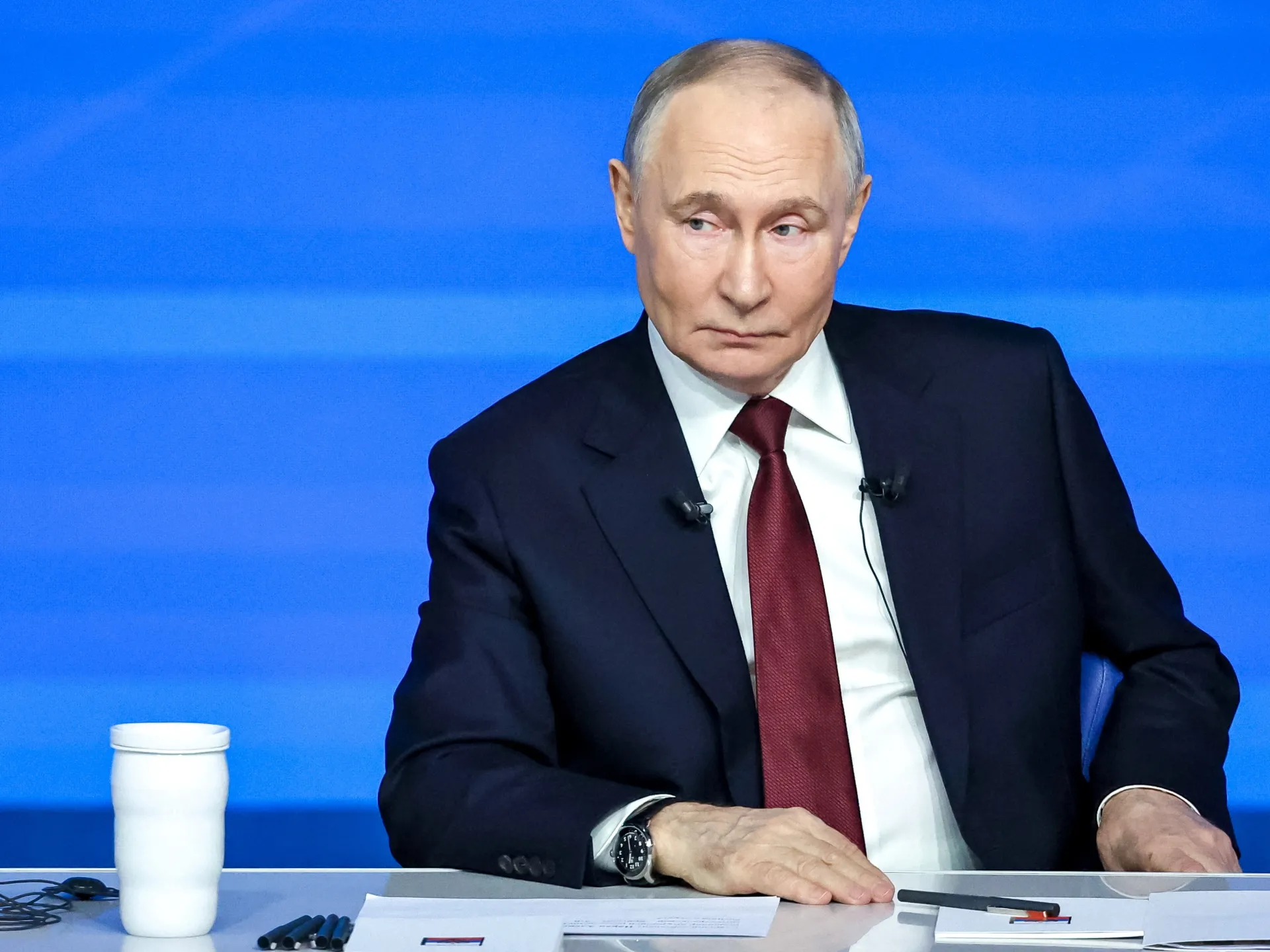
Russian President Vladimir Putin, speaking at his highly choreographed annual question-and-answer session in Moscow, has said his Ukrainian counterpart Volodymyr Zelenskyy refuses to discuss territorial concessions.

The comments were made on Friday during the “Results of the Year” event, where Putin fielded questions from millions of Russians on topics ranging from domestic policy to the war.

Recommended Stories

list of 3 itemsend of list

Putin’s remarks are the latest in a drumbeat of often-repeated maximalist Russian positions nearly four years after he ordered troops into the neighbouring country, as United States President Donald Trump intensifies diplomatic efforts to broker a peace deal between Moscow and Kyiv.

The issue of territory gained, lost, to be ceded or not, delves into the heart of the matter on one of the most contentious issues in the talks to end the war so far.

“We know from statements from Zelenskyy that he’s not prepared to discuss territory issues,” Putin told attendees at the event in the capital’s Gostiny Dvor exhibition hall. Zelenskyy has indeed stated that clearly, but Ukraine’s constitution also forbids the ceding of land.

Putin has demanded Ukraine cede all territory in four key regions his forces have captured and occupied, along with Crimea, which Moscow seized and annexed in 2014.

He also wants Ukrainian troops to withdraw from parts of eastern Ukraine that Russian forces have not yet taken in the eastern Donetsk region, where fighting remains attritional – conditions Kyiv has rejected outright.

Putin projected confidence about battlefield progress, saying Russian forces had “fully seized strategic initiative” and would make further gains before the year ends.

Moscow’s larger army has made steady advances in recent months, seizing between 12 and 17 square kilometres (4.5 and 6.6 square miles) daily in 2025, according to Western assessments.

The Russian president also attacked Western handling of frozen Russian assets, labelling plans to use them for Ukraine as “robbery” rather than theft because it was being done openly.

“Whatever they stole, they’ll have to give it back someday,” he said, pledging to pursue legal action in courts he described as “independent of political decisions”.

European Union leaders agreed to provide a hefty $105bn interest-free loan to Ukraine to meet its military and economic needs in its war with Russia for the next two years, EU Council President Antonio Costa said.

The leaders decided early on Friday ‍to borrow cash on capital markets to fund Ukraine’s defence against Russia rather than use frozen Russian assets, diplomats said.

The annual event, which Putin has held in different formats since 2001, drew about three million questions from Russians via phone, text and online platforms. An artificial intelligence system processed the queries to identify common themes.

Putin’s comments come at a pivotal moment, and are watched closely by Western officials who will want to get a read on how he intends to present the situation on the ground to the Russian public.

Trump has launched a major diplomatic push to end nearly four years of fighting, but negotiations have stalled over sharply conflicting demands from Moscow and Kyiv.

US officials estimate that Russia and Ukraine have suffered more than two million casualties since Moscow launched its invasion in February 2022. Neither side discloses reliable loss figures.

Source link

Most overcrowded city in Europe has more tourists than locals – not London or Paris

A study has identified the European cities with the highest ratio of tourists to residents, and the top spot didn’t go to London, Barcelona or Paris.

Europe boasts a diverse array of holiday destinations, from sun-drenched beaches and snowy ski resorts to vibrant city breaks in the spring.

Many of these locations have become tourist magnets, drawing millions of international visitors annually. As a result, even some spots once deemed ‘hidden gems’ are now grappling with overtourism.

Albania, a small Balkan nation, exemplifies this trend among European countries experiencing an unprecedented surge in tourism. Last year, Albania welcomed over 7.5 million tourists, with more than 10 million expected next year.

However, it’s not just the lesser-known destinations that are feeling the strain of overcrowding. A study carried out by the Holidu team earlier this year identified cities with the highest ratio of tourists to residents.

While one might expect London, Barcelona or Paris to feature, these renowned capitals didn’t make the list. Instead, a rather unexpected destination claimed the top spot, reports the Express.

10. Tallinn

Estonia’s capital city isn’t on everyone’s travel bucket list, but those who have visited it would say it’s a must-see.

With a beautiful old town branded by some visitors as one of the best in Europe, it makes for a charming summer city break.

Tallinn also boasts a unique Nordic-Eastern European fusion culture and is well-known for being a cruise ship destination. But its popularity, thanks to major sights like the Lahemaa National Park, means it’s become overrun with 10 tourists for every resident, according to Holidu. Those looking for a quieter Estonian break will find plenty to explore beyond Tallinn.

9. Dublin

Unsurprisingly, another major city has snagged a spot in the ranking, this time in the Republic of Ireland. Dublin ranks just inside the top 10, with 11 tourists for every resident, claims Holidu.

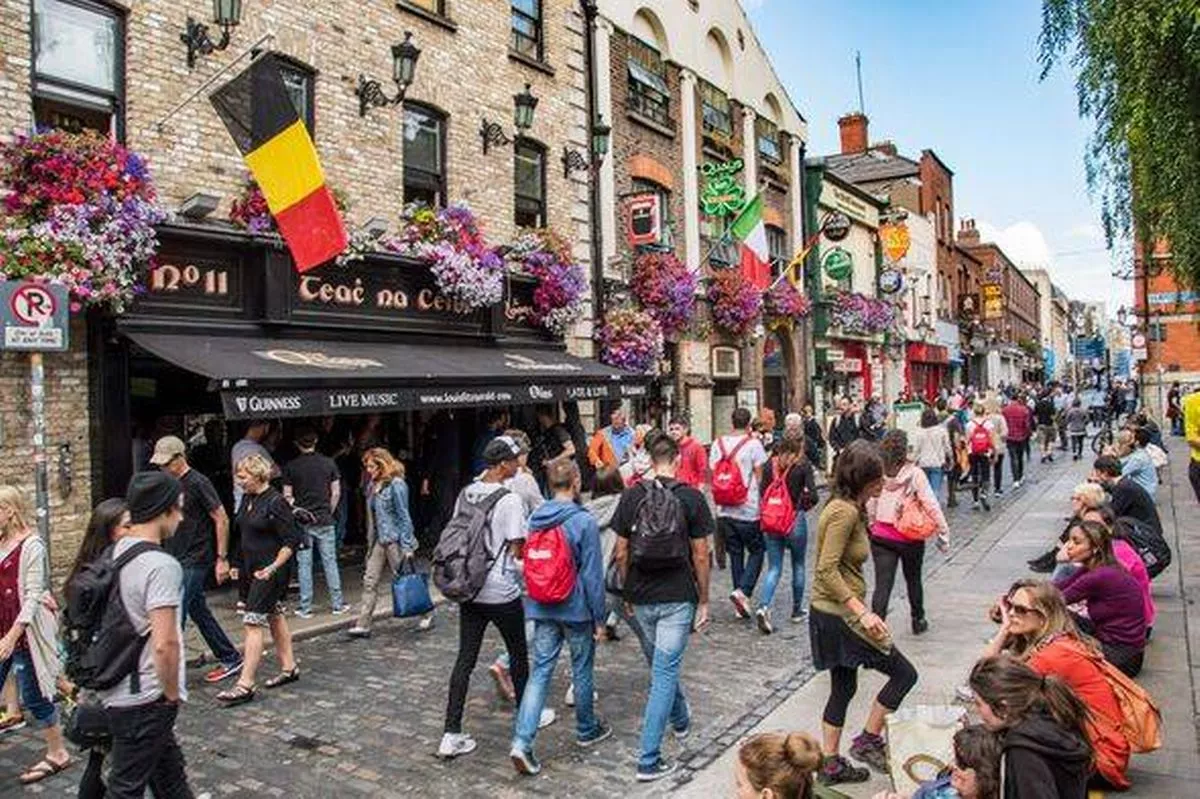
Temple Bar is one of the city’s most crowded spots, attracting approximately 3.5 million visits annually. The Guinness Storehouse is another renowned Dublin attraction, but visitors say it’s like a well-oiled machine, and you can beat the queues by booking tickets in advance.

8. Amsterdam

As one of Europe’s top tourist hotspots, Amsterdam has 12 tourists for every resident, which is straining the city’s housing market, local neighbourhoods, and character.

Similar to Prague in the Czech Republic, the city has grown frustrated by the influx of drunken stag parties. A campaign to discourage young Britons, particularly groups of men aged 18-35 from visiting was launched in Dutch capital. Additionally, Amsterdam has implemented one of the world’s highest tourist taxes, which might deter travellers in the future.

7. Heraklion

Crete is the largest island in Greece and the fifth largest in the Mediterranean Sea. While it is home to some incredible remote beaches like Balos, the island’s capital, Heraklion is quite the tourist attraction.

It’s been named one of Europe’s most overcrowded destinations, with 13 tourists for every resident. The city’s archaeological sites are a major attraction, but those seeking tranquillity can find quieter spots elsewhere on the island, particularly in the west near Chania.

6. Florence

This romantic Italian city ranks just outside the top five, with 13 tourists for every resident. Home to several cultural treasures, including Michelangelo’s iconic David statue, Botticelli’s Birth of Venus and Brunelleschi’s dome, Florence is popular among global visitors.

However, concerns over over-tourism have sparked frustration among locals, with some workshop owners reporting that they’ve had to close due to the overwhelming number of visitors.

5. Reykjavik

Reykjavik is another European city impacted by over-tourism, with 16 tourists visiting for every resident. Once considered an unexpected tourist destination, the city now has around 140,000 inhabitants and has around two million visitors yearly.

Reykjavik is Iceland’s capital and has taken steps to combat tourism by reinstating its tourist tax in January after it was paused during the pandemic.

4. Rhodes

A second Greek island on the list proves the appeal of a Mediterranean beach holiday, and Rhodes is even more popular than Crete. Rhodes hosts 21 tourists for every resident but faces a crisis affecting its population and visitors.

Wildfires in 2023 saw the island experience the largest evacuation in Greece’s history, while a surge in tourism has triggered overdevelopment and the accompanying pollution.

3. Bruges

The Belgian city of Bruges has 21 tourists for every resident, making it feel very crowded in the peak summer season and during the Christmas period.

Some locals are frustrated with the high volume of visitors, and tourism officials recommend visiting outside peak times to experience Bruges in a quieter, more relaxed atmosphere. In 2023, more than 8.3 million people visited Bruges, but the city has implemented measures to address over-tourism, including a ban on new hotels in the historic centre and new holiday home permits across the city.

2. Venice

The iconic Italian city hosts 21 tourists for every resident, so it’s no surprise that it’s landed second place on the list. Venice has attracted attention with its daytripper tax and a ban on cruise ships entering its lagoon, but the Italian hotspot remains severely overcrowded-so much so that UNESCO has included it on its list of endangered cities.

As for the local population, Venice has seen numbers decrease dramatically since the 1950s, going from 170,000 residents to less than 50,000 in just 75 years. The exodus has primarily impacted lower- and middle-class residents, youth demographics, and people who rent, according to travel guides at Adventure.com.

1. Dubrovnik

Dubrovnik is crowned Europe’s most overcrowded holiday destination, with 36 tourists for every resident. Known as Croatia’s historic coastal gem, its once quaint cobblestone streets have become plagued by the noise of suitcases being wheeled across them, and the limestone surface has been buffed by thousands of flip-flops and sandals to a marble-like finish.

The Old Town, surrounded by its famous walls, is the busiest part of the city and has become increasingly expensive as it grows in popularity. This means Croatian residents have been priced out of the city at prices far higher than anywhere else.
Source link

EU delays trade deal with South America’s Mercosur bloc as farmers protest | International Trade News

EU delays Mercosur trade deal until January amid farmer protests and opposition from France and Italy.

The European Union has delayed a massive free-trade deal with South American countries amid protests by EU farmers and as last-minute opposition by France and Italy threatened to derail the agreement.

European Commission chief spokesperson Paula Pinho confirmed on Thursday that the signing of the trade pact between the EU and South American bloc Mercosur will be postponed until January, further delaying a deal that had taken some 25 years to negotiate.

Recommended Stories

list of 4 itemsend of list

Commission President Ursula von der Leyen was expected to travel to Brazil on Saturday to sign the deal, but needed the backing of a broad majority of EU members to do so.

The Associated Press news agency reported that an agreement to delay was reached between von der Leyen, European Council President Antonio Costa and Italian Prime Minister Giorgia Meloni – who spoke at an EU summit on Thursday – on the condition that Italy would vote in favour of the agreement in January.

French President Emmanuel Macron had also pushed back against the deal as he arrived for Thursday’s summit in Brussels, calling for further concessions and more discussions in January.

Macron said he has been in discussions with Italian, Polish, Belgian, Austrian and Irish colleagues, among others, about delaying the signing.

“Farmers already face an enormous amount of challenges,″ the French leader said.

The trade pact with Argentina, Brazil, Bolivia, Paraguay and Uruguay would be the EU’s largest in terms of tariff cuts.

But critics of the deal, notably France and Italy, fear an influx of cheap commodities that could hurt European farmers, while Germany, Spain and Nordic countries say it will boost exports hit by United States tariffs and reduce reliance on China by securing access to key minerals.

Brazil’s President Lula says Italy’s PM Meloni asked for ‘patience’

The EU-Mercosur agreement would create the world’s biggest free-trade area and help the 27-nation European bloc to export more vehicles, machinery, wines and spirits to Latin America at a time of global trade tensions.

Al Jazeera’s Dominic Kane, reporting from Berlin, said Germany, Spain and the Nordic countries were “all lobbying hard in favour of this deal”. But ranged against them were the French and Italian governments because of concerns in their powerful farming sectors.

“Their worry being that their products, such as poultry and beef, could be undercut by far cheaper imports from the Mercosur countries,” Kane said.

“So no signing in December. The suggestion being maybe there will be a signing in mid-January,” he added.

“But there must now be a question about what might happen between now and mid-January, given the powerful forces ranged against each other in this debate,” he added.

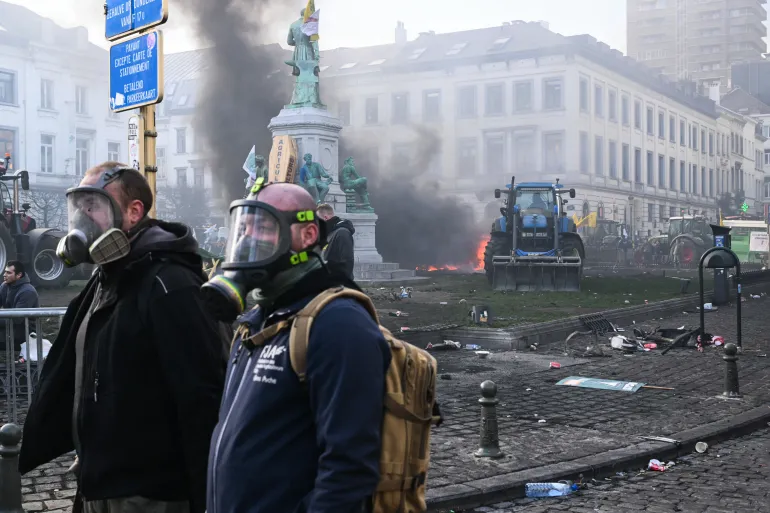
Farmers wear gas masks at the Place du Luxembourg near the European Parliament, during a farmers' protest to denounce the reforms of the Common Agricultural Policy (CAP) and trade agreements such as the Mercosur, in Brussels, on December 18, 2025, organised by Copa-Cogeca, the main association representing farmers and agricultural cooperatives in the EU. EU Farmers, particularly in France, worry the Mercosur deal -- which will be discussed at the EU leaders meeting -- will see them undercut by a flow of cheaper goods from agricultural giant Brazil and its neighbours. They also oppose plans put forward by the European Commission to overhaul the 27-nation bloc's huge farming subsidies, fearing less money will flow their way. (Photo by NICOLAS TUCAT / AFP)
Farmers wear gas masks at the Place du Luxembourg near the European Parliament, during a farmers’ protest on December 18, 2025 [Nicolas Tucat/AFP]

Mercosur nations were notified of the move, a European Commission spokeswoman said, and while initially reacting with a now-or-never ultimatum to its EU partners, Brazil opened the door on Thursday to delaying the deal’s signature to allow time to win over the holdouts.

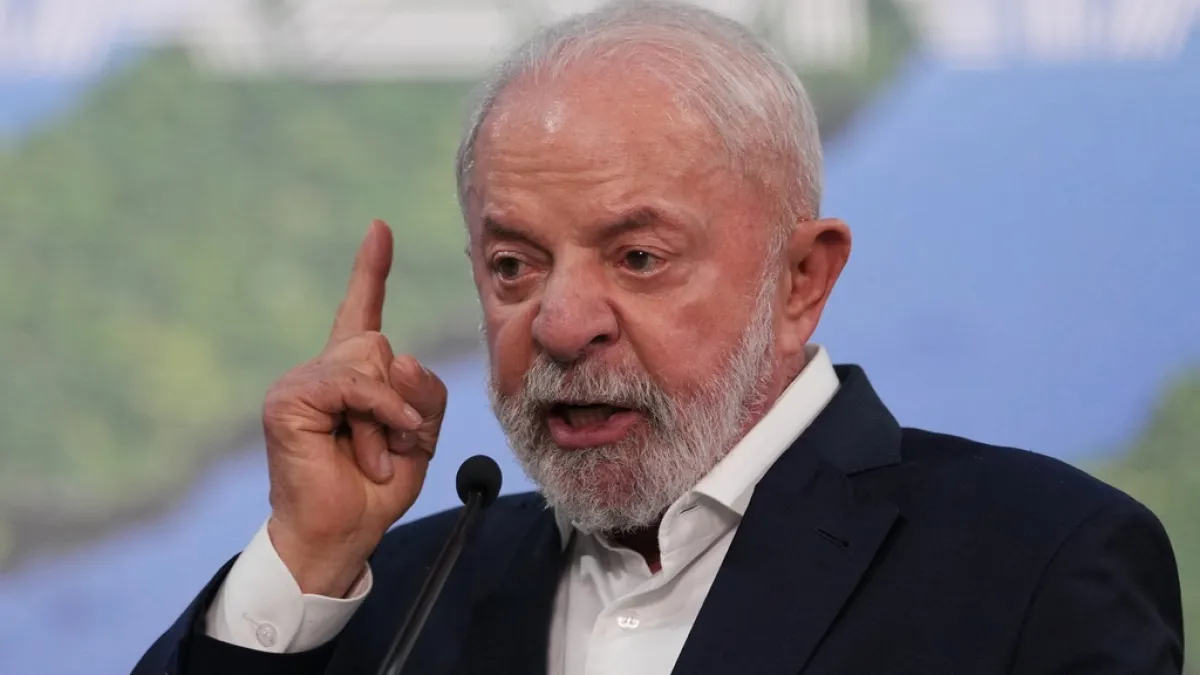
Brazil’s President Luiz Inacio Lula da Silva said Italy’s Meloni had asked him for “patience” and had indicated that Italy would eventually be ready for the agreement.

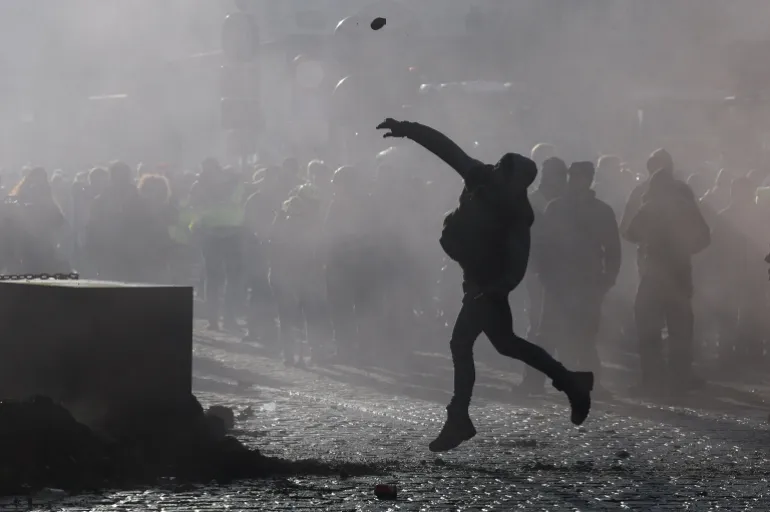
The decision to delay also came hours after farmers in tractors blocked roads and set off fireworks in Brussels to protest the deal, prompting police to respond with tear gas and water cannon.

Protesting farmers – some travelling to the Belgian capital from as far away as Spain and Poland – brought potatoes and eggs to throw and waged a furious back-and-forth with police while demonstrators burned tyres and a faux wooden coffin bearing the word “agriculture”.

The European Parliament evacuated some staff due to damage caused by protesters.

Source link

Russia-Ukraine war: List of key events, day 1,394 | Russia-Ukraine war News

These are the key developments from day 1,394 of Russia’s war on Ukraine.

Here is where things stand on Friday, December 19:

Fighting

  • Three people, including two crew members of a cargo vessel, were killed in overnight Ukrainian drone attacks on the Russian port of Rostov-on-Don and the town of Bataysk in the country’s southern Rostov region, local governor Yury Slyusar said.
  • Russian strikes near Ukraine’s Black Sea port of Odesa killed a woman in her car and hit infrastructure. Odesa’s Governor Oleh Kiper said a Russian drone killed a woman crossing a bridge in her car, and three children were injured in the incident.
  • Kiper also asked residents whose homes have been affected by extended power outages to be patient and to end blocking roads in protest against the blackouts.
  • “As a result of enemy attacks, the energy infrastructure in Odesa region has suffered extensive damage,” Kiper said.
  • About 180,000 consumers have been left without electricity across five Ukrainian regions after Russian attacks, Ukraine’s acting energy minister, Artem Nekrasov, said.
  • Nekrasov said the southern regions of Mykolaiv and Zaporizhia, the central regions of Cherkasy and Dnipropetrovsk, and the northeastern region of Sumy have been impacted.
  • Russia has formed a military brigade equipped with Moscow’s new hypersonic intermediate-range ballistic missile, Russian chief of the general staff, Valery Gerasimov, said.
  • Russia fired the Oreshnik at Ukraine for the first time in November 2024, and Russian President Vladimir Putin has boasted that the missile is impossible to intercept and has destructive power comparable to that of a nuclear weapon.

Sanctions

  • European Union leaders have agreed in principle at a summit in Brussels to work on financing Ukraine in 2026 and 2027 through the use of frozen Russian assets rather than EU borrowing, Poland’s Prime Minister Donald Tusk said.
  • EU leaders were still trying to overcome differences over the plan, with talks in Brussels focused on seeking to reassure Belgium, which holds most of the frozen assets, and other concerned countries, that Europe would share the legal and financial risks resulting from the initiative.
  • A new draft of the deal offered Belgium and other countries unlimited guarantees for damages should Moscow successfully sue them for using Russian assets to finance Ukraine.
  • Diplomats said the deal could be a problem for some governments, who would need parliamentary approval. The new draft also offered EU countries and institutions, whose assets may be seized by Russia in retaliation, the possibility to offset such damages against Russian assets held by the EU.
  • The text of the draft deal also offered a mechanism of unconditional, irrevocable, on-demand guarantees that the EU would swiftly repay the Russian central bank assets in all circumstances should the need arise.
  • Russia’s central bank has said it will extend legal action beyond its lawsuit against Belgium-based depository Euroclear and sue European banks in a Russian court over attempts the EU’s plans to use frozen Russian assets as loans for Kyiv.
  • Britain has imposed more sanctions targeting Russian oil companies, including 24 individuals and entities, in what it described as a move against Russia’s largest remaining unsanctioned oil companies: Tatneft, Russneft, NNK-Oil and Rusneftegaz.

Peace talks

  • Ukrainian peace negotiators are en route to the United States and plan to meet Washington’s negotiating team on Friday and Saturday, Ukrainian President Volodymyr Zelenskyy has said.
  • US President Donald Trump said he believes talks to end the war in Ukraine are “getting close to something” as Trump envoys Steve Witkoff and Jared Kushner plan to meet a Russian delegation in Miami this weekend.

Aid

  • The Ukraine-US reconstruction fund, established as part of a Trump-pushed minerals deal the two countries signed in April, has approved its asset policies and is poised to begin reviewing its first investment opportunities in 2026, the US body overseeing the fund said.
  • The Development Finance Corporation (DFC) said the fund’s second meeting “reached final consensus necessary to bring the fund to full operational status”. Potential deals could focus on critical minerals extraction and energy development as well as on maritime infrastructure, the DFC said.
  • Ukraine is facing a foreign aid shortfall of 45-50 billion euros ($53-$59bn) in 2026, President Zelenskyy said, adding that if Kyiv did not receive a first tranche of a loan secured by Russian assets by next spring, it would have to cut drone production.
  • Ukraine has clinched a long-awaited deal to restructure $2.6bn of growth-linked debt, with creditors overwhelmingly accepting a bonds-and-cash swap offer – a key step for the country to emerge from the sovereign default it suffered in the wake of Russia’s full-scale invasion in 2022.

Politics and diplomacy

  • President Zelenskyy said he saw no need to change Ukraine’s constitution enshrining its aim to become a NATO member state. A block on Ukraine joining the military alliance has been a core Russian demand to end its war.
  • “To be honest, I don’t think we need to change our country’s constitution,” Zelenskyy said. “Certainly not because of calls from the Russian Federation or anyone else,” he said.
  • Earlier this week, Zelenskyy said Ukraine could compromise on NATO membership if given bilateral security guarantees with protections similar to NATO’s Article 5, which considers an attack on one member as an attack against all.
  • Ukraine’s Deputy Foreign Minister Sergiy Kyslytsya met Chinese foreign ministerial aide Liu Bin in Beijing, where the pair “discussed ways to strengthen trade and economic cooperation, and issues of co-operation within international organisations”, the Foreign Ministry said.

Russian affairs

  • Sergei Yeremeyev, a Belarusian man accused by Russia of blowing up two trains in Siberia for Ukraine, has been jailed for 22 years. Yeremeyev was found guilty of carrying out an act of terrorism and of planting explosives on two freight trains in 2023.
  • British man Hayden Davies, who fought for Ukraine against Russia, has been sentenced to 13 years in a maximum security prison camp after being convicted of being a paid mercenary, Russian prosecutors said. The 30-year-old was tried by a court in a part of Russian-controlled Donetsk.

Source link

Tottenham vs Liverpool: Premier League – teams, start time, lineups | Football News

Who: Tottenham Hotspur vs Liverpool
What: English Premier League
Where: Tottenham Hotspur Stadium in London, United Kingdom
When: Saturday December 20, at 5:30pm (17:30 GMT)
How to follow: We’ll have all the build-up on Al Jazeera Sport from 17:00 GMT in advance of our text commentary stream. Click here to follow our live coverage.

Defending champions Liverpool will seek back-to-back Premier League wins for the first time since September when they visit Tottenham on Saturday, but the Reds’ woes are far from a distant memory.

Recommended Stories

list of 4 itemsend of list

The pressure building on manager Arne Slot, who last year won the title in his first season in charge, was mounting after a run of nine defeats in 12.

The public fallout between the Anfield club and their star forward, Mohamed Salah, has overshadowed the Slot situation – but it has not gone away. Spurs similarly had a sticky run of six defeats in 10 games during October and November and it has hardly improved since.

Al Jazeera Sport takes a look at a game that sees both managers concerned for their immediate futures.

What is the latest on Mohamed Salah’s Liverpool future?

Salah has now departed for Egypt duty at the 2025 Africa Cup of Nations, but it has not changed his situation at Anfield.

Ever since the 33-year-old claimed he had been “thrown under the bus” by the Reds for their woeful season – after he was dropped to the bench for three consecutive games – rumours had been rife that his time on Merseyside was coming to an end.

The Saudi Pro League have made no secret of their desire to make a move for Salah, who was dropped from Liverpool’s squad for their Champions League match in Milan following his outburst.

The forward did return to the bench for the visit of Brighton in the Premier League last week but his time away at AFCON is likely to be surrounded by speculation that the January transfer window will see a switch to Saudi Arabia.

What happened in Tottenham’s last game?

Tottenham were soundly beaten 3-0 at Nottingham Forest last Sunday, in a game that saw rumours of Thomas Frank’s demise as Spurs manager increase.

Callum Hudson-Odoi scored the first two goals for the home side before Ibrahim Sangare ended any hopes of a Spurs comeback in the 79th minute.

What happened in Liverpool’s last game?

Liverpool put aside the Salah saga and the speculation about Slot’s future with a 2-0 win against Brighton at Anfield last Saturday.

Hugo Ekitike scored both goals, the opener in the first minute of the match, while Salah was an early first-half substitute and assisted for the second from a corner kick.

Whether that was Salah’s last game as a Red remains to be seen.

How have Tottenham fared in the Premier League this season?

Tottenham began their Premier League campaign, Frank’s first in charge, with a run of only one defeat in their opening seven games. The North Londoners have since lost five of their last nine in the league.

The run of six defeats in 10, in all competitions, has been followed by two wins, and the defeat by Forest, in their last four in all competitions. It is just one win in seven, however, in the league – a run that has seen Spurs slip into the bottom half of the table.

How have Liverpool fared in the Premier League this season?

Liverpool won their opening seven games of the season in all competitions, excluding the preseason Community Shield defeat on penalties against Crystal Palace.

Four straight defeats followed, which began the run of nine defeats in 12. In Premier League terms, the Reds have only won three of 11 games – losing six. On the back of winning their first five league games of the season, the Anfield club have been able to hold onto a top-half position in the league, and they start the latest round of matches in seventh position – 10 points of leaders Arsenal, who travel to Everton Saturday evening.

How much pressure is on Tottenham manager Thomas Frank?

Tottenham lifted the UEFA Europa League last season, but that was not enough to stop Ange Postecoglou from being axed at the end of the campaign. The recent run of matches has resulted in huge pressure being placed on Frank.

The biggest rumour to mount has been that former Spain and Barcelona midfielder, Xavi, is being lined up to replace Frank.

Spurs have been renowned for being a sacking club, with Frank being the fifth permanent manager since Mauricio Pochettino was sacked in 2019.

Should Frank be shown the door, his would not be the shortest tenure of a Spurs manager in recent times – Nuno Espirito Santo lasted only four months and two days during his 2021 stint in charge.

What happened the last time Tottenham played Liverpool?

Liverpool thumped Tottenham 5-1 in the Premier League at Anfield in April when the sides last met.

Dominic Solanke gave Spurs a 12th-minute lead before Luis Diaz, Alexis Mac Allister and Cody Gakpo responded for the Reds by the break.

Mohamed Salah and a Destiny Udogie own goal completed the rout in the second period.

What happened in the corresponding fixture between Tottenham and Liverpool last year?

It was a Premier League double for Liverpool last season as they won the first meeting of the last campaign with a nine-goal thriller at Tottenham on December 22.

The 6-3 win for the Reds saw Diaz and Salah both hit braces in a game where the away side led 3-1 at the break, and 5-1 by the 61st minute.

When did Tottenham last beat Liverpool?

Tottenham did actually manage to beat Liverpool last season in the first leg of their League Cup semifinal. The 1-0 home win wasn’t enough for Spurs, however, as the Reds had the last laugh, winning 4-0 in the return fixture at Anfield.

Lucas Bergvall scored the only goal in London, while the aggregate score was level at the break in the second leg after Gakpo’s first-half strike. Salah, Dominik Szoboszlai and Virgil van Dijk settled matters in the second period.

When did Tottenham last beat Liverpool in the Premier League?

Tottenham’s last league win against Liverpool came in September 2023, courtesy of a 2-1 home.

Curtis Jones saw red in the 26nd minute with Son Hueng-min netting Spurs’ first 10 minutes later.

Gakpo levelled for the Reds on the stroke of half-time but the second half went from bad to worse as Diogo Jota was given his marching orders in 69th minute before Joel Matip put through his own net in the final minute of the game.

Head-to-head

This is the 186th meeting between the sides, with Liverpool winning 90 times and Tottenham emerging victorious on 50 occasions.

The first match was in November 1909 on the old Division One (now the Premier League) with Spurs winning 1-0 in London. Liverpool won the return match that season 2-0 in March 1910.

Tottenham team news

James Maddison, Destiny Udogie, Dominic Solanke and Dejan Kulusevski are all injured, while Kota Takai and Radu Dragusin are still deemed short of match fitness as they make their returns from knocks.

Yves Bissouma and Pape Matar Sarr are both at the Africa Cup of Nations, meaning Frank is set to be without eight players for Liverpool’s visit.

Liverpool team news

Salah is the number one absentee for Liverpool, although the Egyptian did start the last four league games on the bench.

Cody Gakpo, Giovanni Leoni and Wataru Endo are all injured while Conor Bradley is suspended.

Dominik Szoboszlai and Joe Gomez both picked up knocks in the Brighton game and are a doubt, but Jeremie Frimpong is close to a return following a hamstring injury.

Predicted Tottenham starting lineup

Vicario; Porro, Romero, Van de Ven, Spence; Palhinha, Bergvall; Kudus, Simons, Kolo Muani; Richarlison

Predicted Liverpool starting lineup

Alisson; Bradley, Konate, Van Dijk, Kerkez; Mac Allister, Gravenberch; Chiesa, Jones, Wirtz; Ekitike

Source link

Angry farmers block Brussels roads with tractors over Mercosur trade deal | European Union News

Thousands protest as EU leaders clash over trade pact farmers fear will flood Europe with cheaper South American goods.

Hundreds of tractors have clogged the streets of Brussels as farmers converged on the Belgian capital to protest against the contentious trade agreement between the European Union and South American nations they say will destroy their livelihoods.

The demonstrations erupted on Thursday as EU leaders gathered for a summit where the fate of the Mercosur deal hung in the balance. More than 150 tractors blocked central Brussels, with an estimated 10,000 protesters expected in the European quarter, according to farm lobby Copa-Cogeca.

Recommended Stories

list of 2 itemsend of list

It made for a twin-tracked day of febrile tension outside and inside at the EU summit as leaders were perhaps more focused on a vote to determine whether they are able to use nearly $200bn in frozen Russian assets to support Ukraine over the next two years.

Outside the gilded halls on the streets, farmers hurled potatoes and eggs at police, set off fireworks and firecrackers, and brought traffic to a standstill.

Authorities responded with tear gas and water cannon, setting up roadblocks and closing tunnels around the city. One tractor displayed a sign reading: “Why import sugar from the other side of the world when we produce the best right here?”

“We’re here to say no to Mercosur,” Belgian dairy farmer Maxime Mabille said, accusing European Commission chief Ursula von der Leyen of trying to “force the deal through” like “Europe has become a dictatorship”.

A protester throws an object, as farmers protest against the EU-Mercosur free-trade deal between the European Union and the South American countries of Mercosur, on the day of a European Union leaders' summit, in Brussels, Belgium, December 18, 2025. REUTERS/Yves Herman
A protester throws an object, as farmers protest against the EU-Mercosur free-trade deal in Brussels, Belgium [Yves Herman/Reuters]

Protesters fear an influx of cheaper agricultural products from Brazil and neighbouring countries would undercut European producers. Their concerns centre on beef, sugar, rice, honey and soya beans from South American competitors facing less stringent regulations, particularly on pesticides banned in the EU.

“We’ve been protesting since 2024 in France, in Belgium and elsewhere,” said Florian Poncelet of Belgian farm union FJA. “We’d like to be finally listened to.”

France and Italy now lead opposition to the deal, with President Emmanuel Macron declaring that “we are not ready” and the agreement “cannot be signed” in its current form.

France has coordinated with Poland, Belgium, Austria and Ireland to force a postponement, giving critics sufficient votes within the European Council to potentially block the pact.

However, Germany and Spain are pushing hard for approval. German Chancellor Friedrich Merz warned that decisions “must be made now” if the EU wants to “remain credible in global trade policy”, while Spanish Prime Minister Pedro Sanchez argued the deal would give Europe “geo-economic and geopolitical weight” against adversaries.

The agreement, 25 years in the making, would create the world’s largest free-trade area covering 780 million people and a quarter of global gross domestic product (GDP).

Supporters say it offers a counterweight to China and would boost European exports of vehicles, machinery and wines amid rising US tariffs.

Despite provisional safeguards negotiated on Wednesday to cap sensitive imports, opposition has intensified. Von der Leyen remains determined to travel to Brazil this weekend to sign the deal, but needs backing from at least two-thirds of EU nations.

Brazil’s President Luiz Inacio Lula da Silva issued an ultimatum on Wednesday, warning that Saturday represents a “now or never” moment, adding that “Brazil won’t make any more agreements while I’m president” if the deal fails.

Source link

Guests from Kharkiv City: Rebuilding Life in Rural Ukraine | Russia-Ukraine war

In the quiet village of Kozubivka in Ukraine’s Poltava region, Nelia and her husband Oleksandr open their home to people displaced from Kharkiv, where bombing and shelling have forced thousands to flee.

But rebuilding a life in rural Ukraine is not easy. City people must learn to navigate unfamiliar routines on the farm, endure physical labour and bear the emotional weight of displacement. In the process tempers flare despite moments of tenderness.

Through these intimate encounters, Guests from Kharkiv reveals what it means to create community in the middle of a war and the courage it takes to adapt to a new way of life.

A documentary short by Halyna Lavrinets, produced by Eleron Pictures.

Source link

What’s next for the global economy in 2026? | Business and Economy

2025 was the year of tariffs and a global shift in economic power.

Two words that largely define the economy right now: Global reordering.

President Donald Trump’s Tariffs have landed as a shock to global trade. This is 2025.

Major economies are rewriting their playbooks, and alliances are being redrawn.

From Africa’s minerals boom to the global AI race, countries are scrambling for influence – even as debt piles up.

They are spending more, borrowing more and making tough choices from defence to climate policy and labour shortages.

And through it all, people are bearing high costs.

Source link

Mbappe scores late to seal Real Madrid win over Talavera in Copa del Rey | Football News

Kylian Mbappe scored two goals to help Real Madrid overcome a stubborn challenge from third-division side Talavera.

Kylian Mbappe scored twice and Real Madrid beat third-division club Talavera 3-2 in the round of 32 of the Copa del Rey on Wednesday.

Mbappe converted a 41st-minute penalty and sealed the victory late in the second half with a shot from outside the area for his 10th goal in his last six matches in all competitions with Madrid. The French forward was also involved in the play that led to an own-goal by Manuel Farrando in first-half stoppage time.

Recommended Stories

list of 4 itemsend of list

“He was decisive,” Madrid coach Xabi Alonso said. “Kylian has that knack for scoring. The third goal was key, which is why we kept him on the pitch and why he started.”

Talavera cut Madrid’s lead with goals by Nahuel Arroyo in the 80th and Gonzalo Di Renzo in second-half stoppage time, but Madrid held on to avoid the upset that would have put Alonso under increased pressure following a series of disappointing results recently.

A tough save by Madrid goalkeeper Andriy Lunin in the final minute was key to securing Madrid’s win.

Madrid struggled late but had been in control from the start despite playing without a few regular starters.

“In the first half, we controlled the game well and took the lead, but not making it 3-0 left the game open, and it remained that way until the end,” Alonso said. “The second half was competitive. We looked for the third goal earlier and had chances, but it wasn’t to be. It was an exciting tie. It’s a special competition. Objective achieved, and on to the next game.”

Madrid closes 2025 at Sevilla in the Spanish league on Saturday.

Kylian Mbappe in action.
Mbappe puts Real Madrid 3-1 up against Talavera in the 88th minute [Susana Vera/Reuters]

Source link

Lula threatens to walk away if further delays to EU-Mercosur trade deal | International Trade News

Brazilian president says it is now or never after Italy joins France in saying it is not ready to sign trade deal.

Brazilian President Luiz Inacio Lula da Silva has warned he may abandon a long-awaited trade deal between members of the South American bloc Mercosur and the European Union after key countries sought a delay.

The Brazilian leader issued the threat on Wednesday after Italy joined fellow heavyweight France in saying it was not ready to commit to the pact to create the world’s biggest free-trade area.

Recommended Stories

list of 4 itemsend of list

The EU had expected its 27 member states to approve the deal in time for European Commission President Ursula von der Leyen to fly to Brazil to sign an agreement with the host, along with Mercosur partners Argentina, Paraguay and Uruguay, on Saturday.

“I’ve already warned them: If we don’t do it now, Brazil won’t make any more agreements while I’m president,” Lula told a cabinet meeting.

“We have given in on everything that diplomacy could reasonably concede.”

‘Premature’ to sign: Meloni

The deal, more than two decades in the making, has been keenly backed by economic powerhouse Germany, along with Spain and the Nordic countries, amid rising Chinese competition and recent United States tariffs, which have increased the incentive to diversify trade.

It would allow the EU to export more vehicles, machinery, spirits and wine to Latin America, and more beef, sugar, rice, honey and soya beans to flow in the opposite direction.

France, eager to protect its agriculture industry, had already called for a delay on a vote to approve the deal, and gained the support necessary to potentially block the agreement when Italian Prime Minister Giorgia Meloni said on Wednesday that Rome was also not ready.

“It would be premature to sign the deal in the coming days,” she told parliament, saying that some of the safeguards Italy is seeking on behalf of farmers were yet to be finalised.

She said Italy did not seek to block the deal altogether, and was “very confident” that her government’s concerns would have been addressed to allow it to be signed early next year,

French President Emmanuel Macron told a cabinet meeting on Wednesday that his government would “firmly oppose” any attempts to force through the deal.

Hungary and Poland are also lukewarm on the agreement.

By contrast, German Chancellor Friedrich Merz said Wednesday he would push “intensively” for the bloc to approve the deal by the year’s end, in what he described as a test of the EU’s “ability to act”.

EU reaches agreement on agricultural safeguards

In an effort to allay some of the concerns, the EU struck a provisional deal on Wednesday to set tighter controls on imports of farm products, amid a background of farmer protests against the deal.

It determined the trigger for launching an investigation into such imports if import volumes rose by more than 8 percent per year or prices fell by that amount in one or more EU members.

EU leaders will discuss the matter at a Brussels summit on Thursday, a commission spokesman said.

Source link

PSG beat Flamengo on penalties to win FIFA Intercontinental Cup | Football News

European champions Paris Saint-Germain pushed all the way in Intercontinental Cup final in Qatar by South Americans.

Back-up goalkeeper Matvei Safonov saved four penalties as Paris Saint-Germain edged out Brazilians Flamengo 2-1 in a shootout to win the FIFA Intercontinental Cup final in Qatar.

PSG led through Khvicha Kvaratskhelia before Jorginho’s spot-kick levelled for Flamengo as the game finished 1-1 after extra time on Wednesday.

Recommended Stories

list of 4 itemsend of list

Copa Libertadores winners Flamengo defeated Mexicans Cruz Azul and African champions Pyramids last week to earn the right to face PSG and pushed the European champions all the way with a dogged display.

But Luis Enrique’s men, who received a bye to the final, were indebted to Safonov and followed in the footsteps of Real Madrid, who lifted the inaugural title last year.

PSG thought they had taken the lead in the ninth minute when Fabian Ruiz cleverly hooked the ball into an empty net after Flamengo goalkeeper Agustin Rossi miskicked a clearance while trying to prevent a corner.

But the goal was ruled out by VAR because Rossi had narrowly failed to stop the ball from going out of play.

But PSG did break the deadlock eight minutes before half-time courtesy of another Rossi error.

The Argentinian turned Desire Doue’s low cross, which looked to be too strong for Kvaratskhelia, straight into the Georgian’s pass for the simplest of tap-ins.

Flamengo managed to stay in the game, though, and were awarded a penalty on the hour mark for a foul by Marquinhos on Uruguay midfielder Giorgian de Arrascaeta after a VAR review.

Former Chelsea and Arsenal player Jorginho stepped up to send Safonov the wrong way in trademark fashion.

PSG pressed for a winner, sending on Bradley Barcola and Ousmane Dembele, who set up a last-gasp chance for Marquinhos.

But the centre-back could not react quickly enough to get his effort on target as the ball flashed across goal and the game headed into extra time.

Both teams saw half-chances come and go in the added half-hour, with Dembele flashing a shot narrowly off target in the 116th minute.

That set the stage for Safonov – playing in place of regular first-choice Lucas Chevalier, who is still regaining full fitness after an ankle injury – to steal the headlines and spare the blushes of Dembele and Barcola, who both missed for PSG.

Source link

US Senate passes $901bn defence bill | Military News

Legislation reflects Democrats’ efforts to seek tighter oversight of Trump administration’s military action.

The United States Senate has passed a $901bn bill setting defence policy and spending for the 2026 fiscal year, combining priorities backed by President Donald Trump’s administration with provisions designed to preserve congressional oversight of US military power.

The National Defense Authorisation Act (NDAA) was approved in a 77-20 vote on Wednesday with senators adopting legislation passed by the House of Representatives last month. It now goes to Trump for his signature.

Recommended Stories

list of 4 itemsend of list

Several provisions in the bill reflect efforts by Democratic lawmakers, supported by some Republicans, to constrain how quickly the Trump administration may scale back US military commitments in Europe.

The bill requires the Pentagon to maintain at least 76,000 US soldiers in Europe unless NATO allies are consulted and the administration determines that a reduction would be in the US national interest. The US typically stations 80,000 to 100,000 soldiers across the continent. A similar measure prevents reductions in US troop levels in South Korea below 28,500 soldiers.

Congress also reinforced its backing for Ukraine, authorising $800m under the Ukraine Security Assistance Initiative with $400m allocated for each of the next two years. A further $400m per year was approved to manufacture weapons for Ukraine, signalling continued congressional support for Kyiv and cementing Washington’s commitment to Europe’s defence.

Asia Pacific focus, congressional oversight

The bill also reflects priorities aligned with the Trump administration’s national security strategy, which places the Asia Pacific at the centre of US foreign policy and describes the region as a key economic and geopolitical battleground.

In line with that approach, the NDAA provides $1bn for the Taiwan Security Cooperation Initiative, aimed at strengthening defence cooperation as the US seeks to counter China’s growing military influence.

The legislation authorises $600m in security assistance for Israel, including funding for joint missile defence programmes, such as the Iron Dome, a measure that has long drawn broad bipartisan support in Congress.

The NDAA increases reporting requirements on US military activity, an area in which Democrats in particular have sought greater oversight.

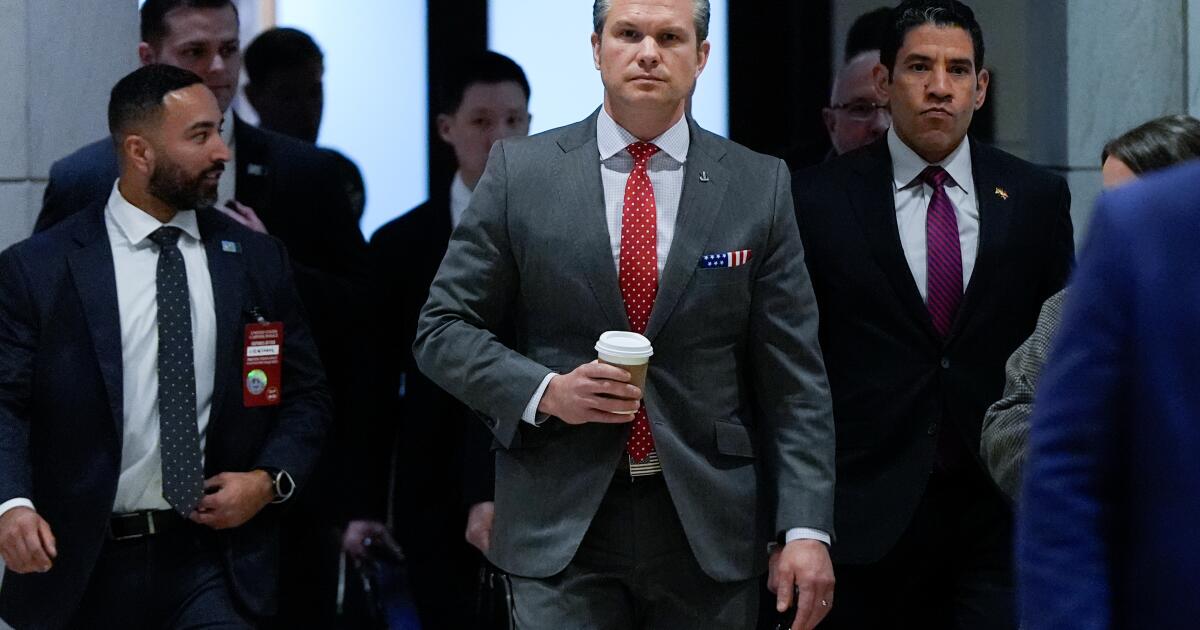
It directs the Department of Defense to provide Congress with additional information on strikes targeting suspected smuggling and trafficking operations in the Caribbean and the eastern Pacific, adding pressure on Defense Secretary Pete Hegseth to provide lawmakers with video footage of US strikes on alleged drug-smuggling boats operating in international waters near Venezuela.

Lawmakers moved to strengthen oversight after a September strike killed two people who had survived an earlier attack on their boat.

Some Democratic lawmakers said they were not briefed in advance on elements of the campaign, prompting calls for clearer reporting requirements.

Sanctions and America First

The legislation repeals the 2003 authorisation for the US invasion of Iraq and the 1991 authorisation for the Gulf War. Supporters from both parties said the repeals reduce the risk of future military action being undertaken without explicit congressional approval.

The bill also permanently lifts US sanctions on Syria imposed during the regime of President Bashar al-Assad after the Trump administration’s earlier decision to temporarily ease restrictions. Supporters argue the move will support Syria’s reconstruction after al-Assad’s removal from power a year ago.

Other provisions align more closely with priorities advanced by Trump and Republican lawmakers under the administration’s America First agenda.

The NDAA eliminates diversity, equity and inclusion offices and training programmes within the Department of Defense, including the role of chief diversity officer. The House Armed Services Committee claims the changes would save about $40m.

The bill also cuts $1.6bn from Pentagon programmes related to climate change. While the US military has previously identified climate-related risks as a factor affecting bases and operations, the Trump administration and Republican leaders have said defence spending should prioritise immediate military capabilities.

Source link

Senate passes $901-billion defense bill that pushes Hegseth for boat strike video

The Senate gave final passage Wednesday to an annual military policy bill that will authorize $901 billion in defense programs while pressuring Defense Secretary Pete Hegseth to provide lawmakers with video of strikes on alleged drug boats in international waters near Venezuela.

The annual National Defense Authorization Act, which raises troop pay by 3.8%, gained bipartisan backing as it moved through Congress. It passed the Senate on a 77-20 vote before lawmakers planned to leave Washington for a holiday break. Two Republicans — Sens. Rand Paul and Mike Lee — and 18 Democrats voted against the bill.

The White House has indicated that it is in line with President Trump’s national security priorities. However, the legislation, which ran more than 3,000 pages, revealed some points of friction between Congress and the Pentagon as the Trump administration reorients its focus away from security in Europe and toward Central and South America.

The bill pushes back on recent moves by the Pentagon. It demands more information on boat strikes in the Caribbean, requires that the U.S. maintain its troop levels in Europe and sends some military aid to Ukraine.

But overall, the bill represents a compromise between the parties. It implements many of Trump’s executive orders and proposals on eliminating diversity and inclusion efforts in the military and grants emergency military powers at the U.S. border with Mexico. It also enhances congressional oversight of the Department of Defense, repeals several years-old war authorizations and seeks to overhaul how the Pentagon purchases weapons as the U.S. tries to outpace China in developing the next generation of military technology.

“We’re about to pass, and the president will enthusiastically sign, the most sweeping upgrades to DOD’s business practices in 60 years,” said Sen. Roger Wicker (R-Miss.), the chair of the Senate Armed Services Committee.

Still, the sprawling bill faced objections from both Democratic and Republican leadership on the Senate Commerce Committee. That’s because the legislation allows military aircraft to obtain a waiver to operate without broadcasting their precise location, as an Army helicopter had done before a midair collision with an airliner in Washington, D.C., in January that killed 67 people.

“The special carve-out was exactly what caused the January 29 crash that claimed 67 lives,” Sen. Ted Cruz (R-Texas), the chair of the Senate Commerce Committee, said at a news conference this week.

Cruz said he was seeking a vote on bipartisan legislation in the next month that would require military aircraft to use a precise location sharing tool and improve coordination between commercial and military aircraft in busy areas.

Boat strike videos

Republicans and Democrats agreed to language in the defense bill that threatened to withhold a quarter of Hegseth’s travel budget until he provided unedited video of the strikes, as well as the orders authorizing them, to the House and Senate Committees on Armed Services.

Hegseth was on Capitol Hill on Tuesday ahead of the bill’s passage to brief lawmakers on the U.S. military campaign in international waters near Venezuela. The briefing elicited contrasting responses from many lawmakers, with Republicans largely backing the campaign and Democrats expressing concern about it and saying they had not received enough information.

The committees are investigating a Sept. 2 strike — the first of the campaign — that killed two people who had survived an initial attack on their boat. The Navy admiral who ordered the “double-tap” strike, Adm. Frank “Mitch” Bradley, also appeared before the committees shortly before the vote Wednesday in a classified briefing that also included video of the strike in question.

Several Republican senators emerged from the meeting backing Hegseth and his decision not to release the video publicly, but other GOP lawmakers stayed silent on their opinion of the strike.

Democrats are calling for part of the video to be released publicly and for every member of Congress to have access to the full footage.

“The American people absolutely need to see this video,” said Sen. Richard Blumenthal (D-Conn.). “I think they would be shocked.”

Congressional oversight

Lawmakers have been caught by surprise by the Trump administration several times in the last year, including by a move to pause intelligence sharing with Ukraine and a decision to reduce U.S. troop presence in NATO countries in eastern Europe. The defense legislation requires that Congress be kept in the loop on decisions like those going forward, as well as when top military brass are removed.

The Pentagon is also required, under the legislation, to keep at least 76,000 troops and major equipment stationed in Europe unless NATO allies are consulted and there is a determination that such a withdrawal is in U.S. interests. Roughly 80,000 to 100,000 U.S. troops are usually present on European soil. A similar requirement keeps the number of U.S. troops stationed in South Korea at 28,500.

Lawmakers are also pushing back on some Pentagon decisions by authorizing $400 million for each of the next two years to manufacture weapons to be sent to Ukraine.

Cuts to diversity and climate initiatives

Trump and Hegseth have made it a priority to purge the military of material and programs that address diversity, anti-racism or gender issues, and the defense bill codifies many of those changes. It would repeal diversity, equity and inclusion offices and trainings, including the position of chief diversity officer. Those cuts would save the Pentagon about $40 million, according to the Republican-controlled House Armed Services Committee.

The U.S. military has long found that climate change is a threat to how it provides national security because weather-related disasters can destroy military bases and equipment. But the bill makes $1.6 billion in cuts by eliminating climate change-related programs at the Pentagon.

Repeal of war authorizations and Syria sanctions

Congress is writing a closing chapter to the war in Iraq by repealing the authorization for the 2003 invasion. Now that Iraq is a strategic partner of the U.S., lawmakers in support of the provision say the repeal is crucial to prevent future abuses. The bill also repeals the 1991 authorization that sanctioned the U.S.-led Gulf War.

The rare, bipartisan moves to repeal the legal justifications for the conflicts signal a potential appetite among lawmakers to reclaim some of Congress’ war powers.

Groves writes for the Associated Press.

Source link

England’s resident doctors begin five-day strike | Health News

The British Medical Association is calling for improved pay and an increase in available jobs for qualified doctors.

Resident doctors in England have begun a five-day strike in a long-running dispute over pay and working conditions.

Prime Minister Keir Starmer addressed the strike during Prime Minister’s Questions in parliament on Wednesday, describing the walkout as “dangerous and utterly irresponsible”.

Recommended Stories

list of 4 itemsend of list

“My message to resident doctors is: don’t abandon patients,” Starmer said. He urged them to “work with us to improve conditions and rebuild the NHS”.

The prime minister also blamed the previous Conservative government for leaving the National Health Service “absolutely on its knees”.

The doctors, formerly known as junior doctors and accounting for nearly half of England’s medical workforce, walked out at 07:00 GMT on Wednesday. The strike is due to continue until 07:00 GMT on Monday.

The strike follows an online ballot organised by the British Medical Association (BMA), the union representing resident doctors. About 30,000 members voted to reject the government’s proposal, triggering the industrial action.

Jack Fletcher, a BMA representative, said the dispute centred on two main issues: pay and a lack of jobs for qualified doctors.

“There is a jobs crisis, where doctors are trained but unable to secure roles, and there is a pay crisis,” Fletcher said while standing on a picket line outside St Thomas’ Hospital in London.

“We must value our doctors in this country,” he added. “Last year, more doctors left the profession than at any point in the past decade.”

The strike comes as the NHS faces increased pressure, with flu-related hospitalisations in England rising by more than 50 percent in early December. Health authorities across Europe have also warned of an unusually early and severe flu season.

NHS England said fewer doctors than usual would be on duty during the strike period, with staff required to prioritise life-saving care.

The BMA is calling for what it describes as a “genuinely long-term plan” to address pay, after years of below-inflation rises. It is also demanding the creation of new training posts, rather than what it says are recycled positions, to allow doctors to specialise and progress.

The government’s most recent offer, made last week, did not include new pay terms. Shortly after taking office, Health Secretary Wes Streeting agreed to a deal offering a 22 percent pay rise, below the 29 percent sought by the union.

Doctors are seeking “full pay restoration”, calling for salaries to return to their 2008 and 2009 levels in real terms after years of erosion by inflation.

Source link

Share a tip on a favourite beach in Europe | Travel

At this time of year, thoughts turn to warmer days and dreamy holidays on sun-drenched beaches. We’d love to hear about favourite beaches you’ve discovered on your travels in Europe (excluding the UK). We’re interested in places beyond the usual tourist haunts – lesser-known bays, coves and sandy stretches overlooked by the holiday crowds. Tell us where it is and what makes it special.

The best tip of the week, chosen by Tom Hall of Lonely Planet wins a £200 voucher to stay at a Coolstays property – the company has more than 3,000 worldwide. The best tips will appear in the Guardian Travel section and website.

Keep your tip to about 100 words

If you have a relevant photo, do send it in – but it’s your words we will be judging for the competition.

We’re sorry, but for legal reasons you must be a UK resident to enter this competition.

The competition closes on Monday 5 January 2026 at 10am GMT

Have a look at our past winners and other tips

Read the terms and conditions here

Share your travel tip using the form below.

Please share your story if you are 18 or over, anonymously if you wish. For more information please see our terms of service and privacy policy.

Send us your travel tip

You can share your travel tips using this form.

Your responses, which can be anonymous, are secure as the form is encrypted and only the Guardian has access to your contributions. We will only use the data you provide us for the purpose of the feature and we will delete any personal data when we no longer require it for this purpose. For alternative ways to get in touch securely please see our tips guide.

If you’re having trouble using the form click here. Read terms of service here and privacy policy here.

Source link

Russia-Ukraine war: List of key events, day 1,392 | Russia-Ukraine war News

These are the key developments from day 1,392 of Russia’s war on Ukraine.

Here is where things stand on Wednesday, December 17:

Fighting

  • Kyiv Mayor Vitalii Klitschko said explosions were heard in the Ukrainian capital and warned people to stay in shelters late on Tuesday night as air defences worked to repel a Russian attack.
  • Russian forces launched a “massive” drone attack on Ukraine’s Sumy region, targeting energy infrastructure and causing electricity blackouts, Governor Oleh Hryhorov said on Telegram late on Tuesday night.
  • Power outages were also reported in the Donetsk region, Ukrainian Deputy Minister of Energy Mykola Kolisnyk said.
  • A Russian attack on electrical substations and other energy infrastructure left 280,000 households in Ukraine’s Odesa region without power, Governor Oleh Kiper wrote on Telegram.
  • Electricity was later restored to 220,000 homes, Kiper said, but extensive work was still needed to repair damaged networks.
  • The Russian-occupied Zaporizhzhia nuclear power plant in Ukraine is currently receiving electricity through only one of two external power lines, the facility’s Russian management said, after the other line was disconnected due to military activity.

  • Russian forces shot down 180 Ukrainian drones in one day, Russia’s Ministry of Defence said, according to the state-run TASS news agency.
  • The ambassador-at-large of the Russian Ministry of Foreign Affairs, Rodion Miroshnik, told TASS that Ukrainian attacks had killed 14 Russian civilians and injured nearly 70, including in the Russian-occupied Kherson and Zaporizhia regions of Ukraine, over the past week.

Ceasefire talks

  • German Chancellor Friedrich Merz shared details about a potential European-led multinational force being considered as part of discussions on security guarantees for Ukraine.
  • “We would secure a demilitarised zone between the warring parties and, to be very specific, we would also act against corresponding Russian incursions and attacks,” Merz told ZDF public television, adding that the talks “we’re not there yet”.

Regional security

  • Bulgaria, Estonia, Finland, Latvia, Lithuania, Poland, Romania and Sweden said in a joint statement on Tuesday that “Russia is the most significant, direct and long-term threat to our security and to peace and stability in the Euro-Atlantic area”.
  • After the Eastern Flank Summit in Helsinki, Finland, Polish Prime Minister Donald Tusk said that the grouping of European countries discussed an “anti-drone wall” that would require “billions in expenditure here”.
  • Germany’s Federal Ministry of Defence said that it ended the deployment to Poland of its Patriot systems and soldiers from its Air and Missile Defence Task Force, after the mission concluded as planned.
  • UK Secretary of State for Defence John Healey said the United Kingdom is spending 600 million pounds (more than $800 million) to buy “thousands of air defence systems, missiles, and automated turrets to shoot down drones” for Ukraine, during a virtual meeting of the Ukraine Defence Contact Group, according to the Kyiv Independent news outlet.
  • German Defence Minister Boris Pistorius told the same meeting that Germany would “transfer a significant number of AIM-9 Sidewinder missiles” to Ukraine next year.

Reparations

  • The leaders of 34 European countries signed an agreement in The Hague to create an International Claims Commission for Ukraine to seek compensation for hundreds of billions of dollars in damage from Russian attacks.
  • “Every Russian war crime must have consequences for those who committed them,” Ukrainian President Volodymyr Zelenskyy said before signing the agreement.
  • “The goal is to have validated claims that will ultimately be paid by Russia. It will really have to be paid by Russia,” Dutch Minister of Foreign Affairs  David van Weel said.

Source link

Thousands protest in Slovakia against Fico government’s judicial reforms | Protests News

Protesters called on President Pellegrini, usually an ally of Prime Minister Fico, to veto the changes.

Thousands of people have rallied across Slovakia to protest against changes to the judicial system that opposition politicians and critics say are destroying the rule of law, Slovak media reported.

Protesters filled much of a central square in the capital of Bratislava, and there were protests in eight other cities on Tuesday.

Recommended Stories

list of 3 itemsend of list

The biggest opposition party, Progressive Slovakia, called the protest after Prime Minister Robert Fico‘s leftist-nationalist government pushed legislative changes through parliament last week that dismantle the whistleblower protection agency and change the way the state deals with crown witnesses.

“They took a chainsaw to the rule of law,” Michal Simecka, the leader of Progressive Slovakia, told the crowd in Bratislava, according to a live video that streamed online.

“Slovakia is the only country where the government approves laws to make life easier for criminals and mafia,” he also said.

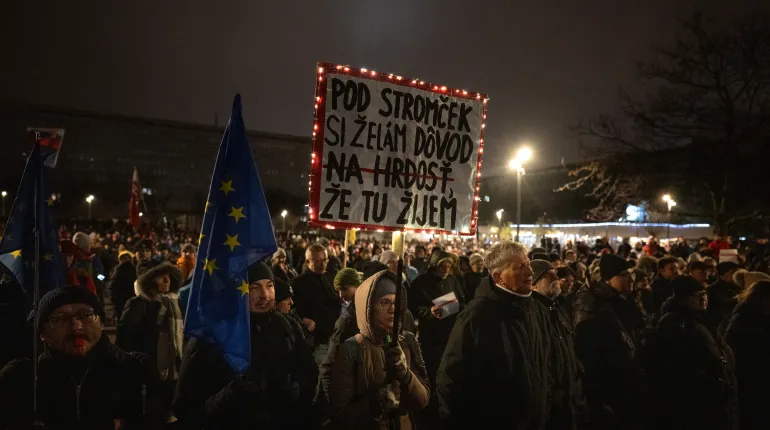
People carried Slovak and European Union flags as well as placards with slogans, such as “Fico’s government is helping Mafia”, and chanted “Enough of Fico” and “Shame!”

A protester holds a banner reading "For Christmas I wish to get a reason to be proud that I live here" as demonstrators gather for a protest against the abolition of the whistleblower protection office and penal code changes in Bratislava, Slovakia on December 15, 2025.
A protester holds a banner reading, ‘For Christmas I wish to get a reason to be proud that I live here”, at a demonstration against the abolition of the whistleblower protection office and penal code changes [AFP]

Fico’s critics claim that, under his government, Slovakia is following Hungary’s lead under Prime Minister Viktor Orban.

Fico’s administration argues that the old whistleblower agency was politically abused. The administration has also weakened criminal codes for financial crimes, revamped the public broadcaster and pushed constitutional changes asserting national sovereignty over some EU laws, which has raised European Commission scrutiny.

Fico’s government has faced several large protests since coming to power in 2023. Tuesday’s rally was one of the biggest since last February, when tens of thousands demonstrated against what critics say is an increasingly pro-Russian foreign policy.

A man holds a banner reading "Gangster Fico is destroying Slovakia" during a protest against the abolition of the whistleblower protection office and penal code changes in Bratislava, Slovakia on December 15, 2025.
A man holds a banner, reading ‘Gangster Fico is destroying Slovakia’, during a protest against the abolition of the whistleblower protection office and penal code changes [AFP]

Source link

UK announces independent probe into foreign interference in politics | Politics News

Minister says probe in response to case of ex-Reform UK lawmaker Nathan Gill, jailed for taking pro-Russia bribes.

The United Kingdom is launching an independent investigation into foreign interference in British politics, just weeks after a former Reform UK lawmaker was jailed for more than 10 years for taking bribes to make pro-Russia statements.

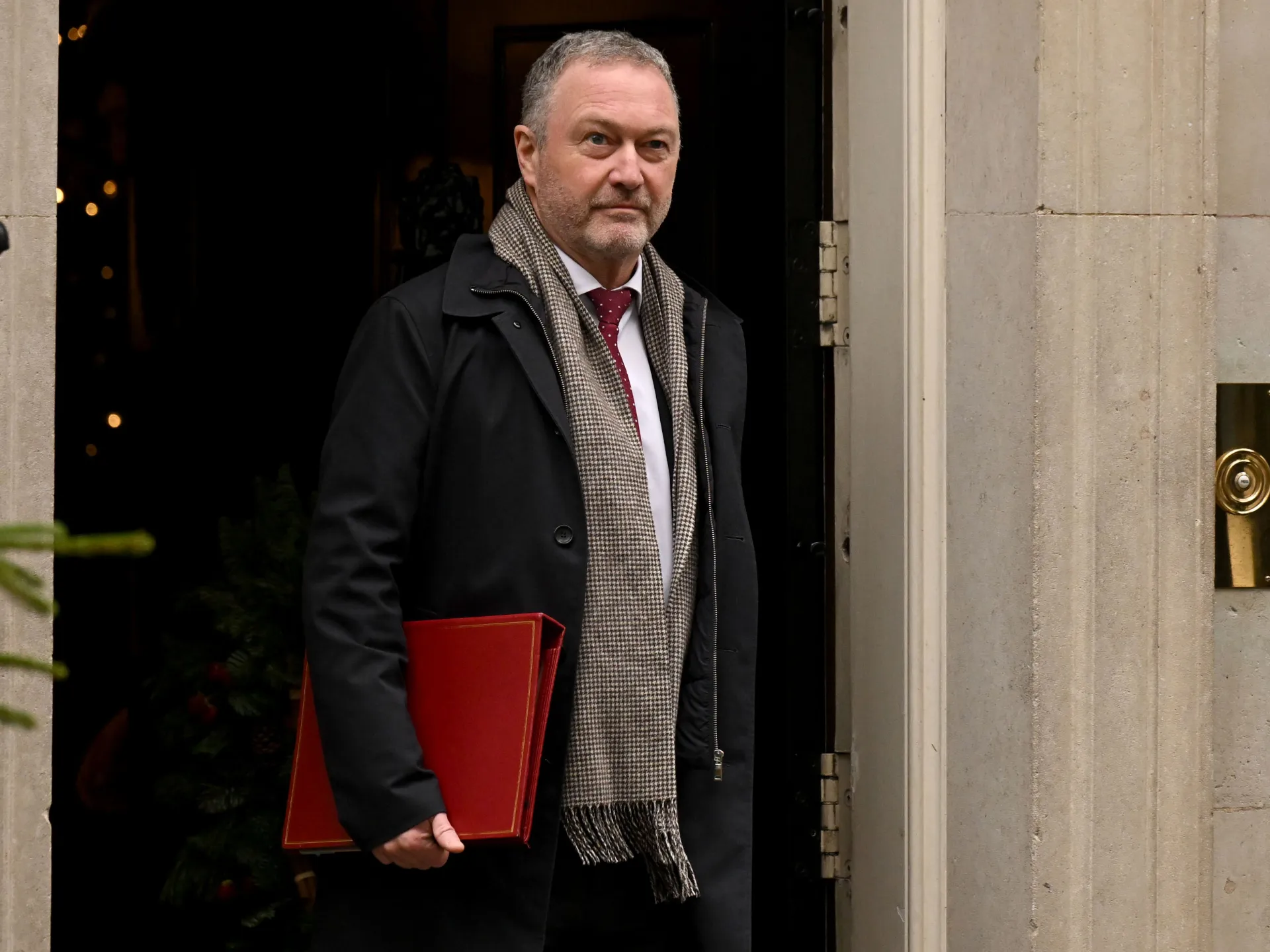
Steve Reed, the UK’s secretary of state for housing, communities and local government, said on Tuesday that he had ordered the probe in response to the case of Nathan Gill, a former Member of the European Parliament and ex-leader of Reform UK in Wales.

Recommended Stories

list of 3 itemsend of list

“A British politician took bribes to further the interests of the Russian regime,” Reed said in the House of Commons. “This conduct is a stain on our democracy. The independent review will work to remove that stain.”

Gill was sentenced to 10 years and six months in prison on November 21.

He pleaded guilty in September to accepting thousands of euros from a pro-Russian politician in Ukraine between 2018 and 2019, and making scripted statements and television appearances at his behest.

The case had spurred widespread condemnation from across the political spectrum, with Nigel Farage’s Reform UK party – which has been leading most polls – last month describing Gill’s actions as “reprehensible, treasonous and unforgivable”.

On Tuesday, Conservative MP Paul Holmes welcomed the independent review into foreign interference as a necessary step.

“Protecting the integrity of our democratic system from foreign interference is not a partisan issue. It goes to the heart of public trust in our elections,” Holmes told the House.

“Interference in our elections from foreign actors is something that we must all be vigilant against.”

Reed, the housing minister, said the independent probe would be led by Philip Rycroft, former UK permanent secretary for the Department for Exiting the European Union.

“The purpose of the review is to provide an in-depth assessment of the current financial rules and safeguards and make recommendations,” said Reed, adding that Rycroft has been asked to report his findings to the government by the end of March.

The minister noted that the British government put forward a strategy “for modern and secure elections” earlier this year in a push to address foreign interference and public distrust in the electoral system, among other issues.

But Reed said on Tuesday that “events have shown that we need to consider whether our firewall is enough”.

“The independent review will look at this,” he said, including by evaluating the UK’s existing political finance laws, systems to identify and mitigate foreign interference, and safeguards against illicit funding streams.

Source link