Europe

Mbappe scores late to seal Real Madrid win over Talavera in Copa del Rey | Football News

Kylian Mbappe scored two goals to help Real Madrid overcome a stubborn challenge from third-division side Talavera.

Kylian Mbappe scored twice and Real Madrid beat third-division club Talavera 3-2 in the round of 32 of the Copa del Rey on Wednesday.

Mbappe converted a 41st-minute penalty and sealed the victory late in the second half with a shot from outside the area for his 10th goal in his last six matches in all competitions with Madrid. The French forward was also involved in the play that led to an own-goal by Manuel Farrando in first-half stoppage time.

Recommended Stories

list of 4 itemsend of list

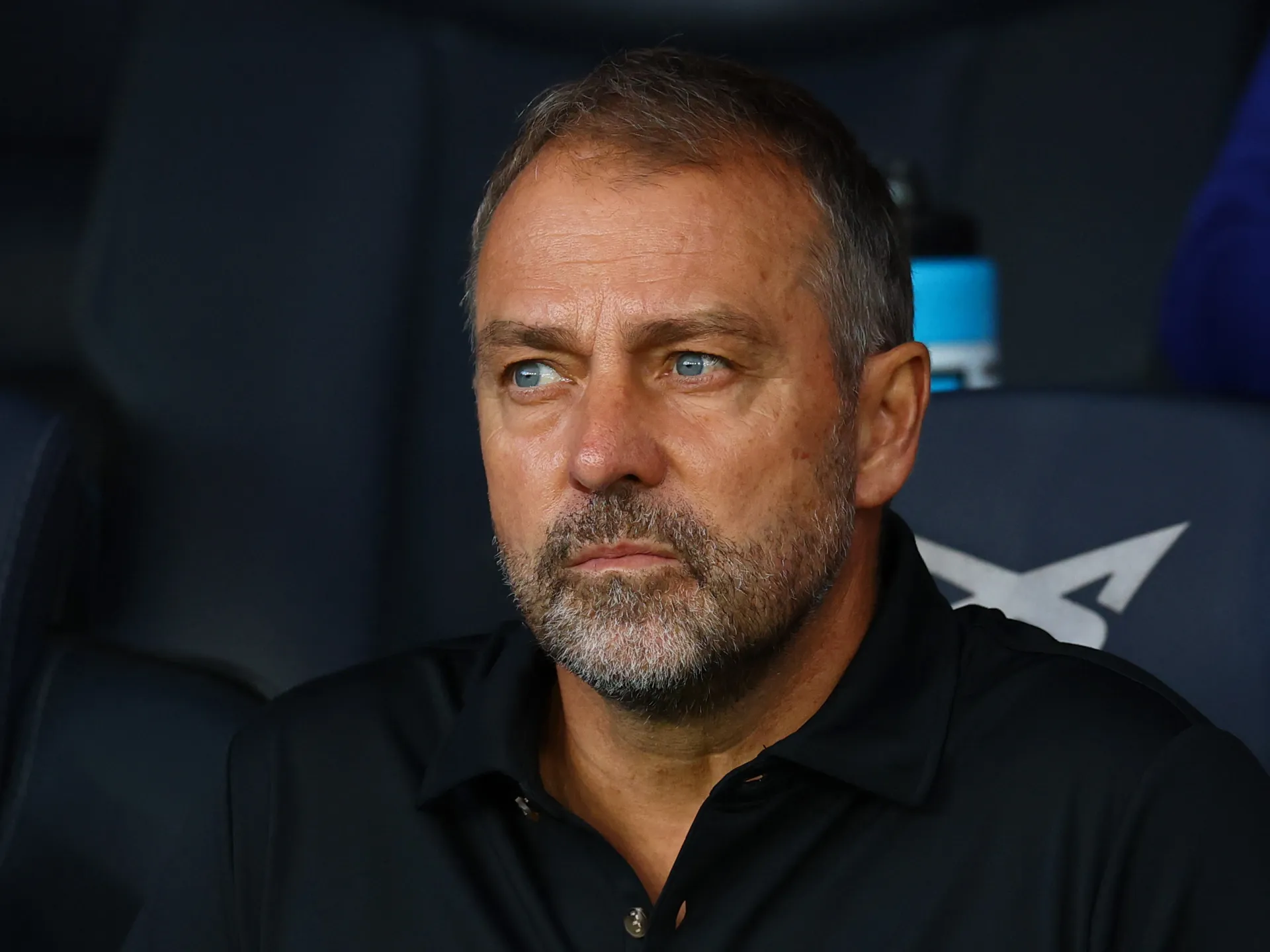
“He was decisive,” Madrid coach Xabi Alonso said. “Kylian has that knack for scoring. The third goal was key, which is why we kept him on the pitch and why he started.”

Talavera cut Madrid’s lead with goals by Nahuel Arroyo in the 80th and Gonzalo Di Renzo in second-half stoppage time, but Madrid held on to avoid the upset that would have put Alonso under increased pressure following a series of disappointing results recently.

A tough save by Madrid goalkeeper Andriy Lunin in the final minute was key to securing Madrid’s win.

Madrid struggled late but had been in control from the start despite playing without a few regular starters.

“In the first half, we controlled the game well and took the lead, but not making it 3-0 left the game open, and it remained that way until the end,” Alonso said. “The second half was competitive. We looked for the third goal earlier and had chances, but it wasn’t to be. It was an exciting tie. It’s a special competition. Objective achieved, and on to the next game.”

Madrid closes 2025 at Sevilla in the Spanish league on Saturday.

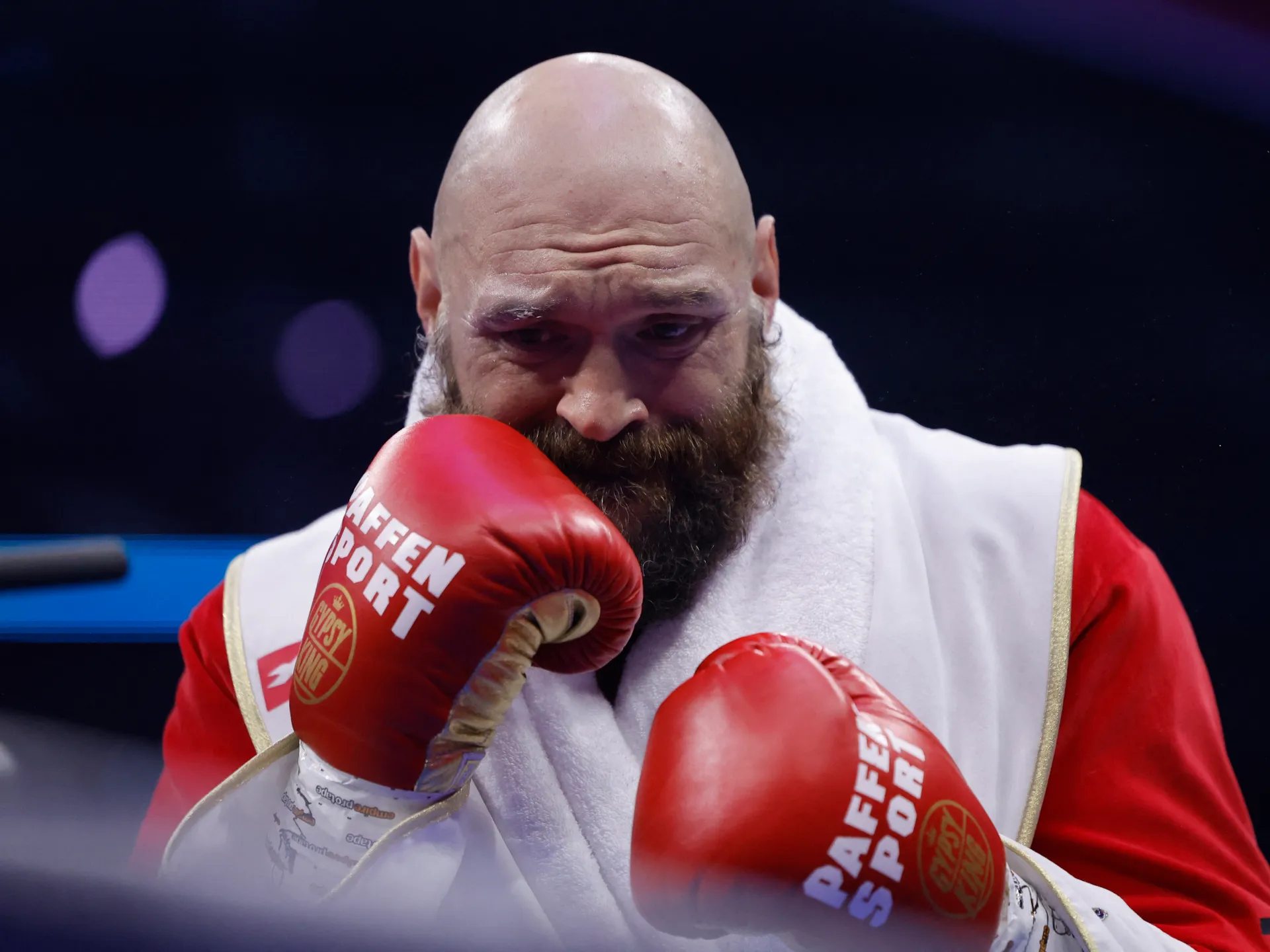
Kylian Mbappe in action.
Mbappe puts Real Madrid 3-1 up against Talavera in the 88th minute [Susana Vera/Reuters]

Source link

Lula threatens to walk away if further delays to EU-Mercosur trade deal | International Trade News

Brazilian president says it is now or never after Italy joins France in saying it is not ready to sign trade deal.

Brazilian President Luiz Inacio Lula da Silva has warned he may abandon a long-awaited trade deal between members of the South American bloc Mercosur and the European Union after key countries sought a delay.

The Brazilian leader issued the threat on Wednesday after Italy joined fellow heavyweight France in saying it was not ready to commit to the pact to create the world’s biggest free-trade area.

Recommended Stories

list of 4 itemsend of list

The EU had expected its 27 member states to approve the deal in time for European Commission President Ursula von der Leyen to fly to Brazil to sign an agreement with the host, along with Mercosur partners Argentina, Paraguay and Uruguay, on Saturday.

“I’ve already warned them: If we don’t do it now, Brazil won’t make any more agreements while I’m president,” Lula told a cabinet meeting.

“We have given in on everything that diplomacy could reasonably concede.”

‘Premature’ to sign: Meloni

The deal, more than two decades in the making, has been keenly backed by economic powerhouse Germany, along with Spain and the Nordic countries, amid rising Chinese competition and recent United States tariffs, which have increased the incentive to diversify trade.

It would allow the EU to export more vehicles, machinery, spirits and wine to Latin America, and more beef, sugar, rice, honey and soya beans to flow in the opposite direction.

France, eager to protect its agriculture industry, had already called for a delay on a vote to approve the deal, and gained the support necessary to potentially block the agreement when Italian Prime Minister Giorgia Meloni said on Wednesday that Rome was also not ready.

“It would be premature to sign the deal in the coming days,” she told parliament, saying that some of the safeguards Italy is seeking on behalf of farmers were yet to be finalised.

She said Italy did not seek to block the deal altogether, and was “very confident” that her government’s concerns would have been addressed to allow it to be signed early next year,

French President Emmanuel Macron told a cabinet meeting on Wednesday that his government would “firmly oppose” any attempts to force through the deal.

Hungary and Poland are also lukewarm on the agreement.

By contrast, German Chancellor Friedrich Merz said Wednesday he would push “intensively” for the bloc to approve the deal by the year’s end, in what he described as a test of the EU’s “ability to act”.

EU reaches agreement on agricultural safeguards

In an effort to allay some of the concerns, the EU struck a provisional deal on Wednesday to set tighter controls on imports of farm products, amid a background of farmer protests against the deal.

It determined the trigger for launching an investigation into such imports if import volumes rose by more than 8 percent per year or prices fell by that amount in one or more EU members.

EU leaders will discuss the matter at a Brussels summit on Thursday, a commission spokesman said.

Source link

PSG beat Flamengo on penalties to win FIFA Intercontinental Cup | Football News

European champions Paris Saint-Germain pushed all the way in Intercontinental Cup final in Qatar by South Americans.

Back-up goalkeeper Matvei Safonov saved four penalties as Paris Saint-Germain edged out Brazilians Flamengo 2-1 in a shootout to win the FIFA Intercontinental Cup final in Qatar.

PSG led through Khvicha Kvaratskhelia before Jorginho’s spot-kick levelled for Flamengo as the game finished 1-1 after extra time on Wednesday.

Recommended Stories

list of 4 itemsend of list

Copa Libertadores winners Flamengo defeated Mexicans Cruz Azul and African champions Pyramids last week to earn the right to face PSG and pushed the European champions all the way with a dogged display.

But Luis Enrique’s men, who received a bye to the final, were indebted to Safonov and followed in the footsteps of Real Madrid, who lifted the inaugural title last year.

PSG thought they had taken the lead in the ninth minute when Fabian Ruiz cleverly hooked the ball into an empty net after Flamengo goalkeeper Agustin Rossi miskicked a clearance while trying to prevent a corner.

But the goal was ruled out by VAR because Rossi had narrowly failed to stop the ball from going out of play.

But PSG did break the deadlock eight minutes before half-time courtesy of another Rossi error.

The Argentinian turned Desire Doue’s low cross, which looked to be too strong for Kvaratskhelia, straight into the Georgian’s pass for the simplest of tap-ins.

Flamengo managed to stay in the game, though, and were awarded a penalty on the hour mark for a foul by Marquinhos on Uruguay midfielder Giorgian de Arrascaeta after a VAR review.

Former Chelsea and Arsenal player Jorginho stepped up to send Safonov the wrong way in trademark fashion.

PSG pressed for a winner, sending on Bradley Barcola and Ousmane Dembele, who set up a last-gasp chance for Marquinhos.

But the centre-back could not react quickly enough to get his effort on target as the ball flashed across goal and the game headed into extra time.

Both teams saw half-chances come and go in the added half-hour, with Dembele flashing a shot narrowly off target in the 116th minute.

That set the stage for Safonov – playing in place of regular first-choice Lucas Chevalier, who is still regaining full fitness after an ankle injury – to steal the headlines and spare the blushes of Dembele and Barcola, who both missed for PSG.

Source link

US Senate passes $901bn defence bill | Military News

Legislation reflects Democrats’ efforts to seek tighter oversight of Trump administration’s military action.

The United States Senate has passed a $901bn bill setting defence policy and spending for the 2026 fiscal year, combining priorities backed by President Donald Trump’s administration with provisions designed to preserve congressional oversight of US military power.

The National Defense Authorisation Act (NDAA) was approved in a 77-20 vote on Wednesday with senators adopting legislation passed by the House of Representatives last month. It now goes to Trump for his signature.

Recommended Stories

list of 4 itemsend of list

Several provisions in the bill reflect efforts by Democratic lawmakers, supported by some Republicans, to constrain how quickly the Trump administration may scale back US military commitments in Europe.

The bill requires the Pentagon to maintain at least 76,000 US soldiers in Europe unless NATO allies are consulted and the administration determines that a reduction would be in the US national interest. The US typically stations 80,000 to 100,000 soldiers across the continent. A similar measure prevents reductions in US troop levels in South Korea below 28,500 soldiers.

Congress also reinforced its backing for Ukraine, authorising $800m under the Ukraine Security Assistance Initiative with $400m allocated for each of the next two years. A further $400m per year was approved to manufacture weapons for Ukraine, signalling continued congressional support for Kyiv and cementing Washington’s commitment to Europe’s defence.

Asia Pacific focus, congressional oversight

The bill also reflects priorities aligned with the Trump administration’s national security strategy, which places the Asia Pacific at the centre of US foreign policy and describes the region as a key economic and geopolitical battleground.

In line with that approach, the NDAA provides $1bn for the Taiwan Security Cooperation Initiative, aimed at strengthening defence cooperation as the US seeks to counter China’s growing military influence.

The legislation authorises $600m in security assistance for Israel, including funding for joint missile defence programmes, such as the Iron Dome, a measure that has long drawn broad bipartisan support in Congress.

The NDAA increases reporting requirements on US military activity, an area in which Democrats in particular have sought greater oversight.

It directs the Department of Defense to provide Congress with additional information on strikes targeting suspected smuggling and trafficking operations in the Caribbean and the eastern Pacific, adding pressure on Defense Secretary Pete Hegseth to provide lawmakers with video footage of US strikes on alleged drug-smuggling boats operating in international waters near Venezuela.

Lawmakers moved to strengthen oversight after a September strike killed two people who had survived an earlier attack on their boat.

Some Democratic lawmakers said they were not briefed in advance on elements of the campaign, prompting calls for clearer reporting requirements.

Sanctions and America First

The legislation repeals the 2003 authorisation for the US invasion of Iraq and the 1991 authorisation for the Gulf War. Supporters from both parties said the repeals reduce the risk of future military action being undertaken without explicit congressional approval.

The bill also permanently lifts US sanctions on Syria imposed during the regime of President Bashar al-Assad after the Trump administration’s earlier decision to temporarily ease restrictions. Supporters argue the move will support Syria’s reconstruction after al-Assad’s removal from power a year ago.

Other provisions align more closely with priorities advanced by Trump and Republican lawmakers under the administration’s America First agenda.

The NDAA eliminates diversity, equity and inclusion offices and training programmes within the Department of Defense, including the role of chief diversity officer. The House Armed Services Committee claims the changes would save about $40m.

The bill also cuts $1.6bn from Pentagon programmes related to climate change. While the US military has previously identified climate-related risks as a factor affecting bases and operations, the Trump administration and Republican leaders have said defence spending should prioritise immediate military capabilities.

Source link

Senate passes $901-billion defense bill that pushes Hegseth for boat strike video

The Senate gave final passage Wednesday to an annual military policy bill that will authorize $901 billion in defense programs while pressuring Defense Secretary Pete Hegseth to provide lawmakers with video of strikes on alleged drug boats in international waters near Venezuela.

The annual National Defense Authorization Act, which raises troop pay by 3.8%, gained bipartisan backing as it moved through Congress. It passed the Senate on a 77-20 vote before lawmakers planned to leave Washington for a holiday break. Two Republicans — Sens. Rand Paul and Mike Lee — and 18 Democrats voted against the bill.

The White House has indicated that it is in line with President Trump’s national security priorities. However, the legislation, which ran more than 3,000 pages, revealed some points of friction between Congress and the Pentagon as the Trump administration reorients its focus away from security in Europe and toward Central and South America.

The bill pushes back on recent moves by the Pentagon. It demands more information on boat strikes in the Caribbean, requires that the U.S. maintain its troop levels in Europe and sends some military aid to Ukraine.

But overall, the bill represents a compromise between the parties. It implements many of Trump’s executive orders and proposals on eliminating diversity and inclusion efforts in the military and grants emergency military powers at the U.S. border with Mexico. It also enhances congressional oversight of the Department of Defense, repeals several years-old war authorizations and seeks to overhaul how the Pentagon purchases weapons as the U.S. tries to outpace China in developing the next generation of military technology.

“We’re about to pass, and the president will enthusiastically sign, the most sweeping upgrades to DOD’s business practices in 60 years,” said Sen. Roger Wicker (R-Miss.), the chair of the Senate Armed Services Committee.

Still, the sprawling bill faced objections from both Democratic and Republican leadership on the Senate Commerce Committee. That’s because the legislation allows military aircraft to obtain a waiver to operate without broadcasting their precise location, as an Army helicopter had done before a midair collision with an airliner in Washington, D.C., in January that killed 67 people.

“The special carve-out was exactly what caused the January 29 crash that claimed 67 lives,” Sen. Ted Cruz (R-Texas), the chair of the Senate Commerce Committee, said at a news conference this week.

Cruz said he was seeking a vote on bipartisan legislation in the next month that would require military aircraft to use a precise location sharing tool and improve coordination between commercial and military aircraft in busy areas.

Boat strike videos

Republicans and Democrats agreed to language in the defense bill that threatened to withhold a quarter of Hegseth’s travel budget until he provided unedited video of the strikes, as well as the orders authorizing them, to the House and Senate Committees on Armed Services.

Hegseth was on Capitol Hill on Tuesday ahead of the bill’s passage to brief lawmakers on the U.S. military campaign in international waters near Venezuela. The briefing elicited contrasting responses from many lawmakers, with Republicans largely backing the campaign and Democrats expressing concern about it and saying they had not received enough information.

The committees are investigating a Sept. 2 strike — the first of the campaign — that killed two people who had survived an initial attack on their boat. The Navy admiral who ordered the “double-tap” strike, Adm. Frank “Mitch” Bradley, also appeared before the committees shortly before the vote Wednesday in a classified briefing that also included video of the strike in question.

Several Republican senators emerged from the meeting backing Hegseth and his decision not to release the video publicly, but other GOP lawmakers stayed silent on their opinion of the strike.

Democrats are calling for part of the video to be released publicly and for every member of Congress to have access to the full footage.

“The American people absolutely need to see this video,” said Sen. Richard Blumenthal (D-Conn.). “I think they would be shocked.”

Congressional oversight

Lawmakers have been caught by surprise by the Trump administration several times in the last year, including by a move to pause intelligence sharing with Ukraine and a decision to reduce U.S. troop presence in NATO countries in eastern Europe. The defense legislation requires that Congress be kept in the loop on decisions like those going forward, as well as when top military brass are removed.

The Pentagon is also required, under the legislation, to keep at least 76,000 troops and major equipment stationed in Europe unless NATO allies are consulted and there is a determination that such a withdrawal is in U.S. interests. Roughly 80,000 to 100,000 U.S. troops are usually present on European soil. A similar requirement keeps the number of U.S. troops stationed in South Korea at 28,500.

Lawmakers are also pushing back on some Pentagon decisions by authorizing $400 million for each of the next two years to manufacture weapons to be sent to Ukraine.

Cuts to diversity and climate initiatives

Trump and Hegseth have made it a priority to purge the military of material and programs that address diversity, anti-racism or gender issues, and the defense bill codifies many of those changes. It would repeal diversity, equity and inclusion offices and trainings, including the position of chief diversity officer. Those cuts would save the Pentagon about $40 million, according to the Republican-controlled House Armed Services Committee.

The U.S. military has long found that climate change is a threat to how it provides national security because weather-related disasters can destroy military bases and equipment. But the bill makes $1.6 billion in cuts by eliminating climate change-related programs at the Pentagon.

Repeal of war authorizations and Syria sanctions

Congress is writing a closing chapter to the war in Iraq by repealing the authorization for the 2003 invasion. Now that Iraq is a strategic partner of the U.S., lawmakers in support of the provision say the repeal is crucial to prevent future abuses. The bill also repeals the 1991 authorization that sanctioned the U.S.-led Gulf War.

The rare, bipartisan moves to repeal the legal justifications for the conflicts signal a potential appetite among lawmakers to reclaim some of Congress’ war powers.

Groves writes for the Associated Press.

Source link

England’s resident doctors begin five-day strike | Health News

The British Medical Association is calling for improved pay and an increase in available jobs for qualified doctors.

Resident doctors in England have begun a five-day strike in a long-running dispute over pay and working conditions.

Prime Minister Keir Starmer addressed the strike during Prime Minister’s Questions in parliament on Wednesday, describing the walkout as “dangerous and utterly irresponsible”.

Recommended Stories

list of 4 itemsend of list

“My message to resident doctors is: don’t abandon patients,” Starmer said. He urged them to “work with us to improve conditions and rebuild the NHS”.

The prime minister also blamed the previous Conservative government for leaving the National Health Service “absolutely on its knees”.

The doctors, formerly known as junior doctors and accounting for nearly half of England’s medical workforce, walked out at 07:00 GMT on Wednesday. The strike is due to continue until 07:00 GMT on Monday.

The strike follows an online ballot organised by the British Medical Association (BMA), the union representing resident doctors. About 30,000 members voted to reject the government’s proposal, triggering the industrial action.

Jack Fletcher, a BMA representative, said the dispute centred on two main issues: pay and a lack of jobs for qualified doctors.

“There is a jobs crisis, where doctors are trained but unable to secure roles, and there is a pay crisis,” Fletcher said while standing on a picket line outside St Thomas’ Hospital in London.

“We must value our doctors in this country,” he added. “Last year, more doctors left the profession than at any point in the past decade.”

The strike comes as the NHS faces increased pressure, with flu-related hospitalisations in England rising by more than 50 percent in early December. Health authorities across Europe have also warned of an unusually early and severe flu season.

NHS England said fewer doctors than usual would be on duty during the strike period, with staff required to prioritise life-saving care.

The BMA is calling for what it describes as a “genuinely long-term plan” to address pay, after years of below-inflation rises. It is also demanding the creation of new training posts, rather than what it says are recycled positions, to allow doctors to specialise and progress.

The government’s most recent offer, made last week, did not include new pay terms. Shortly after taking office, Health Secretary Wes Streeting agreed to a deal offering a 22 percent pay rise, below the 29 percent sought by the union.

Doctors are seeking “full pay restoration”, calling for salaries to return to their 2008 and 2009 levels in real terms after years of erosion by inflation.

Source link

Share a tip on a favourite beach in Europe | Travel

At this time of year, thoughts turn to warmer days and dreamy holidays on sun-drenched beaches. We’d love to hear about favourite beaches you’ve discovered on your travels in Europe (excluding the UK). We’re interested in places beyond the usual tourist haunts – lesser-known bays, coves and sandy stretches overlooked by the holiday crowds. Tell us where it is and what makes it special.

The best tip of the week, chosen by Tom Hall of Lonely Planet wins a £200 voucher to stay at a Coolstays property – the company has more than 3,000 worldwide. The best tips will appear in the Guardian Travel section and website.

Keep your tip to about 100 words

If you have a relevant photo, do send it in – but it’s your words we will be judging for the competition.

We’re sorry, but for legal reasons you must be a UK resident to enter this competition.

The competition closes on Monday 5 January 2026 at 10am GMT

Have a look at our past winners and other tips

Read the terms and conditions here

Share your travel tip using the form below.

Please share your story if you are 18 or over, anonymously if you wish. For more information please see our terms of service and privacy policy.

Send us your travel tip

You can share your travel tips using this form.

Your responses, which can be anonymous, are secure as the form is encrypted and only the Guardian has access to your contributions. We will only use the data you provide us for the purpose of the feature and we will delete any personal data when we no longer require it for this purpose. For alternative ways to get in touch securely please see our tips guide.

If you’re having trouble using the form click here. Read terms of service here and privacy policy here.

Source link

Russia-Ukraine war: List of key events, day 1,392 | Russia-Ukraine war News

These are the key developments from day 1,392 of Russia’s war on Ukraine.

Here is where things stand on Wednesday, December 17:

Fighting

  • Kyiv Mayor Vitalii Klitschko said explosions were heard in the Ukrainian capital and warned people to stay in shelters late on Tuesday night as air defences worked to repel a Russian attack.
  • Russian forces launched a “massive” drone attack on Ukraine’s Sumy region, targeting energy infrastructure and causing electricity blackouts, Governor Oleh Hryhorov said on Telegram late on Tuesday night.
  • Power outages were also reported in the Donetsk region, Ukrainian Deputy Minister of Energy Mykola Kolisnyk said.
  • A Russian attack on electrical substations and other energy infrastructure left 280,000 households in Ukraine’s Odesa region without power, Governor Oleh Kiper wrote on Telegram.
  • Electricity was later restored to 220,000 homes, Kiper said, but extensive work was still needed to repair damaged networks.
  • The Russian-occupied Zaporizhzhia nuclear power plant in Ukraine is currently receiving electricity through only one of two external power lines, the facility’s Russian management said, after the other line was disconnected due to military activity.

  • Russian forces shot down 180 Ukrainian drones in one day, Russia’s Ministry of Defence said, according to the state-run TASS news agency.
  • The ambassador-at-large of the Russian Ministry of Foreign Affairs, Rodion Miroshnik, told TASS that Ukrainian attacks had killed 14 Russian civilians and injured nearly 70, including in the Russian-occupied Kherson and Zaporizhia regions of Ukraine, over the past week.

Ceasefire talks

  • German Chancellor Friedrich Merz shared details about a potential European-led multinational force being considered as part of discussions on security guarantees for Ukraine.
  • “We would secure a demilitarised zone between the warring parties and, to be very specific, we would also act against corresponding Russian incursions and attacks,” Merz told ZDF public television, adding that the talks “we’re not there yet”.

Regional security

  • Bulgaria, Estonia, Finland, Latvia, Lithuania, Poland, Romania and Sweden said in a joint statement on Tuesday that “Russia is the most significant, direct and long-term threat to our security and to peace and stability in the Euro-Atlantic area”.
  • After the Eastern Flank Summit in Helsinki, Finland, Polish Prime Minister Donald Tusk said that the grouping of European countries discussed an “anti-drone wall” that would require “billions in expenditure here”.
  • Germany’s Federal Ministry of Defence said that it ended the deployment to Poland of its Patriot systems and soldiers from its Air and Missile Defence Task Force, after the mission concluded as planned.
  • UK Secretary of State for Defence John Healey said the United Kingdom is spending 600 million pounds (more than $800 million) to buy “thousands of air defence systems, missiles, and automated turrets to shoot down drones” for Ukraine, during a virtual meeting of the Ukraine Defence Contact Group, according to the Kyiv Independent news outlet.
  • German Defence Minister Boris Pistorius told the same meeting that Germany would “transfer a significant number of AIM-9 Sidewinder missiles” to Ukraine next year.

Reparations

  • The leaders of 34 European countries signed an agreement in The Hague to create an International Claims Commission for Ukraine to seek compensation for hundreds of billions of dollars in damage from Russian attacks.
  • “Every Russian war crime must have consequences for those who committed them,” Ukrainian President Volodymyr Zelenskyy said before signing the agreement.
  • “The goal is to have validated claims that will ultimately be paid by Russia. It will really have to be paid by Russia,” Dutch Minister of Foreign Affairs  David van Weel said.

Source link

Thousands protest in Slovakia against Fico government’s judicial reforms | Protests News

Protesters called on President Pellegrini, usually an ally of Prime Minister Fico, to veto the changes.

Thousands of people have rallied across Slovakia to protest against changes to the judicial system that opposition politicians and critics say are destroying the rule of law, Slovak media reported.

Protesters filled much of a central square in the capital of Bratislava, and there were protests in eight other cities on Tuesday.

Recommended Stories

list of 3 itemsend of list

The biggest opposition party, Progressive Slovakia, called the protest after Prime Minister Robert Fico‘s leftist-nationalist government pushed legislative changes through parliament last week that dismantle the whistleblower protection agency and change the way the state deals with crown witnesses.

“They took a chainsaw to the rule of law,” Michal Simecka, the leader of Progressive Slovakia, told the crowd in Bratislava, according to a live video that streamed online.

“Slovakia is the only country where the government approves laws to make life easier for criminals and mafia,” he also said.

People carried Slovak and European Union flags as well as placards with slogans, such as “Fico’s government is helping Mafia”, and chanted “Enough of Fico” and “Shame!”

A protester holds a banner reading "For Christmas I wish to get a reason to be proud that I live here" as demonstrators gather for a protest against the abolition of the whistleblower protection office and penal code changes in Bratislava, Slovakia on December 15, 2025.
A protester holds a banner reading, ‘For Christmas I wish to get a reason to be proud that I live here”, at a demonstration against the abolition of the whistleblower protection office and penal code changes [AFP]

Fico’s critics claim that, under his government, Slovakia is following Hungary’s lead under Prime Minister Viktor Orban.

Fico’s administration argues that the old whistleblower agency was politically abused. The administration has also weakened criminal codes for financial crimes, revamped the public broadcaster and pushed constitutional changes asserting national sovereignty over some EU laws, which has raised European Commission scrutiny.

Fico’s government has faced several large protests since coming to power in 2023. Tuesday’s rally was one of the biggest since last February, when tens of thousands demonstrated against what critics say is an increasingly pro-Russian foreign policy.

A man holds a banner reading "Gangster Fico is destroying Slovakia" during a protest against the abolition of the whistleblower protection office and penal code changes in Bratislava, Slovakia on December 15, 2025.
A man holds a banner, reading ‘Gangster Fico is destroying Slovakia’, during a protest against the abolition of the whistleblower protection office and penal code changes [AFP]

Source link

UK announces independent probe into foreign interference in politics | Politics News

Minister says probe in response to case of ex-Reform UK lawmaker Nathan Gill, jailed for taking pro-Russia bribes.

The United Kingdom is launching an independent investigation into foreign interference in British politics, just weeks after a former Reform UK lawmaker was jailed for more than 10 years for taking bribes to make pro-Russia statements.

Steve Reed, the UK’s secretary of state for housing, communities and local government, said on Tuesday that he had ordered the probe in response to the case of Nathan Gill, a former Member of the European Parliament and ex-leader of Reform UK in Wales.

Recommended Stories

list of 3 itemsend of list

“A British politician took bribes to further the interests of the Russian regime,” Reed said in the House of Commons. “This conduct is a stain on our democracy. The independent review will work to remove that stain.”

Gill was sentenced to 10 years and six months in prison on November 21.

He pleaded guilty in September to accepting thousands of euros from a pro-Russian politician in Ukraine between 2018 and 2019, and making scripted statements and television appearances at his behest.

The case had spurred widespread condemnation from across the political spectrum, with Nigel Farage’s Reform UK party – which has been leading most polls – last month describing Gill’s actions as “reprehensible, treasonous and unforgivable”.

On Tuesday, Conservative MP Paul Holmes welcomed the independent review into foreign interference as a necessary step.

“Protecting the integrity of our democratic system from foreign interference is not a partisan issue. It goes to the heart of public trust in our elections,” Holmes told the House.

“Interference in our elections from foreign actors is something that we must all be vigilant against.”

Reed, the housing minister, said the independent probe would be led by Philip Rycroft, former UK permanent secretary for the Department for Exiting the European Union.

“The purpose of the review is to provide an in-depth assessment of the current financial rules and safeguards and make recommendations,” said Reed, adding that Rycroft has been asked to report his findings to the government by the end of March.

The minister noted that the British government put forward a strategy “for modern and secure elections” earlier this year in a push to address foreign interference and public distrust in the electoral system, among other issues.

But Reed said on Tuesday that “events have shown that we need to consider whether our firewall is enough”.

“The independent review will look at this,” he said, including by evaluating the UK’s existing political finance laws, systems to identify and mitigate foreign interference, and safeguards against illicit funding streams.

Source link

Paul Doyle, Liverpool football parade driver, jailed for over 20 years | Football News

A British driver who injured more than 130 people by ploughing his car into a crowd of Liverpool football fans during a championship victory parade in May has been sentenced to 21-and-a-half years.

Paul Doyle, 54, rammed his minivan into the mass of fans in the city of Liverpool simply because he lost his temper, according to prosecutors. Last month, he pleaded guilty to charges including nine counts of causing grievous bodily harm with intent and 17 counts of attempting to cause grievous bodily harm.

“The footage is truly shocking,” Judge Andrew Menary said on Tuesday.

“It is difficult if not impossible to convey in words alone the scenes of devastation you caused. It shows you deliberately accelerating into groups of fans, time and time again.”

More to come…

Source link

A Place in the Sun experts reveal the best places to buy outside of Europe for a cheap winter sun home next year

WHEN it comes to A Place in the Sun most house hunters are on the lookout for a bargain along the Spanish coast.

But actually, there are plenty of affordable spots to be found outside of Europe – from beautiful Caribbean islands to cities less than an hour to huge theme parks.

A Place in the Sun experts reveal their best destinations to buy property outside of EuropeCredit: A Place in the Sun
Jean Johansson suggests looking further afield to the CaribbeanCredit: A Place in the Sun

Sun Travel got the inside scoop from A Place in the Sun presenters Laura Hamilton, Jean Johansson and Craig Rowe on where Brits should look in 2026 for cheap property outside of Europe.

Jean told us: “If you can stretch to the Caribbean, St Lucia has blown me away – and it’s quite cheap compared to Europe to eat out.

“If you want a paradise lifestyle, you can fly out this time of year and get beautiful weather. It’s so laidback too and everyone slows right down.

“The last time I was there for A Place in the Sun, one couple had a budget of £200,000 and they bought an amazing two-bedroom apartment on a little island that you have to get to via a water taxi – it was just absolutely idyllic.

Read More on Winter Holidays

STREET SMARTS

I visit New York 6 times a year – my expert budget guide including £1 pizzas


SNOW WAY

All the best Xmas days out under £10 including FREE ice skating & Santa’s grotto

“If you’re willing to have that Caribbean way of life and something a bit different, your money can go far.”

Another destination that is becoming more popular with Brits as being an affordable holiday spot is Thailand.

Craig said: “I’ve not done any shows in Thailand yet – I think the show may have gone there a long time ago, but that’s somewhere else I think has great value property.

“It might be far, around 14 hours on a plane, but in terms of investment, and perhaps if you’re retiring and can stay there for months at a time, it’s a great option.”

Property prices can vary in Thailand depending on the destination with Chiang Mai being more affordable than the beachside property in Phuket.

Once you get there, the likes of food are so much cheaper – you can pick up a meal from as cheap as 150baht (£3.55).

St. Lucia still has some affordable property – and is a great spot for winter sunCredit: Alamy

But out of all destinations, there was one that every presenter mentioned as being one of the best places to invest – and for a good price next year.

Laura told us: “Florida is a place offering exciting opportunities and it’s always been a place we’ve visited on A Place in the Sun.

“I filmed there just before Christmas and it’s quite interesting. In Florida there are lots of properties that 20 years ago were prime luxury houses along the 192 route which is within 30 minutes to the Disney Parks.

“The location is still amazing, but the houses are a bit tired, so the rental opportunities are incredible. In terms of being able to make properties over and add value to them, I think that’s an exciting market.”

Brits should be looking at property in Florida in cities like Fort LauderdaleCredit: Alamy

Jean added that she did some Florida shows last year where she headed to Fort Lauderdale.

“I think Florida’s always been popular and it’s nice for us to get away from Orlando and away from the Disney parks.

“Fort Lauderdale is a dream with the classic American lifestyle up there – locals start their day with a coffee on the beautiful promenades and there’s a lovely community feel.”

According to Palm Paradise Realty Group, some of the most affordable areas in Fort Lauderdale include Lake Aire Palm View and Flagler Village where the average property price is $343,000 (£255,543).

New episodes of A Place in the Sun will return from Sunday 21 December, and you can catch up on previous episodes on Channel4.com.

A Place in the Sun experts reveal coastline worth buying on NOW where you can ‘still get bargains’ – and flights are £15…

When we asked Laura HamiltonCraig Rowe and Jean Johansson where exactly Brits looking for a holiday home should buy right now in Europe – they all had the same answer.

Laura Hamilton, who has been working on the show since 2012, explained: “There are still places in Spain which are great places to invest, especially around Costa Tropical.

“The area has increased in value and is still going up. It’s the opposite side of Málaga to Marbella and Puerto Banús, and it’s much cheaper.

“If you go out to a bar or a restaurant, the prices will be significantly cheaper but still great quality.”

Laura revealed that the Costa Tropical has accessibility to both the mountains and the beach.

She added that it’s marketed so that “you can be on the slopes in the morning and beach in the afternoon”.

To get from the beaches to the base of the Sierra Nevada mountains takes just an hour and a half in the car.

Laura continued: “I love that part of Spain and the scenery around Granada is spectacular. If you love the beach, skiing and hiking then it’s a stunning part of Spain – but prices are on the rise.”

Also in southern Spain is the region that presenter Craig Rowe recommended and like Costa Tropical, the region sits between the coast and Sierra Nevada mountains.

Craig told us: “Costa Almería in Spain is really good, especially for anyone on a lower budget.”

Jean Johansson, who has been working on the show for seven years, the same question, she agreed with her colleagues.

Jean said: “It’s got to be Murcia and the south of Spain because you can still get bargains there.”

“When I started on the show seven years ago the area wasn’t as popular at all, but now people are really understanding the value for money.”

For those jumping in to buy a property abroad, one woman who was on A Place In The Sun and bought her dream Spanish home for £45k – I have one regret and need to warn others of pitfalls.

And another presenter from A Place in the Sun took on her own renovation project on the Costa del Sol.

A Place in the Sun experts give their best locations for buying outside of EuropeCredit: A Place in the Sun

Source link

Venezuelan opposition leader Machado injured on covert Nobel Prize trip | Nicolas Maduro News

President Maduro’s rival was hurt as she sped on a boat through choppy waters in secret escape from hiding to reach Oslo ceremony.

Venezuelan opposition leader Maria Corina Machado was injured as she made a clandestine dash to collect her Nobel Peace Prize last week, her spokesperson has said.

Claudia Macero said late on Monday that the right-wing opposition figure fractured a vertebra during a choppy boat ride that had formed part of a risky cloak-and-dagger journey to reach the Norwegian capital, Oslo, for the Nobel award ceremony.

Recommended Stories

list of 4 itemsend of list

Machado has been in hiding since she was banned from running in Venezuela’s July 24 presidential election, fearing that her life is under threat from long-time Venezuelan President Nicolas Maduro.

“The vertebra fracture is confirmed,” Macero told the AFP news agency, adding that no further details would be released beyond what had been reported in the Norwegian daily Aftonbladet.

The newspaper had earlier reported that the 58-year-old Machado sustained the fracture while crossing the sea in a small fishing boat battered by high waves.

The opposition leader was examined by doctors at Oslo University Hospital during her time in the city.

Dangerous dash

Media reports in the United States said Machado’s escape last week involved wearing a disguise, including a wig, and travelling from a small Venezuelan fishing village on a wooden boat to the island of Curacao, before boarding a private plane to Norway.

Machado has said she feared for her life during the voyage, which saw US forces situated in the Caribbean alerted to avoid a strike on the vessel.

Several similar boats have been attacked in recent months in a campaign that the Trump administration asserts is a bid to avert drug smuggling into the US.

Maduro has accused Washington of seeking to engineer regime change in the hope of seizing Venezuela’s large oil reserves.

The leader of the opposition Vente Venezuela party was attempting to reach the ceremony at which she was due to be presented with the Nobel Peace Prize.

She was announced the winner of the prestigious award in October, with the selection committee praising her role in the country’s opposition movement and her “steadfast” support for democracy.

‘Broken soul’

Despite her speedy trip, Machado failed to reach Oslo in time for the ceremony. Her daughter received the award on her behalf and delivered a speech that slammed Maduro and warned of the need to fight for democracy.

Hours after the ceremony, early on Thursday morning, Machado greeted supporters from an Oslo hotel balcony in what was her first public appearance in a year.

Despite the fracture, she climbed over a barrier to greet supporters outside the hotel, AFP reported.

Machado said authorities in Venezuela would have attempted everything possible to prevent her journey to Norway.

Appearing set to challenge Maduro in the vote, the opposition leader was barred from running in the country’s presidential election in July last year.

She then announced that she would be going into hiding within Venezuela due to fear for her life while Maduro is in power.

The Venezuelan president commented dismissively on the reports of Machado’s injury on television on Monday.

Machado “says she has a broken vertebra”, he said. “What’s broken is her brain and her soul because she’s a demon – she hates Venezuela.”

Source link

Has Benin’s foiled coup made ECOWAS a West African heavyweight once more? | Politics News

When armed soldiers in the small West African nation of Benin appeared on national television on December 7 to announce they had seized power in a coup, it felt to many across the region like another episode of the ongoing coup crisis that has seen several governments toppled since 2020.

But the scenes played out differently this time.

Recommended Stories

list of 4 itemsend of list

Amid reports of gunfire and civilians scampering to safety in the economic capital, Cotonou, Beninese and others across the region waited with bated breath as conflicting intelligence emerged. The small group of putschists, on the one hand, declared victory, but Benin’s forces and government officials said the plot had failed.

By evening, the situation was clear – Benin’s government was still standing. President Patrice Talon and loyalist forces in the army had managed to hold control, thanks to help from the country’s bigger neighbours, particularly its eastern ally and regional power, Nigeria.

While Talon now enjoys victory as the president who could not be unseated, the spotlight is also on the Economic Community of West African States (ECOWAS). The regional bloc rallied to save the day in Benin after their seeming resignation in the face of the crises rocking the region, including just last month, when the military took power in Guinea-Bissau.

This time, though, after much criticism and embarrassment, ECOWAS was ready to push back against the narrative of it being an ineffective bloc by baring its teeth and biting, political analyst Ryan Cummings told Al Jazeera.

“It wanted to remind the region that it does have the power to intervene when the context allows,” Cummings said. “At some point, there needed to be a line drawn in the sand [and] what was at stake was West Africa’s most stable sovereign country falling.”

Benin coup
People gather at the market of Dantokpa, two days after Benin’s forces thwarted the attempted coup against the government, in Cotonou, December 9, 2025 [Charles Placide Tossou/Reuters]

Is a new ECOWAS on the horizon?

Benin’s military victory was an astonishing turnaround for an ECOWAS that has been cast as a dead weight in the region since 2020, when a coup in Mali spurred an astonishing series of military takeovers across the region in quick succession.

Between 2020 and 2025, nine coup attempts toppled five democratic governments and two military ones. The latest successful coup, in Guinea-Bissau, happened on November 28. Bissau-Guineans had voted in the presidential election some days before and were waiting for the results to be announced when the military seized the national television station, detained incumbent President Umaro Sissoco Embalo, and announced a new military leader.

ECOWAS, whose high-level delegation was in Bissau to monitor the electoral process when the coup happened, appeared on the back foot, unable to do much more than issue condemnatory statements. Those statements sounded similar to those it issued after the coups in Mali, Burkina Faso, Niger, and Guinea. The bloc appeared a far cry from the institution that, between 1990 and 2003, successfully intervened to stop the civil wars in Liberia and Sierra Leone, and later in the Ivory Coast. The last ECOWAS military intervention, in 2017, halted Gambian dictator Yahya Jammeh’s attempt to overturn the election results.

Indeed, ECOWAS’s success in its heyday hinged on the health of its members. Nigeria, arguably ECOWAS’s backbone, whose troops led the interventions in Liberia and Sierra Leone, has been mired in insecurity and economic crises of its own lately. In July 2023, when Nigeria’s President Bola Ahmed Tinubu was the ECOWAS chair, he threatened to invade Niger after the coup there.

It was disastrous timing. Faced with livelihood-eroding inflation and incessant attacks by armed groups at home, Nigerians were some of the loudest voices resisting an invasion. Many believed Tinubu, sworn in just months earlier, had misplaced his priorities. By the time ECOWAS had finished debating what to do weeks later, the military government in Niger had consolidated support throughout the armed forces and Nigeriens themselves had decided they wanted to back the military. ECOWAS and Tinubu backed off, defeated.

Niger left the alliance altogether in January this year, forming the Alliance of Sahel States (AES) with fellow military governments in Mali and Burkina Faso. All three share cultural and geographic affinities, but are also linked by their collective dislike for France, the former colonial power, which they blame for interfering in their countries. Even as they battle rampaging armed groups like Jama’at Nusrat al-Islam wal-Muslimin (JNIM), the three governments have cut ties with French forces formerly stationed there and welcomed Russian fighters whose effectiveness, security experts say, fluctuates.

ecowas
Sierra Leone’s President Julius Maada Bio, who chairs ECOWAS, walks with Guinea-Bissau’s transitional president, Major-General Horta Inta-A, during a meeting in Bissau, Guinea-Bissau, on December 1, 2025 [Delcyo Sanca/Reuters]

But Benin was different, and ECOWAS appeared wide awake. Aside from the fact that it was one coup too far, Cummings said, the country’s proximity to Nigeria, and two grave mistakes the putschists made, gave ECOWAS a fighting chance.

The first mistake was that the rebels had failed to take Talon hostage, as is the modus operandi with putschists in the region. That allowed the president to directly send an SOS to his counterparts following the first failed attacks on the presidential palace at dawn.

The second mistake was perhaps even graver.

“Not all the armed forces were on board,” Cummings said, noting that the small group of about 100 rebel soldiers had likely assumed other units would fall in line but had underestimated how loyal other factions were to the president. That was a miscalculation in a country where military rule ended in 1990 and where 73 percent of Beninese believe that democracy is better than any other form of government, according to poll site Afrobarometer. Many take particular pride in their country being hailed as the region’s most stable democracy.

“There was division within the army, and that was the window of opportunity that allowed ECOWAS to deploy because there wasn’t going to be a case of ‘If we deploy, we will be targeted by the army’. I dare say that if there were no countercoup, there was no way ECOWAS would have gotten involved because it would have been a conventional war,” Cummings added.

Quickly reading the room, Benin’s neighbours reacted swiftly. For the first time in nearly a decade, the bloc deployed its standby ground forces from Nigeria, Ghana, the Ivory Coast, and Sierra Leone. Abuja authorised air attacks on rebel soldiers who were effectively cornered in a military base in Cotonou and at the national TV building, but who were putting up a last-ditch attempt at resistance. France also supported the mission by providing intelligence. By nightfall, the rebels had been completely dislodged by Nigerian jets. The battle for Cotonou was over.

At least 14 people have since been arrested. Several casualties were reported on both sides, with one civilian, the wife of a high-ranking officer marked for assassination, among the dead. On Wednesday, Beninese authorities revealed that the coup leader, Colonel Pascal Tigri, was hiding in neighbouring Togo.

At stake for ECOWAS was the risk of losing yet another member, possibly to the landlocked AES, said Kabiru Adamu, founder of Abuja-based Beacon Security intelligence firm. “I am 90 percent sure Benin would have joined the AES because they desperately need a littoral state,” he said, referring to Benin’s Cotonou port, which would have expanded AES export capabilities.

Nigeria could also not afford a military government mismanaging the deteriorating security situation in northern Benin, as has been witnessed in the AES countries, Cummings said. Armed group JNIM launched its first attack on Nigerian soil in October, adding to Abuja’s pressures as it continues to face Boko Haram in the northeast and armed bandit groups in the northwest. Abuja has also come under diplomatic fire from the US, which falsely alleges a “Christian genocide” in the country.

“We know that this insecurity is the stick with which Tinubu is being beaten, and we already know his nose is bloodied,” Cummings said.

Revelling in the glory of the Benin mission last Sunday, Tinubu praised Nigeria’s forces in a statement, saying the “Nigerian armed forces stood gallantly as a defender and protector of constitutional order”. A group of Nigerian governors also hailed the president’s action, and said it reinforced Nigeria’s regional power status and would deter further coup plotters.

ECOMOG
Nigerian ECOWAS Ceasefire Monitoring Group (ECOMOG) soldiers guard a corner in downtown Monrovia during fighting between militias loyal to Charles Taylor and Roosevelt Johnson in Liberia in 1996. Between 1990-2003, ECOWAS successfully intervened to help stop the Liberian civil war [File: Reuters]

Not yet out of the woods

If there is a perception that ECOWAS has reawakened and future putschists will be discouraged, the reality may not be so positive, analysts say. The bloc still has much to do before it can be taken seriously again, particularly in upholding democracy and calling out sham elections before governments become vulnerable to mass uprisings or coups, Beacon Security’s Adamu said.

In Benin, for example, ECOWAS did not react as President Talon, in power since 2016, grew increasingly autocratic, barring opposition groups in two previous presidential elections. His government has again barred the main opposition challenger, Renaud Agbodjo, from elections scheduled for next April, while Talon’s pick, former finance minister Romuald Wadagni, is the obvious favourite.

“It’s clear that the elections have been engineered already,” Adamu said. “In the entire subregion, it’s difficult to point to any single country where the rule of law has not been jettisoned and where the voice of the people is heard without fear.”

ECOWAS, Adamu added, needs to proactively re-educate member states on democratic principles, hold them accountable when there are lapses, as in the Benin case, and then intervene when threats emerge.

The bloc appears to be taking heed. On December 9, two days after the failed Benin coup, ECOWAS declared a state of emergency.

“Events of the last few weeks have shown the imperative of serious introspection on the future of our democracy and the urgent need to invest in the security of our community,” Omar Touray, ECOWAS Commission president, said at a meeting in the Abuja headquarters. Touray cited situations that constitute coup risks, such as the erosion of electoral integrity and mounting geopolitical tensions, as the bloc splits along foreign influences. Currently, ECOWAS member states have stayed close to Western allies like France, while the AES is firmly pro-Russia.

Another challenge the bloc faces is managing potential fallout with the AES states amid France’s increasing closeness with Abuja. As Paris faces hostility in Francophone West Africa, it has drawn closer to Nigeria, where it does not have the same negative colonial reputation, and which it perceives as useful for protecting French business interests in the region, Cummings said. At the same time, ECOWAS is still hoping to woo the three rogue ex-members back into its fold, and countries like Ghana have already established bilateral ties with the military governments.

“The challenge with that is that the AES would see the intervention [in Benin] as an act not from ECOWAS itself but something engineered by France,” Adamu said. Seeing France instigating an intervention which could have benefitted AES reinforces their earlier complaints that Paris pokes its nose into the region’s affairs, and could push them further away, he said.

“So now we have a situation where they feel like France did it, and the sad thing is that we haven’t seen ECOWAS dispel that notion, so the ECOWAS standby force has [re]started on a contentious step,” Adamu added.

Source link

Russian court designates punk band Pussy Riot as ‘extremist’ group | Vladimir Putin News

Exiled punk band says its members are proud to be branded ‘extremists’ and hits back at Putin as an ‘aging sociopath’.

A Moscow district court has designated Russian punk protest band Pussy Riot as an extremist organisation, according to the state TASS news agency.

The exiled group’s lawyer, Leonid Solovyov, told TASS that Monday’s court ruling was made in response to claims brought by the Russian Prosecutor General’s Office and that the band plans to appeal. According to TASS, the case was heard in a closed session at the request of the Prosecutor General’s Office.

Recommended Stories

list of 4 itemsend of list

The court said that it had upheld prosecution submissions “to recognise the punk band Pussy Riot as an extremist organisation and ban its activities on the territory of the Russian Federation”, the AFP news agency reports.

An official Pussy Riot social media account shared a statement, responding defiantly to the ruling, saying the band’s members, who have lived in exile for years, were “freer than those who try to silence us”.

“We can say what I think about putin — that he is an aging sociopath spreading his venom around the world like cancer,” the statement said.

“In today’s Russia, telling the truth is extremism. So be it – we’re proud extremists, then.”

The group’s designation will make it easier for the authorities to go after the band’s supporters in Russia or people who have worked with them in the past.

“This court order is designed to erase the very existence of Pussy Riot from the minds of Russians,” the band said. “Owning a balaclava, having our song on your computer, or liking one of our posts could lead to prison time.”

According to TASS, earlier reports said that the Prosecutor General’s Office had brought the case over Pussy Riot’s previous actions, including at Christ the Saviour Cathedral in February 2012, and the World Cup Final in Moscow in 2018.

The band’s members have already served sentences for the 2012 protest at the cathedral in Moscow, where they played what they called a punk prayer, “Mother of God, Cast Putin Out!”

Nadezhda Tolokonnikova and Maria Alyokhina, who were jailed for two years on hooliganism charges over the cathedral protest, were released as part of a 2013 amnesty, which extended to some 26,000 people facing prosecution from Russian authorities, including 30 Greenpeace crew members.

In September, a Russian court handed jail terms to five people linked with Pussy Riot – Maria Alyokhina, Taso Pletner, Olga Borisova, Diana Burkot and Alina Petrova – after finding them guilty of spreading “false information” about the Russian military, news outlet Mediazona reported. All have said the charges against them are politically motivated.

Mediazona was founded by Alyokhina alongside fellow band member Tolokonnikova.

The news outlet says that it is continuing to maintain a verified list of Russian military deaths in Moscow’s war on Ukraine.

“We have confirmed 153,000 names, each supported by evidence, context, and documentation,” Mediazona said on Monday.


Source link

Russia-Ukraine war: List of key events, day 1,391 | Russia-Ukraine war News

These are the key developments from day 1,391 of Russia’s war on Ukraine.

Here is where things stand on Tuesday, December 16:

Fighting

  • A Russian drone attack killed a 62-year-old Ukrainian man as he was riding a bicycle in the Velyka Pysarivka community of Ukraine’s Sumy region, Governor Oleh Hryhorov said in a post on the Telegram messaging app.
  • Russian forces launched 850 attacks on Ukraine’s Zaporizhia region in a single day, injuring 14 people and damaging houses, cars and infrastructure, Governor Ivan Fedorov said on Telegram.
  • Russian forces injured five people in attacks on Ukraine’s Dnipropetrovsk region, and six people in the Kherson region in the past day, local officials said, according to the Ukrainian news agency Ukrinform.
  • In Dnipropetrovsk, those injured included a firefighter and factory worker, hurt after Russian forces launched a second attack on a factory in the Synelnykivskyi district, as rescuers tried to respond to a fire caused by an earlier Russian attack, the State Emergency Service of Ukraine reported on its website.
  • Russian attacks caused power outages in Ukraine’s capital, Kyiv, as well as the Donetsk and Dnipropetrovsk regions, the Ukrainian energy company NPC Ukrenergo said on Facebook.
  • Ukraine claimed that underwater drones had, for the first time in the war, struck a Russian submarine docked in the Black Sea port of Novorossiysk.
  • The head of Russia’s Black Sea Fleet press service, Aleksei Rulyov, denied that the underwater drone attack was successful. “Not a single ship or submarine of the Black Sea Fleet located at the base in Novorossiysk Bay was damaged,” he said. “The enemy’s attempt at sabotage through underwater drones failed to achieve its aims.”

Ceasefire talks

  • US President Donald Trump said a deal to end Russia’s war in Ukraine was “closer than ever” after American, Ukrainian, European and NATO leaders met in Berlin for hours of talks on a potential settlement, hosted by German Chancellor Friedrich Merz.
  • European leaders issued a joint statement after the talks, saying that any decisions on potential Ukrainian territorial concessions to Russia can only be made by the people of Ukraine, and once robust security guarantees are in place for Kyiv.
  • They also said that US and European leaders had agreed to “work together to provide robust security guarantees”, including a European-led “multinational force” made up of nations willing to assist “in securing Ukraine’s skies, and in supporting safer seas, including through operating inside Ukraine”.
  • Speaking at a news conference after the talks, Merz said that the US had offered “considerable” security guarantees, and that although there is now a “chance for a real peace process”, “territorial settlement remains a key question”.

Regional security

  • Russian Minister of Foreign Affairs Sergey Lavrov called “the EU’s aggressive actions the main threat in the world at the moment”, and claimed that the US is trying to put Europe “in its place”, in an interview with Iranian state television.
  • Germany’s lower house of parliament, the Bundestag, suffered a major email outage. Officials told UK newspaper The Financial Times that they suspect it was a cyberattack, while the Ukraine ceasefire talks were taking place in Berlin.
  • Air Chief Marshal Sir Richard Knighton, the new head of the UK’s armed forces, has called for “national resilience” in the face of a “growing” risk from Russia. “It means more people being ready to fight for their country,” Knighton said of the threat from Moscow, while also referring to recent comments from his French counterpart, Fabien Mandon, who said France must be ready to “lose its children”.

Source link

Trump says deal to end Ukraine war ‘closer than ever’ after Berlin talks | Russia-Ukraine war News

US President Donald Trump has said that an agreement to end Russia’s war on Ukraine is “closer than ever” after key leaders held talks in Berlin, but several officials said that significant differences remain over territorial issues.

Trump told reporters in the Oval Office on Monday that he had “very long and very good talks” with Ukrainian President Volodymyr Zelenskyy and the leaders of France, Germany, the United Kingdom and NATO.

Recommended Stories

list of 4 itemsend of list

“We’re having tremendous support from European leaders. They want to get it [the war] ended also,” he said.

“We had numerous conversations with President [Vladimir] Putin of Russia, and I think we’re closer now than we have been, ever, and we’ll see what we can do.”

Zelenskyy had earlier said that negotiations with US and European leaders were difficult but productive.

The high-level discussions, involving Zelenskyy, a US delegation led by envoy Steve Witkoff, Trump’s son-in-law, Jared Kushner, and European leaders, took place in Berlin over two days amid mounting pressure from Washington for Kyiv to make concessions to Moscow to end one of Europe’s deadliest conflicts since World War II.

In a statement following the talks, European leaders said they and the US were committed to working together to provide “robust security guarantees” to Ukraine, including a European-led “multinational force Ukraine” supported by the US.

They said the force’s work would include “operating inside Ukraine” as well as assisting in rebuilding Ukraine’s forces, securing its skies and supporting safer seas. They said that Ukrainian forces should remain at a peacetime level of 800,000.

Two US officials, speaking to the Reuters news agency, described the proposed protections as “Article 5-like”, a reference to NATO’s Article 5 mutual defence pledge.

Ukraine had earlier signalled it may be willing to abandon its ambition to join the NATO military alliance in exchange for firm Western security guarantees.

Speaking to reporters in Berlin, Zelenskyy said that Kyiv needed a clear understanding of the security guarantees on offer before making any decisions on territorial control under a potential peace settlement. He added that any guarantees must include effective ceasefire monitoring.

Ukrainian officials have been cautious about what form such guarantees could take. Ukraine received security assurances backed by the US and Europe after gaining independence in 1991, but those did not prevent Russia’s invasions in 2014 and 2022.

German Chancellor Friedrich Merz said Washington had offered “considerable” security guarantees during the Berlin talks.

“What the US has placed on the table here in Berlin, in terms of legal and material guarantees, is really considerable,” Merz said at a joint news conference with Zelenskyy.

“We now have the chance for a real peace process,” he said, adding that territorial arrangements remain a central issue. “Only Ukraine can decide about territorial concessions. No ifs or buts.”

Merz also said it was essential for the European Union to reach an agreement on using frozen Russian assets to support Ukraine to demonstrate to Moscow that continuing the war is futile. He warned that EU members must share the risks involved in appropriating those assets, or risk damaging the bloc’s reputation.

Meanwhile, the EU has adopted new sanctions targeting companies and individuals accused of helping Russia circumvent Western restrictions on oil exports that help finance the war.

In Moscow, Kremlin spokesperson Dmitry Peskov said that Putin was “open to peace and serious decisions” but opposed to what he described as “temporary respites and subterfuges”.

Reporting from Berlin, Al Jazeera’s Dominic Kane said the outcome of the talks remains unclear.

“We know American emissaries were speaking to Ukrainians here in Berlin yesterday and today. Talks between those two groups have finished, according to a statement by Zelenskyy’s office,” Kane said.

“What we don’t yet know is how much of the US-led 28-point plan – parts of which were acceptable to Moscow but strongly opposed by Kyiv and EU officials – remains intact.”

Kane added that the German government has presented a separate 10-point proposal focused on military and intelligence cooperation rather than a peace settlement. European leaders are expected to continue discussions on the remaining areas of disagreement.

Fighting continues

Meanwhile, Ukraine said on Monday that Russia launched 153 drones overnight, with 17 striking their targets.

Russia’s Ministry of Defence said its forces destroyed 130 Ukrainian drones over Russian territory.

Kyiv said its underwater drones struck a Russian submarine docked at the Black Sea port of Novorossiysk. Ukraine has stepped up naval attacks in recent weeks on what it has described as Russia-linked vessels in the Black Sea.

Russian forces have continued to target the Ukrainian port city of Odesa, with two Turkish cargo ships hit in recent days. Kyiv said the strikes were aimed at Russian targets.

Zelenskyy also accused Moscow of using its attacks as leverage in peace negotiations.

He said Russia has struck every power station in Ukraine as part of its campaign against the country’s energy infrastructure.

Source link

Rolling Stones AXE plan for UK & Europe tour next year because star ‘couldn’t commit’ to gruelling leg

THE Rolling Stones have called off plans for a UK and European tour next summer.

It would have been their first string of live dates since their huge Hackney Diamonds tour in the US in 2024 – which sold almost one million tickets.

The Rolling Stones have called off plans for a UK and European tour next summerCredit: Getty
Fronted by Mick Jagger, the band previously revealed they had been working on a new albumCredit: Getty

It’s understood the band – who’ve sold over 250 million records worldwide – were looking at plans to play huge stadiums across Europe and the UK after pulling the plug on dates in 2025.

An American music critic said Keith Richards, who turns 82 on Thursday, told his bandmates Mick Jagger, 82, and Ronnie Wood, 78, he couldn’t commit to the trek at this time.

They added: “The Rolling Stones had all the big promoters throwing loads of ideas and dates at them for next summer.

“But when they properly sat down to discuss the tour, Keith said he didn’t think he could commit and wasn’t keen on a big stadium tour for over four months.”

ALL GROWN UP

Where are the child stars of The Chronicles of Narnia now 20 years on


SAD LOSS

Corrie star announces tragic death of son & pays tribute to his ‘beautiful boy’

A spokesperson said at the time: “The band were looking to tour earlier this year but couldn’t make it work either.

“It’s hard for their fans but The Stones will get back onstage when they’re good and ready.”

In September, Ronnie confirmed to The Sun that he was waiting on the nod on the 2026 tour dates.

He also confirmed they had been working on their next album, which was recorded at Metropolis Studios in Chiswick, west London.

Ronnie said: “You will be getting new music from the Rolling Stones with an album next year. It is almost done. ”

Their last album, Hackney Diamonds, came out in 2023 and was their first record of original material in 18 years.

The album went straight to No1 in the album charts and spawned hits including Angry, which had Sydney Sweeney in the official music video.

The Rolling Stones had planned to release another album after the success of Hackney DiamondsCredit: Getty

Source link

Europe’s efforts to undermine Trump’s plan on Ukraine may backfire | Russia-Ukraine war

This week is shaping up to be crucial for the European Union’s policy on Ukraine. EU foreign ministers met in Brussels on Monday; EU heads of state will gather on Thursday. Ukrainian President Volodymyr Zelenskyy is meeting United States envoy Steve Witkoff. At the top of the agenda is the peace plan put forward by US President Donald Trump and continuing funding for Ukraine’s war effort.

The European strategy so far has been to alter the US-proposed peace plan in such a way that it becomes completely unacceptable to Russia. This, as European leaders hope, will reinforce the core narrative emanating from their capitals over the past two months – that Russian President Vladimir Putin is just playing games and doesn’t really want peace.

The idea behind it is to try to sway Trump to their side and have him apply additional military and economic pressure on the Kremlin rather than pressing Ukraine into signing an unsavoury peace deal right away. But this effort could easily backfire.

The main practical issue with regards to Ukraine’s capacity to withstand Russian aggression during 2026 is who is going to fund its army as well as its state and social welfare system. Trump proudly states that the US is no longer financing Ukraine’s war effort because, in his parlance, it is “Biden’s war” – ie, his predecessor Joe Biden is to blame.

The burden of funding is now squarely on Europe – the EU and rich non-EU countries, such as the United Kingdom and Norway. The US keeps providing weapons to Ukraine, but these are being paid for with money from European coffers. US intelligence support, crucial in Ukraine’s war planning, is currently available to Kyiv for free.

European leaders have been vocal and aggressive throughout the year in rejecting any realistic compromise that could end the war. But even as 2025 is ending, there is no clarity as to how they are going to back up their jingoistic rhetoric with sufficient funding that would allow Ukraine not just to stay afloat but tip the balance in the conflict in its favour.

Their plan A is what they call the reparations loan. It envisages using the assets of the Russian Central Bank frozen by European banks to fund the Ukrainian defence. This means that rather than spending the money on actual reparations – as in Ukraine’s post-war restoration – it would be spent on the war itself.

The thinking behind this plan is that once Russia suffers a strategic defeat, it would retroactively agree to the confiscation rather than demand its money back, so European governments would not have to reach into their coffers to return the money to the Russians.

The obvious problem here is that exactly nobody – except war cheerleaders who have been promising Russia’s defeat for the past four years – believes this outcome is even remotely realistic. Belgium, which holds the bulk of these assets, is equally sceptical, which is why it opposes this plan. It has been joined by a growing number of EU states, including the Czech Republic and Italy.

The other big problem is that Trump’s peace plan has radically different designs for the assets in question. It envisages using them as actual reparations, as in spending them on restoring Ukraine’s economy. Most crucially, Moscow has on numerous occasions signalled that it agrees with this part of the plan. It considers the money lost and wants to make sure neighbouring Ukraine does not turn into a failed state.

This means that if the reparations loan plan goes ahead, it would undermine the most attractive provision of Trump’s plan. If this happens, the US and the EU may find themselves more at odds with each other than they already are, and that would hardly sway Trump.

His administration has indicated on a number of occasions that it could walk out of the peace process if it is derailed, which means ending any help to Ukraine, be it with weapons or intelligence.

The reparations loan plan also comes with an enormous risk for the European economy. The confiscation of Russian assets would discourage any central bank in the world from keeping its money in Europe, meaning the European banking system stands to lose.

More importantly, this move cannot guarantee that Ukraine would be able to stop Russia’s slow but steady advancement. Securing funding for another year under the current circumstances basically means that more Ukrainian lives and territory will be lost in 2026.

This money cannot in effect counter the biggest threat to Ukraine and its neighbours right now: that of Russia precipitating a humanitarian catastrophe that could spill over into the region by devastating Ukraine’s energy infrastructure this winter. The latest blackout in Odesa when the whole city was left without water and heating in the middle of winter is a dark prelude of things to come.

All this warrants the question of why European leaders are acting the way they are now. Could their irrational radicalism be explained by their extensive political investment in delusional outcomes of this war that they have been selling to voters for the past four years? Or are they engaging in incessant moral posturing so as to avoid being scapegoated for the real outcome of the war?

There is probably a bit of both. But there is perhaps also an even more sinister motive, recently expressed by Wolfgang Ischinger, chairman of the Munich Security Conference: the idea that “as long as this war is being fought, … Europe is safe because the Ukrainians have successfully tied down this mighty Russian army.” In other words, there are some within the European political elite who perceive ending the war as being against European interests.

But regardless of what those on top think or are motivated by, the war fatigue in Europe is real. The rise of pro-Russia far-right groups in Germany and elsewhere, capitalising on the ruling elites’ shining ineptitude in handling the conflict with Russia, is a clear sign of that.

If the reparations loan scheme does not pass this week, the EU would have to go to plan B, which envisages loaning money from the EU budget. That, of course, would be met with fierce opposition from the European public.

The failure to secure funding for Ukraine may be seen as an embarrassing failure in Europe, but it would make things easier for Zelenskyy. With his administration losing popularity amid continuing military upsets and a major corruption scandal, Ukraine’s president is well on his way to becoming the chief scapegoat in this debacle.

But no more funding from Europe would allow him to declare that the West has betrayed Ukraine and proceed with the inevitable: accepting an unsavoury peace largely on Russia’s terms.

The views expressed in this article are the author’s own and do not necessarily reflect Al Jazeera’s editorial stance.

Source link