Donald Trump

2025: Trump’s year of ’emergency’, ‘invasion’ and ‘narcoterrorism’ | Donald Trump News

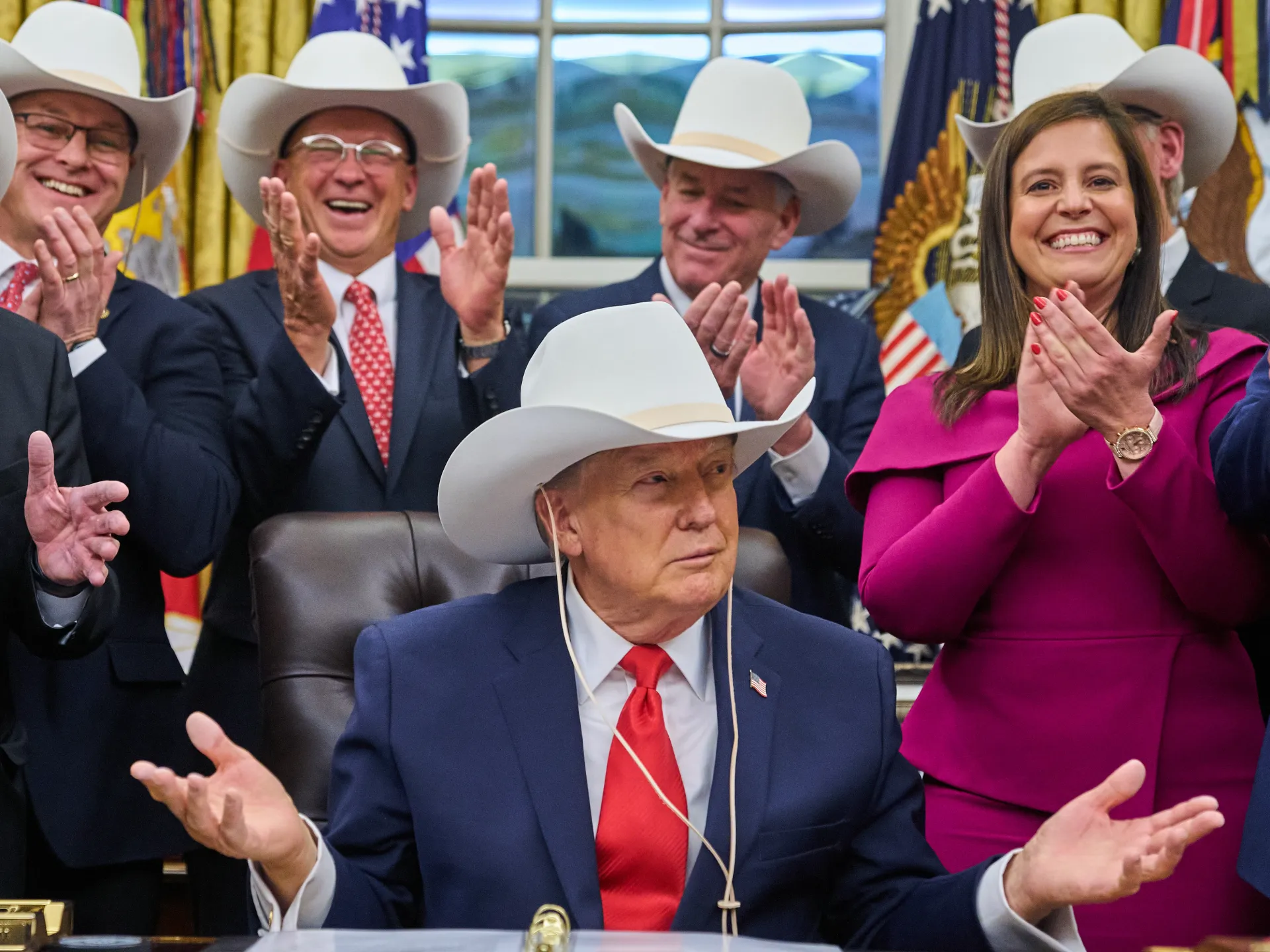
Washington, DC – For United States President Donald Trump, 2025 was a year of crisis.

Roaring into office on January 20 on the heels of a raucous political comeback, the president’s own telling describes a series of actions that have been swift and stark.

Recommended Stories

list of 3 itemsend of list

To name a few, he has envisioned rooting out a migrant “invasion” that includes staunching legal immigrants, and, potentially, targeting US citizens; he has touted a hard reset of uneven trade deals that pose “an unusual and extraordinary threat to the national security”; and, in the final months of the year, he has gone on the military offensive against “narcoterrorists” that he claims seek to topple the US through illicit drugs, possibly used as “weapons of mass destruction”.

For legal observers, Trump’s approach has been a yet-undecided stress test on presidential power, cranked by the gears of broadly interpreted emergency statutes and untrammelled executive authority.

Decisions by the court, lawmakers and voters in the 2026 midterm elections could determine how that strategy resonates or is restrained.

“The use or abuse of emergency powers is only one corner of a larger picture,” Frank Bowman, professor emeritus of law at the University of Missouri, told Al Jazeera.

“In many cases, the administration is simply doing stuff that certainly any pre-existing understandings of executive authority would have said you cannot do,” he said.

Emergency powers and ‘national security’

The US Constitution, unlike many countries, has no catch-all emergency power authorisation for presidents.

In fact, the US Supreme Court ruled in 1952 that presidents have no such implied authorities, explained David Driesen, professor emeritus at Syracuse University College of Law. Still, Congress has passed “numerous statutes that grant the president limited emergency powers under limited circumstances to do specific things”.

Nearly every modern president has used emergency powers with varying degrees of gusto, with Congress and the Supreme Court historically wary of reining in those actions.

Like many US presidents, Trump has also used broad and ambiguous national security claims to justify expanding his reach.

But several factors have set Trump’s second term apart, most notably the lack of distinct inciting events for many of the powers claimed, Driesen said.

“I’ve never seen a president invoke emergency powers to justify practically all of this policy agenda,” he told Al Jazeera, “and I’ve also never seen a president use them to seize powers that really are not in the statutes at all.”

Put simply, he added, “to Trump, everything is an emergency”.

The tone was set on day one, with Trump’s broad executive order declaring that irregular crossings at the southern border meant nothing less than “America’s sovereignty is under attack”. The order has been used to indefinitely suspend US asylum obligations, surge forces to the border, and seize federal land.

The same day, Trump declared a national emergency under the International Emergency Economic Powers Act (IEEPA) to designate Tren de Aragua (TdA) and La Mara Salvatrucha (MS-13) as “foreign terrorist organizations”, posing a threat to the “national security, foreign policy, and economy” of the US.

The administration has, in part, relied on and expanded that order in efforts to circumvent due process in its mass deportation push and to rhetorically justify a militaristic approach to Latin America.

Simultaneously, Trump also declared a wide-ranging energy emergency on his first day in office, laying the groundwork to bypass environmental regulations.

To be sure, as Bowman explained, Trump’s use of official emergency statutes has been only a piece of the puzzle, combined with his broad interpretation of constitutionally mandated power to reshape the government in ways big and small.

That has included cleaving civil servants from congressionally created government departments via the Department of Government Efficiency (DOGE), trying to fire heads of independent agencies, renaming institutions – possibly illegally – in his likeness, and allegedly bypassing required approvals to physically transform the White House.

But the invocation of emergency statutes has remained a backbone of his second term. Trump invoked an emergency to justify sanctioning the International Criminal Court (ICC) for its investigations into Israeli war crimes in Gaza.

He used the “emergency” of fentanyl smuggling to justify tariffs on Canada, Mexico and China, later unilaterally labelling the drug “weapons of mass destruction”.

In April, in one of his most challenged uses of an emergency authority, Trump cited an emergency statute to impose sweeping reciprocal tariffs against nearly all US trading partners.

A ‘mixed picture’

In review, 2025 has shown virtually no willingness from Congress, where both chambers remain narrowly controlled by Trump’s Republican Party, to challenge the president.

Rulings from lower federal courts, meanwhile, have offered a “mixed picture”, according to the University of Missouri’s Bowman, while the country’s top court has left wider questions unanswered.

Bowman noted the six conservative members of the nine-judge panel ascribe to varying degrees to the “unitary executive theory”, which argues the drafters of the constitution envisioned a strong consolidation of presidential power.

“On the one hand, Trump is obviously willing to declare emergencies where no rational person would really believe they exist,” Bowman said.

“On the other hand, at least the lower courts have pushed back, but it remains to be seen whether the Supreme Court will back them up.”

For example, Trump has been temporarily allowed to continue the deployment of National Guard troops in Washington, DC, a federal district where he declared a “crime emergency” in August. City officials have said the characterisation defies facts on the ground.

Despite claiming similar overlapping crime and immigration crises in liberal-led cities in states across the country, Trump has had far less success. Lower courts have limited deployments of the National Guard in California, Illinois, and Oregon.

Trump has also floated, but not yet invoked, the Insurrection Act, another law in the crisis portfolio dating back to 1792 that allows the president to deploy the military for domestic law enforcement to “suppress insurrections and repel invasions”.

A judicial response to the tactics behind Trump’s deportation drive has also been mixed.

Trump’s use of the Alien Enemies Act – a 1798 law designed to quickly expel foreign nationals during times of war – to swiftly deport undocumented individuals without due process has been constrained, but allowed to proceed by the Supreme Court with limited due process protections.

In one of the most-watched cases on the docket, the Supreme Court is expected to make a ruling when it returns to session in January on the legal justification of Trump’s reciprocal tariffs.

A lower court has previously ruled that Trump deployed the emergency statute illegally. Some conservative justices on the top court have also expressed wariness over the president’s claim.

The panel has appeared more amenable in a landmark case determining whether Trump can fire heads of independent agencies, also set to be decided in the new year.

The spectre of war

When it comes to unilaterally making war, Trump has been bounding down a well-trodden path of misused presidential power, according to Matt Duss, the executive vice president of the Washington, DC-based Center for International Policy.

The end of the year has been marked by US military strikes on alleged drug smuggling boats from Venezuela, decried by rights groups as extrajudicial killings.

The administration has claimed, without evidence, that over 100 people killed had sought to destabilise the US by flooding it with drugs. Trump has made a similar claim about the Nicolas Maduro-led government in Venezuela, as he has continued to rattle the sabre of land strikes.

The actions have been accompanied by a pugilistic rebranding of the Department of Defense as the Department of War, a reframing of criminal Latin American cartels as so-called “narcoterrorists” and declaring a new drive to bring the Western Hemisphere firmly under the US sphere of influence.

“We have to understand this in the context of multiple administrations of both parties abusing executive authority to essentially go to war,” said Duss, who explained that the practice accelerated in the so-called “global war on terror” post-September 11, 2001 attacks.

Most recently, Republicans – and a handful of Democrats – in the House of Representatives voted down two separate war powers resolutions that would require congressional approval for future strikes on alleged drug boats or on Venezuelan territory.

The vote, Duss said, underscored “Trump’s near-total control of the Republican Party despite the fact that he is blatantly violating his own campaign promises to end wars, rather than to start them”.

Public opinion

Trump’s control over his party and his influence writ-large over the country will largely be tested in next year’s midterm elections. The vote will determine control of the House and the Senate.

A slate of polls has indicated at least some degree of wariness in Trump’s use of presidential power.

In particular, a Quinnipiac poll released in mid-December found 54 percent of voters think Trump is going too far in his authority claims, while 37 percent think he is handling the role correctly. Another 7 percent believe Trump should go further in using the power of the presidency.

Another Politico poll in November found that 53 percent of US residents think Trump has too much power, while the president has seen an overall slump in his approval ratings since taking office.

To be sure, a panoply of factors determine US elections, and it remains unclear if voters were more likely to respond to the results of Trump’s approach to the presidency, or to the approach itself.

“Does the average person really think much about any of the theoretical bases for the things Trump is doing? And frankly, would the average person care very much if the results were, in the short term, results of which they approved?” University of Missouri’s Bowman mused.

“I don’t know the answer … How all this is perceived across the country, and what’s going to happen next, is anybody’s guess.”
Source link

Video: Trump and Zelenskyy hail ‘progress’ on Russia-Ukraine peace plan | Russia-Ukraine war

NewsFeed

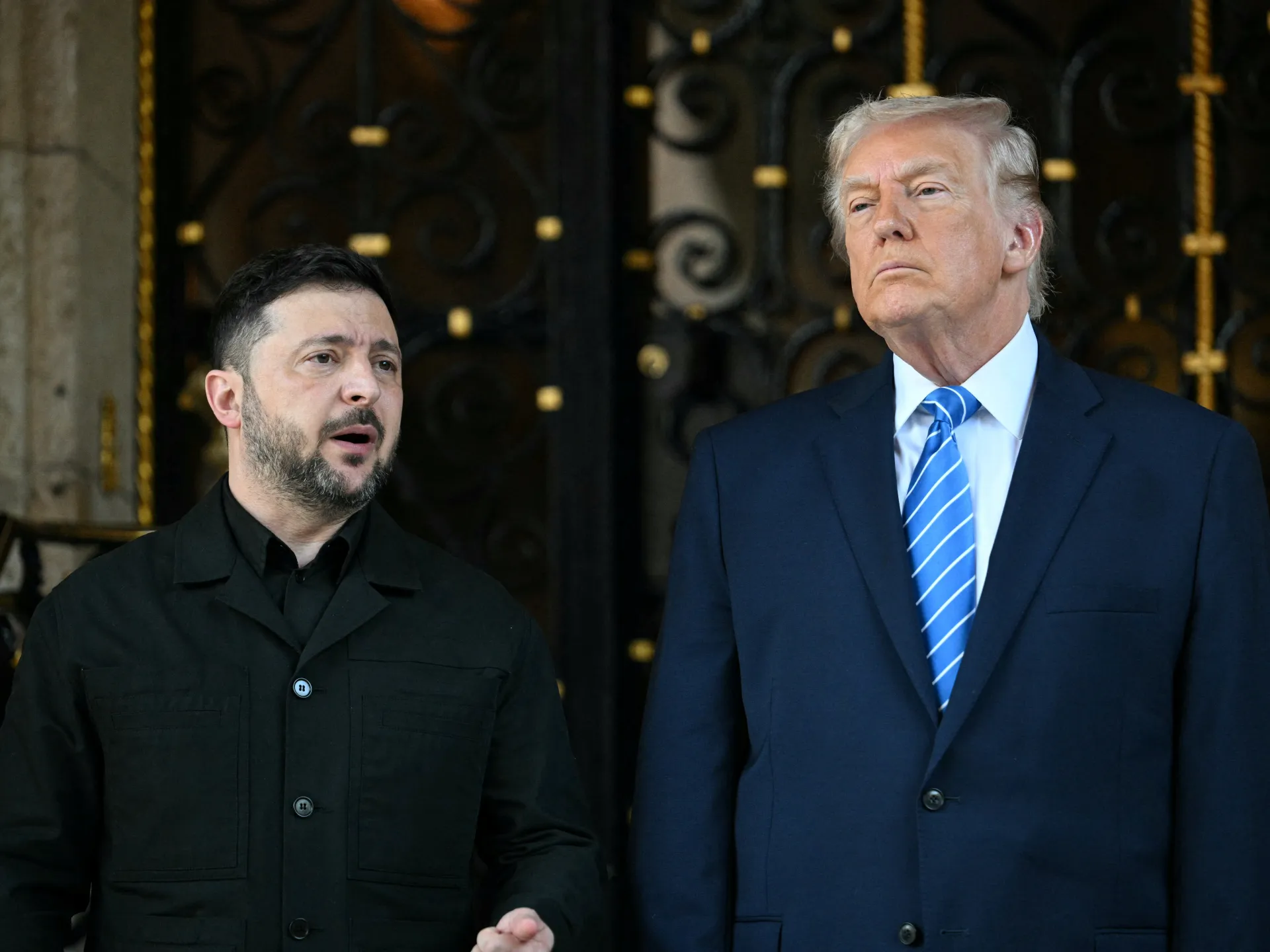
US President Donald Trump and Ukrainian leader Volodymyr Zelenskyy are talking up prospects of ending the war with Russia, after meeting in Florida. But they admitted there are ‘thorny issues’ to resolve about the status of the Donbas region which has been annexed by Russia.

Source link

Ukraine’s Zelensky meets with Trump at Mar-a-Lago

Ukrainian President Volodymyr Zelensky, pictured during a meeting at the White House with U.S. President Donald Trump in August, arrived at Mar-a-Lago on Sunday morning to work on a proposed 20-point peace plan between Russia and Ukraine. File Photo by Aaron Schwartz/UPI | License Photo

Dec. 28 (UPI) — Ukrainian President Volodymyr Zelensky on Sunday arrived at Mar-a-Lago in Palm Beach, Florida, to meet with U.S. President Donald Trump about a proposal for a cease-fire and end to Russia’s war in Ukraine.

Zelensky and his entourage arrived Sunday to discuss a 20-point plan — that may include conceding territory and shared operation of a nuclear power plant — to potentially end the war that started more than three years ago with Russia’s invasion of Ukraine.

Ahead of the meeting, Trump spoke with Russian President Vladimir Putin by phone for more than an hour, during which reportedly agreed that a long-term peace deal is preferable to a cease-fire, with Putin calling for Zelensky to make a “courageous, responsible political decision,” The New York Times reported.

Zelensky arrives for the meeting as Russia has amped up its attacks on Kyiv and other parts of Ukraine in recent days, which some have called a tactic on Russia’s part to force the Ukrainians hand in making a peace deal.

“Given the situation on the front lines, Kyiv must not delay making that decision,” Yuri Ushakov, one of Putin’s foreign policy aides, said during a press briefing on Sunday.

Trump told reporters when he welcomed Zelensky to Mar-a-Lago that he believes “we have the makings of a deal,” and that both Putin and Zelensky are both serious about making a peace deal, CNN reported.

Zelensky, Trump and representatives from both of their administrations are negotiating the 20-point peace plan that Zelensky reworked from a U.S.-proposed 28-point plan earlier this year.

Plans have also been drawn up for a three-party security guarantee between Ukraine, the U.S. and Europe, as well as a bilateral deal with the United States, in addition to economic cooperation to rebuild Ukraine, which has been brutally battered by Russia for the last three years, the Kyiv Independent reported.

According to the BBC, Putin and Trump are likely to speak later on Sunday after the meeting at Mar-a-Lago.

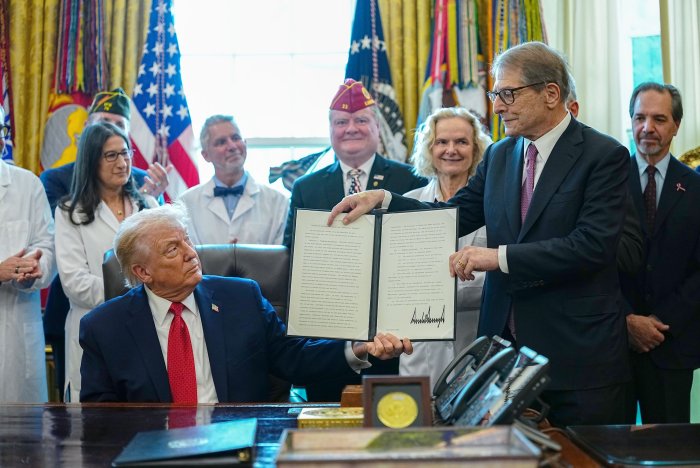
President Donald Trump holds a signed executive order reclassifying marijuana from a schedule I to a schedule III controlled substance in the Oval Office of the White House on Thursday. Photo by Aaron Schwartz/UPI | License Photo

Source link

US President Trump says Russia-Ukraine truce talks in ‘final stages’ | Russia-Ukraine war News

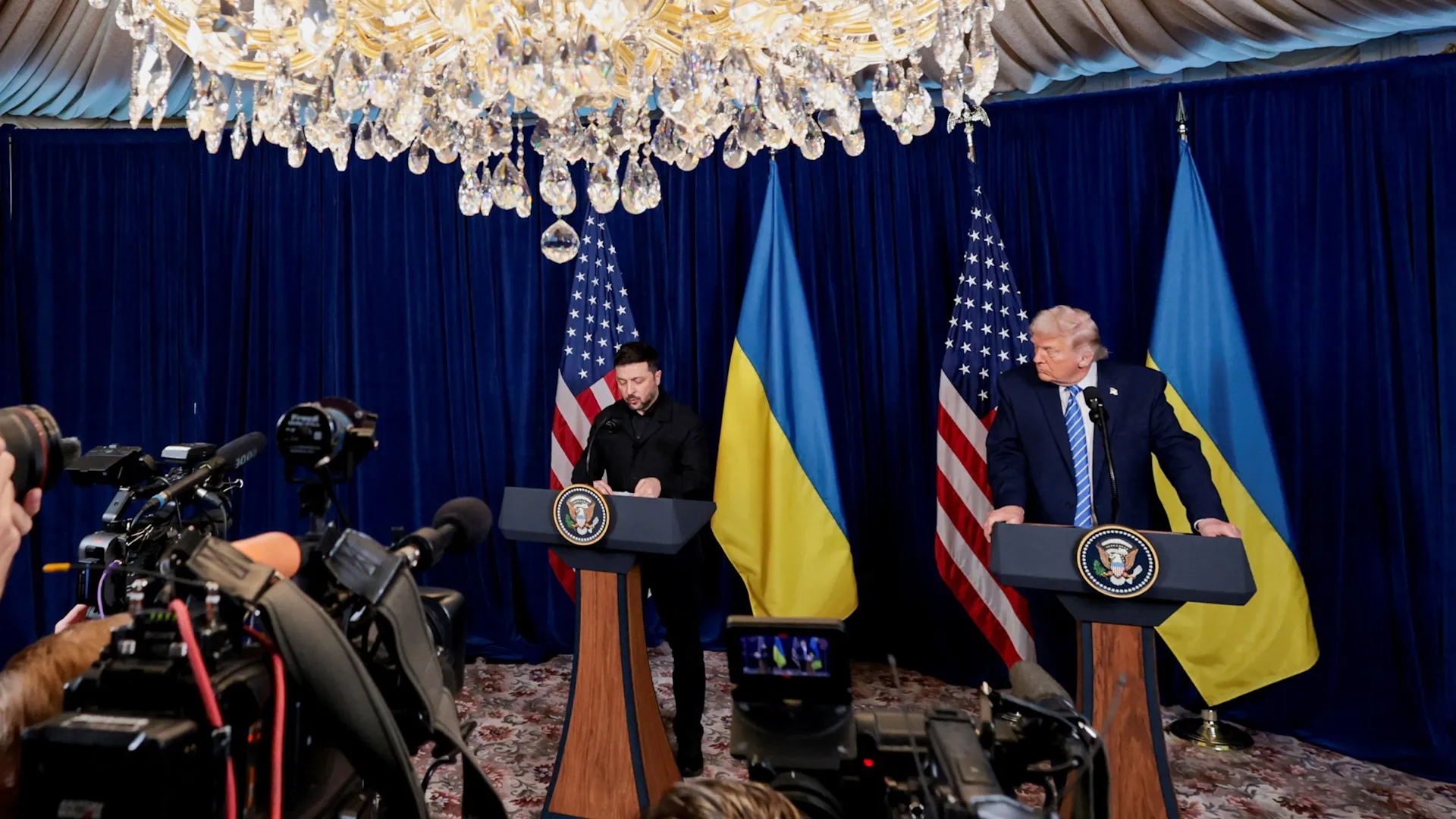
Diplomacy over the Russia-Ukraine war is in its “final stages”, said US President Donald Trump as he welcomed Ukraine’s leader Volodymyr Zelenskyy to his Florida estate.

The two leaders stood outside the Mar-a-Lago resort on Sunday and addressed reporters as they prepared to discuss a new proposal to end the bloody conflict.

Recommended Stories

list of 4 itemsend of list

The US president has been working hard to end the nearly four-year war in Ukraine for much of his first year back in office, showing irritation with both Zelenskyy and Russian President Vladimir Putin while publicly acknowledging the difficulty of ending the fighting.

“I think we’re … in final stages of talking and we’re going to see. Otherwise, it’s going to go on for a long time, and millions of additional people will be killed,” said Trump, adding he did not have a deadline for the process.

“I do believe that we have the makings of a deal that’s good for Ukraine, good for everybody.”

He added there would be “a strong agreement” to guarantee Ukraine’s security, one that would involve European countries.

“We have two willing parties. We have two willing countries … The people of Ukraine want [the war] to end, and the people of Russia want it to end, and the two leaders want it to end,” Trump said.

Russia intensified its attacks on Ukraine’s capital in the days before the Florida meeting.

Zelenskyy, by Trump’s side, said he and the US president would discuss issues of territorial concessions, which have so far been a red line for his country. He said his negotiators and Trump’s advisers “have discussed how to move step by step and bring peace closer” and would continue to do so in Sunday’s meeting.

During recent talks, the US agreed to offer certain security guarantees to Ukraine similar to those offered to other members of NATO.

The proposal came as Zelenskyy said he was prepared to drop his country’s bid to join the security alliance if Ukraine received NATO-like protection designed to safeguard it against future Russian attacks.

Oleksandr Kraiev, an analyst with the think-tank Ukrainian Prism, said the people of Ukraine are “quite cynical” about the talks brokered by the United States.

“We tried this in 2015, 2016, 2017, and unfortunately each time the Russians broke even the ceasefire regime, not even talking about the peace process,” he told Al Jazeera.

“So we have little faith that a proper peace process will take place. As of now we’re striving for a ceasefire as a precondition for any kind of talks… We cannot trust the Russians with a peace deal, but a ceasefire is something we’re working on.”

‘Blindsided yet again’

Trump’s upbeat tone comes despite widespread scepticism in Europe about Putin’s intentions after Russia carried out another massive bombardment of the Ukrainian capital just as Zelenskyy headed to Florida.

Before Zelenskyy arrived, Trump spoke with Putin by phone for more than an hour and said he planned to speak again after the Zelenskyy meeting – catching Ukrainian leaders off guard, reported Al Jazeera’s Shihab Rattansi.

“From what we’re hearing, the Zelenskyy delegation here have been blindsided yet again by Donald Trump. And according to the Russians, it was at the Americans’ insistence there should be a call with Vladimir Putin the hour before Zelenskyy arrived,” said Rattansi, speaking from Palm Beach, Florida.

Meanwhile, while there is talk about land concessions from Ukraine’s side, they are outside the framework Zelenskyy is hoping for.

The Kremlin gave a more pointed readout of Trump’s talks with Putin, saying the US leader agreed a mere ceasefire “would only prolong the conflict” as it demanded Ukraine compromise on territory.

Zelenskyy said last week that he would be willing to withdraw troops from Ukraine’s eastern industrial heartland as part of a plan to end the war, if Russia also pulls back and the area becomes a demilitarised zone monitored by international forces.

Putin has publicly said he wants all the areas in four key regions captured by his forces, as well as the Crimean Peninsula, illegally annexed in 2014, to be recognised as Russian territory. He also insisted that Ukraine withdraw from some areas in eastern Ukraine that Moscow’s forces have not captured.

Kyiv has publicly rejected all those demands.

Trump has been somewhat receptive to Putin’s conditions, making the case that the Russian president can be persuaded to end the war if Kyiv agrees to cede Ukrainian land in the Donbas region, and if Western powers offer economic incentives to bring Russia back into the global economy.

Source link

Javad Zarif: Main threat to the Middle East is Israel, not Iran | Israel-Iran conflict

Iran’s former foreign minister argues Israel, backed by the US, has killed every opportunity for peace.

Months after being attacked by the United States and Israel, Iran finds itself in the crosshairs again, with Israeli officials lobbying US President Donald Trump to address Tehran’s ballistic missiles.

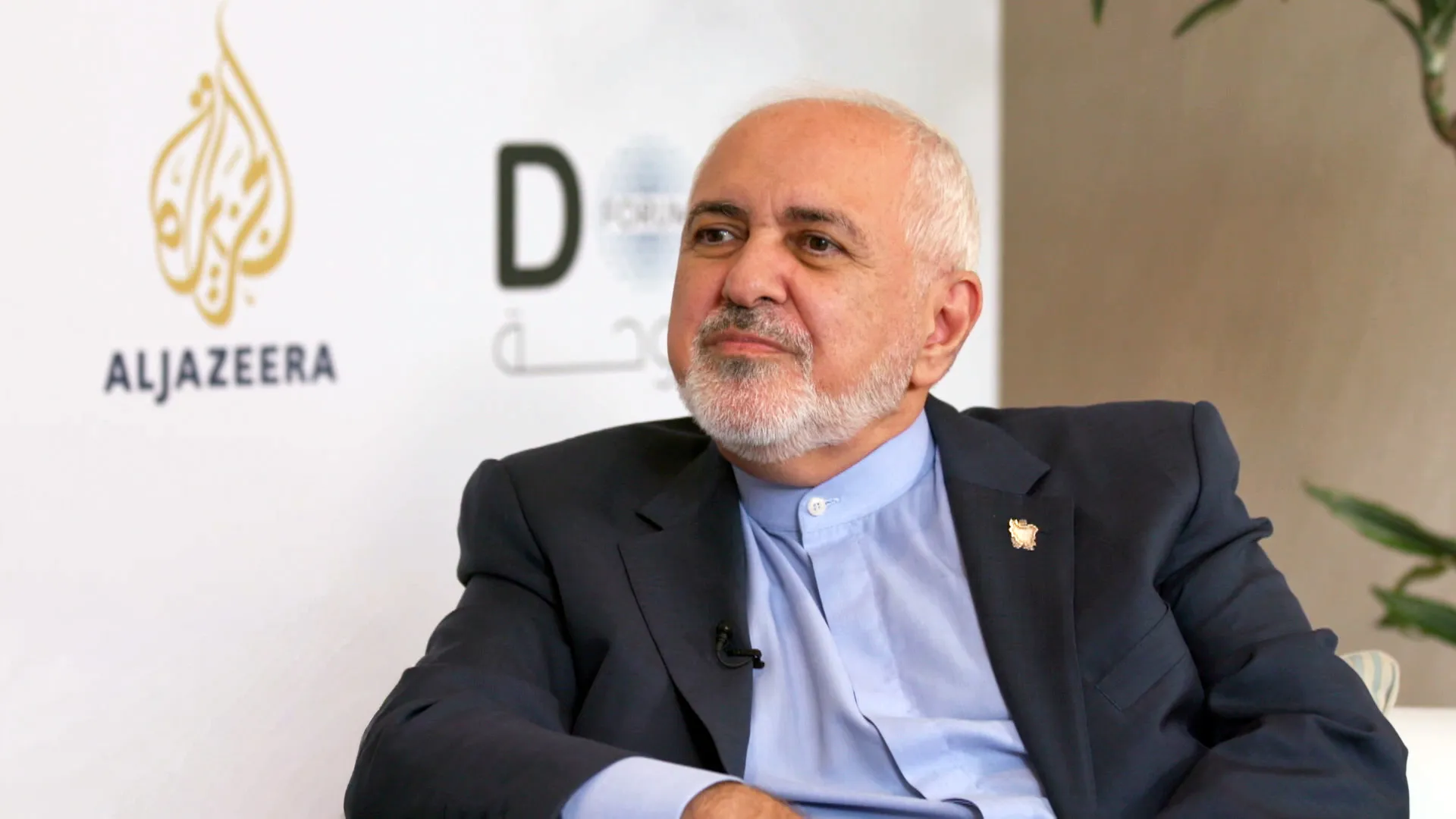
Veteran Iranian diplomat Javad Zarif tells host Steve Clemons that “everybody lost any faith in diplomacy” after Israel and the US attacked Iran following five rounds of reconciliation talks between Washington and Tehran.

Zarif added that Israel has historically thwarted every opportunity for reconciliation between Iran and the US, and that Trump’s style of diplomacy is disastrous, as it creates “negotiations that end up in war”.

Source link

US-Israel ties: What Netanyahu and Trump will discuss in Florida | Donald Trump News

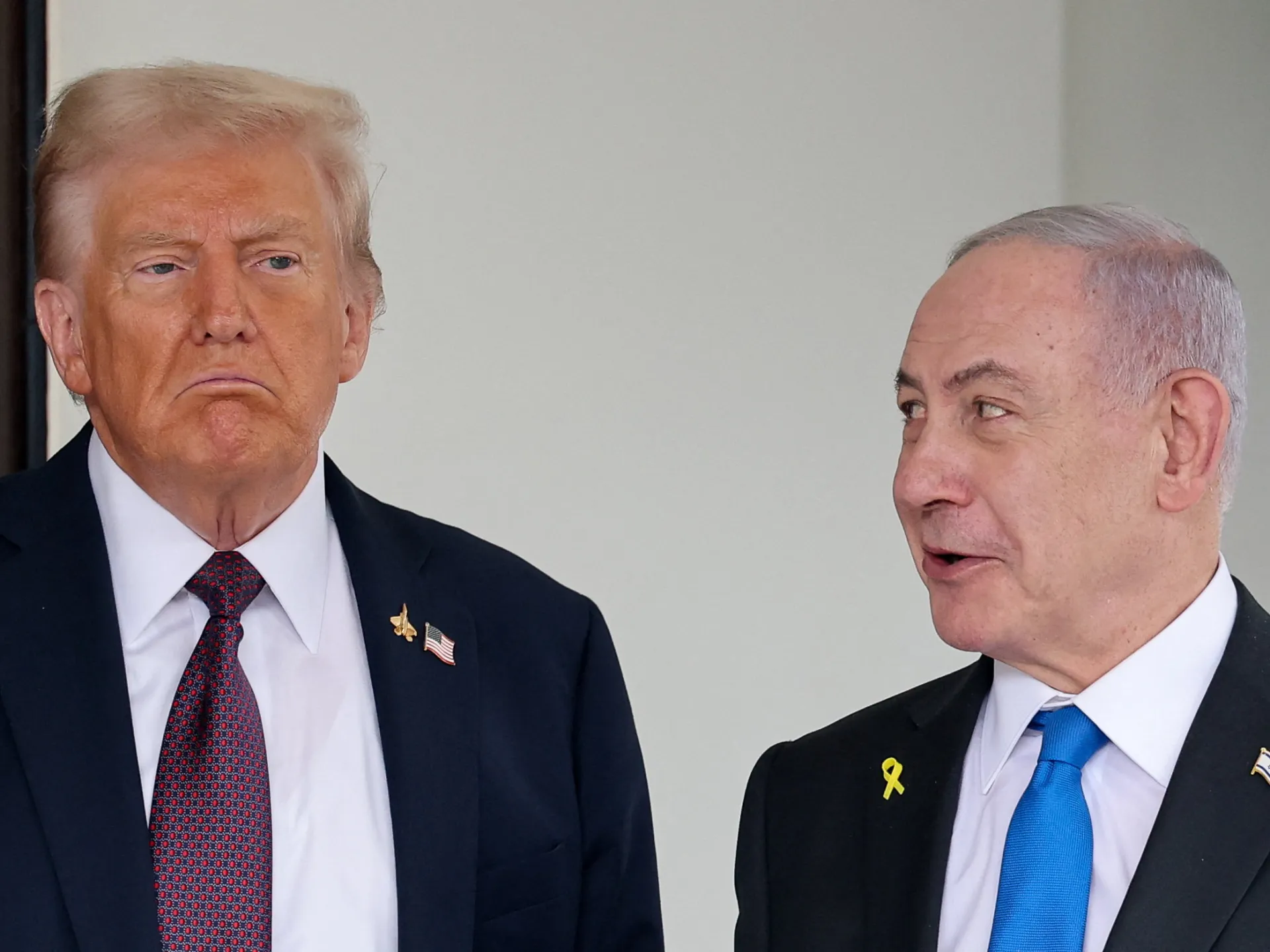
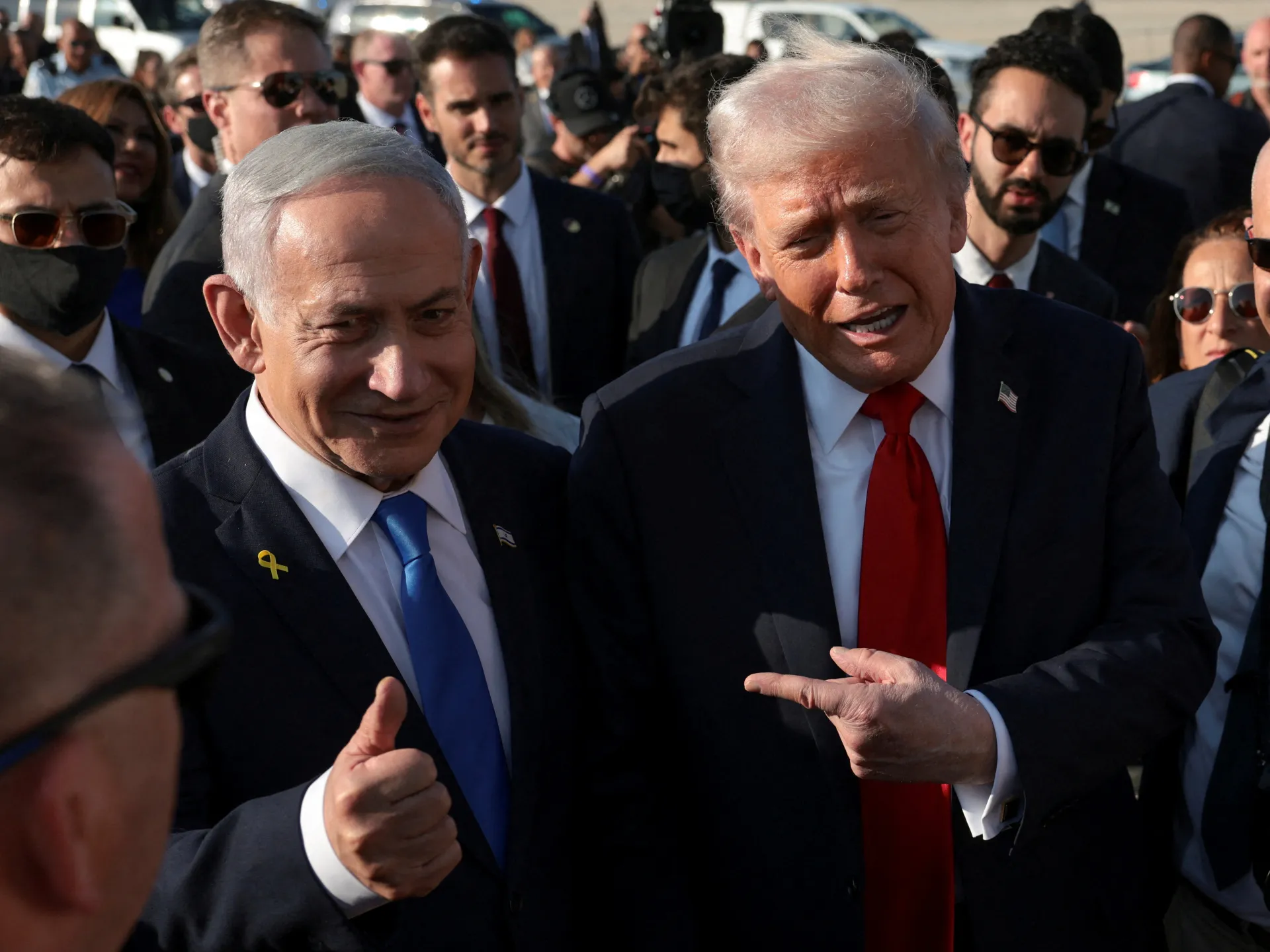
Israeli Prime Minister Benjamin Netanyahu will visit the United States to meet with President Donald Trump as regional turmoil approaches a boiling point amid Israel’s attacks in Palestine, Lebanon and Syria and mounting tensions with Iran.

Netanyahu is to hold talks with Trump at the president’s Mar-a-Lago resort in Florida on Monday as Washington pushes to complete the first phase of the Gaza truce.

Recommended Stories

list of 3 itemsend of list

The visit comes as the US continues to pursue its 20-point “peace plan” in the Palestinian enclave despite near-daily Israeli violations of the truce.

Israel is also escalating attacks in the occupied West Bank, Lebanon and Syria as Israeli officials suggest that another war with Iran is possible.

What will Netanyahu discuss with Trump, and where do US-Israel ties stand?

Al Jazeera looks at the prime minister’s trip to the US and how it may play out.

When will Netanyahu arrive?

The Israeli prime minister will arrive in the US on Sunday. However, the talks will not take place at the White House. Instead, Netanyahu will meet Trump in Florida, where the US president is spending the holidays.

The meeting between the two leaders is expected to take place on Monday.

How many times has Netanyahu visited Trump?

This will be Netanyahu’s fifth visit to the US in 10 months. The Israeli prime minister has been hosted by Trump more than any other world leader.

In February, he became the first foreign leader to visit the White House after Trump returned to the presidency.

He visited again in April and July. In September, he also met with Trump in Washington, DC, after the United Nations General Assembly in New York.

What has the relationship between Trump and Netanyahu been like so far?

Netanyahu often says Trump is the best friend Israel has ever had in the White House.

During his first term, Trump pushed US policy further in favour of Israel’s right-wing government. He moved the US embassy to Jerusalem, recognised and claimed Israeli sovereignty over Syria’s occupied Golan Heights and cut off funding to the United Nations agency for Palestinian refugees (UNRWA).

Since returning to the White House this year, Trump has shown a greater willingness to publicly disagree with Netanyahu. Still, his administration has provided unflinching support for Israel, including the decision to renew the genocidal war on Gaza in March after a brief ceasefire.

Trump joined the Israeli attack on Iran in June to the dismay of some segments of his base. And he pushed to secure the current truce in Gaza.

The US president also opposed the Israeli attack on Doha in September. And he swiftly lifted sanctions against Syria despite some apparent Israeli reservations.

The ties between the two leaders have seen some peaks and valleys. In 2020, Trump was irked when Netanyahu rushed to congratulate Joe Biden on his election victory against Trump, who has falsely insisted the election was fraudulent.

“I haven’t spoken to him [Netanyahu] since,” Trump told the Axios news site in 2021. “F*** him.”

The strong ties between the two leaders were rekindled after Trump won the presidency again in 2024 and unleashed a crackdown on Palestinian rights activists in the US.

In November, Trump formally asked Israeli President Isaac Herzog to pardon Netanyahu, who is facing corruption charges at home.

The two leaders, however, are not in complete alignment, and cracks in their positions are showing up over issues that include Gaza, Syria and the US partnerships with Turkiye and the Gulf states.

During his US visit, Netanyahu may seek to flatter Trump and project a warm relationship with the US president to advance his agenda and signal to his political rivals in Israel that he still enjoys support from Washington.

How has Netanyahu dealt with the US since October 7, 2023?

Since the outbreak of the war in Gaza, Netanyahu has asked for unchecked US diplomatic and military support.

Then-President Biden travelled to Israel 11 days after Hamas’s October 7, 2023, attacks on southern Israel, and he declared that support for the US ally is “vital for America’s national security”.

His “bear hug” of Netanyahu on arrival at the airport in Tel Aviv would set the stage for the US backing of Israel as it unleashed horror and destruction on Gaza, which has translated into more than $21bn in military aid and multiple vetoes at the UN Security Council over the past two years.

Netanyahu has seized on the notion that Israel is an extension of US interests and security structure. In a speech to the US Congress last year, the prime minister argued that Israel is fighting Iran indirectly in Gaza and Lebanon.

“We’re not only protecting ourselves. We’re protecting you,” he told US lawmakers.

Throughout the war, there have been countless reports that Biden and Trump have been displeased or angry with Netanyahu. But US weapons and political backing for Israel have continued to flow uninterrupted. And Netanyahu makes a point of always expressing gratitude to US presidents, even when there may be apparent tensions.

Where does the US stand on the Gaza truce?

US Secretary of State Marco Rubio said last week that the top priority for the Trump administration is to complete the first stage of the Gaza ceasefire and move from mere cessation of hostilities to long-term governance, stabilisation and reconstruction of the Palestinian enclave.

Israel has been violating the ceasefire in Gaza regularly, recently killing at least six Palestinians in an attack that targeted a wedding.

But Trump, who claims to have brought peace to the Middle East for the first time in 3,000 years, has focused on broadly moving the truce forward rather than on Israel’s daily conduct.

“No one is arguing that the status quo is sustainable in the long term, nor desirable, and that’s why we have a sense of urgency about bringing phase one to its full completion,” Rubio said last week.

The top US diplomat has also suggested that there could be some flexibility when it comes to disarming Hamas under the agreement, saying the “baseline” should be ensuring that the group does not pose a threat to Israel rather than removing the guns of every fighter.

But Israel appears to be operating with a different set of priorities. Defence Minister Israel Katz said on Tuesday that the country is looking to re-establish settlements in Gaza, which are illegal under international law.

He later walked back those comments but stressed that Israel would maintain a permanent military presence in the territory, which would violate the Trump plan.

Expect Gaza to be a key topic of discussion between Netanyahu and Trump.

Can a Syria agreement be reached?

Trump has literally and figuratively embraced Syrian President Ahmed al-Sharaa over the past year, lifting sanctions against the country and beginning security cooperation with his government’s security forces.

But Israel is pursuing its own agenda in Syria. Hours after the collapse of the government of former President Bashar al-Assad a year ago, Israel began expanding its occupation of Syria beyond the Golan Heights.

Although the new Syrian authorities stressed early on that they did not seek confrontation with Israel, the Israeli military launched a bombardment campaign against Syria’s state and military institutions.

Israeli forces have also been conducting raids in southern Syria and abducting and disappearing residents.

After the Israeli military killed 13 Syrians in an air raid last month, Trump issued a veiled criticism of Israel.

“It is very important that Israel maintain a strong and true dialogue with Syria and that nothing takes place that will interfere with Syria’s evolution into a prosperous state,” he said.

Syria and Israel were in talks earlier this year to establish a security agreement short of full diplomatic normalisation. But the negotiations appeared to collapse after Israeli leaders insisted on holding onto the land captured after al-Assad’s fall.

With Netanyahu in town, Trump will likely renew the push for a Syria-Israel agreement.

Why is Iran back in the headlines?

Netanyahu’s visit comes amid louder alarm bells in Israel about Iran rebuilding its missile capacity after their 12-day war in June.

NBC News reported last week that the Israeli prime minister will brief the US president about more potential strikes against Iran.

The pro-Israel camp in Trump’s orbit seems to be already mobilising rhetorically against Iran’s missile programme.

US Senator Lindsey Graham visited Israel this month and called Iran’s missiles a “real threat” to Israel.

“This trip is about elevating the risk ballistic missiles pose to Israel,” Graham told The Jerusalem Post.

Trump authorised strikes against Iran’s nuclear sites during the June war, which he said “obliterated” the Iranian nuclear programme.

Although there is no evidence that Iran has been weaponising its nuclear programme, fears about a possible Iranian atomic bomb were the driving public justification for the US involvement in the conflict.

So it will be hard for Netanyahu to persuade Trump to back a war against Iran, said Sina Toossi, a senior fellow at the Center for International Policy.

The president is portraying himself as a peacemaker and prioritising a possible confrontation with Venezuela.

“It could just as well backfire on Netanyahu,” Toossi said of the push for more strikes against Iran. But he underscored that Trump is “unpredictable”, and he has surrounded himself with pro-Israel hawks, including Rubio.

What is the state of US-Israel relations?

Despite growing dissent on the left and right of the US political spectrum, Trump’s support for Israel remains unwavering.

This month, the US Congress passed a military spending bill that includes $600m in military aid to Israel.

The Trump administration has continued to avoid even verbal criticism of Israel’s aggressive behaviour in the region, including Gaza ceasefire violations and the expansion of illegal settlements in the West Bank.

At a White House Hanukkah celebration on December 16, Trump bemoaned the growing scepticism of unconditional support for Israel in Congress, falsely likening it to anti-Semitism.

“If you go back 10, 12, 15 years ago, at the most, the strongest lobby in Washington was the Jewish lobby. It was Israel. That’s no longer true,” Trump said.

“You have to be very careful. You have a Congress in particular which is becoming anti-Semitic.”

Despite Trump’s position, analysts said the gap between the strategic priorities of the US and Israel is growing.

While Washington is pushing for economic cooperation in the Middle East, Israel is seeking “total dominance” over the region, including US partners in the Gulf, Toossi said.

“Israel is pushing this uncompromising posture and strategic objective that I think is going to come to a head more with core US interests,” Toossi told Al Jazeera.

What’s next for the US-Israel alliance?

If you drive down Independence Avenue in Washington, DC, you will likely see more Israeli than American flags displayed on the windows of congressional offices.

Despite the shifting public opinion, Israel still has overwhelming support in Congress and the White House. And although criticism of Israel is growing within the Republican base, Israel’s detractors have been pushed to the margins of the movement.

Marjorie Taylor Greene is leaving Congress; commentator Tucker Carlson is facing constant attacks and accusations of anti-Semitism; and Congressman Tom Massie is facing a Trump-backed primary challenger.

Meanwhile, Trump’s inner circle is filled with staunch Israel supporters, including Rubio, megadonor Miriam Adelson and radio show host Mark Levin.

But amid the erosion of public support, especially among young people, Israel may face a reckoning in American politics in the long term.

On the Democratic side, some of Israel’s strongest supporters in Congress are facing primary challenges from progressive candidates who are centring Palestinian rights.

The most powerful pro-Israel lobbying group, the American Israel Public Affairs Committee (AIPAC), is increasingly becoming a toxic brand for Democrats.

On the right, the faultlines in the consensus in support of Israel are growing wider. That trend was put on display at the right-wing AmericaFest conference this month when debates raged around support for Israel, a topic that was a foregone conclusion for conservatives a few years ago.

Although the Trump administration has been pushing to codify opposition to Zionism as anti-Semitism to punish Palestinian rights supporters, Vice President JD Vance has presented a more nuanced view on the issue.

“What is actually happening is that there is a real backlash to a consensus view in American foreign policy,” Vance recently told the UnHerd website.

“I think we ought to have that conversation and not try to shut it down. Most Americans are not anti-Semitic – they’re never going to be anti-Semitic – and I think we should focus on the real debate.”

Bottom line, the currents are changing, but the US commitment to Israel remains solid – for now.

Source link

Columnists Anita Chabria and Mark Z. Barabak look back on 2025

Is there a dumpster somewhere to torch and bury this year of bedlam, 2025?

We near its end with equal amounts relief and trepidation. Surely we can’t be expected to endure another such tumultuous turn around the sun?

It was only January that Donald Trump moved back into the White House, apparently toting trunkloads of gilt for the walls. Within weeks, he’d declared an emergency at the border; set in motion plans to dismantle government agencies; fired masses of federal workers; and tariffs, tariffs, tariffs.

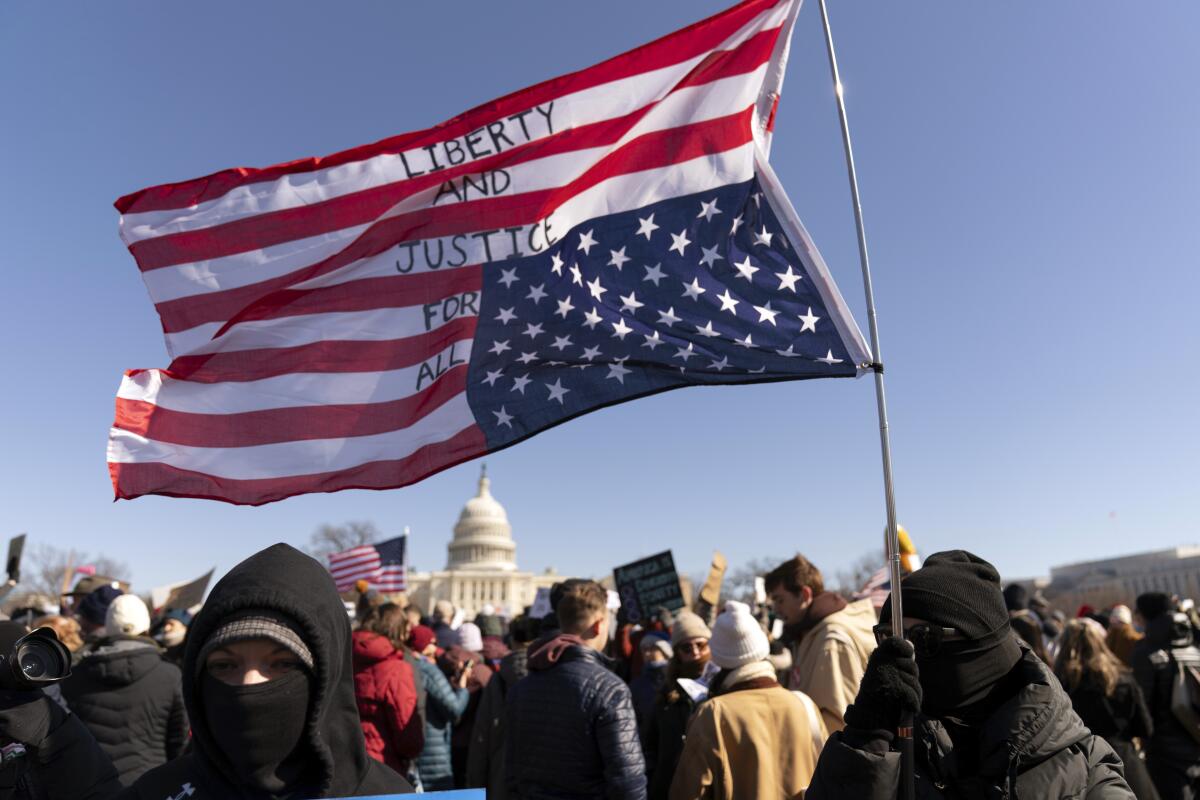
A crowd of demonstrators on the Capitol Mall flying an upside down American flag

Demonstrators at a No Kings rally in Washington, protesting actions by President Trump and Elon Musk.

(Jose Luis Magana / Associated Press)

By spring, the administration was attacking Harvard as a test case for strong-arming higher education. By June, Trump’s grotesquely misnamed Big Beautiful Bill had become law, giving $1 trillion in tax cuts to billionaires and funding a deportation effort (and armed force) that has fundamentally reshaped American immigration law and ended any pretense about targeting “the worst of the worst.”

Fall and winter have brought questionable bombings of boats in the Caribbean, a further backing away from Ukraine, a crackdown on opposition to Trump by classifying it as leftist terrorism and congressional inaction on healthcare that will leave many struggling to stay insured.

That’s the short list.

It was a year when America tried something new, and while adherents of the MAGA movement may celebrate much of it, our columnists Anita Chabria and Mark Z. Barabak have a different perspective.

Here, they renew their annual tradition of looking at the year past and offering some thoughts on what the new year may bring.

Chabria: Welp, that was something. I can’t say 2025 was a stellar year for the American experiment, but it certainly will make the history books.

Before we dive into pure politics, I’ll start with something positive. I met a married couple at a No Kings rally in Sacramento who were dressed up as dinosaurs, inspired by the Portland Frog, an activist who wears an inflatable amphibian suit.

When I asked why, the husband told me, “If you don’t do something soon, you will have democracy be extinct.”

A woman standing before an American flag during an anti-Trump protest in downtown Los Angeles.

Crowds participate in No Kings Day in downtown Los Angeles in October.

(Genaro Molina / Los Angeles Times)

I loved that so many Americans were doing something by turning out to not just protest policies that hit personally, but to rally in support of democracy writ large. For many, it was their first time taking this kind of action, and they were doing it in a way that expressed optimism and possibility rather than giving in to anger or despair. Where there is humor, there is hope.

Barabak: As in, it only hurts when I laugh?

In 2024, a plurality of Americans voted to reinstall Trump in the White House — warts, felony conviction and all — mainly in the hope he would bring down the cost of living and make eggs and gasoline affordable again.

While eggs and gas are no longer exorbitant, the cost of just about everything else continues to climb. Or, in the case of beef, utility bills and insurance, skyrocket.

Workers adding Donald Trump's name to the John F. Kennedy Memorial Center for the Performing Arts

The John F. Kennedy Memorial Center for the Performing Arts is another of the long-standing institutions Trump has smeared his name across.

(Jacquelyn Martin / Associated Press)

Meantime, the president seems less concerned with improving voters’ lives than smearing his name on every object he lays his eyes on, one of the latest examples being the John F. Kennedy Center for the Performing Arts.

(The only place Trump doesn’t want to see his name is in those voluminous Epstein files.)

I wonder: Why stop there? Why not brand these the United States of Trump-erica, then boast we live in the “hottest” country on Planet Trump?

Chabria: Stop giving him ideas!

You and I agree that it’s been a difficult year full of absurdity, but we’ve disagreed on how seriously to take Trump as a threat to democracy. As the year closes, I am more concerned than ever.

It’s not the ugly antics of ego that alarm me, but the devastating policies that will be hard to undo — if we get the chance to undo them.

The race-based witch hunt of deportations is obviously at the top of that list, but the demolition of both K-12 and higher education; the dismantling of federal agencies, thereby cutting our scientific power as a nation; the increasing oligarchy of tech industrialists; the quiet placement of election deniers in key election posts — these are all hammers bashing away at our democracy.

Now, we are seeing overt antisemitism and racism on the MAGA right, with alarming acceptance from many. The far right has championed a debate as dumb as it is frightening, about “heritage” Americans being somehow a higher class of citizens than nonwhites.

Vice President JD Vance speaks at a college campus event in front of a poster reading "This Is the Turning Point."

Vice President JD Vance speaks at the University of Mississippi in Oxford.

(Gerald Herbert / Associated Press)

Recently, Vice President JD Vance gave a speech in which he announced, “In the United States of America, you don’t have to apologize for being white anymore,” and Trump has said he wants to start taking away citizenship from legal immigrants. Both men claim America is a Christian nation, and eschew diversity as a value.

Do you still think American democracy is secure, and this political moment will pass without lasting damage to our democratic norms?

Barabak: I’ll start with some differentiation.

I agree that Trump is sowing seeds or, more specifically, enacting policies and programs, that will germinate and do damage for many years to come.

Alienating our allies, terrorizing communities with his prejudicial anti-immigrant policies — which go far beyond a reasonable tightening of border security — starving science and other research programs. The list is a long and depressing one, as you suggest.

But I do believe — cue the trumpets and cherubs — there is nothing beyond the power of voters to fix.

To quote, well, me, there is no organism on the planet more sensitive to heat and light than a politician. We’ve already seen an anti-Trump backlash in a series of elections held this year, in red and blue state alike. A strong repudiation in the 2026 midterm election will do more than all the editorial tut-tutting and protest marches combined. (Not that either are bad things.)

A poll worker at Los Angeles' Union Station.

A stressed-out seeming poll worker in a polling station at Los Angeles’ Union Station.

(Eric Thayer / Los Angeles Times)

The best way to preserve our democracy and uphold America’s values is for unhappy citizens to register their dissent via the ballot box. And to address at least one of your concerns, I’m not too worried about Trump somehow nullifying the results, given legal checks and the decentralization of our election system.

Installing lawmakers in Congress with a mandate to hold Trump to account would be a good start toward repairing at least some of the damage he’s wrought. And if it turns into a Republican rout, it’ll be quite something to watch the president’s onetime allies run for the hills as fast as their weak knees allow.

Chabria: OMG! It’s a holiday miracle. We agree!

I think the midterms will be messy, but I don’t think this will be an election where Trump, or anyone, outright tries to undo overall results.

Although I do think the groundwork will be laid to sow further doubt in our election integrity ahead of 2028, and we will see bogus claims of fraud and lawsuits.

So the midterms very well could be a reset if Democrats take control of something, anything. We would likely not see past damage repaired, but may see enough opposition to slow the pace of whatever is happening now, and offer transparency and oversight.

But the 2026 election only matters if people vote, which historically is not something a great number of people do in midterms. At this point, there are few people out there who haven’t heard about the stakes in November, but that still doesn’t translate to folks — lazy, busy, distracted — weighing in.

If proposed restrictions on mail-in ballots or voter identification take effect, even just in some states, that will also change the outcomes.

But there is hope, always hope.

Barabak: On that note, let’s recognize a few of the many good things that happened in 2025.

MacKenzie Scott donated $700 million to more than a dozen historically Black colleges and universities, showing that not all tech billionaires are selfish and venal.

The Dodgers won their second championship and, while this San Francisco Giants fan was not pleased, their seven-game thriller against the Toronto Blue Jays was a World Series for the ages.

And the strength and resilience shown by survivors of January’s SoCal firestorm has been something to behold.

Any others, beside your demonstrating dinos, who deserve commendation?

Pope Leo XIV waves after delivering the annual Christmas blessing.

Pope Leo XIV waves after delivering the Christmas Day blessing from the main balcony of St. Peter’s Basilica at the Vatican.

(Gregorio Borgia / Associated Press)

Chabria: Though I’m not Catholic, I have been surprisingly inspired by Pope Leo XIV.

So I’ll leave us with a bit of his advice for the future: “Be agents of communion, capable of breaking down the logic of division and polarization, of individualism and egocentrism.”

Many of us are tired, and suffering from Trump fatigue. Regardless, to put it in nonpapal terms, it may be a dumpster — but we’re all in it together.

Barabak: I’d like to end, as we do each year, with a thank you to our readers.

Anita and I wouldn’t be here — which would greatly please some folks — but for you. (And a special nod to the paid subscribers out there. You help keep the lights on.)

Here’s wishing each and all a happy, healthy and prosperous new year.

We’ll see you again in 2026.

Source link

Bessent, Trump urge ending the Senate filibuster; as 2026 budget looms

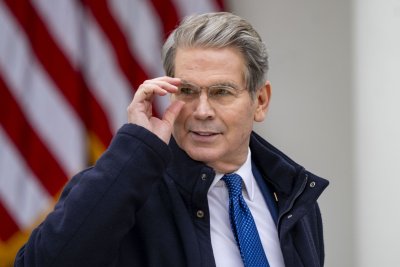
Dec. 27 (UPI) — President Donald Trump and Treasury Sec. Scott Bessent urged an end to the Senate filibuster rule ahead of an anticipated budget battle in January.

Bessent submitted an op-ed that The Washington Post published on Saturday and blames Senate Democrats and the filibuster for blocking passage of a resolution to keep the federal government open while negotiating the 2026 fiscal year budget and causing a record 43-day shutdown of the federal government.

“The American people are just now emerging from the longest and most devastating government shutdown in U.S. history,” Bessent said.

“While the blame lies squarely with Senate Democrats, we cannot ignore the weapon they used to hold the country hostage: the legislative filibuster,” Bessent wrote.

With the continuing resolution expiring on Jan. 30, Bessent said there is a strong likelihood that Senate Democrats again will use the filibuster to block passage of a budget and force the government to close again.

“Democrats inflicted tremendous harm on the nation, including $11 billion in permanent economic damage” as the federal government was “held for ransom by the left’s demands,” Bessent said.

He said the shutdown caused the nation to lose 1.5 percentage points in gross domestic product growth during the fourth quarter, triggered 9,500 canceled flights and caused 1.4 million federal workers to miss their paychecks.

He called the filibuster a “historical accident that has evolved into a standing veto for the [Senate] minority and a license for paralysis.”

The Constitution does not mention a filibuster, and its “framers envisioned debate, but they expect majority rule,” Bessent said.

He said the filibuster has its roots in an 1806 Senate rules decision that deleted a “previous question” motion, which unintentionally removed the Senate’s mechanism for ending debate with a majority vote.

Senators later realized they could “delay or block” legislative action with unending debate, and just the threat of a filibuster is enough to trigger the filibuster rule requiring a supermajority of 60 votes to end it, Bessent explained.

He said it is likely that Senate Democrats again will force the federal government to shut down at the end of January by blocking the 2026 fiscal year budget vote.

President Barack Obama called the filibuster a “‘Jim Crow relic,'” but Bessent said Senate Democrats always use it to their advantage whenever possible, and the president agrees.

“It’s time to end the filibuster,” Trump said while agreeing with Bessent in a social media post that includes Bessent’s op-ed.

He also told Politico that the GOP must end the filibuster when interviewed on Friday night.

Doing so will help his administration to undo damage that he said was caused by the Biden administration and led to very high inflation that he is trying to fix to make life more affordable in the United States, Trump said.

The president has urged Senate Republicans to end the filibuster as soon as possible and said Senate Democrats will do it the first chance that they get when they eventually win a majority in the Senate.

Senate Democrats in September and afterward overwhelmingly opposed a clean continuing resolution to keep the federal government open and instead submitted a resolution that would add $1.5 trillion in spending over the next 10 years to extend Affordable Care Act subsidies that expire at the end of December.

Senate Democrats control 47 seats, including two occupied by independents who caucus with Senate Democrats, while the GOP controls 53 seats, so neither party can overcome the filibuster rule without help from the other.

The Senate GOP could not muster the 60 votes needed to overcome the filibuster rule until eight Senate Democrats joined with most Senate Republicans to support the continuing resolution to end the 43-day government shutdown that began when the 2026 fiscal year started on Oct. 1.

Senate Democrats in 2022 tried to end the filibuster rule but could not obtain a simple majority due to opposition from Sens. Kyrsten Sinema of Arizona and Joe Manchin of West Virginia, both of whom were Democrats but have retired from politics.

Source link

Do Donald Trump’s strikes in Nigeria serve any purpose? | Armed Groups News

The US president says air strikes are against ISIL, claiming the group targets Christians.

“More to come”: Those are the words of United States Defense Secretary Pete Hegseth after his country carried out a wave of air strikes against ISIL (ISIS) in northwestern Nigeria.

Hegseth said the aim is to stop the group’s killing of what he called “innocent Christians”.

Recommended Stories

list of 4 itemsend of list

Back in November, President Donald Trump warned the US would take action against the group if the Nigerian government continued to allow what he claimed was the targeting of Christians.

Many say Trump was pressured by his right-wing Christian base in the US to carry out the recent attacks in Nigeria. But what could be the fallout on the African country with a highly complex religious makeup?

Presenter: Adrian Finighan

Guests:

Malik Samuel – Senior researcher at Good Governance Africa

Ebenezer Obadare – Senior fellow for Africa studies at the Council on Foreign Relations

David Otto – Deputy director of counterterrorism training at the International Academy for the Fight Against Terrorism

Source link

Deadly Russian attacks continue ahead of Trump-Zelensky meeting

1 of 4 | Russia targeted Kyiv with 40 missiles and nearly 500 drones that killed one and injured 27 during an early morning aerial assault on the Ukrainian capital on Saturday. Photo by Sergey Dolzhenko/EPA

Dec. 27 (UPI) — Russian attacks on Kyiv killed at least one and injured 27 early Saturday morning as Ukrainian President Volodymyr Zelensky prepares to meet with President Donald Trump on Sunday.

The Russian aerial assault started at 1:30 a.m. local time in Kyiv with missiles and attack drones dispatched in waves, causing Kyiv Mayor Vitali Klitschko to warn residents to stay in air raid shelters, The New York Times reported.

An estimated 40 missiles and 500 drones knocked out power in much of the city during the aerial assault.

Zelensky said the attack is the latest example of why Ukraine needs its international partners to help guarantee the nation’s security before agreeing to end the war that started when Russia invaded on Feb. 24, 2022.

Zelensky and Trump are scheduled to meet in Florida on Sunday, and the Ukrainian president is hopeful of securing a legally binding security guarantee.

“This depends primarily on President Trump,” Zelensky told media. “The question is what security guarantees President Trump is ready to give Ukraine.”

The Ukrainian president has drafted a 20-point peace plan that includes the creation of a demilitarized zone between Russia and Ukraine.

He told Axios that he hopes it will lead to a framework for a cease-fire and a lasting peace that the Ukrainian people would support.

That framework might include a 60-day cease-fire to give Ukraine time to schedule and hold a national referendum, which may include territorial concessions to end the war.

Russian officials have said they understand the need for a referendum, but they want a shorter timeframe to get it done.

Before Sunday’s meeting, Zelensky is stopping in Canada on Saturday to meet with Canadian Prime Minister Mark Carney and hold virtual discussions with European leaders.

Carney and Zelensky will meet in Halifax, Nova Scotia, and have scheduled joint calls with leaders from the United Kingdom, France, Italy and Germany, according to Sky News.

President Donald Trump holds a signed executive order reclassifying marijuana from a schedule I to a schedule III controlled substance in the Oval Office of the White House on Thursday. Photo by Aaron Schwartz/UPI | License Photo

Source link

Judge blocks deportation of British man Trump accused of ‘censorship’

Dec. 26 (UPI) — A federal judge has blocked the deportation of a British man targeted by President Donald Trump.

Imran Ahmed, founder and CEO of the Center for Countering Digital Hate, was one of five people placed on a visa ban after the government accused him of censorship.

Ahmed filed suit against Secretary of State Marco Rubio and Attorney General Pam Bondi to prevent “the imminent prospect of unconstitutional arrest.”

The suit said the case comes from “the federal government’s latest attempt to abuse the immigration system to punish and punitively detain noncitizens for protected speech and silence viewpoints with which it disagrees.”

Ahmed is a legal permanent resident of the United States, where he lives with his American wife and child. He praised the judge’s decision.

“I will not be bullied away from my life’s work of fighting to keep children safe from social media’s harm and stopping antisemitism online,” Ahmed said.

The speed of the judge’s decision was telling, said his lawyer Roberta Kaplan.

“The federal government can’t deport a green card holder like Imran Ahmed, with a wife and young child who are American, simply because it doesn’t like what he has to say,” the BBC reported she said.

Rubio said in a statement Tuesday that the five had “led organized efforts to coerce American platforms to censor, demonetize and suppress” the views of Americans with whom they disagreed.

“These radical activists and weaponized NGOs have advanced censorship crackdowns by foreign states — in each case targeting American speakers and American companies,” Rubio said. He described the five as “agents of the global censorship-industrial complex.”

The others included in the ban are former European Union technology commissioner Thierry Breton; Anna-Lena von Hodenberg and Josephine Ballon of Berlin-based non-profit HateAid; Clare Melford, co-founder of Global Disinformation Index.

Ahmed told The Guardian that it was another attempt to deflect accountability and transparency.

“This has never been about politics,” he said. “What it has been about is companies that simply do not want to be held accountable and, because of the influence of big money in Washington, are corrupting the system and trying to bend it to their will, and their will is to be unable to be held accountable. There is no other industry that acts with such arrogance, indifference and a lack of humility and sociopathic greed at the expense of people.”

Ahmed said he had not formally received any notification from the government.

“I’m very confident that our first amendment rights will be upheld by the court,” he told The Guardian.

He is expected to be in court Monday, when the protective order will be confirmed.

In 2023, Elon Musk‘s company X sued the CCDH after it reported on a rise in hate speech on the platform since Musk’s takeover. The case was dismissed but X appealed the decision.

Simon Cowell, the judge on the TV series “American Idol” strangles the show’s host Ryan Seacrest during the May 15, 2003 photo op for the 2003 Fox Upfront at New York’s Grand Central Station in New York City. Photo by Ezio Petersen/UPI | License Photo

Source link

Zelenskyy to meet Trump in Florida amid diplomatic push to end war | Russia-Ukraine war News

Ukrainian president highlights ‘significant progress’ in talks, but Moscow says Kyiv is working to ‘torpedo’ deal.

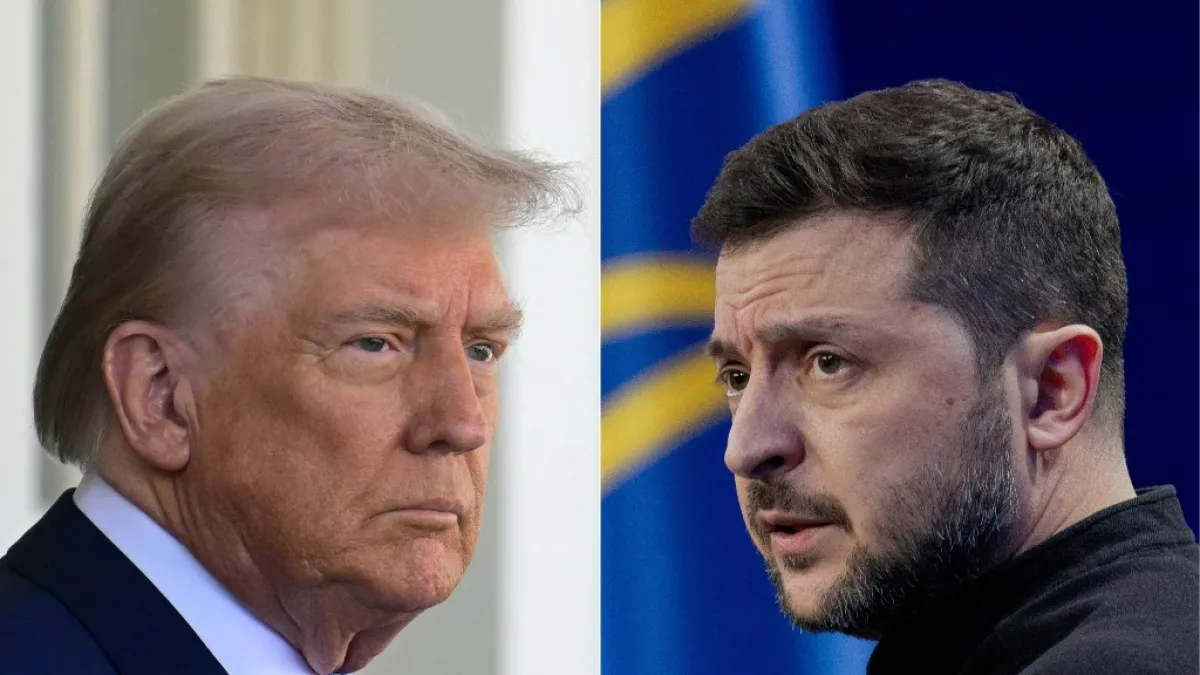
Ukrainian President Volodymyr Zelenskyy is to meet with his United States counterpart, Donald Trump, in Florida on Sunday to discuss territorial disputes that continue to block progress towards ending Russia’s war on Ukraine.

Announcing the meeting on Friday, Zelenskyy said the talks could be decisive as Washington intensifies its efforts to broker an end to Europe’s deadliest conflict since World War II. “A lot can be decided before the New Year,” Zelenskyy said.

Recommended Stories

list of 3 itemsend of list

Territory remains the most contentious issue in the negotiations. Zelenskyy confirmed he would raise the status of eastern Ukraine and the Zaporizhzhia Nuclear Power Plant, which has been under Russian control since the early months of Russia’s invasion.

“As for the sensitive issues, we will discuss both Donbas and the Zaporizhzhia Nuclear Power Plant. We will certainly discuss other issues as well,” he told reporters in a WhatsApp chat.

Moscow has demanded that Kyiv withdraw from parts of the Donetsk region still under Ukrainian control as it pushes for full authority over the wider Donbas area, which includes Donetsk and Luhansk. Ukraine has rejected that demand, instead calling for an immediate halt to hostilities along the existing front lines.

Territorial concessions

In an attempt to bridge the divide, the US has floated the idea of establishing a free economic zone should Ukraine relinquish control of the contested area although details of how such a plan would operate remain unclear.

Zelenskyy reiterated that any territorial concessions would require public approval. He said decisions on land must be made by Ukrainians themselves, potentially through a referendum.

Beyond territory, Zelenskyy said his meeting with Trump would focus on refining draft agreements, including economic arrangements and security guarantees. He said a security pact with Washington was nearly finalised while a 20-point peace framework was close to completion.

Ukraine has sought binding guarantees after previous international commitments failed to prevent Russia’s invasion, which began in February 2022.

Trump has previously voiced impatience with the pace of negotiations, but he has indicated he would engage directly if talks reached a meaningful stage.

Last week, US Secretary of State Marco Rubio said his country is the only mediator that can speak to both sides to secure a peace agreement. At the same time, he downplayed the importance of the conflict for Washington.

“It’s not our war. It’s a war on another continent,” he said.

Zelenskyy said European leaders could join Sunday’s discussions remotely and confirmed he had already briefed Finnish President Alexander Stubb on what he described as “significant progress”.

Despite Zelenskyy’s assertion, Russian Deputy Foreign Minister Sergey Ryabkov accused Ukraine of working to “torpedo” the peace talks, saying a revised version of the US peace plan promoted by Kyiv was “radically different” from an earlier version negotiated with Washington.

“Our ability to make the final push and reach an agreement will depend on our own work and the political will of the other party,” he said during a television interview on Friday.

Ryabkov said any agreement must remain within the parameters set out between Trump and Russian President Vladimir Putin during a summit in August, which Ukraine and European partners have criticised as overly conciliatory towards Russia’s war aims.

On the ground, Moscow has intensified strikes on Ukraine’s energy infrastructure and the southern port city of Odesa while an attack on Kharkiv on Friday killed two people.

Source link

Marco Rubio congratulates Honduran President-elect Nasry Asfura | Elections News

Washington’s top diplomat says he thanked Asfura, who was backed by Trump, for ‘advocacy of US strategic objectives’.

United States Secretary of State Marco Rubio has congratulated Honduran President-elect Nasry Asfura, whom President Donald Trump had endorsed, for his victory in the Central American country’s contentious election.

The Department of State said on Friday that Rubio and Asfura in a phone call discussed collaboration on issues such as trade and security.

Recommended Stories

list of 3 itemsend of list

“Secretary Rubio commended President-Elect Asfura for his advocacy of US strategic objectives, including advancing our bilateral and regional security cooperation, and strengthening economic ties between our two countries,” the State Department said in a statement.

Asfura claimed a narrow victory on Wednesday in the November 30 election marked by Trump’s intervention on his behalf. Election authorities declared Asfura the winner after weeks of counting amid high tensions and allegations of fraud and impropriety from other candidates.

The right-wing Asfura, representing the National Party, edged out Salvador Nasralla of the centre-right Liberal Party with 40.27 percent of the vote to Nasralla’s 39.53 percent.

“Today, with deep gratitude, I accept the honour of being able to work for you. I extend my hand so we can walk together with determination to work tirelessly for Honduras. I will not fail you,” Asfura said in a video statement released on Wednesday night.

Both Nasralla and Rixi Moncada, the candidate for current President Xiomara Castro’s left-leaning LIBRE Party, who came in a distant third, have disputed the results of the election.

Nasralla said on Wednesday that election authorities had “betrayed the Honduran people”. He also took aim at Trump, who said before the election that a victory for anyone but Asfura would put US economic ties with Honduras at risk.

“Mr President, your endorsed candidate in Honduras is complicit in silencing the votes of our citizens,” Nasralla said in a social media post. “If he is truly worthy of your backing, if his hands are clean, if he has nothing to fear, then why doesn’t he allow for every vote to be counted?”

Honduras has experienced several contested elections since a US-backed coup in 2009. Protests over the November election have thus far remained peaceful.

Before the election, Trump also issued a criticised pardon for right-wing former Honduran President Juan Orlando Hernandez, who was convicted of crimes linked to the trafficking of drugs to the US during his time in office.

The pardon came as the US says it is shifting its foreign policy focus to the Americas.

Asfura, the former mayor of Honduras’s capital, Tegucigalpa, is of Palestinian descent. But his National Party is staunchly pro-Israel.

Under Hernandez in 2021, Honduras became only the fourth country to move its embassy in Israel to Jerusalem in breach of international law.

Asfura has also aligned himself with Trump and other right-wing leaders in the Americas, including Argentina’s Javier Milei.

Source link

Nigerian foreign minister: President Tinubu gave ‘go-ahead’ on U.S. strikes

Dec. 26 (UPI) — Nigerian President Bola Tinubu gave the U.S. government the “go-ahead” to carry out airstrikes on ISIS targets, Nigeria’s foreign minister said Friday.

U.S. President Donald Trump announced the strikes Thursday, calling them retaliation against “ISIS terrorist scum” for violence on “primarily, innocent Christians.”

Nigerian Foreign Minister Yusuf Tuggar told Al Jazeera the country cooperated with the U.S. Defense Department on the “fight against terrorism” in the northwestern region.

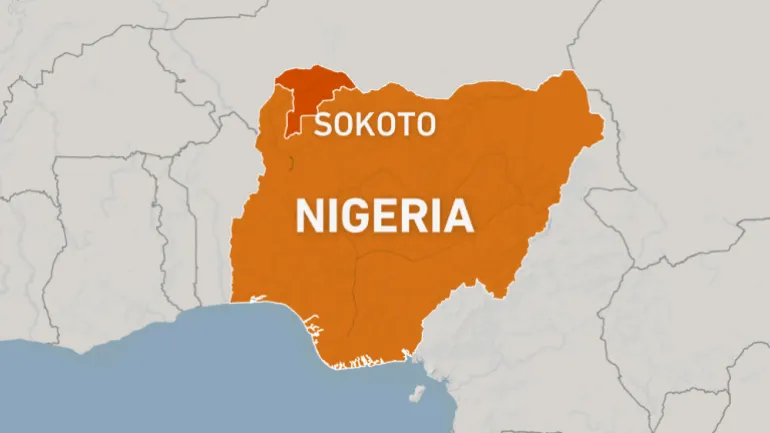
Citing local news sources, the news outlet said at least one missile landed in the village of Jabo in Sokoto state. Residents told Al Jazeera there were no casualties in the village.

“The bomb fell and burst into many pieces. There were two big pieces of debris. One of them was carried by two people,” resident Abdulrahman Mainasara said.

Resident Ismail Umar told the outlet the village hadn’t received any armed attacks from ISIS in more than two years.

Tuggar said the Nigerian government provided intelligence to the U.S. government, and he spoke with U.S. Secretary of State Marco Rubio on the phone twice before the strikes. He added that Tinubu was also involved in the decision-making process.

“Now that the U.S. is cooperating, we would do it jointly, and we would ensure, just as the [Nigerian] president emphasized yesterday before he gave the go-ahead, that it must be made clear that it is a joint operation, and is not targeting any religion nor simply in the name of one religion or the other,” Tuggar said in an appearance on Channels Television‘s Sunrise Daily program.

Tuggar and other officials, though, took issue with Trump’s rhetoric saying that ISIS violence targets only Christians in Nigeria.

“We are a multi-religious country, and we are working with partners like the U.S. to fight terrorism and safeguard the lives and properties of Nigerians,” Tuggar said.

Auwal Musa Rafsanjani, the director of the non-profit organization Civil Society Legislative Advocacy Centre, said suggestions that ISIS is primarily targeting people based on religion could incite ethnic and religious tensions in Nigeria.

“Muslims are being killed and harassed every day by the same criminals,” Rafsanjani said, according to the local news outlet Leadership. “This conversation should be about human life, not religion or geography.”

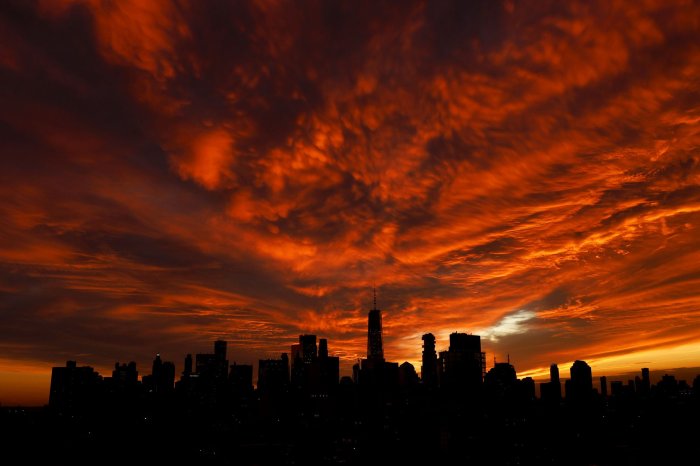
Clouds turn shades of red and orange when the sun sets behind One World Trade Center and the Manhattan skyline in New York City on November 5, 2025. Photo by John Angelillo/UPI | License Photo

Source link

Russia-Ukraine war: List of key events, day 1,401 | Russia-Ukraine war News

These are the key developments from day 1,401 of Russia’s war on Ukraine.

Here is where things stand on Friday, December 26:

Fighting

  • Officials in Russia’s Krasnodar region reported a huge fire following a Ukrainian drone strike on two storage tanks holding oil products in the southern Russian port of Temryuk. The blaze spread across roughly 2,000 square metres (some 21,500 square feet).
  • Long-range Ukrainian drones targeted oil storage facilities at Temryuk port, as well as a gas processing plant in Russia’s Orenburg region, Ukraine’s SBU security service said.
  • Ukraine’s General Staff said its military also struck the Novoshakhtinsk oil refinery in Russia’s Rostov region using Storm Shadow missiles, triggering several explosions.
  • The General Staff described the Russian refinery as a major supplier of oil products in southern Russia that supports Moscow’s military operations in Ukraine.
  • Russia’s Ministry of Defence announced that its forces had taken control of the settlement of Sviato-Pokrovske in eastern Ukraine’s Donetsk region, according to reports from Russian state news agencies.

Regional security

  • Poland sent fighter jets to intercept a Russian reconnaissance aircraft flying near its airspace over the Baltic Sea and said dozens of objects entered Polish airspace from Belarus overnight, warning the incidents during the holiday season may signal a provocation.
  • Russia’s Ministry of Foreign Affairs accused the United States of encouraging what it called “piracy” in the Caribbean and Pacific Ocean by blockading Venezuela, while expressing hope that US President Donald Trump’s pragmatism could prevent further escalation.
  • Moscow also reiterated its support for Venezuelan President Nicolas Maduro’s government and its efforts to safeguard national sovereignty amid threats by the US to remove Maduro from power.

Peace talks

  • Ukrainian President Volodymyr Zelenskyy said he spoke with Donald Trump’s special envoy Steve Witkoff and son-in-law, Jared Kushner, for about an hour on how to end the war with Russia and “how to bring the real peace closer”.

  • “Of course, there is still work to be done on sensitive issues,” the Ukrainian leader said. “But together with the American team, we understand how to put all of this in place. The weeks ahead may also be intensive. Thank you, America!”
  • Russia believes negotiations with the US to end the war in Ukraine are making gradual progress, Russian Foreign Ministry spokeswoman Maria Zakharova said. She described the talks as slow-moving but advancing steadily.

Politics and diplomacy

  • Kremlin spokesman Dmitry Peskov said President Vladimir Putin had sent the US president a Christmas greeting along with a congratulatory message.
  •  Russia said it had put forward a proposal to France concerning Laurent Vinatier, a French researcher imprisoned under Russia’s foreign agent laws, adding that the next steps in the Frenchman’s case now rest with Paris.

Sanctions

  • Russia’s target of producing 100 million tonnes of liquefied natural gas annually has been pushed back by several years due to international sanctions, the country’s Deputy Prime Minister Alexander Novak said in comments aired on state television.

Source link

Photos: A Venezuelan family Christmas – from the US dream to poverty | Donald Trump News

This was not the Christmas that Mariela Gomez would have imagined a year ago.

Or the one that thousands of other Venezuelan immigrants in the United States would have thought. But Donald Trump returned to the White House in January and quickly ended their US dream.

Gomez found herself spending the holiday in northern Venezuela for the first time in eight years. She dressed up, cooked, got her son a scooter and smiled for her in-laws. Hard as she tried, though, she could not ignore the main challenges facing returning migrants: unemployment and poverty.

“We had a modest dinner, not quite what we’d hoped for, but at least we had food on the table,” Gomez said of the lasagne-like dish she shared with her partner and in-laws instead of the traditional Christmas dish of stuffed corn dough hallacas. “Making hallacas here is a bit expensive, and since we’re unemployed, we couldn’t afford to make them.”

Gomez, her two sons and her partner returned to the city of Maracay on October 27 after crossing the US-Mexico border to Texas, where they were quickly swept up by US Border Patrol amid the Trump administration’s crackdown on immigration. They were deported to Mexico, from where they began the dangerous journey back to Venezuela.

They crossed Central America by bus, but once in Panama, the family could not afford to continue to Colombia via boat in the Caribbean. Instead, they took the cheaper route along the Pacific’s choppy waters, sitting on top of sloshing petrol tanks in a cargo boat for several hours and then transferring to a fast boat until reaching a jungled area of Colombia. They spent about two weeks there until they were wired money to make it to the border with Venezuela.

Gomez was among the more than 7.7 million Venezuelans who left their home country in the last decade, when its economy came undone as a result of a drop in oil prices, corruption and mismanagement. She lived in Colombia and Peru for years before setting her sights on the US with hopes of building a new life.

Steady deportations

Trump’s second term has dashed the hopes of many like Gomez.

As of September, more than 14,000 migrants, mostly from Venezuela, had returned to South America since Trump moved to limit migration to the US, according to figures from Colombia, Panama and Costa Rica. In addition, Venezuelans were steadily deported to their home country this year after President Nicolas Maduro, under pressure from the White House, did away with his longstanding policy of not accepting deportees from the US.

Immigrants arrived regularly at the airport outside the capital, Caracas, on flights operated by a US government contractor or Venezuela’s state-owned airline. More than 13,000 migrants returned this year on the chartered flights.

Gomez’s return to Venezuela also allowed her to see the now 20-year-old daughter she left behind when she fled the country’s complex crisis. They talked and drank beer during the holiday, knowing it might be the last time they shared a drink for a while – Gomez’s daughter will migrate to Brazil next month.

Gomez is hoping to make hallacas for New Year’s Eve and is also hoping for a job. But her prayers for next year are mostly for good health.

“I ask God for many things, first and foremost life and health, so we can continue enjoying our family,” she said.

Source link

Trump says US launched strike against ISIL in northwest Nigeria | Donald Trump News

DEVELOPING STORY,

US president says ‘deadly strike’ in Nigeria targeted ISIL fighters who had killed ‘primarily, innocent Christians’.

The United ‍States ‍has carried out an air strike against ISIL (ISIS) fighters in northwest Nigeria, US ⁠President Donald Trump ​said.

“Tonight, ⁠at my direction as Commander in Chief, the United States launched a powerful and ​deadly strike ‌against ISIS Terrorist Scum in Northwest Nigeria,” ‌Trump said in a post on his Truth Social platform on Thursday evening.

Recommended Stories

list of 4 itemsend of list

Trump said ISIL fighters had “‌targeted and viciously” killed “primarily, innocent Christians, at ⁠levels not seen for many years, and even Centuries!”

“I have previously warned these Terrorists that if they did not stop the slaughtering of Christians, there would be hell to pay, and tonight, there was,” Trump said.

The US military’s Africa Command (AFRICOM), which is responsible for operations in Africa, said in a post on X that the air strike was carried out “at the request of Nigerian authorities” and had killed “multiple ISIS terrorists”.

“Grateful for Nigerian government support & cooperation,” US Secretary of Defense Pete Hegseth wrote on social media, warning also of “more to come”, without providing details.

In a statement, AFRICOM said the strike occurred in “Soboto state,” an apparent reference to Nigeria’s Sokoto state.

[Al Jazeera]
[Al Jazeera]

The US military action comes weeks after Trump said he had ordered the Pentagon to begin planning for potential military action in Nigeria following claims of Christian persecution in the country.

Nigeria’s government has said armed groups target both Muslim and Christian communities in the country, and US claims that Christians face persecution ‌do not represent a complex security situation and ignore efforts by Nigerian authorities to safeguard religious freedom.

Al Jazeera’s Shihab Rattansi, reporting from Washington DC, said the threat of US military action in Nigeria had been “percolating for some time” and Donald Trump had accused Nigeria of not doing enough to protect its Christian community in his first term as president.

“But in the last two months or so, with congressional pressure and the State Department, they declared Nigeria a particular country of concern when it came to the rights of Christians and we had heard that the US had begun overflight surveillance of Nigeria from an airbase in Accra, in Ghana, over the last several weeks. And now we have this,” Rattansi said.

“On Christmas day, the Trump administration acts. This will go down very well with Trump’s Christian evangelical base, I am sure,” he said.

Trump issued his attack statement on Christmas Day while he was at ‌his Palm Beach, Florida, Mar-a-Lago Club, where he has been spending the holiday.

Source link

Trump ballroom plans to undergo review in January

The National Capital Planning Commission will review the Trump administration’s plans to modernize the White House’s East Wing, including ballroom construction, during a Jan. 8 meeting. File Photo by Bonnie Cash/UPI | License Photo

Dec. 25 (UPI) — The National Capital Planning Commission has added the East Wing Modernization Project at the White House to its Jan. 8 agenda to review construction of a new ballroom and other improvements.

Trump administration officials will provide the commission with an informational presentation on the ballroom construction and other planned improvements, according to The Hill.

No public testimony will be heard and no vote taken on the project during the meeting, according to the NCPC.

“This is an opportunity for the project applicant to present the project and for commissioners to ask questions and provide general observations prior to formal review, which we anticipate this spring,” the NCPC said in a FAQ published on the commission’s website.

The NPC has no authority over White House demolitions or site preparations and only reviews building exteriors, per the National Capital Planning Act, but it does review proposed new construction or permanent site improvements.

The National Environmental Policy Act does give the NCPC the authority to review projects within the District of Columbia to ensure compliance with the NEPA.

The National Historic Preservation Act, though, does not apply in the matter as the White House and its grounds are excluded from its provisions.

The Trump administration initially said the construction of a new ballroom in the East Wing of the White House would cost $200 million, and said that the project will be funded by private donations.

President Donald Trump last week said the project could cost twice that amount but that donors would cover all additional costs, too.

The president earlier announced the ballroom construction, which he said is needed to provide a modern event space inside the White House.

Officials with the National Trust for Historic Preservation challenged the construction in federal court and sought an injunction to halt all work.

A federal judge denied the injunction request but ordered the Trump administration to undergo a review process for the project.

President Donald Trump holds a signed executive order reclassifying marijuana from a schedule I to a schedule III controlled substance in the Oval Office of the White House on Thursday. Photo by Aaron Schwartz/UPI | License Photo

Source link

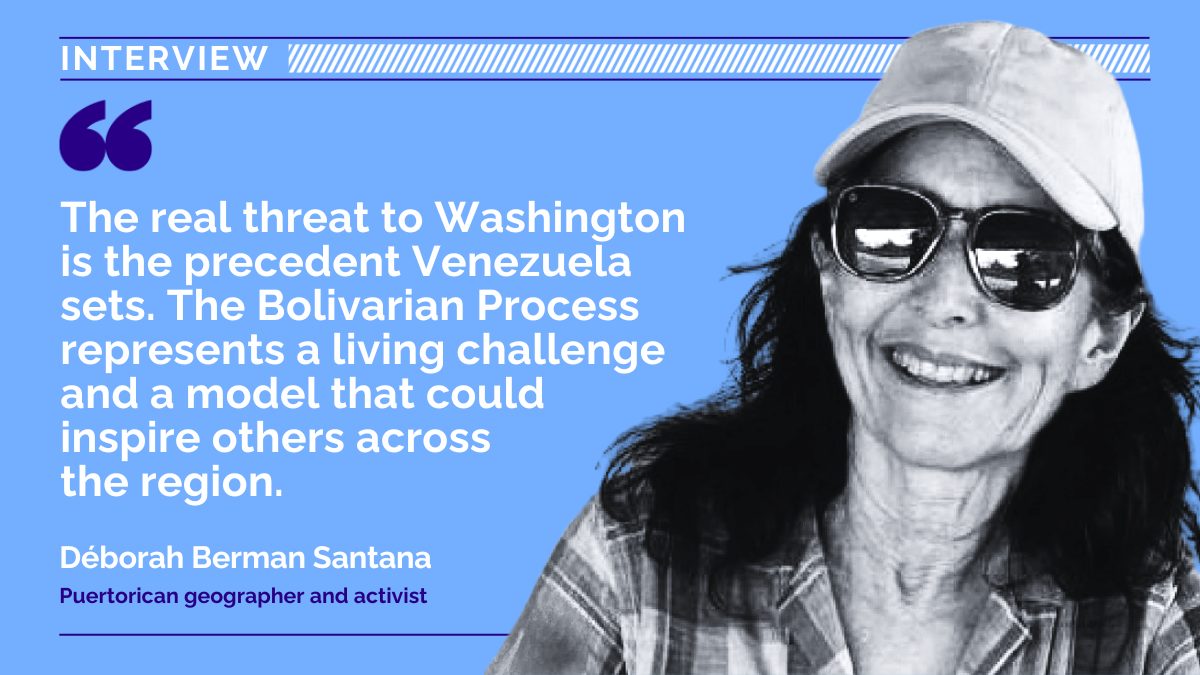
Puerto Rico, US Imperialism and Venezuela’s Defiant Sovereignty: A Conversation with Déborah Berman Santana

As the United States reasserts its hemispheric priorities in its recent National Security Strategy document, Latin America and the Caribbean are once again cast as a zone of interest, with Venezuela squarely in Washington’s sights. Puerto Rico—still a US colony more than a century after the 1898 invasion—plays a central role in this imperial architecture, serving as both a military platform and a living example of colonial rule in the region. 

Cira Pascual Marquina spoke with Puerto Rican geographer, author, and longtime activist Déborah Berman Santana about the continuity of US imperialism, the island’s strategic function in projecting imperialist military power in the region, and why Venezuela’s insistence on sovereignty represents such a profound threat to US interests. 

Drawing on decades of grassroots struggle against militarization, including the successful campaign to halt US Navy bombings in Vieques, Berman Santana situates today’s escalation against Venezuela within a broader history of colonial control, neocolonial coercion, and popular resistance in the continent.

The US has just issued a new National Security Strategy document that shifts its focus to the Western Hemisphere. From your perspective in Puerto Rico, what does this reveal about Washington’s imperial ambitions, and how does it impact the Caribbean and specifically Venezuela?

From Puerto Rico, and with the history of US-Latin American relations in mind, what is being presented as a “new” security strategy is really the old one. Even before the Monroe Doctrine, Thomas Jefferson was already worried that Spain’s colonies might become independent before the United States was strong enough to take control of them. Hemispheric domination has always been central to US policy.

What this document makes clear is that Washington wants absolute control over the Western Hemisphere, regardless of what happens elsewhere in the world or how competition with China or Russia evolves. When US officials say “America for the Americans,” they mean the entire hemisphere for the United States: its peoples and its resources, all under US imperialist control.

The Caribbean is still referred to as the US “backyard,” even by sectors of the US left. Venezuela’s oil—the largest proven reserves on the planet—is treated as US oil. Bolivia’s lithium is viewed as US lithium. The strategy simply reasserts the United States as the dominant power, the plantation owner of the hemisphere.

There is nothing new in this policy paper except how openly it is stated. I don’t believe the substance would be radically different under a Democratic administration; it would simply be expressed in more polite language.

Puerto Rico is identified as a US “territory,” but in reality, it’s an occupied colony. How does that colonial status enable the buildup of US bases and military deployments, and why is Puerto Rico so central to projecting imperialist power in the Caribbean, especially toward Venezuela?

In the US Constitution, “territory” essentially means property. The US Supreme Court has defined Puerto Rico as an unincorporated territory belonging to, but not part of, the United States. “Unincorporated” means there is no obligation to ever make Puerto Rico a state.

The simplest analogy is a pair of shoes: they belong to you, but they are not part of you, and you can dispose of them at will. That is how Puerto Rico is legally understood. We don’t even have the limited sovereignty administratively allowed for Native peoples in the US. This is not my opinion; it is established by Supreme Court rulings.

This colonial condition makes militarization extremely easy. For roughly twenty years there was a visible reduction in US military presence, but that period is clearly over. The US does not need to negotiate with us. If it chooses to offer compensation, it may, but it is under no obligation.

There are six US military bases in Puerto Rico. Four were never meaningfully demilitarized. Two—Ramey in Aguadilla and Roosevelt Roads in Ceiba—were supposedly closed and slated for civilian redevelopment. In practice, that process has been partial at best.

I live near Ceiba, and since the summer, there has been a dramatic increase in military air traffic. The airstrip, which had been used for regional civilian flights since 2004, is now filled with F-35s, Hercules aircraft, and Ospreys. No permission was requested. The military simply took it over.

If the US decides to deploy additional warships or aircraft carrier groups—as it recently did with the USS Gerald R. Ford—it can do so without even consulting us. Whether this is intended as a prelude to an actual attack on Venezuela or primarily as pressure, it clearly sends a message.

It is the logic of a bully: “I am here, and I am ready to hurt you unless you comply.” Even without an invasion, the buildup is meant to force concessions, deepen internal divisions, or provoke instability in Venezuela. I doubt this will succeed, given Venezuela’s strong commitment to sovereignty, but it clearly reflects the US’ strategic thinking.

Venezuela faces escalating economic, political, and military pressure. Why is the Bolivarian Revolution perceived as such a threat to US imperialist interests?

The United States seeks to remain the dominant global power, but when that dominance is challenged—especially by China—it insists on absolute control of this hemisphere. In this worldview, Latin America and the Caribbean are US turf: their resources belong to Washington, and their peoples are treated, implicitly, as subjects.

What the US will not accept is a country that insists on real sovereignty, a country that engages with Washington as an equal. Venezuela’s decision to control its own resources and choose its own trading partners is intolerable to US policymakers.

That is why Cuba has faced a blockade for more than sixty years, why Nicaragua is targeted, and why Venezuela is now under such intense pressure. A Russian ship making a courtesy visit to Venezuela or expanded ties with China are treated not as sovereign decisions, but as provocations.

The real threat to Washington is not Venezuela in isolation, but the precedent it sets. The Bolivarian process represents a living challenge and a model that could inspire others across the region. That is why US policy aims either to overthrow the government or to force it to abandon its sovereign course.

And it would not stop with Venezuela: Cuba would be next, and Nicaragua would follow. Donald Trump has openly warned Colombia’s President Gustavo Petro that they could also “be next.” This military buildup sends a message to all of Latin America and the Caribbean—Mexico included—about the limits Washington seeks to impose on sovereignty.

As one billionaire ally of Trump [Elon Musk] once crudely said about Bolivia’s lithium: “We coup whoever we want.” It may sound blunt, but it reflects a long-standing reality. When US interests are challenged, it resorts to coups—soft or hard. It prefers banks over tanks, but ultimately it will do whatever is necessary to maintain imperialist control.

While Puerto Rico is under direct colonial rule, much of Latin America faces neocolonial domination. How do these models operate together today?

Puerto Rico is a colony with no sovereignty, now effectively governed by a fiscal control board imposed by the US Congress. Appointed under Obama and maintained by subsequent administrations, this unelected body can veto budgets and policies. Its priority is not social well-being, but debt repayment—most of it owed to Wall Street hedge funds.

This structure enforces privatization: electricity, education, and public services. Environmental protections are also under attack. But colonialism works by degrees. A country can be formally independent and still be coerced through debt, IMF pressure, financial blackmail, economic war, etc.

Chile’s water privatization after the Pinochet coup is one example. Haiti is another—it is formally independent, yet occupied and burdened with illegitimate debt. Elsewhere, intervention comes through NGOs, the National Endowment for Democracy, election interference, or direct coups, as in Honduras in 2009.

In Venezuela, when the right wing loses elections, the US cries fraud. When it wins, there is silence. This selective logic serves as justification for sanctions, isolation, and ultimately military threats.

The US justifies its military buildup in the Caribbean using anti-drug rhetoric. What does this narrative conceal?

Historically, Washington claimed to be fighting communism. Later, it was terrorism. Now the target is supposedly drugs. Yet it is widely known that drug demand is driven by the United States itself, and that many of its closest allies have been deeply involved in drug trafficking. It’s allowed as long as they remain politically obedient.

Meanwhile, fisherfolk across the Caribbean are targeted and killed under the pretext of drug interdiction, without evidence and without inspections. This is not about drugs. It is about control.

Most people understand this, even within the United States. The real objective is hemispheric domination and control over strategic resources—above all, Venezuelan oil.

Puerto Rico has a long history of resistance to militarization. How do those struggles connect today with Venezuela and the broader region?

Puerto Rico has consistently resisted US militarism. The struggle against US Navy bombings in Vieques was long and difficult, but it ended in a victory: the base was shut down. Although the land has yet to be fully cleaned up or returned to the community, the pueblo won that battle.

The same anti-militarist, independentista, and socialist forces that fought in Vieques continue to resist today, grounded in the understanding that Puerto Rico is part of the Caribbean and Latin America. Simón Bolívar himself insisted that his liberation project would remain incomplete without Cuba and Puerto Rico.This struggle is far from over. It will not be complete until Puerto Rico is free and can stand alongside Venezuela, Cuba, and other pueblos of the region in a hemisphere that truly belongs to its people—free, just, and sovereign.

Source link