Mali and Burkina Faso have announced they are imposing full visa bans on United States citizens in retaliation for US President Donald Trump’s ban on US visas for their citizens this month.
The two West African countries, which are both governed by the military, on Tuesday became the latest African nations to issue “tit-for-tat” visa bans on the US. These follow Trump’s new visa restrictions, which now apply to 39 countries in Africa, Asia, the Middle East and Latin America. The White House said they were imposed on “national security” grounds.
Recommended Stories
list of 4 itemsend of list
“In accordance with the principle of reciprocity, the Ministry of Foreign Affairs and International Cooperation informs the national and international community that, with immediate effect, the Government of the Republic of Mali will apply the same conditions and requirements to US nationals as those imposed on Malian citizens,” the Malian ministry said in a statement.
Burkina Faso’s foreign minister, Karamoko Jean-Marie Traore, in a separate statement similarly cited a reciprocity rule for his country’s visa ban.
Which countries have issued bans on visas for US citizens?
The US directive issued on December 16 expanded full US visa bans to citizens of five nations other than Mali and Burkina Faso: Laos, Niger, Sierra Leone, South Sudan and Syria.
Travellers holding travel documents issued by the Palestinian Authority were also banned from entering the US under the order.
The US cited the countries’ poor screening and vetting capabilities, information-sharing policies, visa overstay rates and refusal to take back their deported nationals for the ban.
Trump’s order also noted countries were additionally assessed based on whether they had a “significant terrorist presence”.
The US ban takes effect on Thursday.
Mali, Burkina Faso and neighbouring Niger have been plagued by violence from armed groups linked to al-Qaeda and ISIL (ISIS) for years. The violence in those countries has displaced millions of civilians.
On Friday, Niger banned entry for US citizens, also citing the US ban on its citizens. The country is also military-led like its neighbours Mali and Burkina Faso. All three formed the Alliance of Sahel States in July 2024 to tackle security problems and improve trade relations.
In its own reciprocal move, Chad stopped issuing visas to US citizens on June 6 with an exception for US officials. Only US citizens who were issued visas before June 9 are now allowed entry into Chad.
The country was on an initial list of 12 nations whose citizens the Trump administration issued a full visa ban on from June 9.
Burkina Faso President Ibrahim Traoré, second from left, walks alongside Malian President Assimi Goïta during an Alliance of Sahel States summit on security and development in Bamako, Mali, on December 23, 2025 [Handout/Mali government information centre via AP]
Which countries are affected by the US visa bans?
Citizens of 39 countries are now under full or partial entry restrictions to the US, according to the US-based Council on Foreign Relations think tank.
Those fully banned are:
Afghanistan
Burkina Faso
Chad
Equatorial Guinea
Eritrea
Haiti
Iran
Laos
Libya
Mali
Myanmar
Niger
Republic of Congo
Sierra Leone
Somalia
South Sudan
Sudan
Syria
Yemen
Holders of travel documents issued by the Palestinian Authority are also fully banned.
Those partially restricted are:
Angola
Antigua and Barbuda
Benin
Burundi
Cuba
Dominica
Gabon
The Gambia
Ivory Coast
Malawi
Mauritania
Nigeria
Senegal
Tanzania
Togo
Tonga
Turkmenistan
Venezuela
Zambia
Zimbabwe
Is Trump specifically targeting African countries with visa bans?
Trump’s approach to Africa regarding visa entries in his second term as US president is similar to that of his first administration when he issued a “Muslim ban”, which included citizens of three African nations – Somalia, Sudan and Libya – as well as Yemen, Syria, Iraq and Iran.
In later updates to the ban, Sudan was removed while Chad was added.
Most countries under US entry restrictions since Trump took office on January 20 are in Africa. Of the 39 affected countries, 26 are African nations.
How have US-Africa trade relations fared under Trump?
Tradewise, the US has shifted away from its preferential African Growth and Opportunity Act (AGOA) trade programme to a tariff-based regime that has also been applied to most other countries around the world under Trump’s tariffs policy.
From 2000, AGOA provided African nations with duty-free access to US markets, bolstering African exports to the US of a wide range of goods, from wine to cars.
AGOA created an estimated 300,000 jobs in African countries and indirectly sustained another 1.2 million jobs, according to the US-based Center for Strategic International Studies.
However, AGOA expired in September after the US Congress failed to renew it. Although the Trump administration said it supported a one-year extension, no steps have been announced to revive the programme.
Instead, African countries now face often steep tariffs as the US sometimes justifies them on political grounds.
South African President Cyril Ramaphosa met with Trump at the White House in May and explained that crime in the country targets the population at large – not just its white citizens – but was unable to persuade Trump.
Trump’s administration is also prioritising its access to critical rare earth minerals, used to develop high-tech devices, in a bid to remain competitive with China, which mines about 60 percent of the world’s rare earth metals and processes 90 percent of them.
Trump took up a mediator role in the conflict between the Democratic Republic of the Congo (DRC) and neighbouring Rwanda this year after the DRC government proposed a minerals deal with the US. The US and United Nations accuse Rwanda of backing a rebellion by the M23 armed group in the eastern DRC.
Trump did not commit to US military intervention in the DRC but successfully secured a peace pact between the two countries on December 4 after applying diplomatic pressure on Rwanda.
Aid groups have since reported rising hunger in northern Nigeria, Somalia and northeastern Kenya.
Health observers and analysts have also raised the alarm about the risk of undoing work to prevent and contain the spread of HIV in Lesotho and South Africa.
In northern Cameroon, officials have reported a spike in malaria deaths as drug supplies fall. This month, the US unilaterally pledged $400m in health funding to the country over the next five years on the condition that Cameroon raises its own annual health spending from $22m to $450m.
African nations were also most affected when Trump recalled 30 career diplomats appointed by former President Joe Biden from 29 countries last week.
Fifteen of them had been stationed in African nations: Algeria, Burundi, Cameroon, Cape Verde, Gabon, Ivory Coast, Egypt, Madagascar, Mauritius, Niger, Nigeria, Rwanda, Senegal, Somalia and Uganda.
Meanwhile, the US has continued to intensify strikes against armed groups linked to ISIL and al-Qaeda, similar to those during Trump’s first term as president from 2017 to 2021.
In Somalia, the US launched strikes in September targeting al-Shabab and the ISIL affiliate in Somalia Province, according to the US-based New America Foundation think tank.
The US also targeted ISIL- and al-Qaeda-linked groups in northwestern Nigeria for the first time on Thursday.
While those strikes were carried out in collaboration with the Nigerian government, a war of narratives prevailed between the two countries.
The US claims to be “saving” Nigerian Christians, who it alleges are experiencing a genocide.
Nigerian authorities, on the other hand, deny claims of genocide and say people of all religions have been badly affected by armed groups operating in the country.
Dec. 31 (UPI) — Two African countries have announced travel bans against U.S. citizens in retaliation for President Donald Trump‘s travel bans against their own people.
The governments of Mali and Burkina Faso said on Tuesday that they were acting “in accordance with the principle of reciprocity.” They said Americans wanting to travel to their countries would see the same impositions that their citizens face in the United States. Niger’s state news agency announced a travel ban on Americans last week, though no official statement was released.
On Dec. 14, Trump announced travel bans on Burkina Faso, Mali, Niger, South Sudan and Syria. He also created new restrictions on people seeking entry from Laos and Sierra Leone, as well as those with travel documents issued by the Palestinian Authority. There are now 19 countries on the list.
Mali’s foreign ministry said in a statement that it “regrets that such an important decision was taken without any prior consultation and in substance deplores the security grounds put forward, which contradict the actual developments on the ground, in an attempt to justify a decision whose motivation lies elsewhere.”
Niger, Mali and Burkina Faso are led by military juntas after recent coups, The New York Times said. Their leaders had all mostly cut ties with the United States and developed closer relations with Russia, China, Turkey and the United Arab Emirates.
A United Nations report published on Dec. 18 said that the Sahel region — Niger, Burkina Faso and Mali — now accounts for more than half of the world’s terrorism-related deaths.
Laos and Sierra Leone were moved from partial travel restrictions to full bans. The administration put partial restrictions on 15 other countries.
The State Department ban does not affect lawful permanent residents, many existing visa holders, diplomats or athletes traveling for major sports events.
Dec. 31 (UPI) — Former special counsel Jack Smith denied targeting President Donald Trump ahead of the 2024 presidential election while testifying before the House Judiciary Committee on Dec. 17.
He firmly denied pursuing the dual prosecutions against Trump for political reasons, Axios reported.
“I entirely disagree with any characterization that our work was in any way meant to hamper him in the presidential election,” Smith said.
The committee hearing was done behind closed doors, but House Judiciary Chairman Rep. Jim Jordan. R-Ohio, on Wednesday released the transcript and a video of the hearing that lasted for 8 hours and 21 minutes.
Smith led the Biden administration’s effort to prosecute Trump for his handling of classified documents and efforts to overturn the 2020 election results after losing to President Joe Biden.
“The decision to bring charges against President Trump was mine, but the basis for nine of those charges rests entirely with President Trump and his actions, as alleged in the 10 indictments returned by grand juries in two different districts,” Smith told House Judiciary Committee members.
He said he was deciding whether to charge alleged co-conspirators for attempting to overturn the 2020 election results, but Trump’s election win in 2024 halted the investigation.
Smith said Rudy Giuliani and Boris Epshteyn were among the Trump associates his prosecutorial team had interviewed but did not charge with alleged crimes.
When asked why he didn’t charge those two and others with lesser crimes to force them to testify against Trump, Smith said the case had plenty of evidence and no other witnesses were needed.
Smith did not offer any information to the committee that was not already publicly available regarding Trump’s handling of classified documents because U.S. District Court of Southern Florida Judge Aileen Cannon ordered him to keep the relevant contents of a 137-page case report private, he told the committee.
He said Giuliani did not believe the claims that he had made regarding voter fraud during the 2020 election and “disavowed a number of the claims,” which he excused as “mistakes or hyperbole,” Smith said.
The former special counsel also acknowledged that testimony by former White House aide Cassidy Hutchinson was based on hearsay and inadmissible in court.
Hutchinson claimed she was told Trump had become very angry when told that his driver was taking him to the White House instead of the Capitol and tried to grab the steering wheel of an SUV in which he was being transported during the Jan. 6, 2021, demonstration at the Capitol that devolved into a riot.
She made the claim privately and before an ad-hoc House select committee, the members of which then-House Speaker Nancy Pelosi, D-Calif., had chosen and mostly were Democrats.
Her account was not corroborated by others with firsthand information, Smith said.
He told the committee that Trump was the most responsible party for the Jan 6 demonstration that became a riot by stirring distrust and making false statements and refused to stop the riot.
Smith said he would pursue charges against the president again if given the chance to do so.
The Graham Norton New Year’s Eve Show on BBC One, which featured actors Will Arnett and Owen Cooper as guests, looked back at the highlights – and low points – of 2025
01:22, 01 Jan 2026Updated 01:25, 01 Jan 2026
Graham Norton entertained viewers on BBC One last night(Image: BBC)
During his review of 2025, the veteran broadcaster was quick to turn his attention to the US President’s visit to the UK to meet the Royal Family. Graham, 62, flashed up a photo of Melania Trump wearing a wide-brimmed purple hat and joked she looked like “a lamp”.
He then quipped that the statement headwear may have been worn to stop her husband from leaning in for a kiss — setting the tone for a night of trademark digs just minutes into The Graham Norton New Year’s Eve Show on BBC One.
The Irish comedian kept the jokes rolling, leaning into the moment as he told viewers: “He was welcomed by the King and Queen, who were clearly happy to be photographed with him — Melania, not so much.” When the camera cut back to Melania’s oversized purple hat, Graham quipped: “I’m just a lamp. Please ignore me, I’m just a lamp,” before repeating, “Just ignore me,” while playfully mimicking her accent.
Yet, Graham took the gag further, Express.co.uk reports. He added: “Actually there is a security reason why Melania always wears a hat.. A nice wide brim can literally save her from a fate worse than death”” before footage showed Mr Trump attempting to kiss her on the cheek — only to be blocked by the hat.
Graham looked back at the highlights — and low points — of 2025 on the festive edition of his programme. His savage swipes came minutes into the episode of the BAFTA-winning chat show, pre-recorded ahead of its BBC One and iPlayer broadcast.
Tom Hiddleston, Laura Dern and Will Arnett, alongside Owen Cooper, Carey Mulligan and Tim Key joined Graham on the red sofa to ring in the new year. Alison Limerick provided the night’s music by performing her dance classic Where Love Lives.
The BBC recommissioned the programme for three more series earlier this year. Speaking at the time, the broadcaster said the programme remains one of its biggest entertainment successes, averaging 2.9 million viewers per episode across its most recent run and continuing to pull in huge numbers across social platforms including YouTube, TikTok and Instagram.
Graham, born in Dublin, Ireland, said hosting the programme remained both “a pleasure” and a “privilege”, teasing that the team were already looking ahead to welcoming more global stars onto the sofa.
This year’s New Year’s Eve line-up reflected that star power, with Hollywood names, British comedy favourites and breakout TV stars all joining Graham to look back on 2025.
The National Guard will be withdrawn from Chicago, Los Angeles and Portland, Ore., amid legal challenges to their use and a Supreme Court ruling against the Chicago deployment, President Donald Trump said on Wednesday. Photo by Bonnie Cash/UPI | License Photo
Dec. 31 (UPI) — The National Guard will be leaving Chicago, Los Angeles and Portland, Ore., but they likely will return, President Donald Trump said on Wednesday.
Trump announced the withdrawals after the Supreme Court ruled against a National Guard deployment in Chicago and amid legal challenges in California and Oregon.
The Supreme Court last week ruled the federal government cannot take control of respective state National Guard units to protect federal agents as they enforce immigration law, CNN reported.
We are removing the National Guard from Chicago, Los Angeles and Portland, despite the fact that crime has been greatly reduced by having these great patriots in those cities, and only by that fact,” Trump said in a Truth Social post on Wednesday.
Portland, Los Angeles and Chicago were gone if it weren’t for the federal government stepping in,” the president said.
He predicted the National Guard will return to those cities, though.
“We will come back, perhaps in a much different and stronger form, when crime begins to soar again,” Trump said, adding: “Only a question of time!”
Similar National Guard deployments in New Orleans and Memphis would not be affected because the respective governors in those states have okayed the deployments.
The National Guard has been deployed in Memphis to help reduce violent crime there, and National Guard units began arriving in New Orleans ahead of New Year’s Eve, the annual Sugar Bowl and Mardi Gras.
Local, state and federal law enforcement and the Louisiana National Guard seek to prevent a repeat of last year’s lone-wolf attack by an ISIS supporter, WWLTV reported.
Shamsud-Din Jabbar, 42, was a U.S. citizen from Texas who drove to New Orleans and shot and killed 14 during the early morning hours on Jan. 1.
An ISIS flag was found in his truck, along with weapons and a potential improvised explosive device, but local police shot and killed him before he could cause more harm.
He had placed two IEDs on Bourbon Street, where he also opened fire with a rifle and killed 14 before being shot and killed to end the attack.
Federal investigators found bomb-making materials in a rental home that Jabbar briefly occupied and tried to set on fire to conceal his crimes.
US president backs away from troop deployment to US cities amid legal setbacks, vows return when crime ‘begins to soar’.
United States President Donald Trump announced he is ceasing his efforts to deploy federal troops to several Democratic-led cities in a major policy pivot.
The announcement on Wednesday comes amid a series of legal setbacks to Trump’s efforts to deploy National Guard members to Chicago, Illinois; Los Angeles, California; and Portland, Oregon.
Recommended Stories
list of 3 itemsend of list
In a post on Truth Social, Trump said he’s “removing” the National Guard from those cities, although their deployment was already mostly limited by lower courts.
“We are removing the National Guard from Chicago, Los Angeles and Portland, despite the fact that CRIME has been greatly reduced by having these great Patriots in those cities, and ONLY by that fact,” he said.
Despite the claim, the National Guard has been barred from taking direct part in law enforcement, which remains illegal under US law. Trump had not invoked the Insurrection Act of 1807, which allows presidents to deploy troops domestically when “unlawful obstructions, combinations, or assemblages, or rebellion” against the federal government make it “impracticable to enforce” US law “by the ordinary course of judicial proceedings”.
Because of that, troops deployed in or around Los Angeles, Portland and Chicago had been largely tasked with guarding federal buildings and offering support services to immigration enforcement.
About 300 National Guard members remained under federal control in both Los Angeles and Chicago at the time of Trump’s announcement, with 200 more in Portland.
Since first deploying the National Guard in Los Angeles to respond to protests against mass immigration enforcement sweeps, Trump has repeatedly claimed major cities across the US have been plagued by overlapping crime and immigration crises.
Critics have accused Trump of taking part in dangerous political theatre to target opponents.
Trump’s announcement did not reference the ongoing National Guard deployment in Washington, DC, a federal territory, or in New Orleans, Louisiana, which had been specifically requested by the state’s Republican governor.
Legal setbacks
The president’s move comes amid a series of legal setbacks, topped last week by a Supreme Court order keeping in place a lower court’s ruling barring the president from deploying the National Guard to Chicago.
While members of the federal military, National Guard troops are typically deployed at the request of state governors. Presidents can unilaterally deploy the National Guard, but only in instances when other federal agents can no longer execute the law.
The majority of Supreme Court justices ruled Trump has not yet met that threshold, dealing a major blow to the administration’s justification for similar deployments across the country.
Earlier on Wednesday, Department of Justice lawyers in California withdrew a request to keep troops in the state under federal control as they appealed a lower court’s ruling. That ruling by US District Judge Charles Breyer said the troops must be returned to state control.
In a post on X, the office of California Governor Gavin Newsom, a Democrat and top Trump critic, said the “admission by Trump and his occult cabinet members means this illegal intimidation tactic will finally come to an end”.
Newsom and his staff “look forward” to a more lasting court ruling on the issue.
For his part, Trump, in his Truth Social post, said he would not hesitate to redeploy troops.
“We will come back, perhaps in a much different and stronger form, when crime begins to soar again – Only a question of time!” he said.
The United States Department of the Treasury has issued a new round of sanctions aimed at isolating Venezuela’s oil industry, as part of President Donald Trump’s pressure campaign against the South American country.
The sanctions announced on Wednesday target four companies and their associated oil tankers, which are allegedly involved in transporting Venezuelan oil.
Recommended Stories
list of 3 itemsend of list
Trump has claimed that Venezuelan leader Nicolas Maduro leads a so-called “narco-terrorist” government that seeks to destabilise the US, a charge repeated in the latest sanctions announcements.
“Maduro’s regime increasingly depends on a shadow fleet of worldwide vessels to facilitate sanctionable activity, including sanctions evasion, and to generate revenue for its destabilizing operations,” the Treasury said on Wednesday.
Petroleum is Venezuela’s primary export, but the Trump administration has sought to cut the country off from its international markets.
Wednesday’s notice accuses four tankers – the Nord Star, the Rosalind, the Valiant and the Della – of helping Venezuela’s oil sector to circumvent existing sanctions, thereby providing the “financial resources that fuel Maduro’s illegitimate narco-terrorist regime”.
“President Trump has been clear: We will not allow the illegitimate Maduro regime to profit from exporting oil while it floods the United States with deadly drugs,” said Treasury Secretary Scott Bessent.
“The Treasury Department will continue to implement President Trump’s campaign of pressure on Maduro’s regime.”
Claims on Venezuelan oil
The sanctions come a day after Washington imposed sanctions on a separate Venezuelan company it says assembled drones designed by Iran.
In recent months, the Trump administration has cited several motives for ratcheting up pressure against Venezuela, ranging from immigration to Maduro’s contested election in 2024.
Trump, for instance, has framed the pressure campaign as a means of stemming the trade of illegal drugs, despite Venezuela exporting virtually none of the administration’s main target, fentanyl.
Critics have also accused Washington of seeking to topple Maduro’s government to take control of the country’s vast oil reserves.
Trump officials have fuelled those suspicions with remarks seeming to assert ownership over Venezuela’s oil.
On December 17, a day after Trump announced a “total and complete blockade” of sanctioned oil tankers entering and leaving Venezuela, his top adviser, Stephen Miller, claimed that the US “created the oil industry in Venezuela”.
He suggested that the oil was stolen from the US when Venezuela nationalised its petroleum industry, starting in 1976.
That process accelerated after the 1998 election of socialist President Hugo Chavez, who reasserted state control over Venezuela’s oil sector, ultimately leading to the seizure of foreign assets in 2007.
That “tyrannical expropriation” scheme, Miller alleged, “was the largest recorded theft of American wealth and property”.
Still, one major US oil company, Chevron, continues to operate in the country.
Trump has echoed Miller’s claims, writing online that the US “will not allow a Hostile Regime to take our Oil, Land, or any other Assets”.
He added that all of those assets “must be returned to the United States, IMMEDIATELY”.
Military build-up in the Caribbean
In recent months, the Trump administration has tightened its focus on Venezuela’s oil industry, taking a series of military actions against tankers.
On December 10, the administration seized its first tanker, the Skipper, followed by a second seizure 10 days later.
The US military has reportedly been pursuing a third tanker as it crosses the Atlantic Ocean.
The attacks on the oil tankers come several months after the US began surging aircraft, warships and other military assets to the Caribbean region along Venezuela’s coast.
Since September 2, the US military has conducted dozens of bombing campaigns against alleged drug-smuggling boats in international waters in the Caribbean Sea and eastern Pacific, in what rights groups call extrajudicial killings.
More than 100 people have been killed, and the administration has offered scant legal justification for the attacks.
On Monday, Trump told reporters that the US had struck a “dock area” in Venezuela he claimed was used to load the alleged drug boats.
The dock bombing is believed to be the first of its kind on Venezuelan soil, though Trump has long threatened to begin attacking land-based targets.
While the administration has not officially revealed which agency was behind the dock strike, US media has widely reported it was conducted by the Central Intelligence Agency (CIA).
Israeli Prime Minister Benjamin Netanyahu has reached the end of his latest trip to the United States and appears to have gained what he wants from President Donald Trump.
Trump hailed Netanyahu after their meeting on Monday, calling him a “hero” and saying Israel – and by extension its prime minister – had “lived up to the plan 100 percent” in reference to the US president’s signature Gaza ceasefire.
Recommended Stories
list of 4 itemsend of list
That is despite reports emerging last week that US officials were growing frustrated over Netanyahu’s apparent “slow walking” of the 20-point ceasefire plan – imposed by the US administration in October – suspecting that the Israeli prime minister might be hoping to keep the door open to resuming hostilities against the Palestinian group Hamas at a time of his choosing.
Under the terms of that agreement – after the exchange of all captives held in Gaza, living and dead, aid deliveries into the enclave and the freezing of all front lines – Gaza would move towards phase two, which includes negotiations on establishing a technocratic “board of peace” to administer the enclave and the deployment of an international security force to safeguard it.
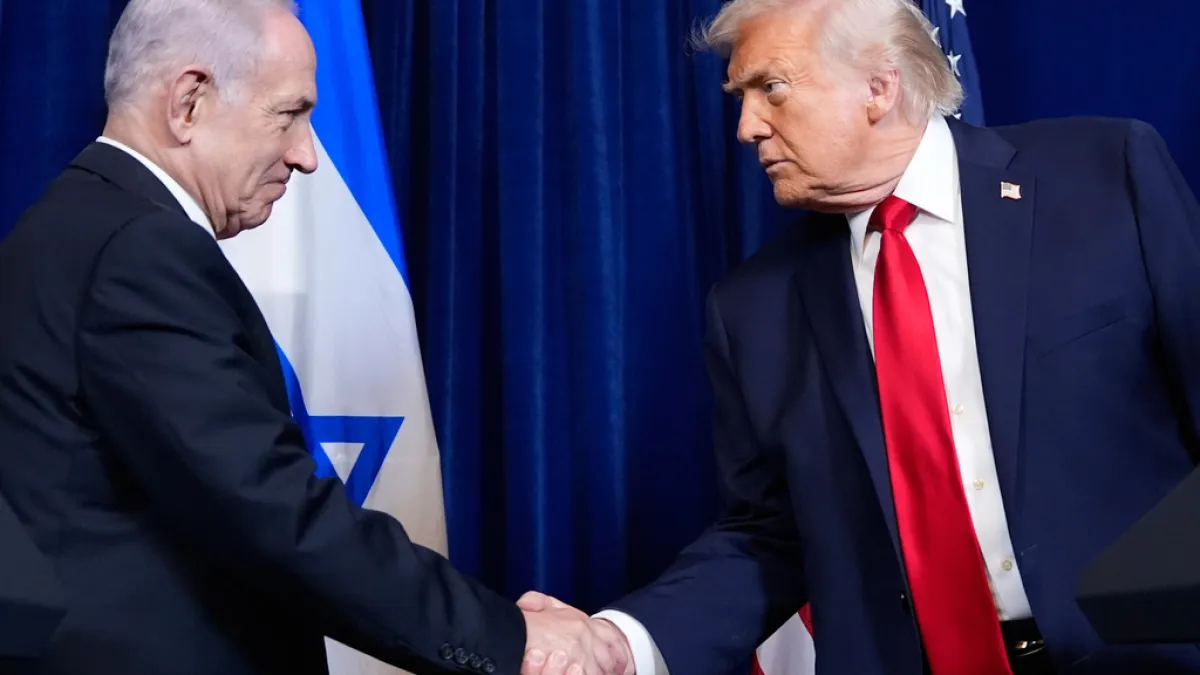
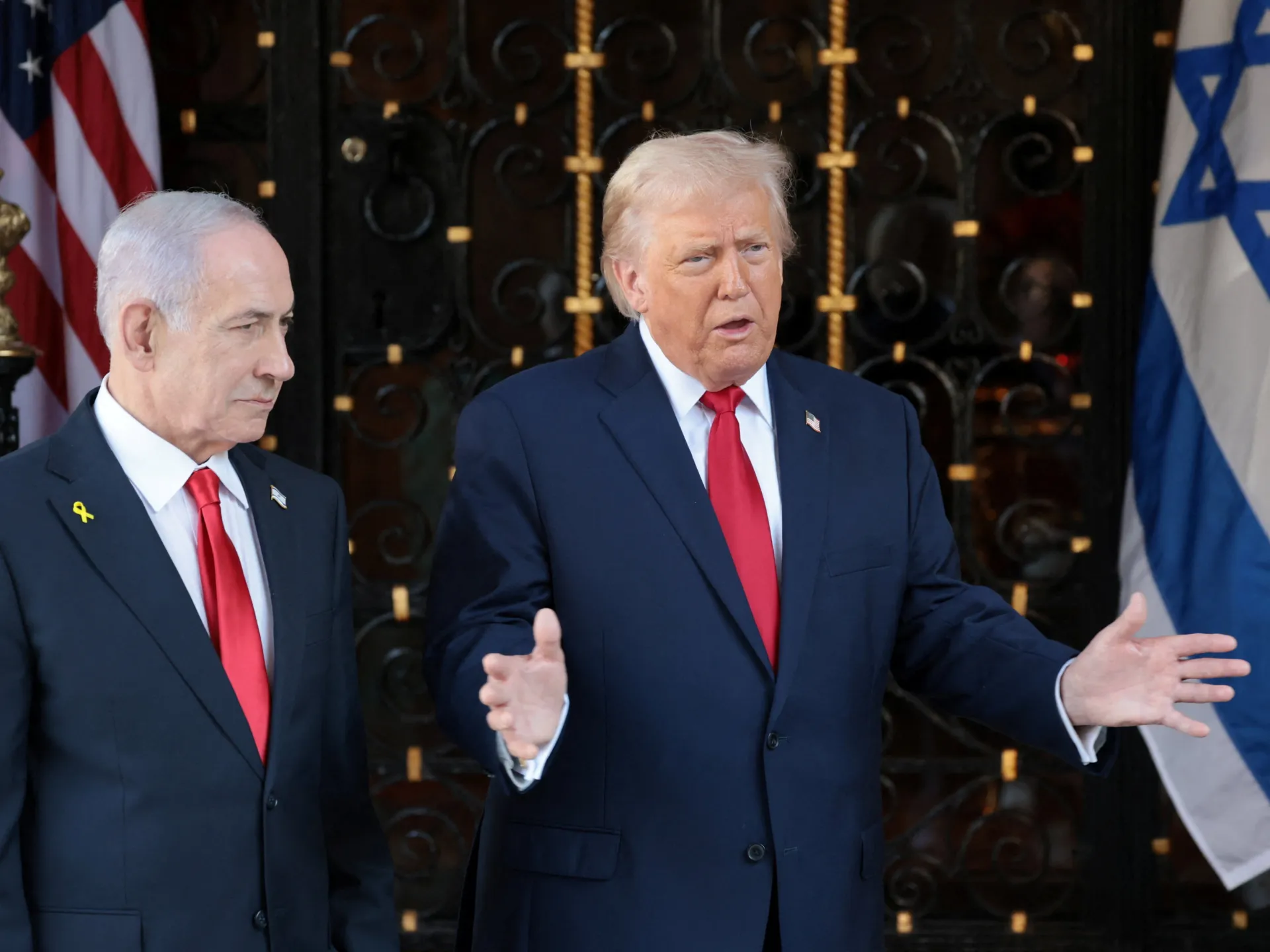
US President Donald Trump, right, called Israeli Prime Minister Benjamin Netanyahu a ‘hero’ during his visit to Trump’s Florida estate on December 29, 2025, saying he had lived up to Trump’s ceasefire plan ‘100 percent’ [Jonathan Ernst/Reuters]
So far, Netanyahu has not allowed in all of the required aid that Gaza desperately needs and is also maintaining that phase two cannot be entered into until Hamas returns the body of the last remaining captive. He has also demanded that Hamas disarms before Israel withdraws its forces, a suggestion fully endorsed by Trump after Monday’s meeting.
Hamas has repeatedly rejected disarmament being forced upon it by Israel, and officials have said that the question of arms was an internal Palestinian matter to be discussed between Palestinian factions.
So is Netanyahu deliberately trying to avoid entering the second phase of the agreement, and why would that be the case?
Here are four reasons why Netanyahu might be happy with things just as they are:
He’s under pressure from his right
Netanyahu’s ruling coalition is, by any metric, the most right wing in the country’s history. Throughout the war on Gaza, the support of Israel’s hardliners has proven vital in shepherding the prime minister’s coalition through periods of intense domestic protest and international criticism.
Now, many on the right, including National Security Minister Itamar Ben-Gvir and Finance Minister Bezalel Smotrich, oppose the ceasefire, protesting against the release of Palestinian prisoners and insisting that Gaza be occupied.
Netanyahu’s defence minister, Israel Katz, has also shown little enthusiasm for honouring the deal his country committed to in October. Speaking at a ceremony to mark the expansion of the latest of Israel’s illegal settlements in the occupied West Bank, Katz claimed that Israel’s forces would remain in Gaza, eventually clearing the way for further settlements.
Katz later walked his comments back, reportedly after coming under pressure from the US.
Israeli Defence Minister Israel Katz [Menahem Kahana/AFP]
He doesn’t want an international force in Gaza
Allowing an international force to deploy to Gaza would limit Israel’s operational freedom, constraining its military’s ability to re-enter Gaza, conduct targeted strikes or pursue Hamas remnants within the enclave.
So far, despite the ceasefire, Israeli forces have killed more than 400 people in the enclave since agreeing to halt fighting on October 10.
Politically, agreeing to an international stabilisation force, particularly one drawn from neighbouring states, would broaden what Israel has often seen as a domestic war into an international conflict with many of the strategic, diplomatic and political decisions over that conflict being made by actors outside of its control.
It could also be framed domestically as a concession forced by the US and international community, undermining Netanyahu’s repeated claims of maintaining Israeli sovereignty and strategic independence.
“If Netanyahu allows a foreign military force into Gaza, he immediately denies himself a large degree of his freedom to operate,” Israeli political analyst Nimrod Flaschenberg said from Berlin. “Ideally, he needs things to remain exactly where they are but without alienating Trump.”
Smoke rises from an Israeli strike on Gaza’s Bureij refugee camp on October 19, 2025, in one of the near-daily attacks Israel has carried out since the ceasefire went into effect [Eyad Baba/AFP]
He wants to resist any progress towards a two-state solution
While not explicitly mentioning a two-state solution, the ceasefire agreement does include provisions under which Israel and the Palestinians commit to a dialogue towards what it frames as a “political horizon for peaceful and prosperous co-existence”.
Netanyahu, however, has been arguing against a two-state solution since at least 2015 when he campaigned on the issue.
More recently, at the United Nations in September, he branded the decision to recognise a Palestinian state “insane” and claimed that Israel would not accept the establishment of a Palestinian homeland.
Israeli ministers have also been at work ensuring that the two-state solution remains a practical impossibility. Israel’s plan to establish a series of new settlements severing occupied East Jerusalem – long considered the future capital of any Palestinian state – from the West Bank would make the establishment of a feasible state impossible.
This isn’t just an unfortunate consequence of geography. Announcing the plans for the new settlements in August, Smotrich said the project would “bury the idea of a Palestinian state”.
Israeli Finance Minister Bezalel Smotrich holds a map near the settlement of Maale Adumim showing a land corridor known as E1, in which Israel plans to build thousands of settler homes and which Smotrich says would ‘bury the idea of a Palestinian state’ [Menahem Kahana/AFP]
A resumption of war would benefit him
Netanyahu faces numerous domestic threats, from his own corruption trial to the potentially explosive issue of forcing conscription on Israel’s ultra-religious students. There is also the public reckoning he faces for his own failures before and during the Hamas-led attacks on southern Israel on October 7, 2023, all of which will fall within a critical election year for the prime minister.
Each of these challenges risks fracturing his coalition and weakening his hold on power. All of them, however, could be derailed – or at least politically blurred – by a new conflict either with Hamas in Gaza, Hezbollah in Lebanon or possibly even with Iran.
Renewed fighting would allow him to once more present himself as a wartime leader, limit criticism and rally both his allies and adversaries around the well-worn flag of “national emergency”.
But Schwartz told Al Jazeera that the trend towards government data consolidation has continued in the decades since, under both Democratic leaders and Republicans.
“Surveillance is bipartisan, unfortunately,” he said.
With Trump’s second term, however, the process hit warp speed. Schwartz argues that the Trump administration’s actions violate laws like the Privacy Act, marking a “dangerous” shift away from Nixon-era protections.
“The number-one problem with the federal government in the last year when it comes to surveillance is the demolition of the Watergate-era safeguards that were intended to keep databases separated,” he said.
Schwartz noted that Trump’s consolidation efforts have been coupled with a lack of transparency about how the new, integrated data systems are being used.
“Just as the current administration has done a great leap forward on surveillance and invading privacy, so it also has been a less transparent government in terms of the public understanding what it is doing,” Schwartz said.
Already, on March 20, Trump signed an executive order that called on government agencies to take “all necessary steps” for the dissolution of what he called “data silos”.
Shortly afterwards, in April, US Immigration and Customs Enforcement (ICE) inked a deal with the IRS to exchange personal information, including the names and addresses of taxpayers.
The memo was seen as an effort to turn private taxpayer data into a tool to carry out Trump’s goal of deporting immigrants.
A federal court in November paused the agencies’ data-sharing agreement. But other efforts continue.
In June, the Supreme Court ruled in favour of giving DOGE access to sensitive Social Security data. And just this month, the Trump administration pressured states to share information about the recipients of food assistance, or else face a loss of funding.
While immigrants appear to be one of the main targets of the data consolidation project, Venzke said that Americans of all stripes should not be surprised if their personal information is weaponised down the line.
“There is no reason that it will be limited to undocumented people. They are taking a system that’s traditionally limited to non-citizens and vastly expanding it to include all sorts of information on US citizens,” Venzke said.
“That was unthinkable just five years ago, but we’re seeing it happen now, and consequently, its potential abuses are widespread.”
A series of 2025 victories, in red and blue states alike, was marked by a striking improvement over the party’s 2024 showing. That over-performance, to use the political term of art, means candidates — including even some who lost — received a significantly higher percentage of the vote than presidential candidate Kamala Harris managed.
That’s a strong signal ahead of the midterm election, suggesting Democratic partisans are energized, a key ingredient in any successful campaign, and the party is winning support among independents and perhaps even a few disaffected Republicans.
Yes, the party suffered a soul-crushing defeat in the presidential race. But 2024 was never the disaster some made it out to be. Democrats gained two House seats and held their own in most contests apart from the fight for the Senate, where several Republican states reverted to form and ousted the chamber’s few remaining Democratic holdouts.
Campaigning to become the party’s chairman, Ken Martin last winter promised to conduct a thorough review of the 2024 election and to make its findings public, as a step toward redressing Democrats’ mistakes and bolstering the party going forward.
”What we need to do right now is really start to get a handle around what happened,” he told reporters before his election.
Now Martin has decided to bury that autopsy report.
“Here’s our North Star: Does this help us win?” he said in a mid-December statement announcing his turnabout and the study’s unceremonious interment. “If the answer is no, it’s a distraction from the core mission.”
There is certainly no shortage of 2024 election analyses for the asking. The sifting of rubble, pointing of fingers and laying of blame began an eye blink after Donald Trump was declared the winner.
There are prescriptions from the moderate and progressive wings of the party — suggesting, naturally, that Democrats absolutely must move their direction to stand any chance of ever winning again. There are diagnoses from a welter of 2028 presidential hopefuls, declared and undeclared, offering themselves as both seer and Democratic savior.
The report Martin commissioned was, however, supposed to be the definitive word from the party, offering both a clear-eyed look back and a clarion way forward.
“We know that we lost ground with Latino voters,” he said in those searching days before he became party chairman. “We know we lost ground with women and younger voters and, of course, working-class voters. We don’t know the how and why yet.”
As part of the investigation, more than 300 Democrats were interviewed in each of the 50 states. But there was good reason to doubt the integrity of the report, even before Martin pulled out his shovel and started digging.
Which is like setting out to solve a murder by ignoring the weapon used and skipping past the cause of death.
Curious, indeed.
Still, there was predictable outrage when Martin went back on his promise.
“This is a very bad decision that reeks of the caution and complacency that brought us to this moment,” Dan Pfeiffer, an alumnus of the Obama White House, posted on social media.
“The people who volunteered, donated and voted deserve to know what went wrong,” Jamal Simmons, a former Harris vice presidential advisor, told the Hill newspaper. “The DNC should tell them.”
The 98-page report said a smug, uncaring, ideologically rigid party was turning off voters with stale policies that had changed little in decades and was unhelpfully projecting an image that alienated minorities and young voters.
Among its recommendation, the postmortem called on the party to develop “a more welcoming brand of conservatism” and suggested an extensive set of “inclusion” proposals for minority groups, including Latinos, Asians and African Americans. (DEI, anyone?)
“Unless changes are made,” the report concluded, “it will be increasingly difficult for Republicans to win another presidential election in the near future.”
Which suggests the Democratic autopsy, buried or otherwise, is not likely to matter a whole lot when voters go to the polls. (It’s the affordability, stupid.)
That said, Martin should have released the appraisal and not just because of the time and effort invested. There was already Democratic hostility toward the chairman, particularly among donors unhappy with his leadership and performance, and his entombing of the autopsy report won’t help.
Martin gave his word, and breaking it is a needless distraction and blemish on the party.
Besides, a bit of thoughtful self-reflection is never a bad thing. It’s hard to look forward when you’ve got your head stuck in the sand.
Settlement comes after US Federal Trade Commission accused the entertainment giant of unlawfully collecting children’s data.
Published On 31 Dec 202531 Dec 2025
Share
Disney has agreed to pay $10m to settle allegations that it breached child privacy laws in the United States, authorities have said.
A federal court approved the settlement to resolve allegations brought by the US Federal Trade Commission, the Department of Justice said on Tuesday.
Recommended Stories
list of 4 itemsend of list
The order also requires Disney to operate its YouTube channel in accordance with data-protection rules and establish a programme to ensure future compliance.
Disney had agreed to settle the claims brought by the US antitrust watchdog in September.
The civil case stems from allegations that Disney collected children’s personal data without parental consent via its videos on YouTube.
Antitrust officials alleged that Disney had wrongly designated more than 300 YouTube videos, including content from The Incredibles, Toy Story, Frozen, and Mickey Mouse, as not being aimed at children.
YouTube requires content creators to designate videos as “Made for Kids” or “Not Made for Kids” to comply with the Children’s Online Privacy Protection Rule.
Under the rule, companies in the US are prohibited from collecting data from children below 13 without parental notification.
Other major companies that have paid settlements under the rule, which has been amended several times since its enactment in 2000, include Google and Microsoft.
Disney did not immediately respond to a request for comment.
“The Justice Department is firmly devoted to ensuring parents have a say in how their children’s information is collected and used,” Assistant Attorney General Brett A Shumate said in a statement.
“The Department will take swift action to root out any unlawful infringement on parents’ rights to protect their children’s privacy.”
Disney, which has its headquarters in Burbank, California, is one of the world’s largest entertainment companies, with revenue for the fiscal year 2025 reaching $94.4bn.
Dec. 30 (UPI) — U.S. Department of Health and Human Services officials have frozen federal child care funding to Minnesota amid accusations of fraud in that state and others.
HHS officials announced the action on Tuesday and credited a viral video that suggests rampant fraud is occurring at Minnesota child care centers that provide daycare services for few, if any, children.
“You have probably read the serious allegations that the state of Minnesota has funneled millions of taxpayer dollars to fraudulent daycares across Minnesota over the past decade,” said Jim O’Neill, HHS deputy secretary, in a social media post on Tuesday.
In response to the “blatant fraud that appears to be rampant in Minnesota and across the country,” O’Neill said HHS officials have taken three actions.
One is to require justification and a receipt or photo evidence before sending federal Administration for Children and Family funds to a state.
“I have demanded from [Minnesota] Gov. Tim Walz a comprehensive audit of these centers,” O’Neill said. “This includes attendance records, licenses, complaints, investigations and inspections.”
Conservative activist Nick Shirley recorded and posted the viral video, which, along with FBI evidence, spurred U.S. Department of Homeland Security Sec. Kristi Noem on Monday to launch what she called a “massive investigation on childcare and other rampant fraud,” according to CBS News.
Minnesota Department of Children, Youth and Families Commissioner Tikki Brown told CBS News the department questions “some of the methods used in the video” but takes the fraud concerns raised in Shirley’s video “very seriously.”
State officials visited some of the daycare centers featured in the video and said two of them were closed earlier this year, but officials at one said they intend to resume operations.
CBS News looked at the records for several of the daycares cited and said all but two have active licenses to operate in Minnesota.
State records show all of the active locations had been visited by state regulators over the past six months, with no evidence of fraud found, but citations were issued for staff training, safety, equipment, and cleanliness violations.
The alleged daycare fraud comes amid federal investigations of 14 Medicaid-funded programs in Minnesota, but none involved child care.
Among them is an investigation into the Feeding Our Future program that was intended to feed at-risk children during the COVID-19 pandemic but has triggered dozens of federal fraud convictions and has embroiled Rep. Ilhan Omar, D-Minn., who helped to promote it.
That alleged fraud cost an estimated $250 million and largely occurred within the Somali community in the greater Minneapolis-St. Paul area, which prompted President Donald Trump to halt Temporary Protected Status for Somalians in Minnesota.
The trouble with prosecutorial independence, however, is that it has not been codified in US law.
Instead, it is a norm that has developed over more than a century, stretching back to the earliest days of the Justice Department.
While the role of the attorney general dates back to 1789, the Justice Department itself is a more recent creation. It was established in 1870, during the Reconstruction period following the US Civil War.
That period was marked by an increasing rejection of political patronage: the system of rewarding political allies with favours and jobs.
Reformers argued that, rather than having law enforcement officers scattered across various government agencies, consolidating them in one department would make them less susceptible to political influence.
That premise, however, has been tested over the subsequent decades, most notably in the early 1970s under then-President Richard Nixon.
Nixon courted scandal by appearing to wield the threat of prosecutions against his political rivals — while dropping cases that harmed his allies.
In one instance, he allegedly ordered the Justice Department to drop its antitrust case against the company International Telephone and Telegraph (ITT) in exchange for financial backing at the Republican National Convention.
Key Justice Department officials were also implicated in the Watergate scandal, which involved an attempted break-in at Democratic Party headquarters.
But Sklansky, the Stanford Law professor, noted that Nixon tended to operate through back channels. He avoided any public calls to prosecute his rivals.
“He believed that, if he called for that openly, he would’ve been pilloried not just by Democrats but by Republicans,” Sklansky said. “And that was undoubtedly true at the time.”
But Sklansky believes the second Trump administration has abandoned such discretion in favour of a public display of power over the Justice Department.
“Trump’s openness about the use of the Justice Department to go after his enemies is really something that is quite new,” he said.
Washington accuses Tehran and Caracas of ‘reckless proliferation of deadly weapons’ amid spiraling tensions.
Published On 30 Dec 202530 Dec 2025
Share
Washington, DC – The United States has issued sanctions against a Venezuelan company over accusations that it helped acquire Iranian-designed drones as Washington’s tensions with both Tehran and Caracas escalate.
The penalties on Tuesday targeted Empresa Aeronautica Nacional SA (EANSA), a Venezuelan firm that the US Department of the Treasury said “maintains and oversees the assembly of” drones from Iran’s Qods Aviation Industries, which is already under sanctions by Washington.
Recommended Stories
list of 3 itemsend of list
The department also sanctioned the company’s chairman, Jose Jesus Urdaneta Gonzalez, accusing him of coordinating “with members and representatives of the Venezuelan and Iranian armed forces on the production of UAVs [unmanned aerial vehicles] in Venezuela”.
“Treasury is holding Iran and Venezuela accountable for their aggressive and reckless proliferation of deadly weapons around the world,” Treasury official John Hurley said in a statement.
“We will continue to take swift action to deprive those who enable Iran’s military-industrial complex access to the US financial system,” he said. The sanctions freeze any assets of the targeted firms and individuals in the US and make it generally illegal for American citizens to engage in financial transactions with them.
In its statement, the US alleged Tehran and Caracas have coordinated the “provision” of drones to Venezuela since 2006.
Iran’s Ministry of Defence and Armed Forces Logistics (MODAFL) has been under US sanctions since 2020 for what Washington said is its role in both selling and procuring weapons. The US is by far the largest weapons exporter in the world.
On Tuesday, the US Treasury Department also imposed new sanctions against several Iranians it accused of links to Iran’s arms industry.
The actions came a day after President Donald Trump threatened more strikes against Iran if the country rebuilds its missile capabilities or nuclear programme.
The US had joined Israel in its attacks against Iran in June and bombed the country’s three main nuclear sites before a ceasefire ended a 12-day escalation.
“Now I hear that Iran is trying to build up again, and if they are, we’re going to have to knock them down,” Trump said on Monday during a joint news conference with visiting Israeli Prime Minister Benjamin Netanyahu. “We’ll knock them down. We’ll knock the hell out of them. But hopefully, that’s not happening.”
“The response of the Islamic Republic of Iran to any oppressive aggression will be harsh and regrettable,” President Masoud Pezeshkian wrote in a social media post.
The Trump administration has also taken a confrontational approach towards Venezuela.
The US president announced this week that the US “hit” a dock in the Latin American country that he said was used to load drug boats. Details of the nature of the strike remain unclear.
Trump and some of his top aides have falsely suggested that Venezuela’s oil belongs to the US. Washington has also accused Venezuelan President Nicolas Maduro, without evidence, of leading a drug trafficking organisation.
The Trump administration has simultaneously been carrying out strikes against what it says are drug-running vessels in the Caribbean Sea and eastern Pacific Ocean, a campaign that many legal experts said violates US and international law and is tantamount to extrajudicial killings.
Over the past month, the US also has seized at least two oil tankers off the coast of Venezuela after Trump announced a naval blockade against the country.
Venezuela has rejected the US moves as “piracy” and accused the Trump administration of seeking to topple Maduro’s government.
Trump is seeking to end protected status for South Sudan, claiming country no longer poses danger to those returning.
Published On 30 Dec 202530 Dec 2025
Share
A federal judge has blocked the administration of President Donald Trump from stripping temporary protections from deportations for South Sudanese citizens living in the United States.
US District Judge Angel Kelley in Boston, Massachusetts, granted an emergency request on Tuesday in a lawsuit filed by several South Sudanese nationals and an immigrant rights group.
Recommended Stories
list of 3 itemsend of list
The order prevents the temporary protected status (TPS) for South Sudanese citizens from expiring on January 5 as the Trump administration has sought.
The lawsuit, led by the African Communities Together, accuses the US Department of Homeland Security of acting unlawfully in its effort to strip South Sudanese citizens of TPS, a US immigration status granted to citizens of countries experiencing natural disasters, conflict or other extraordinary circumstances that could make return to their homelands dangerous.
The status was initially granted for South Sudan in 2011 when the country officially broke away from Sudan. It has been repeatedly renewed amid repeated bouts of fighting, widespread displacement and regional instability.
The status allows eligible individuals to work and receive temporary protection from deportation.
The lawsuit further alleged that the Trump administration exposed South Sudan citizens to being deported to a country facing what is widely considered one of the world’s worst humanitarian crises.
Homeland Security Secretary Kristi Noem, in a notice published on November 5, had argued the country no longer met the conditions for TPS.
“With the renewed peace in South Sudan, their demonstrated commitment to ensuring the safe reintegration of returning nationals, and improved diplomatic relations, now is the right time to conclude what was always intended to be a temporary designation,” she said, appearing to refer to a tenuous 2018 peace agreement.
The statement contradicted the findings of a panel of United Nations experts, who wrote in a report to the UN Security Council in November that “while the contours of the conflict may be altered, the resulting human suffering has remained unchanged.”
“Ongoing conflict and aerial bombardments, coupled with flooding and the influx of returnees and refugees from the Sudan, have led to near-record levels of food insecurity, with pockets of famine reported in some of the communities most affected by renewed fighting,” it added.
The Trump administration has increasingly targeted TPS as part of its crackdown on immigration and its mass deportation drive.
It has moved to similarly end TPS for foreign nationals from countries including Syria, Venezuela, Haiti, Cuba and Nicaragua, prompting several court challenges.
It has also sought to deport individuals to countries in Africa, even if they have no ties there.
A passenger looks at an LED board showing delayed flights during the Chinese military live-fire drills around Taiwan, in Taipei, Taiwan, Tuesday. China is conducting live-fire drills in five designated maritime and airspace zones around Taiwan. Photo by Richie B. Tongo/EPA
Dec. 30 (UPI) — China continued its live-fire drill called “Justice Mission 2025,” on Tuesday creating a blockade around Taiwan and disrupting flights, but President Donald Trump said he’s not worried.
Reporters asked Trump about the drills Monday, and he said he has a “great relationship with President Xi [Jinping], and he hasn’t told me anything about it.”
“I certainly have seen it … I don’t believe he is going to be doing it,” Trump said. He didn’t elaborate on what he meant that Xi could do. “Nothing worries me.”
“They’ve been doing naval exercises for 20 years in that area,” he told reporters.
Trump is expected to make a formal visit to Beijing next year.
Though Taiwan is a self-governing democracy, China claims it is a Chinese province. China has been pushing for a “peaceful reunification” with Taiwan. But it hasn’t ruled out taking the island nation by force.
On Friday, China sanctioned U.S. companies and their leadership after the United States announced an $11.1 billion arms deal with Taiwan on Dec. 18.
Taiwan’s Ministry of National Defense said it detected 130 Chinese military aircraft and 22 naval and coast guard vessels in the past 24 hours up to 6 a.m. Tuesday.
“China ignores the expectations of the international community for peace and persists in destroying regional stability with military threat, which is a blatant provocation to regional security and international order, and I would like to express my strongest condemnation,” President Lai Ching-te said Tuesday in a Facebook post.
Lai also said the drills were disrupting trade and air traffic.
“China’s military provocations along the First Island Chain severely disrupt global maritime trade, air traffic and regional peace. #Taiwan continues to act responsibly, neither escalating tensions nor yielding to threats – we will steadfastly defend our freedom against coercion,” he said on X.
Taiwan Defense Minister Wellington Koo said the drills disregarded international norms and “clearly aim to achieve cognitive warfare and deplete Taiwan’s combat capabilities … and to create division and conflict within Taiwanese society,” The Guardian reported.
This exercise is the sixth of its kind since 2022, though it’s the largest. In 2022, the drills were in retaliation for then-Speaker of the House Nancy Pelosi‘s visit. But this is the first time since then that China has created “maritime exclusion zones.” Planes and boats were not allowed to pass during the drills.
Dec. 30 (UPI) — Ukrainian President Volodymyr Zelensky accused Russia of lying over a large-scale drone attack on President Vladimir Putin’s state residence 300 miles northwest of Moscow, which it claims was carried out by Kyiv.
Monday’s alleged attack shortly after high-level U.S.-Ukraine talks at Mar-a-Lago ended was an excuse to attack Ukraine, most likely Kyiv and government buildings there, and keep the war going, Zelensky told reporters.
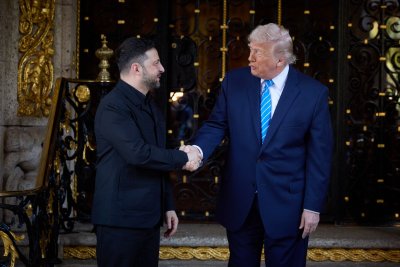
Zelensky said it was no accident that Moscow announced the attack after he and U.S. President Donald Trump said they had made good progress toward finalizing a peace agreement framework, as well as lengthy security guarantees, in talks Sunday at Trump’s resort in Palm Beach.
“It’s obvious that yesterday we had a meeting with President Trump, and it’s clear that when there is no scandal for the Russians, when there is progress, it is a failure for them. They do not want to end this war and are only capable of doing so under pressure. So they are looking for a pretext,” said Zelensky.
“Russia is at it again, using dangerous statements to undermine all achievements of our shared diplomatic efforts with President Trump’s team. We keep working together to bring peace closer. This alleged ‘residence strike’ story is a complete fabrication intended to justify additional attacks against Ukraine, including Kyiv, as well as Russia’s own refusal to take necessary steps to end the war. Typical Russian lies,” Zelensky wrote on X.
Russian Foreign Minister Sergey Lavrov said Monday that Moscow had already decided on when and which targets it would hit in retaliation for Kyiv’s targeting of Putin’s residence in the Novgorod region with 91 drones, which he described as a terrorist attack.
All the drones were downed by air defenses or electronic means and neither Putin or anyone else was hurt in the incident, according to Lavrov.
However, he warned Russia would revise its stance on the peace negotiations accordingly, “taking into account the Kyiv regime’s final transition to a policy of state terrorism,” but said Moscow would not be sharing details of its new tougher policy.
Speaking at a briefing on Tuesday, Kremlin spokesman Dmitry Peskov ruled out Moscow pulling the plug on the peace talks.
“Russia is not withdrawing from the negotiation process, and will certainly continue talks and dialogue, primarily with the Americans,” he said.
Speaking to journalists at Mar-a-Lago on Monday night, Trump said he was very angry about the attack, which he said he learned about directly from Putin, saying it was not the right time for offense when peace negotiations were in such a “delicate phase.”
“I don’t like it. It’s not good. I learned about it from President Putin today. I was very angry about it. It’s a delicate period of time. This is not the right time. It’s one thing to be offensive, because they’re offensive. It’s another thing to attack his house. It’s not the right time to do any of that.”
However, he acknowledged the attack may never have taken place and vowed that U.S. intelligence would get to the bottom of it.
According to the Kremlin, the attack in the early hours of Monday local time came “almost immediately” after the American and Ukrainian teams’ talks ended on Sunday evening.
Zelensky and Trump emerged from the talks to say they were at least 95% agreed on extendable 15-year security guarantees for Ukraine, but that the issues of territory and the Zaporizhzhia nuclear plant remained sticking points.
Dec. 29 (UPI) — President Donald Trump on Monday confirmed that the United States struck a “dock area” that officials believe is used to transfer drugs to boats for international distribution.
The U.S. military has struck dozens of ships in the Caribbean near Venezuela, as well as in the Pacific, that are allegedly shipping drugs from South America to the United States and other countries, but the dock would be the first time that an onshore target has been struck.
Trump said Friday in a radio interview that a “big facility” had been “knocked out” in Venezuela that was not widely publicized until Monday when reporters at Mar-a-Lago asked him about it, ABC News and The New York Times reported.
According to CNN, the dock was targeted by the CIA in a drone strike based on intelligence from the U.S. Special Forces that it was being used by the Venezuelan gang Tren de Aragua as a shipping facility for drugs.
A spokesperson for U.S. Special Operations Command told CNN that “Special Operations did not support this operation to include intel support,” the network noted, adding that the Special Operations Forces continue to be involved in Venezuela.
Despite officials offering few details about the strike, Trump, on Monday, appeared to confirm that U.S. forces struck a dock in Venezuela and why it was targeted.
“There was a major explosion in the dock area where they load up the boats with drugs,” Trump told reporters. “They load the boats up with drugs. So we hit all the boats, and now we hit the area, it’s the implementation area, that’s where they implement, and that is no longer around.”
The U.S. military for months has built up a military presence in the Caribbean in international waters offshore of Venezuela, culminating in the arrival of the USS Gerald R. Ford aircraft carrier and its carrier strike group in November.
A month before that, in mid-October, Trump told reporters that he had authorized the CIA to conduct operations in Venezuela, and noted that they had been doing so for months at that point.
He said at the time that the military had been striking ships because “a lot of Venezuelan drugs come in through the sea, so you see it,” but that the United States would “stop them by land, also” — acknowledging that the administration was considering strikes inside Venezuela.
The Ford’s presence, in addition to more than a dozen other warships, has built up a 15,000 troop presence in the Caribbean that the Pentagon has dubbed Operation Southern Spear.
In addition to striking alleged drug boats in the Caribbean and Pacific, Trump also has ordered a naval blockade to prevent Venezuela from shipping its sanctioned oil to Iran and China.
The administration so far has apprehended three oil tankers leaving Venezuela.
Trump has said he is aiming to depose Venezuelan President Nicolas Maduro based on accusations that Maduro runs the Tren de Aragua gang, has emptied the country’s prisons and sent criminals to the United States to wreak havoc in the country, and is pumping drugs into the United States.
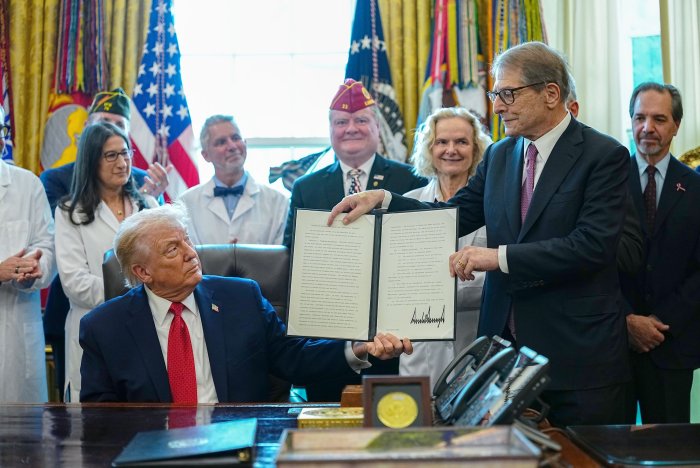
President Donald Trump holds a signed executive order reclassifying marijuana from a schedule I to a schedule III controlled substance in the Oval Office of the White House on Thursday. Photo by Aaron Schwartz/UPI | License Photo
Israeli Prime Minister Benjamin Netanyahu and US President Donald Trump have presented a united front and heaped praise on each other as they held another meeting to discuss the tensions in the Middle East.
On Monday, Netanyahu paid his fifth visit to the United States since Trump’s inauguration in January, meeting the president at his Mar-a-Lago resort in Florida.
Recommended Stories
list of 3 itemsend of list
Their mutual flattery turned into geopolitical alignment as the two leaders addressed the most pressing issues in the Middle East: Gaza and Iran.
Trump claimed that Israel is helping the people of Gaza and dismissed the near-daily Israeli ceasefire violations.
Here are the key takeaways from Monday’s meeting.
Trump stresses Hamas must disarm
Before and after his meeting with Netanyahu, Trump stressed that Hamas must disarm, issuing a stern threat to the Palestinian group.
Asked what would happen if Hamas refused to give up its weapons, Trump said: “It would be horrible for them, horrible. It’s going to be really, really bad for them.”
Last week, US Secretary of State Marco Rubio said that Washington’s top priority was to move to the second phase of the ceasefire, which would see the establishment of a technocratic Palestinian administration and the deployment of an international police force.
But on Monday, Trump kept the focus on Hamas, reiterating the claim that other countries have offered to “wipe them out” if the group refuses to give up its weapons.
Israel has killed 414 Palestinians in Gaza since the start of the ceasefire in October, and it continues to restrict the flow of international aid into the territory, including temporary shelter provisions, despite people suffering deadly weather conditions in makeshift tents.
Trump, however, said that Israel is fully living up to its commitments under the deal – “100 percent”.
“I’m not concerned about anything that Israel is doing,” he told reporters.
US threatens Iran
Trump suggested that Washington would carry out further military action against Iran if Tehran rebuilds its nuclear programme or missile capacity.
The president kept returning to the oft-cited argument that the US air strikes against Iranian nuclear facilities in June are what paved the way for the ceasefire in Gaza.
“Now I hear that Iran is trying to build up again, and if they are, we’re going to have to knock them down,” Trump said.
“We’ll knock them down. We’ll knock the hell out of them. But, hopefully, that’s not happening.”
In recent weeks, Israeli officials and their US allies have shifted the focus to Iran’s missile programme, arguing it should be dealt with before it poses a threat to Israel.
When asked whether the US would back an Israeli attack targeting Iran’s missile programme, Trump said, “If they will continue with the missiles, yes. The nuclear? Fast. OK? One will be: Yes, absolutely. The other is: We’ll do it immediately.”
Iran has ruled out negotiating over its missile programme, and it has denied seeking to build a nuclear weapon.
Israel, meanwhile, is widely believed to have an undeclared nuclear arsenal.
Bromance festival
Since the early days of Israel’s genocidal war on Gaza, US media reports have suggested that the US president, first Joe Biden, then Trump, was angry or frustrated at Netanyahu.
But the US military and diplomatic support for Israel has never been interrupted.
Ahead of Netanyahu’s visit, similar reports emerged about a potential rift between him and Trump.
Nonetheless, the two leaders put on a show of brotherly romance on Monday.
Trump called Netanyahu a “hero”, stressing that Israel may not have existed without his wartime leadership.
“We’re with you, and we’ll continue to be with you, and a lot of good things are happening in the Middle East,” Trump told Netanyahu.
“We have peace in the Middle East, and we’re going to try and keep it that way. I think we will be very successful in keeping it that way. And you’ve been a great friend.”
The US president also highlighted his efforts to secure a presidential pardon for Netanyahu, who is facing corruption charges in Israel.
The Israeli prime minister announced that the US president will be awarded the Israel Prize, which is normally given to Israeli citizens.
“I have to say that this reflects the overwhelming sentiment of Israelis across the spectrum,” Netanyahu said.
“They appreciate what you’ve done to help Israel, and to help our common battle against the terrorists and those who would destroy our civilisation.”
Netanyahu has notably not been pardoned.
Trump calls for Israel-Syria rapprochement
One area where Trump appeared to press Netanyahu was Syria.
Trump said Netanyahu is “going to get along” with Syria, lauding Syrian President Ahmed al-Sharaa.
Since the fall of former President Bashar al-Assad last year, Israel has expanded its occupation of southern Syria beyond the Golan Heights, seizing large areas in Jabal al-Sheikh. The Israeli military has also been carrying out raids, reportedly abducting and disappearing people in the country.
The new Syrian authorities have stressed that they do not seek conflict with Israel, but talks to reach a security agreement between the two countries have stalled.
“We do have an understanding regarding Syria,” Trump said. “Now, with Syria, you have a new president. I respect him. He’s a very strong guy, and that’s what you need in Syria.”
Netanyahu was non-committal on Israel’s approach to Syria.
“Our interest is to have a peaceful border with Syria,” he said. “We want to make sure that the border area right next to our border is safe — we don’t have terrorists, we don’t have attacks.”
On renewed war in Lebanon: ‘We’ll see about it.’
Since the start of the truce in Gaza, Israel has intensified its attacks in Lebanon, leading to fears that it may re-launch its full-scale war against the country.
Earlier this year, the Lebanese government issued a decree to disarm Hezbollah, but the group pledged to hold onto its weapons to defend the country against Israel.
On Monday, Trump did not rule out renewing the conflict in Lebanon.
“We’ll see about it,” the president said when asked whether he would support more Israeli strikes in Lebanon.
“The Lebanese government is at a little bit of a disadvantage, if you think of it, with Hezbollah. But Hezbollah has been behaving badly, so we’ll see what happens.”
Dec. 29 (UPI) — The United States has pledged to contribute $2 billion to U.N. humanitarian efforts, slashing its funding to about one-fifth of its average annual financial commitment over the past decade, the U.S. State Department announced Monday.
The memorandum of understanding makes good on President Donald Trump‘s promises to dramatically reduce the amount of the United States’ foreign aid and save taxpayers’ money.
“The United States remains the most generous nation in the world for lifesaving humanitarian assistance — but under @POTUS’s leadership taxpayer dollars will never fund waste, anti-Americanism, or inefficiency,” Secretary of State Marco Rubio said in a post on X.
“This new model will better share the burden of U.N. humanitarian work with other developed countries and will require the U.N. to cut bloat, remove duplication, and commit to powerful new impact, accountability and oversight mechanisms.”
In addition to reducing funding, the agreement narrows what countries and projects benefit from the U.S. aid. The $2 billion will go into a fund administered by the U.N. Office for the Coordination of Humanitarian Affairs. Among the areas not receiving any of the U.S. funding are Gaza, Yemen and Afghanistan.
“These agreements will focus funding on hyper-prioritized life-saving activities; provide for powerful new impact, accountability, and oversight mechanisms; enhance the efficiency and flexibility of humanitarian operations; and better share the burden of humanitarian work across major donors,” a release from the U.S. State Department said.
Tom Fletcher, the U.N. under-secretary-general for Humanitarian Affairs and coordinator for Emergency Relief, offered his thanks to the United States for the commitment as “a powerful act of leadership and generosity that will help save millions of lives.”
“At a moment of immense global strain, the United States is demonstrating that it is a humanitarian superpower, offering hope to people who have lost everything.”
The newly announced funding, though, is a dramatic decrease from annual U.S. contributions over the past decade — from $6.5 billion in 2017 to a high of $17.25 billion in 2022. The average yearly contribution over the decade ending in 2024 was around $10 billion, five times the size of the funding announced Monday, according to data on the OCHA’s Financial Tracking Service.
This reduction in U.S. aid comes weeks after the United Nations launched an appeal to raise $33 billion to support operations for 2026. OCHA said the total would provide aid to 135 million people in 23 countries, and six projects serving refugees and migrants.
“The highly prioritized appeal follows a year when humanitarian lifelines strained and, in some places, snapped due to brutal funding cuts,” a release from the OCHA on Dec. 7 said.
“Funding for the appeal in 2025 — $12 billion — was the lowest in a decade and humanitarians reached 25 million less people than in 2024. The consequences were immediate: Hunger surged, health systems came under crushing strain, education fell away, mine clearance stalled and families faced blow after blow: no shelter, no cash assistance, no protection services.”
Clouds turn shades of red and orange when the sun sets behind One World Trade Center and the Manhattan skyline in New York City on November 5, 2025. Photo by John Angelillo/UPI | License Photo
Speaking alongside Benjamin Netanyahu, Trump threatens to ‘knock’ down Iran’s attempts to rebuild nuclear capabilities.
United States President Donald Trump suggested that Washington would consider further military action against Iran if Tehran rebuilds its nuclear programme or missile capacity.
Speaking in Florida on Monday, Trump did not rule out a follow-up attack after the June air strikes that damaged three Iranian nuclear facilities.
Recommended Stories
list of 3 itemsend of list
“Now I hear that Iran is trying to build up again, and if they are, we’re going to have to knock them down,” Trump told reporters. “We’ll knock them down. We’ll knock the hell out of them. But hopefully that’s not happening.”
Trump issued his threat as he welcomed Israeli Prime Minister Benjamin Netanyahu to his Mar-a-Lago estate in Palm Beach, Florida.
Trump said that the US and Israel have been “extremely victorious” against their enemies, referring to the wars in Gaza and Lebanon, and the strikes against Iran in June.
When asked whether the US would back an Israeli attack against Iran targeting Tehran’s missile programme, Trump said, “If they will continue with the missiles, yes; the nuclear, fast. Okay, one will be yes, absolutely. The other is: We’ll do it immediately.”
Another round of strikes against Iran would likely stir internal opposition in the US, including from segments of Trump’s own base of support.
Trump has repeatedly said that the June strikes “obliterated” Iran’s nuclear programme.
With the nuclear issue address, according to Trump, Israeli officials and their US allies have been drumming up concern about Iran’s missiles.
Tehran fired hundreds of missiles at Israel in June in response to the unprovoked Israeli attack that killed the country’s top generals, several nuclear scientists and hundreds of civilians.
Senator Lindsey Graham, an Iran hawk who is close to Trump, visited Israel this month and repeated the talking points about the dangers of Iran’s long-range missiles, warning that Iran is producing them “in very high numbers”.
“We cannot allow Iran to produce ballistic missiles because they could overwhelm the Iron Dome,” he told The Jerusalem Post, referring to Israel’s air defence system. “It’s a major threat.”
Iran has ruled out negotiating over its missile programme, which is at the core of its defence strategy.
On Monday, Trumps said Iran should “make a deal” with the US.
“If they want to make a deal, that’s much smarter,” Trump said. “You know, they could have made a deal the last time before we went through a big attack on them, and they decided not to make the deal. They wish they made that deal.”
The prospect of returning to war in the Middle East comes weeks after the Trump administration released a National Security Strategy calling for shifting foreign policy resources away from the region and focusing on the Western Hemisphere.
In June, Iran responded to the US strikes with a missile attack against a US base in Qatar, which did not result in American casualties. Trump announced a ceasefire to end the war shortly after the Iranian response.
But advocates warn that another episode of attacking Iran may escalate into a longer, broader war.
Trita Parsi, executive vice president at the Quincy Institute, a US think tank that promotes diplomacy, told Al Jazeera last week that the Iranian response would be “much harsher” if the country is attacked again.
“The Iranians understand that unless they strike back hard and dispel the view that Iran is a country that you can bomb every six months – unless they do that – Iran will become a country that Israel will bomb every six months,” Parsi said.
Israeli Prime Minister Benjamin Netanyahu and President Donald Trump talk with reporters at the White House in Washington, D.C., in February. Netanyahu is scheduled to visit Trump Monday in Florida. File Photo by Shawn Thew/UPI | License Photo
Dec. 29 (UPI) — Israeli Prime Minister Benjamin Netanyahu will visit with President Donald Trump Monday in Florida to discuss the peace plan with Gaza.
Netanyahu is also likely to lobby the president for help with Iran as it continues its work on nuclear weapons.
The meeting will happen at Trump’s Mar-a-Lago resort in Palm Beach, Fla. On Sunday, Trump met with Ukrainian President Volodymyr Zelenskyat the resort to continue working on a peace plan between Ukraine and Russia.
Local officials have said that more than 400 people have been killed in Gaza since the cease-fire, NBC News reported.
The Trump administration wants to see progress on the plan’s second phase in January. That means a Palestinian technocratic government would be created. Hamas would disarm, and the Israeli Defense Forces would pull out of Gaza.
But some believe that Netanyahu will stall the process and demand Hamas fully disarm before the IDF withdraws. Hamas has said it will disarm as progress moves toward an independent Palestinian state.
Netanyahu and his staff have repeatedly rejected Palestinian statehood since October.
Israeli Defense Minister Israel Katz said last week that Israel will build settlements in Gaza and “never fully withdraw” even as Hamas disarms, the BBC reported. This would violate the cease-fire agreement.
Secretary of State Marco Rubio will meet with Netanyahu before Trump’s meeting.
Two other tenets of the cease-fire haven’t yet emerged: A “Board of Peace” led by Trump is planned for governance of Gaza, and the International Stabilization Force, led by the United Nations, which will help with peacekeeping in Gaza.
Rubio has said those measures will be in place “very soon.”
Israeli officials are concerned that Iran is moving forward with its plans for ballistic missiles, and Netanyahu is expected to discuss options with Trump at Monday’s meeting.
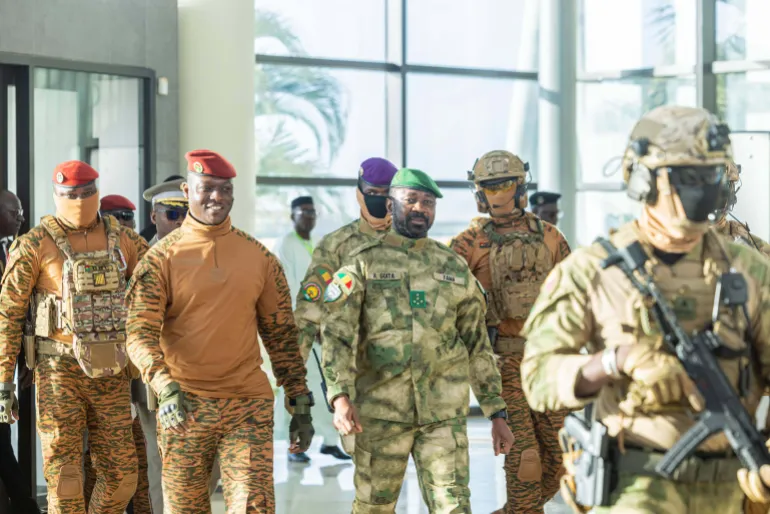






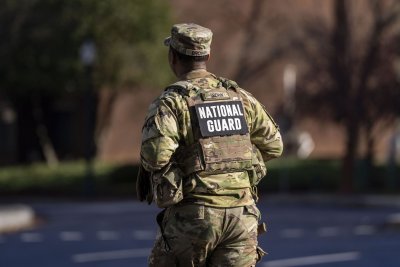

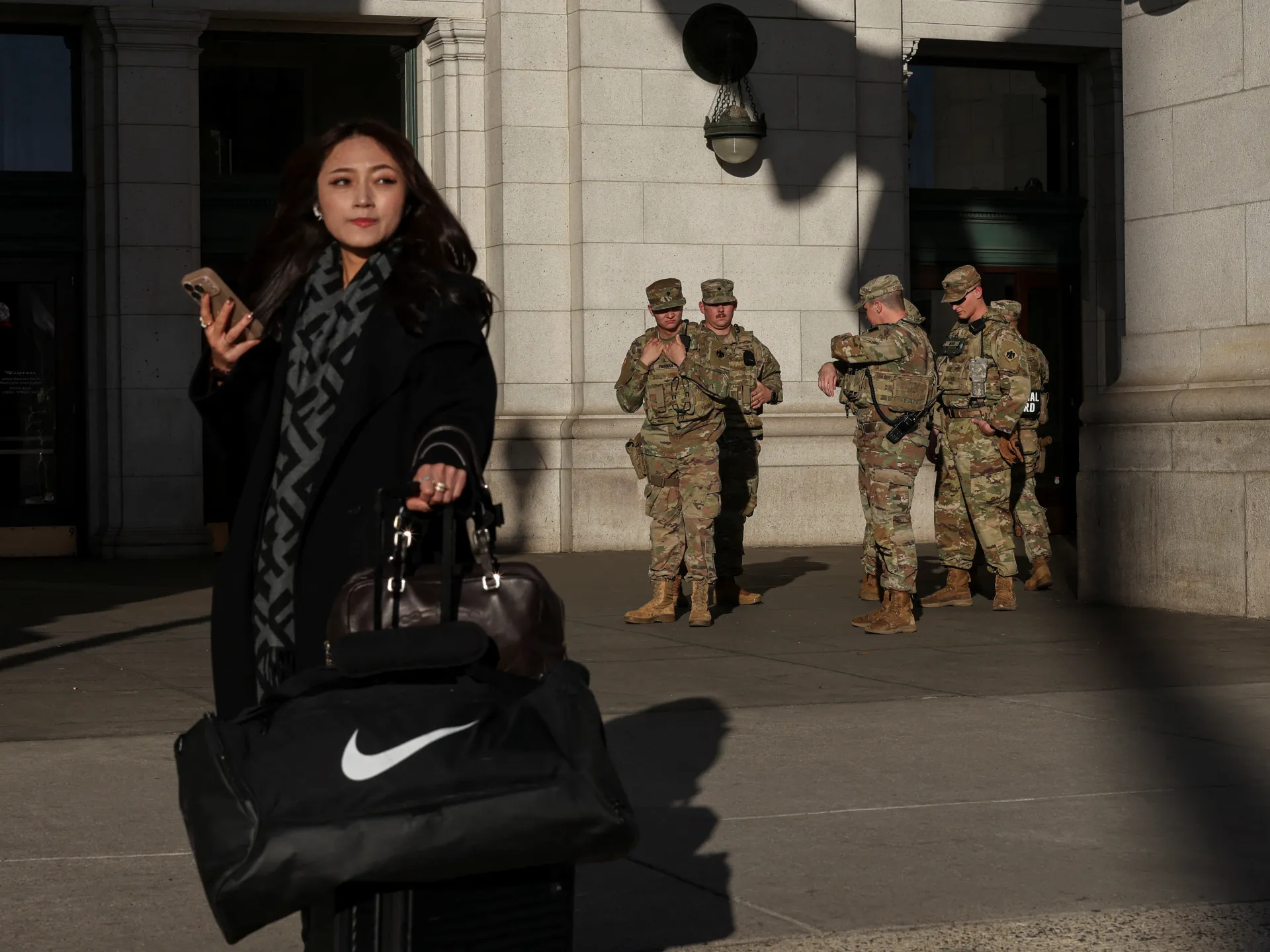
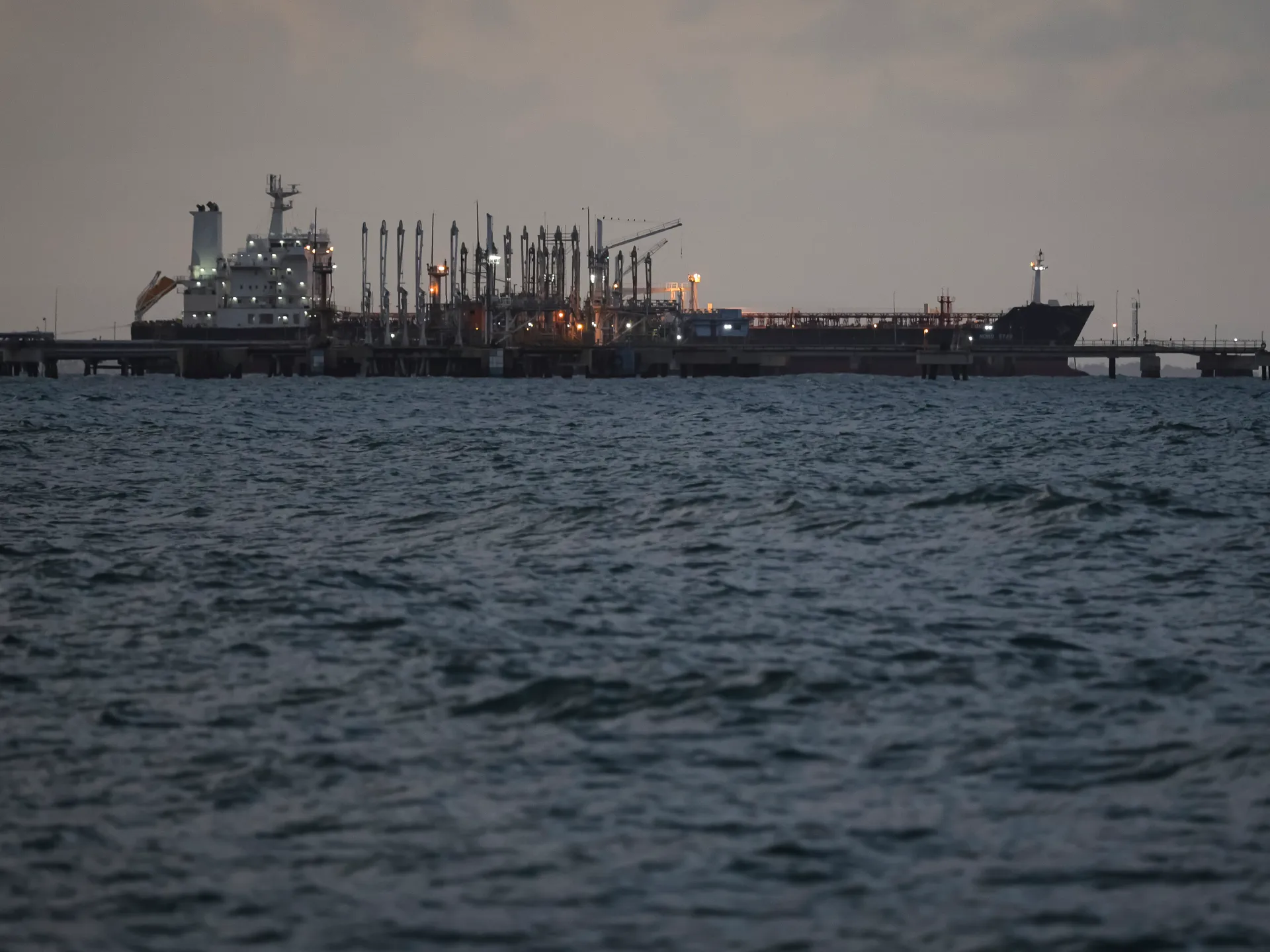
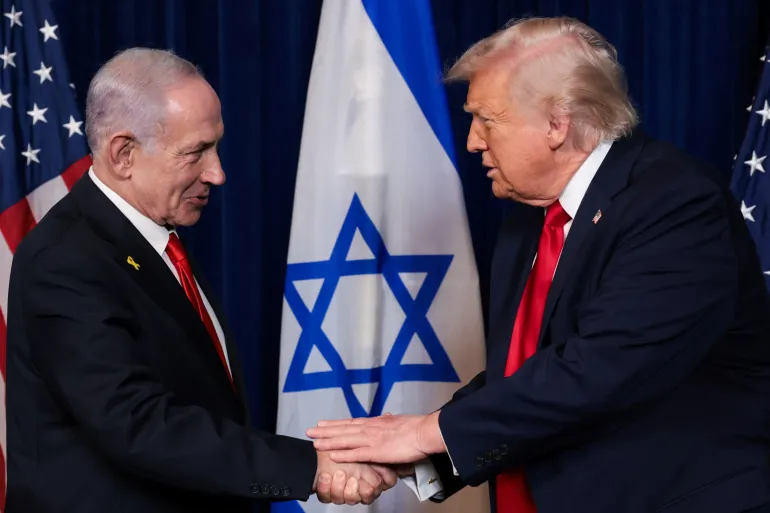


![Israeli far-right Finance Minister Bezalel Smotrich holds a map of an area near the settlement of Maale Adumim, a land corridor known as E1, outside Jerusalem in the occupied West Bank, on August 14, 2025, after a press conference at the site. [Menahem Kahana/AFP]](https://i0.wp.com/occasionaldigest.com/wp-content/uploads/2025/12/AFP__20250814__69HV6DR__v1__HighRes__IsraelPalestinianConflictSettlementPolitics-1755194568.jpg?w=640&ssl=1)