LIVE: Venezuela’s Maduro arrives in New York after ‘capture’ | Donald Trump News
The United States has bombed Venezuela and toppled Nicolas Maduro, who was seized and taken to New York.
Published On 3 Jan 2026
The United States has bombed Venezuela and toppled Nicolas Maduro, who was seized and taken to New York.

Published On 3 Jan 20263 Jan 2026
Share
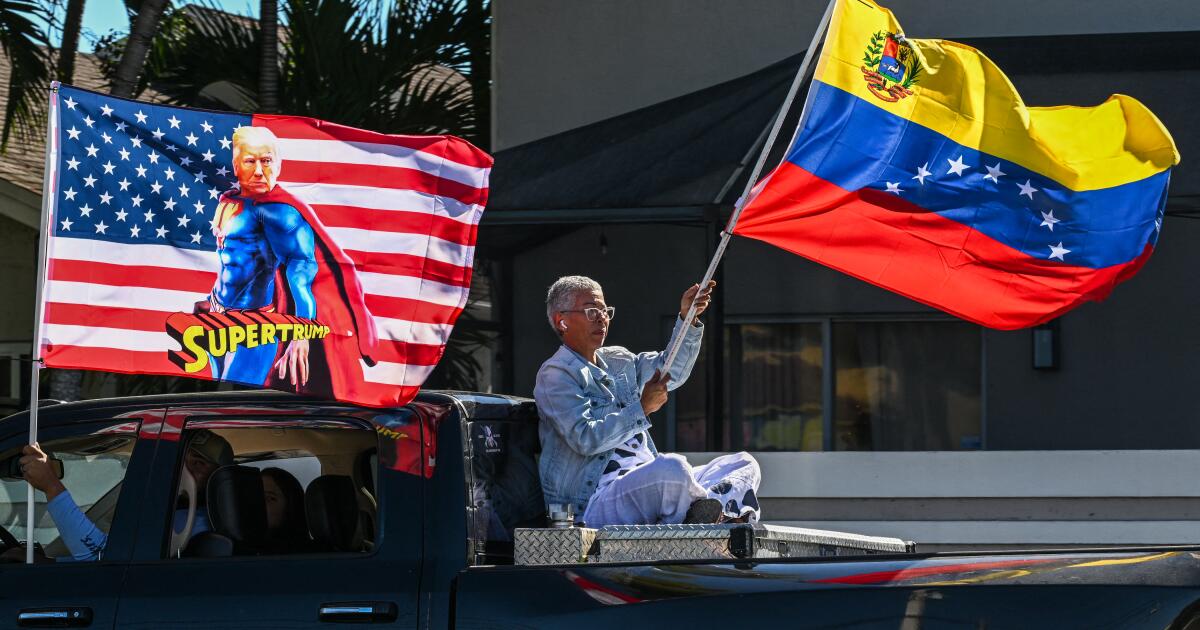
President Trump’s decision to send U.S. forces into Venezuela to capture President Nicolás Maduro and his wife and return them to the U.S. to face drug charges elicited condemnation from legal experts and other critics who argued that the operation — conducted without congressional or United Nations approval — clearly violated U.S. and international law.
Such criticism came from Democratic leaders, international allies and adversaries including Mexico, France, China and Russia, United Nations Secretary-General Antonio Guterres and experts on international law and wartime powers.
“Nicolás Maduro was a thug and an illegitimate leader of Venezuela, terrorizing and oppressing its people for far too long and forcing many to leave the country. But starting a war to remove Maduro doesn’t just continue Donald Trump’s trampling of the Constitution, it further erodes America’s standing on the world stage and risks our adversaries mirroring this brazen illegal escalation,” Sen. Adam Schiff (D-Calif.) wrote on X.
A U.N. spokesman said Guterres was “deeply alarmed” by the U.S. operation and “deeply concerned that the rules of international law have not been respected.”
China’s foreign ministry said “such hegemonic acts of the U.S. seriously violate international law and Venezuela’s sovereignty,” while France’s foreign minister said the U.S. operation “contravenes the principle of the non-use of force that underpins international law.”
Republicans largely backed the president, with both House Speaker Mike Johnson (R-La.) and Senate Majority Leader John Thune (R-S.D.) defending the operation as “decisive” and legally justified. However, other Republicans questioned Trump’s authority to act unilaterally, and raised similar concerns as Schiff about other world leaders citing Trump’s actions to justify their own aggression into neighboring nations.
Rep. Don Bacon (R-Neb.) defended Trump’s actions as “great for the future of Venezuelans and the region,” but said he was concerned that “Russia will use this to justify their illegal and barbaric military actions against Ukraine, or China to justify an invasion of Taiwan.”
Trump defended the operation as a legitimate law enforcement action necessary to combat threats to the U.S. from Maduro, whom he accused of sending violent gang members and deadly drugs across the U.S. border on a regular basis.
“The illegitimate dictator Maduro was the kingpin of a vast criminal network responsible for trafficking colossal amounts of deadly and illicit drugs into the United States,” Trump said at a news conference. “As alleged in the indictment, he personally oversaw the vicious cartel known as Cartel de los Soles, which flooded our nation with lethal poison responsible for the deaths of countless Americans.”
However, Trump also made no secret of his interest in Venezuela’s oil. He said U.S. officials would be running Venezuela for the foreseeable future and ensuring that the nation’s oil infrastructure is rebuilt — to return wealth to the Venezuelan people, but also to repay U.S. businesses that lost money when Maduro took over the industry.
Atty. Gen. Pam Bondi announced that Maduro, who had previously been indicted in the U.S. in 2020, is now the subject of a superseding indictment charging him, his wife and several others with narco-terrorism conspiracy, cocaine importation conspiracy, possession of machine guns and destructive devices and conspiracy to possess such weapons and devices.
“They will soon face the full wrath of American justice on American soil in American courts,” Bondi wrote on X.
Secretary of State Marco Rubio also framed the operation as a law enforcement effort, and defended the lack of advance notice to Congress.
“At its core, this was an arrest of two indicted fugitives of American justice, and the Department of War supported the Department of Justice in that job,” Rubio said. “It’s just not the kind of mission that you can pre-notify, because it endangers the mission.”
Trump said Congress could not be notified in advance because “Congress will leak, and we don’t want leakers.”
Michael Schmitt, an international law professor at the University of Reading in the United Kingdom and a professor emeritus of international law at the U.S. Naval War College, said Trump’s actions were a “clear violation” of international law.
He said the U.S. had no authority from the U.N. Security Council to conduct military operations in Venezuela, nor any legitimate justification to act in self-defense against an armed attack — which drug trafficking does not amount to.
Schmitt said the operation in Venezuela went far beyond a normal law enforcement action. But even if it were just a law enforcement action, he said, the U.S. would still lack legal authority under international law to engage in such activity on Venezuelan soil without the express permission of Venezuelan authorities — which it did not have.
“International law is clear. Without consent, you cannot engage in investigations or arrest or seizure of criminal property on another state’s territory,” he said. “That’s a violation of that state’s sovereignty.”
Because the operation was illegitimate from the start, the resulting occupation and interference in Venezuela’s oil industry are also unlawful, Schmitt said — regardless of whether the country’s nationalizing of U.S.-tied oil infrastructure was also unlawful, as some experts believe it was.
“That unlawfulness — of seizing U.S. business interests, nationalizing them, in a way that was not in accordance with the required procedures — is not a basis for using force,” Schmitt said.
Matthew Waxman, chair of the National Security Law Program at Columbia Law School, said that in the days ahead, he expects the Trump administration to try to justify its actions not just as a law enforcement operation, but “as part of a larger campaign to defend the United States against what it has characterized as an attack or invasion by Maduro-linked drug cartels.”
“All modern presidents have claimed broad constitutional power to use military force without congressional authorization, but that is always hotly contested. We’ll see if there’s much pushback in Congress in this case, which will probably depend a lot on how things now play out in Venezuela,” Waxman said. “Look at what happened last year in Iran: The president claimed the power to bomb nuclear program infrastructure, and when the operation didn’t escalate, congressional opponents backed off.”
Already on Saturday, some members of Congress were softening their initial skepticism.
Within hours of posting on X that he was looking forward “to learning what, if anything, might constitutionally justify this action in the absence of a declaration of war or authorization for the use of military force,” Sen. Mike Lee (R-Utah) had posted again, saying Rubio told him that the military action was “to protect and defend those executing the arrest warrant” for Maduro.
Such action “likely falls within the president’s inherent authority under Article II of the Constitution to protect U.S. personnel from an actual or imminent attack,” Lee added.
Others remained more skeptical.
Rep. Thomas Massie (R-Ky.) said Trump’s remarks about taking over the country and controlling its oil reserves did not seem “the least bit consistent” with Bondi’s characterization of the operation as a law enforcement effort.
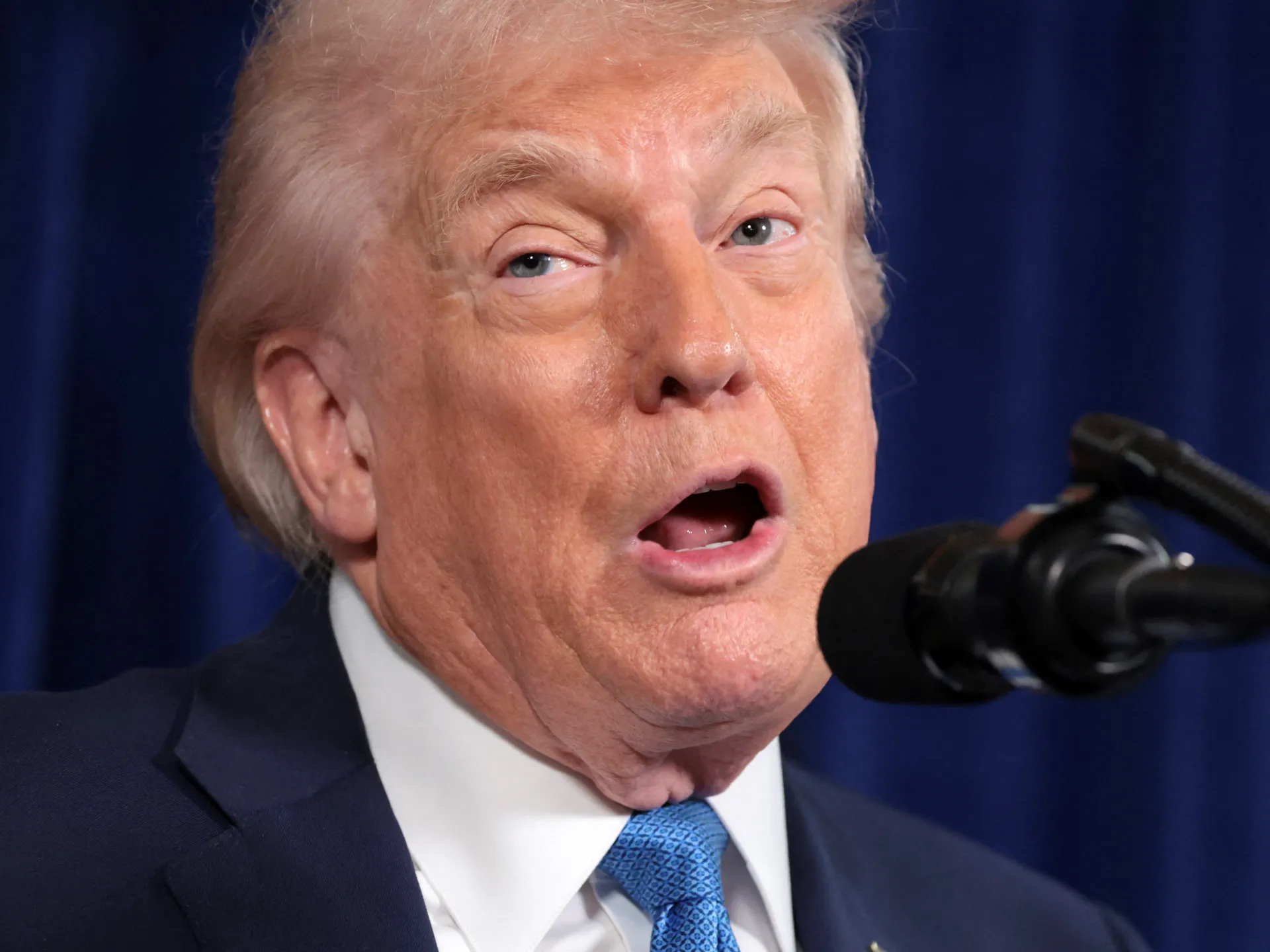
US President Donald Trump says the US “successfully captured” Venezuela President Nicolas Maduro and his wife “in the dead of night” and they will “face American justice” for alleged narcoterrorism. Trump said the US will run Venezuela until there is a “safe… and judicious” transition of power.
Published On 3 Jan 20263 Jan 2026
Share
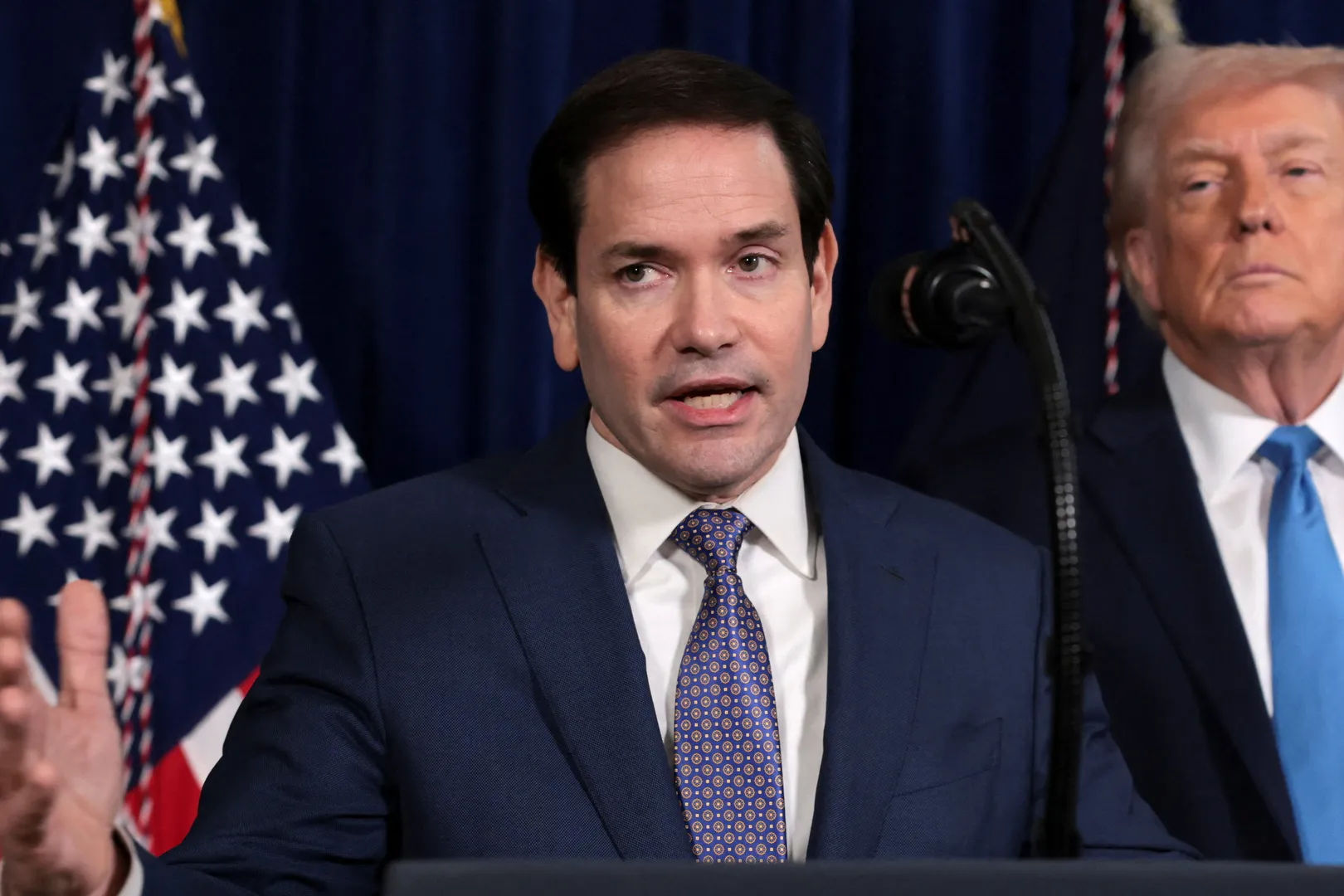
US President Donald Trump says ‘a team’ from the US will be running Venezuela for now, but he would not specify who is on the team. He was speaking at a news conference with Secretary of State Marco Rubio and Secretary of Defense Pete Hegseth.
Published On 3 Jan 20263 Jan 2026
Share
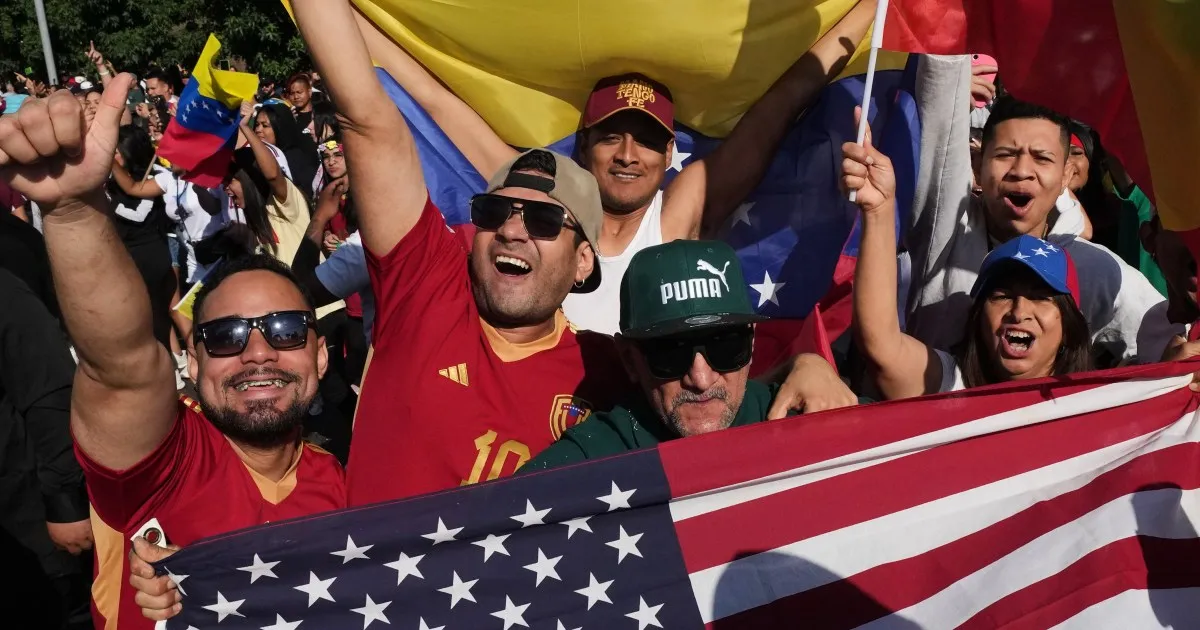
Venezuelans reacted with everything from fear to joy as the US claims to have captured Nicolas Maduro.
Source link
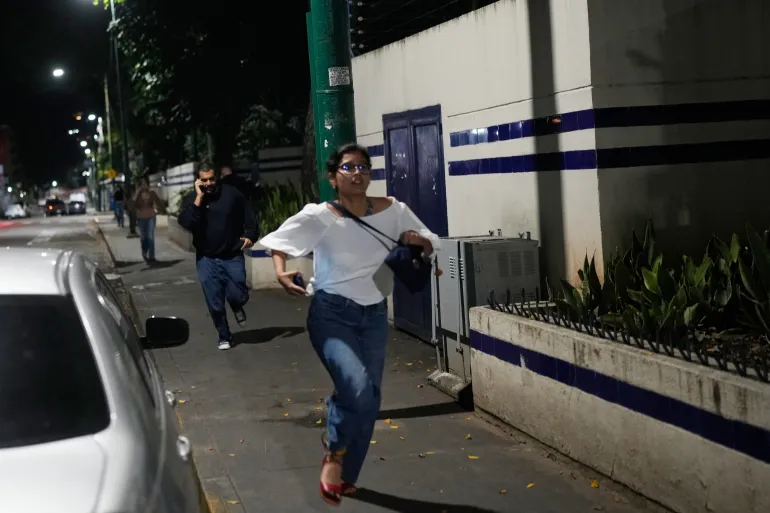
United States President Donald Trump announced on Saturday morning that his country’s forces had bombed Venezuela and captured the South American nation’s president, Nicolas Maduro, and First Lady Cilia Flores in a dramatic overnight military attack that followed months of rising tensions.
Venezuela’s government said that the US had struck three states apart from the capital, Caracas, while neighbouring Colombia’s President Gustavo Petro released a longer list of places that he said had been hit.
The operation has few, if any, parallels in modern history. The US has previously captured foreign leaders, including Iraq’s Saddam Hussein and Panama’s Manuel Noriega, but after invading those countries in declared wars.
Here is what we know about the US attacks and the lead-up to this escalation:

At least seven explosions were reported from Caracas, a city of more than three million people, at about 2am local time (06:00 GMT), as residents said they heard low-flying aircraft. Lucia Newman, Al Jazeera’s Latin America editor, reported that at least one of the explosions appeared to come from near Fort Tiuna, the main military base in the Venezuelan capital.
Earlier, the US Federal Aviation Administration had issued instructions to American commercial airlines to stay clear of Venezuelan airspace.
Within minutes of the explosions, Maduro declared a state of emergency, as his government named the US as responsible for the attacks, saying that it had struck Caracas as well as the neighbouring states of Miranda, Aragua and La Guaira.
The US embassy in Bogota, Colombia, referred to the reports of the explosions and asked American citizens to stay out of Venezuela, in a statement. But the diplomatic mission did not confirm US involvement in the attacks. That came more than three hours after the bombings, from Trump.

In a post on his Truth Social platform, Trump said, a little after 09:00 GMT that the US had “successfully carried out a large scale strike against Venezuela and its leader, President Nicolas Maduro, who has been, along with his wife, captured and flown out of the Country”.
Venezuela has not yet confirmed that Maduro was taken by US troops — but it also has not denied the claim.
Trump said that the attack had been carried out in conjunction with US law enforcement, but did not specify who led the operation.
Trump announced that there would be a news conference at his Mar-a-Lago resort in Florida at 11am local time (16:00 GMT) on Friday, where more details would be revealed.

While neither the US nor Venezuelan authorities have pinpointed locations that were struck, Colombia’s Petro, in a social media post, listed a series of places in Venezuela that he said had been hit.
They include:

Trump has, in recent months, accused Maduro of driving narcotics smuggling into the US, and has claimed that the Venezuelan president is behind the Tren de Aragua gang that Washington has proscribed as a foreign terrorist organisation.
But his own intelligence agencies have said that there is no evidence that Maduro is linked to Tren de Aragua, and US data shows that Venezuela is not a major source of contraband narcotics entering the country.
Starting in September, the US military launched a series of strikes on boats in the Caribbean Sea that it claimed were carrying narcotics. More than 100 people have been killed in at least 30 such boat bombings, but the Trump administration is yet to present any public evidence that there were drugs on board, that the vessels were travelling to the US, or that the people on the boats belonged to banned organisations, as the US has claimed.
Meanwhile, the US began its largest military deployment in the Caribbean Sea in at least several decades, spearheaded by the USS Gerald Ford, the world’s largest aircraft carrier.
In December, the US hijacked two ships carrying Venezuelan oil, and has since imposed sanctions on multiple companies and their tankers, accusing them of trying to circumvent already stringent American sanctions against Venezuela’s oil industry.
Then, last week, the US struck what Trump described as a “dock” in Venezuela where he claimed drugs were loaded onto boats.

Trump has so far framed his pressure and military action against Venezuela and in the Caribbean Sea as driven by a desire to stop the flow of dangerous drugs into the US.
But he has increasingly also sought Maduro’s departure from power, despite a phone call in early December that the Venezuelan president described as “cordial”.
And in recent weeks, some senior aides of the US president have been more open about Venezuela’s oil: the country’s vast reserves of crude, unmatched in the world, amounted to an estimated 303 billion barrels (Bbbl) as of 2023.
On December 17, Trump’s top adviser Stephen Miller claimed that the US had “created the oil industry in Venezuela” and that the South American country’s oil should therefore belong to the US.
But though US companies were the earliest to drill for oil in Venezuela in the early 1900s, international law is clear: sovereign states — in this case Venezuela — own the natural resources within their territories under the principle of Permanent Sovereignty over Natural Resources (PSNR).
Venezuela nationalised its oil industry in 1976. Since 1999, when socialist President Hugo Chavez, Maduro’s mentor and predecessor, came to power, Venezuela has been locked in a tense relationship with the US.
Still, one major US oil company, Chevron, continues to operate in the country.
The Venezuelan opposition, led by Nobel Peace Prize laureate Maria Corina Machado, has publicly called for the US to intervene against Maduro, and has pointed to the oil reserves that American firms could tap more easily with a new dispensation in power in Caracas.
Oil has long been Venezuela’s biggest export, but US sanctions since 2008 have crippled formal sales and the country today earns only a fraction of what it once did.

While Venezuela has not confirmed Maduro’s capture, Vice President Delcy Rodrigues told state-owned VTV that the government had lost contact with Maduro and First Lady Flores and did not have clarity on their whereabouts.
She demanded that the US provide “proof of life” of Maduro and Flores, and added that Venezuela’s defences were activated.
Earlier, in a statement, the Venezuelan government said that it “rejects, repudiates and denounces” the attacks.
It said that the aggression threatens the stability of Latin America and the Caribbean, and places the lives of millions of people at risk. It accused the US of trying to impose a colonial war, and force a regime change — and said that these attempts would fail.

In a statement posted on X, Trump’s Attorney General Pam Bondi announced that Maduro and his wife have been indicted in the Southern District of New York.
Maduro has been charged with “Narco-Terrorism Conspiracy, Cocaine Importation Conspiracy” among other charges, Bondi said. It was unclear if his wife is facing the same charges, but she referred to the Maduro couple as “alleged international narco traffickers.”
“They will soon face the full wrath of American justice on American soil in American courts,” she added.
Mike Lee, a Republican senator from Utah, earlier posted on X that he had spoken to US Secretary of State Marco Rubio, who had told him that Maduro had been “arrested by US personnel to stand trial on criminal charges in the United States, and that the kinetic action we saw tonight was deployed to protect and defend those executing the arrest warrant.”
In 2020, US prosecutors had charged Maduro with running a cocaine-trafficking network.
But US officials remain silent on the illegality of Maduro’s capture and the attacks on Venezuela, which violate UN charter principles of sovereignty and territorial integrity of nations.
Russia and Cuba, close Maduro allies, condemned the attack. Colombia, which neighbours Venezuela and has itself been in Trump’s crosshairs, said that it “rejects the aggression against the sovereignty of Venezuela and of Latin America” – even though Bogota itself does not recognise Maduro’s government.
Most other nations have been relatively muted in their response to the US aggression so far.

Constitutionally, Rodriguez, the vice president, is next in line to take charge if Maduro indeed has been plucked out of Venezuela by the US.
Other senior leaders seen as close to Maduro and influential within the Venezuelan hierarchy include Interior Minister Diosdado Cabello, National Assembly President — and Delcy’s brother — Jorge Rodriguez, and military chief General Vladimir Padrino López.
But it is unclear whether the state apparatus that Chavez and Maduro carefully built over a quarter century will last without them.
“Maduro’s capture is a devastating moral blow for the political movement started by Hugo Chavez in 1999, which has devolved into a dictatorship since Nicolas Maduro took power,” Carlos Pina, a Venezuelan analyst based in Mexico, told Al Jazeera.
If the US does engineer — or has already engineered — a regime change, the opposition’s Machado could be a front-line candidate to take Venezuela’s top job, though it is unclear how popular that might be. In a November poll in Venezuela, 55 percent of participants were opposed to military intervention in their country, and an equal number were opposed to economic sanctions against Venezuela.
Trump might be mistaken if he thinks the US can stay out of the chaos that’s likely to follow in a post-Maduro Venezuela, suggests Christopher Sabatini, a senior research fellow for Latin America, the US and North America programme at Chatham House.
“Assuming even if there is regime change – of some sort, and it’s by no means clear even if it does happen that it will be democratic – the US’s military action will likely require sustained US engagement of some sort,” he said.
“Will the Trump White House have the stomach for that?”
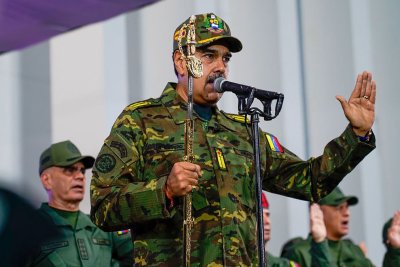

Jan. 2 (UPI) — Venezuelan President Nicolás Maduro said claims that his government engages in drug trafficking are lies, and he is willing to meet with President Donald Trump amid rising tensions.
Maduro on Thursday accused the Trump administration of knowingly making false claims of drug trafficking, including recent comments by Trump saying Venezuela’s alleged drug trafficking is akin to using weapons of mass destruction
“Since they cannot accuse me, since they cannot accuse Venezuela of having weapons of mass destruction, since they cannot accuse us of having nuclear rockets, of preparing a nuclear weapon, of having chemical weapons, they invented an accusation that the United States knows is as false as that accusation of weapons of mass destruction, which led them to an eternal war,” Maduro said while referencing the Iraq War.
The Venezuelan president offered to work with U.S. officials to oppose drug trafficking and repeated his prior offers to meet with Trump to discuss the U.S. military targeting alleged drug vessels, seizing oil tankers and blockading Venezuelan ports.
“The U.S. government knows, because we’ve told many of their spokespeople that, if they want to seriously discuss an agreement to combat drug trafficking, we’re ready,” he said in a taped interview on Venezuela’s state-owned channel teleSUR.
The Venezuelan president also suggested his country and the United States could work together to enable U.S. firms to invest in Venezuela’s oil industry “whenever they want it, wherever they want it and however they want it.”
Maduro refused to comment on a recently reported U.S. strike on an alleged drug-processing facility located among docks on Venezuela’s Caribbean coastline.
The CIA also has refused to comment on the strike, which Trump announced on Monday and said “knocked out” a drug facility on Saturday night.
The president in October announced he authorized the CIA to undertake operations in Venezuela but did not say what kind.
The Defense Department also sent a carrier strike group to the Caribbean to stop alleged drug-trafficking fast boats from transporting drugs intended for the United States and Europe and more recently to blockade Venezuelan ports amid seizures of sanctioned vessels.
The White House has said the strikes on the alleged drug boats are intended to stop South American drug cartels from sending drugs to the United States, which has some U.S. officials questioning the legality of such strikes.
The U.S. Southern Command announced two more boat strikes that killed five in international waters on New Year’s Eve.
The United States began striking the alleged drug boats in September and has sunk at least 36 and killed at least 115.
Most of the drug boat strikes, 23, have occurred in the eastern Pacific Ocean and away from Venezuela, while 11 others occurred in the Caribbean Sea, with another two in undisclosed locations.
The United States also has placed a $50 million bounty on Maduro and recently sanctioned some of his family members for their alleged roles in drug trafficking.
Trump also has accused Maduro of intentionally sending criminals and others to the United States during the Biden administration, including members of the Venezuela-based Tren de Aragua gang that he has designated as a foreign terrorist organization.
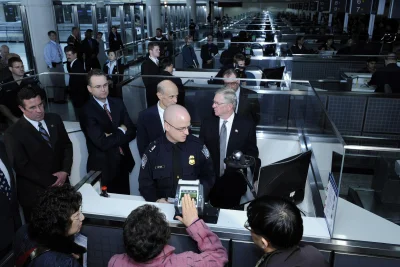

Jan. 2 (UPI) — Travel restrictions for 20 more nations and locales took effect on Thursday in accordance with President Donald Trump‘s Dec. 16 order expanding travel restrictions to 39 nations.
President Donald Trump has restricted travel from a total of 39 nations and entities due to deficiencies in their respective screening and vetting processes that make it difficult to protect the United States against public safety and national security threats.
“The United States government has identified additional countries that are unable to meet basic criteria for identifying their nationals and residents who may pose national security and public safety risks, or for sharing necessary information with the United States,” U.S. Customs and Immigration Services officials announced on Thursday.
“It is paramount that the United States government ensure aliens in the United States do not intend to threaten its citizens or undermine or destabilize its culture, government, institutions, or founding principles,” USCIS added.
“Entry will not be granted to aliens who advocate for, aid or support designated foreign terrorists or other threats to our national security or public safety.”
A dozen high-risk nations identified by the White House are Afghanistan, Burma, Chad, the Republic of the Congo, Equatorial Guinea, Eritrea, Haiti, Iran, Libya, Somalia, Sudan and Yemen, and their citizens are fully restricted from traveling to the United States.
Another five nations, Burkina Faso, Mali, Niger, South Sudan and Syria, plus anyone holding travel documents issued by the Palestinian Authority, also are subject to full restrictions on U.S. travel.
Full restrictions also are in effect for travelers from Laos and Sierra Leone, which previously were subjected to partial restrictions.
Prior to the Dec. 16 order, 19 nations were subject to travel restrictions, but the president added the 19 additional nations and the Palestinian Authority amid ongoing violence and recent revelations of fraud.
Some exceptions to the travel bans are allowed for diplomats and athletes competing on teams that are participating in the Olympics, FIFA World Cup and other events.
Letter to UN chief, UNSC comes after Trump says US will intervene if Tehran violently suppresses protests.

Published On 3 Jan 20263 Jan 2026
Share
Iran’s United Nations ambassador Amir Saeed Iravani has written to the UN secretary-general and the president of the UN Security Council (UNSC), urging them to condemn “unlawful threats” towards Tehran from United States President Donald Trump amid ongoing protests in the country.
The letter sent on Friday came hours after Trump said the US was “locked and loaded and ready to go” if any more protesters were killed in the ongoing demonstrations in Iran over the cost of living.
list of 4 itemsend of list
Iravani called on UN chief Antonio Guterres and members of the UNSC to “unequivocally and firmly condemn” Trump’s “reckless and provocative statements”, describing them as a “serious violation” of the UN Charter and international law.
“Any attempt to incite, encourage or legitimise internal unrest as a pretext for external pressure or military intervention is a gross violation of the sovereignty, political independence and territorial integrity of the Islamic Republic of Iran,” Iravani said in the letter, which was published in full by the IRNA state news agency.
The letter added that Iran’s government “reiterates its inherent right to defend its sovereignty” and that it will “exercise its rights in a decisive and proportionate manner”.
“The United States of America bears full responsibility for any consequences arising from these illegal threats and any subsequent escalation of tensions,” Iravani added.
IRNA reported earlier that protests continued across Iran on Friday, with people gathering in Qom, Marvdasht, Yasuj, Mashhad, and Hamedan as well as in the Tehran neighbourhoods of Tehranpars and Khak Sefid.
The protests have swept across the country after shopkeepers in Iran’s capital Tehran went on strike on Sunday over high prices and economic stagnation.
At least nine people had been killed and 44 arrested in the unrest. The deputy governor of Qom province on Friday said that another person had died after a grenade exploded in his hand, in what the governor said was an attempt to incite unrest.
In his post on Truth Social, Trump said that if Iran “violently kills peaceful protesters, which is their custom, the United States of America will come to their rescue”.
Ali Larijani, secretary of the Supreme National Security Council, shot back that US interference “is equivalent to chaos across the entire region and the destruction of American interests”.
Iran’s economic woes, including a collapsing currency and high inflation rates, follow years of severe drought in Tehran, a city with a population of some 10 million people, compounding multiple ongoing crises.
Iranian leaders have struck a surprisingly conciliatory tone in response, with President Masoud Pezeshkian saying the government is at “fault” for the situation and promising to find solutions. Observers have noted the response is markedly different from the harsh reaction to past protests in the country.
The United States bombed three Iranian nuclear sites in June this year during a 12-day escalation between Israel and Iran. Trump described the operation as a “very successful attack”.
Last week, during a news conference with Israeli Prime Minister Benjamin Netanyahu, Trump said the US will “knock the hell out” of Iran if it advances its nuclear programme or ballistic weapons programme.
The statement came amid an Israeli push to resume attacks on Iran.
Pezeshkian has pledged a “severe” response to any aggression.
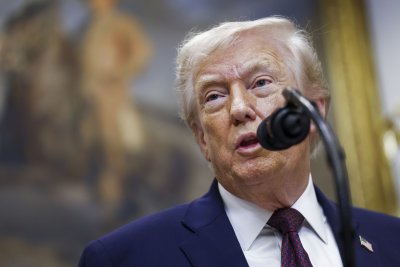

Jan. 2 (UPI) — President Donald Trump on Friday signed an executive order stopping a semiconductor chips deal between U.S. and Chinese companies citing national security concerns.
The $2.92 million deal would have seen HieFo Corp., a Delaware-based company operated out of China, acquire the semiconductor chips and wafer fabrication businesses of New Jersey’s EMCORE Corp. The two companies announced plans for the deal in 2024.
“There is credible evidence that leads me to believe that HieFo Corporation, a company organized under the laws of Delaware (HieFo) and controlled by a citizen of the People’s Republic of China … might take action that threatens to impair the national security of the United States,” Trump’s order reads.
The executive order, issued under the Defense Production Act, prevents HieFo from having any interest or rights in Encore assets and orders HieFo to divest from Encore within 180 days. The divestment is expected to be overseen by the Committee on Foreign Investment in the United States.
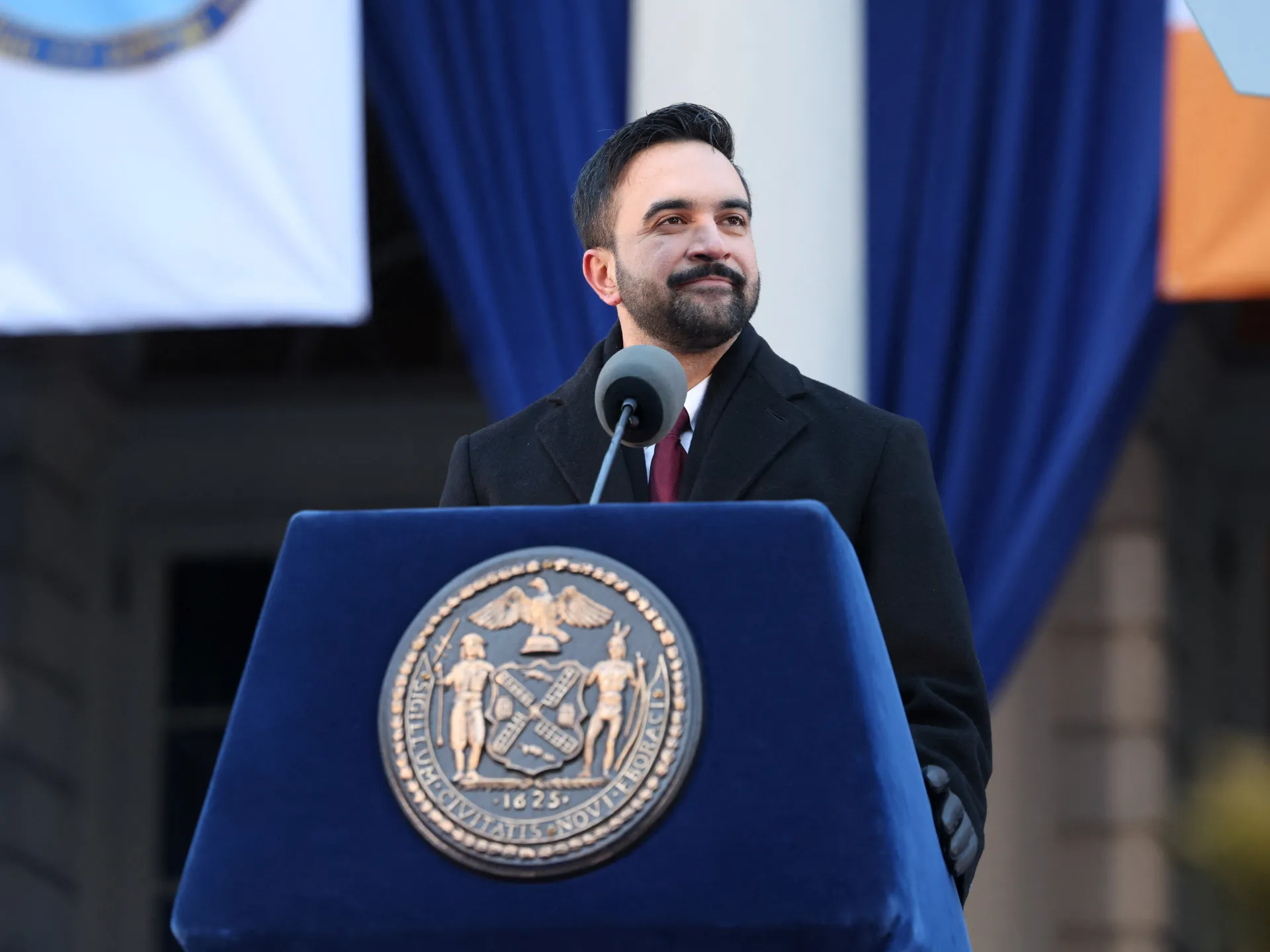
Palestinian rights advocates are praising New York City Mayor Zohran Mamdani for revoking pro-Israel municipal decrees within hours of his inauguration, a move that was promptly condemned by the Israeli government.
On Thursday, his first day in office, Mamdani wiped out all the executive orders his predecessor, Eric Adams, implemented after September 26, 2024, the day Adams was charged with bribery.
list of 3 itemsend of list
One of the orders restricted boycotts of Israel and prohibited mayoral appointees from issuing contracts “that discriminate against the State of Israel, Israeli citizens, or those associated” with the US ally.
It was signed by Adams less than a month ago and was seen by critics as an attempt to create controversy for the incoming Mamdani administration.
Another now-nixed decree adopted a controversial definition of anti-Semitism from the International Holocaust Remembrance Alliance (IHRA), which advocates say can be used to censor and penalise speech critical of Israel.
Nasreen Issa, a member of the Palestine Youth Movement – NYC, said Israel and its supporters have long pushed for the “criminalisation of dissent”.
“So, Mamdani’s rejection of this is a positive step towards protecting the rights of New Yorkers and the dignity of Palestinians,” Issa told Al Jazeera.
Afaf Nasher, the head of the New York chapter of the Council on American Islamic Relations (CAIR), also applauded Mamdani for revoking an “unconstitutional order restricting the ability of New Yorkers to criticize the Israeli government’s racism or boycott Israel’s human rights abuses”.
“This unconstitutional, Israel First attack on free speech should have never been issued in the first place,” Nasher said in a statement.
Nasher further slammed the IHRA definition, saying that the “overly broad” guidelines frame disagreement with Zionism as anti-Semitic.
“The order would have also unconstitutionally limited boycotts against only Israel,” Nasher said.
Palestinian rights supporters have long rejected the IHRA definition, which heavily focuses on Israel. The definition provides 11 examples of anti-Semitism, six of which involve Israel.
They include “claiming that the existence of a State of Israel is a racist endeavor” and “applying double standards” to Israel.
“I think it’s wonderful that Mayor Mamdani took measures on day one to reinforce our rights to free speech, which included our right to criticize and oppose Israeli apartheid and genocide,” said YL Al-Sheikh, a Palestinian-American writer active in the Democratic Socialists of America.
“The IHRA being implemented as government policy isn’t about combatting antisemitism but about stifling dissent and this should be something all Americans oppose.”
The Israeli Ministry of Foreign Affairs decried Mamdani’s moves on Friday, saying that the newly inaugurated mayor is showing “his true face”.
“This isn’t leadership. It’s antisemitic gasoline on an open fire,” it said in a post on the social media platform X.
Separately, Amichai Chikli, Israel’s minister of diaspora affairs, deployed Islamophobic language to criticise Mamdani’s decision.
He called the mayor a “Hamas sympathiser” and drew a connection between him and the Muslim mayor of London, Sadiq Khan.
“When a Muslim Brotherhood Islamist whose slogan is ‘Globalize the Intifada’ takes control of New York City or London, these are exactly the decisions you get,” Chikli wrote on X.
Neither Mamdani nor Khan has any known connections to the Muslim Brotherhood.
Issa said the intense Israeli response is not about the mayor’s policy moves but is rather aimed at controlling the narrative.
“Israel’s main approach – at the highest level, at the level of the Foreign Ministry – has been to push for the criminalisation of protected speech through these warped definitions of anti-Semitism like the IHRA,” she said.
“Since they’re losing in the court of public opinion, the response now is to push for the criminalisation of dissent.”
Issa also called Chikli’s attack on Mamdani “blatant Islamophobia, racism and disinformation”.
“They’re trying to promote these accusations that have no basis in reality whatsoever,” Issa told Al Jazeera.
“But from their perspective, any support for Palestinians, any opposition to Israel’s genocide or the conduct of its military – whether in Gaza or the West Bank, over the last two years, over the last decades – none of that is acceptable.”
Al-Sheikh said it was “absurd” that Israel is trying to impose its preferences on local policies in New York.
“Even Americans who aren’t Palestinian or pro Palestine can see this is strange and inhibits our rights,” Al-Sheikh said.
“It’s also weirdly counterproductive on Israel’s part since it only makes Mamdani look better. A single policy paper that said you can’t criticise a country was repealed and now they claim it is the end of the world, but ‘you should be allowed to criticise any country you want’ is the universal American position.”
Israel was not alone, however, in denouncing Mamdani’s actions. The administration of President Donald Trump also issued a warning to the Mamdani administration.
Harmeet Dhillon, assistant attorney general for the Justice Department’s Civil Rights Division, said her office would be vigilant “to ANY AND ALL violations of religious liberties” in New York.
“We will investigate, sue, and indict as needed,” Dhillon wrote in a social media post.
Palestine solidarity activists often stress that criticising Israeli abuses should not be conflated with attacking Judaism.
Mamdani has been a vocal critic of Israeli policies against Palestinians, prompting accusations of anti-Semitism from Israel’s supporters.
But he has repeatedly promised to protect Jewish residents. During his inauguration ceremony, he pledged to continue the Mayor’s Office to Combat Anti-Semitism (MOCA), an Adams-era development, and he told reporters his administration would “celebrate and cherish” Jewish New Yorkers.
The new mayor, 34, took the oath of office on a copy of the Quran at the turn of the new year, becoming the first Muslim mayor of America’s largest city.
The Democratic socialist, who formerly served as a state legislator, had minimal name recognition when he first announced his candidacy late in 2024.
But he steadily grew his base of support with a message focused on affordability and housing.
Last June, he defeated former Governor Andrew Cuomo to win the Democratic nomination, in one of the most stunning political upsets in recent US history.
Mamdani then defeated Cuomo again in the general elections in November, after the ex-governor relaunched his campaign as an independent with Trump’s support.
Adams was elected as a Democrat in 2021, but his administration faced numerous scandals during its four-year term, including accusations that Adams had entered into a quid pro quo with representatives from the Turkish government.
Earlier in 2024, Trump’s Justice Department dropped the federal bribery charges he faced. Adams had launched a re-election campaign as an independent, but he ultimately suspended his bid and backed Cuomo before the elections.
While Mamdani’s platform was largely focused on local issues, some of his supporters have argued that his vocal support for Palestinian rights helped propel his campaign amid the growing anger at Israel’s genocidal war on Gaza.
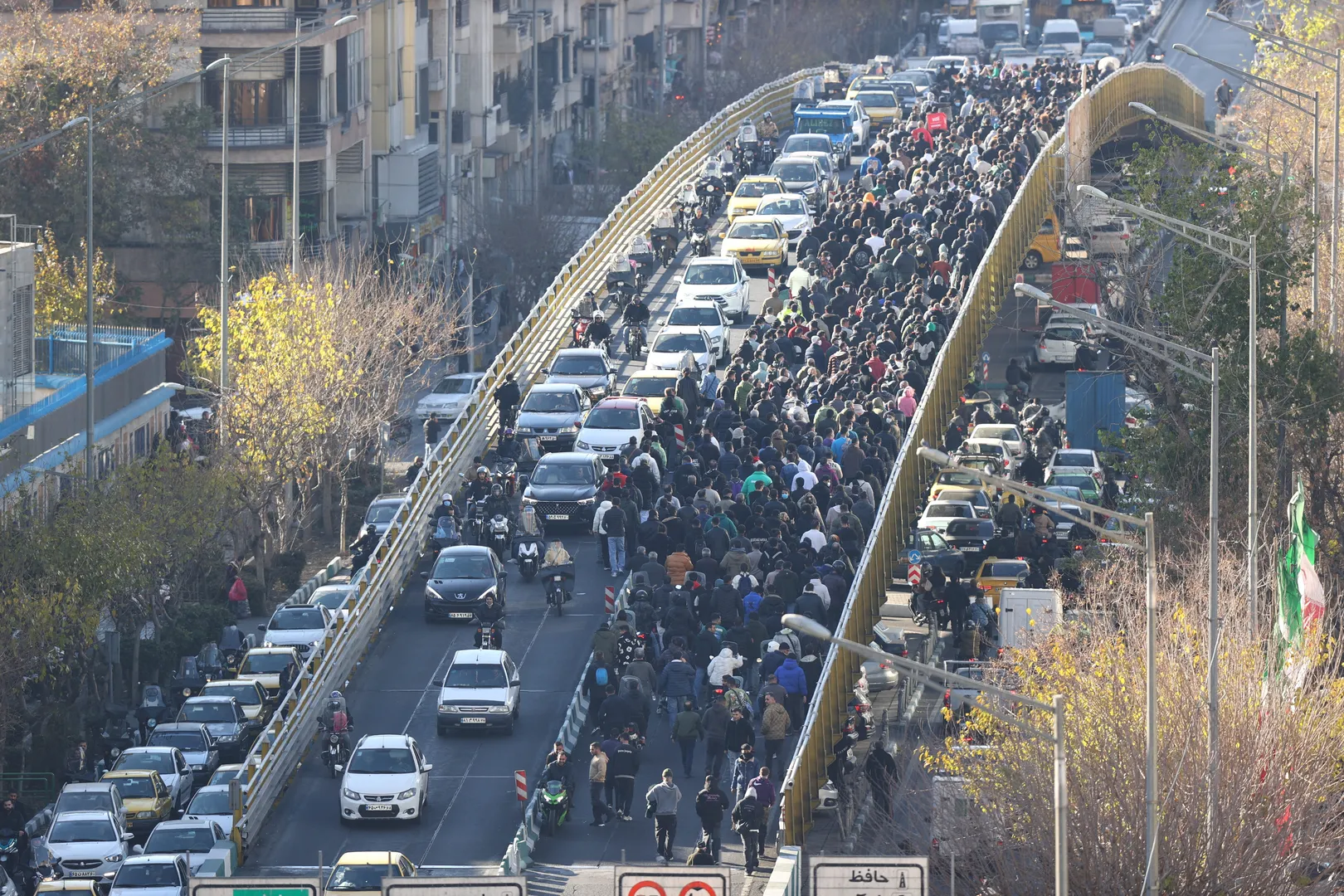
Protests are intensifying in Iran as a deepening economic crisis fuels public anger over soaring prices and falling living standards. Here’s a breakdown of what’s driving the unrest and how authorities are responding.
Published On 2 Jan 20262 Jan 2026
Share
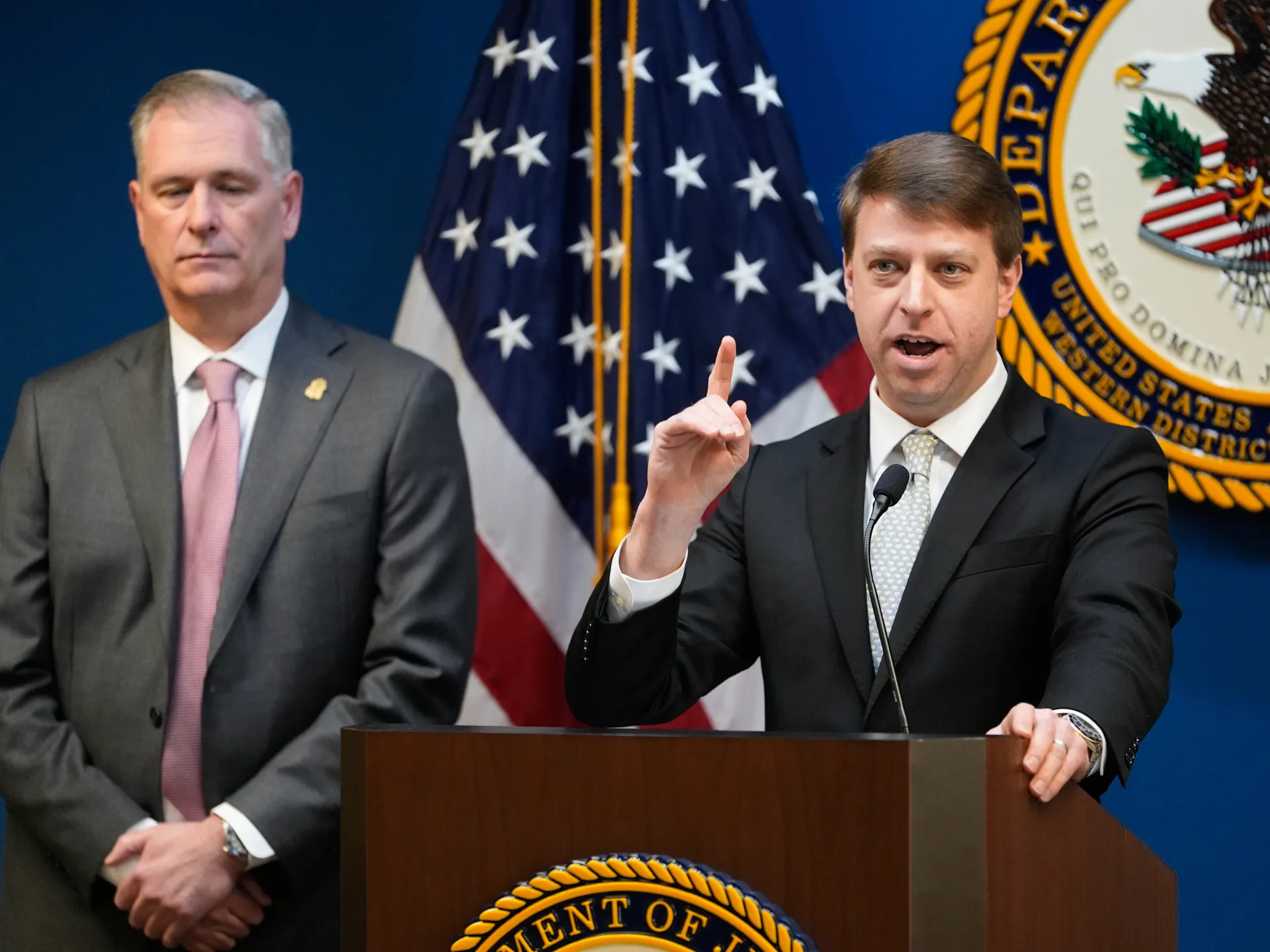
Federal authorities in the United States have accused an 18-year-old of plotting to carry out a “potential terrorist attack” on New Year’s Eve in the suburban town of Mint Hill, North Carolina, outside Charlotte.
On Friday, officials from the US Attorney’s Office and the Federal Bureau of Investigation (FBI) identified the suspect as Mint Hill resident Christian Sturdivant, a US citizen. The targets of Sturdivant’s alleged plans were a grocery store and a fast-food restaurant in Mint Hill.
list of 3 itemsend of list
“ Countless lives were saved here,” US Attorney Russ Ferguson said at a news conference.
“On New Year’s Eve, everyone is at the grocery store. We’re all buying the things we need to celebrate. And we could have had a significant, significant loss of life, a significant injury here.”
Ferguson explained that Sturdivant was arrested on New Year’s Eve, the day of his planned attack. The 18-year-old has been charged with “attempting to provide material support to a foreign terrorist organisation”, and he made his first court appearance on Friday.
Sturdivant faces a maximum sentence of 20 years in prison, according to Ferguson.
But during his news conference, Ferguson, an appointee of President Donald Trump, appeared to voice frustration with the court system for failing to approve an earlier effort to detain Sturdivant on mental health grounds.
“ I think it is notable that, as part of their efforts, the FBI took Mr Sturdivant to a state magistrate judge to try to have him involuntarily committed,” Ferguson said.
“And that was because he had threatened not only other people’s lives, but in the process said that he planned to die by a policeman shooting him. So he had threatened other people’s lives and self-harm, but the state magistrate judge denied involuntary commitment.”
Authorities later specified that the hearing with the magistrate judge took place on Monday, days before his arrest. Sturdivant, they said, turned 18 last month.
During Friday’s news conference, officials said this week’s arrest was part of a multiyear effort to investigate Sturdivant, whom they described as a “prolific social media user”.
The suspect had previously been an employee at a local Burger King in North Carolina.
James Barnacle, the special agent in charge of the FBI’s North Carolina field office, said the suspect first came to the bureau’s attention in 2022, after he tried to contact the armed group ISIL (ISIS) through social media.
The US considers ISIL a foreign terrorist organisation and has conducted numerous military operations in the Middle East — and one recently in Nigeria — on the premise of combating the group.
Barnacle alleged that Sturdivant received instructions to knock on doors and attack people with hammers, but his initial attempts were thwarted by his family. He was about 14 years old at the time.
“ No charges were filed at that time,” Barnacle said. “He underwent psychological care, of which I don’t know the details.”
Then, in December, Barnacle said the FBI discovered that Sturdivant had returned to social media and posted threatening messages.
He had also allegedly made contact with two undercover officers: one from the New York Police Department and the second a covert agent with the FBI.
“Within just a few days, Sturdivant direct-messaged the online covert employee with a picture of two hammers and a knife,” Barnacle said. “The message was significant since in recent years an ISIS propaganda magazine promoted the use of knives to conduct terrorist attacks in Western countries.”
Barnacle added that later messages contained a loyalty oath to ISIL and a request for help obtaining firearms.
“The JTTF [Joint Terrorism Task Force] collected evidence showing he turned his back on his country and his fellow citizens by pledging allegiance to ISIS with the intent of becoming a martyr,” Barnacle said of the 18-year-old.
“We allege Sturdivant was willing to sacrifice himself by committing a terrorist attack, using knives and a hammer to support the murder, torture and extreme violence that ISIS represents.”
An FBI search of his home reportedly recovered hammers and knives hidden under Sturdivant’s bed, as well as notes allegedly detailing his attack plans.
“I could tell you the FBI had 24/7 surveillance on this subject, all hours of night, Christmas Day, Christmas Eve,” Barnacle said. He described the suspect’s targets as “Jews, Christians and LGBTQ individuals”.
FBI Director Kash Patel quickly promoted Sturdivant’s arrest on social media, praising his bureau and its partners for “undoubtedly saving lives”.
The arrest comes one year after a pickup truck driver intentionally rammed his vehicle down Bourbon Street, New Orleans’s famed entertainment district, in a deadly New Year’s Day attack.
Fourteen people were killed, and authorities recovered an ISIL flag in the truck.
But critics have questioned the use of undercover agents to make “terrorism-related” arrests with some defence lawyers arguing that agents have encouraged suspects to make incriminating statements or take actions they otherwise would not have.
Lawyers for the 18-year-old have yet to publicly comment.
Kyrylo Budanov, 39, has been named President Volodymyr Zelensky’s new chief of staff. File Photo by Sergey Dolzhenko/EPA
Jan. 2 (UPI) — Ukrainian President Volodymyr Zelensky announced Friday that he named spy boss Lt. Gen. Kyrylo Budanov as his chief of staff.
“I had a meeting with Kyrylo Budanov and offered him the role of the Head of the Office of the President of Ukraine. At this time, Ukraine needs greater focus on security issues, the development of the Defense and Security Forces of Ukraine, as well as on the diplomatic track of negotiations, and the Office of the President will primarily serve the fulfillment of these tasks of our state. Kyrylo has specialized experience in these areas and sufficient strength to deliver results,” Zelensky said in a post on X.
Budanov retweeted Zelensky’s post and said he accepted the offer.
“It is both an honor and a profound commitment, especially at this decisive moment in our country’s history, to focus on issues critical to Ukraine’s strategic security,” Budanov said.
“We will continue to do what must be done — to strike the enemy, defend Ukraine, and work tirelessly toward a just peace. Together, we will continue to fight for a free and secure future for Ukraine.”
Zelensky’s former chief of staff, Andriy Yermak, resigned on Nov. 28 after a raid on his home in a sweeping corruption scandal. Yermak was the most powerful political figure in Ukraine behind Zelensky.
Yermak, 54, has not been accused of any wrongdoing, and officials did not explain why they searched his property.
Budanov, 39, has been the leader of the country’s Hur military intelligence agency since 2020. The agency is known as one of the most competent institutions in the country, and Budanov has become a household name, the Kyiv Independent said.
A lawmaker from Zelensky’s party told the Independent that hiring Budanov could indicate that the peace plan for the war between Ukraine and Russia negotiated by President Donald Trump and his team may fall apart.
“We need to prepare for a long, exhausting struggle. And this is exactly the approach that Budanov represents,” the lawmaker said.
Budanov “will need to build his own system, his own vertical of power. I think it will be a different style of leadership for the office,” the source told the Independent. “He’s a spymaster, but he’s not a master of political intrigue.”

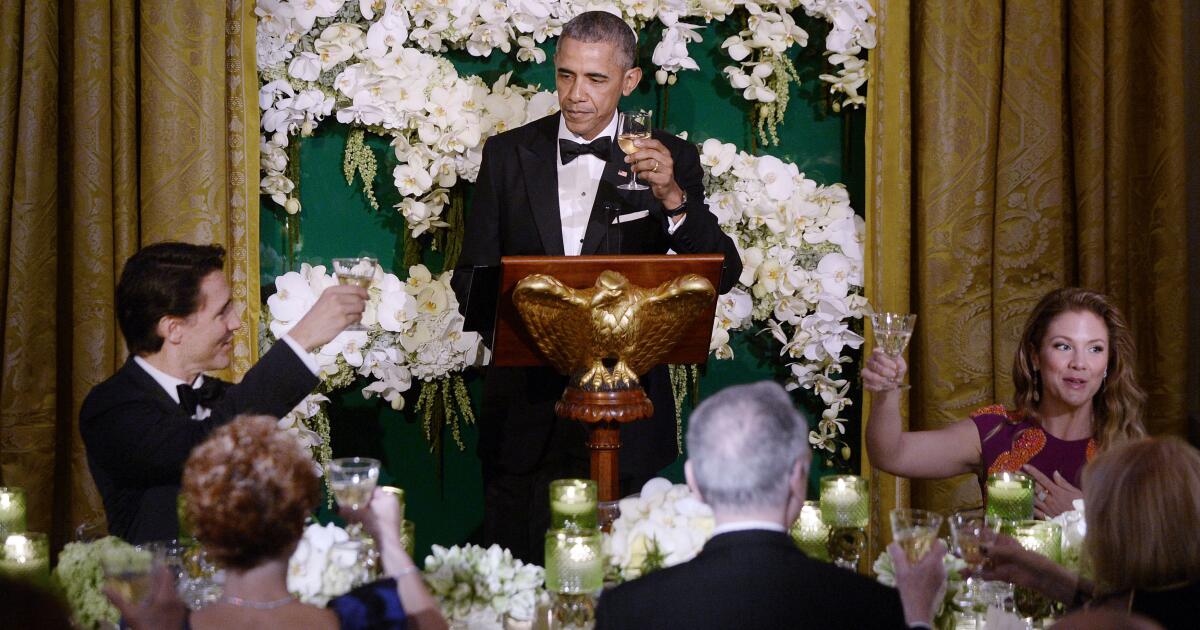
As we head into 2026 and Democrats try to figure out how to regain power, their New Year’s resolution should be simple: Manage egos better.
In recent years, they seem to have forgotten the time-tested necessity of placating people. In other words, doing the same basic drudgery the rest of us rely on to get through this chaotic world.
This effort cannot merely be directed toward voters, as important as they are. It must also include elite stakeholders, some of whom might (rightly) be considered kooks, weirdos and otherwise high-maintenance eccentrics.
Lest you think Dems should simply shrug off these folks and say “good riddance,” consider this: Both Trump terms might have been avoided if Democrats had been more willing to nurture the nuts in years gone by.
Let’s start with their treatment of America’s top crank: Robert F. Kennedy Jr.
As journalist Michael Scherer, who profiled RFK Jr. for The Atlantic, told Alex Wagner of “Pod Save America”: Once Kennedy’s own 2024 presidential campaign started to flounder, he and his campaign manager began “to make sort of outreach to Democrats … to see if they can open a conversation with Biden to sort of trade something.”
Unfortunately, “the Democratic response [was] silence.” They wouldn’t meet with him, they wouldn’t talk to him.
Later, as Scherer recounts: “A friend of [Kennedy’s] connects him with Tucker Carlson who connects him with Donald Trump. And that night, just hours later, they’re talking, and Trump at that point wants to make a deal.”
The rest is history.
Now, I know what you’re thinking. “But Kennedy is a nut! Why should Democrats have humored him?”
How about this: Because Trump narrowly won the presidency in 2024 by forming a disparate coalition held together by duct tape, resentment and (possibly) a cursed amulet.
This motley crew included more prominent Dems than just RFK Jr. Remember when Biden basically ghosted Elon Musk for that big 2021 White House electric vehicle summit? Even Kamala Harris — who happily agreed with Biden on just about everything except her own polling numbers — called that a huge mistake.
Then again, Harris committed her own costly slight when she decided against going on Joe Rogan’s podcast.
For an entire decade now, Democrats have consistently alienated allies — with devastating results. I’m talking about the snubs that might have prevented Trump’s first presidential run entirely.
Not just the famous humiliation of Trump at the 2011 White House Correspondents’ Dinner. Here’s the more tragic prequel: Former “Meet the Press” host Chuck Todd told the Bulwark’s Tim Miller that before Trump went full birther, he actually called the Obama White House offering “ideas on how to improve the state dinner.”
That’s right. Donald J. Trump — future leader of the free world — just wanted to talk about better parties. Shrimp trays. Tablecloths. Maybe a chocolate fountain.
Just as the world would have been better had the Washington Senators signed Fidel Castro to a huge baseball contract before he got too interested in politics, America might have been better if Obama had made Trump the White House state dinner czar.
But as Todd put it, “The last thing the Obama White House was going to do was placate a guy like Donald Trump.”
Understandable — until you consider that the alternative to humoring him was, you know … President Trump. Twice.
Look, I totally understand why a U.S. president might think he or she shouldn’t have to stoop to kissing some crank’s ring or placating some gilded, phony billionaire. But let’s be honest: It’s part of the job.
Instead of performing this sort of ego cultivation, Democrats — whether because of snobbery, elite gatekeeping, geriatric aloofness or a disciplined disdain for “time burglars” — have repeatedly alienated potential allies (or at least neutral parties). Then they act shocked when these same people drift into the MAGA solar system like space debris.
If Trump is truly an existential threat — and Democrats say this approximately 87 times a week — then maybe, just maybe, they should Return. A. Phone. Call.
Otherwise, Donald Trump will. Probably at 3 a.m., while eating a Big Mac.
So grovel if you must. Fake interest. Smile like you’re not dying inside. Do the basic humiliations the rest of us perform daily to get hired, get promoted or get a date.
It’s the least you can do. So make it your New Year’s resolution and honor it.
But if you think you’re too good to perform the basic glad-handing and ego-stroking, even for the nuttiest eccentrics, bad things will happen.
Trust me — I’ve seen this movie. And we’re only a year into his second term.
Matt K. Lewis is the author of “Filthy Rich Politicians” and “Too Dumb to Fail.”
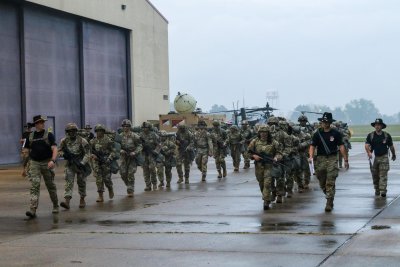

This file photo shows the 5th Air Cavalry Squadron, 17th Cavalry Regiment, taking part in the Spur Ride event at Camp Humphreys, a key U.S. base in Pyeongtaek, on Sept. 25, 2025. File Photo by Pfc. Kalisber Ortega/U.S. Army/UPI
A U.S. Army squadron tasked with a reconnaissance mission in South Korea was deactivated last month, a congressional report showed Thursday, amid speculation that Washington could consider a troop drawdown in the allied country in a force posture adjustment.
The 5th Air Cavalry Squadron, 17th Cavalry Regiment (5-17 ACS) at Camp Humphreys, a key U.S. base in Pyeongtaek, some 60 kilometers south of Seoul, ceased its operation on Dec. 15, a recent Congressional Research Service (CRS) report said, citing information from the U.S. Army. It had served in Korea to support the 2nd Infantry Division since May 2022.
Its deactivation as part of an Army transformation initiative came amid lingering concerns that U.S. President Donald Trump‘s administration could seek a ground troop reduction of the 28,500-strong U.S. Forces Korea (USFK) as part of an adjustment to better counter threats from an assertive China.
5-17 ACS is known to have had hundreds of personnel, as well as aviation and reconnaissance assets, including AH-64E Apache helicopters and RQ-7B Shadow drones. It is unclear whether the deactivation means the pullout of the unit’s personnel and assets or whether there will be a replacement unit.
Comment from the U.S. Army on the deactivation was not immediately available.
A day after the 5-17 ACS deactivation, the Army restructured the 2nd Infantry Division’s Combat Aviation Brigade Medical Evacuation (CAB MEDEVAC) unit, the CRS report said without elaboration.
5-17 ACS was activated in 2022, taking over the role of what had been rotational air cavalry squadrons to provide more stability to U.S. defense operations and enhance defense readiness in South Korea.
Speculation about a potential U.S. troop cut in Korea has persisted as Washington calls for Seoul to take greater responsibility for its own defense while seeking to bolster U.S. capabilities to better address potential China-related contingencies, including those related to Taiwan.
That speculation was reinforced as last year’s key security document between Seoul and Washington omitted language committing the U.S. to maintaining the “current” USFK troop level, with U.S. officials emphasizing the importance of “capabilities” rather than the troop numbers.
Last May, The Wall Street Journal reported that the U.S. was weighing the idea of pulling out roughly 4,500 troops from South Korea and moving them to other locations in the Indo-Pacific, including Guam. The Pentagon dismissed it as “not true,” reaffirming that America remains “fully” committed to the defense of South Korea.
Copyright (c) Yonhap News Agency prohibits its content from being redistributed or reprinted without consent, and forbids the content from being learned and used by artificial intelligence systems.
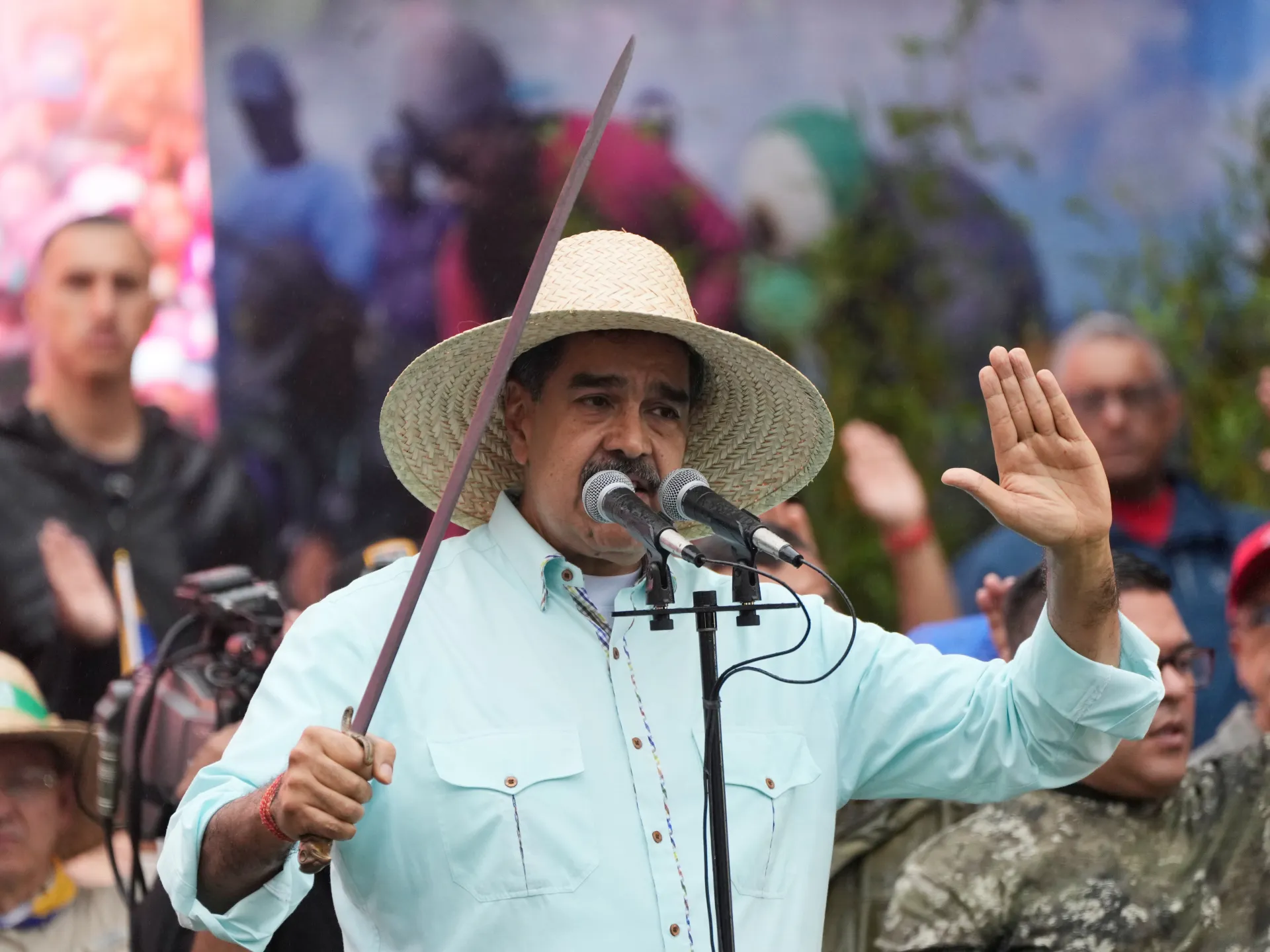
Venezuela leader strikes conciliatory tone while renewing claim US wants to topple government to access vast oil reserves.
Venezuela is open to negotiating a deal with the United States to combat drug trafficking, President Nicolas Maduro has said, even as he remained silent on a reported CIA-led strike on his country last week.
The latest statement, made during an interview that aired on Thursday, comes as Maduro has struck a more conciliatory tone towards the US amid Washington’s months-long sanctions and military pressure campaign.
list of 3 itemsend of list
That included, on Thursday, the release of more than 80 prisoners accused of protesting his disputed victory in the 2024 election, the second such release in recent days.
“Wherever they want and whenever they want,” Maduro told Spanish journalist Ignacio Ramonet of the idea of dialogue with the US on drug trafficking, oil and migration in an interview on state TV.
He stressed that it is time for both nations to “start talking seriously, with data in hand”.
“The US government knows, because we’ve told many of their spokespeople, that if they want to seriously discuss an agreement to combat drug trafficking, we’re ready,” he said.
Still, Maduro renewed his allegations that the US is trying to topple his government and gain access to Venezuela’s vast oil reserves through Washington’s months-long sanctions and military pressure campaign.
“If they want oil, Venezuela is ready for US investment, like with Chevron,” he added, referring to the US oil giant, which is the only major oil company exporting Venezuelan crude to the US.
Asked point-blank by Ramonet if he confirmed or denied a US attack on Venezuelan soil, Maduro said: “This could be something we talk about in a few days.”
To date, Maduro has not confirmed a US land attack on a docking facility that allegedly targeted drug boats.
For months, the US has launched numerous strikes on alleged drug smuggling boats originating from Venezuela, in what rights groups have decried as extrajudicial killings. The Trump administration has also imposed a blockade on sanctioned oil tankers entering and exiting Venezuela’s coast.
Tensions further escalated after Trump revealed earlier this week a strike on a docking area for alleged Venezuelan drug boats, in the first known attack on Venezuelan territory of the US campaign.
Trump has not confirmed widespread reports in US media that the attack was a CIA operation or where it occurred, saying only it was “along the shore”.
“There was a major explosion in the dock area where they load the boats up with drugs,” he told reporters at his Mar-a-Lago resort in Florida.
“So we hit all the boats and now we hit the area, it’s the implementation area, that’s where they implement. And that is no longer around.”
The US president has repeatedly threatened ground strikes on drug cartels in the region, which he has labelled “narcoterrorists”. He has claimed, without providing evidence, that Maduro leads a trafficking organisation that aims to destabilise the US by flooding it with drugs.
However, regional experts have noted that Venezuela is not known to be involved in the illicit fentanyl trade, which far and away accounts for the highest number of overdose deaths in the US. Trump has labelled the drug a “weapon of mass destruction”.
Maduro has said the Trump administration’s approach makes it “clear” that the US “seek to impose themselves” on Venezuela through “threats, intimidation and force”.
Maduro’s interview was taped on New Year’s Eve, the same day the US military struck five alleged drug-smuggling boats, killing at least five people.
The latest attacks bring the total number of known boat strikes in the Caribbean and eastern Pacific to 35 and the number of people killed to at least 115, according to numbers announced by the Trump administration.
Venezuelans and Colombians have been among the victims.
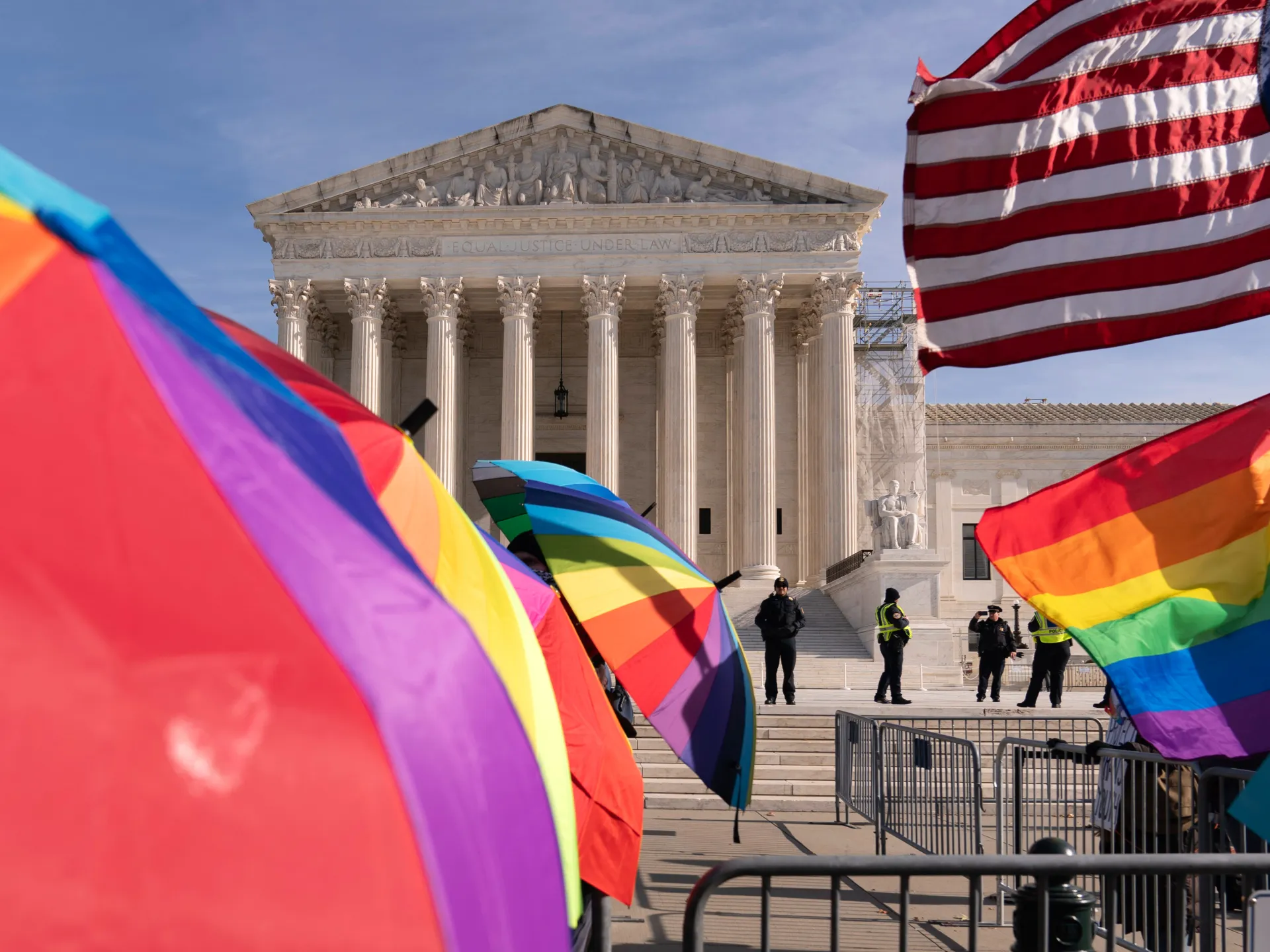
The complaint targets a policy that would nix coverage under federal health insurance for gender-affirming healthcare.
Published On 1 Jan 20261 Jan 2026
Share
A group of federal government employees in the United States has filed a class action complaint against President Donald Trump’s administration over a new policy that will eliminate coverage for gender-affirming care in federal health insurance programmes.
The policy took effect with the start of the new year, and on Thursday, the Human Rights Campaign Foundation issued the complaint, acting on behalf of the federal employees.
list of 3 itemsend of list
The US Office of Personnel Management (OPM) was named as a defendant.
In an August letter, the OPM stated that, as of 2026, “chemical and surgical modification of an individual’s sex traits through medical interventions” would no longer be covered under health insurance programmes for federal employees and US postal workers.
OPM officials could not be reached for immediate comment.
The complaint argues that the policy is discriminatory on the basis of sex. It asks that the policy be rescinded and seeks payment for economic damages and other relief.
If the issue is not resolved with the OPM, the foundation said that plaintiffs will pursue class claims before the Equal Employment Opportunity Commission and potentially continue with a class action lawsuit in federal court.
Separately, a group of Democratic state attorneys general last month sued the Trump administration to block proposed rules that would cut children’s access to gender-affirming care, the latest court battle over Trump’s efforts to eliminate legal protections for transgender people.
US Secretary of Health and Human Services Robert F Kennedy Jr has proposed rules that would bar hospitals that provide gender-affirming care to children from Medicaid and Medicare and prohibit the Children’s Health Insurance Program from paying for it.
Jan. 1 (UPI) — President Donald Trump ended the lease for the National Links Trust, which manages Washington, D.C.-area public golf courses owned by the National Parks Service.
The Department of the Interior sent a letter Tuesday formally cutting ties with NLT, which has managed three golf courses on public land in the District since 2020 — Langston Golf Course, Rock Creek Park Golf and East Potomac Golf Links.
The letter said that NLT had failed to complete required capital improvements and to provide a plan to fix alleged defaults in the lease.
The goal of the lease was for the NLT to redesign and renovate the historic sites where the golf courses lie. It would use money from donors and the District’s government.
“The Trump administration prides itself on getting the job done for the American people and partnering with others who share that same goal,” the Interior Department told The Hill.
The NLT said it was “devastated” to get the notice and is “in fundamental disagreement with the administration’s characterization of NLT as being in default under the lease.”
“We have always had a productive and cooperative working relationship with the National Park Service and have worked hand in hand on all aspects of our golf course operations and development projects,” the organization said.
NLT will stay in place to keep the courses running, but all renovation projects will stop.
Michael McCartin, NLT co-founder, told the Washington Post that it opted to keep the courses open for the workers and golfers.
“Our mission is to provide affordable and accessible golf,” McCartin said, “and our obligation is to our employees and the community. These are important places, and without an alternative, we can’t let them sit, closed and unavailable to the community.”
The Washington Post reported that Trump has expressed interest in the East Potomac course, wanting to redesign it and potentially host the Ryder Cup. But those potential plans have worried residents who are concerned about access and affordability.
“The DNA of municipal courses is a bit different than those owned and operated privately and much different than country clubs,” Jay Karen, chief executive of the National Golf Course Owners Association, told The Post.
“Munis are all about supporting the widest-possible access to the game, while also preserving critical green spaces, for perpetuity. … There is a greater sense of history and pride in a community around their public parks that happen to be golf courses,” Karen said.
A source told The Hill last week that NLT had hired a lawyer and was considering litigation.
“This is not the update we wanted to send, and we worked tirelessly to try to avoid this outcome,” the NLT said Wednesday. “While this termination is a major setback, we remain stubbornly hopeful that a path forward can be found that preserves affordable and accessible public golf in the nation’s capital for generations to come.”

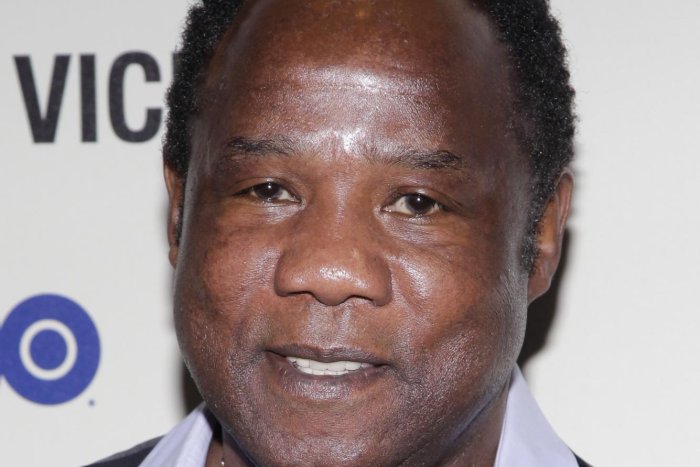
Isiah Whitlock Jr.
Actor Isiah Whitlock Jr. arrives on the red carpet for the premiere of HBO’s “Vice” in New York City on April 2, 2013. Whitlock Jr., known for his roles on “The Wire” and “Veep,” died at the age of 71 on December 30. Photo by John Angelillo/UPI | License Photo
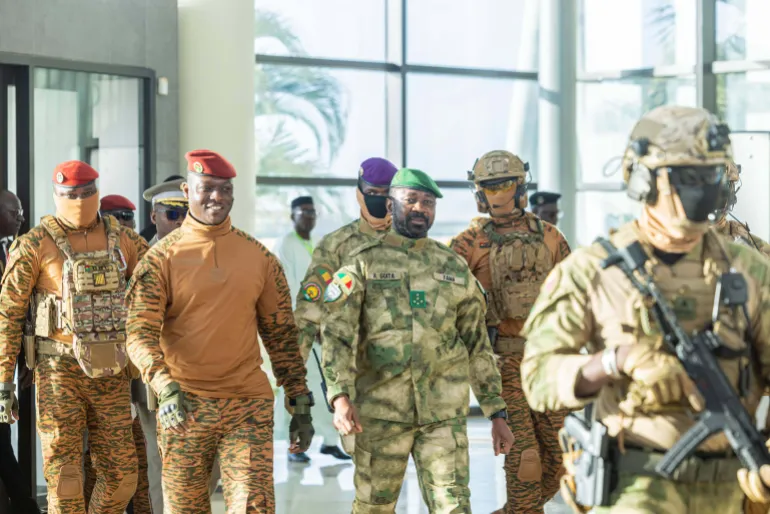
Mali and Burkina Faso have announced they are imposing full visa bans on United States citizens in retaliation for US President Donald Trump’s ban on US visas for their citizens this month.
The two West African countries, which are both governed by the military, on Tuesday became the latest African nations to issue “tit-for-tat” visa bans on the US. These follow Trump’s new visa restrictions, which now apply to 39 countries in Africa, Asia, the Middle East and Latin America. The White House said they were imposed on “national security” grounds.
list of 4 itemsend of list
“In accordance with the principle of reciprocity, the Ministry of Foreign Affairs and International Cooperation informs the national and international community that, with immediate effect, the Government of the Republic of Mali will apply the same conditions and requirements to US nationals as those imposed on Malian citizens,” the Malian ministry said in a statement.
Burkina Faso’s foreign minister, Karamoko Jean-Marie Traore, in a separate statement similarly cited a reciprocity rule for his country’s visa ban.
The US directive issued on December 16 expanded full US visa bans to citizens of five nations other than Mali and Burkina Faso: Laos, Niger, Sierra Leone, South Sudan and Syria.
Travellers holding travel documents issued by the Palestinian Authority were also banned from entering the US under the order.
The US cited the countries’ poor screening and vetting capabilities, information-sharing policies, visa overstay rates and refusal to take back their deported nationals for the ban.
Trump’s order also noted countries were additionally assessed based on whether they had a “significant terrorist presence”.
The US ban takes effect on Thursday.
Mali, Burkina Faso and neighbouring Niger have been plagued by violence from armed groups linked to al-Qaeda and ISIL (ISIS) for years. The violence in those countries has displaced millions of civilians.
On Friday, Niger banned entry for US citizens, also citing the US ban on its citizens. The country is also military-led like its neighbours Mali and Burkina Faso. All three formed the Alliance of Sahel States in July 2024 to tackle security problems and improve trade relations.
In its own reciprocal move, Chad stopped issuing visas to US citizens on June 6 with an exception for US officials. Only US citizens who were issued visas before June 9 are now allowed entry into Chad.
The country was on an initial list of 12 nations whose citizens the Trump administration issued a full visa ban on from June 9.

Citizens of 39 countries are now under full or partial entry restrictions to the US, according to the US-based Council on Foreign Relations think tank.
Those fully banned are:
Those partially restricted are:
Trump’s approach to Africa regarding visa entries in his second term as US president is similar to that of his first administration when he issued a “Muslim ban”, which included citizens of three African nations – Somalia, Sudan and Libya – as well as Yemen, Syria, Iraq and Iran.
In later updates to the ban, Sudan was removed while Chad was added.
Most countries under US entry restrictions since Trump took office on January 20 are in Africa. Of the 39 affected countries, 26 are African nations.
Tradewise, the US has shifted away from its preferential African Growth and Opportunity Act (AGOA) trade programme to a tariff-based regime that has also been applied to most other countries around the world under Trump’s tariffs policy.
From 2000, AGOA provided African nations with duty-free access to US markets, bolstering African exports to the US of a wide range of goods, from wine to cars.
AGOA created an estimated 300,000 jobs in African countries and indirectly sustained another 1.2 million jobs, according to the US-based Center for Strategic International Studies.
However, AGOA expired in September after the US Congress failed to renew it. Although the Trump administration said it supported a one-year extension, no steps have been announced to revive the programme.
Instead, African countries now face often steep tariffs as the US sometimes justifies them on political grounds.
South Africa, Africa’s richest country, for example, was slapped with a 30 percent tariff after Trump made debunked allegations of a “genocide” on the country’s white Afrikaner minority. The US government has since prioritised resettling Afrikaners as refugees in the US.
South African President Cyril Ramaphosa met with Trump at the White House in May and explained that crime in the country targets the population at large – not just its white citizens – but was unable to persuade Trump.
Trump’s administration is also prioritising its access to critical rare earth minerals, used to develop high-tech devices, in a bid to remain competitive with China, which mines about 60 percent of the world’s rare earth metals and processes 90 percent of them.
Trump took up a mediator role in the conflict between the Democratic Republic of the Congo (DRC) and neighbouring Rwanda this year after the DRC government proposed a minerals deal with the US. The US and United Nations accuse Rwanda of backing a rebellion by the M23 armed group in the eastern DRC.
Trump did not commit to US military intervention in the DRC but successfully secured a peace pact between the two countries on December 4 after applying diplomatic pressure on Rwanda.
Attacks on civilians by M23 have nonetheless continued despite the peace deal.
A clause in the pact granted US firms priority access to both the DRC’s and Rwanda’s mineral reserves, which include cobalt, copper, lithium and gold.

In early 2025, the Trump administration shut down the US Agency for International Development and cut billions of dollars of US foreign aid, affecting many African countries that greatly depended on the world’s largest funder of health and humanitarian aid.
Aid groups have since reported rising hunger in northern Nigeria, Somalia and northeastern Kenya.
Health observers and analysts have also raised the alarm about the risk of undoing work to prevent and contain the spread of HIV in Lesotho and South Africa.
In northern Cameroon, officials have reported a spike in malaria deaths as drug supplies fall. This month, the US unilaterally pledged $400m in health funding to the country over the next five years on the condition that Cameroon raises its own annual health spending from $22m to $450m.
African nations were also most affected when Trump recalled 30 career diplomats appointed by former President Joe Biden from 29 countries last week.
Fifteen of them had been stationed in African nations: Algeria, Burundi, Cameroon, Cape Verde, Gabon, Ivory Coast, Egypt, Madagascar, Mauritius, Niger, Nigeria, Rwanda, Senegal, Somalia and Uganda.
Meanwhile, the US has continued to intensify strikes against armed groups linked to ISIL and al-Qaeda, similar to those during Trump’s first term as president from 2017 to 2021.
In Somalia, the US launched strikes in September targeting al-Shabab and the ISIL affiliate in Somalia Province, according to the US-based New America Foundation think tank.
The US also targeted ISIL- and al-Qaeda-linked groups in northwestern Nigeria for the first time on Thursday.
While those strikes were carried out in collaboration with the Nigerian government, a war of narratives prevailed between the two countries.
The US claims to be “saving” Nigerian Christians, who it alleges are experiencing a genocide.
Nigerian authorities, on the other hand, deny claims of genocide and say people of all religions have been badly affected by armed groups operating in the country.

Dec. 31 (UPI) — Two African countries have announced travel bans against U.S. citizens in retaliation for President Donald Trump‘s travel bans against their own people.
The governments of Mali and Burkina Faso said on Tuesday that they were acting “in accordance with the principle of reciprocity.” They said Americans wanting to travel to their countries would see the same impositions that their citizens face in the United States. Niger’s state news agency announced a travel ban on Americans last week, though no official statement was released.
On Dec. 14, Trump announced travel bans on Burkina Faso, Mali, Niger, South Sudan and Syria. He also created new restrictions on people seeking entry from Laos and Sierra Leone, as well as those with travel documents issued by the Palestinian Authority. There are now 19 countries on the list.
Mali’s foreign ministry said in a statement that it “regrets that such an important decision was taken without any prior consultation and in substance deplores the security grounds put forward, which contradict the actual developments on the ground, in an attempt to justify a decision whose motivation lies elsewhere.”
Niger, Mali and Burkina Faso are led by military juntas after recent coups, The New York Times said. Their leaders had all mostly cut ties with the United States and developed closer relations with Russia, China, Turkey and the United Arab Emirates.
A United Nations report published on Dec. 18 said that the Sahel region — Niger, Burkina Faso and Mali — now accounts for more than half of the world’s terrorism-related deaths.
Laos and Sierra Leone were moved from partial travel restrictions to full bans. The administration put partial restrictions on 15 other countries.
The State Department ban does not affect lawful permanent residents, many existing visa holders, diplomats or athletes traveling for major sports events.


Dec. 31 (UPI) — Former special counsel Jack Smith denied targeting President Donald Trump ahead of the 2024 presidential election while testifying before the House Judiciary Committee on Dec. 17.
He firmly denied pursuing the dual prosecutions against Trump for political reasons, Axios reported.
“I entirely disagree with any characterization that our work was in any way meant to hamper him in the presidential election,” Smith said.
The committee hearing was done behind closed doors, but House Judiciary Chairman Rep. Jim Jordan. R-Ohio, on Wednesday released the transcript and a video of the hearing that lasted for 8 hours and 21 minutes.
Smith led the Biden administration’s effort to prosecute Trump for his handling of classified documents and efforts to overturn the 2020 election results after losing to President Joe Biden.
“The decision to bring charges against President Trump was mine, but the basis for nine of those charges rests entirely with President Trump and his actions, as alleged in the 10 indictments returned by grand juries in two different districts,” Smith told House Judiciary Committee members.
He said he was deciding whether to charge alleged co-conspirators for attempting to overturn the 2020 election results, but Trump’s election win in 2024 halted the investigation.
Smith said Rudy Giuliani and Boris Epshteyn were among the Trump associates his prosecutorial team had interviewed but did not charge with alleged crimes.
When asked why he didn’t charge those two and others with lesser crimes to force them to testify against Trump, Smith said the case had plenty of evidence and no other witnesses were needed.
Smith did not offer any information to the committee that was not already publicly available regarding Trump’s handling of classified documents because U.S. District Court of Southern Florida Judge Aileen Cannon ordered him to keep the relevant contents of a 137-page case report private, he told the committee.
He said Giuliani did not believe the claims that he had made regarding voter fraud during the 2020 election and “disavowed a number of the claims,” which he excused as “mistakes or hyperbole,” Smith said.
The former special counsel also acknowledged that testimony by former White House aide Cassidy Hutchinson was based on hearsay and inadmissible in court.
Hutchinson claimed she was told Trump had become very angry when told that his driver was taking him to the White House instead of the Capitol and tried to grab the steering wheel of an SUV in which he was being transported during the Jan. 6, 2021, demonstration at the Capitol that devolved into a riot.
She made the claim privately and before an ad-hoc House select committee, the members of which then-House Speaker Nancy Pelosi, D-Calif., had chosen and mostly were Democrats.
Her account was not corroborated by others with firsthand information, Smith said.
He told the committee that Trump was the most responsible party for the Jan 6 demonstration that became a riot by stirring distrust and making false statements and refused to stop the riot.
Smith said he would pursue charges against the president again if given the chance to do so.