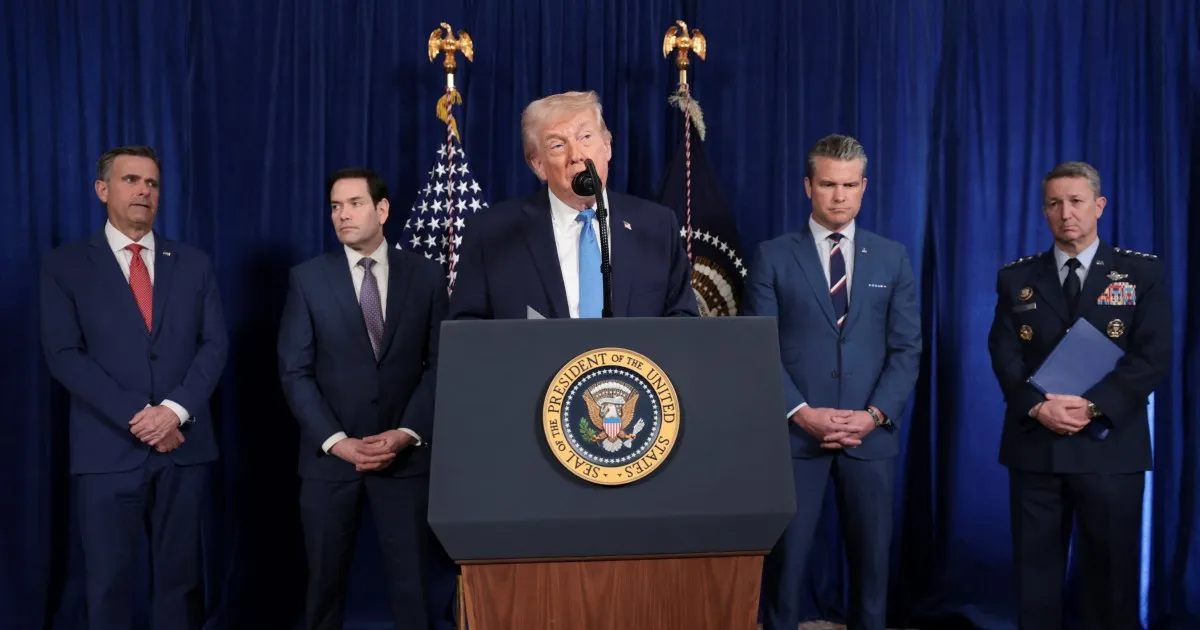
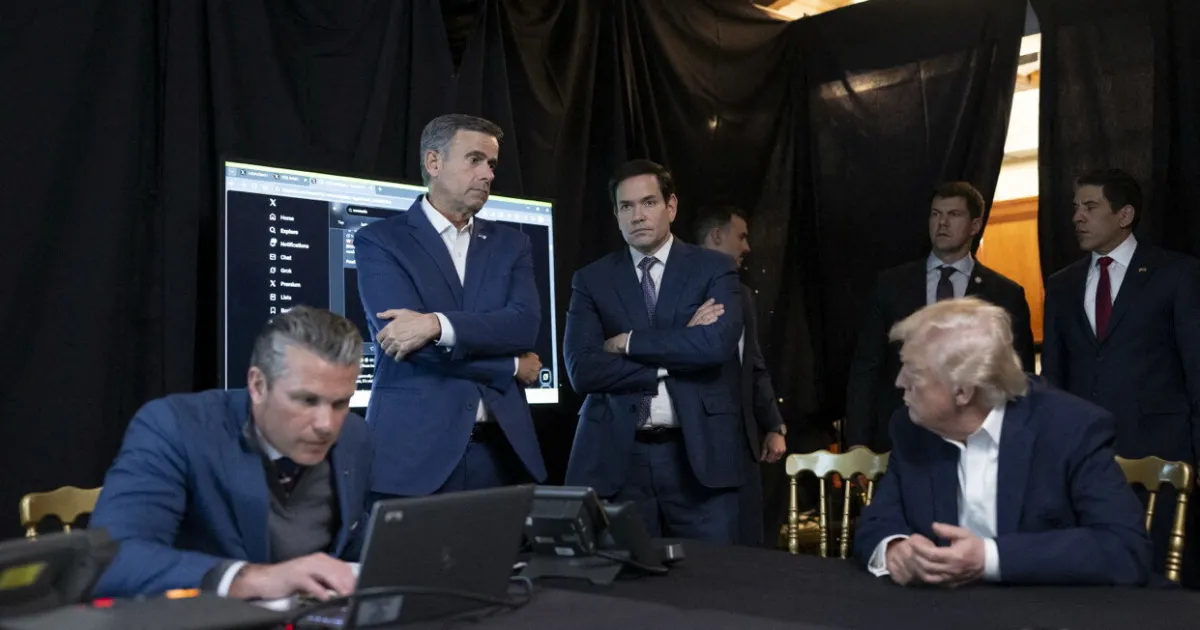
Donald Trump

Russia-Ukraine war: List of key events, day 1,389 | Russia-Ukraine war News

Here is where things stand on Sunday, December 14:

Fighting

  • Two people were killed in a Ukrainian drone strike on the Russian city of Saratov, regional Governor Roman Busargin said in a statement on Telegram. An unspecified number of people were also injured in the attack.
  • Russia’s Ministry of Defence said it hit Ukrainian industrial and energy facilities with hypersonic Kinzhal missiles, in what it called a retaliatory attack for Ukrainian strikes on “civilian targets” in Russia.
  • Ukraine’s southern port city of Odesa and the surrounding region have suffered major blackouts after a large overnight Russian attack on the power grid left more than a million households without power.
  • Ukrainian President Volodymyr Zelenskyy said Russia’s overnight attack on Ukraine included more than 450 drones and 30 missiles.
  • Prime Minister Yulia Svyrydenko described the attack as one of the war’s largest assaults on Odesa, where supplies of electricity and water had been knocked out. She said supplies of non-drinking water were being brought to areas of the city.
  • Ukraine’s power grid operator said a “significant number” of households were without power in the southern regions of Odesa and Mykolaiv, and that the Ukrainian-controlled part of the front-line Kherson region was totally without power.
  • Ukraine’s navy has accused Russia of using a drone to deliberately attack the civilian Turkish vessel Viva, which was carrying sunflower oil to Egypt, a day after Moscow hit two Ukrainian ports. None of the 11 Turkish nationals onboard the ship was hurt, and the vessel continued its journey to Egypt.
  • Earlier, it was also reported that three Turkish vessels were damaged in a separate attack.
  • Ukraine’s Zaporizhzhia nuclear power plant temporarily lost all offsite power overnight for the 12th time during the conflict, due to military activity affecting the electrical grid, according to Rafael Mariano Grossi, the director general of the International Atomic Energy Agency (IAEA). Both power lines are now reconnected, the IAEA said.
This photograph shows a general view of the southern city of Odesa, where some neighborhoods are without power on December 13, 2025, following missile and drone attacks on Ukrainian energy infrastructure, amid Russia’s invasion of Ukraine. (Photo by Oleksandr GIMANOV / AFP)
Neighbourhoods in the city of Odesa experienced power outages on Saturday night, following Russian missile and drone attacks on Ukrainian energy infrastructure [Oleksandr Gimanov/AFP]

US-led negotiations

  • Zelenskyy said he would meet US and European representatives in Berlin to discuss the “fundamentals of peace”. He added that Ukraine needed a “dignified” peace and a guarantee that Russia, which launched a full-scale invasion of his country in 2022, would not attack again.
  • US envoy Steve Witkoff and President Donald Trump’s son-in-law Jared Kushner will meet Zelenskyy and European leaders in Berlin on Sunday and Monday, a US official briefed on the matter said.
  • French President Emmanuel Macron, UK Prime Minister Starmer and German Chancellor Friedrich Merz were also expected to attend the Berlin meeting, The Wall Street Journal reported.
  • Europeans and Ukrainians are asking the US to provide them with “security guarantees” before any territorial negotiations in Russian-occupied eastern Ukraine, the French presidency said.
  • British Prime Minister Keir Starmer and European Commission President Ursula von der Leyen have discussed work on US-led peace proposals for Ukraine and efforts to use frozen Russian sovereign assets to provide funds for Kyiv, a Downing Street spokesperson said in a statement.
  • Turkish President Tayyip Erdogan, fresh from a meeting with his Russian counterpart Vladimir Putin in Turkmenistan, said he hopes to discuss a Ukraine-Russia peace plan with Trump, adding that “peace is not far away”.

Politics and diplomacy

  • Ukraine received 114 prisoners released by Belarus, including citizens accused of working for Ukrainian intelligence and Belarusian political prisoners, according to Kyiv’s POW coordination centre. The centre posted photos appearing to show the released captives boarding a bus, with some of them smiling and embracing.
  • Zelenskyy spoke to Belarusian prisoner Maria Kalesnikava after her release, presidential aide Dmytro Lytvyn told reporters. Lytvyn told reporters that military intelligence chief Kyrylo Budanov was present when the prisoners released by Belarus were received.
  • North Korean leader Kim Jong Un attended a welcoming ceremony for an army engineering unit that returned home after carrying out duties in Russia, North Korea’s KCNA news agency reported. At the event, Kim praised officers and soldiers for their “heroic” conduct during their 120-day overseas deployment.
  • Russia has sentenced top International Criminal Court (ICC) judges and its chief prosecutor Karim Khan to jail, in retaliation for the court’s 2023 decision to issue an arrest warrant for Putin over alleged war crimes during the Ukraine war.

Source link

Trump vows retaliation after ISIL attack in Syria kills three US citizens | Syria’s War News

United States President Donald Trump has pledged to pursue “serious retaliation” against the armed group ISIL (ISIS) after an ambush in central Syria killed two US service members and one civilian interpreter, also from the US.

The attack on US forces on Saturday was the first to inflict casualties since the fall of Syrian President Bashar al-Assad a year ago.

Recommended Stories

list of 4 itemsend of list

Three additional US military members were injured in the attack, as well as at least two Syrian troops, according to government and media reports.

In a social media post, Trump said he had received confirmation that the injured US soldiers were “doing well”.

He, however, warned that there would be serious consequences for what he described as an ISIL (ISIS) attack.

“This was an ISIS attack against the U.S., and Syria, in a very dangerous part of Syria, that is not fully controlled by them,” Trump wrote. “The President of Syria, Ahmed al-Sharaa, is extremely angry and disturbed by this attack. There will be very serious retaliation.”

His remarks echoed those of Secretary of Defense Pete Hegseth, who likewise promised to take severe action against anyone who attacked US service members.

“Let it be known, if you target Americans — anywhere in the world — you will spend the rest of your brief, anxious life knowing the United States will hunt you, find you, and ruthlessly kill you,” Hegseth wrote on social media.

Conducting ‘counter-terrorism operations’

Saturday’s attack was first announced by US Central Command, also known as CENTCOM.

It characterised the attack as an “ambush” carried out by a lone ISIL gunman, who was subsequently “engaged and killed”. Hegseth later confirmed that the perpetrator “was killed by partner forces”.

The attack took place near Palmyra in Syria’s central Homs region, according to Pentagon spokesperson Sean Parnell.

“The attack occurred as the soldiers were conducting a key leader engagement,” he wrote in a statement. “Their mission was in support of on-going counter-ISIS/counter-terrorism operations in the region.”

Tom Barrack, the US ambassador to Turkiye, meanwhile, described the incident as a “cowardly terrorist ambush targeting a joint U.S.–Syrian government patrol”. He noted there were “Syrian troops wounded in the attack” and wished them a “speedy recovery”.

But the details about the attack and the individuals involved remain unclear.

CENTCOM indicated the US government would withhold identifying information about the late US soldiers and their units “until 24 hours after their next of kin have been notified”.

The incident remains under “active investigation”, according to the US Department of Defense.

Who was the suspect?

The identity of the suspect has also not been released to the public.

But three local officials told the Reuters news agency that the assailant was a member of the Syrian security forces.

A spokesperson for the Syrian Interior Ministry also told the television channel Al-Ikhbariah TV that the attacker did not have a leadership role in the country’s security forces. He did not say whether the man was a junior member.

“On December 10, an evaluation was issued indicating that this attacker might hold extremist ideas, and a decision regarding him was due to be issued tomorrow, on Sunday,” the spokesperson, Noureddine el-Baba, said.

The official Syrian Arab News Agency (SANA) state news agency reported earlier that Syrian security forces and US troops came under fire during a joint patrol.

The news agency AFP, meanwhile, cited an anonymous Syrian military official as saying shots were fired “during a meeting between Syrian and American officers” at a Syrian base in Palmyra.

A witness in the city, who also asked to remain anonymous, told the agency that he heard the shots coming from inside the base.

Traffic on the Deir Az Zor–Damascus highway was temporarily halted as military aircraft conducted overflights in the area, the agency said.

A security source told SANA that US helicopters evacuated those who were wounded to the al-Tanf base near the Iraqi border.

A long-term US presence

In the aftermath of the attack, US officials pledged to double down on their efforts to combat ISIL (ISIS) in Syria.

“We will not waver in this mission until ISIS is utterly destroyed, and any attack on Americans will be met with swift and unrelenting justice,” Ambassador Barrack wrote on social media.

“Alongside the Syrian Government, we will relentlessly pursue every individual, facilitator, financier, and enabler involved in this heinous act. They will be identified and held accountable swiftly and decisively.”

The US has troops stationed in northeastern Syria as part of a decade-long effort to help a Kurdish-led force there combat ISIL (ISIS).

ISIL captured Palmyra in 2015, at the height of its military ascendancy in Syria, before losing the city 10 months later. During that time, it destroyed several ancient sites and artefacts while using others to stage mass executions.

ISIL (ISIS) was vanquished in Syria in 2018 but still carries out sporadic attacks without controlling any territory inside Syria.

As of December 2024, there were approximately 2,000 US troops stationed in Syria to continue the fight against ISIL (ISIS).

In late November, CENTCOM announced the destruction of “more than 15 sites containing ISIS weapons caches”, as the US continues its campaign against the armed group.

This month, Syria marked one year since the ouster of longtime leader Bashar al-Assad, but the war-ravaged nation continues to face stiff security and economic challenges as it seeks to rebuild and recover after 14 years of ruinous civil war.

Source link

Cambodia closes Thai border crossings amid ongoing fighting

Two Thai F-16 fighter jets dropped seven bombs in Pursat Province, Cambodia, and damaged a bridge amid escalating tensions that caused Cambodian officials to close border crossings on Saturday. Photo by Agence Kampuchea Presse/EPA

Dec. 13 (UPI) — Cambodian officials closed all border crossings from Thailand as fighting continues between the two nations despite a claimed cease-fire.

The Cambodian Defense Ministry said Thai forces had not stopped bombing targets in Cambodia on Saturday, the Wall Street Journal reported.

The border crossings with Thailand will remain closed until further notice, ministry officials said.

President Donald Trump on Friday night announced a cease-fire agreement had been reached between Thai and Cambodian officials after he spoke with them.

They agreed to “cease shooting effective this evening” and resume an agreement signed in October, Trump said in a social media post, adding that “both countries are ready for peace,” as reported by the BBC.

Leaders from the respective nations did not say they reached a cease-fire, though.

“Thailand will continue to perform military actions until we feel no more harm and threats to our land and people,” Thai Prime Minister Anutin Charnivirakul said, as reported by The New York Times.

Cambodian Prime Minister Hun Manet confirmed speaking with Trump regarding a cease-fire but did not say an agreement had been reached.

Officials in both nations reported that bombing and artillery fire continued on Saturday, and Thai officials told media that four of the nation’s soldiers had been killed.

Thai officials said a rocket attack launched from Cambodia injured several civilians, while the four military deaths raised the total since Monday to 15, along with 270 wounded and six civilians injured.

Cambodian officials have not updated that nation’s casualty reports for Saturday after reporting Thai fighter-bombers struck hotels and a bridge. They said 11 civilians had been killed and 59 injured as of Friday.

The fighting forced the evacuation of an estimated 700,000 civilians on both sides of the Thai-Cambodia border, which extends about 500 miles from Laos in the East to the Gulf of Thailand in the west.

Source link

Could violence in the DRC become a regional conflict? | Conflict

Rwandan-backed rebels seize city week after Trump oversees peace deal.

The United States and the United Nations have warned that violence in the Democratic Republic of the Congo could escalate into a regional conflict.

Hundreds of people were killed as Rwandan-backed M23 rebels seized another city, just over a week after the US brokered a peace deal.

How dangerous is the situation?

Presenter: Adrian Finighan

Guests:

Gatete Nyiringabo – Political commentator and governance and advocacy consultant

Kambale Musavuli – Analyst at the Center for Research on the Congo-Kinshasa

Richard Moncrieff – Project director for the Great Lakes region at the International Crisis Group

Source link

House Oversight Democrats release new cache of Epstein photos

Dec. 12 (UPI) — Democrats from the House Oversight Committee released new photos Friday from the estate of convicted sex offender Jeffrey Epstein.

The photos feature prominent people, including President Donald Trump, filmmaker Woody Allen, former President Bill Clinton, former Trump strategist Steve Bannon, economist Larry Summers, lawyer Alan Dershowitz, Microsoft founder Bill Gates, Andrew Mountbatten Windsor and media mogul Richard Branson. Many of the images have redacted faces, mostly of women, though the committee has not said who redacted them or why.

None of the images released show any illegal activity or nudity.

On Dec. 3, the group released a cache of images from Epstein’s private island in the U.S. Virgin Islands, Little St. James.

Rep. Robert Garcia, D-Calif., said in a statement that the latest release from the estate included “over 95,000 photos, including images of the wealthy and powerful men who spent time with Jeffrey Epstein” and “thousands of photographs of women and Epstein properties.”

“It is time to end this White House cover-up and bring justice to the survivors of Jeffrey Epstein and his powerful friends,” Garcia said in a statement. “These disturbing photos raise even more questions about Epstein and his relationships with some of the most powerful men in the world. We will not rest until the American people get the truth. The Department of Justice must release all the files, NOW.”

The committee spokesperson accused Democrats of “cherry-picking photos and making targeted redactions to create a false narrative about President Trump.”

“We received over 95,000 photos and Democrats released just a handful. Democrats’ hoax against President Trump has been completely debunked. Nothing in the documents we’ve received shows any wrongdoing. It is shameful Rep. Garcia and Democrats continue to put politics above justice for the survivors,” the spokesperson said.

Gates has previously told CNN’s Anderson Cooper that “It was a huge mistake to spend time with [Epstein], to give him the credibility of being there.”

Speaker of the House Mike Johnson, R-La., departs a closed-door meeting with Republican leadership about health care negotiations at the US Capitol on Friday. Johnson and House Republicans hope to hold a vote next week on their own health care program. Photo by Jim Lo Scalzo/UPI | License Photo

Source link

Colombia’s ELN rebels prepare for battle amid Trump ‘intervention’ threat | Donald Trump News

ELN conducts military drills, orders civilians indoors, as Trump warns drug-producing nations face potential attack.

Colombia’s largest remaining rebel force has told civilians living under its authority to stay at home for three days while it stages military drills in response to burgeoning United States threats.

The National Liberation Army (ELN), a left-wing rebel group, ordered the lockdown on Friday, instructing residents to keep off major routes and rivers from Sunday morning as fighters conduct what the group describes as preparations to defend the country against “imperialist intervention”.

Recommended Stories

list of 3 itemsend of list

The announcement follows warnings from President Donald Trump that nations manufacturing and exporting cocaine to the US could face military strikes or even land attacks.

“It is necessary for civilians not to mix with fighters to avoid accidents,” the ELN said.

Colombia’s Defence Minister Pedro Sanchez rejected the rebel directive as “nothing more than criminal coercion”, pledging that government troops would maintain presence “in every mountain, every jungle, every river”.

The move underscores a deepening confrontation between Washington and Bogota as Trump escalates rhetoric against Colombian President Gustavo Petro.

Earlier this week, Trump told business executives that Petro had “better wise up, or he’ll be next”, citing cocaine production as justification for potential action, and alluding to the US military build-up near Venezuela amid threats to remove its President Nicolas Maduro.

In recent days, the Trump administration has imposed new sanctions on Venezuela, targeting three nephews of President Nicolas Maduro’s wife, Cilia Flores, as well as six crude oil tankers and shipping companies linked to them, as Washington steps up pressure on Caracas, following the US seizure of a Venezuelan oil tanker.

Petro has responded to Trump’s actions, including sanctioning the Colombian president, with equal defiance, warning Trump earlier this month against “waking the jaguar” and insisting any assault on Colombian territory would amount to a declaration of war.

The left-wing president has invited his US counterpart to witness laboratory demolitions firsthand, claiming his administration destroys drug facilities every 40 minutes. In late November, the government hailed what it said was its largest cocaine bust in a decade.

The rebel group, ELN, which fields roughly 5,800 fighters, maintains control over significant drug-producing areas, including the Catatumbo region along the Venezuelan frontier.

Al Jazeera correspondent Teresa Bo, who visited ELN-held territory in November, found the group exercising unchallenged authority, with fighters openly displaying banners declaring “Total peace is a failure” and no government soldiers visible.

Commander Ricardo, a senior figure interviewed during that visit, suggested the rebels might join wider resistance should Trump attack Venezuela. Such an intervention could provoke an armed response across Latin America, he warned, describing US actions as violations of regional self-determination.

The organisation has attempted peace negotiations with Colombia’s last five governments without success.

Discussions with Petro’s administration collapsed after the ELN launched a January assault in Catatumbo that killed more than 100 people and forced thousands from their homes.

Despite claiming ideological motivation, the group derives substantial income from narcotics trafficking, competing with former FARC fighters who refused to disarm under a 2016 peace settlement for control of coca cultivation zones and smuggling corridors.

Relations between Colombia and the US have deteriorated sharply since Trump returned to office.

Washington has imposed personal sanctions on Petro, cancelled his visa after he joined a pro-Palestinian demonstration in New York, and removed Colombia from its list of reliable counter-narcotics partners.

Meanwhile, Trump has deployed the nation’s largest aircraft carrier and nearly 15,000 troops to the Caribbean and has ordered more than 20 military strikes in recent months against alleged drug trafficking vessels in the Caribbean and off Latin America’s Pacific coast, killing more than 80 people.

Human rights groups, some US Democrats, and several Latin American countries have condemned the attacks as unlawful extrajudicial killings of civilians.

Source link

Trump aims to reform federal cannabis law

Dec. 12 (UPI) — President Donald Trump has voiced support for reclassifying cannabis and making it a legally obtainable drug — possibly as soon as next week.

The president might sign an executive order to reclassify cannabis as a Schedule III drug as soon as Monday, accordingto CNBC, but no later than early next year, Axios reported.

Trump has a team examining the matter, but no decision has been made as of Friday morning.

The president also met with House Speaker Mike Johnson, R-La., earlier this week to discuss the matter and is considering signing an executive order compelling federal agencies to reclassify cannabis as a Schedule III drug.

The federal government currently has cannabis classified as a Schedule I drug with no known medical uses and a strong potential for abuse and dependency, as defined by the Controlled Substances Act.

Other drugs similarly classified include LSD, heroin and MDMA.

A Schedule III drug is one with recognized medicinal use and a low potential for abuse and dependency. Examples include ketamine, opioids and anabolic steroids, all of which require prescriptions to obtain legally.

Food and Drug Administration and the Drug Enforcement Agency, with assistance from the Health and Human Services Department, mostly determine how various drugs are scheduled by the federal government.

The push for reclassification of cannabis comes as more U.S. adults are using cannabis, while moving away from alcohol and tobacco products.

Reclassifying cannabis would not make marijuana legal for recreational use, but it would become legal for medicinal purposes and require a prescription.

Reclassification also would make it legal for cannabis producers to transport their products between states and enable federally chartered banks to process financial transactions related to legal cannabis sales.

Cannabis producers and retailers also could benefit from federal tax breaks.

News of a potential change in federal cannabis laws and enforcement boosted related stocks on Friday.

Cannabis stocks surged upward upon the prospect of cannabis becoming a legally obtainable substance at the federal level, in addition to respective states that have enacted recreational or medical marijuana laws, and many times both.

Several cannabis stocks posted respective gains ranging from more than 10% to about 35% during trading on Friday, CNBC reported.

Two dozen states, three U.S. territories and the District ofColumbia have legalized the medicinal and recreational use of cannabis, and a recent Gallup poll showed 64% or respondents support legalization, according to Axios.

At the federal level, the House of Representatives briefly considered decriminalizing cannabis during President Trump’s first term in office but delayed the matter until after the 2020 general election.

Legalization also could lessen the profit potential for drug cartels, which spurred Colombian President GustavoPetro in March to urge the Colombian Congress to legalize cannabis.

He said the nation’s continued prohibition against cannabis “only brings violence” among its drug cartels.

Speaker of the House Mike Johnson, R-La., departs a closed-door meeting with Republican leadership about health care negotiations at the US Capitol on Friday. Johnson and House Republicans hope to hold a vote next week on their own health care program. Photo by Jim Lo Scalzo/UPI | License Photo

Source link

Southern Command leader Adm. Alvin Holsey relinquishes command

Admiral Alvin Holsey relinquished his leadership of U.S. Southern Command on Friday ahead of his pending retirement after serving 37 years in the Navy. Photo by Mariano Macz/EPA

Dec. 12 (UPI) — U.S. Southern Command leader Adm. Alvin Holsey relinquished his command on Friday amid his pending retirement from the Navy after 37 years of service.

Holsey announced his pending retirement in October without giving a reason, CBS News reported.

He relinquished his command over military forces in South America during a ceremony Friday at Southern Command headquarters.

“We have worked hard and tirelessly to build relationships and understand requirements across the region,” Holsey said during a command-change ceremony.

“That work must continue across the whole government to deliver at the point of need to respond to shared threats in our neighborhood — the time is now.”

Joint Chiefs of Staff Chairman Gen. Dan Caine bestowed the Defense Distinguished Service Medal upon Holsey during the ceremony and included a citation that was signed by Defense Secretary Pete Hegseth.

“One of Adm. Holsey’s most significant achievements was the transformation of USSOUTHCOM into a more agile, capable and operationally present force,” U.S. Southern Command officials said Thursday in a news release, as reported by The Hill.

“Under his leadership, the command expanded from roughly 3,500 personnel to nearly 15,000 personnel in direct support of operations in the region,” the release said.

“The operational impact was immediately felt, with the expanded U.S. presence across the region, improving responsiveness and strengthening deterrence.”

Holsey initially was scheduled to lead Southern Command for four years, but stepped down amid the U.S. military buildup in the region after taking command in November 2024.

Holsey and Hegseth have had disagreements regarding strikes on alleged drug vessels and other actions that have raised tensions between the United States and Venezuelan President Nicolas Maduro, according to CBS News.

The U.S. military has targeted at least 22 vessels in strikes that have killed at least 87 crew members deemed “narco-terrorists” by the Trump administration and Hegseth since the strikes began in September.

Hegseth also accused Holsey of moving too slowly in developing options to ensure the United States has unhindered access to the Panama Canal, which President Donald Trump has said the nation should reclaim from Panama, according to The Wall Street Journal.

Air Force Lt. Gen. Evan Pettus is scheduled to replace Holsey as acting commander of Southern Command.

Source link

Trump says he is likely to support ending blanket federal ban on marijuana

President Trump said he likely will support a congressional effort to end the federal ban on marijuana, a major step that would reshape the pot industry and end the threat of a Justice Department crackdown.

Trump’s remarks put him sharply at odds with Atty. Gen. Jeff Sessions on the issue. The bill in question, pushed by a bipartisan coalition, would allow states to go forward with legalization unencumbered by threats of federal prosecution. Sessions, by contrast, has ramped up those threats and has also lobbied Congress to reduce current protections for medical marijuana.

Trump made his comments to a gaggle of reporters Friday morning just before he boarded a helicopter on his way to the G-7 summit in Canada. His remarks came the day after the bipartisan group of lawmakers proposed their measure.

One of the lead sponsors is Sen. Cory Gardner (R-Colo.), who is aligned with Trump on several issues but recently has tangled with the administration over the Justice Department’s threats to restart prosecutions in states that have legalized marijuana.

“I support Sen. Gardner,” Trump said when asked about the bill. “I know exactly what he’s doing. We’re looking at it. But I probably will end up supporting that, yes.”

The legislative proposal, which is also championed by Sen. Elizabeth Warren (D-Mass.), would reshape the legal landscape for marijuana if it becomes law.

California and eight other states, as well as Washington, D.C., have legalized all adult use of marijuana. An additional 20 states permit marijuana for medical use.

But even as states legalize, marijuana has remained a risky and unstable business because of federal law making it illegal. Concerns about federal law enforcement seizures have inhibited most lenders from working with marijuana businesses. And investors have also proceeded cautiously.

“If you are in the marijuana business … you can’t get a bank loan or set up a bank account because of concern over the conflict between state and federal law,” Gardner said at a news conference Thursday to unveil the new bill. “We need to fix this. It is time we take this industry out of the shadows, bring these dollars out of the shadows.”

He called it a “public hypocrisy” that the firms are expected to pay taxes yet are barred from participation in the financial system.

A lifting of the federal prohibition also would bolster efforts to create uniform testing and regulatory standards for marijuana, and potentially free scientists to pursue research into the medical uses of marijuana.

Trump’s support could potentially have a major impact, providing political cover for Republicans who worry about being tagged as soft on drugs. Still, the proposal faces a tough road in Congress.

Even though most lawmakers now represent areas where pot is legal for at least medical use — and public opinion polls show majorities of Democratic and Republican voters nationwide favor legalization — congressional leaders have shown little appetite for loosening restrictions. The House is blocking the District of Columbia from permitting sales of recreational pot, even after its voters chose to legalize. A 2014 budget amendment that protects medical marijuana businesses from Drug Enforcement Administration raids is perpetually under attack.

“It faces tremendous head winds,” John Hudak, a marijuana policy expert at the Brookings Institution in Washington, said, referring to the Gardner-Warren bill.

Trump said he is likely to support the federal legalization effort despite a warning against it from a coalition of narcotics officer groups.

“We urge you to see through the smoke screen and reject attempts to encourage more drug use in America,” they wrote in a letter to Trump Thursday.

The marijuana industry continues to be whipsawed by mixed messages from the administration.

In January, the Justice Department sent pot businesses into a panic by rescinding an Obama-era policy that restricted prosecutors from targeting sellers who operate legally under state laws. Sessions warned at the time that any pot business could find itself in the crosshairs of prosecutors — regardless of whether marijuana was legal in their state.

The move enraged Gardner, who said the administration had earlier given him assurances that there would be no such raids, at least in his state. At Gardner’s behest, Trump in April ordered an abrupt retreat from the announced crackdown. Trump made the order without even consulting Sessions, a sign of their tense relationship.

But prosecutors did back off. During this administration, there have apparently been no federal raids or seizures of pot companies for sales that are legal under state law.

“Remarkably little, if anything, has changed,” said John Vardaman, a former Justice Department attorney who helped draft the Obama-era rules, known as the Cole memo, after former Deputy Atty. Gen. James M. Cole, who issued it. “Almost every U.S. attorney in states where marijuana is legal has decided to apply the same principles as the Cole memo,” said Vardaman, now an executive at Hypur, which sells banking compliance software to marijuana companies.

Banking is the area in which the Gardner bill could most help pot companies.

The Senate proposal, and a companion bipartisan measure in the House, would amend the Controlled Substances Act so that its marijuana provisions do not apply to any person or business that is in compliance with state laws. To put bankers at ease, it specifies that such marijuana sales would not be considered trafficking and do not amount to illegal financial transactions.

“The very people you want involved in this market are the ones who have been most reluctant to get involved because of the banking issue,” said Vardaman. “If you address that, you would have enormous beneficial effects for the industry.”

While Trump’s comments were welcomed by marijuana activists, they remain on edge, especially because of Trump’s spotty record at actually pushing legislation through Congress.

“We have seen this president voice his support for a lot of things related to cannabis, but he has done absolutely nothing to move legislation,” said Hudak. “This is just more empty rhetoric from a president who is vague on this issue.”

Gardner is hoping he can persuade more of his conservative colleagues to join the crusade by framing the issue as one of state’s rights. Several Republicans, including Reps. Dana Rohrabacher of Costa Mesa and Don Young of Alaska, are demanding an end to federal marijuana laws that intrude on the states. Their movement is slowly growing in Congress.

“This is a chance for us to express that federalism works,” said Gardner, who like some other Republicans was not a proponent of marijuana but took up the cause after his state’s voters endorsed legalization, “to take an idea that states have led with and provide a solution that allows them to continue to lead.”

evan.halper@latimes.com

Follow me: @evanhalper


UPDATES:

2:10 p.m.: This article was updated with additional analysis and reaction.

This article was originally published at 8:50 a.m.


Source link

Cambodia claims Thailand still bombing hours after Trump ceasefire call | Border Disputes News

BREAKING,

Cambodia’s Ministry of Defence said Thai F-16 fighter jets continued to bomb targets inside country.

Cambodia has accused Thailand of continuing to drop bombs in its territory hours after United States President Donald Trump said Bangkok and Phnom Penh had agreed to stop fighting.

“On December 13, 2025, the Thai military used two F-16 fighter jets to drop seven bombs” on a number of targets, the Cambodian Defence Ministry said in a post on social media on Saturday.

Recommended Stories

list of 4 itemsend of list

“Thai forces have not stopped the bombing yet and are still continuing the bombing,” the ministry said, listing aerial attacks on hotel buildings and bridges earlier in the morning.

The reports of continued bombing follow after President Trump said that Thailand and Cambodia had agreed “to cease all shooting” on Friday.

“I had a very good conversation this morning with the Prime Minister of Thailand, Anutin Charnvirakul, and the Prime Minister of Cambodia, Hun Manet, concerning the very unfortunate reawakening of their long-running War,” Trump said on his Truth Social platform.

“They have agreed to CEASE all shooting effective this evening, and go back to the original Peace Accord made with me, and them, with the help of the Great Prime Minister of Malaysia, Anwar Ibrahim,” he said.

This is a breaking news story. More to follow soon.

Source link

Russia-Ukraine war: List of key events, day 1,388 | Russia-Ukraine war News

These are the key developments from day 1,388 of Russia’s war on Ukraine.

Here’s where things stand on Saturday, December 13:

Fighting

  • Ukrainian forces said they had retaken parts of the northeastern town of Kupiansk and encircled Russian troops there, as President Volodymyr Zelenskyy visited the area and praised the operation, saying it strengthened Ukraine diplomatically.
  • In a video clip, President Zelenskyy, wearing a bulletproof vest, is seen standing in front of a sign bearing the town’s name at the entrance to Kupiansk. “Today it is extremely important to achieve results on the front lines so that Ukraine can achieve results in diplomacy,” he said.
  • Ukrainian drones struck two Russian oil rigs in the Caspian Sea, an official in the Security Service of Ukraine (SBU) said. The SBU drones hit the Filanovsky and Korchagin oil rigs, which both belong to Russia’s Lukoil. The Filanovsky rig – part of Russia’s largest Caspian oilfield – came under attack earlier this week as Ukraine steps up its campaign to disrupt Russian oil and gas output.
  • Ukraine said it conducted an operation alongside a local resistance movement to hit two Russian ships transporting weapons and military equipment in the Caspian Sea. They did not specify when the strike took place.
  • Ukraine’s military also said it attacked a major Russian oil refinery in Yaroslavl, northeast of Moscow, and industry sources said the facility had suspended output.
  • Russia attacked Ukraine’s Chornomorsk and Odesa ports, damaging three Turkish-owned vessels, including a civilian ship carrying food supplies, Ukrainian officials said.
  • Moscow previously threatened to cut “Ukraine off from the sea” in retaliation for Kyiv’s maritime drone attacks on its “shadow fleet” tankers thought to be used to export oil.
  • Russia also attacked energy facilities in the southern Ukrainian Odesa region overnight, causing fires and leaving several settlements in the region without electricity, the local governor and emergency service said.
  • Russia’s Ministry of Defence said it had destroyed 90 Ukrainian drones over the country and the Black Sea overnight.
  • Moscow’s Sheremetyevo airport said it suspended departures amid the overnight drone attacks, while in the city of Tver, 181km (112 miles) northwest of Moscow, authorities said seven people were injured.

Peace deal

  • Turkiye has called for an urgent end to the war in Ukraine after Turkish-owned vessels were damaged in an attack on Ukraine’s Chornomorsk port by Russia, saying the incident underscored risks to Black Sea maritime security.
  • Ankara called for an arrangement to suspend attacks targeting navigation safety, energy and port infrastructure “to prevent escalation”.
  • Turkish President Recep Tayyip Erdogan also met with Russian President Vladimir Putin, telling him that a limited ceasefire around energy facilities and ports in particular could be beneficial.
  • Ukrainian, European and United States national security advisers met and discussed coordination of their positions on proposals for a settlement to the conflict in Ukraine, the head of the Ukrainian negotiating team, Rustem Umerov, said.
  • Ukraine’s Prime Minister Yulia Svyrydenko said the meeting was attended from the US side by Jared Kushner and Steve Witkoff, as well as World Bank chief Ajay Banga and BlackRock CEO Larry Fink.
  • President Donald Trump said a US-proposed free economic zone in the Ukraine-controlled parts of the eastern Donbas would work after Washington suggested creating such an economic zone as a compromise between Ukraine and Russia.
  • Ukraine, the US and European powers are still working to find a joint position that would outline the contours of a peace deal, including security guarantees for Kyiv, in a ceasefire deal that “American negotiators are willing to bring to the Russians”, a French presidency official said.
  • Kremlin foreign policy aide Yury Ushakov said a ceasefire is only possible after Ukrainian forces withdraw from the entire Donbas region, and the area Kyiv currently controls is taken over by the Russian National Guard.
  • “If not by negotiation, then by military means, this territory will come under the full control of the Russian Federation. Everything else will depend entirely on that,” Ushakov said.

Sanctions

  • The European Union agreed to indefinitely freeze 210 billion euros ($246bn) worth of Russian sovereign assets held in Europe, removing a big obstacle to using the cash to help Ukraine defend itself against Russia. The agreement removes the risk that Hungary and Slovakia, which have better relations with Moscow than other EU states, could refuse to roll over the freeze at some point and force the EU to return the money to Russia.
  • Russia’s central bank said the EU plans to use its assets to support Ukraine were illegal and it reserved the right to employ all available means to protect its interests.
  • The bank said separately it was suing Brussels-based financial institution Euroclear – which holds many of the assets – in a Moscow court over what it said were damaging and “illegal” actions.
  • In advance of the vote to freeze the funds, Hungary lodged a protest against what it called an “unlawful” step by the EU to hold Russian assets indefinitely. Prime Minister Viktor Orban said the decision would “cause irreparable damage to the Union”.
  • “Hungary protests the decision and will do its best to restore a lawful situation,” Orban said.

International affairs

  • North Korean leader Kim Jong Un attended a welcoming ceremony for the 528th Regiment of Engineers of the Korean People’s Army that returned home after carrying out duties in Russia, praising the officers and soldiers for their “heroic” conduct and “mass heroism” during a 120-day overseas deployment.
  • Berlin has summoned Russia’s ambassador over what it said was a huge increase in threatening hybrid activities, including disinformation campaigns, espionage, cyberattacks and attempted sabotage. “[We] made it clear that we are monitoring Russia’s actions very closely and will take action against them,” Germany’s Federal Foreign Office spokesperson Martin Giese said.


Source link

US forces stormed cargo ship travelling from China to Iran: Report | International Trade News

Incident in November latest reported instance of Trump administration’s increasingly aggressive maritime tactics.

United States forces raided a cargo ship travelling from China to Iran last month, according to the Wall Street Journal, in the latest reported instance of increasingly aggressive maritime tactics by the administration of US President Donald Trump.

Unnamed officials told the newspaper that US military personnel boarded the ship several hundred miles from Sri Lanka, according to the report on Friday. It was the first time in several years US forces had intercepted cargo travelling from China to Iran, according to the newspaper.

Recommended Stories

list of 3 itemsend of list

The operation took place in November, weeks before US forces seized an oil tanker off the coast of Venezuela earlier this week, citing sanctions violations. It was another action Washington has not taken in years.

US Indo-Pacific Command did not immediately confirm the report. An official told the newspaper that they seized material “potentially useful for Iran’s conventional weapons”. However, the official noted the seized items were dual-use, and could have both military and civilian applications.

Officials said the ship was allowed to proceed following the interdiction, which involved special operation forces.

Iran remains under heavy US sanctions. Neither Iran nor China immediately responded to the report, although Beijing, a key trading partner with Tehran, has regularly called the US sanctions illegal.

Earlier in the day, Chinese Foreign Ministry spokesperson Guo Jiakun condemned the seizure of the oil tanker off the coast of Venezuela, which was brought to a port in Texas on Friday.

The action came amid a wider military pressure campaign against Venezuela, which Caracas has charged is aimed at toppling the government of leader Nicolas Maduro.

Beijing “opposes unilateral illicit sanctions and long-arm jurisdiction that have no basis in international law or authorisation of the UN Security Council, and the abuse of sanctions”, Guo said.

White House spokesperson Karoline Leavitt told reporters on Thursday the Trump administration would not rule out future seizures of vessels near Venezuela.

Source link

Mexico’s aerospace sector is growing. Will it be undercut in USMCA review? | Aviation

Monterrey, Mexico – In April, Mexican President Claudia Sheinbaum announced the country’s aerospace industry could see sustained annual growth of as much as 15 percent over the next four years, and attributed the sector’s expansion to a robust local manufacturing workforce, increasing exports, and a strong presence of foreign companies.

But with the review of the United States-Mexico-Canada Agreement (USMCA) coming up – the free-trade treaty between the three countries that helped Mexico’s aerospace sector to grow and flourish – the industry’s future is no longer certain.

Recommended Stories

list of 4 itemsend of list

Stakeholders warn that ensuring investment stability and strengthening labour standards are essential to protecting the sector’s North American supply chain.

Mexico is striving to become one of the top 10 countries in aerospace production value, a goal outlined in Plan Mexico, the country’s strategic initiative to enhance global competitiveness in key sectors.

As the sixth-largest supplier of aerospace parts to the US, the industry has benefited significantly from the USMCA, which fostered regional supply chain integration, said Monica Lugo, director of institutional relations at the consulting firm PRODENSA.

However, the integration is no guarantee of business continuing to grow as the country is at an “unprecedented moment” with US President Donald Trump and his wide-ranging tariff policies.

Lugo, a former USMCA negotiator, said that recent tariffs on materials like steel and aluminium — critical to the aerospace sector— have eroded trust in the US as a reliable partner. She predicts that if current conditions continue, the sector risks losing capital, investments and jobs.

“Having this great uncertainty – one day it’s on, the next it’s off, who knows tomorrow – and based on no specific criteria, but rather on the president’s mood, creates chaos and severely damages the country and the economy,” she said.

On December 4, Trump suggested the US might let the USMCA expire next year, or negotiate a new deal. This follows comments by US Trade Representative Jamieson Greer to US news outlet Politico that the administration is considering separate deals with Canada and Mexico.

A booming aerospace sector

The Mexican aerospace market is valued at $11.2bn, and is expected to more than double to $22.7bn by 2029, Sheinbaum said, citing data from the Mexican Aerospace Industry Federation (FEMIA). Home to global companies like Bombardier, Safran, Airbus, and Honeywell, Mexico has established itself as a key player in the global aerospace market and is now the world’s twelfth-largest exporter of aerospace components.

Marco Antonio Del Prete, secretary of sustainable development in Queretaro, attributes this success in part to heavy investment in education and training. In 2005, the Queretaro government promised Canada’s Bombardier that it would invest in education and set up the Aeronautical University, which now offers programmes ranging from technical diplomas to master’s degrees in aerospace manufacturing and engineering.

“Since Bombardier’s arrival, an educational and training system was created that allows us to develop talent in a very efficient way, let’s say, fast track,” Del Prete told Al Jazeera.

Bombardier has served as an anchor, propelling Queretaro’s rise as a high-skilled manufacturing hub for parts and components.

While the Bombardier plant in Queretaro originally focused on wiring harnesses, it has evolved to specialise in complex aerostructures, including the rear fuselage for the Global 7500, Bombardier’s ultra-long-range business jet, and key components for the Challenger 3500, the mid-sized business jet.

Marco Antonio Carrillo, a research professor at the Autonomous University of Queretaro (UAQ), pointed out that the area’s wide educational offerings have cultivated a powerful workforce, which has gained significant attention from aeroplane makers, mainly from the US, Canada and France.

“This development [of Queretaro] has been, if you look at it in terms of time, truly explosive,” Carrillo said.

Mexico also aims to join France and the US as the third country capable of fully assembling an engine for Safran.

But the International Association of Machinists and Aerospace Workers (IAM) Union, which represents more than 600,000 workers in Canada and the US, is worried that progress could lead to more advanced manufacturing and assembly work to eventually shift to Mexico, given the local investment in aeronautical universities and training.

“Right now they’re [Mexican workers] doing more entry-level type things, but our concern is that later on, larger pieces of the aerospace operation will go to Mexico,” Peter Greenberg, the IAM’s international affairs director, told Al Jazeera.

High-skilled, low-cost workforce

Of the three countries in the USMCA agreement, Mexico’s biggest attraction has been its low-cost manufacturing.

Edgar Buendia and Mario Duran Bustamante, economics professors at the Rosario Castellanos National University, cite Mexico’s low labour costs and geographical proximity to the US as the country’s key advantages. This is partly why the US has intensified pressure on the Mexican government, including during the initial USMCA negotiations in 2017, to raise wages to level the playing field and reduce unfair competition.

“Most US companies have incentives to move their production here in Mexico, given the [low] wages and the geographic location. So, to prevent that from happening, the United States is pressuring Mexico to raise labour standards, ensure freedom of association, and improve working conditions,” Buendia told Al Jazeera, things that will benefit Mexican workers even as employer-dominated labour groups worry that they may lose their advantage.

The IAM originally opposed the USMCA’s predecessor, NAFTA. Greenberg said that while they acknowledge USMCA will continue, US and Canadian workers “would probably be perfectly happy” if the agreement ended as the NAFTA deal had led to plants being shuttered and workers being laid off as jobs moved from the US and Canada to low-cost Mexico.

“There is a need for stronger incentives to keep work in the United States and Canada. We want to see the wages in Mexico go up so that it doesn’t become automatically a place where companies go to because they know they will have lower wages and workers who do not have any bargaining power or strong units,” Greenberg added.

Under Sheinbaum’s Morena party, Mexico has raised the minimum wage from 88 pesos ($4.82) in 2018 to 278.8 pesos ($15.30) in 2025, with the rate in municipalities bordering the US reaching 419.88 pesos ($23). On December 4, Sheinbaum announced a 13 percent rise in the minimum wage — and 5 percent for the border zone— set to begin in January 2026.

Despite these increases and the competitiveness of wages in the aerospace sector, researchers agree that a significant wage gap persists between Mexican workers and their US and Canadian counterparts.

“The wage gap is definitely abysmal,” said Javier Salinas, a scholar at the UAQ Labor Center, specialising in labour relations in the aerospace industry. “The [aerospace] industry average is between 402 [Mexican pesos] and 606, with the highest daily wage being 815. [But] 815, converted to US dollars, is less than $40 for a single workday.”

By contrast, Salinas estimates that a worker in the US earns an average of about 5,500 pesos, or $300, per day.

‘Protection unions’

The USMCA required Mexico to end “protection unions”, a longstanding practice where companies sign agreements with corrupt union leaders — known as “sindicatos charros” — without the workers’ knowledge. This system has been used to prevent authentic union organising, as these sindicatos often serve the interests of the company and government authorities rather than the workers.

Salinas argues that despite the 2019 labour reform, it remains difficult for independent unions to emerge. Meanwhile, “protection unions” continue to keep wages low to maintain competitiveness.

“But imagine, a competitiveness based on precarious or impoverished working conditions. I don’t think that’s the way forward,” Salinas said.

Even with new labour courts and laws mandating collective bargaining, organising in Mexico remains dangerous. Workers attempting to create independent unions frequently face firing, threats, or being blacklisted by companies.

Humberto Huitron, a lawyer specialising in collective labour law and trade unionism, explains that Mexican workers, including in the aerospace sector, often lack effective representation. “There’s discrimination during hiring or recruitment. They don’t hire workers who are dismissed for union activism,” he said.

Beyond demanding that Mexico enforce its labour reform, the IAM is calling for the expansion and strengthening of the Rapid Response Mechanism (RRM), which allows the US to take action against factories if they fail to uphold freedom of association and collective bargaining rights.

While not in the aerospace sector, the US recently invoked the RRM against a wine producer in Queretaro. Previous such actions in the state had been limited to the automotive sector.

“No one knows exactly what is going on in all of the factories in Mexico,” Greenberg said.

According to FEMIA, there are 386 aerospace companies operating in 19 states. These include 370 specialised plants that generate 50,000 direct jobs and 190,000 indirect jobs.

Del Prete, however, assured Al Jazeera that, in Queretaro, unions are independent and “they have their own organisation.”

Salinas points out that in Queretaro, there has not been a strike in decades, adding, “Imagine the control of the workforce: 29, 30 years without a single strike in the private sector.”

Source link

Thai PM dissolves parliament, fresh elections scheduled for early 2026

Thai Prime Minister Anutin Charnvirakul addresses journalists outside Government House in Bangkok on Friday after dissolving the House of Representatives, the country’s parliament. Photo courtesy Royal Thai Government/EPA

Dec. 12 (UPI) — Thai Prime Minister Anutin Charnvirakul dissolved parliament on Friday, triggering fresh elections just three months after his minority government replaced a government headed by Paetongtarn Shinawatra.

In King Maha Vajiralongkorn’s decree approving the move, Anutin blamed recent deadly border clashes with Thailand’s northern neighbor Cambodia among other issues his administration has struggled to overcome.

The Thai Pride Party leader was elected by lawmakers in September with the backing of the People’s Party, which lent its support on condition that he dissolve the House of Representatives within four months.

However, facing a no-confidence vote after the People’s Party withdrew its backing amid a dispute over constitutional reform, Anutin brought the date forward.

“The appropriate solution is to dissolve parliament, which is a way to return political power to the people,” he said.

Anutin will stay on as caretaker prime minister, albeit with severely limited powers, until the elections, which by law must be held within 60 days.

His administration has been under fire over cross-border fighting with Cambodian forces that has killed at least 20 people and forced hundreds of thousands to flee and for failures in dealing with severe flooding in the south of the country in November in which more than 170 died.

“The government had executed every means in public administration to quickly resolve the urgent issues overwhelming the country… but running the country requires stability,” Anutin wrote in Friday’s decree.

“As a minority government, together with troubling domestic political circumstances, it has been unable to carry out public administration continuously, effectively and with stability.”

Shinawatra, Anutin’s predecessor, was removed from office in August after Thailand’s Constitutional Court found she had broken ethics rules in a phone call to a former Cambodian Prime Minister Hun Sen.

The fall of the government, the third in two years, threatens to exacerbate a deepening political, security and economic crisis, with the economy slowing sharply in the third quarter, posting annualized GDP growth of just 1.2%.

Anutin insisted the dissolution of parliament would have no impact on the country’s military operations on the border with Cambodia after fighting re-erupted Monday, threatening to unravel an already fragile cease-fire brokered by U.S. President Donald Trump in July.

Trump was scheduled to hold phone calls with Anutin and Cambodian Prime Minister Hun Manet on Friday evening to try to get the truce back on track.

Analysts warned that internal Thai politics could complicate that effort with the increasingly tough position being signaled by Anutin’s party on the territorial dispute.

“We see a risk of the conflict persisting into 2026 if the Thai government [of Anutin] judges that adopting a harder line could bolster its political standing ahead of the likely early-2026 elections,” Oxford Economics leader economist Alexandra Hermann told CNBC.

South Africans honor Nelson Mandela

Large crowds gather outside Nelson Mandela’s former home in the Johannesburg suburb of Houghton to pay their respects on December 7, 2013. Mandela, former South African president and a global icon of the anti-apartheid movement, died on December 5 at age 95 after complications from a recurring lung infection. Photo by Charlie Shoemaker/UPI | License Photo

Source link

U.S. offers $5M reward for information on Francisco Manuel Bermudez Cagua

Dec. 12 (UPI) — The State Department is offering a $5 million reward for information leading to the arrest or conviction of Francisco Manuel Bermudez Cagua, an alleged leader of the Ecuadorian Los Choneros cartel who is wanted in the United States on drug trafficking charges.

The reward, announced Thursday, is being offered under the Narcotics Rewards Program of the State Department’s Bureau of International Narcotics and Law Enforcement Affairs.

Bermudez Cagua, also known as Churron, is the alleged leader of Los Choneros, which was designated a Foreign Terrorist Organization and a Specially Designated Global Terrorists by the Trump administration in September amid President Donald Trump‘s crackdown on illegal drugs and immigration.

Federal prosecutors in the Eastern District of New York indicted Bermudez Cagua, along with Jose Adolfo Macias Villamar, the principal leader of the Los Choneros, in a superseding indictment unsealed June 27, 2025, charging him with international cocaine distribution conspiracy, international cocaine distribution and use of firearms in furtherance of drug trafficking offenses.

“As alleged, Bermudez Cagua is a top lieutenant within the leadership of Los Choneros, an extremely violent foreign terrorist organization responsible for pumping drugs into the United States, causing harm to our communities, and wreaking havoc in his homeland of Ecuador,” U.S. Attorney Joseph Nocella Jr. said in a statement.

According to the State Department, the 29-year-old Bermudez Cagua reports to Macias Villamar and became his right-hand man while in prison. Once they both escaped, Bermudez Cagua became Macias Villamar’s spokesperson.

“Bermudez Cagua regularly participated in the decisions Macias Villamar made related to the organization’s drug and weapons trafficking and served as an intermediary, relaying critical information between Macias Villamar and their associates,” according to the State Department website.

Los Choneros is considered one of Ecuador’s most violent criminal organizations and is linked to the infamous Sinaloa Cartel of Mexico. Ecuador designated the group as a terrorist organization in 2024, and the U.S.’ Treasury imposed sanctions against it that same year.

Source link

Kilmar Abrego Garcia freed from US immigration detention, returns home | Migration News

The Department of Homeland Security has pledged to appeal the latest ruling, slamming it as ‘naked judicial activism’.

Kilmar Abrego Garcia, whose case has become a flashpoint in the Trump administration’s immigration crackdown in the United States, has been freed from detention on a judge’s order and returned to his home, according to reports.

Abrego Garcia was due to check in with US immigration officials on Friday, The Associated Press news agency reported, a day after returning to his home following his release from an immigration processing centre in the latest twist in a convoluted case of deportation and detention targeting the Maryland man.

Recommended Stories

list of 4 itemsend of list

In a ruling on Thursday, US District Judge Paula Xinis in Maryland ordered Immigration and Customs Enforcement to let Abrego Garcia go immediately, writing that federal authorities had detained him again after his return to the US without any legal basis.

The face of Trump’s hardline immigration policies

Abrego Garcia has an American wife and children and has lived in Maryland for years, under protected legal status since 2019, when a judge ruled he should not be deported because he could be harmed in his home country by a gang that targeted his family. He originally moved to the US without documentation as a teenager.

He then became the highest-profile case among more than 200 people sent to the notorious El Salvador’s CECOT mega-prison as part of President Donald Trump’s crackdown on refugees, migrants and asylum seekers in the US.

He was wrongfully deported by the Trump administration to El Salvador in March. A court later ordered his return to the US, where he was detained again, as immigration officials sought to deport him to a series of African countries instead of El Salvador.

‘Judicial activism’

The Department of Homeland Security slammed Thursday’s ruling and said it would appeal, labelling the decision as “naked judicial activism” by a judge appointed during President Barack Obama’s administration.

“This order lacks any valid legal basis, and we will continue to fight this tooth and nail in the courts,” said Tricia McLaughlin, the department’s assistant secretary.

Abrego Garcia’s lawyer, Simon Sandoval-Moshenberg, said he expected his client’s ordeal was far from over, and he was preparing to defend him against further deportation efforts.

“The government still has plenty of tools in their toolbox,” Sandoval-Moshenberg said.

“We’re going to be there to fight to make sure there is a fair trial.”

The lawyer said the judge’s ruling had made it clear that the government could not detain a person indefinitely without legal authority, adding that Abrego Garcia had already “endured more than anyone should ever have to”.

Abrego Garcia has filed a federal lawsuit claiming the Trump administration is illegally using the deportation process to punish him due to the attention his case received.

Since his return, federal authorities have also filed charges against Abrego Garcia for alleged human smuggling related to a 2022 traffic stop.

He has pleaded not guilty and filed a motion to dismiss the charges, claiming the prosecution is vindictive.

In her ruling on Thursday, Judge Xinis said Trump lawyers “affirmatively misled” the court, including falsely claiming that Costa Rica had rescinded an offer to accept Abrego Garcia.

Abrego Garcia has said he was willing to resettle there in the event he was deported from the US.

In a separate proceeding, Abrego Garcia has also petitioned to reopen his immigration case to seek asylum in the US.

Source link

US sanctions family of Venezuela’s Maduro, 6 oil tankers in new crackdown | Nicolas Maduro News

The Trump administration has imposed new sanctions on Venezuela, targeting three nephews of President Nicolas Maduro’s wife, Cilia Flores, as well as six crude oil tankers and shipping companies linked to them, as Washington steps up pressure on Caracas.

Two of the sanctioned nephews were previously convicted in the United States on drug trafficking charges before being released as part of a prisoner exchange.

Recommended Stories

list of 3 itemsend of list

The US is also targeting Venezuela’s oil sector by sanctioning a Panamanian businessman, Ramon Carretero Napolitano, whom it says facilitates the shipment of petroleum products on behalf of the Venezuelan government, along with several shipping companies.

The US Treasury Department said on Thursday that the measures include sanctions on six crude oil tankers it said have “engaged in deceptive and unsafe shipping practices and continue to provide financial resources that fuel Maduro’s corrupt narco-terrorist regime”.

Four of the tankers, including the 2002-built H Constance and the 2003-built Lattafa, are Panama-flagged, with the other two flagged by the Cook Islands and Hong Kong.

The vessels are supertankers that recently loaded crude in Venezuela, according to internal shipping documents from state oil company PDVSA.

‘An act of piracy’

In comments on Thursday night, Trump also repeated his threat to soon begin strikes on suspected narcotics shipments making their way via land from Venezuela to the US.

His remarks followed the US seizure of an oil tanker off Venezuela’s coast.

White House Press Secretary Karoline Leavitt said the US would take the tanker to a US port.

“The vessel will go to a US port, and the United States does intend to seize the oil,” Leavitt said during a news briefing. “However, there is a legal process for the seizure of that oil, and that legal process will be followed.”

Maduro condemned the seizure, calling it “an act of piracy against a merchant, commercial, civil and private vessel,” adding that “the ship was private, civilian and was carrying 1.9 million barrels of oil that they bought from Venezuela”.

He said the incident had “unmasked” Washington, arguing that the true motive behind the action was the seizure of Venezuelan oil.

“It is the oil they want to steal, and Venezuela will protect its oil,” Maduro added.

Maduro’s condemnation came as US officials emphasised that the latest sanctions also targeted figures close to the Venezuelan leader.

Nicolas Maduro
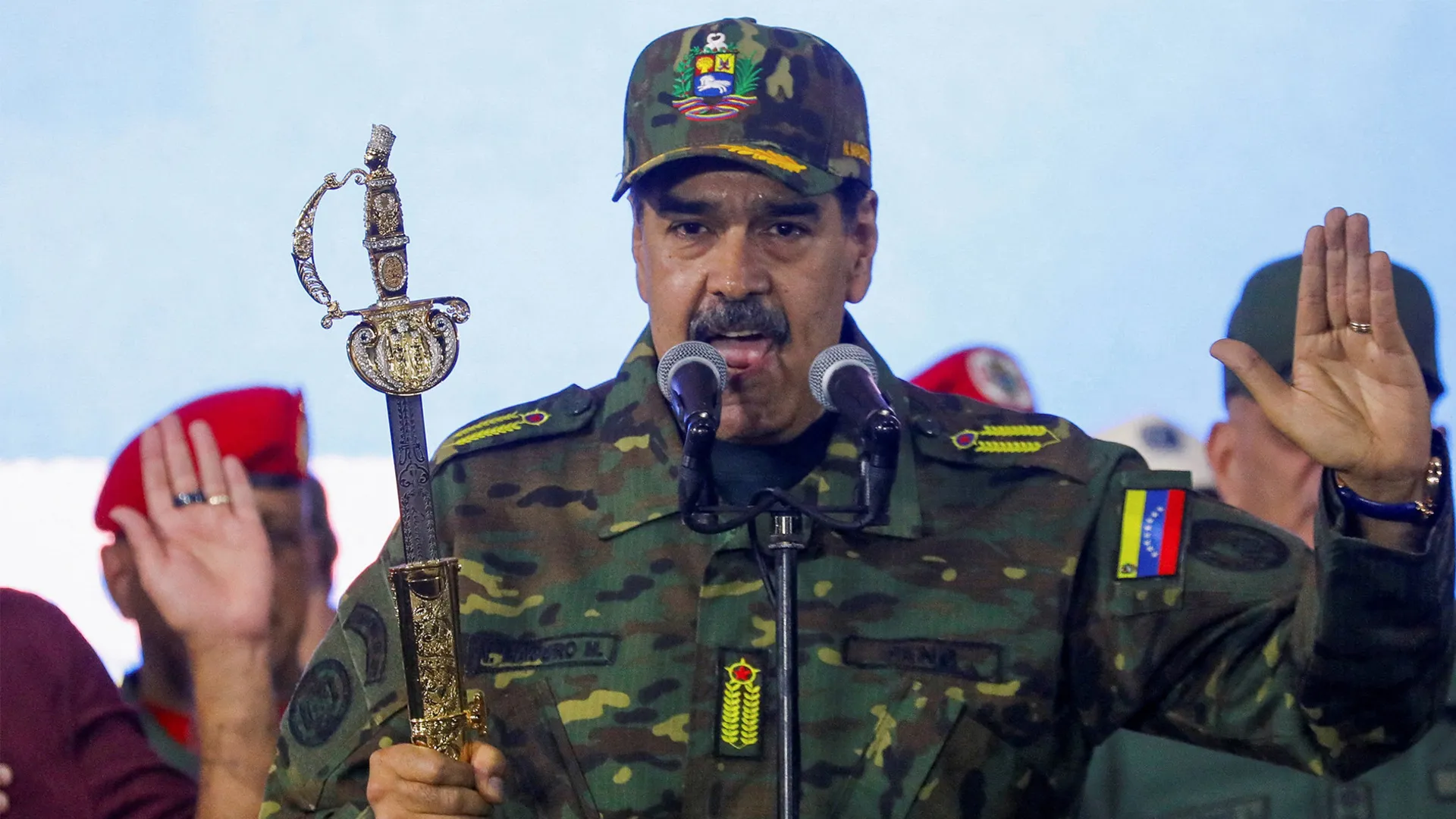
Venezuela’s President Nicolas Maduro holds a sword which belonged to Ezequiel Zamora, a Venezuelan soldier [FILE: Leonardo Fernandez Viloria/Reuters]

Maduro’s relatives targeted

Franqui Flores and Efrain Antonio Campo Flores, nephews of Venezuelan first lady Cilia Flores, were also sanctioned. The two became known as the “narco nephews” after their arrest in Haiti in 2015 during a US Drug Enforcement Administration sting.

They were convicted in 2016 on charges of attempting to carry out a multimillion-dollar cocaine deal and sentenced to 18 years in prison, before being released in a 2022 prisoner swap with Venezuela.

A third nephew, Carlos Erik Malpica Flores, was also targeted. US authorities allege he was involved in a corruption scheme at the state oil company.

Maduro and his government have denied links to criminal activity, saying the US is seeking regime change to gain control of Venezuela’s vast oil reserves.

Beyond the individuals targeted, the US is also preparing to intercept additional ships transporting Venezuelan oil, the Reuters news agency reported, citing sources.

Asked whether the Trump administration planned further ship seizures, White House spokesperson Leavitt told reporters she would not speak about future actions but said the US would continue executing the president’s sanctions policies.

“We’re not going to stand by and watch sanctioned vessels sail the seas with black market oil, the proceeds of which will fuel narcoterrorism of rogue and illegitimate regimes around the world,” she said on Thursday.

Wednesday’s seizure was the first of a Venezuelan oil cargo amid US sanctions that have been in force since 2019. The move sent oil prices higher and sharply escalated tensions between Washington and Caracas.

White House Press Secretary Karoline Leavitt
White House Press Secretary Karoline Leavitt holds a news briefing [Jonathan Ernst/Reuters]

Source link

Thailand-Cambodia fighting enters 5th day, Thai PM confirms Trump call | Border Disputes News

Fighting between Cambodia and Thailand has entered its fifth day, with Cambodia accusing the Thai military of continued shelling and Thailand’s caretaker Prime Minister Anutin Charnvirakul confirming that he is scheduled to speak with United States President Donald Trump.

Thai forces allegedly carried out new attacks in three Cambodian provinces in the early hours of Friday morning, according to Cambodian news outlet The Khmer Times.

Recommended Stories

list of 3 itemsend of list

The newspaper reported that Thai forces opened fire in the Ta Moan, Ta Kra Bei and Thmar Daun areas of Cambodia’s Oddar Meanchey province.

It also reported Thai shelling in the Phnom Khaing and An Ses areas of the country’s Preah Vihear province, as well as the areas of Prey Chan Village and Boeung Trakuan in nearby Banteay Meanchey province.

No new casualties were reported following the renewed fighting.

At least 20 people have been killed across both countries, with nearly 200 more wounded, since fighting resumed on Monday.

An estimated 600,000 people have also been displaced on both sides of the Thai-Cambodia border since the breakdown of a peace agreement brokered by Trump in October.

Displaced people carry boxes with drinking water distributed at a temporary camp in Cambodia's Oddar Meanchey province on December 11, 2025, amid clashes along the Cambodia-Thailand border. Renewed fighting raged at the border of Cambodia and Thailand on December 11, with combat heard near centuries-old temples, ahead of an expected phone call from US President Donald Trump to the two nations' leaders. (Photo by TANG CHHIN Sothy / AFP)
Displaced people carry boxes with drinking water distributed at a temporary camp in Cambodia’s Oddar Meanchey province on December 11, 2025 [Tang Chhin Sothy/AFP]

In a Facebook post, Cambodia’s Ministry of Defence also rejected as “fake news” a claim from the Thai military that it was using foreign mercenaries to operate suicide drones in its attacks on targets in Thailand.

“The Ministry of National Defence of Cambodia would like to reject propaganda disseminated on the Thai 2nd Army Area Facebook page, which accused Cambodia of using foreigners to help launch FPV [first person view] drones in the Cambodian-Thai border conflict,” the ministry said.

Separately, the ministry also rejected accusations from Thai media outlets alleging that it was preparing to launch Chinese-made PHL-03 missiles in the border dispute.

The PHL-03 is a truck-mounted multiple rocket launcher that can fire guided and unguided rockets with a range of 70km to 130km (43.5 miles to 81 miles), according to a US military database, while Cambodia’s BM-21 Soviet-designed multi-rocket launchers have a range of just 15km to 40km (9.3 miles to 25 miles).

“Cambodia demands the Thai side to deliberately stop spreading false news in order to divert attention to its violations of international law by painting Cambodia as a pretext to use more violent weapons on Cambodia,” the Defence Ministry said.

The Southeast Asian neighbours accuse one another of reigniting the conflict that centres around a centuries-old border dispute along their 800-kilometre (500-mile) frontier, where both sides claim ownership over a smattering of historic temples.

The continued fighting involving artillery, fighter jets, tanks and drones comes as Thailand’s caretaker Prime Minister Anutin confirmed he was scheduled to speak with President Trump at 21:20 local time (14:20 GMT) on Friday.

Trump promised on Wednesday to reach out to the leaders of both countries, saying he thinks he “can get them to stop fighting”.

White House Press Secretary Karoline Leavitt said on Thursday that Trump had yet to call the Thai and Cambodian leadership, but added that “the administration is obviously tracking this at the highest levels and is very much engaged”.

Thailand’s top diplomat Sihasak Phuangketkeow spoke with US counterpart Marco Rubio on Friday ahead of the planned call between Trump and Anutin, Thailand’s foreign ministry said.

Sihasak told Rubio that Thailand was committed to a peaceful resolution, but said sustainable peace must be backed up by actions and genuine commitment, the ministry said in a statement, adding that Rubio confirmed US readiness to constructively promote peace.

Anutin also said his decision to dissolve parliament on Thursday – earlier than expected – would not affect the management of the ongoing border conflict.

The move comes following a breakdown in relations between Anutin’s Thai Pride Party and the opposition People’s Party, the largest bloc in the Thai legislature.

Government spokesperson Siripong Angkasakulkiat said a legislative impasse had paralysed the government’s agenda, meaning Anutin’s party “can’t go forward in parliament”.

Thailand’s King Maha Vajiralongkorn endorsed the dissolution, the country’s official Royal Gazette announced on Friday, making way for early elections.

The national polls must now be held within 45 to 60 days in Thailand.

Source link

Trump signs executive order limiting states ability to regulate AI

An illustration picture shows the introduction page of ChatGPT, an interactive AI chatbot model trained and developed by OpenAI, on its website in Beijing, China, in 2023. President Donald Trump signed an executive order Thursday limiting the ability of American states to regulate AI. File Photo ChatGPT. EPA-EFE/WU HAO

Dec. 11 (UPI) — President Donald Trump signed an executive order Thursday night that limits states’ ability to regulate artificial intelligence companies.

The order is designed “to sustain and enhance the United States’ global AI dominance through a minimally burdensome national policy framework for AI,” according to a release on the White House website.

“To win, United States AI companies must be free to innovate without cumbersome regulation,” the order says. “But excessive State regulation thwarts this imperative.”

Trump has been a strong proponent of U.S. leadership in AI development, and said at the executive order signing ceremony Thursday night that AI companies “want to be in the United States, and they want to do it here, and we have big investment coming. But if they had to get 50 different approvals from 50 different states, you could forget it.”

The order instructs Attorney General Pam Bondi to establish an “AI Litigation Task Force” within 30 days whose “sole responsibility shall be to challenge State AI laws” that don’t align with the Trump administration’s minimal approach to regulation.

It could also revise existing state laws, and directs Commerce Secretary Howard Lutnick to identify state laws that “require AI models to alter their truthful outputs,” which aligns with Trump’s efforts to prevent what he describes as “woke AI.”

Trump has also used federal funding as an incentive to encourage states with such laws not to enforce them. Under terms of the executive order, federal AI law would preempt state regulations. State AI laws designed to protect children would not be affected.

The executive order comes after congress voted in July and November against creating a similar policy.

Critics of the plan created by the executive order call it an attempt to block meaningful regulation on AI and say congress is not equipped to replace state-specific laws with a single, nationwide standard.

Tech companies have been supportive of efforts to limit the power of states to regulate AI. The executive order marks a victory for tech companies like Google and OpenAI, which have launched campaigns through a super PAC, and have as much as $100 million to spend in an effort to shape the outcome of next year’s midterm elections.

The order is also seen as a move to thwart Democrat-led states such as California and New York from exerting state laws over AI development

Source link

Russia-Ukraine war: List of key events, day 1,387 | Russia-Ukraine war News

These are the key developments from day 1,387 of Russia’s war on Ukraine.

Here’s where things stand on Friday, December 12:

Fighting

  • Russian President Vladimir Putin thanked the Russian army after its forces reportedly took control of the town of Siversk in eastern Ukraine. Ukraine’s military responded, saying it remained in control of the town.
  • News agencies were unable to verify the battlefield claims around Siversk, a longstanding target in Russia’s drive to capture all of Ukraine’s Donetsk region.
  • Moscow’s forces have also taken control of the village of Lyman in Ukraine’s eastern Kharkiv region, Russian state news agencies reported, citing the Ministry of Defence.
  • Russia said Ukraine launched a major aerial attack with at least 287 drones downed over a number of regions inside the country, including Moscow. Russia’s Defence Ministry said at least 40 drones were shot down over the Moscow region, home to more than 22 million people.
  • Ukrainian drones hit two chemical plants in Russia’s Novgorod and Smolensk regions, the commander of Kyiv’s drone forces said. Ukrainian drones also struck Russia’s Filanovsky oil platform in the Caspian Sea for the first time, halting production at the facility owned by Lukoil, according to a Ukraine Security Service official.
  • Russia’s Ministry of Foreign Affairs has called on Britain to disclose what British soldier George Hooley, who was recently killed in Ukraine, was doing in the country.
  • Russia’s Foreign Ministry spokeswoman Maria Zakharova accused London of helping Kyiv carry out “acts of terrorism” on Russia, but provided no evidence for her assertion. Britain’s Ministry of Defence said Hooley died while observing Ukrainian forces test a new defensive capability away from the front line with Russian forces.

Peace deal

  • Ukraine has presented the United States with a revised 20-point framework to end its war with Russia, Ukrainian President Volodymyr Zelenskyy said, adding that the issue of ceding territory to Russia remains a major sticking point in negotiations.
  • Zelenskyy said, as a compromise, the US is offering to create a “free economic zone” in Ukraine-controlled parts of the eastern Donbas, which Russia has demanded Ukraine cede.
  • “They see it as Ukrainian troops withdrawing from the Donetsk region, and the compromise is supposedly that Russian troops will not enter this part of Donetsk region. They do not know who will govern this territory,” Zelenskyy said, adding that Russia is referring to it as a “demilitarised zone”.
  • Zelenskyy also said that Ukrainians should vote on any territorial concessions in a referendum and that he had discussed security guarantees for Ukraine in a video call with top US officials, including Secretary of State Marco Rubio, Secretary of Defense Pete Hegseth and White House special envoy Steve Witkoff.
  • Speaking at a meeting of the “coalition of the willing” – a group of 34 nations led by Britain and France that have pledged support for Ukraine against Russian aggression – Zelenskyy said that holding elections in Ukraine during wartime would require a ceasefire.
  • US President Donald Trump said the US will send a representative to participate in talks in Europe on Ukraine this weekend if there is a good chance of making progress on a ceasefire deal.
  • “We’ll be attending the meeting on Saturday in Europe if we think there’s a good chance. And we don’t want to waste a lot of time if we think it’s negative,” Trump said.
  • Earlier, White House Press Secretary Karoline Leavitt told reporters that Trump had grown weary of multiple meetings that never reached an agreement on ending the war in Ukraine.

Regional security

  • NATO chief Mark Rutte urged allies to step up defence efforts to prevent a war waged in Europe by Russia, which could be “on the scale of war our grandparents and great-grandparents endured”.
  • In a speech in Berlin, Rutte said too many allies of the military alliance did not feel the urgency of Russia’s threat in Europe and that they must rapidly increase defence spending and production to prevent war.

Sanctions

  • Russian and Belarusian youth athletes should compete in international events without access restrictions, the International Olympic Committee said, marking a first step in easing sanctions imposed following Russia’s 2022 invasion of Ukraine.
  • European Union governments have started a process to freeze Russian central bank assets immobilised in Europe for the long term to avoid votes every six months on rolling over the freeze, a move that would pave the way to use the money to provide a loan to Ukraine.
  • Belgium’s Deputy Prime Minister Vincent Van Peteghem said Russian frozen assets will have to be used for Ukraine at some point, adding that Brussels “would not take any reckless compromises” before it agreed to any deal on the issue.
  • Brussels has opposed an unprecedented plan to use Russian funds frozen in the EU – primarily in Belgian banking institutions – to fund a loan to Ukraine, saying it places the country at outsized risk of future legal action from Moscow.
  • Russia’s Foreign Ministry reiterated that the EU’s “manipulations” with Moscow’s frozen assets would not go unanswered.
  • Germany’s top fiscal court has ruled that authorities cannot, for now, sell or use an oil tanker and its cargo seized off the Baltic Sea coast, siding with the vessel’s owners in two separate cases.
  • The Panama-flagged Eventin was found drifting off Germany’s coast in January after departing Russia with about 100,000 metric tonnes of oil worth about 40 million euros ($47m). German authorities suspect the vessel is part of a “shadow fleet” used by Russia to skirt EU sanctions

Economy

  • Russia’s revenues from exports of crude oil and refined products fell again in November, the International Energy Agency said, touching their lowest level since its 2022 invasion of Ukraine.

Source link

Indiana’s state Senate votes down redistricting bill despite Trump pressure | Donald Trump News

The midwestern state of Indiana has dealt a setback to United States President Donald Trump’s redistricting push ahead of the pivotal 2026 midterm elections, voting down legislation to redraw its congressional map.

Late on Thursday afternoon, Indiana’s state Senate voted 31 to 19 to reject the proposed congressional districts, despite a strong Republican majority in the chamber.

Recommended Stories

list of 3 itemsend of list

Of the state Senate’s 50 seats, 39 are held by Republicans, and the state has voted consistently Republican in every presidential race since 1968, save for a single flip for Democrat Barack Obama in 2008.

The vote is likely to reinforce the sentiment that the Republican Party is fracturing under Trump’s leadership, as his poll numbers slump during the first year of his second term.

Trump was confronted with the results of the Indiana vote at an Oval Office signing ceremony shortly after it happened.

“Just a few moments ago, the Senate there rejected the congressional map to redistrict in that state,” one reporter said. “What’s your reaction?”

Trump responded by touting his successes in pushing other Republican-led states.

“ We won every other state. That’s the only state,” the president said, before referencing his three presidential bids. “It’s funny because I won Indiana all three times by a landslide, and I wasn’t working on it very hard.”

Trump then proceeded to denounce the Indiana Senate president, Rodric Bray, and threatened to support a primary challenge against the Indiana leader.

“He’ll probably lose his next primary, whenever that is. I hope he does,” Trump said.

“It’s, I think, in two years, but I’m sure he’ll go down. He’ll go down. I’ll certainly support anybody that wants to go against it.”

Fractures in the caucus

Currently, Indiana sends nine Congress members to the US House of Representatives, one for each of its nine districts. Two of those seats are currently occupied by Democrats.

Republican leaders in the state, however, had proposed a new map of congressional districts that sought to disempower Democratic voters in the state, clearing the way for conservative candidates to claim all nine seats in next year’s midterm races.

The proposed map was part of a nationwide effort by the Trump administration to defend Republican control in the US Congress.

Already, the partisan map had passed the lower chamber of Indiana’s legislature. On December 5, Indiana’s House of Representatives voted 57 to 41 to send the House Bill 1032 to the state Senate.

The bill had the backing of Indiana’s Republican Governor Mike Braun, who encouraged the state senators to emulate their colleagues in the lower chamber.

But even before the bill arrived in the state Senate, there were cracks in the Republican caucus. Twelve Republicans in the state House broke ranks to vote against the map.

And certain Republican state Senators likewise expressed reticence.

Some Republicans, like Indiana state Senator Greg Walker, had a history of opposing redistricting efforts. He was quoted in the Indiana Capital Chronicle as saying, “I cannot, myself, support the bill for which there must be a legal injunction in order for it to be found constitutional.”

Partisan redistricting has long been a controversial practice in US politics, with opponents calling the practice undemocratic and discriminatory.

Critics also pointed out that the Indiana proposal would force some voters in urban centres like Indianapolis to commute more than 200 kilometres for in-person voting.

Walker joined a total of 21 Republican state Senators, including Bray, in voting against the redistricting bill on Thursday.

A nationwide campaign

But the Trump administration had invested significant time and effort into swaying the vote.

In October, Vice President JD Vance travelled to the Hoosier State to try to convince wary Republicans. US House Speaker Mike Johnson reportedly made personal phone calls to state leaders. And a day before the critical state Senate vote, Trump took to social media with a mixture of cajoling and pressure.

“I love the State of Indiana, and have won it, including Primaries, six times, all by MASSIVE Majorities,” Trump began in a winding, 414-word post.

“Importantly, it now has a chance to make a difference in Washington, D.C., in regard to the number of House seats we have that are necessary to hold the Majority against the Radical Left Democrats. Every other State has done Redistricting, willingly, openly, and easily.”

Currently, the US House of Representatives holds a narrow 220-member Republican majority, out of a total of 435 seats.

All of those seats, however, will be up for grabs in the 2026 midterm elections, and Democrats are hoping to flip the chamber to their control.

Starting in June, reports began to emerge that Trump was petitioning the state legislature in the right-wing stronghold of Texas to redistrict, in an effort to help conservative candidates sweep up five extra congressional seats.

Texas Republicans complied, and in August, the state legislature embraced a new redistricted map, overcoming a walkout from state Democrats.

Republicans in other states, including Missouri and North Carolina, have followed suit, passing new maps that seek to increase right-wing gains in the midterm races.

But Democrats have fired back. In November, California voters passed a referendum to suspend their independent districting commission and adopt a Democrat-leaning map created by state lawmakers.

Indiana, however, appeared poised to buck the redistricting trend. In Wednesday’s lengthy post, Trump warned that the state could put Republican power “at risk” if it failed to pass a new map.

He also called Bray and other Republican splinter votes “SUCKERS” for the Democrats.

“Rod Bray and his friends won’t be in Politics for long, and I will do everything within my power to make sure that they will not hurt the Republican Party, and our Country, again,” Trump wrote.

“One of my favorite States, Indiana, will be the only State in the Union to turn the Republican Party down!”

In the wake of Thursday’s defeat, Trump and his allies doubled down on their threats to remove the 21 Republican state senators who voted against the bill from office.

“I am very disappointed that a small group of misguided State Senators have partnered with Democrats to reject this opportunity,” Governor Braun wrote on social media, calling it a decision to “reject the leadership of President Trump”.

“Ultimately, decisions like this carry political consequences. I will be working with the President to challenge these people who do not represent the best interests of Hoosiers.”

Source link