day

Russia-Ukraine war: List of key events, day 1,409 | Russia-Ukraine war News

These are the key developments from day 1,409 of Russia’s war on Ukraine.

Here is where things stand on Saturday, January 3:

Fighting

  • Two people were killed, including a three-year-old child, and at least 31 people were wounded in a Russian ballistic missile attack on a five-storey residential building in the centre of Ukraine’s Kharkiv, the region’s governor Oleh Syniehubov wrote on Telegram.
  • Russia’s Ministry of Defence denied responsibility for the attack, claiming it was caused by the detonation of Ukrainian ammunition and was meant as a distraction from a deadly attack the day before on the village of Khorly, in a Russian-occupied part of the Kherson region.
  • The death toll from the drone strike on a hotel and cafe in Khorly rose to 28 people, the region’s Russian-installed governor, Vladimir Saldo, told Russia’s state-run TASS news agency. Saldo also said that more than 60 people were injured in the attack. Ukraine has responded to the strike by saying it does not target civilians.
  • Ukraine’s Deputy Prime Minister Oleksii Kuleba said in a post on Facebook that Ukrainian authorities have decided to evacuate more than 3,000 children, along with their parents, from 44 front-line settlements in Ukraine’s Zaporizhia and Dnipropetrovsk regions due to Russian aggression.
  • A Ukrainian attack on the electricity grid in the Russian-occupied Zaporizhia region of Ukraine left 1,777 households without power, Russian-installed regional governor, Yevgeniy Balitsky, wrote on Telegram.
  • Russian forces shot down 64 Ukrainian drones overnight into Friday, Russia’s Defence Ministry said, according to TASS.
  • Ukrainian monitoring site DeepState reported Russian forces seized more land in the Myrnohrad and Pokrovsk areas of Ukraine’s Donetsk region, as well as in Svitle in the Ternopil region.
  • The Russian army captured more than 5,600 square kilometres (2,160 square miles), or nearly 1 percent, of Ukrainian territory in 2025, according to an analysis of data from the Institute for the Study of War (ISW), which works with the Critical Threats Project.
  • According to the AFP news agency, the land seized by Russian forces last year was more than in the previous two years combined, but less than the 60,000sq km (23,166sq miles) Russia took in 2022, the first year of its all-out invasion.

Politics and diplomacy

  • Ukrainian President Volodymyr Zelenskyy named Ukraine’s military intelligence chief Kyrylo Budanov as his presidential chief of staff on Friday, in the latest Ukrainian leadership shake-up.
  • Zelenskyy also nominated Mykhailo Fedorov, a drone and digitalisation specialist who has served as first deputy prime minister and minister of digital transformation, as defence minister. Fedorov, whose appointment must be approved by parliament, will replace Denys Shmyhal, a former prime minister who was being offered a new government post.
  • RecepTayyip Erdogan, the president of Turkiye, told reporters in Istanbul that he would hold a phone call with United States President Donald Trump on Monday to discuss peace efforts. Turkiye has been hosting intermittent peace talks during Russia’s war on Ukraine.
  • Erdogan also said Turkiye’s Foreign Minister Hakan Fidan will attend a meeting of the “coalition of the willing”, a group of nations backing Ukraine, in Paris, in the coming days.

Source link

Tommy Lee Jones’ daughter reportedly found dead; 911 call suggests OD

Victoria Jones, the daughter of Academy Award-winning actor Tommy Lee Jones, was reportedly found dead at a hotel in San Francisco on New Year’s Day. She was 34.

According to TMZ, the San Francisco Fire Department responded to a medical emergency call at the Fairmont San Francisco early Thursday morning. The paramedics pronounced Victoria dead at the scene before turning it over to the San Francisco Police Department for further investigation, the outlet said.

An SFPD representative confirmed to The Times that officers responded to a call at approximately 3:14 a.m. Thursday regarding a report of a deceased person at the hotel and that they met with medics at the scene who declared an unnamed adult female dead.

Citing law enforcement sources, NBC Bay Area also reported that the deceased woman found in a hallway of the hotel was believed to be Jones and that police did not suspect foul play.

“We are deeply saddened by an incident that occurred at the hotel on January 1, 2026,” the Fairmont told NBC Bay Area in a statement. “Our heartfelt condolences are with the family and loved ones during this very difficult time. The hotel team is actively cooperating and supporting police authorities within the framework of the ongoing investigation.”

The medical examiner conducted an investigation at the scene, but Jones’ cause of death remains undetermined. Dispatch audio obtained by TMZ and People indicated that the 911 emergency call was for a suspected drug overdose.

Jones was the daughter of Tommy Lee and ex-wife Kimberlea Cloughley. Her brief acting career included roles on films such as “Men in Black II” (2002), which starred her father, and “The Three Burials of Melquiades Estrada” (2005), which was directed by her father. She also appeared in a 2005 episode of “One Tree Hill.”

Page Six reported that Jones had been arrested at least twice in 2025 in Napa County, including an arrest on suspicion of being under the influence of a controlled substance and drug possession.

Source link

Trump wants to overhaul the ‘president’s golf course.’ He hasn’t played there yet

President Trump has spent much of his two-week vacation in Florida golfing. But when he gets back to the White House, there’s a military golf course that he’s never played that he’s eyeing for a major construction project.

Long a favored getaway for presidents seeking a few hours’ solace from the stress of running the free world, the Courses at Andrews — inside the secure confines of Joint Base Andrews in Maryland, about 15 miles from the White House — are known as the “president’s golf course.” Gerald Ford, Ronald Reagan, George H.W. Bush, Bill Clinton, George W. Bush and Joe Biden have spent time there, and Barack Obama played it more frequently than any president, roughly 110 times in eight years.

Trump has always preferred the golf courses his family owns — spending about one of every four days of his second term at one of them. But he’s now enlisted golf champion Jack Nicklaus as the architect to overhaul the Courses at Andrews.

“It’s amazing that an individual has time to take a couple hours away from the world crises. And they’re people like everybody else,” said Michael Thomas, the former general manager of the course, who has golfed with many of the presidents visiting Andrews over the years.

Andrews, better known as the home of Air Force One, has two 18-hole courses and a 9-hole one. Its facilities have undergone renovations in the past, including in 2018, when Congress approved funding to replace aging presidential aircraft and to build a new hangar and support facilities. That project was close enough to the courses that they had to be altered then, too.

Trump toured the base by helicopter before Thanksgiving with Nicklaus, who has designed top courses the world over. The president called Andrews “a great place, that’s been destroyed over the years, through lack of maintenance.”

Other golfers, though, describe Andrews’ grounds as in good shape, despite some dry patches. Online reviews praise the course’s mature trees, tricky roughs, and ponds and streams that serve as water hazards. The courses are mostly flat, but afford views of the surrounding base.

‘They all like to drive the cart’

The first president to golf at Andrews was Ford in 1974. Thomas began working there a couple years later, and was general manager from 1981 until he retired in 2019.

He said the Secret Service over the years used as many as 28 golf carts — as well as the president’s usual 30-car motorcade — to keep the perimeter secure.

“It’s a Cecil B. DeMille production every time,” said Thomas, who had the opportunity to play rounds with four different presidents, and with Biden when he was vice president.

He said the commanders in chief generally enjoyed their time out on the course in their own unique ways, but “they all like to drive the cart because they never get an opportunity to drive.”

“It’s like getting your driver’s license all over again,” Thomas laughed.

Trump golfs most weekends, and as of Friday, has spent an estimated 93 days of his second term doing so, according to an Associated Press analysis of his schedules.

That tally includes days when Trump was playing courses his family owns in Virginia, around 30 miles from the White House, and near his Florida estate Mar-a-Lago, where he’s spending the winter holidays. It also includes 10 days Trump spent staying at his golf club in Bedminster, N.J., where his schedule allowed time for rounds of golf.

Trump has visited Andrews in the past, but the White House and base have no record of him playing the courses.

Another of Trump’s construction projects

Andrews’ military history dates to the Civil War, when Union troops used a church near Camp Springs, Md., as sleeping quarters. Its golf course opened in 1960.

The White House said the renovation will be the most significant in the history of Andrews. The courses and clubhouse need improvements due to age and wear, it said, and there are discussions about including a multifunctional event center as part of the project.

“President Trump is a champion-level golfer with an extraordinary eye for detail and design,” White House spokesman Davis Ingle said in a statement. “His vision to renovate and beautify Joint Base Andrews’ golf courses will bring much-needed improvements that service members and their families will be able to enjoy for generations to come.”

Plans are in the very early stages, and the cost of — and funding for — the project haven’t been determined, the White House said. Trump has said only that it will require “very little money.”

The Andrews improvements join a bevy of Trump construction projects, including demolishing the White House’s East Wing for a sprawling ballroom now expected to cost $400 million, redoing the bathroom attached to the Lincoln bedroom and replacing the Rose Garden’s lawn with a Mar-a-Lago-like patio area.

Outside the White House, Trump has led building projects at the Kennedy Center and wants to erect a Paris-style arch near the Lincoln Memorial, and has said he wants to rebuild Dulles International Airport in northern Virginia.

On Wednesday, meanwhile, the Trump administration ended a lease agreement with a nonprofit for three public golf courses in Washington — which could allow the president to further shape golfing in the nation’s capital. The White House, however, said that move isn’t related to the plans for Andrews.

Presidential perks of golfing at Andrews

When the president is golfing, Andrews officials block off nine holes at a time so no one plays in front of him, allowing for extra security while also ensuring consistent speed-of-play, Thomas said.

That’s relatively easily done given that the courses aren’t open to the public. They’re usually reserved for active or retired members of the military and their families, as well as some Defense Department-linked federal employees.

Thomas remembers playing a round with the older President Bush, a World Golf Hall of Fame inductee known for fast play, while first lady Barbara Bush walked with Millie, the first couple’s English Springer Spaniel. George W. Bush also played fast, Thomas said, and got additional exercise by frequently riding his mountain bike before golfing.

When he wasn’t golfing at Andrews, Obama tried to recreate at least part of the experience back home. He had a White House golf simulator installed after then-first lady Michelle Obama asked Thomas how they might acquire a model that the president had seen advertised on the Golf Channel. Thomas gave her a contact at the network.

Obama famously cut short a round at Andrews after nine holes in 2011 to hustle back to the White House for what turned out to be a top-secret review of final preparations for a Navy SEAL raid on the compound of Osama bin Laden.

But, while Thomas was golfing with presidents, he said he never witnessed play interrupted by an important call or any major emergency that forced them off the course mid-hole. There also were never any rain-outs.

“If there was rain coming, they’d get the weather forecast before we would,” Thomas said. “They would cancel quick on that.”

Weissert writes for the Associated Press.

Source link

On This Day, Jan. 2: West Virginia coal mine explosion kills 12

Jan. 2 (UPI) — On this date in history:

In 1788, Georgia ratified the Constitution, the fourth of the original 13 colonies to do so, and was admitted to the Union.

In 1811, Timothy Pickering, a Federalist from Massachusetts, became the first U.S. senator to be censured after being accused of publicly revealing secret presidential documents.

In 1935, Bruno Hauptmann, “The Most Hated Man in the World,” went on trial for the kidnapping and murder of Charles Lindbergh, Jr., eldest son of famed aviator, Charles Lindbergh.

File Photo by Bill Greenblatt/UPI

In 1942, Japanese forces occupied Manila, forcing U.S. and Philippine forces under U.S. Army Gen. Douglas MacArthur to withdraw to the Bataan Peninsula.

In 1959, the Soviet Union launched Luna 1, the first unmanned spacecraft to travel to the moon.

In 1967, Ronald Reagan was sworn in as 33rd governor of California.

In 1974, U.S. President Richard Nixon signed a bill requiring states to limit highway speeds to 55 mph or lose federal highway funds.

In 1981, police in Britain arrested the so-called “Yorkshire Ripper,” after five years on the run. Peter Sutcliffe was convicted of murdering 13 women and attempting to murder seven more.

In 1990, Britain’s most-wanted terrorism suspect, Irish Republican Army gunman Patrick Sheehy, was found dead of a self-inflicted gunshot wound in the Republic of Ireland.

In 2006, 12 men were killed in a methane gas explosion in a coal mine in West Virginia’s Upshur County. One man was found alive after 41 hours trapped underground.

File Photo by Kevin Dietsch/UPI

In 2011, Prince Harry, grandson of England’s Queen Elizabeth II, was sent home from military service in Afghanistan after a magazine revealed his presence in the war zone. He later returned to continue training as a gunship pilot.

In 2019, two Indian women entered the Hindu Sabarimala temple, the first to do so since the courts ended a longtime ban on women in 2018.

In 2024, Lee Jae-myung, the leader of South Korea’s main opposition party, was stabbed in the neck during an appearance in Busan. Lee survived and a real estate worker was arrested and confessed to attempting to assassinate the politician.

File Photo by Darryl Coote/UPI

Source link

Tommy Lee Jones’ daughter, Victoria, 34, ‘found dead at San Francisco hotel on New Year’s Day’

An image collage containing 1 images, Image 1 shows Tommy Lee Jones and daughter Victoria Jones

THE daughter of an Academy Award-winning actor has sadly been found dead on New Year’s Day.

Victoria, daughter of Tommy Lee Jones, was sadly found dead in a California hotel on New Year’s Day.

Premiere Of Broad Green Pictures' "Just Getting Started" - Arrivals
Actor Tommy Lee Jones and daughter Victoria Jones arrive at the premiere of Just Getting Started in 2017Credit: Getty

Emergency services were called to the swanky Fairmont San Francisco at 2.52am, where paramedics pronounced the 34-year-old dead.

At this time, the cause of death remains unknown, and officials have not released additional details.

Victoria was the daughter of Tommy and his first wife Kimberlea Cloughley.

She followed in her father’s footsteps, acting in several films including 2002’s Men in Black II and One Tree Hill.

‘RIP DEAR FRIEND’

Finding Prince Charming contestant dies as Kelly Osbourne leads tributes

More to follow… For the latest news on this story keep checking back at The Sun Online.

Thesun.co.uk is your go-to destination for the best celebrity news, real-life stories, jaw-dropping pictures and must-see video.

Like us on Facebook at www.facebook.com/thesun and follow us from our main Twitter account at @TheSun.


Source link

Lincoln Riley vowed to fix the Trojans’ defense, but it faltered again in Alamo Bowl

Two years ago, a day after he decided to fire Alex Grinch as USC‘s defensive coordinator, Lincoln Riley made a promise to those concerned about the future of the Trojans’ defense.

“I have complete belief, conviction. We will play great defense here,” the coach said in November 2023. “It is going to happen. There’s not a reason in the world why it can’t.”

Two years later, another defensive coordinator is out the door at USC. The day after Grinch’s replacement, D’Anton Lynn, left to take the same job at Penn State, Riley stood in front of reporters, assuring everyone once again that soon enough, USC would be great on that side of the ball.

“The arrow,” he said Tuesday, “is pointing straight up.”

“The opportunity for us to make a hire, to continue to make us better and to go from being a very good defense to being a great defense is the goal.”

Yet patience on that promise is wearing thin, especially given how the season had ended less than an hour before. USC blew a 10-point lead in the final five minutes against Texas Christian on Tuesday, a team playing without its star quarterback, before missing four tackles on a third-and-20 walk-off touchdown in overtime. The disastrous Alamo Bowl defeat would serve as an especially sobering reminder that while USC made progress under Lynn, it’s still a ways from heeding Riley’s guarantee.

And now, the defense will have to start again, with a new direction, a new scheme and a new coordinator, who will be Riley’s third hire in five seasons at USC.

In spite of all that, Riley was upbeat when asked about the unit’s future Tuesday night. He felt “fantastic,” he said, about where USC’s defense was headed.

“We have the personnel,” Riley said of becoming a great defensive unit. “We’re on an upward trend. And, you know, there’s going to be a lot of interest in this job.
I mean, this will be an extremely, extremely coveted job, and I can already tell by the nature of what my phone’s been like the last couple of days.”

Several potential candidates with deep experience, as well as close ties to USC athletics officials, are expected to be available.

Former Texas defensive coordinator Pete Kwiatkowski, who worked at Washington under current USC athletic director Jennifer Cohen, was let go by the Longhorns earlier this month. Cincinnati Bengals defensive coordinator Al Golden, meanwhile, worked closely with USC general manager Chad Bowden at Notre Dame and could be looking for a job as soon as next week.

Both coached college defenses that ranked in the top four in the nation in points allowed during the 2024 season.

USC appeared bound for a similar trajectory after Year 1 with Lynn. The Trojans allowed 10 fewer points per game, leaping from 121st in scoring defense under Grinch to 56th in his first season at USC. They got stingier on third down — 106th nationally to 21st — and in the red zone — 119th to 69th. Lynn was even named candidate for the Broyles Award, given to the nation’s top assistant.

In some respects, USC’s defense continued to take steps forward in Year 2 under Lynn. It gave up fewer points and fewer yards per game. The pass rush improved, adding 10 sacks to its season total in 2025.

But the personnel on defense was less proven this season — and more prone to mistakes. The secondary struggled through stretches. A thin group of linebackers was often overwhelmed. The defensive interior was manhandled for most of the season, and in each of their three regular-season losses, the Trojans were trampled on the ground.

Last month, when asked about the group’s inconsistency, Lynn said that USC’s youth forced him to “scale back” significantly on defense. He actually wondered, in the wake of USC’s loss to Oregon, if he shouldn’t have scaled back the defense even more this season.

“It’s different when you’re teaching an 18-year-old versus teaching a guy who has been at two to three schools who has already played a bunch of college ball,” Lynn said.

Lynn, nonetheless, leaves USC in a better place than when he arrived. The nation’s No. 1 recruiting class lands on campus next week, with plenty of highly ranked reinforcements on the way. Talented freshmen like defensive linemen Jahkeem Stewart and Floyd Boucard as well as defensive back Alex Graham are rising stars who should be ready to step into significant roles.

But USC will have to replace three starters in the secondary, including Kamari Ramsey, its best linebacker [Eric Gentry] and its top run stopper on the defensive line [Anthony Lucas]. Whomever takes over as coordinator will be expected to take a significant step forward immediately, up against one of the nation’s toughest schedules in what should be a decisive season for the program.

Then there’s the matter of Riley’s job security, which could make any available top coordinator queasy.

Yet as far as the coach is concerned, the path to finding a great coordinator and fielding a great defense isn’t that far off from what USC has now.

“I definitely don’t want to press reset,” Riley said. “I’m excited about the process, and I think it’s going to make us better, I know it will. So, we’ll wake up tomorrow morning and we’ll get on it.”

Source link

The Hotel Cafe is closing in 2026. Inside its relocation plans

When musician Cary Brothers found out that the Hotel Cafe was shutting down, he felt like he’d been told his parents were selling his childhood home.

The beloved music venue, which kick-started the careers of then-little-known singer-songwriters Adele, Sara Bareilles and Damien Rice, is closing its doors in early 2026, its co-founders Marko Shafer and Max Mamikunian announced in November. For those like Brothers, who considered the Hotel Cafe a second home, the news of the closure was a heavy blow.

Luckily for them, Shafer and Mamikunian plan to open a new location in the nearby Lumina Hollywood tower in early 2027. Brothers said it provides consolation, but not complete comfort.

“Yeah, they’re buying a great new house, but it’s not our house,” he said.

  • Share via

Elected the “mayor of the Hotel Cafe,” Brothers discovered the Hollywood haunt before it even had a liquor license. In those days, the cafe had a BYOB policy and sold buckets of ice for visitors to chill the alcohol they brought in with them, and jazz legends pouring out of local bars after last call capped off their nights with a 3 a.m. jam session in the Hotel Cafe’s piano room (or smoking room, depending on whom you ask).

Every penny they made went back into the venue, Shafer said.

Brothers has always likened the Hotel Cafe in that era to “‘Cheers’ with guitars,” where he could show up any night and a dozen of his closest friends would be there. Eagles songwriter Jack Tempchin used to say it was the closest thing to the front bar at the Troubadour in the ’70s.

“Nobody became the Eagles, sure, but the spirit was the same,” Brothers said.

Dave Navarro and Billy Corgan sing and play guitars on stage.

Dave Navarro, left, and Billy Corgan perform with Spirits in the Sky at the Hotel Cafe in 2009. The venue was a launching pad for many prominent singer-songwriters in the late 2000s and early 2010s.

(Tiffany Rose / WireImage via Getty Images)

Beginnings on Cahuenga Boulevard

The owners attribute much of Hotel Cafe’s success to good timing.

At the turn of the century, Mamikunian said, “Word on the street in Los Angeles was, it’s an industry town and music venues don’t work here.”

Mamikunian, on the other hand, believed the city was teeming with raw talent, but there was no place for it to develop. Judging by the laundry list of musicians who flocked to the Hotel Cafe in those early years, his hunch was spot-on.

“We hit it right when it needed to happen,” he said.

For independent artist Kevin Garrett, the Hotel Cafe was a “gym” where he could flex his creative muscles and experiment with his sound, judgment-free. For local folk singer Lucy Clearwater, it was her sign that moving to L.A. was the right decision for her career.

And for Ingrid Michaelson, the spot was ahead of its time in championing female artists. When the Hotel Cafe asked Michaelson to headline its 2008 all-female tour, she thought, “When does that ever happen, except for Lilith Fair?”

In Michaelson’s native New York, there were a handful of venues that cradled early-career musicians: the Living Room, the Bitter End, Kenny’s Castaways.

“But in L.A., there really was just the Hotel Cafe,” Michaelson, behind such 2000s hits as “The Way I Am” and “You and I,” said. “So it was this distilling of all the singer-songwriters in L.A., kind of coming through this one port.”

Patrons line up to enter the Hotel Cafe.

Patrons enter the Hotel Cafe through a back alleyway along Cahuenga Boulevard.

(Gina Ferazzi / Los Angeles Times)

Through the musical generations

In its 25 years of operation, the Hotel Cafe has seen several generations of musicians shuffle through the space, Shafer said. Production manager Gia Hughes calls them the “graduating classes.”

In Brothers’ days, it was Joshua Radin, Bareilles, Meiko and other late 2000s singer-songwriters whose music regularly landed on shows like “Grey’s Anatomy” — or in Brothers’ case, the indie cult classic “Garden State,” directed by and starring fellow Northwestern alum Zach Braff.

Next came residencies from breakouts Johnnyswim and JP Saxe, and later, folksters Clearwater and her close confidant Rett Madison. Clearwater said that during her tenure, she would often join her fellow performers onstage to sing backing vocals or play a violin solo.

“Every four years it’s like a different kind of community that comes about,” Hughes said. “And it’s different, but it’s also not.”

It’s why Shafer and Mamikunian aren’t worried about losing the magic they created on Cahuenga. In their eyes, it was never confined to the space itself.

“I remember when we first talked about expanding the Hotel Cafe and everybody said, ‘Don’t do it. You’re going to ruin what you have,’” Shafer said, referencing the venue’s 2004 acquisition of additional space next door. (They expanded again in 2016 with their Second Stage annex, about half the capacity of the main stage.)

“When we did it, it changed the room so much for the better, and gave us access to bigger artists but still didn’t lose the intimacy,” he said about the expansion.

Shafer and Mamikunian thought they’d outgrown the Cahuenga space and had long been pondering a move. This year, the logistics lined up, Mamikunian said.

“It wasn’t anything dramatic,” he said. It was just time.

Hughes called the move “an opportunity to pursue a space that can check a lot more boxes for us, for the long term”: more parking, increased room capacity, greater accessibility.

Maris, with pink hair, sings into a microphone.

L.A. singer-songwriter Maris performs in the Second Stage performance room at the Hotel Cafe.

(Gina Ferazzi / Los Angeles Times)

A new beginning around the corner

Zoning clearances are still pending for the new location in Lumina Hollywood on Sunset Boulevard, a high-rise apartment building set to be upgraded by Morguard Corp. And although the new venue is slated for a 2027 opening, the timeline depends on an upcoming zoning hearing, expected in March or April, Mamikunian said.

But Shafer and Mamikunian opted to announce the closure while details were still being worked out rather than wait and risk information leaking to the public. Plus, this way, both artists and patrons have time to say their goodbyes.

After Clearwater heard the news, she rushed to a “Monday Monday” weekly showcase and immediately felt like she’d been transported back to 2017, when she spent four-plus nights a week at the joint.

“So many of my old friends from that time — some of [whom] I had fallen out of touch with — I saw all of them there,” the Bay Area-bred folk singer said. “You could feel everybody loving it so much.”

The singer said she couldn’t help but wonder whether things would have panned out differently had people shown out like that before Shafer and Mamikunian made their choice. But sipping red wine in the green room that night, she felt lucky just to be there.

“It’s the wood, it’s the bar, the backstage chairs, the little lanterns,” she said. “I’m just going to miss what it looks and smells like, but the people, that’s never gonna go away.”

A Christmas tree stands in the center of a room.

The Hotel Cafe hosted its annual holiday showcase on Dec. 19, with proceeds benefiting the Recording Academy’s nonprofit arm, MusiCares.

(Gina Ferazzi / Los Angeles Times)

Farewell for now

Earlier this month, the Hotel Cafe hosted its last-ever holiday event at the Cahuenga location. Hughes, with the help of her interior designer sister, Nina Hughes, spent hours that day decking the halls with carnival lights and ribbons galore.

Even before the night’s performances began, attendees were clinking glasses and giving lingering hugs — the kind befitting the last day of summer camp.

“It’s going to be a love fest,” Hughes predicted.

As heartfelt as that night’s musicians were in their speeches, bartender Dan Shapiro said waxing sentimental onstage has been the norm for weeks.

“People are always doing eulogies to the place,” Shapiro said with a chuckle. As he surveyed the lineup posted at the bar, he said he’d put his money on performer Lily Kershaw shedding a few tears. Fellow bartender Dave Greve concurred.

Against the odds, Kershaw didn’t cry as she led the crowd through a rendition of Crosby, Stills, Nash & Young’s “Our House” a few hours later. Subsequent performers stayed on theme with songs composed of resonant lyrics like “So long stranger / I like to think I know you best” and “Hold on tight / don’t let go.”

As Brothers crooned his own tribute, he closed his eyes, as though praying.

Lucy Clearwater plays guitar and sings on stage.

“It’s never gonna be what it was, but it’ll be something new and different, and I’m really excited to see what that is,” Lucy Clearwater said about the Hotel Cafe’s relocation to Sunset Boulevard.

(Gina Ferazzi / Los Angeles Times)

James Babson, a longtime doorman at the Hotel Cafe, said its staff and attendees alike have always been reverent toward performers. For some, he said, the listening experience is “spiritual.”

“Maybe they’re not churchgoers, so they have this sense of community and transcendence, where that song touches them on this level, which takes them somewhere else,” he said.

Peter Malek felt it the first time he stepped inside the Hotel Cafe 20 years ago. Hooked on that feeling, he started visiting the venue several times a week. Sometimes, he never even made it inside, content to chat with Babson for hours at the door; other evenings he spent in the staff offices, cramming for his medical school exams.

According to Malek’s last tally, he’s been to the Hotel Cafe 1,333 times. Although he was saddened when he heard the news of the relocation — several months before almost everyone else found out — he said he isn’t expecting Shafer and Mamikunian to replicate what they built at the Cahuenga site.

Instead, Malek said, he’s left “happy that he witnessed it.”

Patrons enjoy live music at the Hotel Cafe.

The Hotel Cafe was packed with regulars and first-time attendees at its farewell holiday performance in December.

(Gina Ferazzi / Los Angeles Times)

All night at the Hotel Cafe’s holiday party, attendees wondered whether penultimate performer Dan Wilson, of the pop-rock band Semisonic, would play “the song.” No one had to name it.

When Wilson finally sang the magic words, “Closing time, open all the doors / And let you out into the world,” the room erupted into cheers.

It was the closest Brothers came to crying, but he held it in. There would be time for that later.

Source link

Zohran Mamdani to become NYC’s next mayor with a midnight oath underground

Zohran Mamdani will become mayor of New York City as the clock ticks over into 2026 — but the celebrations are set to last through New Year’s Day.

The Democrat’s team is planning two separate swearing-in ceremonies Thursday — a small, private one with his family in an old subway station around midnight, followed by a large event in the afternoon that will include a public block party outside City Hall.

As a new mayor’s term begins immediately with the new year, it has been customary for the city’s incoming leaders to hold two events. Departing Mayor Eric Adams held his initial swearing-in at Times Square shortly after the famous ball drop, while Adams’ predecessor Bill de Blasio took his first oath at home in Brooklyn.

For his part, Mamdani will take his initial oath at the former City Hall subway station in Manhattan — one of the city’s original stops on its subterranean transit system, known for its tiled arches and vaulted ceilings.

New York Atty. Gen. Letitia James, a political ally and notable foe of President Trump, will administer the oath of office.

The old City Hall stop was designed as the flagship station of the city’s first subway line, but was decommissioned in 1945. These days, outside of occasional guided historical tours, locals can usually only catch a glimpse of it by staying on the 6 train after its last stop downtown when it turns around to head north.

In a statement, Mamdani’s office said the choice to be sworn in at the station reflected his “commitment to the working people who keep our city running every day.”

“When Old City Hall Station first opened in 1904 — one of New York’s 28 original subway stations — it was a physical monument to a city that dared to be both beautiful and build great things that would transform working peoples’ lives,” Mamdani said.

“That ambition need not be a memory confined only to our past, nor must it be isolated only to the tunnels beneath City Hall: it will be the purpose of the administration fortunate enough to serve New Yorkers from the building above,” he said.

On Thursday afternoon, Mamdani will be sworn in again, this time by U.S. Sen. Bernie Sanders, one of his political heroes, on the steps of City Hall in a ceremony. It’s scheduled to kick off at 1 p.m. with opening remarks from U.S. Rep. Alexandria Ocasio-Cortez, another political ally and a fellow New Yorker.

Mamdani’s transition formed an inaugural committee that includes actor John Turturro, playwright Cole Escola and writer Colson Whitehead, as well as advocates, small business owners and campaign workers who the incoming mayor’s office says have “provided perspective, guidance, and cultural sensibility” for the ceremony.

The public swearing-in will be accompanied by a block party along a stretch of Broadway leading up to City Hall. Mamdani’s office expects thousands of people to attend and says there will be performances, music and interfaith elements.

Izaguirre writes for the Associated Press.

Source link

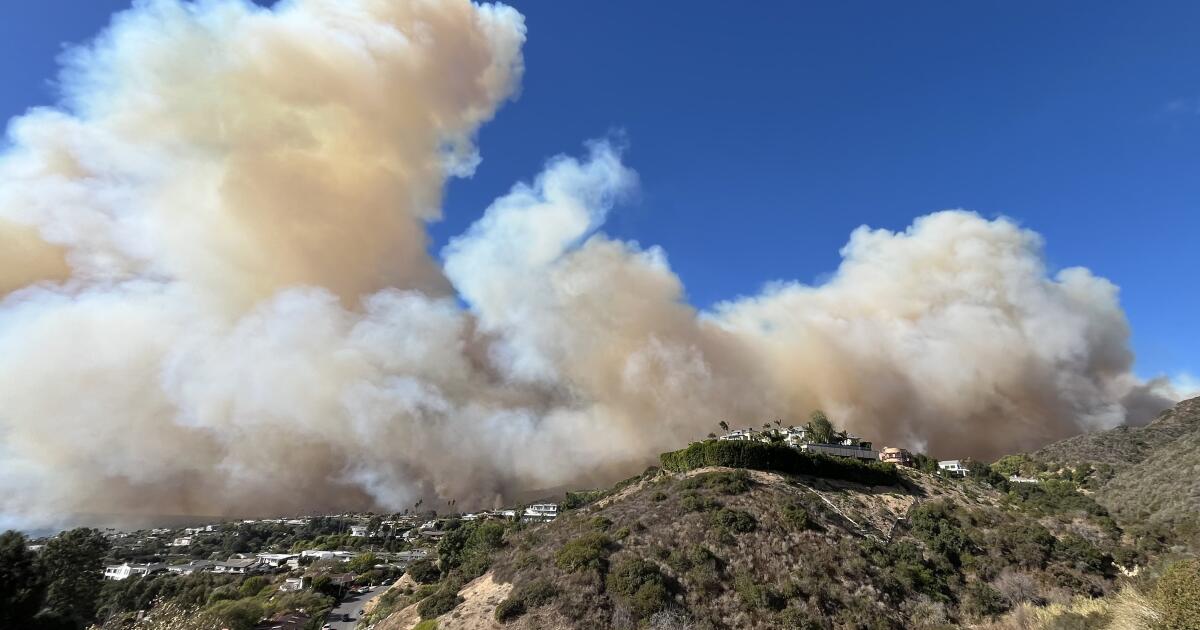
LAFD leaders tried to cover up Palisades fire mistakes. The truth still emerged

Pacific Palisades had been burning for less than two hours when word raced through the ranks of the Los Angeles Fire Department that the agency’s leaders had failed to pre-deploy any extra engines and crews to the area, despite warnings of life-threatening winds.

In the days after the fire broke out, and as thousands of homes and business continued to go up in flames, then-Fire Chief Kristin Crowley said little about the lack of pre-deployment, which was first disclosed by The Times, instead blaming those high winds, along with a shortage of working engines and money, for her agency’s failure to quickly knock down the blaze.

Crowley’s comments did not stand up to scrutiny. To several former LAFD chief officers as well as to people who lost everything in the disaster, her focus on equipment and City Hall finances marked the beginning of an ongoing campaign of secrecy and deflection by the department — all designed to avoid taking full responsibility for what went wrong in the preparations for and response to the Jan. 7 fire, which killed 12 people and leveled much of the Palisades and surrounding areas.

“I don’t think they’ve acknowledged that they’ve made mistakes yet, and that’s really a problem,” said Sue Pascoe, editor of the local publication Circling the News, who lost her home of 30 years. “They’re still trying to cover up … It’s not the regular firefighters. It’s coming from higher up.”

With the first anniversary of the fire a week away, questions about missteps in the firefight remained largely unanswered by the LAFD and Mayor Karen Bass. Among them: Why were crews ordered to leave the still-smoldering scar of an earlier blaze that would reignite into the Palisades inferno? Why did the LAFD alter its after-action report on the fire in a way that appeared intended to shield it from criticism?

The city also has yet to release the mayor’s communications about the after-action report. The Times requested the communications last month, and the report — which was meant to pinpoint failures and enumerate lessons learned, to avoid repeating mistakes — was issued in early October. Nor has the city fulfilled a records request from The Times about the whereabouts of fire engines in the Palisades when the first 911 call came in. It took the first crews about 20 minutes to reach the scene, by which time the fierce winds were driving the flames toward homes.

A Bass spokesperson has said that the mayor did not demand changes to the after-action report, noting that she pushed for its creation and that it was written and edited by the LAFD.

“This administration is only interested in the full truth about what happened before, during, and after the fire,” the spokesperson, Clara Karger, said earlier this month.

The LAFD has stopped granting interviews or answering questions from The Times about the matter, vaguely citing federal court proceedings. David Loy, legal director of the First Amendment Coalition, said that the federal prosecution of a man accused of starting the earlier blaze does not preclude the department from discussing its actions surrounding both fires.

In a December television interview, Fire Chief Jaime Moore acknowledged that some residents don’t trust his agency and said his mandate from Bass was to “help guide and rebuild the Los Angeles Fire Department to the credibility that we’ve always had.”

The Lachman fire

Shortly after midnight on New Year’s Day, a man watched flames spread in the distant hills and called 911.

“Very top of Lachman, is where we are,” he told the dispatcher. “It’s pretty small but it’s still at the very top and it’s growing.”

“Help is on the way,” the dispatcher said.

A few hours later, at 4:46 a.m., the LAFD announced that the blaze, which later became known as the Lachman fire, was fully contained at eight acres.

Top fire commanders soon made plans to finish mopping up the scene and to leave with their equipment, according to text messages obtained by The Times through a state Public Records Act request.

“I imagine it might take all day to get that hose off the hill,” LAFD Chief Deputy Phillip Fligiel said in a group chat. “Make sure that plan is coordinated.”

Firefighters who returned the next day complained to Battalion Chief Mario Garcia that the ground was still smoldering and rocks still felt hot to the touch, according to private text messages from three firefighters to a third party that were reviewed by The Times. But Garcia ordered them to roll up their hoses and leave.

At 1:35 p.m., Garcia texted Fligiel and Chief Deputy Joseph Everett: “All hose and equipment has been picked up.”

Five days after that, on the morning of Jan. 7, an LAFD captain called Fire Station 23 with an urgent message: The Lachman fire had started up again.

LAFD officials were emphatic early on that the Lachman fire was fully extinguished. But both inside and outside the department, many were certain it had rekindled.

“We won’t leave a fire that has any hot spots,” Crowley said at a community meeting in mid-January.

“That fire was dead out,” Everett said at the same meeting, adding that he was out of town but communicating with the incident commander. “If it is determined that was the cause, it would be a phenomenon.”

The department kept under wraps the complaints of the firefighters who were ordered to leave the burn site. The Times disclosed them in a story in late October. In June, LAFD Battalion Chief Nick Ferrari had told a high-ranking fire official who works for a different agency in the L.A. region that LAFD officials knew about the firefighters’ complaints, The Times also reported.

Bass has directed Moore, an LAFD veteran who took charge of the department in November, to commission an “independent” investigation of the Lachman fire mop-up. The after-action report contained only a brief mention of the earlier fire.

No pre-deployment

The afternoon before hazardous weather is expected, LAFD officials are typically briefed by the National Weather Service, using that information to decide where to position firefighters and engines the following morning.

The weather service had been sounding the alarm about critical fire weather for days. “HEADS UP!!!” NWS Los Angeles posted on X the morning of Jan. 6. “A LIFE-THREATENING, DESTRUCTIVE” windstorm was coming.

It hadn’t rained much in months, and wind gusts were expected to reach 80 mph. The so-called burning index — a measure of the wildfire threat — was off the charts. Anything beyond 162 is considered “extreme,” and the figure for that Tuesday was 268.

In the past, the LAFD readied for powerful windstorms by pre-deploying large numbers of engines and crews to the areas most at risk for wildfires and, in some cases, requiring a previous shift of hundreds of firefighters to stay for a second shift — incurring large overtime costs — to ensure there were enough personnel positioned to attack a major blaze.

None of that happened in the Palisades, with its hilly terrain covered in bone-dry brush, even though the weather service had flagged it as one of the regions at “extreme risk.”

Without pre-deployment, just 18 firefighters are typically on duty in the Palisades.

LAFD commanders decided to staff only five of the more than 40 engines available to supplement the regular firefighting force citywide. Because they didn’t hold over the outgoing shift, they staffed the extra engines with firefighters who volunteered for the job — only enough to operate three of the five engines.

On Jan. 6, officials decided to pre-deploy just nine engines to high-risk areas, adding eight more the following morning. None of them were sent to the Palisades.

The Times learned from sources of the decision to forgo a pre-deployment operation in the Palisades. LAFD officials were mum about the inadequate staffing until after The Times obtained internal records from a source in January that described the department’s pre-deployment roll-out.

The officials then defended their actions in interviews. Bass cited the LAFD’s failure to hold over the previous shift of firefighters as a reason she removed Crowley as chief less than two months after the fire.

The after-action report

In March, a working group was formed inside the LAFD to prepare the Palisades fire after-action report. A fire captain who was recommended for the group sought to make sure its members would have the freedom to follow the facts wherever they led, according to internal emails the city released in response to a records request by an unidentified party.

“I am concerned about interference from outside entities that may attempt to influence the direction our report takes,” Capt. Harold Kim wrote to Battalion Chief Kenneth Cook, who was leading the review. “I would like to ensure that the report that we painstakingly generate be published as is, to as reasonable an extent as possible.”

He worried about revisions, saying that once LAFD labor unions and others “are done with many publications, they become unrecognizable to the authors.”

Cook, who had been involved with review teams for more than a decade and written numerous reports, replied: “I can assure you that I have never allowed for any of our documents to be altered in any way by the organization.”

Other emails suggest that Kim ultimately remained in the group.

As the report got closer to completion, LAFD officials, worried about how it would be received, privately formed a second group for “crisis management” — a decision that surfaced through internal emails released through another records request by an unidentified party.

“The primary goal of this workgroup is to collaboratively manage communications for any critical public relations issue that may arise. The immediate and most pressing crisis is the Palisades After Action Report,” LAFD Asst. Chief Kairi Brown wrote in an email to eight others, including interim Fire Chief Ronnie Villanueva.

“With significant interest from media, politicians, and the community, it is crucial that we present a unified response to anticipated questions and concerns,” Brown wrote. “By doing so, we can ensure our messaging is clear and consistent, allowing us to create our own narrative rather than reactive responses.”

Cook emailed a PDF of his report to Villanueva in early August, asking the chief to select a couple of people to provide edits so he could make the changes in his Word document.

The following week, Cook emailed the chief his final draft.

“Thank you for all your hard work,” Villanueva responded. “I’ll let you know how we’re going to move forward.”

Over the next two months, the report went through a series of edits — behind closed doors and without Cook’s involvement. The revised report was released publicly on Oct. 8.

That same day, Cook emailed Villanueva, declining to endorse the public version because of changes that altered his findings and made the report “highly unprofessional and inconsistent with our established standards.”

“Having reviewed the revised version submitted by your office, I must respectfully decline to endorse it in its current form,” Cook wrote in the email obtained by The Times. “The document has undergone substantial modifications and contains significant deletions of information that, in some instances, alter the conclusions originally presented.”

Cook’s version highlighted the failure to recall the outgoing shift and fully pre-deploy as a major mistake, noting that it was an attempt to be “fiscally responsible” that went against the department’s policy and procedures.

The department’s final report stated that the pre-deployment measures for the Palisades and other fire-prone locations went “above and beyond” the LAFD’s standard practice. The Times analyzed seven drafts of the report obtained through a records request and disclosed the significant deletions and revisions.

Cook’s email withdrawing his endorsement of the report was not included in the city’s response to one of the records requests filed by an unknown party in October. Nearly 180 of Cook’s emails were posted on the city’s records portal on Dec. 9, but the one that expressed his concerns about the report was missing. That email was posted on the portal, which allows the public to view documents provided in response to records requests, after The Times asked about it.

The LAFD did not respond to a query about why the email was not released with Cook’s other emails. Karger, the Bass spokesperson, said the link to the document was broken and the city fixed it after learning the email wasn’t posted correctly. The Times has inquired about how and why the link didn’t work.

Former LAFD Asst. Chief Patrick Butler, who worked for the agency for 32 years and now heads the Redondo Beach Fire Department, said the city’s silence on such inquiries is tantamount to deceiving the public.

“When deception is normalized within a public agency,” he said, “it also normalizes operational failure and puts people at risk.”

Pringle is a former Times staff writer.

Source link

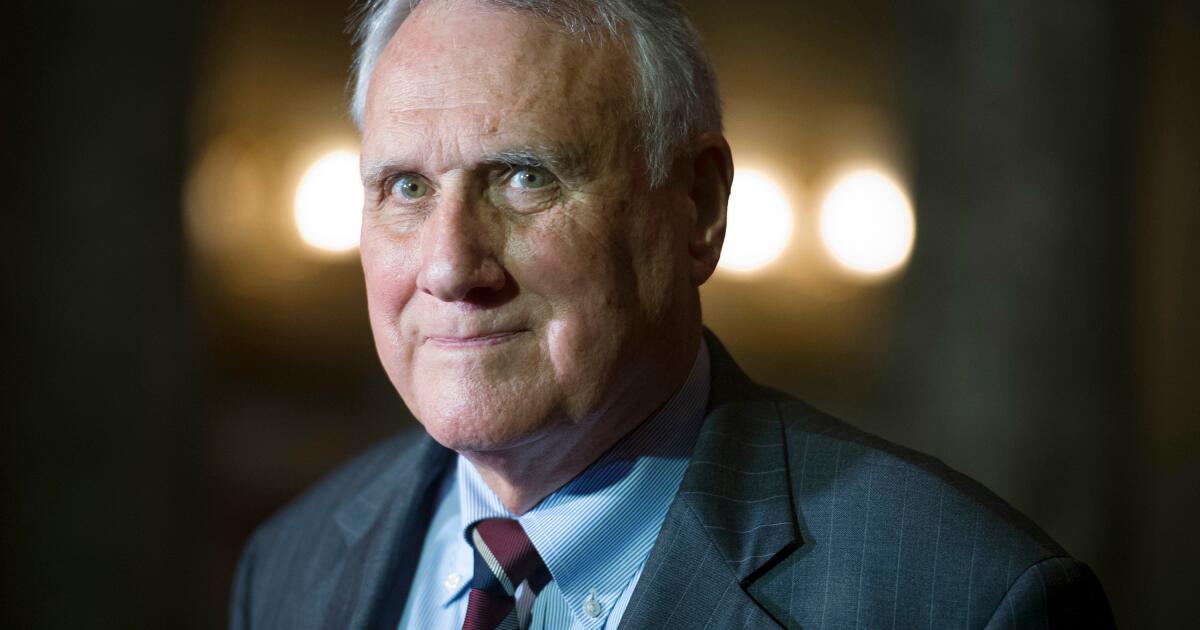
Republican former Sen. Jon Kyl of Arizona says he has dementia

Republican former U.S. Sen. Jon Kyl of Arizona on Tuesday announced his withdrawal from public life after a dementia diagnosis.

Kyl, 83, represented Arizona in both chambers of Congress for nearly three decades. Most of those years were in the Senate, including a term as minority whip.

“My family and I now head down a path filled with moments of joy and increasing difficulties,” Kyl said in a statement. “I am grateful beyond expression for their love and support, in these coming days as in all the days of my life. Despite this diagnosis, I remain a very fortunate man.”

Kyl left the Senate in 2013 and joined the lobbying firm Covington and Burling. In 2018 he was appointed by then-Gov. Doug Ducey, a fellow Republican, to fill the vacancy after the death of Sen. John McCain. Kyl served several months before rejoining the lobbying firm.

Kyl leveraged his expertise on water policy in Congress to gain approval of tribal water rights settlements, said Sarah Porter of Arizona State University. He was an “important participant” in negotiations that created the state’s water rules, said Porter, director of the university’s Kyl Center for Water Policy that is named after the former senator.

As a lobbyist, Kyl helped guide the confirmation of U.S. Supreme Court Justice Brett M. Kavanaugh.

Govindarao writes for the Associated Press.

Source link

URC: New Year’s Day derbies can shape Welsh play-off hopes

Dragons endured a nightmare 2025 that was winless until they beat Lyon in the Challenge Cup on 14 December, which was followed by a stunning URC victory against Connacht six days later.

Filo Tiatia’s men finished bottom of the URC last season, but resilient recent displays have given reason for optimism.

Dragons are currently 15th, but could go 10th with victory against Scarlets.

Not only do they want to avoid propping up the pile this season, they would love to avoid being Wales’ worst side for the first time since 2019-20.

Head coach Tiatia believes their battling display at Cardiff provided encouragement.

“There were some positives, and we stayed in the fight to try and win it at the end,” he said.

“We were maybe five or 10% off in terms of some physicality parts of game, but we have lots to take forward into Scarlets.”

Scarlets are currently bottom of the URC, although they do have a game in hand, and recent progress was brought to a dramatic halt against Ospreys.

“The games are coming thick and fast,” said head coach Dwayne Peel, whose side have Champions Cup fixtures against Pau and Northampton on the horizon.

“The Dragons is another important game and another tough game for us. We have to make sure we go to Rodney Parade with a spark and full of energy.”

Like Ospreys, a New Year’s Day win would dramatically change the picture in the URC and give some hope of repeating last season’s charge to the top eight.

Source link

Passengers brace for 2nd day of travel carnage as holidaymakers stranded on Eurostar train OVERNIGHT after power outage

EUROSTAR passengers are braced for a second day of travel carnage after some holidaymakers claimed they were stranded on a train overnight.

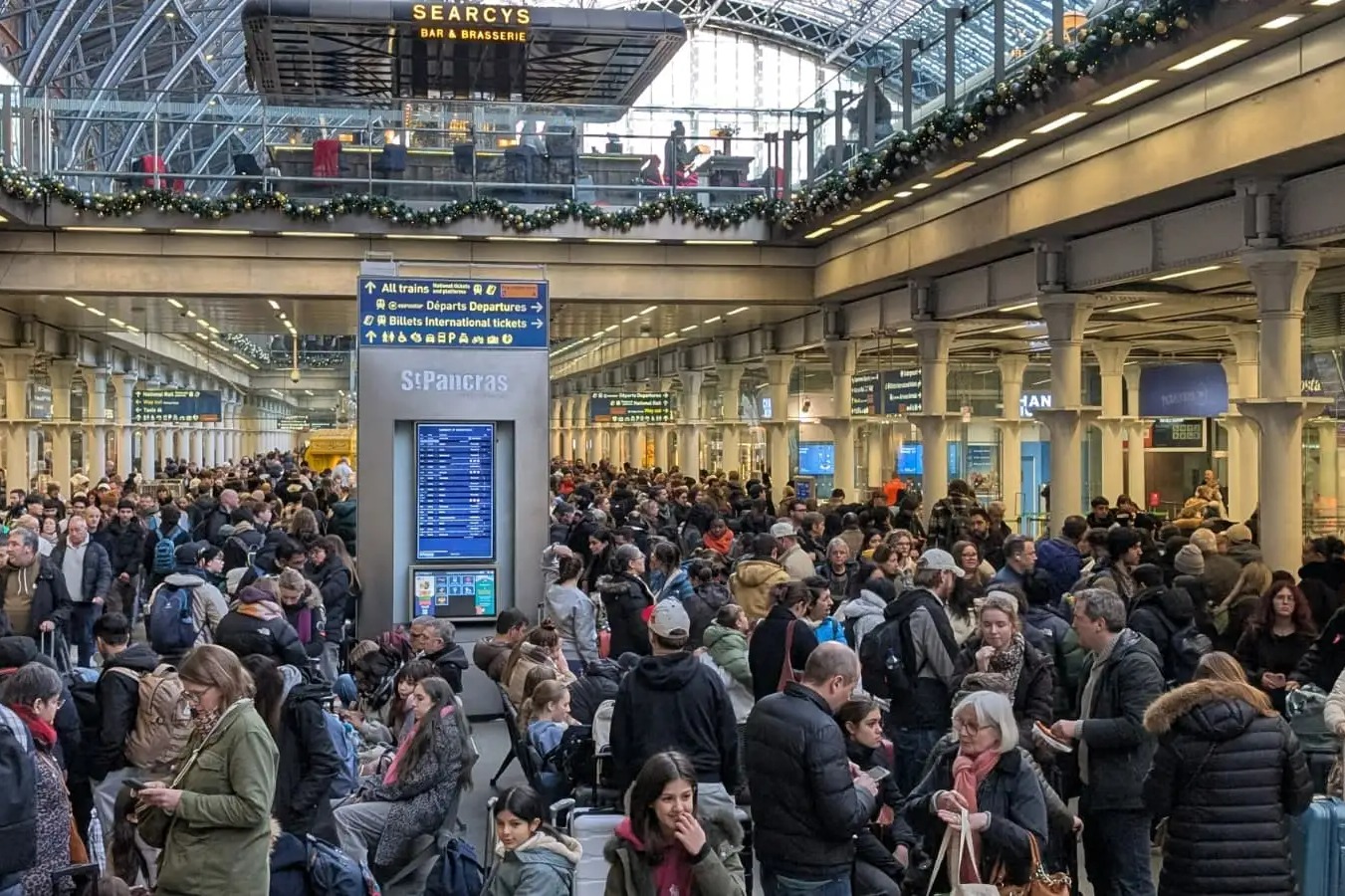
Journeys between the UK and France were brought to a halt yesterday as a result of a problem with the overhead power supply in the Channel Tunnel, leaving passengers battling hours of travel chaos.

London’s St Pancras International station was crammed with waiting passengers near the departure area as they wait for updates on the delayed and cancelled Eurostar services
Cars queueing to board Le Shuttle at the Channel Tunnel in Folkestone, Kent, yesterdayCredit: PA
Trains at the Le Shuttle terminal in Folkestone in Kent were cancelled in a day of chaosCredit: PA

All trains from London to Paris, Amsterdam and Brussels were cancelled.

The disruption upended New Year’s plans for thousands of passengers during ⁠one of the busiest travel weeks of the year.

Meanwhile, a failed Le Shuttle train in the tunnel caused further disruption to services.

Some Eurostar and LeShuttle services had resumed on Tuesday evening, but delays remained, with only one of the tunnel’s two rail lines open.

And some travellers claimed they spent more than six hours stuck onboard trains overnight as services were hit by more delays.

One man claimed he had boarded the 19:01 service to Paris, but as of 3am UK time he was still stuck on the train at the entrance to the tunnel.

He said staff had told him there was a “50 per cent chance we go to Paris, 50 per cent chance we go back to London”.

“I guess my new year plan is in the hands of the tunnel operators now,” the 27-year-old Parisian told the BBC.

Another passenger described feeling a “rollercoaster of emotions” for hours, not knowing whether the train he was on would be able to continue across the Channel or return to London.

His train eventually made it to Brussels, he said, adding: “Glad to be home, saw many families stranded.”

Passengers have been warned that there will continue to be delays and longer journey times as a result of knock-on effects today.

On Wednesday morning, an update on Eurostar’s website said: “Services have resumed today following a power issue in the Channel Tunnel yesterday and some further issues with rail infrastructure overnight.

“We plan to run all of our services today, however due to knock-on impacts there may still be some delays and possible last-minute cancellations.

“Please check for live updates on the status of your train on the train status and timetables page.”

London’s St Pancras International station was yesterday crammed with waiting passengers near the departure area.

Meanwhile, cars that had hoped to use the Channel Tunnel caused traffic jams near the LeShuttle Terminal in Folkestone.

At least a dozen Eurostar services between the UK, France, Belgium and the Netherlands had been cancelled by midday on Tuesday.

The rail operator apologised and said passengers could rearrange their plans free of charge or can cancel their booking and get a refund or an e-voucher.

On Tuesday, Eurostar has urged its customers “to rebook their journey for another day if possible, with free exchanges available”.

“We also advise customers not to come to our stations if their trains have been already been cancelled.”

Eurostar told passengers not to travel after power supply disruptionCredit: The Sun
Frustrated drivers waiting at the entrance to the Eurotunnel on TuesdayCredit: PA

Source link

Russia-Ukraine war: List of key events, day 1,406 | Russia-Ukraine war News

These are the key developments from day 1,406 of Russia’s war on Ukraine.

Here is where things stand on Wednesday, December 31:

Fighting

  • Russian forces shelled the town of Kostiantynivka in Ukraine’s Donetsk region, killing one person, an official said. The deadly attack came a day after an attack in Druzhkivka killed another person and wounded four, according to the Ukrinform news agency.
  • Russian forces also launched waves of attacks on the Black Sea ports of Pivdennyi and Chornomorsk in Ukraine’s Odesa region, hitting two Panama-flagged civilian vessels – Emmakris III and Captain Karam – as they approached to load wheat, the Ukrainian navy said.
  • Ukrainian Deputy Prime Minister Oleksii Kuleba said that oil storage tanks were also hit in the port attacks.
  • Authorities in Ukraine’s northern Chernihiv region introduced a mandatory evacuation order for the residents of 14 border villages in four districts. The order will affect some 300 people who still live in the Novhorod-Siverskyi, Semenivka, Snovsk, and Horodnya communities, which have been experiencing daily shelling, an official said.
  • Ukrainian Deputy Minister of Energy Olha Yukhymchuk said that 75,000 households in Chernihiv remain without electricity following Russian attacks on energy infrastructure in the region. There were also settlements in the Kharkiv and Sumy regions that were fully or partially without electricity, she said.
  • Yukhymchuk also said that repair work had been completed on transmission lines near the Zaporizhzhia nuclear power plant to ensure “stable and reliable power supply to the station in the event of damage or shutdown of the Dniprovska overhead line due to” Russian shelling.
  • Russia’s Ministry of Defence said it had taken control of two more settlements in eastern Ukraine. It identified them as the village ⁠of Lukianivske in the Zaporizhia region and ​the ‌settlement of Bohuslavka in the ‌Kharkiv ‌region.
  • Russian authorities said that a Ukrainian ‍drone attack on the Russian Black Sea port of Tuapse ‍damaged port infrastructure and a gas pipeline in a residential area there. The regional administration said no ⁠injuries were reported.
  • Other Ukrainian drone attacks on Russia’s Belgorod region killed a woman and wounded four other people, local authorities said.

Alleged attack on Putin’s residence

  • Kremlin spokesman Dmitry Peskov said that Russia will “toughen” its negotiating position in talks on a deal to end the war in Ukraine as a “diplomatic consequence” of an alleged attempted drone attack on Russian President Vladimir Putin’s residence in northwestern Russia’s Novgorod on Sunday.
  • Peskov said the attack, which Ukraine denies, was aimed at collapsing the peace talks and accused Western media of playing along with Kyiv’s denial.
  • Ukraine has dismissed the Russian claim as lies aimed at justifying additional attacks against Kyiv and prolonging the war.
  • Ukrainian Minister of Foreign Affairs Andrii Sybiha said Russia had not provided any plausible evidence of its accusations. “And they won’t. Because there’s none. No such attack happened,” Sybiha said on X.
  • Ukrainian President Volodymyr Zelenskyy slammed countries, including India and the United Arab Emirates, that have condemned the alleged attack, which he said “didn’t even happen”. He called the moves “confusing and unpleasant”.
  • China said “dialogue and negotiation” remain the only “viable way out of the Ukraine crisis”, when asked for a comment on the alleged attack on Putin’s residence.
  • Lin Jian, a spokesperson for China’s Ministry of Foreign Affairs, also called on “relevant parties to follow the principles of no expansion of the battlefield, no escalation of fighting and no provocation by any party”, to work towards the de-escalation of the situation, and to “accumulate conditions for the political settlement of the crisis”.
  • The Institute for the Study of War, a Washington, DC-based think tank, said that its analysts found that the “circumstances” of the alleged attack did not fit the “pattern of observed evidence” usually seen “when Ukrainian forces conduct strikes into Russia”.
  • The US ‌ambassador to NATO, Matthew Whitaker, cast doubt on Russia’s accusation, saying he wants to see US intelligence on the incident. “It is unclear whether it actually happened,” Whitaker told Fox Business’s Varney & Co.
  • The ‍German ‍government also said it shares Ukraine’s concern that Russian ⁠allegations of the attack could be used as a pretext for ‍further ⁠escalation of Moscow’s war.

Diplomacy

  • Zelenskyy said ‍that Ukraine and the Coalition of the Willing group of nations ⁠backing Kyiv plan to ​hold their next meetings at ‍the start of January. Zelenskyy said that the countries’ national ‍security advisers would ⁠meet in Ukraine on January 3, and with the leaders in France on January 6.
  • He also told reporters that Kyiv was discussing with US President Donald Trump the possible ⁠presence of ​US troops in Ukraine ‍as part of security guarantees.
  • “Of course, we are discussing this with President Trump and with representatives of the [Western] coalition [supporting Kyiv]. We want this. We would like this. This would be a ‍strong position of the security ⁠guarantees,” the Ukrainian president said.
  • Polish Prime Minister Donald Tusk told officials that there is reason to hope for peace in Ukraine quite soon. “Peace ⁠is on the horizon; there is no doubt that things ​have happened ‌that give grounds for hope that this war ‌can end, ‌and quite quickly, ⁠but it is still a hope, far ‌from 100 percent certain,” he said.
  • Tusk said security guarantees offered to Kyiv ‌by the US were a reason to hope the conflict could end soon, but that Kyiv would need to compromise on territorial issues.
  • The US removed sanctions on Alexandra Buriko, the former chief ⁠financial officer ​of Russia’s state-owned ‍Sberbank, according to the US Treasury Department.
  • Buriko was among ​a ‌group of senior executives and board members who ‌resigned from Western-sanctioned ‌Sberbank shortly after ⁠Russia’s full-scale invasion of Ukraine in 2022. She sued the Treasury Department in a Washington federal court in December 2024, arguing she had severed ‌ties with Sberbank days after it was sanctioned and that her continued inclusion on ‌the sanctioned list was unlawful.

Weapons

  • Romania’s Ministry of Foreign Affairs announced that the country would spend 50 million euros ($58m) to support a European initiative to buy weapons made by US companies for Ukraine, known as the Priority Ukraine Requirements List (PURL).
  • Belarus ‌released a video of what it said was ‍the deployment on ‍its territory of the Russian nuclear-capable hypersonic Oreshnik missile system, a development meant to bolster Moscow’s ability to strike targets across Europe in the event of a war.

Source link

How Curt Cignetti molded Indiana into the Rose Bowl favorite

Curt Cignetti knows winning. No matter where he finds himself, whether it’s James Madison or with the Division II IUP Crimson Hawks, success follows him. Since getting the opportunity to lead a program, Cignetti has never had a losing season.

When Indiana hired him in November 2023, the Hoosiers were the program with the most all-time losses in college football history, and ended the season with a 3-9 record under Tom Allen.

It wasn’t a work in progress, the Hoosiers football program needed to be rebuilt.

On New Year’s Day, Indiana will face Alabama in the highly anticipated Rose Bowl matchup. The Crimson Tide have a rich postseason history and a tradition of championships, but the Hoosiers are the favorites to win.

That is the Cignetti effect.

In two years, he transformed the program from an unranked team, spending most of its time at the bottom of the Big Ten Conference, to the No. 1 team in the country with a Heisman-winning quarterback, Fernando Mendoza.

“When he speaks, it means something,” Indiana linebacker Isaiah Jones said.

“He’s not gonna go around and hype you up, tell you something you want to hear, he’ll tell you what you need to hear and that’s what makes him so special as a coach.”

That kind of tough love echoes throughout the team, Jones said. Whether it’s the fifth-string linebacker or the starting linebacker, Cignetti and his staff coach everyone the same way. That is one of the reasons his players trust him and bought into his philosophy.

“All the coaches want to see you be the best version of yourself,” Jones said. “But you can’t do that if you’re sugarcoating it.”

Cignetti’s coaching style has turned a starting lineup that consists of more lightly recruited players than five-star prospects into the nation’s No. 1 team.

Their surprise arrival at college football’s biggest stage has fired up the Hoosiers.

Indiana defensive back D'Angelo Ponds answers questions during a new conference at the Rose Bowl on Tuesday.

Indiana defensive back D’Angelo Ponds answers questions during a new conference at the Rose Bowl on Tuesday.

(Marcio Jose Sanchez / Associated Press)

“It’s definitely a chip on our shoulder,” Indiana cornerback D’Angelo Ponds said. “Just to prove to the coaches that they missed out on the opportunity with us.”

The Hoosiers had the past three weeks off, earning a first-round College Football Playoff bye. Leading up to their quarterfinal showdown with Alabama in Pasadena, before their opponent was known, Cignetti made it a point to focus on how the Hoosiers could feature the best offense and defense in the country. He wanted players to focus on their own work rather than who they would be playing.

“In every single phase, in every single facet of the way that we practice and prepare, it’s all about being the best version of us, and not so much our opponent,” Indiana linebacker Aiden Fisher said.

But as soon as Alabama clinched its ticket to the Rose Bowl, the preparation flipped.

“Once we understood who the opponent was, it just kind of upped a notch,” Fisher said. “[Cignetti’s] done a great job of blocking out the noise, we don’t hear anything in the media, really.”

He wants his team to be present during their preparation, never taking a day for granted and getting their bodies and mindset right.

“He always says, at the later points in the season, it’s about who shows up ready to play, who’s the most prepared,” Indiana center Pat Coogan said.

The success of the team started with his recruitment. Regardless of which players leave or enter the locker room, Cignetti makes sure everyone is focused on the same end goal — winning.

“We are all cut from the same cloth,” Coogan said. “That’s why I think this locker room bonds so well, and why we’ve had success, no matter how many people have transferred.”

Fans flying into Pasadena talk about the ghost of the past, Fisher said. The Hoosiers last made an appearance in the Rose Bowl in 1968 when they lost to USC. A win on New Year’s Day will help bolster the football culture in Indiana, but the team understands it needs to focus on Thursday’s game against Alabama and ignore the bigger picture.

“It’s a privilege and honor to play in the Rose Bowl,” Fisher said. “But we’re still playing a football game of four quarters that we have to go and win.”

Source link

Surge in federal officers in Minnesota focuses on alleged fraud at day care centers

A surge of federal officers in Minnesota follows new allegations of fraud by day care centers run by Somali residents.

President Trump has previously linked his administration’s immigration crackdown against Minnesota’s large Somali community to a series of fraud cases involving government programs in which most of the defendants have roots in the east African country.

Surge in federal officers

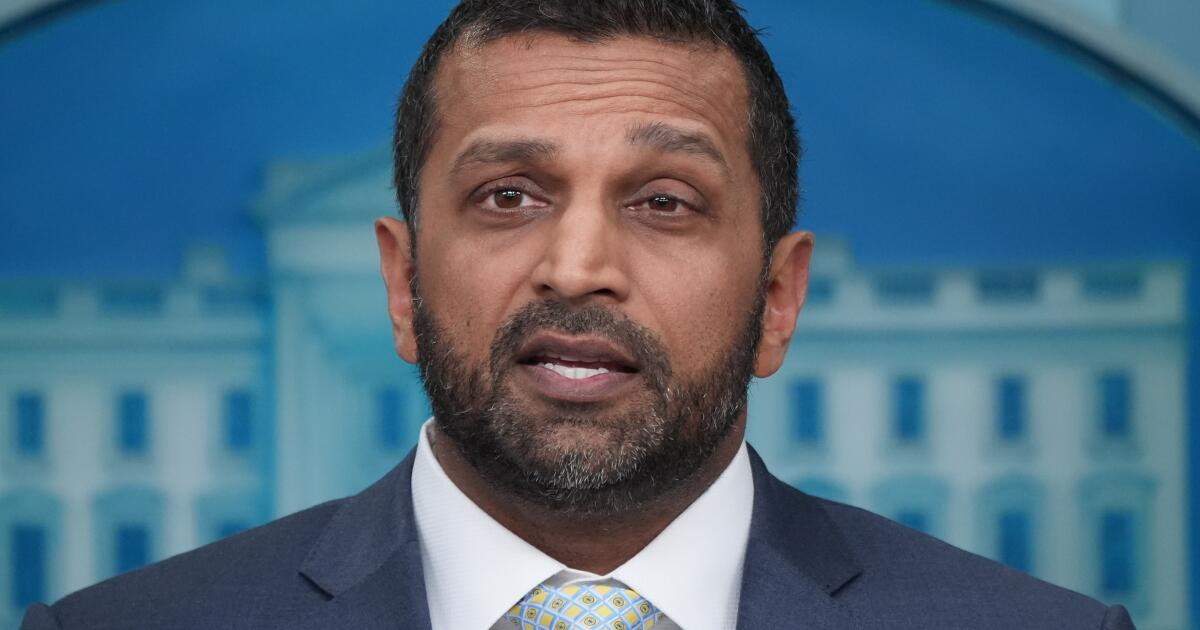
Department of Homeland Security Secretary Kristi Noem and FBI Director Kash Patel both announced an increase in operations in Minnesota this week. The move comes after a right-wing influencer posted a video Friday claiming he had found that day care centers operated by Somali residents in Minneapolis had committed up to $100 million in fraud.

Tikki Brown, commissioner of the Minnesota Department of Children, Youth, and Families, said at a Monday news conference that state regulators took the influencer’s allegations seriously.

Noem posted on social media that officers were “conducting a massive investigation on childcare and other rampant fraud.” Patel said the intent was to “dismantle large-scale fraud schemes exploiting federal programs.”

Past fraud in Minnesota

Minnesota has been under the spotlight for years for Medicaid fraud, including a massive $300-million pandemic fraud case involving the nonprofit Feeding Our Future. Prosecutors said it was the country’s largest COVID-19-related fraud scam and that defendants exploited a state-run, federally funded program intended to provide food for children.
In 2022, during President Biden’s administration, 47 people were charged. The number of defendants has grown to 78 throughout the ongoing investigation.

So far, 57 people have been convicted, either because they pleaded guilty or lost at trial.

Most of the defendants are of Somali descent.

Numerous other fraud cases are being investigated, including new allegations focused on child care centers.

In news interviews and releases over the summer, prosecutor Joe Thompson estimated the loss from all fraud cases could exceed $1 billion. Earlier this month, a federal prosecutor alleged that half or more of the roughly $18 billion in federal funds that supported 14 programs in Minnesota since 2018 may have been stolen.

Crackdown targeting Somalis

Trump’s immigration enforcement in Minnesota has focused on the Somali community in the Minneapolis-St. Paul area, which is the largest in the country.

Trump labeled Minnesota Somalis as “garbage” and said he didn’t want them in the United States.

About 84,000 of the 260,000 Somalis in the U.S. live in the Minneapolis-St. Paul area. The overwhelming majority are U.S. citizens. Almost 58% were born in the U.S and 87% of the foreign-born are naturalized citizens.

Among those running schemes to get funds for child nutrition, housing services and autism programs, 82 of the 92 defendants are Somali Americans, according to the U.S. attorney’s office for Minnesota.

Republicans have tried to blame Walz

Minnesota Gov. Tim Walz, the 2024 Democratic vice presidential nominee, has said fraud will not be tolerated and his administration “will continue to work with federal partners to ensure fraud is stopped and fraudsters are caught.”

The fraud could be a major issue in the 2026 gubernatorial race as Walz seeks a third term.

Walz has said an audit due by late January should give a better picture of the extent of the fraud but allowed that the $1-billion estimate could be accurate. He said his administration is taking aggressive action to prevent additional fraud. He has long defended how his administration responded.

Minnesota’s most prominent Somali American, Democratic U.S. Rep. Ilhan Omar, has urged people not to blame an entire community for the actions of a relative few.

Source link

China kicks off second day of military drills around Taiwan | Military News

Day two of the ‘Justice Mission 2025’ drills will include 10 hours of live-fire exercises and a simulated blockade of Taiwan’s major ports.

China has begun a second day of military drills around Taiwan in the latest escalation of tensions over the self-governing island.

China’s military said on Tuesday that it had deployed navy destroyers, bombers and other forces as part of the war games, which Beijing claims are aimed at “separatist” and “external” forces.

Recommended Stories

list of 4 itemsend of list

The drills were due to include live-fire exercises between 8am and 6pm local time (00:00 to 10:00 GMT) in five maritime and airspace zones around Taiwan, as well as air and sea patrols, simulated precision strikes and anti-submarine manoeuvres, according to Chinese state media.

Taiwan’s Ministry of National Defence said some of the live-fire drills would take place in what Taiwan considers its territorial waters, or within 12 nautical miles (22km) from the coastline, according to Taiwan’s Central News Agency.

More than 80 domestic flights were cancelled on Tuesday, many to Taiwan’s outlying islands, and more than 300 international flights could face delays due to rerouted air traffic during the drills, according to Taiwan’s Civil Aviation Administration.

The exercises, code-named “Justice Mission 2025”, began early Monday and came days after the United States announced its largest-ever weapons package for Taiwan, worth $11.1bn.

State news outlet The China Daily said the drills were “part of a series of Beijing’s responses to the US arms sales to Taiwan as well as a warning to the [Taiwanese president] Lai Ching-te authorities in Taiwan”, in an editorial on Monday.

China’s Ministry of Foreign Affairs spokesperson, Lin Jian, also told reporters on Monday that the exercises were “a punitive and deterrent action against separatist forces who seek Taiwan independence through military buildup, and a necessary move to safeguard China’s national sovereignty and territorial integrity”.

Justice Mission 2025 marks the sixth time China has staged large-scale military drills around Taiwan since then-US Speaker of the House of Representatives Nancy Pelosi visited Taiwan in 2022.

A key focus of the “Justice Mission 2025” exercises will be “anti-access and area denial capability” to ensure that Taiwan cannot receive supplies from allies like Japan and the US during a conflict, according to William Yang, senior analyst for Northeast Asia at the Crisis Group.

They will also include simulating a blockade of Taiwan’s major ports in the north and south, and taking control of strategically important waterways, like the Bashi Channel and Miyako Strait, through which Taiwan imports much of its energy supplies, Yang said.

China’s Eastern Theatre Command released a poster on Tuesday, titled “Hammer of Justice: Seal the Ports, Cut the Lines”, showing large metal hammers hitting the port of Keelung in the north and the port of Kaohsiung in the south.

Taiwan’s Defence Ministry said it had tracked 130 air sorties by Chinese aircraft, 14 naval ships and eight “official ships” between 6am on Monday (22:00 GMT, Sunday) and 6am on Tuesday (22:00 GMT, Monday).

The exercises were also monitored by Taiwanese coastguard ships and an undisclosed number of naval vessels, according to Taiwan’s Defence Ministry.

Source link

Russia-Ukraine war: List of key events, day 1,404 | Russia-Ukraine war News

These are the key developments from day 1,404 of Russia’s war on Ukraine.

Here is where things stand on Monday, December 29:

Diplomacy

  • United States President Donald Trump hosted Ukrainian President Volodymyr Zelenskyy for talks at his Mar-a-Lago resort in Florida and said the two leaders were “getting a lot closer, maybe very close” to a deal to end the war in Ukraine.
  • Trump and Zelenskyy reported progress on two of the most contentious issues in the peace talks: security guarantees for Ukraine and the division of eastern Ukraine’s Donbas region that Russia has sought to capture.
  • On security guarantees, Zelenskyy said that a deal had been reached, while Trump said they were 95 percent of the way to such an agreement.
  • Both Trump and Zelenskyy said that the future of the mostly Russian-occupied Donbas had not been settled, though the US president said discussions were “moving in the right direction”. “It’s unresolved, but it’s getting a lot closer. That’s a very tough issue,” Trump said.
  • The two leaders did not offer further details or a deadline for completing the deal, but Zelenskyy said any peace agreement would have to be approved by Ukraine’s parliament or by a referendum.
  • Shortly after the Trump-Zelenskyy meeting, Russian President Vladimir Putin’s special envoy, Kirill Dmitriev, wrote on X that the “whole world appreciates” Trump and his team’s peace efforts.
  • Ahead of the meeting with Zelenskyy, Trump and Putin spoke for more than two hours on the telephone. The US president described the call as “excellent” and “productive”.
  • Trump said he would call Putin again after the meeting with Zelenskyy.
  • Kremlin foreign policy aide Yury Ushakov said the initial call was “friendly” and that Putin had told Trump that a 60-day ceasefire, proposed by the European Union and Ukraine, would simply prolong the war.
  • Ushakov said that a “bold, responsible, political decision is needed from Kyiv” on the Donbas region and other disputed matters for there to be a “complete cessation” of hostilities.
  • European leaders, including those from Finland, France, Germany, Poland and the United Kingdom, joined at least part of the Trump-Zelenskyy meeting by phone.
  • European Commission President Ursula von der Leyen said in a statement that Europe was ready to keep working with Ukraine and the US, and that having ironclad security guarantees would be of “paramount” importance.
  • French President Emmanuel Macron said that progress had been made on security guarantees at the meeting. Macron said that countries in the so-called “Coalition of the Willing” would meet in Paris in early January to finalise their “concrete contributions”.
  • Zelenskyy said that Trump had agreed to host European leaders again, possibly at the White House, sometime in January. Trump said the meeting could be in Washington, DC, or “someplace”.
  • Earlier on Sunday, Russian Minister of Foreign Affairs Sergey Lavrov warned that any European troop contingents deployed to Ukraine would become legitimate targets for Russia’s forces. Lavrov also accused European politicians of being driven by “ambitions” in their relations with Kyiv, and disregarding the people of Ukraine and of their own nations.

Fighting

  • Russian forces attacked a heating plant in the southern Ukrainian city of Kherson, wounding one person and causing “significant damage” to the facility, state oil and gas firm Naftogaz said.
  • Ukraine’s leading private energy provider, DTEK, said it had restored power to more than a million households in and around Kyiv a day after a massive Russian air attack had forced emergency outages.
  • Ukraine’s military said it had struck the Syzran oil refinery in Russia’s Samara region in a drone attack. The strike caused a fire, and damages were still being assessed, the army said in a statement.
  • The military also said that only part of the southeastern town of Huliaipole was under Russian control, contradicting an earlier claim by Moscow that it had been captured. It added that fighting was also still under way for Stepnohirsk, another town in the southeastern Zaporizhia region that Russia claimed it had captured.
  • Meanwhile, Russia’s Ministry of Defence said in a statement that its troops had taken control of four other settlements in the Donetsk region. It identified them as Myrnohrad, Artemivka, Rodynske and Vilne.

Source link

Bob Baffert horses dominate on opening day at Santa Anita

Opening day at Santa Anita might have been delayed by two days because of heavy rain, but it was worth the wait for no other reason than to watch the stretch run of the $200,000 Laffit Pincay Jr. Stakes.

And for trainer Bob Baffert, it was even better than that. Not only did Nysos and Nevada Beach run 1-2 for him Sunday in the thrilling Grade 2 Pincay, but he also captured the two Grade 1 races he entered, the La Brea with Usha and the Malibu with Goal Oriented.

It was the fourth time Baffert won three stakes on the same day at Santa Anita, including the same trio of races on opening day in 2022.

He was especially excited after the Pincay, and not just by what he saw on the track.

“You know what’s great?” Baffert said as he stood in the winner’s circle and motioned to the grandstand, which was crowded with an announced 41,962 fans, the largest opening day audience since 2016. “It’s great to see this place packed. Look, everybody came out. They’ll come out to see a good horse and everybody was on the apron for this one. And they saw a great horse race.

“It was actually fun watching.”

Particularly for Baffert, who knew as the field turned into the stretch he couldn’t lose. Nysos, the Breeders’ Cup Dirt Mile champion ridden by Flavien Prat, was on the inside of Nevada Beach, the Goodwood Stakes winner ridden by Juan Hernandez.

Nysos was the heavy 1-5 favorite, having lost only one of his seven lifetime races, but for at least a moment it looked as if he might not get past Nevada Beach, at 3 a year younger than his stablemate.

But, in a virtual rerun of the Dirt Mile, when Prat and Nysos edged past Hernandez and another Baffert 3-year-old, Citizen Bull, the older horse once again prevailed, again by a head.

“I was close,” Hernandez said. “My horse ran really good. I was in front on the stretch for a couple of jumps and then it was just back and forth between Nysos and my horse. … He was giving me everything he had.”

The Grade 2 Pincay (formerly the San Antonio) was one of six stakes races on opening day, which is traditionally held the day after Christmas. It wasn’t one of the three Grade 1 races, but the presence of Nysos made it feel like the day’s main event.

Nysos returned $2.40 after running 1 1/16 miles in 1:42.36, the fastest since the Pincay was moved to that distance in 2017.

Baffert said in the leadup to the race that Nysos likely would start next in the $20-million Saudi Cup on Feb. 14 in Riyadh, while Nevada Beach was more apt to go to the $3-million Pegasus World Cup next month at Gulfstream Park. After the Pincay, he didn’t rule out sending both to Saudi Arabia.

The only downside to Baffert’s stakes day was having to scratch Barnes and Cornucopian, the two morning-line favorites, from the Malibu. Barnes suffered a “minor setback” Saturday while Cornucopian had an incident in the paddock minutes before the race, which forced his withdrawal (he was uninjured).

No matter, though; Goal Oriented ($4.20) took over favoritism and earned his first stakes win, defeating stablemate Midland Money by a length in 1:20.97, the fastest Malibu since 2016.

“I’m just happy it turned out that we won it because it was so upsetting for a little bit,” Baffert said.

Usha ($13.20) was starting in a Grade 1 race for the first time, but she won the La Brea like a filly who has more victories in her future. She finished seven furlongs in a rapid 1:21.68 to beat 2-1 favorite Formula Rossa by 5¼ lengths.

The first of the six stakes races was the $200,000 Mathis Mile for 3-year-olds on the turf. Tempus Volat, trained by Leonard Powell, led the race but was passed in the final yard by Hiding in Honduras ($21.40), a 9-1 long shot ridden by Antonio Fresu for Jonathan Thomas. Namaron, the 1-2 favorite ridden by Prat, finished third.

There was no such drama in the second turf stakes, the $100,000 San Gabriel, in which Cabo Spirit ($14.80), trained by George Papaprodromou, took the lead shortly after the start under Mike Smith and rolled to a 1¼-length victory over Astronomer. Stay Hot, the 2-1 favorite, lost a photo for third to Mondego.

The final race of the day was the other Grade 1 event, the $300,000 American Oaks, won by another Thomas trainee, Ambaya, a 12-1 long shot. The daughter of Ghostzapper was ridden by Kazushi Kimura, who picked up the mount when Fresu injured his ankle earlier in the day.

Etc.

The two cards that were rained out over the weekend will be made up Monday and Wednesday, with free parking and admission. Both days will offer two stakes races; Monday’s highlight is the $200,000 Joe Hernandez, which includes Motorious and Sumter, who were 1-2 in the race last year, and Imagination, last month’s Breeders’ Cup Sprint runner-up who will be racing on turf for the first time.

Rain is forecast beginning Wednesday, with track officials saying they will monitor the situation before deciding on how it will affect the racing, if at all. The schedule calls for racing Thursday through Sunday before Santa Anita begins its normal schedule of Fridays through Sundays on Jan. 9.

Source link