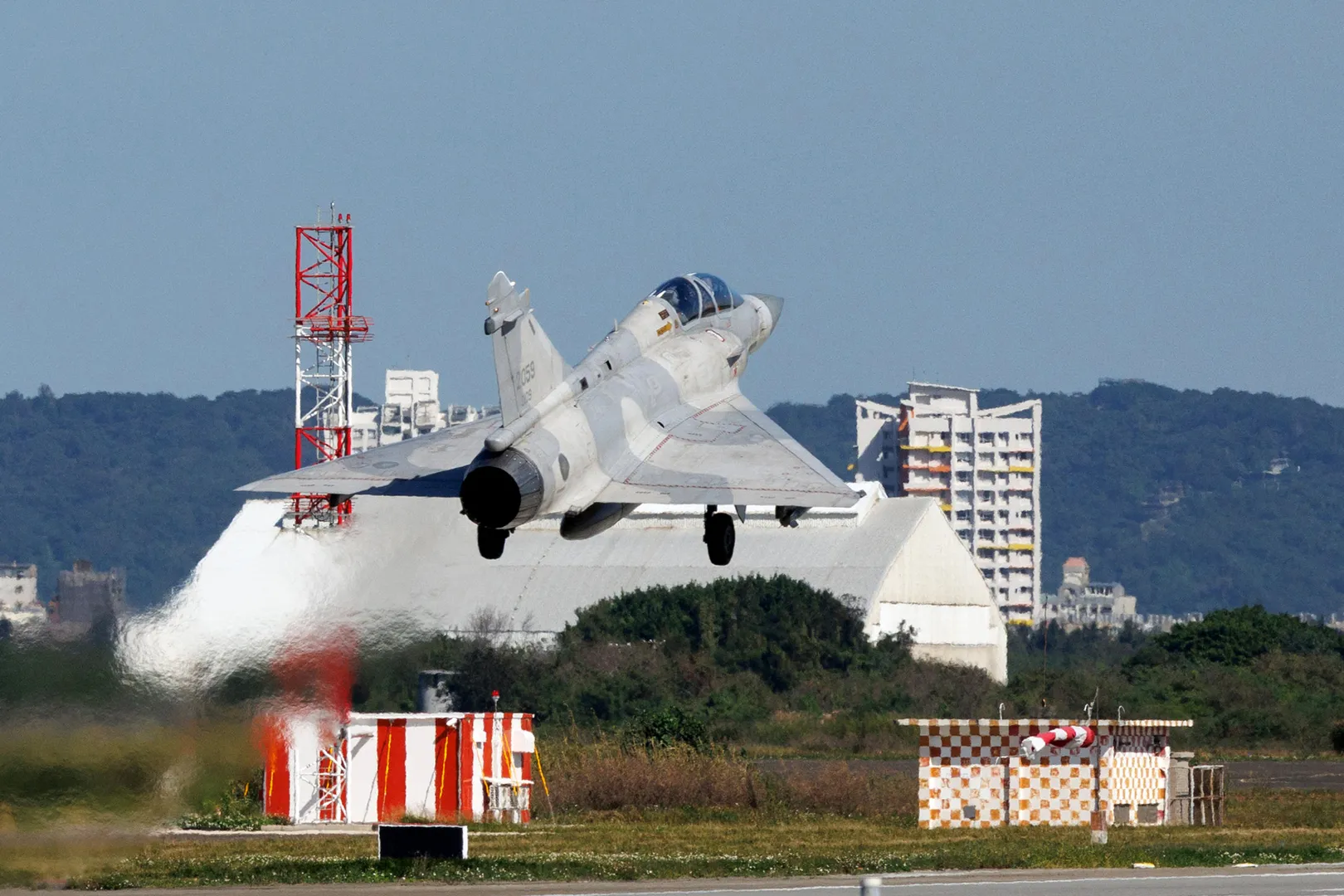
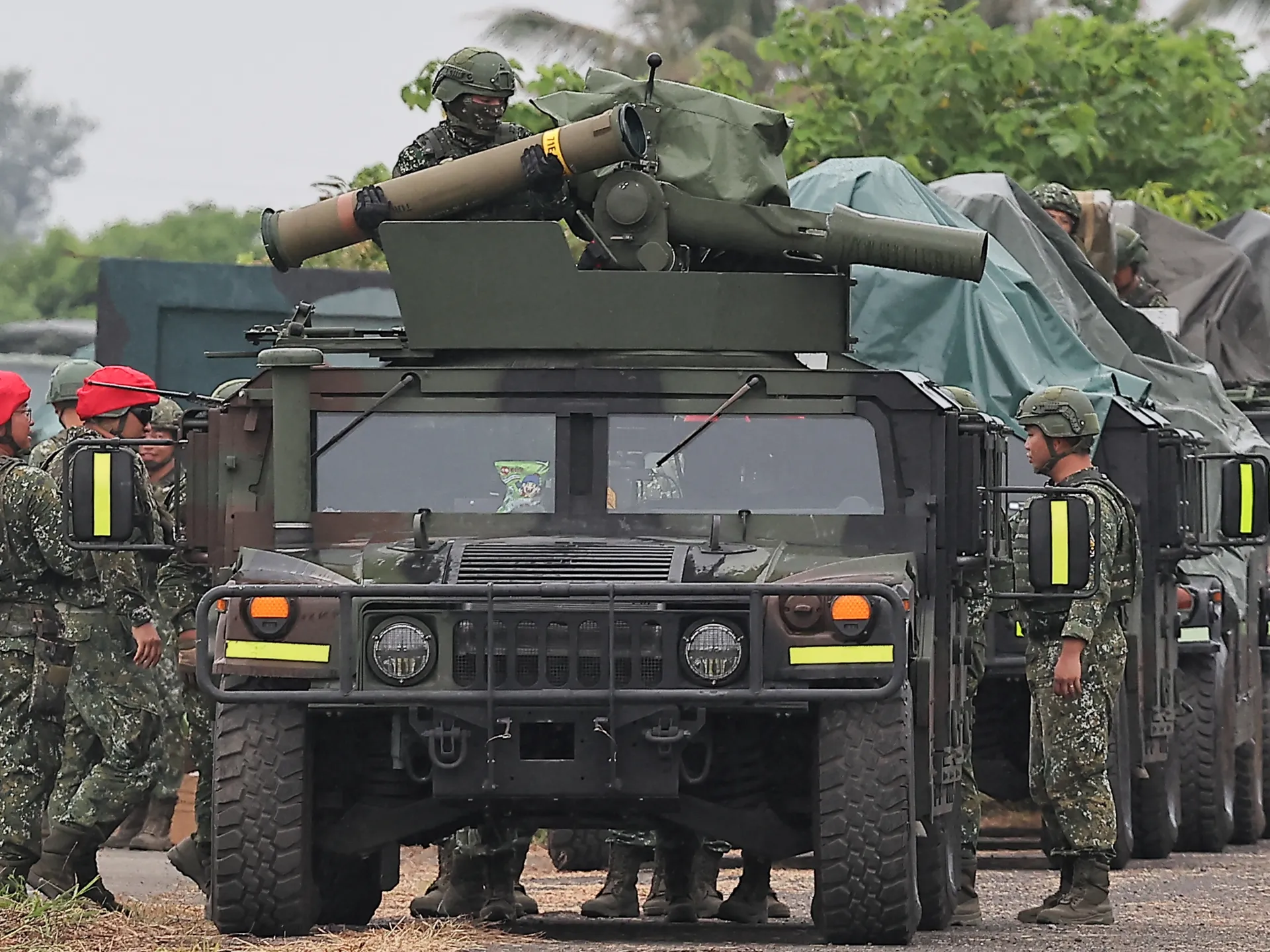
China has begun two days of military exercises around Taiwan, including live-fire drills that Beijing says simulate a blockade of key ports. Taiwan condemned the move, launching fighter jets, and mobilising troops in response.
Severe weather conditions are bringing further misery to displaced Palestinians in Gaza, who have already suffered relentless bombardment, siege and loss in Israel’s genocidal war for more than two years, as Israel continues to block critical shelter and aid supplies into the territory.
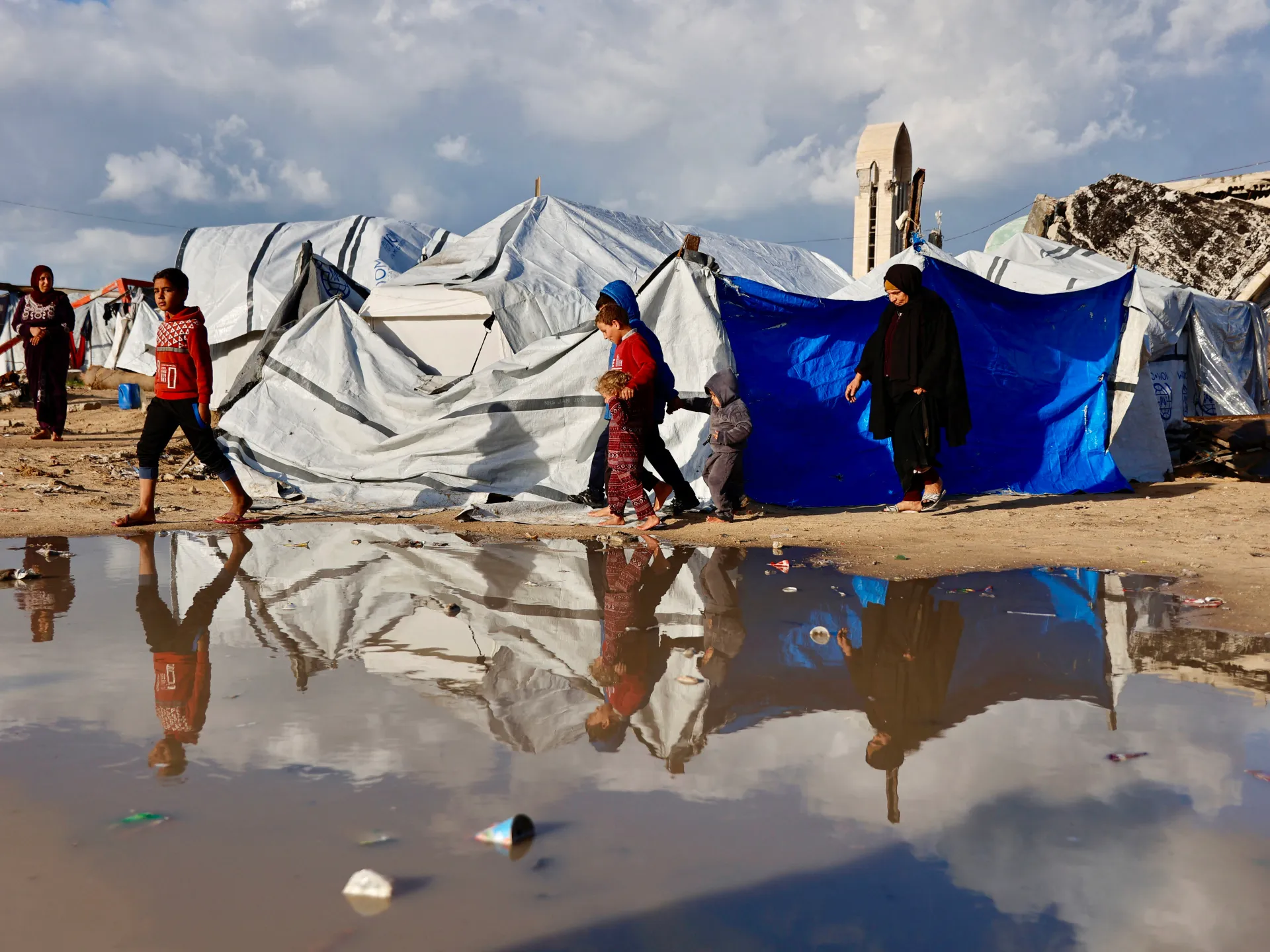
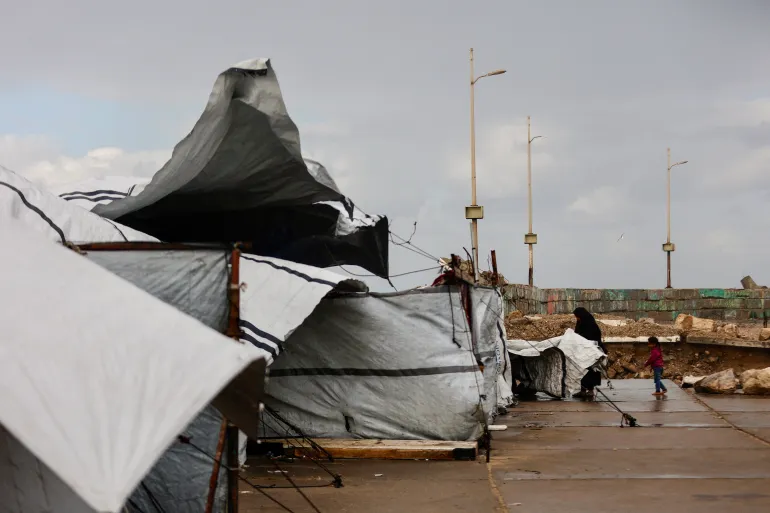
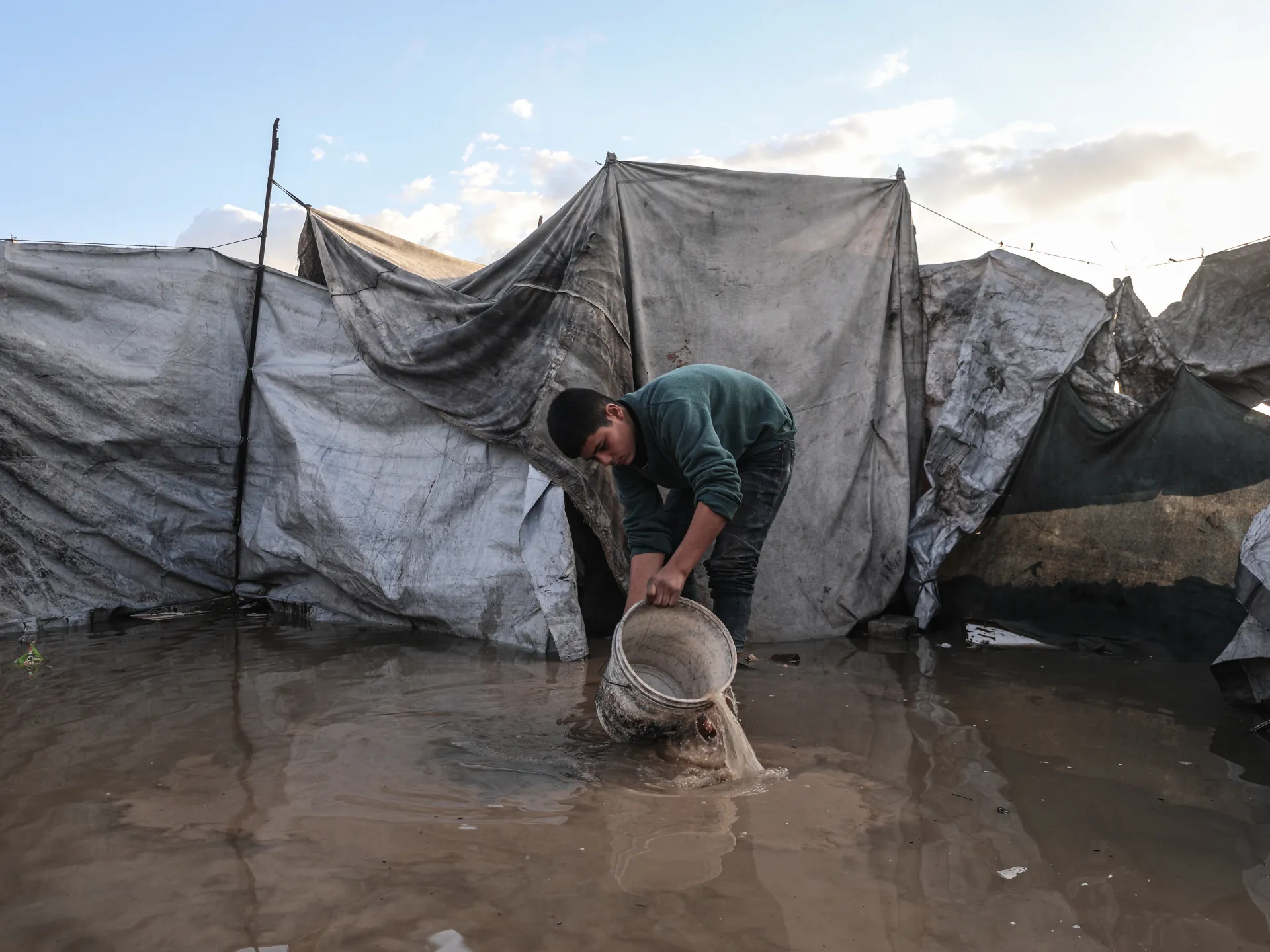
Flimsy tents were flooded and makeshift camps engulfed in mud on Monday following heavy winter rains lashing the enclave in recent days.
Recommended Stories
list of 4 itemsend of list
The harsh conditions have added to the suffering of Palestinians in Gaza, most of whom are reduced to sheltering in tents and other makeshift structures since Israel’s war destroyed an estimated 80 percent of the buildings there.
Officials are warning that severe conditions also bring new dangers, with the threat of disease and illness as overwhelmed and damaged sewage systems contaminate floodwaters, and the risk that damaged buildings could collapse amid heavy rainfall.
On Sunday, a 30-year-old woman was killed when a partially destroyed wall collapsed onto her tent in the Remal neighbourhood to the west of Gaza City amid fierce winds, Al Jazeera Arabic reported.
Officials have warned people not to shelter in damaged buildings, but the tents offer limited protection from the heavy rain and no real protection against flooding.
At least 15 people, including three babies, have died this month from hypothermia following the rains and plunging temperatures, according to the authorities in Gaza.
Two-month-old baby Arkan Firas Musleh was the latest infant to die as a result of the extreme cold.
Contaminated floodwater
Reporting from Gaza City’s Zeitoun neighbourhood, where most of the buildings have been reduced to rubble by Israeli attacks, Al Jazeera’s Hind Khoudary said the heavy rains had created deep puddles and thick mud that was difficult to pass in places.
“People are struggling to walk in those mud puddles,” she said. “These are not only water, but it’s also sewage, rubbish.”
A team of municipal workers were trying to pump sewage from the overwhelmed network, amid reports of flooded tents from residents.
“Families are saying that sewage water has been coming into their tents,” she said.
Calls for aid deliveries
Aid groups have called for the international community to pressure Israel to lift restrictions on life-saving aid deliveries into the territory, which they say are falling far short of the amount called for under the US-brokered ceasefire.
“More rain. More human misery, despair and death,” Philippe Lazzarini, commissioner-general of UNRWA, the top United Nations group overseeing aid in Gaza, wrote on social media on Sunday.
“Harsh winter weather is compounding more than two years of suffering. People in Gaza are surviving in flimsy, waterlogged tents and among ruins.”
There was “nothing inevitable about this”, he added. “Aid supplies are not being allowed in at the scale required.”
More Israeli attacks
Meanwhile, despite the ceasefire that came into effect on October 10, Israeli attacks on Palestinians have continued in Gaza.
Three Palestinians were injured on Monday when Israeli forces targeted the Jabalia camp in northern Gaza, a medical source told Al Jazeera Arabic.
Witnesses said the attack happened in an area from which Israeli forces had withdrawn under the ceasefire agreement.
Witnesses also reported an Israeli air raid on the eastern areas of the Bureij camp in central Gaza, artillery shelling east of Rafah and further Israeli attacks east of Gaza City, Al Jazeera Arabic reported.
A 20-point plan proposed by United States President Donald Trump in September called for an initial truce followed by steps towards a wider peace. So far, as part of the first phase, there has been the exchange of captives held in Gaza and prisoners in Israeli jails, and a partial withdrawal of Israeli forces from the enclave. However, it still occupies almost half of the territory.
However, Israeli attacks have not stopped, while humanitarian aid flows into the territory have not been what was promised.
Since the truce went into effect, more than 414 Palestinians have been killed and more than 1,100 wounded in ceasefire violations, according to Gaza’s Ministry of Health.
I am a Palestinian. And increasingly, that fact alone is treated as a provocation.
In recent months, I have watched anti-Semitism — a real, lethal form of hatred with a long and horrific history — be stripped of its meaning and weaponised to silence Palestinians, criminalise solidarity with us, and shield Israel from accountability as it carries out a genocide in Gaza. This is not about protecting Jewish people. It is about protecting power.
The pattern is now impossible to ignore.
A children’s educator, Ms Rachel, whose entire public work is built around care, learning, and empathy, is branded “Anti-Semite of the Year” — not for her engaging in any form of hate speech, but for expressing concern for Palestinian children. For acknowledging that children in Gaza are being bombed, starved, and traumatised. For expressing compassion.
As a Palestinian, I hear the message clearly: even empathy for our children is dangerous.
Then there is Palestine Action, a protest movement that targets weapons manufacturers supplying Israel’s military. Instead of being debated, challenged, or even criticised within a democratic framework, it is proscribed as a “terrorist” organisation, casually equated with ISIL (ISIS) – a group responsible for mass executions, sexual slavery, and genocidal violence.
This comparison is not just obscene. It is deliberate. It collapses the meaning of “terrorism” so completely that political dissent becomes extremism by definition. Resistance becomes pathology. Protest becomes “terror”. And Palestinians, once again, are framed not as a people under occupation, but as a permanent threat.
Language itself is now being criminalised. Phrases like “globalise the Intifada” are banned without any serious engagement with history or meaning. Intifada — a word that literally means “shaking off” — is torn from its political context as an uprising against military occupation and reduced to a slur. Palestinians are denied even the right to name their resistance.
At the same time, international law is being actively dismantled.
Staff and judges at the International Criminal Court are sanctioned and intimidated for daring to investigate Israeli war crimes. Francesca Albanese, the United Nations special rapporteur on Palestine, has not only been sanctioned, but also relentlessly smeared — because she uses the language of international law to describe occupation, apartheid, and genocide.
When international law is applied to African leaders, it is celebrated. When it is applied to Israel, it is treated as an act of hostility.
This brings us to Australia — and to one of the most revealing moments of all.
After the horrific Bondi Beach attack, which shocked and horrified people across Australia, Israel’s Prime Minister Benjamin Netanyahu accused the Australian government of encouraging anti-Semitism. Not because of any incitement, not because of inflammatory rhetoric — but because Australia had moved towards recognising Palestine as a state.
Read that again.
The diplomatic recognition of Palestinian statehood — long framed as essential to peace and grounded in international law — is presented as a moral failing, even as a contributor to anti-Semitic violence. Palestinian existence itself is treated as the problem.
What makes this moment so disturbing is not only that Netanyahu made this claim, but that so many centres of power ran with it rather than challenged it.
Instead of forcefully rejecting the idea that recognising Palestinian rights could “encourage anti-Semitism”, governments, institutions, and commentators allowed the premise to stand. Some echoed it outright. Others stayed silent. Almost none confronted the dangerous logic at its core: that Palestinian political recognition is inherently destabilising, provocative, or threatening.
This is how moral collapse happens — not with thunder, but with acquiescence.
The result is not safety for the Jewish people, but erasure of the Palestinian people.
As a Palestinian, I find it devastating.
It means my identity is not merely contested — it is criminalised. My grief is not simply ignored — it is politicised. My demand for justice is not debated — it is pathologised as hatred.
Anti-Semitism is real. It must be confronted seriously and without hesitation. The Jewish people deserve safety, dignity, and protection — everywhere. But when anti-Semitism is stretched to include children’s educators, UN experts, international judges, protest movements, chants, words, and even the diplomatic recognition of Palestine, then the term no longer serves to protect Jewish people.
It protects a state from accountability.
Worse still, this weaponisation endangers Jews by collapsing Jewish identity into the actions of a government committing mass atrocities. It tells the world that Israel speaks for all Jews — and that anyone who objects must therefore be hostile to Jews themselves. That is not protection. It is recklessness masquerading as morality.
For Palestinians like me, the psychological toll is immense.
I am tired of having to preface every sentence with disclaimers.
I am deeply pained by watching my people starve while being lectured about tone.
I am angry that international law seems to apply only in certain politically convenient cases.
And I am grieving — not just for Gaza, but for the moral collapse unfolding around it.
Opposing genocide is not anti-Semitism.
Solidarity is not “terrorism”.
Recognising Palestine is not incitement.
Naming your suffering is not violence.
If the world insists on calling me an anti-Semite for refusing to accept the annihilation of my people, then it is not anti-Semitism that is being countered.
It is genocide that is being justified.
And history will remember who helped make that possible.
The views expressed in this article are the author’s own and do not necessarily reflect Al Jazeera’s editorial stance.
A Palestinian woman in Gaza has died as a winter storm threatens the lives of nearly 900,000 Palestinians living in tents across the devastated coastal enclave.
The 30-year-old, identified as Alaa Marwan Juha, died on Sunday when a wall collapsed onto her tent in the Remal neighbourhood to the west of Gaza City, Al Jazeera Arabic reported.
Recommended Stories
list of 4 itemsend of list
The incident occurred amid heavy rain and strong winds that have battered the Gaza Strip since Saturday evening, flooding and blowing away thousands of tents sheltering the forcibly displaced Palestinians.
Al Jazeera Arabic, citing witnesses, reported that the partially destroyed wall gave way under the force of the wind, crashing down on the tent beside it. The wall collapse also injured several members of Juha’s family, the network reported.
Many Palestinian families have been living in tents since late 2023 as Israel waged its genocidal war on Gaza. The enclave is imminently facing freezing temperatures, rain and strong winds, as the authorities warn the downpour could intensify into a full-blown storm.
‘Disaster area’
Amjad Shawa, director of the Palestinian NGOs Network (PNGO), told Al Jazeera Arabic that the severe weather conditions are exacerbating an already catastrophic humanitarian situation.
“This low-pressure system will complicate matters further … and poses a danger to the lives of citizens,” Shawa said.
He said the tents offer no real protection against flooding and called for an urgent entry of mobile homes, or caravans, and equipment to repair destroyed sewage networks.
“Tents represent neither a choice nor a solution,” he said, noting that agreed humanitarian protocols stipulate the provision of adequate shelter.
A displaced Palestinian woman adjusts the canvas of the family tent shelter as the region experiences rain and cold winter conditions, in Gaza City, on December 28, 2025 [AFP]
Shawa urged the international community to pressure Israel to lift restrictions on life-saving aid, describing the entire Gaza Strip as a “disaster area”.
At least 15 people, including three babies, have died this month from hypothermia following the rains and plunging temperatures, according to the authorities in Gaza.
Emergency workers have warned people not to stay in damaged buildings, several of which have completely collapsed. But with much of the Palestinian territory reduced to rubble, there are few places to escape the rain.
Meanwhile, the healthcare system in Gaza is on the brink of total collapse, and the absence of much-needed aid, including medicine and medical supplies, is exacerbating the situation.
Ceasefire violations
Separately on Sunday, Israeli Prime Minister Benjamin Netanyahu left Tel Aviv for the United States, as negotiators and others discuss the second stage of the ceasefire, the first phase of which took effect on October 10.
Israel continues to violate the ceasefire agreement and block desperately needed humanitarian aid to the war-ravaged coastal enclave, even though these are stipulated in the first phase of the agreement.
A 20-point plan proposed by US President Donald Trump in September called for an initial truce followed by steps towards a wider peace. So far, as part of the first phase, there has been the exchange of captives held by Hamas in Gaza and prisoners in Israeli jails, and a partial withdrawal of Israeli forces from the enclave.
However, Israeli attacks continue. Since the truce went into effect, more than 414 Palestinians have been killed and 1,142 wounded in ceasefire violations, according to Gaza’s Ministry of Health.
Israel’s genocidal war on Gaza has killed at least 71,266 Palestinians and wounded 171,219 since October 2023.
Israel has held Gaza doctor Hussam Abu Safia for an entire year without charge. His son is pleading for his release, describing his father’s mistreatment in detention and recalling his refusal to abandon his patients at Kamal Adwan Hospital.
Fighting has broken out at a demonstration in the city of Latakia in Syria, killing at least three people and injuring dozens. Hundreds of people from the Alawite minority were protesting in coastal and central parts of the country, two days after a mosque was bombed in Homs.
Iran’s former foreign minister argues Israel, backed by the US, has killed every opportunity for peace.
Months after being attacked by the United States and Israel, Iran finds itself in the crosshairs again, with Israeli officials lobbying US President Donald Trump to address Tehran’s ballistic missiles.
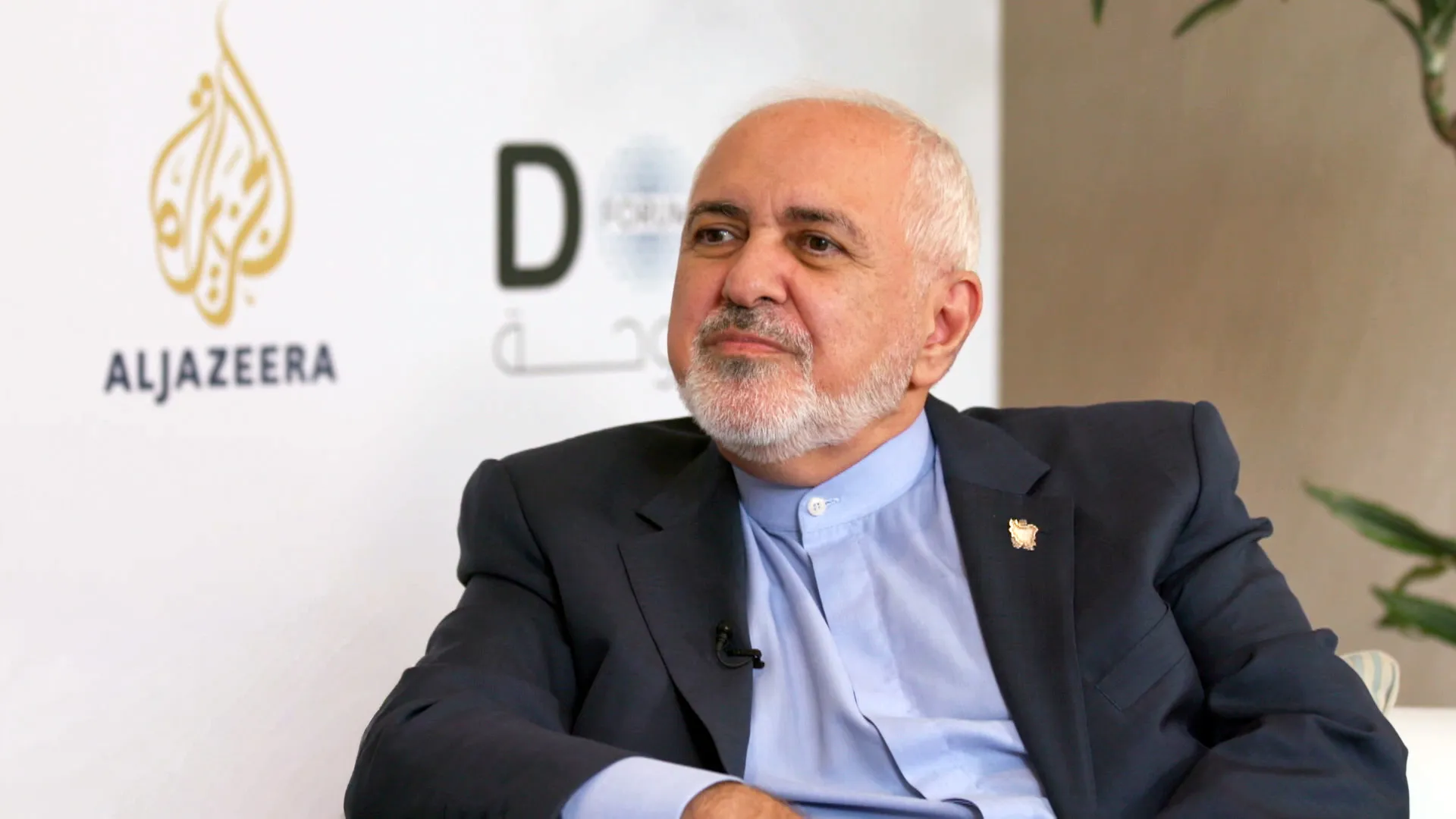
Veteran Iranian diplomat Javad Zarif tells host Steve Clemons that “everybody lost any faith in diplomacy” after Israel and the US attacked Iran following five rounds of reconciliation talks between Washington and Tehran.
Zarif added that Israel has historically thwarted every opportunity for reconciliation between Iran and the US, and that Trump’s style of diplomacy is disastrous, as it creates “negotiations that end up in war”.
If Israel and the US were to attack Iran again, they would ‘face a more decisive response’, Pezeshkian warns.
Published On 27 Dec 202527 Dec 2025
Share
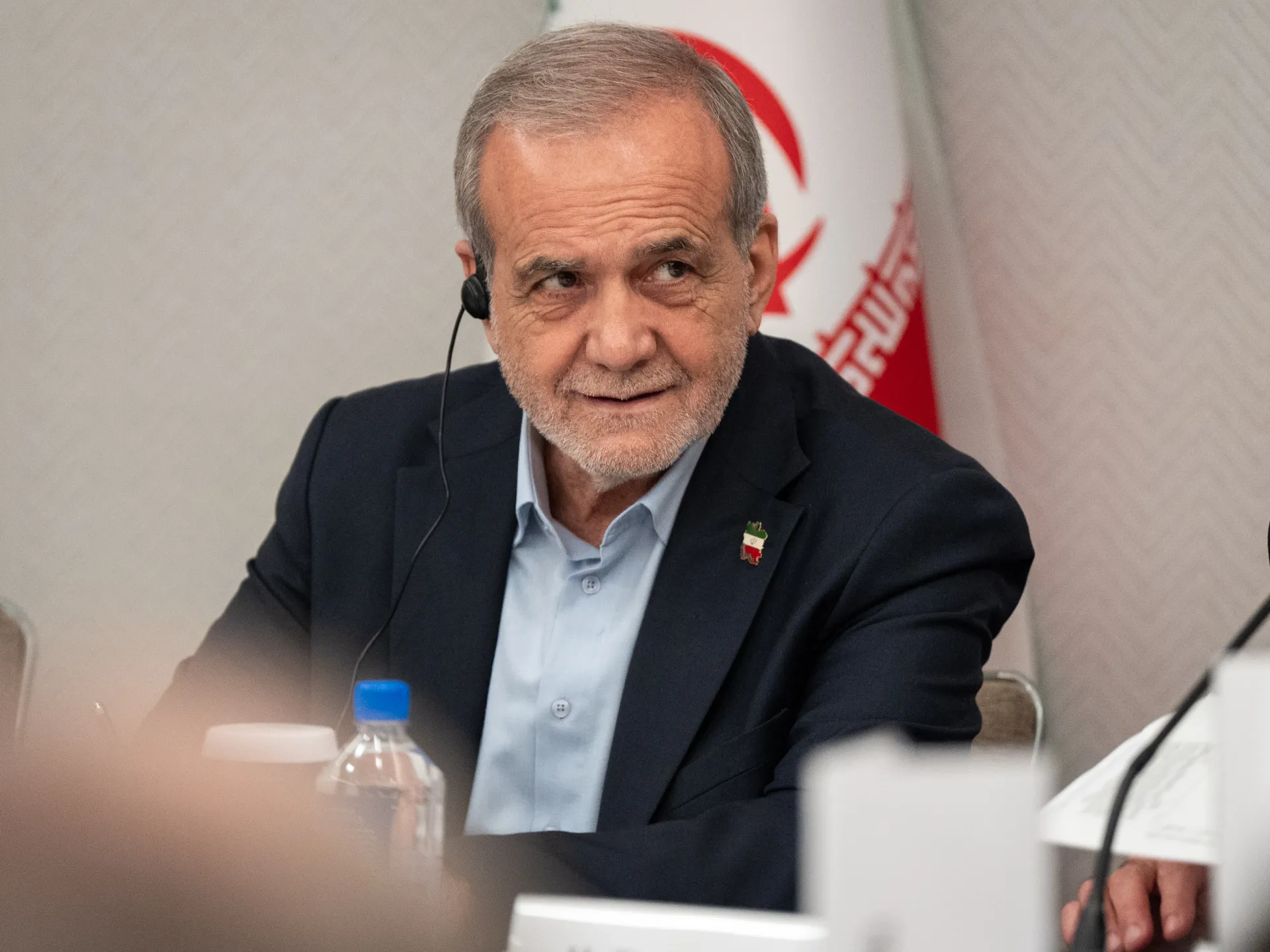
Iranian President Masoud Pezeshkian says that the United States, Israel and Europe are waging a “full-fledged war” against his country.
“In my opinion, we are in a full-fledged war with America, Israel and Europe. They do not want our country to stand on its feet,” Pezeshkian told the official site of Supreme Leader Ayatollah Ali Khamenei in an interview on Saturday.
Recommended Stories
list of 3 itemsend of list
The president’s remarks come ahead of Israeli Prime Minister Benjamin Netanyahu’s meeting on Monday with US President Donald Trump. They also come six months after Israel and the US launched strikes on Iran, and after France, Germany and the United Kingdom reimposed United Nations sanctions on Iran in September over its nuclear programme.
“Our dear military forces are doing their jobs with strength, and now, in terms of equipment and manpower, despite all the problems we have, they are stronger than when they [Israel and the US] attacked,” Pezeshkian said.
“So, if they want to attack, they will naturally face a more decisive response.”
The president said that “this war” is unlike past ones.
“This war is worse than Iraq’s war against us. If one understands it well, this war is far more complex and difficult than that war,” Pezeshkian said, referring to the 1980-1988 conflict between the neighbouring countries in which thousands were killed.
The US and its allies accuse Iran of seeking to acquire nuclear weapons, a claim Tehran has repeatedly denied.
Israel and Iran engaged in a 12-day war in June, triggered by an unprecedented Israeli attack on Iranian military and nuclear sites, as well as civilian areas.
The strikes caused more than 1,000 casualties, according to Iranian authorities.
The US later joined the Israeli operation, bombing three Iranian nuclear sites.
Washington’s involvement brought a halt to negotiations with Tehran, which began in April, over its nuclear programme.
Since returning to the White House in January, US President Donald Trump has revived his so-called “maximum pressure” policy against Iran, initiated during his first term.
That has included additional sanctions designed to economically cripple the country and dry up its oil revenues from sales on the global market.
According to recent reports, when Netanyahu visits Trump at his Mar-a-Lago resort in Florida this weekend, he will be pushing for more military actions against Iran, this time focusing on Tehran’s missile programme.
Tens of thousands of displaced Palestinians in Gaza, surrounded by tents and debris, are suffering through more winter rains after two years of Israeli bombardment destroyed much of the Strip.
A polar low-pressure system accompanied by heavy rain and strong winds swept across the Gaza Strip on Saturday. It is the third polar low to affect the Palestinian territory this winter, with a fourth low-pressure system forecast to hit the area starting on Monday, meteorologist Laith al-Allami told the Anadolu news agency.
Recommended Stories
list of 4 itemsend of list
Many families have been living in tents since late 2023, for most of the duration of Israel’s genocidal war on Gaza.
The enclave is imminently facing freezing temperatures, rain and strong winds, as the authorities warn the downpour could intensify into a full-blown storm.
Mohammed Maslah, a displaced Palestinian now in Gaza City, told Al Jazeera in his rugged tent that he did not have a choice but to stay there.
“I could not find anywhere to live in Gaza, except Gaza Port,” he told Al Jazeera. “I’m forced to stay here because my home is under Israeli control. After just a few hours of rain, we were soaked.”
In Deir al-Balah, Shaima Wadi, a mother of four children who was displaced from Jabaliya in the north, spoke to the Associated Press. “We have been living in this tent for two years. Every time it rains and the tent collapses over our heads, we try to put up new pieces of wood,” she said. “With how expensive everything has become, and without any income, we can barely afford clothes for our children or mattresses for them to sleep on.”
The heavy rains earlier this month flooded tents and makeshift shelters across Gaza, where most of the buildings have been destroyed or damaged by Israeli attacks.
So far in December, at least 15 people, including three babies, died from hypothermia following rains and plunging temperatures, with several buildings collapsing, according to the authorities in Gaza. Aid organisations have called for Israel to allow more shelters and other humanitarian aid into the territory.
Ibrahim Abu al-Reesh, head of field operations for the Civil Defence in the Gaza Port area, said that his teams responded to various distress calls as weather conditions got harsher in places where displaced people set up fragile tents.
“We worked hard to cover some of these damaged tents with plastic sheets after they were flooded by rainwater,” he told Al Jazeera.
Al Jazeera’s Ibrahim Al Khalili, reporting from Gaza City, said that winter has been adding to the suffering of tens of thousands of displaced Palestinians who do not have safe shelters.
“The same misery repeats as each rain fills neighbourhoods with muddy water,” he said.
Ceasefire talks
As Palestinians face dire conditions in Gaza, Israeli Prime Minister Benjamin Netanyahu is expected to visit Washington, DC, in the coming days while negotiators and others discuss the second stage of the ceasefire that took effect on October 10.
The progress in the peace process has been slow. Challenges in phase two of the ceasefire include the deployment of an international stabilisation force, a technocratic governing body for Gaza, the proposed disarmament of Hamas and further Israeli troop withdrawals from the territory.
So far, the agreement has partially held despite Israel’s repeated violations.
Since the ceasefire went into effect, more than 414 Palestinians have been killed and 1,142 wounded, according to Gaza’s Ministry of Health.
It also said the bodies of 679 people were pulled from the rubble during the same period, as the truce makes it safer to search for the remains of people killed earlier.
The ministry on Saturday said that 29 bodies, including 25 recovered from under the rubble, had been brought to local hospitals over the past 48 hours.
The overall Palestinian death toll from Israel’s war has risen to at least 71,266, the ministry said, and another 171,219 have been wounded.
The US president says air strikes are against ISIL, claiming the group targets Christians.
“More to come”: Those are the words of United States Defense Secretary Pete Hegseth after his country carried out a wave of air strikes against ISIL (ISIS) in northwestern Nigeria.
Hegseth said the aim is to stop the group’s killing of what he called “innocent Christians”.
Recommended Stories
list of 4 itemsend of list
Back in November, President Donald Trump warned the US would take action against the group if the Nigerian government continued to allow what he claimed was the targeting of Christians.
Many say Trump was pressured by his right-wing Christian base in the US to carry out the recent attacks in Nigeria. But what could be the fallout on the African country with a highly complex religious makeup?
Presenter: Adrian Finighan
Guests:
Malik Samuel – Senior researcher at Good Governance Africa
Ebenezer Obadare – Senior fellow for Africa studies at the Council on Foreign Relations
David Otto – Deputy director of counterterrorism training at the International Academy for the Fight Against Terrorism
Regional blocs join nations in condemning Israel’s move to formally recognise breakaway Somali region as independent.
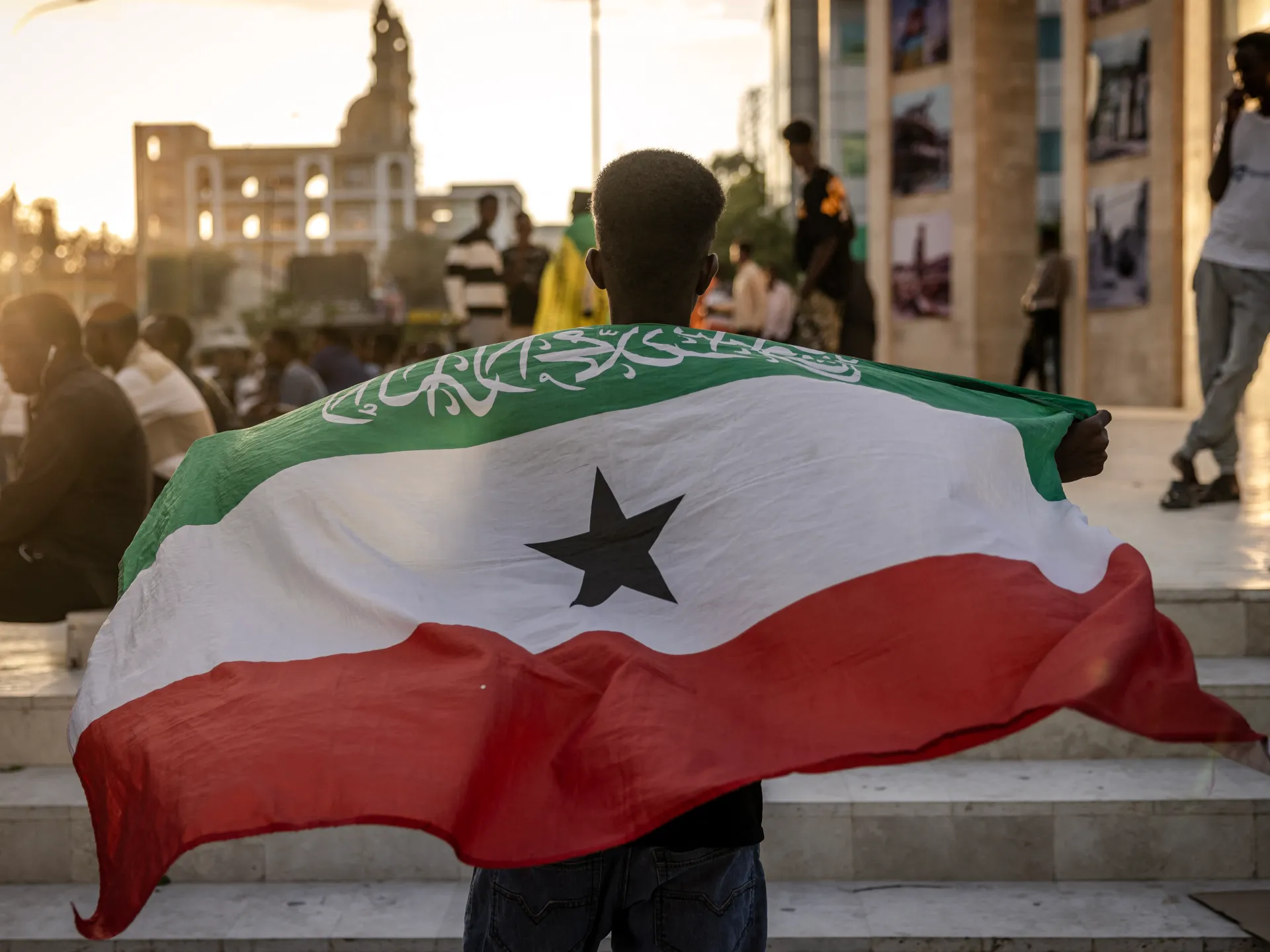
The Arab League, the Gulf Cooperation Council (GCC) and the African Union (AU) have joined numerous countries decrying Israel’s formal recognition of the northern Somali breakaway region of Somaliland as an independent state.
Somaliland, a region in the Horn of Africa, declared independence from Somalia in 1991 and has pushed for international recognition for decades, with President Abdirahman Mohamed Abdullahi making it a top priority since taking office last year.
Recommended Stories
list of 4 itemsend of list
Israel announced on Friday that it viewed Somaliland as an “independent and sovereign state”, becoming the first country to make such a declaration.
The announcement prompted Somalia to call the decision a “deliberate attack” on its sovereignty that would undermine regional peace.
In a statement on Friday, the AU continental bloc rejected Israel’s move and warned that it risked “setting a dangerous precedent with far-reaching implications for peace and stability across the continent”.
The AU Commission chair, Mahmoud Ali Youssouf, said the institution “firmly rejects any initiative or action aimed at recognising Somaliland as an independent entity, recalling that Somaliland remains an integral part of the Federal Republic of Somalia”.
‘Dangerous precedent’
Arab League Secretary-General Ahmed Aboul Gheit called Israel’s action “a clear violation of international law and a flagrant infringement of the principle of the unity and sovereignty of states”.
“Any attempt to impose unilateral recognitions constitutes an unacceptable interference in Somalia’s internal affairs and sets a dangerous precedent that threatens regional and international security and stability,” he warned.
The GCC called the development “a grave violation of the principles of international law and a blatant infringement” of Somalia’s sovereignty.
“This recognition represents a dangerous precedent that will undermine the foundations of stability in the Horn of Africa region and open the door to further tensions and conflicts, contradicting regional and international efforts aimed at strengthening international peace and security in the region,” GCC Secretary-General Jasem Albudaiwi said in a statement.
The European Union said it respected Somalia’s territorial integrity and sovereignty, calling for dialogue between the Somali national government and Somaliland.
The foreign ministers of Somalia, Egypt, Turkiye and Djibouti also condemned Israel’s recognition of Somaliland, saying: “The ministers affirmed their total rejection and condemnation of Israel’s recognition of the Somaliland region, stressing their full support for the unity, sovereignty and territorial integrity of Somalia.”
Egypt’s Ministry of Foreign Affairs made the statement following a phone call between the countries’ top diplomats on Friday.
Somalia demands reversal of recognition
Qatar, Iran, Saudi Arabia, Pakistan and China were among the other countries that condemned Israel’s move.
The Palestinian Authority and Hamas also rejected Israel’s recognition of Somaliland.
On Friday, Somalia demanded Israel reverse its recognition of Somaliland as independent, condemning the move as an act of “aggression that will never be tolerated”.
However, Somaliland leader Abdullahi hailed Israel’s decision as a “historic moment” and said in a post on X that it marked the beginning of a “strategic partnership”.
As world leaders weighed in, Somalia’s al-Qaeda-linked armed group al-Shabab pledged on Saturday to fight any attempt by Israel “to claim or use parts of Somaliland”.
“We will not accept it, and we will fight against it,” the group that has waged a decades-long armed rebellion in the region said in a statement.
United States President Donald Trump also commented on the issue.
Asked by the New York Post newspaper whether Washington planned to also recognise Somaliland, Trump said “no”.
“Does anyone know what Somaliland is, really?” he added on Friday.
Saudi defence minister urges Yemen’s STC to withdraw “peacefully” from seized provinces, Hadramout and al-Mahra.
The Saudi-led coalition in Yemen says it will respond to any separatist military movements that undermine de-escalation efforts in the southern region, as Riyadh doubles down on calls for the group to “peacefully” withdraw from recently seized eastern provinces.
Saudi Arabia’s Defence Minister Khalid bin Salman said on X on Saturday that “it’s time” for troops from the separatist Southern Transitional Council (STC) to “let reason prevail by withdrawing from the two provinces and doing so peacefully”.
Recommended Stories
list of 4 itemsend of list
Brigadier General Turki al-Maliki, the spokesman for the Saudi-led coalition, said “any military movements that violate these [de-escalation] efforts will be dealt with directly and immediately in order to protect civilian lives and ensure the success of restoring calm,” according to the Saudi Press Agency.
Al-Maliki also accused the STC separatists of “serious and horrific human rights violations against civilians”, without providing evidence.
The statements came a day after the STC accused Saudi Arabia of launching air strikes on separatist positions in Yemen’s Hadramout province, and after Washington called for restraint in the rapidly escalating conflict.
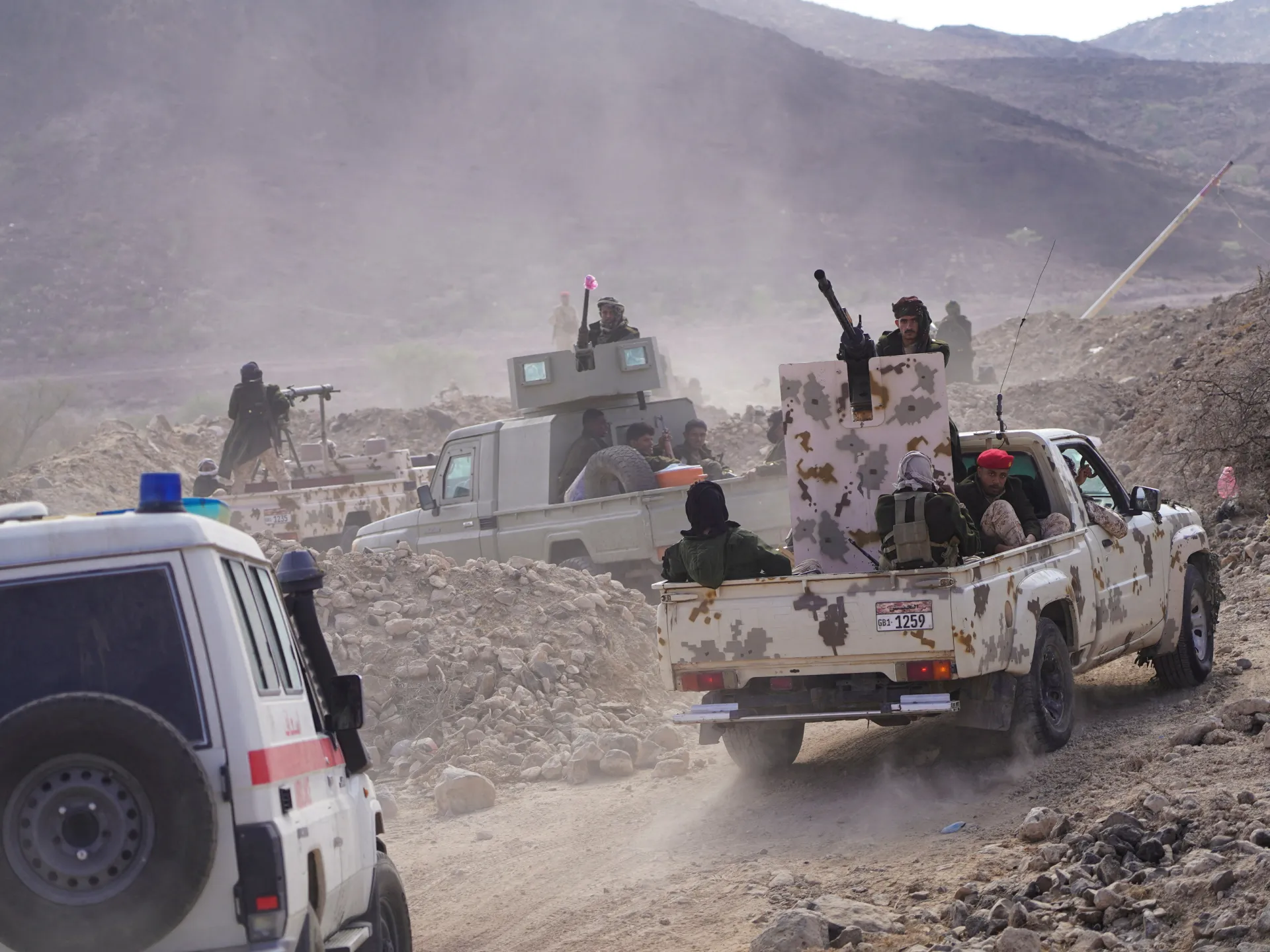
Earlier this month, forces aligned to the STC took over large chunks from the Saudi-backed government in the provinces of Hadramout and al-Mahra. The STC and the government have been allies for years in the fight against the Iran-allied Houthi rebels.
Abdullah al-Alimi, a member of the Yemeni Presidential Leadership Council, the governing body of the internationally recognised government, welcomed the Saudi defence minister’s remarks, considering them to “clearly reflect the kingdom’s steadfast stance and sincere concern for Yemen’s security and stability”, he said on X.
Rashad al-Alimi, the head of the Presidential Leadership Council, said after an emergency meeting late on Friday that STC movements posed “serious violations against civilians”.
The STC, which has previously received military and financial backing from the United Arab Emirates (UAE), is seeking to revive the formerly independent state of South Yemen. The group warned on Friday that they were undeterred after strikes it blamed on Saudi Arabia hit their positions.
Diplomacy, de-escalation?
In Washington, US Secretary of State Marco Rubio said: “We urge restraint and continued diplomacy, with a view to reaching a lasting solution.”
Azerbaijan, meanwhile, said it welcomed efforts led by both Saudi Arabia and the UAE to de-escalate ongoing tensions in Yemen.
Following Friday’s raids, Yemen’s government urged the Saudi-led coalition to support its forces in Hadramout, after separatists seized most of the country’s largest province.
The government asked the coalition to “take all necessary military measures to protect innocent Yemeni civilians in Hadramout province and support the armed forces”, the official Yemeni news agency said.
A Yemeni military official said on Friday that about 15,000 Saudi-backed fighters were amassed near the Saudi border but had not been given orders to advance on separatist-held territory. The areas where they were deployed are at the edges of territory seized in recent weeks by the STC.
Separatist advances have added pressure on ties between Saudi Arabia and the UAE, close allies who support rival groups within Yemen’s government.
On Friday, the UAE welcomed Saudi efforts to support security in Yemen, as the two Gulf allies sought to present a united front.
Yemen’s government is a patchwork of groups that includes the separatists, and is held together by shared opposition to the Houthis.
The Houthis pushed the government out of Yemen’s capital, Sanaa, in 2014, and secured control over most of the north.
Gaza City – Dr Hussam Abu Safia, 52, remains in an Israeli prison a year after Israel detained him without charges or trial.
His family and supporters are demanding his release as his health deteriorates amid reports of the inhumane conditions under which he is being held.
Recommended Stories
list of 3 itemsend of list
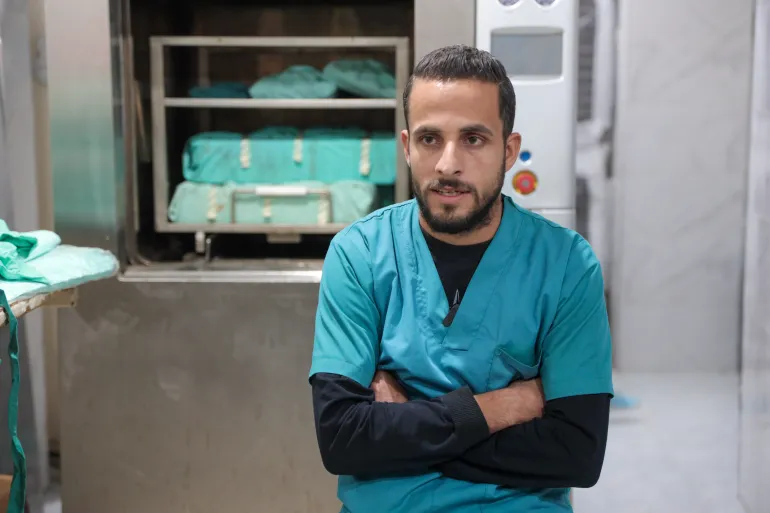
Abu Safia, known for his steadfast presence as director of Kamal Adwan Hospital in Beit Lahiya, north of Gaza City, has become central in international discussions on the protection of medical personnel in armed conflicts.
He insisted on staying at the hospital, along with several medical staff, despite continuous Israeli attacks on the facility.
Israel eventually surrounded the hospital and forced everyone to evacuate. Since then, Abu Safia has been in detention, and the hospital has been out of service.
He was transferred between Israeli prisons, from the notorious Sde Teiman holding facility to Ofer Prison, being mistreated continuously.
No charges have been brought against Abu Safia, who is held under the “unlawful combatant” law, which allows detention without a standard criminal trial and denies detainees access to the evidence against them.
A family’s suffering
Abu Safia is being held in extreme conditions and, according to lawyers, has lost more than a third of his body weight.
His family is worried about him as he also suffers from heart problems, an irregular heartbeat, high blood pressure, skin infections and a lack of specialised medical care.
His eldest son, Ilyas, 27, told Al Jazeera via Zoom from Kazakhstan, where the family fled a month ago, about their grief over Abu Safia’s detention, adding that his father’s only “crime” was being a doctor.
Ilyas, his mother Albina and four siblings stayed with his father at Kamal Adwan through the Israeli attacks, despite opportunities to leave Gaza, especially as Albina is a Kazakh citizen.
On October 26, 2024, Israel killed Ilyas’s brother, Ibrahim, 20, while it shelled the hospital.
“The entire medical staff cried in grief for [my father] and for Ibrahim,” Ilyas said.
The taking of Dr Abu Safia
At dawn on December 27, 2024, the hospital woke up to a tightened Israeli siege with tanks and quadcopter drones.
Israeli tanks had been around Kamal Adwan since mid-October 2024, gradually moving closer – destroying parts of the infrastructure like water tanks – until that day when they were so close nobody could move outside.
Dr Walid al-Badi remained with Abu Safia in Kamal Adwan until they were forced to evacuate [Abdelhakim Abu Riash/ Al Jazeera]
Patients and staff gathered in the emergency reception corridor, according to Dr Walid al-Badi, 29, who stayed with Abu Safia until his arrest, and spoke to Al Jazeera on December 25 at the Baptist Hospital in Gaza City.
“The situation was extremely tense, loudspeakers were calling on everyone to evacuate, but Dr Abu Safia asked us to remain calm. Then the loudspeakers called Dr Abu Safia to come to the tank.”
Abu Safia was ordered to enter an armoured vehicle. According to al-Badi, the doctor returned carrying a sheet of instructions, dishevelled, his clothes dusty and a bruise under his chin.
Everyone rushed to check on him, and he told them that he had been assaulted.
“Israeli media showed a video claiming they … treated him with respect, but they didn’t show … how he was assaulted in the tank, threatened,” al-Badi said.
Abu Safia was ordered by the Israelis to prepare a list of everyone in the hospital, which he did and returned to the armoured vehicle, where he was told that only 20 staff could remain. The rest had to leave.
“Around 10am, the Israelis allowed some ambulances to take patients, wounded people, some displaced civilians, and the doctor’s family to the Indonesian Hospital [about 1km away] while the medical teams left on foot,” al-Badi recounts.
However, several patients remained, besieged along with the medics.
“The doctor told me to go, but I told him I would stay with him until the end.”
The only female medic who remained was intensive care unit head, Dr Mai Barhouma, who spoke to Al Jazeera from the Baptist Hospital.
Barhouma had been working with critical patients dependent on medical equipment and oxygen, and her conscience would not allow her to leave, despite Abu Safia asking her to.
The Israeli army repeatedly summoned Abu Safia for new instructions, once, according to Drs Barhouma and al-Badi, offering a safe exit for him alone.
He refused, insisting that he would stay with his staff. At about 10pm, the quadcopters ordered everyone to line up and evacuate.
During this time, Israel shelled and set fire to the upper floors and turned off the electricity.
“We were heartbroken as Dr Abu Safia led [us] out,” al-Badi recalled. “I hugged Dr Abu Safia, who was crying as he left the hospital he tried so hard to stay in.”
Testimonies from that day say medical staff were taken to al-Fakhoura School in Jabalia, where they were beaten and tortured by Israeli soldiers during interrogations.
Barhouma left in an ambulance with an ICU patient, but the ambulance was held for hours at the school.
Dr Mai Barhouma, who oversaw the ICU at Kamal Adwan Hospital, insisted on staying with Dr Abu Safia until the moment the hospital was evacuated [Abdelhakim Abu Riash/ Al Jazeera]
“The soldiers bound our hands and forced us to walk towards al-Fakhoura school, [2km away] from the hospital. Our colleagues who had left in the morning were still there, being tortured,” al-Badi recalled, adding that they arrived at about midnight.
“They ordered us to strip down to our underwear, tied our hands and began severely beating us with boots and rifle butts, insulting and verbally abusing us.”
The interrogation and beatings of the medics in the freezing cold continued for hours while Barhouma was in the ambulance with the critically ill patient.
“The oxygen ran out, so I started using a manual resuscitation pump. My hands swelled from pumping nonstop, terrified that the patient would die,” she said.
She described hearing the screams of the male medics being tortured, and then being ordered out of the ambulance by Israeli soldiers.
“The soldier asked for my ID and took an eye scan, then ordered me to get out, but I refused and told him I had a critical patient who would die if I left them.”
Eventually, the Israelis released the medics, including al-Badi and Abu Safia, ordering them to head for western Gaza, while sending the ambulance with Barhouma in it on an alternate route westwards.
But the relief didn’t last. They had only walked a few metres when an Israeli officer called out to Abu Safia.
“Our faces froze,” al-Badi said. “The doctor asked what was wrong. The officers said: ‘We want you with us in Israel.’”
Al-Badi and a nurse tried to pull the doctor away, but he rebuked them and told them to keep walking.
“I was crying like a child being separated from his father as I watched the doctor being arrested and dressed in the white nylon uniform for detainees.”
Calls for his release
Abu Safia’s family are appealing to human rights and legal bodies for his immediate release.
“My father’s lawyers visited him around seven times over the past year, [each visit allowed only] after exhausting attempts with the prison administration. Each time, my father’s condition has deteriorated significantly,” Ilyas told Al Jazeera.
Ilyas Abu Safia, Abu Safiya’s eldest son, speaking to Al Jazeera via Zoom from Kazakhstan about the latest updates on his father’s case and detention conditions [Abdelhakim Abu Riash/ Al Jazeera]
“[He] has fractures in his thigh and shrapnel in his foot from an injury while at the hospital before his arrest. He also suffers other health problems and is subjected to severe psychological and physical abuse that does not befit his age.
“Israel is trying to criminalise my father’s work, his continued service to people and his efforts to save the wounded and the sick in an area Israel itself considered a ‘red zone’ at the time.
“My father’s presence and steadfastness inside the hospital posed a major obstacle to the Israeli army and its plan to empty the north of its residents.”
Ilyas is proud of his father.
“My father is a doctor who will be held up worldwide as an example of adherence to medical ethics and courage.
“I am proud beyond words, and I hope to embrace him soon and see him emerge from the darkness of prison safe and well.”
Citizens of the Central African Republic (CAR) will vote on Sunday in highly controversial presidential and legislative elections expected to extend President Faustin-Archange Touadera’s tenure beyond two terms for the first time in the country’s history.
Touadera, who helped put his country on the map when he adopted Bitcoin as one of its legal tenders in 2022, had earlier pushed through a referendum abolishing presidential term limits. That, as well as significant delays that almost upturned the confirmation of two major challengers, has led some opposition groups to boycott the vote, calling it a “sham”.
Recommended Stories
list of 4 itemsend of list
CAR will also hold local elections for the first time in 40 years, after a long period of destabilising political conflict, including an ongoing civil war between the predominantly Muslim Seleka rebel movement and the largely Christian Anti-balaka armed groups, which has led to the displacement of one million people. There are fears that the country’s electoral body is not equipped to handle an election on this scale.
The landlocked nation is sandwiched between several larger neighbours, including Chad to the north and the Democratic Republic of the Congo (DRC) to the south. It has an ethnically and religiously diverse population of about 5.5 million, with French and Sango being the national languages.
Although rich in resources like crude oil, gold and uranium, persistent political instability since independence from France in 1960, and the ongoing civil war (2013-present) have kept CAR one of Africa’s poorest nations. For security, CAR is increasingly reliant on Russian assistance to guard major cities against rebels.
Citizens of CAR are referred to as Central Africans. The country’s largest city and capital is Bangui, named after the Ubangi River, which forms a natural border between CAR and the DRC. The country exports mainly diamonds, timber and gold, but much of the population depends on subsistence agriculture, and economic activity is limited.
Supporters of presidential candidate Faustin-Archange Touadera react during a campaign before Sunday’s second round election against longtime opposition candidate Anicet-Georges Dologuele, in Bangui, Central African Republic, February 12, 2016 [File: Siegfried Modola/Reuters]
Here’s what we know about Sunday’s election:
Who can vote and how does it work?
About 2.3 million Central Africans over the age of 18 are registered to vote for the country’s next president. Of these, 749,000 registrations are new since the previous election in 2020.
They’ll also be voting for national lawmakers, regional and, for the first time in about 40 years, municipal administrators. Average turnout in past years has been about 62 percent, according to the International Foundation for Electoral Systems (IFES). There are about 6,700 polling units across the country.
The National Elections Authority initially planned to hold the municipal government elections at the end of August, but moved the polls to December at the last minute, blaming insufficient funds as well as technical and organisational challenges. The decision has added to concerns among election observers and opposition politicians about how prepared the electoral body is.
Campaigning began on December 13, but opposition groups claim that delays in including Touadera’s biggest challengers in the process have favoured the president’s rallies.
The presidential candidate with an absolute majority is declared the winner, but if there is no outright winner in the first round, a second run-off vote will determine the victor.
Although presidents were previously limited to two, five-year terms, a controversial 2023 referendum introduced a new constitution which removed term limits and increased each term to seven years.
Who is running for president?
The country’s constitutional court approved Touadera’s candidacy alongside prominent opposition leader Anicet-Georges Dologuele, ex-Prime Minister Henri-Marie Dondra, and five others.
However, delays in approving the two major opponents and concerns around the readiness of the electoral body have led an opposition coalition, the Republican Bloc for the Defence of the Constitution (BRDC), to boycott the election. The group has, therefore, not presented a candidate.
Here is what we know about the candidates who are standing:
Faustin-Archange Touadera
Touadera, 68, is a mathematician and former vice chancellor of the University of Bangui. He is running under the ruling United Hearts Movement (MCU).
He served as the country’s prime minister from 2013 to 2015 under President Francois Bozize. He was elected as president in 2016 and again in 2020, although opposition groups contested the vote.
Touadera, who is the favourite to win in these polls, has campaigned on promises of peace, security and new infrastructural development in the country.
After 10 years in office, the president’s legacy is mixed. His administration has been dogged by accusations of suppressing the opposition and rigging elections.
Indeed, Touadera would not be eligible to run had he not forced the 2023 referendum through. He sacked a chief judge of the constitutional court in October 2022, after she ruled that his referendum project was illegal.
Opposition members boycotted the referendum, but that only gave the Touadera camp more “yes” votes. Although a civil society group launched a legal challenge against his candidacy before the polls, the constitutional court threw out the suit.
Russian President Vladimir Putin and Central African Republic’s President Faustin-Archange Touadera shake hands as they meet in Moscow, Russia, January 16, 2025 [File: Evgenia Novozhenina/Reuters]
Touadera is credited with spearheading some economic development, compared with his predecessors. New roads and highways have been built where there were previously none, but the World Bank still ranks CAR’s economy as “stagnant”.
Touadera has also been praised for achieving relative stability in the conflict-affected country where armed groups hold swaths of territory, especially in the areas bordering Sudan.
Support from a United Nations peacekeeping force, Rwandan troops and Russian Wagner mercenaries has helped to reduce violence in recent years.
CAR was the first country to invite the Russian mercenary group to the continent in 2018 in a security-for-minerals deal, before other countries, including Mali, Burkina Faso, and Niger, also secured security contracts.
CAR was historically closer to former colonial power France, but Paris suspended its military alliances and reduced aid budgets to the country in 2021 following the Russia cooperation.
At a meeting with Russian President Vladimir Putin in 2023, Touadera praised Russia for saving CAR’s democracy. The two met again in January 2025.
In advance of the elections, Touadera has also signed a series of peace accords with some armed groups active in the country, although there are fears that the agreements will only hold until after the polls.
The president launched Bitcoin as a legal tender in 2022, making CAR the second country to do so after El Salvador. The idea drew scepticism, as less than 10 percent of Central Africans can access the internet, and was ultimately abandoned after a year.
In February 2025, CAR launched the $CAR meme coin, which the government said is an experiment.
This week, Touadera’s government signed a new contract with Elon Musk’s Starlink to expand internet services to rural and remote regions.
Henri-Marie Dondra
The 59-year-old is a career banker and former finance minister. He is running under his Republican Unity party (UNIR), which has positioned itself as a reformist party and is not part of the opposition coalition. He served as prime minister under Touadera between 2021 and 2022 but was fired, likely because of his strong pro-France tendencies at a time when the administration was turning towards Russia, according to reporting by French radio, RFI.
Dondra’s candidacy was not approved until November 14, after Touadera accused him of holding Congolese citizenship, which he denied. The accusations raised fears that he would be barred from the vote. Two of his brothers were reportedly arrested and detained without charge before the vote, Dondra told Human Rights Watch in late November.
A campaign billboard of presidential candidate Anicet-Georges Dologuele, of the Union for Central African Renewal (URCA), stands before the presidential election scheduled for December 28, in Bangui, Central African Republic, December 24, 2025 [Leger Serge Kokpakpa/Reuters]
Anicet-Georges Dologuele
The main opposition leader of the Union for Central African Renewal (URCA) party broke from the boycotting opposition coalition in order to run in these elections. Dologuele’s candidacy has prompted what some analysts say are xenophobic statements from Touadera’s supporters.
The 68-year-old dual citizen French-CAR politician first ran for the top job back in 2015 and was the runner-up in the 2020 presidential race. His third bid has faced challenges over his citizenship status. The 2023 referendum limited candidates to CAR citizenship only, and derisive comments from some in the governing camp have suggested some opposition candidates are not “real Central Africans”.
In September, Dologuele said he had given up his French citizenship; however, in October, a Central African court stripped him of his CAR citizenship, citing a clause in the old constitution disallowing dual citizenship. Dologuele reported the issue as a violation of his human rights to the UN human rights agency. It’s unclear what, if any, action the agency took, but Dologuele’s name on the final candidates list suggests his citizenship was reinstated.
Dologuele served as prime minister in the 1990s, under President Ange-Felix Patasse, before joining the Bank of Central African States and later heading the Development Bank of Central African States.
Although he is seen by some as an experienced hand, others associate him with past government failures. Dologuele is promising stronger democratic institutions and better international alliances.
Other notable candidates
Aristide Briand Reboas – leader of the Christian Democratic Party, the 46-year-old was a former intelligence official and the sports minister until 2024. He is running on promises of better amenities, including electricity and water. He previously ran in 2020.
Serge Djorie – a former government spokesperson until 2024, the 49-year-old is running under his Collective for Political Change for the new Central African Republic party. The medical doctor and published researcher has campaigned on public health reforms, poverty reduction and more pan-Africanism. Djorie ran in the 2020 elections.
Eddy Symphorien Kparekouti – The civil engineer helped draft the new constitution that was controversially adopted in 2023. In his campaigns, the independent candidate has emphasised poverty reduction in order to solve political insecurity and other developmental challenges.
What are the key issues for this election?
Armed groups
Protracted political conflict in CAR has continued for more than a decade, with many Central Africans saying they want a leadership that can bring peace.
Trouble began following a coup in March 2013 by the mainly Muslim Seleka rebel alliance that overthrew President Francois Bozize. In retaliation, Bozize assembled Christian and animist rebel armed groups, known as the Anti-balaka. Both sides attacked civilians and have been accused of war crimes by rights groups. Bozize, who continues to lead a rebel coalition, is now in exile in Guinea-Bissau. His attempted attacks in 2020 were fended off by Touadera’s Russian mercenaries.
However, killings, kidnappings and displacement continue in many rural communities in the country’s northwest, northeast and southeast regions, despite recent peace deals signed with some groups. Russian mercenaries have proven pivotal in securing major areas, but are also accused of human rights violations, such as mass killings, while opposition politicians have criticised the reliance on foreign fighters.
A 17,000-strong UN peacekeeping force, MINUSCA, has been extended until November 2026, although the move faced resistance from the US, which wants CAR to handle its own security going forward. The force has suffered at least three deaths in deadly attacks this year alone. There are also fears about the security of voters in rural areas; about 800 voting units were forced to close in the last elections due to rebel violence.
Poverty
CAR remains one of the poorest nations in the world, with more than 60 percent of the population living in poverty, according to the World Bank.
Most people live in rural areas and survive on subsistence farming in the absence of any state-propelled industry.
Economic growth rate is slow, averaging 1.5 percent yearly. Only 16 percent of citizens have access to electricity, and only 7.5 percent have access to the internet.
Persistent fuel shortages make economic activity more difficult.
The country ranked 191st of 193 countries in the 2022 Human Development Index.
Divisive politics
The country’s turbulent political history and the present landscape of deeply divided political groups have failed to deliver a unified opposition coalition that can challenge Touadera and enshrine a functioning democracy.
Fears around whether Touadera intends to run for life following the 2023 referendum are high, with opposition and rights groups already calling for reforms to the new constitution. There are also fears around vote rigging in the elections in favour of Touadera’s governing party.
Ukrainian president highlights ‘significant progress’ in talks, but Moscow says Kyiv is working to ‘torpedo’ deal.
Published On 26 Dec 202526 Dec 2025
Share
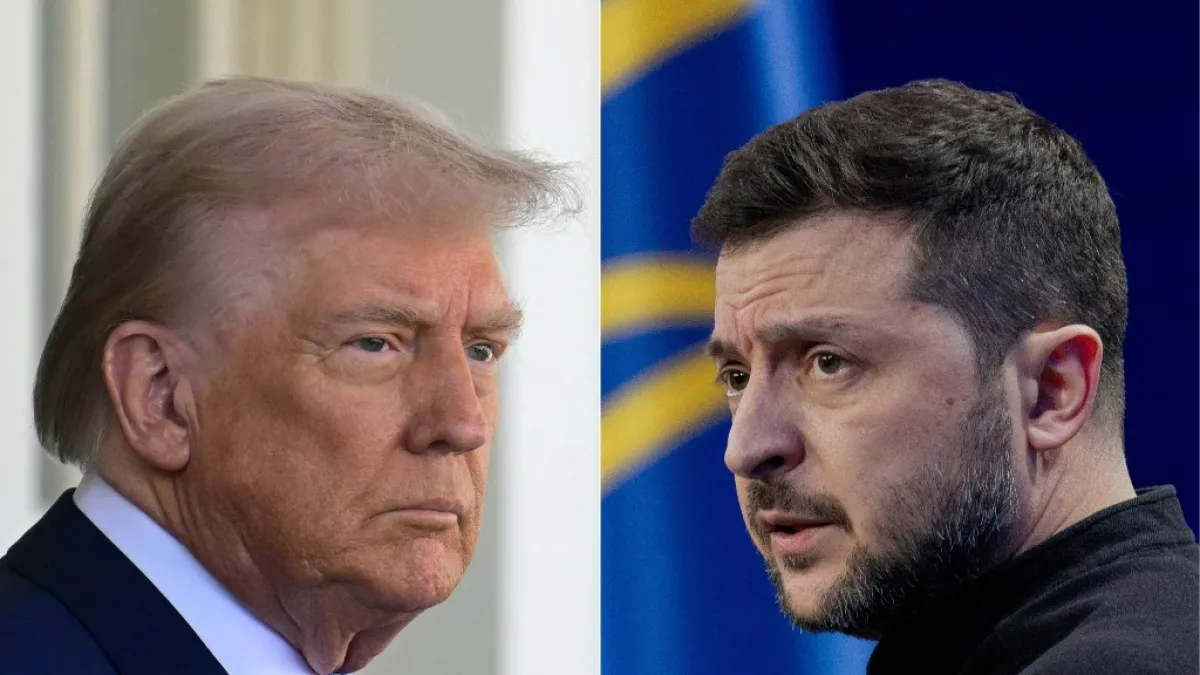
Ukrainian President Volodymyr Zelenskyy is to meet with his United States counterpart, Donald Trump, in Florida on Sunday to discuss territorial disputes that continue to block progress towards ending Russia’s war on Ukraine.
Announcing the meeting on Friday, Zelenskyy said the talks could be decisive as Washington intensifies its efforts to broker an end to Europe’s deadliest conflict since World War II. “A lot can be decided before the New Year,” Zelenskyy said.
Recommended Stories
list of 3 itemsend of list
Territory remains the most contentious issue in the negotiations. Zelenskyy confirmed he would raise the status of eastern Ukraine and the Zaporizhzhia Nuclear Power Plant, which has been under Russian control since the early months of Russia’s invasion.
“As for the sensitive issues, we will discuss both Donbas and the Zaporizhzhia Nuclear Power Plant. We will certainly discuss other issues as well,” he told reporters in a WhatsApp chat.
Moscow has demanded that Kyiv withdraw from parts of the Donetsk region still under Ukrainian control as it pushes for full authority over the wider Donbas area, which includes Donetsk and Luhansk. Ukraine has rejected that demand, instead calling for an immediate halt to hostilities along the existing front lines.
Territorial concessions
In an attempt to bridge the divide, the US has floated the idea of establishing a free economic zone should Ukraine relinquish control of the contested area although details of how such a plan would operate remain unclear.
Zelenskyy reiterated that any territorial concessions would require public approval. He said decisions on land must be made by Ukrainians themselves, potentially through a referendum.
Beyond territory, Zelenskyy said his meeting with Trump would focus on refining draft agreements, including economic arrangements and security guarantees. He said a security pact with Washington was nearly finalised while a 20-point peace framework was close to completion.
Ukraine has sought binding guarantees after previous international commitments failed to prevent Russia’s invasion, which began in February 2022.
Trump has previously voiced impatience with the pace of negotiations, but he has indicated he would engage directly if talks reached a meaningful stage.
Last week, US Secretary of State Marco Rubio said his country is the only mediator that can speak to both sides to secure a peace agreement. At the same time, he downplayed the importance of the conflict for Washington.
“It’s not our war. It’s a war on another continent,” he said.
Zelenskyy said European leaders could join Sunday’s discussions remotely and confirmed he had already briefed Finnish President Alexander Stubb on what he described as “significant progress”.
Despite Zelenskyy’s assertion, Russian Deputy Foreign Minister Sergey Ryabkov accused Ukraine of working to “torpedo” the peace talks, saying a revised version of the US peace plan promoted by Kyiv was “radically different” from an earlier version negotiated with Washington.
“Our ability to make the final push and reach an agreement will depend on our own work and the political will of the other party,” he said during a television interview on Friday.
Ryabkov said any agreement must remain within the parameters set out between Trump and Russian President Vladimir Putin during a summit in August, which Ukraine and European partners have criticised as overly conciliatory towards Russia’s war aims.
On the ground, Moscow has intensified strikes on Ukraine’s energy infrastructure and the southern port city of Odesa while an attack on Kharkiv on Friday killed two people.
Attack comes a day after an Israeli army reservist in civilian clothes rammed his vehicle into a Palestinian man praying on the roadside.
Published On 26 Dec 202526 Dec 2025
Share
Two people have died in a stabbing and car-ramming attack in northern Israel, officials say.
Israeli police and emergency workers said a Palestinian from the Israeli-occupied West Bank attacked and killed a man and a woman on Friday before he was shot and wounded.
Recommended Stories
list of 3 itemsend of list
The attack came a day after an Israeli military reservist dressed in civilian clothes rammed his vehicle into a Palestinian man who was praying on a roadside in the West Bank after earlier firing shots in the area.
“Footage was received of an armed individual running over a Palestinian individual,” the Israeli military said in a statement about Thursday’s attack, adding that the Israeli reservist’s military service had been terminated. The Palestinian man went to hospital for checks after the attack before returning home.
In Friday’s incident, Israeli police said the attacker first crashed his vehicle into people in the northern city of Beit Shean, killing a 68-year-old man, and then sped onto a highway.
Later, he fatally stabbed a 20-year-old woman near the highway, “and the suspect was ultimately engaged with gunfire near Maonot Junction in Afula following intervention by a civilian bystander,” police said, adding that the attacker was taken to a hospital.
Both the victims were pronounced dead at the scene by paramedics, Israel’s rescue services said. A teenage boy was hospitalised with minor wounds sustained in the car-ramming, according to bystanders.
The Israeli military said the attacker had “infiltrated into Israeli territory several days ago”.
Since Israel’s genocidal war in Gaza began in October 2023, tens of thousands of Palestinians have been killed there.
At the same time, Israeli settlers have escalated violence in the West Bank, seizing Palestinian land and harassing civilians while Israeli forces conduct regular raids and arrests.
More than 1,000 Palestinians have been killed in the West Bank since October 7, 2023, mostly in operations by security forces and some by settler violence, according to the United Nations.
In the same period, 57 Israelis have been killed in Palestinian attacks.
After Friday’s incident, Israeli Defence Minister Israel Katz said he had instructed the military to respond forcefully in the West Bank town of Qabatiya, where he said the assailant came from.
The Israeli military said it was “preparing for an operation” in the area.
Tensions are flaring along the Tajikistan-Afghanistan border in Central Asia with the Tajik government reporting multiple armed incursions this month, straining its fragile relationship with Afghanistan’s Taliban leaders.
More than a dozen people have been killed in attacks by men whom Tajik authorities call “terrorists” and the resulting clashes with Tajik forces, officials in Dushanbe and Beijing said. Victims include Chinese nationals working in remote areas of the mountainous former Soviet republic.
In the latest fighting this week, at least five people were killed in Tajikistan‘s Shamsiddin Shokhin district, including “three terrorists”, officials said.
Tajikistan has long opposed the rise of the Taliban in Afghanistan, a country it shares a largely unsecured 1,340km (830-mile) border with.
Despite cautious diplomatic engagement between the two countries to adjust to new regional realities, analysts said, the frequency of the recent border clashes risks eroding the Taliban’s credibility and raises questions about its capacity to enforce order and security.
Here is all we know about the clashes along the Tajik-Afghan border and why they matter:
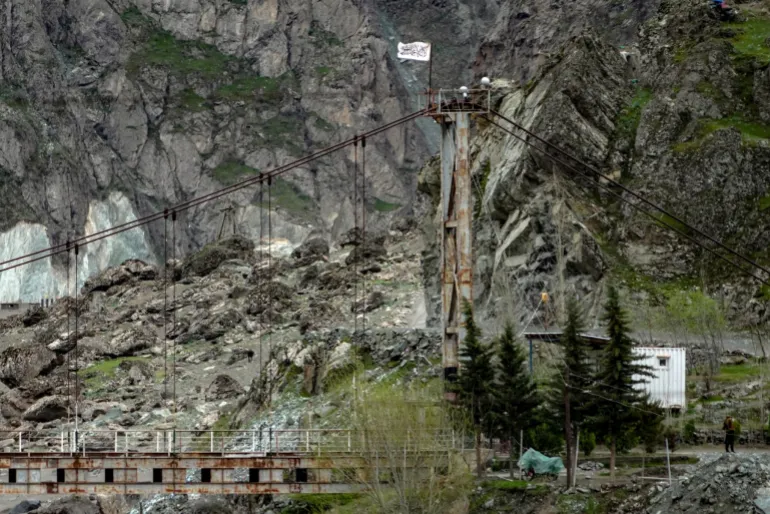
A Taliban flag flies on top of a bridge across the Panj river on the Afghan-Tajik border as seen from Tajikistan’s Darvoz district [File: Amir Isaev/AFP]
What’s happening on the Tajik-Afghan border?
The border runs along the Panj river through the remote, mountainous terrain of southern Tajikistan and northeastern Afghanistan.
On Thursday, Tajikistan’s State Committee for National Security said in a statement that “three members of a terrorist organisation” crossed into Tajik territory on Tuesday. The committee added that the men were located the following morning and exchanged fire with Tajik border guards. Five people, including the three intruders, were killed, it said.
Tajik officials did not name the armed men or specify which group they belonged to. The officials, however, said they seized three M-16 rifles, a Kalashnikov assault rifle, three foreign-made pistols with silencers, 10 hand grenades, a night-vision scope and explosives at the scene.
Dushanbe said this was the third attack originating from Afghanistan’s Badakhshan province in the past month that has resulted in the deaths of its personnel.
These attacks, Tajik officials said on Thursday, “prove that the Taliban government is demonstrating serious and repeated irresponsibility and non-commitment in fulfilling its international obligations and consistent promises to ensure security … and to combat members of terrorist organisations”.
The Tajik statement called on the Taliban to “apologise to the people of Tajikistan and take effective measures to ensure security along the shared border”.
Tajikistan has not suggested what the motive for the attacks may be, but the assaults have appeared to target Chinese companies and nationals working in the area.
Workers of Talco Gold, a joint Tajik-Chinese mining firm, speak in front of a poster of Chinese President Xi Jinping and Tajik President Emomali Rahmon at the Saritag antimony mine in western Tajikistan [File: AFP]
How is China involved in all this?
Beijing is Tajikistan’s largest creditor and one of its most influential economic partners with a significant footprint in infrastructure, mining and other border-region projects.
China and Tajikistan also share a 477km (296-mile) border running through the high-altitude Pamir Mountains in eastern Tajikistan, adjacent to China’s Xinjiang region.
Two attacks were launched against Chinese companies and nationals in the last week of November. On November 26, a drone equipped with an explosive device attacked a compound belonging to Shohin SM, a private Chinese gold-mining company, in the remote Khatlon region on the Tajik-Afghan border, killing three Chinese citizens.
In a second attack on November 30, a group of men armed with guns opened fire on workers employed by the state-owned China Road and Bridge Corporation, killing at least two people in Tajikistan’s Darvoz district.
Tajik officials said those attacks had originated from villages in Afghanistan’s Badakhshan province but did not disclose any affiliation or motive behind the attacks.
Chinese nationals have also come under attack in Pakistan’s Balochistan province and along the Afghanistan-Pakistan border.
China’s embassy in Dushanbe advised Chinese companies and personnel to evacuate the border area. Chinese officials demanded “that Tajikistan take all necessary measures to ensure the safety of Chinese enterprises and citizens in Tajikistan”.
Who is carrying out these attacks?
While the attackers have not been identified, analysts and observers believe the attacks carry the hallmarks of the ISIL (ISIS) affiliate in Khorasan Province (ISKP), which, they said, aims to discredit Afghanistan’s Taliban leaders.
“The ISKP has attacked foreigners inside Afghanistan and carried out attacks on foreigners inside Afghanistan as a key pillar of their strategy,” said Ibraheem Bahiss, a Kabul-based analyst at the International Crisis Group think tank.
“The aim is to shatter the Taliban’s image as a security provider with whom the regional governments should engage,” Bahiss told Al Jazeera.
Taliban members participate in a rally to mark the third anniversary of the Taliban’s seizure of Kabul in the Afghan capital on August 14, 2024. [Sayed Hassib/Reuters]
How has the Taliban reacted to these attacks?
Kabul expressed its “deep sorrow” over the killings of Chinese workers on November 28.
The Taliban blamed the violence on an unnamed armed group which, it said, is “striving to create chaos and instability in the region and to sow distrust among countries”, and it assured Tajikistan of its full cooperation.
After this week’s clashes, Sirajuddin Haqqani, the Taliban’s interior minister, said Kabul remains committed to the 2020 Doha Agreement, its deal with the United States for a phased foreign troop withdrawal from Afghanistan in exchange for Taliban commitments to prevent Afghanistan from being used as a base for attacking other countries.
Addressing a police cadet graduation ceremony at the National Police Academy in Kabul on Thursday, Haqqani said Afghanistan posed no threat to other countries and the door to dialogue remains open.
“We want to address problems, distrust or misunderstandings through dialogue. We have passed the test of confrontation. We may be weak in resources, but our faith and will are strong,” he said, adding that security had improved to the extent that Taliban officials now travel across the country without weapons.
The Taliban insists that no “terrorist groups” are operating from Afghanistan. However, in a recent report, the United Nations sanctions-monitoring committee cited the presence of multiple armed groups, including ISKP, Tehreek-e-Taliban Pakistan, al-Qaeda, the Turkistan Islamic Party, Jamaat Ansarullah and Ittehad-ul-Mujahideen Pakistan.
Jamaat Ansarullah is a Tajik group linked to al-Qaeda-aligned networks and active primarily in northern Afghanistan near the Tajik border.
Afghans travel along a border road as seen from Tajikistan’s Darvoz district [File: Amir Isaev/AFP]
How are relations between Tajikistan and the Taliban?
For decades, the relationship between Tajikistan and the Taliban has been defined by deep ideological hostility and ethnic mistrust with Dushanbe one of the group’s fiercest critics in Central Asia.
In the 1990s, Tajikistan aligned with the anti-Taliban Northern Alliance, led by Afghan military commander and former Defence Minister Ahmad Shah Massoud.
After the Taliban’s return to power in Afghanistan in August 2021, Tajikistan stood as the lone holdout among its neighbours in refusing to officially recognise the new government.
However, pragmatic diplomatic engagement quietly began about 2023, driven by economic necessity and shared security fears over the presence of ISKP. Stepping up the restoration of relations, a high-level Tajik delegation visited Kabul in November, the first such visit since the Taliban’s return to power.
But the two governments continue to trade accusations that the other is harbouring “terrorists”, the major thorn remaining in their bilateral relationship, and that drug smuggling is occurring across their border.
The Tajik-Afghan border has long been a major trafficking route for Afghan heroin and methamphetamine into Central Asia and onwards to Russia and Europe, exploiting the area’s rugged terrain and weak policing.
“The rising frequency [of the clashes] is new and interesting and raises a point: whether we might be seeing a new threat emerging,” Bahiss said.
Badakshan province, from which Tajik authorities said the attacks on Chinese nationals originate, presents a complex security situation for the Taliban as it has struggled to stem the threat from armed opposition groups, Bahiss added.
This security issue has been further complicated by the Taliban’s crackdown on poppy cultivation in the province, he said. The Taliban has faced resistance to this policy from farmers in the north. This is largely because the terrain of Badakshan means poppies are the only viable cash crop.
Afghanistan’s Taliban Foreign Minister Amir Khan Muttaqi called his Tajik counterpart early this month to express regret about the attacks on Chinese nationals and say his government was prepared to boost cooperation between their border forces [Anushree Fadnavis/Reuters]
How is the Taliban faring with other neighbours?
Since the Taliban retook control of Afghanistan in 2021, some of its neighbours have maintained a pragmatic transactional relationship while others have not.
Relations with Pakistan, previously its patron, have particularly deteriorated. Islamabad accuses Kabul of harbouring fighters of Tehrik-i-Taliban Pakistan, also known as the Pakistan Taliban. Tensions over this issue boiled over in November when Pakistan launched air strikes in Kabul, Khost and other provinces, prompting retaliatory Taliban attacks on border posts.
Dozens of people were killed before a ceasefire was brokered by Qatar and Turkiye. However, both sides have engaged in fighting since, blaming each other for breaking the fragile truce.
The Taliban denies Islamabad’s allegations and has blamed Pakistan for its “own security failures”.
Meanwhile, the Taliban is now invested in developing a new relationship with Pakistan’s archrival, India, with delegations visiting Indian cities for trade and security discussions. New Delhi was earlier part of the anti-Taliban alliance. However, that approach has changed with the deteriorating ties between Pakistan and the Taliban.
Breakaway region achieves diplomatic breakthrough after more than 30 years without international recognition
Published On 26 Dec 202526 Dec 2025
Share
Israel has become the first nation in the world to formally recognise Somaliland, ending the breakaway region’s three-decade quest for international legitimacy.
Foreign Minister Gideon Saar announced on Friday that Israel and the Republic of Somaliland had signed an agreement establishing full diplomatic relations, including the appointment of ambassadors and the opening of embassies in both countries.
The historic accord marks a significant breakthrough for Somaliland, which declared independence from Somalia in 1991 but has failed to gain recognition from any United Nations member state.
Somaliland controls the northwestern of the former British Protectorate on what is today northern Somalia.
Israeli Prime Minister Benjamin Netanyahu described the new friendship as “seminal and historic” in a video call with Somaliland President Abdirahman Mohamed Abdullahi, inviting him to visit Israel and calling it a “great opportunity to expand their partnership.”
Saar said the agreement followed a year of extensive dialogue between the two governments and was based on a joint decision by Netanyahu and Abdullahi.
“We will work together to promote the relations between our countries and nations, regional stability and economic prosperity,” Saar wrote on social media, adding that he had instructed his ministry to immediately institutionalise ties across a wide range of fields.
Beijing urged the US to cease ‘dangerous’ efforts to arm the island, which it claims as its own.
Published On 26 Dec 202526 Dec 2025
Share
China has sanctioned a group of United States defence companies and senior executives over weapons sales to Taiwan, the latest move against Washington’s support for the self-governed island that Beijing claims as its own.
China’s Ministry of Foreign Affairs announced the measures on Friday, targeting 20 US defence firms and 10 individuals. It said the sanctions are retaliation for the US’s newly announced $11.1bn weapons package for Taiwan, one of its largest ever for the territory.
Recommended Stories
list of 3 itemsend of list
“Any provocative actions that cross the line on the Taiwan issue will be met with a strong response from China,” said a statement from the ministry, urging the US to cease “dangerous” efforts to arm the island.
The sanctioned companies include Boeing’s St Louis branch, Northrop Grumman Systems Corporation, L3Harris Maritime Services and Lazarus AI.
The measures freeze these companies’ assets in China and bar domestic organisations and individuals from working with them, according to the ministry. They also seize the China-held assets of sanctioned individuals and ban them from entering China.
Targeted individuals include the founder of defence firm Anduril Industries and nine senior executives from the sanctioned firms. The measures take effect on December 26.
The US is bound by law to provide Taiwan, which rejects Beijing’s claim to the territory, with the means to defend itself. But US arms sales to the island have deepened tensions with China.
The latest US weapons deal with Taiwan, announced by President Donald Trump on December 17, includes the proposed sale of 82 High Mobility Artillery Rocket Systems, or HIMARS, and 420 Army Tactical Missile Systems, or ATACMS – worth more than $4bn.
The defence systems are similar to what the US had been providing Ukraine to defend against Russian aerial attacks.
The deal also includes 60 self-propelled howitzer artillery systems and related equipment worth more than $4bn and drones valued at more than $1bn.
Taiwan’s Ministry of National Defence praised the US for assisting Taiwan “in maintaining sufficient self-defence capabilities and in rapidly building strong deterrent power”.
Syrian state media says security forces have imposed a cordon around the area and are investigating.
Published On 26 Dec 202526 Dec 2025
Share
At least six people have been killed and more than 20 were injured when an explosion struck a mosque in Syria’s Homs province.
The attack targeted the Imam Ali bin Abi Talib Mosque in the Wadi al-Dahab neighbourhood of Homs shortly after Friday prayers, the Syrian Arab News Agency (SANA) reported.
Recommended Stories
list of 3 itemsend of list
Footage verified by Al Jazeera showed people fleeing the mosque in panic, placing some victims on stretchers and carrying others, wrapped in cloaks, to ambulances.
The blast appeared to have taken place in the corner of the mosque’s main prayer hall, leaving a small crater in the wall and scorching the surrounding area, with prayer carpets ripped and strewn with debris, and books and fragments scattered across the floor.
Local officials told the Reuters news agency the blast may have been caused by a suicide bomber or explosives placed there.
State media said security forces had imposed a cordon around the area and were investigating.
Ayman Oghanna, Al Jazeera’s correspondent in Aleppo, noted that Homs is home to a diverse population of Alawites, Christians and Sunni Muslims. He said the attack targeted an Alawite mosque, warning it could “inflame sectarian tensions” across the country.
He said no group had claimed responsibility for the strike, but noted a recent surge in ISIL (ISIS) activity in Syria. He added that government forces had carried out an operation near Aleppo, arresting three alleged ISIL members.
Last week, the United States bombed ISIL positions in Syria in retaliation for the killings of two US soldiers and a civilian interpreter. Damascus also joined a global anti-ISIL alliance in November, pledging to crush the remaining elements of the group.
Friday’s attack underscores the country’s fragile security situation, as the new authorities in Damascus struggle to assert control.
Ramallah, occupied West Bank – The Palestinian economy is undergoing a severe downturn, driven by Israel’s continued assault on Gaza, intensified restrictions on movement and trade in the occupied West Bank, and a sharp decline in both domestic and external financial resources.
As the Palestinian government struggles to manage an escalating fiscal crisis, official data and expert assessments warn that the economy is approaching a critical threshold – one that threatens the continuity of state institutions and their ability to meet even basic obligations.
Recommended Stories
list of 3 itemsend of list
A joint report by the Palestinian Central Bureau of Statistics (PCBS) and the Palestine Monetary Authority (PMA), published in the Palestinian Economic Monitor for 2025, found that the economy remained mired in deep recession throughout the year.
According to the report, gross domestic product (GDP) in Gaza contracted by 84 percent in 2025 compared with 2023, while GDP in the occupied West Bank declined by 13 percent over the period. Overall GDP levels remain far below their pre-war baseline, underscoring the fragility of any potential recovery and the economy’s inability to regain productive capacity under current conditions.
The report documented a near-total collapse of economic activity in Gaza, alongside sharp contractions across most sectors in the West Bank, despite a modest improvement compared with 2024. It also recorded a decline in trade volumes to and from Palestine compared with 2023, while unemployment in Gaza exceeded 77 percent during 2025.
Palestinian Economy Minister Mohammed al-Amour visits the Bethlehem Industrial Zone to assess the state of Palestinian industries, December 10, 2025 [Handout/Palestinian Ministry of National Economy]
Withheld revenues and mounting debt
Palestinian Economy Minister Mohammed al-Amour said Israeli authorities are withholding approximately $4.5bn in Palestinian clearance revenues, describing the move as a form of “collective punishment” that has severely undermined the Palestinian Authority’s (PA’s) ability to function.
“The total accumulated public debt reached $14.6bn by the end of November 2025, representing 106 percent of the 2024 gross domestic product,” al-Amour told Al Jazeera.
The minister said the debt includes $4.5bn owed to the International Monetary Fund, $3.4bn to the Palestinian banking sector, $2.5bn in salary arrears to public employees, $1.6bn owed to the private sector, $1.4bn in external debt, and $1.2bn in other financial obligations.
“These pressures have had a direct impact on the overall performance of the public budget,” al-Amour said, contributing to a widening deficit and sharply reduced capacity to cover operational spending and essential commitments.
All of that has led al-Amour to conclude that the Palestinian economy is undergoing “its most difficult period” since the establishment of the PA in 1994.
Official estimates show GDP contracted by 29 percent in the second quarter of 2025, compared with 2023, while GDP per capita fell by 32 percent over the period. These figures align with a recent report by the United Nations Conference on Trade and Development (UNCTAD), which concluded that the Palestinian economy has regressed to levels last seen 22 years ago.
In response, al-Amour said the government was implementing an “urgent package of measures”.
“The government is rolling out a series of actions that include strengthening the social protection system, supporting citizens’ resilience in Area C [of the West Bank], and backing small and medium-sized enterprises and productive sectors, particularly industry and agriculture,” al-Amour said.
Official data show a sharp drop across nearly all economic activities. Construction contracted by 41 percent, while both industry and agriculture declined by 29 percent each. Wholesale and retail trade fell by 24 percent.
The tourism sector has been among the hardest hit. Following the start of Israel’s genocidal war on Gaza in October 2023, the Ministry of Tourism reported daily losses exceeding $2m, as inbound tourism nearly collapsed. By the end of 2024, cumulative losses were estimated at approximately $1bn.
The Palestinian Economic Policy Research Institute (MAS), citing PCBS data, reported an 84.2 percent drop in hotel occupancy in the West Bank during the first half of 2024 compared with the same period a year earlier. Losses in accommodation and food services alone amounted to roughly $326m.
Despite the downturn, al-Amour said the Ministry of Economy is focusing on sustaining the private sector, substituting Israeli imports across seven key sectors, developing the digital and green economies, and improving the business environment. He noted that about 2,500 new companies continue to be registered each year.
Tourism collapsing
Samir Hazbun, a lecturer at al-Quds University and board member of the Palestinian Federation of Chambers of Commerce and Industry, said repeated crises have hollowed out the economy.
“Over the past five years, all economic sectors have entered successive crises, starting with the COVID-19 pandemic and followed by the war on Gaza,” Hazbun said. “Tourism, one of the most important sectors, has been especially affected, exhausting the local economy and weakening its ability to recover.”
Hazbun said preliminary estimates indicate tourism has suffered direct losses exceeding $1bn, alongside extensive indirect losses resulting from the paralysis of hotels, souvenir shops, travel agencies, tour guides and street vendors.
He added that hotel investments alone are estimated at $550m, with no financial returns for owners, forcing many workers out of the sector due to the absence of job security and safety nets.
Economic expert Haitham Daraghmeh described Palestinian debt as “accumulated debt that increases monthly”, owed to banks, suppliers, contractors, and the telecommunications and health sectors.
“The withholding of clearance revenues is no longer a temporary financial crisis; it has become a factor of complete economic paralysis,” he said.
With external aid frozen and domestic revenues at historic lows, Daraghmeh warned that the government was “no longer able to cover salaries or operational costs”.
“The government is operating like an ATM, with no real capacity for investment or economic stimulus,” Daraghmeh added.
Economic warnings
Daraghmeh said World Bank reports warn that continued failure to pay salaries and meet obligations could trigger comprehensive economic collapse. While some countries, including France and Saudi Arabia, have pledged support, he said none of that assistance has materialised.
He outlined three possible scenarios; the most likely is a continued gradual decline, driven by ongoing revenue withholding and shrinking resources. The second involves international intervention to prevent total collapse, particularly at a decisive political moment. The third scenario could see a conditional breakthrough, tied to European demands for financial reform, anticorruption measures, curriculum changes and elections.
Taken together, the data and expert assessments suggest the Palestinian economy is approaching a dangerous tipping point. Analysts warn that without an end to revenue withholding, renewed international financial support, and a shift in the political context, the economy risks sliding from prolonged crisis into outright collapse.
The question facing Palestinian officials and economists alike is how long the system can endure under siege-like conditions – and whether political and economic shifts will arrive in time to halt what many now describe as a slow and deliberate economic unravelling.