Local officials say the death toll could rise as seven people are missing following the attack on New Year’s Eve.
Published On 1 Jan 20261 Jan 2026
Share
At least three people have been killed and seven remain missing following an attack on an informal mine in northern Peru, according to local officials.
In a video shared by the Peruvian news outlet Canal N on Thursday, Pataz Mayor Aldo Marino said the attack took place about an hour before midnight on New Year’s Eve.
Recommended Stories
list of 3 itemsend of list
“According to information I received from the police, three people were killed at a mine entrance, and seven are missing,” Marino said, noting that the final death toll could be as high as 15 as more bodies are recovered.
Details of the incident are still emerging, but informal mining operations are a frequent source of conflict in South America, as criminal groups jockey for control.
The latest incident took place near the town of Vijus, in the department of La Libertad in northwestern Peru.
Police reported that 13 miners had been killed in the same region last May. That incident prompted a stern response from local authorities, including the 30-day suspension of mining activities and a night-time curfew.
The region is known for its gold mines, including one of the largest in the world, Lagunas Norte.
But informal mines have also cropped up, as rural residents and criminal gangs try to carve a fortune from the mountains of Pataz, the province where the recent bloodshed unfolded.
In the wake of Wednesday’s incident, police have arrested two people, and an investigation is under way.
The news agency Reuters cited local prosecutors as saying that 11 shell casings had been recovered at the scene of the attack.
A mining company, Poderosa, also told the media that its security personnel had heard the gunfire and, after approaching the crime scene, discovered that three people were dead.
Many informal miners operate using temporary permits issued by the government, known as REINFO permits.
Reuters reported that the government suspended the permits of about 50,000 small-scale miners in July as part of a formalisation process, allowing about 30,000 to continue operations.
Peru exported $15.5bn worth of gold in 2024, compared with $11bn the year before. The country’s financial watchdog has estimated that about 40 percent of the country’s gold comes from illicit enterprises.
Health authorities are warning of yet another potential health threat in Gaza: leptospirosis. Dr. Bassam Zaqout says widespread flooding and lack of basic sanitation make the devastated strip a perfect breeding ground for the bacterial disease also known as swamp or rat fever.
Ban could cut hundreds of thousands of Palestinians in Gaza off from essential care, Doctors Without Borders warns.
Israel faces mounting global condemnation as a ban on dozens of international aid organisations working to provide life-saving assistance to Palestinians in the war-ravaged Gaza Strip has come into effect.
On Thursday, a group of 17 human rights and advocacy organisations in Israel condemned the prohibition, saying it “undermines principled humanitarian action, endangers staff and communities, and compromises effective aid delivery”.
Recommended Stories
list of 3 itemsend of list
“Israel, as the occupying power, has an obligation to ensure adequate supplies to Palestinian civilians. Not only is it failing to fulfil that obligation, but it is also preventing others from filling the gap,” the groups said.
Israel has revoked the operating licences of 37 aid groups, including Doctors Without Borders, known by its French initials MSF, and the Norwegian Refugee Council, for failing to comply with new government regulations.
The new rules require international NGOs working in Gaza and the occupied West Bank to provide detailed information on staff members, as well as their funding and operations.
Israel has defended the move by accusing international organisations that work in Gaza of having links to Hamas and Palestinian Islamic Jihad – without providing any evidence.
But experts say the requirements contravene humanitarian principles and follow a longstanding Israeli government campaign to vilify and ultimately impede the work of aid groups providing assistance to Palestinians.
“The new registration framework violates core humanitarian principles of independence and neutrality,” the Israel-based rights groups, including B’Tselem and Physicians for Human Rights-Israel, said in Thursday’s statement.
“Conditioning aid on political alignment, penalizing support for legal accountability, and requiring the disclosure of sensitive personal data of Palestinian staff and their families all constitute a breach of duty of care and expose workers to surveillance and harm.”
‘Pattern of unlawful restrictions’
The ban comes as Israel has waged a genocidal war against Palestinians in the Gaza Strip, imposing restrictions on food, medicine and other humanitarian aid deliveries to the coastal territory.
Israeli violence has also soared in the occupied West Bank, with the military forcing tens of thousands of Palestinians out of their homes in what Human Rights Watch has described as war crimes and crimes against humanity.
Against that backdrop, United Nations human rights chief Volker Turk said earlier this week that Israel’s NGO ban is “the latest in a pattern of unlawful restrictions on humanitarian access” in the occupied Palestinian territory.
Doctors Without Borders said in a social media post that, as of Wednesday, it was still waiting on the renewal of its registration to operate in Gaza and the West Bank under the new Israeli rules.
“The Palestinian health system is decimated, essential infrastructure is destroyed, and people struggle to meet basic needs. People need more services, not less,” MSF said.
“If MSF and other INGOs lose access, hundreds of thousands of Palestinians would be cut off from essential care.”
Former UN humanitarian chief Martin Griffiths, who sits on the board of the Norwegian Refugee Council, told Al Jazeera he was not optimistic about what will happen next.
“The reality is these agencies are essential to aid delivery – [and] aid delivery in particular in the Gaza Strip,” Griffiths said. “They are the last mile, the phrase used in humanitarian operations to those who actually deliver the aid to the people involved.”
In an exclusive interview, Somalia’s president Hassan Sheikh Mohamud told Al Jazeera that the breakaway region of Somaliland has agreed to accept displaced Palestinians being relocated there in exchange for recognition. Somaliland officials have rejected the allegations.
Russia has accused Ukraine of killing at least 24 people, including a child, in a drone attack on a hotel and cafe where New Year celebrations were taking place in a Russian-controlled part of Ukraine’s southern Kherson region.
Vladimir Saldo, the Russian-installed governor of the region, first made the claim in a statement on Telegram before Russia’s Ministry of Foreign Affairs, and senior politicians later accused Ukraine of carrying out “a terrorist attack”.
Recommended Stories
list of 3 itemsend of list
Saldo also published photos of what he wrote was the aftermath of the attack, which Al Jazeera has not been able to verify.
At least one person’s body was visible in the images beneath a white sheet.
The building showed signs that a fierce fire had raged, and there were what appeared to be bloodstains on the ground.
In the statement, Saldo said three Ukrainian drones had struck the site of New Year celebrations in Khorly, a coastal village, in what he said was a “deliberate strike” against civilians. He said many people were burned alive.
Russia’s Foreign Ministry said initial information indicated that 24 people had been killed, and that 50 people had been injured.
“There is no doubt that the attack was planned in advance, with drones deliberately targeting areas where civilians had gathered to celebrate New Year’s Eve,” the ministry said in a statement, calling the attack “a war crime”.
Flames and smoke rise from a fire following what Russian-installed authorities described as an overnight Ukrainian drone attack on a hotel and cafe [Handout/Governor of Kherson on Telegram via Reuters]
Russian Foreign Ministry spokeswoman Maria Zakharova said in a statement on Telegram that Ukraine’s backers in the West were ultimately to blame.
Senior politicians, including the speakers of both houses of Russia’s parliament, condemned Kyiv.
Kherson is one of the four regions in Ukraine that Russia claimed as its own in 2022, a move Kyiv and most Western countries denounced as an illegal land grab.
Ukraine’s military did not comment on Moscow’s claim, but it said it had hit Russia’s Ilsky oil refinery in the Krasnodar region overnight, adding that the results of the attack were still being confirmed.
In a statement on Telegram, the military also said it hit the Almetyevsk oil facility in Russia’s Tatarstan region.
The Almetyevsk facility is more than 965km (600 miles) from the nearest part of Ukraine, and even further from the nearest territory currently controlled by Kyiv.
Russia releases video of ‘attack’ on Putin’s residence
On Tuesday, Moscow claimed that Ukraine launched a long-range drone attack against one of President Vladimir Putin’s official residences in northwestern Russia, which Kyiv has denounced as a “lie”.
Russia’s Defence Ministry released a video on Wednesday of a downed drone it said was involved in the attack.
The night-time clip showed a man in camouflage, a helmet and a Kevlar vest standing near a damaged drone lying in snow.
The man, with his face covered, talks about the drone. Neither the man nor the Defence Ministry provided any location or date.
The video and claims could not be independently verified.
Peace talks
Kyiv has called the allegations of an attack on Putin’s residence a ruse to derail ongoing peace negotiations, which have ramped up in recent weeks on both sides of the Atlantic.
In his New Year’s address, President Volodymyr Zelenskyy said a peace deal was “90 percent ready” but warned that the remaining 10 percent, believed to include key sticking points such as territory, would “determine the fate of peace, the fate of Ukraine and Europe, how people will live”.
Trump’s special envoy Steve Witkoff said on Wednesday that he, Secretary of State Marco Rubio and Trump’s son-in-law Jared Kushner had had a “productive call” with the national security advisers of the United Kingdom, France, Germany and Ukraine to discuss the “European peace process”.
“We focused on how to move the discussions forward in a practical way on behalf of [Trump’s] peace process, including strengthening security guarantees and developing effective deconfliction mechanisms to help end the war and ensure it does not restart,” Witkoff said in a post on X.
Lead Ukrainian negotiator Rustem Umerov also reaffirmed that European and Ukrainian officials plan to meet on Saturday, while Zelenskyy is due to hold talks next week with European leaders.
Russia’s attacks on Ukraine
Elsewhere in Ukraine, Russia attacked the Odesa region overnight, targeting civilian infrastructure in several waves of drone attacks, according to regional head Oleh Kiper.
In a post on Telegram, Kiper said a two-storey residential building was damaged and that a drone hit an apartment on the 17th floor of a high-rise building without detonating. No casualties were reported.
In its daily report, the air force said air defence forces had downed or suppressed 176 of 205 drones targeting Ukraine overnight.
It said 24 drone hits were recorded at 15 locations, and the attack was ongoing.
Demonstrators in Turkiye demand global pressure on Israel, calling the so-called ceasefire ‘a slow-motion genocide’ against Palestinians.
Hundreds of thousands of people are marching through Istanbul in a sweeping show of solidarity with Palestinians, condemning Israel’s genocide in Gaza and rejecting claims that a ceasefire has brought meaningful relief.
Protesters, many waving Palestinian and Turkish flags, converged on the city’s historic Galata Bridge on Thursday despite freezing temperatures.
The march, organised by civil society groups under the National Will Platform alongside Turkish football clubs, rallied under the slogan: “We won’t remain silent, we won’t forget Palestine.”
More than 400 civil society organisations joined the mobilisation, underscoring the scale of public anger at Israel’s ongoing assault on Gaza. Several major football clubs urged their supporters to attend, helping turn the rally into one of the largest pro-Palestine demonstrations Turkiye has seen since Israel’s war began.
Galatasaray football club chair Dursun Ozbek described Israel’s actions as a moral reckoning for the world.
“We will not get used to this silence,” Ozbek said in a video message shared on X. “Standing shoulder to shoulder against oppression, we come together on the same side for humanity.”
An aerial view of boats carrying Palestinian flags around Galata Bridge [Muhammed Enes Yildirim/Anadolu via Getty Images]
‘A slow-motion genocide’
Sinem Koseoglu, Al Jazeera’s Turkiye correspondent, reported from the Galata Bridge that Palestine remains a point of national consensus. She said the issue cuts across political lines, uniting supporters of the governing AK Party with voters from major opposition parties.
“Today people are trying to show their support on the very first day of the new year,” Koseoglu said, as crowds packed the bridge and surrounding streets.
Police sources and the Anadolu state news agency said about 500,000 people took part in the march.
The rally included speeches and a performance by Lebanese-born singer Maher Zain, who sang “Free Palestine” to a sea of raised flags.
For many demonstrators, the protest was also a rejection of Israel’s ceasefire narrative.
“These people here do not believe in the ceasefire,” Koseoglu said. “They believe the current ceasefire is not a real ceasefire, but a slow motion of the genocide.”
Thousands of people have gathered across Istanbul to march in solidarity with Palestinians, calling for an end to the genocidal war on Gaza, on January 1, 2026 [Muhammed Ali Yigit/Anadolu via Getty Images]
Turkiye has cut trade with Israel and closed its airspace and ports, but Koseoglu said protesters want sustained international pressure rather than symbolic measures.
“The main idea here is to show their solidarity with the Palestinian people and let the world not forget about what’s going on in Gaza,” she said, warning that many see the ceasefire as “very fragile”.
Turkiye has positioned itself as one of Israel’s sharpest critics and played a role in brokering a ceasefire announced in October by United States President Donald Trump.
Yet the pause in fighting has failed to halt bloodshed, with more than 400 Palestinians killed by Israel since the ceasefire took effect, and aid still being withheld from entering the besieged Strip.
Deir el-Balah and Nuseirat, Gaza Strip – In her tent made of fabric sheets with a roof covered in white plastic tarp, Sanaa Issa tries to steal a quiet moment with her daughters.
Sanaa spoke to Al Jazeera as the new year approached, and with a ceasefire officially in place in Gaza. But, lying on a wet blanket in a tent with rain pouring down, Sanaa doesn’t have a huge amount to be positive about.
Recommended Stories
list of 3 itemsend of list
“We didn’t know whether to blame the war, the cold, or the hunger. We’re moving from one crisis to another,” Sanaa told Al Jazeera, describing a harsh year she, and other displaced Palestinians like her, have faced in the Gaza Strip.
Amid worsening humanitarian conditions, the once-ambitious hopes of Palestinians in Gaza, dreams of a better future, prosperity, and reconstruction, are gone. In their place are basic human needs: securing flour, food and water, obtaining tents to shield them from the cold, accessing medical care, and simply surviving bombardments.
For Palestinians like Sanaa, hope for the new year has been reduced to a daily struggle for survival.
Sanaa is a 41-year-old mother of seven, who has been solely responsible for raising her children after her husband was killed in an Israeli strike in November 2024, at the end of the first year of Israel’s genocidal war on Gaza.
“Responsibility for the children, displacement, securing food and drink, making tough decisions here and there. Everything was required of me at once,” Sanaa, who fled with her family from al-Bureij to Deir el-Balah, both in central Gaza, said.
Sanaa’s biggest challenge in 2025 was securing “a loaf of bread” and getting her hands on even a kilogram of flour every day for her family.
“During the famine, I slept and woke up with one wish: to get enough bread for the day. I felt I was dying while my children were starving before me, and I could do nothing,” she said bitterly.
The search for flour eventually saw Sanaa decide to go to the US-backed GHF aid distribution points that opened at the end of May across Gaza.
“At first, I was scared and hesitant, but the hunger we live through can force you to do things you never imagined,” Sanaa said, describing her weekly visits to the aid points.
Visiting the sites, which the US and Israel supported as alternatives to long-established aid organisations, was inherently dangerous. More than 2,000 Palestinians were killed in and around GHF sites, according to the United Nations, before the GHF officially ended its mission in late November.
But going to the sites wasn’t just a risk to Sanaa’s life, it was a path that “took away her dignity”, leaving lasting scars.
On one occasion, Sanaa was hit by shrapnel in her arm while waiting for aid at the Netzarim distribution point in central Gaza, and her 17-year-old daughter was injured in the chest at the Morag point east of Rafah.
But her injuries didn’t stop her from trying again, although she began to go alone, leaving her children behind in relative safety.
During the famine in Gaza, Sana’a’s greatest wish was to provide a loaf of bread for her seven children, amid a six-month-long Israeli blockade that prevented food and goods from entering [Abdelhakim Abu Riash/Al Jazeera]
Desperation
The war in Gaza led to severe interruptions in food and humanitarian aid, the last of which began in late March 2025, eventually leading to the declaration of a famine. It continued until October 2025, gradually easing after the ceasefire announcement.
During this period, the United Nations officially declared a state of famine, confirming that parts of Gaza had entered catastrophic hunger stages, with acute shortages in food, water, and medicine, and high rates of malnutrition among children and pregnant women.
Thousands of residents had to search for food using dangerous methods, including by waiting for long hours at the GHF sites.
“Hunger lasted a long time; it wasn’t a day or two, so I had to find a solution,” Sanaa said. “Each time, people crowded in their hundreds of thousands. Some would spend the night there, hundreds of thousands of displaced people – men, women, children, old and young.”
“The scenes were utterly humiliating. Bombing and heavy gunfire on everyone, not to mention the pushing and fighting among people over aid.”
The crowds meant that Sanaa often returned to her tent empty-handed, but the rare times she brought back a few kilos of flour felt like “a festival”, she recalled.
“One time, I got five kilos [11 pounds] of flour. I cried with joy returning to my children, who hadn’t tasted bread for days,” she added.
Sanaa sits with her children inside their tent, holding on to the hope that living conditions will improve in the coming year [Abdelhakim Abu Riash/Al Jazeera]
Sanaa divided the five kilos over two weeks, sometimes mixing it with ground lentils or pasta dough. “We wanted to recite a spell over the flour so it would multiply,” she said with dark humour.
A heavy silence followed as Sanaa adjusted the plastic tarp over her tent against the strong wind, then said:
“We witnessed humiliation beyond measure? All this for what? For a loaf of bread!” she added with tearful eyes. “If we were animals, perhaps they would have felt more pity for us.”
Despite the hardships she has endured and continues to face, Sanaa has not lost hope or her prayers for Gaza’s future.
“Two years are enough. Each year has been harder than the previous one, and we are still in this spiral,” she added. “We want proper tents to shelter us in winter, a gas cylinder to cook instead of burning wood, we want life and reconstruction.”
“Our basic rights have become distant wishes at year’s end.”
Batoul Abu Shawish, 20, lost her entire family in an Israeli strike that targeted their home in Nuseirat during the ceasefire in November 2025 [Abdelhakim Abu Riash/Al Jazeera]
The only survivor
Sanaa’s husband was one of the more than 71,250 Palestinians killed by Israel during the war.
Twenty-year-old Batoul Abu Shawish can count her father, mother, two brothers and two sisters – her whole immediate family – among that number.
Batoul comes into the new year wishing for only one thing: to be with her family.
Her heartbreaking loss came just a month before the end of the year, on November 22.
Despite the ceasefire, an Israeli bomb struck the home her family had fled to in central Gaza’s Nuseirat refugee camp.
“I was sitting with my two sisters. My brothers were in their room, my father had just returned from outside, and my mother was preparing food in the kitchen,” she recalled, eyes vacant, describing the day.
“In an instant, everything turned to darkness and thick dust. I didn’t realise what was happening around me, not even that it was bombing, due to the shock,” Batoul added, as she stood next to the ruins of her destroyed home.
She was trapped under the debris of the destroyed home for about an hour, unable to move, calling for help from anyone nearby.
“I couldn’t believe what was happening. I wished I were dead, unaware, trying to escape the thought of what had happened to my family,” Batoul said.
“I called for them one by one, and there was no sound. My mother, father, siblings, no one.”
After being rescued, she was found to have severe injuries to her hand and was immediately transferred to hospital.
“I was placed on a stretcher above extracted bodies, covered in sheets. I panicked and asked my uncle who was with me: ‘Who are these people?’ He said they were from the house next to ours,” she recalled.
As soon as Batoul arrived at the hospital, she was rushed into emergency surgery on her hand before she could learn about what had happened to her family.
“I kept asking everyone, ‘Where is my mom? Where is my dad?’ They told me they were fine, just injured in other departments.”
“I didn’t believe them,” Batoul added, “but I was also afraid to call them liars.”
The following day, her uncles broke the news to Batoul that she had lost her mother and siblings. Her father, they told her, was still in critical condition in the intensive care unit.
“They gathered around me, and they were all crying. I understood on my own,” she said.
“I broke down, crying in disbelief, then said goodbye to them one by one before the funeral.”
Batoul’s father later succumbed to his injuries three days after the incident, leaving her alone to face her grief.
“I used to go to the ICU every day and whisper in my father’s ear, asking him to wake up again, for me and for himself, but he was completely unconscious,” Batoul said as she scrolled through photos of her father on her mobile phone.
“When he died, it felt as if the world had gone completely dark before my eyes.”
Batoul al-Shawish holds a photo on her phone showing her with her family, including her father, mother, and siblings Muhammad, Youssef, Tayma, and Habiba [Abdelhakim Abu Riash/Al Jazeera]
‘Where is the ceasefire?’
Israel said that it conducted the strikes in Nuseirat in response to an alleged gunman crossing into Israel-held territory in Gaza, although it is unclear why civilian homes in Nuseirat were therefore targeted.
According to Gaza’s Government Media Office and the Ministry of Health, around 2,613 Palestinian families were completely wiped out during the war on the Gaza Strip up until the announcement of the ceasefire in October 2025.
Those families had all of their members killed, and their names erased from the civil registry.
The same figures indicate that approximately 5,943 families were left with only a single surviving member after the rest were killed, an agonising reflection of the scale of social and human loss caused by the war.
These figures may change as documentation continues and bodies are recovered from beneath the rubble.
For Batoul, her family was anything but ordinary; they were known for their deep bond and love for one another.
“My father was deeply attached to my mother and never hid his love for her in front of anyone, and that reflected on all of us.”
“My mother was my closest friend, and my siblings loved each other beyond words. Our home was full of pleasant surprises and warmth,” she added.
“Even during the war, we used to sit together, hold family gatherings, and help one another endure so much of what we were going through.”
The understandable grief that has overtaken Batoul leaves no room for wishes for a new year or talk of a near future, at least for now.
One question, however, weighs heavily on her: why was her peaceful family targeted, especially during a ceasefire?
“Where is the ceasefire they talk about? It’s just a lie,” she said.
“My family and I survived bombardment, two years of war. An apartment next to our home in eastern Nuseirat was hit, and we fled together to here. We lived through hunger, food shortages, and fear together. Then we thought we had survived, that the war was over.”
“But sadly, they’re gone, and they left me alone.”
Batoul holds onto one wish from the depths of her heart: to join her family as soon as possible.
At the same time, she carries an inner resignation that perhaps it is her fate to live this way, like so many others in Gaza who have lost their families.
“If life is written for me, I will try to fulfil my mother’s dream that I be outstanding in my field and generous to others,” said Batoul, a second-year university student studying multimedia, who is currently living with her uncle and his family.
“Life without family,” she said, “is living with an amputated heart, in darkness for the rest of your life, and there are so many like that now in Gaza.”
Batoul al-Shawish stands in front of the rubble of her destroyed home, where she was trapped for about an hour before being rescued [Abdelhakim Abu Riash/Al Jazeera]
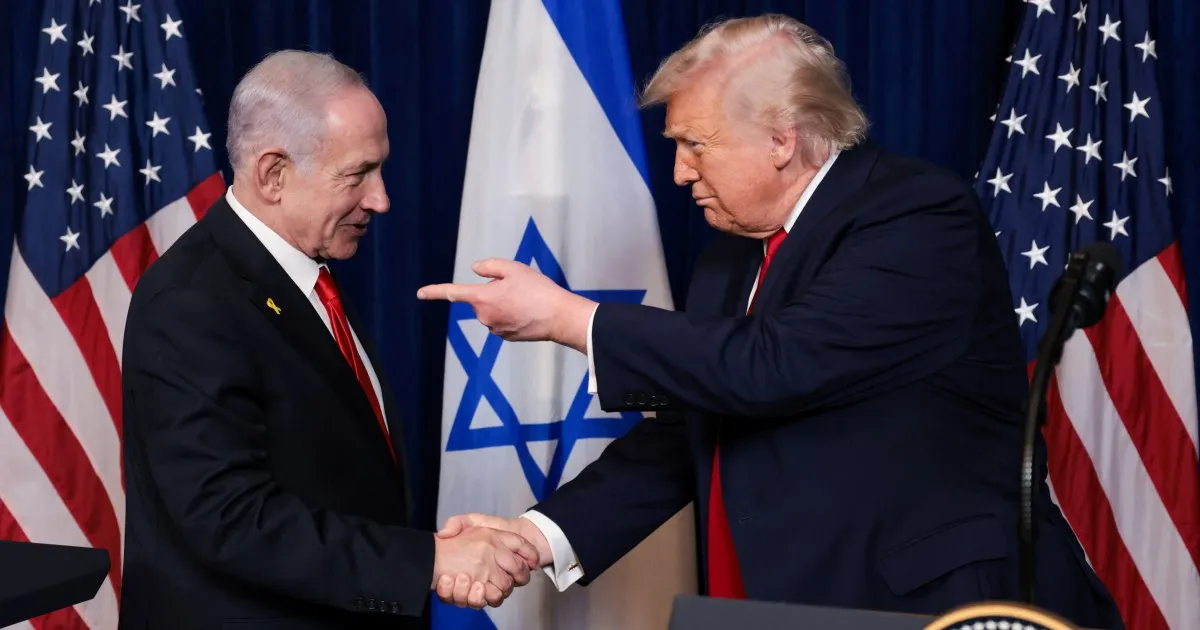
Israeli Prime Minister Benjamin Netanyahu has reached the end of his latest trip to the United States and appears to have gained what he wants from President Donald Trump.
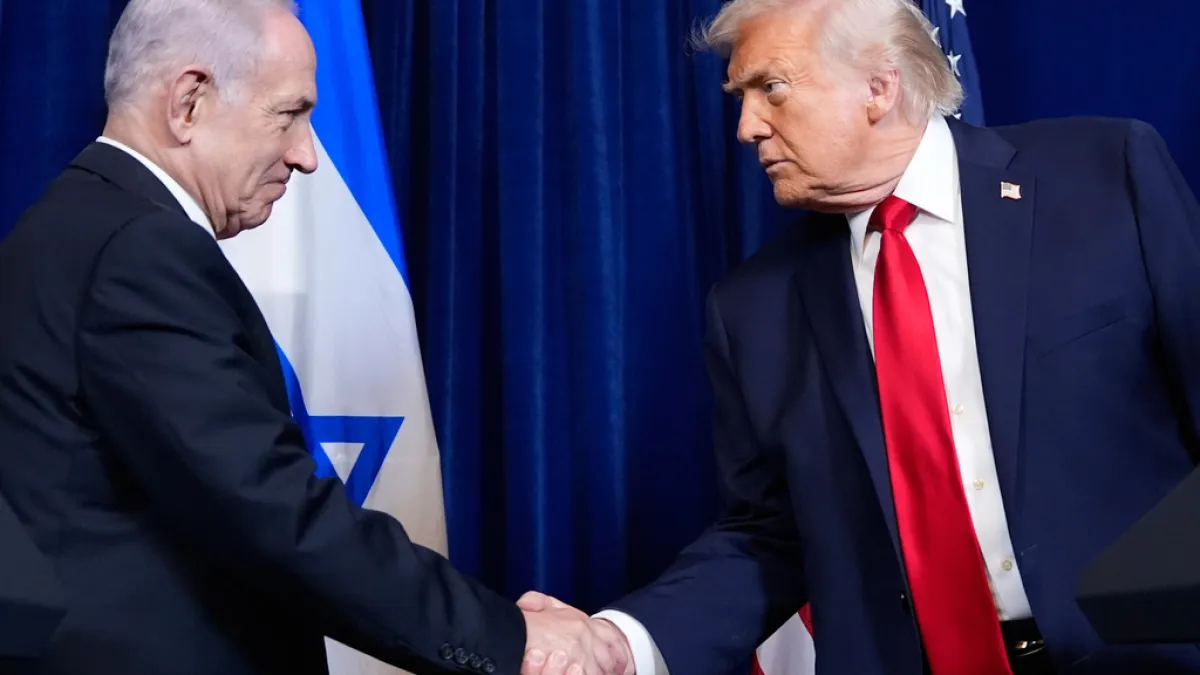
Trump hailed Netanyahu after their meeting on Monday, calling him a “hero” and saying Israel – and by extension its prime minister – had “lived up to the plan 100 percent” in reference to the US president’s signature Gaza ceasefire.
Recommended Stories
list of 4 itemsend of list
That is despite reports emerging last week that US officials were growing frustrated over Netanyahu’s apparent “slow walking” of the 20-point ceasefire plan – imposed by the US administration in October – suspecting that the Israeli prime minister might be hoping to keep the door open to resuming hostilities against the Palestinian group Hamas at a time of his choosing.
Under the terms of that agreement – after the exchange of all captives held in Gaza, living and dead, aid deliveries into the enclave and the freezing of all front lines – Gaza would move towards phase two, which includes negotiations on establishing a technocratic “board of peace” to administer the enclave and the deployment of an international security force to safeguard it.
US President Donald Trump, right, called Israeli Prime Minister Benjamin Netanyahu a ‘hero’ during his visit to Trump’s Florida estate on December 29, 2025, saying he had lived up to Trump’s ceasefire plan ‘100 percent’ [Jonathan Ernst/Reuters]
So far, Netanyahu has not allowed in all of the required aid that Gaza desperately needs and is also maintaining that phase two cannot be entered into until Hamas returns the body of the last remaining captive. He has also demanded that Hamas disarms before Israel withdraws its forces, a suggestion fully endorsed by Trump after Monday’s meeting.
Hamas has repeatedly rejected disarmament being forced upon it by Israel, and officials have said that the question of arms was an internal Palestinian matter to be discussed between Palestinian factions.
So is Netanyahu deliberately trying to avoid entering the second phase of the agreement, and why would that be the case?
Here are four reasons why Netanyahu might be happy with things just as they are:
He’s under pressure from his right
Netanyahu’s ruling coalition is, by any metric, the most right wing in the country’s history. Throughout the war on Gaza, the support of Israel’s hardliners has proven vital in shepherding the prime minister’s coalition through periods of intense domestic protest and international criticism.
Now, many on the right, including National Security Minister Itamar Ben-Gvir and Finance Minister Bezalel Smotrich, oppose the ceasefire, protesting against the release of Palestinian prisoners and insisting that Gaza be occupied.
Netanyahu’s defence minister, Israel Katz, has also shown little enthusiasm for honouring the deal his country committed to in October. Speaking at a ceremony to mark the expansion of the latest of Israel’s illegal settlements in the occupied West Bank, Katz claimed that Israel’s forces would remain in Gaza, eventually clearing the way for further settlements.
Katz later walked his comments back, reportedly after coming under pressure from the US.
Israeli Defence Minister Israel Katz [Menahem Kahana/AFP]
He doesn’t want an international force in Gaza
Allowing an international force to deploy to Gaza would limit Israel’s operational freedom, constraining its military’s ability to re-enter Gaza, conduct targeted strikes or pursue Hamas remnants within the enclave.
So far, despite the ceasefire, Israeli forces have killed more than 400 people in the enclave since agreeing to halt fighting on October 10.
Politically, agreeing to an international stabilisation force, particularly one drawn from neighbouring states, would broaden what Israel has often seen as a domestic war into an international conflict with many of the strategic, diplomatic and political decisions over that conflict being made by actors outside of its control.
It could also be framed domestically as a concession forced by the US and international community, undermining Netanyahu’s repeated claims of maintaining Israeli sovereignty and strategic independence.
“If Netanyahu allows a foreign military force into Gaza, he immediately denies himself a large degree of his freedom to operate,” Israeli political analyst Nimrod Flaschenberg said from Berlin. “Ideally, he needs things to remain exactly where they are but without alienating Trump.”
Smoke rises from an Israeli strike on Gaza’s Bureij refugee camp on October 19, 2025, in one of the near-daily attacks Israel has carried out since the ceasefire went into effect [Eyad Baba/AFP]
He wants to resist any progress towards a two-state solution
While not explicitly mentioning a two-state solution, the ceasefire agreement does include provisions under which Israel and the Palestinians commit to a dialogue towards what it frames as a “political horizon for peaceful and prosperous co-existence”.
Netanyahu, however, has been arguing against a two-state solution since at least 2015 when he campaigned on the issue.
More recently, at the United Nations in September, he branded the decision to recognise a Palestinian state “insane” and claimed that Israel would not accept the establishment of a Palestinian homeland.
Israeli ministers have also been at work ensuring that the two-state solution remains a practical impossibility. Israel’s plan to establish a series of new settlements severing occupied East Jerusalem – long considered the future capital of any Palestinian state – from the West Bank would make the establishment of a feasible state impossible.
This isn’t just an unfortunate consequence of geography. Announcing the plans for the new settlements in August, Smotrich said the project would “bury the idea of a Palestinian state”.
Israeli Finance Minister Bezalel Smotrich holds a map near the settlement of Maale Adumim showing a land corridor known as E1, in which Israel plans to build thousands of settler homes and which Smotrich says would ‘bury the idea of a Palestinian state’ [Menahem Kahana/AFP]
A resumption of war would benefit him
Netanyahu faces numerous domestic threats, from his own corruption trial to the potentially explosive issue of forcing conscription on Israel’s ultra-religious students. There is also the public reckoning he faces for his own failures before and during the Hamas-led attacks on southern Israel on October 7, 2023, all of which will fall within a critical election year for the prime minister.
Each of these challenges risks fracturing his coalition and weakening his hold on power. All of them, however, could be derailed – or at least politically blurred – by a new conflict either with Hamas in Gaza, Hezbollah in Lebanon or possibly even with Iran.
Renewed fighting would allow him to once more present himself as a wartime leader, limit criticism and rally both his allies and adversaries around the well-worn flag of “national emergency”.
“Bienvenue a Bamako!” The fixer, the minder and the men linked to the Malian government were waiting for us at the airport in Bamako. Polite, smiling – and watchful.
It was late December, and we had just taken an Air Burkina flight from Dakar, Senegal across the Sahel, where a storm of political upheaval and armed violence has unsettled the region in recent years.
Recommended Stories
list of 3 itemsend of list
Mali sits at the centre of a reckoning. After two military coups in 2020 and 2021, the country severed ties with its former colonial ruler, France, expelled French forces, pushed out the United Nations peacekeeping mission, and redrew its alliances
Alongside Burkina Faso and Niger, now also ruled by military governments backed by Russian mercenaries, it formed the Alliance of Sahel States (AES) in September 2023. Together, the regional grouping withdrew from the wider Economic Community of West African States (ECOWAS) bloc, accusing it of serving foreign interests rather than African ones.
This month, leaders from the three countries converged in Bamako for the Confederal Summit of Heads of State of the AES, the second such meeting since the alliance was formed. And we were there to cover it.
The summit was a ribbon-cutting moment. Leaders of the three countries inaugurated a new Sahel Investment and Development Bank meant to finance infrastructure projects without reliance on Western lenders; a new television channel built around a shared narrative and presented as giving voice to the people of the Sahel; and a joint military force intended to operate across borders against armed groups. It was a moment to celebrate achievements more than to sign new agreements.
But the reason behind the urgency of those announcements lay beyond the summit hall.
In this layered terrain of fracture and identity, armed groups have found room not only to manoeuvre, but to grow. Jama’at Nusrat al-Islam wal-Muslimin (JNIM), an al-Qaeda affiliate, has expanded from rural Mali, launching attacks across the region and reaching the coast of Benin, exploiting weak state presence and long-unresolved grievances.
As our plane descended toward Bamako, I looked out at an endless stretch of earth, wondering how much of it was now under the control of al-Qaeda affiliates.
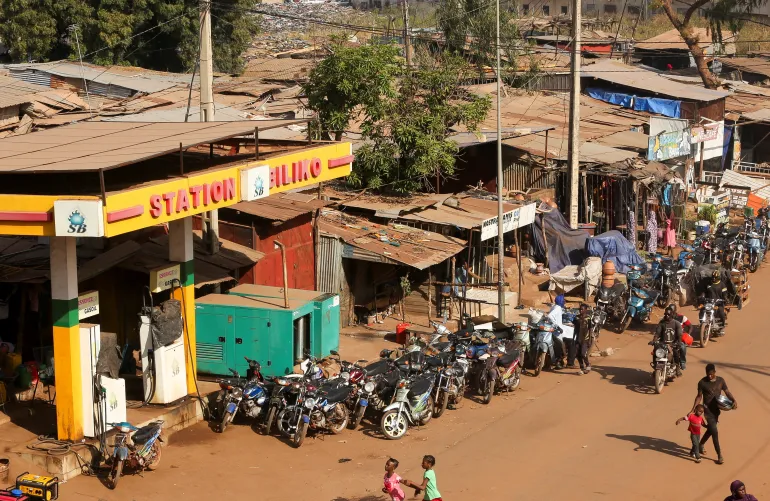
From the airport, our minders drove us fast through the city. Motorbikes swerved around us, street hawkers peddled their wares, and Malian pop blared from speakers. At first, this did not feel like a capital under siege. Yet since September, armed groups have been operating a blockade around Bamako, choking off fuel and goods, the military government said.
We drove past petrol stations where long queues stretched into the night. Life continued even as fuel grew scarce. People sat patiently, waiting their turn. Anger seemed to have given way to indifference, while rumours swirled that the authorities had struck quiet deals with the very fighters they claimed to be fighting, simply to keep the city moving.
Motorcycles line up near a closed petrol station, amid ongoing fuel shortages caused by a blockade imposed by al Qaeda-linked fighters in early September, in Bamako, Mali [Stringer/Reuters]
‘To become one country, to hold each other’s hand’
Our minders drove us on to the Sahel Alliance Square, a newly created public space built to celebrate the union of the three countries and its people.
On the way, Malian forces sped past, perhaps toward a front line that feels ever closer, as gunmen linked to JNIM have set up checkpoints disrupting trade routes to the capital in recent months. In September 2024, they also carried out coordinated attacks inside Bamako, hitting a military police school housing elite units, nearby neighbourhoods, and the military airport on the city’s outskirts. And yet, Bamako carries on, as if the war were taking place in a faraway land.
At Sahel Alliance Square, a few hundred young people gathered and cheered as the Malian forces went by, drawn by loud music, trivia questions on stage and the MC’s promise of small prizes.
The questions were simple: Name the AES countries? Name the leaders?
A microphone was handed to the children. The alliance leaders’ names were drilled in: Abdourahamane Tchiani of Niger. Ibrahim Traore of Burkina Faso. Assimi Goita of Mali. Repeated again and again until they stuck.
Correct answers won a prize: a T-shirt stamped with the faces of the alliance leaders.
Moussa Niare, 12 years old and a resident of Bamako, clutched a shirt bearing the faces of the three military leaders.
“They’ve gathered together to become one country, to hold each other’s hand, and to fight a common enemy,” he told us with buoyant confidence, as the government’s attempt to sell the new alliance to the public appeared to be cultivating loyalty among the young.
France out, Russia in
While Mali, Burkina Faso and Niger went through separate political transitions, the paths that brought them into a shared alliance followed a similar pattern.
Between 2020 and 2023, each country saw its democratically elected leadership removed by the military, the takeovers framed as necessary corrections.
In Mali, Colonel Goita seized power after months of protest and amid claims that President Ibrahim Boubacar Keita had failed to curb corruption or halt the advance of armed groups.
In Burkina Faso, the army ousted President Roch Marc Christian Kabore in early 2022 as insecurity worsened; later that year, Captain Traore emerged from a counter-coup, promising a more decisive response to the rebellion.
In Niger, soldiers led by General Tchiani detained President Mohamed Bazoum in July 2023, accusing his government of failing to safeguard national security and of leaning too heavily on foreign partners.
What began as separate seizures of power have since become a shared political project, now expressed through a formal alliance. The gathering in Bamako was to give shape to their union.
One of the key conclusions of the AES summit was the announced launch of a joint military battalion aimed at fighting armed groups across the Sahel.
This follows months of escalating violence, as regional armies assisted by Russian mercenaries push back against armed groups who have been launching attacks for over a decade.
Under the previous civilian governments, former colonial ruler France had a strong diplomatic and military presence. French troops, whose presence in the region dates back to independence, are now being pushed out, as military rulers recast sovereignty as both a political and security imperative. The last troops left Mali in 2022, but at its peak, France had more than 5,000 soldiers deployed there. When they withdrew, the country became a symbol of strategic failure for France’s Emmanuel Macron.
But even before that, French diplomacy appeared tone deaf, and patronising at best, failing to grasp the aspirations of its former colonies. The common regional currency, the CFA franc, still anchored to the French treasury, has become a powerful symbol of that resentment.
Now, French state television and radio have been banned in Mali. In what was once the heart of Francophone West Africa, French media has become shorthand for interference. What was lost was not only influence, but credibility. France was no longer seen as guaranteeing stability, but as producing instability.
Across the Sahel and beyond, anti-French sentiment is surging, often expressed in French itself – the language of the coloniser is now also the language of resistance.
Captain Ibrahim Traore of Burkina Faso attends the Alliance of Sahel States (AES) second summit in Bamako, Mali [Mali Government Information Center via AP]
‘Like a marriage of reason’
At the end of the summit, Mali’s Goita was preparing to hand over the AES’s rotating leadership to Traore of Burkina Faso.
Young, charismatic, and the new rock star of Pan-Africanism, Traore, in particular, has captured young audiences with help from a loose ecosystem of pro-Russian messaging and Africanist influencers. Across social media platforms, short videos circulate relentlessly: speeches clipped for virality, images of defiance, and slogans reduced to shareable fragments.
Meanwhile, in Burkina Faso, journalists and civil society actors who have criticised the military rules have been sent to the front line under a conscription policy introduced by Traore. Human rights groups outspoken about alleged extrajudicial killings say they have been silenced or sidelined. But much of it is dismissed as collateral, the price, supporters argue, of sovereignty finally reclaimed.
Before the ceremony, we met Mali’s finance minister. At first, he was confident, rehearsed, assured. But when pressed about financing for the ambitious infrastructure projects the three governments have laid out for the Sahel, his composure faltered and his words stuttered. This was a government official unaccustomed to being questioned. The microphone was removed. Later, away from the camera, he told me, “The IMF won’t release loans until Mali has ironed out its relations with France.”
The spokesperson, irritated by my questions, took me aside. As he adjusted the collar of my suit, slowly and patronisingly, he said he sometimes thought about putting journalists in jail “just for fun”.
He did not question the organisation I worked for. He questioned my French passport; my allegiance. I told him my allegiance was to the truth. He smiled, as if that answer confirmed his suspicions.
In the worldview of Mali’s military government – men shaped by years on the front line, living with a permanent sense of threat – journalists and critics are part of the problem. Creating safety was the challenge. The alliance, the spokesperson explained, was the solution to what they could not find within regional body, ECOWAS.
The half-century-old West African institution is a bloc that the three countries had once helped shape. Now, the AES leaders say its ageing, democratically elected presidents have grown detached, more invested in maintaining one another in office than in confronting the region’s crises. In response, they are promoting the AES as an alternative.
As the Sahel alliance grows, it’s also building new infrastructure.
At its new television channel in Bamako, preparations were under way. The ON AIR sign glowed. State-of-the-art cameras sat on tripods like polished weapons.
The channel’s director, Salif Sanogo, told me it would be “a tool to fight disinformation,” a way to counter Western, and more specifically French, narratives and “give voice to the people of the Sahel, by the people of the Sahel”.
The cameras had been bought abroad. The installation was overseen by a French production company. The irony went unremarked.
To defend the alliance, he offered a metaphor. “It’s like a marriage of reason,” he said. “It’s easier to make decisions when you’re married to three. When you’re married to 15, it’s a mess.” He was referring to the 15 member states of ECOWAS.
‘We will survive this, too’
Two years into the AES alliance, they have moved faster than the legacy regional bloc they left behind. A joint military force now binds their borders together, presented as a matter of survival rather than ambition. A mutual defence pact recasts coups and external pressure as shared threats, not national failures. A common Sahel investment and development bank, meant to finance roads, energy, and mineral extraction without recourse to Western lenders, offers sovereignty, they say, without conditions. A common currency is under discussion.
A shared news channel is intended to project a single narrative outward, even as space for independent media contracts at home. And after withdrawing from the International Criminal Court, they have proposed a Sahel penal court, one that would try serious crimes and human rights violations on their own terms. Justice brought home, or justice brought under control, depending on who you ask.
What is taking shape is not just an alliance, but an alternative architecture, built quickly, deliberately, and in full view of its critics.
Where ECOWAS built norms slowly, through elections, mediation, and consensus, AES is building structure. Where ECOWAS insists on patience, AES insists on speed.
To supporters, this is overdue self-determination, dignity restored after decades of dependency. To critics, it is power concentrated in uniforms, accountability postponed, repression dressed up as emancipation.
From the summit stage as he took over the alliance’s leadership, Traore redrew the enemy: Not al-Qaeda. Not ISIL. Not even France. But their African neighbours, cast as the enemy within. He warned of what he called a “black winter”, a speech that held the room and travelled far beyond it, drawing millions of viewers online.
“Why are we, Black people, trying to cultivate hatred among ourselves,” he asked, “and through hypocrisy calling ourselves brothers? We have only two choices: either we put an end to imperialism once and for all, or we remain slaves until we disappear.”
Away from the summit’s “black winter”, under a sunlit sky in Bamako, life moved on with a quieter rhythm. Music drifted through public squares and streets, carrying a familiarity that cut across the tension of speeches and slogans. It was Amadou and Mariam, Mali’s most internationally known musical duo, whose songs once carried the country’s everyday joys far beyond its borders. Amadou died suddenly this year. But the melody lingers.
Its lyrics hold the secret of the largest alliance of all. Not one forged by treaties or uniforms, but by people, across Mali and the Sahel, in all their diversity.
“Sabali”, Mariam sings.
“Forbearance.
“We have survived worse. We will survive this, too.”
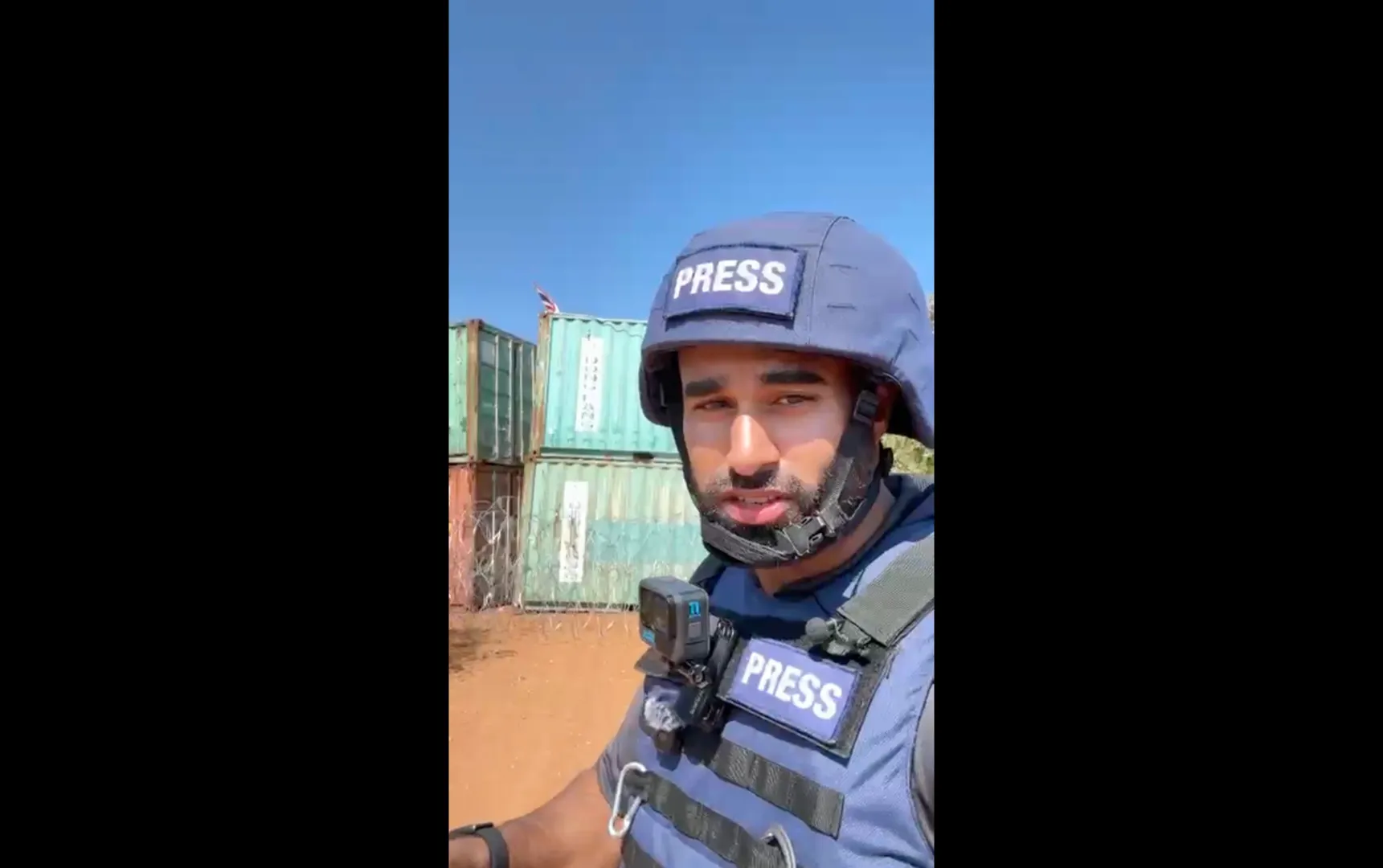
Cambodian villagers have told Al Jazeera they’re being prevented from returning to their homes by Thai forces who remain on the Cambodian side of the border. Assed Baig sent this exclusive report from Chouk Chey, which has been cut off with rows of shipping containers.
Hassan Sheikh Mohamud says his country believes the move is linked to Israel’s plans to forcibly displace Palestinians from Gaza.
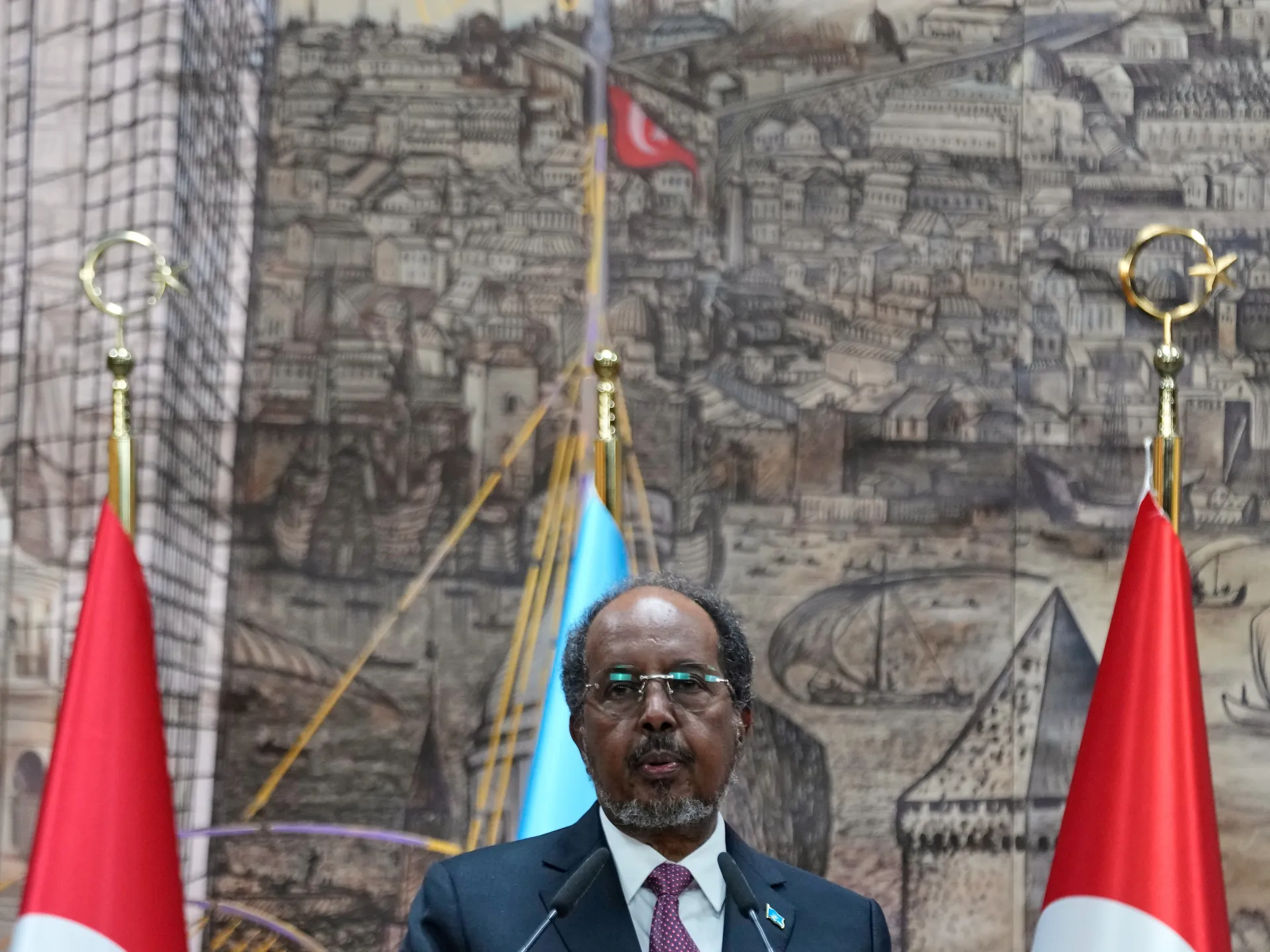
Somali President Hassan Sheikh Mohamud has told Al Jazeera that Israel’s “unexpected and strange” recognition of Somaliland may have implications for Palestinians in Gaza.
“Somaliland has been claiming the secession issue for a long time, over the past three decades, and no one country in the world has recognised it,” Mohamud told Al Jazeera in an exclusive interview from Istanbul, Turkiye, on Tuesday.
Recommended Stories
list of 4 itemsend of list
“For us, we’ve been trying to reunite the country in a peaceful manner,” the Somali leader added. “So, after 34 years, it was very unexpected and strange that Israel, out of nowhere, just jumped in and said, ‘We recognise Somaliland’.”
Israel last week became the first and only country to formally recognise Somaliland, a breakaway region in northwest Somalia, bordering the Gulf of Aden.
Somalia’s president also told Al Jazeera that, according to Somali intelligence, Somaliland has accepted three Israeli conditions in exchange for Israeli recognition: the resettlement of Palestinians, the establishment of an Israeli military base on the coast of the Gulf of Aden, and Somaliland joining the Abraham Accords. The accords are a set of pacts establishing the normalisation of ties between Israel and several Arab states. The UAE, Bahrain, Morocco and Sudan have signed onto the accords.
Mohamud also said that Somalia has intelligence indicating there is already a certain level of Israeli presence in Somaliland, and Israeli recognition of the region is merely a normalisation of what was already happening covertly.
Israel will resort to forcibly displacing Palestinians to Somalia, and its presence in the region is not for peace, the Somali leader added.
A 20-point plan released by the administration of US President Donald Trump ahead of a ceasefire between Israel and Hamas in Gaza said that “no one will be forced to leave Gaza, and those who wish to leave will be free to do so and free to return”.
However, Israel has reportedly continued to explore ways to displace Palestinians from the besieged and occupied territory, including in mysterious flights to South Africa, which has formally accused Israel of committing genocide in Gaza.
Israel is also seeking to control strategically important waterways connecting vital seas of commercial and economic significance, namely the Red Sea, the Gulf and the Gulf of Aden, Mohamud said.
The Somali leader was in Turkiye on Tuesday, where he gave a joint news conference with Turkish President Recep Tayyip Erdogan, with the two leaders warning that Israel’s recognition of the breakaway region could destabilise the Horn of Africa.
Somaliland declared independence from Somalia in 1991, but had failed to gain recognition from any United Nations member state, before Israel changed its position last Friday.
Israel’s move was swiftly condemned, including by most members of the UN Security Council at an emergency meeting convened in New York on Monday.
The United States was the only member of the 15-seat body that defended Israel’s move, although it stressed that the US’s position on Somaliland remained unchanged.
Somali President Hassan Sheikh Mohamud has accused Israel of violating international law and of ‘illegal aggression’.
Turkish President Recep Tayyip Erdogan has condemned Israel’s decision to recognise Somaliland as a sovereign state, calling the move “illegitimate and unacceptable”.
At a joint news conference with Somali President Hassan Sheikh Mohamud in Ankara on Tuesday, Erdogan warned that Israel’s recognition of the breakaway region of Somalia could destabilise the Horn of Africa.
Recommended Stories
list of 4 itemsend of list
He added that Turkiye and Somalia were deepening energy cooperation after promising signs from joint offshore exploration efforts.
“Preserving the unity and integrity of Somalia in all circumstances holds special importance in our view. Israel’s decision to recognise Somaliland is illegitimate and unacceptable,” Erdogan said.
“The Netanyahu government has the blood of 71,000 of our Palestinian brothers and sisters on its hands. Now it is trying to destabilise the Horn of Africa as well, after its attacks on Gaza, Lebanon, Yemen, Iran, Qatar and Syria,” he added, referring to Israel’s genocidal war on Gaza.
Israel became the first and only country to formally recognise Somaliland last Friday, describing the move as being in the spirit of the Abraham Accords, which normalised ties between Israel and several Arab nations.
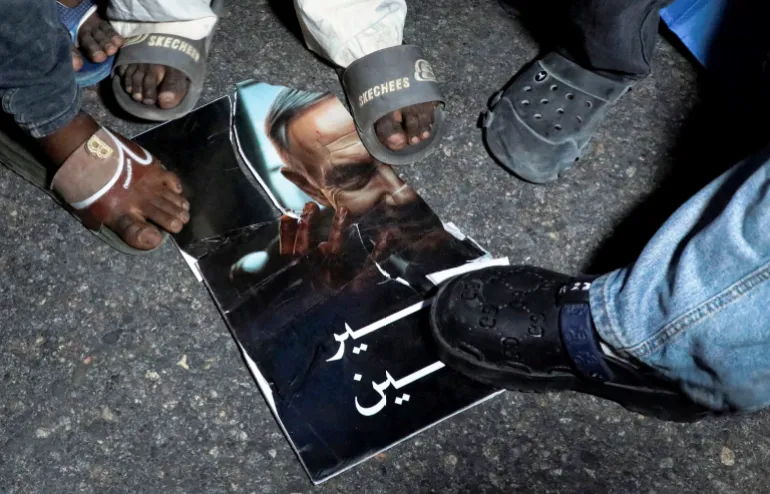
Somalis step on an image depicting Israeli Prime Minister Benjamin Netanyahu during a demonstration in Mogadishu [Feisal Omar/Reuters]
‘Illegal aggression’
Somaliland unilaterally declared independence from Somalia in 1991, following the collapse of the central government after a civil war. Despite maintaining its own currency, passport and army, it has failed to gain international recognition.
Standing alongside Ergogan, Mohamud accused Israel of “illegal aggression”, saying the recognition breaches the United Nations charter and African Union agreements.
“Israel is exporting its problems in Gaza and Palestine, and it is trying to divert the attention of the entire world, including the Arab and Islamic world,” he later told Al Jazeera in an interview.
“Israel will resort to forcibly displacing Palestinians in Somalia. It also wants to control strategically important waterways that connect vital seas, both commercially and economically, between the Red Sea, the Gulf, and the Gulf of Aden.”
Destabilising Africa
Mohamud warned that the move would have international consequences and also said it could mark the beginning of instability in the Horn of Africa, particularly in Somalia.
He recalled that Turkiye had previously played a mediating role between Somalia and Somaliland and continues to support efforts to resolve the dispute peacefully.
Abdinor Dahir, an independent researcher, said that Turkiye has invested heavily in Somalia, supporting its security forces and political process, while mediating talks between Somalia and Somaliland.
Israel’s recognition “threatens Turkiye’s economic interests” and presence in the country and “poses a direct challenge to Somalia’s sovereignty”, he told Al Jazeera.
Dahir warned that Somalia, which has endured years of civil war and continues to fight armed groups including al-Shabab and ISIL (ISIS), has made progress on security, which could be undermined by the move.
The recognition risks “destabilising the wider African region, and could transfer the Middle East conflict into the Horn of Africa”, he said.
Yesterday, Israeli Prime Minister Benjamin Netanyahu paid his fifth visit to the United States since President Donald Trump took office in January. Before the meeting between the two, the Israeli press described the prime minister as fully engaged in an attempt to placate his domestic political partners by achieving “concessions” from Trump. What were these concessions? They were predominantly related to denying Turkiye any presence in the Gaza stabilisation force and to US approval for an Israeli strike on Iran.
Netanyahu failed on both counts. Trump specifically referred to his good relationship with Turkish President Recep Tayyip Erdogan, and spoke of “Bibi’s” respect for him, too. With regard to Iran, Trump mentioned Iran’s willingness to “make a deal” and provided clear guidelines for American involvement while saying nothing about authorising a solo Israeli operation. Israeli media suggests that Trump provided Israel with a “green light” for a strike on Iran. That is not reflected in Trump’s official statement in any way.
Trump talked about the reconstruction of Gaza beginning “soon”. When he spoke of the disarmament of Hamas, he said that it must happen or nearly 60 states will make it happen. Hamas has already agreed to disarm if the process is carried out by a Palestinian-led force. Trump said nothing to suggest that he does not agree with Hamas’s logic, especially when one considers the refusal of most participating countries to carry out a violent disarmament of the group. Trump also made no mention of the last hostage body held in Gaza as a necessary condition for moving to “Stage II” of the deal.
Nothing is more significant in Trump’s world than the use of language and symbolic gestures. When Trump referred to Netanyahu as a “great wartime prime minister” as he was discussing his blueprint for “peace”, he made it clear that his guest was running out of time. This was also clearly apparent when Trump said he had spoken with Israel’s official head of state, President Isaac Herzog, about a pardon for Netanyahu and was assured such a pardon was imminent. President Herzog, by the way, categorically denied that such a conversation had taken place.
What may be the best reflection of the Trump-Netanyahu meeting at Mar-a-Lago has to do with a brief conversation over the phone between Trump and Israeli Minister of Education Yoav Kish. The purpose of the call was for Kish to inform Trump that he will be awarded the Israel Prize on Israel’s Independence Day in 2026.
The award is given out by the minister of education in a televised ceremony attended by Israel’s leaders. It marks the official end of Independence Day celebrations. Its recipients are most frequently career academics at a late stage of their careers. The prize reflects a lifetime’s devotion to the expansion of human knowledge. Sometimes, special prizes are awarded in civic categories, most often for what is called a “life’s work”, such as fostering coexistence between Jews and Palestinians, promoting social equality, etc.
The prize, as understood by its name, is nearly always awarded to Israeli citizens but can be awarded to Jews living abroad and even to non-Jews who have made a “special contribution to the Jewish people”.
In other words, the Trump-Netanyahu meeting involved Trump instructing Netanyahu with regard to upcoming measures and Netanyahu snapping to attention and signalling his acceptance by heaping yet another semi-fictitious honour on Trump’s already crowded head.
Yet, despite these clear displays of the unequal nature of their relationships, there have been persistent voices suggesting that Trump and Netanyahu are operating in cahoots. According to such analyses, the United States fully supports the Israeli attempt to “change the Middle East” – Netanyahu’s favourite phrase – as the Americans make a pivot to Asia and the global race for dominance with China.
Israel will “take care” of the “Iranian threat” as the Arabs languish in their own irresolvable internal tensions and competitions. The mobilisation of Arab states after the Israeli strike on Doha is all but ignored.
These voices also point to the fact that Israel continues to completely ignore the “ceasefire” enacted by “Stage I” of the Trump plan, and does so with the full support of the United States. In fact, Trump said that Israel has “lived up” to the ceasefire “100 percent”, and that he has no problems with Israel’s actions in Gaza. These include bombing, destruction of buildings and infrastructure, the blocking of life-saving aid amid harsh weather and many other steps that ensure and expand the ongoing Israeli genocide.
It is indeed extremely difficult to reconcile this with the notion that Israel has run out of options for delaying Stage II and an internationally-brokered solution to Palestinian statehood. After all, one hears repeatedly from Israeli media about initiatives to “settle Gaza”, “relocate” 1.5 million Palestinians to Somaliland and dismantle the Oslo Accords, one ethnically cleansed Palestinian community at a time.
The US and other countries, like Germany and the UK, continue to buy Israeli arms at a massive rate and to equip Israel with arms of their own. How is it possible to reach a conclusion that the Israeli genocide is reaching its endgame?
The short answer is that it is not. Israel continues to kill, destroy, subvert and expand its efforts to destabilise any semblance of regional order. For example, Israel recognised the statehood of Somaliland in order to have a “dumping ground” for ethnically cleansed Palestinians, but also to pit the United Arab Emirates against Saudi Arabia, as both have conflicting interests in Somalia, and, by doing so, ensure that the Palestinian question is not addressed and that everyone remains frozen by fear of Israeli weapons.
The longer answer recognises the effects of this genocide on Israel itself: Genocide consumes genocidaires.
That is not to suggest that justice is assured by cosmic forces; far from it. Justice should be pursued at the most grounded and realistic level, as should the dignity and preservation of Palestinian lives.
However, the genocide has shaped Israel in its image on a daily, immediate level. Violence is rising as quickly as the prices of the staples, democracy is backsliding, and there is no end in sight to the “forever war”. This is not an abstract, “strategic” matter.
While Israel has been actively seeking to delete Palestinian identity for nearly 80 years, it has not succeeded in doing so. Israel’s internal contradictions have surfaced with paralysing force over the past two years.
Israel will not “die” or “recede”, but the gap between Israeli perceptions of the world and global perceptions of Israel has never been wider.
Trump and his vision of America do not appreciate “losers”. Israel no longer has any “wins” in the offing. It can and does kill and burn, procrastinate and obfuscate.
Even Trump recognises that this power has no lasting effects following its own immediate application. Israel has no options. There is no greater loss.
The views expressed in this article are the author’s own and do not necessarily reflect Al Jazeera’s editorial stance.
Russia has threatened to retaliate against Ukraine after alleging that nearly 100 drones had targeted one of Russian President Vladimir Putin’s residences.
The threat on Monday was made as United States President Donald Trump tries to broker a peace agreement to end the war in Ukraine, which will enter its fifth year in February.
Recommended Stories
list of 4 itemsend of list
What has Russia claimed?
On Monday, Russian Foreign Minister Sergey Lavrov alleged that Ukraine had launched the attack on the Valdai residence, one of Putin’s residences in the Novgorod region in northwestern Russia. The property is 360km (225 miles) north of Moscow.
Lavrov told reporters that Ukraine had launched 91 drones towards the residence. He added that air defence systems shot down the drones and no one was injured.
The Russian Ministry of Defence said 49 of the drones were shot down over the Bryansk region, one was shot down over the Smolensk region and 41 were shot down over the Novgorod region while en route.
“Such reckless actions will not go unanswered,” Lavrov said. “The targets for retaliatory strikes and the timing of their implementation by the Russian armed forces have been determined.”
Russian officials accused Ukraine and its president, Volodymyr Zelenskyy, of carrying out the strike to derail the prospects of a peace agreement.
In an apparent reference to Zelenskyy, Russian Security Council Deputy Chairman Dmitry Medvedev wrote on X: “The stinking Kiev b**tard is trying to derail the settlement of the conflict. He wants war. Well, now at least he’ll have to stay in hiding for the rest of his worthless life.”
Kremlin foreign policy aide Yury Ushakov said the strike took place on Sunday “practically immediately after” talks were held in Florida between Trump and Zelenskyy on ending Russia’s war on Ukraine.
After that meeting, Trump and Zelenskyy had voiced optimism, saying a peace deal between Russia and Ukraine was “close”.
Putin has not publicly commented on the attack yet. It is unclear where Putin was at the time of the attack, but he was holding meetings in the Kremlin on Saturday and Monday.
How has Ukraine responded?
Zelenskyy has strongly denied Russia’s allegation that Ukraine attacked one of Putin’s residences.
“Russia is at it again, using dangerous statements to undermine all achievements of our shared diplomatic efforts with President Trump’s team,” Zelenskyy wrote in an X post on Monday.
“This alleged ‘residence strike’ story is a complete fabrication intended to justify additional attacks against Ukraine, including Kyiv, as well as Russia’s own refusal to take necessary steps to end the war.”
Ukrainian Foreign Minister Andrii Sybiha also condemned Moscow’s claims, saying they were designed to undermine the negotiations.
In a post on X, Sybiha said the claim was intended “to create a pretext and false justification for Russia’s further attacks against Ukraine, as well as to undermine and impede the peace process”.
In another post on Tuesday, Sybiha wrote: “Almost a day passed and Russia still hasn’t provided any plausible evidence to its accusations of Ukraine’s alleged ‘attack on Putin’s residence.’ And they won’t. Because there’s none. No such attack happened.”
How has Trump reacted?
Trump appeared to accept the Russian version of events on Monday when he told reporters: “It’s one thing to be offensive. It’s another thing to attack his house. It’s not the right time to do any of that. And I learned about it from President Putin today. I was very angry about it.”
But when reporters asked Trump if US intelligence agencies had evidence of the alleged attack, Trump said: “We’ll find out.”
Congressman Don Bacon, a member of Trump’s Republican Party, criticised the president for accepting the Russian account of events without assessing the facts.
“President Trump and his team should get the facts first before assuming blame. Putin is a well known boldface liar,” Bacon wrote in an X post.
How have other world leaders reacted?
Like Trump, other leaders appeared to accept the Russian allegations.
In a statement released on Monday, the United Arab Emirates Ministry of Foreign Affairs wrote: “The United Arab Emirates has strongly condemned the attempt to target the residence of His Excellency Vladimir Putin, President of the Russian Federation, and denounced this deplorable attack and the threat it poses to security and stability.”
Indian Prime Minister Narendra Modi wrote in an X post on Tuesday: “Deeply concerned by reports of the targeting of the residence of the President of the Russian Federation.”
Modi added that the ongoing diplomatic engagement being led by the US is the “most viable path” towards achieving peace. “We urge all concerned to remain focused on these efforts and to avoid any actions that could undermine them.”
Pakistani Prime Minister Shehbaz Sharif also condemned the alleged attack.
“Pakistan condemns the reported targeting of the residence of His Excellency Vladimir Putin, President of the Russian Federation. Such a heinous act constitutes a grave threat to peace, security, and stability, particularly at a time when efforts aimed at peace are underway,” Sharif wrote on X.
“Pakistan expresses its solidarity with the President of the Russian Federation, and with the government and people of Russia.”
Have Putin’s residences previously been attacked?
Russia has made previous claims of Ukrainian attacks on Putin’s residences, including on the Kremlin, Putin’s official residence and main workplace.
In May 2023, Moscow alleged that Ukraine had deployed two drones to attack Putin’s residence in the Kremlin citadel but said its forces had disabled the drones. Kyiv denied any involvement.
On December 25, 2024, Russia alleged that it had intercepted and destroyed a Ukrainian drone also targeting the Kremlin. Kyiv again denied responsibility.
Conversely, Ukraine has alleged that Russia has attacked Kyiv and other government buildings in Ukraine.
In September, the Ukrainian military said a Russian drone attack damaged a government building in Kyiv that is home to Ukraine’s cabinet. Plumes of smoke were seen emerging from the building. Russia said it had targeted Ukrainian military infrastructure only.
What has Russia now threatened to do?
While Russia has not outright threatened to end the peace talks, Moscow said it would realign its position in the talks.
“The diplomatic consequence will be to toughen the negotiating position of the Russian Federation,” Kremlin spokesman Dmitry Peskov told reporters on Tuesday.
Russian Ministry of Foreign Affairs spokesperson Maria Zakharova warned that Moscow’s response “would not be diplomatic”. Indeed, it has warned that it plans to hit back militarily but has given no details of how or when it might do this.
Will this derail the US-led peace talks?
Speaking to reporters after his “terrific” meeting with Zelenskyy on Sunday at his Mar-a-Lago residence in Palm Beach, Florida, Trump told reporters that Moscow and Kyiv were “closer than ever” to a peace deal.
But Trump has made this claim several times before. In April, Trump said Russia and Ukraine were “very close to a deal” after Trump’s envoy Steve Witkoff met with Putin in Moscow.
On December 15, Trump also said Russia and Ukraine were “closer than ever” to a deal after talks in Berlin involving Zelenskyy and the leaders of France, Germany, the United Kingdom and NATO.
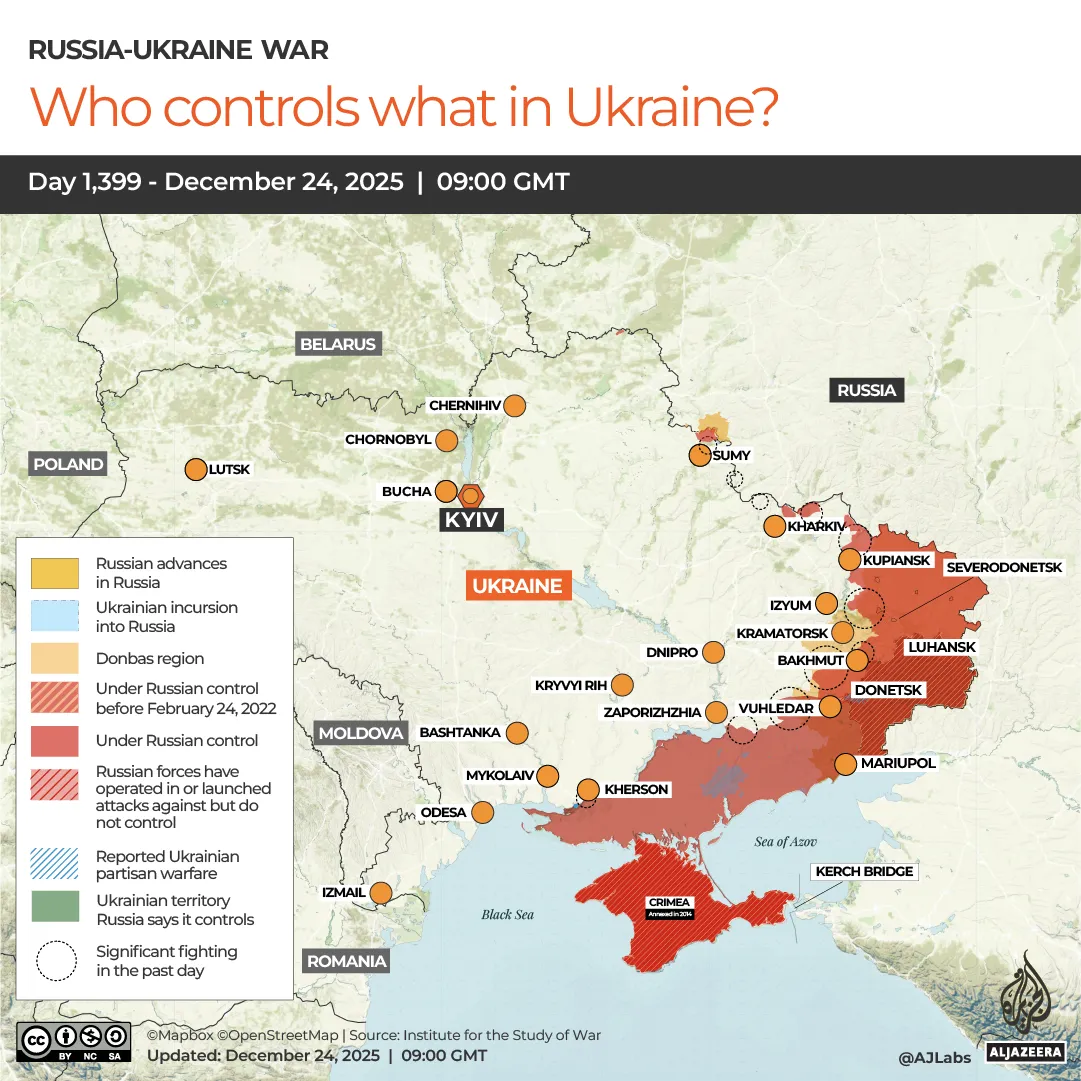
However, observers and analysts said the issue of territorial concessions remains a major sticking point. Trump’s 28-point peace plan for Ukraine, which he unveiled in November, involved Ukraine ceding large amounts of land that Russia has occupied during nearly four years of war. Zelenskyy has stated on numerous occasions that this is a line Ukraine will not cross.
Most analysts are sceptical that any progress has been made on this point and said the latest accusations against Ukraine will probably have little effect. “I don’t think there is anything to derail at this point,” said Marina Miron, an analyst at King’s College London.
The peace process “is not going well due to disagreements on key issues between Ukraine and Russia”, she told Al Jazeera.
“Trump has repeatedly claimed that a peace deal is close without sustainable agreement,” Keir Giles, a Russian military expert at the London think tank Chatham House, told Al Jazeera this month.
Russia has occupied nearly 20 percent of eastern Ukraine and has been slowly gaining territory as Ukraine’s military has been weakened by desertions, casualties and dwindling military aid. Moscow annexed Ukraine’s Crimean Peninsula in 2014.
(Al Jazeera)
“It’s probably impossible that Ukrainians will voluntarily withdraw from these territories unless we will also see a withdrawal of Russian forces on the other side,” Nathalie Tocci, director at the Rome-based think tank Istituto Affari Internazionali (Institute of International Affairs), told Al Jazeera.
Giles said there are still parallel negotiation tracks, however – one involving the US and Ukraine and another between Ukraine and European nations. He added, however, that there is no clear evidence that these efforts are fully coordinated or aligned in terms of strategy.
US president says he would back attacks if Tehran rebuilds nuclear or missile programmes.
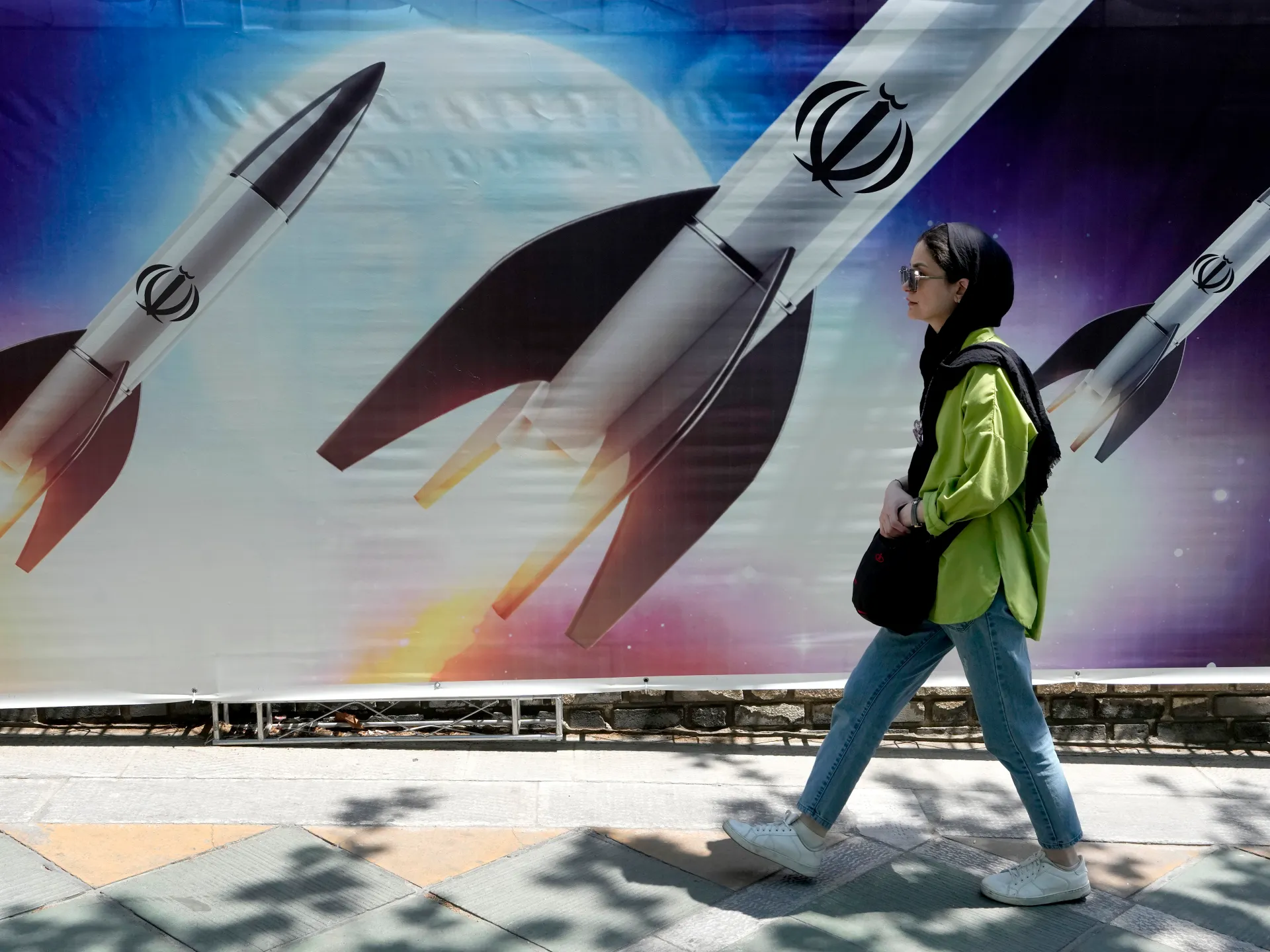
Iran has promised to respond harshly to any aggression after United States President Donald Trump threatened further military action, should Tehran attempt to rebuild its nuclear programme or missile capabilities.
President Masoud Pezeshkian issued the warning on X on Tuesday, a day after Trump met Prime Minister Benjamin Netanyahu at his Florida estate, where he firmly leaned into the Israeli regional narrative yet again.
The US had not previously said it would target Iran’s missile capabilities, which has long been an Israeli aspiration, focusing instead on Tehran’s nuclear programme. Iran has repeatedly said its nuclear activities are for civilian purposes only, and neither US intelligence nor the UN’s nuclear watchdog found any evidence of atomic weapons production before the June attacks by the US and Israel.
Iran has ruled out negotiating over its missile programme.
The leaders’ comments raise the spectre of renewed conflict just months after a devastating 12-day war in June that killed more than 1,100 Iranians and left 28 in Israel dead.
Pezeshkian said the response of Iran to any aggression would be “severe and regret-inducing”. His defiant message came hours after Trump told reporters at his Mar-a-Lago resort that Washington could carry out another major assault on Iran.
“Now I hear that Iran is trying to build up again, and if they are, we’re going to have to knock them down,” Trump said, standing alongside Netanyahu. “We’ll knock the hell out of them.”
The US president said he would support strikes on Iran’s nuclear programme “immediately” and on its missile facilities if Tehran continues developing long-range weapons.
Israeli officials have expressed concern in recent weeks that Iran is quietly rebuilding its ballistic missile stockpile, which was significantly depleted during the June conflict.
“If the Americans do not reach an agreement with the Iranians that halts their ballistic missile program, it may be necessary to confront Tehran,” an Israeli official told Ynet this week.
Pezeshkian recently described the standoff as a “full-scale war” with the US, Israel and Europe that is “more complicated and more difficult” than Iran’s bloody conflict with Iraq in the 1980s, which left more than one million dead.
The June war saw Israel launch nearly 360 strikes across 27 Iranian provinces over 12 days, according to conflict monitoring group ACLED, targeting military installations, nuclear facilities and government buildings.
The assault destroyed an estimated 1,000 Iranian ballistic missiles and killed more than 30 senior military commanders and at least 11 nuclear scientists.
Iran fired more than 500 missiles at Israel during the conflict, with approximately 36 landing in populated areas. While Trump claimed Iranian nuclear capabilities were “completely obliterated” by the strikes, experts disputed that, saying Tehran may have hidden stockpiles of enriched uranium and could resume production within months.
Despite the losses, Iranian officials insist the country is now better prepared for confrontation. In a recent interview, Pezeshkian said Iran’s military forces are “stronger in terms of equipment and manpower” than before the ceasefire.
The war failed to trigger the internal unrest it is suspected that Netanyahu had hoped for. No significant protests materialised, and daily life in Tehran largely continued despite the bombardment.
Israeli attacks, violating a ceasefire agreement, are reported across Gaza, as Palestinian misery compounded by rains.
Israeli forces have carried out strikes across the Gaza Strip as they continue with their near-daily violations of the ceasefire agreement, with Israel’s genocidal war on the besieged enclave continuing apace and displaced Palestinians enduring the destruction of their few remaining possessions in flooding brought about by heavy winter rains.
Israeli air strikes on Tuesday targeted locations north of Rafah and east of Khan Younis, the Maghazi camp in central Gaza and Beit Lahiya in the north of the Strip, Al Jazeera’s Hind Khoudary reported.
Recommended Stories
list of 4 itemsend of list
Reporting from Gaza City, Khoudary said artillery shelling had been reported in the territory’s southern and central regions, while there had also been an attack in the Gaza City neighbourhood of Shujayea, striking close to the tent of a displaced family.
She said the latest attacks, in violation of the United States-brokered ceasefire that came into force in October, numbering nearly 1,000 now, were coming at a time of immense hardship for hundreds of thousands of displaced Palestinians, as heavy rains and strong winds had ravaged their makeshift camps, destroying the few possessions they had left.
Gaza’s Government Media Office said on Sunday that Israel had committed 969 ceasefire violations since it came into effect on October 10, resulting in the deaths of 418 civilians and injuries to more than 1,100.
“Palestinians are still very traumatised and anxious,” Khoudary said. “The situation on the ground continues to deteriorate as the rain continues.”
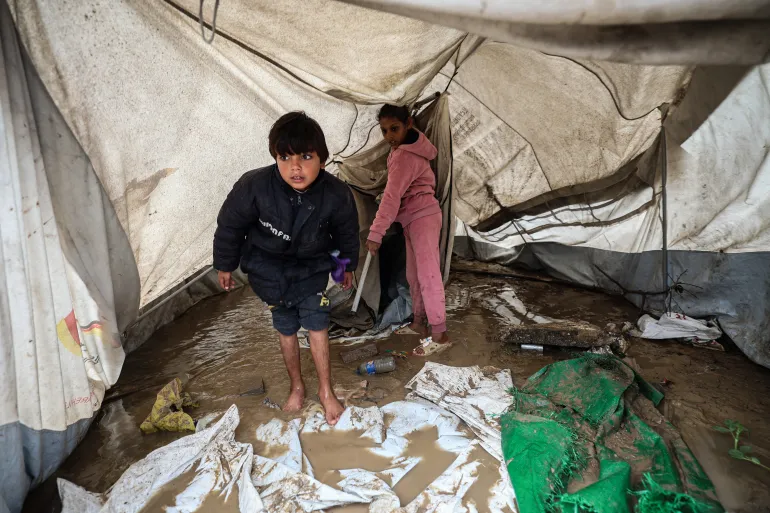
Displaced Palestinian children shelter inside a flooded tent in the Bureij refugee camp in the central Gaza Strip on December 29, 2025 [Eyad Baba/AFP]
Calls to allow supplies in
Aid groups have repeatedly called for Israeli authorities to lift restrictions to allow more supplies, including shelter equipment, into the territory, where displaced families have been trying to stay dry in flimsy, battered tents that offer scant protection from the elements after months of use.
“Families here are helpless while the Israeli authorities continue to restrict all kinds of shelter into the Gaza Strip,” Khoudary said.
Officials have warned that the severe conditions also bring new dangers, with the threat of disease and illness as overwhelmed and damaged sewage systems contaminate floodwaters, as well as the risk that buildings could collapse amid heavy rain and wind.
At least two people have been killed by damaged structures falling amid the severe weather in recent days.
‘We are still suffering’
In a displacement camp east of Deir el-Balah in central Gaza, heavy rain in recent days has left tents submerged in muddy water, destroying the few possessions that the families had taken with them from their homes.
Inside the tents, an Al Jazeera team found essential items like pillows, mattresses and bedcovers soaked in muddy water.
“The tent has been flooded,” said Mohammed al-Louh, a resident.
“I took my family out, but I couldn’t even get a blanket, a mattress or a bag of flour. I have no way to sleep with my children or keep them warm.”
Another man, Haitham Arafat, said he had lost his son and daughter as well as his home to Israel’s genocidal war, and was still suffering amid the severe conditions.
“I fled to this place. Does this mean the war is over?” he said.
“No, we are still suffering. We haven’t slept for two days because of the heavy rain.”
Reporting from the camp, Al Jazeera’s Ibrahim al-Khalili said the winter storms had brought a new “chapter of suffering” for Palestinians who had been plunged into a humanitarian crisis by Israel’s war.
“What was meant to be a temporary shelter for them has turned into a flooded trap,” he said.
The Saudi-led coalition carried out a targeted strike at Yemen’s Mukalla port, accusing foreign-backed vessels of delivering weapons to southern separatists.
Published On 30 Dec 202530 Dec 2025
Share
The Saudi-led coalition in Yemen has carried out a “limited military operation” targeting what it described as foreign military support at Mukalla port, days after warning the separatist Southern Transitional Council (STC) group against taking military action in Hadramout province.
Coalition air forces carried out the military operation early on Tuesday, targeting unloaded weapons and vehicles, the official Saudi Press Agency (SPA) reported.
Recommended Stories
list of 4 itemsend of list
Coalition spokesperson Turki al-Malki said two ships entered Mukalla port on Saturday and Sunday without coalition authorisation, disabled their tracking systems, and unloaded large quantities of weapons and combat vehicles “to support” the STC.
The Saudi-backed head of Yemen’s presidential council, Rashad al Alimi, said on Tuesday after the air strike that all forces of the United Arab Emirates must leave Yemen within 24 hours.
People attend a rally organised by the Southern Transitional Council in Aden, Yemen [File: Fawaz Salman/Reuters]
“Given the danger and escalation posed by these weapons … the coalition air forces carried out a limited military operation this morning targeting weapons and combat vehicles that had been unloaded from the two ships at the port of al-Mukalla,” SPA reported.
Two sources told Reuters news agency that the strike specifically targeted the dock where the cargo had been unloaded. The coalition said there were no casualties or collateral damage and emphasised that the operation was conducted in accordance with international humanitarian law.
The strike comes amid heightened tensions following an offensive earlier this month by the STC against Yemeni government troops backed by the coalition.
Saudi Defence Minister Khalid bin Salman Al Saud posted on X that the STC troops should “peacefully hand over” two regional governorates to the government. Meanwhile, United States Secretary of State Marco Rubio called for “restraint and continued diplomacy, with a view to reaching a lasting solution”.
A divided Yemen
The STC was initially part of the Saudi-led coalition that intervened in Yemen in 2015 against the Houthis, but the group later pursued self-rule in southern Yemen. Since 2022, the STC, which has previously received assistance from the United Arab Emirates, has controlled southern territories outside Houthi areas under a Saudi-backed power-sharing arrangement.
In recent weeks, however, the STC has swept through swaths of the country, expelling other government forces and their allies.
Day two of the ‘Justice Mission 2025’ drills will include 10 hours of live-fire exercises and a simulated blockade of Taiwan’s major ports.
China has begun a second day of military drills around Taiwan in the latest escalation of tensions over the self-governing island.
China’s military said on Tuesday that it had deployed navy destroyers, bombers and other forces as part of the war games, which Beijing claims are aimed at “separatist” and “external” forces.
Recommended Stories
list of 4 itemsend of list
The drills were due to include live-fire exercises between 8am and 6pm local time (00:00 to 10:00 GMT) in five maritime and airspace zones around Taiwan, as well as air and sea patrols, simulated precision strikes and anti-submarine manoeuvres, according to Chinese state media.
Taiwan’s Ministry of National Defence said some of the live-fire drills would take place in what Taiwan considers its territorial waters, or within 12 nautical miles (22km) from the coastline, according to Taiwan’s Central News Agency.
More than 80 domestic flights were cancelled on Tuesday, many to Taiwan’s outlying islands, and more than 300 international flights could face delays due to rerouted air traffic during the drills, according to Taiwan’s Civil Aviation Administration.
The exercises, code-named “Justice Mission 2025”, began early Monday and came days after the United States announced its largest-ever weapons package for Taiwan, worth $11.1bn.
State news outlet The China Daily said the drills were “part of a series of Beijing’s responses to the US arms sales to Taiwan as well as a warning to the [Taiwanese president] Lai Ching-te authorities in Taiwan”, in an editorial on Monday.
China’s Ministry of Foreign Affairs spokesperson, Lin Jian, also told reporters on Monday that the exercises were “a punitive and deterrent action against separatist forces who seek Taiwan independence through military buildup, and a necessary move to safeguard China’s national sovereignty and territorial integrity”.
Justice Mission 2025 marks the sixth time China has staged large-scale military drills around Taiwan since then-US Speaker of the House of Representatives Nancy Pelosi visited Taiwan in 2022.
A key focus of the “Justice Mission 2025” exercises will be “anti-access and area denial capability” to ensure that Taiwan cannot receive supplies from allies like Japan and the US during a conflict, according to William Yang, senior analyst for Northeast Asia at the Crisis Group.
They will also include simulating a blockade of Taiwan’s major ports in the north and south, and taking control of strategically important waterways, like the Bashi Channel and Miyako Strait, through which Taiwan imports much of its energy supplies, Yang said.
China’s Eastern Theatre Command released a poster on Tuesday, titled “Hammer of Justice: Seal the Ports, Cut the Lines”, showing large metal hammers hitting the port of Keelung in the north and the port of Kaohsiung in the south.
Taiwan’s Defence Ministry said it had tracked 130 air sorties by Chinese aircraft, 14 naval ships and eight “official ships” between 6am on Monday (22:00 GMT, Sunday) and 6am on Tuesday (22:00 GMT, Monday).
The exercises were also monitored by Taiwanese coastguard ships and an undisclosed number of naval vessels, according to Taiwan’s Defence Ministry.
Israeli Prime Minister Benjamin Netanyahu and US President Donald Trump have presented a united front and heaped praise on each other as they held another meeting to discuss the tensions in the Middle East.
On Monday, Netanyahu paid his fifth visit to the United States since Trump’s inauguration in January, meeting the president at his Mar-a-Lago resort in Florida.
Recommended Stories
list of 3 itemsend of list
Their mutual flattery turned into geopolitical alignment as the two leaders addressed the most pressing issues in the Middle East: Gaza and Iran.
Trump claimed that Israel is helping the people of Gaza and dismissed the near-daily Israeli ceasefire violations.
Here are the key takeaways from Monday’s meeting.
Trump stresses Hamas must disarm
Before and after his meeting with Netanyahu, Trump stressed that Hamas must disarm, issuing a stern threat to the Palestinian group.
Asked what would happen if Hamas refused to give up its weapons, Trump said: “It would be horrible for them, horrible. It’s going to be really, really bad for them.”
Last week, US Secretary of State Marco Rubio said that Washington’s top priority was to move to the second phase of the ceasefire, which would see the establishment of a technocratic Palestinian administration and the deployment of an international police force.
But on Monday, Trump kept the focus on Hamas, reiterating the claim that other countries have offered to “wipe them out” if the group refuses to give up its weapons.
Israel has killed 414 Palestinians in Gaza since the start of the ceasefire in October, and it continues to restrict the flow of international aid into the territory, including temporary shelter provisions, despite people suffering deadly weather conditions in makeshift tents.
Trump, however, said that Israel is fully living up to its commitments under the deal – “100 percent”.
“I’m not concerned about anything that Israel is doing,” he told reporters.
US threatens Iran
Trump suggested that Washington would carry out further military action against Iran if Tehran rebuilds its nuclear programme or missile capacity.
The president kept returning to the oft-cited argument that the US air strikes against Iranian nuclear facilities in June are what paved the way for the ceasefire in Gaza.
“Now I hear that Iran is trying to build up again, and if they are, we’re going to have to knock them down,” Trump said.
“We’ll knock them down. We’ll knock the hell out of them. But, hopefully, that’s not happening.”
In recent weeks, Israeli officials and their US allies have shifted the focus to Iran’s missile programme, arguing it should be dealt with before it poses a threat to Israel.
When asked whether the US would back an Israeli attack targeting Iran’s missile programme, Trump said, “If they will continue with the missiles, yes. The nuclear? Fast. OK? One will be: Yes, absolutely. The other is: We’ll do it immediately.”
Iran has ruled out negotiating over its missile programme, and it has denied seeking to build a nuclear weapon.
Israel, meanwhile, is widely believed to have an undeclared nuclear arsenal.
Bromance festival
Since the early days of Israel’s genocidal war on Gaza, US media reports have suggested that the US president, first Joe Biden, then Trump, was angry or frustrated at Netanyahu.
But the US military and diplomatic support for Israel has never been interrupted.
Ahead of Netanyahu’s visit, similar reports emerged about a potential rift between him and Trump.
Nonetheless, the two leaders put on a show of brotherly romance on Monday.
Trump called Netanyahu a “hero”, stressing that Israel may not have existed without his wartime leadership.
“We’re with you, and we’ll continue to be with you, and a lot of good things are happening in the Middle East,” Trump told Netanyahu.
“We have peace in the Middle East, and we’re going to try and keep it that way. I think we will be very successful in keeping it that way. And you’ve been a great friend.”
The US president also highlighted his efforts to secure a presidential pardon for Netanyahu, who is facing corruption charges in Israel.
The Israeli prime minister announced that the US president will be awarded the Israel Prize, which is normally given to Israeli citizens.
“I have to say that this reflects the overwhelming sentiment of Israelis across the spectrum,” Netanyahu said.
“They appreciate what you’ve done to help Israel, and to help our common battle against the terrorists and those who would destroy our civilisation.”
Netanyahu has notably not been pardoned.
Trump calls for Israel-Syria rapprochement
One area where Trump appeared to press Netanyahu was Syria.
Trump said Netanyahu is “going to get along” with Syria, lauding Syrian President Ahmed al-Sharaa.
Since the fall of former President Bashar al-Assad last year, Israel has expanded its occupation of southern Syria beyond the Golan Heights, seizing large areas in Jabal al-Sheikh. The Israeli military has also been carrying out raids, reportedly abducting and disappearing people in the country.
The new Syrian authorities have stressed that they do not seek conflict with Israel, but talks to reach a security agreement between the two countries have stalled.
“We do have an understanding regarding Syria,” Trump said. “Now, with Syria, you have a new president. I respect him. He’s a very strong guy, and that’s what you need in Syria.”
Netanyahu was non-committal on Israel’s approach to Syria.
“Our interest is to have a peaceful border with Syria,” he said. “We want to make sure that the border area right next to our border is safe — we don’t have terrorists, we don’t have attacks.”
On renewed war in Lebanon: ‘We’ll see about it.’
Since the start of the truce in Gaza, Israel has intensified its attacks in Lebanon, leading to fears that it may re-launch its full-scale war against the country.
Earlier this year, the Lebanese government issued a decree to disarm Hezbollah, but the group pledged to hold onto its weapons to defend the country against Israel.
On Monday, Trump did not rule out renewing the conflict in Lebanon.
“We’ll see about it,” the president said when asked whether he would support more Israeli strikes in Lebanon.
“The Lebanese government is at a little bit of a disadvantage, if you think of it, with Hezbollah. But Hezbollah has been behaving badly, so we’ll see what happens.”
Iranians are further squeezed every day amid a tanking economy, an energy crisis, water bankruptcy and lethal pollution.
Several protests have erupted in downtown Tehran after business owners closed down their shops in reaction to a free-falling national currency, and no improvement appears in sight amid multiple ongoing crises.
Shopkeepers near two major tech and mobile phone shopping centres in the capital’s Jomhouri area closed their businesses and chanted slogans on Sunday, before more incidents were recorded on Monday afternoon, this time with other people appearing to participate.
Recommended Stories
list of 3 itemsend of list
Videos circulating on social media showed that there were more gatherings in the same area, as well as other nearby neighbourhoods in downtown Tehran. “Don’t be afraid, we are together,” demonstrators chanted.
There was a heavy deployment of anti-riot personnel in full gear on the streets, with multiple videos showing that tear gas was deployed and people were forced to disperse.
Many shops were closed down by owners in and around Tehran’s Grand Bazaar as well, with some footage showing business owners asking others to do the same.
State media outlets also acknowledged the protests, but quickly reacted to emphasise that the shopkeepers are only concerned about economic conditions and have no qualms with the theocratic establishment that has been ruling the country since a 1979 revolution that ousted the United States-backed shah of Iran.
The government’s IRNA news agency claimed that vendors selling mobile phones were disgruntled after their businesses were threatened by the unchecked depreciation of the Iranian currency, the rial.
The rial registered yet another all-time record low of over 1.42 million per US dollar on Monday before regaining some ground.
But the currency is not the only problem. For years, Iran has also been dealing with an exacerbating energy crisis, which has periodically contributed to deadly air pollution that claims tens of thousands of lives each year.
Most dams feeding Tehran and a large number of major cities across Iran continue to remain at near-empty levels amid a water crisis. Iran also has one of the most closed-off internet landscapes in the world.
The continuing decline of purchasing power for 90 million Iranians comes amid increasing pressure from the US, Israel and their European allies over Iran’s nuclear programme.
Israel and the US attacked Iran in June during a 12-day war that killed more than 1,000 people, including civilians, dozens of top-ranking military and intelligence commanders, and nuclear scientists.
The attacks also significantly damaged or destroyed most of Iran’s nuclear facilities, which were under the supervision of the International Atomic Energy Agency (IAEA). The watchdog has since been denied entry to the bombed sites, with no diplomatic breakthrough in sight as the West applies more pressure.
Iran last saw nationwide protests in 2022 and 2023, with many thousands pouring into streets across the country after the death in police custody of 22-year-old Mahsa Amini for alleged non-compliance with strict Islamic laws regarding headscarves.
Hundreds of people were killed, over 20,000 people were arrested, and several people were executed in connection with the protests before they subsided. Authorities blamed foreign influence and “rioters” trying to destabilise the country, as they did with previous rounds of protests.
In parliament on Sunday to defend the controversial budget bill his administration has presented, President Masoud Pezeshkian painted a grim picture of the situation.
His highly contractionary budget bill proposes a 20 percent increase in wages while inflation stands at around 50 percent, consistently one of the highest in the world over the past several years. Taxes are slated to increase by 62 percent.
“They tell me you’re taxing too much, and they’re saying you must increase wages,” Pezeshkian told lawmakers. “Well, somebody tell me, where do I get the money from?”
China has begun two days of military exercises around Taiwan, including live-fire drills that Beijing says simulate a blockade of key ports. Taiwan condemned the move, launching fighter jets, and mobilising troops in response.
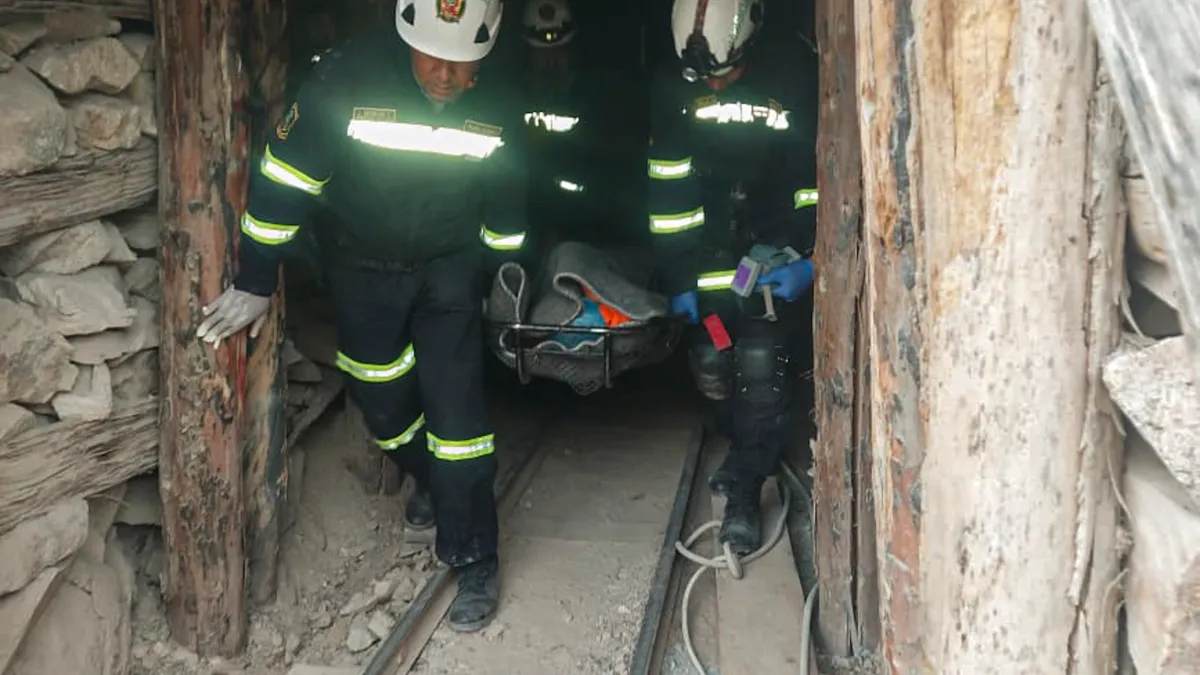
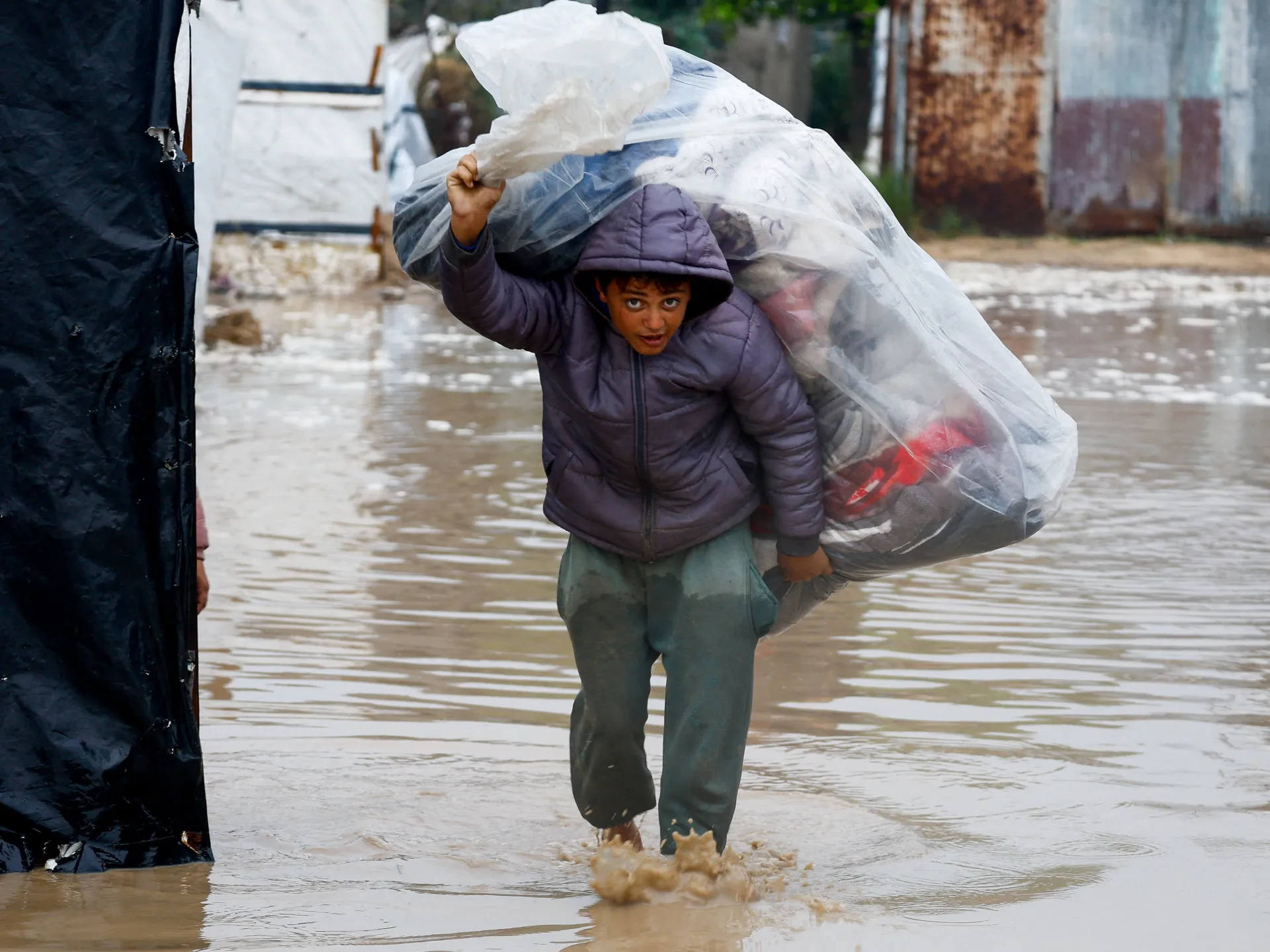
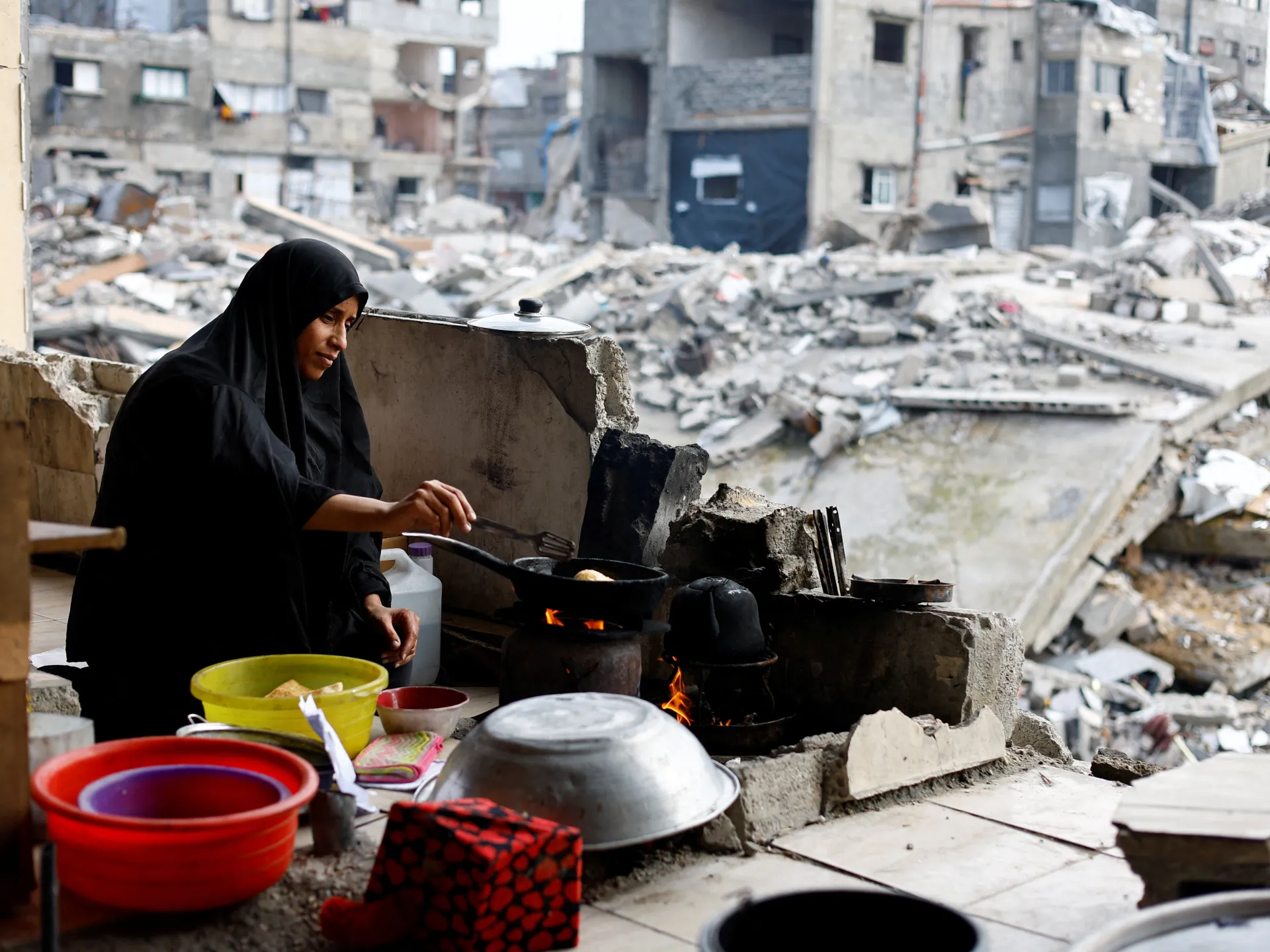

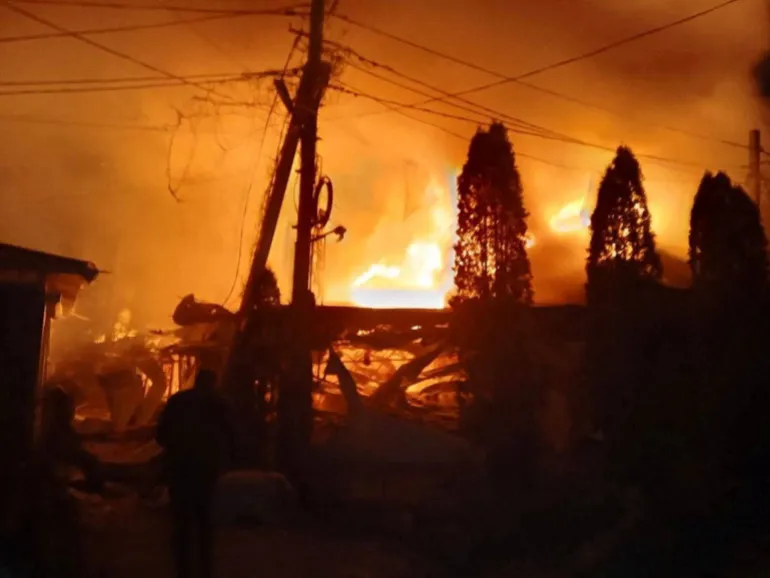

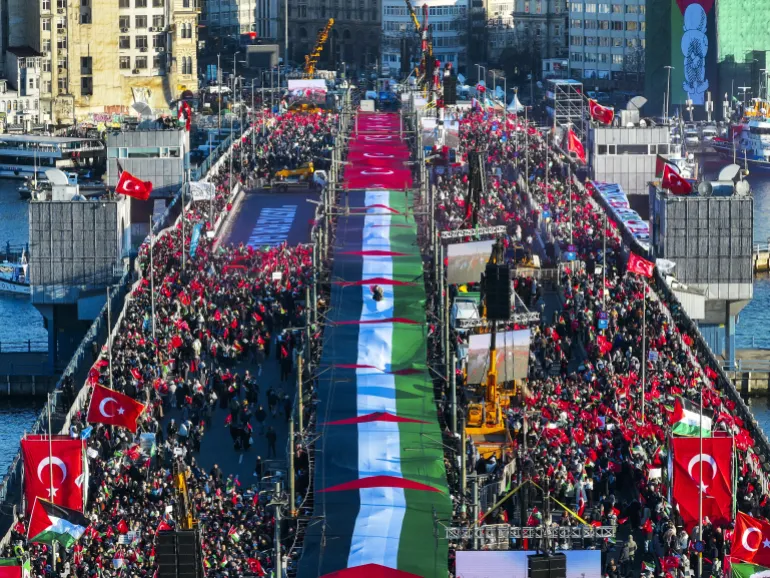


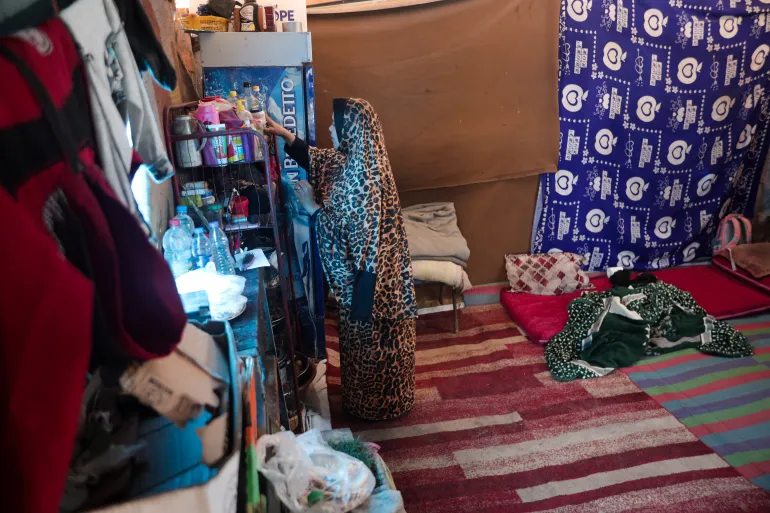
![During the famine, Sana’a’s greatest wish was to provide a loaf of bread for her seven children, amid a six-month-long blockade that prevented food and goods from entering [Abdelhakim Abu Riash/Al Jazeera]](https://i0.wp.com/www.aljazeera.com/wp-content/uploads/2025/12/873A1745-1767205773.jpg?w=640&ssl=1)
![Sana’a sits with her children inside their tent, holding on to hope that living conditions will improve in the coming year [Abdelhakim Abu Riash/ Al Jazeera]](https://i0.wp.com/www.aljazeera.com/wp-content/uploads/2025/12/873A1784-1767206217.jpg?w=640&ssl=1)
![Batoul Abu Shawish, 20, lost her entire family in an Israeli strike that targeted their home in Nuseirat during the ceasefire in November 2025 [Abdelhakim Abu Riash/ Al Jazeera]](https://i0.wp.com/www.aljazeera.com/wp-content/uploads/2025/12/873A1950-1767206334.jpg?w=640&ssl=1)
![Batoul holds a photo on her phone showing her with her family, including her father, mother, and siblings Muhammad, Youssef, Tayma, and Habiba [Abdelhakim Abu Riash/Al Jazeera]](https://i0.wp.com/www.aljazeera.com/wp-content/uploads/2025/12/873A2057-1767206534.jpg?w=640&ssl=1)
![Batoul stands in front of the rubble of her destroyed home, where she was trapped for about an hour before being rescued when it was hit [Abdelhakim Abu Riash/ Al Jazeera]](https://i0.wp.com/www.aljazeera.com/wp-content/uploads/2025/12/873A1970-1767206634.jpg?w=640&ssl=1)
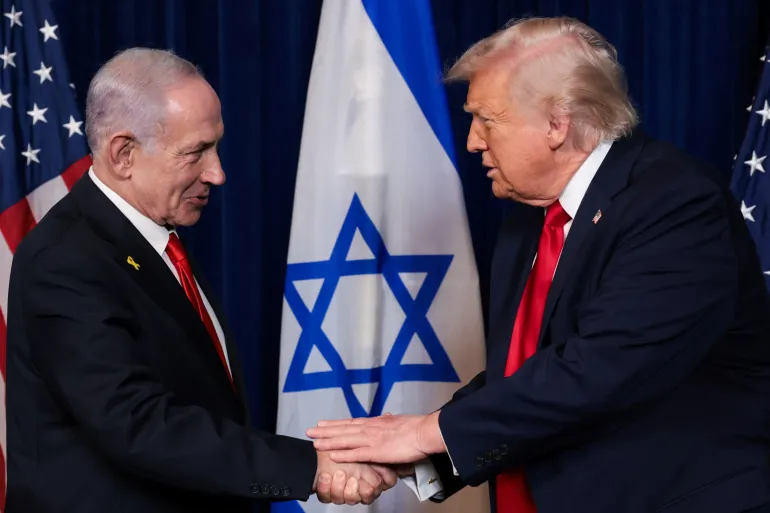


![Israeli far-right Finance Minister Bezalel Smotrich holds a map of an area near the settlement of Maale Adumim, a land corridor known as E1, outside Jerusalem in the occupied West Bank, on August 14, 2025, after a press conference at the site. [Menahem Kahana/AFP]](https://i0.wp.com/occasionaldigest.com/wp-content/uploads/2025/12/AFP__20250814__69HV6DR__v1__HighRes__IsraelPalestinianConflictSettlementPolitics-1755194568.jpg?w=640&ssl=1)