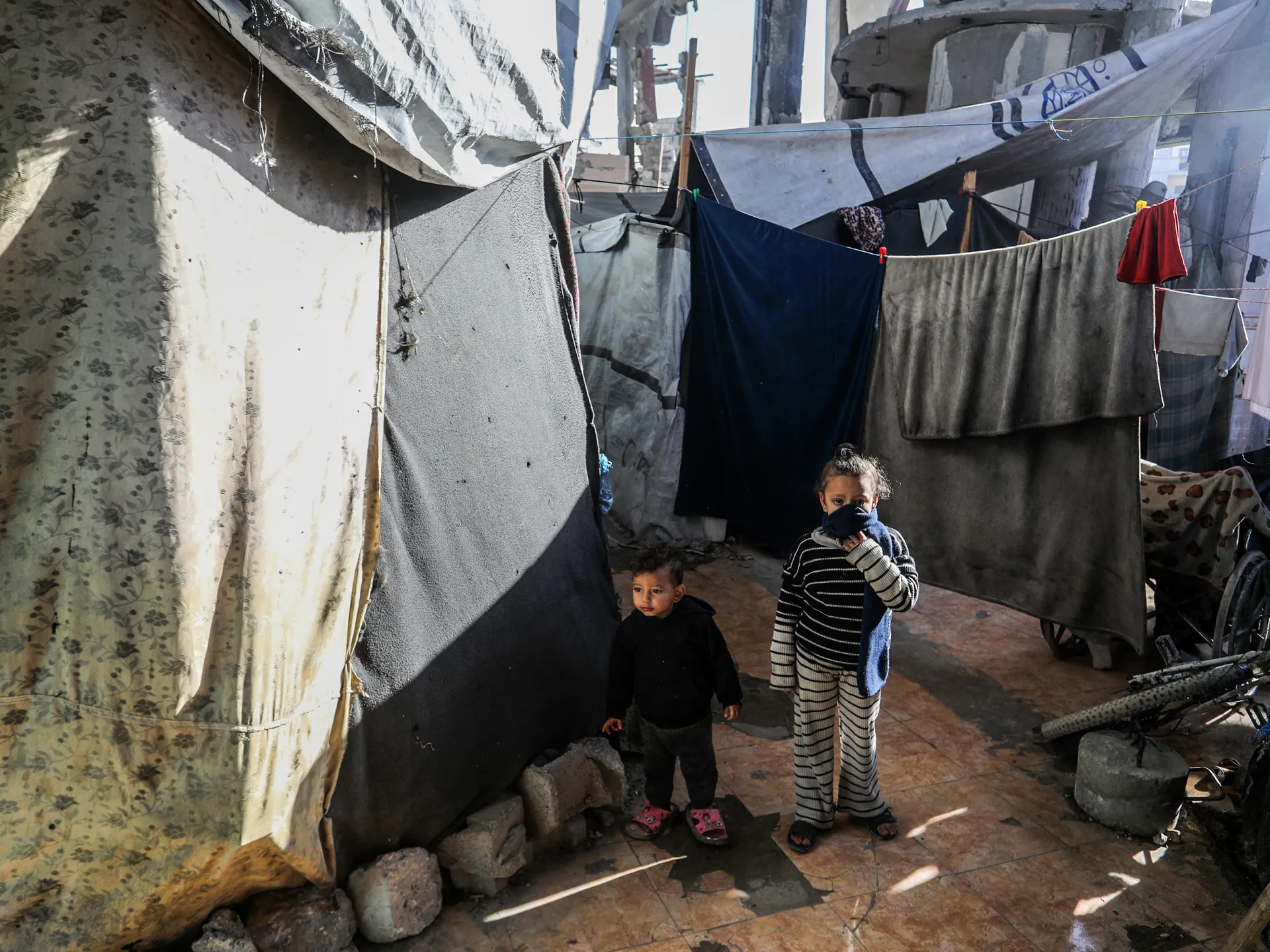
In a small tent overshadowed by the sound of nearby gunfire, seven-year-old Tulin prepares for her first day of school in two years.
For most children, this would be a moment of excitement. For Tulin and her mother, it is a chapter of terror.
The relentless Israeli war has destroyed the vast majority of Gaza’s educational infrastructure, forcing families to create makeshift “tent schools” in dangerous proximity to Israeli forces — an area demarcated by Israel as the “yellow zone” west of the separation line, often just a few metres away from danger.
“Until my daughter gets to school, I honestly walk with my heart in my hand,” Tulin’s mother told Al Jazeera correspondent Shady Shamieh.
“Many times, I find myself involuntarily following her until she reaches the school. I feel there is something [dangerous], but I want her to learn,” she added. “If not for this situation, she would be in second grade now. But we are determined.”
‘Take the sleeping position’
The journey to the classroom is perilous. Walking through the rubble of Beit Lahiya, Tulin admits she is terrified of the open spaces.
“When I go to school, I am afraid of the shooting,” Tulin said. “I can’t find a wall to hide behind so the shelling or stray bullets don’t hit us.”
Inside the tents, protection is nonexistent. The canvas walls cannot stop bullets, yet the students sit on the ground, determined to learn.
Their teacher describes a harrowing daily routine where education is frequently interrupted by the crack of sniper fire.
“The location is difficult, close to the occupation [forces],” the teacher explained. “When the shooting starts, we tell the children: ‘Take the sleeping position.’ I get goosebumps, praying to God that no injuries occur. We make them lie on the ground until the shooting stops.”
“We have been exposed to gunfire more than once,” she added. “Despite this, we remain. The occupation’s policy is ignorance, and our policy is knowledge.”
Among the students is Ahmed, who lost his father in the war. “We come with difficulty and leave with difficulty because of the shooting,” he told Al Jazeera. “But I want to fulfil the dream of my martyred father, who wanted to see me become a doctor.”
‘One of the biggest catastrophes’
The desperate scenes in Beit Lahiya reflect a wider collapse of the education system in the enclave.
Speaking to Al Jazeera Arabic on Monday, Kazem Abu Khalaf, the spokesperson for UNICEF in Palestine, described the situation as “one of the biggest catastrophes”.
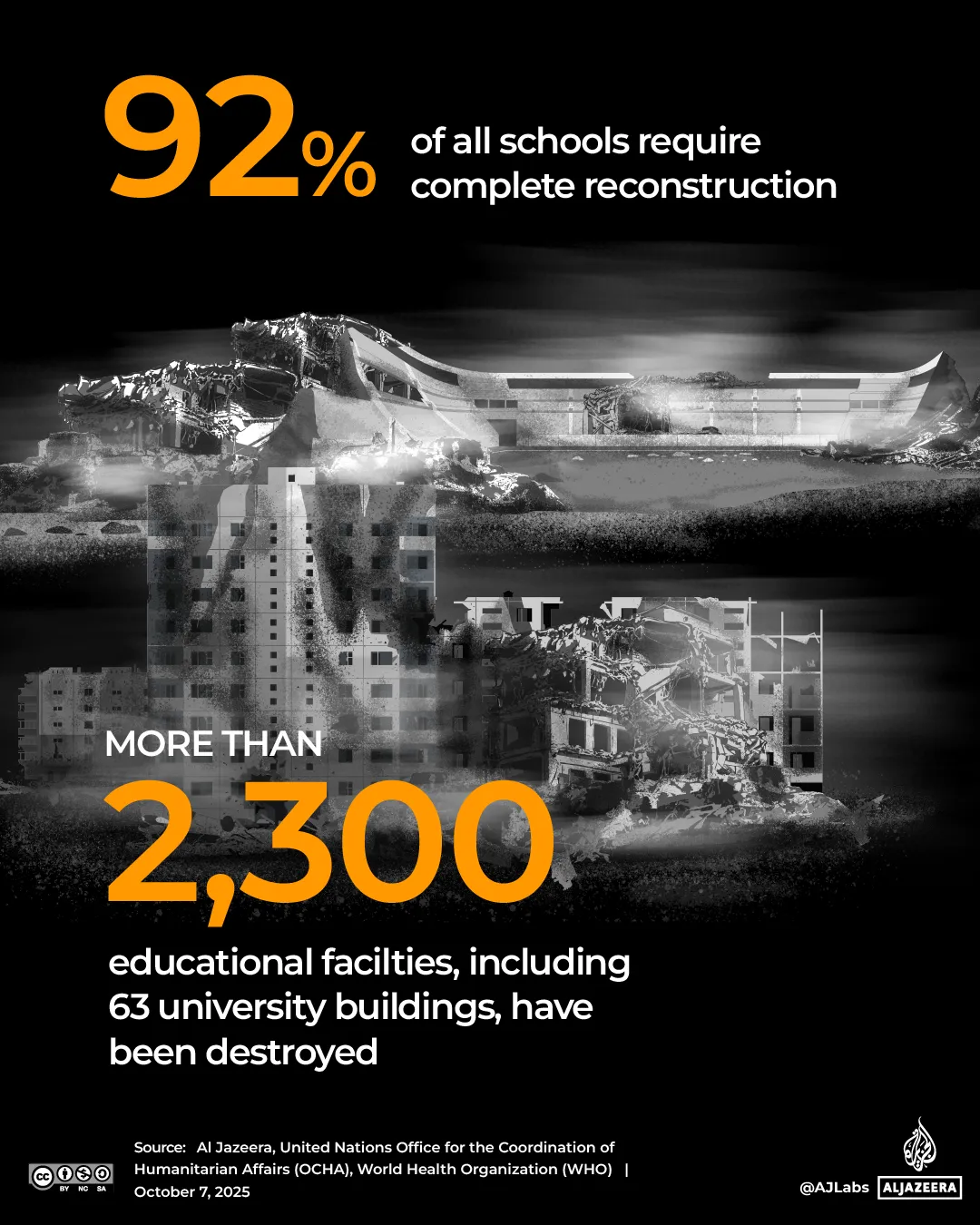
“Our figures indicate that 98 percent of all schools in the Gaza Strip have suffered varying degrees of damage, ranging up to total destruction,” Abu Khalaf said.
He noted that 88 percent of these schools require either comprehensive rehabilitation or complete reconstruction.
The human toll is staggering: approximately 638,000 school-aged children and 70,000 kindergarten-aged children have lost two full academic years and are entering a third year of deprivation.
Trauma and speech impediments
While UNICEF and its partners have established 109 temporary learning centres serving 135,000 students, the psychological scars of the war are surfacing in alarming ways.
Abu Khalaf revealed that field teams have observed severe developmental regression among students.
“In one area, [colleagues] monitored that approximately 25 percent of the children we are trying to target have developed speech difficulties,” Abu Khalaf said. “This requires redoubled efforts from educational specialists.”
The ban on books
Beyond the structural destruction and trauma, the education sector faces a logistical blockade. Abu Khalaf confirmed that since the war began in October 2023, virtually no educational materials have been allowed into the Strip.
“The biggest challenge, in truth, is that … almost no learning materials have entered Gaza at all,” he said.
UNICEF is currently preparing to launch a “Back to Learning” campaign targeting 200,000 children, focusing on Arabic, English, maths and science, alongside recreational activities to “repair the children’s psyche before anything else”.
However, Abu Khalaf emphasised that the success of any campaign depends on Israel lifting restrictions.
“We are communicating with all parties, including the Israeli side, to allow the entry of learning materials,” he said. “It is not in anyone’s interest for a child in Gaza not to go to school.”
Israel has launched intense artillery and helicopter attacks on southern Gaza despite a United States-brokered ceasefire, bombing a tent housing displaced Palestinians and killing a five-year-old girl and her uncle, according to officials.
The killings on Monday brought the number of Palestinians killed by Israeli forces since the truce came into effect in October to at least 422, according to Gaza health authorities.
Recommended Stories
list of 4 itemsend of list
The Nasser Medical Complex in southern Khan Younis said the deadly Israeli strike hit a tent in the coastal al-Mawasi area, and that four others, including children, were also wounded.
Israel’s military said it struck a Hamas fighter who was planning to attack Israeli forces “in the immediate timeframe”. But the military did not provide evidence for the claim, and it was not clear if its statement referred to the tent attack.
Despite the ceasefire, Israeli forces have continued near-daily attacks on Gaza and have maintained restrictions on the entry of humanitarian aid. Much of the enclave has been devastated by Israel’s genocidal war, with roughly 88 percent of buildings damaged or destroyed, Palestinian officials say.
Most of Gaza’s two million people are now living in tents, makeshift shelters or damaged buildings in areas vacated by Israeli troops.
The Palestinian Civil Defence said on Monday that another Palestinian home damaged in earlier Israeli strikes collapsed in the central Maghazi camp, killing a 29-year-old father and his eight-year-old son.
But the rescue service said in a subsequent statement that it was unable to respond to requests to remove hazards caused by damaged buildings because of a lack of equipment and continuing fuel shortages.
The Gaza ceasefire, agreed upon after more than two years of Israeli attacks that killed more than 71,000 people, is being implemented in phases. The first stage includes exchanges of captives and prisoners, increased humanitarian aid and the reopening of Gaza’s Rafah border crossing with Egypt.
Hamas has freed all remaining living captives and returned dozens of bodies, except for one, while Israel has released nearly 2,000 Palestinian detainees and prisoners, including some serving life sentences.
Hopes for Rafah crossing
However, humanitarian groups say that Israeli restrictions continue to hamper aid deliveries, while Gaza’s Rafah crossing with Egypt remains closed. The crossing had long been Gaza’s only connection to the outside world until the Israeli military occupied the Palestinian side in May 2024.
Israel’s Kan broadcaster reported on January 1 that Israeli authorities are preparing to reopen the crossing in “both directions” following pressure from US President Donald Trump.
If confirmed, it would mark a shift from an earlier Israeli policy that stated the crossing would only open “exclusively for the exit of residents from the Gaza Strip to Egypt”. The policy drew condemnation from regional governments, including Egypt and Qatar, with officials warning against the ethnic cleansing of Gaza.
The latest Israeli report has left many Palestinians hopeful.
Tasnim Jaras, a student in Gaza City, told Al Jazeera that it was her “dream that the crossing opens so we can continue our education”.
Moaeen al-Jarousha, who was wounded in the war, said he needed to leave Gaza to receive medical treatment abroad. “I need immediate medical intervention. I live in very difficult conditions,” he said.
Al Jazeera’s Hani Mahmoud, reporting from Gaza City, said Palestinians in Gaza have been waiting for the crossing to open for a long time.
“For many, this isn’t about travel, it’s about survival. Parents are asking about medical access they haven’t been able to obtain over the past two years. Students think of this as an opportunity to continue their education,” he said.
“And for many families, this is an opportunity to reunite with family members who have been separated for too long. But hope here is never simple. People here have heard about these announcements numerous times, and many recall how quickly it shut again,” he added.
Israel, meanwhile, continues to retain control of 53 percent of Gaza, and witnesses on Monday reported continued demolitions of residential homes in the eastern Zeitoun neighbourhood of Gaza City.
The Israeli military also said it attacked a Palestinian who had crossed the so-called “yellow line” – an unmarked boundary where the Israeli military repositioned itself when the truce came into effect – in southern Gaza on Monday with the aim of “removing the threat”. It did not provide evidence for the claim.
Israel also said it had carried out strikes against Hezbollah and Hamas targets in southern and eastern Lebanon.
Hadramout governor says ports and airports will soon be operational after Saudi-backed government forces ousted secessionists from the south.
About 400 tourists are stuck on the Yemeni island of Socotra after flights were grounded because of clashes on the mainland between government troops backed by Saudi Arabia and secessionists with links to the United Arab Emirates.
Over the past few days, flights in and out of Yemen have been largely restricted during heavy fighting between rival armed factions loosely grouped under the Yemen’s fractious government, which is based in the southern port city of Aden.
Recommended Stories
list of 3 itemsend of list
The Socotra islands, 380km (236 miles) south of the mainland, are under the control of the United Arab Emirates-backed Southern Transitional Council, which has clashed with Yemen’s Saudi-backed government in the provinces of Hadramout and al-Mahra.
Yahya bin Afrar, the deputy governor for culture and tourism on Socotra, the largest island in the Socotra archipelago, said that “more than 400 foreign tourists” are stranded after their flights were “suspended”.
A local official, who spoke to the AFP news agency on condition of anonymity, said that 416 people of different nationalities were stranded on Socotra, including “more than 60 Russians”.
An unnamed Western diplomat said that “British, French and American” nationals were also among the stranded tourists.
Highly unstable region
In a post on X on Sunday, Poland’s Ministry of Foreign Affairs spokesperson, Maciej Wewior, said Polish tourists were stuck too, adding that flights to Socotra by an Emirati airline had been suspended until Tuesday.
“Socotra is located in a highly unstable region, where an armed conflict has been ongoing for years. Currently, the security situation has further deteriorated. Due to the intensification of military operations, airspace has been closed,” the post said.
A travel agent in Socotra said at least two Chinese nationals were also there.
Tourists stuck on the island, many of whom went there to for New Year’s celebrations, are now reaching out to their embassies for help to be evacuated, according to another Western diplomat.
“Their relevant embassies have reached out to the Saudi and Yemeni governments to seek their evacuation,” said the diplomat.
The airport in Aden has been functional since Sunday, after disruptions that lasted for several days.
Pledge to restore order
Yemen’s civil war entered a new phase last month when secessionists with the UAE-backed STC extended its presence in southeastern Yemen with the aim of establishing an independent state.
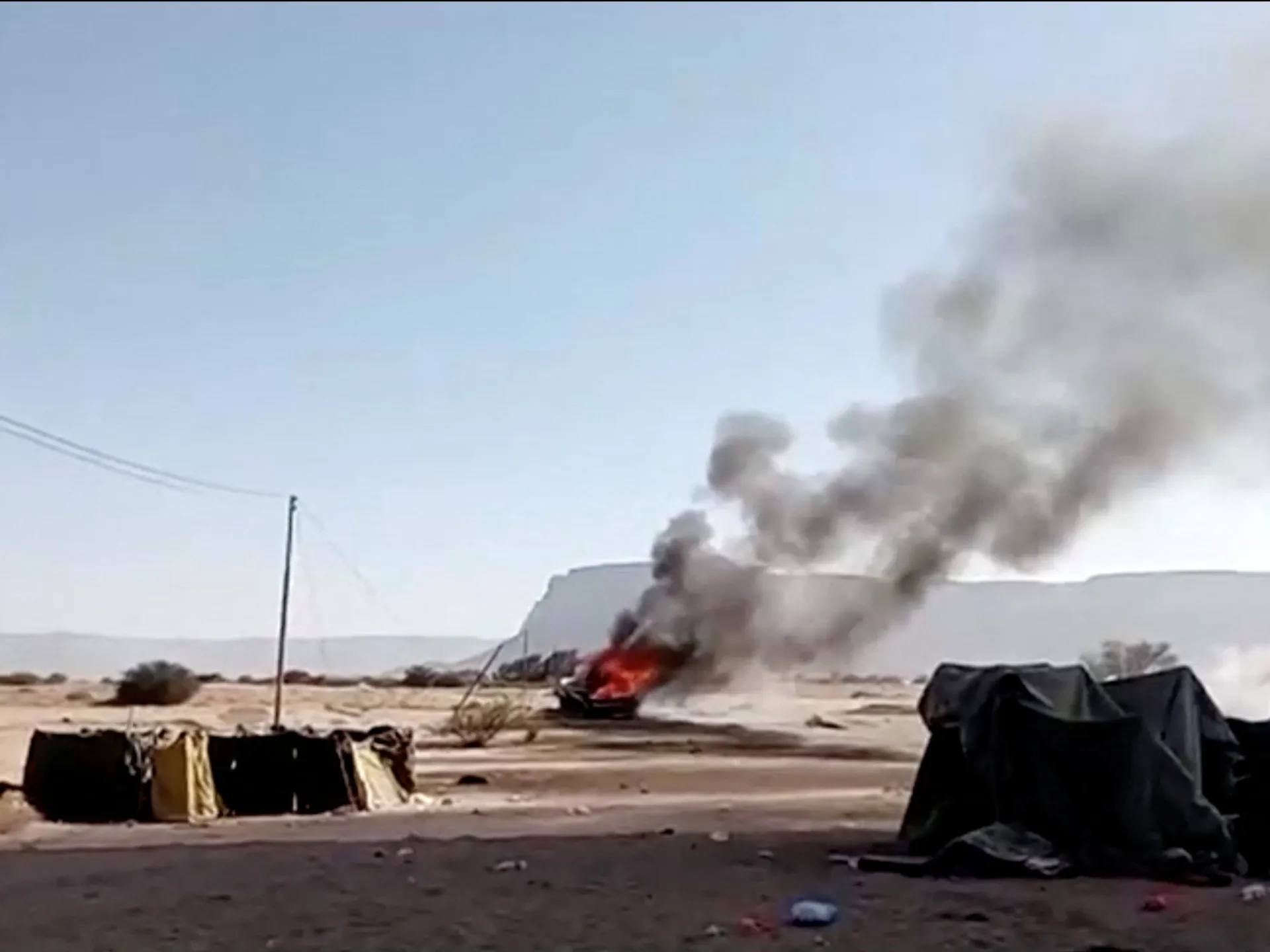
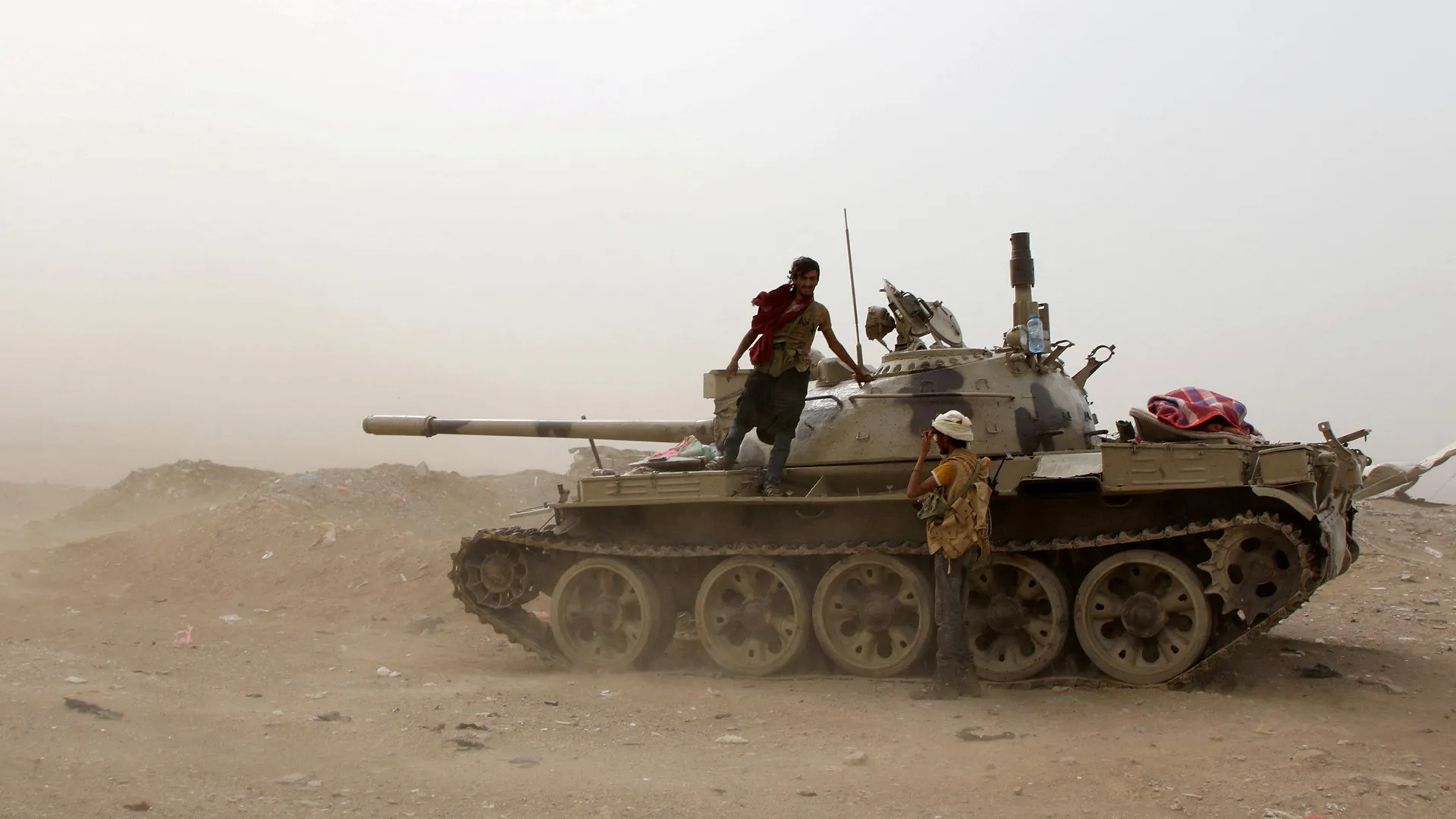
But this week, the Saudi-backed “Homeland Shield” forces took back the oil-rich southern governorates of Hadramout and al-Mahra, which make up nearly half of Yemen’s territory, from the STC rebels.
In the past, the opposing forces were allied under the umbrella of the Aden-based Presidential Leadership Council (PLC) – the governing organ of the internationally recognised government – against the Houthis, who control most of northwestern Yemen, including the capital, Sanaa.
On Friday, Salem al-Khanbashi, the governor of Hadramout, was chosen by the government to command the Saudi-led forces in the governorate.
In an interview with Al Jazeera Arabic on Monday, al-Khanbashi said that ports and airports in the governorate would soon be operational, stressing the need to restore service at the Seiyun airport in northern Hadramout.
He pledged to re-establish security and stability, saying meetings will be held with all political and tribal groups to form a united front to protect the governorate against future attacks.
Compensation will be extended for damage to public and private property caused during the STC’s advance. The authorities are focused on getting electricity, water and health services up and running again, al-Khanbashi said.
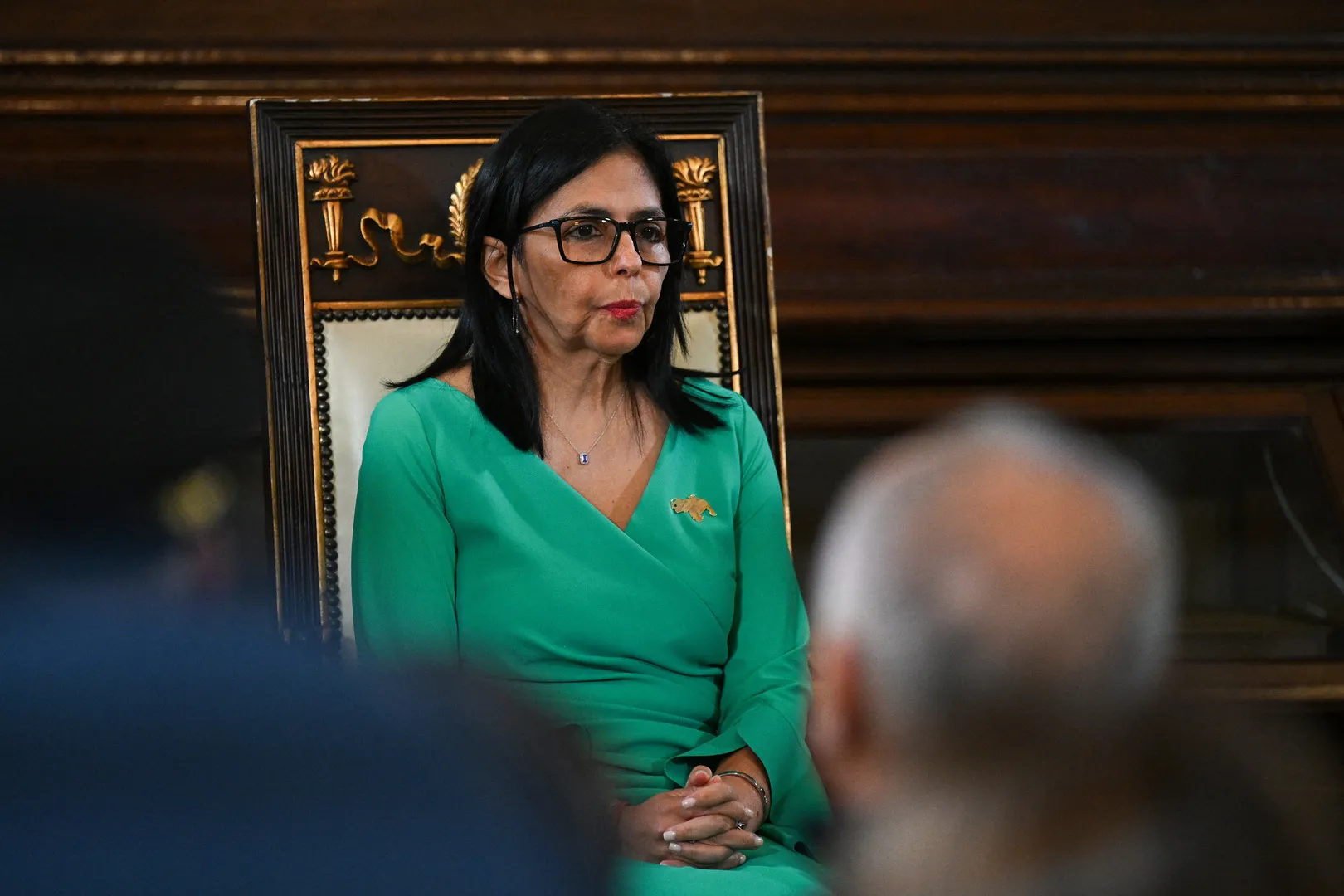
Venezuelan state TV footage shows Vice President Delcy Rodriguez being formally sworn in as interim president in Caracas days after President Nicolas Maduro was abducted to face narco-terrorism charges in New York.
‘It is my mission to teach Palestinian students, even if I must build a classroom, brick by brick,’ Bader Slaih says.
Published On 5 Jan 20265 Jan 2026
Share
Bader Slaih is one of many Palestinian scholars from Gaza who had to put down his books amid Israel’s genocidal war on the enclave.
Slaih, who was displaced multiple times from Bureij in central Gaza with his family, started baking bread to feed them during the war, but he still has dreams to enrich the minds of students in Gaza, who have suffered deaths in their families, a loss of their homes and the decimation of their schools and education.
Recommended Stories
list of 4 itemsend of list
“The war was hard on everyone. We were tormented and humiliated,” he said.
“Out of a dire need, we built a brick oven to make bread for our children,” Slaih told Al Jazeera.
“We had to bake to feed our children and others,” he added.
Bader Slaih is pictured baking bread [Screengrab/Al Jazeera]
Palestinians have always been deeply committed to learning.
Before Israel’s war, the education sector in Gaza was thriving, and literacy rates were reported to be among the highest in the world.
According to the Palestinian Central Bureau of Statistics, the illiteracy rate stood at 2.1 percent among Palestinians aged 15 and older in 2023.
Slaih said he was always committed to his studies since early childhood into adolescence before he got his master’s and doctorate degrees in Egypt, and returned to Gaza to serve his homeland.
“[After I came back] I filed all my certificates with universities, hoping to start my teaching career,” he told Al Jazeera.
“But then disaster struck – the war began.”
Slaih’s wife and son left Gaza for medical reasons as he was left behind during the war.
“It was difficult for me. My son’s medical needs were more important, so I stayed behind with my other family members,” he said.
Educational system devastated
According to a UNICEF report released in November, Gaza’s education system “stands on the brink of collapse”, with more than 97 percent of schools damaged or destroyed.
The report said 91.8 percent of all education facilities require either full reconstruction or significant rehabilitation to become functional again.
All of Gaza’s 12 universities have been totally or partly destroyed and are in unusable condition, according to local reports.
Slaih said he was determined to pursue his career as there was a ceasefire in place in Gaza, adding: “Patience and resolve are part of our DNA.”
“I will serve as a teacher, even in a tent. It is my mission to teach Palestinian students, even if I must build a classroom, brick by brick,” he said.
“With my hopes still high, I am certain I will make my dream come true very soon.”
Slaih says he is determined to pursue his career [Screengrab/Al Jazeera]
The Israeli military has spent the past 24 hours expanding the so-called “yellow line” in eastern Gaza, particularly in eastern Gaza City’s Tuffah, Shujayea, and Zeitoun neighbourhoods, according to Al Jazeera teams on the ground, squeezing Palestinians into ever smaller clusters of the enclave.
The Israeli army’s actions on Monday are also pushing it closer to the key artery of Salah al-Din Street, forcing displaced families sheltering near the area to flee as more of them come under intensive threat, as Israel’s genocidal war on Gaza shows no signs of abating.
Recommended Stories
list of 3 itemsend of list
Israel now physically occupies more than 50 percent of the Gaza Strip.
Since the ceasefire took effect, Israeli attacks have killed at least 414 Palestinians and injured 1,145 in daily truce violations despite the ceasefire deal mediated by the United States on October 10.
Al Jazeera’s Hani Mahmoud, reporting from Gaza City, said, “The ongoing Israeli attacks on the ground, the expansion of the ‘yellow line’ are meant to eat up more of the territory across the eastern part, really shrinking the total area where people are sheltering.”
“Everyone is cramped here. The population here not just doubled but tripled in many of the neighbourhoods, given the fact that none of these people is able to go back to their neighbourhoods. We’re talking about Zeitoun, Shujayea, as well as Tuffah,” he added.
“It was not until the past few minutes that the sounds of hums, the drones buzzing, faded away, but it had been going on for the past night and all of yesterday. Ongoing explosions that could be heard clearly from here,” Mahmoud said.
Intense artillery bombardment and helicopter fire also resumed on Monday in the areas south of the besieged enclave, north and east of the cities of Rafah and Khan Younis.
On Sunday, Israel launched more attacks into parts of Gaza outside its direct military control. At least three Palestinians were killed in separate Israeli attacks in Khan Younis, medical sources told Al Jazeera.
A five-storey building belonging to the al-Shana family in the Maghazi camp in central Gaza collapsed. It had been subjected to Israeli bombing at the end of 2023.
Civil Defence teams are searching for missing people under the rubble. The Wafa news agency reported that at least five people were injured.
Israeli push to make Rafah crossing ‘one-way exit’
Expectations have heightened around the possible reopening of the Rafah crossing, fuelling both desperate hope and deep fear.
For many in Gaza, there is some hope it could offer a lifeline, allowing the sick and wounded to access medical care, reuniting separated families, and giving some people a rare chance to move in or out of the Strip. Some also see it as a potential sign of easing restrictions.
But fears remain strong. Many worry the opening will be limited and temporary, benefitting only a few. Others fear it could become a one-way exit, raising concerns about permanent expulsion, effectively Israeli ethnic cleansing, and whether those who leave will be allowed to return.
“Until this moment, there’s nothing on the ground other than the headlines we’ve been reading over the past couple of days, the expectation now that within days the Rafah crossing is going to open and allow for movement in and out of Gaza. So far, we know the Israeli military is pushing for Rafah to be just a one-way exit,” Al Jazeera’s Mahmoud reported.
After months of uncertainty, people in Gaza who have suffered unimaginable loss and destruction are cautious. Even the possibility of relief comes with questions and little trust in what will happen next.
At least 71,386 Palestinians have been killed and 171,264 injured since the start of the war in October 2023, according to the latest figures from Gaza’s Ministry of Health. At least 420 people have been killed since the ceasefire was agreed upon three months ago.
The Israeli military continues to block a large amount of international humanitarian aid amassing at the Gaza crossings, while maintaining that there is no shortage of aid despite testimonies by the United Nations and others working on the ground.
It was his 26th birthday, so Wilmer Castro was not surprised by the flurry of messages that lit up his phone.
However, as he began scrolling on Saturday morning, he realised the messages were not birthday wishes, but news of something he had long hoped for: Venezuelan President Nicolas Maduro had been removed from power.
Recommended Stories
list of 3 itemsend of list
“I think it is the best gift that I will ever receive, one I will never forget,” the university student said from Ejido.
Castro told Al Jazeera that he was so elated by the news that he began daydreaming about his future self recounting the story of Maduro’s fall to his grandchildren and great-grandchildren.
“I will tell them that on January 3, 2026, a dictator fell, and [that moment] is going to be very beautiful.”
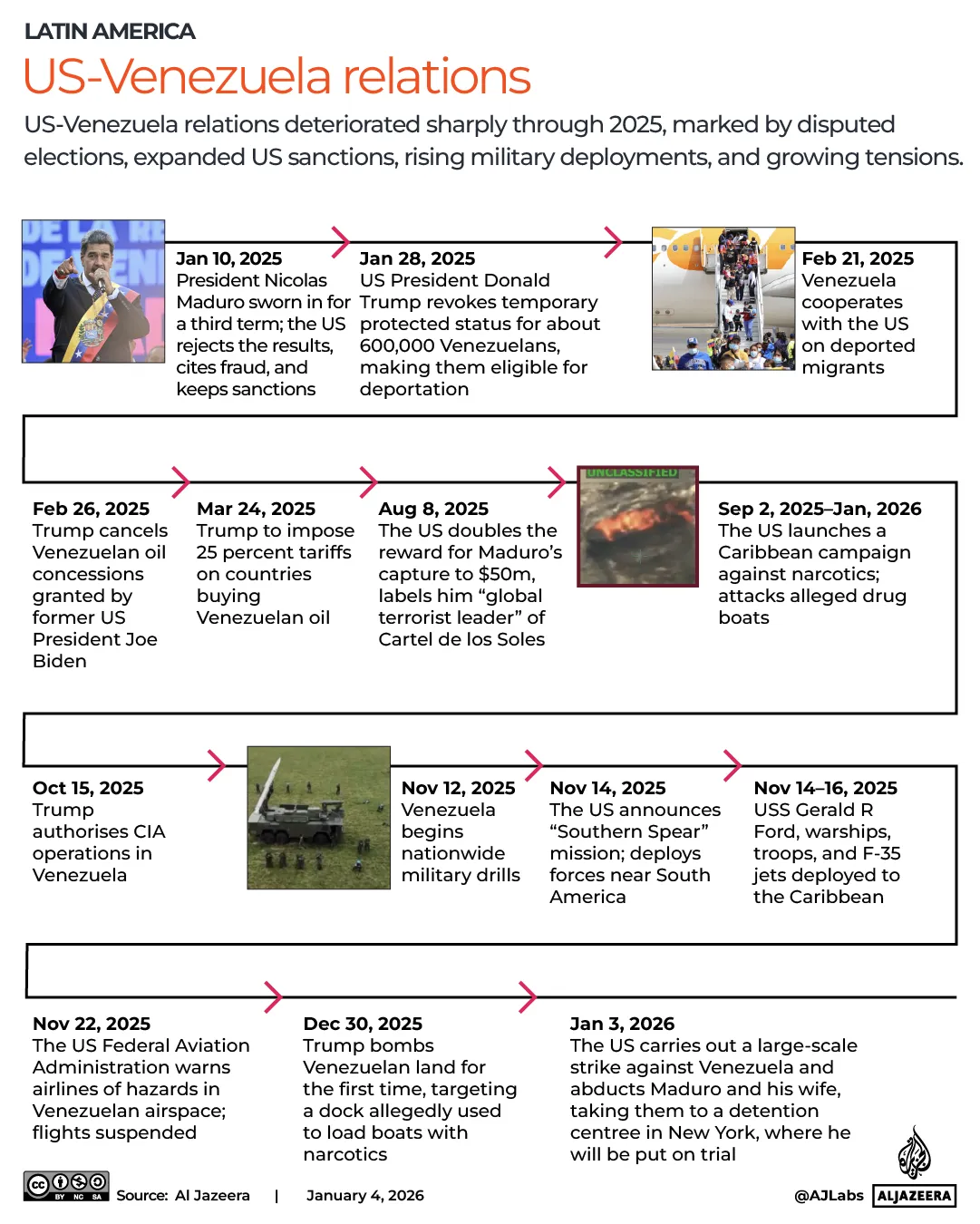
The abduction of Venezuela’s long-time authoritarian leader – and his wife – by the United States followed months of escalating tensions between the two countries, including US strikes on alleged drug-trafficking vessels and the deployment of US ships near Venezuela’s coastal waters.
But by Sunday morning, Castro’s initial jubilation was clouded by a heavy quiet. The weight of uncertainty brought the city to a sombre pause, one that closed in on him and felt unlike anything he had experienced before.
“It’s like being in a field with nothing else around. It’s a mournful silence; I can’t describe it,” he said.
That uncertainty was felt by many Venezuelans on Sunday morning.
Venezuela has had a socialist government since 1999, first under President Hugo Chavez and later Maduro, a period that began with oil-funded social programmes but unravelled into economic mismanagement, corruption and repression – with international sanctions further squeezing the population.
Momentum around the 2024 presidential election raised hopes that the opposition alliance would take control. But when Maduro declared victory, despite opposition claims of a landslide win for Edmundo Gonzalez Urrutia, a crackdown on dissent followed. It left many Venezuelans concluding that any real transition might depend on pressure — or even intervention — from outside the country.
‘Deathly silence’
In southeastern Caracas on Saturday, 54-year-old Edward Ocariz was jolted awake by a loud crash and the vibrating windows of his home near the Fort Tiuna military barracks. He thought it was an earthquake, but when he looked outside, he saw unfamiliar helicopters flying low above smoke rising in the city.
“The noise kept coming,” he said. “I could immediately tell the helicopters were not Venezuelan because I had never seen them here.”
Then, just as suddenly as it had started, it stopped.
“There was a deathly silence,” Ocariz said, adding that the brief suspension of mobile phone services and power outages contributed to the silence. “We were waiting to understand what was happening.”
Fear accompanied the fragments of information that did manage to seep through, Ocariz said. “But it was a fear mixed with joy – tremendous joy. It’s hard to explain.”
On Sunday, when images of a blindfolded and handcuffed Maduro began circulating, Ocariz reflected on the suffering he had endured under the president’s regime.
The human rights activist said he was wrongfully charged with “terrorism” and spent nearly five months as a political prisoner in Tocuyito prison, a maximum-security facility in Carabobo state.
Under Maduro, the country had a long history of jailing those who dissent. After the disputed 2024 election, nearly 2,500 protesters, human rights activists, journalists and opposition figures were arrested. While some were later released, others remain behind bars.
“I felt satisfied. A process of justice is finally beginning,” Ocariz said, fully aware that Maduro will not have to endure the dire prison conditions he did, or be denied food and legal representation.
Despite the joy he and other Venezuelans now feel, Ocariz warns that much remains to be done.
“The population still feels a huge amount of fear [from the authorities] — psychological fear — because it’s well known how the police and justice system use their power to criminalise whoever they choose.”
So far, key institutions remain in the hands of figures from Nicolas Maduro’s inner circle, including Vice President Delcy Rodriguez, who has been named acting president.
But for many Venezuelans — including Castro and Ocariz — seeing a senior Chavista figure still in power is unsettling, particularly as the Trump administration continues to engage with her.
“It is certainly frustrating for me. However, I understand that Venezuela needs to continue with its administrative, functional, and operational management as a country, as a nation,” Ocariz said, adding that the US must maintain some order to control the power vacuum and stamp out repression.
Economic concerns
Venezuela remains heavily militarised, and fears of further unrest linger. During periods of dissent, the authorities relied not only on formal security forces but also on “colectivos”, armed civilian groups accused by rights organisations of intimidation and violence.
Jose Chalhoub, an energy and political risk analyst at Jose Parejo & Associates in Caracas, said he is concerned about the possibility of more attacks and social unrest.
“Any potential new government that will move ahead with the cleansing of the top ranks of the armed forces and security and police forces will lead to the disarmament of the colectivos,” he said, adding that fixing the lingering economic crisis should also be one of the main priorities.
“A new government that applies quick economic measures leading to a recovery will outshine the ideological legacy of the Bolivarian revolution,” he said, referring to the ideology of Chavismo, defined by anti-imperialism, patriotism and socialism.
Those loyal to Maduro have long blamed Venezuela’s economic woes on the US — namely, the sanctions it imposed on the oil sector.
Chalhoub said he believed Trump’s promise to boost the country’s oil production could help the economy, though he found the US president’s assertion that the US will “run the country” baffling.
However, not everyone is happy with the Trump administration’s attack.
Alex Rajoy, a mototaxi driver in Caracas, said the US president was on an imperialist crusade with the goal of “robbing” Venezuela of its natural resources.
Despite his anger, Rajoy said he will stay home over the coming days because he is fearful of further attacks.
“These missiles aren’t aimed only at Chavistas,” he said, referring to those loyal to Venezuela’s socialist ideology.
“They threaten opposition people, too,” he said, adding that anyone supporting foreign intervention amounts to a betrayal. “It’s treason against the homeland,” he said.
What now?
For Castro, the university student, the elation he felt on Saturday has been interrupted by fear for his immediate needs – concerns over whether stores would remain open in Ejido and rising costs. Under Maduro, he has long struggled to afford basic items.
“People in the street were going crazy yesterday,” he said. “Everyone was buying food with half of what they had in their bank accounts, buying what they could, because we don’t know what the future holds.”
The scenes brought back memories of the shortages of 2016, when hyperinflation and scarcity plunged the country into crisis, forcing people to queue for hours and rush between shops with limits on how much each person could buy.
But a day after the attack, Castro said Venezuelans are reflecting on the future of their country and the uncertainty of that future.
“There’s happiness, there’s fear, there’s gratitude, there’s the ‘what will happen next?’” he said. “For my next birthday, I want total freedom for Venezuela – and hopefully, God willing, we will have it.”
The Israeli military continues to demolish structures in northern Gaza while also blocking the entry of aid.
Published On 4 Jan 20264 Jan 2026
Share
The Israeli army has launched more attacks into parts of Gaza outside its direct military control, despite the ceasefire deal mediated by the United States in October.
At least three Palestinians were killed on Sunday in separate Israeli attacks in Khan Younis, medical sources told Al Jazeera.
Recommended Stories
list of 3 itemsend of list
They included a 15-year-old boy, a fisherman, and a third man shot dead east of Khan Younis.
In the central part of the besieged enclave, Israeli fire injured several people east of the Bureij refugee camp.
In Gaza City to the north, Israeli forces continued to demolish homes and civilian infrastructure within the mostly destroyed Tuffah neighbourhood.
The Israeli army confirmed it was destroying more infrastructure in northern Gaza, but claimed that the target was “terrorist infrastructure above and below ground”, including tunnels in Beit Lahiya.
Israeli drones also dropped explosives on several homes in eastern Gaza City. The Shujayea and Zeitoun neighbourhoods of Gaza City, which have also been extensively attacked during more than two years of Israel’s genocidal war, were hit with artillery shelling.
At least 71,386 Palestinians have been killed and 171,264 others injured since the start of the war in October 2023, according to the latest figures from Gaza’s Ministry of Health. At least 420 people have been killed since the ceasefire was signed less than three months ago.
The Israeli military continues to block a large amount of the international humanitarian aid amassing at the border with Gaza, while maintaining that there is no shortage of aid despite testimonies by the United Nations and others working on the ground.
It has also moved to ban several prominent international aid groups from operating in Gaza, including Doctors Without Borders (MSF) and the Norwegian Refugee Council.
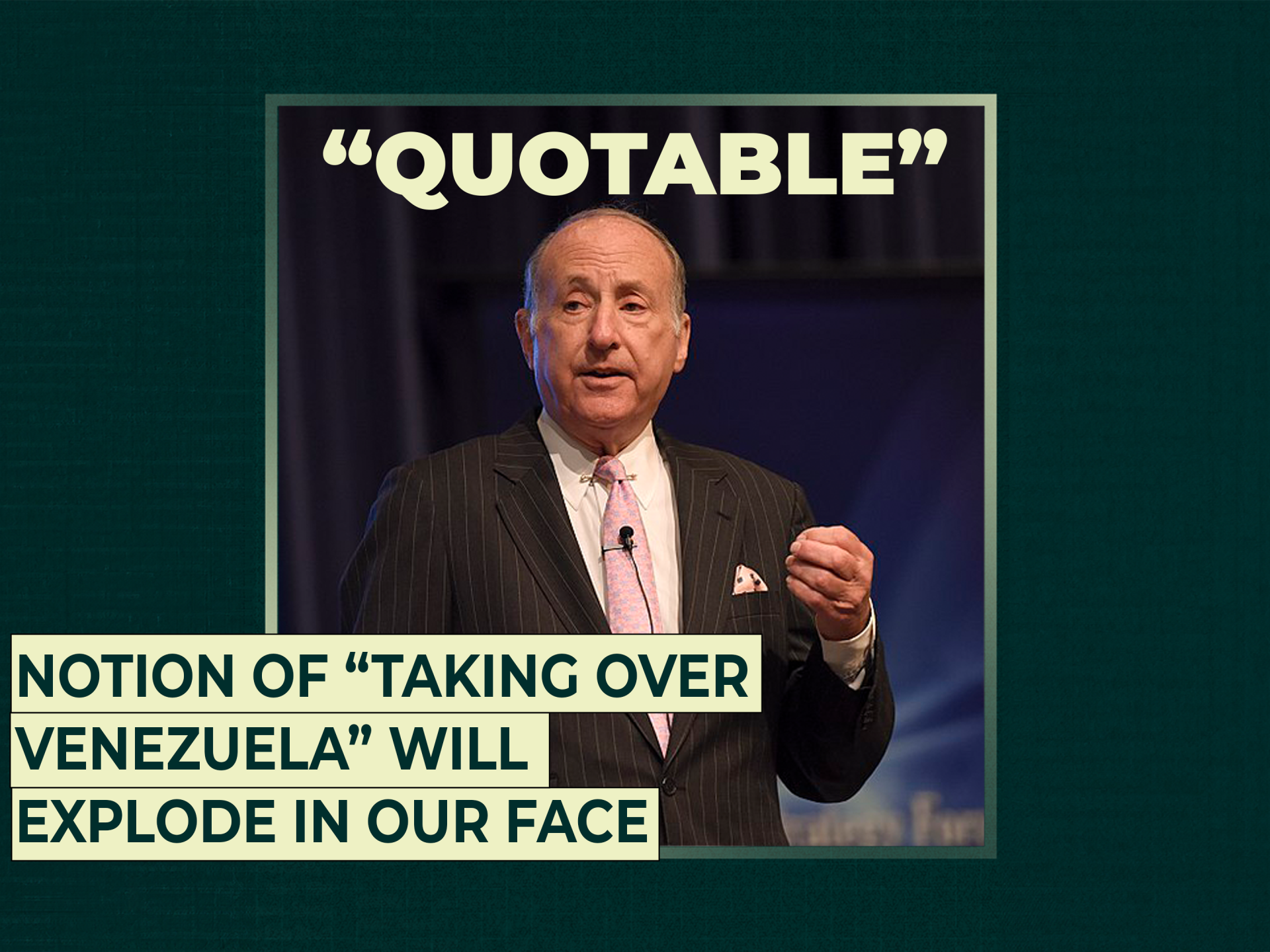
Harlan Ullman, a senior advisor at Atlantic Council talks about Donald Trump’s plan to take over Venezuela and the significant issues that need to be considered.
US President Donald Trump says the US “successfully captured” Venezuela President Nicolas Maduro and his wife “in the dead of night” and they will “face American justice” for alleged narcoterrorism. Trump said the US will run Venezuela until there is a “safe… and judicious” transition of power.
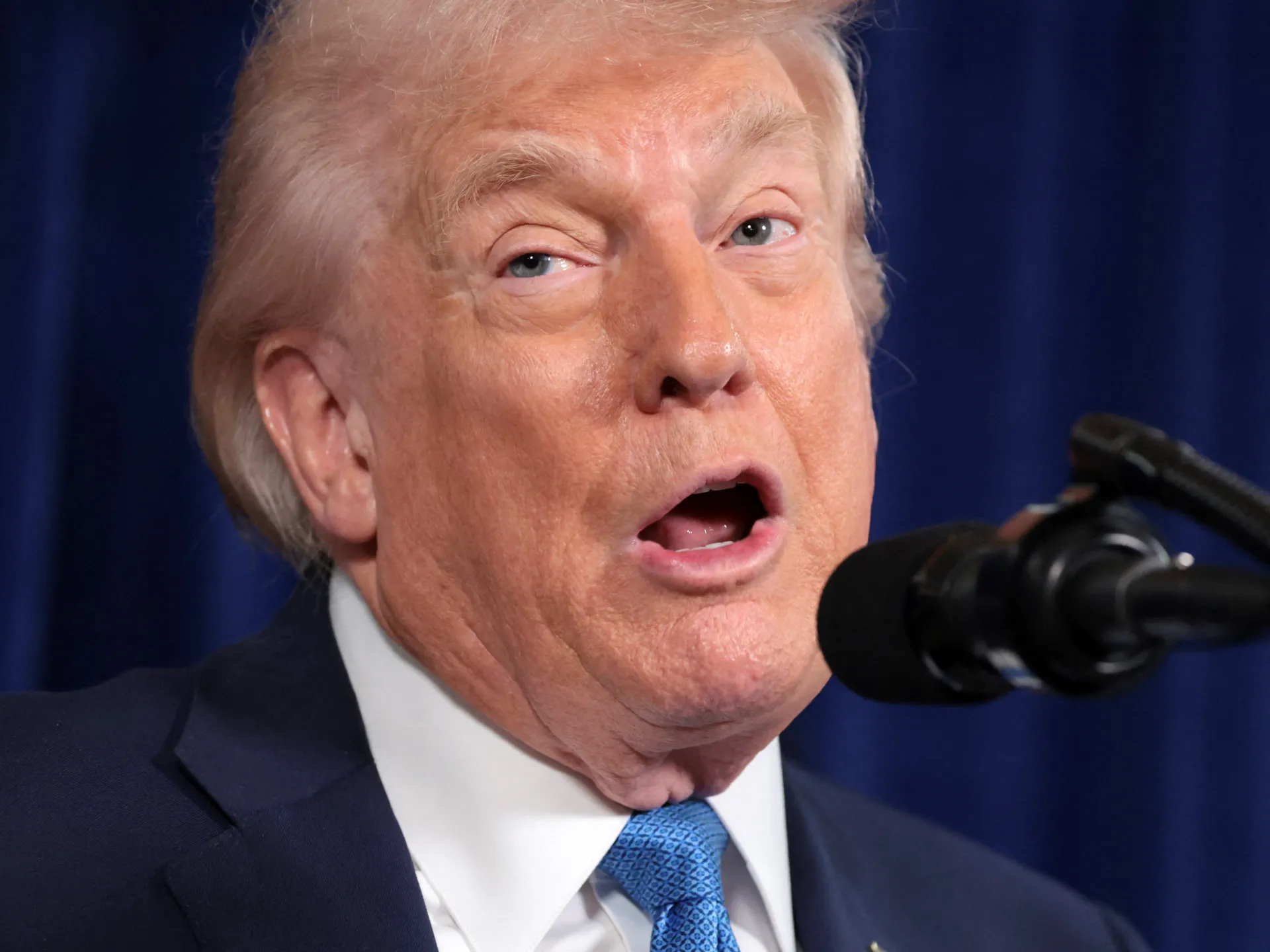
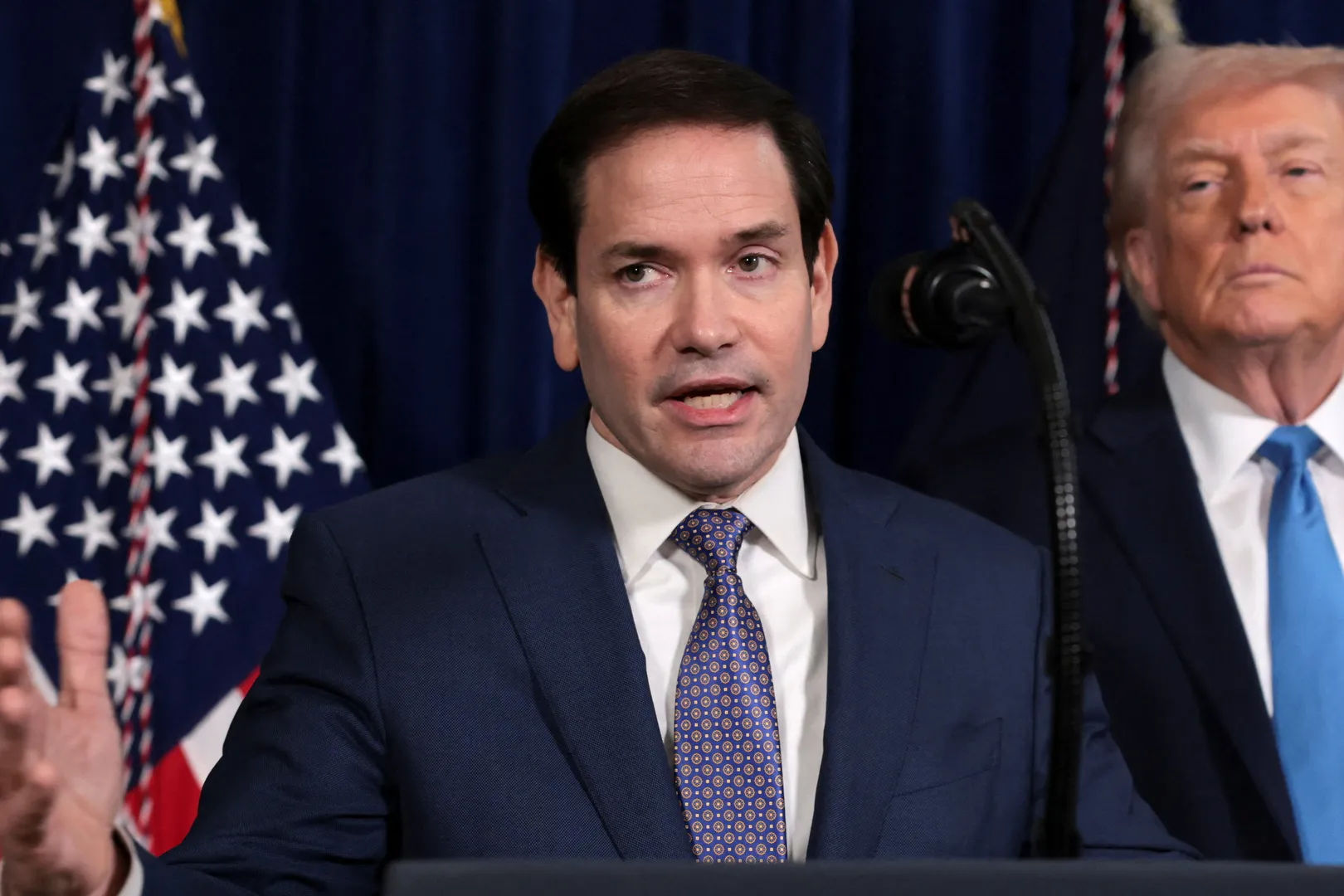
US President Donald Trump says ‘a team’ from the US will be running Venezuela for now, but he would not specify who is on the team. He was speaking at a news conference with Secretary of State Marco Rubio and Secretary of Defense Pete Hegseth.
United States President Donald Trump announced on Saturday morning that his country’s forces had bombed Venezuela and captured the South American nation’s president, Nicolas Maduro, and First Lady Cilia Flores in a dramatic overnight military attack that followed months of rising tensions.
Venezuela’s government said that the US had struck three states apart from the capital, Caracas, while neighbouring Colombia’s President Gustavo Petro released a longer list of places that he said had been hit.
The operation has few, if any, parallels in modern history. The US has previously captured foreign leaders, including Iraq’s Saddam Hussein and Panama’s Manuel Noriega, but after invading those countries in declared wars.
Here is what we know about the US attacks and the lead-up to this escalation:
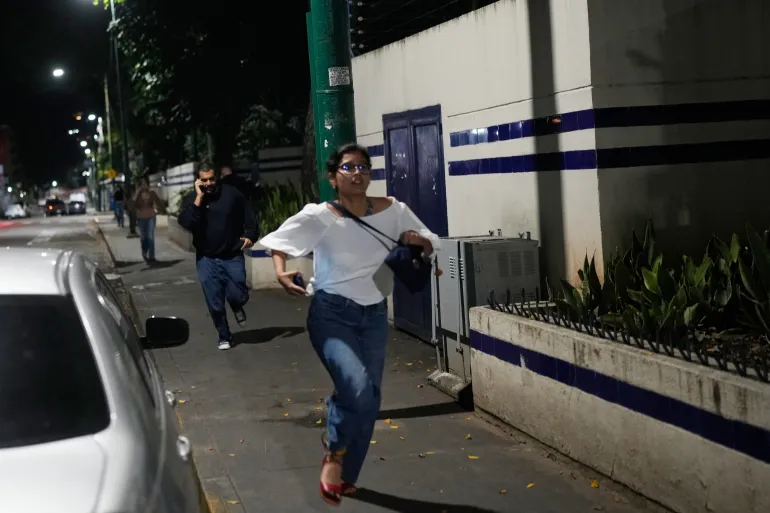
Pedestrians run after explosions and low-flying aircraft were heard in Caracas, Venezuela, on Saturday, January 3, 2026 [Matias Delacroix/ AP Photo]
How did the attack unfold?
At least seven explosions were reported from Caracas, a city of more than three million people, at about 2am local time (06:00 GMT), as residents said they heard low-flying aircraft. Lucia Newman, Al Jazeera’s Latin America editor, reported that at least one of the explosions appeared to come from near Fort Tiuna, the main military base in the Venezuelan capital.
Earlier, the US Federal Aviation Administration had issued instructions to American commercial airlines to stay clear of Venezuelan airspace.
Within minutes of the explosions, Maduro declared a state of emergency, as his government named the US as responsible for the attacks, saying that it had struck Caracas as well as the neighbouring states of Miranda, Aragua and La Guaira.
The US embassy in Bogota, Colombia, referred to the reports of the explosions and asked American citizens to stay out of Venezuela, in a statement. But the diplomatic mission did not confirm US involvement in the attacks. That came more than three hours after the bombings, from Trump.
Supporters of Venezuelan President Nicolas Maduro embrace in downtown Caracas, Venezuela, on Saturday, January 3, 2026, after US President Donald Trump announced that Maduro had been captured and flown out of the country [Cristian Hernandez/ AP Photo]
What did Trump say?
In a post on his Truth Social platform, Trump said, a little after 09:00 GMT that the US had “successfully carried out a large scale strike against Venezuela and its leader, President Nicolas Maduro, who has been, along with his wife, captured and flown out of the Country”.
Venezuela has not yet confirmed that Maduro was taken by US troops — but it also has not denied the claim.
Trump said that the attack had been carried out in conjunction with US law enforcement, but did not specify who led the operation.
Trump announced that there would be a news conference at his Mar-a-Lago resort in Florida at 11am local time (16:00 GMT) on Friday, where more details would be revealed.
Where did the US attack in Venezuela?
While neither the US nor Venezuelan authorities have pinpointed locations that were struck, Colombia’s Petro, in a social media post, listed a series of places in Venezuela that he said had been hit.
They include:
La Carlota airbase was disabled and bombed.
Cuartel de la Montana in Catia was disabled and bombed.
The Federal Legislative Palace in Caracas was bombed.
Fuerte Tiuna, Venezuela’s main military complex, was bombed.
An airport in El Hatillo was attacked.
F-16 Base No 3 in Barquisimeto was bombed.
A private airport in Charallave, near Caracas, was bombed and disabled.
Miraflores, the presidential palace in Caracas, was attacked.
Large parts of Caracas, including Santa Monica, Fuerte Tiuna, Los Teques, 23 de Enero and the southern areas of the capital, were left without electricity.
Attacks were reported in central Caracas.
A military helicopter base in Higuerote was disabled and bombed.
The US Navy’s Gerald R Ford Carrier Strike Group, including the flagship USS Gerald R Ford, USS Winston S Churchill, USS Mahan and USS Bainbridge, sail towards the Caribbean Sea, in the Atlantic Ocean, on November 13, 2025 [US Navy/Petty Officer 3rd Class Tajh Payne/Handout via Reuters]
What led to these US attacks on Venezuela?
Trump has, in recent months, accused Maduro of driving narcotics smuggling into the US, and has claimed that the Venezuelan president is behind the Tren de Aragua gang that Washington has proscribed as a foreign terrorist organisation.
But his own intelligence agencies have said that there is no evidence that Maduro is linked to Tren de Aragua, and US data shows that Venezuela is not a major source of contraband narcotics entering the country.
Starting in September, the US military launched a series of strikes on boats in the Caribbean Sea that it claimed were carrying narcotics. More than 100 people have been killed in at least 30 such boat bombings, but the Trump administration is yet to present any public evidence that there were drugs on board, that the vessels were travelling to the US, or that the people on the boats belonged to banned organisations, as the US has claimed.
Meanwhile, the US began its largest military deployment in the Caribbean Sea in at least several decades, spearheaded by the USS Gerald Ford, the world’s largest aircraft carrier.
In December, the US hijacked two ships carrying Venezuelan oil, and has since imposed sanctions on multiple companies and their tankers, accusing them of trying to circumvent already stringent American sanctions against Venezuela’s oil industry.
Then, last week, the US struck what Trump described as a “dock” in Venezuela where he claimed drugs were loaded onto boats.
Could all this be about oil?
Trump has so far framed his pressure and military action against Venezuela and in the Caribbean Sea as driven by a desire to stop the flow of dangerous drugs into the US.
But he has increasingly also sought Maduro’s departure from power, despite a phone call in early December that the Venezuelan president described as “cordial”.
And in recent weeks, some senior aides of the US president have been more open about Venezuela’s oil: the country’s vast reserves of crude, unmatched in the world, amounted to an estimated 303 billion barrels (Bbbl) as of 2023.
On December 17, Trump’s top adviser Stephen Miller claimed that the US had “created the oil industry in Venezuela” and that the South American country’s oil should therefore belong to the US.
But though US companies were the earliest to drill for oil in Venezuela in the early 1900s, international law is clear: sovereign states — in this case Venezuela — own the natural resources within their territories under the principle of Permanent Sovereignty over Natural Resources (PSNR).
Venezuela nationalised its oil industry in 1976. Since 1999, when socialist President Hugo Chavez, Maduro’s mentor and predecessor, came to power, Venezuela has been locked in a tense relationship with the US.
Still, one major US oil company, Chevron, continues to operate in the country.
The Venezuelan opposition, led by Nobel Peace Prize laureate Maria Corina Machado, has publicly called for the US to intervene against Maduro, and has pointed to the oil reserves that American firms could tap more easily with a new dispensation in power in Caracas.
Oil has long been Venezuela’s biggest export, but US sanctions since 2008 have crippled formal sales and the country today earns only a fraction of what it once did.
Venezuelan Vice President Delcy Rodriguez speaks to the media at the Foreign Office in Caracas, Venezuela, on August 11, 2025 [Ariana Cubillos/AP Photo]
How has Venezuela’s government reacted?
While Venezuela has not confirmed Maduro’s capture, Vice President Delcy Rodrigues told state-owned VTV that the government had lost contact with Maduro and First Lady Flores and did not have clarity on their whereabouts.
She demanded that the US provide “proof of life” of Maduro and Flores, and added that Venezuela’s defences were activated.
Earlier, in a statement, the Venezuelan government said that it “rejects, repudiates and denounces” the attacks.
It said that the aggression threatens the stability of Latin America and the Caribbean, and places the lives of millions of people at risk. It accused the US of trying to impose a colonial war, and force a regime change — and said that these attempts would fail.
This combination of pictures created on August 7, 2025 shows US President Donald Trump in Washington, DC, on July 9, 2025, and Venezuelan President Nicolas Maduro, right, in Caracas on July 31, 2024 [Jim Watson and Federico Parra/AFP]
What happens to Maduro next?
In a statement posted on X, Trump’s Attorney General Pam Bondi announced that Maduro and his wife have been indicted in the Southern District of New York.
Maduro has been charged with “Narco-Terrorism Conspiracy, Cocaine Importation Conspiracy” among other charges, Bondi said. It was unclear if his wife is facing the same charges, but she referred to the Maduro couple as “alleged international narco traffickers.”
“They will soon face the full wrath of American justice on American soil in American courts,” she added.
Mike Lee, a Republican senator from Utah, earlier posted on X that he had spoken to US Secretary of State Marco Rubio, who had told him that Maduro had been “arrested by US personnel to stand trial on criminal charges in the United States, and that the kinetic action we saw tonight was deployed to protect and defend those executing the arrest warrant.”
In 2020, US prosecutors had charged Maduro with running a cocaine-trafficking network.
But US officials remain silent on the illegality of Maduro’s capture and the attacks on Venezuela, which violate UN charter principles of sovereignty and territorial integrity of nations.
Russia and Cuba, close Maduro allies, condemned the attack. Colombia, which neighbours Venezuela and has itself been in Trump’s crosshairs, said that it “rejects the aggression against the sovereignty of Venezuela and of Latin America” – even though Bogota itself does not recognise Maduro’s government.
Most other nations have been relatively muted in their response to the US aggression so far.
Venezuela’s Interior Minister Diosdado Cabello, left, Defence Minister Vladimir Padrino Lopez, second from left, and Vice President Delcy Rodriguez, centre, seen here at a ceremony commemorating the 80th anniversary of the Soviet Union’s victory over Nazi Germany in World War II in Caracas, Venezuela, on Tuesday, May 13, 2025. Rodriguez, Cabello and Lopez are among the leaders widely seen as Maduro’s closest aides [Cristian Hernandez/AP Photo]
What’s next for Venezuela?
Constitutionally, Rodriguez, the vice president, is next in line to take charge if Maduro indeed has been plucked out of Venezuela by the US.
Other senior leaders seen as close to Maduro and influential within the Venezuelan hierarchy include Interior Minister Diosdado Cabello, National Assembly President — and Delcy’s brother — Jorge Rodriguez, and military chief General Vladimir Padrino López.
But it is unclear whether the state apparatus that Chavez and Maduro carefully built over a quarter century will last without them.
“Maduro’s capture is a devastating moral blow for the political movement started by Hugo Chavez in 1999, which has devolved into a dictatorship since Nicolas Maduro took power,” Carlos Pina, a Venezuelan analyst based in Mexico, told Al Jazeera.
If the US does engineer — or has already engineered — a regime change, the opposition’s Machado could be a front-line candidate to take Venezuela’s top job, though it is unclear how popular that might be. In a November poll in Venezuela, 55 percent of participants were opposed to military intervention in their country, and an equal number were opposed to economic sanctions against Venezuela.
Trump might be mistaken if he thinks the US can stay out of the chaos that’s likely to follow in a post-Maduro Venezuela, suggests Christopher Sabatini, a senior research fellow for Latin America, the US and North America programme at Chatham House.
“Assuming even if there is regime change – of some sort, and it’s by no means clear even if it does happen that it will be democratic – the US’s military action will likely require sustained US engagement of some sort,” he said.
“Will the Trump White House have the stomach for that?”
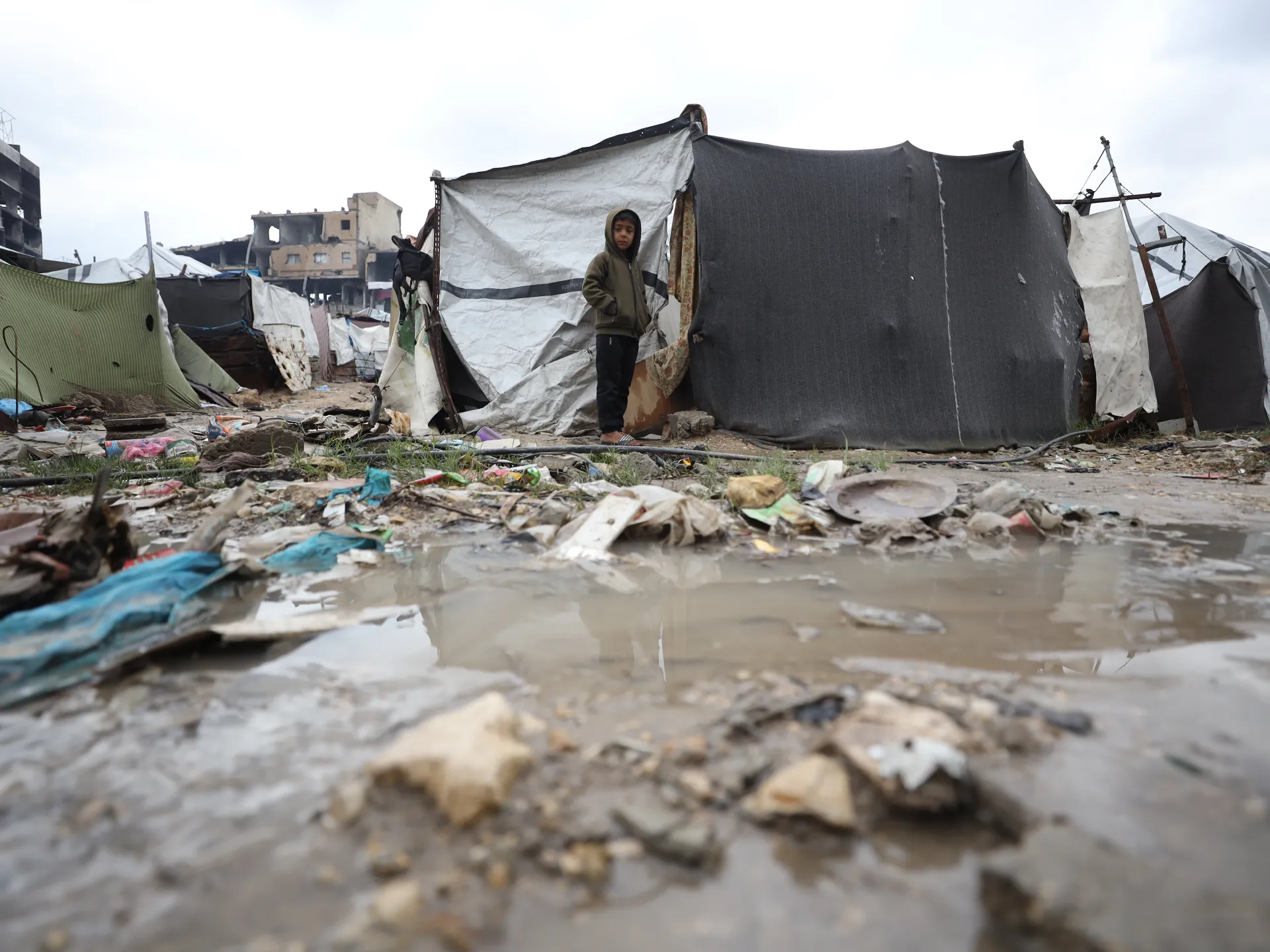
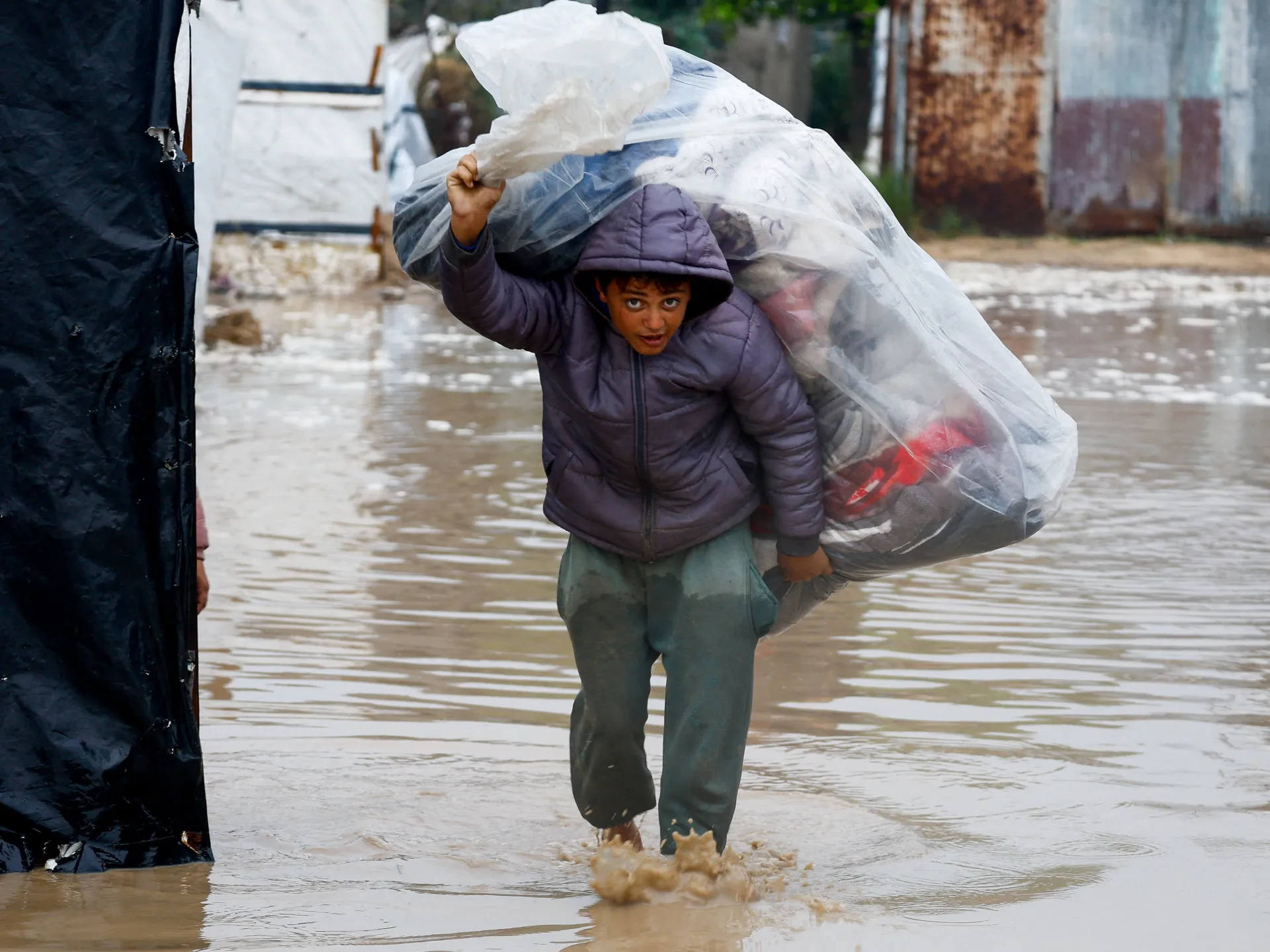
The winter has made a life of relentless suffering worse for the people of Gaza, particularly for the wounded, children and elderly, with hundreds of thousands in the Palestinian territory displaced by Israel’s genocidal war desperately trying to survive on the scant humanitarian aid Israel is allowing in.
Nine-year-old Assad al-Madhna lost his left hand when Israeli fire hit a group of children playing in al-Zuwayda in central Gaza. The same attack also wounded him in the leg.
Recommended Stories
list of 4 itemsend of list
Now, as winter envelops the besieged enclave, Assad’s pain increases as the metal rods and pins holding his leg in place stiffen in the cold, making every step slower and agonising.
“I can’t play with other children as in winter, my legs and hands hurt a lot,” he told Al Jazeera.
“I haven’t received any prosthetic, struggle to change my clothes, and going to the toilet in this cold is a real challenge,” he said, adding: “Without my parents, I can’t manage it. At night, the severe cold becomes unbearable.”
A truce between Israel and Hamas since October 10 has been fragile, a ceasefire in name only, according to Palestinians and rights groups, after two years of destructive war.
Despite the truce, Palestinians in crowded camps – often in damaged tents and surrounded by mud – still face severe humanitarian conditions, trying to survive with few or no resources, making life the hardest for the most vulnerable.
‘No heating at all’
Eighteen-year-old Waed Murad survived an attack that wiped out her entire family – seven relatives in one strike.
She now lives with a life-altering injury, and when the temperatures drop, her nerve pain intensifies, sleep slips away, and the little recovery she had is threatened.
“I can’t keep myself warm because of the severe cold with the metal bars and pins always freezing,” she told Al Jazeera.
“I am living in a tent with no heating at all. Every time I hear the wind, I feel the pain will get worse, as the cold will affect the metal fixation devices even more.”
In the enclave, temperatures at night have ranged between eight and 12 degrees Celsius (46 and 53 degrees Fahrenheit) in recent days.
Nearly 80 percent of buildings in the Gaza Strip have been destroyed or damaged by the war, according to United Nations data.
About 1.5 million of Gaza’s 2.2 million residents have lost their homes, said Amjad Shawa, director of the Palestinian NGO Network in Gaza.
Of more than 300,000 tents requested to shelter displaced people, “we have received only 60,000,” Shawa told the AFP news agency, pointing to Israeli restrictions on the delivery of humanitarian aid into the territory.
Israel slammed for banning NGOs
Meanwhile, the international community has condemned Israel’s recent announcement of a suspension of the operations of several international nongovernmental organisations in the occupied Palestinian territory.
UN Secretary-General Antonio Guterres said he was deeply concerned and called for the measure to be reversed.
“This announcement comes on top of earlier restrictions that have already delayed critical food, medical, hygiene and shelter supplies from entering Gaza.”
“This recent action will further exacerbate the humanitarian crisis facing Palestinians,” Stephane Dujarric, spokesman for the secretary-general, said in a statement.
Several countries in the Middle East and Asia called on Israel to allow “immediate, full, and unhindered” deliveries of humanitarian aid to the Gaza Strip as winter storms lash the bombarded Palestinian enclave.
In a statement on Friday, the foreign ministers of Qatar, Egypt, Jordan, Saudi Arabia, the United Arab Emirates, Turkiye, Pakistan and Indonesia warned that “deteriorating” conditions in Gaza had left nearly 1.9 million displaced Palestinians particularly vulnerable.
“Flooded camps, damaged tents, the collapse of damaged buildings, and exposure to cold temperatures coupled with malnutrition, have significantly heightened risks to civilian lives,” the statement read.
Earlier this month, Gaza experienced a similar spell of heavy rain and cold.
The weather caused at least 18 deaths due to the collapse of war-damaged buildings or exposure to cold, according to Gaza’s civil defence agency.
On December 18, the UN’s humanitarian office said 17 buildings collapsed during the storm, while 42,000 tents and makeshift shelters were fully or partially damaged.
Saudi Arabia’s foreign ministry has welcomed a request from Yemen’s Saudi-backed Presidential Leadership Council (PLC) for a forum in Riyadh to resolve a deadly factional rift in the country’s south that has stoked armed conflict there and triggered tensions between Gulf Arab nations.
In a statement on Saturday, the Saudi foreign ministry called on southern factions to participate in the forum in the Saudi capital to “formulate a comprehensive vision for fair solutions to the southern cause”.
Recommended Stories
list of 3 itemsend of list
Earlier on Saturday, PLC Chairman Rashad al-Alimi appealed to the different groups and figures in southern Yemen to come together for a meeting in Riyadh, according to Saba News Agency.
Saba quoted al-Alimi as underlining the “justness and centrality of the southern cause” and “rejected any unilateral or exclusionary solutions” to resolve the ongoing conflict.
Deadly tensions have erupted in recent days, after the separatist group Southern Transitional Council (STC) launched a major offensive in Yemen’s Hadramout and al-Mahra provinces, which make up nearly half of Yemen’s territory.
Oil-producing Hadramout borders Saudi Arabia, and many prominent Saudis trace their origins to the province, lending it cultural and historical significance for the kingdom. Its capture by the STC last month was regarded by the Saudis as a threat.
The STC is part of the anti-Houthi coalition in Yemen’s south. But it is said to harbour plans to carve out its own nation in southern Yemen, causing conflict with its partner, the internationally recognised Yemeni government led by the PLC.
The Saudis have accused its coalition partner, the United Arab Emirates (UAE), of arming the STC, whose military operation is now threatening to split Yemen into three, while also posing problems to Riyadh’s own national security.
The UAE has denied those allegations, insisting that it supports Saudi Arabia’s security.
In a statement on Saturday, the UAE expressed its “deep concern” over the ongoing escalation and called on the Yemenis “to prioritise wisdom and exercise restraint to ensure security and stability in the country”.
The Saudi-backed coalition was formed in 2015 in an attempt to dislodge the Iran-backed Houthi rebels from Yemen’s north.
But after a brutal, decade-long civil war, the Houthis remain in place while the Saudi and Emirati-backed factions attack each other in the south.
On Friday, air strikes by a Saudi-led coalition killed 20 people, according to the STC.
Late on Friday, the UAE announced the return of all Emirati armed forces personnel from Yemen, signalling a possible detente with Saudi Arabia.
The UAE’s defence ministry said that the withdrawal of its forces from Yemen is in accordance with its decision “to conclude the remaining missions of counter-terrorism units”.
“The process has been conducted in a manner that ensured the safety of all personnel and carried out in coordination with all relevant partners,” the ministry said in a statement published on the Emirates News Agency website.
Amid the UAE’s announcement of a withdrawal, the STC unilaterally declared that it aims to hold a referendum on independence from the north in two years.
In an interview with Al Jazeera, former Yemeni diplomat and parliament member Ali Ahmed al-Amrani, however, dismissed the idea of secession as a solution to the Yemeni crisis, saying it “does not reflect a national consensus”.
Meanwhile, Hisham Al-Omeisy, a political and conflict analyst focusing on Yemen with the European Institute of Peace, warned that if not resolved, the latest violence in the south could mark the start of a dangerous new phase in the war, with rival forces seeking to reshape control on the ground.
“We’re going to be basically seeing a bloody conflict, at least in the coming few days, to draw a new map in the south,” he added.
“This is prolonged fighting,” Al-Omeisy told Al Jazeera, describing a situation in which “warring factions are trying to gain territory and secure the upper hand.
“This is a proxy war within a proxy war,” he said, adding that the consequences could extend far beyond Yemen’s borders.
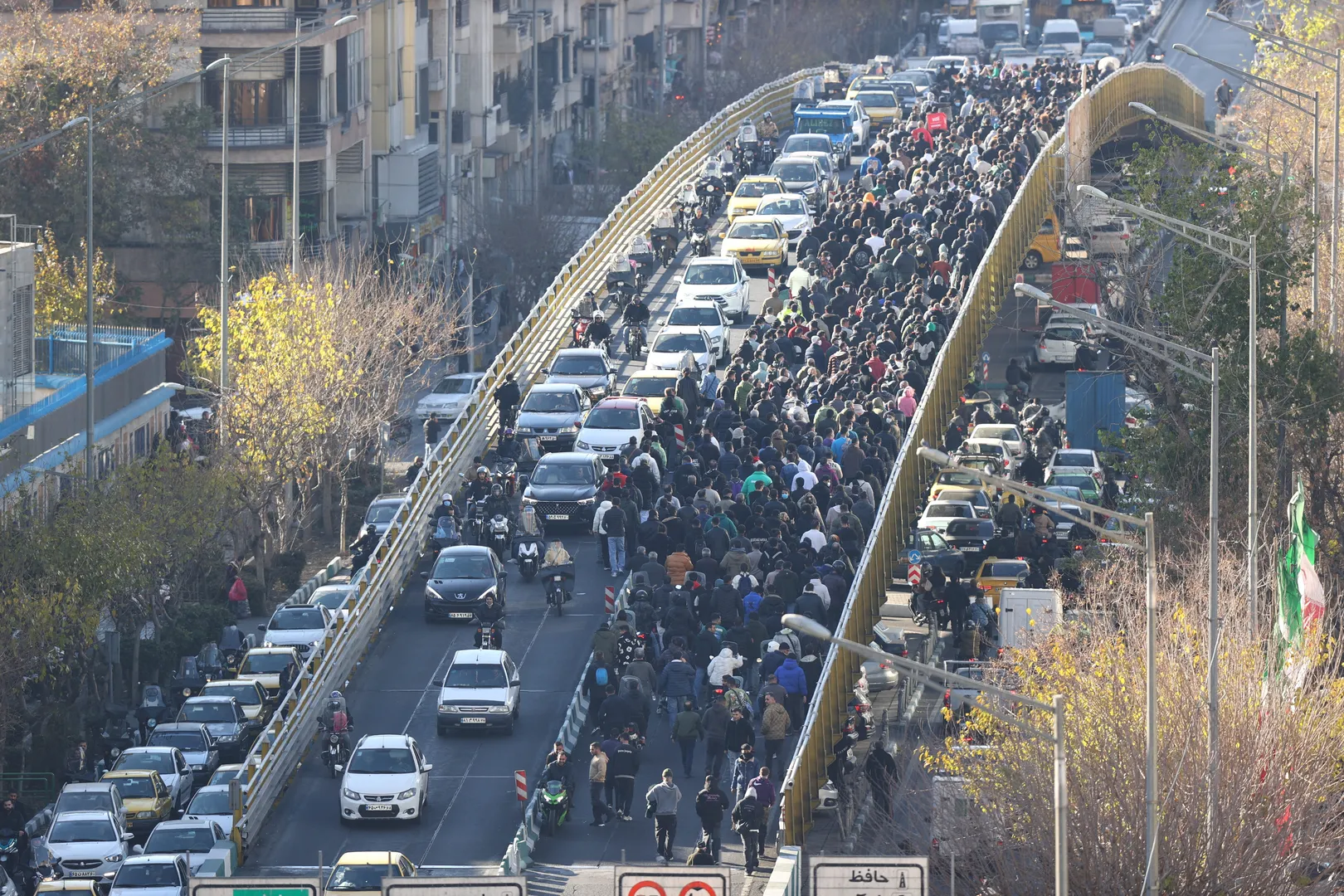
Protests are intensifying in Iran as a deepening economic crisis fuels public anger over soaring prices and falling living standards. Here’s a breakdown of what’s driving the unrest and how authorities are responding.
Saudi-backed coalition forces in Yemen have launched air strikes targeting southern separatists, whose recent advances changed the map of control in the country. Al Jazeera’s Aksel Zaimovic explains which groups are competing for territory.
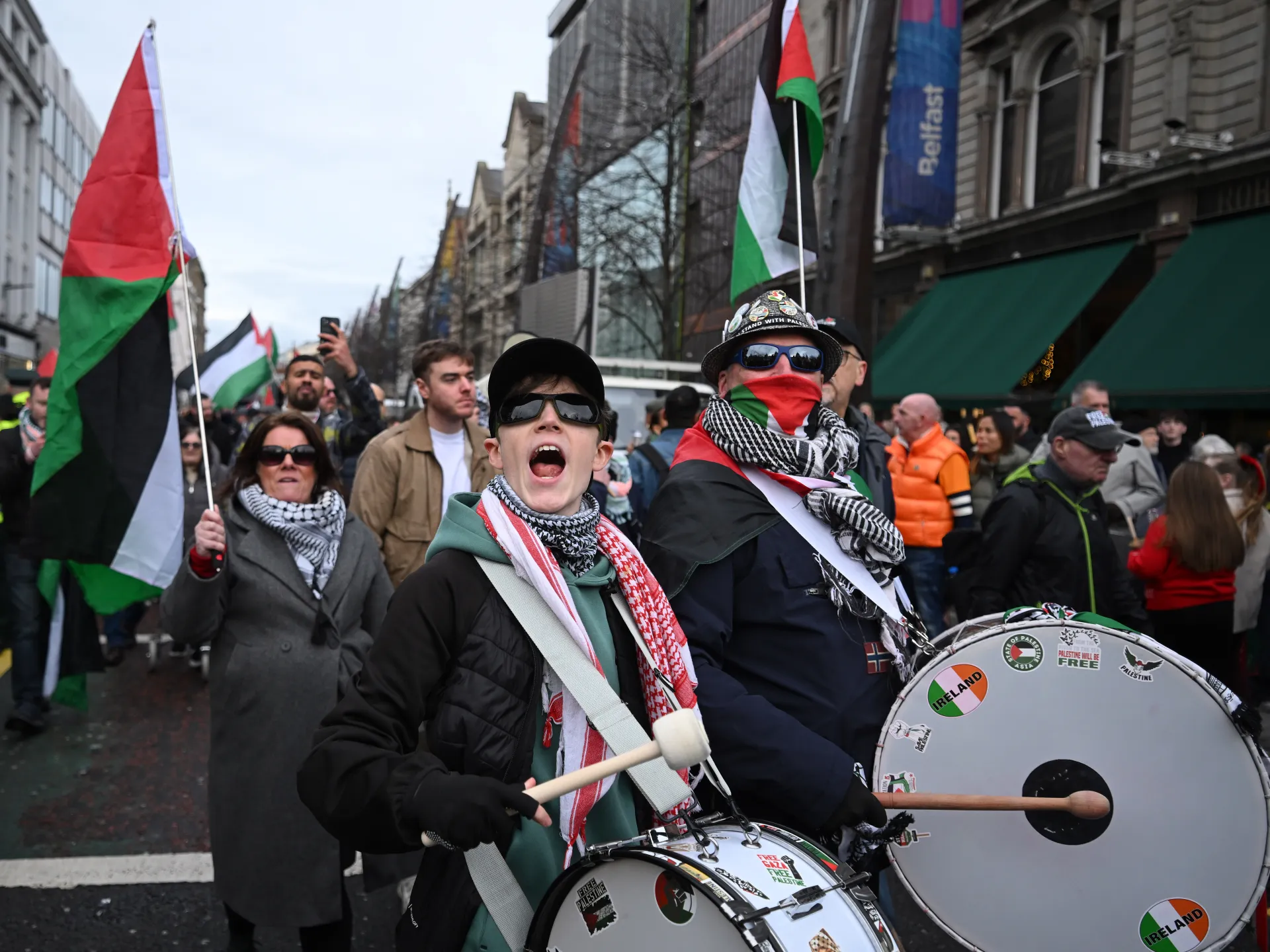
Belfast, Northern Ireland — On New Year’s Eve, as fireworks lit the Belfast sky, the city’s streets were abuzz — and not only in celebration.
Hundreds gathered in solidarity with activists from the Palestine Action group who are on hunger strikes in prison. Their chants echoed past murals that do not merely decorate the city, but testify to its troubled past.
Along the Falls Road, Irish republican murals sit beside Palestinian ones. The International Wall, once a rolling canvas of global struggles, has become known as the Palestinian wall. Poems by the late Palestinian writer Refaat Alareer, killed in an Israeli air strike in December 2023, run across its length. Images sent by Palestinian artists have been painted by local hands.
More recently, new words have appeared on Belfast’s famed walls. “Blessed are those who hunger for justice.” Painted alongside long-familiar images of Irish republican prisoners like Bobby Sands are new names now written into the city’s political conscience: the four pro-Palestinian activists currently on hunger strike in British prisons, their bodies weakening as the days stretch on.
“This is not a city that will ever accept any attempt to silence our voice or our right to protest or our right to stand up for human rights,” said Patricia McKeown, a trade union activist who spoke at the protest.
“These young people are being held unjustly and in ridiculous conditions – and they have taken the ultimate decision to express their views … and most particularly on what’s happening to people in Palestine – why would we not support that?” she asked.
A hunger strike reaches Belfast
The protest in Belfast is part of a growing international campaign urging the British government to intervene as the health of four detainees deteriorates behind prison walls. All are affiliated with Palestine Action and are being held on remand while awaiting trial, a process campaigners say could keep them imprisoned for more than a year before their cases are heard. With legal avenues exhausted, supporters say the hunger strike has become a last resort.
The Palestine Action members are being held over their alleged involvement in break-ins at the United Kingdom subsidiary of Elbit Systems in Filton near Bristol, where equipment was reportedly damaged, and at a Royal Air Force base in Oxfordshire, where two military aircraft were sprayed with red paint. The prisoners deny the charges against them, which include burglary and violent disorder.
The prisoners are demanding release on bail, an end to what they describe as interference with their mail and reading materials, access to a fair trial and the de-proscription of Palestine Action. In July, the British government of Prime Minister Keir Starmer banned Palestine Action under a controversial anti-terrorism law.
Heba Muraisi is on day 61 without food. Teuta Hoxha is on day 55. Kamran Ahmed on day 54. Lewie Chiaramello on day 41. Hoxha and Ahmed have already been hospitalised. Campaigners describe it as the largest hunger strike in Britain since 1981, one they say is explicitly inspired by the Irish hunger strikes.
In 1981, Irish Republican Army and other republican prisoners went on hunger strike in Northern Ireland, demanding the restoration of their political status. Ten men died, including their leader, Bobby Sands, who was elected to the British parliament during the strike. Margaret Thatcher took a hardline public stance, but behind the scenes, the government ultimately sought a way out as public opinion shifted.
One prisoner, 29-year-old Martin Hurson, died on the 46th day. Others, including Raymond McCreesh, Francis Hughes, Michael Devine and Joe McDonnell, died between days 59 and 61. Sands died after 66 days on a hunger strike.
Sue Pentel, a member of Jews for Palestine Ireland, remembers that period vividly.
“I was here during the hunger strike,” she said. “I went through the hunger strikes, marched, demonstrated, held meetings, protested, so I remember the callous brutality of the British government letting 10 hungers die.”
“The words of Bobby Sands, which are ‘Our revenge will be the laughter of our children’. And we raised our families here, and they’re the same people, this new generation who are standing in solidarity with Palestine.”
‘If this continues, some will die’
Standing beneath a mural of Bobby Sands, Pat Sheehan fears history is edging dangerously close to repeating itself. He spent 55 days on a hunger strike before it was called off on October 3, 1981.
“I was the longest on that hunger strike when it came to an end in 1981, so in theory I would have been the next person to die,” he said.
By that stage, he said, his liver was failing. His eyesight had gone. He vomited bile constantly.
“Once you pass 40 days, you’re entering the danger zone,” Sheehan said. “Physically, the hunger strikers must be very weak now for those who have been on hunger strike for over 50 days.”
“Mentally, if they have prepared properly to go on hunger strike, their psychological strength will increase the longer the hunger strike goes on.”
“I think if it continues, inevitably some of the hunger strikers are going to die.”
Sheehan, who now represents West Belfast as an MLA for Sinn Fein, believes that Palestine Action-linked hunger strikers are political prisoners, adding that people in Ireland understand Palestine in a way few Western countries do.
“Ireland is probably the one country in Western Europe where there’s almost absolute support for the Palestinian cause,” he said. “Because we have a similar history of colonisation; of genocide and detention.”
“So when Irish people see on their TV screens what’s happening in Gaza, there’s massive empathy.”
Ireland’s stance
That empathy has increasingly translated into political action. Ireland formally recognised the state of Palestine in 2024 and has joined South Africa’s case at the International Court of Justice, alleging genocide in Gaza, a charge Israel denies.
The Irish government has also taken steps to restrict the sale of Israeli bonds, while Ireland has boycotted the Eurovision Song Contest over Israel’s participation and called for its national football team to be suspended from international competition.
But many campaigners say the government’s actions have not gone far enough. They argue that the Occupied Territories Bill, which seeks to ban trade with illegal Israeli settlements, has been stalled since 2018, and express anger that United States military aircraft transporting weapons to Israel are still permitted to pass through Ireland’s Shannon Airport.
Meanwhile, in the northern part of Ireland that remains part of Britain, the war in Gaza has dominated domestic politics.
The Stormont Assembly was thrown into crisis after Democratic Unionist Party education minister Paul Givan travelled to Jerusalem on a trip paid for by the Israeli government, prompting a no-confidence vote amid fierce criticism from Irish republican, nationalist, left-wing and unaligned political groups.
Belfast City Hall’s decision last month to fly a Palestinian flag was also fervently opposed by unionist councillors before it was eventually approved.
For some loyalist and unionist groups, support for Israel has become entwined with loyalty to Britain, with Israeli flags also flying in traditionally loyalist parts of Belfast.
With a legacy of identity rooted along sectarian lines, the genocide in Gaza has at times been recast along the old fault lines of division.
‘Solidarity reaches Palestine’
Yet on the streets of Belfast, protesters insist their solidarity is not rooted in national identity, but in humanity.
Damien Quinn, 33, a member of the Boycott, Divestment, Sanctions (BDS) movement, said hunger strikes had always carried a particular weight in Ireland.
“We are here today to support the hunger strikers in Britain. But we are also here for the Palestinian people for those being slaughtered every single day,” he said.
Palestine Action, he said, “made it very clear they have tried signing petitions, they have tried lobbying, they’ve tried everything”.
“So when I see the way they are being treated in prison, for standing up against genocide, that’s heartbreaking.”
For Rita Aburahma, 25, a Palestinian who has found a home in Belfast, the hunger strike carries a painful familiarity.
“My people don’t have the luxury of speaking out, being in Palestine – solidarity matters,” she said.
“I find the hunger strikers are really brave – it’s always been a form of resistance. It does concern me, and many other people, how long it has taken the government to pay attention to them, or take action in any form.
“Nothing will save those people if the government doesn’t do something about them. So it is shocking in a way, but not that surprising because the same government has been watching the genocide unfold and escalate without doing anything.
“Every form of solidarity reaches the people in Palestine.”
US recently approved $11bn arms package for Taiwan, which condemned ‘provocative’ Chinese military drills.
Published On 1 Jan 20261 Jan 2026
Share
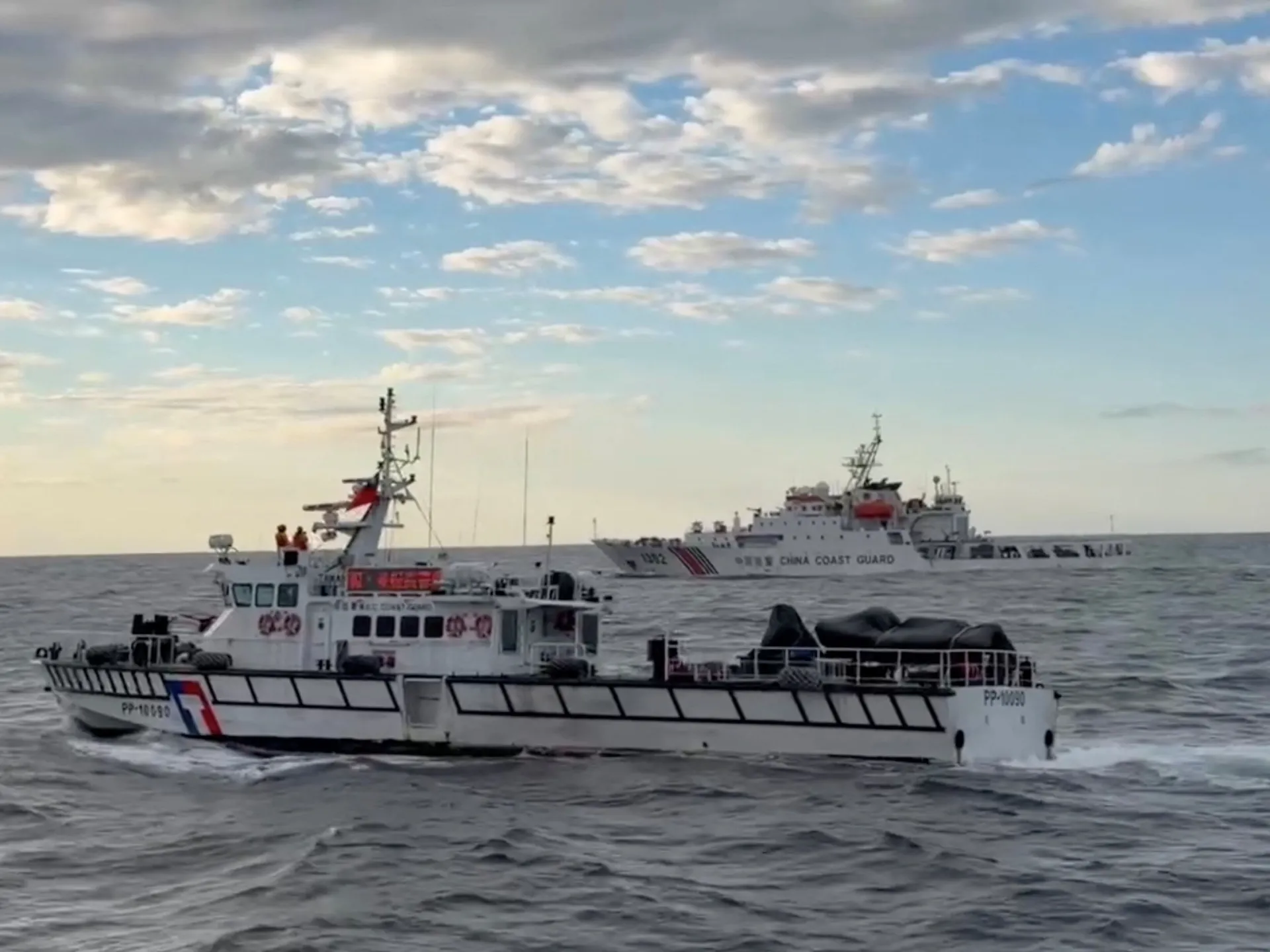
The United States has called on China to exercise “restraint” and avoid actions that raise tensions following a series of war games around Taiwan simulating a blockade of the island.
The US Department of State said in a statement on Thursday that China’s bellicose language and military drills, which prompted sharp condemnation from Taipei, were a source of unnecessary strain.
Recommended Stories
list of 3 itemsend of list
“China’s military activities and rhetoric toward Taiwan and others in the region increase tensions unnecessarily. We urge Beijing to exercise restraint, cease its military pressure against Taiwan, and instead engage in meaningful dialogue,” said State Department spokesman Tommy Pigott.
“The United States supports peace and stability across the Taiwan Strait and opposes unilateral changes to the status quo, including by force or coercion,” he added.
China fired missiles and deployed jets and naval vessels earlier this week in a simulation of military actions to encircle Taiwan, which Beijing claims as an integral part of its territory and has vowed to bring under its control.
Chinese military drills have become a frequent occurrence, causing few disruptions to life on the self-governed island, whose status the US has not officially weighed in on.
But Beijing’s assertive stance has prompted angry condemnations from Taiwanese officials, and crackdowns on formerly autonomous areas such as Hong Kong following integration with China have bolstered scepticism about the prospects of possible reunification with Beijing.
“As president, my stance has always been clear: to resolutely defend national sovereignty and strengthen national defence,” Taiwanese President William Lai Ching-te said on Thursday.
Lai has called for a $40bn increase in Taiwan’s military spending, but the proposal is stalled in the country’s legislature, where the opposition party currently holds a majority.
“The coming year, 2026, will be a crucial one for Taiwan,” the president said, adding that Taiwan must “make plans for the worst, but hope for the best”.
While US lawmakers often make strong statements of support for Taiwan, US policy towards the island has been marked by ambiguity for decades and does not include an assurance of military support in the event of an invasion by China.
The US recently approved an $11bn arms package for Taiwan, but President Donald Trump said earlier this week that he did not believe China had plans to launch an invasion of Taiwan in the near future.
“I have a great relationship with [Chinese] President Xi [Jinping]. And he hasn’t told me anything about it. I certainly have seen it,” Trump told reporters on Monday.
“They’ve been doing naval exercises for 20 years in that area. Now people take it a little bit differently,” he added.
Local officials say the death toll could rise as seven people are missing following the attack on New Year’s Eve.
Published On 1 Jan 20261 Jan 2026
Share
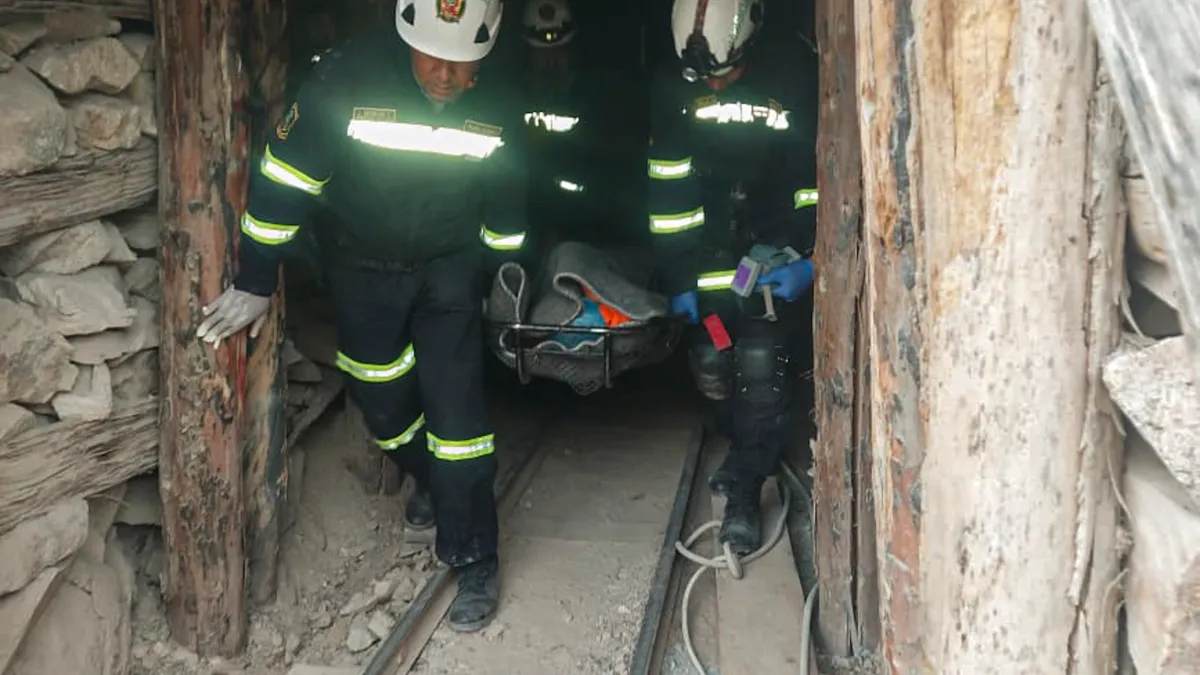
At least three people have been killed and seven remain missing following an attack on an informal mine in northern Peru, according to local officials.
In a video shared by the Peruvian news outlet Canal N on Thursday, Pataz Mayor Aldo Marino said the attack took place about an hour before midnight on New Year’s Eve.
Recommended Stories
list of 3 itemsend of list
“According to information I received from the police, three people were killed at a mine entrance, and seven are missing,” Marino said, noting that the final death toll could be as high as 15 as more bodies are recovered.
Details of the incident are still emerging, but informal mining operations are a frequent source of conflict in South America, as criminal groups jockey for control.
The latest incident took place near the town of Vijus, in the department of La Libertad in northwestern Peru.
Police reported that 13 miners had been killed in the same region last May. That incident prompted a stern response from local authorities, including the 30-day suspension of mining activities and a night-time curfew.
The region is known for its gold mines, including one of the largest in the world, Lagunas Norte.
But informal mines have also cropped up, as rural residents and criminal gangs try to carve a fortune from the mountains of Pataz, the province where the recent bloodshed unfolded.
In the wake of Wednesday’s incident, police have arrested two people, and an investigation is under way.
The news agency Reuters cited local prosecutors as saying that 11 shell casings had been recovered at the scene of the attack.
A mining company, Poderosa, also told the media that its security personnel had heard the gunfire and, after approaching the crime scene, discovered that three people were dead.
Many informal miners operate using temporary permits issued by the government, known as REINFO permits.
Reuters reported that the government suspended the permits of about 50,000 small-scale miners in July as part of a formalisation process, allowing about 30,000 to continue operations.
Peru exported $15.5bn worth of gold in 2024, compared with $11bn the year before. The country’s financial watchdog has estimated that about 40 percent of the country’s gold comes from illicit enterprises.
Health authorities are warning of yet another potential health threat in Gaza: leptospirosis. Dr. Bassam Zaqout says widespread flooding and lack of basic sanitation make the devastated strip a perfect breeding ground for the bacterial disease also known as swamp or rat fever.