China

How did China’s trade surplus hit $1 trillion? | Business and Economy News

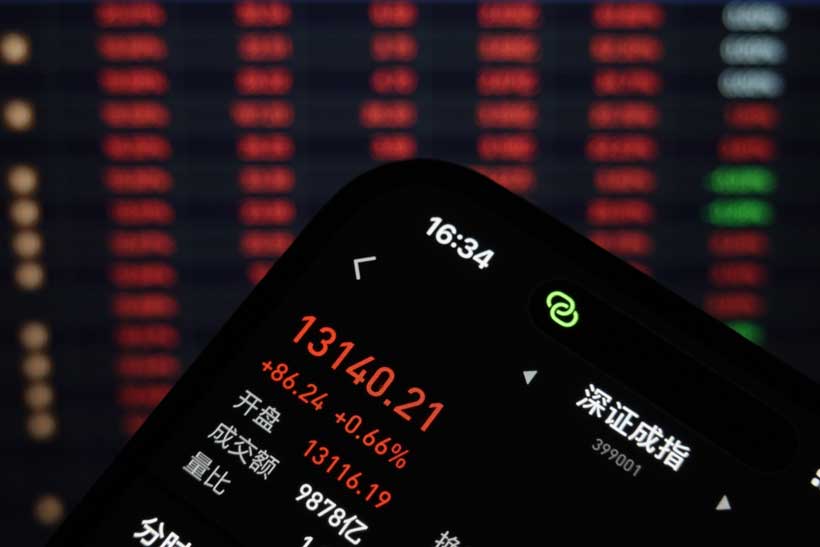
China’s trade surplus – the difference between the value of goods it imports and exports – has hit $1 trillion for the first time, a significant yardstick in the country’s role as “factory of the world”, making everything from socks and curtains to electric cars.

For the first 11 months of this year, China’s exports rose to $3.4 trillion while its imports declined slightly to $2.3 trillion. That brought the country’s trade surplus to about $1 trillion, China’s General Administration of Customs said on Monday.

Recommended Stories

list of 4 itemsend of list

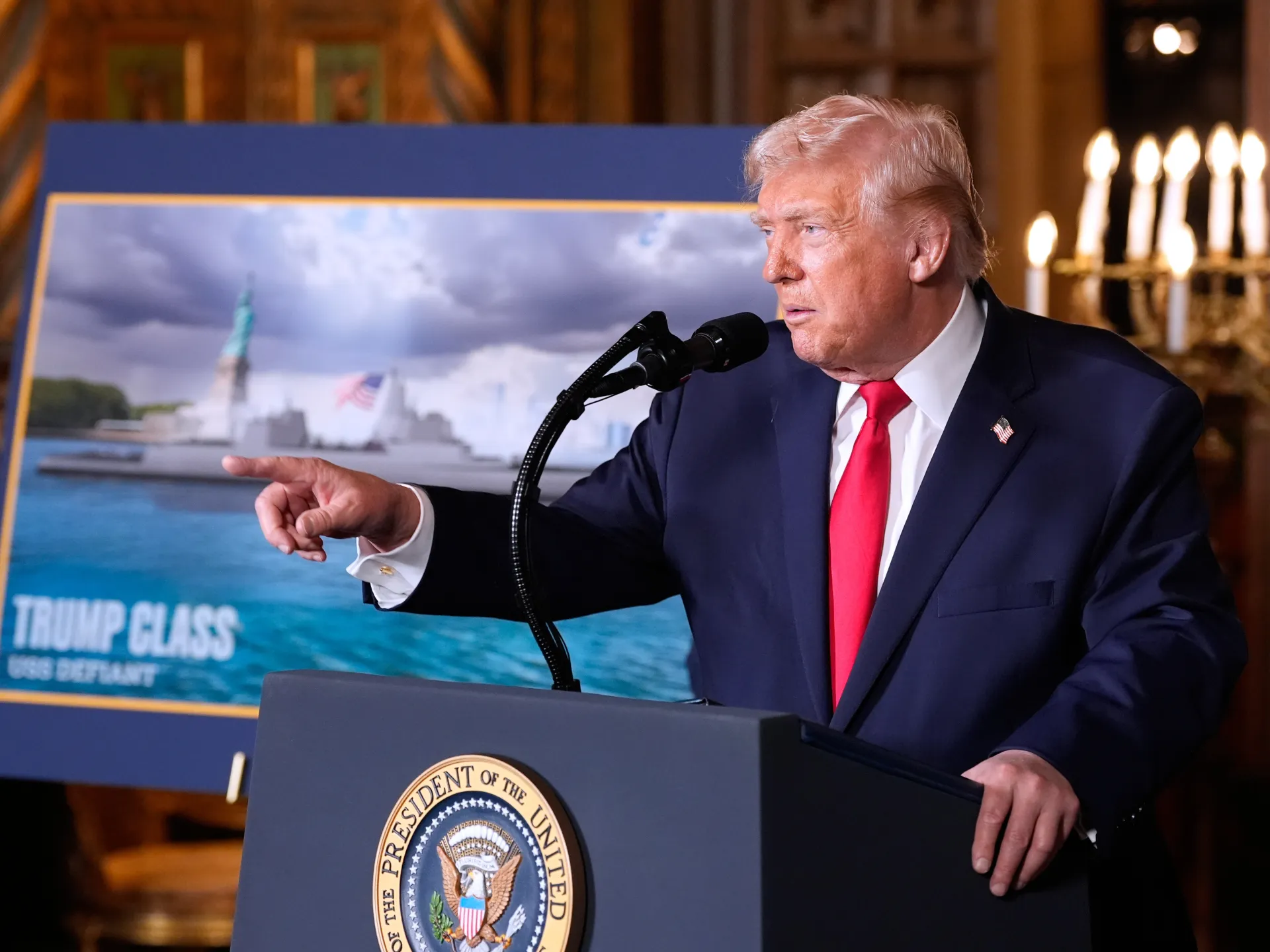
Shipments overseas from China have boomed despite US President Donald Trump’s global trade war, largely consisting of sweeping “reciprocal” tariffs on most countries, which were launched earlier this year in a bid to reduce US trade deficits.

But China, which was initially hit with US tariffs of 145 percent before they were lowered to allow for trade talks, has emerged largely unscathed from the standoff by stepping up shipments to markets outside the US.

Following Trump’s 2024 election win, China began diversifying its export market away from the US in exchange for closer ties with Southeast Asia and the European Union. It also established new production hubs, outside of China, for low-tariff access.

Why does China have such a large trade surplus?

China’s exports returned to growth last month following an unexpected dip in October, rising to 5.9 percent more than one year earlier and far outpacing a 1.9 percent rise in imports, according to China’s General Administration of Customs.

China’s goods surplus for the first 11 months of 2025 was up 21.7 percent from the same period last year. Most of the surge was driven by strong growth in high-tech goods, which outpaced the increase in overall exports by 5.4 percent.

Auto exports, especially for electric vehicles, rallied as Chinese firms muscled in on Japanese and German market share. Total car shipments jumped by more than one million to approximately 6.5 million units this year, according to data from China-based consultancy Automobility.

And although China still trails US leaders like Nvidia in advanced chips, it is becoming dominant in the production of semiconductors (used in everything from electric cars to medical devices). Semiconductor exports rose by 24.7 percent over the period.

China’s technological advances have also boosted shipbuilding, where exports rose 26.8 percent compared with the same period in 2024.

So, given the hostile global trade backdrop, how has China achieved this?

Rerouting and diversifying

Though Washington has lowered tariffs on Chinese imports in recent months, they remain high. Average import duties on Chinese goods currently stand at 37 percent. For this reason, Chinese shipments to the US have dropped by 29 percent year-on-year to November.
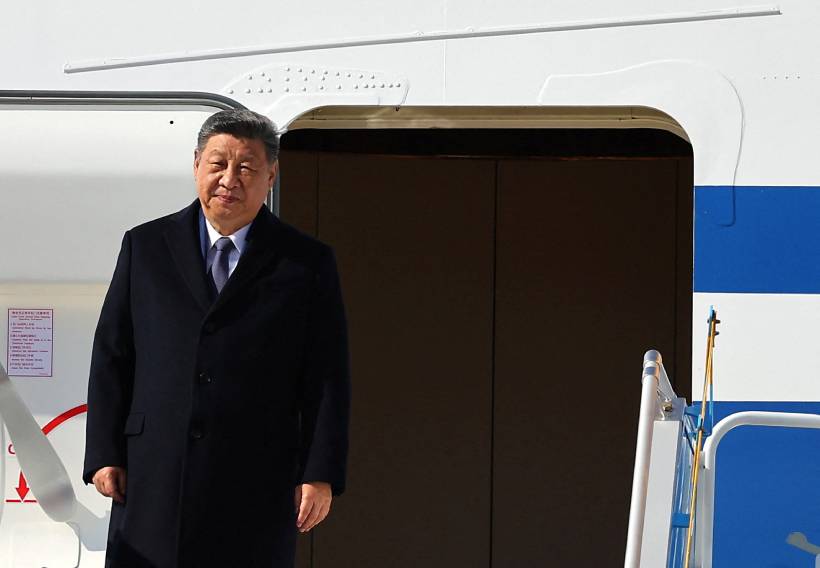
Some Chinese companies have shifted their production facilities to Southeast Asia, Mexico and Africa, enabling them to bypass Trump’s tariffs on goods arriving directly from China. Despite this, overall trade between the two countries remains down.
In the first eight months of this year, for instance, the US imported roughly $23bn in goods from Indonesia, an increase of nearly one-third on the same period in 2024. It is widely understood that the rise is down to Chinese goods being redirected via Indonesia.

“The role of trade rerouting in offsetting the drag from US tariffs still appears to be increasing,” Zichun Huang, an economist at Capital Economics, wrote in a note to clients on Monday. Huang added that “exports to Vietnam, the top [Chinese] rerouting hub, continued to grow rapidly.”

As trade with the US has slackened, China has doubled down on developing ties with other major trading partners. That includes a 15 percent surge in Chinese shipments to the EU, compared with the year before, and an 8.2 percent rise in exports to countries in Southeast Asia.

Weaker currency

Another reason for China’s trading success is that its currency has been cheap, compared with others, in recent years. A lower renminbi makes exports relatively inexpensive to produce, and imports relatively expensive to consume.

China maintains a “managed float” of the renminbi – meaning the central bank intervenes in foreign exchange markets to maintain its value against other currencies – with the aim of keeping the price stable.

For years, many economists have argued that China’s currency is undervalued. In their view, that gives exporters a competitive edge by boosting the appeal of cheap Chinese products at the expense of other countries, leading to large imbalances in trade.

Indeed, taking into account global inflationary dynamics, the real effective exchange rate – a measure of the competitiveness of Chinese goods – is actually at its weakest level since 2012.

How has China got here?

China’s eye-watering $1 trillion trade surplus – never before recorded in economic history – is the culmination of decades of industrial policies that have enabled China to emerge from a low-income agrarian society in the 1970s to become the world’s second-largest economy today.

China established itself as a dependable producer of low-cost manufactured goods, like T-shirts and shoes, in the 1980s. Since then, it has climbed the industrial ladder to higher-value goods, such as electric vehicles and solar panels.

By far its largest sector in terms of exports is electronics. China exported a total of more than $1 trillion-worth of electronic goods around the world in 2024. This follows the pattern of other industrialised countries by starting with simple, labour-intensive goods and then moving into more complex sectors. However, China has done so with unusual scale and speed to cement its dominance across numerous global supply chains.

It also dominates trade in rare-earth metals, which are crucial for the manufacture of a wide range of goods from smartphones to fighter jets.

Twelve of the 17 rare earth metals on the periodic table can be found in China, and it mines between 60 percent and 70 percent of the world’s rare-earth resources. It also carries out 90 percent of the processing of these metals for commercial use.

INTERACTIVE- What are China biggest exports trade 2024 world-1765285569
[Al Jazeera]

For historical context, China’s trade surplus in factory goods is larger as a share of its economy than the US ran in the years after World War II, when most other manufacturing nations were emerging from the ruins of war.

How are other countries responding to China’s expanding dominance?

Many are looking for ways to redress the balance.

French President Emmanuel Macron, who visited China last week, warned the EU may take “strong measures”, including imposing higher tariffs, should Beijing fail to address the imbalance.

The EU already imposes additional tariffs on Chinese-made electric vehicles (EVs), which range from 17 percent to 35.3 percent, for example, on top of its existing 10 percent import duty.
Germany’s foreign minister, Johann Wadephul, arrived in China for a two-day trip on Monday this week, becoming the latest senior European official to visit for talks amid the country’s rapidly expanding goods trade with Europe.

Before his trip, Wadephul said he planned to raise the issue of tariffs with his Chinese counterparts, particularly those involving rare earths, in addition to concerns about industrial “overcapacities”, which he said are distorting global prices for industrial goods.

Will China’s exports continue to grow?

Despite efforts by the US and other wealthy countries to diversify away from China, few economists expect the country’s broad-based trade momentum to slow anytime soon.

Economists at Morgan Stanley predict China’s share of global goods exports will reach 16.5 percent by the end of the decade, up from 15 percent now, reflecting China’s ability to adapt quickly to shifting global demand.

More immediately, China’s strong trade performance means the annual growth target – set by Beijing to guide economic policy and to align regional governments – of about 5 percent is likely to be met.

Source link

US Core Security Interests – The Trump Corollary

“The threat that I worry the most about vis-a-vis Europe is not Russia, it’s not China, it’s not any other external actor. What I worry about is the threat from within,” Vice President JD Vance at the Munich Security Conference, February 14, 2025.

America’s new National Security Strategy (NSS) marks an ideological and substantive shift in U.S. foreign policy. The administration of President Donald Trump is attempting to define a new “America First” foreign policy doctrine that is deeply pragmatic. It invokes the Monroe Doctrine but with a “Trump Corollary.” The agenda of previous administrations to spread democracy around the world through foreign military interventions is no longer the aim. Foreign policy choices will be made based on what makes the United States more powerful and prosperous. This is a truly pivotal moment in the way the US will navigate world affairs.

This NSS is a real, painful, shocking wake-up call for Europe. It is a moment of significant divergence between Europe’s view of itself and Trump’s vision of as well as for Europe. If Europe had any doubt that the Trump administration is fully committed to a tough love strategy, it now knows it with certainty. The administration is asking — demanding, really — that Europe polices its own part of the world and, most importantly, pays for it itself. The strategy—which has been long overdue—chastises Europe for losing its European character. The orientation behind the words seems to indicate that the US sees Europe as evolving into a rigid, intransigent, globalist entity. And the latter is apparent given the EU’s reaction to the new NSS as illustrated by Brussels and the establishment elite of France, Germany, Poland and the Baltics: one of shock and dismay as met Vice President JD Vance’s Munich speech.

The continent of Europe is plagued with immigration issues and a predilection towards censorship, according to the US president’s newly issued National Security Strategy (NSS).

Europe is facing potential “civilizational erasure” as EU policymakers encourage censorship, stifling of political dissent, and turning a blind eye to mass immigration.

The landmark and strongly worded document released on Friday says that while the EU is showing worrying signs of economic decline, its restive cultural environment and internal political instability pose an even greater threat.

The strategy cites as serious concerns EU-backed immigration policies, suppression of political opposition, curbs on speech, collapsing birthrates, and “loss of national identities and self-confidence.” It warns that Europe could become “unrecognizable in 20 years or less.”

Over-regulation

The document argues that many European governments are “doubling down on their present path,” while the US wants Europe “to remain European” and abandon what it termed “regulatory suffocation.”  The latter is an apparent reference to America’s push back against the EU over its strict digital market guidelines, which Washington claims discriminate against US-based tech giants such as Microsoft, Google, and Meta.

Secretary of State Marco Rubio on Friday denounced the European Commission’s $140 million fine against Elon Musk’s social media platform X, calling it an attack on American tech companies and “the American people.”

Rubio wrote on X, “The European Commission’s $140 million fine isn’t just an attack on @X, it’s an attack on all American tech platforms and the American people by foreign governments. The days of censoring Americans online are over.”

Rubio’s comments reflected others within the Trump administration, including Vice President JD Vance, who also posted on the social media platform that the Commission was punishing X for not engaging in censorship.

“The EU should be supporting free speech, not attacking American companies over garbage,” he wrote.

Immigration

Another one of Washington’s key objectives is “cultivating resistance to Europe’s current trajectory within European nations,” the paper adds.

Trump’s strategy notes that the rise of “patriotic European parties” offers “cause for great optimism,” in a reference to growing bloc-wide support for right-wing Euroskeptic parties calling for strict immigration limits.

The document proclaims that “the era of mass migration is over.”  It argues that large inflows have strained resources, increased violence, and weakened social cohesion, adding that Washington is seeking a world in which sovereign states “work together to stop rather than manage” migration flows.

Normalizing relations with Russia

President Trump’s security strategy for the US also calls for a swift end to the Ukraine conflict and preventing further escalation in Europe.

To this end, the US has placed the restoration of normal ties with Russia at the center of its newly released National Security Strategy, presenting both aims as among America’s core interests.

The 33-page report outlining President Donald Trump’s foreign-policy vision was released by the White House last Friday.

“It is a core interest of the United States to negotiate an expeditious cessation of hostilities in Ukraine,” the paper states, “in order to stabilize European economies, prevent unintended escalation or expansion of the war, and reestablish strategic stability with Russia.”

It notes that the Ukraine conflict has left “European relations with Russia… deeply attenuated,” resulting in destabilization of the entire region.

The report criticizes EU leaders for “unrealistic expectations” regarding the outcome of the conflict, arguing that “a large European majority wants peace, yet that desire is not translated into policy.”

The US, it says, is ready for “significant diplomatic engagement” to “help Europe correct its current trajectory,” reestablish stability, and “mitigate the risk of conflict between Russia and European states.”

In contrast with the US national strategy during Trump’s first term, which emphasized competition with Russia and China, the new strategy shifts the focus to the Western Hemisphere and to protecting the homeland, the borders, and regional interests. It calls for resources to be redirected from distant theaters to challenges closer to home and urges NATO and European states to shoulder primary responsibility for their own defense.

The document also calls for an end to NATO expansion—a demand that Russia has repeatedly voiced, calling it a root cause of the Ukraine conflict, which Moscow views as a Western proxy war.

Overall, the new strategy signals a shift away from global interventionism toward a more transactional foreign policy, arguing that the US should act abroad only when its interests are directly at stake.

President Donald Trump’s new National Security Strategy puts the Western Hemisphere at the center of US foreign policy and revives the Monroe Doctrine of 1823, appending it with a “Trump Corollary.”

The document invokes the legacy of the Monroe Doctrine but pushes it further. It states that the US will block “non-Hemispheric competitors” from owning or controlling “strategically vital assets” in the Americas, including ports, energy facilities, and telecommunications networks. It describes the Western Hemisphere as the top regional priority, above Europe, the Middle East, and the Indo-Pacific, and ties that status to controlling migration, drug flows, and foreign influence before they can reach US territory—clearly a fundamental and much-needed break with the foreign policies of recent presidential administrations.

Source link

Trump clears way for sale of powerful Nvidia H200 chips to China | Business and Economy

US President Donald Trump has cleared the way for tech giant Nvidia to sell its advanced H200 chip to China, in a significant easing of Washington’s export controls targeting Chinese tech.

Trump said on Monday that he had informed Chinese President Xi Jinping of the decision to allow the export of the chip under an arrangement that will see 25 percent of sales paid to the US government.

Recommended Stories

list of 4 itemsend of list

Trump said exports would be allowed to “approved customers” under conditions that protect national security, and that his administration would take the “same approach” in relation to other chipmakers, such as AMD and Intel.

“This policy will support American Jobs, strengthen U.S. Manufacturing, and benefit American Taxpayers,” Trump said on Truth Social.

Nvidia, which is based in Santa Clara, California, said the move struck a “thoughtful balance” and would “support high paying jobs and manufacturing in America”.

Nvidia shares jumped more than 2 percent in after-hours trading on the news.

Trump’s announcement marks a major departure from the policy of former President Joe Biden’s administration, which confined Nvidia and other chipmakers to exporting downgraded versions of their products specifically designed for the Chinese market.

In his Truth Social post, Trump slammed the Biden administration’s approach, claiming it had led to US tech companies spending billions of dollars on downgraded products that “nobody wanted”.

The H200, launched in 2023, is Nvidia’s most powerful chip outside of the latest-generation Blackwell series, which Trump confirmed would continue to be restricted for the Chinese market.

While not Nvidia’s most advanced chip, the H200 is almost six times as powerful as the previous generation H20 chip, according to the Washington-based Institute for Progress, a non-partisan think tank.

Under an agreement with the Trump administration announced in August, Nvidia agreed to pay the US government 15 percent of revenues from its sales of the H20, which was designed to comply with restrictions imposed on the Chinese market.

Tilly Zhang, an expert on Chinese tech at Gavekal Dragonomics, said Trump’s decision reflected “market realities” as well as intense lobbying by Nvidia CEO Jensen Huang.

“The priority is moving away from purely blocking or slowing China’s tech progress, more towards competing for market share and securing the commercial benefits of selling their own tech solutions,” Zhang told Al Jazeera.

As blocking China’s tech advancement becomes increasingly unrealistic, “gaining more market share and revenue is turning into a higher priority”, Zhang said.

“That’s what this US move signals to me.”

Zhang said the race between China and the US to dominate artificial intelligence had shifted from export controls towards market competition.

“That might push chipmakers on both sides towards faster innovation, and bring more market dynamics,” she said.

Trump’s announcement drew a swift rebuke from Democratic lawmakers.

US Senator Elizabeth Warren, who represents Massachusetts, accused the Trump administration of “selling out US security”.

“Trump is letting NVIDIA export cutting-edge AI chips that his own DOJ revealed are being illegally smuggled into China,” Warren said on X, referring to multiple probes into illegal chip shipments carried out by the US Department of Justice.

“His own DOJ called these chips ‘building blocks of AI superiority’.”

Chris McGuire, a senior fellow at the Council on Foreign Relations, said Trump’s move was a blow to US efforts to stay ahead of China in the race to dominate AI.

“Loosening export controls on AI chips will allow Chinese AI firms to close the gap with frontier US AI models, and will allow Chinese cloud computing providers to build ‘good enough’ data centres around the world,” McGuire, who worked on tech policy in Biden’s White House, told Al Jazeera.

“This risks undermining the administration’s efforts to ensure the US AI stack dominates globally.”

Source link

Putin’s Push for a BRICS Currency: Pragmatism Over Ideology

Several important agreements were signed during the India visit of Russian President Vladimir Putin (December 4-5, 2025). Apart from the bilateral dimension of the visit — where several agreements were signed — both sides sought to strengthen their partnership under the umbrella of the UN and other multilateral platforms including G20, Shanghai Cooperation Organisation (SCO) and BRICS. Putin and Indian Prime Minister, Narendra Modi held talks on a wide range of issues during the 23rd India-Russia Annual Summit held at New Delhi.

A joint statement issued after the summit, while referring to BRICS+, stated that both sides:

    “.. further committed themselves to promote cooperation in the expanded BRICS under the three pillars of political and security, economic and financial, cultural, and people-to-people cooperation. They reaffirmed their commitment to the BRICS spirit of mutual respect and understanding, sovereign equality, solidarity, democracy, openness, inclusiveness, collaboration, and consensus. Russia pledged its full support for India’s upcoming BRICS Chairmanship in 2026.”

BRICS Common currency and trade in local currencies

One of the aspects that was discussed during Putin’s visit was the issue of a common BRICS currency and trade in local currencies between BRICS members. Intra-BRICS trade has grown in recent years with the entry of new members—Saudi Arabia, UAE, Egypt, Ethiopia, and Iran in 2024 and Indonesia in 2025. If one were to look at intra-BRICS trade in local currencies, this too has witnessed a significant rise. 90% of bilateral trade between Russia and China is in local currencies, while a significant percentage of trade between India and Russia—estimated at well over 90%—is in local currencies. BRICS member states have been pushing a common payment platform for giving a push to trade. This issue was high on the agenda at the 2024 BRICS Summit held at Kazan, Russia, as well as the 2025 BRICS Summit held at Rio de Janeiro (Brazil). While speaking at the 2024 BRICS Summit, Putin had said:

“The dollar is being used as a weapon. We really see that this is so. I think that this is a big mistake by those who do this.”

While trade in local currencies is essential to circumvent sanctions and several countries are seeking to diversify economic relations, the idea of a common currency has been rejected by most BRICS members, including Russia. During his India visit, Putin while highlighting the need for increasing bilateral trade — including in local currencies — said that the organisation needed to be cautious as far as the idea of a common BRICS currency was concerned. In a media interview the Russian President said:

“There is no need for haste. And if there is no hurry, then you will avoid many grave mistakes.” 

He underscored the need to learn lessons from the Eurozone, saying that countries cannot be forced to follow a “common system” if structures are not aligned.

India which will be chairing the BRICS Presidency, in 2026, has taken a nuanced position. While pushing for trade in local currencies and pitching for other BRICS countries to adopt the Unified Payment Interface (UPI), it has categorically distanced itself on more than one occasion from the idea of a common BRICS currency. Apart from the economic factors for the same, there is a clear geopolitical reason – India is sceptical about sharing a currency with China.

BRICS, De-dollarisation, sanctions and the US Dollar

 It is important to understand that a changing geopolitical situation, especially economic sanctions, has propelled several countries to trade in local currencies, but this does not mean that all of them are doing it with the objective of undermining the US dollar. Those who believe that the US Dollar will be threatened by trade in local currencies – including the US President Donald Trump – need to adopt a more nuanced approach vis-à-vis the growing trade in local currencies between developing countries – especially members of BRICS. Recently, American investor and the author of ‘Rich Dad Poor Dad’ Robert Kiyosaki while commenting on the announcement of a Gold currency by BRICS in a post on X highlighted the need for investors to move away from the US Dollar and explore alternatives such as cryptocurrencies and precious metals. In his post, he wrote, “…Bye Bye US Dollar…”

In conclusion, the idea of a BRICS common currency is unfeasible, while trade in non-dollar currencies is likely to grow due to sanctions imposed upon Russia. Countries are looking to reduce their dependence upon the US Dollar, but this phenomenon is extremely complex and cannot be viewed from simplistic binaries as has been mentioned earlier.

Source link

Trump is proposing a $12B aid package for farmers hit hard by his trade war with China

President Trump is planning a $12 billion farm aid package, according to a White House official — a boost to farmers who have struggled to sell their crops while getting hit by rising costs after the president raised tariffs on China as part of a broader trade war.

According to the official, who was granted anonymity to speak ahead of a planned announcement, Trump will unveil the plan Monday afternoon at a White House roundtable with Treasury Secretary Scott Bessent, Agriculture Secretary Brooke Rollins, lawmakers and farmers who grow corn, cotton, sorghum, soybeans, rice, cattle, wheat, and potatoes.

Farmers have backed Trump politically, but his aggressive trade policies and frequently changing tariff rates have come under increasing scrutiny because of the impact on the agricultural sector and because of broader consumer worries.

The aid is the administration’s latest effort to defend Trump’s economic stewardship and answer voter angst about rising costs — even as the president has dismissed concerns about affordability as a Democratic “hoax.”

Upwards of $11 billion is set aside for the U.S. Department of Agriculture’s Farmer Bridge Assistance program, which the White House says will offer one-time payments to farmers for row crops.

Soybeans and sorghum were hit the hardest by the trade dispute with China because more than half of those crops are exported each year with most of the harvest going to China.

The White House says the aid is meant to help farmers who have suffered from trade wars with other nations, inflation, and other “market disruptions.”

The rest of the money will be for farmers who grow crops not covered under the bridge assistance program, according to the White House official. The money is intended to offer certainty to farmers as they market the current harvest, as well as plan for next year’s harvest.

China purchases have been slow

In October, after Trump met Chinese leader Xi Jinping in South Korea, the White House said Beijing had promised to buy at least 12 million metric tons of U.S. soybeans by the end of the calendar year, plus 25 million metric tons a year in each of the next three years. Soybean farmers have been hit especially hard by Trump’s trade war with China, which is the world’s largest buyer of soybeans.

China has purchased more than 2.8 million metric tons of soybeans since Trump announced the agreement at the end of October. That’s only about one quarter of what administration officials said China had promised, but Bessent has said China is on track to meet its goal by the end of February.

“These prices haven’t come in, because the Chinese actually used our soybean farmers as pawns in the trade negotiations,” Bessent said on CBS’ “Face the Nation,” explaining why a “bridge payment” to farmers was needed.

During his first presidency, Trump also provided aid to farmers amid his trade wars. He gave them more than $22 billion in 2019 and nearly $46 billion in 2020, though that year also included aid related to the COVID-19 pandemic.

Trump has also been under pressure to address soaring beef prices, which have hit records for a number of reasons. Demand for beef has been strong at a time when drought has cut U.S. herds and imports from Mexico are down due to a resurgence in a parasite. Trump has said he would allow for more imports of Argentine beef.

He also had asked the Department of Justice to investigate foreign-owned meat packers he accused of driving up the price of beef, although he has not provided evidence to back his claims.

On Saturday, Trump signed an executive order directing the Justice Department and Federal Trade Commission to look at “anti-competitive behavior” in food supply chains — including seed, fertilizer and equipment — and consider taking enforcement actions or developing new regulations.

Kim, Funk and Tang write for the Associated Press. AP writers Michelle L. Price in Washington, Bill Barrow in Atlanta and Jack Dura in Bismarck, N.D., contributed to this report.

Source link

China trade surplus tops $1tn for first time amid pivot to counter US lull | International Trade News

Chinese exports climb as exporters reroute shipments to other markets amid slump in shipments to the US.

China’s annual trade surplus in goods has topped $1 trillion for the first time, with plunging exports to the United States amid a tariff war more than compensated for by shipments to other markets, new data shows.

Figures released by China’s General Administration of Customs on Monday showed the trade surplus for the first 11 months of the year hit $1.08 trillion in November, as exports climbed 5.9 percent year-on-year that month, reversing a 1.1 percent decline the month prior.

The leap came despite a continued slump in exports to the US, which fell 28.6 percent to $33.8bn last month, the data showed.

Beijing and Washington have been locked in a bitter trade war involving hefty tariffs during the second administration of US President Donald Trump, forcing Chinese exporters to pivot to other markets – although the leaders of the world’s two largest economies agreed to pause the hostilities during a meeting in South Korea in October.

“China’s trade surplus this year has already surpassed last year’s level, and we expect it to widen further next year,” Zichun Huang of Capital Economics wrote in a note.

Huang said the weakness in exports to the US was “more than offset by shipments to other markets”.

Exports were “likely to remain resilient”, Huang added, due to trade rerouting and rising price competitiveness for Chinese goods, as deflation pushed down its real effective exchange rate.

French warnings over surplus

Exports have proven critical to China’s economy as it grapples with a debt crisis in the property sector and sluggish domestic spending, impacting its growth.

But China’s towering trade surplus has rankled leading Western trading partners, with French President Emmanuel Macron the latest to threaten action if the imbalance is not addressed.

Macron, fresh from a state visit to China, in an interview with the French newspaper Les Echos on Sunday, warned that Europe could follow the US in imposing tariffs on Beijing if the surplus were not reduced in the coming months.

Exports to the European Union grew by an annual 14.8 percent last month, while shipments to Australia rose 35.8 percent. Meanwhile, the fast-growing Southeast Asian economies took in 8.2 percent more goods over the same period.

That boosted China’s trade surplus to $111.68bn in November, the highest since June, from $90.07bn recorded the previous month, and above a forecast of $100.2bn.

Zhiwei Zhang, president and chief economist at Pinpoint Asset Management, wrote in a note that November’s rebound of export growth had helped to “mitigate the weak domestic demand”, amid a slowdown in economic momentum being partly driven by weakness in the property sector.

In an indication of China’s weak domestic consumption, new customs data showed that imports rose 1.9 percent on-year in November, less than had been predicted.

Source link

Germany’s New Foreign Minister Heads to Beijing as Berlin Hardens China Policy

German Foreign Minister Johann Wadephul arrives in Beijing for his first official visit as Germany adopts a tougher, more coordinated stance toward China. The trip previously postponed when Beijing confirmed only one meeting request comes as Berlin pushes to rebalance economic ties, reduce strategic dependencies and align more closely with EU partners. Wadephul will meet China’s foreign minister, trade minister and senior Communist Party officials before travelling to Guangzhou, China’s manufacturing hub.

Why It Matters:
Germany’s economic model still heavily relies on China, its largest trading partner, yet political and security concerns from export restrictions to Beijing’s global assertiveness are prompting a major policy shift. Berlin is signalling it will not tolerate unfair trade practices, especially as Europe moves to crack down on Chinese subsidies and market distortions. At the same time, Germany needs China’s cooperation on global crises, including Russia’s war in Ukraine, where Beijing’s influence is decisive.

Berlin aims to protect its industries from China’s export controls on critical materials such as rare earths and semiconductors, while signalling that future economic ties depend on fair competition. The EU is tightening tools like anti-dumping and anti-subsidy measures, pressuring China to adjust its trade practices. For Beijing, Germany remains a vital economic partner and a key channel into European politics. German industry, caught between reliance on China and rising geopolitical risk, is watching closely.

What’s Next:
Wadephul is expected to press China on easing export restrictions and respecting European security concerns. His messages will reflect a coordinated EU stance: unless China addresses Europe’s economic grievances, market access for Chinese firms could narrow. The visit follows Macron’s recent trip and precedes a possible visit by Chancellor Friedrich Merz in early 2026, indicating sustained high-level engagement. Discussions will also cover the Ukraine war, the Middle East conflict, and tensions in the South China Sea.

With information from Reuters.

Source link

Digital Yuan as a Tool of Influence: Monetary Sovereignty and  Strategic Autonomy of Southeast Asia

A New Financial Reality

The release of Digital Yuan 2.0 in 2025 will change the way money works in Asia. This technology links the People’s Bank of China directly to the ASEAN cross-border payment network, which speeds up transactions compared to older systems like SWIFT, which take 3 to 5 days. Beijing is developing the groundwork of a regional financial infrastructure that speeds up transaction settlements while minimizing reliance on the US dollar.

Reports from Yuan Adoption Tracker say that in the first quarter of 2025, the Renminbi was used a lot more in international trade settlements, and its share of the global foreign currency market kept growing. This shows that the e-CNY project is not just a test in China, but also part of the country’s larger plan to make its currency more global.

This push for growth is also in line with the global trend of de-dollarization. China is using the competition between its economy and the US to spread the use of e-CNY across Asia. Experts say that 2025 will be a key year for the digital yuan to become more powerful outside of China, notably in Hong Kong’s retail sector and beyond ASEAN borders.

The Digital Yuan raises a strategic problem for ASEAN: should they prioritize transaction efficiency or monetary sovereignty? On the one hand, integrating e-CNY is cheap and fast. Beijing’s control over cross-border payment systems, on the other hand, could limit ASEAN central banks’ policy options. The fact that Thailand is involved in the m-CBDC initiative, Indonesia is involved with Rupiah Digital, and Vietnam is focused on regulating crypto in its own country shows that the region is not the same in how it reacts to Chinese financial technology entering its markets.

China’s Strategic Intent

Since its 2020 inception, Beijing has never limited e-CNY to local innovation. ASEAN trade aggressively promotes the digital Yuan as a cross-border payment method. The China Crunch analysis found that ASEAN e-CNY transactions exceeded 500 billion yuan in the first three quarters of 2025. This suggests that e-CNY is becoming a popular SWIFT alternative.

China views the US dollar’s dominance as a political weakness. Beijing is creating an alternative financial system by making e-CNY more popular. This will reduce global dollar dependence, which Russia and other BRICS countries want. Observer Research Foundation predicts that e-CNY will aggressively spread internationally in 2025, particularly in Hong Kong’s retail sector and beyond ASEAN.

Digital Yuan boosts soft power and speeds up transactions. Beijing becomes a rule-maker by adding ASEAN to e-CNY. China gains political leverage because ASEAN countries that use the e-CNY will find it tougher to oppose Beijing’s economic and diplomatic aims.

China is advancing the Multiple Central Bank Digital Currency Bridge (mBridge) project with Hong Kong, Thailand, and the UAE. This experiment tests how rapidly e-CNY can be utilized for cross-border transactions and improves regional financial strength. Beijing is utilizing mBridge to provide technology and create a new financial system to replace the West.

ASEAN’s Dilemma

The initiative is handled differently by each ASEAN nation. Thailand hopes to cut cross-border money transfer costs and strengthen financial integration. Indonesia made only the Rupiah Digital legal for digital payments. Clear goal: retain rupiah independence and prevent foreign currency takeover. Vietnam is regulating crypto more internally. According to PwC, Vietnam views crypto as an investment tool, rather than a payment method. Singapore’s latest project, BLOOM, uses tokenization and stablecoins to enable cross-border payments, maintaining system flexibility and preventing the dominance of a single currency. This suggests that several Southeast Asian countries are eyeing the growth of e-CNY.

Adding e-CNY may constrain ASEAN central banks’ policy options. If not regulated, cross-border CBDCs might cause capital flight and monetary instability, according to the IMF. Transaction efficiency may cost domestic stability through loss of influence. If ASEAN approves the e-CNY, the system would be more efficient and cost-effective, but more dependent on Beijing. If ASEAN rejects e-CNY integration, it would maintain monetary sovereignty but risk falling behind in global financial innovation.

Long-Term Risk for ASEAN

The digital yuan in ASEAN’s cross-border payment system could complicate monetary policy decisions. Each country’s central bank, which previously regulated liquidity and monetary instruments, will face new challenges when many cross-border transactions rely on the e-CNY.

Weaker economies in ASEAN, such as Timor-Leste, Laos, and Cambodia, that trade substantially with China will lose the ability to adjust their fiscal and monetary policies. The Digital Yuan is a data-driven payment system. China’s financial system may log all e-CNY cross-border transactions. The Atlantic Council CBDC Tracker notes that the e-CNY helps Chinese regulators track cash movements in real time. Others worry that Beijing could use financial data to influence politics, such as pressuring ASEAN countries that don’t support its strategic aims.

People desire to use e-CNY because it simplifies cross-border transactions, but widespread use could lead to structural reliance. ASEAN countries that overrely on China’s payment system will struggle to diversify their trade and maintain financial independence. E-CNY’s quick expansion in Hong Kong’s retail sector and beyond ASEAN boundaries by 2025 suggests that Beijing wants the Renminbi to be the region’s most significant currency. Beijing’s payment structure makes it difficult for countries to reject China’s diplomatic and investment offers.

Policy Implication

ASEAN needs to develop the Digital Payment Hub as a framework for regional integration. This will reduce the risk of single-party dominance of the e-CNY while strengthening interoperability between central banks. Cross-border coordination in CBDC development can prevent fragmentation of the global payment system and maintain regional monetary stability.

Digital Yuan carries financial surveillance risks. ASEAN must strengthen related regulations, Know Your Customer (KYC), Anti-Money Laundering (AML), and Countering Financing of Terrorism (CFT). Strong regulation of fintech and CBDC is necessary to protect state sovereignty from excessive external influence.

Indonesia, with Rupiah Digital, and Vietnam, with domestic crypto regulations, show that a hedging strategy can maintain monetary policy space. ASEAN needs to encourage each country to develop a domestic digital currency as a bulwark against external domination. Small countries can maintain policy space by developing alternative monetary instruments that strengthen financial sovereignty.

Finally, ASEAN must act as a collective bloc in international forums such as the G20 and the IMF to negotiate global CBDC standards. This will strengthen ASEAN’s bargaining position in the face of payment system dominance from major powers. Regional coordination in the face of global pressure is key to maintaining economic stability and national security.

Conclusion

The digital yuan has evolved from a mere financial innovation into a geopolitical instrument challenging the global monetary architecture. Its presence in Southeast Asia places ASEAN in a strategic dilemma: accept the cross-border transaction efficiencies offered by Beijing or maintain monetary sovereignty by developing a regional alternative.

The long-term risks that arise cannot be ignored. The integration of e-CNY has the potential to narrow policy space central bank, opening up opportunities for financial surveillance by Beijing, and creating structural dependencies that undermine the political and economic autonomy of ASEAN countries. The fragmentation of responses between countries further increases the region’s vulnerability to single-party domination.

Therefore, ASEAN needs to assert its collective position through the development of a regional CBDC framework, diversification of financial partners, strengthening regulations, and coordination in global forums. Without concrete steps, the region risks becoming an arena for great power competition, rather than an actor capable of determining the direction of the regional financial future.

Source link