TODAY

Discover the latest happenings and stay in the know with our up-to-date today news coverage. From breaking stories and current events to trending topics and insightful analysis, we bring you the most relevant and captivating news of the day.

Iran’s foreign minister says strikes won’t stop nuclear programme | Israel-Iran conflict

Exclusive: Iran’s foreign minister sits down with Fault Lines to discuss the nuclear standoff and diplomatic deadlock.

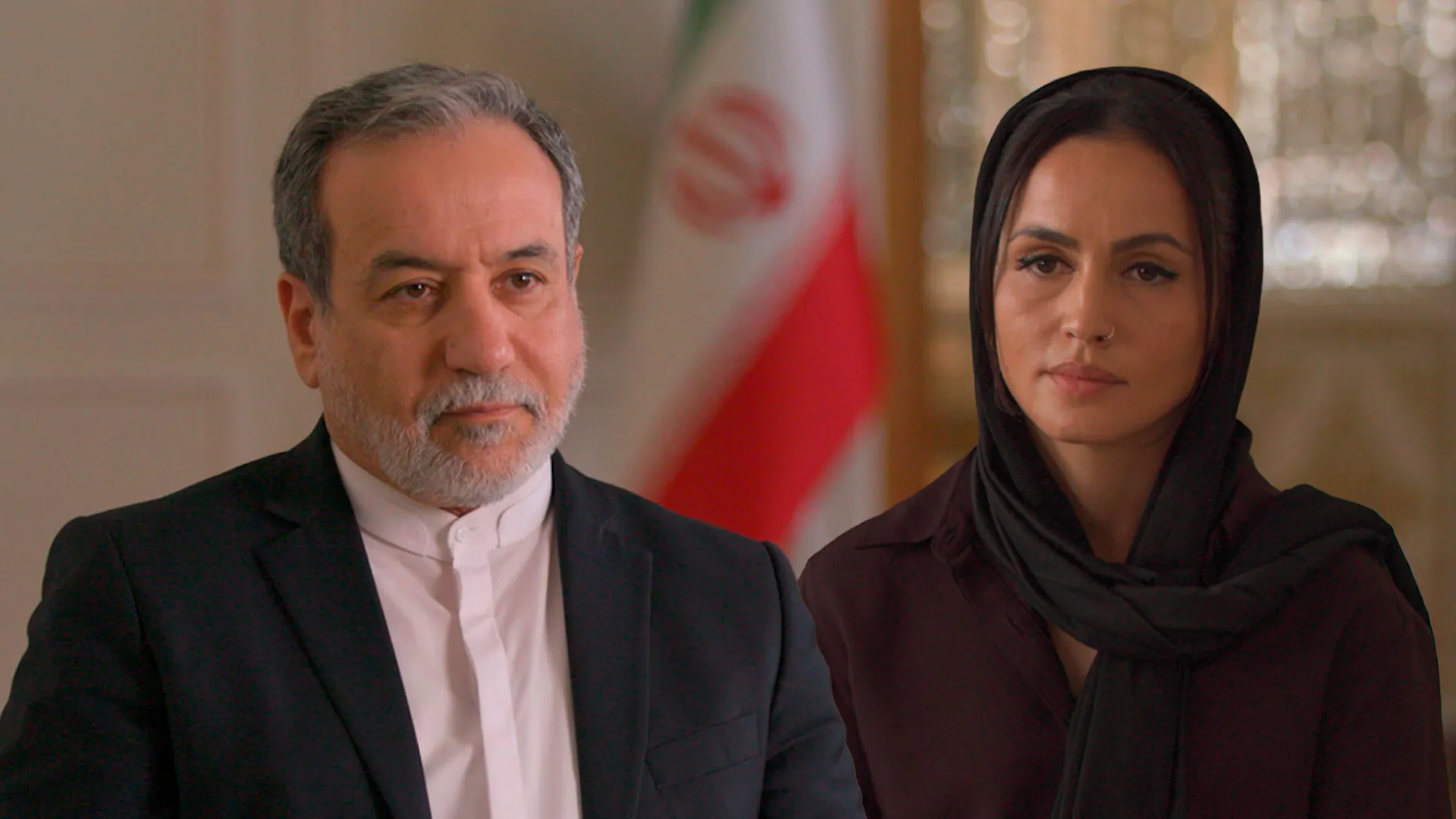
In an exclusive, wide-ranging interview recorded in October with Al Jazeera’s Fault Lines documentary programme, Iranian Foreign Minister Abbas Araghchi tells correspondent Hind Hassan that strikes by Israel and the United States in June caused “serious damage” to Iran’s nuclear facilities but insists its nuclear programme will continue.

“Technology cannot be eliminated by bombing,” he says, arguing that Iran’s scientific knowledge remains intact.

As Iran remains locked in a standoff with the US and refuses to renew negotiations while zero uranium enrichment demands remain in place, Araghchi says European snapback sanctions have undermined future cooperation with the United Nations nuclear watchdog, the International Atomic Energy Agency, and Iran would reconsider how it cooperates in the future.

Despite emphasising that “diplomacy is our priority,” the foreign minister insists that Iran is prepared to fight back if it is attacked again. Araghchi maintains that while Tehran has “never trusted the United States as an honest negotiating partner”, Iran remains prepared to engage diplomatically if both sides respect each other’s rights and pursue mutual interests based on equality.

Source link

UK announces independent probe into foreign interference in politics | Politics News

Minister says probe in response to case of ex-Reform UK lawmaker Nathan Gill, jailed for taking pro-Russia bribes.

The United Kingdom is launching an independent investigation into foreign interference in British politics, just weeks after a former Reform UK lawmaker was jailed for more than 10 years for taking bribes to make pro-Russia statements.

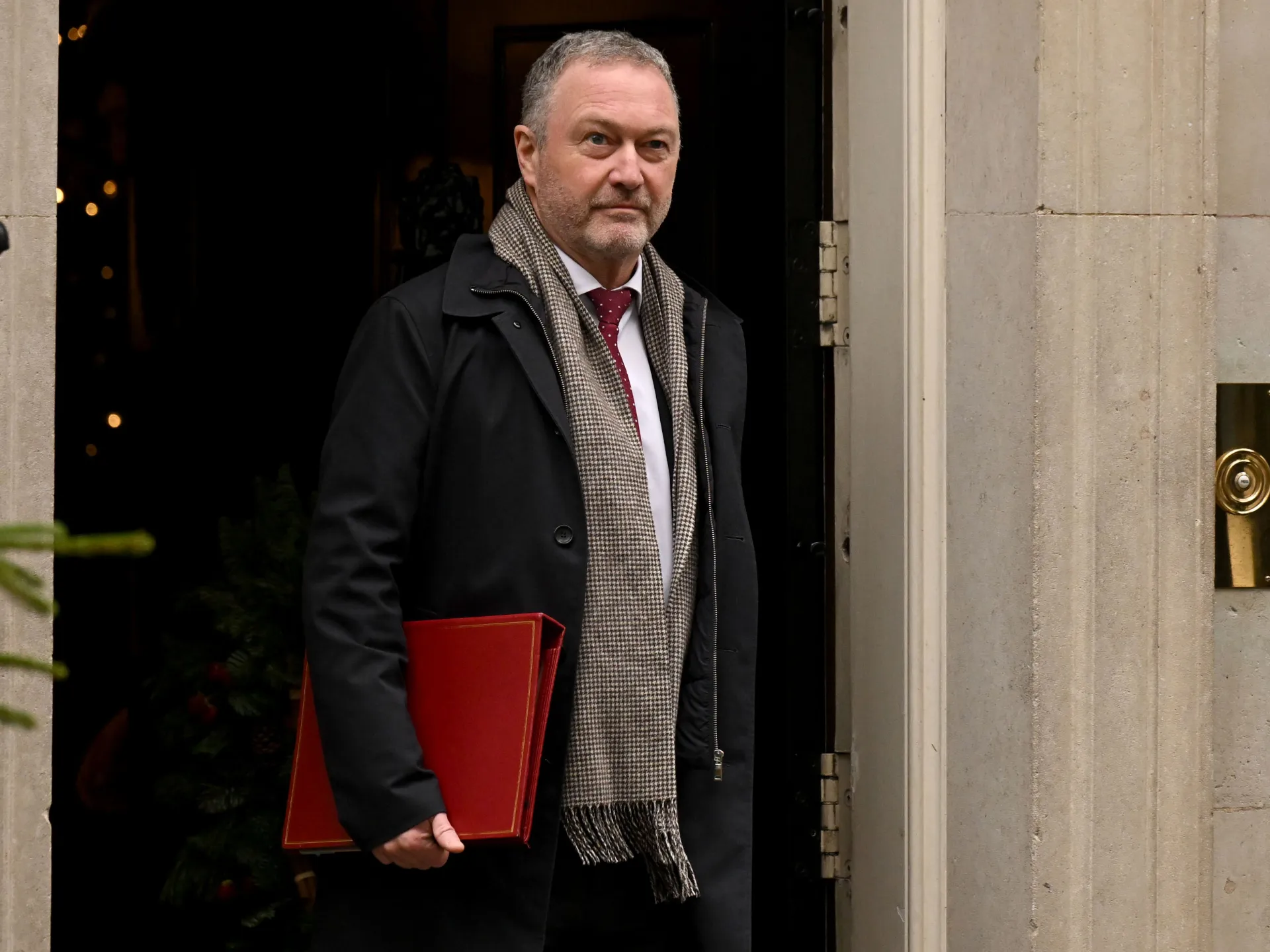
Steve Reed, the UK’s secretary of state for housing, communities and local government, said on Tuesday that he had ordered the probe in response to the case of Nathan Gill, a former Member of the European Parliament and ex-leader of Reform UK in Wales.

Recommended Stories

list of 3 itemsend of list

“A British politician took bribes to further the interests of the Russian regime,” Reed said in the House of Commons. “This conduct is a stain on our democracy. The independent review will work to remove that stain.”

Gill was sentenced to 10 years and six months in prison on November 21.

He pleaded guilty in September to accepting thousands of euros from a pro-Russian politician in Ukraine between 2018 and 2019, and making scripted statements and television appearances at his behest.

The case had spurred widespread condemnation from across the political spectrum, with Nigel Farage’s Reform UK party – which has been leading most polls – last month describing Gill’s actions as “reprehensible, treasonous and unforgivable”.

On Tuesday, Conservative MP Paul Holmes welcomed the independent review into foreign interference as a necessary step.

“Protecting the integrity of our democratic system from foreign interference is not a partisan issue. It goes to the heart of public trust in our elections,” Holmes told the House.

“Interference in our elections from foreign actors is something that we must all be vigilant against.”

Reed, the housing minister, said the independent probe would be led by Philip Rycroft, former UK permanent secretary for the Department for Exiting the European Union.

“The purpose of the review is to provide an in-depth assessment of the current financial rules and safeguards and make recommendations,” said Reed, adding that Rycroft has been asked to report his findings to the government by the end of March.

The minister noted that the British government put forward a strategy “for modern and secure elections” earlier this year in a push to address foreign interference and public distrust in the electoral system, among other issues.

But Reed said on Tuesday that “events have shown that we need to consider whether our firewall is enough”.

“The independent review will look at this,” he said, including by evaluating the UK’s existing political finance laws, systems to identify and mitigate foreign interference, and safeguards against illicit funding streams.

Source link

Thousands of glaciers to melt each year by midcentury, study finds | Climate Crisis News

Scientists say up to 4,000 glaciers could melt annually if global warming is not curbed.

The world could lose thousands of glaciers each year over the coming decades unless global warming is curbed, leaving only a fraction remaining by the end of the century, scientists warn.

A scientific study published on Monday in Nature Climate Change warned that unless governments take action now, the planet could reach a stage of “peak glacier extinction” by midcentury with up to 4,000 melting each year.

Recommended Stories

list of 3 itemsend of list

About 200,000 glaciers remain in the world, and about 750 disappear each year. That rate could rise more than fivefold if global temperatures soar by 4 degrees Celsius (7.2 degrees Fahrenheit) from pre-industrial levels and accelerate global warming, according to the report, which predicted only 18,288 glaciers would remain by the end of the century.

Even if governments meet their pledges to limit warming to 1.5C (2.7F) under the Paris Agreement, the world could still end up losing 2,000 glaciers a year by 2041. At that pace, a little more than half of the planet’s glaciers would be gone by 2100.

That best case scenario appears unlikely. The United Nations Environment Programme already warned last month that warming is on track to exceed 1.5C in the next few years. It predicted that even if countries meet promises they have made in their climate action plans, the planet will warm 2.3C to 2.5C (4.1F to 4.5F) by the end of the century.

Monday’s study was published at the close of the UN’s International Year of Glacier Preservation with the findings intended to “underscore the urgency of ambitious climate policy”.

“The difference between losing 2,000 and 4,000 glaciers per year by the middle of the century is determined by near-term policies and societal decisions taken today,” the study said.

Coauthor Matthias Huss, a glacier expert at ETH Zurich university, took part in 2019 in a symbolic funeral for the Pizol glacier in the Swiss Alps.

“The loss of glaciers that we are speaking about here is more than just a scientific concern. It really touches our hearts,” he said.

Source link

Universal Studios gets green light to be built in Bedfordshire

Alex PopeBedfordshire, Hertfordshire and Buckinghamshire

Universal Destinations & Experiences/Comcast An artist's impression of the new Universal Studios theme park has a large body of water in the middle with various rides and lands around the edge.Universal Destinations & Experiences/Comcast

The new theme park is expected to attract more than eight million visitors a year

Planning permission has been granted for the first Universal Studios theme park to be built in the UK, an MP has said.

Mohammad Yasin, the Labour MP for Bedford and Kempston, said the Secretary of State for Housing, Communities and Local Government had given the go-ahead for the complex to be constructed in Kempston Hardwick, close to Bedford.

Universal had sought planning permission through a special development order (SDO), which would allow the government to approve the project directly and bypass standard local planning procedures.

The entertainment company expects the park to attract more than eight million visitors a year and open by 2031.

Yasin said it was a “landmark moment for Bedford and the wider region”.

“The confirmation of planning permission for the Universal Destinations & Experiences Entertainment Resort Complex is transformational and will be felt for decades to come,” he said.

Bedford Borough Council said the park would provide £50bn of “economic benefit to the economy” and followed several years of close collaboration between Universal, councillors and council staff.

Universal and the government have been approached for comment.

‘James Bond and Paddington’

The site will be built on a former brickworks and was chosen for its nearby transport links, including rail services and London Luton Airport.

Planning documents released in July showed that structures reaching up to 377ft (115m) were proposed for the site, making them the tallest rides in Europe.

About 55,000 visitors are expected on peak days.

The plans showed that most structures at the park would range between 20m and 30m, with some taller structures creating a skyline with “visual interest”.

It would also include parking for more than 7,000 cars, additional spaces for hundreds of people to arrive by coach and bicycle and an entry plaza.

Details of the rides have not been released, but a source close to the project told the BBC that James Bond, Paddington and The Lord of the Rings-themed attractions could feature.

An aerial view of a row of 12 houses situated between fields and a former brickworks. The former brickworks is mostly made of concrete and there are arable fields to the front of the properties.

Manor Road in Kempston Hardwick runs through land bought by Universal Destinations and Experiences

Adam Zerny, the Independent leader of Central Bedfordshire Council, said it would bring “significant benefits to our area, creating new jobs and increasing income for many local businesses”.

Universal previously said the complex would feature a “theme park with several themed lands, visitor accommodation, as well as a range of retail, dining and entertainment uses” and would create 28,000 jobs.

It said 80% of employees were expected to come from Bedford, central Bedfordshire, Luton and Milton Keynes.

“The project will also help deliver several long-sought-after transportation upgrades, including an expanded Wixams railway station, direct slip roads from the A421 and other local road improvements,” it added.

Work to build a new railway station at Wixams started in August 2024, but it was put on hold to allow a bigger station to be built to accommodate Universal.

Last month, East West Rail Company (EWR Co) said a new railway station would be built to serve the park in Stewartby.

National Highways confirmed there would be upgrades to the transport network in the area, which would include a new link road off the A421.

Zerny said: “I have met with Universal to discuss the implications for our area, and I am encouraged by the acknowledgement that improvements to local road infrastructure will be necessary.”

Source link

China’s Stealthy CH-7 Flying Wing Drone Has Flown

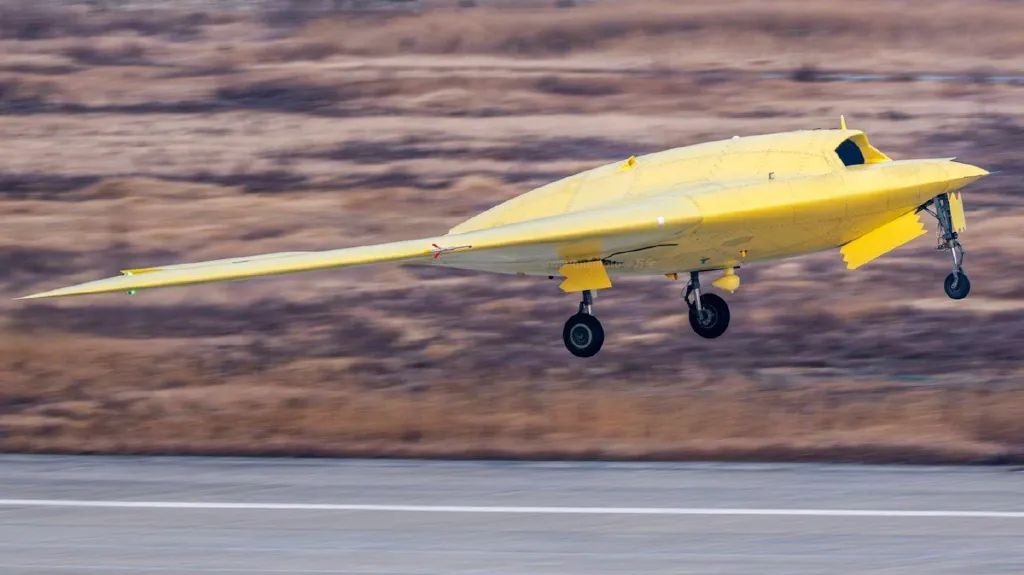
We have got what could be our first look at China’s CH-7 stealthy flying-wing drone in flight. While it’s no longer the biggest Chinese drone of this configuration, it’s still of impressive size and, as we have noted in the past, appears to be tailored for intelligence, reconnaissance, and surveillance (ISR), as well as possibly a secondary strike role.

We have got what could be our first look at China’s CH-7 stealthy flying-wing drone in flight. While it’s far from the biggest Chinese drone of this configuration, it’s still of impressive size and, as we have noted in the past, appears to be tailored for intelligence, reconnaissance, and surveillance (ISR), as well as strike missions as an uncrewed combat aerial vehicle (UCAV).
One of the first officially sanctioned images showing the CH-7 in the air. via Chinese internet

Video and stills released by Chinese state media today show the drone, for the first time, being prepared for flight, taking off, and landing. The video includes air-to-air footage of the CH-7 and, overall, the suggestion is that Beijing is making a notable effort to promote the progress of this program, especially in contrast to other, far more secretive flying wing drone programs.

It’s also notable that the CH-7 appears to have made its first flight from Pucheng Airport in Shaanxi province, which also saw the recent maiden flight of the Jiutian heavyweight jet-powered ‘mothership drone,’ which you can read more about here. The Pucheng facility is operated by the China Flight Test Establishment (CFTE), underscoring its growing importance as a drone ‘center of excellence.’

The CH-7 over Pucheng Airport in Shaanxi province. via Chinese internet

The CH-7 seen in the new imagery retains the yellow-colored coat of primer that was seen in video and stills of the drone on the ground, released by Chinese state media earlier this year. Yellow primer is frequently seen on Chinese aircraft during their test phase. The drone also has air data probes on the leading edges of the wing and nose, again consistent with it being a prototype or perhaps a pre-production machine. Overall, the CH-7 has a ‘cranked-kite’ planform, of the kind that we have seen on various other Chinese drones. There are also various measures to reduce the radar and infrared signature, including a slot-like low-observable platypus engine exhaust, with the nozzle fully concealed from most angles of view, and serrated edges on doors and panels.

Interestingly, the attachment points previously seen on the upper surfaces of the rear of the drone have been removed in the new official imagery. It seems these were used to mount vertical tail surfaces.

Unofficial imagery, captured from an observer on the ground, suggests that the CH-7 was initially flight-tested with outward-canted tailfins, presumably to ensure stability during initial sorties, or otherwise to test an alternative aerodynamic configuration.

While the identity of this drone has not been confirmed, it appears to be the CH-7, with the outward-canted tailfins fitted. via Chinese internet

Compared to the previous imagery, we now also get to see some other details of the CH-7, including a distinctive small teardrop-shaped fairing mounted below the fuselage. This enclosure is very likely an air-to-ground datalink used for line-of-sight control of the drone and is a common feature on larger drones, including the U.S. MQ-9 Reaper. This very unstealthy feature would be removed for most operational uses once the aircraft has entered service.

via Chinese internet

We now have a much better look at the series of antennas that runs in a line along the spine, flanked by two air scoops. There are also two prominent blade aerials, above and below the fuselage. Below the fuselage, immediately behind the nose landing gear, there appears to be a large radio frequency sensor aperture, and there could also be space for conformal arrays under the inner wings.

via Chinese internet

As we presumed, the previous prominent gaps inboard of the trailing-edge flaps, where the wing meets the blended body section, were a temporary configuration and have now been filled.

The latest configuration of the CH-7, with the attachment points for tailfins deleted and with the gaps removed inboard of the trailing-edge flaps. via Chinese internet
via Chinese internet
This view of the CH-7 prototype on the runway reveals the previous gaps inboard of the trailing-edge flaps. via Chinese Internet

The CH-7 was previously assumed to have an internal payload bay. That is not immediately obvious in the new imagery, but there is a suggestion of a notably long and slender bay immediately inboard of the main landing gear on the right-hand side, presumably with a similar bay on the left-hand side, too. If these are indeed for weapons, then they would be able to accommodate smaller stores only. This could point to a secondary strike role, but that seems somewhat less than likely at this point.

An underside view of the drone reveals only limited evidence of internal stores bays. via Chinese internet

The CH-7 has already gone through several different iterations since it was first revealed, as a full-scale mockup in 2018, with the design being progressively adapted. Earlier changes included a less sharply swept wing compared to at least one early model, as well as an apparent growth in overall size.

The CH-7 (or Caihong-7, meaning Rainbow-7) has been developed by the state-owned China Aerospace Science and Technology Corporation (CASC), specifically by its 11th Research Institute. A high-altitude, long-endurance drone, it is generally understood to be optimized for penetrating into or very near hostile airspace. It achieves this through a combination of a low-observable (stealth) design and flying at high altitudes, leading it to operate for extended periods of time without being successfully engaged.

via Chinese internet

Published specifications for the CH-7 include a length of 10 meters (33 feet), a maximum takeoff weight of 10,000 kilograms (22,000 pounds), a maximum speed of 926 km/h (575 mph), and an endurance of up to 15 hours. Bearing in mind the various design changes, these figures should be considered very much as provisional.

Earlier this year, Chinese state-owned media reported that the CH-7 had completed testing and was scheduled to complete development in 2024. This would imply it had also completed the flight-test program by this date, which remains possible, and the new imagery may actually date back a year or so.

via Chinese internet

Regardless of the timeline, the CH-7 is a fascinating program.

It represents one part of China’s accelerated efforts to develop low-observable, long-endurance drones, and there is a general expectation that, once in service, it will be used for both ISR and as a UCAV. Official statements from Beijing claim that, as well as bringing back critical intelligence, the CH-7 should also be able to strike strategic targets.

When it was unveiled, the CH-7 was described as a high-altitude, long-endurance stealth combat drone. Its chief designer, Shi Wen, said the aircraft would be able to “fly long hours, scout, and strike the target when necessary.”

via Chinese internet

It should be noted, however, that the latest imagery doesn’t provide definitive evidence of an extensive internal payload capacity, which might throw some doubt on the strike role, at least as a primary mission.

Even if the CH-7 ends up being exclusively an ISR platform, it remains highly relevant within China’s growing portfolio of stealthy drones, especially since it is apparently tailored to penetrate into or very near hostile airspace at high altitudes. Flying ISR missions with this profile would be especially relevant for China in a naval context, with the drone potentially roaming far out into the Pacific, monitoring the movements of enemy ships and providing targeting data for ground-based long-range missiles, for example, as well as anti-ship missiles launched from warships and bombers. Other theaters of operation in which a drone of this kind would be valuable include around the islands of the South China Sea and along the border with India.

A rear three-quarter view of the CH-7. via Chinese internet

Furthermore, it seems that the CH-7 will be offered for export. This hypothesis might also be supported by the unusually open nature of the imagery that’s been released of the drone so far.

If the CH-7 were to be offered for foreign customers, it would come with advanced capabilities that no other country is currently pitching on the arms market. It would also come without the various restrictions that limit the sale of high-end U.S. and other Western defense products.

A still from an official video showing what is purported to be a control center used for the CH-7 testing. via Chinese internet

Not only is the United States not currently able to offer for export a stealthy long-endurance surveillance drone or UCAV, but it’s also possible that no uncrewed platform of this class is even under development in that country — the still-mysterious RQ-180 may have fit in this category, but its current status is unknown. The stark contrast between the U.S. and Chinese approaches to very stealthy uncrewed aircraft for independent strike missions is something that we have addressed before in this feature of ours.

At this point, we should remember that we don’t know exactly how far the development of the CH-7 has progressed and when it might end up being ready for service with China, let alone with export customers. It remains possible that they might have to wait for a downgraded or otherwise sanitized version of the drone.

via Chinese internet

Since the first appearance of the CH-7, two other, far larger high-altitude, long-endurance (HALE) drones have emerged from China. There are, meanwhile, also several medium-sized flying-wing surveillance drones and multirole UCAV types, one of which appears to be already in operational service. All of this emphasizes just how much effort and investment China is currently putting into flying-wing-type drones, not to mention diverse other kinds of uncrewed aerial vehicles.

Nevertheless, the CH-7 program remains very much one to watch. Provided it fulfills its promise, it could provide China with a multirole low-observable drone family that could also be offered for export. For now, the CH-7 stands as more evidence of the huge strides that China is making in terms of drone technology, and the particular focus being placed on stealthy uncrewed aircraft.

Contact the author: thomas@thewarzone.com

Thomas is a defense writer and editor with over 20 years of experience covering military aerospace topics and conflicts. He’s written a number of books, edited many more, and has contributed to many of the world’s leading aviation publications. Before joining The War Zone in 2020, he was the editor of AirForces Monthly.


Source link

Bangladesh President Shahabuddin Plans Mid-Term Resignation

Bangladeshi President Mohammed Shahabuddin, elected unopposed in 2023 as a nominee of the Awami League, has announced his intention to step down midway through his term following February’s parliamentary election. His decision comes amid tensions with the interim government led by Nobel laureate Muhammad Yunus.

Although the presidency in Bangladesh is largely ceremonial, Shahabuddin gained national prominence during the student-led uprising in August 2024, when Prime Minister Sheikh Hasina fled to New Delhi and parliament was dissolved. During this period, Shahabuddin remained the last constitutional authority in the country.

Conflict with Interim Government

Shahabuddin described feeling sidelined by Yunus, citing instances such as being excluded from meetings, the removal of his press department, and the sudden elimination of his portraits from Bangladeshi embassies worldwide. “A wrong message goes to the people that perhaps the president is going to be eliminated. I felt very much humiliated,” he told Reuters in his first media interview since taking office.

Despite these grievances, he affirmed that he would remain in office until elections are held, respecting constitutional norms, and would allow the next government to determine his successor.

Political Landscape Ahead of Elections

Opinion polls suggest the Bangladesh Nationalist Party (BNP) and hardline Jamaat-e-Islami are the leading contenders to form the next government. Shahabuddin has emphasized that no party has asked him to resign in recent months, and he maintains regular contact with Army Chief General Waker-uz-Zaman, who has assured him of no intention to seize power.

Military and Democratic Context

Bangladesh has a history of military intervention in politics, but Shahabuddin indicated that the army leadership is committed to democratic processes. During the August 2024 protests, the military largely stayed out of the conflict, which helped shape the political transition.

Personal Analysis

Shahabuddin’s planned resignation reflects a deeper struggle over the symbolic authority of the presidency amid political instability. Although the role is ceremonial, the treatment he received from the interim government appears to have eroded his sense of institutional respect. His public statements highlight not only personal frustration but also the fragility of democratic norms in transitional periods.

Furthermore, the situation underscores the delicate balance between civilian authority and the military in Bangladesh, where past interventions have shaped governance patterns. By signaling his willingness to step down while remaining constitutionally compliant, Shahabuddin seeks to preserve institutional legitimacy while avoiding direct confrontation, potentially smoothing the path for the incoming administration and reducing political friction in a tense electoral environment.

Overall, his resignation would mark a symbolic transition, emphasizing both the limitations of the presidency in Bangladesh’s political system and the ongoing influence of military and interim authorities in shaping the political landscape.

With information from Reuters.

Source link

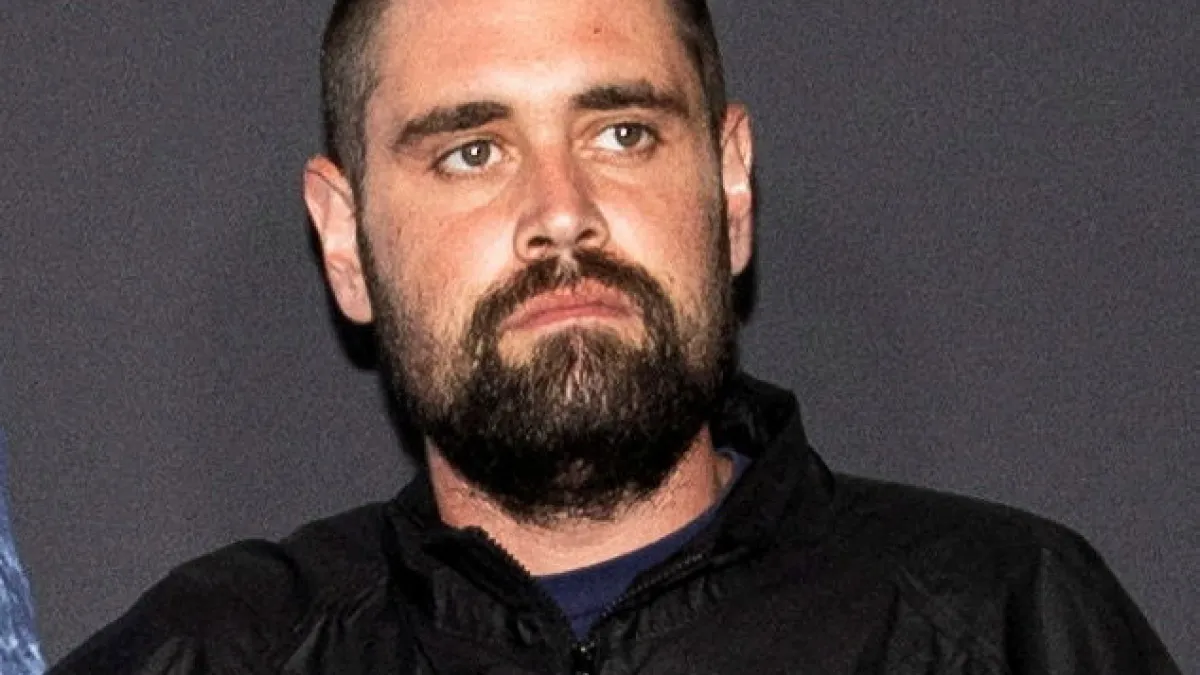
Who is Nick Reiner, arrested over death of his filmmaker father Rob Reiner? | Explainer News

Hollywood filmmaker Rob Reiner and his wife Michele Singer Reiner were found dead in their Los Angeles home on Sunday. The police and investigators believe the couple suffered fatal stab wounds.

On Monday, police arrested the legendary director’s 32-year-old son, Nick Reiner, in connection with the deaths.

Recommended Stories

list of 3 itemsend of list

Rob Reiner directed several United States movie classics, including When Harry Met Sally and The Princess Bride. He was also a devoted activist for liberal causes and a frequent critic of US President Donald Trump.

So, what do we know about Nick Reiner, and what was his alleged involvement in his parents’ killing?

Who killed Rob Reiner and his wife?

Nick was revealed to be in Los Angeles police custody on Monday after the bodies of his parents were discovered inside their home in the upscale Brentwood neighbourhood.

The Los Angeles Fire Department said it responded to a medical aid request shortly after 3:30pm on Sunday [02:30 GMT Monday], and found a man and woman dead inside.

Rob Reiner’s daughter was the first to find the bodies of her parents and called the authorities, according to multiple reports.

In a statement, the Los Angeles Police Department said it was treating the deaths as homicides. Police have not released a full official timeline of how the killings occurred or the motivation behind them.

Nick Reiner remains in custody without bail. On Monday, Los Angeles Police chief Jim McDonnell said Nick Reiner was “booked for murder”.

Prosecutors will receive the case on Tuesday as they weigh whether to file formal charges against him.

Who is Nick Reiner?

Nick Reiner is the middle child of Rob and Michele Singer Reiner. They have two other children, Jake and Romy.

Nick’s struggles with substance abuse were longstanding, about which he had publicly spoken.

Rob Reiner, in a 2016 interview, said his son’s heroin addiction began about age 15, leading him into a cycle of dependency that persisted for years.

He underwent multiple rehabilitation stays, at least 17, by some accounts, and experienced periods of homelessness as a result of his addiction and the difficulties he faced in recovery.

His addiction issues inspired the 2015 semi-autobiographical movie Being Charlie, co-written by the father and son duo, and directed by Rob Reiner, about the struggles of a famous father and an addicted son.

The film was seen as an attempt to explore and heal aspects of their relationship, reflecting how deeply addiction had affected their family.

“It forced us to understand ourselves better than we had,” Rob Reiner told the AP news agency in 2016. During a YouTube interview series when the film was released, Nick Reiner reflected on his upbringing with his father, stating, “We didn’t bond a lot,” and acknowledged that collaborating on the film helped them “feel closer”.

Who was Rob Reiner?

Rob Reiner was a highly influential figure in US film and television. He was the son of comedy legend Carl Reiner, who died in 2020 at the age 98.

The Emmy-winning actor first gained fame as Michael “Meathead” Stivic in the 1970s TV sitcom, All in the Family. Rob Reiner went on to become a celebrated director, responsible for such classics as This Is Spinal Tap, Stand by Me, The Princess Bride, and A Few Good Men.

Legendary actress and Oscar winner Kathy Bates, who won the coveted award as the star of Rob Reiner’s 1990 film, Misery, said she “loved Rob”.

“He was brilliant and kind, a man who made films of every genre to challenge himself as an artist,” she said in a statement. “He changed the course of my life. Michele was a gifted photographer.”

Beyond filmmaking, Rob Reiner was an active political and social voice, often engaging in public debates on issues ranging from civil rights to public policy. He was a fierce critic of US President Trump.

During Trump’s first term, Reiner repeatedly described the president as “mentally unfit” and “unqualified” to serve in office.

What was Trump’s reaction?

On Monday, Trump made a social media post in which he described Reiner as “tortured and struggling” and claimed that both he and his wife had died, “reportedly due to the anger he caused” by opposing Trump during his presidency.

“He was known to have driven people CRAZY by his raging obsession of President Donald J. Trump,” he wrote on Truth Social.

Trump, who is known for aggressively targeting critics and commending allies, did not present any proof that Rob Reiner’s political stance was linked to the couple’s deaths.

The post was met with sharp condemnation from politicians across the political spectrum, including both Democrats and Republicans.

Source link

How Israel’s expansion push deepens Palestinian suffering in West Bank | Israel-Palestine conflict News

A new wave of Israeli policies is changing the reality and boundaries on the ground in the occupied West Bank.

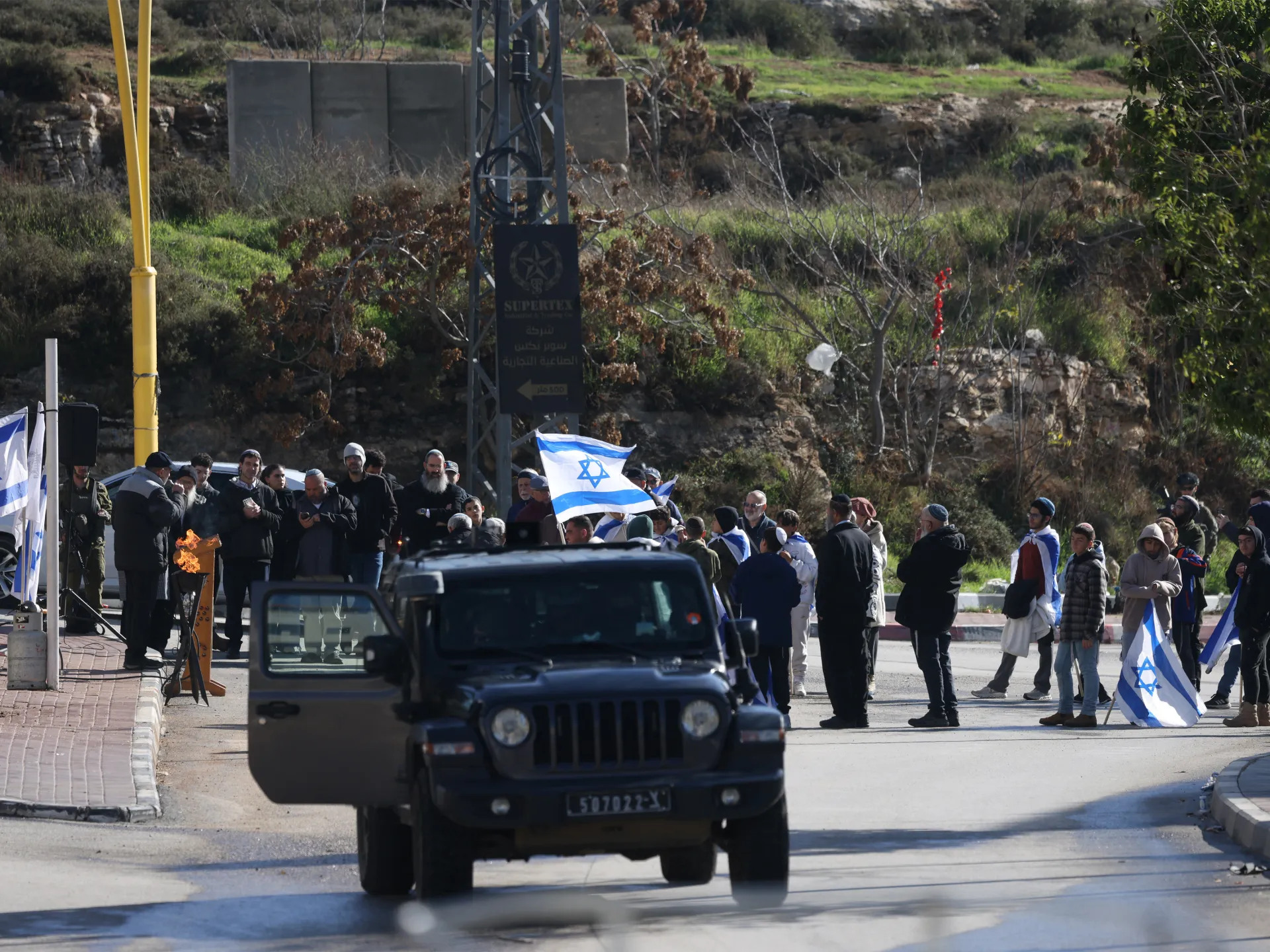
The Israeli government has approved the formalisation of 19 so-called settlement outposts as independent settlements in the occupied West Bank. This is the third wave of such formalisations this year by the government, which considers settlement expansion and annexation a top priority. During an earlier ceremony of formalisation, Finance Minister Bezalel Smotrich said, “We are advancing de facto sovereignty on the ground to prevent any possibility of establishing an Arab state in [the West Bank].”

Settlement outposts, which are illegal under international law, are set up by a small group of settlers without prior government authorisation. This does not mean that the settlers, who are often more ideological and violent, do not enjoy government protection. Israeli human rights organisations say that settlers in these so-called outposts enjoy protection, electricity and other services from the Israeli army. The formalisation opens the door to additional government funds, infrastructure and expansion.

Many of the settlement outposts formalised in this latest decision are concentrated in the northeastern part of the West Bank, an area that traditionally has had very little settlement activity. They also include the formalisation of two outposts evacuated in 2005 by the government of Israeli then-Prime Minister Ariel Sharon.

While these government decisions may seem bureaucratic, they are in fact strategic in nature. They support the more ideological and often more violent settlers entrenching their presence and taking over yet more Palestinian land, and becoming more brazen in their attacks against Palestinians, which are unprecedented in scope and effect.

The Israeli human rights organisation B’Tselem estimates that settler attacks against Palestinians have forcibly displaced 44 communities across the West Bank in the past two years. These arson attacks, vandalism, physical assault and deadly shootings are done under the protection of Israeli soldiers. During these settler attacks, 34 Palestinians were killed, including three children. None of the perpetrators has been brought to justice. In fact, policing of these groups has dropped under the direction of Israel’s national security minister, Itamar Ben-Gvir, who is a settler himself.

United Nations Secretary-General Antonio Guterres recently sounded the alarm about Israel’s record-breaking expansion of illegal settlements in the West Bank and the unprecedented levels of state-backed settler violence. In a briefing to the UN Security Council, Guterres reminded states that all settlements are illegal under international law. He also warned that they erode Palestinian rights recognised under this law, including to a state of their own.

In September, United States President Donald Trump said he “will not allow” Israel to annex the West Bank, without offering details of what actions he would take to prevent such a move.

But Israel is undeterred. The government continues to pursue its agenda of land grab, territorial expansion and annexation by a myriad of measures that fragment, dispossess and isolate Palestinians in the West Bank, including East Jerusalem, and continues its genocidal violence in Gaza.

More than 32,000 Palestinians have been forcibly displaced from their homes in three refugee camps in the occupied West Bank for nearly a year. The Israeli army continues to occupy Nur Shams, Tulkarem and Jenin refugee camps and ban residents from returning. Meanwhile, Israeli forces have demolished and damaged 1,460 buildings in those camps, according to a preliminary UN estimate. This huge, destructive campaign has changed the geography of the camps and plunged more families into economic and social despair.

This is the state hundreds of thousands of Palestinians across the West Bank find themselves in because of Israeli restrictions, home demolitions and land grabs. The Israeli army has set up close to 1,000 gates across the West Bank, turning communities into open-air prisons. This has a direct and devastating effect on the social fabric, economy and vitality of these communities, which live on land that is grabbed from under them to execute the expansion of illegal settlements, roads and so-called buffer zones around them.

According to the UN Conference on Trade and Development, Israeli practices and policies over the past two years have cost the Palestinian people 69 years of development. The organisation recently reported that the Palestinian gross domestic product (GDP) has shrunk to 2010 levels. This is visible most starkly in Gaza, but it is palpable in the West Bank as well.

The results of these policies and this reality are Palestinians leaving their homes and Israel expanding. During the summer, Israeli Prime Minister Benjamin Netanyahu told a local news station he was on a “historic and spiritual mission”, in reference to the vision of the Greater Israel that he said he was “very” attached to.

Source link

Topuria says “false allegations of domestic abuse” behind UFC 324 absence | Mixed Martial Arts News

UFC title holder IIia Topuria took a break from the sport in November to fight what he is calling “attempted extortion”.

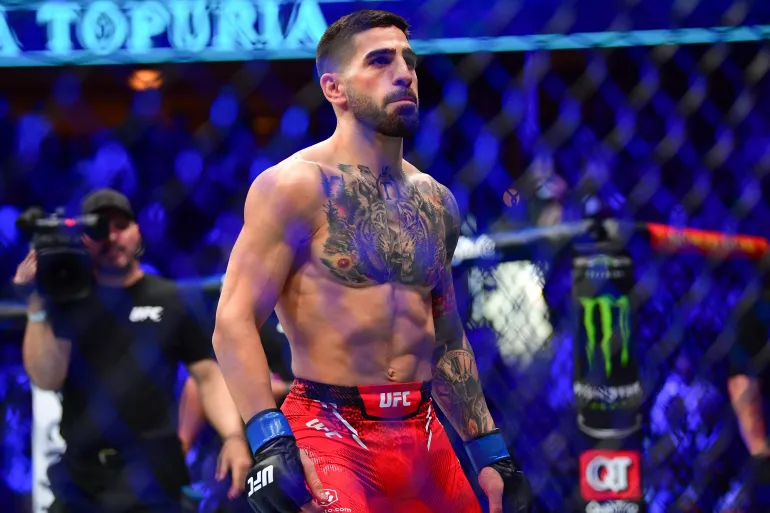
Undefeated UFC lightweight champion Ilia Topuria explained his withdrawal from the UFC 324 title bout on Monday, alleging he is addressing an extortion attempt and will return to the cage at the appropriate time.

Topuria is not on the UFC 324 card. An interim lightweight championship bout between Justin Gaethje and Paddy Pimblett headlines the January 24 event in Paradise, Nevada.

Recommended Stories

list of 4 itemsend of list

The 28-year-old Georgian had already denied that an injury forced him out of a title defence. Topuria (17-0) said Monday he wanted to address rumours and speculation about his absence from the sport since November.

“Over the past several weeks, I have made the difficult decision to temporarily step away from defending my title. This was not a decision I took lightly. However, when circumstances arise that threaten your personal integrity, your family, and your reputation, there comes a point when you must address them directly,” Topuria said in a statement posted to Instagram on Monday.

“In recent months, I have been subjected to severe and unacceptable pressure, including threats to disseminate false allegations of domestic abuse unless financial demands were met. These allegations are entirely unfounded. The truth is not a matter of opinion – it is a matter of evidence. All relevant evidence has been carefully preserved and documented, including audio recordings, written communications, witness statements, and video material. This evidence has been submitted to the appropriate judicial authorities in order to pursue legal action for attempted extortion, falsification of evidence, misappropriation of funds and personal property, and multiple threats.”

Topuria has two knockout wins to defend the belt since he won it from Alexander Volkanovski in February 2024 with a knockout victory.

Topuria’s most recent fight was a June 28 knockout victory against Charles OIiveira at UFC 317 and made him the first undefeated two-division champion in UFC history.

Ilia Topuria against Charles Oliveira headline UFC 317
Topuria has won UFC titles in two weight classes – flyweight and lightweight – and has been ranked as the No 1 pound-for-pound UFC fighter in the world [File: Gary A. Vasquez/USA TODAY Sports]

Source link

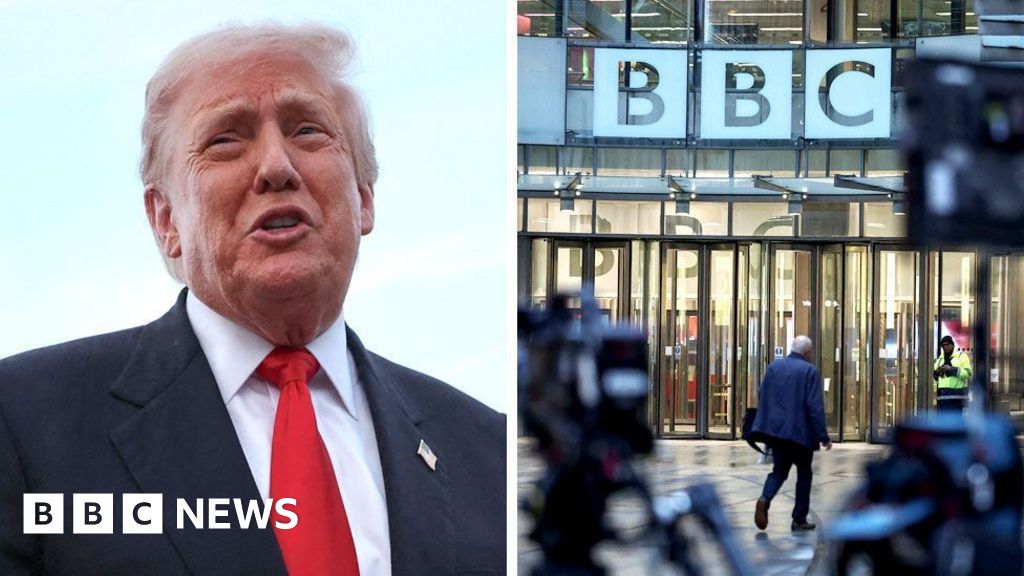
Trump sues BBC for defamation over Panorama speech edit

US President Donald Trump has filed a $5bn (£3.7bn) lawsuit against the BBC over an edit of his 6 January 2021 speech in a Panorama documentary.

Trump accused the broadcaster of defamation and of violating a trade practices law, according to court documents filed in Florida.

The BBC apologised to Trump last month, but rejected his demands for compensation and disagreed there was any “basis for a defamation claim”.

Trump’s legal team accused the BBC of defaming him by “intentionally, maliciously, and deceptively doctoring his speech”. The BBC has not yet responded to the lawsuit.

Trump said last month that he planned to sue the BBC for the documentary, which aired in the UK ahead of the 2024 US election.

“I think I have to do it,” Trump told reporters of his plans. “They cheated. They changed the words coming out of my mouth.”

In his speech on 6 January 2021, before a riot at the US Capitol, Trump told a crowd: “We’re going to walk down to the Capitol, and we’re going to cheer on our brave senators and congressmen and women.”

More than 50 minutes later in the speech, he said: “And we fight. We fight like hell.”

In the Panorama programme, a clip showed him as saying: “We’re going to walk down to the Capitol… and I’ll be there with you. And we fight. We fight like hell.”

The BBC acknowledged that the edit had given “the mistaken impression” he had “made a direct call for violent action”, but disagreed that there was basis for a defamation claim.

In November, a leaked internal BBC memo criticised how the speech was edited, and led to the resignations of the BBC’s director general, Tim Davie, and its head of news, Deborah Turness.

Before Trump filed the lawsuit, lawyers for the BBC had given a lengthy response to the president’s claims.

They said there was no malice in the edit and that Trump was not harmed by the programme, as he was re-elected shortly after it aired.

They also said the BBC did not have the rights to, and did not, distribute the Panorama programme on its US channels. While the documentary was available on BBC iPlayer, it was restricted to viewers in the UK.

In his lawsuit, Trump cites agreements the BBC had with other distributors to show content, specifically one with a third-party media corporation that allegedly had licensing rights to the documentary outside the UK. The BBC has not yet responded to these claims, nor has the company with the alleged distribution agreement.

The suit also claims that people in Florida may have accessed the programme using a VPN or by using streaming service BritBox.

“The Panorama Documentary’s publicity, coupled with significant increases in VPN usage in Florida since its debut, establishes the immense likelihood that citizens of Florida accessed the Documentary before the BBC had it removed,” the lawsuit said.

Source link

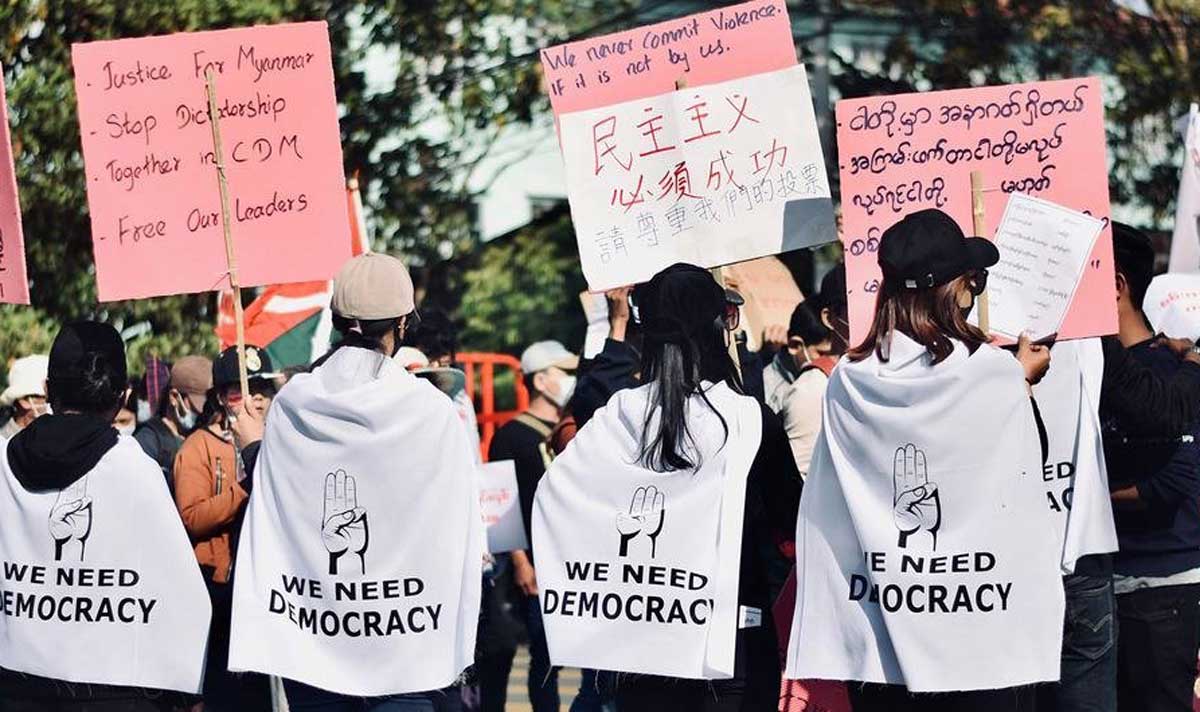
Human-Wave Assaults and Drones Signal Myanmar Junta’s Battlefield Comeback

Four years after seizing power in a coup, Myanmar’s military junta is adapting to survive a grinding civil war that once appeared to be slipping beyond its control. In October, rebel fighters in central Myanmar described facing a level of intensity they had not seen before: sustained artillery fire, coordinated drone strikes, and repeated infantry assaults that came in relentless waves. After days of fighting near the village of Pazun Myaung, resistance forces were forced to withdraw, marking a rare tactical success for a military that had suffered major setbacks since 2023.

This shift follows Operation 1027, a coordinated rebel offensive that overran around 150 military outposts and handed resistance groups control of large swathes of borderland territory. Shaken by those defeats, the junta began reshaping its strategy. According to rebel fighters and security analysts interviewed by Reuters, the military has leaned on three pillars to stabilise its position: mass conscription, expanded use of drones and air power, and growing diplomatic and coercive support from China.

How the Junta Is Fighting Back

On the ground, resistance fighters report that the military is deploying “human-wave” tactics, sending repeated infantry units forward even as casualties mount. Rebels say some soldiers appear to be coerced into advancing, a stark contrast to earlier phases of the war when troops often retreated quickly after losses. These assaults are now closely integrated with artillery and drone strikes, creating pressure that smaller, lightly equipped resistance units struggle to withstand over time.

At the same time, the junta has rebuilt manpower through mandatory conscription introduced in February 2024. Despite widespread public fear and evasion, tens of thousands of recruits have reportedly entered the armed forces, stabilising a military that had shrunk dramatically since the coup. The command structure has also been reshuffled, with more experienced officers replacing those promoted through patronage, addressing one of the army’s long-standing weaknesses.

Air power has become more lethal as well. While conventional airstrikes remain central, they are now increasingly guided by reconnaissance drones, improving accuracy. Analysts say the military operates a diverse fleet of unmanned aerial vehicles sourced from China, Russia and Iran, giving it a technological edge over resistance groups that lack jamming equipment or air-defence systems. Lower-level commanders are also reportedly being granted faster access to air support, tightening coordination between ground assaults and aerial attacks.

China’s Quiet but Crucial Role

Beyond the battlefield, China has emerged as a decisive external factor in the junta’s partial resurgence. While Beijing maintains ties with certain ethnic armed groups, it continues to see Myanmar’s generals as the most reliable guarantors of stability along its border. Chinese officials have brokered ceasefires that have directly benefited the junta, including arrangements that returned strategically important towns to military control.

Pressure from Beijing has also constrained resistance groups’ access to weapons and financing. International researchers say China has leaned on allied militias to restrict arms flows and imposed financial and border measures to enforce compliance. In some areas, this has effectively frozen resistance operations, forcing groups into ceasefires due to shortages of ammunition and funds. For fighters on the ground, this external squeeze has compounded the military’s renewed offensive momentum.

Why It Matters

The junta’s evolving tactics do not signal outright victory, but they do mark a dangerous shift in a conflict that had increasingly favoured resistance forces. Myanmar’s frontlines remain fragmented, with no single actor dominating nationwide, yet the military’s ability to retake territory in parts of the country suggests the war is entering a new, more brutal phase. Civilians are likely to bear the cost, as intensified airstrikes, mass infantry assaults and prolonged clashes deepen humanitarian suffering and displacement.

This military push also coincides with a planned general election that international observers and rights groups have already dismissed as neither free nor fair. By reclaiming territory and projecting strength, the junta appears intent on manufacturing a sense of control and legitimacy, even as key opposition figures remain jailed and major political forces boycott the vote.

What Comes Next

Analysts expect fighting to intensify rather than subside. With conscription feeding new troops into the ranks, drones sharpening air power, and China discouraging resistance advances near its interests, the military is likely to continue probing for opportunities to retake ground. Resistance forces, meanwhile, face internal disparities in strength and growing external pressure, making coordinated nationwide offensives harder to sustain.

Over the next few years, Myanmar is likely to see a protracted stalemate punctuated by brutal offensives rather than a decisive resolution. The junta’s comeback is limited and uneven, but it is enough to prolong the conflict and raise the stakes for all sides involved.

Analysis

Myanmar’s war is no longer defined solely by a collapsing army versus a rising resistance. Instead, it is evolving into a grim contest of endurance. The junta’s use of human-wave assaults reflects both renewed confidence and underlying fragility: manpower is being substituted for legitimacy, and coercion for morale. Drones and foreign backing provide tactical advantages, but they do not resolve the political roots of the conflict. China’s role underscores how regional power politics can shape internal wars, often prioritising stability over justice. In this context, the junta’s battlefield adaptation may extend its survival, but it also deepens a cycle of violence that makes a negotiated political settlement ever more elusive.

With information from Reuters.

Source link

Why a Bollywood spy film sparked a political storm in India and Pakistan | Explainer News

New Delhi, India – A newly released Bollywood spy thriller is winning praise and raising eyebrows in equal measure in India and Pakistan, over its retelling of bitter tensions between the South Asian neighbours.

Sunk in a sepia tone, Dhurandhar, which was released in cinemas last week, is a 3.5-hour-long cross-border political spy drama that takes cinemagoers on a violent and bloody journey through a world of gangsters and intelligence agents set against the backdrop of India-Pakistan tensions. It comes just months after hostilities broke out between the two countries in May, following a rebel attack on a popular tourist spot in Pahalgam, in Indian-administered Kashmir, which India blamed Pakistan for. Islamabad has denied role in the attack.

Since the partition of India to create Pakistan in 1947, the nuclear-armed neighbours have fought four wars, three of them over the disputed region of Kashmir.

The film stars the popular actor Ranveer Singh, who plays an Indian spy who infiltrates networks of “gangsters and terrorists” in Karachi, Pakistan. Critics of the film argue that its storyline is laced with ultra-nationalist political tropes and that it misrepresents history, an emerging trend in Bollywood, they say.

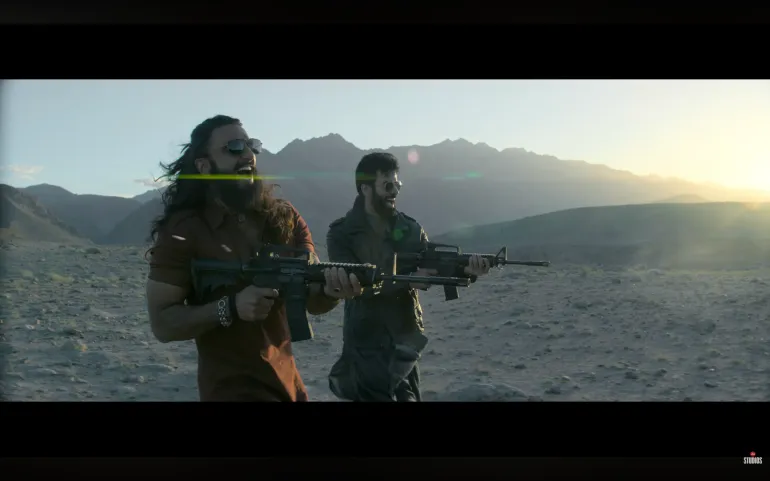
A still from the trailer of Dhurandhar. Credit: Jio Studios
A still from the trailer of Dhurandhar [Jio Studios/Al Jazeera]

What is the latest Bollywood blockbuster about?

Directed by Aditya Dhar, the film dramatises a covert chapter from the annals of Indian intelligence. The narrative centres on a high-stakes, cross-border mission carried out by India’s Research and Analysis Wing (R&AW), and focuses on one operative who conducts operations on enemy soil to neutralise threats to Indian national security.

The film features a heavyweight ensemble cast led by Singh, who plays the gritty field agent tasked with dismantling a “terror” network from the inside. He is pitted against a formidable antagonist played by Sanjay Dutt, representing the Pakistani establishment, and gangsters such as one portrayed by Akshaye Khanna, while actors including R Madhavan portray key intelligence officers and strategists who orchestrate complex geopolitical manoeuvering from New Delhi.

Structurally, the screenplay follows a classic cat-and-mouse trajectory.

Beneath its high-octane set pieces, the film has sparked an angry debate among critics and audiences over the interpretation of historical events and some key figures.

A still from the trailer of Dhurandhar. Credit: Jio Studios
A scene shown in the trailer of the new Bollywood film, Dhurandhar [Jio Studios/Al Jazeera]

Why is the film so controversial in Pakistan?

Despite the longstanding geopolitical tensions between the two countries, India’s Bollywood films remain popular in Pakistan.

Depicting Pakistan as the ultimate enemy of India has been a popular theme retold for years, in different ways, especially in Bollywood’s spy thrillers, however. In this case, the portrayal of Pakistan’s major coastal city, Karachi, and particularly one of its oldest and most densely populated neighbourhoods, Lyari, has drawn strong criticism.

“The representation in the film is completely based on fantasy. It doesn’t look like Karachi. 
It does not represent the city accurately at all,” Nida Kirmani, an associate professor of sociology at Lahore University of Management Sciences, told Al Jazeera.

Kirmani, who has produced a documentary on the impact of gang violence in Lyari of her own, said that like other megacities in the world, “Karachi had periods of violence that have been particularly intense.”

However, “reducing the city to violence is one of the major problems in the film, along with the fact the film gets everything about Karachi – from its infrastructure, culture, and language – wrong”, she added.

Meanwhile, a member of the Pakistan People’s Party (PPP) has taken legal action in a Karachi court alleging the unauthorised use of images of the late former prime minister, Benazir Bhutto, who was assassinated in 2007, and protesting against the film’s portrayal of the party’s leaders as supporters of “terrorists”.

Critics, including Kirmani, say the film also bizarrely casts gangs from Lyari into geopolitical tensions with India, when they have only ever operated locally.

Kirmani said the makers of the movie have cherry-picked historical figures and used them completely out of context, “trying to frame them within this very Indian nationalistic narrative”.

Mayank Shekhar, a film critic based in Mumbai, pointed out that the film “has been performed, written, directed by those who haven’t ever stepped foot in Karachi, and perhaps never will”.

“So, never mind this dust bowl for a city that, by and large, seems wholly bereft of a single modern building, and looks mostly bombed-out, between multiple ghettos,” Shekhar said.

He added that this is also in line with how Hollywood “shows the brown Third World in action with a certain sepia tone, like with Extraction, set in Dhaka, Bangladesh”.

dhurandhar
Bollywood actor Ranveer Singh (centre) performs during the music launch of his upcoming Indian Hindi-language film Dhurandhar in Mumbai on December 1, 2025 [Sujit Jaiswal/AFP]

How has the film been received in India?

Dhurandhar has been a huge commercial success in India and among the Indian diaspora. However, it has not escaped criticism entirely.

The family of a decorated Indian Army officer, Major Mohit Sharma, filed a petition in Delhi High Court to stop the release of the film, which, they claim, has exploited his life and work without their consent.

The makers of the film deny this and claim it is entirely a work of fiction.

Nonetheless, the film’s storyline is accompanied by real-time intercepted audio recordings of attacks on Indian soil and news footage, film critics and analysts say.

People seen in front of a movie theater that is screening the film Kashmir files that
People linger outside a movie theatre that is screening The Kashmir Files, in Kolkata, India, on March 17, 2022 [Debarchan Chatterjee/NurPhoto via Getty Images]

Is this an emerging pattern in Bollywood films?

Shekhar told Al Jazeera that focusing on a deliberately loud, seemingly over-the-top, hyper-masculine hero’s journey is not a new genre in Bollywood. “There’s a tendency to intellectualise the trend, as we did with the ‘angry young man’ movies of the 1970s,” he said, referring to the formative years of Bollywood.

In recent years, mainstream production houses in India have, however, favoured storylines that portray minorities in negative light and align with the policies of the Hindu nationalist government of Prime Minister Narendra Modi.

Kirmani told Al Jazeera that this frequently means “reducing Muslims across India’s borders and within as ‘terrorists’, which further marginalises Muslims in India culturally”.

“Unfortunately, people gravitate towards these kinds of hypernationalistic narratives, and the director is cashing in on this,” she told Al Jazeera.

Modi himself lavished praise on a recent film called Article 370, for what he said was its “correct information” about the removal of the constitutional provision that granted special autonomous status to the state of Jammu and Kashmir in 2019. Critics, however, called the film “propaganda” and said the film had distorted facts.

Another Bollywood film Kerala Story released in 2023 was accused of falsifying facts. Prime Minister Modi praised the film, but critics said it tried to vilify Muslims and demonise the southern Kerala state known for its progressive politics.

In the case of Dhurandhar, some critics have faced online harassment.

One review by The Hollywood Reporter’s India YouTube channel, by critic Anupama Chopra, was taken down after outrage from fans of the film.

India’s Film Critics Guild has condemned “coordinated abuse, personal attacks on individual critics, and organised attempts to discredit their professional integrity”, in a statement.

“More concerningly, there have been attempts to tamper with existing reviews, influence editorial positions, and persuade publications to alter or dilute their stance,” the group noted.


Source link

Trump sues BBC for $10bn over edited 2021 US Capitol riot speech | Donald Trump News

Lawyers for US President Donald Trump say the BBC caused him overwhelming reputational and financial harm.

United States President Donald Trump has filed a lawsuit seeking at least $10bn from the BBC over a documentary that edited his speech to supporters before the US Capitol riot in 2021.

The lawsuit, filed in federal court in Miami on Monday, seeks “damages in an amount not less than $5,000,000,000” for each of two counts against the United Kingdom broadcaster for alleged defamation and violation of the Florida Deceptive and Unfair Trade Practices Act.

Recommended Stories

list of 4 itemsend of list

Earlier in the day, Trump confirmed his plans to file the lawsuit.

“I’m suing the BBC for putting words in my mouth, literally… I guess they used AI or something,” he told reporters at the White House.

“That’s called fake news .”

Trump has accused the UK publicly-owned broadcaster of defaming him by splicing together parts of a January 6, 2021, speech, including one section where he told supporters to march on the Capitol, and another where he said, “Fight like hell”.

The edited sections of his speech omitted words in which Trump also called for peaceful protest.

Trump’s lawsuit alleges that the BBC defamed him, and his lawyers say the documentary caused him overwhelming reputational and financial harm.

The BBC has already apologised to Trump, admitted an error of judgement and acknowledged that the edit gave the mistaken impression that he had made a direct call for violent action.

The broadcaster also said that there was no legal basis for the lawsuit, and that to overcome the US Constitution’s strong legal protections for free speech and the press, Trump will need to prove in court not only that the edit was false and defamatory, but also that the BBC knowingly misled viewers or acted recklessly.

The broadcaster could argue that the documentary was substantially true and its editing decisions did not create a false impression, legal experts said. It could also claim the programme did not damage Trump’s reputation.

Rioters gather with Trump signs before the steps of the US Capitol. Smoke or tear gas can be seen rising from the crowd.
Rioters attack the US Capitol in Washington, DC, on January 6, 2021, in an attempt to disrupt the certification of Electoral College votes and the election victory of President Joe Biden [File: John Minchillo/AP Photo]

Trump, in his lawsuit, said that the BBC, despite its apology, “has made no showing of actual remorse for its wrongdoing nor meaningful institutional changes to prevent future journalistic abuses”.

A spokesman for Trump’s legal team said in a statement that the BBC had “a long pattern of deceiving its audience in coverage of President Trump, all in service of its own leftist political agenda”.

The BBC did not immediately respond to a request for comment after the lawsuit was filed on Monday.

The dispute over the edited speech, featured on the BBC’s Panorama documentary show shortly before the 2024 presidential election, prompted a public relations crisis for the broadcaster, leading to the resignations of its two most senior officials.

Other media organisations have settled with Trump, including CBS and ABC, when Trump sued them following his comeback win in the November 2024 election.

Trump has also filed lawsuits against The New York Times, The Wall Street Journal and a newspaper in Iowa, all of which have denied wrongdoing.


Source link

Ukraine Claims World’s First Underwater Drone Attack On Russian Submarine

Ukraine’s state security service (SBU) said it carried out the first-ever uncrewed underwater vehicle (UUV) attack on a Russian vessel. The strike was on a Project 636 Varshavyanka class, or Improved Kilo class diesel-electric submarine, in the Black Sea naval stronghold of Novorossiysk. It would mark a historic first successful use of a UUV as an anti-ship attack weapon.

The SBU released a video it says shows the submarine docked at Novorossiysk along with several other ships. The video pans from right to left and at about the 16-second mark, the submarine erupts in an explosion. That means the UUV, which is not visible in the video, was able to navigate a packed harbor to strike a specific vessel. While we cannot independently verify the SBU claim about the use of a UUV in the strike, they did confirm that assertion to us directly.

Russia, meanwhile, denies any damage was caused by the attack.

The information disseminated by special services of Ukraine about the alleged ‘destruction’ of one of the Russian submarines in the bay of the Black Sea Fleet’s Novorossiysk naval base does not correspond to reality,” the Russian Defense Ministry (MoD) claimed on Telegram. “Not a single ship or submarine as well as the crews of the Black Sea Fleet stationed in the bay of the Novorossiysk naval base were damaged as a result of the sabotage. The watercraft serve normally.”

Today’s UUV attack appears to be the culmination of Ukraine’s development of these weapons and once again shows that the war-torn country is at the forefront of modern drone warfare innovation. Little is known about the Sub Sea Baby UUV, not to be confused with the highly adaptable Sea Baby uncrewed surface vessels (USVs) that have wreaked havoc on the Russian Navy.

Ukraine is developing several UUVs, at least that we know of. It released images in September 2023 of a UUV dubbed Marichka, designed to launch kamikaze attacks against ships and maritime infrastructure. That followed the announcement earlier that year of another UUV known as Toloka, which you can see in the following video.

Автономний підводний дрон TOLOKA


Being able to operate underwater not only helps greatly in avoiding detection and destruction, but it can also potentially mitigate some defensive barriers Russia has already built around ports as a result of Ukraine’s uncrewed surface vessel (USV) campaign. This onslaught has already kept Russia’s Black Sea Fleet (BSF) at bay, forcing it to retreat from Crimea to Novorossiysk. Ukrainian USVs have also damaged enemy military facilities in occupied Crimea and the Kerch Bridge, You can see one Ukrainian USV being destroyed below.

Russian Defense Ministry announced that Ukraine attempted to attack the Ivan Khurs signals intelligence ship of the Russian Navy with 3 unmanned surface vessels (USVs) in the Black Sea this morning.

Moscow released footage allegedly showing the destruction of one of the USVs. pic.twitter.com/YfS7xWSGWw

— Status-6 (Military & Conflict News) (@Archer83Able) May 24, 2023

The U.S., China and many other nations are developing their own UUVs for missions like the one that struck the Improved Kilo class submarines. UUVs can provide the ability to strike vessels and other targets at long distances and can be launched from submarines and motherships, extending their range. They can also be used for reconnaissance and mine laying, among other duties. You can read more about these vessels in our catalogue of stories here.

In the case of the Improved Kilo class boat, “the vessel suffered critical damage and was effectively put out of action,” the SBU claimed. “On board the submarine were four launchers for ‘Kalibr’ cruise missiles, which the enemy uses to strike at the territory of Ukraine.”

ISTANBUL, TURKEY - FEBRUARY 13: The Russian Navy’s Kilo-class submarine Rostov-na-Donu B-237 transits the Bosphorus Strait en route to the Black Sea on February 13, 2022 in Istanbul, Turkey. Russia has been reinforcing its Black Sea Fleet over the past week as a Russian military invasion of Ukraine being reported as imminent. With the arrival of the Rostov-na-Donu, the Russian Black Sea Fleet will have four improved Kilo-class submarines equipped with Kalibr land-attack missiles deployed in the Black Sea. (Photo by Burak Kara/Getty Images)
The Russian Navy Improved Kilo class submarine Rostov-on-Don transited the Bosphorus Strait en route to the Black Sea on February 13, 2022 in Istanbul, Turkey (Photo by Burak Kara/Getty Images) BURAK KARA

The submarine damaged by the Sea Baby UUVs is one of six Improved Kilo class boats that were operated by the Russian Black Sea Fleet, a retired Russian Navy officer who uses the @Capt_Navy X handle told The War Zone.

These submarines are quite capable and can be very hard to detect when dived and running on battery power. These submarines carry Kalibr long-range cruise missiles that have frequently been used to attack Ukraine.

The Sub Sea Baby UUV attack “was a joint operation of the 13th Main Directorate of Military Counterintelligence of the SBU and the Naval Forces of Ukraine,” SBU explained, adding that the estimated cost of one of the Russian submarines is about $400 million.

Ukraine says it struck a Russian submarine with an uncrewed underwater vehicle (UUV) in Novorossyisk, Russia. (Google Earth)

This incident also marks the second time an Improved Kilo class submarine in Crimea was attacked by Ukraine. In September 2023, the Rostov-on-Don was severely damaged during a combined missile and uncrewed surface vessel (USV) attack on Sevastopol. Ukraine later claimed it was destroyed. You can see the damage to that submarine below.

One of two photos of the damage to the Improved Kilo class submarine apparently first published by the Conflict Intelligence Team. CIT via X A picture showing damage to a Kilo class submarine following a Ukrainian cruise missile strike on Sevastopol in September 2023. CIT via X

If today’s attack did damage the submarine significantly, Russia would be left with four examples operating as part of the Black Sea Fleet.

While much about the Sub Sea Baby UUVs remains a mystery, a proven ability to use them as weapons holds Russian vessels at even greater risk. Novorossiysk was seen as something as a relative safe haven for the Black Sea Fleet, although aerial and sea drone attacks have occurred there. But the idea that Ukraine can use underwater drones to strike ships in port there changes this calculus, if that is indeed the true method of the attack. As a result, we will also be seeing a change in Russia’s defensive posture at the sprawling port located on the northeastern edge of the Black Sea.

At the same time, if this attack was executed by a UUV, it would be another world first and is likely a harbinger of things to come. Hitting ships in port over great distances via underwater drone attack is an asymmetric capability. It’s also one that America’s adversaries are investing in heavily, and especially China.

With all this in mind, the attack on the submarine serves as another reminder that the war in Ukraine has become a conflict where theory and development are put into practice.

Contact the author: howard@thewarzone.com

Howard is a Senior Staff Writer for The War Zone, and a former Senior Managing Editor for Military Times. Prior to this, he covered military affairs for the Tampa Bay Times as a Senior Writer. Howard’s work has appeared in various publications including Yahoo News, RealClearDefense, and Air Force Times.


Source link

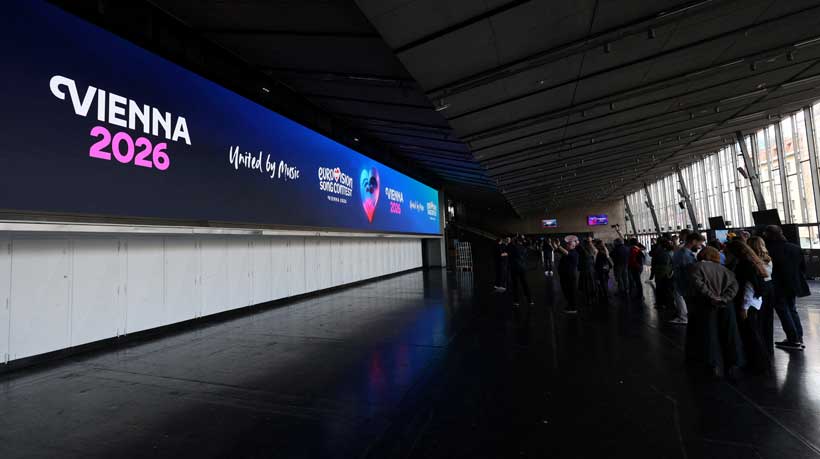
Eurovision 2026: Identity, Norms, and Digital Activism in Europe’s Cultural Diplomacy

The Eurovision likes to sell itself as a glittering exercise in European unity, colorful, loud, proudly diverse, and (officially) above politics. Yet anyone who has watched the contest with both eyes open knows that “apolitical” has always been more of a brand promise than a lived reality. In late 2025, that gap widened into a full-blown crisis, as a number of broadcasters reported across outlets that Spain, Ireland, Slovenia, the Netherlands, and Iceland signaled they would not take part in Eurovision 2026 after the European Broadcasting Union (EBU) decided not to exclude Israel amid the ongoing war in Gaza, Palestine.

This episode is not simply “politics invading culture.” It reflects a shift in how legitimacy is demanded and contested in Europe’s cultural diplomacy, particularly when public broadcasters operate under constant online scrutiny. A constructivist lens helps explain why withdrawal can become socially “appropriate” not only because of interests, but because identities, norms, and public expectations set the boundaries of acceptable action.

Eurovision’s political DNA

Eurovision was launched in 1956 as a post-war cultural bridge. Its origin story is important: a shared stage was meant to build familiarity, and familiarity was meant to soften rivalry. That heritage still shapes the contest’s self-image. But Eurovision has long functioned as a stage where politics appears in coded ways through voting patterns, representation debates, and symbolic messaging.

In 2026, the argument is no longer coded. The EBU’s insistence that Eurovision must remain apolitical is being tested by publics who increasingly expect cultural institutions to reflect basic humanitarian values. This tension has been building for years, but the Palestine crisis and the EBU’s decisions have turned it into a legitimacy problem, not merely a public relations headache.

Why withdrawal became “appropriate”

Constructivism in international relations focuses on how identities and norms shape behavior. States and national institutions do not act only from material interests; they also act from what is socially acceptable, what fits their self-image, and the expectations of their audiences.

Three dynamics stand out.

Identity signalling, domestically and externally

For several withdrawing countries, participation carried an identity cost. Public broadcasters—especially those that see themselves as guardians of civic values—operate within national narratives about solidarity, rights, and moral responsibility. Remaining in the contest while public debate framed Israel’s participation as incompatible with humanitarian concerns risked looking like complicity or indifference. Withdrawal, by contrast, functioned as a signal: this is who we are, and this is the line we will not cross.

Importantly, this signalling was not addressed only to external audiences. It was also addressed inward towards domestic publics, artists, and civil society networks. In many European societies, those constituencies are no longer passive consumers of cultural events; they are active participants in the reputational economy surrounding public institutions.

Norm cascades and moral momentum

Once a few broadcasters moved towards withdrawal, the decision quickly gained social momentum. This is what Finnemore and Sikkink described as a “norm cascade”: when a norm shifts from being optional to being expected, and the reputational cost of non-compliance rises. In practical terms, it can start to feel safer to leave than to stay—because staying invites condemnation, while leaving can be framed as moral coherence.

This is also why the dispute escalated so quickly. A single broadcaster withdrawing is a story. Multiple broadcasters withdrawing is a pattern, and patterns trigger moral comparisons. The question changes from “Why did they leave?” to “Why are you still staying?”

The ‘apolitical’ norm is under strain because it looks selective.

The apolitical claim does not collapse simply because people become more emotional. It collapses when it appears inconsistent. Critics repeatedly pointed to Russia’s exclusion in 2022 after the invasion of Ukraine and asked why a different standard was being applied now. The EBU, for its part, has emphasized the contest’s non-political ethos and introduced new rules aimed at insulating Eurovision from government influence.

But in the public sphere, the argument is not purely procedural. It is moral and comparative: if Eurovision can act decisively in one case, why not in another?

Constructivism predicts that institutions struggle when the norms they rely on no longer align with the moral intuitions of their audiences. That is exactly what this crisis reveals.

Digital activism as a legitimacy engine

If this controversy had happened twenty years ago, it would likely have moved more slowly, mediated by newspapers and official statements. Today it unfolds in a real-time digital public sphere where narratives travel quickly across borders and reputational costs escalate fast. Online mobilization—through petitions, artist statements, and hashtag campaigns—helped turn Eurovision into a symbolic battleground, pressuring broadcasters to respond to highly visible moral claims.

Two effects matter most. First, digital dynamics accelerate moral consolidation, which means once “selective neutrality” becomes a dominant frame, hesitation itself is read as a political stance. Second, institutions face continuous visibility. Decisions are no longer a single event but an ongoing justification process, renewed by viral moments and high-profile protest actions linked to Israel’s inclusion.

For cultural diplomacy, this shifts the logic of soft power from image-making towards moral credibility under public scrutiny.

Withdrawal as cultural diplomacy

Withdrawal from Eurovision is, in a strict sense, symbolic. But symbolism is precisely what cultural diplomacy trades in. The act of leaving, particularly when done by public broadcasters, served three strategic functions.

First, moral signalling, which meansbroadcasters and states communicated alignment with humanitarian values and a refusal to normalize perceived injustice.

The second one is reputation management.  In a digital environment, silence can be more costly than action. Withdrawal can reduce domestic backlash and preserve trust in public institutions.

Last, this is ethical positioning as soft power.  The logic of soft power is shifting from colorful branding to ethical coherence. A state may gain credibility not by appearing “fun,” but by appearing consistent with its professed values.

These functions help explain why the controversy is bigger than Eurovision. What is being tested is the idea that cultural platforms can remain insulated from global crises. Many audiences no longer accept that separation.

The EBU’s dilemma: rules, legitimacy, and consistency

The EBU now sits at the center of competing demands. On one side is the institutional need for predictability: rules that keep Eurovision from becoming an arena for state-to-state confrontation. On the other side is the public demand for moral consistency: rules that do not appear selective or politically convenient.

The EBU’s recent approach of avoiding an immediate exclusion decision while adjusting rules—may be defensible from a governance perspective.

Yet governance solutions do not automatically restore legitimacy, because legitimacy is also emotional and relational. It depends on whether audiences believe the institution is acting in good faith and applying standards fairly.

This is where cultural diplomacy meets a hard truth: neutrality is not simply declared; it is earned. And in the digital age, it is re-earned continuously.

What this means for Europe’s cultural diplomacy

Three implications stand out.

First, moral expectation is becoming structural.  European publics increasingly demand moral coherence not only from governments but from cultural institutions as well. Cultural diplomacy is being asked to carry ethical weight.

Second, “European values” are being operationalized. They are no longer abstract slogans. They are used as benchmarks to judge institutions and to accuse them of hypocrisy when they fall short.

Third, public opinion has become a strategic force, not background noise.  Digital mobilization can shape state behavior indirectly by pressuring broadcasters, artists, and institutions that sit at the heart of national identity.

Policy takeaways

If the EBU seeks to protect Eurovision’s legitimacy without turning it into a geopolitical tribunal, three steps would help. First, it should clarify participation principles by defining what “neutrality” means operationally and what thresholds trigger institutional action. Second, it should build a credible consistency mechanism, as audiences will continue comparing cases and demanding transparent reasoning. Third, the EBU should treat the digital sphere as part of governance: proactive engagement and rapid clarification now shape institutional survival as much as formal rule-making.

Conclusion

Eurovision 2026 is not simply a cultural controversy with political noise attached. It is a case study in how identity, norms, and digital activism are reshaping Europe’s cultural diplomacy. Constructivism helps explain why withdrawal became not only possible but, for some, necessary: it aligned state-linked institutions with the moral expectations of their publics.

Eurovision was built to bridge Europe after war. Ironically, its newest crisis shows that unity today is conditional: audiences increasingly expect cultural institutions to be transparent, consistent, and ethically credible, especially when global suffering is impossible to ignore.
Source link

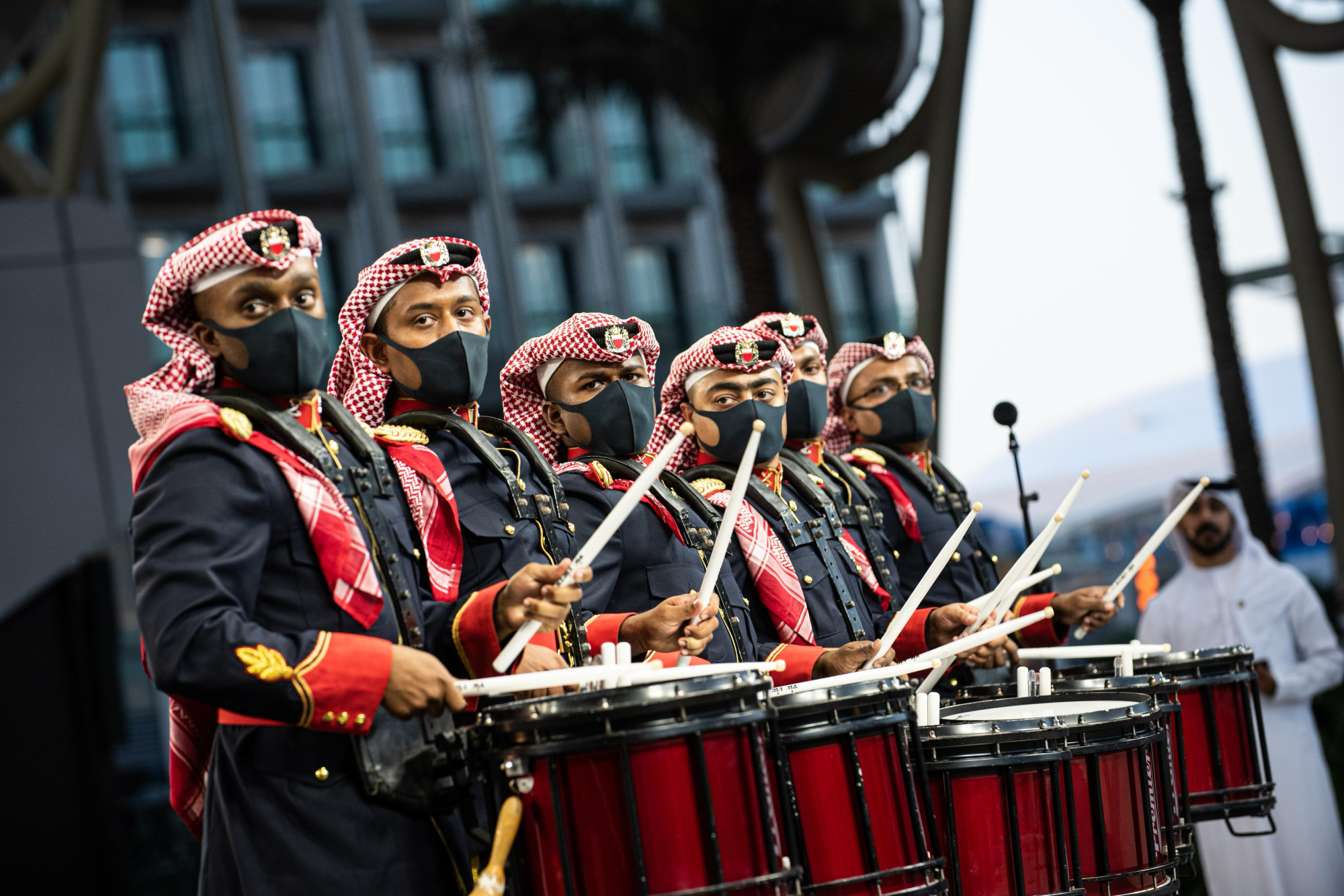
Tuesday 16 December National Day in Bahrain

Bahrain is an archipelago of 33 islands. From the 1860s, Bahrain had been a British protectorate.

Isa bin Salman Al Khalifa was made the first emir of Bahrain from 1961 until his death. Born in Jasra, he became emir upon the death of his father, Salman ibn Hamad.

During his 38 year reign, Bahrain gained its independence from the United Kingdom on August 15th 1971, and Bahrain underwent an economic transformation into a modern nation and a key financial center in the Persian Gulf area.

At the age of 65, Isa bin Salman Al Khalifa died of a heart attack on March 6th 1999 at the al Sakhir Palace in Manama shortly after his meeting with the United States defense secretary William Cohen. He was succeeded by his eldest son, Hamad bin Isa Al Khalifa

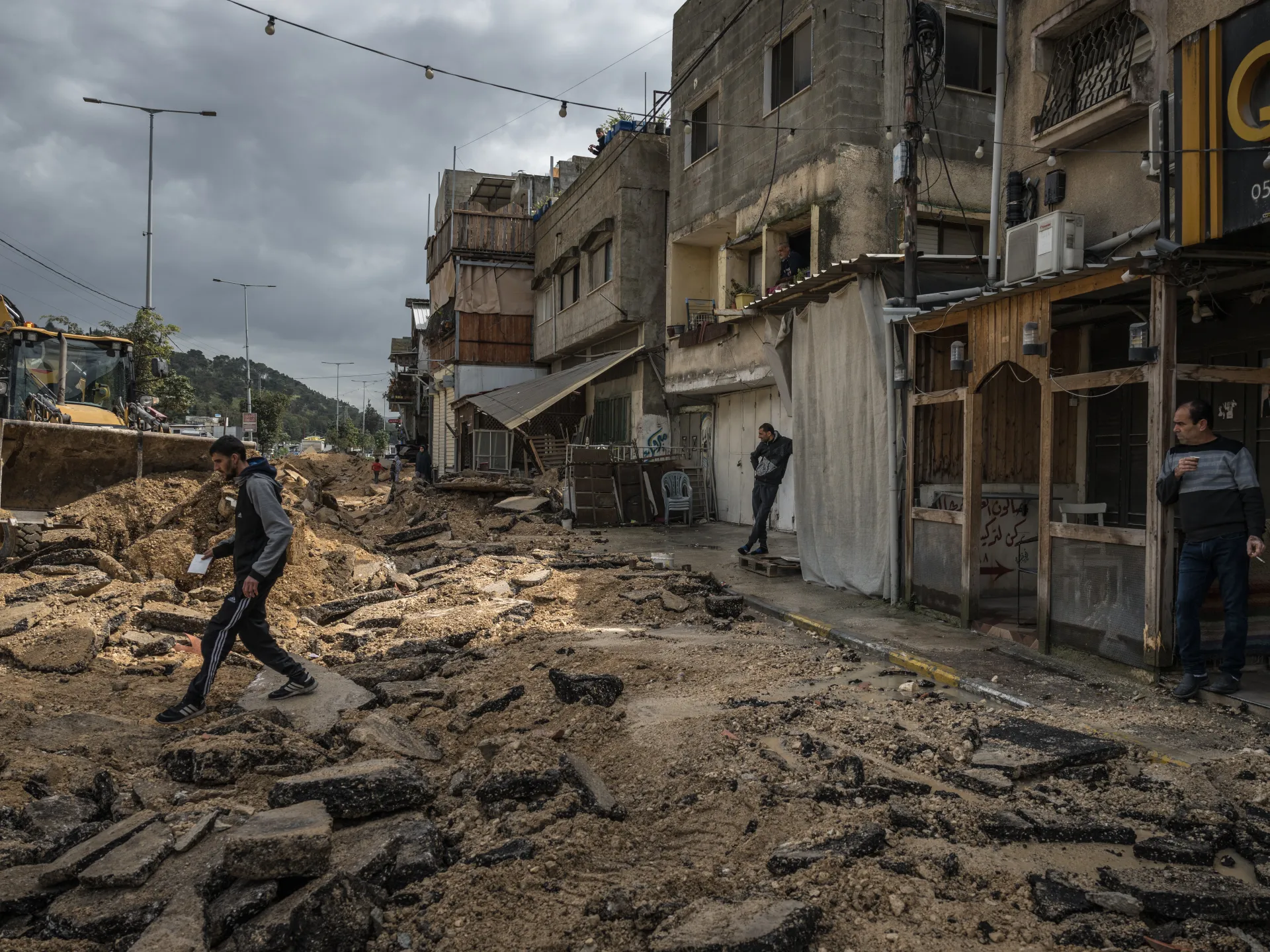
Israel to demolish 25 homes in occupied West Bank’s Nur Shams camp | Occupied West Bank News

Rights groups say the demolition order, which will affect 100 Palestinian homes, is an attempt to ‘cage in’ Palestinians.

The Israeli military will demolish 25 residential buildings in the occupied West Bank’s Nur Shams refugee camp this week, according to local authorities.

Abdallah Kamil, the governor of the Tulkarem governorate where Nur Shams is located, told the AFP news agency on Monday that he was informed of the planned demolition by the Israeli Defence Ministry body COGAT.

Recommended Stories

list of 4 itemsend of list

Faisal Salama, the head of the popular committee for the Tulkarem camp, which is near Nur Shams, said the demolition order would affect 100 family homes.

Israel launched Operation Iron Wall in the occupied West Bank in January. It says the campaign is aimed at combating armed groups in refugee camps in the northern West Bank.

Human rights organisations have warned that Israel is using many similar tactics it used in its genocidal war against the Palestinian people in Gaza to seize and control territory across the occupied West Bank.

“This is part of a wider campaign that has persisted for about a year, targeting three refugee camps and demolishing or damaging a total of about 1,500 homes in the past year, and forcibly displacing 32,000 Palestinians,” said Al Jazeera’s Nour Odeh, reporting from the West Bank’s Ramallah.

Palestinians and human rights organisations say such demolitions are an attempt to “cage in” Palestinians and alter the geography in the West Bank, she added.

On Monday, a dozen displaced Nur Shams residents held a demonstration in front of armoured Israeli military vehicles blocking their way back to the camp. They protested against the demolition orders and demanded the right to return to their homes.

The head of the Palestinian National Council, Rouhi Fattouh, said that the Israeli decision is part of “ethnic cleansing and continuous forced displacement”, the Palestinian news agency Wafa reported.

‘Social death’

Omer Bartov, a professor of holocaust and genocide studies at Brown University, told Al Jazeera that Israel was “dehumanising” the Palestinian population in the occupied West Bank.

“[It is creating] a growing situation of social death, which is a term that was used to describe what happened to Jewish populations in Germany in the 1930s. That is, that your population, the Jewish population of Israel, increasingly has no contact with the people on the other side, and it exists as if they don’t exist,” he said.

“It dehumanises the population because you treat it as a population that has to be controlled, and it dehumanises the people doing it because they have to think of that population as being lesser than human.”

Aisha Dama, a camp resident whose four-floor family home, housing about 30 people, is among those to be demolished, told the AFP she felt alone against the military.

“On the day it happened, no one checked on us or asked about us,” she said.

“All my brothers’ houses are to be destroyed, all of them, and my brothers are already on the streets,” said Siham Hamayed, another camp resident.

Nur Shams, along with other refugee camps in the West Bank, was established after the 1948 Nakba, when hundreds of thousands of Palestinians were forcibly displaced from their homes in what is now Israel.

With time, the camps they established inside the West Bank became dense neighbourhoods. Residents pass on their refugee status from one generation to the next.

Source link

How will US respond to the killing of three of its soldiers in Syria? | Syria’s War

Washington has blamed ISIL (ISIS) for the attack and promised retaliation.

Three US soldiers have been killed in an attack in Syria’s central city of Palmyra.

It is the first known deadly attack on US forces since former Syrian President Bashar al-Assad was deposed last year. Washington has accused the ISIL (ISIS) group of carrying out the assault.

The government in Damascus has expanded its ties with Washington and joined a coalition to fight the ISIL group.

But how much of a security challenge is ISIL in Syria?

Will the US now reinforce its military presence? What risks could that pose?

Presenter: Dareen Abughaida

Guests:

Colin Clarke – executive director of The Soufan Center

Dareen Khalifa – senior adviser at the International Crisis Group

Orwa Ajjoub – PhD candidate in global politics, focusing on armed groups in Syria

Source link

Epstein’s UK flights had alleged British abuse victims on board, BBC finds

Chi Chi Izundu,

Olivia Daviesand

Will Dahlgreen,BBC News Investigations

US Department of Justice/PA Jeffrey Epstein, a man with grey hair wearing a bright blue polo shirt and an orange anorak, smiling broadly as he stands in front of his private plane - a black jet with chrome detailing on the wings and around the engines, with five porthole-style windows visible on the right-hand side.US Department of Justice/PA

Epstein took dozens more flights to the UK than were previously known

Almost 90 flights linked to Jeffrey Epstein arrived at and departed from UK airports, some with British women on board who say they were abused by the billionaire, a BBC investigation has found.

We have established that three British women who were allegedly trafficked appear in Epstein’s records of flights in and out of the UK and other documents related to the convicted sex offender.

US lawyers representing hundreds of Epstein victims told the BBC it was “shocking” that there has never been a “full-scale UK investigation” into his activities on the other side of the Atlantic.

The UK was one of the “centrepieces” of Epstein’s operations, one said.

Testimony from one of these British victims helped convict Epstein’s accomplice Ghislaine Maxwell of child sex-trafficking in the US in 2021. But the victim has never been contacted by UK police, her Florida-based lawyer Brad Edwards told the BBC.

The woman, given the name Kate in the trial, was listed as having been on more than 10 flights paid for by Epstein in and out of the UK between 1999 and 2006.

The BBC is not publishing further details about the women in the documents because of the risk this might identify them.

US lawyer Sigrid McCawley said the British authorities have “not taken a closer look at those flights, at where he was at, who he was seeing at those moments, and who was with him on those planes, and conducted a full investigation”.

US Attorney's Office SDNY Epstein, a man with grey hair and glasses perched on his head, sitting on a bench outside a log cabin on the Balmoral estate, wearing a pale sweatshirt. His left arm is around Maxwell's shoulder, who rests her hand on his knee. Maxwell has short brown hair and wears and blue checked shirt.US Attorney’s Office SDNY

More information has emerged about Epstein, pictured here with Maxwell, and his UK links

Under the Jeffrey Epstein Transparency Act, the deadline to release all US government files on the sex-offender financier is Friday.

But the flight logs were among thousands of documents from court cases and Epstein’s estate which have been already made public over the past year, revealing more about his time in the UK, such as trips to royal residences.

The BBC examined these documents as part of an investigation trying to piece together Epstein’s activities in the UK.

It revealed that:

  • The incomplete flight logs and manifests record 87 flights linked to Epstein – dozens more than were previously known – arriving or departing from UK airports between the early 1990s and 2018
  • Unidentified “females” were listed among the passengers travelling into and out of the UK in the logs
  • Fifteen of the UK flights took place after Epstein’s 2008 conviction for soliciting sex from a minor, which should have raised questions from immigration officials

Although Epstein died in jail in 2019, before his trial on charges of trafficking minors for sex, legal experts have told the BBC a UK investigation could reveal whether British-based people enabled his crimes.

Two months ago the BBC sent the Metropolitan Police, which has previously examined allegations about Epstein’s activities in Britain, publicly available information about the UK flights with suspected trafficking victims on board.

Later, we sent the Met a detailed list of questions about whether it would investigate evidence of possible British victims of Epstein trafficked in and out of the UK.

The Met did not respond to our questions. On Saturday, it released a broader statement saying that it had “not received any additional evidence that would support reopening the investigation” into Epstein and Maxwell’s trafficking activities in the UK.

“Should new and relevant information be brought to our attention”, including any resulting from the release of material in the US, “we will assess it”, the Met said.

Sigrid McCawley, a woman with wavey blond hair and wearing a black dress, pictured in close-up in an office, looking to the left of the camera, with the background out of focus.

Sigrid McCawley, who represents hundreds of Epstein victims, criticised the Met for declining to investigate

US lawyer Brad Edwards, who has been representing Epstein victims since 2008, told us “three or four” of his clients are British women “who were abused on British soil both by Jeffrey Epstein and others”.

Other victims were recruited in the UK, trafficked to the United States and abused there, he said.

Mr Edwards said he is also representing women of other nationalities who say they were trafficked to the UK for abuse by Epstein and others.

Our analysis shows Epstein used commercial and chartered flights, as well as his private planes, to travel to the UK and to arrange transport for others, including alleged trafficking victims.

More than 50 of the flights involved his private jets, mostly flying to and from Luton Airport, with several flights at Birmingham International Airport, and one arrival and departure each at RAF Marham in west Norfolk and at Edinburgh Airport.

Limited records of commercial and chartered flights taken by Epstein, or paid for by him, show dozens more journeys, mainly via London Heathrow, but also Stansted and Gatwick.

In a number of the logs of Epstein’s private planes, including some detailing trips to the UK, women on the flight are identified only as unnamed “females”.

A graphic showing entries in a page of the Epstein flight logs with airport codes in one column, the flight number in another and a column with notes which includes details of the passengers in most cases and the word "reposition" in two cases. The names of the people on board have been redacted, except for the initials JE and GM - Jeffrey Epstein and Ghislaine Maxwell - on all of the flights with passengers named. One note is highlighted, with the text spelling out that the cramped handwriting says simply "1 FEMALE".

“He’s absolutely choosing airports where he feels it will be easier for him to get in and out with victims that he’s trafficking,” said Ms McCawley.

Private aircraft did not have to provide passenger details to UK authorities before departure in the same way as commercial aircraft during the period covered by the documents we examined. The Home Office told us they were “not subject to the same centralised record-keeping”.

That loophole was only closed in April last year.

Kate, the British woman who testified against Maxwell, was on some of the commercial flights in the records we examined. She described in court that she had been 17 when Maxwell befriended her and introduced her to Epstein – who then sexually abused her at Maxwell’s central London home.

In the 2021 trial, she described how Maxwell gave her a schoolgirl outfit to wear and asked her to find other girls for Epstein. As well as the dozen flights to and from the UK, Kate told the court she had been flown to Epstein’s island in the US Virgin Islands, New York and Palm Beach in Florida, where she says the abuse continued into her 30s.

Reuters A court sketch of Kate testifying in Ghislaine Maxwell's trial. Kate is shown as wearing a black shirt and having fair hair but her face is blurred in the sketch to protect her identity. She stands in the witness box with a judge wearing a black Covid-era face mask to the left of her. In front of her is the stenographer and one of the attorneys, a woman with a long brown ponytail. Ghislaine Maxwell is pictured in the foreground, frowning under her own black face mask, and looking away from the witness.Reuters

Kate, pictured on the right with her face blurred, testified at Maxwell’s trial

Mr Edwards, her lawyer, told BBC News that even after that testimony, Kate has “never been asked” by any UK authorities any questions about her experience – “not even a phone call”.

He said that if British police were to launch an investigation into Epstein’s activities and his enablers, Kate would be happy to help.

Prof Bridgette Carr, a human-trafficking expert at the University of Michigan Law School, said trafficking cases usually require many people working together.

“It’s never just one bad person,” she said. “You don’t think about the accountant and the lawyer and the banker – or all the bankers – and all these people that had to implicitly, and sometimes explicitly, be OK with what was happening for it to continue.”

There are also questions about how Epstein was able to travel freely to the UK after his 2008 conviction for soliciting a minor for sex, which meant he had to register as a sex offender in Florida, New York and the US Virgin Islands.

Epstein was released from prison in 2009 after serving 13 months. Documents suggest Epstein took a Virgin Atlantic flight from the US to London Heathrow in September 2010, just two months after he completed his probation on house arrest.

A graph showing the number of Epstein-related flights to the UK by year, starting at one flight a year in the early 1990s and sometimes rising, sometimes falling until it reaches a peak of 17 flights in 2006. There is a gap then until after his release from prison in 2009, when there are 15 flights scattered among the years up until 2018.

Home Office rules at the time said foreign nationals who received a prison sentence of 12 months or more should, in most cases, have been refused entry.

But immigration lawyer Miglena Ilieva, managing partner at ILEX Law Group, told us that US citizens did not usually require a UK visa for short stays, so there was no application process where they would be asked about criminal convictions.

“It was very much at the discretion of the individual immigration officer who would receive this person at the border,” she said.

The Home Office said it does not hold immigration and visa records beyond 10 years and added “it is longstanding government policy that we do not routinely comment on individual cases”.

During the 1980s, Epstein also used a foreign passport – issued in Austria with his picture and a false name – to enter the UK as well as France, Spain and Saudi Arabia, according to US authorities.

Epstein also listed London as his place of residence in 1985, when he applied for a replacement passport, ABC News has previously reported.

Brad Edwards, a man with short brown hair and a determined look on his face, pictured in a close-up portrait with the background blurred. He wears a navy suit, a pale blue shirt and a blue and grey tie.

Brad Edwards says his British client Kate has never been contacted by UK police

In its statement on Saturday, the Met said it had contacted “several other potential victims” when it examined 2015 allegations by Virginia Giuffre that she had been trafficked for sexual exploitation by Epstein and Maxwell.

Ms Giuffre also said she was forced to have sex with Andrew Mountbatten-Windsor on three occasions, including when she was 17 at Maxwell’s home in London, in 2001. The former prince has consistently denied the allegations against him.

The Met said its examination of Ms Giuffre’s claims “did not result in any allegation of criminal conduct against any UK-based nationals” and it concluded that “other international authorities were best placed to progress these allegations”.

That decision was reviewed in August 2019 and again in 2021 and 2022 with the same result, it said.

But for lawyer Sigrid McCawley, the message the Met is sending to victims is “that if you come to law enforcement and this is a powerful person you’re reporting on… it will not get investigated.”

Source link

Schools Closed As Militia Violence Deepens in DR Congo

For over a month, schools in Vikindwe, a locality 10 kilometres from Musienene in North Kivu, Democratic Republic of the Congo, have been closed due to the activities of the Wazalendo militia group. The primary schools in Vikindwe and Vuketi, along with the Viseya Institute, have been particularly affected by this educational disruption.

According to Kakule Syanghuswa Arsen, the headmaster of Vikindwe Primary School, events began to escalate in February this year when members of the Wazalendo militia assaulted a student from the school. This incident created tension between the militia and the local community. Following this, there were death threats directed at specific individuals in the area, as well as sporadic gunfire during school hours, severely disrupting the teaching and learning process.

Since October, the situation has become so tense that some students have experienced convulsions. The headmaster has now urged the authorities in the education sector to intervene with the provincial governor, hoping to have the Wazalendo militia removed from Vikindwe to restore normalcy.

In a related development, the resumption of classes in Njiapanda, as requested by the sub-provincial education committee, has been relatively cautious. This tentative return to classes comes three weeks after classes were suspended at the request of civil society organisations in Manguredjipa.

On  Monday, Dec. 15, only a few students were present in several schools in the area. In Kambau, Mbunia Kisenge, the headmaster of a secondary school, reported that no students were attending school. He attributed this situation to the concerns and fears of parents regarding the security situation within the Bapakombe tribal group, which has been marked by repeated attacks on the population by fighters from the Union of Patriots for the Liberation of Congo (UPLC).

In Njiapanda, some schools located in the centre of town have cautiously resumed operations. However, schools on the outskirts have reported a high rate of student absences, even though several teachers are present in the classrooms. Only the final year students are attending school.

Militia members associated with the Wazalendo are frequently accused of various abuses against civilians in Musienene and Baszagha. The main complaints from the people include looting, rape, arbitrary arrests, illegal tax collection, and the establishment of unauthorised roadblocks.

On Nov. 12, a young student was killed by gunshots during clashes between two factions of the Wazalendo militia at the Musimba market. Although these groups are considered allies of the Congolese army in its fight against Rwandan aggression, particularly in the conflict with the M23/AFC rebels, they are frequently accused of serious human rights abuses. Because they operate without proper oversight and often follow distinct commands, they frequently evade the attention of local authorities.

Schools in Vikindwe, DRC, have been closed for over a month due to disruptions caused by the Wazalendo militia group. Incidents began escalating in February when a student was assaulted, leading to tensions, death threats, and disruptions from gunfire.

The headmaster of Vikindwe Primary School has called for intervention to remove the militia and restore normalcy.

Classes are cautiously resuming in nearby Njiapanda, despite the suspension requested by civil society groups. Attendance remains low due to security fears associated with the Bapakombe tribal group. Additionally, Wazalendo members are accused of human rights abuses such as looting and illegal activities.

These groups, though allies of the Congolese army against external aggression, often evade local authority oversight due to fragmented command structures.

Source link

India Can’t Give Up Its Jaguar Strike Aircraft

India, now the sole operator of the Anglo-French SEPECAT Jaguar strike aircraft, is to acquire surplus examples of the Cold War-era jets from Oman, which retired the type in 2014. The decision reflects the continued value of the Jaguar to the Indian Air Force (IAF) but also points to the service’s shrinking fighter force and delays in acquiring new equipment.

A Royal Air Force of Oman Jaguar, taxies towards the runway at Thumrait, Oman. The aircraft was taking part in Exercise Magic Carpet 2005. The exercise was an opportunity for RN, RAF, Omani, French Air Force, USAF and USN squadrons to deploy and practice heavy-weapon bomb drops, utilising the extensive ranges and relatively clear airspace available over Oman. There were a variety of aircraft which took part, including our own Sea Harriers, GR7s and SKASaC, USN F18 and S3 Viking, USAF F16, French Mirage 2000 and RAF Tornado F3, Jaguar, VC10 air to air refuelling and E3D AWACS. In total around 60 aircraft were in theatre, allowing for realistic exercising of coalition forces. The participation of HMS Invincible with her Tailored Air Group (TAG) gave an excellent opportunity to prove the Strike Carrier concept within a controlled exercise environment and gain some useful general warfare training. It was a good opportunity for the ship's company to progress training in an exercise environment.
Now retired, a Royal Air Force of Oman Jaguar taxies toward the runway at Thumrait, Oman, during Exercise Magic Carpet 2005. Crown Copyright

Multiple reports indicate that India and Oman have come to a deal that will put an undisclosed number of former Omani Jaguars into Indian hands. Starting in 1977, the Royal Air Force of Oman (RAFO) received a total of 27 British-made Jaguars, comprising 20 single-seaters, five two-seaters, and two ex-U.K. Royal Air Force aircraft used as attrition replacements. At least 13 of these were involved in various accidents, which would leave a maximum of ‘intact’ airframes 14 for India. Potentially, some further components could also be harvested from Omani aircraft that were written off while in service.
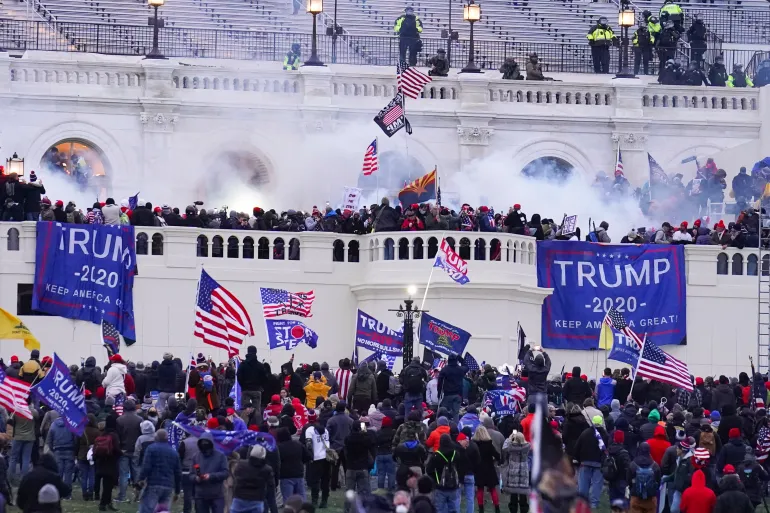
An air-to-air right side view of a Sepecat Jaguar aircraft approaching a Soviet I1-38 May maritime patrol aircraft.
A Royal Air Force of Oman Jaguar intercepts a Soviet Navy Il-38 May maritime patrol aircraft in 1987. Public Domain

As for the IAF, the service selected the Jaguar for its Deep Penetration Strike Aircraft (DPSA) in 1978 and received 18 aircraft from U.K. Royal Air Force stocks as ‘interim’ equipment, 40 ‘flyaway’ aircraft direct from British Aerospace (BAe), plus around 128 more that were license-built in India under a transfer-of-technology agreement with Hindustan Aeronautics Limited (HAL).

The ex-Omani jets won’t be inducted into IAF service but will be broken down into spare parts to support the aging but still in-demand Indian Jaguar inventory. TWZ contributor and IAF historian Angad Singh told us that the jets will be dismantled in Oman and then shipped to India for ease of transport.

The IAF’s demand for increasingly hard-to-find Jaguar spares saw India turn to France in 2018–19. France, which retired its last Jaguars in 2005, shipped 31 complete airframes plus various spare parts to India, with New Delhi paying only for the cost of transport.

A Tennessee Air National Guard KC-135 Stratotanker refuels a French SEPECAT Jaguar. Both aircraft were operating out of Aviano Air Base, Italy, supporting NATO missions in the Balkans during the 1990s. U.S. Air Force

These airframes and spares are being used to support the IAF’s current six Jaguar squadrons, each of which has between 18 and 20 aircraft on strength. However, the fleet is being slowly eroded by attrition, with three Jaguar losses this year alone.

The last new Jaguar to be built in India came off the HAL production line in 2008; British and French production had long since ceased by this date. Since then, obtaining spare parts and components, including new or refurbished engines, has become much more complex. Already, India is reportedly having to cannibalize some aircraft to keep the others in the air.

Further evidence of the importance of the Jaguar to the IAF’s plans comes from the continued efforts to upgrade the jets, the oldest of which are now around 45 years old.

INDIAN OCEAN (March 28, 2021) – An F/A-18E Super Hornet, assigned to the “Blue Diamonds” of Strike Fighter Squadron (VFA) 146, top, flies in formation with an Indian Air Force Su-30MKI, middle, and Jaguar over the aircraft carrier USS Theodore Roosevelt (CVN 71) March 28, 2021. The Theodore Roosevelt Carrier Strike Group is on a scheduled deployment to the U.S. 7th Fleet area of operations. As the U.S. Navy’s largest forward-deployed fleet, 7th Fleet routinely operates and interacts with 35 maritime nations while conducting missions to preserve and protect a free and open Indo-Pacific Region. (U.S. Navy photo by Mass Communication Specialist 3rd Class Carlos W. Hopper)
A U.S. Navy F/A-18E, top, flies in formation with an Indian Air Force Su-30MKI Flanker, middle, and Jaguar over the aircraft carrier USS Theodore Roosevelt (CVN 71) in the Indian Ocean in March 2021. U.S. Navy photo by Mass Communication Specialist 3rd Class Carlos W. Hopper

At the center of this effort is the Display Attack Ranging and Inertial Navigation (DARIN) modernization program for the Indian Jaguars, which first began in the 1980s and which has since progressed through three rounds of upgrades.

The first of these, DARIN I, kept the Jaguar’s original ‘chisel’ nose profile but added a new Sagem navigation/attack system, a combined map and electronic display, and a head-up display and weapon-aiming computer. A new Mil Std 1553B databus was added, making it easier to integrate new weapons and sensors. This would pay dividends during the 1999 Kargil War with Pakistan, during which Jaguars employed laser-guided bombs.

Full Dress Rehearsal of IAF Fire Power demonstration Exercise 'Iron Fist 2013' at Pokharan, Jaisalmer, Rajasthan on February 19, 2013.
Indian Air Force Jaguars prepare for the Iron Fist firepower demonstration at Pokharan, Jaisalmer, Rajasthan, in February 2013. The two-seater leads four single-seaters with the original ‘chisel’ nose configuration. Indian Ministry of Defense

Starting in the early 2000s, DARIN II changed the nose profile, with a new Thales laser targeting and designation system fitted. Other new additions included an Israeli-made Elbit head-up display, an inertial navigation/GPS system, and a multifunction display in the cockpit. Self-protection was enhanced with an Israeli-made Elta EL/L-8222 jammer, locally made Tarang radar warning receivers, and new countermeasures dispensers. New weapons included the ASRAAM air-to-air missile and the Textron CBU-105 Sensor Fuzed Weapon.

In a category of their own are India’s Jaguars tasked with maritime strike. These were originally fitted with a radar nose accommodating an Agave radar, used in conjunction with Sea Eagle anti-ship missiles. Under DARIN II, these items were replaced with the Elta EL/M-2032 and the AGM-84 Harpoon Block II, respectively.

An Indian Air Force Jaguar IM tasked with maritime strike. This upgraded aircraft is armed with an AGM-84 Harpoon Block II anti-ship missile. IAF

The most significant of the upgrades is DARIN III, begun in 2008, which includes a new active electronically scanned array (AESA) radar, the Israeli-made Elta EL/M-2052. The Jaguar became the first Indian combat jet to feature an AESA, and you can read more about the upgrade here.

The DARIN III program, led by HAL and informed by the Tejas Light Combat Aircraft program, saw the first flight of an upgraded Jaguar in 2012, but thereafter it suffered significant delays. Issues included integration of the locally developed open-system-architecture mission computer as well as a re-engining effort, which planned to replace the original Rolls-Royce Turbomeca Adour afterburning turbofans with Honeywell F125-INs. Replacement engines were finally canceled in 2019, after they were judged to be too expensive.

Other advanced DARIN III features include a fully ‘glass’ cockpit with three multifunction displays, an engine and flight instrument system (EFIS) digital display, and a digital head-up display. Also new is the Elbit Display and Sight Helmet (DASH), which is used to cue the ASRAAM missile. The ASRAAM, like the Magic 2 before it, is carried on the Jaguar’s unique overwing missile pylons.

Maintenance airmen from the Indian Air Force, 14 Fighter Squadron (FS) from Ambala Air Base, India, work to change a shock absorber on their Jaguar attack jet aircraft April 29, 2016, at Eielson Air Force Base, Alaska. The 14 FS is one of 23 units from around the world who participated in RED FLAG-Alaska 16-1, a Pacific Air Forces command directed field training exercise for U.S. and allied forces, to provide joint offensive counter-air, interdiction, close air support and large force employment training in a simulated combat environment. (U.S. Air Force photo by Staff Sgt. Shawn Nickel/Released
Maintainers from the Indian Air Force work to change a shock absorber on their Jaguar at Eielson Air Force Base, Alaska, during a Red Flag-Alaska exercise in April 2016. U.S. Air Force photo by Staff Sgt. Shawn Nickel/Released

The DARIN III program is planned to extend the life of at least some of the Indian Jaguars until 2050. However, the initial phase-out of the aircraft will begin before then. As Singh explained, the oldest (British-made) jets will not undergo the full upgrade, meaning that at least two of the IAF’s six Jaguar squadrons are due to disband in the near future.

Fabulous photos shared by Sanjay Simha, taken by his father, Mr TL Ramaswamy, in June 1982 — the maiden flight of the first Indian assembled Jaguar. Still in primer, piloted by HAL Chief Test Pilot Wg Cdr MW Tilak. Ferried out to Ambala on 21 Sep 1982, and still in service! pic.twitter.com/UcRxbapkPN

— Angad Singh (@zone5aviation) November 28, 2020

Even the India-made HAL jets are now getting long in the tooth, but with examples still going through the DARIN III upgrade, at least some of them will be able to see out another 10 years or more of service.

“The Jaguar is still useful as a strike aircraft, and has been kept relevant with upgrades to electronic warfare, nav-attack systems, standoff weapons, and so on,” Singh told TWZ.

The fact that New Delhi has pressed on with upgrades to the Jaguar is a testament to the rugged reliability and precision-attack capabilities of the jet, despite its age, but it also points to underlying problems in the IAF, especially in terms of the size of its combat jet fleet.

A DARIN III Jaguar recovers from a night-bombing mission during training. Angad Singh

Faced with the dual threats of Pakistan and China, the Indian government has said that the IAF needs at least 42 squadrons of combat aircraft. Currently, it has just 29, meaning the service is operating its smallest combat force since it went to war with China in 1962. The retirement of the veteran MiG-21 Fishbed has not helped matters in this regard.

Meanwhile, India’s plans to buy new off-the-shelf fighters are going nowhere fast.

After buying 36 Dassault Rafales, India announced a requirement for 114 fighters, initially specifying single-engine types. Subsequently, the competition appeared to be wide open, with the F-15EX, for example, now also being offered to India, and with the Rafale and the F/A-18E/F Super Hornet also in the running. If India decides to procure another single-engine fighter, after all, the Indian-specific F-21 configuration of the F-16 is also a viable candidate. But with no decision made, and with homegrown combat aircraft programs also proceeding slowly, the ‘squadron gap’ is only set to grow.

A DARIN II Jaguar launching with a pair of slick 1,000-pound free-fall bombs. Angad Singh

“The Indian Air Force is at 70 percent of its planned 42-squadron fighter strength — a number that was arrived at in the 1960s and will only be revised upward on any fresh assessment. Given this dire situation, the brass simply has no choice but to keep aircraft around, no matter how old,” Singh concluded.

Faced with this stark reality, it is less surprising that India is now searching far and wide for spare parts that will ensure its prozed Jaguars can see out their service life as maintaining them becomes ever more of a challenge.

Contact the author: thomas@thewarzone.com

Thomas is a defense writer and editor with over 20 years of experience covering military aerospace topics and conflicts. He’s written a number of books, edited many more, and has contributed to many of the world’s leading aviation publications. Before joining The War Zone in 2020, he was the editor of AirForces Monthly.


Source link