Calls for new elections in Venezuela often assume the existence of basic democratic conditions. In reality, those conditions do not exist. Venezuela cannot hold credible, free, or fair elections today because the country lacks the most fundamental prerequisite of democracy: the rule of law. Without a restoration of institutional independence and a genuine separation of powers, elections would serve only to legitimize an authoritarian system rather than offer Venezuelans a real choice.
Although Venezuela formally maintains the appearance of a constitutional democracy—with a constitution, courts, and a National Assembly—real power is concentrated in the hands of a small group of individuals aligned with the ruling party. Institutions that should act as checks on executive authority instead function as extensions of it.
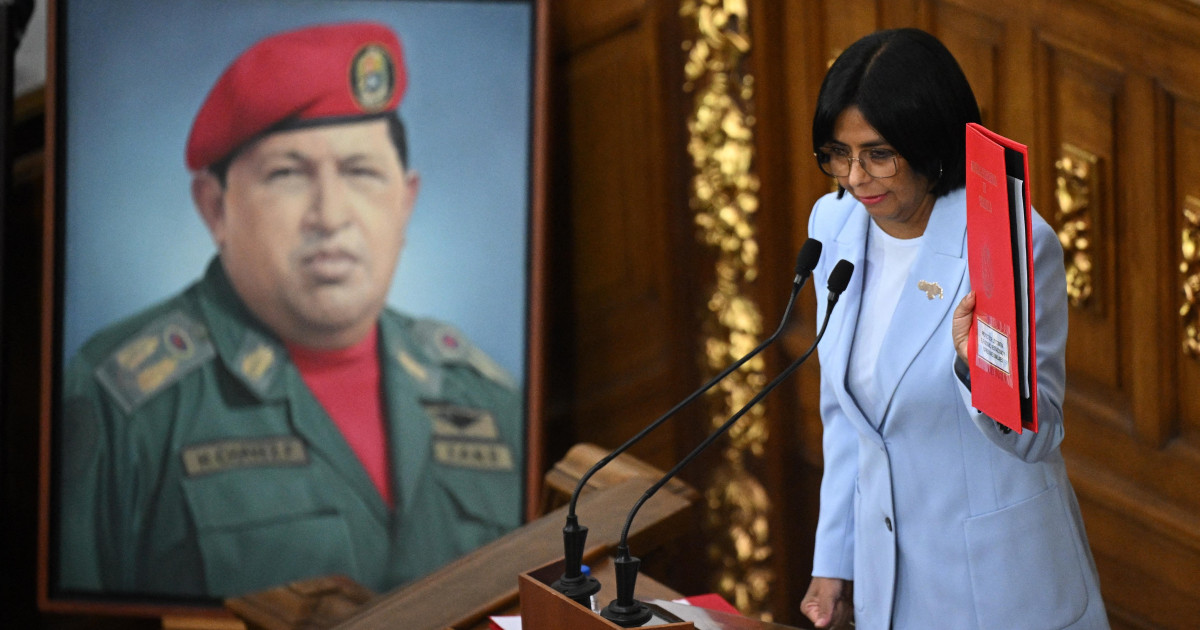
A clear example is the swearing in of the interim president, Delcy Rodríguez, done by her brother, Jorge Rodríguez, who is the president of the National Assembly.
This concentration of power is not accidental. Over many years, first under Hugo Chávez and later under Nicolás Maduro, the government systematically dismantled institutional independence. A majority of judges were replaced with loyalists, transforming the judiciary into a political tool rather than an impartial arbiter of the law. As a result, courts no longer protect constitutional rights or limit executive overreach; they enforce political decisions.
The definitive rupture of constitutional order occurred after Venezuelans elected an opposition-majority National Assembly in 2015 (following the 2014–2015 political cycle). This democratic outcome represented a clear mandate to challenge executive power, oversee government actions, and restore institutional balance.
After the elections held in July of 2024, despite clear and convincing evidence that the opposition had won, not one Venezuelan institution recognized the result and instead awarded the presidency to Maduro once again.
Rather than accept this result, the Maduro government moved to neutralize the Assembly. Through rulings issued by a politically controlled Supreme Court, the Assembly was declared in contempt, its powers were stripped, and its legislative authority rendered meaningless. To fully sideline the opposition-controlled legislature, the government went further by creating a so-called “Constituent Assembly,” purportedly to reform the constitution. This body was neither elected under fair conditions nor authorized through a legitimate democratic process. Instead, it functioned as a parallel legislature designed to replace the National Assembly altogether. This marked the end of any meaningful separation of powers in Venezuela.
From that point on, Venezuela ceased to operate under its own constitutional framework. There has been no genuine transfer of power, no institutional accountability, and no respect for electoral outcomes that challenge the ruling group’s control.
In this context, calling for new elections without first restoring the rule of law is fundamentally flawed. Elections held under a system where courts, electoral authorities, security forces, and media are controlled by one political faction cannot be free or fair. They do not reflect the will of the people; they merely reproduce the existing power structure.
True elections require an independent judiciary; a neutral and credible electoral authority; respect for the separation of powers; and guarantees of political rights, free speech, and fair competition. None of these conditions currently exist in Venezuela. After the elections held in July of 2024, despite clear and convincing evidence that the opposition had won, not one Venezuelan institution recognized the result and instead awarded the presidency to Maduro once again.
Depolitize the guys with guns
For Venezuela, the path forward is not immediate elections, but a democratic transition. Such a transition must focus first on restoring the rule of law, reestablishing independent institutions, and guaranteeing basic political freedoms. More importantly, making sure that the nation’s security forces are once again impartial and can align with the mandate granted by the people.
The Venezuelan armed forces have become one of the most decisive instruments of authoritarian control. Far from acting as a neutral guarantor of constitutional order, they operate as an extension of the ruling party. This loyalty is maintained through a combination of political patronage, economic privileges, and legal impunity, ensuring that the military remains aligned with the regime rather than the nation.
Can Venezuela simply declare that everything passed over the last ten years never existed? While morally appealing, such an approach would be legally and practically unworkable.
For any genuine democratic transition to succeed, this dynamic must change. The armed forces must be depoliticized and restored to their constitutional role: defending the sovereignty of the country, not a political faction. Their impartiality is essential to guarantee that electoral outcomes are respected and that citizens can exercise their rights without fear of coercion or intimidation. Without this shift, even well-designed electoral reforms risk collapse under the weight of military interference.
Without this transition, elections risk becoming another instrument of authoritarian control. With it, they can become the foundation for rebuilding Venezuela’s democracy. Only then can elections serve their true purpose: allowing Venezuelans to decide their future freely and without coercion.
The problem of legal continuity
If the diagnosis is clear—that Venezuela cannot hold credible elections under current conditions—the path forward is far less certain. The country faces a fundamental and unavoidable question: how does a society undo more than a decade of institutional erosion without creating legal chaos or collective paralysis?
One of the most difficult challenges of a democratic transition is determining what to do with the body of laws, decrees, and decisions enacted under an illegitimate system. Can Venezuela simply declare that everything passed over the last ten years never existed? While morally appealing, such an approach would be legally and practically unworkable.
Millions of Venezuelans have lived, worked, signed contracts, owned property, and made daily decisions under this framework. Entire economic and social relationships—even distorted ones—have been shaped by these rules. Declaring all of them null and void overnight would risk replacing authoritarianism with legal uncertainty.
A transition must therefore strike a careful balance: recognizing legal reality without legitimizing the system that produced it.
This dilemma is especially acute when it comes to contracts issued by the regime. Some were instruments of corruption or political patronage; others were ordinary commercial or administrative acts necessary for the country to function.
Above all, a transitional process will require political restraint: a recognition that the goal is not to replace one concentration of power with another, but to restore limits on power itself.
Take Chevron for example. Their current operations in the country are legally questionable; many lawyers in the country will tell you that the legal framework under which they are operating has no legal foundation. This will probably make it difficult for other oil companies to go into the country and invest until there is a clear legal framework that they can trust.
A future democratic government will need a principled framework to distinguish between contracts that are inherently illegitimate due to corruption, coercion, or constitutional violations; and contracts that, while issued under an authoritarian regime, involve good-faith third parties and essential services.
This is not a problem unique to Venezuela, but it requires transparent mechanisms—such as independent review bodies or transitional courts—to prevent arbitrariness while restoring public trust.
The constitutional question
Another central issue is whether Venezuela should return to a prior constitutional framework as a foundation for democratic restoration. Some argue that the 1999 Constitution—despite its flaws—remains the last broadly legitimate constitutional document approved by popular vote and could serve as a starting point.
If so, the question becomes procedural: how does the country re-legitimize institutions that still formally exist but have lost all independence?
One possible path is a general referendum authorizing a limited, clearly defined transitional process. Such a referendum could enable the appointment of a new, independent National Electoral Council; establish a transparent mechanism to select new Supreme Court justices; and define the temporary scope and duration of transitional authorities.
This would allow change to occur within an explicit democratic mandate, rather than through ad hoc or purely political decisions.
Importantly, Venezuela does not lack institutions on paper. Courts, electoral bodies, ministries, and legislative frameworks already exist. The challenge is not rebuilding the state from scratch, but cleaning and depoliticizing institutions so they can function independently.
That process will require clear legal standards for independence and accountability. International technical support and observation would help to prevent permanent transitional arrangements by enforcing time-bound mandates. Above all, it will require political restraint: a recognition that the goal is not to replace one concentration of power with another, but to restore limits on power itself.
There are no simple solutions. Any transition will involve compromises, uncertainty, and difficult decisions. But postponing these questions—or pretending elections alone can resolve them—only delays Venezuela’s recovery.
The task ahead is not merely electoral. It is constitutional, institutional, and moral. Reestablishing democratic rule of law will require confronting the past honestly, managing the present responsibly, and designing a future in which no individual or group can again place itself above the law.