We live in an interdependent world where no country or region is exempt from the effects of developments elsewhere. The transition into autocracies in other countries is not the exception. Autocratisation has escalated into a global wave. According to the latest V-Dem report, 45 countries are currently moving towards autocracy, up from just 16 in 2009, while only 19 are democratising. By 2024, 40% of the world’s population lived in autocratising countries.
Autocratic expansion represents a threat to liberal democracies in Europe and beyond, as political science’s only near-lawlike finding holds: democracies do not wage war against each other. In contrast, an autocratic Russia invades Ukraine and might quite possibly very soon attack the rest of Europe, as NATO’s General Secretary Mark Rutte alerted in Berlin on December 12: “We are Russia’s next target, and we are already in harm’s way… we must act to defend our way of life now”.
The link between democracy and peace was also at the centre of this year’s Nobel Peace Prize ceremony. In his address, Jørgen Watne Frydnes, Chair of the Norwegian Nobel Committee, emphasised that democracy is not only essential for peace within national borders, but also for peace beyond them. The award to Venezuelan opposition leader María Corina Machado, who insisted that the prize belongs to all Venezuelans, underscored that message.
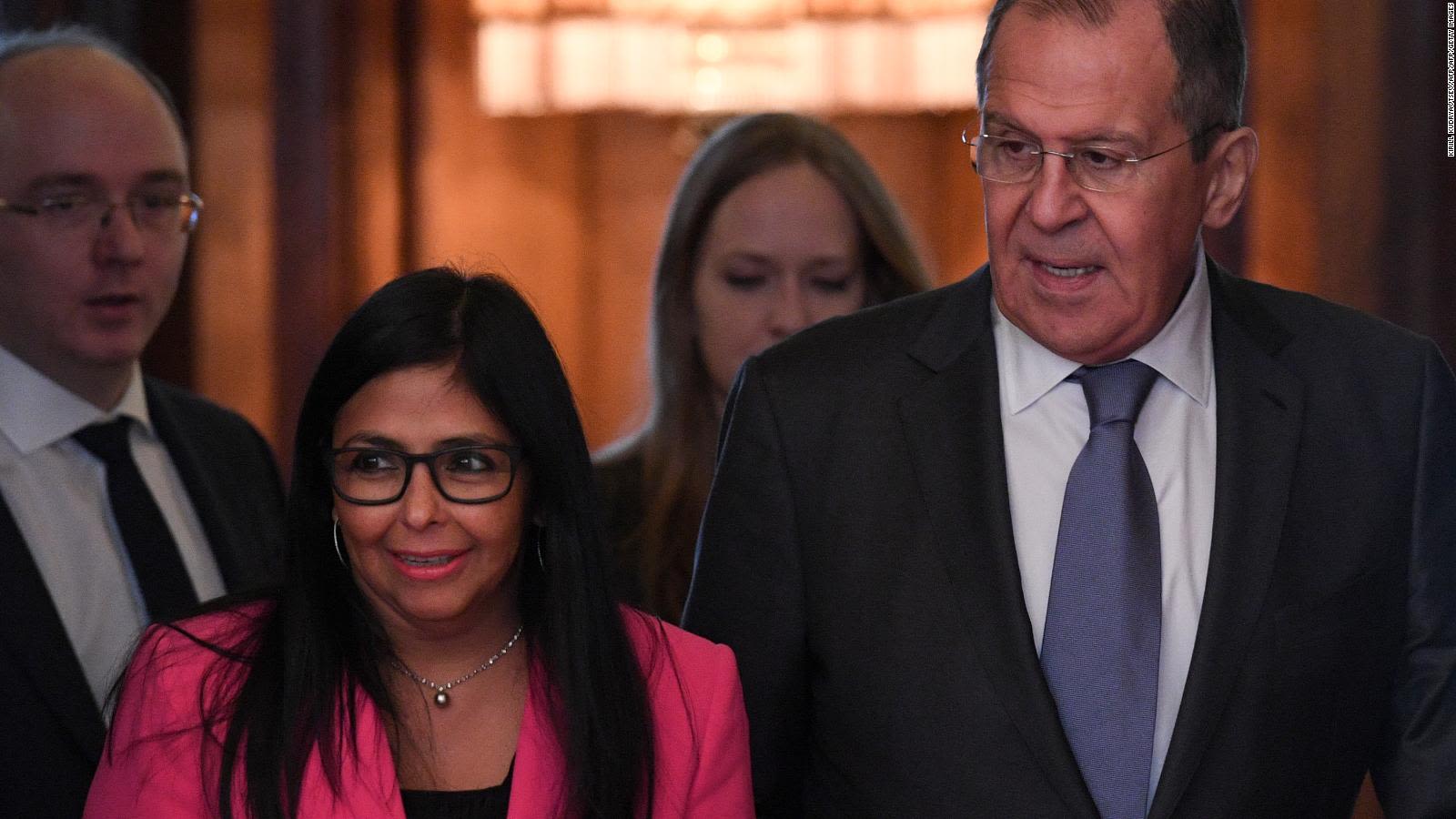
Russia illustrates this connection with unusual clarity, and the Maduro regime is a close ally of the regime directly threatening Europe. Since Chávez, under whose rule Venezuelan democracy collapsed no later than between 2002 and 2007 (according to V-Dem), the Venezuelan regime has deepened its ties with China and Russia. The latter, particularly, became an important partner in the military and security realms. By providing weapons, equipment and intelligence support, Russia secured a geopolitically strategic foothold in South America. This allows Putin to project power into the Western hemisphere and to undermine US and European strategic interests.
Venezuela’s partnership with Russia follows a foreign policy logic of influence projection within the United States’ regional sphere, much as Washington has done in Eastern Europe. This relationship has taken the form of military cooperation, with Venezuela—alongside Nicaragua—becoming one of Russia’s main partners in Latin America.
A democratic Venezuela could reintegrate into Mercosur, opening an additional market under the forthcoming EU-Mercosur agreement—one of the EU’s tools for diversifying trade partners and reducing excessive economic dependencies.
While earlier cooperation included a visit of nuclear-capable Russian bombers to Venezuela in 2018, more recent ties have focused on military diplomacy: high-level defence meetings, training exchanges, and joint participation in initiatives such as the International Army Games. But despite Russia’s growing resource constraints following its invasion of Ukraine, reports of the construction of a new ammunition factory in Maracay (Aragua) and the presence of Russian “Wagner” mercenaries in Venezuela exemplify the possibility of going back to further military cooperation. The ammunition factory would specifically produce a version of the AK-130 assault rifle (developed in the Soviet Union) and a “steady supply” of 7.62mm ordnance under Russian license in spite of sanctions to avoid Russian ammunition exports.
Beyond the military sphere, Venezuela currently cooperates with Russia to mitigate the effects of Western sanctions. Together with Iran, both countries share shadow shipping networks that allow sanctioned oil exports to continue flowing, primarily towards China (surprise! Another autocratic country).
Thus, from a European Security perspective, Venezuela isn’t really a distant or marginal case. A Russia-aligned autocracy in South America strengthens Moscow’s global reach at a time when Europe is already struggling to contain Russian aggression on its own continent. Supporting democratic survival or democratisation abroad is not only a normative commitment, but a strategic interest: Europe’s democratic stability—and its own way of life—are reinforced when democracies elsewhere endure.
Democratisation in Venezuela could bring concrete benefits. It would weaken Russia’s standing among authoritarian partners that depend on its support and reduce diplomatic alignment against European priorities in multilateral forums. Such alignment was evident, for example, in the 2014 UN resolution condemning Russia’s annexation of Crimea, where several Latin American governments sided with Moscow. Moreover, a democratic Venezuela could reduce the US’ attention diversion from the Russia war on Ukraine, and it could weaken Russia’s potential leverage when looking for US-concessions, in exchange for their own concessions in Venezuela.
But this is also about not missing opportunities. A democratic Venezuela could reintegrate into Mercosur, opening an additional market under the forthcoming EU-Mercosur agreement—one of the EU’s tools for diversifying trade partners and reducing excessive economic dependencies. At a time when economic strength has become an existential priority for Europe amid rising geopolitical tensions, this matters. Before Mercosur, and in the more immediate period following a transition, Venezuela would require substantial investment to rebuild its economy. Historical economic and social ties already exist, shaped in large part by post–Second World War European migration to the country.
Repression is not confined to Venezuelan citizens. More than 80 foreign political prisoners have been reported, including Europeans from Italy, Spain, Poland, Portugal, Hungary, Ukraine and the Czech Republic.
In the path towards the stabilisation of Venezuela as a partner to democracies—instead of being a source of autocratic threat—the democratic mandate expressed by Venezuelans on 28 July 2024, when we elected Edmundo González Urrutia as president, is a crucial element to consider. González has since identified María Corina Machado as his intended vice-president in a potential transition.
In regards to the question about how to get there, the equation toward a democratic Venezuela does not only include measures to weaken the Maduro regime’s repressive capacity, but also strengthening democratic actors inside and outside the country. Many of these active citizens often move within resource-limited bounds—juggling work, precarious living situations and scarce resources for essential tools such as websites, digital security, travel for advocacy, and organisational infrastructure. Migrants in early integration phases do not necessarily count with abundant financial resources, yet they invest what they have into their democratic efforts.
At the same time, the regime’s repressive reach extends beyond Venezuela’s borders. Recent transnational attacks like the murder attempt against Luis Alejandro Peche and Yendri Velásquez in Colombia, the attempted attack on Vente Venezuela’s Alexander Maita, and the assassination of Ronald Ojeda in Chile highlight efforts to intimidate political mobilization even outside the country.
But repression is not confined to Venezuelan citizens. More than 80 foreign political prisoners have been reported until this month, including Europeans from Italy, Spain, Poland, Portugal, Hungary, Ukraine and the Czech Republic. Thus, limiting the regime’s repressive capacity is vital to incentivize crucial pro-democracy mobilization.In summary, Europe faces a choice. Supporting Venezuelan democratisation is not only a matter of global democratic solidarity, human rights, or European soft power in Latin America. It is a matter of self-preservation. The collapse of Venezuela’s once-stable 40-year democracy and Russia’s war on Ukraine both serve as reminders that democracy—and the peace it sustains—is not a given. It must be embodied, defended, and actively built when necessary.