A few weeks ago, I wondered whether Nicolás Maduro was a Juan Vicente Gómez 2.0, that other dictator who held power in Venezuela for almost three decades at the beginning of the 20th century. We now know that wasn’t the case. Gómez, from the very beginning, exercised terror within the country, but he forged an alliance with American oil companies that allowed him to perpetuate the regime until his death 90 years ago. Maduro also practiced that terror, but failed to consolidate all the internal and external support he needed. When he wanted to fully surrender to the United States, the playing field had already shifted. As the saying goes, “too little, too late.”
In the conclusion of that other article, I wondered if Venezuela was on the verge of a new 1936, the year the country inaugurated a new era after the dictator’s death. It was then that the masses burst onto the public scene, modern political parties emerged, unions were organized, and solutions to the country’s serious problems began to be discussed. Today, after the US military intervention and Maduro’s capture on January 3, 2026, history is being rewritten minute by minute.
Now, as this year begins, we can break down the situation into three levels.
First, there are the celebrations. Venezuelans abroad are filled with euphoria, while within the country the reaction is more silent and private. The dictator is gone, but the dictatorship persists. The torturers remain in power. But seeing a tyrant fall, one who mocked the country with ironic brutality is a poetic justice many of us hoped for, and there remains the hope that he will also be tried for his crimes against humanity, a record that ranges from extrajudicial executions and state terrorism to the material and emotional destruction of an entire country.
Maduro, perhaps, never imagined this end, trusting that 20th century international law would protect his tyranny. But times have changed. Each power guards what it considers its own backyard, and the law of the strongest has returned, without euphemism. Herein lies the second level. It is fine to question all foreign intervention and its legality, but after the mega-fraud of July 28, 2024, regional diplomacy proved insufficient, and too many turned a blind eye. The half-hearted diplomatic attempts of Brazil, Colombia, and Mexico proved useless in achieving the transition.
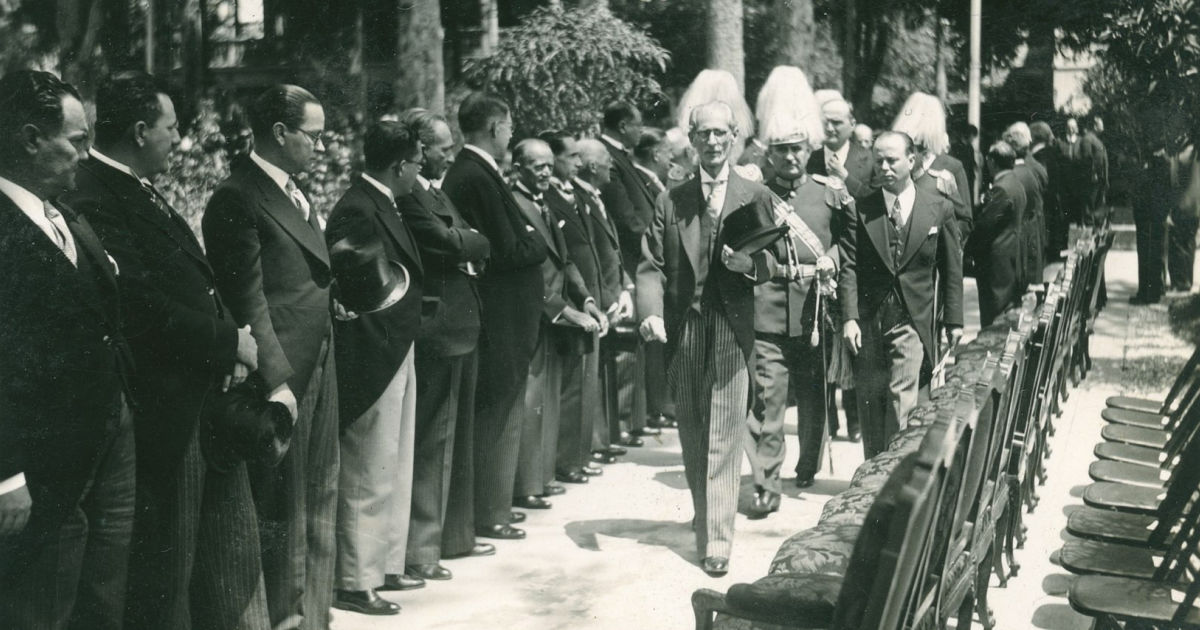
The return of exiles, the demolition of the old La Rotunda prison—a symbol of political oppression like El Helicoide today—and still fragile guarantees of political participation generated new expectations during the López Contreras regime.
The region is also responsible for this outcome. Nor can we forget that it was during the Hugo Chávez era that we fell into this geopolitical trap, losing the independence and sovereignty we had achieved during the democratic years. Ideological factions, authoritarian tendencies, and an international rebellion contrary to national interests placed us in a vulnerable position in a much larger game that is not our own.
And the third level is the possibility, amidst the evident contradictions, of rebuilding Venezuelan democracy. There are many possible scenarios, and we know that we are now at the mercy of external decisions where, for the United States, the priority is not so much restoring democracy as securing its interests. With a game of musical chairs within chavismo-madurismo, Delcy Rodríguez now becomes the figure ruling from Miraflores Palace. As president, she will try to prolong her interim term and cling to power, continuing the lobbying she has been doing for some time, as a reliable ally for the United States and who could be the proconsul they need beyond an interim period. The country also faces the feudal structures left behind by chavismo, where military, regional, and economic factions that continue to control everything could engage in a power struggle of coups and counter-coups.
However, there is also the possibility that Venezuelan democratic society (which carries in its DNA the struggles of the past and present) can begin to reconstitute itself. For this to happen, it is essential to demand the release of all political prisoners, the return of exiles, an end to censorship, and a profound and peaceful institutional change that allows for the dismantling of the regime from within, by its own figures. This is a dynamic already observed in other transition processes, capable of laying the foundations for lasting social transformations, with reconciliation, but also with justice.
In this phase of the process, the main leadership of María Corina Machado and the legitimacy of Edmundo González Urrutia are recognized, but it is also the moment to convene the entire democratic leadership to build the agreements that will make future governance possible. The coming months constitute a true critical path, a fragile bridge where both the best and worst scenarios can materialize.
History does not repeat itself, but there are logics and precedents that help us better understand the processes of change. In 1936, the transformation did not occur due to foreign intervention, but rather due to the death of Gómez. The then Minister of War and Navy, Eleazar López Contreras, assumed the acting presidency. In the last weeks of December 1935, some looting and disturbances occurred, which were quickly controlled, and the new leader managed to retain power.
Venezuelans can do their part: To demand change step by step and navigate this minefield with caution, where everything, once again, could go very wrong.
The regime seemed immovable: the same ministers, the same lawmakers, the same system, sustained by consolidated power groups that demanded mere continuity. However, a timid opening began. The return of exiles, the demolition of the old La Rotunda prison (a symbol of political oppression), and still fragile guarantees of political participation generated new expectations.
On February 14, 1936, after attempts to reinstate censorship and prolong the suspension of constitutional guarantees, the people of Caracas took to the streets and, in a defiant gesture, demanded that the government go beyond minimal concessions. Overwhelmed by pressure from students, unions, and the press, López Contreras presented the February Plan a few days later, abandoning half-measures and initiating what would be a true political opening, Venezuela-style.
The situation today is more complex than in 1936. The main actors have shown no qualms, and Venezuelan society remains wounded and shackled by the cumulative repression of all these years. But the demands cannot be abandoned, nor can the future be left to external tutelage or the continuation of oppression. A new horizon is possible, and although there are external factors beyond our control, Venezuelans can do their part: To demand change step by step and navigate this minefield with caution, where everything, once again, could go very wrong. It has been achieved before, and today, with greater awareness and determination (because we have learned something), it is possible to build and consolidate a shared vision for our country.