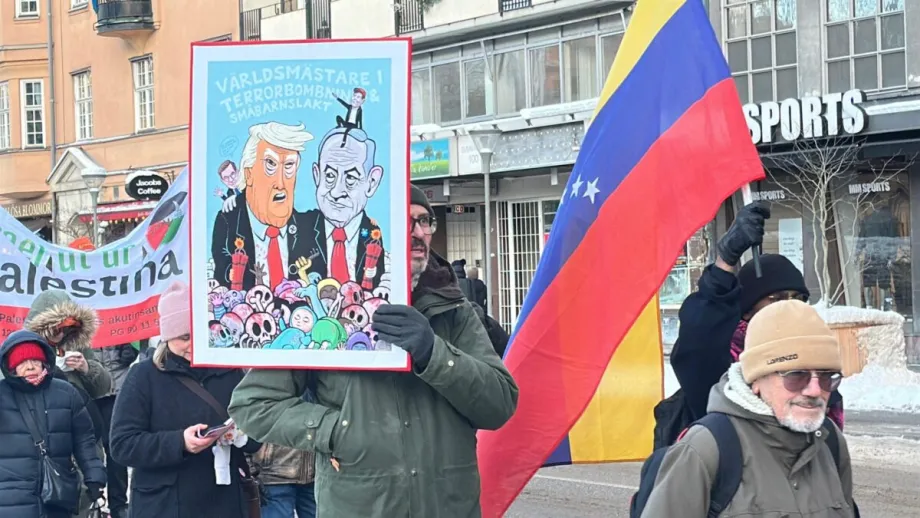
The abduction of Nicolás Maduro is part of a larger pattern. It belongs to the same doctrine that flattened Gaza under the language of “self-defence” and threatened Iran with “locked and loaded” retaliation while bypassing diplomacy and international law. In each case, Washington has used force not as a last resort but as a sharp instrument of statecraft, corroding the norms it once claimed to uphold. From Gaza’s ruins to Tehran’s anxieties and now Caracas’s violation, the message is unmistakable: sovereignty is conditional, law is optional, and power is the ultimate decider, echoing the famous phrase of the Florentine Niccolo Machiavelli: “A prince never lacks legitimate reasons to break his promise.” This is not containment. It is a contagion designed to restructure the Middle East and the Global South in ways the United States can no longer control.
The world recoiled in horror not because Donald Trump seized Nicolás Maduro, but because the United States kidnapped a sitting head of state. This was not law enforcement. It was a flagrant display of imperial power that shreds the last remaining threads of an international order based on sovereignty and the rule of law. The avalanche of global condemnation gathering force across Latin America, Africa, and much of the Global South reflects a more profound truth. This act cannot be justified under any moral, legal, or strategic framework.
To dress the operation up as a “war on drugs” is a grotesque lie. Washington knows Venezuela is not the primary source of the narcotics devastating American communities. Mexico holds that distinction. Venezuela may be a transit point, but it is not the engine of the crisis. The drug narrative functions as a fig leaf, a familiar pretext used whenever the United States decides to impose its will by force. It is the same feeble justification that accompanied interventions from Panama to Honduras, from Iraq to Afghanistan.
This was not about narcotics. It was about power.
The capture of Maduro marks a dangerous escalation: the extraction of a foreign leader under the banner of domestic prosecution. Even Washington’s refusal to recognize Maduro as Venezuela’s legitimate president does not grant it the right to violate another country’s territorial integrity. The UN Charter is unambiguous. The use of force against a sovereign state is illegal except in self-defence or with Security Council authorization. Neither condition exists here.
Legal scholars have been blunt. The operation violates Article 2(4) of the UN Charter and risks constituting a crime of aggression. By normalizing regime change through force, the United States invites other powers to follow suit. Washington can abduct leaders it dislikes; why should Beijing, Moscow, or Ankara restrain themselves? The erosion of norms does not stop at one border.
In the US, the constitutional damage is equally severe. Congress alone has the authority to declare war, yet Trump launched what is effectively a regime-change operation without congressional authorization. This is executive overreach of the most dangerous kind, hollowing out the separation of powers and turning military force into a presidential tool of convenience. It is not a strength. It is recklessness.
Trump styles himself as the “President of Peace,” boasting that he ended eight wars. Yet his actions tell a different story. Venezuela is now destabilized, its region inflamed, its sovereignty trampled. The Southern Hemisphere has taken note. For countries long scarred by American interventions, this episode confirms their worst suspicions: that US rhetoric about democracy masks a hunger for control.
The economic implications are impossible to ignore. Venezuela holds the world’s largest proven oil reserves. Within days of Maduro’s capture, US officials were already discussing Venezuela’s oil future on global markets. This is the Monroe Doctrine reborn in its crudest form: this hemisphere is ours, and we will take what we want.
History offers no comfort here. Vietnam consumed fifteen years and millions of lives. Iraq shattered an entire region and birthed endless war. Panama and Honduras left scars that never healed. Each intervention was justified as necessary, temporary, and righteous. Each ended in strategic failure and moral disgrace.
The ghosts of the Bay of Pigs in Cuba linger. That humiliating fiasco taught the world that American power, when untethered from reality, defeats itself. Today, as Trump eyes Greenland and toys with fantasies that would fracture NATO, the same hubris is on display. The difference is that now the damage spreads faster and wider.
International reaction has been swift. Emergency sessions at the United Nations exposed Washington’s isolation. Allies wavered. Adversaries smiled. As Napoleon once advised, “When your enemy is making mistakes, let him continue”. In Beijing, Moscow, and beyond, leaders are laughing as the United States dismantles its own credibility.
The legal process ahead only deepens the peril. Maduro’s trial, if it proceeds, will inevitably raise questions of head-of-state immunity and jurisdiction. A ruling ordering his release would not merely embarrass Trump; it would detonate his presidency. Trump himself seems to sense this fragility, publicly warning that failure in the upcoming elections could lead to his impeachment. The strongman façade cracks easily when power depends on impunity.
What remains is the damage to America’s standing. This operation tells the world that US law is selective, its principles negotiable, its commitments disposable. It confirms that might has replaced right, and that international law applies only to the weak. Trump, obviously, has not read Dwight D. Eisenhower’s prophetic warning: “A people that values its privileges above its principles soon loses both.”
Trump’s kidnapping of Maduro will not be remembered as a victory against crime. It will be remembered as a sad chapter when the United States abandoned even the pretence of moral leadership and dismissed the warning of the first American president, George Washington, against “foreign entanglement.” It accelerated the decline of an empire already drowning in debt, addicted to foreign adventures, and blind to the cost of its own arrogance.
The tragedy is not only Venezuela’s. It is America’s. An empire that kidnaps leaders in the name of justice has already lost the very thing it claims to defend.
The views expressed in this article belong to the author and do not necessarily reflect the editorial policy of Middle East Monitor.