Bangkok has officially been declared a disaster zone after relentless rains triggered widespread flooding in the Thai capital. Up to 300 millimetres of rain fell in some areas overwhelming the city’s canals and drainage system.
Nonstop rain since Thursday has submerged Thai capital’s roads and canals, sending water into many homes and stores.
Published On 26 Sep 202626 Sep 2026
Bangkok authorities have declared a disaster zone across all 50 districts of Thailand’s capital after three consecutive days of rainfall caused heavy flooding.
The disaster designation, which gives local organisations authority to take action, came on Saturday after Governor Chadchart Sittipunt said almost 300mm (11.8 inches) of rain had fallen since Thursday afternoon.
Recommended Stories
list of 4 itemsend of list
The nonstop rain inundated roads and canals with water, sending water into many homes and stores alongside them, according to reports. Photos and videos showed major roads submerged and cars abandoned after drivers were unable to move through the rising water.
Chadchart said the east of the city was most impacted and warned that more rain was forecast again on Saturday. He added that flooding should recede once the rain subsides, as city officials work to drain floodwaters as quickly as possible.
“The rain keeps falling and we are doing our best. We are trying to pump the water out, but the water in canals are full,” he said on social media. “The risk areas are those who live near canals. Every canal is now filled.”
Later on Saturday, the government said the flooding situation had “stabilised” but added it would still take two or three days for the water to drain, as long as the rain held off. “If more rainwater doesn’t fall in the area, it will be solved,” he said.
People walk past abandoned vehicles on a flooded Phetchaburi Road in Bangkok on September 26, 2026 [Lillian Suwanrumpha/AFP]
Chadchart also advised residents to move their cars to higher ground, as Bangkok’s public transport authority offered free access to MRT train “park and ride” carparks to store their vehicles until October 2.
Reporting from a flooded street in Bangkok, Al Jazeera’s Tony Cheng said the Thai capital is no stranger to heavy rain during the monsoon season, but the continuous rainfall had locals worried.
“What usually happens is we get heavy downpours for a couple of hours, then you’ll see the street often flooded but it would flow away into the drains quickly, and it would only happen in isolated areas too,” he said.
“What’s happening here is … happening all across the city. This is not a flash flood; this is persistent heavy rain since Thursday evening, and it shows no sign of letting up.”
Somkid Pheuk-ngam, 67, a vendor who lives near a canal just north of central Bangkok, said she had to close her shop for two days.
“The water keeps coming in. It’s hard to go out now. It’s at my waist level,” she told the AFP news agency. “I cannot go anywhere,” she said, adding that this was “worse than the 2011 flood.”
Widespread flooding across Thailand in 2011 killed more than 500 people and damaged millions of homes.
The Department of Disaster Prevention and Mitigation has warned of low pressure across eastern, northeastern and central Thailand until Sunday, saying there was a risk of flash floods, forest runoff, mudslides and river overflow.
ZAWTAR AL GHARBIYEH: The US ambassador to Lebanon on Tuesday visited a southern village that recently came under the control of the Lebanese army as part of a framework agreement with Israel.
The US-backed June agreement states that the Israeli military will withdraw from areas of south Lebanon it occupied in parallel with the deployment of the Lebanese army, starting with “pilot zones”, under the condition that militant group Hezbollah disarms.
An AFP correspondent saw a convoy carrying the US envoy, Michel Issa, entering the village of Zawtar al-Gharbiya, where he visited a church, according to Lebanon’s official National News Agency (NNA).
The news agency said an Israeli drone surveyed the area during the visit, reporting Israeli military vehicle movements in the neighbouring town.
Israeli troops remain deployed in what it calls a “security zone”, a stretch of Lebanese territory about 10 kilometres (six miles) deep along the border.
It recently blew up a strategic Hezbollah location at the Ali al-Taher ridge in the Nabatieh region, creating a blast so powerful that a 4.1 tremor was registered.
Fresh talks between Israel and Lebanon over the implementation of the framework agreement were due to be held this month, but were postponed to October.
A source from the Lebanese presidency told AFP that during the last round of talks in August, Israel refused to discuss new “pilot zones” without ensuring that the Lebanese army had full control of the first ones.
The Israeli and Lebanese ambassadors to Washington are due to meet this week to discuss the implementation of the agreement.
Lebanese President Joseph Aoun also visited Zawtar al-Gharbiya on Saturday, where his office said he inspected army units and observed nearby Israeli military positions.
Violence declined following the June framework agreement and a wider US-Iran deal, but Israel has pressed its attacks on Lebanon.
Hezbollah, which pulled Lebanon into the war in March with strikes on Israel, rejects the negotiations with Israel and refuses to disarm, but has not claimed any recent attacks.
Israeli strikes have killed more than 4,300 people since the hostilities began in March, according to Lebanese authorities.
TEHRAN: Iran’s Guards said on Wednesday that a new “prohibited zone” outside the Strait of Hormuz would cover parts of the Gulf of Oman and beyond, adding that they would announce the exact coordinates later.
“It approximately starts from the direction of Chabahar, covering part of the Sea of Oman and another part of the Arabian Sea, along the route that can lead to the Strait of Hormuz,” Guards spokesman Hossein Mohebi told state television.
“If a vessel enters that area without coordination, it will be subject to our sanctions… It means, for example, that if it later wants to come and use the Strait of Hormuz, if it wants to receive services somewhere, such as insurance or other related services, we will refrain from providing those services,” he added.
The announcement comes after Iran reported “significant progress” with Oman, both coastal states on Hormuz, in discussions of a temporary shipping route through the strait.
Iranian forces have restricted traffic through Hormuz, a vital energy conduit, since the start of the war with the United States on February 28. The US has imposed a counter-blockade on Iranian ports.
Tehran has required vessels to seek permission to transit, insisting there will be no return to the pre-war system of unrestricted navigation.
On Tuesday, Iranian forces said they have struck 10 vessels which attempted to cross Hormuz without coordination.
US President Donald Trump said in recent days that American forces have helped facilitate the passage of vessels through the strait, “averaging 30 ships a night.”
Iran’s security chief Mohsen Rezaei said Sunday that the US tries each night to help five or six ships through, “and usually these ships get hit.”
During his interview on Wednesday, Mohebi said the US should also “release $24 billion in Iran’s frozen assets, and refrain from any interference in the country’s nuclear and missile capabilities.”
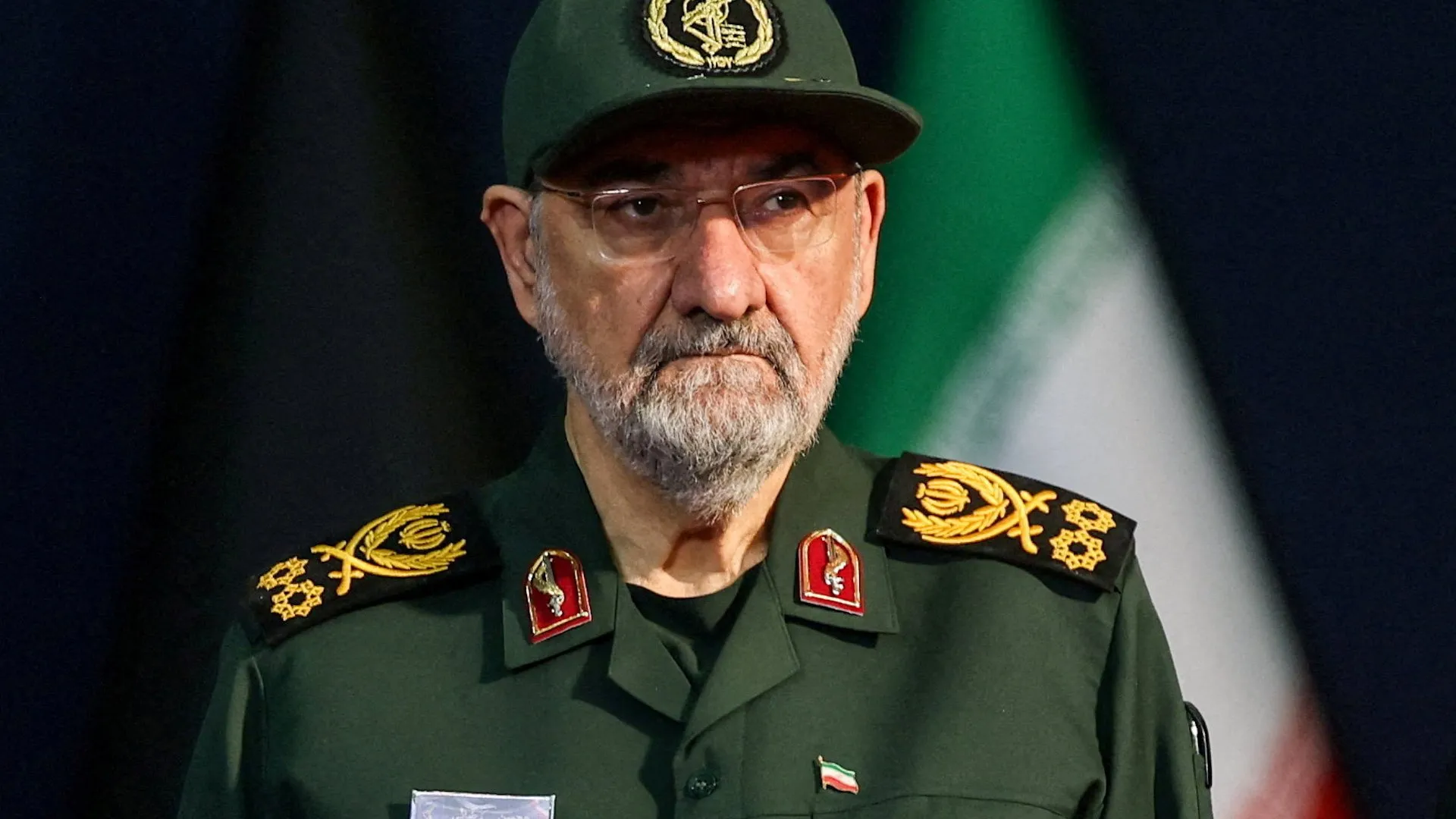
Iran’s security chief Mohsen Rezaei says Tehran will announce a restricted zone around the Strait of Hormuz and parts of the Gulf, with ships entering the zone to be placed on a sanctions list.