When Zoe Kazan learned she was going to adapt “East of Eden,” she knew it meant she’d be destroying a copy of John Steinbeck’s 1952 novel with scribbled notes in different colors, highlights and earmarked edges. So she ordered a used one from Powell’s Books — it has somebody else’s last name written on it, she points out.
“It’s a treasure to me,” she said during a recent video call from London.
Steinbeck’s Cain and Abel-inspired novel follows two families across decades as a way to explore good and evil, legacy, free will and what makes a person. Driving many of the biblical parallels are two sets of siblings — half-brothers, Charles and Adam Trask, and later, Adam’s fraternal twin sons Cal and Aron — each competing for their father’s attention and love. Disrupting their lives is an enigmatic woman named Cathy Ames, who Adam marries and who gives birth to Cal and Aron.
The book-to-screen adaptation has been Kazan’s passion project. And for a tale of familial legacy, she had her own to confront — in 1955, her grandfather Elia Kazan directed a film version that starred James Dean and covered the last third of the book, which focused on Cal and Aron. Zoe Kazan’s interest in the story took shape decades later when, as a teenager, she discovered the book.
She found herself drawn to Cathy, its famous antagonist.
“I felt repelled by her, attracted by her, curious about her. I felt empathy. I felt hared. I felt love. I felt all these things,” Kazan said. “I had never read anybody like her. I just remember, every few pages, wanting to stop and read aloud to someone the things that she was doing or [the things] that someone was saying about her.”
She also felt the pull of the story’s examination of intergenerational cycles and familial legacy.
“It feels a little bit like a chicken-and-egg situation. Which came first: Was I drawn to this book because of its intergenerational aspects or did this book teach me to think about intergenerational aspects?”
Now streaming on Netflix, the seven-part adaptation Kazan shepherded — alongside co-showrunner Jeb Stuart — covers more ground of the multigenerational saga than her grandfather’s film. This new version also centers Cathy.
Hollywood is filled with book-to-screen adaptations that have ignited grumbling and spirited debates. Even before its release, Zoe Kazan’s interpretation of John Steinbeck’s sprawling 1952 masterwork, “East of Eden,” roused passionate opinions from loyalists of the text on social media.
Much of the discourse surrounds Kazan’s creative choice in how to portray the book’s infamous antagonist, Cathy Ames, in Netflix’s seven-episode limited series out Thursday.
Steinbeck’s multigenerational saga ruminates on family, the power of choice and the nature of good and evil — deeply exploring the biblical stories of Cain and Abel and the fall of Adam and Eve — through the intertwined destinies of two families, the Trasks and the Hamiltons. Cathy (later known as Kate) functions as a chilling, destructive force in the saga.
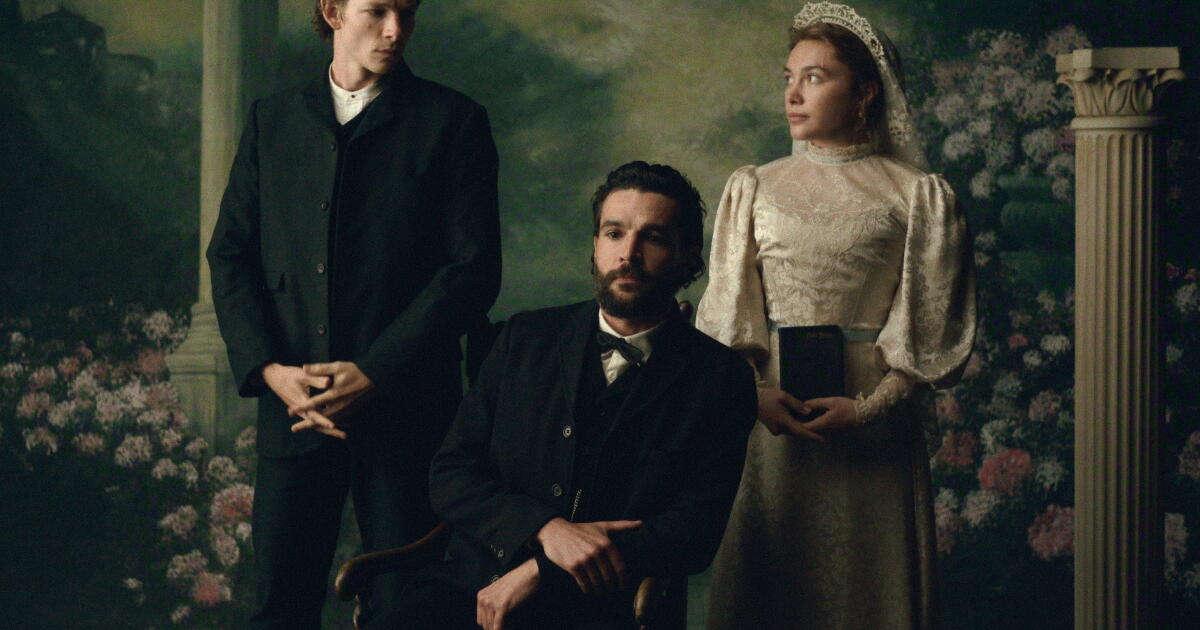
Kazan pared down much of the Hamilton family’s story for the show and centered Cathy (Florence Pugh), whose arrival alters the lives of the Trask brothers, Adam (Christopher Abbott) and Charles (Mike Faist). In doing so, Kazan dared to humanize the character who has been considered one of literature’s most definitive symbols of pure evil, described by Steinbeck to be a “psychic monster” born without a conscience or kindness.
“I’m trying to protect my mental health by not being too much online,” Kazan said in a video call from London on a recent weekday. “I do think it is not surprising to me that this character brings up a lot of strong feelings for people … I’m excited to see what people think once they actually see what we have made and aren’t just anticipating something.”
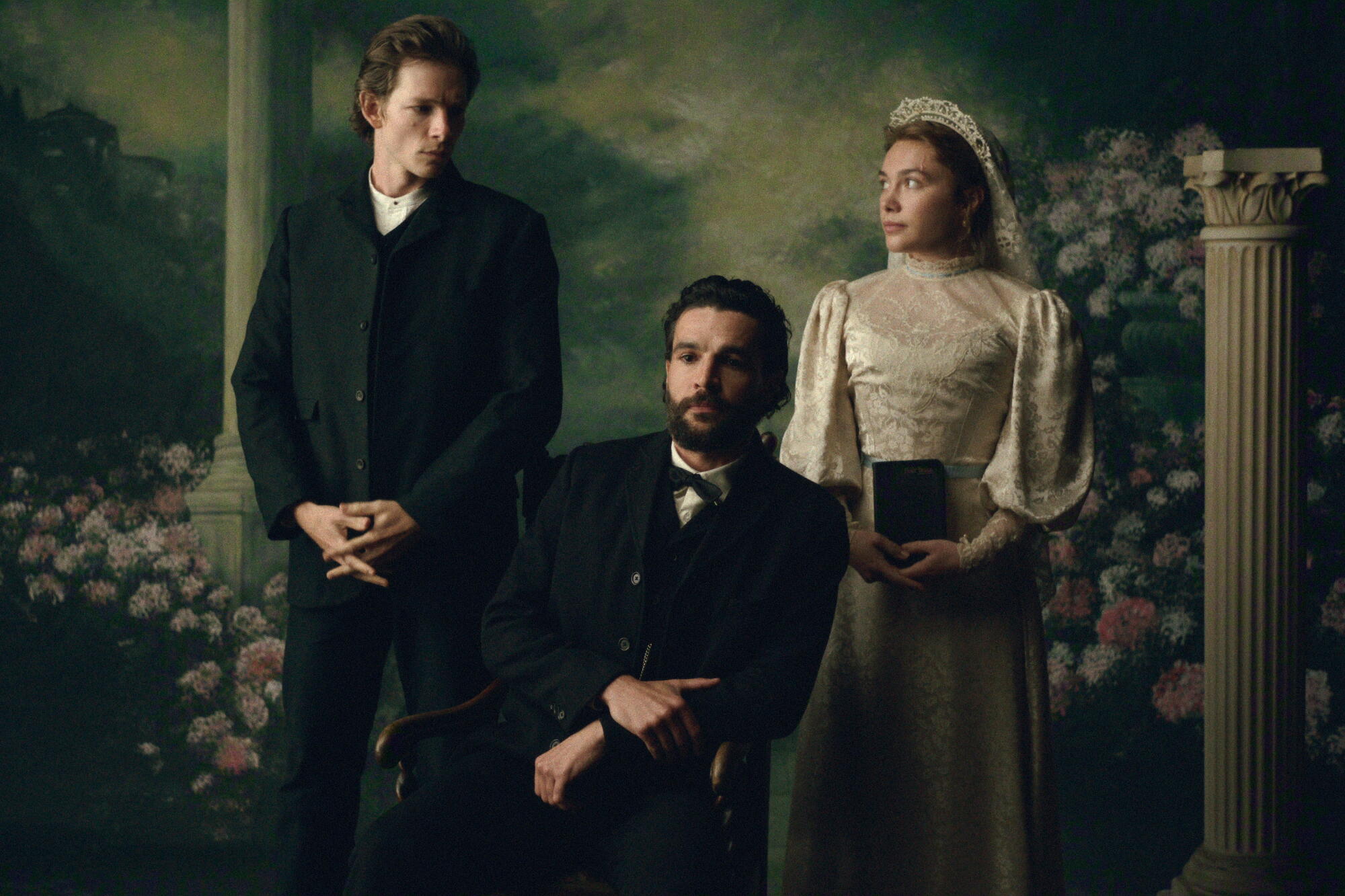
Mike Faist as Charles Trask, Christopher Abbott as Adam Trask and Florence Pugh as Cathy Ames in Netflix’s “East of Eden.”
(Netflix)
When Kazan, an actor who has expanded her creative footprint behind the camera, first pitched the series in 2019 and was asked about which actor she envisioned as Cathy, she replied: “I have one.” She had seen Pugh in “Midsommar,” “Lady Macbeth” and “Little Women,” marveling at how the actor’s ultra femininity lived alongside her masculine energy.
“The range on that girl … I was like, if anybody can do that, they can play Cathy,” Kazan says. “It allowed me to write Cathy as complicated and mysterious [as I wanted] and with so much shadow and light.”
When it came to Adam and Charles, Kazan knew Abbott and Faist could depict the psychological nuance beyond the binaries of the nature versus nurture debate: “I wanted an Adam where you felt what his true nature was and the nature that his father had pushed him into … and I knew we needed that in Charles as well.”
Adapting a classic is hardly a simple endeavor, particularly one that has been done before. That Kazan would choose “East of Eden,” which unpacks legacy and generational shadows is apt: Her grandfather, Elia Kazan, famously directed the 1955 film version starring James Dean. The actors of the Netflix series are eager for viewers to see her vision come to life.
“When you do an adaptation of a book, especially a seminal American novel, no matter what, you’re always going to be up against it because … whenever somebody reads a book, the budget in their heads is unlimited,” Abbott says. “I think this is such a great adaption in its own right.”
Pugh adds: “I’m excited for people to do the stuff that I’m doing now, which is [to say], ‘Oh my God, let’s read this and see how it fits against what I’ve got in my head.’”
Over a video call together, Pugh, Abbott and Faist reflected on their journey to adapting Steinbeck’s epic story, including their first experiences with it and filling in the shades of these characters who remain timeless allegories of the human condition. This conversation, which contains spoilers, has been edited for clarity and length.
Florence Pugh, left, Christopher Abbott and Mike Faist take on some of literature’s most indelible characters — Cathy Ames, Adam Trask and Charles Trask — made famous in John Steinbeck’s classic “East of Eden.” (Photographs by Sophia Spring / For The Times)
When did you first encounter the book?
Faist: My first encounter with the story was the James Dean, Elia Kazan film. That was a movie that I watched, especially when I first moved to New York and wanted to be an actor. It wasn’t until Zoe and Florence asked if I’d be interested in doing this, that I picked up the book.
Pugh: I want to say maybe my early 20s, I read the book. I only watched the movie recently to prepare myself for these kind of conversations. I’m rereading the book now while we’re heading into press, just so I can like fine-tune what I thought I knew … there’s so much love that’s being breathed into every single sentence of every chapter [in this adaptation], and that is solely down to Zoe’s fantastic brain and her ability to want to dig deeper.
Abbott: A lot of my favorite books I’ve picked up and put down numerous times before actually plowing through it — that was the case here until Zoe approached me about doing it. I was like, “Well, this is a perfect excuse to finally [finish].”
This adaptation lit up social media early on for centering Cathy. She is such a polarizing figure. Some see her solely as an evil monster. Some argue there is more nuance to what’s driving her actions. Florence, how do you see her?
Pugh: It’s tricky because I know I’m gonna get asked this again and again, and I guess I’m still trying to figure out how to word it without totally pissing people off. I love finding characters that people automatically think are villains and trying to find a way for you to love them — it’s my favorite thing to do.
I read these episodes, and I was listening to Zoe and how she was wanting this to come from Cathy’s perspective, how Cathy was her hero and how she’s just been championing Cathy ever since she first read the book — that was so f— exciting to know that we’re not gonna just point the finger and say that she’s evil. It is my job to do my skills as good as possible so that I can argue in defense of them. I believe that I can argue for her, which is terrifying but also really cool. I care for her deeply. I understand where she went and why. Does she do some terrible things? Absolutely. Is she a product of the situation that she grew up in? Totally. You can’t get raped as a child and and you be totally fine for the rest of your life.
Florence Pugh as Cathy Ames. She hopes the adaptation prompts curiosity: “I’m excited for people to do the stuff that I’m doing now, which is [to say], ‘Oh my God, let’s read this and see how it fits against what I’ve got in my head.’”
(Netflix)
That detail was not explicitly stated in the book. What were your conversations with Zoe about it?
Pugh: That’s why we ended up choosing the way that we explained it and the way that we showed it — that little girl is so tiny you can’t even imagine anything bad happening to her, and the fact that she’s holding “Alice in Wonderland,” [in her mind], there’s so many through lines through Cathy and Kate’s life that all come back to that moment. You don’t need to do much. Everybody has the sinking feeling of what might happen to a vulnerable child in that situation. In the book, I think it’s constantly playing with the themes of can we trust her? Is she already a monster as a child?
What Zoe has done is made her a real human, and has given her cause and has given her time to understand. That moment that is alluded [to in the book ] — if Cathy asked the boys to tie her down, and whatever it is that they were doing to her — it’s no longer alluded [in the series]. That [assault] happened, but maybe people didn’t believe her.
Mike, what were you interested in excavating with Charles, this Cain archetype who’s tormented by rejection and jealousy?
Faist: What is amazing about this story is — and it’s the entire through line of the entire novel — is this idea of timshel. What happens in a person’s life, and the burdens that they carry, then the choices they make, and every single moment as they continue to live it. Charles jumped out at me. There was just something about him that I was very drawn to — and along with that pull, there’s this feeling of dread, where you say, “Oh God, I can’t believe that I’m about to jump in and do this thing.” You end up surrendering yourself to it. It is scary and deeply exciting.
Abbott: I don’t have a brother. You forget too that they’re half brothers and what that dynamic is like, what kind of Freudian s— pops up. I think the through line for Mike and I, because there’s a lot of conflict there, that it always comes from a place from love. The letters, as they [Charles and Adam] get older, that are written or the letters that he starts to write and doesn’t send, when there is hate between them, it’s because they love each other so much. Otherwise, it would just be indifference. A lot of that happens in the things that are unsaid.
1
2
1.Mike Faist as Charles Trask. (Netflix)2.Christopher Abbott as Adam Trask. He found the sibling relationship intriguing: “I don’t have a brother. You forget too that they’re half brothers and what that dynamic is like, what kind of Freudian s— pops up.”(Kirsty Griffin / Netflix)
When Zoe approached you, Chris, to play Adam, you questioned whether she actually meant for you to be Charles?
Abbott: I’m just used to being typecast, so I thought she made a mistake. Zoe’s mentioned this idea of masculine and feminine energy — what one presents and what one actually holds, and the old switcheroos of that. The very first email, I was like, “Oh, are you sure?” But I was excited to play with all the nuance of and the layers of what this is. I had seen the movie before, and it [covers] only the last 100 or so pages. It’s really gratifying to play a part where you get to see someone’s whole life and how this guy goes from being this wanderer, drifter to this to stoic, depressed, rigid older man.
What moment between these characters were you most eager or nervous to depict?
Faist: The scene that I reflect back on the most, that actively had the biggest impact on me, is the scene between Cathy and Charles, where she comes into his room and the two of them share this intimacy together. We had talked about what we were wanting to do, then on the day, none of it was really working. I remember Florence had this really specific thing she wanted to bring to the scene. And it was really powerful — there’s these very rare moments when you genuinely feel someone’s objective actively working against your own. [Pugh makes a quizzical face.] No, it’s good! It creates this friction and this tension that does exist and does live.
Abbott: That was your favorite, huh?
Faist: I’m sorry, Chris! That one was just such a visceral feeling of, I know what my character wants in this thing, and her character is very much wanting the exact opposite and the literal clash of that that moment and the feeling of that — I’ll never forget that.
Pugh: It’s such an important scene to get right because it literally is the ending moment of those two; it added so much pressure on the day of shooting. It’s actually really hard when you’re trying to do a sex scene that’s consensual, but it’s definitely not at the right time. The coolest thing about it is it wasn’t working and we had to push everyone out. Everyone was whispering and everyone was trying to figure out what they were comfortable with us doing and, eventually, Mike and I were just like: Right. Done.
Florence Pugh, with Christopher Abbott, left, and Mike Faist, says “East of Eden” endures because “every single one of these characters is struggling to survive realistically.”
(Sophia Spring / For The Times)
Chris, you have the daunting task of, in the closing moments of the series, delivering the word that’s the thrust of the whole story —timshel.
Abbott: I think that was the last scene I shot. I can’t say I was being lazy, but the character had a stroke so he was laying there. You just gotta listen [in a moment like that]. Hoon [Lee, who plays Lee] is reading from the Bible. You take in the room. I nailed it in one. [Pugh and Faist laugh.]
People have deep feelings about “East of Eden.” And it seems to have had a real resurgence recently, even outside of curiosity about this adaptation. Why do you think that is?
Abbott: That’s a big, existential [thing to think about]. There’s a ton of themes in the book that are relevant: displacement, family, love. The themes in the book aren’t specific to the time period. All great works are that.
Pugh: It’s also about generational trauma and change in healing. One of the things I recognized immediately when I started rereading the book months ago, the first few pages about the Salinas Valley describe very quickly that this place is about growth, change and moving on. What I’ve taken from our adaption of Cathy and her generational trauma and what she’s doing to her kids is that not everybody is going to get it right. The reason I think why people keep picking it back up is every single one of these characters is struggling to survive realistically, and they are all making decisions that affect and domino-effect other people around them. Us learning about how we could have done better will always be relevant. And especially with America, and what we’re watching in terms of its constant battle against racism and immigration. It’s relevant to life and to our lives.
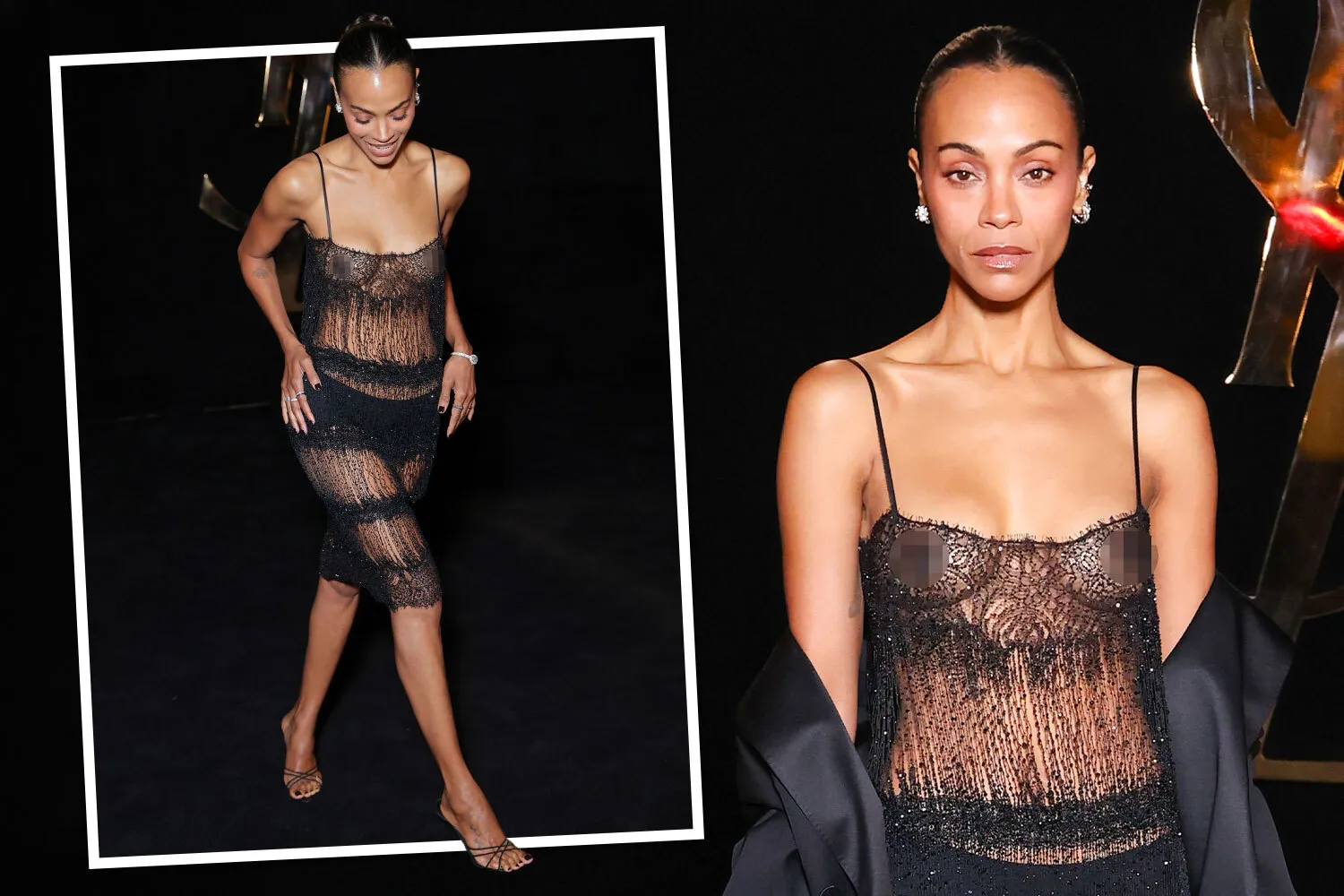
Zoe finished her look with sparkling earrings and a sleek updoCredit: Shutterstock EditorialThe Avatar star smiled for cameras at the Saint Laurent showCredit: Shutterstock Editorial
She added Nat King Cole’s Autumn Leaves as the soundtrack, giving a nod to the changing season.
Away from the catwalk, Zoe has been keeping busy filming the hit Paramount+ spy thriller Lioness.
She plays CIA operative Joe McNamara and also serves as an executive producer on the drama, which recently aired its third series.
However, Zoe is probably best as blue-skinned warrior Neytiri in Avatar or Gamora in Marvel’s Guardians of the Galaxy movies.
Most read in Entertainment
The film star also bagged her first Oscar last year, scooping best supporting actress for her role in Emilia Pérez.
Off screen, she has been married to Italian artist and filmmaker Marco Perego since 2013.
The couple have three sons, twins Cy and Bowie, 11, and Zen, nine.
The shadow of Bill Cosby hangs over the “The Peterson Show,” a new play by Janine Nabers about the fallout of a disgraced TV dad on the grown-up cast members who played his children on the show.
Echo Theater Company, which is presenting the world premiere of this play in a production directed by Michelle Bossy, has reconfigured its Atwater Village Theatre space for the occasion. The refresh — in terms of the position of the stage and the audience and in the level of the design elements, including video monitors showing clips of Black sitcoms — promises a vital evening of theater.
Unfortunately, the production is hamstrung by fundamental problems in the writing, directing and acting, all pointing to a failure of control. Control of the story, control of the tone and control of the cast.
In my fall preview item for this show, I wrote that the “production is all but guaranteed to be more enlivening than an evening spent surfing Netflix.” Well, it’s certainly lively, but in a boisterous way that made me regret I had left my couch.
Not even Netflix would give “The Peterson Show” the greenlight. The story centers on the adult lives of the sitcom’s five child stars who are thrust once again into the spotlight after a reunion rumor goes viral and their TV mom, Valerie, kills herself.
Deanna Reed-Foster, left, and Tamberla Perry in “The Peterson Show” at the Echo Theater Company.
(Cooper Bates)
Ronika (Tamerla Perry), the troublemaker of the group, careens through life with faulty brakes. Zoe (Kristen Ariza), who has traded TV stardom for an academic career and motherhood, wants the normalcy that her former fame keeps threatening.
Dwight (Devere Rogers) is messy and loud as well as addicted to fame and other substances. Blair (Kelly McCreary), who pulled herself out of a miserable childhood, has made a successful career as an award-winning actor and isn’t going to let her flimsy talent or her TV siblings stand in her way. Elliot (John Clarence Stewart), who seems the best adjusted of this crew, left the business to become a lawyer and hasn’t looked back.
Haywood Peterson, the patriarch of the TV show who’s serving jail time for rape, doesn’t appear in “The Peterson Show.” But his voice tyrannically resounds with sadistic orders and conservative cultural commentary during the second-act flashback scene, in which a fateful day on the set of the show changes the lives of Ronika and Blair.
The unsettled first act, full of false starts, feels like an early draft of the play. Nabers, an Emmy-nominated TV writer and author of the play “Serial Black Face” (winner of the Yale Drama Series Prize), can’t figure out how to center the work.
Ronika is the protagonist, but her introduction is off-putting — not only to Zoe, whose home she has invaded, but to the audience, who isn’t given much reason to care about this abrasive, screechy and just-plain-annoying personality.
The cast members perform at a fever pitch of amateur sitcom acting. Ronika evolves as the scene shifts to Blair’s home (which confusingly has the same layout as Zoe’s house in Michael Kramer’s eye-catching scenic design) for the home funeral of their TV mom. But more thought is spent in reworking Ronika’s hairstyle and outfit than in developing her story.
Kristen Ariza, left, Devere Rogers, Kelly McCreary, John Clarence Stewart and Tamberla Perry in “The Peterson Show” at the Echo Theater Company.
(Cooper Bates)
Ronika’s resentment toward Blair, who has avoided condemning Haywood in public, seethes monotonously until her own backstory is finally unearthed. Ronika’s trauma plot, however, has to compete with Valerie’s related breakdown story, and neither is given its dramatic due.
In the meantime, there’s a lot of unwieldy comic commotion involving a missing corpse, a tweaking, naked Dwight and enough insipid TV sibling bickering to clog the airwaves for a decade.
“The Peterson Show” is exhausting. The play isn’t ready for prime time. Bossy’s direction raises the clamorous volume instead of sorting out the disordered structure or digging into the unexamined silences.
The actors are led completely astray. Echo has built its reputation on quirky plays idiosyncratically performed. The theatrical marching orders here seem to involve throwing spaghetti against the wall and laughing uproariously as it slides to the floor.
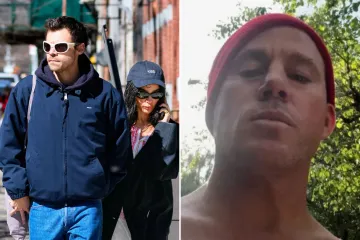
ZOE Kravitz fans are convinced they’ve worked out who is behind a burner account trolling her new romance with popstar Harry Styles.
Eagle-eyed fans have spotted a major clue that her ex Channing Tatum may be behind the anonymous page.
Zoe Kravitz fans are convinced Channing Tatum is trolling romance with Harry StylesCredit: GettyA burner account which may be linked to Channing has been leaving hate messages on Harry and Zoe related contentCredit: X
Online users have been sent into a frenzy, after a private Instagram page under the name Nonya Bidness went viral for leaving nasty comments on content related to Zoe and her new beau Harry.
Ex-One Direction singer Harry and Zoe, who played Catwoman in The Batman, have dated since August last year.
Sign up for the Showbiz newsletter
Thank you!
They went public with their relationship in Rome but have since kept matters private and not commented on their status in which they are engaged.
It came after Zoe’s high profile relationship with Channing with the pair calling time on their relationship in October 2024 after three years together and an engagement.
It has now been revealed that the burner account may be linked to ex Channing.
The page has left comments under related posts of Harry and Zoe, which said: “Just here for the hate.”
Another read: “When I see these two I think back at how her former fiancé called her the most intentional person he knows. I wonder how contextual he was being…”
Replying to a fan, a third comment said: “To me intentional = calculated. He was speaking in terms of film-making but leaning towards her as a person in general too.
“Now she is constantly spotted with Harry compared to the ex who we heard about long before they were seen together.
“And when they were seen together it was far less frequent. It could be nothing but it just made me think.”
Ex-One Direction singer Harry and Zoe who played Catwoman in The Batman have dated since August last yearCredit: GettyFans have spotted a clue that a burner account writing hate comments may be connected to Zoe’s ex ChanningCredit: X
Fans now believe that Channing is the user behind the account after reportedly discovering that he is the only one to be following the page.
Channing seemingly no longer follows the account and it remains unclear to whether the screenshots of the page have been edited.
The Sun has gone to Channing’s rep for comment.
Fans have taken to X to share their own thoughts on the account with one user saying: “There’s no way Channing Tatum is leaving hate comments on Deuxmoi with his burner account only he follows.”
“Lmaooooo he’s his only follower on his burner on threads as well. Pack it up.
“We can’t even give him the benefit of the doubt of “it’s a fan he just happened to follow cause they said nice things about him,” insisted another.
A third wrote: “That is insane if there’s any truth to it, men always go crazy when their ex dates Harry.”