Zack Polanski calls for internal rule reforms to give party leaders greater control over policy after Zionism vote.
Published On 11 Oct 202611 Oct 2026
Zack Polanski, the leader of the United Kingdom’s Green Party, has proposed a potential overhaul of his party’s democratic mechanisms, calling for the leader to have larger control over strategic direction.
The appeal came in an article published in The Guardian on Sunday after party members passed a motion declaring that Zionism is racism at their annual conference on October 4 in a divisive vote.
Recommended Stories
list of 4 itemsend of list
Polanski also failed to grab a parliamentary seat in the wake of the row with Israel in a by-election.
The Labour Party won the election for the parliamentary seat vacated by former leader Keir Starmer in Holborn and St Pancras on Friday, fending off a strong challenge from the left-wing Green Party in a boost for British Prime Minister Andy Burnham.
“Our party democracy must now evolve to meet that – creating wider engagement for members, giving leaders more responsibility to set the party’s strategic direction, and making our processes as robust and accessible as possible,” he wrote.
“Above all, that unity must be deployed in the service of changing this country for the better,” the Green Party leader added.
Criticism over vote on motion
Polanski also replied to the criticisms of him for not participating in the vote on the motion on Zionism.
“I have been asked why I was not present for the vote. The answer is that my priority was fighting a hugely consequential by-election for our party,” he said, adding that he put all his “energy into the race in Holborn and St Pancras”.
He admitted that some members feel “let down” by his decision not to make an appearance there.
The Green Party’s motion, which called for “Palestinian liberation, the right of return, Boycott, Divestment and Sanctions (BDS), and a full arms embargo against Israel” was criticised by Jewish groups, other parties and most Green Party MPs.
After conceding defeat in the fiercely contested by-election, Polanski answered his critics, saying he would stay on as leader.
He was barred from entering Israel after his party backed a motion to define Zionism as racism.
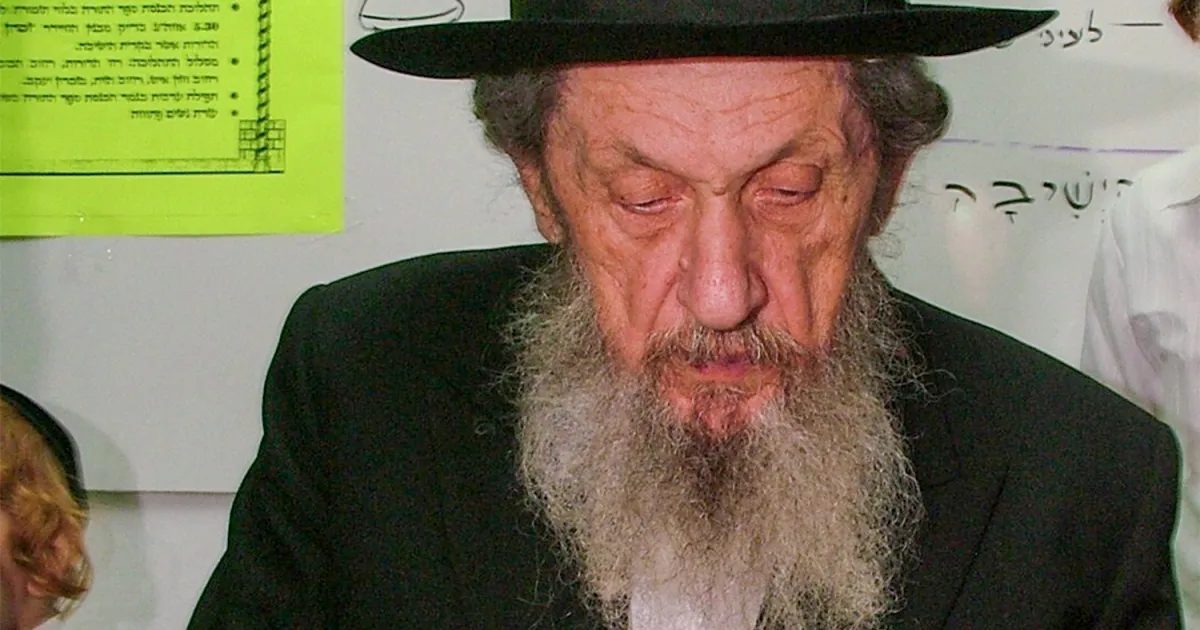
One of Israel’s top ultra-Orthodox rabbis, Dov Lando, has become the centre of controversy in Israel after comments emerged in which he denigrated Zionism.
In a recently released video recording, the 96-year-old rabbi is heard saying the ideology of Zionism caused the Jewish people to suffer “disasters”, and that Jewish Israelis may have been better off without a state.
Recommended Stories
list of 3 itemsend of list
The remarks have drawn rebukes from Israeli politicians weeks before landmark legislative elections, in which the role of the country’s growing ultra-Orthodox community – particularly over military service – is a major issue. The political alignment of ultra-Orthodox parties could also prove crucial to the formation of the next government.
So, who is Lando and why are his comments significant?
Who is Dov Lando?
Dov Lando is a 96-year-old rabbi regarded as the leader of Israel’s Lithuanian ultra-Orthodox community. Born in Poland and raised in the Lithuanian-style ultra-Orthodox tradition, Lando heads a yeshiva – a traditional Jewish academy – in the Israeli city of Bnei Brak.
He is a member of Moetzes Gedolei HaTorah, a council of senior ultra-Orthodox rabbis that offer religious guidance to the community, as well as the spiritual leader of Israel’s Degel HaTorah party. That party is part of the United Torah Judaism (UTJ) alliance, which is a member of Prime Minister Benjamin Netanyahu’s coalition.
What has Lando said about Zionism?
Earlier this week, Israeli media released a video of Lando making year-old comments that harshly criticise Zionism, military service and secular Israelis.
Lando, who has made similarly critical remarks before, is heard in the video saying that Zionism “caused the Arabs to hate us” and brought physical as well as spiritual “disasters” on the Jewish people.
“It is possible to live well with the Arabs without a state,” Lando said, adding that international or Palestinian rule would have been “the best situation” for Jews.
Lando went on to castigate soldiers who adhere to Religious Zionism – a strand of Orthodox Judaism that upholds Zionism – saying “they are killed because their rabbis teach them a distorted Torah.” Many military operations, he said, are carried out “not for saving lives, but for the honour of the state”.
The veteran rabbi also had harsh words for secular Israelis, who he said have “no connection to Judaism at all”. He described them as having built “a state of apostasy and heresy”.
What has been the reaction in Israel?
Lando’s remarks have drawn fierce criticism from numerous Israeli politicians, including all major figures that have joined an opposition alliance challenging Netanyahu.
Gadi Eisenkot, head of the Yashar party who is viewed as the opposition bloc’s most likely candidate for prime minister, said Lando’s “outrageous statements” were “the embodiment of anti-Zionism”.
Yair Lapid, the head of Israel’s opposition in the Knesset, called the comments “a disgrace to every Jew”.
Former Prime Minister Naftali Bennett, who leads the Together alliance co-founded with Lapid, said Lando’s remarks are “anti-Semitic, anti-Zionist” and against the Israeli military.
Netanyahu has not commented on Lando’s latest reported remarks, but he publicly condemned earlier statements by the rabbi in July, when Lando accused the Religious Zionism movement of “incitement to murder” for its support for drafting religious seminary students into the military.
Could the controversy impact Israel’s upcoming elections?
Potentially.
Members of the anti-Netanyahu opposition bloc have called for the UTJ, which Lando’s party is part of, to be cast out of any future government, and criticised Netanyahu for staying aligned with the group.
Yair Golan, head of the Democrats party, said Netanyahu is “silent because without Rabbi Lando and his emissaries, he has no government”.
Netanyahu’s “political survival is more important to him than Zionism, more than equality in service, and more than the blood of our soldiers”, Golan said.
But breaking with the UTJ would come at a huge political cost to Netanyahu, whose coalition is already in for a tough election battle on October 27 and is polling well below the 61-seat threshold needed for a majority.
UTJ is projected to win 8 seats in parliament, according to an October 5 poll by Israel’s Channel 12.
“If Netanyahu attacks Lando forcefully, he pays a price with the Haredim (ultra-Orthodox) he needs to form a government,” said Ehab Jabareen, a researcher on Israeli affairs. “If he stays silent, he hands his rivals material to tell right-wing voters that the man who speaks of Zionism and security depends on a religious leadership that doubts Zionism itself.”
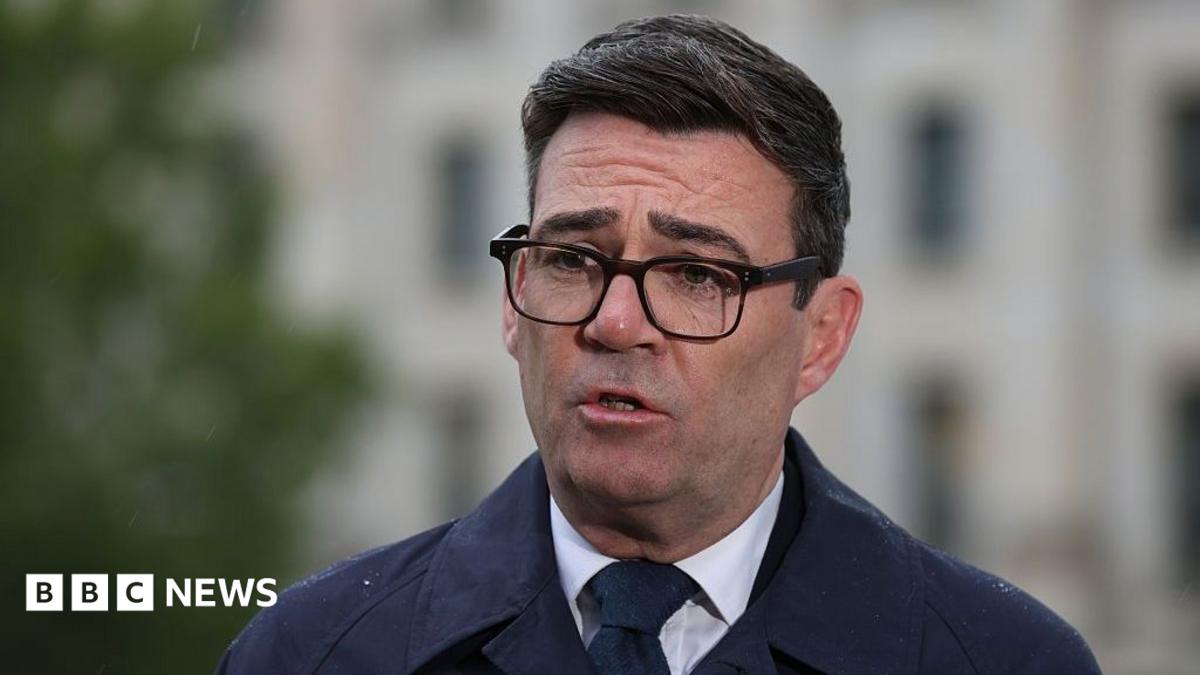
Andy Burnham has called on Green leader Zack Polanski to reverse a motion passed by members of his party declaring Zionism a form of racism.
The prime minister said the motion, approved on Sunday at the party’s conference in Brighton, was “completely wrong” and showed “terrible judgement”.
The motion defined Zionism as an ideology supporting “an ethnonationalist Jewish state” and backed a “single democratic Palestinian state in all of historic Palestine”, which includes modern-day Israel.
In the wake of the vote, Polanski has said he would not accept anyone being excluded from the Green Party “because of the religious or communal body they are part of”.
The Green leader has declined media interviews since the motion was passed and did not answer questions from a BBC reporter about the motion ahead of Burnham’s comments.
It comes as polls close in Thursday’s Holborn and St Pancras by-election, in which Polanski is a candidate.
The motion has complicated the final days of Polanksi’s campaign in the contest, where the Greens have been looking to overturn a substantial Labour majority in the seat vacated by former Prime Minister Sir Keir Starmer.
It has sparked days of controversy, with four of the five Green MPs opposing it, its co-deputy leaders split on supporting it, the Green deputy leader in Wales resigning, and condemnation from members and Green counterparts in Europe.
Polanski did not vote on the Zionism motion, having left the conference early to return to London for the by-election campaign.
An amendment he had backed to specify that the motion should not be used to discipline Jewish members attending synagogues that consider themselves Zionist was voted down by members.
Before the vote, he had also said he wanted to see the reference to a single Palestinian state changed, arguing: “I don’t believe we as a Green Party of England and Wales, or even the British government, should be deciding what the future settlement looks like.”
The Green Party has an internal democracy model, under which official party policy is decided by members. However, these positions are not necessarily included in the party’s general election manifestos.
The United Kingdom’s Green Party has voted to define Zionism as a form of racism, drawing condemnation from the Israeli government.
In a binding vote held at the party’s conference over the weekend, members voted to usher in the new definition as well as a series of other strongly pro-Palestine policies.
Recommended Stories
list of 4 itemsend of list
However, just as the resolution has drawn international criticism, it has also proved internally controversial with four of the party’s five members in parliament opposing it.
Israel on Monday banned party leader Zack Polanski from the country just a day before the politician faces a by-election as he runs in the London constituency that former Prime Minister Keir Starmer represented.
Zionism emerged as a political ideology in the late 19th century. It called for the creation of a Jewish homeland at a time of rising anti-Semitism and persecution of Jews in Europe. Theodore Herzl, an Austro-Hungarian journalist considered the father of political Zionism, originally proposed an independent and colonial Jewish state in either Palestine or Argentina.
Here’s what we know about what the Greens have said:
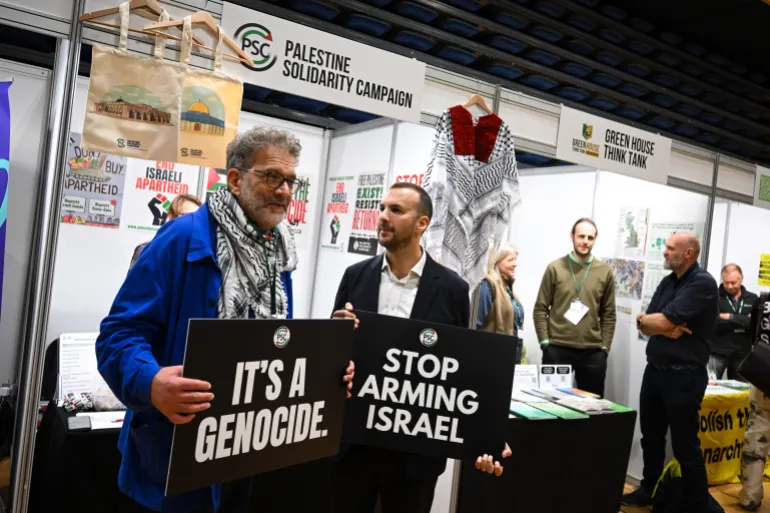
Green Party leader Zack Polanski, right, chats with Ben Jamal, director of the Palestine Solidarity Campaign, at the 2025 Green Party conference in Bournemouth, England [File: Getty Images]
What is the resolution?
The Greens endorsed the motion to equate Zionism with racism by a vote of 1,022 to 813.
In addition, the party restated its “commitment to Palestinian liberation” and called for the “establishment of a single democratic state throughout historic Palestine”.
The party also recommitted to its support of Palestinians’ right of return as well as to the Boycott, Divestment, Sanctions movement against Israel.
“The real, material, manifestation of Zionism has been the historic and ongoing dehumanisation, displacement, dispossession, disenfranchisement and destruction of Palestinians,” a Green Party statement said.
A significant number of party members, including four of its five MPs, were against parts of the resolution, exposing divisions within the party.
Codeputy leader Rachel Millward said in a post on X that while the party is committed to “stop the genocide”, the term Zionism means “different things to different people, … so I personally do not think the policy helps us do the work we all want to”.
Meanwhile, Polanski, who is Jewish and was away campaigning during the vote, told journalists afterwards that if Zionism equates to the displacement of Palestinians, “that is clearly racist.”
Polanski said he, however, did not support the reference to a single Palestinian state and external entities should not decide what a future state would look like.
How has Israel responded?
Israel has accused the party of legitimising “terrorism”, and senior officials equated it to anti-Semitism.
“The Greens have adopted not only the green of Hamas, but also its ideology: the elimination of the State of Israel through armed struggle,” the Israeli Ministry of Foreign Affairs wrote on social media.
Israeli President Isaac Herzog said it would “deliberately endanger Jews and Israelis everywhere”. Opposition leader Yair Lapid said the party was “racist”.
The Green Party has rejected equating criticism of Israel with anti-Semitism and reiterated its stance against “any form of discrimination or harassment”.
“We know there is no conflict between supporting the rights of Palestinians and the rights of Jewish people,” Polanski and other senior party members said in a statement on Sunday.
Has Zionism been equated to racism before?
Yes. In 1975, the UN General Assembly passed a resolution that “determines that Zionism is a form of racism and racial discrimination”.
The vote was sponsored by the Soviet bloc and the Arab League. It passed after 72 countries, largely from the Middle East and Africa, voted for it. Israel and 34 other countries – chiefly from the West – were against it. Thirty-two other countries abstained.
Just a year before, at the 1974 General Assembly, Palestinian leader Yasser Arafat had given his “olive branch” speech at the General Assembly.
About the same time, African countries opposing the apartheid regime in South Africa, which was increasingly allying with Israel, had resolved separately that the Israeli government was “racist” and both had an “imperialist origin.”
Also, in 1975, at the first international women’s conference, held in Mexico City, attendees decided there would be no international peace outside the “elimination of foreign occupation, Zionism, apartheid” and all other forms of “racial discrimination”.
However, the General Assembly vote proved controversial. Chaim Herzog, then-Israeli ambassador to the UN and later president, told the assembly in a speech that it was “based on hatred, falsehood and arrogance” and proceeded to rip up copies of the resolution in front of the audience.
The US too accused the UN of making “anti-Semitism international law”.
In December 1991, the US, under President George HW Bush, stepped up a campaign to revoke the resolution with Bush declaring at the UN that equating Zionism with racism “is to reject Israel itself” and to “challenge its right to exist”.
Israel also insisted it would not participate in the Madrid Peace Process to continue negotiations between Israel and Palestinian leaders if the resolution was not cancelled.
After much pressure from the US, an overwhelming majority of countries voted for its revocation – 111 to 25, including European and African countries.
Who else equates Zionism with racism?
Jewish Voice for Peace, the American anti-Zionist and pro-Palestinian advocacy group, has also named Zionism as a movement that creates a “racist hierarchy with European Jews at the top”.
In a February statement, the group reiterated its stance against what it called the “colonial ideology” of Zionism’s founders.
Similarly, in the United Kingdom, an employment tribunal in 2024 backed anti-Zionist activist and professor David Miller, who was earlier sacked from his post at the University of Bristol in 2021 for his views that the movement was “inherently racist”.