Young Poong’s refinery in South Korea. The company is embroiled in a new controversy with its shareholder KZ Precision. Photo courtesy of Young Poong
SEOUL, March 5 (UPI) — South Korean zinc producer Young Poong has become embroiled in a new controversy with shareholder KZ Precision, which manufactures hydraulic equipment.
Young Poong, a major shareholder of the world’s largest non-ferrous metals producer Korea Zinc, said Wednesday that it has brought KZ Precision, an affiliate of Korea Zinc, to court.
Young Poong accused KZ Precision of deliberately creating an illegal cross-shareholding structure during the Korea Zinc management control dispute ahead of Korea Zinc’s shareholders’ meeting early last year.
Young Poong alleged that KZ Precision sold its shares in Young Poong to an Australian-based Korea Zinc subsidiary with the aim of restricting Young Poong’s voting rights over Korea Zinc.
Over the past year, Korea Zinc has sought to fend off a takeover bid from Young Poong, which has joined with Korea’s top private equity firm, MBK Partners.
“We have filed a damages lawsuit against KZ Precision as our shareholder value was harmed by an unlawful restriction of voting rights,” Young Poong said in a statement.
“As the largest shareholder of Korea Zinc, we will keep playing a responsible role in normalizing the company’s corporate governance and enhancing shareholder value,” it added.
Meanwhile, KZ Precision criticized Young Poong’s management.
“Young Poong’s corporate value, reputation and internal control system have been damaged to an irreparable extent, resulting in adverse effects on shareholder value,” KZ Precision said in a statement.
“The current management of Young Poong was hesitant to make capital investments, which caused the corporation to lose competitiveness in its core smelting business and accumulate losses,” it said.
Young Poong has suffered from operating losses over the past few years, totaling $50 million in 2021, $74 million in 2022, $97 million in 2023, and $60 million in 2024. The Seoul-based company has yet to disclose last year’s results.
KZ Precision also took issue with the environmental concerns involving Young Poong, whose smelter operations in Korea were suspended for two months last year after discharging polluted wastewater without approval.
In response to Young Poong’s claim that it has channeled hundreds of millions of dollars to improve the environment around its smelter, KZ Precision argued that there may be accounting irregularities, which are reportedly under investigation by regulators.
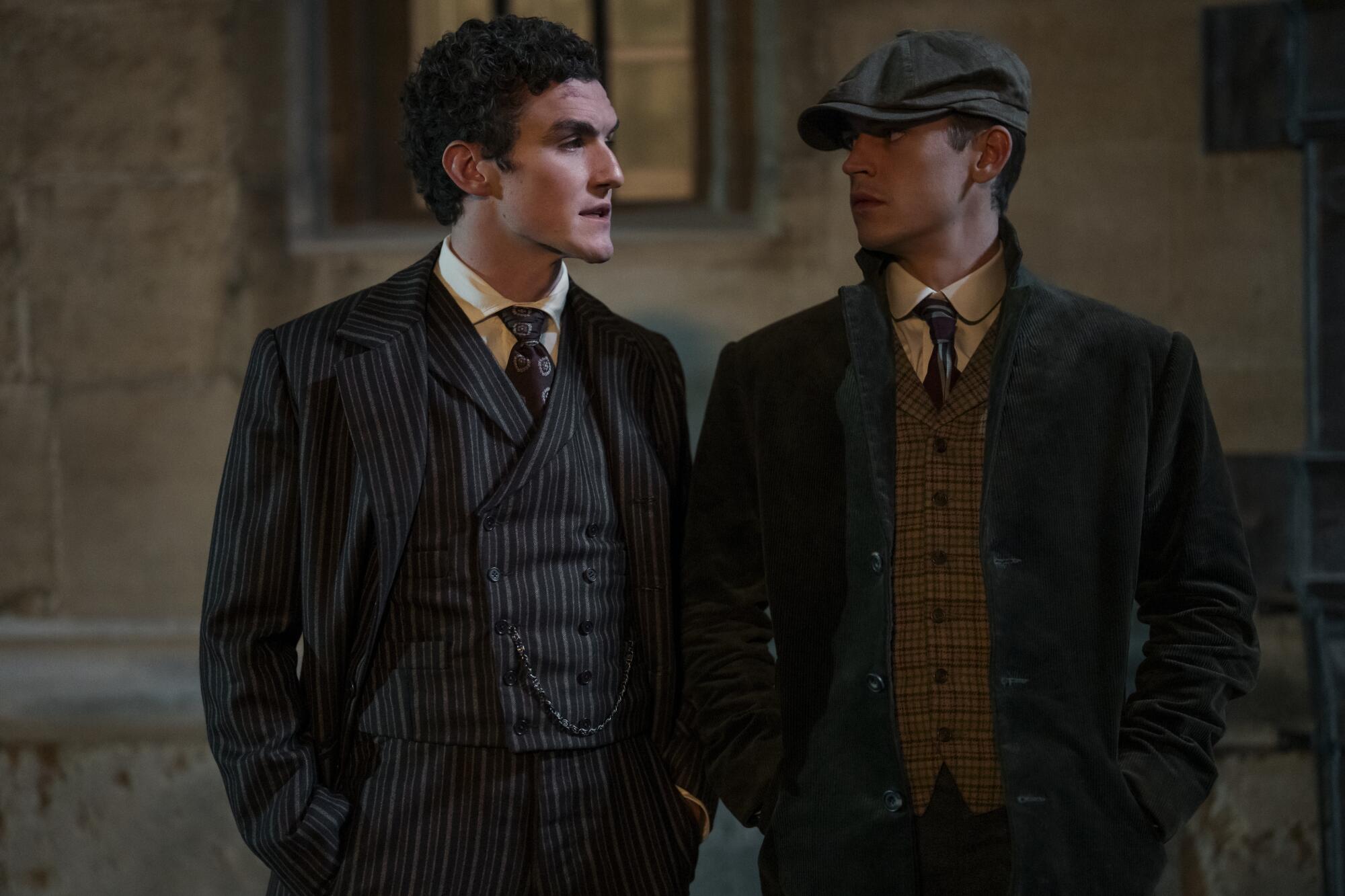
LONDON — Sherlock Holmes and James Moriarty are notorious literary foes, but in “Young Sherlock” the duo make the unlikeliest of friends. The Prime Video series premiering Wednesday reimagines the fictional detective’s early years as he investigates a murder case that originates at Oxford, where he first meets his eventual antagonist. Their relationship is the basis of the first season, and in the hands of actors Hero Fiennes Tiffin and Dónal Finn, it’s particularly electric.
“I was always interested in the Moriarty character because he’s a hugely iconic villain,” says showrunner Matthew Parkhill. Guy Ritchie, who directs and is an executive producer on the series, tapped him to expand on an idea for a show that revealed Sherlock’s evolution into the detective we know and love.
“He’s mentioned in four books, but he’s only ever in one,” Parkhill adds, speaking from London’s Rosewood Hotel during a press day in late February. “Why are these guys such great enemies? If a great friendship turns sour, it can become a great rivalry. But the story is basically going to be how this incredible friendship unravels.”
Tiffin, who previously worked with Ritchie in 2024’s “The Ministry of Ungentlemanly Warfare,” auditioned to play Sherlock while on vacation in Thailand. Parkhill responded to the “sense of innocence and wonder” Tiffin brought to the long-established character, who is 19 during the events of this season. After being cast, he did a series of chemistry reads with several actors up for Moriarty. Finn had been one of the last tapes Parkhill had watched, but the showrunner was immediately captivated by his “magnetism and intensity and charm.”
“Very quickly it became apparent that there was this energy and the chemistry they had together,” Parkhill says. “For me, they’re two sides of the same coin. What we’ll explore if we get to carry on even more is why one chooses one path and one chooses another. Dónal had a charm and these flashes of darkness.”
In “Young Sherlock,” Moriarty (Dónal Finn), left, and Sherlock (Hero Fiennes Tiffin) become friends at Oxford.
(Daniel Smith / Prime)
Both actors could feel it as well. “When Dónal came in within 2½ seconds I realized I need to bring my A-game because he was going to make me look bad otherwise,” says Tiffin, 28, speaking alongside Finn at the Rosewood later that day. “Once we started filming, we were on the same wavelength. We weren’t coming in and trying to go toe-to-toe and test each other, but we were collaborating and working towards the same goal.”
“The most dramatic version of this show was if an unstoppable force meets an immovable object and there’s an equality in what they do,” adds Finn, 30. “That required both of us to make each other look as good as we could.”
“Young Sherlock” is inspired by but not based on Andrew Lane’s “Young Sherlock Holmes” book series. Although it sees Ritchie returning to the world of Sir Arthur Conan Doyle, the show is not a prequel to the director’s 2009 film “Sherlock Holmes” nor its 2011 sequel, which starred Robert Downey Jr. as the titular character.
“This is a different universe,” Parkhill confirms. “They are cousins in terms of tone. But Guy’s not the same director he was when he made those. The things he was interested in exploring now were also different. But we wanted the show to have that same irreverence.”
He adds, “The most basic thing for me was: What makes him become this person? He’s on the cusp of trying to find his place in the world and his sense of self, which makes it an interesting period of his life to explore.”
“When Dónal came in within 2½ seconds I realized I need to bring my A-game because he was going to make me look bad otherwise,” says Tiffin, right, posing with Finn.
(Evelyn Freja / For The Times)
The eight-episode series opens with a flashback to Sherlock’s childhood, revealing the loss of his sister Beatrice. Her death has sent a ripple effect through his family — his mother, Cordelia (Natascha McElhone), is in an asylum and his father, Silas (Joseph Fiennes), has departed. Sherlock himself has been incarcerated, much to the dismay of his older brother Mycroft (Max Irons), a civil servant who pulls a few strings to get Sherlock out of prison. Sherlock accepts a job as a servant at Oxford, where he meets Moriarty. The pair investigate a murder at the university involving Princess Gulun Shou’an (Zine Tseng), which eventually is far more complex than they could have imagined.
“The plot has got to be clear enough that the audience can go on this journey with us, but difficult and mysterious enough that Sherlock doesn’t guess it straight away,” Finn says. “I have a great admiration for Matthew for managing that, and also giving each character a role to play in that journey.”
One of those characters is Silas, Sherlock’s adventuring father who doesn’t appear until the end of Episode 4. Parkhill approached Fiennes, Tiffin’s uncle, to play the role.
“When I sat down with Matthew, I thought, ‘Oh, God, is this a gimmicky thing of getting family members?’” says Fiennes in a separate interview. “But I quickly felt, ‘No, it’s not.’ It felt very natural and it’s a gift to play family members with family. Actors are always trying to research and unearth and unpack to get to that state, but we could walk on set and already have that.”
Tiffin and Fiennes hadn’t previously worked together, but they found a rhythm quickly when Fiennes arrived a few months into production in Wales. Episode 5, a chapter of the saga that pits Sherlock against his father and reckons with their history, felt like a real moment of collaboration.
Joseph Fiennes plays Sherlock Holmes’ father, Silas, in “Young Sherlock.” The actor is Tiffin’s uncle: “It felt very natural and it’s a gift to play family members with family.”
(Daniel Smith / Prime)
“We were four months into shooting, so I’d built this confidence up, and then Joe comes in and I shrunk back into the shell of myself,” Tiffin says. “I’d love to put it down to acting, but that’s definitely my relationship with Joe seeping through. It’s good because Silas has been absent in Sherlock’s life for a while, and Sherlock wants to please and impress him too.”
He describes an “unspoken, innate, really deep, almost inaccessible thing” between himself and his uncle. “When I opened the doors at the end of Episode 4 and see Joe, I’ve opened my front door at my parents’ house when he’s come over for dinner when I’m 6 years old,” Tiffin says.
Ritchie directed the first two episodes and then handed off the reins, but his signature style is infused through the series. It has a contemporary bent despite the 1870s setting, with modern music used as the soundtrack. It’s full of action and momentum, much like Ritchie’s “Sherlock Holmes” films, but here the character is still finding his footing. When we meet Sherlock, he’s not an established detective and he has no idea how to properly fight.
“I do have to admit from watching Robert Downey Jr. in Guy Ritchie’s movies, especially as a young boy, he was the epitome of cool,” Tiffin says. “So it was a complete surprise to me that my Sherlock was not just going to not be able to fight, but was terrible at defending himself. ”
Moriarty, however, is far better equipped, teaching Sherlock how to defend himself. Finn relished working with Ritchie, whose fight scenes are a signature of his work.
“They’re brilliant, but he knows that we see fight sequences every day and wants to make them special,” Finn says. “He knows how to sprinkle them with humor or to film them in a way you don’t expect.”
“I do have to admit from watching Robert Downey Jr. in Guy Ritchie’s movies, especially as a young boy, he was the epitome of cool,” says Tiffin about the “Sherlock Holmes” films.
(Evelyn Freja / For The Times)
“They’re also not one-dimensional,” Tiffin adds. “The fight always informs something. It’s never just two people fighting.”
Tiffin had a lot of previous iterations of Sherlock to draw from, as well as the novels themselves. He visited the Sherlock Holmes Museum in London ahead of shooting. He pulled from his longtime love of Downey’s portrayal, but he wanted to make the character his own.
“A big thing for us was making sure that our characters show signs of becoming the characters who are fully developed in Conan Doyle’s works,” he says. “They need to be close enough, but still have room to grow. Sherlock hasn’t been exposed to the hardships of the world yet, so he still has this youthful energy. If we get more seasons, we will see Sherlock lose that.”
There are fewer cinematic touchpoints for Moriarty, although Andrew Scott famously played him in the BBC’s adaptation alongside Benedict Cumberbatch. Finn had a photograph of Scott on his wall during drama school.
“It’s hard not to be inspired by what people have done before you, but you also have to draw the line somewhere,” Finn says. “And these aren’t iterations of the characters we’ve seen before. We have the opportunity to map out what events or what choices they make that shape the person we know.”
There are nods to the more established versions throughout the series, including Sherlock picking up his iconic hat in a shop and Moriarty rejecting it. Several of Sherlock’s famous lines from the novels are actually spoken first by Moriarty, who repeatedly emphasizes that he is not a sidekick but an equal.
“There are these great moments when these characters have left a mark on each other,” Finn says. “If you’re a fan of the Sherlock Holmes canon, you’ll notice them.”
“Its so fun and interesting planting those seeds,” Tiffin adds. “Not only is it fun to explore in our story, but it makes you understand Conan Doyle’s works in a different way and enriches that. Everything about the idea of Moriarty and Sherlock being enemies is enriched by the idea that they were once friends.”
“There are these great moments when these characters have left a mark on each other,” Finn says. “If you’re a fan of the Sherlock Holmes canon, you’ll notice them.”
(Evelyn Freja / For The Times)
There are a few glimmers of Moriarty’s future sensibility, although for the most part Sherlock and Moriarty remain steadfast pals. For Fiennes, this “bromance” is the heart of the story alongside the familial dynamic between Sherlock and Silas.
“You get these two incredibly intelligent misfits who are out of joint with the social world that they’re in,” Fiennes says. “Oxford, the mothership of intellect, is devoid of spirituality, and these two misfits have this spirit we love. We want to hang with them because of their mischievous nature. We know it will all come crashing down and feed into the characters we know later.”
“They are both looking for some sense of connection,” Finn adds. “And so it makes the friendship a really true friendship. It’s rare for both of these characters to feel that they find someone who is an intellectual match. It enriches the idea that when there is a rivalry it’s not just because of opposing moral views. What if it’s driven by revenge or heartbreak or betrayal?”
Parkhill has mapped out several potential future seasons of “Young Sherlock.” The finale concludes with a cliffhanger and a possible new mystery. The showrunner plans to take the show as far as 1887’s “A Study in Scarlet,” the first of Doyle’s novels, and then pass the baton back to literature.
“We will never go past that book, which psychologically gave me a freedom I needed to do this series,” Parkhill says. “We’re aware of the stories, but we used them as a playground in which to play instead of drawing from them directly.”
“We’ve shown signs of them eventually being able to become these more developed characters that Doyle established, but we need to document that journey,” Tiffin adds. “I will never feel complete until I can finish that journey and arrive at 221b Baker Street and meet John Watson and draw a line through the word ‘young.’”
When 32 freshman football players filed excitedly into the meeting room at John McKay Center in January for their first official meeting at USC, each new Trojan from the nation’s No. 1 recruiting class in 2026 was asked to stand up, share their name, number, position and an interesting fact about them.
This was pretty standard fare, as far as ice-breakers go. Albeit with one notable difference from past years.
“It was abnormally long [this year,] for sure,” senior offensive lineman Tobias Raymond said, with a laugh.
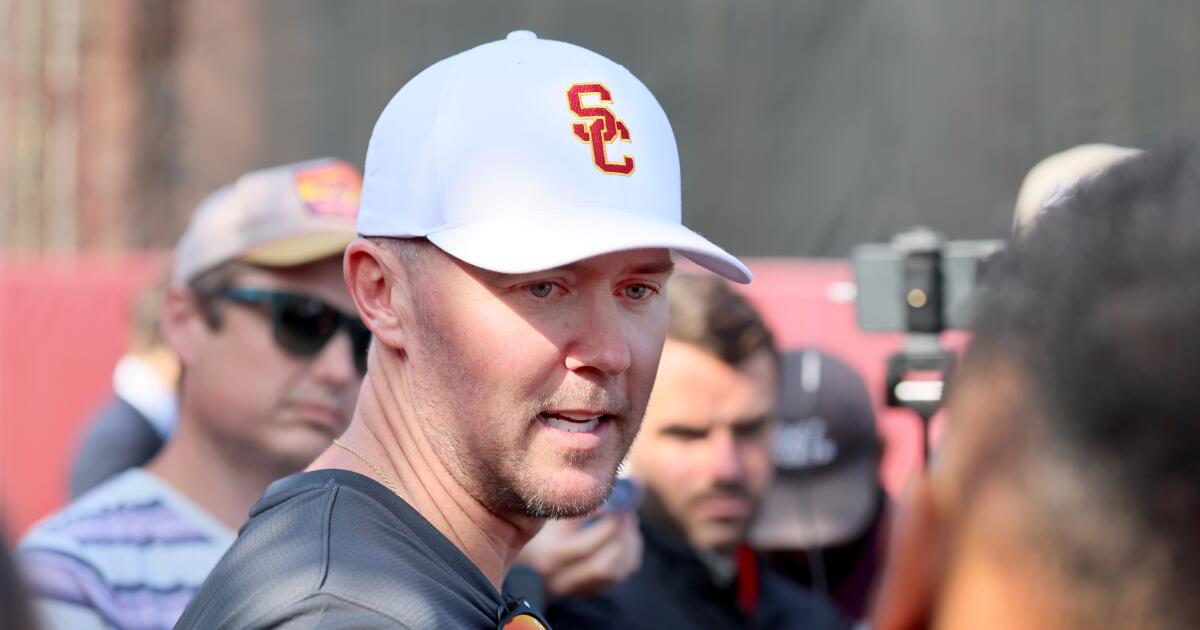
As USC opened spring practice on Tuesday, a cursory glance through its spring roster would tell you just how much the Trojans will need those freshmen to find their footing — and fast — in a season likely to be defined by their development. Nearly half of the players in attendance for Tuesday’s first day (46 of 103) were either freshmen or redshirt freshmen. That’s almost triple the current size of USC’s junior or senior classes (16).
If the Trojans have any hope of making the College Football Playoff for the first time in five tries under Lincoln Riley, an influx of 18- and 19-year-olds will play a major part.
“There’s a lot of new guys,” Riley said Tuesday. “Getting a look at these people, seeing where they’re at in terms of their development and where they’ve gotta go, I think the evaluation process is going to be really important.”
At no position will that be more critical than pass catcher, where USC must replace its top two wide receivers, Makai Lemon and Ja’Kobi Lane, and top two tight ends, Lake McRee and Walker Lyons. In their place steps a deep crop of young talented options, all hoping to emerge this spring.
There will certainly be no shortage of opportunity for USC’s four incoming freshmen receivers (Kayden Dixon-Wyatt, Trent Mosley, Luc Weaver and Tron Baker) and two incoming tight ends (freshman Mark Bowman and junior college transfer Josiah Jefferson) to make that impression. In addition to the void left by Lemon and Lane’s departures, the Trojans will also be without their top returning wideout this spring, as Tanook Hines will sit out the entire session following an offseason procedure.
Hines, who’s only a sophomore, could probably use the next five weeks of spring to develop, considering how much of the Trojans passing attack is likely to rest on his shoulders this fall. But Riley said he thought Hines’ absence could actually be “a blessing in disguise” for the rest of the room.
“All these guys, they’re going to get a ton of reps and they all need them,” Riley said. “What a phenomenal opportunity for all those other guys to develop and to take advantage of those reps. We’re going to need that.”
That directive has been clear enough to USC starting quarterback Jayden Maiava since the Trojans’ fleet of freshmen arrived on campus. Maiava has spent much of the past two months trying to build a connection with young players on both sides of the ball, taking them out to dinners, watching film with them, walking through the playbook and even conducting players-only sessions on the practice field.
“It’s a big impact for the guys I’m going out there with,” Maiava said Tuesday. “Just letting them know I care about them and I care about their success. I want the best for them, and I want them to know that.”
In his third season as starter, Maiava won’t have the benefit of one of college football’s best pass-catching pairs at his disposal. He’ll also enter 2026 on the shortlist for the Heisman Trophy — and all the pressure that comes with that.
Offensive coordinator Luke Huard said last month that Maiava has had “a tremendous sense of urgency” since the end of last season.
Raymond, who will snap to Maiava as a center this spring, said the quarterback’s communication has improved “exponentially.”
“Seeing when someone is down or seeing when someone has a good play and picking them up or congratulating them, but also getting on people when they do something wrong,” Raymond said. “If he sees something, he calls it out. If he sees something good, he calls it out.”
Receiver isn’t the only spot where freshmen will get a serious chance to compete next season. On the offensive line, five-star offensive tackle Keenyi Pepe — at 6-foot-7, 330 pounds — already looks quite capable of contributing on a Big Ten front. The same could be said of edge rusher Luke Wafle — 6-foot-6, 265 pounds — and defensive tackles Jameion Winfield — 6-foot-3, 325 pounds — all of whom were five-star prospects.
Still, it may take some time for that young talent to show through, with USC also breaking in both a new defense and special teams concepts. But for what the Trojans will likely lack in experience this spring, they’ll make up for, in some part, with depth.
“We’ve never had a spring practice, none of us in all of our years, that we’ve had this high of a percentage of your full roster already here for spring,” Riley said. “Which is a huge advantage.”
There’s still the small matter of getting all those newcomers to gel. But on that note, Riley thinks talk of USC’s youth movement overlooks how many talented players are returning.
“We’ve kind of gotten painted on the outside as just this crazy young team,” Riley said. “Like, we do have some really good youth, and I know that class has gotten some attention in terms of how that recruiting process played out, but we’ve got a lot of guys that have played a lot of ball here. … You like the talent that we have, you like the returners. I love the guys we brought in. But like one of the best sports franchises of all time said, ‘You’re not collecting talent, you’re building a team.’
“We’ve got talent. Now we’ve got to build a team.”
Injury report
In addition to being down its No. 1 receiver, USC will be without two of its returning starters on the offensive line this spring. Center Kilian O’Connor and right tackle Justin Tauanuu will sit out while recovering from surgical procedures. Left tackle Elijah Paige didn’t practice on Day 1 of spring ball, either.
Cornerbacks Jontez Williams and Chasen Johnson and safety Christian Pierce won’t participate this spring, either, Riley said Tuesday.
Running back Waymond Jordan was limited to start spring ball, as was defensive tackle Jahkeem Stewart.
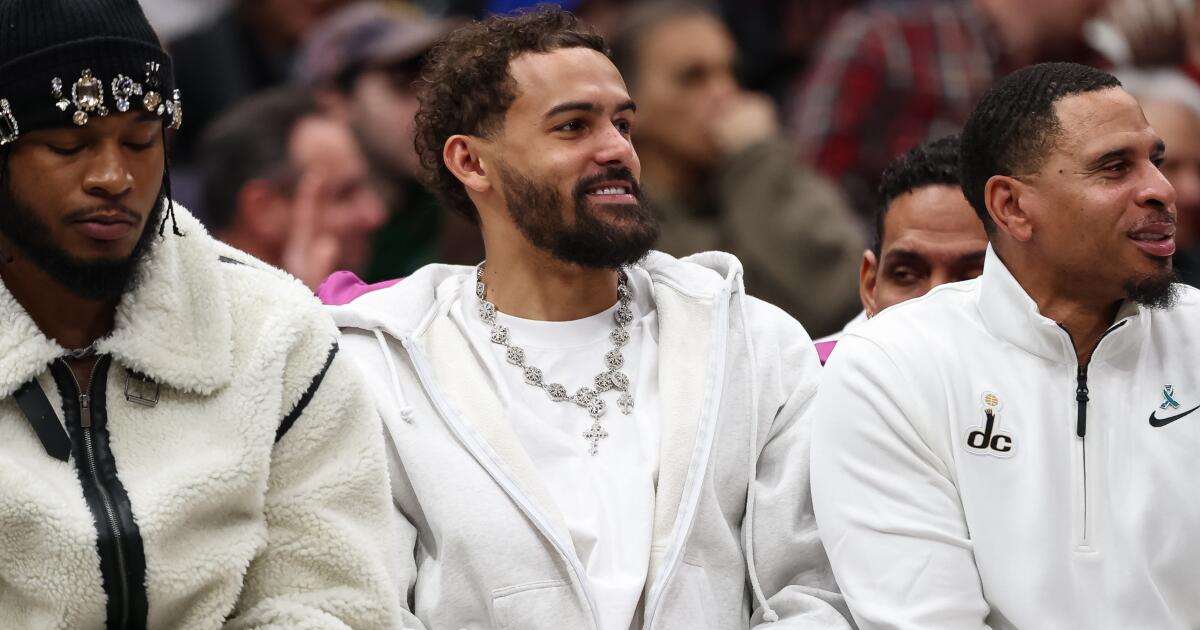
The four-time All Star has, however, already been ejected from a game as a member of the team.
That happened Monday night, three days before Young’s expected debut for the team that acquired him in a trade with the Atlanta Hawks on Jan. 7. He has not played in an NBA game since Dec. 27 because of knee and quadriceps injuries.
Earlier on Monday, Young posted a video on Instagram that showed him in Wizards gear and ended with “3/5” on the screen, indicating the date Washington hosts the Utah Jazz later this week. Before his team’s game against the Houston Rockets on Monday night, Wizards coach Brian Keefe said Young was trending toward being able to play in the Utah game.
Still, Young was in street clothes and watching the Rockets-Wizards game on the bench at Capital One Arena. During the third quarter, Houston’s Tari Eason shoved Washington’s Jamir Watkins to the floor, an incident that did not draw a whistle from the referees.
A few seconds later, after a foul was called on Eason for a different incident involving Watkins, Young stepped onto the court while yelling at referee Jacyn Goble apparently over the previous no-call against Eason. Goble called a technical foul on Young, then spoke with crew chief Tony Brothers and umpire Marat Kogut.
Brothers then announced that the technical foul had been called on Young for running onto the court and that Young had been ejected from the game. Eason also was ejected.
Young gave high fives to fans as he left toward the locker room. He did not speak to reporters after the Wizards’ 123-118 loss but joked about his ejection on X.
“Don’t expect me to get ejected too many more times D.C.,” Young wrote, adding a crying-with-laughter emoji, “but I’m definitely bringing that energy & competitiveness when I’m back for my brothers!”
After the game, Keefe praised Young for having his fellow player’s back.
“I think he was just sticking up for his teammates, which I thought was great,” Keefe told reporters. “Obviously, the refs missed a call in which our guy got knocked down, and I loved how our teammates stuck with him. So, whatever happened in that moment, I was actually proud of him because he stuck up for his teammates and I really care about that type of stuff.”
Keefe added that it’s an example of the type of engagement Young has shown since he’s joined the team.
“It’s nothing that he’s not been doing the whole time since he’s been here,” Keefe said. “He’s talking to everybody in every timeout. He sees so much. He has so much stuff to share. He’s completely engaged in the whole game. So I am not surprised that he stood up [for] his teammates. That’s the type of guy he is, and we’re lucky to have him.”
There’s a new team with plenty of quality young players to get excited about in high school basketball.
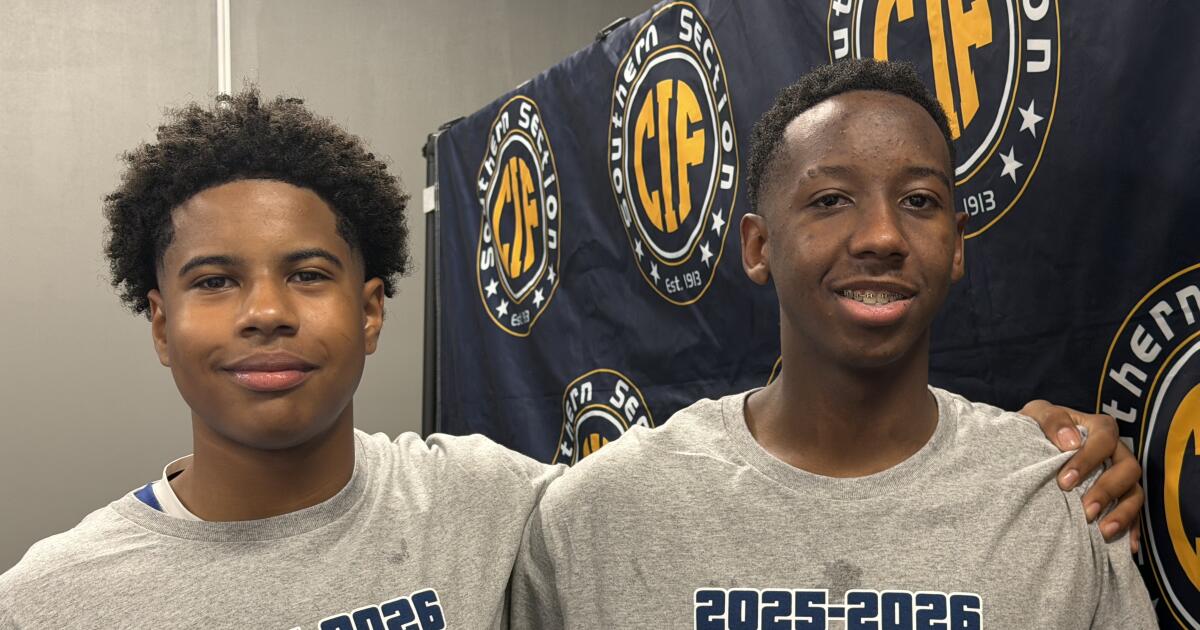
Bishop Amat (28-5), led by sophomore Aiden Shaw and freshman Omar Cox-Labomme, put together a near-perfect performance on Saturday at Toyota Arena in a 71-48 victory over Hesperia to win the Southern Section Division 2 championship for coach Brandon Ertle, the team’s first title since 2002.
Shaw made nine of 11 shots, had four assists, three blocks and five steals while finishing with 20 points. Cox-Labomme made three three-pointers and had 16 points. For players 16 and 15 years old, respectively, to deliver with poise and confidence on such a big stage speaks to a bright future.
“They didn’t seem like they are a freshman and sophomore since the first game of the season,” Ertle said. “Not nervous or afraid of the moment. I think these are pretty good players.”
The Lancers also did a good job containing Hesperia’s 6-foot-7 Nolan Newman-Gomez, who finished with 17 points.
Murrieta Mesa 65, Aliso Niguel 58: Jagger Saul scored 18 points to help Murrieta Mesa win the Southern Section Division 3 title. Jayden Mysin had 18 points for Aliso Niguel.
Verdugo Hills 62, RFK 40: The Dons won the City Section Division III championship. Alex Kasumyan scored 13 points and Jordan Vargas added 12 points.
Rialto 59, Salesian 31: Lionel Madrid scored 16 points and Wayne Johnson had 14 points for Rialto in the Division 7 final.
Colton 55, San Bernardino Pacific 42: Andres Elenes scored 23 points for Colton in the Division 9 final.
Girls’ basketball
Sierra Vista 52, Desert Hot Springs 42: Cailei Buna finished with 19 points, making nine of 10 free throws, in the Southern Section Division 9 final.
Bishop Diego 42, Burbank Burroughs 41: Eden Synne finished with 16 points for Bishop Diego in the Division 5 final. Burroughs had a chance to tie in the final second but a free throw was missed.
Attacks by Israeli settlers in the occupied West Bank have intensified recently, backed by Israeli forces.
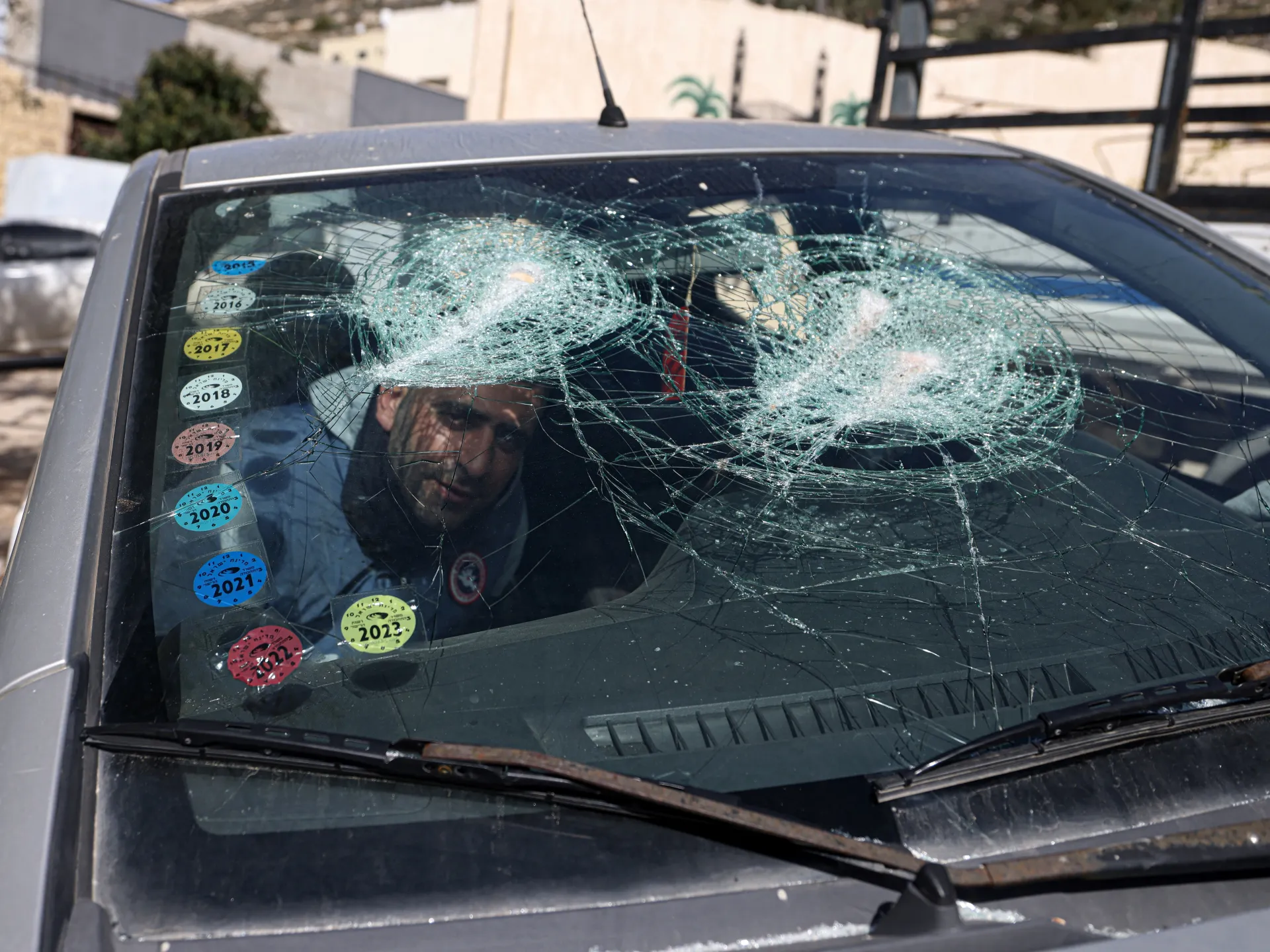
A young Palestinian man was killed and four other people were injured when a group of Israeli settlers, backed by Israeli forces, opened fire on a village in the occupied West Bank.
The death of the young man on Wednesday evening, identified as Nasrallah Abu Siyam, 19, marks the first killing of a Palestinian by Israeli settler gunfire so far this year, the official Palestinian news agency Wafa reports.
Recommended Stories
list of 3 itemsend of list
During the attack on the village of Mukhmas, located northeast of occupied East Jerusalem, Israeli settlers also stole dozens of sheep from local Palestinian residents, Wafa reports.
The attack on Mukhmas and other Palestinian towns and villages constitutes a “dangerous escalation in systematic terrorism and reflects a complete partnership between the settlers and the occupation forces,” Mu’ayyad Sha’ban, head of the Palestinian Authority’s Colonization and Wall Resistance Commission, told Wafa.
Calling for international protection for Palestinian communities, Sha’ban said that settlers have now killed 37 Palestinians in the occupied West Bank since October 2023, but the escalating violence would not deter Palestinians from holding onto their land.
Mukhmas and the adjacent Bedouin community of Khallat al-Sidra have faced repeated attacks by Israeli settlers, often occurring with the protection or presence of Israeli forces, according to reports.
The governorate of Jerusalem, one of the 16 administrative districts of Palestine, said in a statement that the killing of the young man by Israeli settlers was a “fully-fledged crime… carried out under the protection and supervision of the Israeli occupation forces.”
Translation: Martyr of the town of Mukhmas, Nasrallah Abu Siyam, who ascended after succumbing to his injury from settler gunfire during the attack on the town northeast of occupied Jerusalem.
The governorate said the attack was part of a dangerous surge of violence carried out by settlers in the occupied West Bank, including East Jerusalem, and characterised by the widespread use of live ammunition, direct shooting at Palestinian citizens, as well as burning local Palestinian homes, damaging vehicles and property, and seizing land.
Armed settler violence is being supported by “pillars of the Israeli government”, foremost among them far-right ministers Itamar Ben-Gvir and Bezalel Smotrich, the governorate added, according to Wafa.
According to the United Nations Office for the Coordination of Humanitarian Affairs (OCHA), more than 1,000 Palestinians have been killed by Israeli forces and settlers in the West Bank since 2023, and more than 10,000 people have been forcibly displaced.
Since the start of this year alone, almost 700 Palestinians in nine communities have been displaced due to settler attacks, including 600 displaced from the Ras Ein al-Auja Bedouin community in Jericho governorate, OCHA reports.
Earlier this week, Israel’s government approved a plan to designate large areas of the occupied West Bank as Israeli “state property”, shifting the burden of proof to Palestinians to establish ownership of their land in a longstanding situation where Israel has made it all but impossible to obtain property titles.
Described as de-facto annexation of the West Bank, the Israeli government’s decision has drawn widespread international condemnation as a grave escalation that undermines the Palestinian people’s right to self-determination.
Israel’s attempted land grab and killings by settlers come amid a sharp increase in Israeli military operations across the occupied West Bank, where forces have intensified raids, carried out forced evictions, home demolitions, and other repressive measures in multiple areas.
PHOENIX — Dodgers manager Dave Roberts expects a lot from Shohei Ohtani this season. But even with those high expectations, a topic of conversation Friday as pitchers and catchers went through their first official workouts at Camelback Ranch, the superstar two-way player already found a way to exceed them.
“I came into camp at the beginning of February,” Ohtani said through interpreter Will Ireton following a bullpen session. “This is my third bullpen with pretty good intensity. … I’m not really sure how I’ll be able to practice in the WBC setting, so I’m going to try to ramp up as much as I can to a point where I’m throwing a live BP, which should be next week.”
The 2026 season will be Ohtani’s third year with the Dodgers, and his first pitching without restrictions. Fully recovered from his second Tommy John surgery, Ohtani was able to enjoy a regular, albeit short, offseason. With Ohtani in full bloom, Roberts has even higher hopes for the four-time MVP in the coming season.
“I think there’s certainly a lot more in there, and regardless of my expectations for him, his are going to exceed those,” Roberts said Friday. “I think it’s fair to say, he expects to be in the Cy Young conversation, but we just want to be healthy and make starts and all the numbers and statistics will take care of themselves, but man, this guy is such a disciplined worker, and expects the most from himself.”
Ohtani’s highest placement in Cy Young Award voting came in 2022, when, still a member of the Angels, he finished fourth after logging 15 wins, a 2.33 ERA and a 1.012 WHIP across 166 innings pitched. Ohtani suffered a torn ulnar collateral ligament the following season, requiring Tommy John surgery.
“If the end result is getting a Cy Young, that’s great,” Ohtani said. “Getting a Cy Young means being able to throw more innings and pitch throughout the whole season, so if that’s the end result, that’s a good sign for me. I’m just focused on being healthy the whole year.”
Ohtani appeared in 14 games last season, logging 47 innings pitched. Roberts liked what he saw in the small sample size.
Share via
“I think the thing that was most surprising from last year was his command,” Roberts said. “And I’ll say that he still feels his command wasn’t up to par, but given the Tommy John and what typically command looks like the year after, it was above that. So, I think that was impressive. Just his ability to command the couple different breaking balls, to change the shape of his breaking balls was pretty impressive, and everything he does is with a purpose. So, I’m really excited to see with the full offseason and to just prepare and not rehab, what he can do this year.”
Physically, Roberts believes Ohtani is in the right place entering the ninth year of his career.
“I think he just looks strong,” Roberts said. “He looks strong, but there’s not too much mass. Just watching him throw, watching him run, his body’s moving well. I think he’s in a sweet spot. Just watching him, the muscle mass, it just seems that he’s in a sweet spot.”
Ohtani and Roberts said that they don’t yet know when Ohtani and some of his teammates will be departing for the World Baseball Classic, but Ohtani will continue to ramp up in the time leading up to next month’s event. Last month at DodgerFest, Roberts announced Ohtani will not pitch in the WBC in order to focus on pitching in the regular season.
“As much as people think that he’s not human, he’s still a human being who’s had two surgeries,” Roberts said Friday. “He’s got a long career ahead of him.”
Yoshinobu Yamamoto throws live BP
Yoshinobu Yamamoto threw a live batting practice Friday as the World Series MVP took the mound for the first time since he recorded the final out of last year’s Fall Classic. Yamamoto threw 20 pitches to a pair of his teammates, with right-handed hitting catcher Will Smith and left-handed hitting infielder Hyeseong Kim alternated at-bats.
Kim turned on a pair of fastballs from Yamamoto, ripping a pair of base hits into right field.
A little over an hour before Yamamoto pitched, Roberts was asked by reporters about Yamamoto’s durability, coming off a postseason where the 27-year-old totaled 526 pitches, capped off by a Herculean effort in Game 7 that powered the Dodgers to their second straight World Series championship.
“I just believe that he knows his limitations and he’s prepared, so I’m not too concerned about it,” Roberts said.
Yamamoto wasn’t the only pitcher to see some run on the Dodgers’ first day of camp. Among those to throw a bullpen session Friday: veteran Tyler Glasnow, promising sophomore Roki Sasaki, playoff hero Will Klein, newcomer Edwin Díaz, and Ohtani.
Staff writer Anthony Solorzano contributed to this report.
We’ve seen animated animals belt out tunes in the “Sing” movies. We’ve learned about “The Secret Life of Pets” (twice). And we’ve visited them in “Zootopia” (also on two occasions). Now we get to see them play basketball. “Goat,” produced by Golden State Warriors prodigy Stephen Curry, is yet another underdog story about following your dreams wrapped in a by-the-numbers sports movie. It feels utterly unoriginal on multiple fronts.
Taking the popular acronym GOAT (Greatest of All Time) to its most literal form, the first feature by TV animation veteran Tyree Dillihay — from a screenplay by Aaron Buchsbaum and Teddy Riley — follows an anthropomorphic young goat who aspires to become the GOAT.
A lifelong fan of roarball (this film’s version of basketball), Will, who is voiced by Caleb McLaughlin, dreams of playing for his hometown team, Vineland. His admiration for the sport is embodied by Jett Fillmore (Gabrielle Union), Vineland’s most accomplished player, who carries the entire team on her back — she wants all the glory of victory for herself.
The world of “Goat” is divided between “smalls” and “bigs” (unlike “Zootopia” where the separation is between predators and prey). Will considers himself a “medium” but in the eyes of professional roarball players, he’s tiny. Still, after going viral for bravely challenging Mane Attraction (Aaron Pierre), one of the sport’s major stars who is double his size, Will lands a chance to play in the big leagues.
To the credit of the writers, roarball is a rather inclusive sport. There are no gendered teams, nor any discrimination based on species. Will might be the first “small” to make it big, but that stems from the public’s prejudice, not from rules that ban animals like him from playing.
Desperate for instant relevancy (like plenty of animated features these days), “Goat” is steeped in vapid internet references, from crypto to online memes. Sports fans, however, will find specific allusions, like contentious press conferences and even the kiss cam. Rowdy and kinetic from start to finish, “Goat” does in fact reflect the fast-paced dynamism of basketball, but it soon reveals itself a sugar rush without much substance.
Once Will joins the team, a “never meet your heroes” lesson ensues, since Jett feels like he’s usurping her position. Animosity on her part creates tension until Will opens up about his personal reason for playing. The emotions are not complex here, but they are heartfelt, thanks to how McLaughlin and Union conjure up larger-than-life personalities via their voice performances.
Meanwhile, Will’s other teammates — a rhinoceros, a giraffe (played by Curry himself), an ostrich and a Komodo dragon — don’t feel distinct enough from the ensemble casts of other animated projects like “Sing.” Each member of the assortment has their quirks, some of which occasionally yield a chuckle: Archie (David Harbour), the rhino, has two comically violent kid daughters.
There’s no denying “Goat” has a vibrant aesthetic, but that alone can’t overwrite its defects. Back in 2018, Sony Pictures Animation dazzled the industry when “Spider-Man: Into the Spider-Verse” introduced an approach that mixed 3D CGI with traditional hand-drawn animation. This combination of techniques doesn’t make “Goat” particularly unique anymore.
What’s most impressive, visually, about “Goat” is the way the natural world blends with the urban settings. Vineland, Will’s neighborhood, is indeed covered in vines and yet the vegetation appears organically integrated into the infrastructure. Each game takes place in a different ecosystem. The finale, for example, unfolds amid cracked volcanic rocks and lava. There’s visible handcraft and care in creating these backdrops for the action.
A mixed bag of eye-catching imagery and formulaic writing, “Goat” disappoints because it follows every expected path toward a triumphant conclusion. Its premise could have offered up a kid-friendly reading on failure that doesn’t simplify a way out of adversity. If talking animals will continue to be used as surrogates for human experiences — especially for young viewers — some nuance would be appreciated.
‘Goat’
Rated: PG, for some rude humor and brief mild language