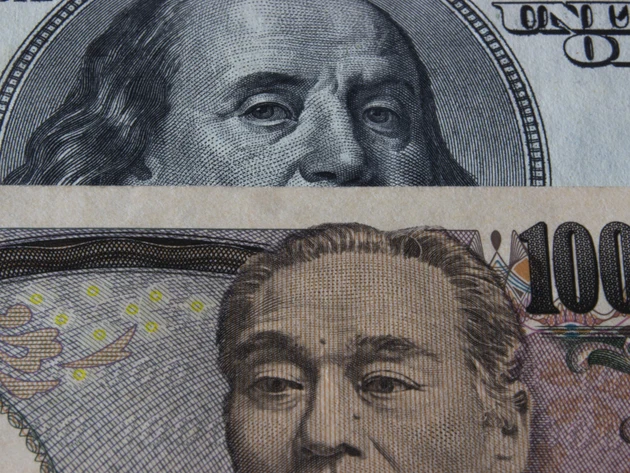
yen

Japan’s 10-year bond yield hits a 30-year high as growth data disappoints

Published on

Two pieces of data collided in Tokyo within hours of each other.


ADVERTISEMENT


ADVERTISEMENT

Bond investors pushed the 10-year Japanese government bond yield to a three-decade high before the government reported that growth had come in at barely half the pace economists had forecast, a pairing that says a great deal about what is really driving Japan’s markets right now.

The economy expanded at an annualised rate of 1.1% in the second quarter, Cabinet Office data showed, well below the 2.0% forecast and down from a downwardly revised 1.9% pace in the first quarter.

Quarter on quarter, GDP rose just 0.3% against a forecast of 0.5%, marking a third consecutive expansion. Private consumption was flat, and capital expenditure fell 1.2%, while net exports, helped by the weak yen, added 0.5 percentage points to growth.

The 10-year JGB yield touched 2.93% earlier in the day, its highest level since September 1996, before easing slightly once the GDP figures landed.

The gap between weak growth and rising bond yields helps explain what is moving Japanese bonds now: not growth, but inflation and the currency.

The GDP deflator rose 2.6% year on year, and traders are increasingly betting that the Bank of Japan will raise its policy rate, currently at 1% and already a three-decade high, as soon as September to contain inflation and support the yen.

Tokyo and Washington spent billions defending the yen

The yen slid to 163.73 per US dollar in late July, its weakest level in roughly four decades, prompting Japan and the US to carry out their first joint currency intervention since 2011.

Japan deployed an estimated $85 billion (€73.3bn) in the first two days alone, while the US intervention was much smaller, according to Goldman Sachs.

The operation pushed the yen back to around 159 per US dollar.

There is currently a wide gap between Japanese and US interest rates, with the Federal Reserve’s benchmark rate still at 3.50% to 3.75%. The Bank of Japan’s September meeting is being watched as the next test of whether the currency’s recovery can hold.

Japan’s bond market matters well beyond Tokyo because of the yen carry trade, in which investors borrow cheaply in yen to fund purchases of higher-yielding assets abroad, from US Treasuries to emerging-market debt.

Rising Japanese yields erode that trade’s profitability and can force rapid unwinding, as it happened in August 2024, when a Bank of Japan rate rise combined with weak US jobs data sent the Nikkei down more than 12% in a single session and knocked roughly 3% off the S&P 500.

With JGB yields at three-decade highs and further tightening still expected, analysts say the conditions for a similar shock have not disappeared.

Source link

Why the Trump administration is helping support Japan’s weakening yen | Financial Markets

The United States and Japan last week staged a coordinated intervention to halt the slide of the yen after the Japanese currency fell to a 40-year low against the US dollar.

While it is unusual for authorities to intervene to help prop up another country’s currency, the yen has an important role in international finance as the world’s third-most-traded currency, meaning its depreciation has repercussions far beyond Japan.

Recommended Stories

list of 4 itemsend of list

Here is everything you need to know about the currency intervention:

What is a currency intervention and how did the US and Japan coordinate?

A currency intervention occurs when a government or central bank buys or sells large quantities of foreign currency to help stabilise the value of its own currency.

In this case, the US and Japan coordinated an intervention to lift the value of the yen after it slid to 163 against the dollar for the first time since 1986.

The intervention began on July 31 when the US Treasury began selling euros for yen, while Japanese authorities also bought yen.

In the days after the intervention, the yen began to rise and reached 157 to the dollar on Wednesday.

The US last staged a currency intervention with Japan in 2011 when the yen began appreciating rapidly following the Tohoku earthquake and tsunami.

It also stepped in to support the Japanese currency during the Asian Financial Crisis in 1998.

How did the yen get so weak?

The yen’s collapse is the result of longstanding economic challenges combined with new pressures from the US-Israel war on Iran.

Japan has struggled with economic stagnation since the early 1990s.

The Bank of Japan has for decades attempted to stimulate growth with ultra-low and even negative interest rates, a policy that has exerted downward pressure on the yen.

While Japan’s weak currency has helped draw record numbers of tourists and kept exports cheap, it has also placed a strain on households by raising the cost of imported goods.

Tokyo has spent tens of billions of dollars since 2022 trying to defend the yen, but the economic policies of successive Japanese leaders, including current Prime Minister Sanae Takaichi, have partly offset these efforts.

“Takaichi wants it all: Growth, loose fiscal policy, loose monetary policy and a stable yen – but their policy mix is leading to a weak yen, which is causing an inflation problem,” Chris Turner, global head of markets at ING, told Al Jazeera.

Visitors walk along Nakamise-dori street as they visit Sensoji temple at Asakusa district, a popular sightseeing spot in Tokyo, Japan March 10, 2025. REUTERS/Issei Kato
Visitors walk along Nakamise-dori street as they visit Sensoji temple in Tokyo, Japan, on March 10, 2025 [Issei Kato/Reuters]

Why does the US want a stronger yen?

While Japan is a close US ally, Washington stepped in for its own benefit as much as Tokyo’s, said Masahiko Loo, a senior fixed income strategist at State Street Investment Management in Tokyo.

“Washington isn’t trying to strengthen the yen for Japan’s sake. It’s trying to prevent a disorderly decline that could spill over into Treasury markets, global funding conditions, and broader financial stability,” Loo told Al Jazeera.

“A free-falling yen isn’t just Japan’s problem. At some point it becomes a global liquidity and financial stability issue, which is why Washington stepped in.”

The yen is the most traded currency after the US dollar and the euro, which means dramatic changes in its value can have ripple effects across the global financial system.

One of Washington’s biggest concerns is the prospect of Japan selling off its holdings of US Treasury securities, which were valued at $1.114 trillion in May.

If the yen continued to fall, Tokyo would be encouraged to sell large quantities of US Treasuries to raise cash it can use to defend the currency.

That would put upward pressure on interest rates in the US, raising the cost of servicing the country’s rapidly growing national debt, which already exceeds $39 trillion.

“The financial cost of intervention for the US is low and, given that President Donald Trump favours a weaker US dollar, the domestic political cost is minimal,” Shigeto Nagai, head of Japan economics at Oxford Economics, wrote in a research briefing on Monday.

“Coordinated intervention is a cost-effective method as it allows the US to do a significant favour for Japan, a precious loyal ally in Asia, and take some pressure off US interest rates.”

Will the intervention work?

While the joint intervention has provided short-term support for the yen, Japan will need to take more fundamental measures, such as raising interest rates, to raise the value of the currency in the long term, according to experts.

Japan’s benchmark interest rate currently stands at 1.0 percent, its highest since 1995 but far lower than other advanced economies, including the US.

The large gap between interest rates in the US and Japan is a primary driver of the yen’s persistent weakness.

Without a change in Japan’s low-interest-rate environment, the latest currency intervention is just “throwing good money after bad,” said Derek Tang, an economist and CEO of Monetary Policy Analytics, a US research advisory firm.

“Ultimately… the gravitational force of economic fundamentals will overwhelm intervention efforts,” Tang told Al Jazeera.

“Nevertheless, Japan seems very reluctant to tighten monetary policy to raise its own interest rates and allow the currency to appreciate in that manner,” Tang said.

“So this situation will persist for the time being.”

Source link

Japan and US confirm rare joint intervention to prop up yen | Business and Economy News

Japan and the United States have confirmed a rare, coordinated yen-buying intervention to halt the Japanese currency’s slide to 40-year lows, with Tokyo signalling it is willing to take further action if needed.

The Japanese Ministry of Finance confirmed the joint intervention after a statement by US President Donald Trump on Sunday announced that Washington was helping to prop up the yen as a sign of friendship and to support the global economy.

“They have a weakening yen, and they wanted a little bit of help. And we’re always there for Japan,” Trump said in response to a reporter’s query about why the US is helping to support the currency.

The yen leapt after the announcement, leaving traders on high alert for further intervention from authorities. The Japanese currency gained as much as 1.4 percent to hit a nearly three-month high of 155.20 per US dollar, compounding a 3.8 percent surge over the previous two sessions. The yen also advanced broadly against other major currencies, including the euro and sterling.

The latest bout of aggressive yen-buying heavily pressured the US dollar. In early Asian trading on Monday, the euro climbed to a 1.5-month high of $1.1559, while sterling hovered near a two-week top at $1.3476.

However, the rapid appreciation of the currency immediately weighed on the equity market. The Nikkei share average tumbled, reversing course from the one-week high it had achieved in the previous session.

Analysts say the intervention underscores both countries’ resolve to prevent global spillovers from a sell-off in the yen and Japanese government bonds, including by adding pressure on already rising US Treasury yields.

Japan has been struggling to curb a relentless drop in its currency that has pushed up import prices and stoked broader inflation, hitting household wallets and Prime Minister Sanae Takaichi’s approval ratings.

In its statement, Japan’s Finance Ministry said Friday’s yen-buying intervention with the US Treasury Department “countered excessive volatility and disorderly movements in the Japanese yen in recent months”.

“The Japanese Ministry of Finance remains attentive and in close communication with our counterparts at the U.S. Treasury,” it added. “We will not hesitate to conduct further joint intervention.”

The joint intervention is the first since a 2011 coordinated action to weaken the yen after the devastating earthquake in eastern Japan.

Tokyo may have sold as much as $58.97bn to buy yen when it intervened in New York markets on Thursday, Bank of Japan data indicated, before Friday’s confirmed joint intervention with Washington.

US Treasury Secretary Scott Bessent also confirmed Friday’s effort, noting on Sunday that Washington “will not hesitate to participate in further joint intervention”.

“We strongly support Japan’s decisive market and monetary steps to correct the substantial undervaluation of the yen,” Bessent said in a separate statement on X, repeating his calls for further interest rate hikes by the Bank of Japan.

In line with Bessent’s repeated calls for higher Japanese interest rates, the Bank of Japan on Friday offered its most explicit signal to date of an early rate hike, even as it kept monetary policy steady.

In a sign of broader policy coordination, South Korea also stepped in to buy its won currency on Thursday.

Japan intervened in April and May, buying yen, but the move triggered only a brief rebound. The Bank of Japan’s June rate hike to a 31-year high of 1 percent also gave the struggling currency little lasting boost.

Source link

Japan’s yen purchasing power falls by half in 40 years

1 of 3 | Foreign visitors dine at an outdoor izakaya in Tokyo’s Shimbashi district. The weak yen has made Japan cheaper for tourists while raising import costs for Japanese households. Photo by Asia Today

July 3 (Asia Today) — Japan has become an increasingly affordable destination for foreign visitors, but the weaker yen has sharply reduced the ability of Japanese households and businesses to buy goods and services from abroad.

The yen’s real effective exchange rate, a broad measure of its inflation-adjusted value against the currencies of Japan’s trading partners, fell to 65.93 in May, The Yomiuri Shimbun reported Friday.

That was less than half the 141.77 recorded in December 1986, when the nominal dollar-yen exchange rate was near levels recently seen in foreign-exchange markets.

The comparison indicates that even when the dollar-yen rate appears similar to its level 40 years ago, the yen’s actual external purchasing power is substantially weaker.

The real effective exchange rate is not based on the yen’s value against one currency, such as the U.S. dollar.

The index combines exchange rates with multiple trading partners, gives each currency a weight based largely on trade and adjusts for differences in inflation. The Bank for International Settlements and the Bank of Japan publish the data with 2020 set at 100.

A lower figure indicates that the yen has weakened after inflation and trade relationships are taken into account.

The Yomiuri illustrated the difference using the price of a pizza.

Even when the nominal exchange rate is similar to the rate in the 1980s, prices in the United States have risen much more than prices in Japan over the past four decades. A Japanese consumer carrying the same amount of yen can therefore buy far less in the United States today.

The distinction helps explain why the current period of yen weakness differs from the weak-yen environment of the 1980s.

Japan’s long period of low inflation contributed to the decline.

After the collapse of the country’s asset-price bubble, consumer prices and wages remained stagnant for much of the period beginning in the 1990s. Prices continued to increase in the United States, Europe and many other economies.

The Bank of Japan’s large-scale monetary easing, introduced in 2013 to end deflation, also placed downward pressure on the yen’s nominal value.

The combination of low domestic inflation and nominal depreciation accelerated the decline in the currency’s real effective value.

Cheap Japan, expensive world

The weak yen has made hotels, restaurants, clothing and consumer products in Japan appear less expensive to South Korean travelers and other foreign visitors.

For South Koreans, the effects of yen depreciation are often most visible through lower travel costs in Tokyo, Osaka and other Japanese destinations.

Foreign visitors’ spending has supported department stores, convenience stores, drugstores, restaurants and regional tourism businesses across Japan.

The same trend can create competition for South Korean tourism destinations and retailers as consumers choose between spending money domestically and traveling to Japan.

The weaker yen has the opposite effect on Japanese households.

Japan imports much of its energy, food and industrial raw materials. A weaker currency raises the yen-denominated cost of those imports, increasing pressure on household budgets and companies that cannot fully pass their higher costs on to customers.

The prolonged decline of the currency has become a policy concern as Japanese consumers face higher prices for fuel, food and other imported goods.

Japanese companies experience both advantages and disadvantages from the exchange rate.

Manufacturers must pay more for imported energy, raw materials and components. Exporters, however, can convert overseas earnings into more yen and may be able to offer more competitive prices abroad.

The price advantage can affect South Korean companies competing with Japanese manufacturers in automobiles, machinery, materials and components.

South Korean exporters doing business in Japan may face a different challenge.

As the purchasing power of Japanese consumers and businesses declines, Japanese buyers may become more sensitive to the prices of imported South Korean products and services.

Japanese importers could seek lower contract prices while consumers turn toward less expensive alternatives.

The Japanese market may therefore remain large in nominal terms while becoming increasingly price-sensitive for foreign suppliers.

The real effective exchange rate does not directly measure every household’s standard of living. It does, however, show how the yen’s value has changed after accounting for trade patterns and differences in inflation.

Its decline suggests that the effects of yen weakness extend beyond making Japan a less expensive place for tourists.

The trend is changing Japanese households’ consumption power, companies’ purchasing structures and the competitive environment facing businesses in South Korea and Japan.

For South Korea, the weak yen offers the immediate benefit of less expensive travel to Japan.

It can also contribute to an outflow of domestic consumer spending, stronger price competition from Japanese exporters and greater resistance to foreign product prices inside Japan.

Japan has become cheaper for South Korean visitors, but much of the world has become more expensive for Japanese consumers.

That widening gap is likely to remain an important factor shaping tourism, consumption and export competition between the two countries.

— Reported by Asia Today; translated by UPI

© Asia Today. Unauthorized reproduction or redistribution prohibited.

Original Korean report: https://www.asiatoday.co.kr/kn/view.php?key=20260703010001239

Source link

Japanese yen sinks to 40-year low against the US dollar as intervention looms

Published on

The Japanese yen fell to around 162.4 per dollar in Asian trading on Tuesday morning, its lowest level since 1986.


ADVERTISEMENT


ADVERTISEMENT

The drop extends a punishing run for the yen, which has kept weakening despite the Bank of Japan’s efforts to support it, and now revives the prospect that the authorities will step into the market directly.

Japan’s finance minister, Satsuki Katayama, has already responded to the situation by stating that the government was ready to take “appropriate” and even “decisive” action against excessive currency moves, adding that she had confirmed with Washington that such a step remained an option.

Traders are now watching closely for any sign that Tokyo is selling US dollars to prop up the yen, as it did in the spring.

At the heart of the weakness is the current wide gap between Japanese and American interest rates.

Even after the Bank of Japan raised its benchmark to 1% in mid-June, its highest since 1995, Japanese yields remain far below those in the US, where ten-year government bonds have recently paid around 4.5%, compared with roughly 2.6% in Japan.

That gap sustains the so-called carry trade, in which investors borrow cheaply in yen to buy higher-yielding assets elsewhere, continually pushing the currency down.

A robust dollar has compounded the pressure.

The greenback has drawn safe-haven demand from tensions around the conflict involving Iran, while expectations that the US Federal Reserve could raise rates later this year, even as the Bank of Japan moves cautiously, have widened the divide further.

Japan’s heavy reliance on imported energy, which is costlier amid elevated oil prices, has also added to demand for US dollars.

A test for Tokyo

The renewed slide is a headache for policymakers who have already thrown considerable firepower at the problem.

Between April and May, Japan spent a record ¥11.7 trillion (€63.3bn) intervening in currency markets, the largest such effort on record, yet the Japanese yen has continued to weaken.

Domestic politics has not helped, with the big-spending, growth-focused agenda of Prime Minister Sanae Takaichi raising doubts about Japan’s fiscal discipline.

Analysts say the immediate risk of intervention is high, given that speculative bets against the Japanese yen have climbed to multi-year peaks and a fresh four-decade low tends to sharpen political anxiety in Tokyo.

However, many doubt that buying the currency would reverse its course for long, since the underlying rate gap remains firmly against it.

The Bank of Japan’s next policy decision, due on 31 July, is now in sharp focus, with further rate rises seen as the more durable route to stemming the decline.

For now, the Japanese yen remains at the mercy of forces its central bank has struggled to control.

Source link