Yemens

Yemen’s teachers pushed to the brink as salaries collapse | Education News

Mukalla, Yemen – Mohammed Salem heads out every morning for his job as a teacher at a government-run school. But once his shift is finished at that school, he then goes to a private school, where he also teaches. After a brief stop home for lunch, Mohammed is off to his third job, in a hotel, where he works the rest of the day.

“If I had any spare time for a fourth job, I would take it,” Mohammed, a teacher with 31 years of experience, said. He spoke to Al Jazeera outside his flat in a large housing complex in the eastern suburbs of Yemen’s southeastern port city of Mukalla.

Recommended Stories

list of 3 itemsend of list

He has been forced into taking on the extra jobs because of Yemen’s dire economic situation, and specifically the Yemeni riyal’s slide against the US dollar in recent years.

“I return home at night completely burned out,” he said. “Teachers are devastated and have no time to take care of their students. During classes, they are preoccupied with the next job they will take after school.”

Despite working from morning until night, the father of six says he earns less than half of what he made a decade ago, down from the equivalent of $320 a month to $130.

For more than a decade, Yemen has been mired in a bloody conflict between the Iran-backed Houthis and the Saudi-backed government, a war that has killed thousands, displaced millions and affected nearly every sector, including education.

The conflict has devastated the country’s main sources of revenue, including oil exports, customs and taxes, as rival factions wage an economic battle alongside fighting on the front lines.

The Houthis, who control Yemen’s densely populated central and northern highlands, including the capital Sanaa, have not paid public sector salaries since late 2016, when the internationally recognised government relocated the central bank from Sanaa to the southern city of Aden.

The Yemeni government, which controls Aden and the south, has also failed to raise public sector wages or pay them regularly, citing dwindling revenues after Houthi attacks on oil export terminals in southern Yemen.

Thousands of Yemeni teachers have voiced frustration over stagnant and delayed pay, saying their salaries have not improved since the war began. When they are paid, it is often late, and the wages have lost much of their value as the Yemeni riyal has plunged from approximately 215 to the dollar before the war started, to about 2,900 to the dollar in mid-2025. The Yemeni riyal is currently valued at about 1,560 to the dollar in government-controlled areas.

Faced with meagre and irregular incomes, teachers like Mohammed have adopted harsh survival strategies to keep their families afloat. His family has been forced to skip meals, cut out protein-rich foods such as meat, fish and dairy, and move to the outskirts of the city in search of cheaper rent.

He also asked one of his children to forgo university and instead join the military, where, he said, soldiers earn about 1,000 Saudi riyals ($265) a month.

“If we have money, we buy fish. When there is nothing, we eat rice, potatoes and onions. We do not look for meat, and we can only get it during Eid through donations from the mosque or charities,” Mohammed said.

During holidays and weekends, he lets his children sleep until the afternoon so they do not wake up asking for breakfast.

And when one of his children falls ill, he first treats them at home with natural remedies, such as herbs and garlic, only taking severe cases to hospital to avoid unaffordable medical bills. “I only take them to the hospital when they are extremely sick,” he said.

Mohammed Salem, a teacher with 31 years of experience in Mukalla, says he has taken on three jobs to make ends meet after his salary lost much of its value due to the rapid devaluation of the Yemeni riyal. (Saeed al-Batati/Al Jazeera]
Mohammed Salem, a teacher with 31 years of experience in Mukalla, says he has taken on three jobs to make ends meet after his salary lost much of its value due to the rapid devaluation of the Yemeni riyal [Saeed al-Batati/Al Jazeera]

Generation at risk

According to the United Nations Office for the Coordination of Humanitarian Affairs (OCHA), in its Yemen Humanitarian Needs and Response Plan 2026 released on March 29, the country’s education sector continues to be hit by a catastrophic, multilayered crisis.

An estimated 6.6 million school-aged children have been deprived of their right to education, while 2,375 schools have been damaged or destroyed. Teachers have also been severely affected, with about 193,668, nearly two-thirds of the national total, receiving no salaries.

In the al-Wadi district of Marib province, Ali al-Samae, who has been teaching since 2001, said his salary of about 90,000 Yemeni riyals barely covers his own expenses.

The financial strain has forced him to leave his family of seven in his home city of Taiz.

“Instead of focusing on preparing lessons and using modern teaching methods, our entire focus is on how to earn enough money to support our families,” he said. “Before the war, my salary was equivalent to 1,200 Saudi riyals [$320]. Now it is about 200 Saudi riyals [$52],” al-Samae told Al Jazeera.

To survive, he has taken on extra jobs, while his family has been forced to skip meals and cut out meat and chicken. He now visits them only once a year, often arriving empty-handed after spending most of his salary on transportation.

“We now live just to survive, rather than to teach. In the past, salaries covered our basic needs, but now they are not enough; even milk has become a luxury. Life has become very difficult.”

Part-time teachers say they are worse off than their full-time counterparts, as the government has neither raised their salaries nor added them to the official payroll.

Hana al-Rubaki, a part-time teacher in Mukalla, and the sole breadwinner for her mother and three sisters, told Al Jazeera that her salary barely covers expenses for 10 days.

Despite eight years of service, she earns the same as newly hired contract teachers. “There is no job security, despite my eight years of service. There is no difference between me and a contractor hired last year; everyone receives the same salary,” she said. “After taxes, my salary is just 70,000 Yemeni riyals [$44] a month. With the high cost of living, it feels more like a token allowance than a real salary.”

She added that delayed payments further worsen her situation. “Delayed salaries disrupt our daily lives and leave me struggling to meet even my most basic needs. While some teachers can find additional work to support their families, it is incredibly difficult for us female teachers to do the same.”

Protests and patchwork solutions

To highlight their plight and pressure the government to improve salaries, teachers across government-controlled areas have staged sit-ins, taken to the streets in protest and gone on strikes, disrupting education for months.

The cash-strapped government, which is mired in internal divisions and spends much of the year operating from abroad, has largely left the issue to provincial authorities.

Some governors have responded by approving modest incentives. In Hadramout, a raise of 25,000 Yemeni riyals ($16) a month was approved, while in other areas they have ranged between 30,000 Yemeni riyals ($19) in others and up to 50,000 Yemeni riyals ($32).

“The incentives provided by local authorities vary from one province to another, depending on each governor’s priorities and capacity to support teachers in their region,” Abdullah al-Khanbashi, head of the teachers’ union in Hadramout, told Al Jazeera, adding that protests would continue until teachers receive better and regular pay.

“Teachers are showing up in torn clothing, and sometimes their students have more money in their pockets than they do. Some families have broken apart, while others have been evicted from their homes because they could not pay the rent. Other teachers have children suffering from malnutrition because they cannot afford to feed them,” he said.

In Marib, Abdullah al-Bazeli, head of the teachers’ union in the province, said local farmers have stepped in to help teachers remain in classrooms by giving them some of their produce.

“Farmers support teachers, especially those coming from outside the province, by giving them tomatoes, potatoes and other vegetables for free,” al-Bazeli said.

He also called for teachers’ salaries to be raised to the level of ministers. “A teacher’s salary should be equal to that of a minister. Teachers educate generations, while ministers often fail to make a meaningful impact. Some teachers have begun to die from hunger,” he told Al Jazeera.

In Houthi-controlled areas, teachers have rarely taken to the streets to protest the suspension of their salaries, as authorities suppress dissent and blame the Yemeni government and the Saudi-led coalition for imposing a “blockade” that they say has hindered their ability to pay public sector wages.

Acknowledging the problem of low salaries, the Yemeni government says dwindling and disrupted revenues during the war have prevented it from increasing public sector pay. “The main reason is weak financial resources resulting from the war and recurring instability, which have undermined institutions and revenue streams,” Tareq Salem al-Akbari, who served as Yemen’s education minister from 2020 to 2026, told Al Jazeera.

Teachers interviewed by Al Jazeera say they are running out of patience with the repeated promises that their salaries will be improved, warning that they may abandon the profession altogether if they find better-paying jobs that could spare them from hunger or begging in public.

“The idea of leaving teaching is always on my mind, but I have not found an alternative job,” Mohammed Salem said. “I feel pity, and sometimes cry, when I see a teacher begging in mosques or calling from a hospital, asking for help to pay for a child’s medical treatment.”

Source link

As war on Iran enters second month, Yemen’s Houthis open new front | US-Israel war on Iran News

Yemen’s Houthis have attacked Israel for the first time, a month after US and Israeli forces began striking Iran, opening up a new front in a rapidly escalating conflict that has killed thousands of people, displaced millions and rattled the global economy.

The Houthis, who control much of northern Yemen, entered the fray on Saturday with two missile and drone attacks on Israel in the space of fewer than 24 hours. The Israeli army said the attacks were intercepted, but the Iran-aligned group pledged to continue fighting in support of “resistance fronts in Palestine, Lebanon, Iraq, and Iran”.

Recommended Stories

list of 3 itemsend of list

The Houthis had sat out of the hostilities until now, in contrast with their stance during Israel’s genocidal war on Gaza, when their attacks on shipping vessels in the Red Sea upended commercial traffic worth about $1 trillion a year.

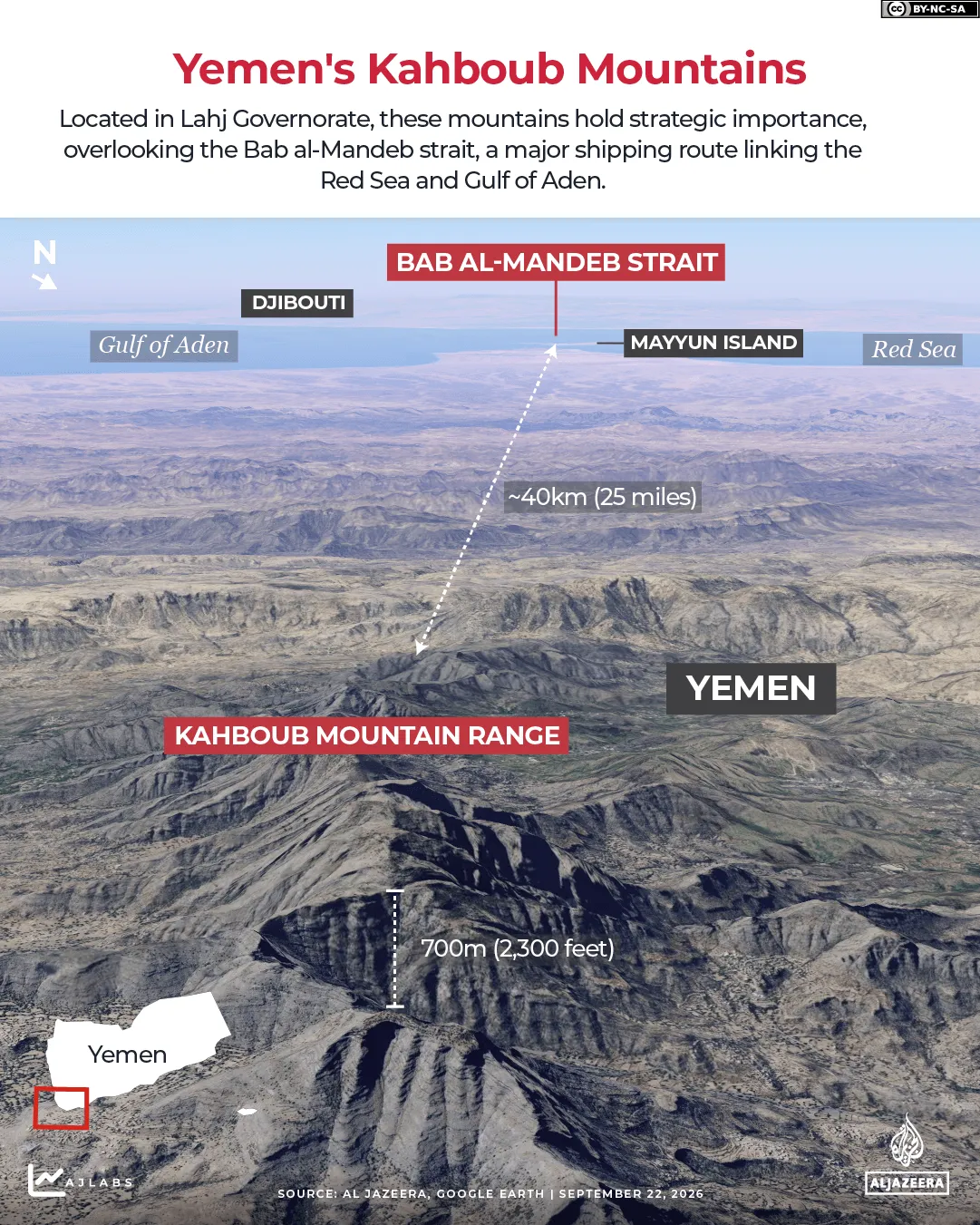
Their widely anticipated involvement in the latest conflict comes just as Iran has throttled traffic through the Strait of Hormuz, a vital chokepoint for about a fifth of the world’s oil, raising fears that the Yemeni group will again disrupt Red Sea traffic by blocking the Bab al-Mandeb Strait.

Reporting from Yemen’s capital, Sanaa, Al Jazeera’s Yousef Mawry described Bab al-Mandeb as the group’s “ace”.

“They want to make Israel pay economically. They want to disrupt their trade routes. They want to disrupt the imports and exports in and out of Israel,” he said.

‘Civilians bearing brunt of war’

The Houthi attacks came after US Secretary of State Marco Rubio said that Washington expected to conclude its military operations against Iran within weeks, even as a new deployment of US Marines has begun to arrive in the region, so US President Donald Trump would have “maximum” flexibility to adjust the strategy as needed.

With no immediate diplomatic breakthrough in sight as both the US and Iran harden their positions, many fear that the US-Israel war on Iran, which started on February 28 and has since engulfed the region, will spiral out of control.

The US and Israel continued their bombardment over the past 24 hours, with the Israeli military claiming it had struck an Iranian research facility for naval weapons, while a series of loud explosions rattled Tehran as night fell on Saturday.

Iranian media said at least five people were killed in a US-Israeli attack on a residential unit in the northwestern city of Zanjan. In Tehran, authorities said the University of Science and Technology was the latest educational facility to be struck, prompting Iran’s Revolutionary Guard Corps (IRGC) to issue a threat against Israeli and US universities in the region.

Separately, Iran’s Fars news agency said a water reservoir in the city of Haftgel, located in western Khuzestan province, had also been attacked.

The Iranian Ministry of Health announced that 1,937 people have been killed since the start of the conflict, including 230 children. Iran’s Red Crescent Society said US-Israeli strikes had damaged more than 93,000 civilian properties.

“Civilians are bearing the brunt of this war,” Al Jazeera’s Mohamed Vall, reporting from Tehran, said.

Devastation in Lebanon

Meanwhile, Israel’s devastation of Lebanon continued apace, as the Lebanese Ministry of Health reported that 1,189 people had been killed in Israeli attacks since March 2.

The death toll has been mounting as Israeli troops have pushed further into the south, advancing towards the Litani River in their stated bid to wipe out Hezbollah and carve out a buffer zone along the lines of the “Gaza model”.

Among Saturday’s killings, an Israeli strike killed three journalists in southern Lebanon. In parallel, the Health Ministry announced that Israel had also killed nine paramedics, bringing the death toll among healthcare workers in the latest war to 51.

Lebanon’s Public Health Emergency Operations Centre said an Israeli attack on the town of al-Haniyah, in the Tyre district of southern Lebanon, killed at least seven people, including one child.

An Israeli air raid on the southern Lebanese town of Deir al-Zahrani killed a Lebanese soldier, Lebanon’s National News Agency reported.

Hezbollah, which attacked Israel amid a ceasefire that Israel kept violating in retaliation for the assassination of Iranian Supreme Leader Ali Khamenei, claimed dozens of operations against Israeli forces in the past 24 hours.

Mixed messages

Trump has threatened to hit Iranian power stations and other energy infrastructure if Tehran does not fully open the Strait of Hormuz. But he has extended the deadline he had imposed for this week, giving Iran another 10 days to respond.

With the US midterm elections coming up in November, the increasingly unpopular war is weighing heavily on the president’s Republican Party.

Trump’s envoy, Steve Witkoff, said on Friday that he believed Tehran would hold talks with Washington in the coming days. “We have a 15-point plan on the table. We expect the Iranians to respond. It could solve it all,” Witkoff said.

Pakistan, which has been a go-between between US and Iranian officials, will host foreign ministers from regional powers Saudi Arabia, Turkiye and Egypt in Islamabad for talks on the crisis.

Pakistan’s Minister of Foreign Affairs Ishaq Dar spoke with his Iranian counterpart, Abbas Araghchi, late on Saturday, urging “an end to all attacks and hostilities” in the region.

In a statement, the Ministry of Foreign Affairs said Dar had told Araghchi that Pakistan remains committed to supporting efforts aimed at restoring regional peace and stability.

Dar also announced that Iran had agreed to allow 20 Pakistani-flagged vessels to transit the Strait of Hormuz, calling it a meaningful step towards easing one of the worst energy crises in modern history.

Source link