Wyoming

Kevin Warsh to deliver keynote speech at Fed’s symposium in Wyoming

Aug. 28 (UPI) — Economists and financial markets will be watching closely on Friday when the Federal Reserve Chairman Kevin Warsh delivers a keynote address at the central bank’s annual symposium in Jackson Hole, Wyo.

Federal Reserve chairmen often use the speech to discuss monetary policy initiatives on a broad level, including offering insight into future interest rate plans. Since being appointed chairman in May, Warsh has been scant with details on future policy decisions and Friday’s address is expected to be more of the same.

The U.S. economy continues to face inflation pressures with inflation rates well above the Federal Reserve’s 2% annual target. Under Warsh, inflation markers have moved higher yet while the Federal Open Market Committee has maintained its benchmark interest rates at 3.5% to 3.75%.

Some members in the central bank are calling for another hike in interest rates, which would be a first since July 2023.

“If I had to guess, I would say that he’s going to give a very high-level, broad look at the work of the task forces and how he thinks the Fed should operate, as opposed to a nuts-and-bolts assessment of the economy and expectations for policy,” Luke Tilley, chief economist at M&T Bank and Wilmington Trust Investment Advisors, told CNBC.

Warsh has established five task forces that are reviewing how the Federal Reserve approaches its policy decisions, including its use of data, technology including artificial intelligence, and its balance sheet.

The Federal Open Market Committee did not meet in August. Its next meeting is on Sept. 15 and 16, during which it will decide whether to hold interest rates firm or make adjustments.

After Warsh’s address following last month’s FOMC meeting, yields for long-term bonds rose. This happens when bond traders are skeptical that the central bank will cool inflation.

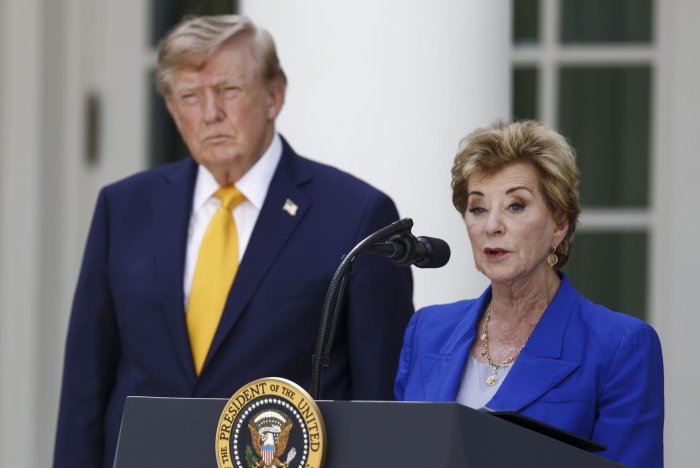
President Donald Trump looks on as Secretary of Education Linda McMahon speaks during a back-to school event in the Rose Garden of the White House on Monday. The event focused on education and the Trump administration’s education policies. Photo by Will Oliver/UPI | License Photo

Source link

Trump-backed candidates struggle, and other takeaways from Florida, Wyoming, Alaska primaries

As the year’s midterm primaries draw to a close, Tuesday’s results in Florida, Wyoming and Alaska continued to underscore an unpredictable election season marked by unreliable polls, intra-party divides and surprise showings by political outsiders.

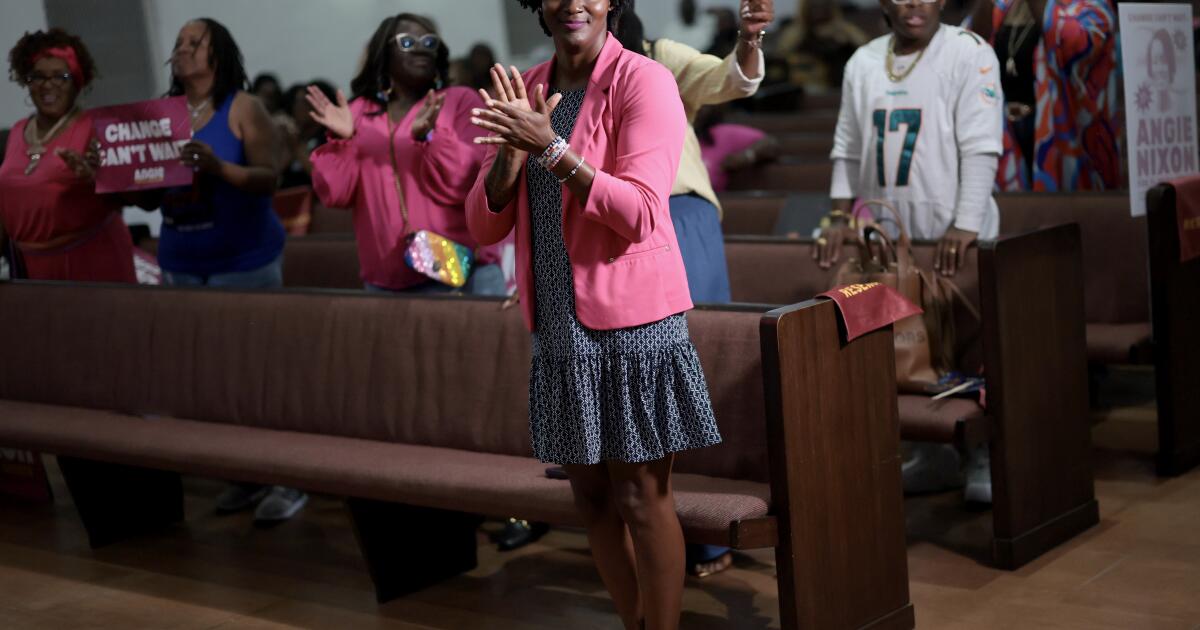
In one high-profile surprise, democratic socialist state Rep. Angie Nixon’s easily defeated former Army intelligence officer Alexander Vindman in Florida’s U.S. Senate primary, despite Vindman having raised 16 times as much money as the new Democratic nominee, according to OpenSecrets, a nonprofit that tracks campaign finance.

According to Florida Politics, a digital media outlet, a now-deleted Change Research poll showed Vindman leading Nixon by 10 points. At that time, 41% of Democrats polled were still undecided.

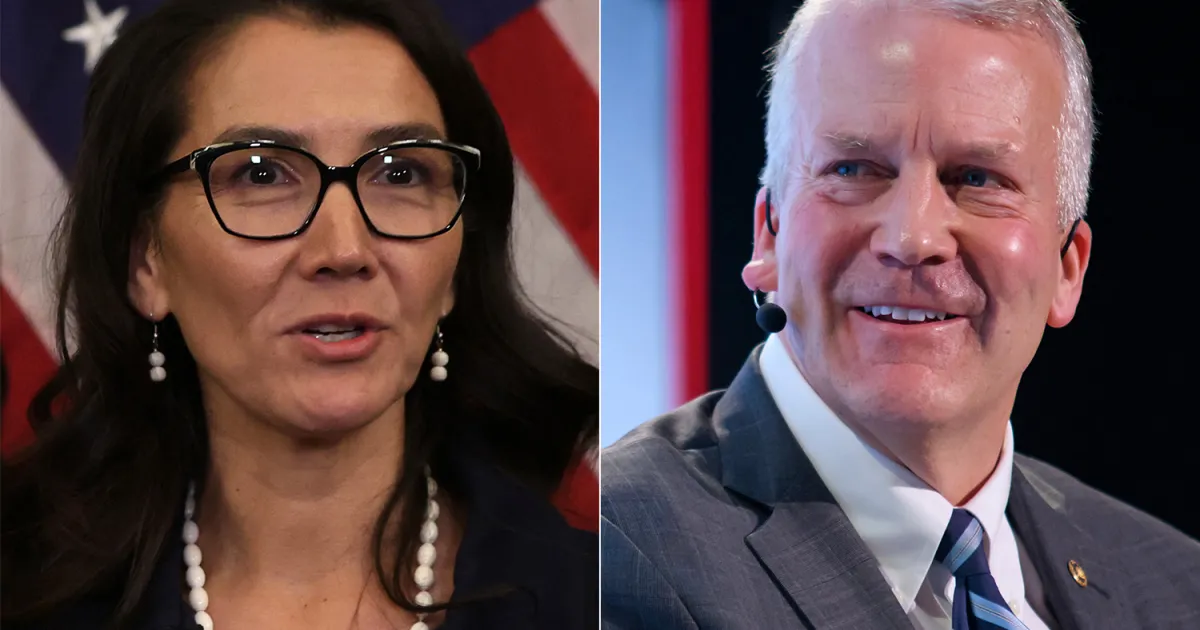
In the race for a Senate seat Democrats hope to flip, former Democratic Rep. Mary Peltola outpolled incumbent Republican Sen. Dan Sullivan, with another Republican Dan Sullivan — this one a retired teacher — also making the cut for the four-person, ranked-choice general election in November.

The results from Tuesday night also show that President Trump’s influence on his party’s base may be dwindling. Three of his endorsed candidates in Wyoming and Florida, both safe red states, were defeated.

Here are four takeaways from Tuesday’s results:

Democratic socialist overcame a huge cash disadvantage

Nixon, who recently joined the Democratic Socialists of America and the Working Families Party, won in a massive upset against Vindman, a moderate selected to run by the Democratic Senatorial Campaign Committee.

Nixon will face Republican incumbent Sen. Ashley Moody in November in a special election to serve the final two years of former Sen. Marco Rubio’s term. Moody was appointed to the seat by Gov. Ron DeSantis when Rubio became secretary of State.

Through a highly coordinated grassroots campaign, Nixon overcame a $15-million fundraising deficit against Vindman in a state where affordability, high property insurance costs and public infrastructure strain were top concerns for many voters.

Although Vindman had the support of the Democratic establishment his lack of profile in Florida — where he has lived for just three years — was a clear detriment, said Susan MacManus, a political analyst at the University of South Florida.

“Angie Nixon was extremely well known in Democratic circles,” MacManus said. “There’s a battle here in Florida: Do you want a Democratic candidate who’s a fighter, or do you want someone more in line with the establishment? … Nixon had no money, but she had a presence.”

But Nixon still faces a steep battle against Moody, MacManus said. According to state data, Florida has 1.5 million more Republicans than Democrats, meaning that Nixon will have to win over most of the independents — and perhaps convert a few Republicans — to have a shot in the general election.

Florida redistricting had a big effect on House races

In May, DeSantis’ office rearranged districts for the second time this decade to secure more safe-Republican seats in the House of Representatives, shortly after the Supreme Court narrowed the scope of the Voting Rights Act.

In Florida’s 25th District, a newly drawn coastal area north of Miami, incumbent Rep. Jared Moskowitz defeated democratic socialist and activist Oliver Larkin.

The redistricting increased the number of Jewish voters in the district, which likely hurt Larkin’s candidacy because of his openly anti-Israel stance, said Jonathan Cervas, an assistant professor at the Carnegie Mellon Institute for Strategy and Technology.

Moskowitz will face the former mayor of Boca Raton, Scott Singer, in the general election.

In Florida’s Black-majority 20th District, which was redrawn this year, Rep. Debbie Wasserman Schultz finished ahead of four Black rivals in a crowded field, and will face Brent Andersen, an insurance broker, in November. Black leaders criticized Wasserman Schultz, a white 11-term congresswoman, for running in the district.

“She won against a crowded field, but she didn’t win with 50% of the vote,” said Kareem Crayton, vice president of the Brennan Center’s Washington office. “The open question remains: Is she the preferred candidate of African Americans? We’ll see in the general.”

Although these two districts lean slightly blue, data suggest that Republicans will be more competitive in these areas than they were in the 2024 congressional races, Cervas said. He added that this shows Florida’s redistricting efforts were mostly a success, likely adding at least one or two seats in the general election.

Alaska was more competitive than Democrats thought

Some Democratic Party leaders had initially ranked Alaska behind other states with the potential to flip a Senate seat. But they likely will make the Alaska race a higher priority after a strong showing Tuesday by former Democratic Rep. Mary Peltola, who topped the field in the primary against incumbent Sen. Dan Sullivan. It has been 11 years since Alaska last had a Democratic senator.

According to the New York Times, the Alaska Survey Research poll shows Peltola with a two-point lead heading to the general election.

Peltola has run as a centrist Democrat, attacking the Trump administration’s cuts to the federal workforce and lack of resource development in Alaska, which is likely to have wide appeal in a state that Trump won in 2016, 2020 and 2024, but that has suffered in recent months from rising costs and job losses.

Three Trump endorsements fell short

Trump-endorsed incumbent Rep. Cory Mills — the subject of a House Committee Ethics probe stemming from accusations of assault by two women — lost his primary race in Florida’s 7th District to former television reporter Ryan Elijah, making him the 10th Trump-backed candidate to lose in a primary this year.

After the results were known, the president wrote in a Truth Social post: “I told Congressman Cory Mills of Florida, a friend of mine, to get out of the Race, but he wouldn’t listen. He thought he could win, so who can blame him?”

Trump had picked Catalina Lauf to replace Republican Rep. Byron Donalds, only to see her lose to Jim Schwartzel, a businessman-turned-politician. Donalds is the Republican nominee for governor, where he will face Democrat David Jolly, a former Republican House member.

Trump’s pick for Wyoming governor, Superintendent of Public Instruction Megan Degenfelder, was defeated handily by Republican state Sen. Eric Barlow.

Source link

What to watch in the Alaska and Wyoming primary elections | US Midterm Elections 2026 News

Primary races across the country have offered an early read on where voters want their parties to head before November’s consequential midterms in the United States.

With only a handful of US states remaining in the congressional primary calendar, voters in Alaska and Wyoming — two reliably Republican strongholds — head to the polls on Tuesday, with races that could send ripples well beyond their small electorates.

Although the state has long been safe Republican territory in federal elections, this year marks the third consecutive election cycle in which Alaska finds itself among a handful of states at the centre of the fight for control of Congress.

Wyoming offers a different kind of race: a rare wholesale turnover of Republican leadership. Wyomingites have a glut of new leaders to choose from at the statehouse, in the governor’s mansion and in the US Capitol. Contests that could further consolidate the state’s ultraconservative politics or begin to push them to the centre.

Here’s what’s on our radar.

Alaska

When do polls open and close?

Polls open at 7am (15:00 GMT) and close at 8pm local time (04:00 on Wednesday GMT), although Alaska’s two time zones stagger poll closings across the state.

What makes Alaska’s primary different?

Unlike most states, Alaska uses a single primary rather than separate Republican and Democratic contests. This comes after Alaska voters approved Ballot Measure 2 back in 2020, which effectively eliminated the state’s traditional party-primary system for most offices. Instead, all candidates appear on a single, nonpartisan primary ballot. The top four vote-getters advance.

What are the key races to watch in Alaska?

The US Senate race carries the clearest national stakes because it could tip control of the chamber. The governor’s race is worth watching because of its exceptionally crowded and competitive field.

Seventeen candidates are running to replace Alaska’s staunchly pro-Trump Republican Governor Mike Dunleavy, who is barred by term limits from seeking a third term. Among them is former Governor Bill Walker, who is running as an independent. Republican candidates include former state Senators Click Bishop, Shelley Hughes and Lesil McGuire, former Anchorage Mayor Dave Bronson, former state revenue Commissioner Adam Crum, Matanuska-Susitna Borough Mayor Edna DeVries, former state Attorney General Treg Taylor and business owner and conservative activist Bernadette Wilson.

Former state Senator Tom Begich and former state Representative Jonathan Kreiss-Tomkins are the two Democrats in the race.

Meanwhile, sixteen candidates are running for Alaska’s US Senate seat, but the race has two chief frontrunners: incumbent Republican Senator Dan Sullivan and former Democratic Representative Mary Peltola. The Cook Political Report ranks the race among the country’s most competitive Senate contests.

Why the Senate race matters nationally

Though Alaska has not sent a Democrat to the Senate since 2008, former Representative Peltola, who represented Alaska in the US House from 2022 to 2025, demonstrated that a Democrat can win statewide there.

The race has drawn millions in campaign spending, including money being spent to elevate political unknowns who are unlikely to win the seat, but could materially alter the November field.

Super PACs have spent more than $2m trying to boost candidates who are not considered serious contenders for the seat, according to Alaska Public Media.

An Alaska Survey Research poll conducted in March found Peltola ahead of Sullivan among primary voters, 46.4 percent to 40.9 percent. In a simulated general-election matchup using Alaska’s ranked-choice system, Peltola also polled ahead of Sullivan.

A tale of two Dan Sullivans

There is an unusual Senate subplot: two Republicans named Dan Sullivan are on the ballot. One is the incumbent senator; the other, Dan J Sullivan Jr is a retired teacher from Petersburg. The state’s Division of Elections initially removed him from the ballot after determining that his candidacy appeared intended to confuse voters, but the Alaska Supreme Court later ordered officials to restore him to the primary ballot.

That creates a problem that is particularly acute in Alaska’s primary. Unlike the November election, the primary is not ranked-choice: voters select a single candidate, and the four highest vote-getters prevail in the general election. With two Dan Sullivans vying for the same electoral spot, even a relatively small number of mistaken votes could influence which candidate clears the hurdle.

Senator Sullivan will appear on the ballot as “Dan S. Sullivan” alongside the labels of “Registered Republican” and “Incumbent”. Challenger Sullivan will be listed as “Daniel J. Sullivan Jr.” without any party affiliation listed, although he filed for office as a Republican.

On Israel, Sullivan and Peltola find common ground

Much of the attention around incumbent Dan Sullivan’s fundraising reflects the issues that have defined his Senate career, including his strong support for Israel and his hawkish approach to Iran.

The 61-year-old has repeatedly backed military aid and closer US-Israel defence ties while vehemently opposing efforts by the International Criminal Court (ICC) to prosecute Israeli officials. His congressional record includes repeated efforts to maintain or strengthen sanctions on Iran.

Sullivan’s reelection run has attracted substantial backing from high-profile political organisations, including the Republican Senate Leadership Fund, which has committed at least $15m towards his campaign. The American Israel Public Affairs Committee (AIPAC ) has also helped funnel about $250,000 in individual contributions to Sullivan during the first quarter of 2026.

Peltola has also championed Israel-related legislation during her time in the House, and sometimes even broke with fellow Democrats on Israel-related votes. The Jewish Democratic Council of America, which describes itself as advocating for a strong US-Israel relationship, endorsed her Senate campaign back in March.

Wyoming

When do polls in Wyoming open and close?

Voting begins at 7am local time (13:00 GMT) and ends at 7pm local time (01:00 GMT the following day).

What’s one big race to watch?

The Senate Republican primary.

In deep-red Wyoming, the Senate primary is less a contest about whether the GOP will hold the seat than about which Republican candidate will win it.

The Cowboy State has voted Republican in every presidential election since 1964, with the exception of 1976, when Jimmy Carter carried Wyoming. The Senate race is also interesting because it is an open-seat succession fight.

What are the important races in the Wyoming primary election?

The US’s least populated state is in for a political makeover, with a shake-up at nearly every level. With incumbent Senator Cynthia Lummis declining to seek re-election and Representative Harriet Hageman relinquishing her House post to try to succeed her in the Senate, Wyoming is poised for an unusually broad reshuffling in elected officeholders.

Wyoming’s Republican Party is divided between a hard-right bloc that already controls the state House and more traditional conservatives who retain greater influence in the Senate.

Hageman, the Trump-backed hard-lined congresswoman who rose to national prominence after unseating Liz Cheney in the 2022 Republican primary, is the clear favourite to succeed retiring Senator Cynthia Lummis. Among the other Republicans running to replace Lummis in the US Senate are former Kirby Mayor Sam Mead and former environmental services business owner Jimmy Skovgard.

In an April interview with Jackson Hole Community Radio (KHOL), Mead said that the endorsements Hageman received from Trump, Lummis and Barrasso come with an expectation that she will support the administration “no matter what.” While Mead has promised that he would push back against Trump on public lands, tariffs and foreign wars when he believes the administration’s policies run counter to Wyoming’s interests.

Nine active candidates are competing for the Republican nomination to replace Hageman in the US House in what’s shaping up to be the most expensive contest on Tuesday’s ballot. The field includes former state Superintendent of Public Instruction Jillian Balow, state Senate President Bo Biteman, businessmen Steve Friess and Reid Rasner, and Wyoming Secretary of State Chuck Gray.
Source link