
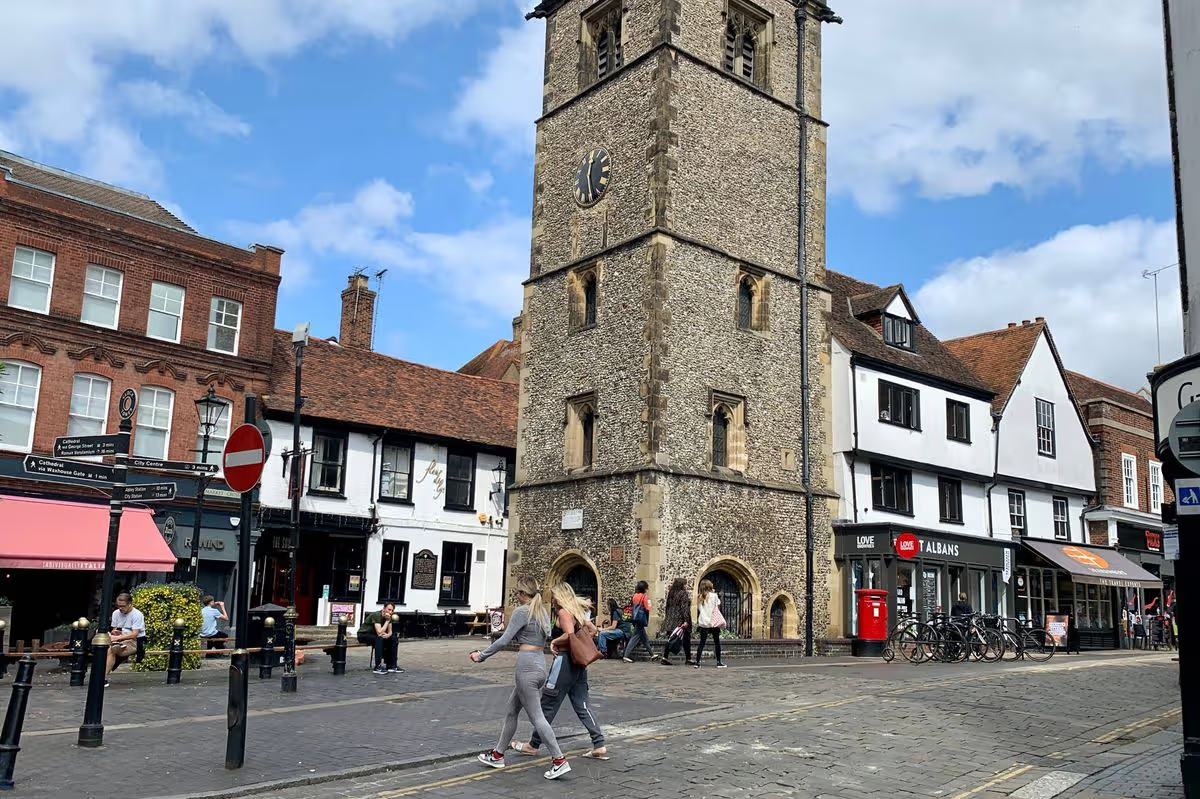
Considered to be one of the UK’s best cities with Roman ruins and a historic market, I was expecting more, but after visiting at the weekend, I left feeling underwhelmed and wouldn’t rush back.

I found the city to be disappointing (Image: Alla Tsyganova via Getty Images)
I’m passionate about exploring fresh destinations across England, so when a particular city kept appearing on my social media timeline, I knew I had to make the trip. St Albans is a historic cathedral city in Hertfordshire, England, situated approximately 20 miles north of London.
Nowadays, it’s recognised as an appealing and wealthy commuter hub, yet its heritage extends back almost 2,000 years. Combining Roman archaeological remains and medieval thoroughfares with contemporary retail outlets, St Albans has evolved into one of the most historically significant cities in southeast England.
St Albans’ roots trace back to the Roman settlement of Verulamium, established in the 1st century AD and growing into one of Roman Britain’s largest urban centres.
The settlement served as a vital hub for commerce and administration, featuring temples, bathhouses and a theatre. Sections of the Roman fortifications and mosaics remain visible today, especially in and surrounding Verulamium Park.
The vestiges of this Roman community constitute a significant element of the city’s character and draw numerous tourists annually.
The city takes its name from St Alban, traditionally regarded as Britain’s first Christian martyr, who was put to death for sheltering a Christian priest.
A memorial erected in his memory eventually became St Albans Cathedral, which continues to be the city’s most renowned monument.
Currently, it’s a thriving and affluent city celebrated for its heritage, open spaces and excellent transport connections to London. I popped over to St Albans this past weekend and left feeling somewhat let down.
Given its stellar reputation, I’d anticipated something rather more refined, yet sections of the town centre appeared decidedly weary.
Certain streets looked decidedly shabby, whilst the uneven footpaths made strolling about considerably less enjoyable than I’d envisaged.
The town was absolutely heaving as well, which contributed to a feeling of disorder rather than character, and securing a parking spot proved far trickier than expected. This might have been down to it being market day.
I kicked off my morning at The Ivy for brekkie, what should have been a proper treat at a restaurant I previously adored. However, it failed to impress, with sluggish service and subpar fare.
That being said, alternative dining options were genuinely brilliant. I grabbed a bite at Japes, where the pizza was absolutely cracking, and also popped into Knoops for a decadent hot chocolate.
Regarding places to grab food, drinks and browse, the town absolutely excels, as it does with its historical offerings.
It’s also difficult to write off entirely a place boasting shops like Anthropologie, Oliver Bonas and Space NK – that trio alone typically indicates a respectable retail destination. Yet, notwithstanding that, I’m uncertain I’d be keen to return in the near future.