A YouGov survey has ranked budget airlines by food quality, with results likely to surprise some UK travellers
Airline with the worst food named — and it’s ‘awful’
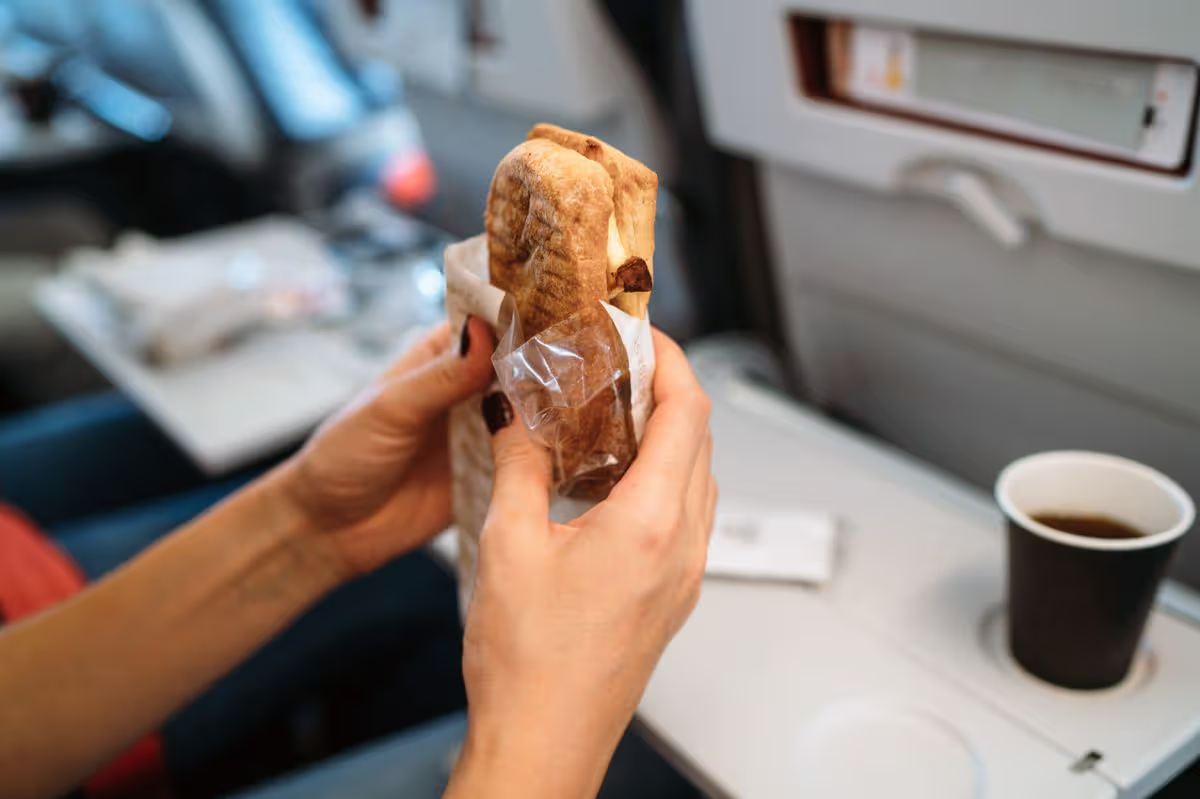
A recent YouGov survey has revealed the worst airline food on offer, with budget carrier Ryanair topping the list for all the wrong reasons. Travel expert Mr Plane Guy weighed in on the findings, saying: “Unfortunately, not every airline hits the mark when it comes to in-flight dining.
“At the bottom of the list is Ryanair, where only 21% of passengers had good things to say about their snacks and drinks. Worse yet, just 17% found the meals satisfactory, and a staggering 50% labelled them as ‘poor’. Not far behind is Wizz Air, with just a quarter of passengers giving their snacks and drinks a thumbs-up, and 40% rating the meals as bad. easyJet also struggled, with only 35% of travellers enjoying their snacks and 29% happy with the meals.”
He went on to say: “If food is an important part of your flying experience, choosing the right airline can make all the difference! Emirates and Qatar Airways seem to be the safest bet for delicious meals, while budget carriers like Ryanair and Wizz Air might leave your stomach rumbling.”
One Ryanair passenger took to Tripadvisor to share their experience, writing: “Why is the food so bad!? We usually pack a lunch for our flight. In this case, we didn’t, and I ordered the fresh sandwich, which in this case was Turkey and Stuffing. It was truly awful and cost me 5€. I couldn’t finish it. This is not only an issue with Ryanair, but with other low-cost airlines. It must be as easy to source good food as bad. I really don’t understand it.”
Not everyone agrees, however, with some passengers saying Ryanair’s food is acceptable. One traveller recommended the vegan lasagna: “As a vegan, I massively appreciate the vegan lasagna; it’s not bad at all.” Another chimed in with: “The cheese toasties are actually ok, I’ve had it a few times.”
A once-thriving seaside town on the east coast was home to a huge Butlin’s holiday resort, but has since been ranked one of the UK’s worst seaside towns — and there’s barely a trace left of the famous camp
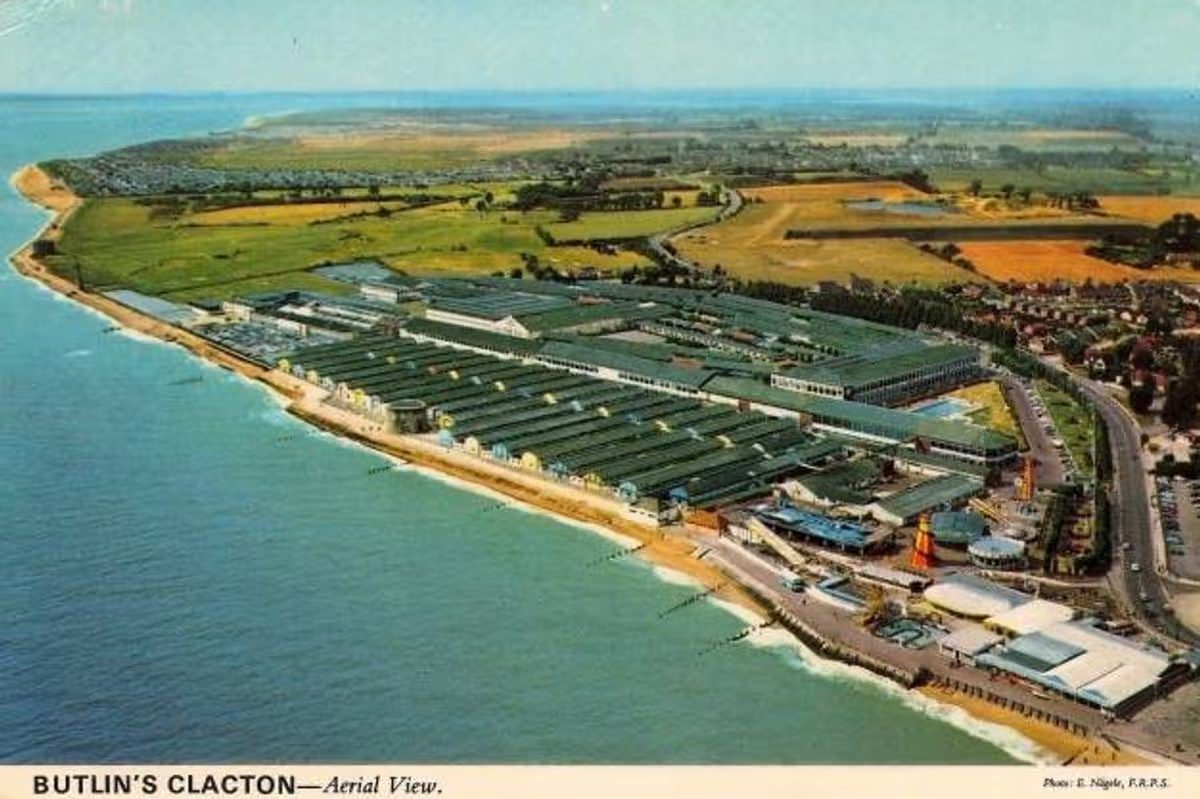
A once-bustling seaside town that has tumbled down the rankings used to be home to a massive Billy Butlin’s resort — though you’d never know it today.
Celebrated for its award-winning pier, sweeping sandy beaches and classic fairground rides, Clacton-On-Sea was once a glorious coastal destination that drew holidaymakers in their droves from across Britain. However, last year, Clacton, in Essex, came third-from-last in Which?’s annual ranking of the UK’s finest seaside towns.
The town scraped a paltry 42 per cent — a stark contrast to Bamburgh, which topped the charts with an impressive 84 per cent destination score.
Yet in its heyday, before the Benidorm boom tempted Brits away from British shores in favour of budget package holidays to Spain, Clacton was a very different place. In 1936, Billy Butlin purchased the West Clacton Estate — which already boasted a miniature golf course and boating lake — and transformed it into the iconic Red Coat resort that became a beloved British institution.
The resort shut down when war broke out, with the Army temporarily commandeering the site. However, in 1946, it was relaunched as a holiday camp — and subsequently acquired neighbouring land for expansion.
“By the late 1950s, Butlin’s had become a national institution and to some extent, Clacton was able to bask in its reflected glory,” Clacton History explained. “The combination of Butlin’s and Clacton had become firmly established and for both their futures as family holiday venues seemed unshakeable.”
As with other Butlin’s locations, visitors flocked to enjoy the extensive amenities available, including comfortable chalets, an enormous outdoor swimming pool, fairground attractions, a ballroom for dancing, a bowling green, retail outlets, a miniature railway, and top-notch entertainment. Stars such as the Beverley Sisters, Michael Holliday, and Jack Douglas are said to have graced the camp’s stages during their early careers.
However, unable to match the appeal of affordable flights to sunny Spain, and damaged by rowdy teenagers treating the venue as a drinking destination, Butlin’s tragically shut its gates in 1983 — the same year the Filey resort was also closed down.
According to Butlin’s Memories, the site was snapped up for approximately £2 million by Amusement Enterprises Ltd — who revealed bold proposals to transform the complex into a ‘Disneyland’ style theme park. With a fresh identity, Atlas Park, the site reopened in 1984 but stayed largely as it was during the Butlin’s years. The project lasted just four months before encountering financial troubles, and the land changed hands once more. By 1987, everything had been torn down.
The location now functions as a housing estate for local residents, perfectly positioned close to the seafront. It feels a far cry from Butlin’s heyday — which is still fondly remembered by many locals.
Despite sitting just 60 miles from London – one of the richest cities in Europe – Clacton and Jaywick suffer from low wages and poor public perception, with dark tourists and American influencers venturing there to report on their struggles.
Happily, there is a lot of hope on the horizon for the area. The District Council is working on a raft of regeneration projects across Clacton, Jaywick Sands and Dovercourt after successfully applying for millions of pounds in Government funding.
The Council entered into a Community Regeneration Partnership (formerly the Levelling Up Partnership) in late 2024 and was awarded £20million in funding from the Ministry of Housing, Communities and Local Government to regenerate Clacton and Jaywick Sands.
In Clacton, these include proposals to repurpose the 200-year-old Martello Tower on Clacton seafront and bring it into regular use, in a project TDC says will convert “a disused public convenience close to Clacton Pier into a vibrant cultural venue and providing a free-to-use BMX pump track, learn-to-cycle and climbing facility at Clacton Leisure Centre.”
A further £20million was also secured from the Local Regeneration Fund (formerly Levelling Up Fund) for Clacton Town Centre which was granted to create the new ‘Clacton Civic Quarter’.
Clacton Library is also being redeveloped into a new multi-story building that will be built on the current library site, to include a centre for Adult Community Learning and local registration services.