worsens

Humanitarian crisis worsens in Ceuta as thousands remain stranded | Migration News

People in Ceuta face harsh living conditions, overcrowding, limited aid, and alleged abuse while awaiting decisions about their future.

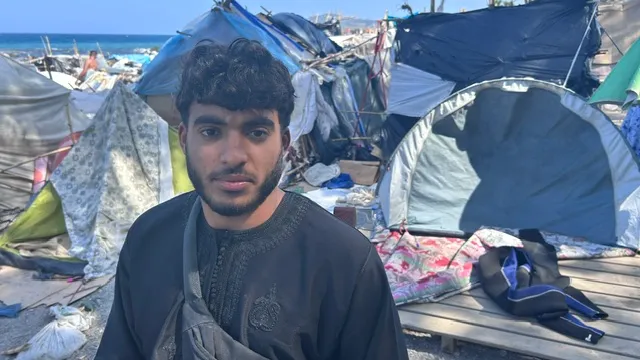
Ceuta, Spain – For more than a month, 21-year-old Anis Fadi, a university graduate and qualified accountant, has been sleeping in a makeshift shelter.

At the end of July, he crossed the border from Morocco to the Spanish enclave of Ceuta, on the North African coast, along with about 70,000 others.

Recommended Stories

list of 4 itemsend of list

At his migrant camp on Trampolin Beach, he queues for hours each day for food at a Red Cross centre.

“I don’t even have a tent,” he told Al Jazeera. “We make shelter with old pieces of wood, sticks from broken branches, and whatever else we find here.”

Anis Fadi, a 21-year-old graduate, believes Europe would offer him better employment opportunities than Morocco
Anis Fadi, a 21-year-old graduate, believes Europe would offer him better employment opportunities than Morocco [Peter Smith/Al Jazeera]

When the wind blows, these makeshift shelters offer little protection, and soon the temperature will dip.

“There are a lot of people worse than me,” said Fadi.

The Spanish government estimates that between 6,000 and 10,000 who made the crossing remain stranded. Officials in Ceuta believe the figure is closer to 13,000 people.

Thousands of people remain stranded in Ceuta having crossed the border in July
Thousands of people remain stranded in Ceuta having crossed the border in July [Peter Smith/Al Jazeera]

About 5,000 – mostly women and children – have been given temporary accommodation by the authorities. The rest sleep outside.

Fadi said, as he waits for food in the heat, police officers with batons shout orders at the crowds.

“It’s a hard life here,” he said, but he does not regret leaving Morocco.

“Life was harder there for me. I didn’t see any future for myself.”

‘We are not criminals’

More than 100 people died in the crossing. Fadi said he swam for hours to reach Ceuta, believing it was a gateway to Europe, where he imagines a better life awaits.

He believes men like him who “have the skills … don’t have the chance”.

“We are not criminals,” he said, in response to the anti-migration rhetoric and protests that followed the crossing. “We just want to work.”

Right-wing European politicians have framed the Ceuta crossing as a threatening invasion.

Migrant children take toys at an industrial area, following the mass crossing of migrants from Morocco, in Ceuta, Spain, September 21, 2026. REUTERS/Jon Nazca TPX IMAGES OF THE DAY
Migrant children take toys at an industrial area in Ceuta, Spain, September 21, 2026 [Jon Nazca/Reuters]

In Spain, protests have erupted against the government’s handling of the crisis.

Ceuta is usually home to about 84,000 people. Its population almost doubled at the outset of this crisis. Though most have returned, the enclave has been struggling to cope with the pressure of hosting those who remain.

After a new temporary shelter opened up recently, offering space for about 1,700 people, it hit capacity within hours.

Claims of abuse

As humanitarian groups struggle to provide basic needs, Nolte Bauer, from Mission Lifeline International, said migrants also feel unsafe.

“Outside the official camps there is a lack of basic hygiene,” he said. “There is insufficient medical aid and the immediate danger of violence, especially at night.”

His organisation often receives reports of people being beaten.

Members of a Spanish NGO Medicos del Mundo (Doctors of the World) help injured migrants at an industrial area, following the mass crossing of migrants from Morocco, in Ceuta, Spain, September 21, 2026. REUTERS/Jon Nazca
Members of the Spanish NGO Medicos del Mundo (Doctors of the World) help injured migrants at an industrial area in Ceuta, Spain, September 21, 2026 [Jon Nazca/Reuters]

Several people interviewed by Al Jazeera said they had been abused by men in military or police uniforms. Some were wounded, with cuts to the head or bruising around the body.

“These are racist people, these soldiers,” one man who requested anonymity told Al Jazeera. “They found me sleeping and they started to hit me without any reason. They broke one of my hands; they wanted to break the other one. They also beat me on my knees.”

Some said they were afraid to go to hospital, fearing they could be deported, and instead sought help from aid groups. NGO volunteers told Al Jazeera they had treated wounded men.

Migrants play with a ball surrounded by tents at the Trampolin beach, following the mass crossing of migrants from Morocco in Ceuta, Spain, September 19, 2026. REUTERS/Jon Nazca TPX IMAGES OF THE DAY
People play with a ball surrounded by tents at the Trampolin Beach in Ceuta, Spain, September 19, 2026 [Jon Nazca/Reuters]

But Spanish authorities rejected any claims of abuse and discrimination, telling Al Jazeera that the police acts “with absolute respect for human rights”.

They say they are expanding accommodation and providing food and medical care while migrants are identified and their cases are processed.

The government has said the aim is to return to Morocco those who do not have a legal status to remain in Spain, while Ceuta’s leaders have repeatedly called on Madrid and Europe for more support.
Source link

Djibouti refugee crisis worsens as more than 2,700 Yemenis arrive | Al Jazeera News

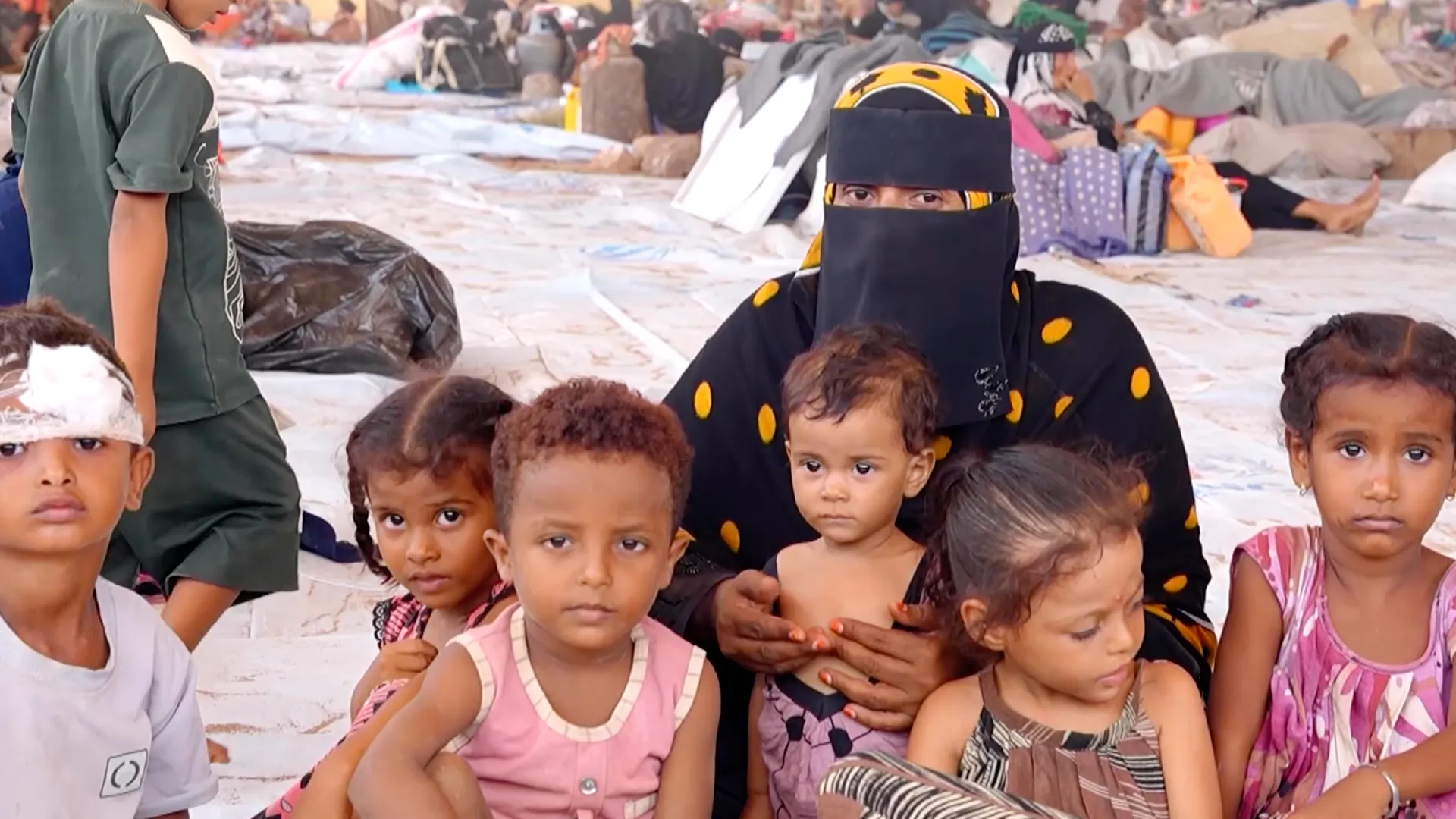
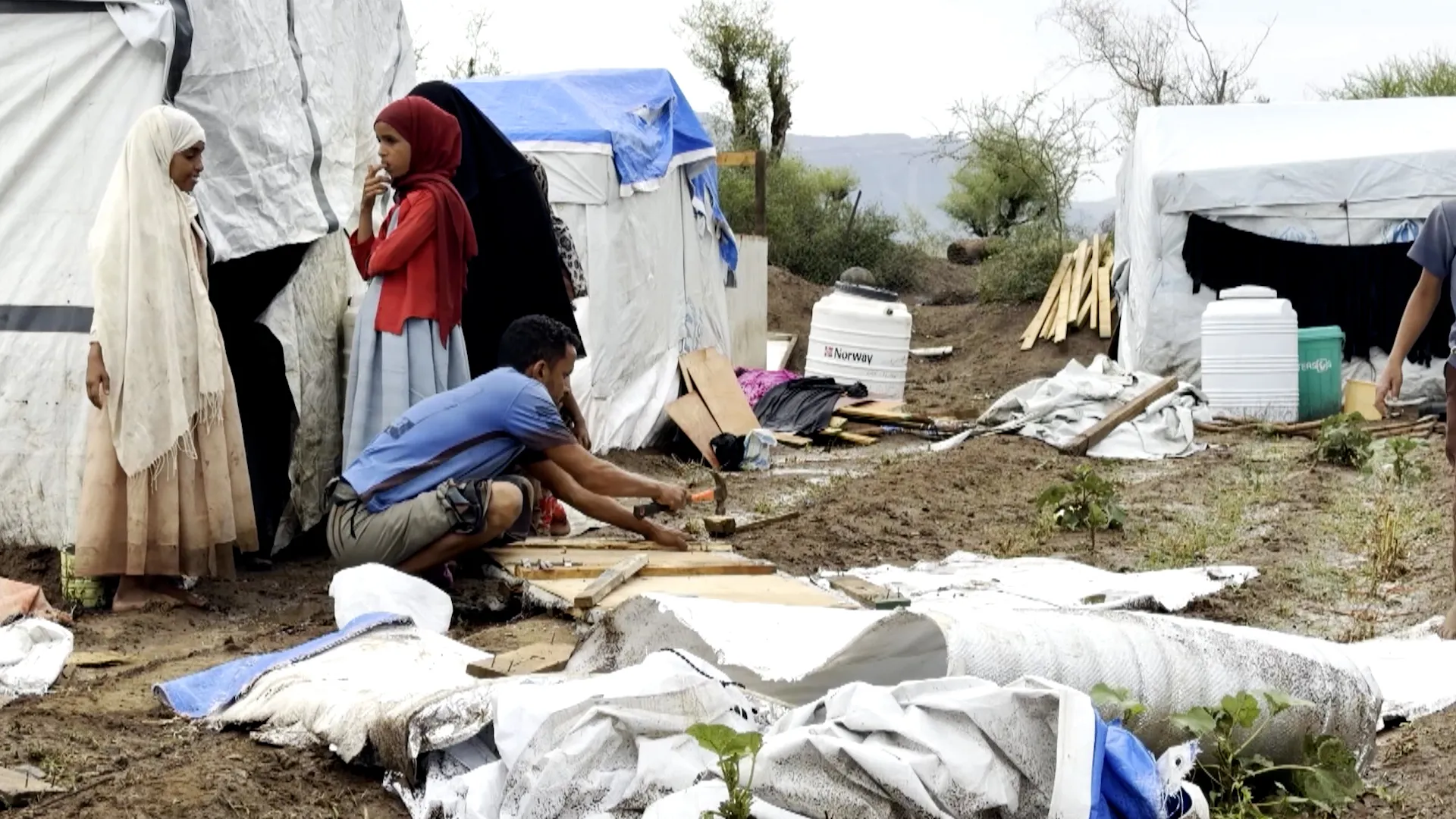
More than 2,700 Yemenis have fled to Djibouti, many making dangerous sea crossings to escape the conflict. Al Jazeera’s Hasan Razzaq spoke with some of those who have arrived in the northern town of Obock, where they are seeking shelter and assistance.

Source link

Renewed fighting worsens Yemen’s humanitarian crisis | Houthis

Fighting between Yemen’s Houthis and internationally recognised government forces have worsened an already dire humanitarian and displacement crisis. The International Organization for Migration tells Al Jazeera tens of thousands of people are in urgent need of help.

Source link

Maduro’s wife seeks home detention as heart condition worsens in US custody | Nicolas Maduro News

Venezuela’s former first lady, Cilia Flores de Maduro, has asked a judge to release her from federal detention in the United States, citing a worsening heart condition.

In an application for pre-trial release on Wednesday, her legal team asked for the court to allow Flores to await trial under home confinement in Manhattan.

Recommended Stories

list of 3 itemsend of list

It described her declining health since US military operation on January 3 that resulted in her abduction from Caracas and imprisonment in New York, as well as that of her husband, former Venezuelan President Nicolas Maduro.

“Prior to the United States’ military invasion of Venezuela, Ms. Flores de Maduro was physically healthy and took no ongoing medication, other than a monthly injection to help control her mitral valve prolapse,” the legal filing said.

“Now she is prescribed four medications, maintains nitroglycerin by her side in the event of a potential heart attack, and grapples with the continued medical advice suggesting coronary exploration and surgery.”

Flores was a prominent figure in her husband’s government, serving as first lady since his inauguration in 2013.

Prior to Maduro’s first inauguration, she was also a leading member of the United Socialist Party of Venezuela (PSUV), the country’s dominant political movement, leading the National Assembly for more than four years.

But Maduro had long clashed with the administration of US President Donald Trump, who accused Venezuela of sending drug-traffickers into the US. Both Maduro and Flores have also faced allegations of participating in human rights abuses, including the violent suppression of political dissent.

After launching a one-day military operation to abduct Maduro and Flores, the Trump administration charged them both with drug- and weapons-related charges. They are currently awaiting trial in New York City.

But Flores’s health has been in doubt since her forced removal from Venezuela, according to her legal team.

After consulting outside medical experts, Flores’s lawyers said they believe she may have suffered a minor heart attack on July 29 while in US custody.

They also questioned whether she was receiving the appropriate medical care for her mitral valve prolapse, a condition affecting one of the heart’s valves.

Since her imprisonment, her lawyers said Flores has not received the monthly injection she needs to manage the condition.

Instead, she has reportedly been prescribed baby aspirin, a statin, diltiazem and nitroglycerin to use when she experiences chest pain.

Doctors have recommended that she undergo a cardiac procedure, which could result in additional heart operations. If she undergoes such treatment, Flores “will need adequate time to recover from any procedures in a setting conducive to restoring her health”, her lawyers said.

Thursday’s filing acknowledges that Flores does not “dispute that she has received excellent care” from medical professionals. But it argues that “a detention centre lacks the conditions needed for such a recovery”.

Her lawyers proposed moving Flores from the Metropolitan Detention Center in Brooklyn to a residence within the Manhattan federal court district, where she and Maduro are due to go on trial next June.

Under home detention, Flores would be subject to round-the-clock armed monitoring, with visits restricted to people approved by the court and federal prosecutors. Her home would also be monitored by video and her phone calls recorded, according to the filing.

Judge Alvin K Hellerstein has yet to rule on the application.

Flores, 69, and Maduro, 63, have been held in US custody since the January raid on their home in Caracas. Both have pleaded not guilty to the charges of participating in a conspiracy to traffic cocaine into the US.

Source link

Malaysia declares emergency in Sarawak as haze from Indonesia worsens | ASEAN News

Country implements state of emergency in Sarawak’s Serian district after air pollution reaches ‘hazardous’ levels.

Malaysia has declared a state of emergency in a district in Sarawak state after haze caused by wildfires in neighbouring Indonesia increased air pollution to “hazardous” levels.

King Sultan Ibrahim “has consented to the declaration of emergency throughout Serian Division, Sarawak, following haze conditions that have reached air pollution levels hazardous to public health and safety”, Prime Minister Anwar Ibrahim’s office said in a statement on Thursday.

Recommended Stories

list of 3 itemsend of list

The declaration followed a formal request from the Sarawak Disaster Management Committee after the region’s Air Pollutant Index reached levels warranting consideration of a local emergency.

Under the order, 647 schools in Serian will close from Monday until at least the end of next week, alongside government and private offices, plantations, construction sites and quarries, with only essential services continuing to operate.

The state’s disaster management authorities said a three-day cloud-seeding operation launched on Thursday would be extended to at least Monday, citing forecasts of “more conducive cloud formations” during that period.

Sarawak State Disaster Management Committee chairman Douglas Uggah Embas, speaking at a news conference in Kuching, stressed that the emergency applied only to Serian, not the entire state, but urged residents there to take the situation seriously.

“Please minimise outdoor activities and avoid strenuous activities outdoors,” he said.

Sarawak, in the northern part of Borneo island, has been heavily affected by haze for weeks, as have the neighbouring states of Sabah and Peninsular Malaysia.

Other Southeast Asian countries like Brunei have also reported smoggy conditions. Singapore announced it would start providing daily haze advisories from Friday evening, after the 24-hour air quality readings entered the unhealthy range, the first since 2023.

It has also hit the Philippines, where President Ferdinand Marcos Jr. ordered the suspension of classes in the capital region, Metro Manila, as well as more than a dozen provinces on Friday.

This year’s transboundary haze, which originates from fires burning across Indonesia, particularly the Kalimantan region and Sumatra island, is part of a wider seasonal wildfire crisis in the archipelago country.

Scientists say temperatures are expected to peak this month, potentially intensifying the fires by bringing hotter and drier conditions across the region.

Source link
