Worries

A possible year-plus shutdown for the Olympics worries patrons of the Rose Bowl Aquatics Center

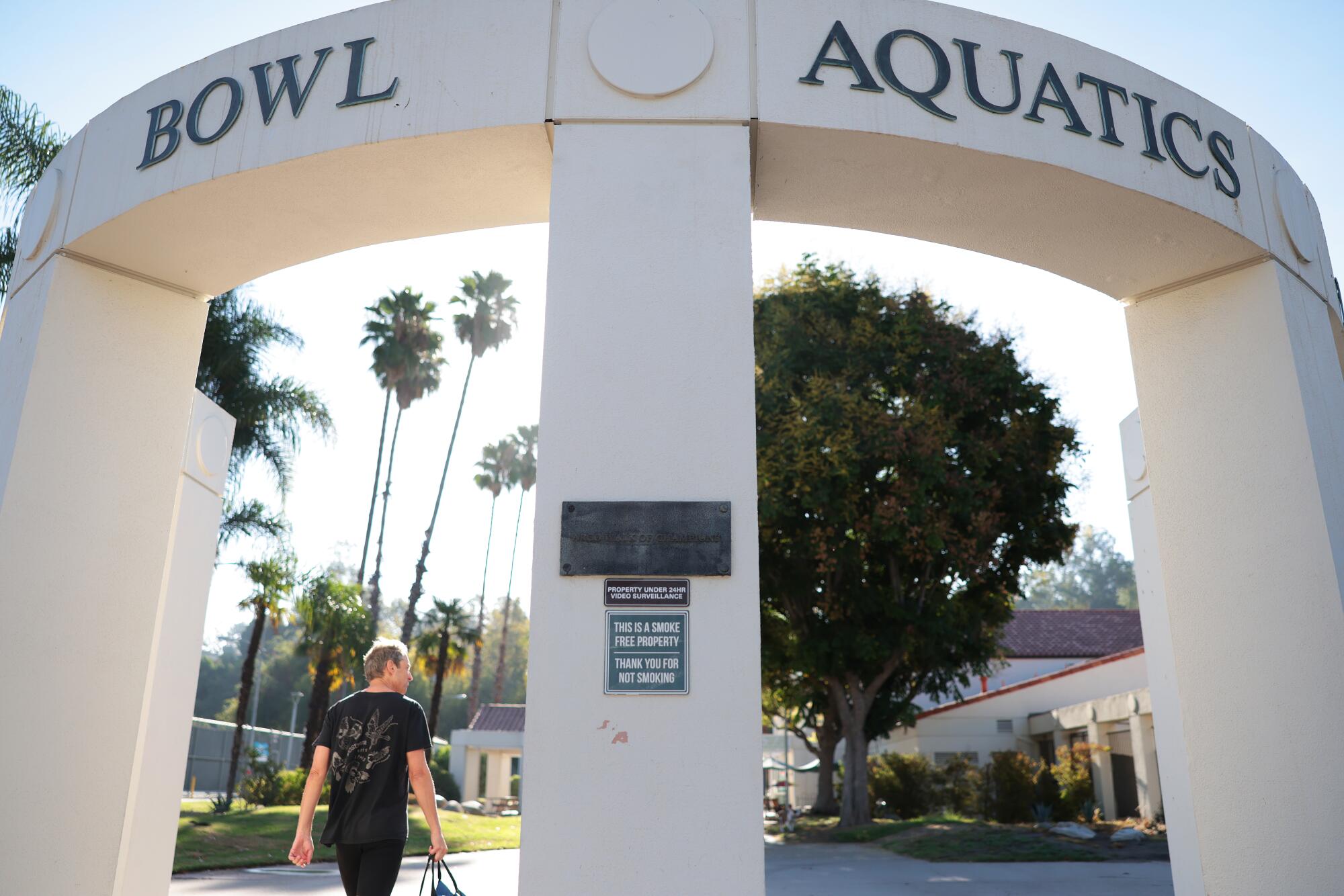
When they landed the diving competition for the 2028 Summer Olympics last year, operators of the Rose Bowl Aquatics Center in Pasadena trumpeted it as a gold-medal achievement. But swimmers and others who use the facility are now learning that pre-Olympic construction probably will force them out of three immensely popular swimming pools for more than a year.

The Aquatics Center will close as early as next April, and not be returned to its regular users until after the Olympics conclude in the summer of 2028, people with knowledge of the plans confirmed to The Times.

Such a prolonged closure will send the more than 400,000 people who pour through the center’s turnstiles each year scrambling to find other places to swim, dive, play water polo and aqua-aerobicize. The center’s two 50-meter pools and an adjacent therapy pool will be closed, along with two expansive hot tubs, the people said.

Aquatics Center operators declined to discuss details of the shutdown, saying they plan to make an announcement Monday. They said it’s premature for them to discuss what improvements the Games will bring to the 36-year-old swim complex, as those negotiations have not been concluded.

The Rose Bowl Aquatic Center is set to close next year to make way for reconstruction for diving in the 2028 Olympics.

The Rose Bowl Aquatic Center in Pasadena, shown on Friday, is set to close next year to make way for reconstruction as the center will host diving in the 2028 Olympics.

(Christina House / Los Angeles Times)

Jacie Prieto Lopez, vice president of communications for LA28, the Olympics organizing group, confirmed that improvements would be made to the facility but said specifics were still being sorted out.

“We cannot comment on specific facility improvements as those remain under active discussion between LA28 and the Rose Bowl Aquatic Center,” Prieto Lopez said “But based on initial evaluations of the existing facility, improvements could include the pool, diving tower and mechanical systems.”

Opened in 1990, in part with profits from the 1984 Los Angeles Olympics, the Aquatic Center was once viewed as a state-of-the-art facility. But it has grown somewhat shopworn and in need of a makeover. The operators of the center expect LA28 will pay for some of that work.

While LA28 officials wouldn’t discuss details, people familiar with their view said the Olympic organizers would balk at bankrolling every upgrade pined for by the city of Pasadena (which owns the facility) and the nonprofit that operates the center.

The massive deck around the swimming pools has grown rough in places. The locker rooms are cramped. Aged pumps and filters need an upgrade. Who should pay for these improvements has been the subject of prolonged discussion between LA28 and the Rose Bowl Aquatics Center operators, the people familiar said.

“At the end of the day, it’s going to be a win-win for LA28 and the Aquatics Center,” said one of the people, who wasn’t authorized to speak publicly. “The LA28 group is putting in a lot of investment. That should account for the fact the Rose Bowl will be losing revenue during the closure.”

Aquatics Center loyalists, however, wonder how they will cope with the loss of their pools.

“The pool helps me keep my weight down. It keeps my blood sugar down. It’s just everything to me,” said Elizabeth Ramirez, a social worker from Alhambra, after emerging from a morning aqua-aerobics class. “So when it closes down, it’s gonna definitely have an impact on my health. … Hopefully they will be able to tell us [about] another place where we will be able to go.”

Lynn Roberts, with one leg stunted by childhood polio, finds her time in the pool “life changing, because in the water I can do the things that everyone else does.” She knows that Rose Bowl is looking for alternative locations, but so far there are no details. The thought of the pool being closed for more than a year is “a big thing,” she said, adding “People are very, very concerned.”

An aerial view of the Rose Bowl Aquatic Center in Pasadena.

The Rose Bowl Aquatic Center on April 6 in Pasadena. The facility will host diving in the 2028 Olympic Games.

(Eric Thayer / Los Angeles Times)

Like a dozen other regulars, Bonnie Stern talked about the social hub the Aquatics Center creates. It’s been her gateway to new friendships, a walking group, brunches and even a regular happy hour.

“We’re all really concerned. There’s such a wonderful community here,” said Stern, who works in the entertainment industry. “We haven’t heard yet where we can go. And where are we going to be able to find what we have now?”

The complex also rents space to a cafe and a separate shop, the Swim Guy. Michael Eisenberg, who co-owns the swim equipment business with his brother, Craig, worries about losing clientele.

“We spent a lot of money setting this up and building our relationships with customers and teams,” Michael Eisenberg said.The RBAC asked us if we could stay open and service the community during construction, but I don’t see how we can do that, since all our teams and the public will be scattered to different pools in the area. My brother and I are kind of freaking out about it about how best to serve the teams and the public and the financial cost of closing.”

Aquatics Center executive director Melanie Sauer said the nonprofit and its many user groups — for youth swimming, Masters swimming, water polo and more — are working fervently to find alternative pools. Rose Bowl Masters Swimming (to which the writer of this article belongs) already has launched new workouts at Occidental College in Eagle Rock and is talking to other pool operators.

The financial losses during the closure could be significant. The Aquatic Center reported $8.6 million in receipts from admissions, merchandise and services in 2024, the most recent year reported on its federal tax filings. Another $1.6 million came in via gifts, grants, contributions and membership fees.

Sauer said that an “RBAC on the Road” program will seek to draw payments from user groups when they relocate to other pools. She said it’s premature to provide any details of those arrangements.

Organizers of the Games announced the shift to the Rose Bowl center — in the Arroyo Seco just south of the more than 100-year-old football stadium — in September of last year. Previously, the Games planned to have divers compete at the LA84 Foundation/John C. Argue Swim Stadium, immediately southwest of the Los Angeles Memorial Coliseum, which will host track and field events.

A drone view of the pool, lower right, at Exposition Park in Los Angeles.

A drone view of the pool, lower right, at Exposition Park on Nov. 10, 2025, in Los Angeles.

(Eric Thayer / Los Angeles Times)

But the Exposition Park pool, used for the 1932 Los Angeles Olympics, was not deep or wide enough for diving. And it would have proven more costly to retrofit than the Rose Bowl pool.

“This facility requires minimal work, provides additional amenities for athletes, and accounts for up to $17.6 million in revenue increases and cost savings,” LA28 said when it announced the shift to the Rose Bowl pool.

People familiar with the plans for the Pasadena complex say that Olympic diving fans will be seated in bleachers that will be erected atop the “competition” pool, which sits closest to the parking lot. Additional seats may wrap around the north end of the dive pool.

That pool’s 10-meter platform, originally constructed with a donation from the late televangelist Gene Scott, will be torn down and replaced. One plan being considered by LA28 organizers would eschew the existing locker rooms in favor of temporary modular structures, the sources said.

LA28 officials believe that any short-term losses to the center will be more than made up for by the long-term gains from the international attention the pools will receive and the promise that other major swimming and diving events will be held there, according to people who have spoken to the Olympic organization. LA28 officials point to an analysis by the Southern California Assn. of Governments that projected the Games will generate more than $17 billion in gross domestic product for the region.

1

A child jumps off a diving board.

2

Margaret Shieh, 79, of San Marino, participates in a water fitness class.

3

Swimmers do laps at the Rose Bowl Aquatic Center.

1. A child jumps off a diving board. 2. Margaret Shieh, 79, of San Marino, participates in a water fitness class. 3. Swimmers do laps at the Rose Bowl Aquatic Center. (Christina House / Los Angeles Times)

Both the 2028 Games and those future events will help fill Pasadena hotels, restaurants and shops, bolstering the local economy and adding tax dollars to the city treasury, according to supporters of the plan. The pool is being considered as the site of the 2028 Olympic diving trials, one source said.

“This historic opportunity will shine a global spotlight on our community,” the Aquatic Center proclaimed last year. “We look forward to keeping you updated as more details become available.”

Source link

U.S. review of Mexican consulates stokes worries vital services may be lost

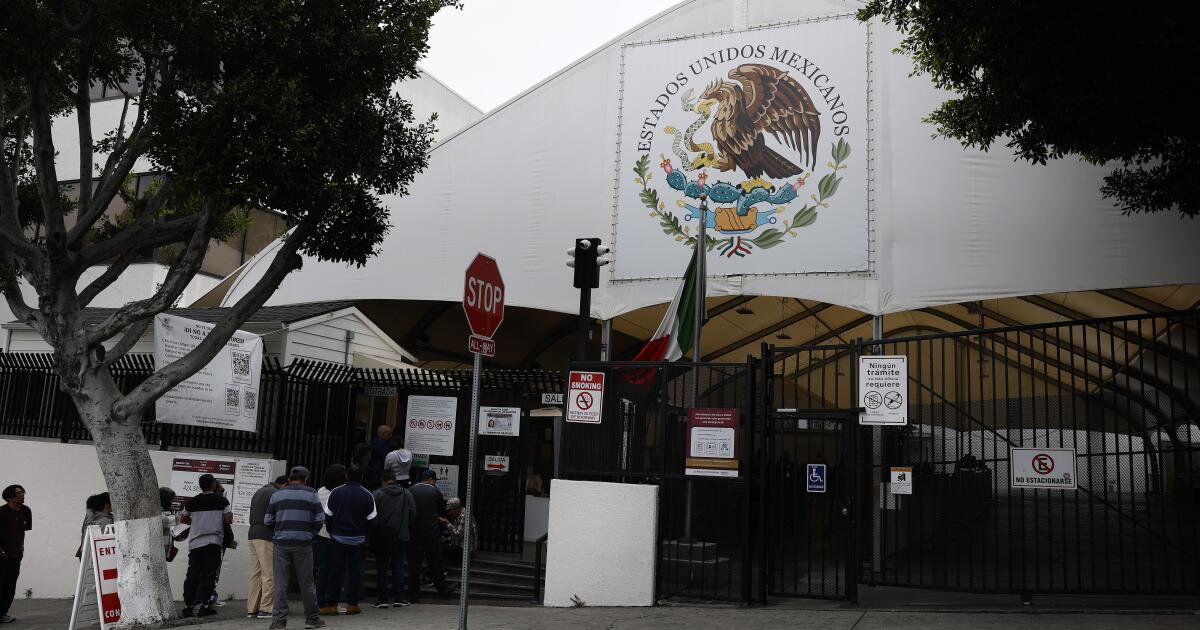
Mexico’s consulate in Los Angeles helps thousands of citizens each week, assisting them with registering births, obtaining passports and, increasingly since President Trump’s second term began, accessing legal help for loved ones who have fallen afoul of his administration’s immigration policies.

Although it serves the country’s biggest Mexican community, all 53 Mexican consulates in the U.S. provide services that make Mexican people’s lives easier — just like the nine U.S. consulates in Mexico improve the lives of Americans south of the border.

The U.S. State Department has launched a review that might lead to the closure of an unknown number of Mexican consulates. Although it hasn’t said why, the review is happening against the backdrop of the immigration crackdown, some thorny bilateral issues and far-right theories that the consulates have been interfering in U.S. politics and encouraging Mexicans to migrate northward.

Azucena Aviles, a 33-year-old mother who drove more than an hour to the L.A. consulate this month to renew her Mexican passport and get one for her daughter, said consular services are invaluable — especially in California, which is home to nearly 13 million people of Mexican descent, including an estimated 1.7 million who are in the U.S. illegally.

“It wouldn’t be fair if they messed with the Mexican people, especially with our support systems, which come from the Mexican consulate and which, in some way, help or protect our fellow Mexicans,” she said.

Trump has been exerting growing pressure on Mexico, with questions looming over issues including human rights, national sovereignty and regional diplomacy.

His administration has given only the broadest of explanations for launching its review.

“Department of State is constantly reviewing all aspects of American foreign relations to ensure they are in line with the President’s America First foreign policy agenda and advance American interests,” Dylan Johnson, assistant secretary of State for global public affairs, wrote in an email.

Among the possible reasons for the review is that it could somehow fit into the Trump administration’s immigration efforts to deport people in the U.S. illegally. The largest contingent of such people — an estimated 4.3 million, according to the Pew Research Center — are Mexican.

Relations between the two countries could also play a role, with Trump increasing pressure on Mexico in the run-up to free trade negotiations important to both nations’ economies, taking a more aggressive approach toward the U.S.’ southern neighbor and even threatening to take military action against Mexican cartels.

Mexican President Claudia Sheinbaum has avoided head-on conflicts with Trump and instead relied on diplomacy, including sending top officials to Washington and seeking to maintain a strong relationship with the Trump administration by cracking down on Mexican cartels. Sheinbaum and her predecessor have also been key allies in slowing migration to the U.S. and speeding up the deportation of other Latin American migrants.

But Sheinbaum has taken a firmer stance in regards to the deaths of Mexicans in U.S. immigration detention centers, calling them unacceptable and saying the conditions in such lockups were “incompatible with human rights standards and the protection of life.” She instructed Mexican consulates to visit detention centers daily to help ensure detained citizens are being held in safe conditions.

Relations rapidly deteriorated in recent weeks after the U.S. indicted several Mexican officials on drug trafficking charges, and two CIA officers died following an anti-narcotics operation in northern Mexico — American involvement that Sheinbaum said her government had not authorized. That drug raid raised uncomfortable questions in Mexico about the extent of U.S. involvement in domestic security operations.

Years of tit-for-tat tariffs between the two countries have also added strain.

A review of foreign consulates is “usually a sign that a bilateral relationship is in a very, very rocky moment,” said Arturo Sarukhan, a former Mexican ambassador to the U.S. In Mexico’s case, it comes at “the worst moment of the U.S.-Mexico relations” in decades, given all the current points of contention, he said.

Further straining relations is a theory being amplified by Peter Schweizer, a writer with a following among Trump loyalist who has claimed that Mexican consulates interfere in U.S. politics and encourage migration to the U.S. Experts say that although a few Mexican consulate officials may have sought to influence politics back home, there is no evidence of them interfering in U.S. elections.

In response to the State Department review, Sheinbaum said the idea that Mexican consulates are “playing politics in the United States is completely false.” She said the job of consulates anywhere is to “always protect” citizens.

Sarukhan too said that although consulates defend the rights of Mexican citizens, there is no evidence that they are interfering in U.S. elections.

Whatever the reasons for the consulate review, it has stoked worries.

During a weekly public forum at the L.A. consulate, a woman who didn’t give her name and whose husband had been in U.S. immigration detention asked for help finding him a lawyer, highlighting one crucial service consulates provide for their citizens.

An older man said he had heard about the review and asked about possible closures.

Carlos González Gutiérrez, Mexico’s top diplomat in Los Angeles, responded that, as Sheinbaum said, there would be “no reason whatsoever” for the U.S. to close a Mexican consulate.

Indeed, consulates would have significant, devastating effects for Mexican immigrants,” especially in isolated areas, said Ariel Ruiz Soto, a senior policy analyst for the Migration Policy Institute.

Every day, consular officials go to the Immigration and Customs Enforcement holding center in downtown Los Angeles to identify and interview as many detained Mexican nationals as they can.

González Gutiérrez, 62, begins every weekly public forum by noting how many detained Mexicans consular officials have interviewed since the immigration crackdown began in Los Angeles last June.

At that May 11 meeting, the figure stood at 1,940. Nearly half had deep roots in the U.S., he said. About 46% have been deported, 35% have children born in the U.S., 69% entered the country through a port of entry, 6% overstayed a visa and 2.5% requested asylum. Most were men, and many worked in construction, agriculture, gardening and the service industry.

He also disputed the claim that Mexican consulates are interfering in U.S. politics.

“We are guests of this country’s government, just as U.S. consuls are guests of the Mexican government. In that sense, we are neither activists nor spies,” said González Gutiérrez. “We carry out our work openly, within a pluralistic and democratic society.”

Pineda and Janetsky write for the Associated Press. Janetsky reported from Mexico City.

Source link

Travel industry worries after Trump administration reiterates threat to ‘sanctuary city’ airports

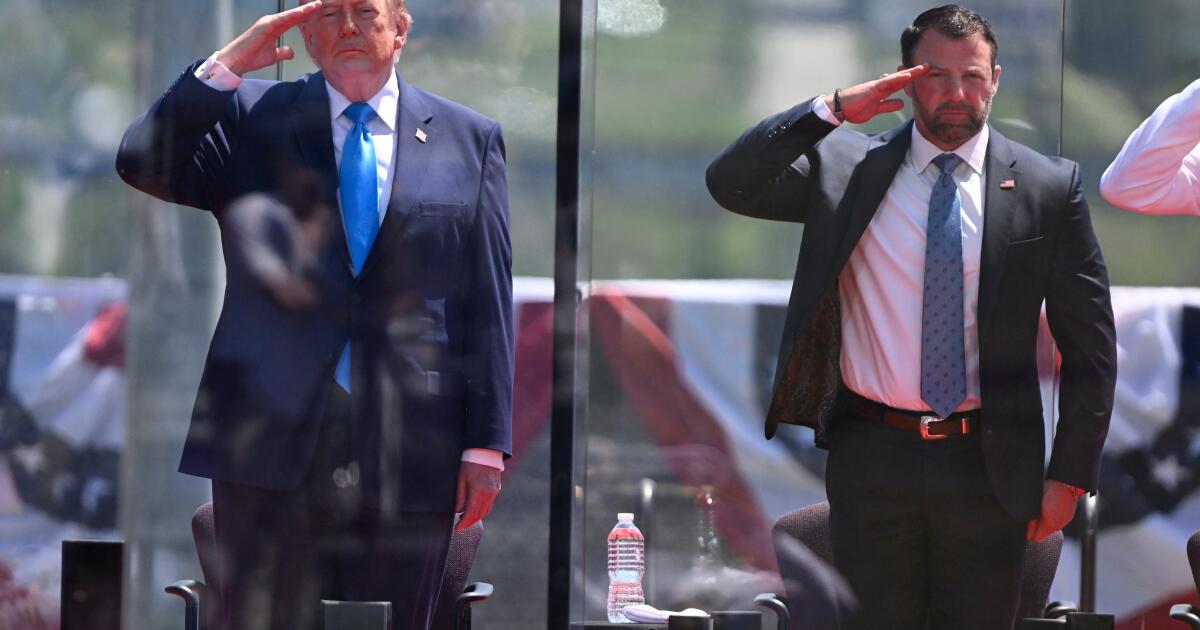
The travel industry is on edge after Homeland Security Secretary Markwayne Mullin reiterated his threat to withdraw U.S. Customs and Border Protection officers from airports in so-called sanctuary cities in a move that could jeopardize international flights.

The U.S. Travel Assn. said that Mullin confirmed he is considering withdrawing the officers in a meeting where the trade group was pressing its concerns about other proposals the Trump administration is considering that could hamper travel. The travel association and major airlines quickly condemned the idea, and even Transportation Secretary Sean Duffy said it doesn’t make sense to him.

“U.S. Travel believes such a move would have devastating consequences for the travel industry and communities that depend on international visitation,” the industry group said Friday in a statement.

Details of the meeting were first reported by the Atlantic.

Duffy said at a congressional hearing this week that he wasn’t familiar with Mullin’s remarks, and he’d like to learn more about the context and maybe ask Mullin a question about what he meant. But Duffy said it would be a bad idea to start restricting travel based on political views. After all, he acknowledged, at some point Democrats will be in charge and “you will all switch spots at one point — hopefully not too soon, Mr. Chairman.”

“We have people from around the world and around the country that need to be able to fly into all different kinds of places. We shouldn’t shut down air travel in a state that doesn’t agree with our politics,” Duffy said.

So it’s not clear how much support this idea has within the administration, though President Trump has previously threatened to withhold funding from sanctuary cities.

There is no strict definition for sanctuary policies or sanctuary cities, but the terms generally refer to jurisdictions that limit cooperation with U.S. Immigration and Customs Enforcement. And courts have rejected the idea of pulling funding from them in the past.

In Trump’s first term in office, in 2017, courts struck down his effort to cut funding to the cities.

It’s not clear exactly which cities and airports Mullin might target, but the Justice Department last year published a list of three dozen states, cities and counties that it considers to be sanctuary jurisdictions. They include California, Los Angeles, San Francisco and San Diego County.

The Airlines for America trade group was quick to say the idea would hurt the economy and disrupt travel.

“Reducing CBP staffing at major airports would have a devastating effect on the airline and tourism industries, causing a significant operational disruption to carriers, travelers and the flow of international cargo.”

Funk and Yamat write for the Associated Press.

Source link