World

IDF says viral photo of Israeli soldier smashing Jesus statue is real

April 19 (UPI) — The Israel Defense Forces confirmed Sunday that a photo showing an Israeli solider smashing the head of a statue of Jesus in southern Lebanon is authentic.

The photo, originally posted on X by Palestinian journalist Younis Tirawi, quickly went viral across social media, drawing condemnation from Christians, Palestinians and others in the war-torn region.

After initially pledging an investigation into the photo, the IDF later announced they had found it to be real and not an artificial intelligence fabrication.

“Following the completion of an initial examination regarding a photograph published earlier today of an IDF soldier harming a Christian symbol, it was determined that the photograph depicts an IDF soldier operating in southern Lebanon,” the military announced.

“The IDF views the incident with great severity and emphasizes that the soldier’s conduct is wholly inconsistent with the values expected of its troops.

“The incident is being investigated by the Northern Command and is currently being addressed through the chain of command. Appropriate measures will be taken against those involved in accordance with the findings.”

The Israeli military added it is “working to assist the community in restoring the statue to its place” and vowed it has “no intention of harming civilian infrastructure, including religious buildings or religious symbols,” in its fight against Hezbollah militia forces in southern Lebanon.

The photo stirred up outrage among Christians, Palestinians and others in the Middle East.

Wadie Abunassar, coordinator of the Holy Land Christian Forum, a group of Christian laity advocating for the Christian presence in the region, called for action on the part of Israeli authorities.

“Israel has to inquire this crime, to apologize for it, to bring suspect to justice, & make sure it won’t be repeated!” he wrote in a social media post.

Meanwhile, Ayman Odeh, a Palestinian member of the Israeli parliament, added sarcastically, “We’ll wait to hear the police spokesperson claim that ‘the soldier felt threatened by Jesus.'”

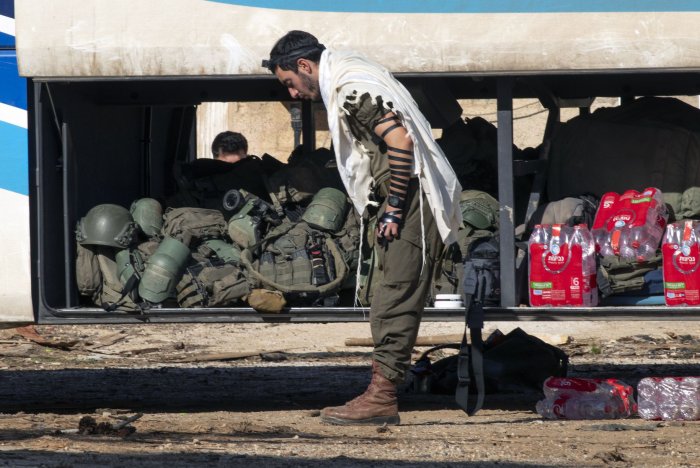
An Israeli infantry soldier says his morning prayers near a bus loaded with combat gear inside northern Israel along the southern Lebanon border on February 18, 2025. Photo by Jim Hollander/UPI | License Photo


Source link

North Korea fires missiles, signaling broader nuclear delivery push

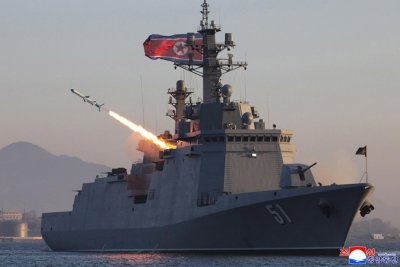
A test-fire of strategic cruise missiles and anti-warship missiles from the destroyer Choe Hyon in North Korea, 12 April 2026 (issued 14 April 2026). File. Photo by KCNA / EPA

April 19 (Asia Today) — North Korea launched multiple ballistic missiles on Saturday, just 11 days after its previous test, in what analysts describe as an effort to expand and demonstrate its nuclear delivery capabilities.

South Korea’s Joint Chiefs of Staff said the missiles were fired around 6:10 a.m. from the Sinpo area on the country’s east coast and flew about 140 kilometers over the East Sea.

The launch site, near a key submarine facility, has raised the possibility that the weapons could be linked to submarine-launched ballistic missile development, though officials said further analysis is needed.

The Joint Chiefs of Staff said it is assessing the missiles’ specifications and whether they were launched from land or underwater.

Sinpo is home to North Korea’s main submarine shipyard, where vessels such as the “Kim Gun-ok Hero” submarine have previously been unveiled.

Recent satellite imagery cited by the North Korea-focused outlet 38 North indicated that another submarine had been moved to dry dock, suggesting possible preparations for additional testing.

Yang Wook, a research fellow at the Asan Institute for Policy Studies, said the relatively short flight distance raises questions about whether a full submarine-based launch was conducted.

“Given the 140-kilometer range, it is unclear whether this was a full SLBM test, but the location suggests it could be part of efforts to verify repeated launch capability,” he said.

If confirmed as an underwater launch, the test would mark North Korea’s latest step in diversifying its nuclear delivery systems, following demonstrations involving land-based missiles and sea-based platforms in recent weeks.

Under its latest defense development plan, North Korea has been expanding a range of strategic capabilities, including short-range ballistic missiles, hypersonic weapons, cruise missiles and solid-fuel intercontinental ballistic missile engines.

Analysts say the timing may also reflect broader geopolitical considerations. With the United States focused on conflict in the Middle East, North Korea could be seeking to exploit a perceived security gap while reinforcing its deterrence posture.

Some experts also suggest the launch may be intended to strengthen Pyongyang’s bargaining position ahead of potential diplomatic engagement tied to an expected visit by President Donald Trump to China next month.

— Reported by Asia Today; translated by UPI

© Asia Today. Unauthorized reproduction or redistribution prohibited.

Original Korean report: https://www.asiatoday.co.kr/kn/view.php?key=20260420010005867

Source link

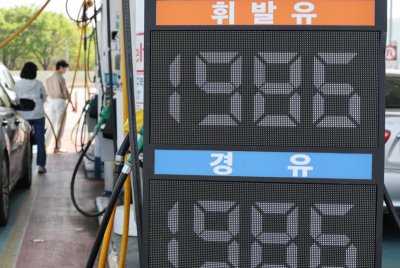
South Korea fuel prices rise for third straight week

Gasoline and diesel fuel prices are displayed on a screen inside a gas station in Seoul, South Korea, 19 April 2026. The average gasoline price in the country rose 0.42 won (0.0003 US dollar) from a day earlier to 2,001.93 won per liter on the same day, according to data from Korea National Oil Corp. Photo by YONHAP / EPA

April 18 (Asia Today) — Average gasoline and diesel prices at South Korean gas stations rose for a third straight week, putting both fuels on the verge of topping 2,000 won per liter.

The average nationwide gasoline price for April 12-18 stood at 1,996.3 won per liter, or about $1.36 a liter and $5.15 a gallon. That was up 28.7 won from 1,967.6 won a week earlier. Diesel averaged 1,990.2 won per liter, or about $1.36 a liter and $5.13 a gallon, up 31.1 won from the previous week.

With both fuels nearing the 2,000 won threshold, the government is set to announce its fourth maximum-price notice on Thursday. The current system partially reflects changes in global oil prices while slowing the pace of retail price increases.

By brand, SK Energy had the highest gasoline price at 2,001.8 won per liter, or about $5.16 a gallon, while self-service budget stations were the cheapest at 1,974.7 won. For diesel, SK Energy was also the highest at 1,995.2 won per liter, while budget stations posted the lowest average at 1,966.1 won.

By region, Jeju had the country’s highest average gasoline price this week at 2,029 won per liter, or about $5.23 a gallon. Seoul followed at 2,026.7 won, or about $5.23 a gallon.

International oil prices have recently eased on expectations that the conflict involving the United States and Iran could wind down. Dubai crude, the benchmark for South Korea’s imported oil, stood at $101.8 a barrel on Wednesday, down $4.7 from $106.5 on Sunday. Changes in global oil prices usually reach domestic pump prices with a two- to three-week lag.

— Reported by Asia Today; translated by UPI

© Asia Today. Unauthorized reproduction or redistribution prohibited.

Original Korean report: https://www.asiatoday.co.kr/kn/view.php?key=20260418010005586

Source link

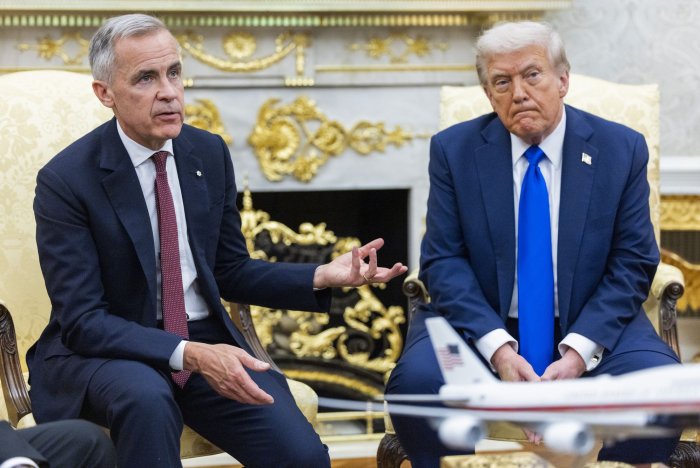
Canadian PM Mark Carney calls close trade ties to U.S. a ‘weakness’

April 19 (UPI) — Citing steep tariffs imposed by U.S. President Donald Trump, Canadian Prime Minister Mark Carney said Sunday his country’s historically close trade and economic ties to the United States have become a “weakness.”

In a video statement posted to YouTube, the Canadian leader asserted the United States has “fundamentally changed its approach to trade, raising its tariffs to levels last seen during the Great Depression.”

This has meant that “many of our former strengths, based on our close ties to America, have become our weaknesses — weaknesses that we must correct.”

Carney’s comments as Trump’s trade war with Canada has disrupted decades of cross border cooperation, triggered in part by a broad 10% tariff slapped by Washington onto all goods not excluded under the Canada-US-Mexico free trade agreement known as CUSMA.

Significantly higher U.S. levies have also been imposed on key strategic sectors, including a 50% tariff on Canadian products that are almost entirely made of steel, aluminum or copper, and a 25% tariff on products that are “largely” made of those metals.

Many types of Canadian heavy equipment also face a 15% tariff upon entry into the United States.

Ottawa says the effect of these measures has been profound, “displacing workers, disrupting supply chains, forcing companies to rethink where they source their materials and products, and causing uncertainty that is curbing investment.”

Although Canada still has the best deal of any U.S. trading partner in an era when Trump has used the threat of tariffs and against both allies and adversaries for strategic and political ends, “we cannot rely on our most important trade relationship as we once did. We must build our strength at home,” Carney said.

“Workers in our industries most affected by U.S. tariffs in autos and steel and lumber are under threat,” he added. “Businesses are holding back investments restrained by the pall of uncertainty that’s hanging over all of us.”

Triggered by the U.S. trade actions and Trump’s oft-repeated desire to annex Canada as the “51st state,” Carney’s Liberal Party government in January made a milestone deal with China to lower some of the tariffs imposed by one another on some of their trade goods.

Under that pact, China lowered its tariffs on Canadian agricultural products, while Canada slashed its tariffs on up to 49,000 electric vehicles that are made in China.

The deal was denounced by Trump, who threatened to impose a 100% tariff on all Canadian goods sent to the United States in response.

“China will eat Canada alive, completely devour it, including the destruction of their businesses, social fabric and general way of life,” the U.S. president asserted.

But Carney on Sunday again defended his expansion of trade away from the United States, saying, “We will attract new investment so we can build more for ourselves, striking new partnerships abroad so we can sell into new markets.

“It’s about taking back control of our security, our borders and our future.”

President Donald Trump meets with Canadian Prime Minister Mark Carney in the Oval Office of the White House in Washington on October 7, 2025. Photo by Shawn Thew/UPI | License Photo

Source link

British foreign office official fired for not disclosing ambassador failed security check

British Prime Minister Keir Starmer fired the most senior civil servant in the Foreign Office for failing to disclose that former ambassador to the United States Peter Mandelson failed his security check. Pool Photo by Betty Laura Zapata/EPA

April 17 (UPI) — British Prime Minister Keir Starmer fired the most senior civil servant in the Foreign Office for failing to disclose that former ambassador to the United States Peter Mandelson failed his security check.

Starmer called the official, Olly Robbins, on Thursday and informed him that he had lost confidence in him, as did Foreign Secretary Yvette Cooper. Starmer said Friday that he was “absolutely furious.”

“I was not told that he failed security vetting,” Starmer said Friday in Paris. “No minister was told that he failed security vetting. Number 10 wasn’t told that he failed security vetting.”

Mandelson was named ambassador to the United States in December 2024 and assumed the role in February 2025.

He was fired in September after the U.S. House Oversight Committee released a batch of files from the investigation into convicted sex offender Jeffrey Epstein which included correspondence between Epstein and Mandelson.

The British government said Thursday that Starmer was unaware Mandelson had failed the security vetting process and the Foreign Office defied the recommendation of the Cabinet Office to allow him to assume the ambassador role.

Foreign Affairs select committee chairwoman Emily Thornberry has requested that Robbins speak before the committee on Tuesday about Mandelson. Robbins has been questioned by members of parliament about the Mandelson security clearance incident once before.

Thornberry said members of parliament have only been told “half the story.”

“Perhaps he can tell us — was it his own idea or was he being leant on elsewhere,” Thornberry said of Robbins not alerting of Mandelson’s vetting failure. “Or was he, being a civil servant, was he getting direction from elsewhere, and if so, by whom?”

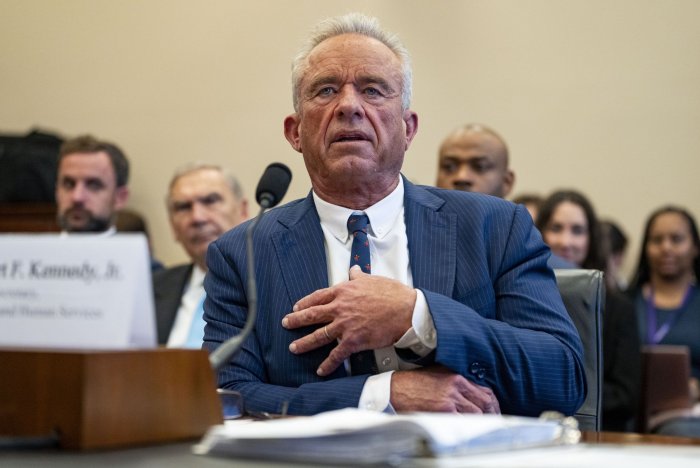
Secretary of Health and Human Services Robert F. Kennedy, Jr. speaks during a House Appropriations Subcommittee on Labor, Health and Human Services, Education, and Related Agencies hearing on the budget for the Department of Health and Human Services in the Rayburn House Office Building near the U.S. Capitol on Thursday. Photo by Bonnie Cash/UPI | License Photo

Source link

South Korea: North Korea test launched ballistic missiles into East Sea Sunday

This image, released on March 20, by the North Korean Official News Service (KCNA), shows North Korean leader Kim Jong Un and his daughter, Kim Ju Ae, observing a military exercise involving tanks, drones, and other munitions. File Photo by KCNA/UPI | License Photo

April 19 (UPI) — South Korea’s Defense Ministry said North Korea test launched multiple, short-range ballistic missiles into the East Sea, also known as the Sea of Japan, Sunday morning.

“Detailed specifications are currently under close analysis by South Korean and U.S. intelligence authorities,” officials in Seoul said in a statement, according to ABC News.

“Our military is closely monitoring North Korea’s military activities under a firm combined defense posture and maintains an overwhelming capability and readiness to respond to any provocation.”

The Japan Times said the Defense Ministry of Japan also confirmed the activity.

“North Korea’s series of actions, including the repeated launches of ballistic missiles and other weapons, threaten the peace and security of Japan, the region and the international community,” the ministry said in a statement.

Newsweek said Pyongyang has increased its ballistic missile testing and nuclear weapons development since the conflict between the United States, Israel and Iran began nearly two months ago.

Sunday’s missile launches appear to have come from Sinpho, a coastal city in North Korea where submarines capable of launching such weapons are built.

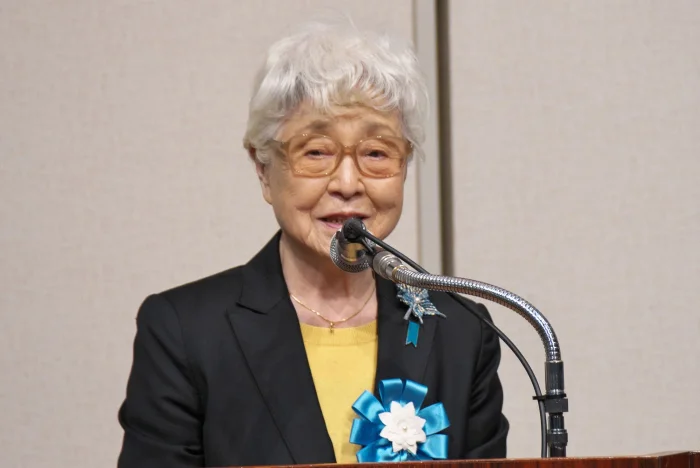
Sakie Yokota, mother of Megumi Yokota, who was abducted by North Korea, speaks during a rally demanding the immediate return of all abductees in Tokyo on November 3, 2025. Photo by Keizo Mori/UPI | License Photo

Source link

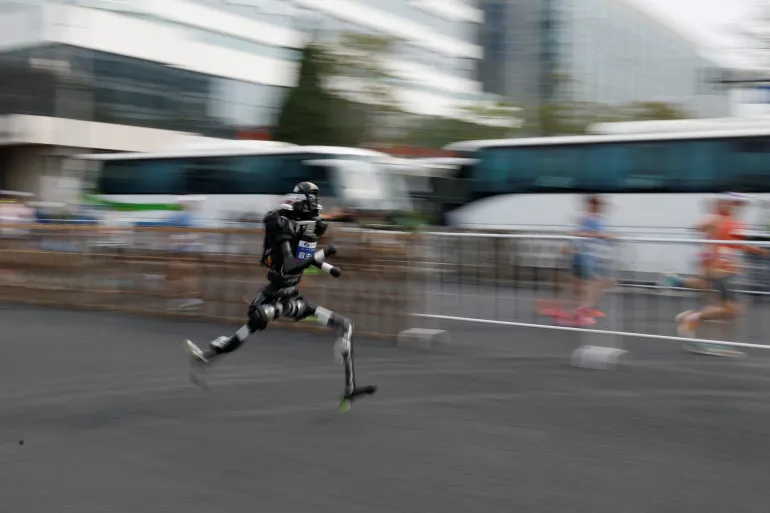
Humanoid robot breaks half marathon world record in Beijing | Science and Technology News

The humans were left far behind as smartphone maker Honor’s humanoid robot shattered the men’s world record in China.

A humanoid robot competing against flesh-and-blood runners has broken the world record at a Beijing half-marathon, showcasing the rapid technological advancements achieved by Chinese makers.

Spectators lined the roads in Yizhuang in the capital’s south on Sunday to watch the machines and their human rivals race, each group in a separate lane to avoid accidents or collisions.

Recommended Stories

list of 4 itemsend of list

Some of the robots were highly agile, moving like famous runners such as Usain Bolt, while others had more basic capabilities.

The winning humanoid, equipped with an autonomous navigation system and running for Chinese smartphone maker Honor, completed the roughly 21km (13-mile) course in 50 minutes and 26 seconds, at an average speed of about 25km/h (15.5mph), according to state broadcaster CCTV.

That was far faster than the top human in Sunday’s race, while also surpassing the current men’s world record of 57:20, held by Ugandan runner Jacob Kiplimo.

The result represented spectacular progress from last year, when robot-runners fell repeatedly, and the best took more than two hours and 40 minutes to finish.

The number of humanoid entries jumped from about 20 last year to more than 100, according to organisers, a sign of the sector’s growing popularity.

Humanoid robot in action.
A humanoid robot runs alongside human competitors in the second Beijing E-Town Half Marathon and Humanoid Robot Half Marathon in Beijing [Haruna Furuhashi/Pool via Reuters]

‘Pretty cool’

Han Chenyu, a 25-year-old student who watched the race from behind a safety barrier, barely had time to take out her phone and snap a picture of the leading robot as it whizzed past.

She told the AFP news agency she was enthusiastic about such leaps in technology and thought the event was “pretty cool”.

But, she added, “as someone who works for a living, I’m a little worried about it sometimes. I feel like technology is advancing so fast that it might start affecting people’s jobs”, particularly with artificial intelligence (AI) growing increasingly sophisticated.

Humanoid robots have become a common sight in China in recent years, in the media as well as in public spaces.

Xie Lei, 41, who watched Sunday’s race with his family, said robots could “become part of our daily lives” within several years, potentially used for “things like housework, elderly companionship or basic caregiving” or “dangerous jobs, even firefighting”.

The humanoid half-marathon aims to encourage innovation and popularise the technologies used in creating and operating such machines.

In a sign of the industry’s strength, investment in robotics and so-called embodied AI amounted to 73.5 billion yuan ($10.8bn) in China in 2025, according to a study by a government agency.

“For thousands of years, humans have been at the top on planet Earth. But now, look at robots. Just in terms of autonomous navigation, at least in this specific sport event, they’re already starting to surpass us,” Xie said.

“On one hand, it does make you feel a little bit sad for humanity. But at the same time, technology, especially in recent years, has given us so much imagination.”

Source link

China posts 5.0% Q1 growth, defying war concerns

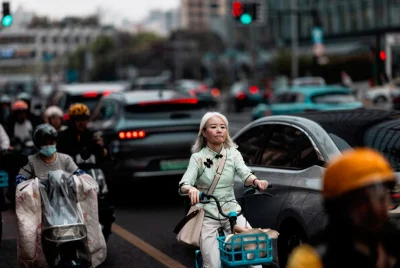
People ride on bicycles and scooters on a street, in Shanghai China, 10 April 2026. Photo by ALEX PLAVEVSKI / EPA

April 16 (Asia Today) — China’s economy grew 5.0% in the first quarter, exceeding expectations despite concerns over the impact of the Iran conflict, official data showed Thursday.

The National Bureau of Statistics said gross domestic product rose 5.0% from a year earlier, topping the 4.8% forecast by economists surveyed by Reuters and Bloomberg.

The stronger-than-expected growth was driven by manufacturing and exports. Industrial production rose 5.7% in March from a year earlier, while retail sales increased just 1.7%, highlighting weak consumer recovery.

High-tech industries showed particularly strong momentum. Output in the sector rose 12.5% in the first quarter, with industrial robot production up 33% and integrated circuit output increasing 24%. Manufacturing accounted for about one-third of overall economic growth.

The impact of the Iran conflict has so far been limited. Bloomberg reported that China’s efforts to bolster energy security, along with prolonged deflationary pressures, helped cushion the shock from rising oil prices. However, some effects were visible, including a 2.2% decline in refined oil production in March.

Domestic demand remains a key concern. Real per capita consumption rose just 2.6%, while wage growth slowed. The urban unemployment rate reached 5.4%, the highest level in a year.

Investment indicators were also weak. Fixed-asset investment increased 1.7% in the first three months of the year, while real estate investment fell 11.2%. Private investment declined for the first time outside the pandemic period.

Analysts said China’s economy continues to show an “imbalanced structure,” with growth driven by exports and manufacturing while domestic demand lags. Falling sales of automobiles, home appliances and furniture further point to soft consumption.

Policy responses are expected to remain measured. With growth exceeding expectations, pressure for large-scale stimulus has eased, and the government has set a relatively modest annual growth target of 4.5% to 5%.

Still, targeted fiscal support and cost-cutting measures are likely to continue to address rising energy prices and external uncertainties. Some economists also see room for monetary easing, including a possible reduction in banks’ reserve requirement ratio.

— Reported by Asia Today; translated by UPI

© Asia Today. Unauthorized reproduction or redistribution prohibited.

Original Korean report: https://www.asiatoday.co.kr/kn/view.php?key=20260416010005290

Source link

South Korea opposition leader delays return from U.S.

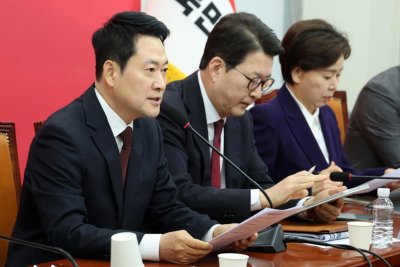
Jang Dong-hyeok (L), chief of the main opposition People Power Party, speaks during a meeting of the party’s Supreme Council at the National Assembly in Seoul, 02 February 2026. Photo by YONHAP / EPA

April 17 (Asia Today) — Jang Dong-hyuk, leader of South Korea’s main opposition People Power Party, has delayed his return from a U.S. visit by three days at the request of U.S. officials, party aides said Thursday.

Park Jun-tae, Jang’s chief of staff, told reporters at the National Assembly that Jang had originally planned to return later in the day but would now arrive early Sunday.

“While heading to the airport for departure procedures, special circumstances arose, leading to an extension of his schedule,” Park said.

The delay was made at the request of officials from the U.S. Department of State, Park added. He said speculation about possible meetings with Vice President JD Vance or Secretary of State Marco Rubio remained unconfirmed.

Some members of Jang’s delegation have already returned to South Korea, while others remain in the United States.

Jang departed for Washington on April 11 and was initially scheduled to return Friday via Incheon International Airport.

During the visit, he met with U.S. lawmakers including Bill Hagerty and delivered a speech at the International Republican Institute, where he emphasized the U.S.-South Korea alliance.

He also criticized the South Korean government’s policy toward North Korea, arguing it prioritizes dialogue over deterrence and risks weakening trust in the alliance. Jang called for “peace through strength” to counter North Korea’s nuclear threat.

— Reported by Asia Today; translated by UPI

© Asia Today. Unauthorized reproduction or redistribution prohibited.

Original Korean report: https://www.asiatoday.co.kr/kn/view.php?key=20260417010005446

Source link

Japan to create control system for defense exports

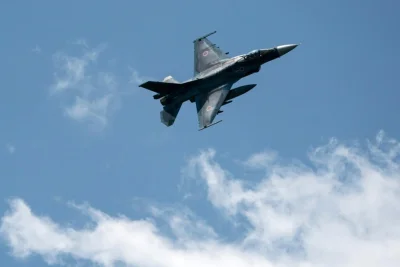
An F-2 fighter jet flies during a live fire exercise conducted by the Japan Ground Self-Defense Force (JGSDF) at East Fuji Maneuver Area in Gotemba, Shizuoka, Japan. Photo by Tomohiro Ohsumi / EPA

April 17 (Asia Today) — Japan is moving to strengthen a government-wide system to boost defense exports, including creating a centralized control structure and easing restrictions on what military equipment can be sold overseas, according to media reports.

The government plans to establish a director-general-level coordination body involving key ministries to oversee arms export policy and execution, the Asahi Shimbun reported Thursday.

Tokyo is also considering revising guidelines tied to its Three Principles on Defense Equipment Transfers to remove restrictions on five categories – rescue, transport, patrol, surveillance and mine countermeasures – that have limited exports so far.

According to Reuters, the government could move as early as this month to revise the guidelines, with the ruling Liberal Democratic Party already approving the direction at a party meeting Sunday.

The policy shift reflects a broader strategy with two main goals: expanding the range of weapons Japan can export and overhauling how those exports are managed.

Japan has effectively limited defense exports to non-lethal equipment in the past but is now moving to include systems with lethal capabilities. At the same time, the new coordination body would bring together the foreign, defense and industry ministries, along with private companies, to align export approvals, regulatory changes and sales support.

Prime Minister Sanae Takaichi said in parliament that easing arms export restrictions would contribute to economic growth, signaling a shift toward treating defense exports as part of industrial policy rather than solely a security measure.

Japanese officials have argued that expanding exports is necessary to sustain the domestic defense industry, maintain production capacity and secure supply chains that are difficult to support through domestic demand alone.

Analysts say the move goes beyond regulatory changes and represents a broader effort to build a national system designed to facilitate arms sales.

If implemented, the revisions would significantly lower barriers to exporting finished weapons, marking a major shift from Japan’s traditionally restrictive defense export framework.

— Reported by Asia Today; translated by UPI

© Asia Today. Unauthorized reproduction or redistribution prohibited.

Original Korean report: https://www.asiatoday.co.kr/kn/view.php?key=20260417010005454

Source link

Iran blocks Strait of Hormuz, fires on commercial ships

The Strait of Hormuz is closed again, this time by Iran. Two ships have reported being fired on in the strait Saturday. File Photo by Divyakant Solanki/EPA

April 18 (UPI) — Just one day after the Strait of Hormuz was declared open, Iran has blocked the passage again, citing “breach of promise” by the United States, and has begun firing on commercial ships.

Iran accused the United States of “banditry and piracy under the guise of a so-called blockade.”

“Until the United States ends its interference with the full freedom of movement for vessels traveling to and from Iran, the status of the Strait of Hormuz will remain under intense control and in its previous state,” Iran’s semiofficial Fars media said on X.

On Friday, Iranian Foreign Minister Seyed Abbas Araghchi said the Strait of Hormuz was open after a cease-fire in Lebanon.

But by Saturday morning, that had changed. President Donald Trump said the United States would continue blocking Iranian ships.

Gunboats fired on a tanker in the strait Saturday morning, CNN reported the United Kingdom Maritime Traffic Organization said.

The UKMTO said a tanker captain reported that it was “being approached by 2 [Islamic Revolutionary Guard Corps] gun boats,” about 20 nautical miles off the coast of Oman.

The captain said there had been no radio warning before the ship was fired on.

“Tanker and crew are reported safe,” UKMTO posted.

Just hours later, a container ship was hit by “unknown projectile which caused damage to some of the containers” about 25 nautical miles off the coast of Oman, CNN reported the UKMTO said. In the second event, the UKMTO did not say who was responsible for the attack. No fires or environmental damage have been reported.

Trump reported Saturday that talks between Iran and the United States were continuing but that “Iran got a little cute,” CNN reported.

“We have very good conversations going on,” Trump said. “They got a little cute, as they have been doing for 47 years.”

“They wanted to close up the strait again, as they’ve been doing for years. They can’t blackmail us,” the president said.

“We’re talking to them, and you know, we’re taking a tough stand. They killed a lot of people. A lot of our people have been killed,” Trump said.

On Friday, Trump told CBS News in a phone interview that Iran had “agreed to everything.”

He said that the United States would remove Iran’s enriched uranium but would not involve ground troops.

“No. No troops,” he said. “We’ll go down and get it with them, and then we’ll take it. We’ll be getting it together because by that time, we’ll have an agreement and there’s no need for fighting when there’s an agreement. Nice right? That’s better. We would have done it the other way if we had to.”

“Our people, together with the Iranians, are going to work together to go get it. And then we’ll take it to the United States,” he said.

But hours later, a spokesperson for Iran’s foreign ministry said in a statement, “Enriched uranium is as sacred to us as Iranian soil and will not be transferred anywhere under any circumstances. … Transferring uranium to the United States has not been an option.”

Source link

Life jacket of Titanic survivor sold for $900K at auction

A life jacket from a survivor of the Titanic tragedy sold at auction on Saturday for $906,000, and was among a collection of other artifacts from the doomed ocean liner. Photo courtesy Henry Aldridge & Sons

April 18 (UPI) — The only life jacket worn by a person who survived the sinking of the Titanic ever put up for auction was sold for $906,000 on Saturday.

The jacket, which was worn by Laura Mabel Francatelli, a passenger in first class who boarded lifeboat number 1, sold for nearly twice the roughly $473,000 it was expected to sell for., and reported.

The life jacket, sold during an auction that also included a handful of other Titanic artifacts, was sold by Henry Aldridge & Sons in Britain to the Titanic Museum and Attraction in Pigeon Forge, Tenn., and Branson, Mo., auctioneer Andrew Aldredge told The BBC.

Aldridge said that the life jacket is the only one from a survivor that has been offered for auction since the ill-fated ship set sale 114 years ago.

“It reflects the ongoing interest and passion for the story of the Titanic, and its passengers and crew,” he said, calling the opportunity to buy it a “once in a lifetime opportunity for collectors.”

Francatelli, who at the time of the sinking was husband of Sir Cosmo Edmund Duff-Gorden, a Scottish landowner and the 5th Baronet of Halkin, was the sister of novelist Elinor Glyn, and herself a famous dress designer who ran several famous salons in London, Paris and New York, according to Aldridge & Sons’ auction listing.

Her survival has carries slight controversy because the lifeboat that her husband shepherded several people onto as the Titanic was going down – for reasons that remain the subject of questions – lowered from the ship with only 12 people aboard, despite having room for 40.

The Titanic Museum and Attraction, which The Independent also reported purchased the life jacket, has since March 2025 had on display five of the 14 known life jackets to have survived the sinking, it said.

Most recently, the life jacket has been on display not only at the Pigeon Forge museum, but also at Titanic Belfast, a museum in Ireland.

Secretary of Health and Human Services Robert F. Kennedy, Jr. speaks during a House Appropriations Subcommittee on Labor, Health and Human Services, Education, and Related Agencies hearing on the budget for the Department of Health and Human Services in the Rayburn House Office Building near the U.S. Capitol on Thursday. Photo by Bonnie Cash/UPI | License Photo

Source link