
World

Britons head to polls in key test for ruling Labour government

British Prime Minister Keir Starmer and his wife Victoria on Thursday morning as they arrived to cast their votes at a polling station in his north London constituency of Holborn and St. Pancras. Photo by Neil Hall/EPA

May 7 (UPI) — Millions of Britons were headed to the polls on Thursday to vote in local, mayoral and parliamentary elections in England, Scotland and Wales in what is being seen as a ‘mid-term’ referendum on the leadership of Labour Prime Minister Keir Starmer.

Voters in Scotland and Wales are electing lawmakers to their parliaments while in England more than 5,000 seats across 136 local councils are up for grabs, including in all 32 of London’s boroughs. Elections for half or a third of the seats are being held in another 73 local voting districts.

Six English municipalities, all but one of them in London, are electing new mayors.

Labour is expected to lose as many as 2,000 seats, mainly to new parties Reform UK and the Green Party, in an historic shift to a multi-party political system from a system dominated for the past century by Labour and the Conservative Party.

Support for both parties is down sharply with Labour polling on about 20%, compared with 35% at the last set of local elections in 2022, and the Conservatives on 18%, down from about 40%.

Labour’s numbers are also sharply down from the time of the 2024 general election that brought the party to power in a landslide; the Conservatives much less so.

The worst case scenario for Labour sees it losing control of many of the 60 councils it is defending in the big cities, the party’s political heartland.

The Conservatives, who are heavily represented in rural areas, are expected to fare a little better but could lose control of a handful of the 32 councils it runs and as many 1,000 seats overall.

That type of result with a general election only two years away would dramatically ramp up pressure on Starmer, potentially triggering an internal challenge to his leadership of the party and premiership.

Starmer is already under fire for his failure to deliver on his main pledges of his “Change” election manifesto to grow the economy, end the churn and chaos of previous Conservative administrations and tackle illegal immigration, along with his botched appointment of Peter Mandelson as British Ambassador to the United States.

Speculation was mounting that he could face a challenge from an Angela Rayner-Andy Burnham ‘ticket’ under which former deputy prime minister Rayner, would step in to deliver the party’s manifesto before standing aside to let Manchester Mayor Burnham fight the next election, which is due to be held by July 2029 at the latest.

An aide to Rayner, who quit as deputy prime minister in September amid a scandal over underpayment of property taxes on a new home purchase, dismissed the rumors as absurd.

Labour veteran Burnham was blocked by the party from running in a by-election for a Manchester parliamentary seat in February to replace a Labour MP who was standing down. Burnham’s request to contest the election was denied by an internal party committee headed by Starmer on grounds he needed to serve out his term as mayor.

Labour went on to lose with the Green Party, beating them into third place with a 4,000-seat majority, and 12 points clear of Reform UK.

In May 2025, a win by Reform UK in an election for the Runcorn and Helsby constituency in northwestern England, another “safe” Labour seat, prompted Reform leader Nigel Farage to declare that Britain’s two-party system was “dead.”

Source link

My favourite UK island feels like another world with Med-like beaches and strange blue wine

WHEN Brits choose to have a staycation, most will head down to Cornwall or Devon for their beautiful beaches, but there’s a ‘secret’ isle that has just as much to offer – or possibly more.

The Isle of Wight is the largest island off the south coast of England and Darragh Gray has holidayed there almost 100 times – speaking to Sun Travel, he reveals his favourite beaches and where you can find the UK’s only blue sparkling wine.

Darragh Gray has visited the Isle of Wight almost 100 times Credit: Darragh Gray
The island has beaches that look like they are in the Mediterranean like Freshwater Bay Credit: Alamy

Follow The Sun’s award-winning travel team on Instagram and Tiktok for top holiday tips and inspiration @thesuntravel.

Originally from Northern Ireland, Darragh’s family made the journey to the island every summer during the school holidays from when he was three-years-old.

Darragh explained: “I’ve been going as long as I can remember, every summer as a child we’d drive to Hampshire and take a ferry over.

“As a kid it always felt magical, like going to a secret island – and I fell in love with the landscape, the coastline and if anything, it’s only deepened as I’ve gotten older.”

GO ALL IN

Turkey has crazy cheap all-inclusive holidays this summer – 7 nights from £329pp


GO GREEK

Five cheapest Greek hols islands as country lets Brits SKIP huge EU airport queues

When the school holidays ended, Darragh continues to visit and has been to the island almost 100 times – he already has four trips planned for this year.

He added: “Even though it’s a really short ferry journey, it feels like going to a different world. It looks and feels like England, with a hint of the exotic.

“Parts of it almost feel Mediterranean. A lot of people say it’s like stepping back in time and I think there’s a lot in that.

“It’s full of history with its old buildings and villages, but it also has a vintage feel and a slower pace of life – but in saying that, it doesn’t feel stuck in the past.

“There are great restaurants, attractions and lots of lovely places to stay.”

The Fisherman’s Cottage pub is tucked under the cliffs in Shanklin Credit: Alamy

The Isle of Wight is the largest island off the south coast and can be reached in as little as a 22-minute ride on the Wightlink ferry from Hampshire.

It doesn’t take long to explore the Isle of Wight as you can drive from one end to the other in one hour – but Darragh says there are so many places to explore in the middle, and around the coast.

When it comes to beaches, Darragh suggests heading to West Wight, the rural, western coastal region with dramatic cliffs and sandy beaches.

Darragh said: “Compton Bay is a lovely spot that feels remote, and you can go fossil hunting on the beach.

“Freshwater Bay is interesting because on a stormy day it looks wild with huge waves on the edge of the Atlantic – but on a calm summer’s day, you can feel like you’re on a Greek island.”

The Isle of Wight also has busier beaches with shores for building sandcastles and propping up windbreaks for a picnic.

“If you’re looking for a beach with all the fun of the traditional seaside – you can’t beat Sandown. It has miles of sand that run from a pier at one end to the cliffs at the other.

“Another great spot is a beach resort called Ventnor, which has the striking red and gold sand and shingle; that’s a lovely one to visit.”

When it comes to grabbing a bite to eat, there are plenty of pubs on the island – but some of Darragh’s favourites are two you might not naturally stumble upon.

“What I love about the pubs on the island is there’s so many beautiful historic ones and lots with awesome sea views.

“In Shanklin, tucked under the cliffs, is the Fisherman’s Cottage; it’s a lovely pub away from the main beach – sitting on the patio is one of my favourite places to be.

“On the south side of the island, in Ventnor, is the Buddle Inn, which dates back to the 16th century and used to be a spot for smugglers back in its day. It’s lovely to sit by the fire in the winter, or in the garden in the summer.”

When it comes to food, the Isle of Wight makes a lot of its own produce from tasty tomatoes to fresh seafood, and uniquely, blue wine.

Adgestone Vinyard makes its own sparkling blue wine Credit: Adgestone Vinyard

“There’s one commercial vineyard on the island called Adgestone, and what you can buy from there is sparkling wine: white, red, and blue.

“I once took the wine to a barbecue and everyone was fascinated by it.

“The colour blue comes from the skin of the grapes, and I don’t know how they do it – but it’s an incredible turquoise-blue colour – it’s very tasty.”

Of course a trip to the Isle of Wight wouldn’t be complete without at least one chippy tea.

Darragh told us: “There are two I really like, the Happy Haddock in Shanklin, and Stotesburys in Newport – both are great value for money.

“For ice cream, there’s a fantastic Victorian ice cream parlour in Ventnor called Crave – they make a whole range of ice cream on site every day.

“There’s also a family business called Minghella, which has been going for years, and they make delicious ice cream. Their ginger ice cream is incredible.”

Places to stay on the island range from boutique hotels to Airbnbs, but another option is its holiday parks.

There are around 20 holiday parks on the island, some small, and others like Parkdean and Away Resorts, which offer affordable stays – Darragh has even booked week-long off-peak stays from £41.

And if you’re thinking about booking your own trip over to the isle and are wondering which season is best, Darragh has some advice.

“I go at all times of the year, and I love to see the island during different seasons.

During the winter, not everything is open, and it can be a bit more of a challenge getting about, especially on the buses.

Sandown is a great spot for families wanting a ‘traditional’ seaside experience Credit: Alamy

“But it’s so lovely, quiet, and peaceful, and I would say if you have some time off and you’re worrying about if you’ll be bored during the winter, I’d say no – you can also get some great deals on accommodation.

“My favourite time, though, is around now, early spring and early summer. Everything’s green, there are lots of wildflowers, and it doesn’t have the summer holiday traffic.

“September into October is a lovely time to go, you still haven’t gotten into the depths of winter. It’s brilliant all year round.

“Even in peak summer, I’m always amazed, you don’t have to go too far for peace and quiet, there are so many hidden corners on the island to be discovered.”


Source link

U.S.-Vietnam trade talks risk strategic misstep in Indo-Pacific balance

A series of meetings will help determine whether the United States and Vietnam can preserve a trade relationship that has become central to supply chain resilience, U.S. business interests and Vietnam’s continued economic ascent. File Photo by Luong Thailinh/EPA

May 7 (UPI) — As Washington and Hanoi enter a dense stretch of trade diplomacy, the coming weeks will test whether one of the Indo-Pacific’s most pragmatic economic partnerships can sustain its momentum or become entangled in the very frictions it has worked to avoid.

A series of meetings — including Section 301 hearings on industrial capacity from Tuesday to Friday this week, forced labor discussions April 28 to May 1 and bilateral consultations next Monday and Tuesday, arrives at a pivotal juncture.

They will help determine whether the United States and Vietnam can preserve a trade relationship that has become central to supply chain resilience, U.S. business interests and Vietnam’s continued economic ascent.

At its core, the U.S.-Vietnam Comprehensive Strategic Partnership is grounded not in diplomacy alone, but also in economic logic.

Partnership built on complementarity

Over the past decade, Vietnam has emerged as one of the fastest-growing U.S. trading partners, driven by a convergence of structural interests. As American firms diversify production beyond China, Vietnam has become a preferred destination, offering cost competitiveness, political stability and deepening integration into global value chains.

U.S. data show Vietnam ran a $123.5 billion trade surplus with the United States last year — the fourth-largest imbalance after China, the European Union and Mexico. It is a figure that has drawn increasing scrutiny in Washington even as it reflects the depth of bilateral trade integration.

From electronics to apparel and consumer goods, Vietnam-based production is often embedded within supply chains designed and financed by U.S. and allied firms. American companies benefit from lower production costs and diversified risk, while Vietnamese exports sustain growth and employment at home.

Disrupting this ecosystem through blunt trade measures risks undermining the very businesses Washington seeks to protect.

Hanoi has consistently signaled a willingness to engage. It has approached trade tensions not with confrontation, but with negotiation — a posture that stands in contrast to more adversarial economic relationships. The upcoming consultations should reinforce that cooperative trajectory, not derail it.

Rethinking “overcapacity”

The debate over “overcapacity” has become a central issue in U.S. trade discussions, with concerns that the term is being applied broadly across different economic models.

In Vietnam’s case, officials and industry observers note that production growth is largely driven by market-based investment and global supply chain shifts rather than state-directed industrial surpluses.

“Vietnam’s overcapacity is much different from China’s,” said Murray Hiebert, head of research for Bower Group Asia. “China’s factories are producing huge surpluses that it dumps onto the world’s markets below market prices. Instead, Vietnam relies on foreign investment companies to produce for export.”

He noted that Vietnam’s export engine is overwhelmingly foreign-driven, with multinational firms, particularly from the United States and South Korea, accounting for roughly 80% of outbound shipments, while domestic producers contribute only about one-fifth.

“Vietnam’s economy is largely a manufacturing platform for foreign companies,” Hiebert said. “U.S. policymakers need to understand Vietnam did not create overcapacity by subsidizing manufacturing, but by courting foreign investors who used Vietnam as a low-cost base to serve global markets.”

Vietnam’s manufacturing expansion has been shaped by global supply chain realignment, accelerated by U.S.-China trade tensions and pandemic-era disruptions, rather than by state-led efforts to flood international markets. Many of the factories operating in Vietnam were relocated or expanded by multinational firms seeking to maintain access to U.S. consumers.

To conflate this model with subsidy-driven overproduction risks misdiagnosing the issue and penalizing a partner that has facilitated, rather than distorted, market outcomes.

Labor reforms and supply chain progress

Concerns over labor practices and supply chain integrity remain part of the policy conversation, particularly in the context of ongoing forced labor discussions. But these concerns should be weighed against Vietnam’s steady, if incremental, progress.

In recent years, Hanoi has undertaken significant labor reforms aligned with the International Labor Organization, including updates to its labor code, expanded worker representation rights and enhanced compliance mechanisms.

Vietnam has also prioritized traceability and transparency across key export sectors. From fisheries to manufacturing, authorities have invested in monitoring systems, strengthened inspections and improved regulatory oversight — steps aimed at meeting the expectations of international partners and markets.

This is an evolving process, not a completed one. But the trajectory is clear: Vietnam is moving toward higher standards, not retreating from them.

The case for market economy recognition

Another unresolved issue, Vietnam’s designation as a non-market economy under U.S. trade law, has become increasingly difficult to justify.

Vietnam operates within the framework of the World Trade Organization and has been recognized as a market economy by more than 70 countries. Its private sector has expanded rapidly, its regulatory environment continues to evolve and its integration into global markets is deepening.

Maintaining Vietnam’s current non-market economy designation under U.S. trade law has raised concerns among policymakers and business groups, who say it could affect the application of trade remedies and investor confidence. The issue comes as Washington seeks to expand economic partnerships across the Indo-Pacific.

Avoiding unintended consequences

Intellectual property has emerged as a new point of tension in U.S.-Vietnam trade relations. Ambassador Jamieson Greer, the U.S. trade representative, has designated Vietnam as a “Priority Foreign Country” — its most serious classification — in its latest intellectual property rights report, opening the door to a potential Section 301 investigation within 30 days.

The designation, the first of its kind in more than a decade, reflects ongoing U.S. concerns over Vietnam’s intellectual property protections and could affect the trajectory of current trade negotiations.

Sweeping trade measures designed to address structural concerns could disrupt supply chains, raise costs for American businesses and consumers, and weaken a partnership that has delivered measurable benefits. In an already fragile global economy, such outcomes would be counterproductive.

Vietnam’s own incentives align with stability. Its growth depends on open markets, foreign investment and compliance with international standards. That alignment should be viewed as a strategic asset.

Washington should avoid applying a China-centric lens to Vietnam’s trade profile, said Dan Harris, a partner at the law firm Harris Sliwoski. Treating Vietnam as an “overcapacity” case without clear evidence risks penalizing U.S. firms that relocated production there in line with Washington’s own push to reduce reliance on China and strengthen supply chain resilience.

“We will end up punishing the companies that did what we asked,” Harris warned.

He added that the broader strategic context matters: Vietnam’s long history of conflict and mistrust with China sets it apart from Beijing, even as it emerges as an increasingly important U.S. partner in the Indo-Pacific.

But the implications of Washington’s trade posture toward Hanoi extend far beyond economics. Vietnam’s export-driven growth, fueled primarily by multinational investment rather than state subsidies, has quietly elevated the country into a strategic linchpin in the Indo-Pacific.

A stable and prosperous Vietnam not only supports supply chain diversification, but also reinforces the rules-based order in the South China Sea.

Economic resilience in Vietnam is not peripheral to U.S. strategy. It is foundational to maintaining balance in contested Indo-Pacific waters. Trade policy cannot be divorced from strategic reality: A weakened Vietnamese economy would do more than disrupt production flows. It could undercut one of the region’s most important counterweights to China’s expanding maritime presence.

Balancing trade and security alignments

Rising risks of policy missteps could carry strategic costs. Analysts warn that overly punitive U.S. trade measures, particularly those misreading Vietnam’s market-driven model, may push Hanoi toward alternative economic alignments, reshaping regional supply chains and weakening U.S. influence in an increasingly competitive Indo-Pacific.

U.S. policymakers are weighing more targeted, cooperative measures in managing trade concerns with Vietnam, including a bilateral supply chain monitoring mechanism, expanded data-sharing on industrial capacity and the potential creation of a standing U.S.-Vietnam trade and standards working group.

The approach aims to address regulatory and transparency issues while maintaining stability in the broader economic partnership.

The challenge for Washington is alignment – translating economic logic into strategic necessity. That means recognizing Vietnam not as a trade problem to be managed, but rather as a partner whose economic trajectory is increasingly central to the region’s stability and security.

Beyond trade flows and investment figures, the U.S.-Vietnam economic relationship carries broader strategic significance. It reinforces a rules-based framework in the Indo-Pacific and supports cooperation across sectors ranging from technology to maritime security.

Any escalation in trade tensions between the United States and Vietnam could disrupt commercial ties and place broader strategic cooperation at risk, as both sides seek to sustain recent gains in economic and security engagement.

James Borton is a non-resident senior fellow at Johns Hopkins SAIS Foreign Policy Institute and the author of Harvesting the Waves: How Blue Parks Shape Policy, Politics, and Peacebuilding in the South China Sea. Borton is the editor-in-chief of the South China Sea NewsWire. The views and opinions expressed in this commentary are solely those of the author.

Source link

Madrid captain Carvajal in race against time for Spain’s World Cup squad | World Cup 2026

Spain international Dani ⁠Carvajal injured his right foot during a training session for Real Madrid last week.

Spain manager ‌Luis de la Fuente says ⁠Dani ⁠Carvajal could still make his World Cup squad but the right back must prove his ⁠fitness and form after suffering a foot injury in training ⁠with his club Real Madrid last week.

“Carvajal is a very important figure in our dressing room,” de la Fuente said on Wednesday.

“I actually spoke with him yesterday, so I’m aware ‌of what’s going on. He doesn’t have a specific injury, nothing serious, but he needs time to get back to his usual level.

“We’ll see in the remaining matches whether he truly gets the opportunity and delivers the performances.”

De ⁠la Fuente added that Carvajal, ⁠who made just one appearance for Spain in 2025, would understand if he is left out of the squad for the ⁠World Cup, which is being held in the United States, Canada ⁠and Mexico from June 11 to ⁠July 19.

He joins a list of players who have sustained injuries in the weeks before the World Cup with Spanish teammate Lamine Yamal among them.

Carvajal, 34, is approaching the final weeks of his contract with Real and has struggled for game time this season ‌amid competition from Trent Alexander-Arnold.

Spain begin their World Cup campaign against Cape Verde on June 15 ‌and ‌also face Saudi Arabia and Uruguay in Group H.

INTERACTIVE-Football FIFA How teams are group World Cup 2026-1776670778
(Al Jazeera)

Source link

North Korea says it is not bound by nuclear arms treaty

North Korea’s U.N. envoy said Thursday that Pyongyang is not bound by the nuclear non-proliferation treaty. In this photo, North Korea shows off an ICBM at a military parade in Pyongyang in October. File Photo by KCNA/EPA

SEOUL, May 7 (UPI) — North Korea is not bound by the global treaty aimed at preventing the spread of nuclear weapons, its U.N. envoy said Thursday, calling efforts to force Pyongyang to comply with the pact a “wanton violation” of international law.

Kim Song, North Korea’s permanent representative to the United Nations, made the remarks in a statement carried by the state-run Korea Central News Agency during an ongoing review conference of the Nuclear Non-Proliferation Treaty at U.N. headquarters in New York.

The United States and other countries at the conference are “groundlessly taking issue with the present status and exercise of sovereign rights of the Democratic People’s Republic of Korea, a nuclear weapons state outside the treaty,” Kim wrote, using North Korea’s official name.

“The position of the DPRK as a nuclear weapons state does not change in accordance with rhetorical assertion or unilateral desire of outsiders,” he said. “Clarifying once again, the DPRK is not bound by the NPT in any case.”

North Korea formally withdrew from the NPT in 2003 and in 2022 passed a law declaring itself a nuclear state. Leader Kim Jong Un later called the country’s nuclear status “irreversible,” and Pyongyang amended its constitution to codify the expansion of its nuclear forces.

Pyongyang has repeated the assertion frequently, including during a rare address to the U.N. General Assembly in September, when a senior diplomat vowed the North would “never give up” its nuclear weapons.

In a 2025 report, the Stockholm International Peace Research Institute estimated that North Korea possesses about 50 nuclear warheads and has enough fissile material for about 40 more. South Korean President Lee Jae Myung said in January that North Korea was producing enough weapons-grade material to build between 10 and 20 nuclear weapons annually.

The envoy’s statement comes ahead of U.S. President Donald Trump’s visit to China next week, where speculation has persisted that the trip could provide an opportunity to revive leader-to-leader diplomacy with Kim Jong Un.

Trump held a pair of high-profile summits with Kim during his first term in office and has suggested on several occasions that he would meet with the North Korean leader again.

Kim appeared to leave the door open to renewed diplomacy with Washington in remarks last year, saying he retained “fond memories” of Trump but warning that denuclearization was off the table.

On Monday, a White House official told Yonhap News Agency that a Trump-Kim meeting was “not currently on the schedule.”

Source link

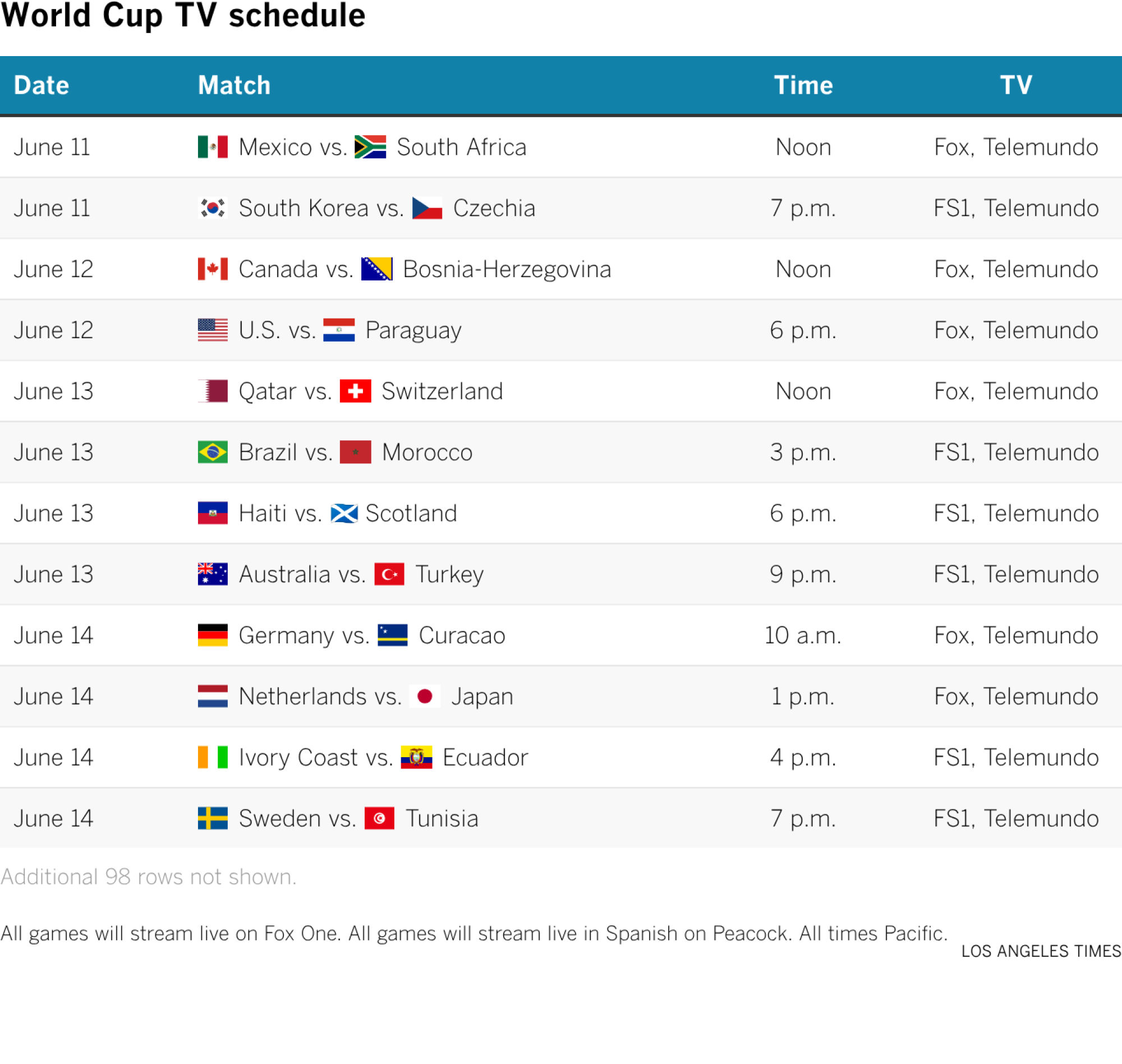
What’s the full match schedule, groups and format for World Cup 2026? | World Cup 2026 News

The 23rd edition of the FIFA World Cup — the biggest ever — will see 48 nations compete for the prize in a 39-day tournament in Canada, Mexico, and the United States.

Sixteen venues across the three nations will host 104 matches as the tournament returns to North America after 32 years.

Recommended Stories

list of 4 itemsend of list

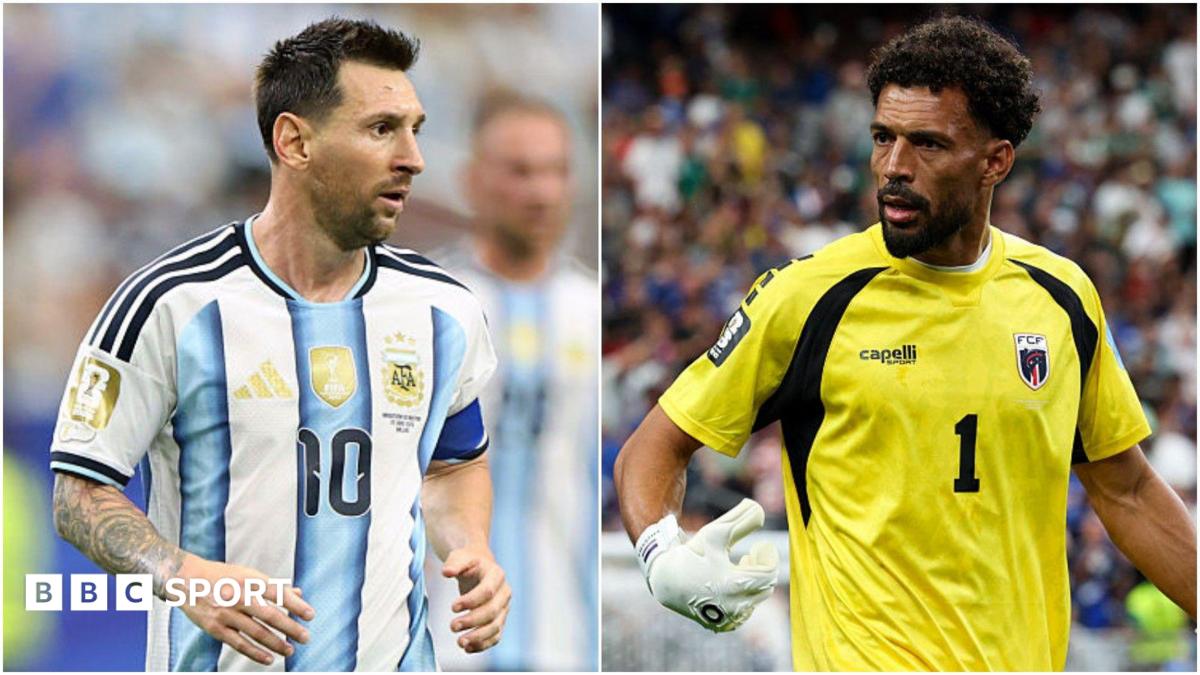
Argentina will look to defend the trophy they lifted under their iconic captain, Lionel Messi, at Qatar 2022, while Cape Verde, Curacao, Jordan, and Uzbekistan will make their debut at the finals.

The tournament will begin in Mexico and conclude in the US.

Here’s everything you need to know about its teams, groups, format and schedule.

What are the groups and teams for the FIFA World Cup 2026?

Group A: Mexico, South Africa, Korea Republic, Czechia
Group B: Canada, Bosnia and Herzegovina, Qatar, Switzerland
Group C: Brazil, Morocco, Haiti, Scotland
Group D: United States, Paraguay, Australia, Turkiye
Group E: Germany, Curacao, Ivory Coast, Ecuador
Group F: Netherlands, Japan, Sweden, Tunisia
Group G: Belgium, Egypt, Iran, New Zealand
Group H: Spain, Cape Verde, Saudi Arabia, Uruguay
Group I: France, Senegal, Iraq, Norway
Group J: Argentina, Algeria, Austria, Jordan
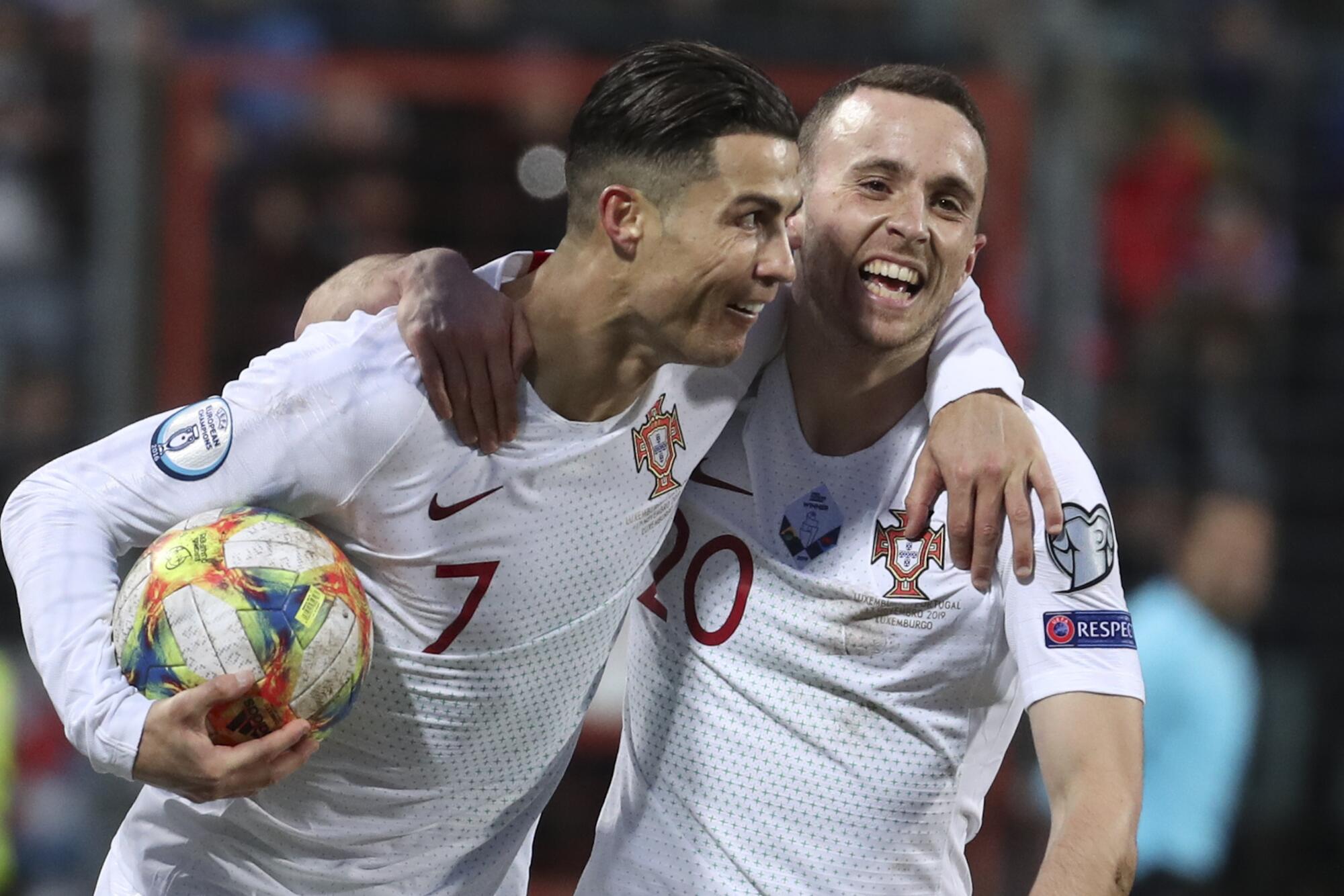
Group K: Portugal, DR Congo, Uzbekistan, Colombia
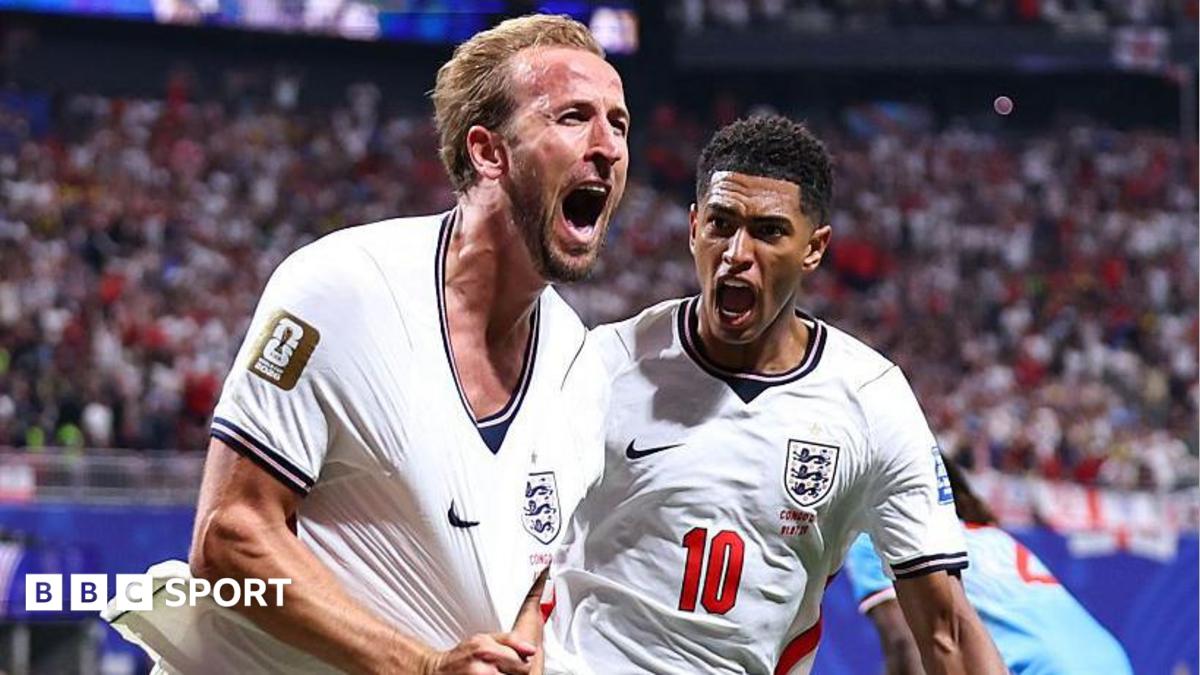
Group L: England, Croatia, Ghana, Panama

When and where is the opening match of the FIFA World Cup 2026?

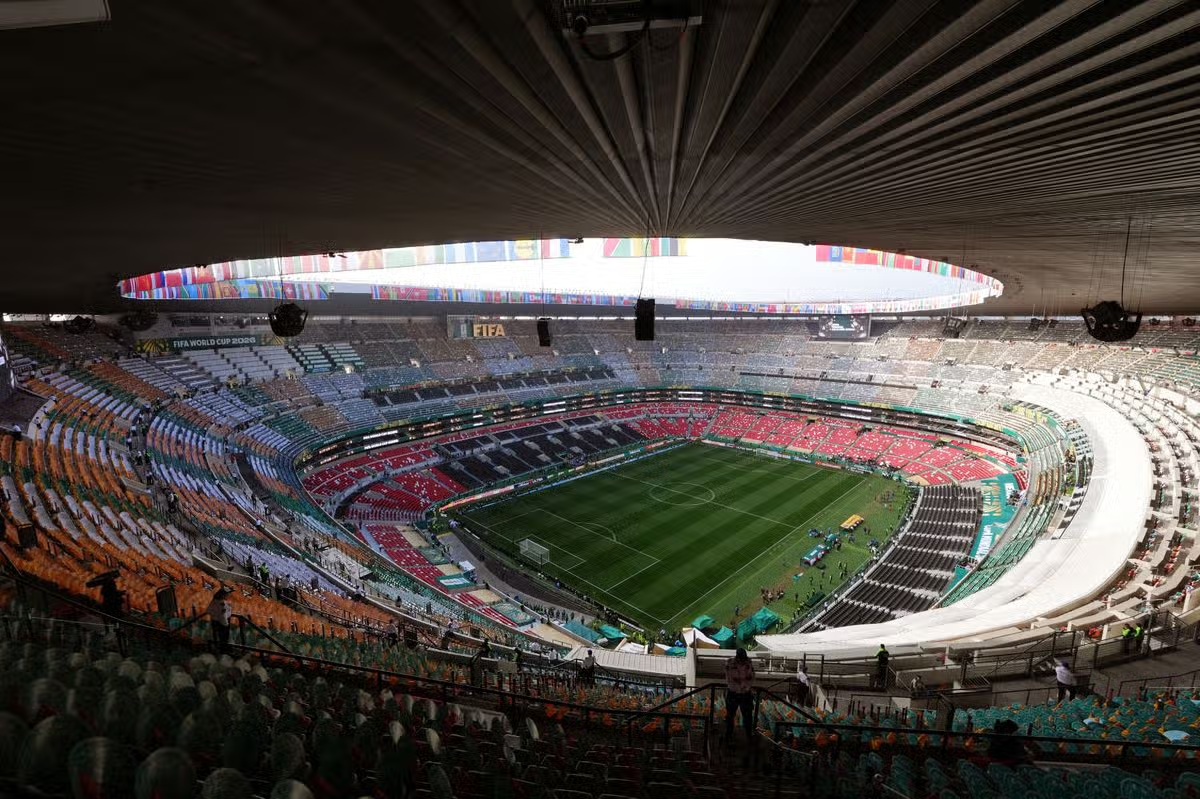
The tournament will open on June 11 at 3pm (21:00 GMT) at the Mexico City Stadium in Mexico.

When and where is the final of the FIFA World Cup 2026?

The MetLife Stadium, which will be called the New York New Jersey Stadium during the tournament, will host the final on July 19 at 3pm (20:00 GMT).

Why has FIFA changed the names of the stadiums hosting World Cup matches?

In a move to restrict ambush marketing for brands not associated with FIFA, the governing body has changed stadium names for all venues to match the host city.

Therefore, the MetLife Stadium in New Jersey has been rebranded as the New York New Jersey Stadium, and the SoFi Stadium in Los Angeles has been renamed the Los Angeles Stadium for the tournament.

What’s the format of the FIFA World Cup 2026?

The tournament will consist of one group-stage round and four knockout rounds before the final.

Unlike previous editions, the knockouts will begin with the round of 32, followed by the round of 16, the four quarterfinals and two semifinals.

The stage-wise breakdown of the tournament’s schedule is:

  • Group stage: June 11 June 27
  • Round of 32: June 28 to July 3
  • Round of 16: July 4-7
  • Quarterfinals: July 9-11
  • Semifinals: July 14-15
  • Bronze medal match: July 18
  • Final: July 19

What’s the full match schedule of the World Cup?

Group stage

Thursday, June 11

Mexico vs South Africa at 3pm (21:00 GMT) – Mexico City Stadium, Mexico City, Mexico

South Korea vs Czechia at 10pm (04:00 GMT on Friday) – Estadio Guadalajara, Zapopan, Mexico

Friday, June 12

Canada vs Bosnia at 3pm (20:00 GMT) – Toronto Stadium, Toronto, Canada

USA vs Paraguay at 9pm (05:00 GMT on Saturday) – Los Angeles Stadium, Los Angeles, US

Saturday, June 13

Qatar vs Switzerland at 3pm (23:00 GMT) – San Francisco Bay Area Stadium, San Francisco, US

Brazil vs Morocco at 6pm (23:00 GMT) – New York New Jersey Stadium, New Jersey, US

Haiti vs Scotland at 9pm (02:00 GMT on Sunday) – Boston Stadium, Boston, US

Australia vs Turkiye at midnight (08:00 GMT on Sunday) – BC Place, Vancouver, Canada

Sunday, June 14

Germany vs Curacao at 1pm (19:00 GMT) – Houston Stadium, Houston, US

Netherlands vs Japan at 4pm (22:00 GMT) – Dallas Stadium, Dallas, US

Ivory Coast vs Ecuador at 7pm (00:00 GMT on Monday) – Philadelphia Stadium, Philadelphia, US

Sweden vs Tunisia at 10pm (04:00 GMT on Monday) – Estadio Monterrey, Guadalupe, Mexico

Monday, June 15

Spain vs Cape Verde at 12pm (17:00 GMT) – Atlanta Stadium, Atlanta, US

Belgium vs Egypt at 3pm (23:00 GMT) – BC Place, Vancouver, Canada

Saudi Arabia vs Uruguay at 6pm (23:00 GMT) – Miami Stadium, Miami, US

Iran vs New Zealand at 9pm (05:00 GMT on Tuesday) – Los Angeles Stadium, Los Angeles, US

Tuesday, June 16

France vs Senegal at 3pm (20:00 GMT) – New York New Jersey Stadium, New Jersey, US

Iraq vs Norway at 6pm (23:00 GMT) – Boston Stadium, Boston, US

Argentina vs Algeria at 9pm (03:00 GMT on Wednesday) – Kansas City Stadium, Kansas City, US

Austria vs Jordan at midnight (08:00 GMT on Wednesday) – San Francisco Bay Area Stadium, San Francisco, US

Wednesday, June 17

Portugal vs DRC at 1pm (19:00 GMT) – Houston Stadium, Houston, US

England vs Croatia at 4pm (22:00 GMT) – Dallas Stadium, Dallas, US

Ghana vs Panama at 7pm (00:00 GMT on Thursday) – Toronto Stadium, Toronto, Canada

Uzbekistan vs Colombia at 10pm (04:00 GMT on Thursday) – Mexico City Stadium, Mexico City, Mexico

Thursday, June 18

Czechia vs South Africa at 12pm (17:00 GMT) – Atlanta Stadium, Atlanta, US

Switzerland vs Bosnia at 3pm (23:00 GMT) – Los Angeles Stadium, Los Angeles, US

Canada vs Qatar at 6pm (02:00 GMT on Friday) – BC Place, Vancouver, Canada

Mexico vs South Korea at 9pm (03:00 GMT on Friday) – Estadio Guadalajara, Zapopan, Mexico

Friday, June 19

Scotland vs Morocco at 6pm (23:00 GMT) – Boston Stadium, Boston, US

USA vs Australia at 3pm (23:00 GMT) – Seattle Stadium, Seattle, US

Brazil vs Haiti at 9pm (02:00 GMT on Saturday) – Philadelphia Stadium, Philadelphia, US

Turkiye vs Paraguay at midnight (08:00 GMT on Saturday) – San Francisco Bay Area Stadium, San Francisco, US

Saturday, June 20

Netherlands vs Sweden at 1pm (19:00 GMT) – Houston Stadium, Houston, US

Germany vs Ivory Coast at 4pm (21:00 GMT) – Toronto Stadium, Toronto, Canada

Ecuador vs Curacao at 8pm (04:00 GMT on Sunday) – Kansas City Stadium, Kansas City, US

Tunisia vs Japan at midnight (06:00 GMT on Sunday) – Estadio Monterrey, Guadalupe, Mexico

Sunday, June 21

Spain vs Saudi Arabia at 12pm (17:00 GMT) – Atlanta Stadium, Atlanta, US

Belgium vs Iran at 3pm (23:00 GMT) – Los Angeles Stadium, Los Angeles, US

Uruguay vs Cape Verde at 6pm (23:00 GMT) – Miami Stadium, Miami, US

New Zealand vs Egypt at 9pm (05:00 GMT on Monday) – BC Place, Vancouver, Canada

Monday, June 22

Argentina vs Austria at 1pm (19:00 GMT) – Dallas Stadium, Dallas, US

France vs Iraq at 5pm (22:00 GMT) – Philadelphia Stadium, Philadelphia, US

Norway vs Senegal at 8pm (01:00 GMT on Tuesday) – New York New Jersey Stadium, New Jersey, US

Jordan vs Algeria at 11pm (07:00 GMT on Tuesday) – San Francisco Bay Area Stadium, San Francisco, US

Tuesday, June 23

Portugal vs Uzbekistan at 1pm (19:00 GMT) – Houston Stadium, Houston, US

England vs Ghana at 4pm (21:00 GMT) – Boston Stadium, Boston, US

Panama vs Croatia at 7pm (00:00 GMT on Wednesday) – Toronto Stadium, Toronto, Canada

Colombia vs DRC at 10pm (04:00 GMT on Wednesday) – Estadio Guadalajara, Zapopan, Mexico

Wednesday, June 24

Switzerland vs Canada at 3pm (23:00 GMT) – BC Place, Vancouver, Canada

Bosnia vs Qatar at 3pm (23:00 GMT) – Seattle Stadium, Seattle, US

Scotland vs Brazil at 6pm (23:00 GMT) – Miami Stadium, Miami, US

Morocco vs Haiti at 6pm (23:00 GMT) – Atlanta Stadium, Atlanta, US

Czechia vs Mexico at 9pm (03:00 GMT on Thursday) – Mexico City Stadium, Mexico City, Mexico

South Africa vs South Korea at 9pm (03:00 GMT on Thursday) – Estadio Monterrey, Guadalupe, Mexico

Thursday, June 25

Ecuador vs Germany at 4pm (21:00 GMT) – New York New Jersey Stadium, New Jersey, US

Curacao vs Ivory Coast at 4pm (21:00 GMT) – Philadelphia Stadium, Philadelphia, US

Japan vs Sweden at 7pm (01:00 GMT on Friday) – Dallas Stadium, Dallas, US

Tunisia vs Netherlands at 7pm (01:00 GMT on Friday) – Kansas City Stadium, Kansas City, US,

Turkiye vs USA at 10pm (06:00 GMT on Friday) – Los Angeles Stadium, Los Angeles, US

Paraguay vs Australia at 10pm (06:00 GMT on Friday) – San Francisco Bay Area Stadium, San Francisco, US

Friday, June 26

Norway vs France at 3pm (20:00 GMT) – Boston Stadium, Boston, US

Senegal vs Iraq at 3pm (20:00 GMT) – Toronto Stadium, Toronto, Canada

Cape Verde vs Saudi Arabia at 8pm (02:00 GMT on Saturday) – Houston Stadium, Houston, US

Uruguay vs Spain at 8pm (02:00 GMT on Saturday) – Estadio Guadalajara, Zapopan, Mexico

Egypt vs Iran at 11pm (07:00 GMT on Saturday) – Seattle Stadium, Seattle, US

New Zealand vs Belgium at 11pm (07:00 GMT on Saturday) – BC Place, Vancouver, Canada

Saturday, June 27

Panama vs England at 5pm (22:00 GMT) – New York New Jersey Stadium, New Jersey, US

Croatia vs Ghana at 5pm (22:00 GMT) – Philadelphia Stadium, Philadelphia, US

Colombia vs Portugal at 7:30pm (02:30 GMT on Sunday) – Miami Stadium, Miami, US

DRC vs Uzbekistan at 7:30pm (02:30 GMT on Sunday) – Atlanta Stadium, Atlanta, US

Algeria vs Austria at 10pm (04:00 GMT on Sunday) – Kansas City Stadium, Kansas City, US

Jordan vs Argentina at 10pm (04:00 GMT on Sunday) – Dallas Stadium, Dallas, US

Knockout stage

Sunday, June 28

Round of 32 match at 3pm (23:00 GMT) – Los Angeles Stadium, Los Angeles, US

Monday, June 29

Round of 32 match at 1pm (19:00 GMT) – Houston Stadium, Houston, US

Round of 32 match at 4:30pm (22:30 GMT) – Boston Stadium, Boston, US

Round of 32 match at 9pm (03:00 GMT on Tuesday) – Estadio Monterrey, Guadalupe, Mexico

Tuesday, June 30

Round of 32 match at 1pm (19:00 GMT) – Dallas Stadium, Dallas, US

Round of 32 match at 5pm (22:00 GMT) – New York New Jersey Stadium, New Jersey, US

Round of 32 match at 9pm (03:00 GMT on Wednesday) – Mexico City Stadium, Mexico City, Mexico

Wednesday, July 1

Round of 32 match at 12pm (17:00 GMT) – Atlanta Stadium, Atlanta, US

Round of 32 match at 4pm (00:00 GMT on Thursday) – Seattle Stadium, Seattle, US

Round of 32 match at 8pm (04:00 GMT on Thursday) – San Francisco Bay Area Stadium, San Francisco, US

Thursday, July 2

Round of 32 match at 3pm (23:00 GMT) – Los Angeles Stadium, Los Angeles, US

Round of 32 match at 7pm (00:00 GMT on Friday) – Toronto Stadium, Toronto, Canada

Round of 32 match at 11pm (07:00 GMT on Friday) – BC Place, Vancouver, Canada

Friday, July 3

Round of 32 match at 2pm (21:00 GMT) – Dallas Stadium, Dallas, US

Round of 32 match at 6pm (23:00 GMT) – Miami Stadium, Miami, US

Round of 32 match at 9:30pm (03:30 GMT on Saturday) – Kansas City Stadium, Kansas City, US

Saturday, July 4

Round of 16 match at 1pm (19:00 GMT) – Houston Stadium, Houston, US

Round of 16 match at 5pm (22:00 GMT) – Philadelphia Stadium, Philadelphia, US

Sunday, July 5

Round of 16 match at 4pm (21:00 GMT) – New York New Jersey Stadium, New Jersey, US

Round of 16 match at 8pm (02:00 GMT on Monday) – Mexico City Stadium, Mexico City, Mexico

Monday, July 6

Round of 16 match at 3pm (21:00 GMT) – Dallas Stadium, Dallas, US

Round of 16 match at 8pm (04:00 GMT on Tuesday) – Seattle Stadium, Seattle, US

Tuesday, July 7

Round of 16 match at 12pm (17:00 GMT) – Atlanta Stadium, Atlanta, US

Round of 16 match at 4pm (00:00 GMT on Wednesday) – BC Place, Vancouver, Canada

Thursday, 9 July

First quarterfinal at 4pm (21:00 GMT) – Boston Stadium, Boston, US

Friday, 10 July

Second quarterfinal at 3pm (23:00 GMT) – Los Angeles Stadium, Los Angeles, US

Saturday, July 11

Third quarterfinal at 5pm (22:00 GMT) –  Miami Stadium, Miami, US

Fourth quarterfinal at 9pm (03:00 GMT on Sunday) – Kansas City Stadium, Kansas City, US

Tuesday, July 14

First semifinal at 3pm (21:00 GMT) – Dallas Stadium, Dallas, US

Wednesday, July 15

Second semifinal at 3pm (20:00 GMT) – Atlanta Stadium, Atlanta, US

Saturday, July 18

Bronze medal match at 5pm (22:00 GMT) – Miami Stadium, Miami, US

Sunday, July 19

Final at 3pm (20:00 GMT) – New York New Jersey Stadium, New Jersey, US.

Source link

Honda, Nissan rethink North America EV plans

Visitors stand in front of the logo of Japanese automotive manufacturer Honda during the Gaikindo Jakarta Auto Week in Tangerang, Indonesia. Photo by MAST IRHAM / EPA

May 6 (Asia Today) — Honda and Nissan are overhauling their electric vehicle strategies in North America as policy changes and weaker demand reshape the market, Japanese media reported Wednesday.

Honda has indefinitely postponed construction of a major EV production hub in Ontario, Canada, while Nissan has scrapped plans for U.S. EV production and will focus instead on expanding its hybrid lineup, according to Nikkei.

Honda announced the Ontario project in April 2024. The plan called for vehicle and battery plants with annual production capacity of 240,000 units and a total investment of 15 billion Canadian dollars, or about $11 billion.

The project had already secured land and government support, but Honda delayed the launch by two years in 2025 after EV market growth fell short of expectations. Nikkei said the plan could eventually be canceled depending on the direction of North American policy.

The shift comes as the Trump administration’s rollback of EV tax credits has increased consumer costs, while relaxed environmental rules have reduced pressure on automakers to expand EV production.

U.S. EV sales fell 36% year-over-year in the fourth quarter of 2025, while hybrid vehicles rose from 11% to a record 19% of the market.

Japanese automakers are expected to prioritize hybrids to protect profitability in North America as a near-term EV recovery appears unlikely.

— Reported by Asia Today; translated by UPI

© Asia Today. Unauthorized reproduction or redistribution prohibited.

Original Korean report: https://www.asiatoday.co.kr/kn/view.php?key=20260506010000998

Source link

Guatemalan attorney general sanctioned by U.S. to leave office

Guatemalan Attorney General Consuelo Porras arrives April 9 at the Nominating Commission in Guatemala City, Guatemala, for an interview as part of the selection process for attorney general and head of the Public Prosecutor’s Office from 2026 to 2030. She lacked support for another term. Photo by Alex Cruz/EPA

May 6 (UPI) — Consuelo Porras, Guatemala’s attorney general, will leave office May 17 after years of confrontation with President Bernardo Arévalo.

Porras is ending an eight-year term that began in 2018 under sanctions imposed by the United States, the European Union and more than 40 countries that accused her of corruption and undermining democracy by attempting to interfere with the results of Guatemala’s 2023 presidential election.

The relationship between Porras and Arévalo was marked by open confrontation and institutional hostility since the president’s electoral victory in 2023.

Arévalo repeatedly accused Porras of leading an “attempted coup” through judicial investigations aimed at dismantling Semilla, the political party that brought him to power, and blocking his inauguration. Porras defended her actions as enforcement of the law.

After taking office, Arévalo sought to remove her through legal reforms and public meetings that she refused to attend, deepening a political crisis in which the executive branch and the Public Ministry operated as opposing forces until the end of her tenure.

Arévalo announced Tuesday that he had officially appointed attorney Gabriel García Luna to lead the Public Ministry for the 2026-2030 term.

While announcing the appointment, Arévalo said the decision was intended to mark the beginning of a “new stage of justice” in response to demands from the Guatemalan people.

The president said the Public Ministry requires leadership capable of “rescuing” the institution and strengthening its independence. He added that the new attorney general would not serve the interests of the government or “particular or spurious political interests,” but instead guarantee impartial justice.

According to reports by Guatemalan newspaper Prensa Libre and Argentine outlet Infobae, Arévalo justified his choice by saying the country needs officials capable of rebuilding judicial institutions after years of crisis.

Porras attempted to seek a third term, but failed to secure enough votes from the nominating commission to reach the final shortlist of six candidates presented to the president.

Before leaving office, she also unsuccessfully sought a seat on Guatemala’s Constitutional Court, a position that would have granted her immunity from possible future legal proceedings.

Among the most serious allegations she could face is a criminal complaint related to her alleged connection to a network of illegal adoptions of Indigenous children during the 1980s. United Nations experts have already called for independent investigations into the case.

Civil society organizations have also documented at least 16 alleged cases involving misuse of the criminal justice system, including political persecution against the Semilla party, journalists and judicial officials.

Although Guatemala’s current Supreme Court blocked several attempts to strip Porras of immunity while she remained in office, her departure could allow the next attorney general to reopen those complaints and launch additional investigations into alleged obstruction of justice and corruption during her administration.

U.S. sanctions mainly involved the revocation of her visa and a permanent ban on entering the country for both her and her husband after she was designated a “corrupt and anti-democratic actor” under the Engel List.

The U.S. Engel List is a State Department-mandated public sanctions list that names foreign individuals from Guatemala, El Salvador, Honduras, and, since 2021, Nicaragua whom the United States determined engaged in significant corruption, undermined democratic institutions or obstructed corruption investigations. Those on the list are barred from entering the United States and have their visas revoked.

That designation later served as the basis for the European Union and Canada to impose harsher sanctions, including the freezing of assets and bank accounts in those jurisdictions, sharply restricting her financial freedom outside Guatemala.


Source link

Ted Turner, CNN creator who revolutionized the media industry, dies at 87

Ted Turner, the brash media mogul who created CNN and revolutionized how Americans watched television, and who wielded his media empire and wealth to pursue liberal global causes and land conservation, has died. He was 87.

Turner died Wednesday, according to his family.

In 2018, he revealed he had been diagnosed with Lewy body dementia, a neurodegenerative disease, which had been progressing in recent years.

Turner’s outsized public persona — some called him the “Mouth from the South” for his free-wheeling trash talk — matched the Georgian’s influence on news, politics, sports and entertainment in the late 20th century. Turner repeatedly shook up established industries by invading quickly and expanding options for consumers, while railing against monolithic competitors who were less daring or nimble than his maverick Turner Broadcasting System.

Turner created the cable stations TBS and Turner Classic Movies; he owned the Atlanta Braves baseball team, the Atlanta Hawks basketball team and revitalized professional wrestling with World Championship Wrestling.

Turner was one of the first adopters of cable and satellite broadcasting technology, and for many rural Americans living beyond the tower signals of major cities, he was the first person to bring them interesting TV.

The media baron constantly generated headlines. He had a Clark Gable pencil mustache, raced sailboats, cavorted with the late communist leader Fidel Castro in Cuba, and at one point married Academy Award-winning actress and activist Jane Fonda. His wealth enabled him to become one of the largest private landowners and wealthiest philanthropists in the U.S.

July 1990 image of Ted Turner with Jane Fonda.

July 1990 image of Ted Turner with Jane Fonda.

(Tony Duffy/Getty Images)

His crowning cultural achievement was the creation of the Cable News Network in 1980, which created the model for today’s cable news titans. The 24-hour news channel was not widely expected to be a success. All-night broadcasting had not been proven as a business model in an industry dominated nationally by corporate monoliths like ABC, NBC and CBS, where news programming was something that happened on a set schedule. And CNN’s headquarters weren’t in media centers like New York or Los Angeles, but Atlanta.

But Turner believed that “over-the-air networks would decline as audiences turned to videos and other outlets for entertainment on demand,” wrote the late journalist Daniel Schorr in a 2001 memoir.

“The network future belonged to whoever would deliver what was happening now — live news and live sports. That was why he wanted to be the first to deliver all news, all sports, all the time,” wrote Schorr, whom Turner courted to join CNN.

Within two years, CNN had more than 9 million subscribers. By the 2000s, Turner’s once far-flung idea for an around-the-clock news service had become so successful that it had attracted imitators like MSNBC (now called MS NOW) and Fox News.

“We not only became profitable, but also changed the nature of news — from watching something that happened to watching it as it happened,” Turner said of CNN in 2004. “If we needed more money for [broadcasting from] Kosovo or Baghdad, we’d find it. If we had to bust the budget, we busted the budget. We put journalism first, and that’s how we built CNN into something the world wanted to watch.”

Fox Corp. Chairman Emeritus Rupert Murdoch, who was both a rival and friend of Turner, said his “vision for 24-hour cable news transformed the media industry and gave viewers everywhere a front seat to witness history unfold. His impact as a trailblazer has left an indelible mark on our cultural landscape.”

Turner recognized the value of global distribution long before his rivals, launching CNN’s international business in the mid-1980s. He bought his first western property, The Bar-None Ranch in Montana, and would eventually become one of the nation’s largest individual landowners with nearly 2 million acres, which provide habitat for threatened species and his beloved American bison.

“Ted’s entrepreneurial spirit, creative ambition and willingness to take risks changed the media industry forever,” David Zaslav, chief executive of Warner Bros. Discovery, which owns CNN, said Wednesday in a note to employees. “He believed deeply in the power of ideas, in doing things differently and in building platforms that could inform, inspire and connect people around the world.”

Robert Edward Turner III was born in Cincinnati on Nov. 19, 1938, and raised in Georgia. A mischievous child — who later became a mischievous adult despite attending the Georgia Military Academy — he had a tough childhood at the hands of his alcoholic father, Ed.

“Ninety percent of the arguments I had with Ed were over his beating Ted too hard,” Ted’s mother, Florence Turner, recalled later.

“My dad ran an old-fashioned household and he insisted that pretty much everything had to be his way,” Ted Turner said in a 2008 memoir. “My father and I had a complex relationship but I loved him.”

The younger Turner attended Brown University but dropped out before graduating. His savings had run out, his father had stopped financially supporting his tuition, and in his final days on campus, he was suspended for bringing a woman to his dorm room, according to his memoir.

He soon joined his father’s expanding billboard advertising company, Turner Advertising, where he had been working off and on for years since childhood.

He inherited the business at the age of 24 after his father died by suicide. By then, Turner had already had years of experience , and he worked furiously to reverse his father’s recent sale of part of the company to a competitor and paid down its daunting debt, an act that presaged the empire-building to come.

While growing the business, Turner also pursued his passion for competitive sailing, which is how he met his first wife, Judy Nye, in college. It’s also how their marriage ended. Turner intentionally hit his wife’s boat during a 1963 race to keep her from passing him, and the pair, who had two children, split immediately afterward.

It was to be the first of three divorces. . “My problem is I love every woman I meet,” Turner has said. He would go on to win the America’s Cup in 1977 while expanding his father’s company into a modern multimedia conglomerate.

Leveraging the billboard business, Turner started buying local radio stations across the South in the late 1960s. In 1970, he bought the Channel 17 television station in Atlanta, competing with local network affiliates by airing old movies whose rights were affordable and picking up programming dropped by the less nimble competition. He didn’t like putting news on prime time back then — too negative — and soon picked up broadcast rights for the Braves, Hawks and other local sports.

Oct. 1998 photo of former President Jimmy Carter, right, and Atlanta Braves team owner Ted Turner.

Oct. 1998 photo of former President Jimmy Carter, right, and Atlanta Braves team owner Ted Turner, during Game 6 of the National League Championship Series in Atlanta.

(PAT SULLIVAN/AP)

The Braves were a ratings hit, and when the team flailed and went up for sale, Turner’s company became its owner in 1976. The team continued to flail but Turner boosted its profile with gimmicks such as sewing “Channel 17” on the back of a pitcher’s jersey and dressing up as the team’s batboy and manager, to the league’s disdain. Turner bought the Hawks shortly after.

Facing entrenched local network affiliates, Turner expanded his independent station’s reach across the South and then the U.S. by embracing the new technologies of cable and satellite broadcasting. Channel 17 became nationally known as the “SuperStation,” with call letters WTBS, later shortened to TBS.

The quirky Atlanta station’s local broadcasts of old movies and sports games had become national broadcasts.

Still hungry for more, Turner finally turned his attention to news programming. He launched CNN in 1980 in a desperate bid to create a national 24-hour news channel before the broadcast titans ABC, NBC and CBS — and their gargantuan budgets — could beat him to it.

“The 24/7 genre started with Ted Turner,” veteran CNN journalist Christiane Amanpour said Wednesday on CNN. “He was the original, and he made us all proud, and he made us all hopeful, and he made us all strive for his vision of a better world.”

There were some lean early years. But the nascent channel fended off an attempt by ABC to create a competitor, and critics could see the value of an ever-present news channel, even if quality was a little thin at times.

“Non-viewers of CNN are missing a lot. There are so many reasons to watch,” Los Angeles Times critic Howard Rosenberg wrote in 1986, hailing the 6-year-old channel as an “institution.” “It’s not always good, but it’s always there.”

In 1986, CNN was the only broadcaster running live coverage when the Challenger shuttle liftoff ended in disaster. In 1991, the network gave Americans a live and uninterrupted look at the invasion of Iraq. American officials held news conferences knowing that Iraqi leader Saddam Hussein was watching them on CNN.

Americans had seen images of war before, but not broadcast nonstop into their homes.

“CNN seeks to be a stethoscope attached to the hypothetical heart of the war, and to present us with its hypothetical pulse,” the French theorist Jean Baudrillard wrote, critiquing the conflict as a media spectacle. Media scholars began to wonder whether a “CNN effect” was influencing government policy. Officials found that they now had to respond much more quickly to crises unfolding on live television.

Turner was not adversarial to communist countries of the era and even tried his own version of the Olympics, called the Goodwill Games, a bit of private-sector peace-craft that brought the Soviet Union and the U.S. out of their respective Olympic boycotts and back into direct competition in the 1989s. All on television, of course.

Turner also saw professional wrestling as part of his sports portfolio, at one point trying to pit his World Championship Wrestling program against competitor Vince McMahon’s wrestling empire, then called the World Wrestling Federation. Turner similarly tried to take a bite out of MTV with the Cable Music Channel, with a promise “to stay away from the excessive, violent or degrading clips to women that MTV is so fond of putting on.”

Moralism was a Turner hallmark. Turner had started his life as a conservative — Turner had met his second wife, Jane Smith, at a 1964 fundraiser for Republican presidential candidate Barry Goldwater — and turned toward more liberal-leaning causes, such as world peace, nuclear nonproliferation and fighting climate change, later in life.

At the 1990 American Humanist Assn.’s annual convention, Turner presented his “Ten Voluntary Initiatives” — his atheistic version of the Ten Commandments — which included pledges to world peace, environmentalism, nonviolence and “to have no more than two children, or no more than my nation suggests.” He would become a major private donor to the United Nations, pledging $1 billion and launching the United Nations Foundation nonprofit.

In 1991, a year marked by the collapse of the Soviet Union, the first U.S. war against Iraq and the confirmation hearings of Supreme Court Justice Clarence Thomas, Time magazine named Turner its “Man of the Year” for his “visionary” creation of CNN, which covered those events live. He also married Fonda that year (the ceremony was reported by CNN) and his Braves narrowly lost the World Series.

Time’s honorific was also a nice bit of corporate synergy. The magazine’s parent company, Time Warner, owned about 20% of Turner Broadcasting System stock.

Turner launched the Cartoon Network in 1992, which helped introduce his then-newly acquired Hanna-Barbera characters — including Fred Flintstone, Yogi Bear and Scooby-Doo — to a new generation of viewers.

Adversaries thought that Turner’s ventures could be reckless and impulsive. Far-seeing accomplishments in national broadcasting and the creation of CNN were also paired with several expensive misadventures, including a failed attempt to buy CBS.

Turner had to unwind a purchase of the MGM film studio less than a year after buying it, though he held onto one valuable asset: The studio’s film library, which became the foundation of the Turner Classic Movies channel and, later, jewels in the Burbank-based Warner Bros. studio vault.

In 1996, Turner Broadcasting merged with Time Warner to form the world’s largest media company, marking the beginning of the end of Turner’s apex in corporate media. Time Warner’s 2000 merger with budding internet giant AOL, then the largest-ever corporate merger, ended in disaster. Turner, who had not been a key player in the negotiations and had made no secret of his disdain for that deal, was fired as an executive.

“Ted Turner was one of the rare leaders who truly changed the trajectory of an industry,” Versant Media Chief Executive Mark Lazarus, a former Turner underling, said in a statement. “I saw firsthand his willingness to take risks and his belief that media could be something bigger and more impactful.”

CNN Worldwide Chairman Mark Thompson added: “He was and always will be the presiding spirit of CNN. Ted is the giant on whose shoulders we stand.”

Turner resigned from the AOL Time Warner board in 2003, and in 2007, announced he had sold his company shares. In his later days, one of his best-known ventures was his Ted’s Montana Grill restaurant chain. His philanthropy and land conservation efforts and protection of the American bison became guide posts during his retirement years.

While CNN maintains influence in the U.S. and abroad, its TV ratings have declined in recent years — a casualty of changing consumer behavior, the rise of social media, derision from President Trump — and several ownership changes.

During the past decade, CNN has had three different corporate owners. The company is poised to be sold again, this time to billionaire David Ellison’s Paramount Skydance. That proposed merger would bring CNN under the same roof as CBS News.

“I’ve often considered and joked about what I might want written on my tombstone,” Turner said in a 2008 memoir. “At one point, when I felt like I could get out of the way of the press, ‘You Can’t Interview Me Here’ was a leading candidate. … These days, I’m leaning toward, ‘I Have Nothing More to Say.’”

Turner is survived by his five children — Laura Turner Seydel (Rutherford), Robert Edward “Teddy” Turner IV (Blair), Rhett Turner, Beau Turner, Jennie Turner Garlington (Peek) — 14 grandchildren and a great granddaughter. The family plans a private and public service at a later date.

Pearce is a former Times reporter. Times Staff Writer Stephen Battaglio contributed to this report.

Source link

Dominican fashion journalist, mother killed in Manhattan fire

May 6 (UPI) — Dominican journalist Yolaine Díaz, a former fashion and beauty editor for People en Español magazine, and her mother died in a fire at a residential building in New York City that also left a third person dead, 14 injured and more than 100 displaced.

The fire began shortly after 12:30 a.m. Saturday in a six-story building on Dyckman Street near Broadway in the Inwood section of Manhattan, according to the Fire Department of New York and the New York City Police Department.

Díaz, 49, had emigrated from the Dominican Republic to New York City as a teenager and studied journalism at Lehman College in the Bronx. She joined People en Español as an intern and later worked as a fashion and beauty writer and digital editor. During her career, she interviewed celebrities including Eva Longoria, Shakira and Jennifer Lopez.

Former editor-in-chief Armando Correa remembered Díaz, who continued to contribute to the magazine, in a statement that read “Yolaine had a unique authenticity and intensity. I want to remember her always camera-ready, with her style and her smile.”

According to People en Español, Díaz and her mother, Ana Mirtha Lantigua, attempted to escape through the building’s interior stairwell, but smoke blocked the exit and both became trapped. The journalist’s stepfather managed to flee through the exterior fire escape.

Authorities said the flames started on the lower levels of the building and quickly spread through the interior stairwell to the roof. More than 200 firefighters were deployed to contain the blaze.

The fire left scenes of chaos among residents, many of them members of Latino families living in the mixed residential and commercial building, which was constructed in 1910.

“I was sleeping and what woke me up was the smell and the alarms,” resident Michael Jimenez told local media. “When I went to open the hallway door, everything was on fire. There wasn’t time to grab the extinguisher or anything.”

Another resident told WNYW-Ch. 5 she had to flee via the fire escape after a neighbor opened the hallway door and found “black smoke as far as the eye could see.”

Marty Mejia, of the New York Fire Foundation, said one of the main mistakes during the evacuation was leaving doors open, which allowed the fire and smoke to spread rapidly throughout the building, according to reports by NBC New York.

Firefighters said apartments whose doors remained closed sustained minimal damage, in line with public safety campaigns begun after another deadly fire in the Bronx days earlier.

The American Red Cross assisted evacuees with blankets and logistical support, while dozens of families remained at hospitals awaiting news about injured relatives, some suffering from burns.

The cause of the fire remains under investigation. According to The New York Times, the city’s housing department database listed more than 100 violations at the building.


Source link

Korea Zinc posts record profit in first quarter

A smelter of Korea Zinc in South Korea. The company logged record quarterly sales and profits during the first three months of this year. Photo by Korea Zinc

SEOUL, May 6 (UPI) — World-leading non-ferrous metal maker Korea Zinc said Wednesday it posted record results during the first three months of this year despite a challenging business environment.

The Seoul-based company said its first-quarter sales were $4.2 billion, up 58.4% from a year before, while operating profit nearly tripled to $515 million year-on-year. Both were all-time quarterly highs.

Korea Zinc’s operating margin almost doubled to 12.3% during the January-March period. The company said said its diversified product portfolios and stable production capabilities led to the strong profit.

Robust demand for precious metals and critical minerals, including gold, silver and antimony, supported the company’s stellar performance, Korea Zinc said.

Separately, the company’s board approve Wednesday a first-quarter dividend of $3.46 per share, totaling $71 million, with payouts scheduled for early next month.

“Despite the sudden outbreak of war, rising raw material prices, and supply chain disruptions, we achieved record quarterly results thanks to our diverse product portfolio, stable production capacity, and growth in new business sectors,” Korea Zinc said in a statement.

“Down the road, we will keep putting forth efforts to maintain stable growth and solid profitability despite an uncertain global environment,” it added.

The company also said that it would focus corporate capabilities on the successful execution of Project Crucible, a $7.4 billion initiative to build an integrated smelter in Tennessee in partnership with the U.S. government.

The program aims to roll out 13 types of nonferrous metals, including 11 critical minerals, as well as semiconductor-grade sulfuric acid, beginning in 2029. Last month, Washington designated it under the FAST-41 permitting program for fast-track procedures.

The share price of Korea Zinc jumped 7.24% on the Seoul bourse Wednesday.

Source link

‘We sold everything to drive around the world in a van – this was the best place’

Kath Cross, 49, and her partner Stu Hall, 47, sold most of their possessions and set off on a van life adventure across Europe and beyond after Kath’s daughters moved out of the family home

A couple who flogged all their belongings to explore the globe in a van have disclosed their top destination from their remarkable journey.

Kath Cross, 49, and her partner Stu Hall, 47, chose to embark on worldwide travels after Kath’s daughters from an earlier relationship, Stephanie, 30, and Jessica, 22, had flown the nest. Following their departure, Kath came to the realisation that she could work from wherever she fancied and opted to sell much of what she owned.

Using the proceeds from flogging items on Facebook Marketplace, she and Stu purchased a van, a 7.5m Mercedes Sprinter, and set off to see the world after vacating their rented property in Cardiff, Wales.

Since departing, they’ve weathered the highs and lows of perpetual life on the move, while also lending a hand to others during their travels.

Chatting to WalesOnline, Kath and Stu, who crossed paths through a walking club, revealed which country had impressed them most during their adventure, reports the Express.

The duo have journeyed through destinations including Spain, Germany, the Netherlands, Denmark, Italy, North Macedonia, Kosovo, and Montenegro, amongst other European nations.

They selected Morocco as their standout location, saying: “In Morocco we went to the edge of the Sahara. We were sitting looking over the edge on the sand dunes drinking coffee from a mug from home – it was huge.

“Then we had snow in the Atlas mountains in January 2024 when we rescued Mohammed, ‘MouMou’, who was stuck 3,000m up in the snow in his car. We took him out with our snow chains and lent our snow chains to him. MouMou is in his late 20s and a really nice guy.

“We were just heading over the Atlas mountains when we saw him. People were just driving past him worrying he was a bandit when he just couldn’t drive on.”

However, Kath and Stu aren’t the only ones to have embraced van life, with the likes of Suzy Greenwood ditching her London job to live on the road after falling head over heels for the lifestyle.

Suzy, 39, had spent 15 years forging a career in PR before deciding to make the leap once the Covid-19 lockdowns had lifted. Confronted with her flat in Shepherd’s Bush, London, she told the Independent she realised she was “no longer doing the things I loved” in London.

After offloading her two-bedroom flat, she purchased a converted Volkswagen Caddy van and embarked on a fresh chapter. She revealed that despite the van’s compact size, it carries several distinct advantages, not least the financial savings.

She explained: “The van itself is tiny, which is great because I can park up anywhere. It looks like a workman’s van, so I can sleep in a lay-by, or at beautiful spots overlooking the sea.

“Where I once spent maybe £200 on a fancy dinner, I can now spend £10 on a whole weekend and be having the time of my life. The life I live now really doesn’t cost very much at all.”

Source link

Oil price plunges back below $100 on hopes of U.S.-Iran peace deal

A gas station in South Africa displays the latest prices for petrol and diesel after they hit a record high on Wednesday despite global oil prices plunging back below $100 a barrel on hopes of a deal to end the war in Iran. Photo by Kim Ludbrook/EPA

May 6 (UPI) — Global oil prices fell sharply and financial markets rallied Wednesday after U.S. President Donald Trump paused a military operation to reopen the Hormuz Strait to commercial shipping to give advanced peace talks with Iran a chance to deliver “a complete and final deal.”

Falls in Brent crude of more than $10 a barrel to $99, American crude by $13 to $92 a barrel and rallies in Asian stock markets overnight that fed into Europe when bourses opened there failed to feed through to U.S. gas prices, which jumped 5 cents a gallon to their highest level of the war.

AAA motor club figures showed a national average of $4.54 for a gallon of petrol and $5.67 for diesel, meaning drivers were paying 53% and 51% more than before the war started on Feb. 28, with the caveat that fuel price adjustments normally lag crude oil price movements by several days.

The White House believes a draft one-page, 14-point memorandum of understanding to end the war and create a structure for more in-depth nuclear talks could succeed in breaking the deadlock, two U.S. officials and two other sources said.

An Iranian foreign ministry spokesman confirmed to CNBC that Iran was in receipt of the U.S. proposal and was “evaluating it.”

The Trump administration anticipates Iran will give its response with regard to the most critical elements of the plan in the next two days and although nothing has been finalized it was being seen as significant because it was the closest the sides had been to a deal since the beginning of the war.

However, Trump also appeared ambivalent, saying Wednesday it was “perhaps” too big of a stretch to believe Iran would take the deal and threatening to order the U.S. military to restart its airborne offensive against the country if it didn’t.

Analysts said investor confidence was boosted mainly by the fact the cease-fire was holding and signs that the economy was nowhere near as badly affected by the war as feared.

“This helped oil prices to come back down again and ease fears about a renewed escalation, with investors a bit more hopeful that an extended stagflationary shock would be avoided,” Deutsche Bank wrote in a note.

It added that investor confidence was also bolstered by new U.S. economic data showing among other positive indicators, that job vacancies declined less than anticipated in March, saying the numbers “cemented the case that the conflict’s wider economic impact was still fairly muted.”

“This helped oil prices to come back down again and ease fears about a renewed escalation, with investors a bit more hopeful that an extended stagflationary shock would be avoided,” they added.

Hopes were also riding on the possibility China would prevail on visiting Iranian foreign minister Abbas Araghchi to persuade Iran to uphold the current truce with the United States, so as not to throw a wrench into Trump’s visit to Beijing on May 14, the first by any U.S. president in almost a decade.

China is one of Iran’s largest customers for its oil exports.

President Donald Trump speaks before signing a proclamation inside the Oval Office at The White House on Tuesday. The memorandum is set to restore the Presidential Fitness Test Award, a competitive school-based fitness program last seen under the Obama administration. Photo by Tom Brenner/UPI | License Photo

Source link

World Cup 2026: Football Australia calls for reverse of World Cup ban at Melbourne’s Federation Square

Football Australia has urged the Victorian government to reverse a ban on World Cup matches being shown on big screens at Melbourne’s Federation Square.

Australia supporters have gathered there to watch tournament matches since 2006.

However, the Melbourne Arts Precinct, which manages the venue, said behaviour in previous years had been “unacceptable and damaging”.

Video of fans celebrating went viral during the 2022 World Cup in Qatar as Australia advanced to the last 16, but there were incidents involving people being injured by flares and projectiles.

Supporters also stormed barricades during the 2023 Women’s World Cup semi-final between Australia and England, leading to the screening of the Matildas’ third-place play-off being cancelled at the square.

“After careful consideration, we’ve made the decision not to show the World Cup on Fed Square’s Big Screen this year,” said Melbourne Arts Precinct director and CEO Katrina Sedgwick on Wednesday.

“This is due to the behaviour of a small number of people at previous screenings which was simply unacceptable and damaging to Fed Square.”

Source link

I was transported into the first ever world of Paw Patrol at Chessington’s new land with rides for EVERY age

IF you are stuck for ideas for the kids this summer, no need to panic…just yelp for help and the heroes of hit kids cartoon Paw Patrol will come to the rescue.

As a mum of three, over the past decade I have watched more than my fair share of the hit Nickelodeon kids show which follows the rescue exploits of a team of talking, cartoon puppies under the supervision of 10-year-old boy Ryder.

The UK’s first World of Paw Patrol has finally opened at Chessington Credit: PA
My family was one of the first to visit and I was surprised how good it was for ALL ages of kids

So when I heard the ‘World of  Paw Patrol’ was opening at Chessington World of Adventures, I knew I could waste no time in assembling my pups to check it out.

The new £15million land vibrantly brings to life the cartoon’s world of Adventure Bay making young visitors feel as though they have just stepped directly into the cartoon.

Cleverly designed with little ones in mind, it covers 1.4 acres, although the land manages to have a safe, self-contained feel.

From the trees, to the vehicles, to the models of the characters which populate the land-they all look exactly like they have been transplanted from the show. 

RIDE ON

English seaside theme park named one of the best in the world on Tripadvisor


STAY IN

Inside the world’s largest hotel with over 7,000 rooms & 2 theme parks next door

And standing, beaconlike at the centre is the iconic Paw Patrol Lookout Tower which famously serves as Pup HQ in the show.

Four brand new rides bring the pup’s adventures to life in thrilling style.

There’s the big rollercoaster ride Chase’s Mountain Mission Credit: Not known, clear with picture desk
It isn’t the most thrilling for older kids but it is the perfect entry level rollercoaste

The World of Paw Patrol’s flagship attraction is Chase’s Mountain Mission, a small scale rollercoaster aimed at younger children (although they still  have to be 0.9m tall to ride).

It’s a well thought out experience as children enter the coaster at the bottom of the Lookout Tower via sliding doors – just like in the show where they are then given the sensation of shooting to the top in a lift – again just like in the show.

A video brief on their ‘mission’ tells them the town’s chicken mad and gaff prone Mayor (who ardent viewers know is often the subject of rescue efforts) has been left stranded on a tightrope thanks to a pesky, baguette eating eagle and kids are asked to help.

Young adventurers then emerge at the rollercoaster’s loading station for the ride – while hardly white-knuckle, it has a few bends and zips along at a pace perfect as an entry level rollercoaster for more nervous riders.

But our family favourite Paw Patrol was without doubt Zuma’s Hovercraft Adventure.

The orange boats look exactly like they could have floated straight from the show.

Zuma’s Hovercraft Adventure is the first ‘drifter ride’ in the UK

There is a claim to fame here too as it is the UK’s first ‘drifter’ ride meaning it gives the sensation of hovering above ground.

It is super spinney and fast and kids get to pull a leaver in the car to make it rocket  out at an angle.

It’s thrilling, kind of like a cross between a bumper car and the fairground waltzer. 

Even my eldest son who is 12 wanted to repeatedly ride this one…

Marshall’s Firetruck Rescue sees young thrillseekers whooshed around  horizontally, yet  fairly gently,  in a giant red bus.

“It makes my tummy go funny!” Estella squealed with glee

And youngsters get to soar high in the sky again above World Of Paw Patrol in soar high in Skye’s dazzling pink helicopters.  

At its centre of the land isn’t the rides but ‘Rubble and Rocky’s Playzone.’

All of my kids loved something in the new Paw Patrol themed land
From my five-year-old to my 12-year-old – they were all impressed

This is a gloriously, undulating and colourful play areas where younger visitors can explore Adventure Bay on their own terms.

They can crawl through tunnels, barrel down mini slides and clamber around the familiar sites from the show like Rocky’s waste truck and Captain Turbot’s Sea Patroller.

There is also a cute designated snack stand serving Paw Patrol branded treats and, of course, the obligatory gift shop – but parents beware, because boy what a gift shop it is!

For pup mad kids it will be heaven with aisles and aisles of every piece of Paw Patrol merchandise you can think of, including an entire wall of soft toy versions of the characters.

And if you are parent to a total pup nut you might consider an overnight stay in one of the five brand new PAW Patrol-themed hotel rooms at Chessington’s resort hotel. 

Each room sleeps up to two adults and three children. 

Don’t forget to try the Paw Patrol themed hotel rooms too Credit: Chris Read-Jones/Chessington World Of Adventures

Young ones would no doubt happily spend all day in World of Paw Patrol, but if course entry price also gives you free reign of all that Chessington has to offer including animal attractions, shows and brilliant thrill rides.

So for a family like mine, with kids spanning in age from 5 to 12, it offers a great day out with something for everyone.

What could be more Pawsome than that?

Tickets to Chessington start from £32pp while PAW Patrol hotel stays start from £155 for a family of four (including breakfast, early ride access and bronze fast-track pass)

Source link

Seoul shares shoot up nearly 6.5 pct to over 7,300 on chip rally, Mideast hopes; won rises

Employees take part in a ceremony at the trading room of Woori Bank in Seoul on Wednesday to celebrate the benchmark KOSPI closing at an all-time high of 7,384.56. Photo by Yonhap

South Korean stocks shot up nearly 6.5 percent Wednesday, extending a record-breaking run to top the 7,300-point mark, driven by a semiconductor rally and optimism for a potential peace deal in the Middle East. The local currency also strengthened against the U.S. dollar.

The benchmark Korea Composite Stock Price Index (KOSPI) added 447.57 points, or 6.45 percent, to a fresh record high of 7,384.56.

It marked the second-largest daily gain in terms of points following 490.36 points reached on March 5.

Trade volume was heavy at 984.4 million shares worth 58.2 trillion won (US$40 billion), with losers outnumbering winners 199 to 677.

Foreigners bought 3.1 trillion won worth of local shares, while institutions and individuals dumped a net 2.3 trillion won and 571.2 billion won, respectively.

Overnight, U.S. President Donald Trump said he would pause operations to escort ships through the Strait of Hormuz as part of efforts to reach a final agreement with Iran.

The KOSPI opened 2.25 percent higher to surpass the landmark 7,000-point threshold for the first time and extended the gains throughout the session.

The main index has been on a bullish run in recent months, surpassing the 5,000-point mark in late January and topping another milestone of 6,000 points in February.

After recouping its losses in March following the outbreak of the U.S.-Iran war in late February, the KOSPI breached the 7,000-point level on continued optimism over the artificial intelligence (AI) boom and hopes for the reopening of the key waterway.

“Global tech giants’ strong performances and the strengthened value chain for AI data centers boosted the AI-related shares,” Lee Kyung-min, an analyst at Daishin Securities, said. “In particular, the market’s top-three shares of Samsung Electronics, SK hynix and SK Square led the rally.”

Top-cap Samsung Electronics surged 14.41 percent to close at 266,000 won, pushing its market capitalization above 1.5 quadrillion won and becoming the second Asian company to surpass the $1 trillion milestone after Taiwan Semiconductor Manufacturing Co.

SK hynix soared 10.64 percent to 1.6 million won, and AI investment firm SK Square jumped 9.89 percent to 1.1 million won.

Hanmi Semiconductor, a chip manufacturing company, rose 4.37 percent to 394,500 won, and LG Electronics vaulted 8.17 percent to 154,900 won.

However, shipbuilding and defense shares dropped. Major shipyard HD Hyundai Heavy Industries fell 4.71 percent to 648,000 won, and defense giant Hanwha Aerospace lost 2.18 percent to 1.4 million won.

Leading biotech firm Samsung Biologics declined 0.34 percent to 1.48 million won, and top mobile carrier SK Telecom backtracked 1.95 percent to 95,500 won.

The Korean won was quoted at 1,455.1 won against the U.S. dollar at 3:30 p.m., up 7.7 won from the previous session.

The quotation marks the highest since February 27, when the currency closed at 1,439.7 to the greenback.

Copyright (c) Yonhap News Agency prohibits its content from being redistributed or reprinted without consent, and forbids the content from being learned and used by artificial intelligence systems.

Source link

Spain says Canaries will take Hantavirus-infected ship, islands say ‘no’

Dutch cruise ship MV Hondius, which has a suspected hantavirus outbreak onboard, was due to set sail from Cape Verde for the Canary Islands on Wednesday after Spain agreed to allow passengers and crew to disembark there. File Photo by Elton Monteiro/EPA

May 6 (UPI) — A cruise ship with a hantavirus outbreak onboard that has killed at least three people and sickened more was due to set sail for the Canary Islands on Wednesday after Spain agreed to allow passengers and crew to disembark there.

The Spanish Health Ministry said in a post on X that it had agreed to “host the MV Hondius in the Canary Islands in compliance with International Law and humanitarian spirit” at the request of the World Health Organization and the European Center for Disease Prevention and Control.

It was believed that 14 Spanish citizens are among the 149 British, American and passengers from 20 other countries stranded aboard the Dutch-flagged vessel which is at anchor off the main Santiago island of Cape Verde which on Monday said it would not allow the Hondius to dock on “public health protection” grounds.

The ministry didn’t say to which port in the islands the Hondius was headed but said it would depart Cape Verde upon completion of “a thorough examination of the ship” by ECDC officials to identify those who needed to be urgently evacuated from the ship for emergency medical care.

The BBC reported two crew members, including the ship’s British doctor, and a passenger were due to be transferred to the Canary Islands by air ambulance.

“The specific port has not yet been determined. Once there, crew and passengers will be properly examined, treated, and transferred to their respective countries. The process will be carried out using a common case and contact management protocol developed by the WHO and the ECDC, and will have all the necessary safety guarantees,” said the Spanish health ministry.

“Both medical care and transfers will be carried out in special spaces and transports specifically set up for this situation, avoiding all contact with the local population and ensuring the safety of healthcare personnel at all times,” it added.

However, it was unclear if the ship would be permitted to dock in the Canaries after the island’s president, Fernando Clavijo, posted on X on Wednesday that he would not allow the Hondius to enter without “sufficient information” to guarantee the safety of residents.

“Today I have requested a meeting with [Spanish] President [Pedro] Sanchez due to the lack of coordination and information regarding the cruise ship affected by a hantavirus outbreak. The Canaries always acts with responsibility, but it cannot accept decisions taken behind the backs of the Canary Islands institutions and without sufficient information to the population,” he wrote.

Two passengers died during the Hondius’ five-week Antarctica-South Atlantic cruise and the wife of one of the deceased died in Johannesburg en route back to her home in the Netherlands. She and a 69-year-old Briton, who is being treated in hospital in South Africa, are confirmed hantavirus infection cases.

World Health Organization officials said Tuesday said there may have been human-to-human transmission of the virus as they had identified it as the South American Andes strain which, while it originates from rodent droppings in common with other Hantavirus variants, can jump between humans through close direct contact.

Prices for the Oceanwide Expeditions cruise, which starts from Ushuaia in Argentina, the world’s southernmost city, taking in the Antarctic Peninsula and the islands of South Georgia, St. Helena and Cape Verde, start from $19,025.

Wreathes are seen amongst the statues at the Korean War Veterans Memorial during Memorial Day weekend in Washington on May 27, 2023. Memorial Day, which honors U.S. military personnel who died while in service, is held on the last Monday of May. Photo by Bonnie Cash/UPI | License Photo

.

Source link

Duckens Nazon: Haiti’s record scorer on facing Scotland at World Cup and escaping Iran

With domestic football in Iran suspended because of the ongoing conflict, Nazon is following an individual training programme to prepare for the World Cup.

The Haiti squad have become heroes for leading the nation back to football’s grandest stage, where they will make just their second appearance at the finals.

Nazon acknowledges that the players are now “part of the country’s history” but insists they will play without “extra pressure”, starting with their opener against Scotland.

“We are ambassadors of our country and we know we have a responsibility,” he says. “We know the young people also see us as examples.

“But we don’t have to put extra pressure on ourselves and, when we play for our country, it’s more a mission and we do it with passion and with love.”

On loan at St Mirren from Belgian club Sint-Truiden for the second half of the 2018-19 season, Nazon “had a story” in Scotland. It was short-lived, though.

The forward played 12 games, scoring twice, but said he was “not ready for this kind of aggression and fight” in Scottish football, while the weather also played a part.

“I remember one game we had sun, snow and rain,” he recalls. “After this, I was like, OK, I’m done.”

Weather is unlikely to be an issue for Nazon this summer in North America. The striker, a friend of Scotland defender Dominic Hyam – with whom he played at Coventry – did, however, voice concerns about inflated ticket prices for the upcoming World Cup matches.

“There is only one thing that starts to go in my brain – it’s the ticket prices,” he says. “Hopefully this is not going to affect the crowd and people coming to the stadium, because we want this atmosphere.

“We want this energy around us. I’m looking forward to seeing Scottish people and Haitian people in the stadiums. This is going to be important.”

Source link

North Korea revises constitution to drop reunification goal

A revised North Korean constitution removes references to reunification with the South, a document shared by Seoul’s Unification Ministry showed Wednesday. Kim Jong Un, seen here at a party congress in February, was officially elevated to head of state. File Photo by KCNA/EPA

SEOUL, May 6 (UPI) — North Korea has revised its constitution to remove all references to reunification with South Korea, a document shared by Seoul’s Unification Ministry showed Wednesday, formalizing leader Kim Jong Un’s push to redefine inter-Korean ties as relations between two separate states.

The document, which was shared at a news conference by the ministry, removes language calling for the “peaceful reunification” of the Korean Peninsula that had been part of the North’s constitution since a 1992 revision.

The new version codifies a policy shift Kim first laid out in 2024, when he abandoned Pyongyang’s long-standing goal of reunification and defined South Korea as an adversary.

At a March meeting of North Korea’s rubber-stamp legislature, where the revision is believed to have been adopted, Kim called for recognizing South Korea as the “most hostile state.”

However, the revised constitution did not define South Korea as a “primary foe” or “hostile state,” despite Kim’s increasingly confrontational rhetoric toward Seoul, Yonhap News Agency reported.

The new constitution also introduces language defining North Korea’s territory as bordering China and Russia to the north and South Korea to the south.

It does not specifically address maritime boundary lines, including the de facto maritime border in the Yellow Sea known as the Northern Limit Line. The NLL, which was drawn unilaterally by the U.S.-led United Nations Command after the Korean War, has long been a source of tension between the two Koreas.

The waters around the boundary, which Pyongyang does not recognize, have been the site of multiple naval clashes since the 1950-53 Korean War ended in an armistice, including the 2010 including the North’s 2010 torpedo attack on a South Korean warship that left 46 dead.

In January 2024, Kim called the line “illegal” and warned that even the slightest violation of the North’s territory would be considered a “war provocation.”

South Korean President Lee Jae Myung has sought to ease inter-Korean tensions since taking office in June, calling for the resumption of dialogue and making conciliatory gestures such as dismantling border propaganda loudspeakers.

Pyongyang has largely ignored those overtures while continuing to expand its military posture. In April, North Korea conducted several weapons tests, including tactical ballistic missiles with cluster bomb warheads and electronic warfare systems.

The revision also elevates Kim’s position as “head of state,” further consolidating his authority over state affairs and the country’s nuclear forces.

Source link

World Cup 2026: Iran’s football chief says their host ‘is Fifa, not Mr Trump or America’

The US, Canada and Mexico will co-host the World Cup between 11 June and 19 July.

Iran are scheduled to play two games in Los Angeles, against New Zealand on 15 June and Belgium on 21 June, and then Egypt in Seattle on 26 June.

US secretary of state Marco Rubio said last week that no-one with ties to the IRGC would be admitted to the country.

“We are going to the World Cup, for which we qualified, and our host is Fifa – not Mr Trump or America,” Taj said.

“If they accept hosting us, then they must also accept that they must not insult our military institutions in any way.

“Because if they do, then naturally it could create the same kind of situation that happened in Canada, where there was a possibility we might have to return.

“So there must be this kind of guarantee so that we can go with peace of mind.”

The US and Israel launched air strikes on Iran in February.

Iran was the only Fifa federation among the 211 member countries that did not have representation at the Fifa congress in Vancouver.

Fifa president Gianni Infantino said Iran will be going to the US and playing as scheduled – despite Iran’s request in March for its matches to be moved to Mexico.

Source link

Suspension of Project Freedom makes Seoul’s review of participation unnecessary: Cheong Wa Dae

National Security Adviser Wi Sung-lac, seen here in April during a visit to Vietnam, said Wednesday that Seoul no longer needed to review whether to participate in the suspended U.S.-led “Project Freedom.” File Photo by Yonhap

The suspension of “Project Freedom,” a U.S. operation to escort ships through the Iran-controlled Strait of Hormuz, has made it unnecessary for Seoul to review whether to participate, National Security Adviser Wi Sung-lac said Wednesday.

The national security adviser made the remarks in a meeting with reporters shortly after U.S. President Donald Trump announced that the project would be paused for a short period of time, just days after it began.

“Because the operation has been halted, (a review of whether to participate) has become not necessarily needed,” he said, adding that Seoul had planned to review the matter.

Wi said no signs have been found so far that the South Korean-operated ship, which suffered a blast and fire in the Strait of Hormuz, had sustained an attack.

A blast and fire were reported aboard the vessel, Namu, operated by major South Korean shipping firm HMM Co. on Monday while it was anchored in waters off the United Arab Emirates.

The possibility of the vessel being attacked had initially been mentioned, and Cheong Wa Dae had once taken the possibility into account, but information so far has not indicated any supporting evidence, he noted.

Copyright (c) Yonhap News Agency prohibits its content from being redistributed or reprinted without consent, and forbids the content from being learned and used by artificial intelligence systems.

Source link

David Attenborough worrying prediction for 2030 could spell disaster for the world

As he reaches 100, broadcaster and naturalist Sir David Attenborough has spoken of the changes he has seen in his lifetime – and the horrifying consequences of climate change in the years to come

Legendary broadcaster Sir David Attenborough made a worrying prediction for 2030 – and predicted the state of the planet is likely to get worse after that. The iconic naturalist celebrates his 100th birthday on Friday (May 8) and he has long been heralded as the natural world’s biggest champion.

He has also been vocal about the threats facing the Earth. In 2020, as the world was in lockdown as a precaution against Covid-19, Sir David made what he called a “personal witness statement” about the threat of climate change. Many of the dire predictions he made about the world are beginning to come true.

Back in 2020 he warned that 10 years from that date, with much of the Amazon rainforest becoming a dry desert and the polar icecaps shrinking, the effects of climate change will become truly irreversible – and threaten the extinction of humanity.

As he released his Netflix documentary, A Life on Our Planet, Sir David made a personal appeal to world leaders. He said: “There are short-term problems and long-term problems. Politicians are tempted to deal with short-term problems all the time and neglect long-term problems.

“{Climate change] is not only a long-term problem, it is the biggest problem humanity has ever faced. Please examine it, and please respond.”

The prognosis for the rest of the century looks pretty bleak if Sir David’s predictions are to be believed. He said that if he had been born in 2020, instead of 1926, he would be witness to the full range of climate collapse: “In the 2030s, The Amazon Rainforest, cut down until it can no longer produce enough moisture, degrades into a dry savannah, bringing catastrophic species loss… and altering the global water cycle.

“At the same time, the Arctic becomes ice-free in the summer. Without the white ice cap, less of the sun’s energy is reflected back out to space. And the speed of global warming increases.”

By the 2040s, just 14 years from today, Sir David predicts: “Throughout the north, frozen soils thaw, releasing methane, a greenhouse gas many times more potent than carbon dioxide, accelerating the rate of climate change dramatically.”

Through the 2050s, as today’s schoolchildren reach middle age, the world’s seas will become a sterile desert: “As the ocean continues to heat and becomes more acidic, coral reefs around the world die. Fish populations crash.”

Into the 2080s, mankind truly becomes an endangered species: “Global food production enters a crisis as soils become exhausted by overuse. Pollinating insects disappear… and the weather is more and more unpredictable.”

The stable climate that has endured longer than human civilisation will be lost forever by 2100, Sir David says.

“Our planet becomes four degrees Celsius warmer,” he adds, “Large parts of the earth are uninhabitable. Millions of people rendered homeless. A sixth mass extinction event… is well underway.”

He describes these various tipping-points as “a series of one-way doors,” with each bringing irreversible change.”

As he muses on his long life, Sir David warren that someone born today who lives as long as he has will see almost unimaginable change: “Within the span of the next lifetime, the security and stability of the Holocene, our Garden of Eden… will be lost.”

Average global temperatures have risen by more than 1C since the 1850s. Since 2015, every successive year has brought record high temperatures – causing heatwaves, floods, droughts, and fires as well as irrevocable habitat loss for many species.

Sir David thinks that humanity is the species most under threat. He said: “I used to think this was about saving the planet, and now I realise it’s not …nature will always look after itself. It’s about saving us.”

He was one of the first to sound the alarm about humanity’s impact on the environment. In 1937, the total human population was around 2.3billion. Carbon in the atmosphere was measured at 280 parts per million, and 66% of the planet remained unspoiled wilderness: “Everywhere you’d go, there was wilderness. Sparkling coastal seas. Vast forests. Immense grasslands. You could fly for hours over the untouched wilderness,” Sir David said.

Sir David was one of the first to sound the alarm about humanity’s impact on the environment. In 1937, the total human population was around 2.3billion. Carbon in the atmosphere was measured at 280 parts per million, and 66% of the planet remained unspoiled wilderness: “Everywhere you’d go, there was wilderness. Sparkling coastal seas. Vast forests. Immense grasslands. You could fly for hours over the untouched wilderness,” Sir David said.

By 1960, less than 30 years later, the change was already measurable. The global population was now three billion, atmospheric carbon was measured at 315 parts per million, and the remaining wilderness had shrunk to 62%.

Fast forward to 1997, the population had more than doubled to almost six billion, carbon in the atmosphere had increased to 360 parts per million, and much more wilderness had been lost – now down to 46%.

“The global air temperature had been relatively stable till the ’90s,” Sir David said. “But it now appeared this was only because the ocean was absorbing much of the excess heat, masking our impact. It was the first indication to me that the earth was beginning to lose its balance.”

Unsustainable logging, overfishing, and above all the reckless use of fossil fuels was pushing the planet to a tipping point, he warned: “The average global temperature today is one degree Celsius warmer than it was when I was born,” he said in A Life on Our Planet,” speed of change that exceeds any in the last 10,000 years. Summer sea ice in the Arctic has reduced by 40% in 40 years.”

The wildlife that has been Sir David’s lifelong interest has been pushed to the margins: “Half of the fertile land on earth is now farmland. 70% of the mass of birds on this planet are domestic birds. The vast majority, chickens.

“We account for over one-third of the weight of mammals on earth. A further 60% are the animals we raise to eat. The rest, from mice to whales, make up just 4%.”

Despite the bleak outlook, Sir David says all hope is not lost. One is to stabilise population growth and another is to switch to renewable energy.

Source link