No previous winner of the tournament has missed three World Cups in a row, which Italy now have after missing out on Russia in 2018 and Qatar 2022.
Also on Thursday, former goalkeeper Gianluigi Buffon, who was working closely with the men’s national team, resigned as delegation head via Instagram., external
Buffon, who was part of Italy’s 2006 World Cup-winning side, wrote that with Gravina’s decision to go, he felt, “as an act of responsibility”, he should do the same.
“The main objective was to bring Italy back to the World Cup. And we didn’t succeed,” Buffon, 48, added.
“It’s fair to leave it to those who will come after the freedom to choose the figure they think is best to play my role.”
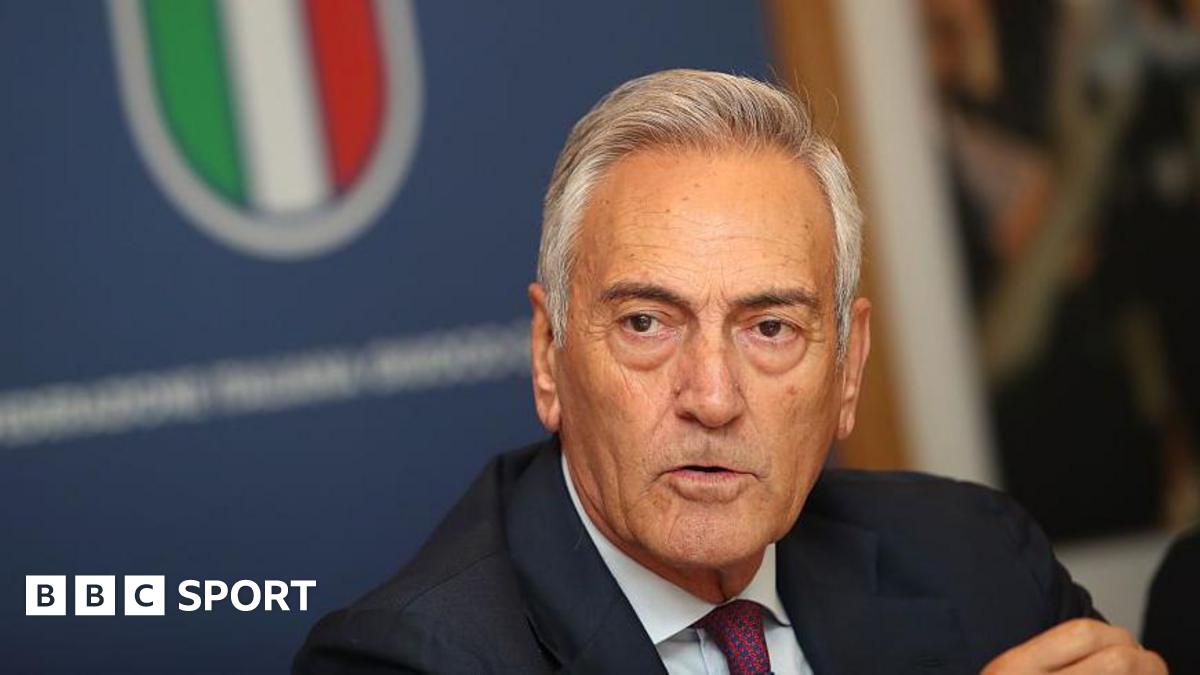
Gravina, 72, who is the Uefa first vice-president, announced his resignation following a meeting held at the FIGC’s headquarters in Rome.
He took the job in October 2018, with his predecessor Carlo Tavecchio having stepped down following Italy’s failure to beat Sweden in a World Cup play-off the previous year.
Airborne attacks across large areas of Ukraine by Russian forces with drones and artillery killed at least five people, injured 11 others over the past 24 hours, inflicting widespread damage to infrastructure and in residential areas. File photo by Sergey Kozlov/EPA
April 2 (UPI) — At least five people were killed and 11 injured in large-scale Russian strikes across Ukraine involving more than 360 drones, Ukrainian authorities said.
One person was killed and two injured, one of them a 12-year-old boy, in the southeastern city of Synelnykove, after drone and artillery strikes across Dnipropetrovsk province overnight.
In an online post, Dnipropetrovsk Military Administration head Oleksandr Hanzha said that an administrative building and a shopping complex were set ablaze in Synelnykove as well as infrastructure, a dozen apartment buildings and private houses and buses in a series of strikes also targeting Pavlohrad and communities to the south in and around Nikopol.
Four people were killed and four injured on both banks of the Dnipro River in Cherkasy province, some 80 miles downstream from Kyiv, amid mass daytime attacks on Wednesday centered on central and western Ukraine.
The fatalities occurred in a blast in the Zolotoniskyi district after local residents gathered in an open area where a drone had crashed and the warhead detonated without warning.
Cherkasy Regional Prosecutor’s Office said in a Telegram post that it had launched a pre-trial investigation into the attack as a possible war crime and reiterated warnings to people to stay well away from downed drones, drone debris and other munitions.
“Law enforcement agencies and rescue services once again emphasize: any fragments of UAVs, missiles, or other explosive objects pose a mortal threat. WHAT EVERYONE NEEDS TO KNOW: It is strictly forbidden to: approach the crash site of a UAV; touch the debris; photograph or film them up close; carry any parts of the object,” the prosecutor’s office added.
Four civilians were injured in air attacks on Cherkasy district, three of them passengers on a bus that was struck by debris from a Russian drone, said the province’s governor, Ihor Taburets.
In Poltava, 125 miles to the east, four people, including a child, were injured when a drone hit a private holding and one person was injured in attacks targeting critical infrastructure facilities in the far west of Ukraine, close to the border with Romania in Zakarpattia province.
The Ukrainian Air Force reported hundreds of drones crossing into Ukraine from the southeast, headed toward western regions, including Ivano-Frankivsk and Chernivtsi with blasts heard in Lviv and Ternopil and damage reported in the cities of Lutsk, Khmelnytskyi and Khotyn in Volyn, Khmelnytskyi and Chernivtsi provinces.
Khotyn Mayor Andrii Dranchukon took to social media Thursday morning to call on residents to limit their electricity use to essential purposes, saying damage to power infrastructure from drones would take up to two weeks to repair and pledging assistance to people whose homes had sustained damage.
Children race to push colored eggs across the grass during the annual Easter Egg Roll event on the South Lawn of the White House in Washington on April 21, 2025. Easter this year takes place on April 5. Photo by Samuel Corum/UPI | License Photo
Song Chi-young, chairman of small business association, left, and Small and Medium Business Minister Han Sung-sook pose for a photo at a meeting on the impact of the Middle East war in Seoul on Tuesday. Photo by Asia Today
April 1 (Asia Today) — South Korean small businesses are facing sharp increases in packaging costs and supply shortages, with some warning they are struggling to operate as disruptions linked to the Middle East conflict ripple into the domestic economy.
At a government meeting held in Seoul on Tuesday, business owners described severe difficulties securing basic materials, including packaging containers and even pay-as-you-throw garbage bags.
“I can’t even find trash bags, let alone packaging materials,” one participant said, describing the situation as a direct impact of global disruptions reaching local businesses.
Officials and industry representatives said prices for key materials have surged in recent days. The cost of plastic egg trays rose from 81 won to 131 won, a 61.7% increase, while plastic capsules for smaller packaging climbed 46.9%. Supplies of plastic wrap and binding materials have also dropped to about half of normal levels, creating what participants described as a “supply shock.”
The impact is spreading across sectors. A business owner operating both a factory and a restaurant said waste disposal has been disrupted due to shortages of garbage bags, raising hygiene concerns. An interior industry official warned that rising raw material costs could lead to monthly losses of about 10 million won (approximately $7,400) once existing contracts expire.
Song Chi-young, head of a small business group, said plastic bag prices have doubled within a week and called for stronger government action against hoarding and broader support measures.
In response, Small and Medium Business Minister Han Sung-sook said the government would strengthen emergency response systems and expand support for small businesses. Plans include prioritizing liquidity assistance in a supplementary budget and launching a nationwide consumption campaign beginning April 11.
Delivery platform companies were also urged to share the burden. Representatives from major food delivery firms said they are reviewing additional support measures, including expanding eco-friendly packaging initiatives and exploring ways to reduce plastic use.
Han said the crisis requires coordinated action across the economy, stressing that businesses and platforms must work together alongside the government to mitigate the impact of rising costs and supply disruptions.
The developments highlight how global geopolitical tensions are increasingly affecting everyday business operations, particularly for smaller firms with limited capacity to absorb sudden cost increases.
1 of 2 | Shoppers crowd the cooking oil section at an E-Mart store in Seoul as daily necessities are sold at half price during the 2026 Landers Shopping Festa. Photo by Asia Today
April 1 (Asia Today) — Large crowds gathered at discount stores across Seoul on Tuesday as consumers rushed to take advantage of steep price cuts, highlighting growing pressure from persistent inflation.
At an E-Mart store in Seoul’s Yongsan district, shoppers lined up before opening, with many heading straight to discounted meat and fresh produce sections as doors opened.
“Prices are so high these days. If not for chances like this, when else would I buy?” said a woman in her 60s, who said she arrived 30 minutes early to secure discounted items.
E-Mart launched its largest discount event of the first half of the year, running through April 12, offering up to 50% discounts on groceries and household essentials. The campaign involves affiliates across Shinsegae Group, including department stores, online platforms and shopping malls.
Fresh food items drew the biggest crowds. Pork belly and pork shoulder were sold at 1,490 won ($1.10) per 100 grams with membership discounts, while whole watermelons were priced at 11,900 won (about $8.80) for the day. Discounted Korean beef also attracted heavy demand, with some shoppers buying multiple packages.
Store employees said traffic during promotional events can be more than triple normal levels, as customers stock up on essentials.
In contrast, snack aisles were relatively quiet, reflecting a shift in consumer behavior toward necessities such as eggs, cooking oil and other basic goods. Analysts say prolonged inflation has led households to prioritize essential spending over discretionary purchases.
The retailer said it prepared its largest-ever promotion focused on everyday items, including discounts on detergents, diapers, batteries and processed foods when purchased in bulk. A special promotion also offers select products for 1,000 won (about $0.70).
The event, first launched in 2021, has grown rapidly, surpassing 1.3 trillion won (about $960 million) in sales last year. Shinsegae Group aims to expand it into a major national shopping festival comparable to global events such as Black Friday in the United States and Singles’ Day in China.
Company officials said this year’s extended promotion period and expanded product lineup are expected to drive record sales.
The surge in turnout underscores how rising prices are reshaping consumer behavior, with discount events becoming key opportunities for households to manage everyday expenses.
The christening ceremony of South Korea’s 500th liquid natural gas carrier for export at Samsung Heavy Industries Co. on the southeastern Geoje Island, South Korea. File. Photo by YONHAP / EPA
April 1 (Asia Today) — Samsung Heavy Industries has joined a U.S. Navy vessel development project, marking another step forward for South Korea’s shipbuilding industry in the American defense market following similar moves by Hanwha.
Samsung Heavy Industries said Wednesday it has begun conceptual design work for the Navy’s Next-Generation Logistics Support Ship program in partnership with U.S. shipbuilder General Dynamics NASSCO and Korean engineering firm DSEC. The project is scheduled to run through March 2027.
The program involves developing small, highly maneuverable vessels to support the Navy’s distributed maritime operations strategy, which emphasizes dispersed forces and flexible logistics. More than 13 ships are expected to be built under the initiative.
Samsung Heavy Industries will focus on hull design and technical support, using a 400-meter test tank at its research facility to improve efficiency and performance.
The announcement follows a move by Hanwha’s shipbuilding unit, which recently confirmed its participation in a separate U.S. Navy program. Industry analysts say a broader Korea-U.S. shipbuilding cooperation framework is beginning to take shape as major South Korean companies expand their presence in U.S. defense projects.
A company official said the NGLS program will serve as a foundation for expanding cooperation with the U.S. partner shipyard and accelerating efforts to secure tangible results in the American market.
In parallel with the design project, Samsung Heavy Industries is preparing to bid jointly with a U.S. shipyard for maintenance, repair and overhaul contracts. The company is also pursuing certification under the Navy’s ship repair agreement program, which would allow it to compete for future maintenance work.
The company is further strengthening collaboration in advanced manufacturing technologies, including artificial intelligence-based automation and robotics, through a research center established with San Diego State University. Plans include expanding cooperation to build a shipbuilding supply chain in the United States and train skilled workers.
The latest developments suggest South Korea’s shipbuilders are moving beyond commercial vessels into defense-related projects in the United States, broadening their global footprint and deepening bilateral industrial ties.
Bilivan consumers have felt the impact of contaminated gasoline. More than 10,000 vehicle owners, including long-distance transport operators and private drivers, have reported severe engine damage. File Photo by Luis Gandarilas/EPA
April 1 (UPI) — Bolivia’s government, led by President Rodrigo Paz, said it has uncovered an international criminal network responsible for sabotaging and adulterating imported fuel shipments that entered the country over the past five months.
Interior Minister Marco Antonio Oviedo told a news conference Tuesday that at least 150 million liters of gasoline and diesel were tampered with, citing an official investigation that identified a scheme involving fuel theft and contamination with water and oil in Chilean territory.
Authorities said the operation targeted tanker trucks transporting fuel to Bolivia, particularly in northern Chilean cities. In those locations, part of the fuel was allegedly siphoned off and replaced with a mixture of water and oil, according to local broadcaster Unitel.
President Paz said the adulteration began around October.
Investigators believe the network operated mainly in Chile, with additional links and operational hubs in Paraguay and Argentina. The direct economic loss to the Bolivian state is estimated at $150 million, excluding indirect costs linked to transport disruptions.
Consumers also have felt the impact. More than 10,000 vehicle owners, including long-distance transport operators and private drivers, have reported severe engine damage.
“We are facing an attack against the assets of Bolivian families,” Paz said, adding that the government will pursue legal mechanisms to compensate those affected, according to local newspaper El Deber.
Bolivia’s landlocked status makes transporting fuel from Chile critical to its energy supply chain. The country relies on Chilean ports such as Arica, Iquique and Mejillones to receive international shipments of crude oil and refined products.
After a virtual meeting Tuesday, Paz and Chilean President José Antonio Kast agreed on a joint roadmap to dismantle the transnational organized crime network behind the fuel adulteration, according to Bolivia’s state-run broadcaster BTV.
As an immediate response, Bolivia announced tighter controls at facilities operated by state energy company Yacimientos Petrolíferos Fiscales Bolivianos, known as YPFB, and the National Hydrocarbons Agency. Authorities will implement mandatory laboratory testing at production sites and border checkpoints.
Civil society groups have called for accountability as the investigation continues, urging authorities to prosecute those responsible abroad and to address potential internal failures that allowed the sabotage to go undetected for months.
The crisis comes as Bolivia faces a severe fuel supply shortage. After a structural decline in domestic hydrocarbon production, which fell about 44% between 2014 and 2024, the country shifted from a net exporter to a heavily import-dependent market. Bolivia now imports about 90% of the diesel and 50% of the gasoline it consumes.
The situation has worsened since 2023 due to a shortage of foreign currency, particularly U.S. dollars, complicating payments to international suppliers and contributing to intermittent shortages and partial disruptions in transport and productive sectors.
A store run by Mega MGC Coffee, which reportedly bid for Home Plus Express. Photo by MGC Global
SEOUL, April 1 (UPI) — South Korean discount chain Home Plus said Tuesday that a court has begun to review the sale of its neighborhood grocery store chain, Home Plus Express.
Home Plus, which is under receivership, said the court started the procedure of selecting a preferred bidder after receiving reports from its sales adviser, Samil PricewaterhouseCoopers.
“Prior to the March 31 deadline, multiple companies were confirmed to have participated in the bidding process to acquire Home Plus Express,” the firm said in a statement.
Home Plus did not disclose further details, including the number of bidders and their identities.
However, Mega MGC Coffee has reportedly presented a bid for Home Plus Express. The budget coffee chain, which is owned by MGC Global, operates nearly 4,000 stores across South Korea.
Both MGC Global and Home Plus declined to confirm the reports.
Following unsuccessful attempts to sell Home Plus as a single entity, the divestment of Home Plus Express has emerged as a key pillar of its rehabilitation plan. The unit generated $730 million in revenue in 2024.
The Express division has a network of almost 300 stores and most of them are located in high-density urban areas. Home Plus also runs more than 100 large-format outlets.
In 2015, South Korea’s leading private equity fund, MBK Partners, purchased Home Plus from Tesco in a landmark $5 billion deal. In recent years, the retailer has struggled amid pandemic-related disruptions and the rise of e-commerce giants.
Since early last year, MBK Partners has tried to dispose of Home Plus to little avail. As a result, the company has shifted its focus to the sale of Home Plus Express.
A QUAINT English village that feels “like stepping into a postcard” has been named among the most beautiful in the world.
With no new houses since the 1600s, Castle Combe at the southern edge of the Cotswolds is already one of the most stunning in the UK.
Sign up for the Travel newsletter
Thank you!
Castle Combe has been named one of the most beautiful small towns in the world, by Conde Nast TravellerCredit: GettyThe small village is on the southern edge of the Cotswolds and features honey-coloured stone buildingsCredit: Getty
And now the southwest Wiltshire village has been named by Conde Nast Traveller as one of the most beautiful small towns in the world, and out of 53 destinations on the list, was the only UK spot to feature.
Conde Nast Traveller stated: “[T]he town is a well-preserved stretch of Cotswold stone cottages and old pubs and churches.”
The village has even played a star role as a set in some films, including Stardust, Steven Spielberg‘s War Horse and the original Dr Doolittle film.
One of the best ways to experience the village is to set off on a walk.
Key points to stop by include Water Lane, where you can see a good example of the local architecture using Cotswolds stone.
One recent visitor even said it was “like stepping into a postcard”.
In the centre of the town, drop by The Market Cross – a four-column stone structure that used to act as the focal point for the village’s weekly wool markets.
Perhaps the most popular spot in town with tourists is the historic stone bridge that crosses the River Bybrook.
The bridge is Grade II listed and can be found in the lower village.
If you fancy something sweet but don’t want to sit inside, then visit Ellen’s Cottage where you will find a small cake stand in front of a charming brown cottage door.
Visitors can help themselves to cake from the stand and pop payment through the letterbox.
There’s usually a bucket full of cold drinks as well, though if you want a hot drink you can knock the door and ask for one, with a cappuccino costing £2 and a latte costing £2.50.
If you want somewhere where you can sit inside and drink your coffee, then head to The Old Stables Coffee Shop which serves a variety of cakes for £4 a slice.
The best walk to explore the village is by walking, and on the way you can grab a cake from Ellen’s CottageCredit: Google mapsThere are also a couple of pubs where you can grab a tipple, such as The White HartCredit: Getty
If you are more in the mood for an alcoholic beverage with a side of pub grub, then you can head to The White Hart or The Castle Inn – both of which are just a few steps from the Market Cross.
You can also stay at The Castle Inn if you want to spend a night in the idyllic village.
Rooms cost from £145 a night and you can expect period features in each room, such as original beams.
For another option of where to stay, Conde Nast Traveller recommends booking into The Manor House.
Dating back to the 14th century, The Manor House boasts quiet gardens, a Michelin restaurant and an 18-hole golf course.
Rooms in The Manor House feature dark, wood panelling and ornate wallpaper and a one-night stay in April costs from £276.
If you want to enjoy a night in the village you can by staying at The Castle Inn from £145 per nightCredit: Alamy
Our favourite UK hotels
*If you click on a link in this box, we will earn affiliate revenue.
Margate House, Kent
This stylish boutique hotel is in a seaside townhouse, a short walk from Margate’s coolest bars and restaurants. Decked out with plush velvet sofas, candles flickering and striking independent art, inside feels like a warm welcome home. Rooms are stunning, especially the ones that give you a glimpse of the sea.
The Alan looks extremely grand, being built into a beautiful Grade II listed building. Spread across six floors, with 137 rooms, each one looks like a fancy design magazine. From the concrete coffee tables to the pink plastered walls, the industrial-inspired designs perfectly replicate the history of the city.
This historic hotel has welcomed the likes of Charles Dickens and Lillie Langtry through its doors. Rooms have richly-patterned carpets with super soft bed linen and premium toiletries in the bathroom. Go for a superior room for extra goodies including bathrobes and snack boxes.
This Cambridge hotel is in the ideal spot, within walking distance to bars, shops and hotspots like the university colleges and Parker’s Piece. The inside couldn’t be prettier, with huge stained glass windows, grand chandeliers, and rooms with enormous clawfoot bath tubs.
There are a number of things you can do in the surrounding area as well.
For example, you could use the village as a base for a Cotswolds walk, through Bybrook Valley and the North Wiltshire hills.
Just four minutes down the road, you will find Castle Combe Racing Circuit where you can watch karting races for as little as £10 per person.
Like adrenaline? Well, the race circuit also offers a number of experiences where you can drive a car of your choice from movie cars, classics and supercars from £84.
The market town of Chippenham is a 14-minute drive away as well, where you can browse independent shops, have a walk through Monkton Park next to the River Avon and learn about the town’s history at Chippenham Museum.
To include a city in your trip, you could head to Bath, just half-an-hour away.
Alternatively, you could stay at The Manor House from £276 per nightCredit: Alamy
The UNESCO World Heritage city is famous for its Roman baths and honey-coloured architecture, using the same stone found in Castle Combe.
Chippenham is just over an hour on the train from London, with a single ticket usually costing £25 per person.
To then get to Castle Combe, you can either jump in a taxi for 20 minutes or hop on one of the regular local Faresaver buses that take about 24 minutes to reach the village and cost a maximum of £3 per way.
Or if you want to keep exploring the Cotswolds, there is a tiny village with a popular garden centre and ‘dinosaur’ tree that welcomed a very famous A-lister this week.
Castle Combe is around 30 minutes from Bath or around an hour and a half on the train, then bus, from LondonCredit: Getty
After the China tie, Team Whyte, who are ranked in the world’s top five but are making their debut at this level, continue the round-robin against Norway (02:00). They conclude it with matches against the Swiss and Czech Republic on Thursday, with the tie with Switzerland available to watch on the BBC Sport website and app.
Whyte – along with Robin Brydone, Euan Kyle and Craig Waddell – are representing Scotland after world top-ranked rink Team Mouat elected not to compete after their silver medal at the Olympics in Cortina earlier this year.
The top six progress, with the top two going straight into the semi-finals and the other four teams competing to join them.
“We have two tough games [on Wednesday] in China and Norway,” said Whyte.
“Both teams seem to be playing quite well, so if we can try to come out firing and put in some good performances then that would be great to allow in the last stage to maybe get us two more wins and hopefully secure us the semi-final spot.
“However, there are a lot of teams around that area that could easily also get that semi-final spot, so there a lot of big games still to be played, but we are feeling positive.”
A breakdown of the teams and groups of the FIFA World Cup in Canada, Mexico and the US after the final playoffs.
Published On 1 Apr 20261 Apr 2026
Iraq’s qualification for the FIFA World Cup 2026 has completed the lineup of 48 nations for the tournament hosted by Canada, Mexico and the United States.
The Lions of Mesopotamia edged Bolivia 2-1 on Tuesday to win the second final of the FIFA Playoff tournament in Mexico. In the first final earlier, Democratic Republic of the Congo beat Jamaica 1-0.
Recommended Stories
list of 4 itemsend of list
In the other games, Turkiye, Bosnia and Herzegovina, Sweden and Czechia were the final four teams to complete the European quota of World Cup qualification.
Widely considered the most famous sporting event in the world, the 2026 FIFA World Cup will be its biggest ever. Forty-eight nations will play instead of the usual 32, with 104 matches in 16 venues across the three host nations.
Argentina will look to defend the trophy lifted by iconic captain, Lionel Messi at Qatar 2022. Cape Verde, Curacao, Jordan and Uzbekistan will make their debut.
The World Cup’s first game will be a throwback to 2010 when Mexico take on South Africa on June 11 in Mexico City in a replay of the tournament opener then. Football fans will hope the opening goal this year matches the screamer scored by Lawrence Tshabalala from the South African hosts then.
Mexico in group A – which includes South Korea and Czechia – will be one of the toughest of the 12 groups.
Team USA are alongside Australia, Paraguay and Turkiye.
Canada, too, face the challenging task of making it out of a group comprising Switzerland, Qatar and Bosnia.
Here’s a breakdown of the 48 teams in the 12 groups:
Turkiye secure a return to football’s biggest tournament for the first time since 2002, when they finished third.
When Turkiye finished third at the 2002 World Cup, few Turkish fans thought it would be almost a quarter of a century before their side’s next appearance at football’s showcase event.
So Turkiye’s qualification for World Cup 2026 on Tuesday was greeted with joy and a fair amount of relief, with a tense 1-0 playoff win at Kosovo prompting wild celebrations among the players and the 700-strong travelling support.
Recommended Stories
list of 4 itemsend of list
Back in Turkiye, people took to the streets in celebration, with many hanging out of honking cars and waving flags.
Turkiye rode their luck at times during the game at the Fadil Vokrri Stadium in Pristina, but emerged victorious thanks to a 53rd-minute goal from Kerem Akturkoglu, who poked the ball home from close range after Kenan Yildiz’s cross was turned into his path by Orkun Kokcu.
“Thank God. It has been 24 years. Some of us were not even born the last time we qualified, and some were too young to remember. We always dreamed of moments like this,” Akturkoglu told the Turkish media.
“We talked about 2002 and the success there; we always dreamed of it. Most of us don’t even remember 2002. Now we will give the next generation something to dream about at the 2026 World Cup. We want to make our country proud,” he added.
Translation: We can’t find the words to describe the beauty of this video! The one thing we’ll say is that we deserved it, and we are in the World Cup!
Turkiye have only appeared at the FIFA World Cup on two occasions. In 1954, they exited in the group stage, while in 2002 they beat cohosts Japan en route to a narrow 1-0 semifinal defeat to eventual champions Brazil.
Hakan Sukur scored just 11 seconds into the third-place playoff to score the fastest World Cup goal in history as Turkiye went on to beat the other cohosts, South Korea, to win the bronze medal.
Since then, Turkiye, currently 22nd in FIFA’s world rankings, have endured a series of near World Cup qualification misses and playoff losses.
Hopes were high among Turkish fans for this campaign as coach Vincenzo Montella had a particularly talented squad at his disposal, featuring a blend of emerging young stars such as Real Madrid’s Arda Guler and the Juventus forward Kenan Yildiz, alongside more seasoned players such as captain Hakan Calhanoglu.
“I am incredibly proud,” Montella told Turkish state news agency Anadolu.
“I wouldn’t change my players for a thing. Anyone who does this job dreams of the World Cup. I am incredibly grateful to my players. We have achieved our dream.
“It is an incredible feeling, I cannot describe it in words. The World Cup is the pinnacle.”
Australia, Paraguay and cohosts the United States await Turkiye in Group D of the World Cup, which is also being hosted by Canada and Mexico.
While Turkiye have appeared in several European Championships over the last two decades – including a run to the semifinals at Euro 2008 – those tournaments pale in significance to the World Cup.
Turkish Football Federation President Ibrahim Haciosmanoglu had even said Montella would be granted Turkish citizenship if his side qualified for the 2026 edition, which the Italian coach mentioned during his post-match media conference.
“I feel like a Turk, I think like a Turk in every step I take. The passport is just a formality for me, I am always like a Turk,” he said.
It is clear that Montella is beloved by his players, who mobbed him in celebration and drenched him in water during the media conference.
Montella also had some kind words for Kosovo and congratulated them on a fierce performance that pushed Turkiye to their limits.
“We are two friendly countries,” he said. “I wish we could have gone to the World Cup together, but they put up an incredible fight.”
Having done more than most to step into the boots of talisman Gareth Bale, Harry Wilson still has time on his side.
The forward, who has scored 17 international goals, will be 31 when the Euros come around and there is no real reason why he cannot build on the brilliant form he has shown this season.
With Wilson being tipped to leave Fulham at the end of his contract this summer, Wales and Bellamy will cross fingers he picks the right club from what is expected to be a lengthy list of suitors.
Former England captain Wayne Rooney recently suggested Wilson fitted Fulham perfectly and wondered whether he would get lost at one of the Premier League’s top clubs.
It would be natural for Liverpool academy graduate Wilson to want to test himself at the highest level possible, but Wales will certainly want to feel the benefit of him being a certain starter with his club side.
March 31 (UPI) — Unknown assailants abducted a foreign journalist, reportedly an American, Tuesday night in Iraq, according to Baghdad officials, who said security forces are working to secure her release.
The journalist was identified as American Shelly Kittleson by Al-Monitor, a Washington-based online news organization covering the Middle East where she is a contributor.
Iraqi specialized security forces were immediately deployed following the kidnapping and tracked down one of the assailants’ vehicles attempting to flee, causing it to overturn, Iraq’s Ministry of Interior said in a statement.
One suspect was arrested, according to the ministry, which said efforts continue to track down the remaining suspects and secure the journalist’s release.
The U.S. State Department, which said it was aware of the kidnapping of an American journalist, described the detained suspect as having ties to Kata’ib Hezbollah, a pro-Iran militia designated by the United States as a terrorist organization.
Dylan Johnson, the State Department’s assistant secretary for global public affairs, said in a statement, without naming Kittleson, that the department had “previously fulfilled our duty” by warning that there were threats against her.
“We will continue to coordinate with the FBI to ensure their release as quickly as possible,” Johnson said in a statement, adding that Iraq is under a Level 4 Travel Advisory.
“Americans are advised not to travel to Iraq for any reason and to leave Iraq now,” he said.
“The State Department strongly advise all Americans, including members of the press, to adhere to all travel advisories.”
Al-Monitor said it is calling for Kittleson’s “safe and immediate release.”
“We stand by her vital reporting from the region and call for her swift return to continue her important work,” it said.
President Mark Schoeff of the Washington-based National Press Club called Kittleson’s kidnapping “alarming and unacceptable.”
“Journalists are not targets and treating them as such is an assault on press freedom everywhere,” he said in a statement.
“We call for her immediate and safe release and urge those responsible to ensure her well-being.”
One of the greatest strikers of the past 15 years – Poland’s Robert Lewandowski – is among the big names who will not be playing at the 2026 World Cup in Canada, the United States and Mexico.
The 37-year-old Barcelona striker, who has scored 89 goals for his country, was not able to inspire his side as they lost 3-2 in Stockholm against Sweden in Tuesday’s play-off final.
Lewandowski, who won the German Bundesliga title on 10 occasions – twice with Borussia Dortmund and then in eight successive seasons with Bayern Munich, before winning La Liga twice with Barca – may have played in his last major international tournament.
We have taken a look at six players who have missed out on qualifying for this summer’s finals.
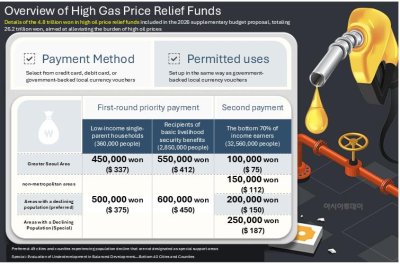
Data provided by the Ministry of Economy and Finance. Graphic by Asia Today and translated by UPI
March 31 (Asia Today) — South Korea’s Ministry of the Interior and Safety proposed a 9.52 trillion won ($7.1 billion) supplementary budget on Monday to ease the impact of high oil prices and inflation driven by instability in the Middle East.
The plan includes direct cash payments ranging from 100,000 won to 600,000 won ($75 to $450) per person for low- and middle-income households, along with increased funding for local governments and youth employment programs.
The proposal was approved at a Cabinet meeting and will be submitted to the National Assembly for review.
At the center of the package is a 4.82 trillion won ($3.6 billion) relief program targeting the bottom 70% of income earners. Payments will vary depending on region and socioeconomic status.
Residents in the Seoul metropolitan area would receive 100,000 won ($75), while those outside the capital region would receive 150,000 won ($112). People living in areas facing population decline would receive between 200,000 won and 250,000 won ($150 to $187).
Additional support is aimed at vulnerable groups. Single-parent households and those in the near-poor category would receive 450,000 won ($337), rising to as much as 500,000 won ($375) for those outside the capital region. Recipients of basic livelihood assistance would receive 550,000 won ($412), or up to 600,000 won ($450) with regional adjustments.
The government estimates the program will cover about 32.56 million people in the bottom 70% income bracket, along with 360,000 near-poor and single-parent households and 2.85 million recipients of basic livelihood benefits.
Details such as eligibility criteria, payment timing and methods will be finalized through interagency consultations and announced separately.
The ministry also set aside 19.5 billion won ($14.5 million) for youth work experience programs, focusing on sectors such as caregiving, culture and environmental services. Officials said the initiative is designed to support young people facing increased employment uncertainty amid global economic volatility.
An additional 4.67 trillion won ($3.5 billion) in local government grants is included to help regional authorities respond quickly to local economic conditions and fund projects aimed at stabilizing livelihoods and boosting economic activity.
Interior and Safety Minister Yoon Ho-joong said the relief payments were structured to provide greater support to regions and populations facing deeper economic hardship.
“With growing external uncertainties, including the conflict in the Middle East, we will work closely with the National Assembly to ensure this budget serves as a stabilizing force for people affected by rising fuel costs and inflation,” Yoon said.
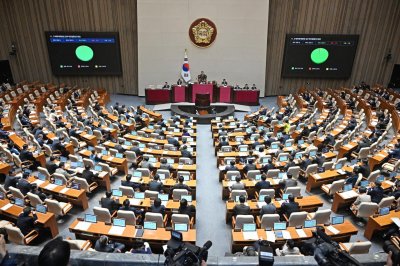
Lawmakers pass a revision to the Restriction of Special Taxation Act during a plenary session at the National Assembly in Seoul, with 206 votes in favor, 2 against and 2 abstentions out of 210 members present. Photo by Asia Today
March 31 (Asia Today) — South Korea’s ruling and opposition parties agreed Tuesday to pass a package of economic measures, including a currency stabilization bill, as the won weakened sharply amid prolonged conflict in the Middle East.
The legislation was approved during a plenary session alongside more than 60 bills aimed at stabilizing the economy and supporting livelihoods.
The currency measure includes tax incentives designed to encourage domestic investment by individuals who have invested in overseas markets, often referred to in South Korea as retail investors in foreign stocks. Officials said the goal is to increase demand for the Korean won and reduce volatility in foreign exchange markets.
The won traded at 1,530.1 per U.S. dollar on Tuesday, well above the psychologically significant 1,500 level, adding to inflationary pressure.
Floor leader Han Byung-do said the worsening Middle East crisis had begun to affect everyday life, emphasizing the need to contain exchange rate volatility and shield the economy from external shocks.
Lawmakers also approved additional economic legislation tied to the crisis. These include a measure to support corporate restructuring, allowing companies to streamline mergers and spin-offs and receive tax benefits as they respond to industrial challenges and shift into new sectors.
Other bills passed include revisions to trade-related laws aimed at helping businesses adapt to changes in the global trade environment.
Separately, lawmakers voted to fill several vacant leadership posts in National Assembly committees. The Democratic Party nominated Rep. Seo Young-kyo as chair of the Legislation and Judiciary Committee, along with Rep. Kwon Chil-seung and Rep. So Byung-hoon for other committee leadership roles. Their terms will run through May.
The votes were conducted by secret ballot and passed with support from the Democratic Party, while the People Power Party is believed to have opposed the selections.
The People Power Party had argued that the judiciary committee chair should be held by the opposition to ensure checks and balances, noting that the Democratic Party already holds the position of National Assembly speaker.
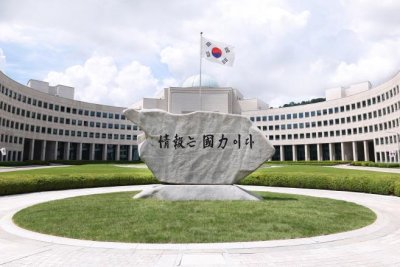
Exterior of the National Intelligence Service headquarters in Seoul. Photo by Asia Today
March 31 (Asia Today) — South Korea’s National Intelligence Service said Tuesday that an employee accused of involvement in a North Korea drone incident acted independently, describing the case as “personal misconduct” unrelated to official duties.
The agency said its internal inspection found the employee was an administrative staff member with no authority to collect or handle intelligence.
Officials added that the employee had known the main suspect – a graduate student in his 30s – since their college years, and that funds transferred in connection with the case were personal money, not tied to the agency.
Earlier in the day, a joint military-police task force referred the employee and two military officers to prosecutors without detention. The case involves allegations of aiding violations of national security and aviation safety laws.
The intelligence employee was sent to civilian prosecutors, while the two active-duty officers were referred to military prosecutors, all with recommendations for indictment.
Investigators said the suspects were involved in assisting the graduate student, identified only by his surname Oh, in flying a drone into North Korea.
The employee is believed to have known about the civilian suspects’ drone development activities and related business operations. Authorities said he provided about 2.9 million won ($2,200) to help cover production costs and meal expenses on the day of a test flight.
An intelligence agency official said the employee’s actions were “an individual deviation unrelated to official duties” and that the agency had cooperated fully with investigators to clarify the facts.
Jordan Pickford: Japan’s opening goal was the first time Pickford had conceded for England in 922 minutes. He had to produce a smart save in the second half to keep the hosts in the game. 6
Ben White: Beaten once early on but showed the consistency he has done for Arsenal after that. A constant hard-working presence down the right-hand side. One particularly good overlapping run in the first half. 6
Ezri Konsa: In with a big chance of starting the first game at the World Cup. One crucial block to deny Ayase Ueda with the shot hitting the bar and going over. 6
Marc Guehi: Given the armband by Tuchel for the first time. A couple of shaky moments early on but after that as dependable as ever. 6
Nico O’Reilly: Another important game for O’Reilly as he makes the left-back position his own before the summer. He showed his ability on the ball and moved into midfield whenever he could. 7
Kobbie Mainoo: A bright start and some nice footwork when moving the ball around midfield. Beaten a couple of times on Japan attacks when trying to defend. 6
Elliot Anderson: A certain starter at the World Cup. Assured in midfield, provided a drive to England’s play and tried to make things happen. One of the better performers on the night and clipped the crossbar with a good effort. 7
Cole Palmer: The Chelsea attacker was given the nod as the number 10 over Phil Foden who played as a false nine. There was always a sense that something could happen when Palmer was on the ball. However, he was caught on the ball and punished for Japan’s opener. Came off just before the hour mark. 6
Morgan Rogers: Started on the right wing and asked to provide a threat through the middle with no natural striker in the starting line-up. Not his best position but did the job that was asked of him. 6
Anthony Gordon: Put in another energetic performance with lots of hard work but not many moments to threaten the Japan defence. 5
Phil Foden: The Man City forward started as a false nine as Tuchel looks for a position for him in England’s squad. It was not a good night for Foden who will be worried about his place on the plane for the World Cup. Replaced in the 59th minute. 5
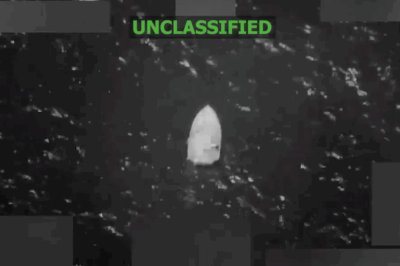
This photo shows moments before a boat suspected of carrying narcotics is struck in the Eastern Pacific on March 8. Photo by U.S. Southern Command
March 31 (UPI) — Increased military pressure by the United States on drug trafficking routes in the Pacific Ocean has forced criminal groups to sharply raise payments to those willing to transport narcotics by sea, a police official said.
In Ecuador’s coastal provinces of Manabí and Santa Elena, recruitment costs for local fishermen tasked with moving cocaine to Central America on speedboats have surged to unprecedented levels.
According to Ecuadorian outlet Primicias, in 2023 and 2024 criminal organizations paid up to $20,000 per trip to boat operators and about $5,000 to their assistants.
However, a large-scale deployment of U.S. and Ecuadorian forces under Operation Southern Spear, launched in October, has increased the risks of these journeys and driven up payments offered by traffickers.
Col. William Calle, head of Ecuador’s National Police in Zone 4, said operators piloting speedboats or semi-submersibles can now earn around $40,000 per trip. Assistants receive about $20,000, while those handling mid-sea refueling earn roughly $15,000.
Local reports, including from El Diario de Manabí, indicate payments can reach as high as $90,000 for high-risk missions or large shipments.
Since 2024, U.S. and Ecuadorian maritime authorities have conducted patrol flights and interdiction operations to monitor and intercept drug trafficking vessels in Ecuadorian waters.
President Daniel Noboa ratified two military cooperation agreements in February. The risk for traffickers has shifted from capture to potential airstrikes in international waters if vessels fail to stop.
Despite arrests and international warnings, criminal groups continue to rely on fishing vessels to transport drugs.
According to El Diario, fishermen detained after operations in Manta and Salinas on Thursday told courts that successful trips carrying one to two tons of drugs can yield payments of up to $90,000. Military intelligence has described these sums as the “price of silence” and compensation for the risk of attack.
Ecuador’s Navy said traffickers increasingly use so-called “mother ships” to extend range and cargo capacity, while smaller fiberglass boats serve as logistical support or for transfers at sea. This tactic complicates interdiction efforts, though shared intelligence has enabled several recent seizures.
Ecuador has become a primary departure point for cocaine produced in the region, with about 80% of shipments moving through the Pacific corridor.
For artisanal fishermen facing economic hardship due to declining catches and piracy targeting boat engines, a $40,000 payment can equal up to a decade of legal earnings.
However, many fishermen say participation is not voluntary but enforced under threats. Organized crime groups such as Los Lobos and Los Choneros control ports, extorting and forcibly recruiting experienced navigators whose knowledge of ocean currents helps evade detection.
The escalation of U.S. military actions under Operation Southern Spear has included at least 47 airstrikes against suspected vessels in the Caribbean Sea and Pacific Ocean. These operations, described President Donald Trump‘s administration as part of a fight against “narco-terrorism,” have resulted in at least 150 deaths.
Authorities have also reported significant seizures, including more than 2.9 tons of drugs near the Galápagos Islands and an additional 2 tons intercepted at sea in March
This month, the U.S. government also launched military and intelligence operations in Ecuadorian territory with authorization from Noboa.
The White House said the operations are aimed at dismantling Los Lobos and Los Choneros, which the U.S. State Department designated as foreign terrorist organizations in late 2025.
According to U.S. Southern Command, these groups are no longer treated solely as criminal organizations, but as threats to hemispheric national security.
“The rugby community in Canberra is deeply passionate and holds a great appreciation for international touring teams, as we witnessed last year when the biggest GIO Stadium Canberra rugby crowd in 20 years packed the venue for the Brumbies’ thrilling match against the British & Irish Lions,” said Rugby Australia CEO Phil Waugh.
“The Wallabies are looking forward to playing their first Test match at GIO Stadium Canberra in 10 years – and their first ever against Ireland in Canberra – as both teams finalise their preparations for the eagerly-anticipated home Rugby World Cup.
“On behalf of Rugby Australia, I would like to extend my sincere thanks to ACT [Australian Capital Territory] Chief Minister Andrew Barr and Deputy Chief Minister Yvette Berry for their support of Test rugby during an incredibly exciting period for the game in our country.”
The sides will meet beforehand as Ireland make the trip to Sydney to begin their Nations Championship summer tour on Saturday, 4 July, before facing Japan one week later and rounding off in Auckland against New Zealand on 18 July.
South Korea will remove the “China (Taiwan)” label from its e-arrival system, a foreign ministry official said Tuesday, after Taiwan changed South Korea’s name in its immigration system from “Korea” to “Korea (South)” in protest.
Seoul plans to remove the “last point of departure” and “next destination” fields from e-arrival cards, where the island nation had been listed as “China (Taiwan),” the official told reporters. It will remain listed as Taiwan in the country and region field.
“We have reviewed the matter and are moving forward with plans to remove the ‘last point of departure’ and ‘next destination’ fields from the electronic arrival card,” he said.
The official said the paper arrival cards already do not include those fields, and that the move is part of efforts to streamline the system, improve convenience for visitors from Taiwan, and align the paper and electronic arrival formats.
The Ministry of Justice is handling the matter in line with relevant procedures, the official said.
Seoul’s decision came after Taiwan called for a “correction” in its labeling as “China (Taiwan)” on e-arrivals, saying it has changed South Korea’s name in its immigration system from “Korea” to “Korea (South)” in a reciprocal measure.
Taipei had warned that it would take further corresponding steps if it sees no positive action from Seoul by the end of this month.
Taiwan’s foreign ministry said Tuesday that it has learned Seoul was under an “internal administrative and technical review” to update its e-arrival card system. It said Taiwan will temporarily suspend its own change to the e-entry registration.
Seoul noted that the decision was not made in response to Taiwan’s stated March 31 deadline for possible additional measures over the labeling, but was intended to address the issue in a way that promotes practical, unofficial cooperation with Taiwan.
Taiwan is also reportedly expected to take reciprocal steps to restore “Korea” in its foreign residents’ certificates.
Seoul’s decision to remove the two fields will be applied to all countries.
South Korea severed official diplomatic ties with Taiwan in 1992, when it established formal relations with mainland China. Since then, the two sides have maintained practical ties in an unofficial manner.
China considers Taiwan, self-governed since it broke away from the mainland in 1949, as part of its territory that must be reunified by force if necessary, and it has strongly objected to any country that challenges this stance.
“We maintain necessary communication with China on matters of mutual interest,” the Seoul official added.
Copyright (c) Yonhap News Agency prohibits its content from being redistributed or reprinted without consent, and forbids the content from being learned and used by artificial intelligence systems.
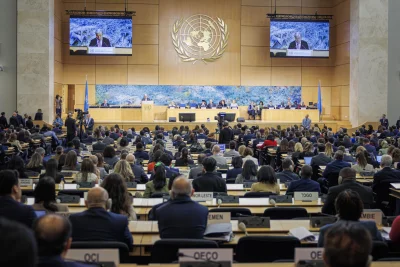
The U.N. Human Rights Council adopted a resolution condemning North Korea’s human rights violations during a session in Geneva Monday. The Council’s 61st session opened on Feb. 23, as seen in this file photo. File Photo by Valentin Flauraud/EPA
SEOUL, March 31 (UPI) — The United Nations Human Rights Council adopted a resolution condemning North Korea’s human rights violations, with South Korea joining 49 other countries as a co-sponsor despite speculation it might withhold support as it seeks to improve relations with Pyongyang.
The resolution was adopted by consensus at the Council’s 61st regular session Monday in Geneva. It expresses “deep concern about the systematic, widespread and gross human rights violations in the Democratic People’s Republic of Korea [and] the pervasive culture of impunity and lack of accountability for such violations.”
The measure urges Pyongyang to undertake sweeping reforms, including dismantling political prison camps, ending forced labor and ensuring freedom of expression and movement.
The Council has adopted a North Korean human rights resolution every year since 2003.
South Korea had reportedly weighed opting out of co-sponsorship this year, as the administration of President Lee Jae Myung pursues renewed engagement with the North and seeks to ease tensions on the Korean Peninsula.
However, Seoul ultimately decided to join as a co-sponsor “following in-depth consultations among relevant government agencies,” Foreign Ministry spokesman Park Il said at a press briefing Tuesday.
He pointed to the resolution’s references to humanitarian issues such as abductions and reunions for separated families, as well as language supporting dialogue and engagement.
“It was by taking all these aspects into account that we decided to participate as a co-sponsor,” Park said.
South Korea also backed a similar U.N. resolution at the General Assembly in November. Seoul had co-sponsored such measures from 2008 through 2018, but stepped back during a period of inter-Korean detente between 2019 and 2022 under then-President Moon Jae-in.
The latest resolution comes as Seoul weighs how to balance engagement with Pyongyang against pressure to address its human rights record.
President Lee has taken conciliatory steps since taking office in June, including restricting activist groups from sending propaganda leaflets across the border.
Last week, Human Rights Watch and more than two dozen organizations and individuals urged Lee’s government to continue supporting the resolution, warning in an open letter that recent policy moves “signal a troubling shift away from support for the victims of the North Korean government repression.”
“Sustainable peace on the Korean Peninsula cannot be achieved by excluding human rights,” the letter said. “Dialogue and engagement need to go hand in hand with the protection of human rights and accountability.”
North Korea has long rejected such resolutions as hostile acts, accusing the United Nations and Western countries of using human rights as a pretext to undermine its government.
Speaking at a session ahead of the vote Monday, North Korea’s deputy permanent representative to the United Nations in Geneva, Kang Myong Chol, said Pyongyang “categorically rejects” the measure.
“We condemn it as a falsified document motivated by ulterior political objectives of undermining the dignity of my country and discrediting its ideology and system,” Kang said.
A recent report by the U.N. special rapporteur found that the country’s human rights situation has “shown no improvement” over the past decade and in many cases has worsened, despite limited engagement with international mechanisms.
The report cited persistent restrictions on movement, expanded surveillance and the continued use of forced labor, as well as growing difficulty for citizens attempting to leave the country.
The resolution was adopted without participation from the United States, which withdrew from the Human Rights Council after President Donald Trump signed an executive order ending U.S. membership in February 2025.