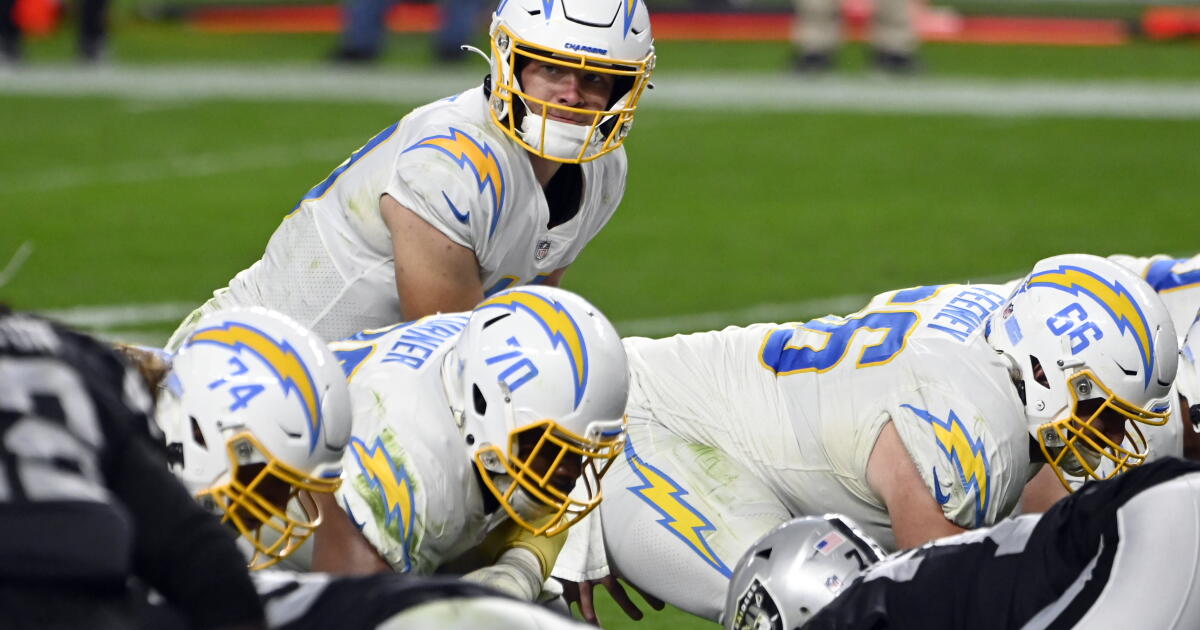
I’ve been a Justin Herbert fan since his days in Oregon. I kept believing he was going to lead the Chargers to new heights, even after all the leadership changes he’s been through. He’s talented, tough and all-in. I gave him every benefit of the doubt. But now, I can conclude only that Justin Herbert is the problem. Inconsistent, often slow to react, but mostly he’s unable to finish. He’s lost more games in the fourth quarter than he’s won.
So far this season the Chargers have the greatest negative point differential in the fourth quarter in the NFL. The pattern is consistent regardless of the coach. Is it all on Herbert? No. But he is the common denominator through all of this.
First, the fumbling. Thank you, Derius Davis. Your inability to simply complete a fair catch led directly to a Seahawks touchdown. How many points did your team lose by?
Next, the bumbling. Call it a banged up offensive line, (AGAIN!), a moderately skilled and depleted receiving core, or a lost, interception prone Justin Herbert, the Charger offense remains sketchy, inconsistent, and self-destructive.
Finally, the stumbling continues … as they cannot beat teams they should or pull out potential victories over the more challenging ones.
Good luck turning this around!
Rick Solomon Lake Balboa
I don’t care much about the Chargers. I rarely read stories about them and would be elated if they’d return to San Diego where they belong.
But, much like a car accident on the 405 that you instinctively know you shouldn’t stare, I just can’t seem to avert my eyes from the wreck the Chargers have become.
Ron Yukelson San Luis Obispo
Here is a modest proposal: Lincoln Riley and Jim Harbaugh waive their buyout clauses and swap jobs. It might be the rare trade that improves both organizations. It is difficult to see how it could make things worse.
His October track record suggested he was an unlikely hero. He entered Wednesday with a .123 playoff batting average. He was benched in Game 5 of the World Series last year. He’d even started this postseason hitless in the first two games of the National League Division Series against the Atlanta Braves, and was given the red light on ABS challenges.
He didn’t carry any of that up to the plate with him in the seventh inning, with the score tied, the bases loaded and hard-throwing Braves reliever Robert Suarez entering the game to face him.
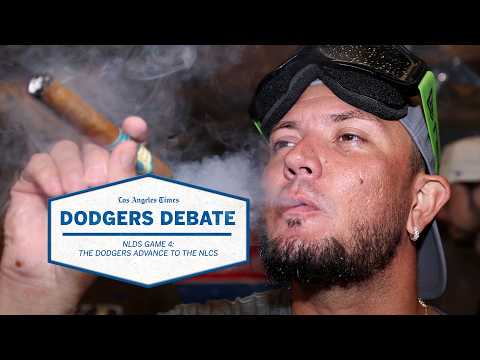
“I like being in those at-bats,” Pages said in Spanish after the Dodgers’ 4-1 win in Game 4 of the NLDS. “There are times the result comes, sometimes not, but I prepare to be in those spots. And today I was able to get the result.”
He was patient, working a full count as he fouled off and then foul-tipped a pair of fastballs in the zone.
The next one, he sent through the middle of the infield for a two-run single to finally give the Dodgers the lead in the deciding moment of the series.
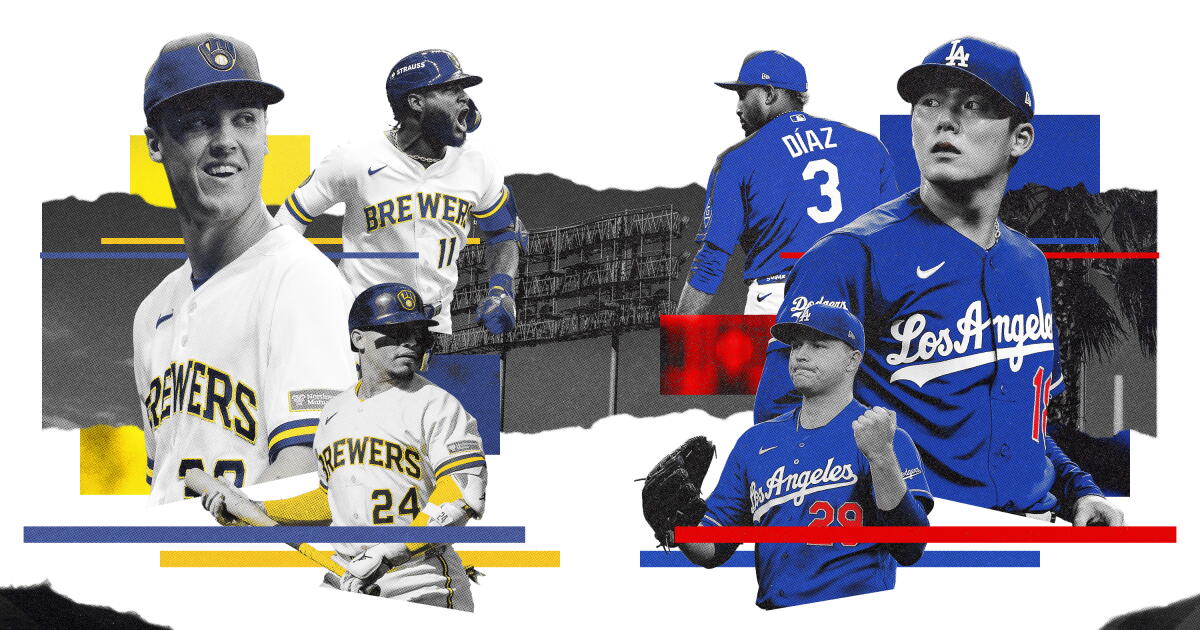
The Dodgers are headed to the NL Championship Series for the ninth time in 14 seasons. They will play the Milwaukee Brewers, who finished off the San Diego Padres in four games, starting Sunday. And they came one step closer to their goal of winning a third straight World Series.
Pages has contributed to the last two titles with his regular-season play and his glove. The game-saving catch he made in Game 7 of the World Series last year, trampling Kiké Hernández in the process, has been immortalized in bobblehead form. But now, he has a big moment with his bat.
“There’s never been a doubt about him, his talent,” Hernández said. “You can’t carry previous postseasons into this postseason. Everything is a new chapter. Every time you take the field in October, you get an opportunity to rewrite your story. So the fact that he struggled in the previous couple postseasons doesn’t mean that was going to happen again this year.
“I mean, during the regular season, you have two bad games and nobody freaks out about it, but because people are adding up previous postseasons, they’re going to freak out. But nobody doubted him. That’s why he stayed in the lineup. And I’m really happy that he was the one that won us a series.”
The signs of a potential breakout were there. When Pages came back from a fractured left hand for the final week of the season, he didn’t miss a beat.
Then he went 0 for 7 in the first two games of the NLDS, and manager Dave Roberts said he wanted to see him “slow down a little bit.”
“I’m going to continue to give Andy leash,” Roberts said. “I believe in him. I feel that for us to win the World Series this year, we’re gonna need him to be an active part of our team.”
Pages recorded two hits in Game 3 and logged another single in his first at-bat Wednesday.
Share via
“Everybody really forgets how young Andy Pages is, you know?” veteran infielder Miguel Rojas said of the 25-year-old. “He’s just starting his career. He’s still like a rookie in this clubhouse for us, because he’s one of the youngest. But at the same time, we see his potential, we see what he can do on the field and we feel so proud of him because … whenever he has the opportunity to contribute to this team, he does it in different ways. Defensively, offensively and on the bases.”
On Wednesday, Pages already had showed off his range in center field when he tracked down a fly ball off Matt Olson’s bat in the left-field gap. But the Dodgers desperately needed someone to contribute with runners in scoring position.
The game had been tied at one run apiece since the second inning.
The lone run Dodgers starting pitcher Tyler Glasnow gave up was made possible by Braves leadoff hitter Michael Harris II’s speed. He got on top of Glasnow’s first pitch, a fastball up and out of the strike zone, to shoot a single through the right side.
Harris then stole second and advanced on a groundout. Then, in an 0-and-2 count to Ozzie Albies, Glasnow spiked a curveball in front of the plate. Catcher Will Smith managed to block the ball, despite the high bounce, but it rolled back toward the mound, giving Harris time to dash home.
Glasnow limited the Braves to one hit in 4-2/3 innings. But five walks prevented him from pitching deeper into the game.
The Dodgers couldn’t get anything going against Braves starter Tyler Mahle, either.
They hadn’t faced Mahle since April, when he was with the San Francisco Giants and racking up a 5.13 ERA. But he’d been lights out since the Braves acquired him, authoring a 1.99 ERA. In his postseason debut, he limited the Philadelphia Phillies to one run in seven innings.
The Dodgers saw that new and improved version of him on Wednesday.
The one run the Dodgers scored against him was something of a fluke.
In the second inning, Shohei Ohtani, who moved up to the cleanup spot after hitting fifth the day before, drew a five-pitch walk without taking a swing. He then stole second base, drawing an errant throw that allowed him to advance to third. So, he was in position to score the tying run when Braves shortstop Mauricio Dubón, who robbed Freddie Freeman of a home run as the left fielder the day before, dropped a popup in shallow left.
The Dodgers recorded only three hits against Mahle in 6⅓ innings. So, the game would come down to the bullpens.
In the seventh, the Dodgers loaded the bases with a single from Teoscar Hernández, a walk from pinch-hitting rookie Josue De Paula, and a five-pitch walk from Kyle Tucker.
The Dodgers had gone 0 for 15 with runners in scoring position for the series when Pages stepped to the plate.
“It’s been incredible, especially the way he’s working, just to be ready for these big moments,” Teoscar Hernández said. “I think he was a little bit off his timing at the beginning of the series. Now that he understands he doesn’t have to do too much to help this team win games, I think everything is coming back to the way it was before he got hurt.
“He’s one of the best on the team. We get to this point because of him, the regular season he had. This is not a surprise for me that he’s having this kind of moment in the playoffs.”
Pages didn’t seem surprised, either.
“What happened last year, happened,” he said. “It’s in the past now. All I can do now is be in the moment. And being in the moment today, I was able to get the result.”
Murphy is a baseball lifer who paid more dues than a union plumber before finally pulling on a big-league uniform for the first time when he was 56. Murphy pitched in the low minors for two organizations and for two independent teams before retiring to become a college coach at Maryville, Claremont-Mudd, Notre Dame and Arizona State. He also managed the Dutch national team to a European championship and a spot in the 1988 Seoul Olympics.
His big break came in 2015, when the Padres promoted him from their triple A team in El Paso to take over for Bud Black as interim manager. A year later Craig Counsell hired him as bench coach for the Brewers, and when Counsell took the Cubs’ managerial job ahead of the 2024 season, Murphy, now 67, was named his replacement.
Two-hundred and 93 regular-season wins and three playoff trips later, the baseball lifer is four wins away from the World Series, which would be the trip of a lifetime.
“I think it was just the relentless pursuit of something,” Murphy told Yahoo Sports of his long journey. “I wanted to be somebody. I wanted to be special.”
Fred Claire was an unorthodox choice for general manager, a former sportswriter and public relations man who didn’t play baseball beyond the junior varsity level in high school, and his 1987 promotion to head the Dodgers’ front office was met with skepticism around the game.
A year and a half later, after his shrewd moves helped turn the Dodgers into World Series champions in 1988, Claire was named Major League Baseball’s executive of the year by the Sporting News.
Claire, who spent 30 years in the Dodgers’ front office, died Monday on his 91st birthday. The news was shared on social media by former Dodger broadcaster Ross Porter.
An avid runner and golfer fit and trim enough to pass for a man a decade younger, the silver-haired Claire was diagnosed with squamous cell carcinoma in 2015 when what looked like a harmless spot on his lip turned out to be cancerous.
The growth was surgically removed, but the cancer returned in August 2016, and spread into the left side of his face. Claire underwent radiation and chemotherapy treatments to kill the malignant cells in his body, but the cancer returned again in 2017.
An immunotherapy clinical trial saved his life, according to a story in Pasadenanow.com, but then an infection forced him to undergo even more extensive facial reconstruction surgery at City of Hope in Duarte, replacing his jawbone with a bone from his leg.
Claire was so impressed with his treatment at City of Hope that he teamed with author Tim Madigan in 2021 to publish a book chronicling his career and capturing the hospital’s history as well the stories of patients and doctors. The book, “Extra Innings,” can be purchased at Amazon, with all net proceeds donated to City of Hope.
“The main thing that I liked and appreciated about the book was people buying it because of their interest in baseball,” Claire told the Desert Sun in 2021, “then to discover what a great place [City of Hope] is after reading it.”
Claire was also active in helping fund research — he and his wife, Sheryl, set up a scholarship fund with the USC Keck School of Medicine for research in head and neck cancer.
Claire was born Oct. 5, 1935, in Jamestown, Ohio. His parents moved the family — Claire had a brother and a sister — to Torrance when Claire was a teenager. After graduating from Torrance High, Claire earned a degree in journalism from San José State in 1957 before taking his first newspaper job.
“I graduated on a Sunday afternoon,” Claire told The Times in 1997, “and by Monday morning, I had a job at the Whittier Daily News.”
For 30 years, Dodger Stadium was Fred Claire’s home. “Honestly, in my heart and soul, it was a thrill and honor to have the opportunity to walk into Dodger Stadium every day and go to work,” Claire told the Times in 2017.
(Jack Harris / Los Angeles Times)
Claire spent 11 years as a sportswriter and was covering the Dodgers for the Long Beach Press-Telegram in the spring of 1969 when a position opened in the team’s public relations department.
Claire, who always longed to be involved in baseball, expressed interest in the job and was hired as a public relations assistant, remaining in the position until 1975, when he was promoted to vice president of public relations.
He was instrumental in creating the branding that came to be known as “Dodger Blue” and was directing the team’s marketing efforts when the Dodgers passed the 3-million mark in attendance for the first time. He also hired Ross Porter, a Dodgers broadcaster from 1977 to 2004.
In April 1987, then-Dodgers general manager Al Campanis was fired after making controversial and what many said were racist remarks about Black Americans on “Nightline,” during which he told the show’s host, Ted Koppel, that Black people may lack “some of the necessities” to be the field manager or GM of a major league baseball team.
Claire was then-Dodgers President Peter O’Malley’s surprise choice to replace Campanis, and his hiring raised the eyebrows of his new peers, who saw Claire as an outsider with no background as a player, coach, manager or scout.
“I knew some people might say, what does this guy know about baseball, he covered it from behind a typewriter?” O’Malley said in 2017. “But I knew Fred could do it. And he did it. He deserves a lot of credit for stepping in quickly, without advance notice, and doing a great job.”
The Dodgers suffered their second straight losing season in 1987, but Claire made several off-season moves — acquiring outfielders Kirk Gibson and Mike Davis, shortstop Alfredo Griffin and pitchers Jay Howell and Jesse Orosco — that fortified the club.
The Dodgers, led by National League Cy Young Award-winning pitcher Orel Hershiser and most valuable player Gibson, won the National League West in 1988 and upset the 100-win New York Mets in the NL championship series.
The gimpy Gibson hit his memorable pinch-hit, walk-off homer off Oakland closer Dennis Eckersley in Game 1 of the World Series to push the Dodgers toward their fifth championship since moving from Brooklyn to Los Angeles in 1958.
Kirk Gibson reacts to his game-winning two-run homer in Game 1 of the 1988 World Series.
(John Swart / Associated Press)
Claire dealt a smallish and seemingly fragile pitcher named Pedro Martínez to Montreal for second baseman Delino DeShields in what turned out to be one of the game’s most-lopsided trades. DeShields hit .241 in three years in Los Angeles, while Martinez went on to have a dominant 17-year career that earned him a 2015 Hall of Fame induction.
But during Claire’s 11-year tenure as GM, the Dodgers won a World Series, two division titles, a wild-card berth and a first-place finish in the strike-shortened 1994 season.
Claire also changed the culture in the front office, hiring an analytics expert, holding regular conference calls with coaches and scouts and canvassing the clubhouse to talk with players about everything from their families to their on-field performance.
“Fred gave us that first edge of being progressive and aggressive,” Hershiser told the Times in 2017. Added former Dodgers utility man Mickey Hatcher: “Fred Claire was amazing. For a guy who was suddenly put into the limelight, he asked all the right questions, listened to everyone and believed in all of us.”
Claire was fired along with then-Manager Bill Russell on June 21, 1998, five weeks after executives from Fox News Corp., which purchased the Dodgers earlier that year, engineered a blockbuster trade — deflating to many fans — of All-Star catcher Mike Piazza to the Florida Marlins without Claire’s involvement.
Claire, a man of “integrity and dignity,” as former Times baseball columnist Ross Newhan wrote, walked away with no harsh words or public regrets.
“Honestly, in my heart and soul, it was a thrill and honor to have the opportunity to walk into Dodger Stadium every day and go to work,” Claire told the Times in 2017. “This is truly enough for me.”
After his departure from the Dodgers, Claire worked as a columnist and analyst for MLB.com, a radio show host, an instructor at USC and a consultant to companies involved with sports. He co-authored an autobiography, released in 2004, titled “Fred Claire: My 30 Years in Dodger Blue.”
His response during an interview with Business Renaissance Quarterly in 2007 shed some light on Claire’s philosophy. The question: What do you want to be remembered for?
“I was once in the presence of the late Dodgers owner Walter O’Malley when he was asked this question by a reporter from United Press International,” Claire said. “Mr. O’Malley spun his ever-present cigar, paused for just a second and replied, ‘I want to be remembered for planting a tree.’
“Walter O’Malley’s answer, in my mind, overshadowed the great question. He wanted to be remembered for helping things grow, and in my mind, that meant his family, his friendships, the good causes he was involved in.
“I have seldom planted a tree, but I would proudly borrow Mr. O’Malley’s answer to this question.”
Claire is survived by his wife, Sheryl, and their three children, Jen, Jeff and Kim.
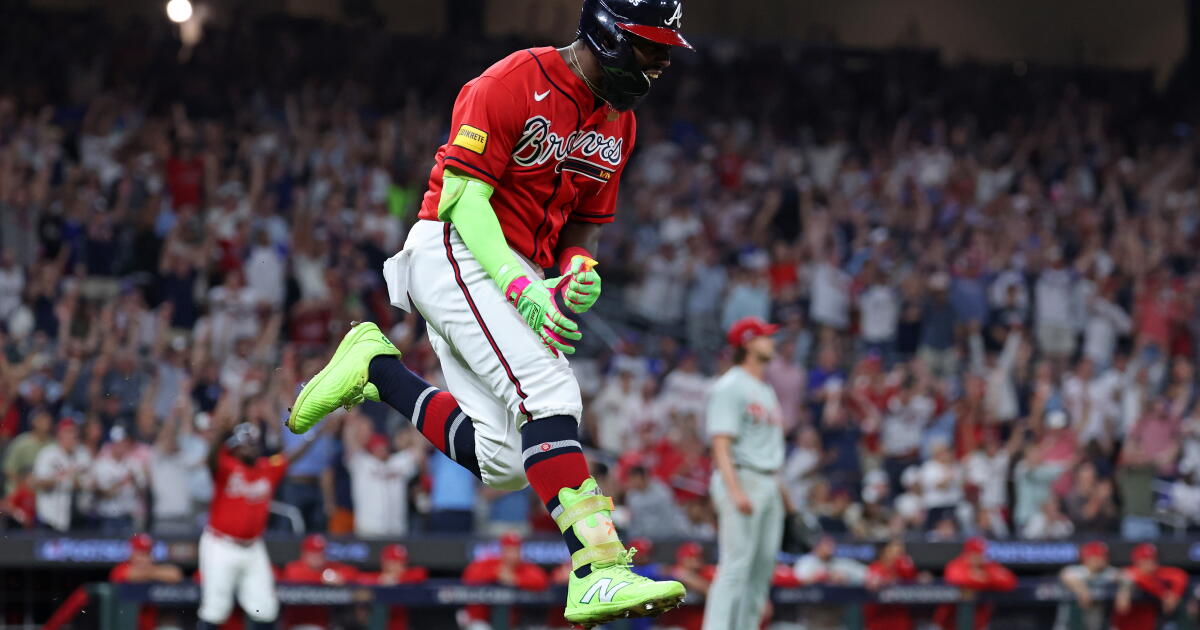
Michael Harris II hit a three-run homer in the first inning, Ray Kerr threw 3 1/3 scoreless innings and the Atlanta Braves beat the Philadelphia Phillies 6-2 on Thursday night in the decisive Game 3 of their National League wild-card series.
Ozzie Albies hit a two-run homer in the fourth and Matt Olson added a solo shot in the seventh for the Braves, who advance to a best-of-five Division Series against the two-time defending World Series champion Dodgers.
The Braves won a postseason series for the first time since winning the 2021 World Series and earned their first playoff series win against the Phillies. Philadelphia beat Atlanta in the 1993 NLCS and the 2022 and 2023 NLDS.
Phillies right-hander Aaron Nola was pulled after giving up three runs in 1 2/3 innings. Nola walked Ronald Acuña Jr. and Matt Olson with one out in the first before giving up the homer to Harris, who hit into two double plays in Wednesday’s 4-3 loss in 10 innings which forced Thursday night’s game.
Kerr made his postseason debut in only his fourth career start. Braves manager Walt Weiss wanted a left-hander to face Phillies left-handed hitters Kyle Schwarber and Bryce Harper at least once.
Kerr gave up only one hit — to Schwarber in the first — and one walk — to Schwarber in the fourth. Right-hander Grant Holmes followed Kerr and gave up one run in two innings to earn the win.
Kerr left to a standing ovation from the sellout crowd and acknowledged the cheers by lifting up his arm as he approached the dugout.
Left-hander Chris Sale, the starter in Atlanta’s 5-3 win in Tuesday’s series opener, struck out Harper to end the eighth and closed out the win in the ninth by striking out Bryan De La Cruz and pinch-hitter Otto Kemp.
Phillies right-hander Zack Wheeler, the winning pitcher in Sunday’s 7-3 victory over Tampa Bay that clinched the wild-card spot, walked Austin Riley in the fourth before giving up Albies’ homer to right field that gave Atlanta a 5-0 lead. Wheeler gave up two runs in four innings. Jonathan Bowlan, Philadelphia’s fourth pitcher, gave up Olson’s homer to center field.
Kerr, 32, flourished in the postseason spotlight. He pitched in only nine games after being recalled by Atlanta on Aug. 16. He underwent Tommy John surgery in 2024 and didn’t pitch in 2025.
Philadelphia’s 2022 World Series loss to Houston began a streak of five straight postseason appearances with progressively quicker exits — the NL Championship Series, two NLDS exits and now the wild-card loss.
Let’s get the rose-colored story line out of the way, right away.
The postseason starts Tuesday, and it could be the last we see of Major League Baseball for a long, long time. The owners expect to lock out the players when the collective bargaining agreement expires Dec. 1, and the owners have made their pitch loud and clear: No new agreement without a salary cap, for they believe there can be no true competitive balance without one.
You’ll hear a lot about how the way this postseason sets up, or how it plays out, could impact the bargaining.
Don’t believe a word of it. Nothing that happens this October will be relevant to the new labor agreement.
Come on. The team with the lowest payroll — the Cleveland Guardians — won their division. So competitive balance can’t be completely out of whack, can it?
Cleveland hasn’t won the World Series since 1948. The opponent was the Boston Braves, who subsequently moved to Milwaukee and then Atlanta.
What about the team with the best record in the American League: the Tampa Bay Rays, who beat up on big-market bullies in the New York Yankees and Boston Red Sox?
The Rays never have won the World Series.
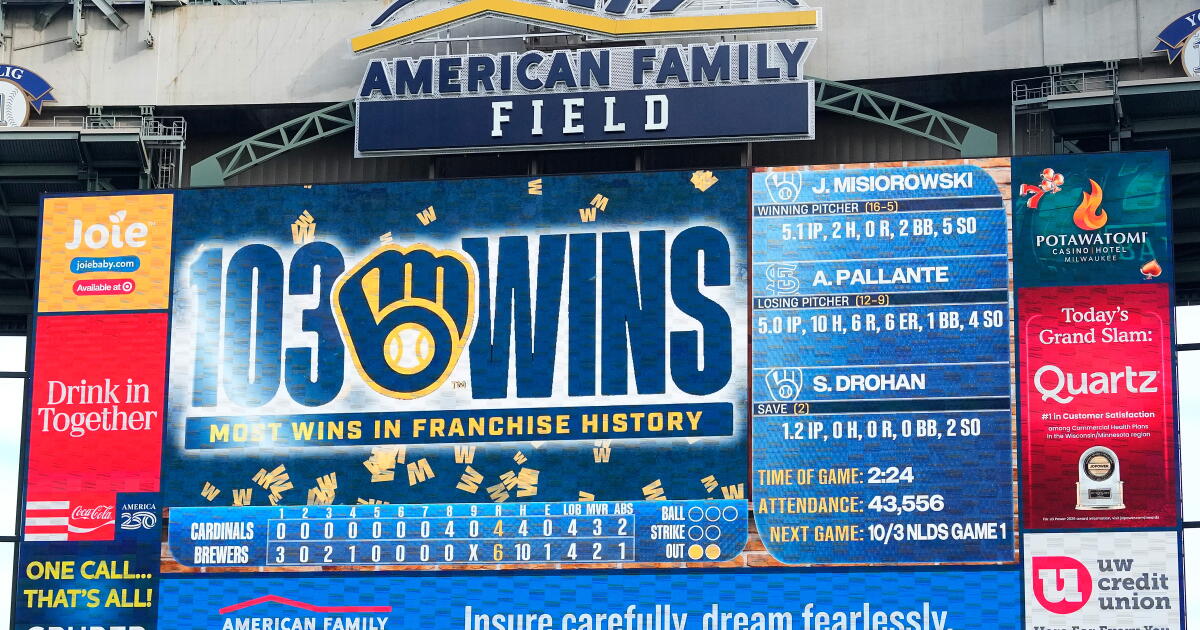
Well, what about the Milwaukee Brewers? For the second consecutive season, the team in baseball’s smallest market posted baseball’s best record.
The Brewers got swept in last year’s National League Championship Series. They never have won the World Series.
But aren’t the Brewers the best example of a team playing beyond its payroll instead of using it as an excuse?
Isn’t that what got everyone agitated? Doesn’t everyone outside L.A. know the Dodgers have destroyed competitive balance, and the owners are trying to fix it?
The owners were ready to fight for more than a year before the Dodgers helped themselves to Díaz, Tucker and Skubal. For years, the commissioner’s office touted baseball’s competitive balance, citing in part how the league championship series and World Series matchups changed almost every year.
After the Dodgers won in 2024, the commissioner’s office redefined competitive balance as how often a small-market team won the World Series, last accomplished by the 2015 Kansas City Royals. The seeds for this winter’s labor war had been planted.
If the Dodgers flop this October, the owners are not going to suddenly back off a salary cap. If, say, the Brewers or Rays win, the owners will say that’s the exception that proves the rule.
There are ways for owners to direct more revenue to small-market teams without the salary cap the players insist they will not accept, and without limiting the definition of success to winning the World Series, which risks devaluing the product among 29 fan bases every year. Whether the owners wish to consider them without the cost certainty that comes with a salary cap will be the story line of the cold winter ahead.
The Dodgers are scheduled to open next season on March 25. Neither owners nor players would have lost any significant revenue by then — ticket sales and broadcasting rights for owners, salaries for players — so a new agreement by then is uncertain at best.
So enjoy the postseason.
So, at least for now, isn’t the postseason tilted toward the Dodgers and Yankees?
Those screams you hear are coming from New York, where Yankees fans are annoyed that their team finished with the second-best record in the AL and still could be eliminated in two or three days. The Yankees finished behind the Rays and received a wild card.
The Yankees lost 13 fewer games than the AL West champion Houston Astros and 10 fewer games than the AL Central champion Guardians, both seeded ahead of them. The Astros are a .500 team, the worst record a division champion has taken into the postseason. The Guardians get a bye, just like the Dodgers.
The Yankees drew the Red Sox, which means painful amounts of national commentary will focus on (1) how the system victimized the Yankees and the Red Sox; and (2) baseball’s most hyped rivalry.
Until baseball realigns its divisions or seeds its playoffs by wins, regardless of division, the Yankees should simply do what Aaron Judge said about how they should respond to criticism of their fundamentally frightening 2024 World Series: “Play better.” And baseball’s best rivalry will be on October display only if the Dodgers and San Diego Padres meet in the NL Championship Series.
Still laughing, though, at sanctimonious Yankees fans believing baseball is somehow unfair to the poor, gutty Yankees.
Can anyone save baseball in 2027?
We should try Pope Leo. He’s a long-suffering Chicago White Sox fan. In his first full year as pope — and after three consecutive 100-loss seasons — the White Sox made the playoffs.
Some fans call it a miracle, a reporter told the pope. Did the pope have anything to do with the turnaround?
He smiled.
“No comment,” he said, then paused.
“Great things happen in Chicago,” he said.
The Cubs made the postseason too. The Cubs and White Sox have shared Chicago since 1901. This is the fourth time both have qualified for postseason play. Deep dish pizza for all, but a World Series in Chicago this fall might truly require divine intervention.
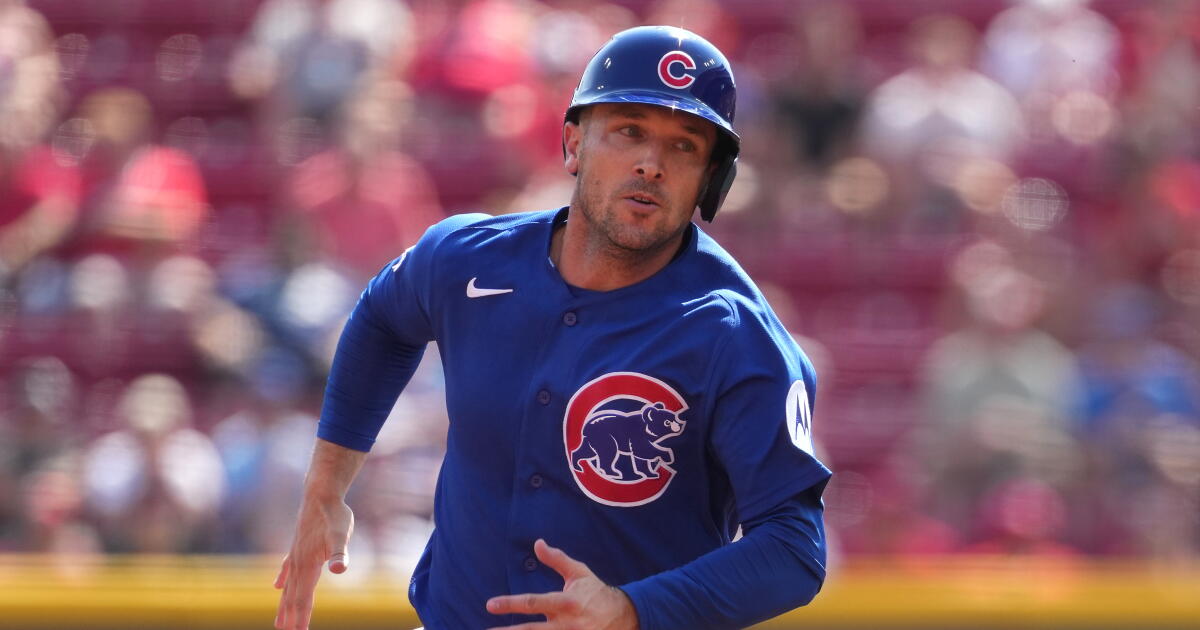
Cubs third baseman Alex Bregman has returned to Chicago a day after being hit in the face by a foul ball while standing in front of the on-deck circle during a road game against the Cincinnati Reds.
Bregman shared that information — as well as a photo that appears to show that his left eye remains swollen shut — Monday morning on his Instagram Stories.
“Back in Chicago,” wrote Bregman, who also appeared to have a cut and bruising near his left cheekbone where the ball off teammate Michael Busch’s bat made contact during the fourth inning of the Cubs’ 9-1 victory.
It was the second photo and update posted by Bregman since the gruesome injury occurred. On Sunday evening, the three-time All Star shared a photo that appeared to have been taken in the team’s clubhouse. In addition to his eye being swollen shut and cheek cut, Bregman also has gauze inserted in his left nostril, where some bleeding had occurred.
“Thanks for the messages yall,” Bregman wrote. “I’ll be back.”
Before the incident occurred, Bregman hit a run-scoring single in the first inning and walked and eventually scored in the third. He was standing several feet in front of the on-deck circle when Busch fouled off a pitch by Cincinnati’s Luis Mey on a checked swing.
Bregman lost his bat but maintained his footing as the ball struck him. He covered his face with his left hand and was able to jog toward the Cubs dugout, where a trainer helped him down the steps and into the clubhouse. The 11-year veteran was taken to a hospital for testing.
“It’s a terrible, terrible accident,” Cubs manager Craig Counsell said after the game. “We hope he’s OK.”
Bregman is batting .262 with 26 home runs and 89 RBIs in his first season with the Cubs. He is probably best known to Los Angeles fans as a member of the Houston Astros team that defeated the Dodgers in the 2017 World Series and were later found by MLB to have illegally used technology to steal signs during that season. Bregman and the Astros also won the 2022 World Series.