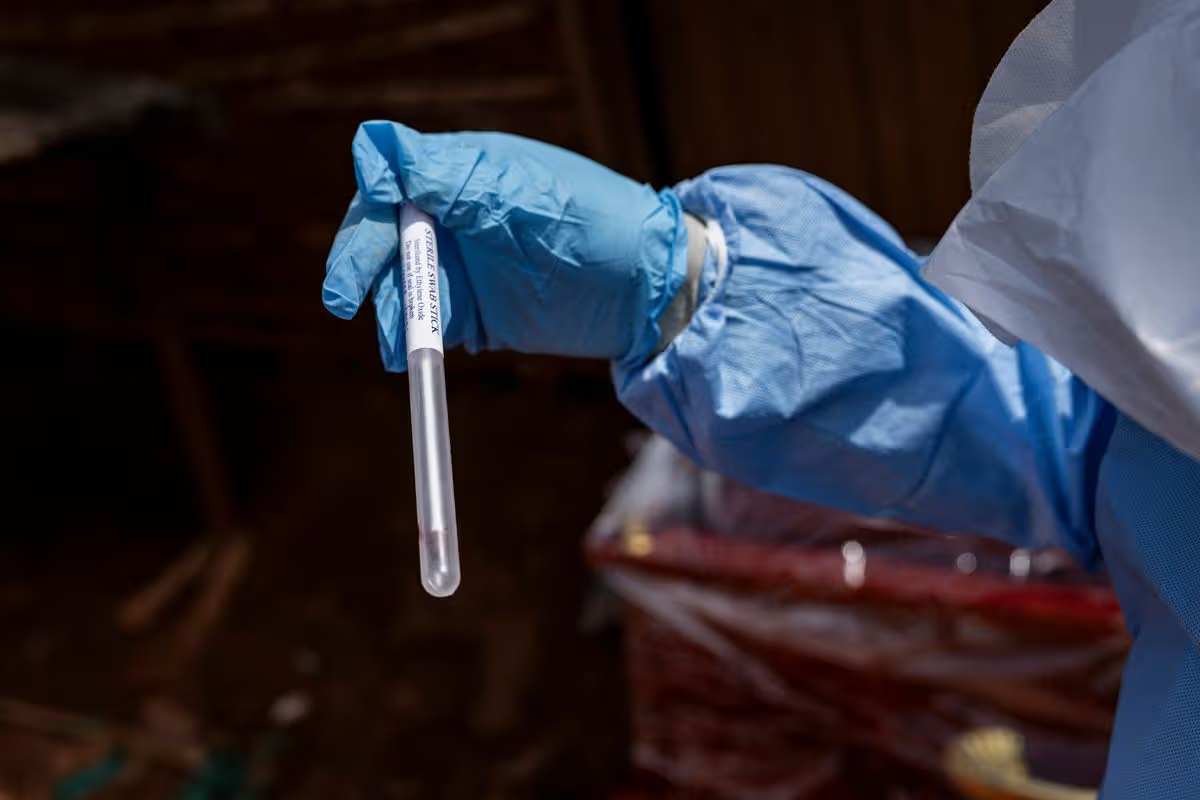
The Foreign Office has updated its travel advice for Brits to a number of destinations as a new Ebola outbreak has been declared in the Democratic Republic of Congo
13:15, 28 May 2026Updated 13:15, 28 May 2026
The World Health Organisation has declared Ebola in the Democratic Republic of Congo and Uganda a Public Health Emergency of International Concern(Image: Getty Images)
The Foreign Office has updated its travel advice for a number of countries after an Ebola outbreak earlier this month in the Democratic Republic of Congo (DRC).
On May 15, the country’s Ministry of Health confirmed an outbreak of Ebola Bundibugyo in the North-Eastern Ituri Province, while cases have also been confirmed in Uganda. The World Health Organisation (WHO) has since declared Ebola in the Democratic Republic of Congo and Uganda a Public Health Emergency of International Concern.
As a result, a number of destinations to introduce stricter measures for travellers from health screenings for foreign nationals to quarantine for residents in certain cases.
For example, Kenya has introduced enhanced health screenings for passengers arriving from Uganda, Ethiopia, and DRC, while Tanzania has also introduced increase public health measures for incoming travellers.
Now the Foreign Office has updated its travel advice for Uganda, Angola and the Central African Republic, with warnings around new health screenings and entry requirements for anyone travelling to those destinations.
Due to the outbreak, you may experience heightened health screening at international borders in the region. Check entry requirements for the country you’re travelling to or transiting.”
The Foreign Office has already been advising “against all travel to parts of Central African Republic” before the Ebola outbreak in the DRC and Uganda, but has updated its advice due to the country sharing a border with the DRC.
Virginia Messina, Group CEO of African Travel and Tourism Association (ATTA), said: “Established protocols are in place within countries bordering the DRC and as a result tourism operations and business trips across the wider African continent continue normally. As of 27 May, no other cases have been detected outside of Uganda and DRC. The risk to travellers on standard itineraries outside affected areas remains very low, and it’s important to highlight that Ebola is not easily transmitted through casual contact.
“However, travel rules and screening measures may change quickly. The WHO (World Health Organisation) and the European Centre for Disease Prevention and Control (ECDC) are scaling up efforts to contain the virus but continue to advise against blanket travel restrictions and neither the UK, nor any European country has introduced entry bans.”
Health experts are urging Brits to ensure they are “up-to-date” with their vaccines
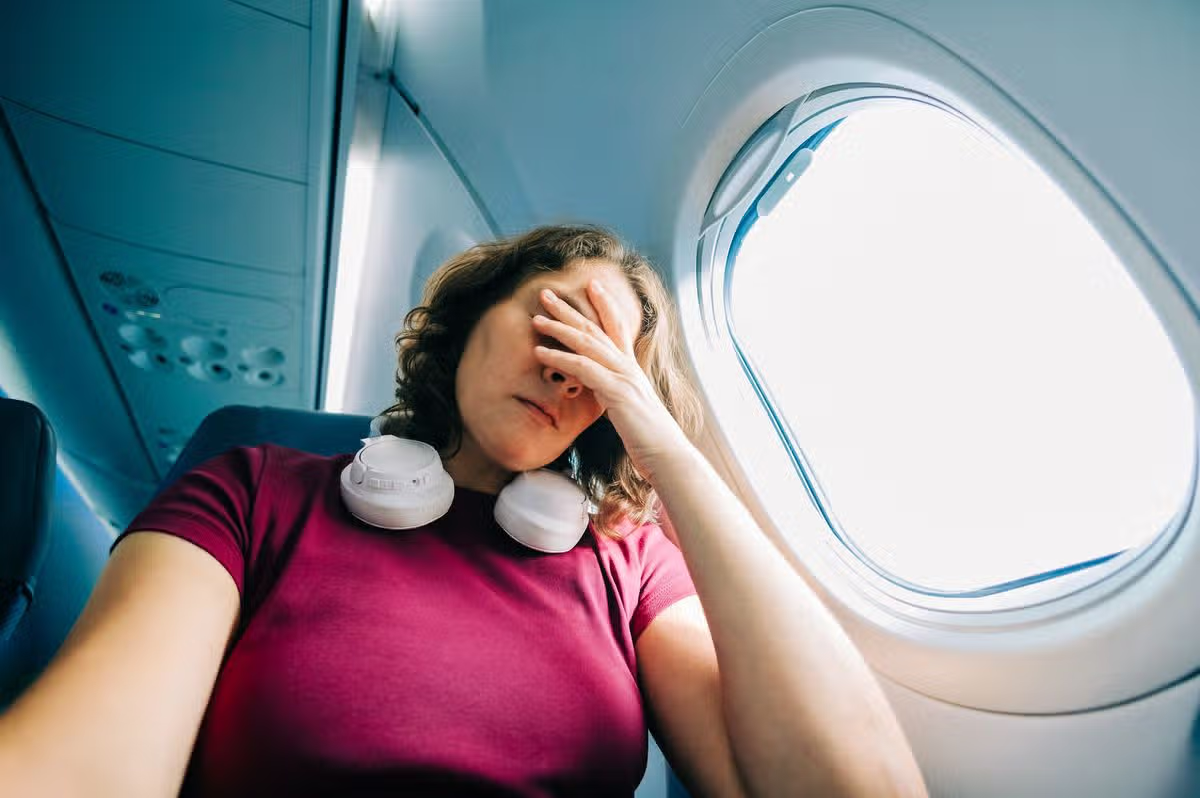
Travel experts warned that cases of a contagious illness are rising worldwide(Image: Getty)
Brits planning a summer getaway have been urged to ensure they are “up-to-date” with their vaccinations. The warning follows an “increase” in measles cases globally, including across parts of Europe and Asia.
Measles is a highly infectious viral infection that triggers cold-like symptoms, red eyes, and a characteristic blotchy rash. In severe instances, it can result in serious complications such as meningitis and seizures, and can be fatal.
In guidance published on the Travel Health Pro website, experts highlighted that the disease has risen in numerous countries. They said: “The summer holidays provide opportunity to explore different countries, head off for a city break, have a beach holiday or take the children to visit friends and family overseas.
“Good preparation and planning ahead helps ensure a safe and enjoyable trip. Travellers should be up to date with routine vaccination courses and boosters as recommended in the UK.
“These vaccinations include, for example measles-mumps-rubella (MMR). Measles is a risk in many countries, and there has been an increase in measles cases and outbreaks reported worldwide, including in parts of Africa, Asia, Europe, and the Americas, including Canada and the United States.” Data from the European Centre for Disease Prevention and Control revealed that a total of 3,607 measles cases were reported by 30 EU/EEA member states in the year following 1 April 2025.
Breaking down the figures further, it stated: “Of 3,029 individuals (84.0 per cent of all cases) with a known age and vaccination status, 2 369 (78.2 per cent) were unvaccinated, 320 (10.6 per cent) were vaccinated with one dose of a measles-containing vaccine, 301 (9.9 per cent) were vaccinated with two or more doses, and 32 (1.1 per cent) were vaccinated with an unknown number of doses.
“During the 12-month period, five deaths (case fatality rate (CFR): 0.139 per cent) attributable to measles were reported to ECDC by France (three), Netherlands (one) and Romania (one).”
Meanwhile, a report by the World Health Organisation (WHO) and United Nations Children’s Fund (UNICEF) discovered that measles cases in Europe reached their highest level in 2024 since 1997. A total of 127,350 measles cases were recorded in the European Region in 2024, double the figure reported for 2023 and the highest number since 1997.
Children under five made up more than 40 per cent of reported cases in the Region – covering 53 countries across Europe and Central Asia. Over half of the reported cases necessitated hospitalisation. A total of 38 deaths have been documented, according to preliminary data received as of 6 March 2025. The resurgence has been linked to falling vaccination rates. Dr Hans P Kluge, WHO regional director for Europe, warned: “Measles is back, and it’s a wake-up call. Without high vaccination rates, there is no health security. As we shape our new regional health strategy for Europe and Central Asia, we cannot afford to lose ground.
“Every country must step up efforts to reach under-vaccinated communities. The measles virus never rests-and neither can we.”
Measles cases are also on the rise across the UK. Figures from the UK Health Security Agency (UKHSA) revealed that in 2024, there were 2,911 laboratory-confirmed measles cases in England – the highest annual total recorded since 2012. In 2025, there were a total of 959 laboratory-confirmed measles cases. Data for 2023 to 2025 and historical data are available.
Between 1 January 2026 and 11 May 2026, there have been 542 laboratory-confirmed measles cases reported in England, an increase of 65 cases since the last report on 27 April 2026.
Symptoms
The virus transmits very quickly. Initial symptoms typically resemble those of a common cold, with a distinctive rash emerging several days afterwards.
The first symptoms of measles can include:
A high temperature
A runny or blocked nose
Sneezing
A cough
Red, sore, watery eyes
The rash initially appears on the face and behind the ears, subsequently spreading across the entire body. Occasionally, the spots associated with the measles rash become raised and merge, creating blotchy patches. These are typically not itchy.
The NHS cautions that measles can trigger severe complications should it migrate to other bodily areas, particularly the lungs or brain. Potential consequences include pneumonia, meningitis, loss of vision, and convulsions. In the most serious instances, the disease can be life-threatening.
How to prevent the spread
Measles is spread when an infected person breathes, coughs or sneezes. You’re infectious from when you first have symptoms (around four days before the rash appears) until four days after you get the rash.
The NHS advises that to curb the transmission of the infection, individuals must remain absent from educational institutions or workplaces for a minimum of four days following the emergence of the rash. According to its website, the guidance states: “Stay off nursery, school or work for at least four days from when the rash first appears. Also try to avoid close contact with babies and anyone who is pregnant or has a weakened immune system.”
However, the initial step if you or your child develops measles is to arrange an urgent consultation with your GP. The NHS advises: “Measles can spread to others easily. Call your GP surgery before you go in.
“They may suggest talking over the phone or arrange for you to come to a part of the surgery where you’re separated from others. You can also call 111 or get help from 111 online.”
After seeing a GP, there are things you can do to help ease the symptoms and reduce the risk of spreading the infection. It can help to:
Rest and drink plenty of fluids, such as water, to avoid dehydration
Give your child paracetamol for children or ibuprofen for children if they’re distressed or uncomfortable – check the packaging or leaflet to make sure the medicine is suitable for your child, or speak to a pharmacist or GP if you’re not sure
Adults can take paracetamol or ibuprofen for a high temperature
Use cotton wool soaked in water that has been boiled and allowed to cool to gently remove any crusts from your or your child’s eyes
The NHS also recommends you:
Open windows and doors to help reduce the risk of measles spreading – only open the top window or use safety catches if you have young children
Wash your hands often with soap and warm water
Use tissues when you cough or sneeze and throw them in the bin immediately after using them
Do not share cutlery, cups, towels, clothes, or bedding
Vaccination
Having the MMRV or MMR vaccine is the “best way” to prevent measles. The NHS says: “Both vaccines also protect you from mumps and rubella, and the MMRV vaccine also protects you from chickenpox.
“The MMRV vaccine is offered to all young children in the UK. The MMR vaccine is recommended for adults and older children if they were not vaccinated when they were younger.”
Ask at your GP surgery if you’re not sure you or your child has had either of these vaccines. Your GP can vaccinate you for free on the NHS.
The island is a popular holiday destination for Brits
16:06, 09 May 2026Updated 16:09, 09 May 2026
The MV Hondius stationary off the port of Praia
The World Health Organisation (WHO) has moved to reassure concerned residents in Tenerife that they will not come into contact with passengers from a hantavirus-affected cruise ship due to arrive on the island. Nearly 1million people call the island home, which also serves as a major holiday destination for British tourists and visitors from across Europe.
The UN health body confirmed there had been six cases of hantavirus linked to the MV Hondius vessel, with four patients currently receiving hospital treatment. It revealed that a total of eight cases, including three fatalities, had been recorded — though one suspected case has since been ruled out after returning a negative hantavirus test.
Around 22 British passengers and crew members aboard the ship are due to arrive in Tenerife on Sunday, with plans to fly them back to the UK on the same day. Representatives from the UK Health Security Agency (UKHSA) and the Foreign Office will meet the MV Hondius when it arrives in Spain’s Canary Islands, with British nationals on board undergoing hantavirus testing before disembarking.
Those who test negative and show no symptoms will be transported directly to a specially arranged repatriation flight with medical staff on board. British citizens returning home will be required to self-isolate for 45 days and will be prohibited from using public transport to reach their residences. The WHO confirmed on Saturday that no symptomatic passengers were currently aboard the vessel. In a letter to the residents of Tenerife, WHO director-general Dr Tedros Adhanom Ghebreyesus acknowledged locals were “worried”.
The Ethiopian public health official described the virus as “serious” but stressed the outbreak was “not another Covid” and the “current public health risk from hantavirus remains low”.
He explained: “Spain’s authorities have prepared a careful, step-by-step plan: passengers will be ferried ashore at the industrial port of Granadilla, far from residential areas, in sealed, guarded vehicles, through a completely cordoned-off corridor, and repatriated directly to their home countries.
“You will not encounter them. Your families will not encounter them. Nearly 150 people from 23 countries have been at sea for weeks, some of them grieving, all of them frightened, all of them longing for home. Tenerife has been chosen because it has the medical capacity, the infrastructure, and the humanity to help them reach safety.”
Two British men are currently being treated for hantavirus in the Netherlands and Johannesburg, South Africa, while a third British man with symptoms is being cared for on the isolated South Atlantic island of Tristan da Cunha. The Foreign Office confirmed that a total of 30 passengers and crew aboard the MV Hondius are British nationals, with 22 still remaining on the vessel. The outbreak has been linked to a birdwatching trip in Argentina, which two of the passengers attended prior to embarking on the ship.