World

U.S., allies strike ISIS targets in Syria

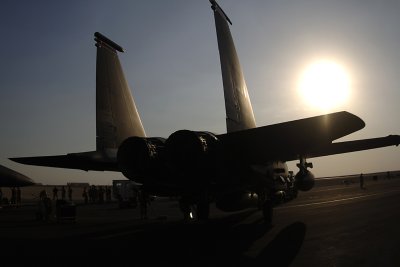
U.S. Central Command and allied forces carried out dozens of retaliatory aerial strikes on ISIS targets in Syria on Saturday. Photo Courtesy of U.S. Central Command

Jan. 10 (UPI) — The U.S. military and allied forces carried out “large-scale” retaliatory strikes on ISIS targets in Syria as part of the military’s ongoing Operation Hawkeye Strike campaign.

The aerial strikes were carried out against multiple targets at 12:30 p.m. EST on Saturday, U.S. Central Command said in a news release.

“The strikes today targeted ISIS throughout Syria as part of our ongoing commitment to root out Islamic terrorism against our warfighters, prevent future attacks and protect American and partner forces in the region,” CentCom officials said.

“U.S. and coalition forces remain resolute in pursuing terrorists who seek to harm the United States,” they added. “Our message remains strong: if you harm our warfighters, we will find you and kill you anywhere in the world, no matter how hard you try to evade justice.”

More than 90 precision munitions carried by more than 24 aircraft were used to strike more than 35 targets throughout Syria, CNN reported.

CentCom launched Operation Hawkeye on Dec. 19 in retaliation for the ISIS attack on U.S. and Syrian forces in Palmyra, Syria, on Dec. 13.

The attack killed two Iowa National Guard members and their U.S. civilian interpreter, and Operation Hawkeye Strike is named after the nickname of the soldiers’ home state of Iowa.

Iowa residents Sgt. Edgar Brian Torres Tovar, 25, of Des Moines, and Sgt. William Nathaniel Howard, 29, of Marshalltown, were part of an 1,800-member troop deployment to Syria when they were ambushed and killed.

Also killed was interpreter Ayad Mansoor Sakat, 54, of Macomb Township, Mich., and three other soldiers were wounded.

The U.S. military has hundreds of personnel deployed in Syria amid an effort to eradicate ISIS there.

Source link

Zoe Atkin claims World Cup silver at freeski halfpipe event in Aspen

Zoe Atkin secured a second British World Cup podium of the weekend with a silver medal in the freeski halfpipe event at the US Grand Prix in Aspen.

The 22-year-old halfpipe world champion was top of the standings in qualification but finished 0.25 points behind winner China’s Li Fanghui in the finals on Saturday to place second.

Li scored 93.00, Atkin achieved a score of 92.75 and third-placed Kexin Zhang of China finished with 88.75.

Atkin said she was “really happy” to secure a podium at the last World Cup event before the Winter Olympics get under way next month.

“I’m feeling super confident, really excited to get back to training and work on a couple of new things in preparation for the Games,” she added.

Source link

Iran’s foreign minister accuses U.S., Israel of fueling protests

Iranian Foreign Minister Abbas Araghchi (L) attends a meeting with Lebanese Prime Minister Nawaf Salam at the Government Palace in Beirut, Lebanon, on Friday. The Iranian foreign minister is on an official visit to Beirut to hold talks with top Lebanese officials. Photo by Wael Hamzeh/EPA

BEIRUT, Lebanon, Jan. 9 (UPI) — Iranian Foreign Minister Abbas Araghchi accused the United States and Israel on Friday of “direct involvement” in his country’s ongoing anti-government street protests and of attempting to turn them violent, while dismissing their military intervention as “a weak possibility.”

Speaking during a news conference after meeting with Lebanese House Speaker Nabih Berri, Araghchi said the current wave of demonstrations in Iran was similar, “to a large extent,” to the popular protests that broke out in Lebanon in 2019, when the collapse of the national currency and rising prices of hard currencies triggered widespread unrest.

He said the government in Tehran was seeking to “avoid this problem” and resolve it through dialogue.

“What differs this time are statements by American and Israeli officials indicating their direct involvement and interference in the disturbances in Iran,” he said. “They are trying hard to turn these peaceful protests into violence.”

He cited, as an example, Mike Pompeo, the former U.S. CIA director and secretary of state, who addressed Iranian protesters in a post on X on Jan., saying: “Happy New Year to every Iranian in the streets. Also to every Mossad agent walking beside them ….”

According to the Norway-based Iran Human Rights non-governmental organization, at least 51 protesters, including nine children under 18, have been killed, hundreds injured, and more than 2,200 detained in the latest round of nationwide protests in Iran.

The unrest, which began Dec. 28 in Tehran’s bazaar over poor economic conditions, quickly spread to other parts of the country.

U.S. President Donald Trump threatened to attack Iran and “come to the rescue” of protesters if they are harmed by security forces.

Araghchi dismissed as “slim and weak” the possibility of U.S.-Israeli military intervention in his country, saying they had tried before — referring to the 12-day war in June 2025 — and that “it was a total failure.” He added that if they were to repeat it, “the results would be the same.”

The visiting foreign minister, who met with several Lebanese officials, said his two-day visit to Beirut was meant to consolidate bilateral political, economic and cultural ties and discuss how to confront mounting Israeli threats that “menace all the people of the region.”

“We are trying to open a new page in our relations … one that would serve and respect our mutual interests,” Araghchi said, expressing hope that his visit would mark the start of a new chapter and a “launching point” for Iran-Lebanon ties.

Lebanon’s new leaders, who have been in power for a year, have adopted bold decisions concerning Hezbollah, the country’s most powerful militant group, which has been financed and armed by Iran for more than four decades.

Chief among these was a decision to assert the country’s sovereignty and contain weapons –meaning disarming Hezbollah — in line with the Nov. 27, 2024, cease-fire agreement brokered by the United States and France to end 14 months of war with Israel.

Lebanese Foreign Minister Youssef Rajji went a step further by asking Araghchi during their meeting early Friday whether Tehran “accepts the presence of an illegal armed organization on its territory” — similar to Hezbollah in Lebanon.

Rajji said defending Lebanon is the responsibility of the Lebanese state, but this cannot happen in the presence of “an armed organization outside its authority.”

He called on Iran to discuss with Lebanon “a new approach regarding Hezbollah’s weapons,” so that they do not become “a pretext to weaken Lebanon.”

Araghchi replied that Iran supports Hezbollah “as a resistance group, but it does not interfere in its affairs, and any decision concerning Lebanon is left to the party itself.”

He added, however, that dialogue between the two countries is necessary to confront “challenges and risks” arising from differences in their approach “to certain issues.”

Lebanese President Joseph Aoun and Prime Minister Nawaf Salam emphasized, in separate statements after talks with the visiting Iranian official, the importance of establishing sound relations with Iran, based on mutual respect and non-interference in each other’s internal affairs.

Araghchi, who also met with Hezbollah leader Sheikh Naim Qassem, dismissed threats to “deprive his country of its right to peaceful nuclear energy or to develop defensive capabilities” — conditions set by the United States and Israel to prevent an attack on Iran.

He confirmed that Omani Foreign Minister Badr bin Hamad Al Busaidi is scheduled to visit Tehran on Saturday and, when asked by a reporter whether he would bring a new U.S. proposal for negotiations, said he was “waiting to see whether he is carrying any letter or proposal from any party.”

On Syria, Araghchi said Iran supports its sovereignty and unity and rejects any measures aimed at partitioning the country or occupying its territories.

“Syria’s stability is important for all countries in the region,” he added, noting that the Syrian authorities should understand that any rapprochement with the “Israeli Zionist” entity is not in Damascus’ interest and that normalization would lead to “Zionist conspiracies” against the Arab nation.

Over the past year, Syria and Israel have held intermittent negotiations aimed at reaching a security agreement to stabilize their shared border, prevent repeated Israeli attacks on Syrian territory and potentially pave the way for future diplomatic normalization.

Source link

Bolivia government announces adjustments to economic plan

People walk down a street blocked by members of the Bolivian Workers’ Union in La Paz, Bolivia, on Thursday. Centrist Rodrigo Paz marks two months in office in Bolivia amid a simmering conflict over the decree that withdrew fuel subsidies in the country. Photo by Luis Gandarillas/EPA

Jan. 9 (UPI) — The government of Bolivia confirmed it will introduce changes to 35 articles of a decree that established a package of economic adjustments, including the end of fuel subsidies, as groups affiliated with the Central Obrera Boliviana continue blocking highways at 29 points across the country.

Deputy Minister of Autonomies Andrea Barrientos said the changes are procedural rather than substantive and are aimed at adding clarifications, such as respect for the Constitution and mechanisms for social oversight, according to local daily El Deber.

No date has been announced for the changes.

The government said the amendments will not affect eliminating fuel subsidies. The decree set new reference prices that imply increases ranging from 86% to more than 160% compared with subsidized levels.

Authorities argue the measure is necessary to restore public finances and correct fiscal distortions.

The labor confederation, which has led protests and road blockades for the past two weeks in La Paz, Cochabamba, Potosí, Oruro and Santa Cruz, is demanding the repeal of the decree and denied the existence of any pre-agreement with the government.

Government officials estimated Thursday that economic losses from the labor confederation’s road blockades could reach $100 million a day, when considering the overall impact on industry, commerce and transportation.

“Industrial groups are talking about $20 million to $40 million a day. In commerce, transportation …. Without a doubt, we are easily talking about around $100 million a day,” the official said.

In a new phase of the political confrontation with President Rodrigo Paz, Vice President Edmand Lara on Thursday introduced a bill seeking to nullify articles of the decree that ended fuel subsidies.

Since the elections, relations between Lara and Paz have deteriorated. The vice president says he was excluded from executive decision-making and has declared himself in “constructive opposition.”

Lara’s initiative targets provisions of the decree enacted in December that dismantled a subsidy system in place for more than two decades and sharply raised gasoline and diesel prices.

The vice president, who also presides over the Legislative Assembly, said several articles are “unconstitutional” because they encroach on congressional powers and alter key rules governing investments in natural resources.

Criticism has focused on a fast-track mechanism included in the decree to approve investment contracts involving natural resources.

Analysts, lawmakers and unions warn that the expedited process could weaken legislative oversight and bypass constitutional requirements, such as environmental licenses and prior consultations with affected communities.

Political tensions escalated further with a new decree allowing the president to perform his duties digitally during temporary absences from the country. Paz is expected to travel to the World Economic Forum in Switzerland later this month, a trip that would normally require transferring power to the vice president.

At the same time, constitutional challenges were filed with the Tribunal Constitucional Plurinacional, whose ruling could be delayed due to a lack of quorum.

Opposition lawmakers, including members of the Libre alliance linked to former President Jorge Quiroga, also have objected to several articles of the decree.

Source link

Pope Leo XIV warns against ‘zeal for war’ amid global tensions

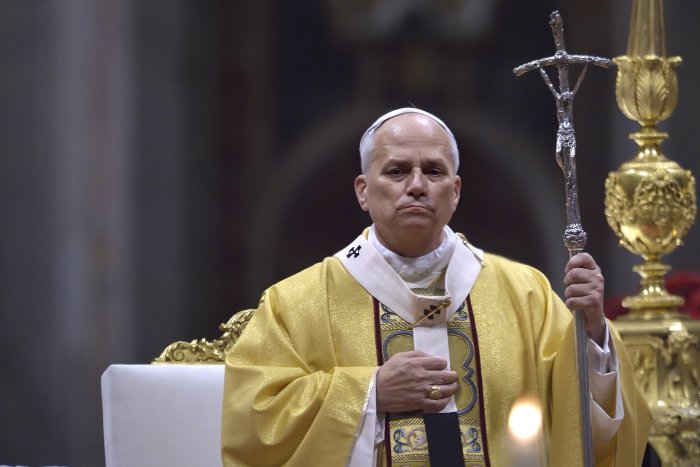
Jan. 9 (UPI) — Pope Leo XIV warned that “war is back in vogue” in his State of the World address Friday to ambassadors who are accredited to the Holy See.

The annual meeting is one of the most significant events in the Vatican’s yearly calendar and helps to define its diplomatic positions for the year, according to Vatican News.

The pope took the moment to reference the United States’ recent capture of Venezuelan President Nicolas Maduro and his wife, Cilia Flores.

“The principle established after the Second World War, which prohibited nations from using force to violate the borders of others, has been completely undermined,” he said.

“I renew my appeal to respect the will of the Venezuelan people, and to safeguard the human and civil rights of all, ensuring the stability and concord,” the pope added.

He called for an “immediate cease-fire” in Ukraine and expressed his support for a two-state solution to bring peace to the Middle East, while giving Palestinians a “future of lasting peace and justice in their own land.”

Pope Leo lamented what he called a decline in multilateralism and global cooperation, leading to peace instead of armed conflict.

“They do not, therefore, wish to have peace, but only the peace that they desire,” he said.

He said such a global mentality led to two world wars during the 20th century, but eventually produced the United Nations, which the pope said is tasked with “safeguarding peace, defending fundamental human rights and promoting sustainable development.”

Among other topics mentioned were a rising risk of nuclear war and the emergence of artificial intelligence.

He urged a renewed effort to control the proliferation of nuclear arms as the New START Treaty is scheduled to expire in February amid efforts by North Korea and Iran to join the ranks of nuclear powers and Russia’s repeated threats to use nuclear arms against Ukraine and others if compelled to do so.

Meanwhile, the emergence of AI “requires appropriate and ethical management” to ensure it is used to better the world and its societies and does not cause harm, Pope Leo said.

He also addressed matters involving migration, human trafficking and crime and cautioned against “undermining the dignity of migrants and refugees.”

Then he addressed the need for greater communication to help people of differing backgrounds to more effectively communicate and establish meaningful connections, rather than remaining divided by language and using it to cause harm instead of doing good in the world.

Source link

Venezuela announces start of ‘diplomatic process’ with United States

Venezuelan Foreign Minister Yvan Gil said talks with Washington are intended to address the consequences of what the government described as the “abduction” of Nicolás Maduro and his wife, Cilia Flores, File Photo by Miguel Gutierrez/EPA

Jan. 9 (UPI) — Venezuela said Friday it has begun an “exploratory diplomatic process” with the United States aimed at restoring diplomatic missions in both countries, according to a statement from the Venezuelan Foreign Ministry.

Foreign Minister Yván Gil said the talks are intended to address the consequences of what the government described as the “abduction” of Nicolás Maduro and his wife, Cilia Flores, who were arrested Saturday during a U.S. military operation in Venezuelan territory.

Gil reiterated comments previously made by interim President Delcy Rodríguez, saying Venezuela will respond to what it calls an act of aggression through diplomatic channels.

“Venezuela will face this aggression through diplomacy, convinced that this is the legitimate path to defend sovereignty, restore international law and preserve peace,” he said.

The government confirmed that a delegation of U.S. State Department officials has arrived in Venezuela to conduct “technical and logistical evaluations related to diplomatic functions,” as previously announced by Washington.

Gil also said a Venezuelan diplomatic delegation will travel to the United States to carry out corresponding duties, though he did not provide further details or a departure date.

Venezuela and the United States ended diplomatic relations in 2019, when Maduro’s government announced a formal rupture after Washington recognized opposition leader Juan Guaidó as interim president.

At the time, the Venezuelan government ordered U.S. diplomatic personnel to leave the country, deepening a bilateral breakdown that had been building for years.

Source link

The Legoland-like train in the UK that’s the only one of its kind in the WORLD

AS the train pulls in to Stourbridge Junction station, I wonder if I’m in Legoland by mistake.

The tiny shuttle carriage could carry four dozen people at a push — and with its goofy looks, it’s like something out of a cartoon.

The tiny shuttle carriage at Stourbridge Junction station is the only one of its kind in the worldCredit: Supplied

But this Parry People Mover railcar is the only one of its kind in the world.

Its driver, David Hardwick, says: “We’ve had people come here specially to ride the train, from Japan, Australia, Africa.”

“From every continent except Antarctica,” adds his colleague Ross Bevan, whose website has provided information for hundreds of trainspotters since they began venturing here in 2009.

But it’s not just the train that is unique — it’s the line that it serves too.
I hop on board to discover more. And like the best things in life, it’s all over in a few minutes.

BEAR-Y COOL

English region ‘known for Winnie the Pooh’ named top place to travel in 2026


SANDS GREAT

Our 26 must-visit UK beaches for 2026 – including tropical-feel spots

The branch line that connects Stourbridge Junction to Stourbridge Town in the West Midlands is less than one mile long — the shortest rail line in Britain, and one of the world’s shortest.

That’s why this dinky railcar, which uses a flywheel to generate energy from braking, was invented to serve it.

I see the rail yards and sidings as we pull out of Stourbridge Junction. A train peels off on the main line to Birmingham, and on the left is a housing estate down a slope.

In the distance, I can see an old church tower with a St George’s Cross fluttering on top.

The train rounds a curve and passes under a bridge — the drama is almost too much — before creeping into Stourbridge Town station.

After watching the little train depart (there’s just one service every ten minutes) I head to the high street to see what Stourbridge has to offer.

For centuries it was an important market town. After the Industrial Revolution exploded in the Black Country, the town became the world centre of glassmaking.

There are handsome historic buildings like King George VI College and the Victorian Gothic red brick Town Hall which has hosted many a live music event over the years.

One local street artist has recently painted huge murals of big Nineties home-town bands The Wonder Stuff, Pop Will Eat Itself and Ned’s Atomic Dustbin on the sides of several buildings.

George the station cat is now world famous, with tens of thousands of followers on social mediaCredit: Instagram
Visitors can spend time in Stourbridge’s historic high street, with the town a key part of the Industrial RevolutionCredit: Alamy

As I grab a lime and soda at the Cock & Bull, Wolverhampton’s Slade are blaring out from the speakers.

Then it’s time to head back on the tiny train to Stourbridge Junction.

The train, designed and built in the Midlands by inventor John Parry, almost hits 20mph on its three-minute journey.

Ahmad, who runs Cafe Presto on the platform, tells me to look out for George, the station cat — who is now world famous, with tens of thousands of followers on social media.

I track down the ginger Tom at the ticket office, where he’s getting his belly rubbed by staff members.

Even George has travelled on Britain’s shortest railway line — and they’ve even named the train after him.

GO: Stourbridge

GETTING THERE: London North Western and West Midlands Trains run services from around the country to Birmingham and Stourbridge.

Trains can be booked through Omio. See omio.co.uk.

A ride on the shortest train costs £1.60 each way and tickets can be bought in person at the ticket office or online in advance.

STAYING THERE: Hotel Du Vin in nearby Birmingham has rooms from £100.

See hotelduvin.com.

Source link

South Korea-Japan summit set for Jan. 13 in Japanese PM’s hometown

South Korean President Lee Jae Myung (R) shakes hands with Japanese Prime Minister Sanae Takaichi ahead of their talks in Gyeongju, North Gyeongsang Province, southeastern South Korea, 30 October 2025. Photo by YONHAP / EPA

Jan. 9 (Asia Today) — South Korean President Lee Jae-myung will visit Japan for a two-day, one-night trip starting Jan. 13, the presidential office said Thursday, with historical issues including the Chosei coal mine incident expected to be addressed alongside future-oriented cooperation.

The visit will mark the first round of Korea-Japan shuttle diplomacy this year and Lee’s second visit to Japan since taking office. It will also be his third meeting with Japanese Prime Minister Takaichi Sanae, following encounters at last year’s Asia-Pacific Economic Cooperation summit in Gyeongju and the Group of 20 summit.

According to the presidential office, Lee will arrive in Nara Prefecture, Takaichi’s hometown, on the afternoon of Jan. 13. The summit will include a closed-door meeting, an expanded session and a joint news conference, followed by a dinner between the two leaders.

The leaders are expected to discuss expanding cooperation in areas directly affecting people’s daily lives, including intellectual property protection, emerging technologies such as artificial intelligence, efforts to counter transnational crimes including fraud, social issues and people-to-people exchanges.

They also plan to explore humanitarian approaches to historical issues, including the Chosei coal mine incident, which involves the remains of Korean forced laborers from Japan’s colonial period.

Woo Sung-lak, head of the National Security Office, told reporters during a briefing at the presidential office that Seoul is seeking “new progress” on the issue, including the possibility of DNA testing on remains. He said discussions on historical matters could extend to other areas as well.

“Historical issues have always existed between South Korea and Japan,” Woo said. “Although they are rooted in the past, they remain current issues that must be managed carefully so they do not hinder future cooperation.”

Woo said the government aims to build goodwill and tangible outcomes in bilateral relations when conditions are favorable, and to use that momentum later when more difficult issues arise.

On regional security matters, Woo said summit meetings typically include discussions on surrounding regional developments and noted that similar exchanges of views took place during Lee’s recent summit with China.

On the morning of Jan. 14, Lee and Takaichi are scheduled to attend goodwill events, including a visit to Rurinsan Temple, before Lee meets with South Korean residents in Japan and returns home.

The summit has drawn attention because it will be held outside Tokyo, reflecting Lee’s stated interest in regional development. Last year, Lee met with former Japanese Prime Minister Shigeru Ishiba in Busan, focusing on revitalizing local economies and regional governments. Lee has since expressed interest in holding future summits in regional areas of Japan.

Woo said the idea of a regional summit grew out of discussions between Lee and Ishiba, adding that Nara Prefecture holds symbolic significance as both Takaichi’s hometown and a site of historical and cultural exchange between South Korea and Japan.

— Reported by Asia Today; translated by UPI

© Asia Today. Unauthorized reproduction or redistribution prohibited.

Source link

S. Korea, U.S. launch permanent combined ground forces command

South Korea’s Defense Minister Ahn Gyu-back speaks during a work report to President Lee Jae Myung from the ministries of defense and patriots and veterans affairs at the defense ministry in Seoul, South Korea, 18 December 2025. File Photo by YONHAP / EPA

Jan. 9 (Asia Today) — The U.S. Eighth Army and South Korea’s Army Ground Forces Command have launched a permanent combined ground forces component command that will lead joint ground operations planning and begin training during the Freedom Shield combined exercise in March, South Korea’s Joint Chiefs of Staff said.

The new organization, described by the Joint Chiefs of Staff as a combined ground forces component command, will develop joint operational plans and conduct combined exercises and training with the commander of South Korea’s Army Ground Forces Command serving as the commander, the military said.

The South Korea-U.S. Permanent Military Committee approved the permanent establishment of the command on Oct. 24 last year, the Joint Chiefs of Staff said. The organization then completed operational readiness preparations and began duties last month, shifting from a structure activated only in wartime to a peacetime command under South Korean Army leadership.

With the combined ground command now operating on a permanent basis, some U.S. personnel will be assigned to a combined staff and are expected to participate in joint planning and training beginning with the Freedom Shield exercise in March, the military said.

The move is part of the Lee Jae-myung administration’s effort to advance a conditions-based transfer of wartime operational control. South Korea and the United States have been working to make permanent six combined component commands under a future combined command structure that would be led by the South Korean military after the transfer, the Joint Chiefs of Staff said.

Combined component commands for the Navy, Air Force and Marine Corps were made permanent in 2022, the military said. South Korea and the United States also plan to make permanent two additional combined component commands: one focused on special operations and another focused on military intelligence support operations, it added.

— Reported by Asia Today; translated by UPI

© Asia Today. Unauthorized reproduction or redistribution prohibited.

Source link

Lee warns ‘K-shaped growth’ leaves youth facing jobs crisis

South Korean President Lee Jae-myung speaks during the Economic Growth Strategy National Briefing at the presidential office in Seoul on Thursday. Photo by Yonhap/ EPA

Jan. 9 (Asia Today) — South Korean President Lee Jae-myung said Thursday that “extraordinary measures” are needed to address what he called a national crisis for young people pushed to the brink of employment amid “K-shaped growth,” a term used to describe an uneven recovery that concentrates gains on one side of the economy.

Lee made the remarks at the “2026 Economic Growth Strategy National Briefing” at the presidential office, calling for steps that mobilize the country’s full capabilities to support young people.

Lee said South Korea is facing “K-shaped growth,” in which the benefits of recovery are not broadly shared, and said the structure must be improved because it places a heavier burden on younger generations.

He said the impact of polarized growth is being concentrated on young people, threatening not only youth employment but also the country’s long-term growth potential.

“If national growth and corporate profits do not translate into job opportunities for young people, it is difficult to call that society healthy,” Lee said.

Lee said more than 400,000 young people have been pushed out of the labor market and are still being asked by employers to have work experience, while no one takes responsibility for providing a starting point. He urged officials to develop effective measures that break from existing policy frameworks.

Lee said the government is committed to ensuring people share in the fruits of growth and described this year as the first in which his administration will fully take responsibility for economic management.

He pointed to policies aimed at “normalizing” the economy, including efforts to foster the semiconductor industry, as a path to strengthening growth momentum.

However, Lee cautioned that even if external indicators improve compared with last year, many people may not feel the change. He said growth polarization should be treated as a structural challenge rather than a temporary cycle and called for efforts to ensure the benefits of growth are broadly shared.

— Reported by Asia Today; translated by UPI

© Asia Today. Unauthorized reproduction or redistribution prohibited.

Source link

S. Korea launches interagency task force for U.S. nuclear talks

The now-retired Kori-1 nuclear reactor of Korea Hydro & Nuclear Power Co.’s nuclear power plant in the southeastern port city of Busan, South Korea, 26 June 2025. The Nuclear Safety and Security Commission approved the decommissioning of the country’s first commercial nuclear reactor the same day, which was permanently shut down in June 2017 after operating since April 1978.File Photo by YONHAP / EPA

Jan. 9 (Asia Today) — South Korea on Thursday formally launched an intergovernmental consultative body to coordinate nuclear cooperation talks with the United States, including discussions tied to uranium enrichment and spent fuel reprocessing for peaceful commercial purposes, the Foreign Ministry said.

The ministry said the first inter-ministerial meeting was held Thursday under Lim Gap-soo, the government’s representative for South Korea-U.S. nuclear cooperation. The new task force will serve as the government’s main platform for preparing consultations and related negotiations with Washington to secure capabilities related to enrichment and reprocessing, the ministry said.

Eight institutions are participating: the Foreign Ministry, the Ministry of Science and ICT, the Ministry of Climate, Energy and Environment, the Ministry of Trade, Industry and Energy, the Nuclear Safety and Security Commission, the Korea Atomic Energy Research Institute, the Korea Institute of Nuclear Safety and Control and Korea Hydro & Nuclear Power. The National Security Office at the presidential office will act as the control tower, the ministry said.

“At this meeting of relevant ministries, we reviewed the roles and cooperation systems of each ministry regarding key issues and tasks related to enrichment and reprocessing, and exchanged views on the direction and plan for responding to consultations with the U.S.,” the Foreign Ministry said in a statement.

The ministry said it plans to hold periodic director-level meetings and working-level consultations to review key plans step by step and to pursue a whole-of-government approach aimed at shaping domestic and international conditions for securing enrichment and reprocessing capabilities for peaceful and commercial purposes.

Separately, the Foreign Ministry said it formed its own internal task force Monday to support Lim’s work, with three working-level officials assigned.

A ministry official said there could be multiple routes for cooperation, including revising the existing bilateral nuclear cooperation agreement, making limited amendments or reaching another arrangement. The official said communication with the United States is ongoing and consultations will begin once both sides are ready.

South Korea and the United States previously discussed security cooperation measures on the sidelines of the Asia-Pacific Economic Cooperation summit in Gyeongju in October, including nuclear-powered submarines, enrichment and spent fuel reprocessing and defense spending, and released a joint fact sheet in November outlining the measures, the ministry said.

— Reported by Asia Today; translated by UPI

© Asia Today. Unauthorized reproduction or redistribution prohibited.

Source link

Leverage piles into Samsung, SK Hynix as margin debt hits records

A flag of Samsung Electronics Co. flies outside its headquarters in Seoul, South Korea, 14 October 2025. Samsung announced a consolidated operating profit of approximately 12.1 trillion Korean Won (8.5 billion US Dollars) for the quarter ending in September 2025. File. Photo by YONHAP / EPA

Jan. 9 (Asia Today) — South Korea’s stock market rally is drawing a surge of debt-fueled trading into heavyweight shares such as Samsung Electronics and SK Hynix, both of which have set record highs, as regulators and brokerages warn about overheating risk tied to rising margin balances.

The Korea Financial Investment Association said the nation’s total margin loan balance stood at 28.1903 trillion won (about $19.4 billion) on Thursday, a level the industry often associates with late-stage bull market behavior as leverage expands alongside index gains.

Borrowed funds have been concentrating in top market-cap stocks. Samsung Electronics’ margin loan balance stood at 1.8013 trillion won (about $1.24 billion) on Wednesday, the highest since the data series began, according to the report. During a sharp rally in June 2021, the company’s margin balance was around 700 billion won (about $483 million), it said.

SK Hynix has also seen a steady rise in margin borrowing. Its margin loan balance was 1.1504 trillion won (about $793 million), up from 884.1 billion won (about $610 million) at the end of last year, the report said, adding that the balance has increased for four straight sessions amid the record-high move.

Market watchers said a faster pace of gains can raise the chances of market alert actions. Under Korea Exchange monitoring rules, a stock can be designated an investment warning issue when sharp price rises and unusual trading patterns occur over a defined period, the report said.

The report cited SK Hynix’s experience on Dec. 11 last year, when its shares saw volatility after being designated an investment warning issue. The stock closed at 565,000 won (about $390), down about 3.7% from the prior close of 586,000 won (about $404), it said.

Once a stock is designated an investment warning issue, new margin buying is restricted, the report said, adding that authorities can escalate measures if rapid gains persist, including a trading halt in more severe cases.

The Korea Exchange recently revised its rules to limit the impact of “extremely long-term upward trends” in large-cap stocks, but the report said big semiconductor shares can still face market alert measures if short-term surges or abnormal trading emerge.

Margin trading is drawing attention because it can amplify selling pressure during corrections as forced liquidation accelerates when prices fall, the report said, adding that elevated margin balances in large-cap stocks could heighten future volatility.

A market official cited in the report said improved semiconductor conditions and earnings expectations may support share prices for now, but the pace of leveraged inflows and any regulatory signals will be key variables going forward.

— Reported by Asia Today; translated by UPI

© Asia Today. Unauthorized reproduction or redistribution prohibited.

Source link

Dongduk Women’s University students oppose removing ‘women’ from rules

A protest sign opposing a shift toward engineering programs is displayed outside Dongduk Women’s University in Seoul. Photo by Asia Today

Jan. 9 (Asia Today) — A student survey found that most Dongduk Women’s University students oppose proposed revisions to school regulations that would remove references to “women” and the institution’s “founding spirit,” as the university prepares to deliberate broader restructuring plans, the student council said Thursday.

The Dongduk Women’s University Student Council held a news conference at the university’s Wolgok campus on Thursday and released results of a survey conducted ahead of a scheduled university council meeting.

The student council said the survey was conducted after the university council submitted a proposal to revise school regulations. The proposal would shorten a section titled “Founding Spirit and Educational Ideology” in the general provisions to simply “Educational Ideology,” and delete the word “women” from a phrase describing the school’s goal of nurturing “women professionals with intellect and virtue,” according to the student council.

The survey was conducted from Saturday through Wednesday, with 615 currently enrolled students and students on leave participating, the council said.

It said 87.5% of respondents opposed removing the phrases “women” and “founding spirit” from the general provisions. It also said 70.1% opposed an academic restructuring plan proposed by the university administration.

Students argued the changes would undermine the university’s identity and founding principles, the student council said. It also criticized the structure of the university council, saying a proposal could pass even if all student representatives oppose it, and urged the administration to halt deliberations it said are moving forward without sufficient student input.

The student council said the proposed revisions would erase the historical and social meaning of establishing a women’s university and said Dongduk’s founding spirit reflected the need for women’s education and the cultivation of women’s talent.

The council called on the university to stop deliberations on the regulations revision and development plan, guarantee student participation throughout the process and create what it described as a substantive forum for discussion.

“We will take action to the end so student voices are substantively reflected” at the university council meeting scheduled for Sunday, the student council said.

The university council is scheduled to deliberate agenda items including a transition to engineering-related programs, the university development plan and revisions to university regulations, the report said.

Caption:A protest sign opposing a shift toward engineering programs is displayed outside Dongduk Women’s University in Seoul. /Asia Today reporter Kim Tae-hoon

– Reported by Asia Today; translated by UPI© Asia Today. Unauthorized reproduction or redistribution prohibited.

Source link

S. Korea industry minister urges U.S. firms to expand investment

1 of 2 | South Korean Trade, Industry and Energy Minister Kim Jeong-kwan speaks during a meeting with the American Chamber of Commerce in Korea and U.S.-affiliated companies investing in South Korea at the Seoul Government Complex on Thursday. Photo by Asia Today

Jan. 9 (Asia Today) — South Korea’s industry minister Kim Jeong-kwan on Thursday urged U.S.-affiliated foreign-invested companies to continue expanding investment in South Korea, saying the government will work to reflect concerns raised by member companies of the American Chamber of Commerce in Korea in its policies.

Kim, the minister of Trade, Industry and Energy, made the remarks during a meeting with representatives of chamber member companies and U.S.-affiliated firms investing in South Korea at the Seoul Government Complex, the ministry said.

The meeting was held at the chamber’s request to review the domestic investment environment, discuss challenges faced by U.S.-affiliated firms and consider government support measures, the ministry said.

The session was the first formal communication event since the signing of what the ministry described as a South Korea-U.S. strategic investment memorandum of understanding in November and the proposal of a bill it called a special act on strategic investment management.

Kim thanked U.S. companies for what the ministry described as record-high investment in South Korea last year. The ministry cited figures showing U.S. investment fell from $8.7 billion in 2022 to $6.1 billion in 2023 and $5.2 billion in 2024, before rising 86.6% year-on-year to $9.77 billion in 2025.

Kim said the jump in U.S. investment came as South Korean corporate investment in the United States has been expanding following the conclusion of South Korea-U.S. tariff negotiations, calling it a symbolic outcome that reflects mutually beneficial investment cooperation.

“I consider all companies operating in Korea to be Korean companies, and especially value those investing in Korea,” Kim said, according to the ministry. He said the chamber and companies present were valuable partners.

Kim said he hopes to see continued investment in areas such as AI data centers, semiconductors and bio, adding that he wants this year to be one in which bilateral economic cooperation moves forward more dynamically.

AMCHAM Chairman James Kim said this year marks the 250th anniversary of the founding of the United States and the 144th anniversary of South Korea-U.S. diplomatic relations, calling it a meaningful year, according to the ministry.

He said rapid advances in AI and shifts in the geopolitical environment have heightened the importance of the bilateral partnership for economic security and sustainable growth.

He also referenced CES 2026 in Las Vegas, saying South Korea ranked third globally in the scale of national participation and that South Korean companies won about 60% of this year’s CES Innovation Awards, with many of the winners being small and medium-sized enterprises, the ministry said.

Companies at the meeting shared views on item-specific tariff talks and on the operation of foreign investment incentive systems, the ministry said, adding it will review suggestions raised and continue communication with major foreign-invested companies.

— Reported by Asia Today; translated by UPI

© Asia Today. Unauthorized reproduction or redistribution prohibited.

Source link

The pope in a major foreign policy address blasts how countries are using force to assert dominion

In his most substantial critique of U.S., Russian and other military incursions in sovereign countries, Pope Leo XIV on Friday denounced how nations were using force to assert their dominion worldwide, “completely undermining” peace and the post-World War II international legal order.

“War is back in vogue and a zeal for war is spreading,” Leo told ambassadors from around the world who represent their countries’ interests at the Holy See.

Leo didn’t name individual countries that have resorted to force in his lengthy speech, the bulk of which he delivered in English in a break from the Vatican’s traditional diplomatic protocol of Italian and French. But his speech came amid the backdrop of the recent U.S. military operation in Venezuela to remove Nicolás Maduro from power, Russia’s ongoing war in Ukraine and other conflicts.

The occasion was the pope’s annual audience with the Vatican diplomatic corps, which traditionally amounts to his yearly foreign policy address.

In his first such encounter, history’s first U.S.-born pope delivered much more than the traditional roundup of global hotspots. In a speech that touched on threats to religious freedom and the Catholic Church’s opposition to abortion and surrogacy, Leo lamented how the United Nations and multilateralism as a whole were increasingly under threat.

“A diplomacy that promotes dialogue and seeks consensus among all parties is being replaced by a diplomacy based on force, by either individuals or groups of allies,” he said. “The principle established after the Second World War, which prohibited nations from using force to violate the borders of others, has been completely undermined.”

“Instead, peace is sought through weapons as a condition for asserting one’s own dominion. This gravely threatens the rule of law, which is the foundation of all peaceful civil coexistence,” he said.

A geopolitical roundup of conflicts and suffering

Leo did refer explicitly to tensions in Venezuela, calling for a peaceful political solution that keeps in mind the “common good of the peoples and not the defense of partisan interests.”

The U.S. military seized Maduro, the Venezuelan leader, in a surprise nighttime raid. The Trump administration is now seeking to control Venezuela’s oil resources and its government. The U.S. government has insisted Maduro’s capture was legal, saying drug cartels operating from Venezuela amounted to unlawful combatants and that the U.S. is now in an “armed conflict” with them.

Analysts and some world leaders have condemned the Venezuela mission, warning that Maduro’s ouster could pave the way for more military interventions and a further erosion of the global legal order.

On Ukraine, Leo repeated his appeal for an immediate ceasefire and urgently called for the international community “not to waver in its commitment to pursuing just and lasting solutions that will protect the most vulnerable and restore hope to the afflicted peoples.”

On Gaza, Leo repeated the Holy See’s call for a two-state solution to the Israeli-Palestinian conflict and insisted on the Palestinians’ right to live in Gaza and the West Bank “in their own land.”

In other comments, Leo said the persecution of Christians around the world was “one of the most widespread human rights crises today,” affecting one in seven Christians globally. He cited religiously motivated violence in Bangladesh, Nigeria, the Sahel, Mozambique and Syria but said religious discrimination was also present in Europe and the Americas.

There, Christians “are sometimes restricted in their ability to proclaim the truths of the Gospel for political or ideological reasons, especially when they defend the dignity of the weakest, the unborn, refugees and migrants, or promote the family.”

Leo repeated the church’s opposition to abortion and euthanasia and expressed “deep concern” about projects to provide cross-border access to mothers seeking abortion.

He also described surrogacy as a threat to life and dignity. “By transforming gestation into a negotiable service, this violates the dignity both of the child, who is reduced to a product, and of the mother, exploiting her body and the generative process, and distorting the original relational calling of the family,” he said.

Winfield writes for the Associated Press.

Source link

Yemeni STC leader says group dissolved; others dispute announcement

Some officials for Yemen’s separatist Southern Transitional Council on Friday said the council has been dissolved, but others deny the claim and say the STC is still active in southern Yemen. Photo by Najeeb Mohamed/EPA

Jan. 9 (UPI) — Some leaders of the Southern Transitional Council in Yemen announced the dissolution of the group that controlled southern Yemen territory, but others in the separatist group say it is still active amid peace talks Friday.

STC Secretary-General Abdulrahman Jalal al-Sebaihi announced the STC’s pending dissolution on Yemeni TV while attending peace talks in Riyadh, Saudi Arabia. His counterparts in Yemen said his declaration was made under duress and was not true.

“The decisions relating to the Southern Transitional Council cannot be taken except by the Council in its entirety, with all its institutions, and under the chairmanship of the president,” STC spokesman Anwar al-Tamimi said in a social media post.

“This will happen as soon as the STC delegation present in Riyadh is released,” he said.

“The STC will continue positive and constructive engagement with all political initiatives, which give the southern people the opportunity to determine their future.”

A coalition backed by Saudi Arabia has taken control of the territory in southern Yemen that formerly was held by the STC, which is supported by the United Arab Emirates.

The conflicting statements regarding the STC were made after STC leader Aidarous al-Zubaidi secretly left Yemen on Tuesday night with the help of the UAE instead of traveling to Riyadh to negotiate matters in Yemen.

Instead, he was taken to Abu Dhabi on Wednesday, which raised tensions between Saudi and UAE officials.

In addition to leading the STC, al-Zubaidi was a member of Yemen’s Presidential Leadership Council, which expelled him on Wednesday when he did not show up in Riyadh to discuss matters in Yemen.

The UAE and Saudi Arabia recently worked together to oppose Iran-backed Houthis in Yemen, and the STC wants to have an independent state recognized in South Yemen.

The STC’s dissolution could imperil efforts to re-establish a former north-south divide in Yemen, which existed prior to the nation’s unification in 1990.

Saudi Arabia supports the PLC, which is the internationally recognized government in Yemen, while the UAE backs the STC.

Source link

6 whales die; 15 more stranded on New Zealand beach

Jan. 9 (UPI) — Six pilot whales are dead and 15 others are stranded on New Zealand’s South Island, and volunteers are furiously working to save them.

About 55 whales washed up on Farewell Spit Thursday. The spit is a long peninsula of sand that juts out of the north end of the island. It’s been labeled a whale trap because they easily get stranded there. Most of the whales were able to get free, but about 15 of them were re-stranded and are lying along about 0.6 miles of beach.

Volunteers have been pouring buckets of water over the whales to keep them cool until the tide comes in, when they hopefully will be able to swim away.

“When the tide comes in, we’re going to have to move really quickly to bring these whales together, then move them out to deeper waters,” said Louisa Hawkes of Project Jonah, a nonprofit that helps marine mammals.

Pilot whales are very social animals, and rescuers believe their strong group bonds can help their chances of survival. Conditions must be just right for re-floating success.

On Friday, Project Jonah said the whales were in the tidal zone and were showing signs of encouraging behaviour, according to New Zealand’s RNZ news.

The organization appealed for extra volunteers to help with the operation. The New Zealand Department of Conservation sent rangers, a boat and a drone to look for more strandings.

Supporters of ousted Venezuela’s President Nicolas Maduro carry his portrait during a rally outside the National Assembly in Caracas, Venezuela on Monday. Photo by Jonathan Lanza/UPI | License Photo

Source link

South Korea struggles to navigate delicate position between U.S., China

South Korean President Lee Jae Myung (R) and Chinese President Xi Jinping wave to children as they attend a welcome ceremony for the South Korean leader before their summit talks at the Great Hall of the People in Beijing on Monday. Photo by YONHAP/ EPA

SEOUL, Jan. 9 (UPI) — South Korean President Lee Jae Myung flew to China this week for a summit with his Chinese counterpart, Xi Jinping, for the second time in two months. Lee is the first president of the country to visit Beijing since 2019.

Lee said that the two leaders should meet at least once a year, stressing the significance of shoring up the bilateral relationship between the two neighbors, whose ties at times have been strained.

Observers point out that Lee’s meetings with Xi showcases Seoul’s delicate position amid the intensifying rivalry between the United States and China.

“Despite its security alignment with Washington, South Korea relies heavily on China for trade, although the dependence has declined somewhat in recent years. As a result, Seoul is in a delicate position,” Myungji University political science professor Shin Yul told UPI.

“In the past, there was a simple formula — the U.S. for security and China for trade. But at a time when the world’s two most powerful countries are at odds and conditions are changing so fast, such an approach may no longer work,” he said.

Relations between Seoul and Beijing became worse in 2016 and 2017, when South Korea cooperated with the United States to deploy the Terminal High Altitude Area Defense, or THAAD, missile defense system to tackle North Korea’s threats.

However, the decision provoked China, which feared the advanced radar system would provide a window into the communist country’s internal airspace.

Beijing eventually initiated with what Seoul described as unofficial economic retaliation, including restrictions on Korean cultural content, group tourism bans and regulatory pressure on Korean businesses operating in China.

Officially, however, Beijing has consistently denied taking retaliatory measures over the past decade. Against this backdrop, Lee expressed hope to deal with them during a meeting Tuesday with Chen Jining, Communist Party secretary of Shanghai.

“Korea-China relations will advance to an entirely new stage through this visit to China,” Lee said. “I believe this trip will serve as a valuable opportunity to resolve the minor frictions that existed in the past.”

Strategic ambiguity

Improved ties with China would offer short-term economic benefits for South Korea, as China is South Korea’s largest trading partner. Last year, South Korea’s exports to China totaled $130.81 billion, compared with $122.87 billion to the United States.

However, analysts caution that Seoul cannot prioritize relations with Beijing in isolation, as Beijing’s rivalry with the United States directly affects its core security alliance.

“We cannot closely collaborate with China in such sensitive industries as semiconductors and nuclear reactors,” economic commentator Kim Kyeong-joon, formerly vice chairman at Deloitte Consulting Korea, said in a phone interview.

“In addition, China is our competitor in many industries, including steel, automobiles, rechargeable batteries and petrochemicals. There have also been recurring conflicts over intellectual property issues between the two,” he added.

Concerns have grown among Korean corporations over technology leakage and imitation by their Chinese competitors, particularly in such high-tech sectors as semiconductors and displays.

In this climate, South Korea has little choice but to carefully balance its approach, said political commentator Choi Soo-young, who worked at the presidential house in the 2010s.

“We should shun a situation in which we are forced to single-handedly side with one of the two superpowers, the United States and China. That would be the worst-case scenario,” Choi said.

“In other words, we are required to maintain the so-called ‘strategic ambiguity.’ However, it is a tall task to achieve, as amply demonstrated by Japan’s case,” he said.

From the perspective of Seoul, strategic ambiguity refers to avoiding explicit alignment choices at a time when Washington and China have competing strategic interests, according to Choi.

China’s relationship with Japan has frayed in recent months amid geopolitical tensions, leading to economic standoffs with direct trade impacts.

For example, China imposed export restrictions on dual-use goods this month, targeting Japan. It also curbed exports of rare earth elements, which are vital to Japan’s electronics and automotive supply chains.

Meanwhile, the Seoul administration announced Friday that Lee is scheduled to visit Japan early next week for a summit with Japanese Prime Minister Sanae Takaichi.

Source link

Venezuela begins to release political prisoners

Enrique Marquez, seen here in August 23, 2024, was among the political prisoners released by Venezuela on Thursday. File Photo Miguel Gutierrez/EPA

Jan. 9 (UPI) — Venezuela’s government has begun to release Venezuelan and foreign political prisoners, less than a week after its former head, Nicolas Maduro, was seized in a U.S. military operation.

It was unclear how many prisoners were released on Thursday, but among them was former National Assembly vice president and opposition leader Enrique Marquez.

Henrique Capriles, a deputy of the National Assembly, posted a video of Marquez and Biagio Pilieri, a former deputy of the National Assembly, embracing loved ones in the street after being released from prison.

“This is one more step toward justice and the future,” Capriles said in the caption to the video posted to X.

“Freedom for political prisoners! We want to see all of them embracing their loved ones.”

The center-right Primero Justicia party also said Venezuelan-Spanish human rights lawyer and activist Rocio San Miguel was among those released.

Spain’s foreign ministry confirmed in a statement of its own that five nationals — including one with dual nationality — were released on Thursday and were preparing travel to Spain.

“The Spanish Government extends its congratulations to these citizens, their families and friends,” the ministry said, adding that Minister Jose Manuel Albares had spoken to all of them personally.

“Spain, which maintains fraternal relations with the Venezuelan people, welcomes this decision as a positive step in the new phase Venezuela is currently undergoing.”

The United States and human rights organizations have called on Venezuela to release political prisoners for years.

According to Venezuelan NGO Foro Penal, there were 806 political prisoners in the country as of Monday.

Many arrests were conducted amid mass protests that erupted in the country in 2024 following Maduro, Venezuela’s authoritarian president, winning a third term in office in an election that was widely disputed.

The release comes after the United States arrested Maduro in a surprise military operation on Saturday and brought him to the United States on charges of narcoterrorism.

The capture has cast uncertainty over the future of the country, with key institutions still controlled by members of the Maduro regime and the Trump administration signaling a potentially long-term plan to rebuild Venezuela into a stable South American partner.


Source link

Japan expert urges deeper U.S.-South Korea-Japan security ties

1 of 3 | Japanese defense and security experts discuss China-Japan tensions over the Taiwan Strait and the direction of U.S.-South Korea-Japan cooperation at the Foreign Correspondents’ Club of Japan in Tokyo on Jan. 8, 2026. John Chuan Tiong Lim (L) of the University of Tokyo’s Institute of Advanced Studies on Asia and Masayuki Masuda (R) of Japan’s National Institute for Defense Studies. Photo by Asia Today

Jan. 8 (Asia Today) — Japanese defense and security experts meeting in Tokyo on Thursday called for sustained security cooperation among Japan, the United States and South Korea as tensions between China and Japan sharpen over Taiwan.

Masayuki Masuda, director of the China Center at the National Institute for Defense Studies, a research institute affiliated with Japan’s Defense Ministry, said the priority is to keep deepening trilateral cooperation.

“What is important now is to continue deepening security cooperation among Japan, the United States and South Korea,” Masuda said during a news conference at the Foreign Correspondents’ Club of Japan.

His comments came ahead of an expected South Korea-Japan summit in Japan, with Masuda answering a question from Asia Today about the role Seoul should play as Beijing and Tokyo clash more openly over Taiwan.

Masuda said trilateral cooperation should not be viewed as limited to the Taiwan Strait, pointing instead to a broader security environment that also includes North Korea.

“The situation on the Korean Peninsula, such as the enhancement of North Korea’s nuclear and missile capabilities, must also be considered,” he said, describing cooperation as a structural necessity rather than a one-off response aimed at a specific country.

Masuda also said trilateral defense cooperation has already progressed, citing recent discussions among the three countries’ defense leaders and what he described as shared concern about China’s military behavior.

At the same time, he rejected the idea that Japan is pressing South Korea to make specific choices because of strained China-Japan ties, saying the focus should remain on what is needed within Japan-South Korea relations and cooperation that includes the United States.

John Chuan Tiong Lim, a researcher at the University of Tokyo’s Institute of Advanced Studies on Asia, also spoke during the session and pointed to U.S. policy as increasingly centered on Taiwan’s defense.

Lim said Washington’s public messaging can differ from its policy actions, adding that a Chinese attempt to take Taiwan by force would fundamentally alter the region’s security landscape.

— Reported by Asia Today; translated by UPI

© Asia Today. Unauthorized reproduction or redistribution prohibited.

Source link

Unification Ministry to livestream affiliates’ work report on UniTV

Unification Minister Chung Dong-young, South Korea’s point man on inter-Korean relations, speaks during a ceremony to mark his inauguration at the government complex in Seoul, South Korea, 25 July 2025. File Photo by YONHAP/ EPA

Jan. 8 (Asia Today) — South Korea’s Ministry of Unification said Thursday it will publicly livestream work reports by two affiliated organizations for the first time.

The ministry said the Inter-Korean Exchange and Cooperation Support Association and the Inter-Korean Hana Foundation will deliver their reports Wednesday at the inter-Korean talks headquarters conference room. The event will be streamed on the ministry’s UniTV channel.

A ministry official told reporters the live broadcast of an affiliated agency work report is unprecedented, adding that government ministries are now moving toward livestreaming work reports more broadly. The official said the ministry has received such reports when needed but they have not previously been made public.

President Lee Jae-myung received the first livestreamed work report last month. On Wednesday, senior presidential secretary for public relations and communication Lee Kyu-yeon said livestreamed policy briefings would be expanded to all 47 government ministries.

Lee said the government plans to livestream events led by the prime minister and ministries, major policy issues and matters of public interest. When ministries request live broadcasts on KTV, KTV will make them available to the public through television and YouTube channels. The Ministry of Unification is expected to use its own broadcast staff.

Lee said expanding live policy broadcasts is expected to improve transparency in government affairs and strengthen policy credibility.

— Reported by Asia Today; translated by UPI

© Asia Today. Unauthorized reproduction or redistribution prohibited.

Source link

Standards for a national AI remain unclear as Upstage, Naver diverge

A graphic outlines the evaluation timeline and government support plan for South Korea’s sovereign AI project, including the selection of five teams, a first presentation by Dec. 30, elimination of one team by Jan. 15, 2026, and phased evaluations, alongside support such as joint data purchases, data module construction, large-scale GPU backing and funding for personnel and research costs. Graphic by Asia Today and translated by UPI

Jan. 8 (Asia Today) — South Korea’s push to develop a national artificial intelligence model has exposed a fundamental question the government has yet to answer: What, exactly, qualifies as a “sovereign” or “independent” AI?

A government-backed competition is underway to build a national AI system intended for use across society. The initiative, led by Ha Jung-woo, former Naver executive and now senior secretary for AI future planning at the presidential office, and Bae Kyung-hoon, former head of LG AI Research and now vice minister of science and ICT, aims to secure what officials call “AI sovereignty.” The stated goal is a Korean-built AI developed entirely with domestic technology.

As the competition has intensified, disputes over technical standards have moved to the forefront. The most prominent issue is whether participating models were truly built “from scratch” – a term borrowed from sports that implies starting with no preexisting foundation.

The debate first erupted when the CEO of Syonic AI publicly questioned whether Upstage’s model met that standard. Upstage CEO Kim Sung-hoon responded the following day by opening all training logs, checkpoints and experiment records for public verification. The company live-streamed the session, answered questions without prior preparation and ultimately received a public apology from the original accuser.

Senior Secretary Ha and Vice Minister Bae both praised the process on social media, calling it evidence that the national AI project is fostering a healthy and transparent ecosystem. They commended Upstage for proving the allegations unfounded through verification and credited the accuser for acknowledging the findings.

The controversy did not end there.

Attention soon shifted to Naver’s own “from scratch” claim. The company acknowledged that its model uses an encoder from China’s Qwen but said the component was not significant. In a statement, Naver said it had “strategically adopted a verified external encoder” to ensure compatibility with the global ecosystem and optimize system efficiency.

That explanation has been met with skepticism in the industry. Critics argue that the encoder is a core component of the model and that identical weights suggest a level of dependence comparable to directly adopting a foreign model. Because the entire system was trained around that structure, they say, the dependency cannot simply be removed.

The contrast in responses has drawn sharp comparisons. If a national athlete faces doping suspicions, the burden of proof lies with the athlete. Upstage disclosed everything immediately. Naver, critics argue, has asked for time without offering detailed verification. Post-hoc review, they say, is meaningless once the competition is over.

Naver has countered that innovation does not require building every technology from the ground up, arguing that AI advances by adding unique value atop proven global technologies.

But that raises a larger question: Is that what the government meant by a national AI strategy?

Industry observers say the issue is not a minor technical dispute but a political and strategic one, touching on technological sovereignty, research ethics and industrial trust. Some argue that marketing ambiguous standards risks undermining the very purpose of the project.

National AI systems are expected to underpin public services, defense, finance and other critical sectors. If their core components depend on foreign technology – particularly from countries where security assurances are uncertain – the issue extends beyond competitiveness to national economic and security risks.

What defines a “domestic AI”? Where are public funds and computing resources being directed? Who verifies technological independence, and by what criteria?

These are questions only the government can answer.

The project is officially called the Independent Foundation Model initiative. Without clear standards and qualifications, however, the national AI strategy risks losing both credibility and direction.

– Reported by Asia Today; translated by UPI© Asia Today. Unauthorized reproduction or redistribution prohibited.

Source link