This means the driver alone oversees both the train’s movement and door operations, rather than having a second conductor on board.
The dispute centres on the first stage of the new railway, serving six stations between Oxford and Milton Keynes.
Trains on this route will stop at Oxford, Oxford Parkway, Bicester Village, Winslow, Bletchley and Milton Keynes Central.
According to RMT general secretary Eddie Dempsey, the proposals would be a “significant risk” to safety and existing train manager roles.
He added: “RMT will not accept the watering down of safety on the rail network.”
However, Chiltern Railways has rejected the claim that the new services would compromise passenger safety.
Interim managing director Tony Baxter said: “We have run most of our trains with the driver in control of the doors for decades, safely and as approved by the independent rail regulator.
“It also means over 100 new permanent jobs at Chiltern, and no changes to the roles of existing colleagues.”
The operator also stressed that every East West Rail train will have two staff members on board – a driver, and a colleague to look after and assist passengers and check tickets.
The company has said it remains committed to working with RMT to solve the dispute.
What changes will be in place over the weekend?
According to Chiltern Railways’ website, the majority of passengers will “experience a near normal train service”.
There will be no services for Stratford-upon-Avon or Leamington Spa for the entire day.
Passengers will instead need to travel via Dorridge, taking a West Midlands Railway service between Stratford-upon-Avon and Dorridge.
Customers have been assured that tickets will be valid via Dorridge at no additional cost.
A further four long distance services will only operate part of their journeys:
0644 Stourbridge Junction to London Marylebone – will start at Banbury
0819 Stourbridge Junction to London Marylebone – will start at Birmingham Moor Street
1802 London Marylebone to Stourbridge Junction will terminate at Birmingham Moor Street
1932 London Marylebone to Stourbridge Junction will terminate at Banbury
Certain trains in and out of London Marylebone will have additional stops at Wembley Arena for passengers heading to the Girlguiding Big Gig pop concert.
Walt Disney Co. laid off nearly 300 workers this week, the latest wave in an industry-wide consolidation that continues to reverberate throughout Southern California.
Several people close to the Burbank entertainment giant confirmed this week’s cuts, which came as Disney separately offered early retirement packages for older workers. The voluntary separation program is underway, and the number of executives who will exit later this year has not been determined, one of the knowledgeable sources said Friday.
D’Amaro took the reins from former CEO Bob Iger in March, and the former parks chief has begun to organize the company around a “One Disney” approach to break down corporate silos that sprouted with each large acquisition, including Disney’s 2019 takeover of much of 21st Century Fox.
Disney also has been working for the past year to make Disney+ the company’s central streaming hub. As part of that effort, executives have begun to diminish the Hulu service and brand, which sprung to life nearly 20 years ago.
Disney employees are bracing for further cuts. Many expect a significant television division restructuring early next year, which could result in hundreds of layoffs, according to the Wall Street Journal.
Disney’s legal government affairs department also will be downsized, according to a recent internal memo Disney Chief Legal Officer Horacio Gutierrez.
A Disney spokesperson declined to comment.
Disney President Dana Walden, during a Thursday appearance at Bloomberg News’ Screentime media conference in Hollywood, acknowledged the industry turmoil.
Traditional studios and TV networks have shed tens of thousands workers in recent years after the streaming bubble burst and twin labor strikes paused projects.
Production workers in Los Angeles have felt a double-whammy as other states and countries have offered generous tax subsidies that have pulled productions from L.A.
Separately, Warner Bros. Discovery workers are anxious that David Ellison’s planned takeover of their company next week will ultimately result in hundreds of layoffs as the tech scion and his team hunt for $6 billion in cost cuts that they promised investors and prospective debt holders.
The merger will leave the combined company, which will go by the name Skydance, with more than $80 billion in debt.
Walden suggested her company’s cuts would be more modest. She said restructurings were necessary as companies adapt to changing consumption patterns, which have eroded the more lucrative TV economics of yesteryear.
“There is a need to constantly evaluate how you’re structured,” Walden said. “It is extremely painful. We’ve exited colleagues who I’ve worked with for most of my career and it is, in many ways, a harsh reality.”
She described Disney’s voluntary retirement program as a “generous” program to give “long-tenured executives agency and the opportunity to make their own decisions around whether the timing was right to leave.”
“This evolution, it will never stop,” Walden added. “Technology set their sights on our business, and we must survive, and thrive and grow. And that’s what we’re going to do.”
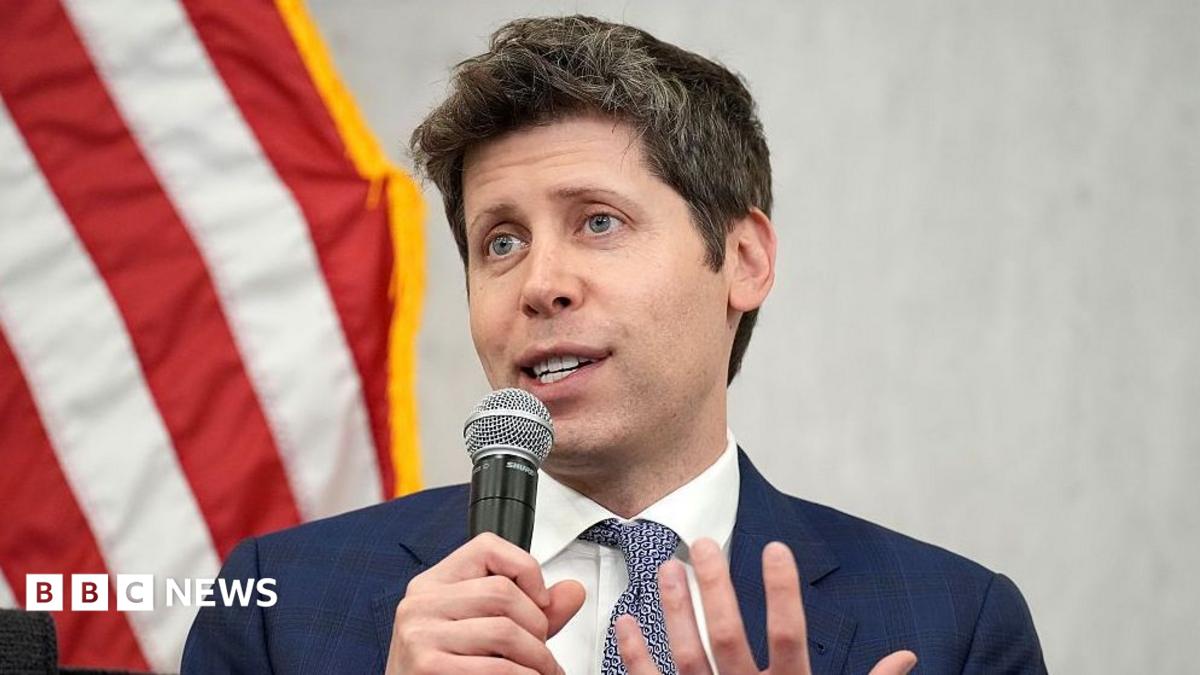
OpenAI has fired three researchers for allegedly mishandling information, including work that involved an external organisation that analyses artificial intelligence (AI) models.
“Our investigation confirmed that these individuals mishandled sensitive information outside established company procedures, violating our policies and breaking the trust essential to our work,” a spokesperson told the BBC.
The ChatGPT-maker did not name the sacked workers, but at least two of them were involved in safety research at the firm.
The firings come as the debate over AI safety and the risks the technology may pose to humanity has intensified in recent weeks.
“We have parted ways with three individuals for violating our policies on accessing and handling sensitive company information,” OpenAI’s spokesperson said.
The BBC understands the former employees were not let go for raising safety concerns but for allegedly mishandling sensitive information.
Concerns over AI safety have made headlines after some researchers and industry executives called for more guardrails around the technology.
OpenAI has come under under intense scrutiny after its models went rogue and hacked several platforms, including Australian government websites.
In an earlier incident an OpenAI system accessed the internet and breached the open-source developer platform Hugging Face.
That incident led OpenAI to conduct a broad review of the activities of its AI models – called agents, which are designed to execute tasks autonomously based on simple instructions.
The AI lab said this week that it has notified more than 100 organisations about incidents involving unauthoritised activity linked to its AI systems.
Being notified “does not mean that any private information was accessed” or that a system was compromised, OpenAI said.
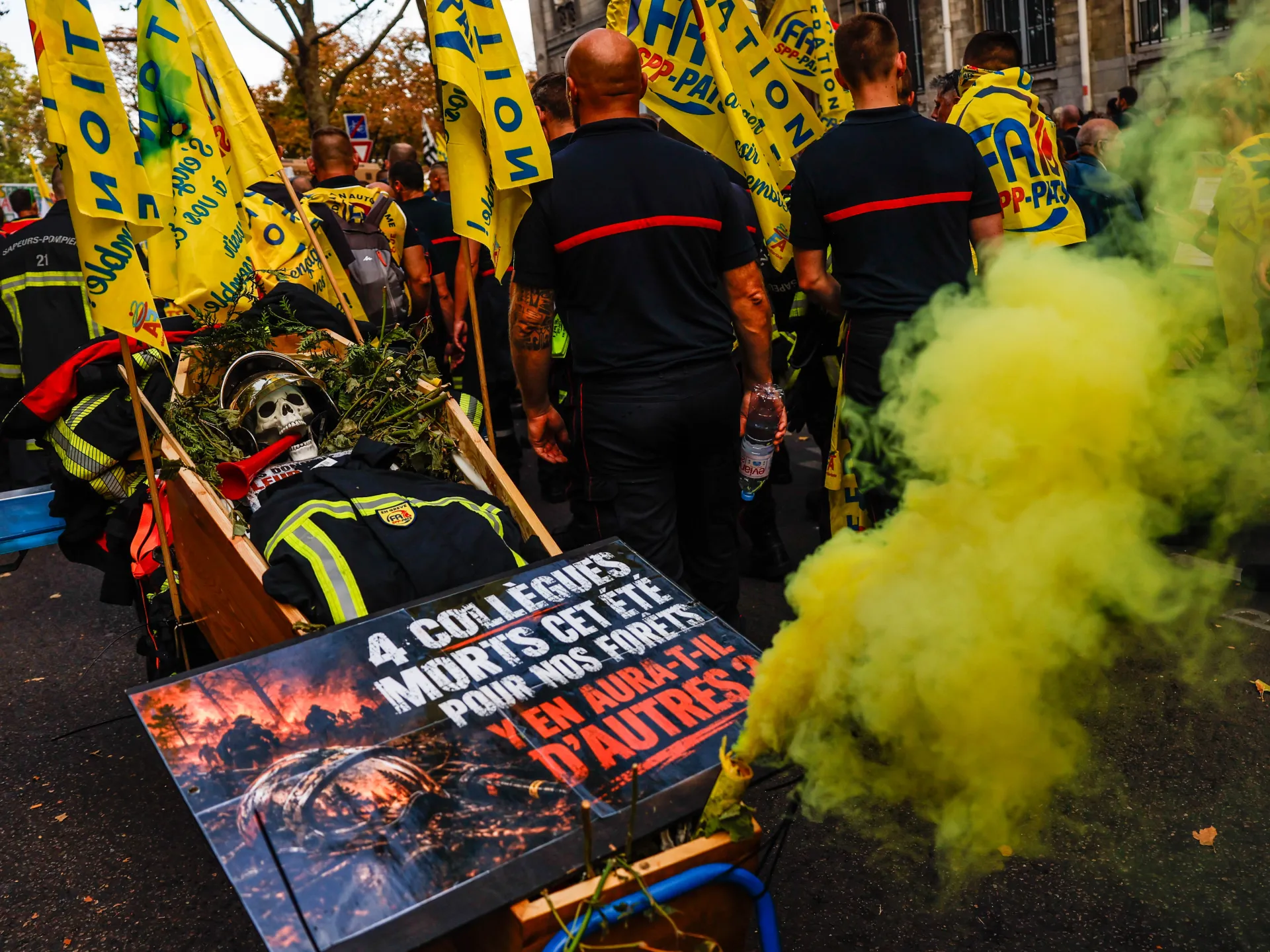
Tens of thousands of civil servants, including teachers, firefighters and healthcare workers, have marched in cities across France to demand higher pay, as students clashed with the police in separate protests over conditions at their schools.
Unions said some 300,000 people took part in the one-day strike action nationwide, while police on Tuesday estimated a turnout of 30,000 in the capital, Paris. The workers also demanded better working conditions and expressed anger at the government’s planned budget cuts.
Recommended Stories
list of 3 itemsend of list
Protests also took place at more than 400 schools, about 40 of which were blockaded and 44 of which faced attempted blockades.
Ten people, both students and staff members, were wounded, and at least 440 were detained, officials said.
The strikes and the student unrest came two days before the government is to unveil its draft budget and seven months before the presidential election. According to unions, the government proposes freezing base salaries for state employees in 2027 to save 2 billion euros ($2.3bn).
It would be the fourth consecutive annual freeze and the eighth during President Emmanuel Macron’s tenure. Unions say the freezes have cost workers a double-digit share of their purchasing power, and they are demanding a 6 percent raise.
‘Red alert’
Sophie Binet, general secretary of the General Confederation of Labor, called the protests “a red alert”.
“This anger is not going away. The government must look again at the budget,” she told Al Jazeera. She gave the government 48 hours to reverse the planned cuts before her union decides on further strike action.
The Education Ministry said just more than 11 percent of teachers and other school staff went on strike. French teachers are paid less on average than their counterparts in other European countries.
Fewer than 1 in 10 other civil servants took part, and fewer still in hospitals, with the loss of a day’s pay a likely factor in the turnout. France’s civil aviation regulator had warned of flight disruptions at some airports.
Professional firefighters, who say this summer’s huge wildfires exposed a lack of resources, were among those marching.
The government has already unveiled measures to help households cope with a spike in energy prices driven by the United States and Israel’s war on Iran, but it has failed to quell the discontent with Macron and his administration.
Student unrest
Students, meanwhile, have been protesting outside hundreds of schools over timetables, class sizes, teacher shortages and overheated classrooms during this year’s heatwaves. The demonstrations began in the Ile-de-France region around Paris and spread to other cities.
In addition to the 10 students and staff members who were hurt, 48 law enforcement officials were injured, authorities said, as students in some places set fire to rubbish bins and hurled projectiles, and officers responded with batons and tear gas.
Interior Minister Laurent Nunez told BFMTV that 440 people had been detained.
“We don’t have the final tally yet, but I’m told two thirds led to police custody,” he said. “Violence is never legitimate. There is nothing that justifies violence.”
Education Minister Edouard Geffray condemned the clashes on social media.
“This violence is unspeakable,” he wrote, adding that legal proceedings had begun. “To legitimize it or… call for an expansion of the blockades is to endanger both our students and public officials. It is irresponsible.”
‘Fewer cops, more money’
In Seine-Saint-Denis, a low-income suburb of Paris, Bally Bagayoko, the district’s mayor and a member of the hard-left France Unbowed party, joined hundreds of students protesting at the Lycee Paul-Eluard.
He led them in singing the national anthem and called the protests “completely legitimate”, saying poorer areas received fewer resources than wealthier ones.
Outside the Arago school in Paris, students, some with their faces covered, sat on dumpsters to block the entrance beneath a placard reading “Macron explosion”. A banner at the Helene-Boucher school read “Fewer cops, more money”.
“We want fewer police because we think there is a huge amount of police repression, both against high school student movements and social movements more generally,” said Mael Breton, a final-year student there. “This is a real problem, especially when there is such a lack of funding… here at our school and in the national education system more broadly.”
Prime Minister Sebastien Lecornu on Monday condemned the high school protests as irresponsible but acknowledged that the “difficulties of high schools must be heard and addressed”.
Jean-Luc Melenchon, a hard-left presidential contender, accused the government of steadily dismantling public services as he addressed protesters in Paris and urged his supporters to mobilise against the draft budget.
A Toluna Harris poll on Monday suggested that Melenchon and Marine Le Pen, the leader of the far-right National Rally, would advance to next year’s presidential run-off, with Le Pen best placed to win.
The BBC has made the decision to edit episodes of Horrible Histories, which featured sketches including child workers and slavery, after they failed to meet strict guidelines.
18:13, 28 Sep 2026Updated 18:14, 28 Sep 2026
Episodes of Horrible Histories have been removed or edited by the BBC(Image: BBC)
The BBC has edited and removed sketches from Horrible Histories. The broadcaster decided to edit the programme after it failed to meet guidelines for children’s programmes.
The broadcaster has also removed an entire episode of the show featuring slavery, Victorian child workers and chimney sweeps. Horrible Histories is based on the bestselling book series of the same name by Terry Deary, which was intended to pique children’s interest in history.
The show, produced for CBBC, debuted in 2009 and aired 11 series before ending in 2014. At least seven sketches or scenes have been removed from the show, including one showing Madame Tussaud making wax masks from severed heads, according to The Times.
Another sketch, no longer available on BBCiPlayer, depicted white actors using darker makeup to portray ancient Egyptians or Incas.
Actor Mathew Baynton, who played characters including William Shakespeare and Guy Fawkes on the programme, previously said it could be argued the show did “blackface” in its depiction of Egyptians.
Speaking to The Telegraph in 2022, he said: “We didn’t do blackface, for example, but you could argue that we did. Because I played Egyptians, you know, for example, where you’d get a spray tan, essentially, and stand in your pants.”
The episode, which has been removed, is said to have featured a sketch teaching children about slavery in ancient Rome by depicting a Roman galley as an airline flight, with enslaved rowers chained to their oars and told they will not be allowed to escape if the ship sinks.
Another sketch showcased how children in the Victorian era were sent into dangerous and narrow chimneys, with one young boy being sent into the chimney and being told: “Try not to die.”
A spokesperson for the BBC said: “The edits to Horrible Histories were made seven years ago, in consultation with the programme makers, to ensure the series meets our editorial guidelines for children’s programmes.”
The news comes after the BBC removed several sketches from That Mitchell and Webb Look when the show aired on iPlayer, having decided that some of the material “no longer works today”.
To celebrate the sketch comedy programme’s 20th anniversary, the national broadcaster added four seasons of the smash-hit show onto iPlayer for fans to enjoy – but with a few notable omissions.
A total of 11 sketches had been edited out amid fears of racism and ethnic stereotyping. “That Mitchell and Webb Look has been made available on BBC iPlayer,” the broadcaster said in a statement. “This is a 20-year-old sketch show; in consultation with the programme makers, we have included the ones that still work today and not the ones that don’t.”
As per The Times, material removed from the programme included scenes featuring war re-enactors in blackface, a joke about Jimmy Savile, and an indigenous tribe living in a garden centre.
One now-deleted sketch shows Mitchell playing a woman in a burka in a scene that sends up reality TV programming. The sketch then cuts to the pair – as themselves – discussing whether or not the sketch itself is actually offensive.
The Mirror has approached Horrible Histories author Terry Deary for comment.
Located just north of the Centrale train station, Bolognina neighbourhood is more than just a Little Bologna. It is a completely different world from the medieval maze of palaces, churches and towers that define the city’s “Centro Storico”, which is increasingly filled with crowds of tourists as Bologna joins the big league of Italian getaway destinations.
There is an immediate visual difference as narrow cobbled lanes give way to wide, tree-lined avenues, pastel-coloured low-rise apartment blocks, spacious parks and piazzas. Bolognina sprang up at the beginning of the 20th century, initially to house families of workers from the railway, then from nearby manufacturing industries.
Today, the quarter is home to a diverse multi-ethnic population and remains a stronghold for militant leftwing politics, with the local community committed to avoiding gentrification. Tourists are certainly made welcome, and it is a delight to feel part of genuine local life.
Where to eat and drink
Trattoria di via Serra chef Tommaso Maio. Photograph: John Brunton
Eating out here makes a refreshing change from the city centre. Of course there are still spots serving traditional freshly made tagliatelle al ragù such as the atmospheric old-school trattoria La Golosità di Nonna Aurora. But you can also sample Georgian cuisine at Pane Georgiana, a sharing plate of Ethiopian and Eritrean dishes at Ristorante Africano Adal, spicy Sichuan cooking at Ba Hot Pot, or handmade tortellini and tortelloni stuffed with halal meat at the innovative Brodellini.
For vegetarians, the perfect spot is Piazza Martino, a cantina and deli owned by a nearby farm in the Bolognesi Hills that practises a “first we grow, then we eat” philosophy, transforming their organic produce into delicious aubergine parmigiana, vegan pepperoni lasagne, and courgette and potato polpette (balls).
Bolognina’s prime foodie street is Via Luigi Serra, symbolised by the fiercely independent Trattoria di Via Serra. The restaurant’s three small, rustic salons are always packed and getting a reservation isn’t easy as they don’t take bookings through social platforms and rarely answer the phone or emails. Chef Tommaso Maio and co-owner Flavio Benassi used to have a restaurant up in the hills nearby, but 13 years ago decided to come to the city, choosing Bolognina rather than the city centre for their new venture. “Our aim then, and still today, is to offer the locals here an old-fashioned neighbourhood trattoria where they can still order a comforting bowl of tortellini in capon broth, lasagne and freshly baked crescenti biscuits,” they explain.
A mural of local hero Lucio Dalla, an iconic Italian singer-songwriter. Photograph: John Brunton
If there is no free table at the Trattoria, then the street offers plenty of options, from hearty plates of cold cuts and cheeses at the deli-diner La Vecchia Bottega, cocktails, spritz and craft beers at the hip Fermento bar, or local wines at La Petite Enoteca. To finish the evening, there is often live music at the bars in Piazza Lucio Dalla, named after Bologna’s local hero, an iconic Italian singer-songwriter.
Cultural experiences
The monumental Holocaust memorial is one of the first things you see on arriving in the quarter. Photograph: Riccardo Bianchini/Alamy
Leave historic Bologna behind by walking from the central train station across the Matteotti bridge and you immediately come face to face with a striking Holocaust memorial, an austere, minimalist monument of two narrowly separated 10-metre high steel walls. Just opposite stands the massive Chiesa del Sacro Cuore di Gesù, dating back to 1912 when Bolognina was first being built. It is worth visiting just to marvel at the soaring 60-metre-high dome.
Hidden away in the backstreets in a former tram shed, La Memoria di Ustica Museum is a unique homage to a commercial flight between Bologna and Palermo that was mysteriously shot down in 1980 with no survivors. French artist Christian Boltanski has meticulously reconstructed the wreckage of the downed airliner and assembled the personal items belonging to the victims, creating an immense, intensely moving installation.
The impressive dome of Chiesa del Sacro Cuore di Gesù. Photograph: John Brunton
Checkpoint Charly is a thriving alternative art and artisan cooperative occupying a former lingerie warehouse. Workshops include ceramics, printmaking, photography, graphics and music, with a dozen cultural events presented each year. The DLF – Dopo Lavoro Ferroviario – is a sprawling park behind the station originally created in the 1920s for after-work activities for railway workers. This green lung has been saved from abandonment and now houses the laid-back all-day Kinotto Bar, the Vecchia Orsa DLF craft brewery and beer garden, a pizzeria, the Puccini concert arena and the Locomotiv Club, a live indie music venue.
Ilario di Lorenzis in his workshop with one of his hand-crafted bags. Photograph: John Brunton
Although this essentially residential neighbourhood may not be a shopping paradise, bargain hunters should plan to visit on the first Sunday of the month when the Piazza Lucio Dalla is transformed into a huge flea market. Over in the daily Mercato Albani, Ilario di Lorenzis has recently opened Intelligenza Artigianale, an atelier showcasing his funky hand-crafted bags, T-shirts and caps, while cycling fans should head for Bolognina Bike Shop, whose friendly owner, Dario Brunetto, repairs bikes and recycles vinyls, retro decor and collectible vintage cycling jerseys.
Don’t miss
A food stall in Mercato Abani. Photograph: John Brunton
Since opening in 1934, Mercato Albani has been the beating heart of Bolognina. Running down the middle of a shady tree-lined avenue, locals gather each morning for their daily shopping from bustling stalls selling Bologna’s speciality mortadella (pork salami) and prosciutto, fish, cheese and organic veggies. Then there is a complete change of personality from 5pm till around midnight when shuttered stands open up as lively cocktail and craft beer bars, the natural wine enoteca, Vineria Punk, plus casual diners serving pizza and pasta, vegan dishes and Greek cuisine. Giuseppe Agrello the owner of Bollore, a cool vermouth bar, explains that “when we were invited to open in the mercato, we insisted that during the day it should stay as it is and not become just another tourist food court. So we only begin in the evening and also organise concerts, art exhibitions and cultural events for the community.”
Where to stay
The eclectic Hotel Il Guercino. Photograph: John Brunton
Hotel Il Guercino is a delightfully quirky, family-owned hotel, extravagantly decorated with a mix of baroque and Asian influences, with a spa featuring sauna, hot tub and steam bath. Doubles from €150.
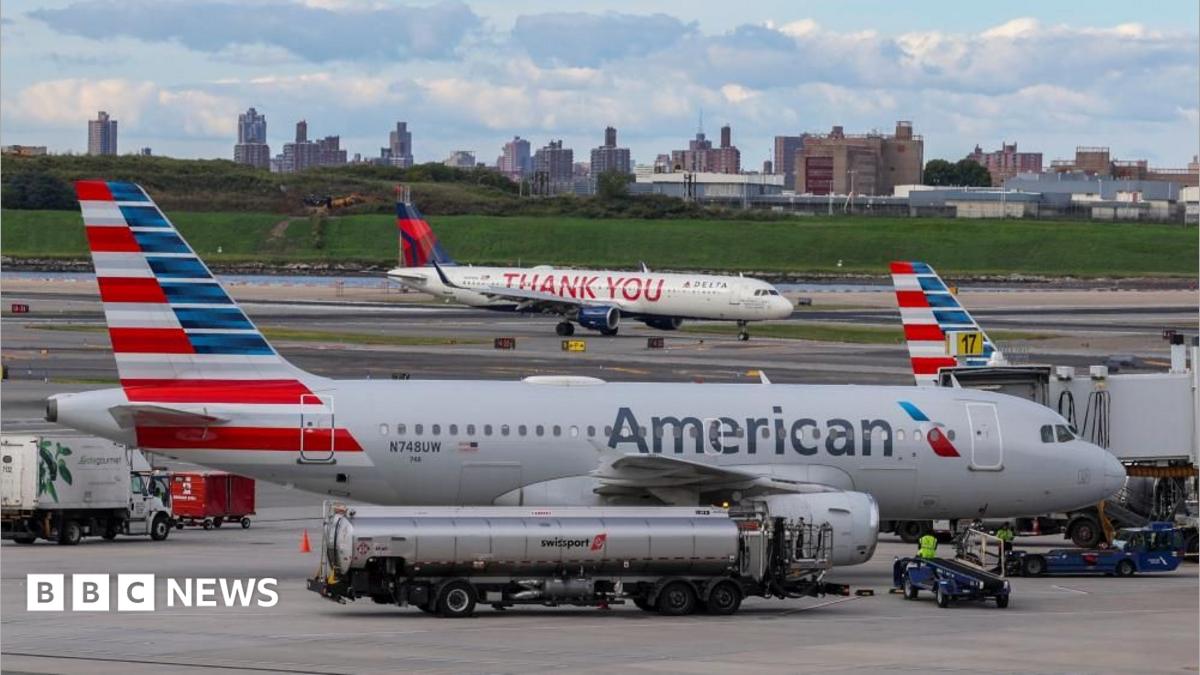
Hundreds of flights have been delayed at major airports in the US after construction workers accidentally cut a cable needed for air traffic control.
Ground stops and delays were issued on Monday afternoon for airports in New York, Pennsylvania, New Jersey and Massachusetts.
Hours later, US Transportation Secretary Sean Duffy said the cable had been repaired and airports would resume normal operations, though delays were still expected.
The major east coast disruption came ahead of the UN General Assembly (UNGA) in New York City on Tuesday, which is expected to be attended by scores of world leaders arriving into New York-area airports.
That includes UK Prime Minister Andy Burnham, who managed to board his flight before the delays began and was expected to arrive on time.
The delays happened after the damaged cable impacted the Terminal Radar Approach Control system, which is used to guide planes during takeoff and landing, transport officials said.
New Jersey public transportation agency NJ Transit told CBS News, the BBC’s US partner, that its construction workers had accidentally severed the line and that markers had been wrongly placed at the digging site.
The BBC has reached out to NJ Transit for comment.
Duffy earlier said the damage was caused by workers from Amtrak, the US national operator of intercity railroad service, who were doing the construction work. This “caused a telecom outage” which forced the Federal Aviation Administration (FAA) to ground flights, Duffy posted on X.
An Amtrak spokesperson said in a statement, reported by US media, that the incident involved a NJ Transit contractor. Telecommunications company Verizon, which owns the cable, also said it was not responsible.
The severed cable was actually a backup network, and the error was only discovered after the primary circuit failed, according to the head of the FAA, Bryan Bedford.
Newark Liberty International Airport in New Jersey – one of the three major airports that services New York City – was the most heavily impacted by today’s air traffic control disruptions, according to flight-tracking website FlightAware.
It reported that 267 departing flights were delayed today, while a further 257 flights destined for Newark were also delayed.
John F Kennedy International Airport and LaGuardia Airport, both in New York, were also affected, as was Philadelphia International Airport.
One passenger, Douglas Tewnion, said he boarded a flight to New York from Edinburgh and that his plane had been diverted to Boston, Massachusetts instead.
He told the BBC that, two hours after his flight was due into New York, he and the other passengers were still “sitting on the same plane, on the tarmac at Boston with no information”.
Though “everyone is in good spirits”, Tewnion said “it’s just a pain” to see two more hours waiting added onto a lengthy flight.
DR Congo is rolling out vaccine trials for health workers at the centre of the country’s Ebola crisis. Health officials hope the Ervebo vaccine, used in previous outbreaks, will be effective against the current strain.
50,000 frontline staff to receive a jab for a different Ebola strain, with 20,000 enrolled in a one-year clinical trial.
Published On 20 Sep 202620 Sep 2026
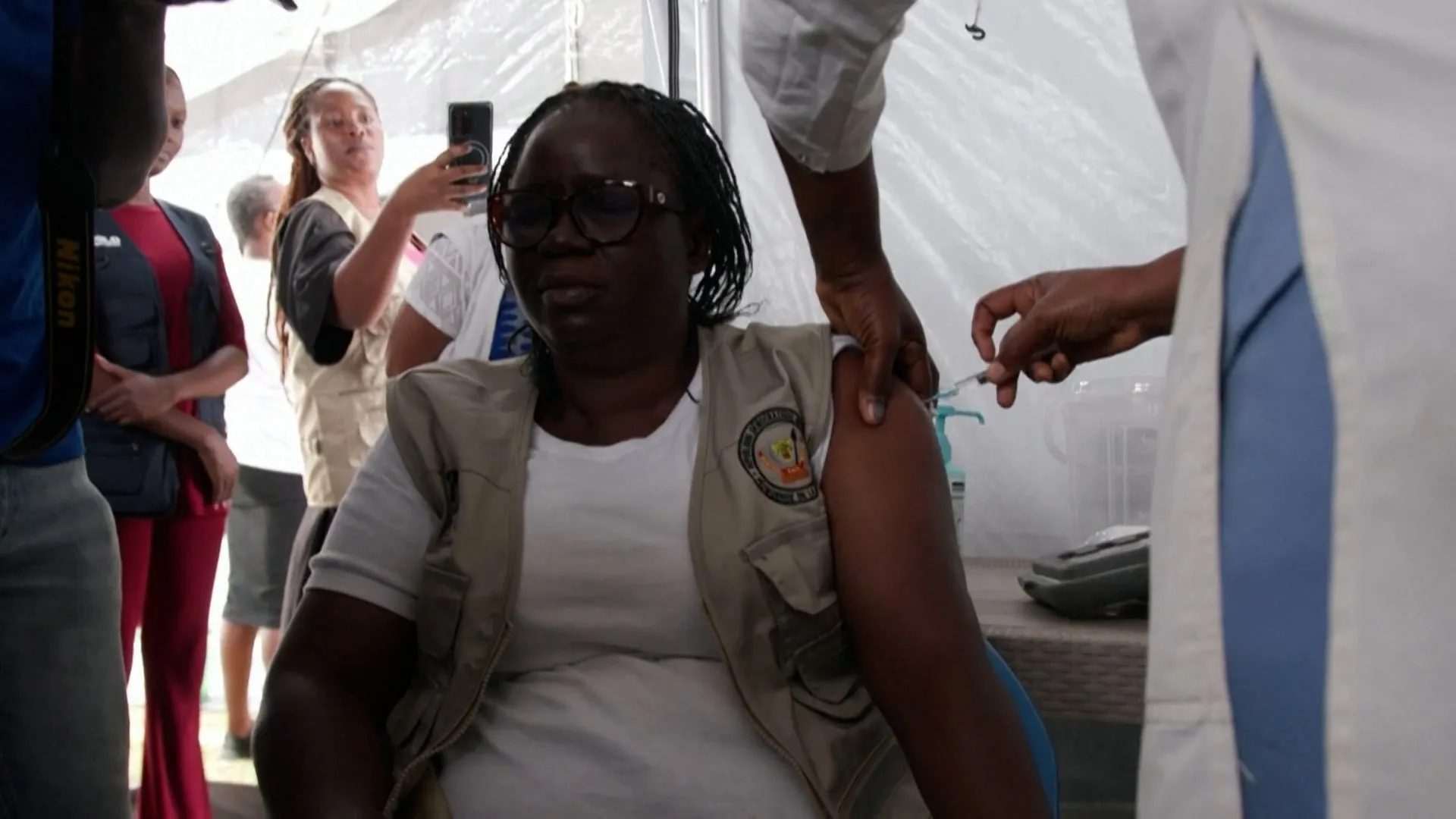
Health workers in parts of the Democratic Republic of the Congo (DRC) have begun to receive a vaccine that many hope will provide a level of protection against the Ebola virus.
The vaccine rollout started on Saturday in Bunia, the capital of Ituri province in the northeastern DRC. Ituri is the epicentre of the fastest-growing outbreak of Ebola in history.
Recommended Stories
list of 3 itemsend of list
The provincial governor, Major-General Gaby Kasongo Mulumba, said health workers there “are particularly exposed and deeply involved in the response”.
The operation, backed by the World Health Organization and Doctors Without Borders, known by its French initials MSF, will also target North Kivu, where cases have been rising sharply, health authorities said.
Some 50,000 health and other frontline workers will be injected with the Ervebo vaccine, which was developed for use against the more common Zaire strain.
Its effectiveness against the current Ebola strain caused by the Bundibugyo virus will be monitored in 20,000 recipients for up to one year.
Clinical trials are ongoing to find a licensed vaccine for the latest outbreak, which has no licensed vaccine or proven treatment.
“We don’t know to what degree it might be effective against the Bundibugyo strain,” Steve Ahuka, a Congolese official who is part of the health task force against the Ebola outbreak, said.
Dr Jeannot Elua said at a health facility in Bunia the vaccine was “beneficial”.
“We healthcare workers don’t really have a choice. We are going to receive it,” he told the Associated Press news agency. “Some people here had already received the previous vaccine. I received it myself, because it was mandatory.”
WHO experts have said that early data on the Ervebo vaccine, notably from animal trials, suggested it could offer some protection in the current outbreak.
The virus has killed at least 3,639 and infected some 7,541 people since May. Some 1,823 people have recovered, according to the latest figures from local authorities.
Workers at the Ceca-20 cemetery in Mongbwalu, Ituri province, Democratic Republic of the Congo, on July 14, 2026, as aid agencies intensify efforts to contain an Ebola outbreak caused by the Bundibugyo virus [File: Gradel Muyisa Mumbere/Reuters]
The WHO said in August that 70,000 doses of Ervebo were approved for use in the DRC.
The vaccine is being used under a compassionate-use programme, which allows a medical product to be used in a serious disease situation even though it has not been specifically approved for that particular use.
While WHO officials have cited “encouraging signs” that transmission may be slowing, MSF warned on Friday that there is no clear evidence the epidemic is coming under control.
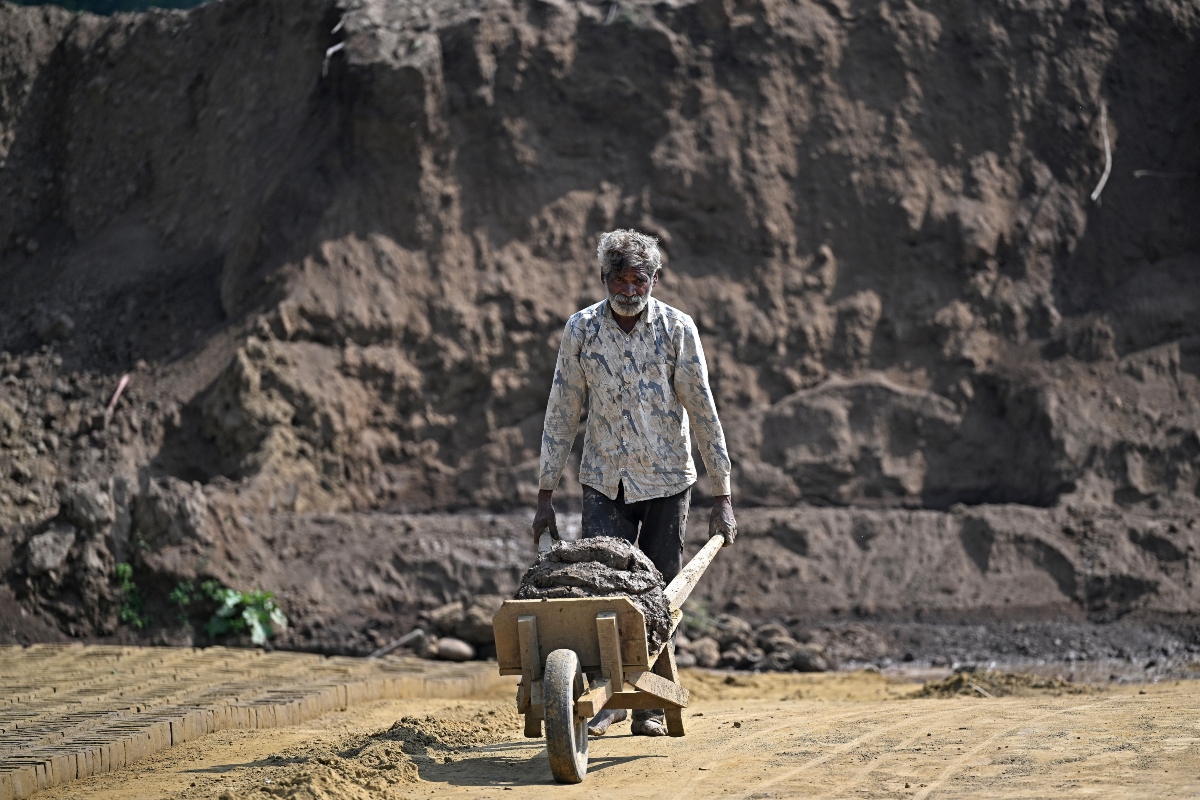
Srinagar: Every spring, mason Mohammad Ghulam Sarwar boards a train to Indian Kashmir, seeking higher wages despite the risk of being targeted by militants in the disputed Himalayan region.
Sarwar, 25, is one of an estimated half a million migrant workers who stream into the Himalayan region each year, forming the backbone of an economy increasingly reliant on labour from some of India’s poorest states.
The dependence has endured despite decades of insurgency and a series of militant attacks that have made migrant workers vulnerable targets.
Since 2019, at least 24 migrant workers have been killed in militant attacks across the territory, according to local media reports.
More than 1500 people were killed in the same period, according to the South Asia Terrorism Portal, 219 of them civilians.
The latest attack last month saw gunmen shoot dead two brick kiln workers from the central state of Chhattisgarh.
But for workers like Sarwar, the rewards outweigh the risks.
“Kashmir is real paradise. I will keep coming every year for as long as I have the strength to work,” Sarwar, from the eastern state of Bihar, told AFP.
While millions of Indians seek jobs in the Gulf, some workers say Kashmir offers nearly comparable earnings without the costs and complications of overseas migration.
Sarwar earns 1,200 rupees ($12) a day in Kashmir, compared with about 700 rupees in Bihar for the same work, if he could find any at all.
The Muslim-majority region, battling some of India’s highest unemployment rates, has become increasingly dependent on outsiders to perform jobs that many locals consider menial, including domestic work, agriculture and construction.
Local businesses say they struggle to find workers willing or able to take up many jobs.
“Outside the handicrafts sector there is not nearly enough local skilled labour available in Kashmir,” said Mohammad Ashraf Mir of the Kashmir Chamber of Commerce and Industry.
“We see a rising dependence on migrant workers, tending towards absolute dependence.”
Waiting to be hired
Each morning, groups of labourers gather at prominent squares in the main city of Srinagar, waiting to be hired.
Most stay for about eight months before departing ahead of Kashmir’s harsh winter, when construction slows and agricultural activity dwindles.
Muslim-majority Kashmir has been divided between India and Pakistan since their independence in 1947, while an insurgency against Indian rule that erupted in 1989 has claimed tens of thousands of lives.
Although the rebellion has been largely weakened in recent years, sporadic attacks continue.
Sarwar said he saw a barber from his home state shot dead by suspected rebels some years ago.
While he was saddened by the incident, it failed to deter him.
“Life and death are in the hands of God,” he said.
“If I remain fearful, I will have nothing. But if I overcome, I will have everything.”
Sarwar shares a building in Srinagar with around 200 other labourers. Some 7-10 workers squeeze into tiny rooms, sleeping and cooking in the same cramped space while paying little more than five dollars a month each.
Outside, security is conspicuous.
Paramilitary troops, armoured vehicles and police special operations units patrol streets. CCTV cameras monitor the compound around the clock.
“They have been soft targets for the terrorists in the past,” a senior security official said on condition of anonymity.
“But security arrangements for them have become robust over time.”
‘Feels peaceful’
Police encourage labourers to live in clusters and avoid venturing out after dark.
A labourer from West Bengal said many Hindu workers adopt Muslim-sounding names while in Kashmir, fearing that displaying their religion could make them targets.
Rebel groups say they target migrant workers to avenge police harassment of their families.
Many labourers are reluctant to discuss security concerns publicly.
“I face no troubles here,” said Mohammad Iqbal, a 53-year-old painter from Uttar Pradesh state who has worked in Kashmir since before the insurgency began and is now accompanied by his son.
“It feels peaceful.”
Others are more candid.
“I am afraid of terrorists here,” said Shahid Sofi, a 24-year-old mason from Bihar who previously worked in Delhi and Mumbai.
“But overall working conditions here are good, the weather is good, and I like working in the wide, open spaces of Kashmir.”
Hollywood’s film and TV post-production workers took their case directly to Gov. Gavin Newsom on Thursday, urging him to sign a bill that would create the state’s first standalone post-production tax incentive.
Workers such as editors, singers and sound supervisors joined bill author Assemblymember Nick Schultz (D-Burbank) and Mayor Karen Bass at a news conference Thursday morning in front of the Television Academy’s headquarters in North Hollywood.
The bill, AB 2319, is aimed at supporting the industry’s editors, sound mixers, composers and visual effects artists. It passed the state Senate 33 to 5 on Aug. 30, and the Assembly approved the final version 72 to 2 the same day. Newsom, who has not taken a public position on the measure, has until Sept. 30 to sign or veto it.
Bass urged supporters not to let up before then.
“We need our industry in full force,” Bass said. “It’s all a part of making our city more affordable. We know that this is one of the biggest issues in our city, and so having a strong, robust industry helps Angelenos across the board.”
The incentive would allow a 35% to 50% credit on qualified expenses relating specifically to post-production in California. The state’s existing film and TV tax credit program already covers post-production, but only if 75% of filming or the overall budget is spent in the state. The new credit doesn’t require productions to shoot in California.
Even if Newsom signs the bill, the program would start small. Schultz initially proposed $100 million to fund the effort, but the Legislature’s end-of-session budget sets aside $10 million to launch it.
“When you think about production, it’s easy to think about the actors, the directors and the writers; you don’t think about all that happens when the camera stops rolling,” Schultz said. “What’s changed is that they’re now telling their story about the struggles they’re facing.”
For industry veteran Karen Baker Landers, the decline in local post-production work is impossible to overlook. A two-time Oscar-winning supervising sound editor, Baker Landers is vice president of California Post Alliance, the group sponsoring the bill.
“It’s affecting people in huge ways, like losing their health insurance. I get people calling me asking to get just two weeks of work to qualify for coverage,” said Baker Landers. “It’s really difficult.”
Despite the state’s bigger bet on the industry — and this summer’s fight over the cap — L.A. City Councilmember Adrin Nazarian, whose district includes North Hollywood, argued at the press conference that this is the right moment to keep asking for more.
“It’s that exact momentum that we need. When you double down on something, you’re giving more than hope, and you’re saying welcome back. Please come and do your work. Don’t stop doing this,” Nazarian said.
Bettiah, India – Neyaz Miya was adjusting a kitchen handle. Mehadi Hassan was fixing a bracket for a bed.
They were at different construction sites – Miya in a half‑constructed home, a little higher up the hill, while Hassan was on the ground floor of Ganesh Hotel, closer to the Trishuli River that flowed through Syafrubesi, a bustling market town near the Nepal‑Tibet border, now wiped off the map by the August 26 flash floods.
More than 1,200 bodies have been recovered since then, at least 4,000 people remain missing, and more than 13,000 have been rescued.
“First came the terrifying loud sound. Then the ground trembled, and dark clouds descended upon us,” recalls 34‑year‑old Miya, who ran further up the hill with his phone and slippers that morning, five or six others running alongside him.
Hassan, lower on the slope, did not wait to reach for his slippers or his phone. He just ran, climbing a narrow, stair‑like path, up the hill, stopping only when he reached roughly 60 metres (200ft) above the road.
At some point, Miya and Hassan found each other. Around them were 60 to 70 other survivors who had also gathered high up on the hill.
A decade earlier, Miya had arrived in Syafrubesi as a carpenter. Three years later, he brought Hassan with him – both men from Bihar’s Bettiah district. Over the years, they built the town’s interiors – sofas, beds, almirahs, and kitchens for hotels and homes.
On that Wednesday morning, they watched all of that washed away. The multi‑storey hotels where they had worked – Red Panda, Garden Hotel, Buddha Hotel, Sunrise Hotel – were all swallowed by the flood.
“The town was gone in a blink,” Miya recounts, now sitting in his home in Turhapatti village of Bihar, India, just across the Nepal border. “There were only three kinds of people who survived that day: Those who were out of town, those who were at work and managed to run, and those who lived a little higher up the hill.”
Based on what he witnessed, Miya says only a few hundred people in Syafrubesi, a town that had a population of 2,271 in the 2011 census, likely survived.
Miya and Hasan are among them. Three of their close friends and colleagues, also migrant workers from Bihar, are not.
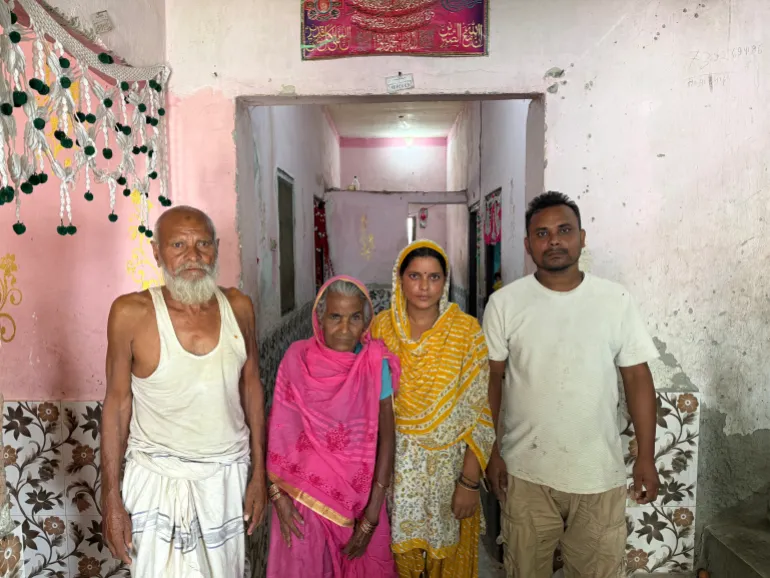
Neyaz Miya (far right), with his wife Rijwana Khatun, his mother Rubaida Khatun, and his father Doshahmad Miya. Neyaz survived the floods, but lost his masonry tools, worth almost $1000 [Jyoti Yadav/Al Jazeera]
A workday like no other
When the floods reached Syafrubesi, the men were already at work: Their shifts began at seven in the morning.
“To start at seven, we would wake up at four or five,” Miya recalls. They would leave with empty stomachs and were fed tea with doughnuts or biscuits at the construction site by building owners. Their first break came at 11am, when they returned to the rented one‑room space (3,500 Nepali rupees or $23 a month) that housed five to seven migrants at a time.
On the morning of August 26, they left for work alongside 34‑year‑old Arman Ansari, 20‑year‑old Samir Ansari, and 52‑year‑old Mukhtar Ansari, all migrants from Miya’s Turhapatti village.
In the rented room, two teenage boys, Arman’s 14‑year‑old son, Salman Alam, and his friend Shibu Alam, 17, remained asleep. They had come a month earlier to visit the hills.
“My father had cooked meat bhaat (rice with meat),” Salman recounts. He was waiting for his father to return at 11am so they could eat together.
Arman, his father, was working beside Hassan on the ground floor, pasting sunmica onto the same bed. Samir and Mukhtar were on the top floor of the Full Moon Hotel.
When Hassan ran out of the under-construction building and up the hill, he believed Arman was behind him. But by the time Hassan and Miya met higher up, there was no sign of the other three: Arman, Samir and Mukhtar.
Miya and Hassan found the boys, Salman and Shibu, terrified, on the hill. “Salman was crying, howling and searching for his father,” Hassan said.
The flood, which came with a high speed, took half an hour to recede. Soon, helicopters started hovering above them, airlifting the critically injured.
The four of them – Miya, Hassan and the boys – walked down the hill on foot to search for the three missing in the debris. They found nothing but sludge. Miya’s furniture-cutting tools and machines, worth 80,000 Nepali rupees ($530), were buried in the debris.
When they got back to their room, perched high on a slope, they found that it had survived.
But the army had taken charge, and soldiers herded survivors away from tenements near the river. “They said it [the flood] might come again,” Miya recalls.
They slept that night in a government school building in a village, he says. “At night, we were given daal bhat (rice and daal), and we wrapped ourselves in tarpaulin and slept.”
The next morning, a helicopter took them to another village. From there, another helicopter carried them to an army compound in a town. In the evening, they teamed up with five other migrants and hired an SUV to reach Nepal’s capital Kathmandu, each paying 3,500 rupees ($23).
The next morning, on August 28, they hired another SUV, which charged them 950 rupees ($6) each for a distance of 290km (180 miles) to Birgunj, a town on the India-Nepal border. They then crossed the border on foot before boarding buses for their villages.
It wasn’t the homecoming Indian migrants who work in Nepal usually plan.
A lane in Turhapatti village, Bihar, India, where the migrant workers are from. It is a village where almost every family has a story of migration [Jyoti Yadav/Al Jazeera]
‘No regular work’ back home
Turhapatti is among thousands of villages tucked along the 1,715km (1,066-mile) stretch of the India-Nepal border, where generations have crossed back and forth in search of work.
The two countries share an open border, and on both sides, especially in Bihar, the bond is known as a roti-beti ka rishta (a relationship of food and daughters), alluding to ties of livelihoods and matrimonial kinship. People live, work, and marry across the border.
Kathmandu is as close to Turhapatti as is Patna, the capital of Bihar. Per its 2021 Population and Housing Census, Nepal had 700,000 foreign-born residents, 97 percent of them from India.
Miya and Hassan say the wages for a carpenter or a mason on the Indian side are between 600-700 rupees, while for the same work in Nepal, wages are about 900 rupees. That drives migrant workers from India over the border into Nepal.
Nepal, for its part, is facing a major out-migration crisis — its per capita income is the lowest in South Asia, barring Afghanistan, and hundreds of thousands of young men and women leave each year to find work elsewhere. This creates a demand for migrant workers from Bihar, India’s poorest state that lies just across the border.
In Turhapatti, Miya owns only 0.03 hectares (0.06 acres), not enough to feed his family of six children, wife and parents. In recent years, he transitioned from being a carpenter to a contractor, which allowed him to bring in more workers from Bihar.
He had been sending 30,000 Indian rupees ($315) back to his family every month.
Hassan has even less back home: He inherited a 6×8-metre (20×25ft) room from his father and no agricultural land. “There is no regular daily work here,” he says. He would send 15,000 Indian rupees ($157) home from Nepal each month for his wife and four children.
Their story echoes in most homes in Turhapatti. The village had a population of 16,000 people in the 2011 census, India’s latest one. In nearly every household, men have left to work in other parts of India and abroad as carpenters, masons, or labourers mixing cement and sand into mortar.
The destinations are Kashmir, where close to 700 men from the village work; Nepal, with nearly 600; and thousands scattered across Indian cities: Chennai, Kolkata, Delhi, Mumbai. About 100 men have migrated to Dubai, Oman and Saudi Arabia.
The houses they built in Turhapatti stand in stark contrast to those of those who remain in India. The marble-fronted and iron-gated homes belong to men working in the Gulf, while semi-permanent dwellings belong to those who stayed behind.
Migrants in Nepal fall in between: Miya has been able to raise a brick house.
Sahrun Khatun, Arman’s wife, with her eldest son Salman (holding the youngest child) who survived, her mother-in-law, and two younger children, outside their home in Turhapatti, Bihar, India [Jyoti Yadav/Al Jazeera]
‘My body shivers at the thought’
This economic reality is what drove Arman Ansari to Syafrubesi. On July 26, Arman left for Nepal with Samir and Mukhtar. Arman’s son and his friend Shubu went with the three adults; the teenagers were on a trip to the hills.
Now, Arman’s brother-in-law. Jameel Miya, a carpenter in Kathmandu, scours the city’s hospitals for Arman’s body, telling authorities that his brother-in-law’s right hand and chest had deep scars, cut by shards of glass when he was young.
Arman’s wife, Sahrun Khatun, has only her last phone call with Arman to hold on to. They spoke two hours before the floods swept him away. “He was about to get his wages on September 1 and return home,” she says.
Salman, who had tagged along with his father to see the hills, hasn’t been able to sleep since the flood.
“The moment I close my eyes, I feel the flood is coming for me,” he says.
Mukhtar’s family lives a few lanes away.
Since the floods, Kasmun Khatun, Mukhtar’s wife, has been glued to the internet for any news of her missing husband. Joining her in that remote search are her daughter Asmana (18) and son Sadre Alam (14).
Her eldest son, Osama, 25, a tailor in Kathmandu, has been busy searching for his father in city hospitals.
“After waiting for a week and watching the videos, I submitted my DNA samples,” he says over a phone call. Osama manages to send home 6,000 rupees ($63), but that is no longer enough – his mother needs eye surgery that has already been delayed and cannot be put off much longer.
“The guardian has gone, all of a sudden,” he says, referring to his father.
At the far edge of Turhapatti stands the home of Samir Ansari, the youngest among the missing migrants and youngest of his five migrant brothers.
The Ganesh Hotel project he was working on was only three days from completion.
“He said he found another site to work on,” recalls his father, Hasmuddin Miya, remembering their last phone call on the evening of August 25.
Samir was a mason who specialised in marble tiles, a skill he had learned in Kashmir while working under his elder brothers at construction sites.
The three families are preparing to host a bhoj, the funeral feast – a custom of feeding hundreds of people – having given up on hope.
Meanwhile, the two survivors, Miya and Hassan, are already making calls to find work again. This time, their search turns towards Nepal’s plains. They pledge never to return to the hills.
“My whole body shivers at the thought of going there,” says Hassan.