wonders

The train is ‘my time machine’: a tour of Naples’ hidden ancient wonders | Naples holidays

One by one, the visitors descend through a tight tunnel cut through volcanic rock into the damp foundations of the Teatro Romano buried beneath Herculaneum, with the weight of 2,000 years of city above them. “This is a time machine,” the guide says, “and we are going back.” It is pitch black as film-maker Gianfranco Rosi’s camera finds torchlight catching the tourists’ transparent waterproof capes, making them appear like ghosts.

Released on the streaming platform Mubi this March, Rosi’s documentary Pompei: Below the Clouds threads a needle from classical antiquity to the present day. Presented in ashen black and white, without narration or interviews, it places the viewer inside the region surrounding Naples and leaves us there, each scene presenting a place and a moment in the area’s long history.

Illustration: Guardian Graphics

Naples is one of the oldest continuously inhabited cities in the world, and most visitors see only a fraction of it before boarding the Circumvesuviana at Porta Nolana and riding the narrow-gauge railway east to Pompei or Herculaneum. In Below the Clouds, Rosi does not alight there. He stays on the train, camera in hand, and traverses this seismic landscape – from the Sorrentine peninsula, crowned by Vesuvius in the east, to the lesser-known craters of the Phlegraean Fields in the west. The train, Rosi says, is “my time machine”. His lens draws us into the Naples most visitors never see.

As a film-maker myself, who has lived and worked in Naples for the past 15 years, I was inspired by Below the Clouds to make my own pilgrimage, and boarded the overcrowded, noisy trains I usually avoid.

Villa Oplontis ‘feels like a secret discovery’. Photograph: Alfio Giannotti/Alamy

Before the Circumvesuviana reaches the archaeological site of Pompei, it skirts the Bay of Naples, passing through a number of overlooked towns characterised by a stratification of history visible in the architecture. Drawing into the station of Torre Annunziata, Rosi holds the camera on the visible layers of the town’s history: diamond-patterned Roman brickwork cut from nearby volcanic quarries, Doric columns from an excavated Roman villa, and the still-lived-in mid-century housing blocks rising above them. That Roman villa is worth stopping for. Believed to have been built for Poppaea Sabina, the second wife of Emperor Nero, Villa Oplontis feels like a secret discovery. Its frescoes are almost untouched, its colonnade pristine, and on this day, as always, there was scarcely another soul in sight.

Back on the Circumvesuviana, I head east to Somma Vesuviana. A team from the University of Tokyo has been excavating here for decades, slowly uncovering the Villa Augustea, the imperial estate where the Emperor Augustus is believed to have died in AD14. It was not the great eruption of AD79 that buried the villa, but a later one in AD472. The archaeological treasures still buried across the region are so numerous that tomb raiders have long burrowed into the soft volcanic stone looking for loot to sell on.

A graffitied train on the Naples to Sorrento line stops at Pompei Scavi–Villa dei Misteri station. Photograph: PBW Pix/Alamy

A second train line, the Cumana, runs in the opposite direction. It departs from Montesanto station in central Naples and heads west, reaching Pozzuoli in 25 minutes. At the end of the line lies a working port city of 75,000 people living in the basin of one of the world’s most geologically active calderas (volcanic craters). The lore surrounding Vesuvius has long overshadowed the dangers posed by the Phlegraean Fields, which rumble daily beneath the city’s foundations.

Stepping off the train at Pozzuoli, I was hit by the pungent sulphuric smoke drifting over the port. I had timed my arrival for a simple lunch at Abbascio ù Mare (a local favourite serving fish landed from the boats that morning) before visiting the Macellum of Pozzuoli, a 2nd-century Roman market near the harbour. Here, I found the clearest record of what is known as bradyseism, the movement of magmatic fluid and gas beneath the surface of the Earth that lifts and lowers the land, sinking entire towns and raising them again centuries later. Halfway up the ancient columns, I spotted bands of small holes in the stone. These were bored by molluscs when the columns once stood metres below the bay. Rosi’s camera follows the phenomenon underwater, descending into the submerged ruins of nearby Baia, where robed marble figures stand upright on the seabed as shoals of fish drift over mosaics and between their feet.

Gianfranco Rosi’s documentary shows the submerged ruins of Baia, where robed marble figures still stand on the seabed. Photograph: Antonio Busiello/Alamy

Between east and west, at the intersection of the Circumvesuviana and the Cumana, lies Naples – known to the Greco-Romans as Neapolis (the new town) because it was new compared with Pompei and Baia. In the centre of the city, at the Museo Archeologico Nazionale di Napoli, Rosi films Maria, the museum’s archaeologist, deep in the storage vaults. This is what he calls the casaforte (the safe of memory) – shelf upon shelf of fragmented marble torsos, legs and busts, the overflow of 2,000 years of excavation. These artefacts are down here, Maria says, until it is their turn to return to the museum floor above – a mirror, Rosi suggests to me when we speak, of society’s own hierarchies. Like Rosi, I am obsessed with these perfectly formed marble figures, the survivors of catastrophe, that live in the galleries of the museum upstairs among the frescoes and bronzes, pulled from the same volcanic earth that buried thousands of people under Vesuvius.

Rosi juxtaposes the marble torsos with shots of dismembered ex-voto, small metal plates shaped like individual body parts. These are offerings, often left in churches or street shrines along with prayers to saints in exchange for bodily cures.

At the small church of Santa Maria Francesca delle Cinque Piaghe in the Quartieri Spagnoli, one of my favourite corners of the city, hundreds of ex-votos in the shape of pregnant women have been left for the saint of fertility. These practices, still very much alive today, speak to the Neapolitan impulse to marry the sacred and the profane.

A scene from Gianfranco Rosi’s documentary Pompei: Below the Clouds. Photograph: Venice Film Festival

Rosi’s film ends in an abandoned cinema somewhere along the train line, its seats destroyed, its screen partly intact. Into this ruin, Rosi projects clips from Roberto Rossellini’s Journey to Italy, a film about the past, playing in a ruin, in a city built on ruins, above a city that was itself once buried. Like a Chronovisor (a mythical 1950s invention that supposedly broadcast actual historical events), the cinema is where the present tense becomes the past even as you watch it. Just like Naples. Just like Below the Clouds.

By the end of the film’s nearly two-hour runtime, the viewer has made the same journey as those visitors descending into the foundations of the Teatro Romano in Herculaneum to behold and reflect on a civilisation buried mid-sentence. Below the Clouds insists, however, that this confrontation does not require a museum ticket. “We are already living inside the catastrophe,” says Rosi.

Pompei: Below the Clouds is available on Mubi. Herculaneum, Pompei, Villa Oplontis, Museo Archeologico Nazionale di Napoli are open to visitors. The Circumvesuviana runs from Napoli Porta Nolana east to Pompei and Herculaneum. The Cumana line runs from Montesanto station west to Pozzuoli. Sophia Seymour offers bespoke city walks and itineraries through Looking for Lila

Source link

Was the mayor a spy? L.A. suburb wonders about depth of Chinese plot

As Eileen Wang and her supporters tell it, the former Arcadia mayor was led astray by a man she trusted and loved.

After chasing her political ambitions in the San Gabriel Valley suburb, Wang, 58, won a City Council seat in 2022 with the help of a campaign advisor who was also her romantic partner. Two years later, he was charged by federal authorities with secretly working on behalf of the Chinese government.

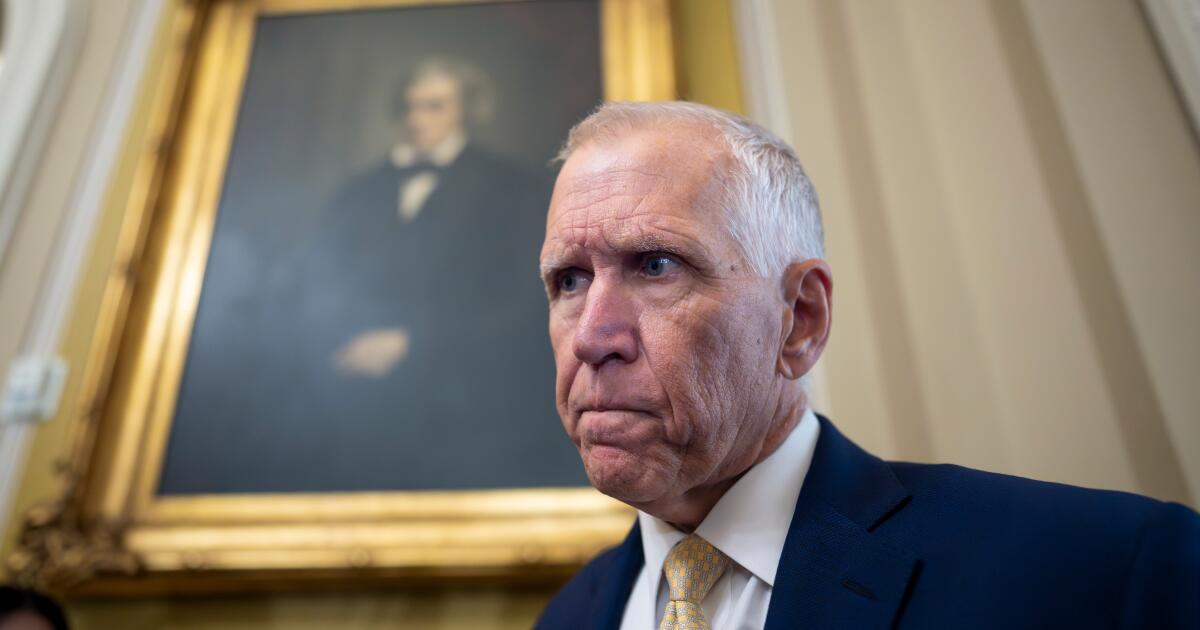
Wang, a naturalized U.S. citizen, distanced herself from her ex and remained in office, becoming mayor earlier this year. The scandal had mostly quieted — until Monday, on the eve of President Trump’s planned trip to Beijing, when a plea deal was unsealed revealing Wang’s own murky role as an agent for China.

A man walks past an empty space where a photograph of former Arcadia Mayor Eileen Wang hung between other photos on a wall.

A man walks past an empty space where a photograph of former Mayor Eileen Wang was removed in the lobby of Arcadia City Hall.

(Genaro Molina/Los Angeles Times)

Now, Wang has become a national political talking point, with critics painting her as a calculating foreign agent who sought to infiltrate the American government and undermine democracy.

Katie Miller, wife of top Trump advisor Stephen Miller, blasted Wang on social media site X as a “spy.”

“This is pure China trying to influence U.S. politics and U.S. elections,” Katie Miller said on Fox News.

Back home, some of Wang’s former colleagues in local government say they repeatedly tried to raise alarms about her.

“There were red flags everywhere,” said Sharon Kwan, an Arcadia city council member and former mayor.

Wang admitted in her plea agreement to posting and editing web content at the request of the Chinese government — without disclosing her ties to U.S. authorities, as the law requires. She ran afoul of the Foreign Agents Registration Act, or FARA, a federal statute that experts said has seen ramped up enforcement over the last decade, particularly in cases involving China.

But those familiar with the law — and international espionage — said it does not appear that Wang was engaged in spycraft as it is commonly understood.

Dennis Wilder, a former senior U.S. intelligence official and professor at Georgetown University, said that, in the CIA, Wang would be referred to as “an agent of influence.”

“She’s not a spy in the Jason Bourne sense,” Wilder said, referring to the fictional American agent. “She’s not out there recruiting sources and that sort of thing. That’s not the role that they want for her. But they see this other role as extremely important.”

A man exits Arcadia City Hall

A man exits Arcadia City Hall on Tuesday.

(Christina House/Los Angeles Times)

A run for city council

Wang moved to the U.S. around 30 years ago, in part, she told The Times in 2024, because she wanted “freedom for speech, freedom [for] thinking.”

Her mother was a Chinese medicine and acupuncture doctor and her father was a physician in Sichuan province before working at USC, she said. Authorities have not detailed how she immigrated or her path to citizenship. She landed in Arcadia, she said, lured by what the school district in the affluent city of 54,000 could offer her two young boys.

She ran an after-school program and was involved in some community organizations, but said she did not move in political circles until shortly before her 2022 run for city council. She switched her party affiliation from Republican to Democrat, which, she said, spoke more to the needs of voters in her district, where many share her Chinese roots.

“I walk about 140 days,” she said of her campaign, adding that she hit every door in her district five times. “I never stop.”

Yaoning “Mike” Sun, Wang’s former fiance, managed her campaign.

Arcadia City Councilmember Sharon Kwan

Arcadia City Councilmember Sharon Kwan stands outside the front entrance of the San Gabriel Valley suburb’s City Hall. “This is not something where we can just dismiss and pretend nothing happened,” said Kwan regarding the case against ex-mayor Eileen Wang.

(Genaro Molina/Los Angeles Times)

Kwan, who was elected to the city council at the same time, recalled Sun as a constant presence at city meetings and events, “always with the camera.”

“Always recording, always promoting her,” Kwan said. “She was like a celebrity to him.”

Two years after Wang took office, in December 2024, federal authorities arrested Sun on suspicion of acting as an illegal agent of China.

Prosecutors accused Sun in a criminal complaint of working with another man to cultivate Wang as a political asset for the People’s Republic of China or PRC. Federal prosecutors in Los Angeles identified the other man as John Chen, describing him in a sentencing memorandum as “a high-level member of the PRC intelligence apparatus,” who had “met personally” with Chinese President Xi Jinping.

Chen instructed Sun to submit reports on Wang, referred to throughout the complaint as “Individual 1,” to Chinese officials, including one the federal complaint said they referred to as the “Big Boss.” A draft of the report allegedly included a request for $80,000 to “support pro-PRC activities in the United States.” Sun was also told to tout Wang’s relationship with an unnamed U.S. congressperson, the complaint said.

Both men eventually pleaded guilty to working as unregistered agents of China, with Sun sentenced this year to four years in prison. Chen was sentenced to 20 months.

Wang spoke with Chen on the day she was elected and three more times over the next few months, according to the complaint in Sun’s case.

“You are doing a good job, I hope you can continue the good work, make Chinese people proud,” Chen told Wang, in a conversation on Jan. 23, 2023, according to the complaint in Sun’s case.

Chen and Sun also coordinated a trip to China in 2023 for Wang to meet with “leadership,” which would include stops in six different places, according to the complaint. It’s unclear whom Wang met with on the trip.

The fallout

After Sun’s arrest, Wang denied to several people that they had been engaged to marry. She said during a council meeting that their relationship ended in spring 2024.

Jolene Cadenbach, a pastor in Arcadia, said Wang confided in her that “she had been lied to” by Sun.

“I think he did a con job on her,” Cadenbach said.

The recent plea agreement gave the wrong impression about Wang, the pastor said.

“It made her sound like she was some kind of spy and it wasn’t like that at all,” she said. Wang was only following Sun’s orders, she added: “He told her to put up this site, she did it. She didn’t really investigate it.”

In a statement, Wang’s lawyers said she “apologizes and is sorry for the mistakes she has made in her personal life.” They said “she genuinely loves this city and is devoted to the people and the community within it,” but “her trust and love for apparently the wrong person… ultimately led her astray.”

Longtime Arcadia resident Sonia Martin sits on the porch of her home.

Arcadia resident Sonia Martin sits on the porch of her home. Martin said she had long expressed concerns about the city’s former mayor, Eileen Wang.

(Genaro Molina/Los Angeles Times)

After Sun was charged in 2024, Sonia Martin and other Arcadia residents showed up at council meetings carrying protest signs. Martin said she expected Wang to be pushed out. Instead, she said, most council members appeared to unite behind Wang.

“They wanted to have this feeling of, like, everything’s great here. We’re all warm. Look at us, it’s kumbaya,” Martin said.

Kwan said she repeatedly tried to bring up the concerns of constituents to her fellow council members but was brushed off.

“Everybody was just so silent,” Kwan said. “This is not something where we can just dismiss and pretend nothing happened.”

The job of mayor rotates among Arcadia City Council members, and when it was Kwan’s turn last April, she warned during her swearing-in speech that constituents “must remain vigilant against influence of foreign governments, including efforts by the Chinese Communist Party, that may seek to shape local policy for the interests that do not align with our residents.”

Since Wang’s plea agreement became public, some have scoffed at the notion that Chinese spies would establish an outpost in Arcadia, or that the web posts she made before becoming mayor amounted to any sort of meaningful propaganda campaign.

But according to Sun’s plea agreement, local office was just the start. Prosecutors said Sun’s 2023 report for Chinese officials boasted that “during the 2022 U.S. midterm elections, I orchestrated and organized my team to win the election for city council.” He called Wang a “new political star.”

Wilder, the former U.S. intelligence official, said that sounded like a familiar strategy.

“Maybe she would end up in Congress some day or at the state government level. They invest in these folks hoping they move up the political food chain,” the Georgetown professor said. “That is part of the Chinese long game.”

‘San Gabriel Valley deserves better’

In her plea agreement, Wang admitted that from late 2020 through at least 2022, she worked with Sun to run a website called U.S. News Center that branded itself as a news source for Chinese Americans.

Wang and Sun “executed directives” from Chinese government officials, posting requested articles and reporting back with screenshots showing how many people viewed the stories, the agreement says.

Prosecutors also say Wang edited articles at the request of officials and shared information showing the reach of the posts.

“Thank you leader,” she wrote on Aug. 20, 2021, after being complimented for a post that was viewed more than 15,000 times, according to the plea agreement.

Wang never disclosed that the Chinese government had directed her to post the content, according to court documents.

That sort of low-level violation of the law is not supposed to trigger federal charges unless, according to a February 2025 memo by then-Atty. Gen. Pam Bondi to Justice Department prosecutors, the case involved “conduct similar to more traditional espionage.” The Trump administration has pursued other high-profile foreign agent cases recently, with prosecutors winning a conviction Wednesday of a man charged with running a covert police station in Manhattan and keeping tabs on political dissidents.

When news broke of the charges and plea deal involving Wang, current and former city officials said they were not surprised.

A wall of photographs of former Arcadia mayors inside Arcadia City Hall.

A wall of photographs of former Arcadia mayors hang inside Arcadia City Hall. Eileen Wang is shown second from left on the bottom row. Wang admitted in court filings this week to working as an unregistered agent for China.

(Genaro Molina/Los Angeles Times)

“The warning signs around Eileen Wang were public for more than a year before this plea, agreement, and too many people in positions of influence defended and supported her,” April Verlato, a former mayor of Arcadia, said in a statement. “Our electeds should have represented what was best for the community and held her accountable. The San Gabriel Valley deserves better.”

Paul Cheng, mayor pro tem of Arcadia, said the council didn’t move earlier to oust Wang because a majority of its members wanted to let the federal investigation run its course.

“The public always says, ‘Why didn’t you investigate her when her boyfriend was arrested? Why didn’t you do something?’” he said.

Pedestrians walk along a sidewalk

Pedestrians walk along a sidewalk next to Huntington Drive in downtown Arcadia on Wednesday.

(Genaro Molina/Los Angeles Times)

But, he emphasized, “council members are not federal investigators.”

“We are not supposed to get involved,” said Cheng, an attorney. “It would make the situation 10 times worse.”

Cheng spoke highly of Wang, painting her as a committed civil servant with a passion for veterans, first responders and diversifying the businesses on Baldwin Avenue, the city’s main corridor.

“She probably attended the most events compared to all of us,” he said. “People have tried getting me to say she’s a horrible person, but I can only say what I saw, which was I thought she did a good job on council.”

Source link

One of the Wonders of the World to get new £500million airport next year

A HUGE new airport could soon make it easier to travel to one of the iconic Wonders of the World.

Chinchero International Airport was first announced nearly 30 year ago, in a bid to increase tourism to Peru.

A ne airport could connect tourists to one of the Wonders of the World Credit: b720 | Fermín Vázquez Arquitectos
Machu Picchu currently takes days to get to, with flights to Lima before buses and hikes Credit: Getty

The new airport would be on the outskirt of Chinchero, which would mean getting to the historic Machu Picchu much easier as well.

Currently, tourists take days travelling from Lima and Cusco, usually via plane and bus, followed by a hike.

But the new airport – first announced back in 1978 – could make it much easier.

It has run into a number of problems over the years, including internal conflicts across Peru, the Covid pandemic and complaints from locals.

Read more on new airports

TOTAL MAY-HEM

Major UK airport set for May bank holiday weekend travel chaos


SPAIN PAIN

Spanish airports to launch new rules for thousands – after three-hour queues

However, it now hopes to be able to be finished by 2027, with plans to open to the public by 2028.

Predicted to cost $682milliom (£500million), as many as eight million tourists per year could travel through.

This would increase tourism by 200 per cent to the region.

One local told the BBC: “I’ve been hearing about the airport for about 30 years.

“And if I had been here for 50 years, I would have been hearing about it for 50 years.”

It is unlikely to have flights from Europe, as experts have said that “transoceanic flights” wouldn’t be possible due to the altitude.

Currently, most Brits fly to the airport in Lima, Jorge Chávez International Airport, which opened a new passenger terminal last year.

It is likely that instead there would be direct flights from Lima to the new airport.

However, there are fears that the new airport could make the already over-touristy region even worse.

Others have said the new airport would harm the local wildlife, as well as bring too many tourists to the already-busy attraction.

Lima’s main airport is the only access route for Brits getting there Credit: Alamy
The new airport could open by 2027 – more than 30 y ears after i was first announced Credit: Hyundai E&C

In the mean time, some of the other Wonders of the World are much easier to visit.

The Colosseum in Rome is one of them, which is a short flight from the UK. There is also Petra in Jordan, with direct flights to Amman followed by a car ride or guided tour.

The others are slightly more difficult – the Taj Mahal in India is a long flight from the UK, as is the Great Wall of China , Mexico‘s Chichen Itza and Christ the Redeemer in Brazil.

Here are all of the Modern Wonders of the World too.

Source link