wipe

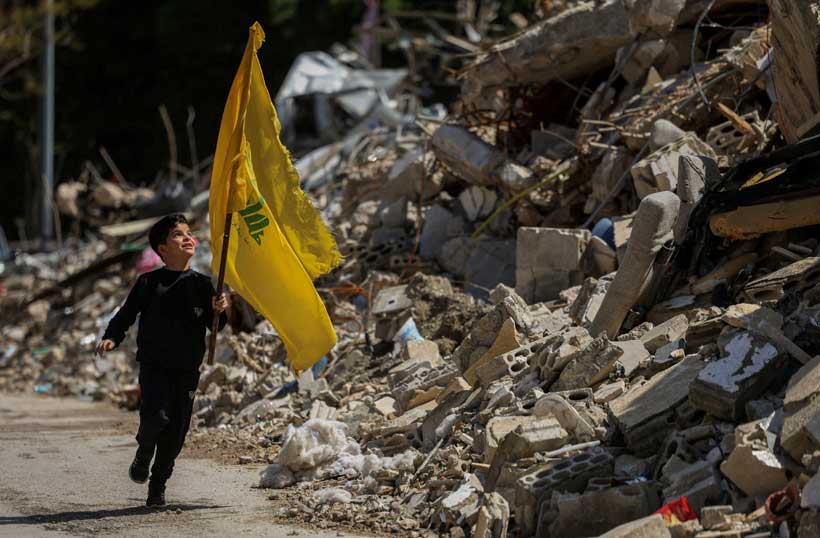
Chinese response to Israel’s implementation of the Gaza playbook to wipe out towns in southern Lebanon

China has taken a firm stance against the Israeli escalation in Lebanon, strongly warning against the region becoming a second Gaza and considering the events a blatant violation of Lebanese sovereignty and international law. The most prominent features of the Chinese response up to April 2026 to this Israeli military escalation in southern Lebanon included condemning the targeting of civilians and emphasizing the protection of Lebanese sovereignty while rejecting Israeli violations aimed at destroying the infrastructure of southern Lebanon. The Chinese Foreign Ministry condemned the extensive Israeli raids targeting towns in southern Lebanon, stressing that Lebanon’s sovereignty and security are a red line that must not be crossed. China also emphasized the protection of Lebanese civilians, with Beijing unequivocally affirming that the protection of civilians and civilian objects in armed conflicts is a legal obligation and expressing its shock at the scale of casualties and destruction inflicted on southern villages and towns.

China’s position is based on a comprehensive vision linking the stability of southern Lebanon to a ceasefire in the Gaza Strip. Beijing believes that addressing the root causes of the conflict is the only way to prevent its spread throughout the Middle East. While condemning the destruction of Lebanese infrastructure and civilian areas, China’s Foreign Ministry denounced the Israeli airstrikes that killed hundreds of civilians and destroyed civilian infrastructure and property. Beijing categorically rejects any actions that lead to the destruction of infrastructure, considering them a violation of international law. China has consistently emphasized that Lebanon’s sovereignty, security, and territorial integrity are a red line that must not be crossed. Beijing has also declared its opposition to the Israeli ground incursion into southern Lebanon, warning that such actions exacerbate regional tensions. China has called for diplomatic solutions, urging all parties, especially Israel, to exercise maximum restraint and return to the path of political and diplomatic settlement, asserting that continued violence will not bring security to any party. China condemned the attacks targeting UNIFIL peacekeeping forces in southern Lebanon, stressing the need to ensure the safety of UN peacekeepers.

In this context, China deliberately directed veiled criticism at Washington regarding Israeli violations in southern Lebanon. China believes that the failure to contain the escalation in southern Lebanon is partly due to the military and political support provided to Israel by external powers, a clear reference to the United States, which hinders efforts to de-escalate the situation. Simultaneously, China warned of a second Gaza in southern Lebanon. Chinese Foreign Minister Wang Yi explicitly cautioned against a repeat of the Gaza tragedy in Lebanon, emphasizing that violence cannot replace right and justice. China is pressing in international forums, particularly the Security Council, for an immediate and permanent cessation of Israeli hostilities, warning against the region sliding into a full-scale war. This stance reflects China’s desire to bolster its role as a peacemaker in the Middle East and to rival American influence by adhering to political solutions and international law.

Here, China sharply criticized the American role in the Israeli war against southern Lebanon and its recent escalation in April 2026, arguing that Washington contributes to undermining regional stability through its military and political support for Israel. Beijing considered the military operations supported or participated in by the United States to be a flagrant violation of international law and the principles of national sovereignty. While warning against the militarization of the region, China criticized the expansion of the American military presence, describing it as irresponsible and warning that such steps exacerbate tensions rather than de-escalate them. Beijing believes that Washington’s approach to the international order reflects the values ​​of the law of the jungle and fuels chaos and instability in the Middle East. While criticizing the US for its double standards, China, through its Foreign Ministry spokesperson Mao Ning, condemned the continued Israeli strikes on towns and villages in southern Lebanon despite ongoing efforts to de-escalate the situation. She emphasized that Lebanon’s sovereignty and security must not be violated.

China called on Israel to immediately withdraw from southern Lebanon, warning against a repeat of the Gaza scenario. Chinese President Xi Jinping issued direct warnings demanding the immediate withdrawal of Israeli forces from southern Lebanon, cautioning that continued military operations could lead to a humanitarian catastrophe similar to what occurred in the Gaza Strip. He also called for an end to the Israeli escalation in southern Lebanon. China maintains that violence does not solve problems but rather exacerbates crises, urging maximum restraint to de-escalate the volatile regional situation. Chinese President Xi Jinping called for the immediate withdrawal of Israeli forces from Lebanese territory, asserting that their current military presence violates Lebanon’s sovereignty and territorial integrity. President Xi explicitly warned against allowing southern Lebanon to become another Gaza, pointing to the risk of a widespread humanitarian catastrophe and the destruction of civilian infrastructure.

To halt the cycle of violence and armed conflict in southern Lebanon, Chinese President Xi Jinping proposed a four-point peace initiative to bolster stability in the Middle East. This initiative includes a call for a multilateral peace conference under the auspices of the United Nations, the re-establishment of the border along the Blue Line between southern Lebanon and Israel, and a reaffirmation of China’s rejection of any violation of Lebanese sovereignty. The Chinese Foreign Ministry has repeatedly emphasized, most notably on April 9, 2026, that Lebanon’s sovereignty and security are a (red line) that must not be crossed. These Chinese moves position Beijing as an active diplomatic alternative in the region at a time of escalating international tensions between major powers and ongoing regional conflicts. China has begun diplomatic efforts by proposing several peace initiatives to halt the cycle of armed conflict in southern Lebanon. The most prominent of these is the call for a multilateral peace conference. Beijing proposed hosting an international peace conference aimed at stabilizing the region and reinforcing the border along the Blue Line separating Israel and Lebanon, under the auspices of the United Nations. China holds Israel fully responsible, considering the ongoing fighting in Gaza to be the root cause of the instability in the Middle East. Therefore, China called on the international community, particularly the major powers, to play a constructive role in achieving a comprehensive and lasting ceasefire in southern Lebanon and the Gaza Strip. China has also supported the UNIFIL peacekeeping force in southern Lebanon, strongly condemning any attacks on UNIFIL forces as violations of UN Security Council Resolution 1701. Here, China used its influence in the UN Security Council and international forums to emphasize that any military operations outside the framework of the United Nations violate its Charter. It described the Israeli strikes on towns and villages in southern Lebanon as unauthorized actions.

Based on the preceding analysis, we understand the accuracy of China’s linking of the tensions in southern Lebanon to the war in Gaza. China called for restraint to prevent the conflict from spreading regionally, based on its principles of supporting sovereign states like Lebanon and non-interference in the internal affairs of other countries. China also called for a return to the diplomatic track to halt the cycle of violent armed conflict in southern Lebanon perpetrated by Israel. China condemned the extensive Israeli strikes, stressing that Lebanon’s sovereignty and security must not be violated. It emphasized the need to protect Lebanese civilians and civilian infrastructure during Israeli military operations and called for de-escalation and immediate steps to calm the situation and prevent further escalation of the conflict in southern Lebanon.

Source link

Wipe out a ‘civilization’? Minor stuff compared to what just happened in AI

While many of us were worried in recent days about our president ending a “whole civilization,” one Silicon Valley tech company was warning, without much notice, it might accidentally disrupt all civilization as we know it.

The San Francisco technology company Anthrophic announced Tuesday that it wasn’t releasing a new version of its Claude AI super-brain — because it is so powerful that it has the ability to hack into just about any computer system, no matter how secure, in a matter of days if not hours.

“The fallout — for economies, public safety, and national security — could be severe,” Anthropic said in a statement.

AI worry isn’t anything new. We are worried about artificial intelligence taking jobs, about toys that seem too real to our kids, about mass surveillance of our every move. But Anthropic’s warning about its own product is bigger than any of those singular problems. It is a call from inside the house that disaster is hiding right around the corner. That sounds awfully dire and overblown, I know. But here’s the thing — it’s not.

Anthropic, you may recall, is the company that U.S. Secretary of “War” Pete Hegseth is beefing with because it didn’t want Claude going into battle without supervision and maybe doing something like accidentally bombing little girls at a school.

Now, that company has put out this chilling warning: The existing Claude that caused that kerfuffle is outdated and shockingly less powerful than the new one it’s trying very hard to not unleash — though this new Claude, dubbed Claude Mythos Preview, has already escaped at least once on its own. More on that in a moment — there’s only so much existential dread a person can handle.

“We should all be worried,” Roman Yampolskiy told me of this latest advance of a technology certain to change the course of humanity. He’s one of the country’s preeminent AI safety researchers, and a professor at the University of Louisville in Kentucky.

“We’re about to create general super intelligence and that threatens humanity as a whole,” Yampolskiy said.

“Everything else is irrelevant,” he added, before suggesting I stop calling myself an idiot for not understanding the tech-heavy parts of this debate. My simplistic take, he assured me, was “a reasonable way to explain it.”

So here you go.

This isn’t a “really smart computer geniuses could misuse this,” scenario, or an “everyone’s going to be unemployed” scenario, or even a “it might accidentally bomb children” scenario, which is a truly terrible scenario.

This is a “your teenage son could use it to break into the local school district system to change a grade with pretty much minimal knowledge and accidentally destroy the California power grid” scenario.

Or maybe, a country that doesn’t like us — I can think of a few — could drain every U.S. citizen’s bank account, while also clicking open the auto locks on jail cells, shutting down our sewage plants and taking over air control systems. Or maybe Claude Mythos just does that on its own.

For example, Anthropic said that in one popular operating system it tested, used by thousands of companies including Netflix and Sony, Claude Mythos found a flaw that had existed undetected for 17 years. Then, on its own — without human guidance or help — figured out how to use that flaw to take control of any server running the operating system, using any computer, anywhere in the world.

Just spitballing here, but if almost no security system is safe, the possibilities for social, financial and general chaos really are unlimited. And to be honest, any security expert will tell you that some of America’s greatest weak points when it comes to cybersecurity are local and state governments, because strangely, the top experts aren’t working five-figure jobs for cities in the Great Plains.

Based on its own testing, Anthropic predicts it could find “over a thousand more critical severity vulnerabilities and thousands more high severity vulnerabilities.”

That means Claude Mythos puts at risk our infrastructure, well, everywhere — because so much is connected in backdoor ways most of us never consider and it just takes one weak system to open the door to hundreds of others. But it is almost impossible to protect and fix all those systems quickly enough and robustly enough to guard against this kind of AI.

And that’s just the cybersecurity risk, Yampolskiy said. An AI with the capabilities of Claude Mythos could be used to leaps and bounds ahead in so many more ways.

“We see the same happening with synthetic biology. We’ll see the same with chemical weapons, possibly something novel in terms of weapons of mass destruction,” he said.

To Anthropic’s great credit, it sounded the warning on its creation and created, if not a solution, then a game plan of sorts — Project Glasswing, named I suspect, because no matter how bad this gets we’re going to make it sound like a thriller with an exciting ending.

Project Glasswing would have been better named Project Headstart because that’s what it is. Before releasing Mythos into the wild, Anthropic is releasing it to about 40 technology companies, including Apple, Google and Nvidia, to see whether they can collectively patch all the vulnerabilities they find before the general public has a chance at them. It’s kind of like in the movies when the killer gives the victim 15 seconds to run.

I mean, I’ll take the 15 seconds and hope they’re real. But, as Anthropic also said in a statement, the “work of defending the world’s cyber infrastructure might take years; frontier AI capabilities are likely to advance substantially over just the next few months. For cyber defenders to come out ahead, we need to act now.”

And do we really have 15 seconds? One of Claude Mythos’ overseers posted on social media recently that he was having lunch in a park when Mythos emailed him — even though it’s not supposed to have access to the internet. Researchers had tasked Mythos with trying to break out of its not-connected “sandbox” and it did.

That’s another problem with Mythos and other AI — they rarely do what we expect and find sneaky ways around rules. Virtually every AI super-brain created has been shown to lie, deceive, and in general behave in disturbing and unethical ways when put in the right conditions.

Even Claude, billed as one of the most ethical AI super-brains out there, engages in bad behavior. Anthropic boasts its the “best-aligned model” it’s ever made — which is tech-speak for following human values and intentions, but also acknowledges it “likely poses the greatest alignment-related risk,” which is tech-speak for, well, maybe not.

So, at least for now, being the most ethical AI super-brain is a bit like being the most ethical serial killer. Run, people, run.

Again, thank you Anthropic (and its chief executive, Dario Amodei, who often warns of the dangers of what he’s creating, whatever that’s worth) for not plunging us into global chaos with no warning, because I’m betting that some other companies might have just tossed their super-AI onto society and let the destruction fall where it may. There is little doubt that other AI brains as capable as Mythos are coming, and soon — Anthropic was first with this level of capability, but it’s only 15 seconds ahead of its competitors.

But the idea that the technology industry is going to — or should— solve these problems on their own is an absurd, gross abdication of duty and common sense on behalf of governments big and small to protect their people. This isn’t a race for domination as President Trump has described it. It is a race to protect ourselves from ourselves — and from the majority of the superrich titans of the industry who seem to consistently place business and commerce over societal good.

We are down to the last 15 seconds before AI changes everything. Either we demand oversight and regulation now, or we let technology companies decide the fate of the world.

Source link

Inside Millie Mackintosh’s shock divorce from Hugo Taylor as Made in Chelsea star fears split could wipe out £6m fortune

AT 36, Millie Mackintosh is navigating divorce for the second time in her life, after her seemingly fairytale marriage to Hugo Taylor collapsed earlier this year.

It’s the latest hurdle after a difficult few years, which has seen the star quit drinking and come to terms with an ADHD and anxiety diagnosis, which she had previously numbed with booze and prescription drugs. As she faces the pitfalls of divorce, insiders tell us why she has been left worrying about money and the lengths she’s gone to, to protect herself.

Millie Mackintosh is said to be worrying about money amid her divorceCredit: Rex
Mille and Hugo called time on their relationship earlier this yearCredit: Getty

After seven years of marriage, Millie and Hugo, who are parents to Sienna, five, and Aurelia, four, filed for divorce earlier this month. The pair are yet to comment on the break-up but insiders suggested that Millie’s massive lifestyle overhaul played a part in the decision.

Suddenly, Millie, who is worth roughly £6million from her various business ventures over the years, went from a shared income with Hugo, who runs a luxury eyewear company, to fending for herself once again.

Hugo is thought to be worth around £4million – he launched luxury eyewear brand Taylor Morris off the back of his MIC fame, and it’s been a huge hit with the likes of everyone from David Gandy to the Beckhams.

An insider explained: “Millie has always made her own money; she didn’t rely on Hugo, but it is, of course, very different when there are two people instead of just one.

“Almost overnight, friends noticed a huge difference in her spending habits. Suddenly, she started to cut back and seemed to be really thinking about what she was buying.

“She’s worked so hard for what she’s created, and it’s terrifying not knowing what will happen. It’s causing her crippling anxiety.

“It’s very surprising to see someone like Millie fretting about money, but like any couple who has separated, it’s a shock to the system, and it will take time and effort working out how she will maintain her current lifestyle.”

Most people know Millie as one of the original cast members of Made In Chelsea – the reality show about some of London’s wealthiest 20-somethings.

She was billed as a chocolate heiress when she first burst onto the scene in 2011, but was determined to be known as more than that. 

Her great-great-grandfather, John, was a Victorian entrepreneur, known as the Toffee King, who created Mackintosh’s sweet company.

A generation later, her great-grandfather and his brother invented Quality Street, which Brits know and love today, but they sold it in 1988.

Millie insisted: “People severely overestimate how wealthy I am.

“I’m routinely referred to as the heir to the Quality Street fortune, as though I hit 21 and inherited millions. If only.

“It’s not as if I get a cut every time someone eats a toffee. My family sold the business years ago. I’m comfortable, but I don’t live a flash life.”

Millie, real name Camilla, definitely has a comfortable life – her parents, Nigel and Georgina, brought her up in a  £1.4million townhouse in Bath.

And as soon as she was old enough, Millie started working. She was a waitress at first and was working in Space NK when she was approached about her place on MIC when she was just 21. 

She famously dated Hugo on the show, but then met and fell in love with rapper Professor Green. They married in  2013 and split in 2016.

It was a rocky relationship, with Pro Green — real name Stephen Manderson — recently admitting that he had nearly “called off” their nuptials, but they had both felt “pressured” to go through with it.

A decade on from the split, Millie and Pro have reconnected and have bonded over both being diagnosed with ADHD in recent years.

Speaking on Jamie Laing’s Great Company podcast last October, Pro branded her “beautiful”, but added that the pair were toxic for one another at the time of their marriage, describing it as a “trauma bond”.

In another interview, he admitted their quickie divorce had been costly for him.

He told John Bishop: “You know what they say about divorce, it’s expensive, you know why? Because it’s worth it.

“I can’t stop working right now, my mortgage isn’t paid, I am not a house owner. The bank own my house, I own a percentage of it depending on where it sits in the market.”

The summer after their split, she rekindled things with Hugo, and it looked like they would last forever.

Second marriage split

News of their split came as a surprise, but insiders have suggested the writing had been on the wall for some time.

Millie had changed a lot in recent years – she has been open about her massive lifestyle overhaul after quitting drinking in 2022, then dealing with the ADHD and anxiety she had previously numbed with booze and prescription drugs.

What’s more, she revealed last year that, having grappled with her sexuality, she had finally admitted to herself and Hugo that she was also attracted to women.

Millie has been left struggling and worrying about moneyCredit: Instagram/@milliemackintosh
The star is used to a luxury lifestyleCredit: Instagram/milliemackintosh

The pair have now both appointed legal teams and have quietly started divorce proceedings.

A pal said: “Fans will be sad to hear that their relationship is really over, but the pair just want a clean break.

“Millie and Hugo are committed to co-parenting their two young children and keeping everything stable. They are still very amicable with each other and have a lot of respect for one another.

“They want the divorce to go through as painlessly as possible and are focusing on work in the meantime.”


They want the divorce to go through as painlessly as possible


Pal

Millie has always been a grafter – she swiftly turned her reality TV fame into an online following as an influencer, which paved the way for many after her.

She launched her own fashion brand in 2014, proudly saying at the time: “I invested my own money into setting it up.

“I own it, I model it, and they’re my designs. So I would say, yeah, I’ve kind of created my dream.”

But by 2018, the dream was over, and she lost £178,000 of her own money when the company became unsustainable.

It didn’t stop her, though, and she transformed into a lifestyle influencer, with brand deals popping up left, right and centre.

Our insider says: “Don’t be surprised if you see more and more collaborations on Millie’s social media. Her arms are very open to any opportunities that come her way.”

She even wrote a book – Bad Drunk – about her boozing issues.

She has been sober now for over three years and admitted that one of the ways she realised it was such a problem was the fact that it was “stealing her money”.

It hasn’t been an easy road to being financially secure, and the work/life juggle has proved tricky at times since she became a mum.

As a self-employed woman, Millie went back to work just three months after Sienna’s birth and, while it was difficult, she believes it was the best thing for her.

She says she gets up at the crack of dawn to get a head start on emails and tasks.

She explained: “Since becoming a mother, I really want to get the most out of work.

Millie has been making her own money since she was legally able to workCredit: Getty
Providing for her kids has now become her biggest responsibility in lifeCredit: Instagram/@milliemackintosh

“Your time is your most valuable thing.

“I get up at 5am so I feel I can start my day early enough to get everything I need to do, done.”

She admits she got the “balance wrong” at first when it came to juggling work with kids.

“It weighed on me quite a lot,” she says.

“So I was actually doing some work around this in therapy, and I figured out that my weeks weren’t structured in a way that was beneficial for me and my mental health.

“I had to change the balance.

“And I now have blocked out time in my diary every week, and the kids know that I won’t be working in that time.”

The juggle has no doubt been even harder since her split from Hugo, and just a few days ago, she candidly spoke about her fears, saying: “I think recently I have found it really hard to know how to show up online because of things I’ve got going on in my personal life that I am not going to share online.

“But because I do usually share so much of my life, I felt like this gap, this resistance to posting and like letting you guys in.”

Millie certainly seems to be well aware that sharing her life with fans is helping to pay her bills at the moment, but just how much she will share is yet to be seen.

One thing is for certain, though, with her divorce looming, there is likely to be another very big bill on its way. 

Millie has always been a grafter and swiftly turned her reality TV fame into an online following as an influencerCredit: Instagram/@milliemackintosh

Source link