winter

Winter Olympics: The ‘genius’ coach behind Ilia Malinin’s quad axel

He raised up the Quad King. He refined the jump that defined the Quad God.

From a sprawling ice facility in Irvine, Rafael Arutyunyan could just be the “Quad Maker.”

The 68-year-old figure skating coach is renowned as one of the best technicians in the world. He trained Olympic champion Nathan Chen starting when the “Quad King” was 10 years old. Four years after Chen became the first U.S. man to win singles Olympic gold since 2010, Arutyunyan could have a second consecutive pupil on top of the Olympic podium.

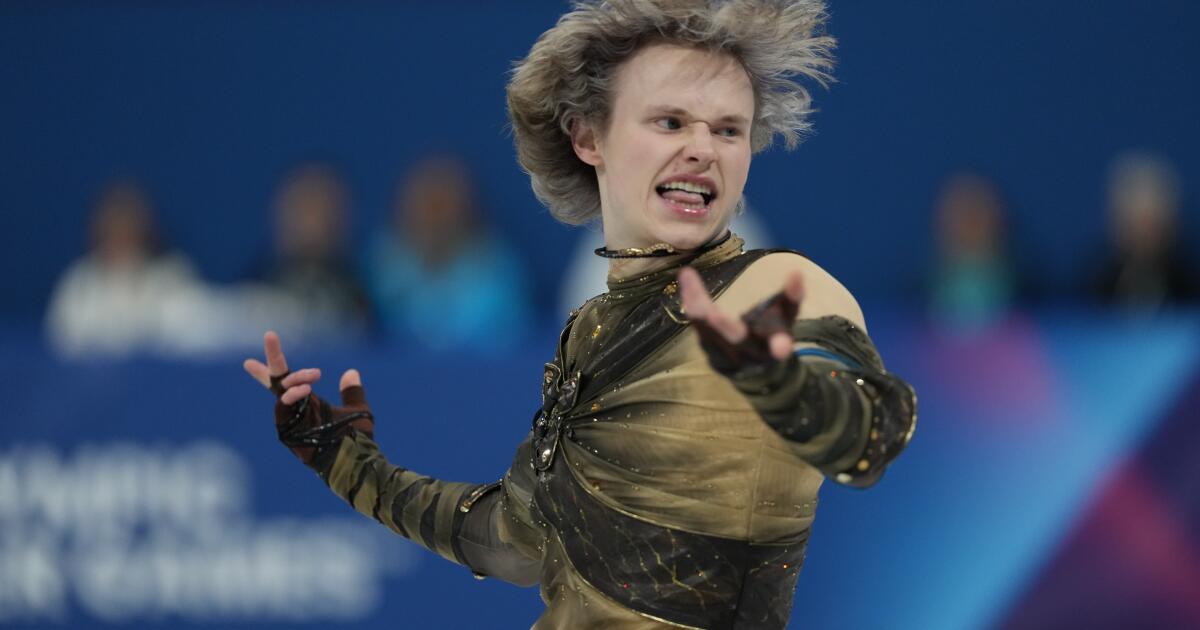
Ilia Malinin, who has worked with Arutyunyan part time since 2021, is the only person in the world to land a quad axel and is the overwhelming favorite for men’s gold at the Milan-Cortina Olympic Games.

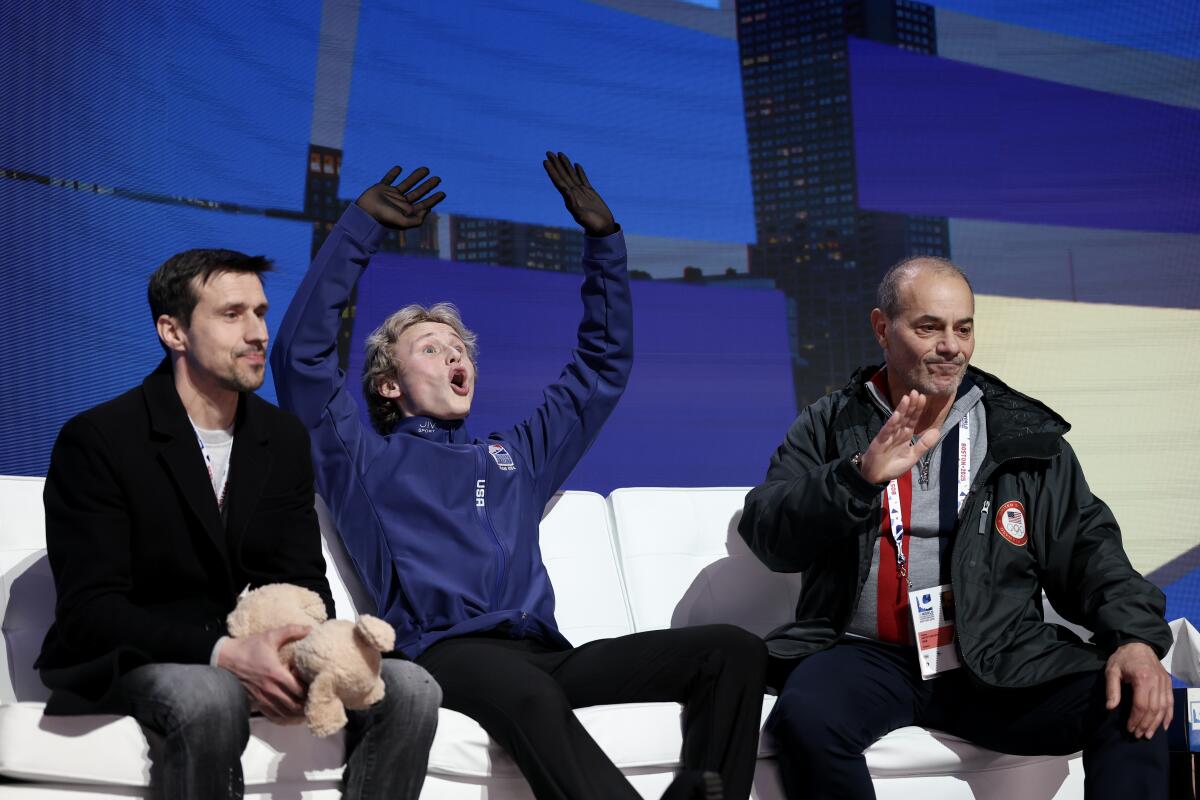
American Ilia Malinin celebrates with his coaches during the world skating championship in March 2025.

American Ilia Malinin celebrates with his coaches, including Rafael Arutyunyan to the right, during the world skating championship in March 2025.

(Maddie Meyer / Getty Images)

The walls in Arutyunyan’s office at Irvine’s Great Park Ice, where he is the head coach of the high performance team, are plastered with photos of stars including Chen, Michelle Kwan, Adam Rippon and Ashley Wagner. They each came to his door with dreams of perfecting their performances, making it to the Olympics or, in some cases, revolutionizing the sport. They scribbled messages over their pictures saying: “I couldn’t have done it without you.”

“Rafael is more like the dream maker,” said Rippon, the 2016 U.S. champion and 2018 Olympic team bronze medalist. “… Rafael is able to take each of his students’ individual goals on a case-by-case basis, and he’s able to help the athletes go after whatever that goal is they’re trying to achieve.”

Malinin came with a lofty goal. Even his father Roman Skornikov — an Olympian for Uzbekistan who coaches his son with his wife, Tatiana Malinina — thought the idea of doing four-and-a-half revolutions in one jump was crazy.

Arytyunyan assured him Malinin could do the quad axel.

The coach of nearly 50 years just looked at the 5-foot-9 Malinin and could tell. It was his slender body type, natural athleticism and strong technique that made Arutyunyan know the jump many thought was impossible could be done. They discussed small technical tweaks to Malinin’s entry. A short two to three months later, Malinin, who trains primarily with his parents in his native Virginia, sent a video of him landing the quad axel in practice.

“The way he explains is really good. And he explains in like, metaphors and analogies that you’re surprised to hear,” said Malinin, who debuted the quad axel in 2022 when he was 17. “They work really well because it helps you get a different perspective on a technique or how he explains.”

Arutyunyan instructed Malinin to think of himself as a slingshot while approaching his jumps. Skaters know to gain power from deep edges that carve circles into the ice, but Artutyunyan describes it like a person riding a motorcycle: The rider tilts side to side just like a skater’s blade glides over the ice. Over time as he gets more familiar with a skater, Arutyunyan communicates through hand signals to show how their blades are interacting with the ice. Learning to manipulate the blade with Arutyunyan made Rippon feel as if he truly learned how to skate.

“He is a genius,” said Mariah Bell, a 2022 Olympian and U.S. champion.

Nathen Chen celebrates with his coach Rafael Arutyunyan.

Nathen Chen celebrates with coach Rafael Arutyunyan after competingin the 2020 U.S. Figure Skating Championships Greensboro, N.C.

(Matthew Stockman / Getty Images)

With the exception of Chen, many of Arutyunyan’s students came to him later in their careers. It takes a special eye and tenacity for a coach to rewire decades of bad habits, Bell said.

Arutyunyan loves it.

“I am emergency room for skaters,” he said. “Many people comes to me as emergency and I start to fix it.”

Arutyunyan is equipped to solve the most dire skating situations because after nearly 50 years as a coach, he’s seen it all already. Arutyunyan, who began coaching in his native Armenia, was first trained in the Soviet style that relied on biomechanics and physiology to unlock efficient jumping techniques. European and American teachings focused more on compulsory figures, the basic patterns skaters would trace across the ice that give the sport its name.

Arutyunyan, who came to the United States in 2000 from Russia, blended both into a signature style that has top skaters traveling from all corners of the globe seeking his help.

“Why I think he’s one of the best coaches in the world,” Rippon said, “is that he’s never not learning.”

After a promising juniors career in which he was named junior national champion in 2015 and competed at the 2020 world junior championships, Andrew Torgashev knew he had competitive ability and presentation. But wanting to step up his senior career, Torgashev, 24, knew he needed to tame his wild technique. Performing his programs felt like “going to the casino,” Torgashev said.

“Red or black,” Torgashev said with a smile, “who knows what’s going to happen?”

Since relocating to California from Colorado in 2019, Torgashev, a Florida native whose parents were both elite international figure skaters, reworked every aspect of his skating with Arutyunyan. He was always skating on his toes when he should have been on his heels. They changed his three-turn — one of the first things skaters learn when skating on one foot — to find more power. They tinkered with his crossovers and his camel spin.

It took years. Much of it was disheartening.

“I felt like, ‘what’s the point of this? I’m losing jumps, he’s ruining me,’” Torgashev said. “But he always has a method to his madness.”

The method finally yielded results after two years. Injuries kept Torgashev out of competition for two seasons. But he finished second at the 2023 Eastern Sectional Championships and ahead of the 2023 U.S. championships, he was performing his programs more consistently than ever in practice.

After finishing on the podium at U.S. championships in three of the last four years, including two consecutive silver medals, Torgashev will make his Olympic debut in Milan.

“He’s forced me to be very resilient and independent and trust myself, trust what I’ve learned from him, and try to take that with me to competition,” Torgashev said. “I think it’s the best move I made in my life.”

Arutyunyan’s ability to take established, struggling skaters and put them into the podium conversation is how he believes he first started getting respect in the United States. When he emigrated from Russia, he was searching simply for freedom, he said.

He never thought it would turn into a hall of fame career.

Arutyunyan was inducted into the U.S. Figure Skating Hall of Fame in January at the U.S. Championships. At the induction ceremony in St. Louis, Arutyunyan waved toward a packed crowd and bowed his head. He looked forward to the ceremony because it was a chance to see his students again. What thrilled him most was getting to rub elbows with other Hall of Famers such as Brian Boitano, Dorothy Hamill and Scott Hamilton. The Olympic and world champions were Arutyunyan’s idols, he said giddily.

After 50 years of helping skaters achieve their dreams, the man who was always behind the scenes got to live his.

Source link

Winter Olympics: Ilia Malinin, U.S. win gold in team figure skating

Believe in the Quad God.

Ilia Malinin’s clutch free skate that scored 200.03 points gave the United States its second consecutive team figure skating gold medal Sunday at the Milan-Cortina Olympic Games.

After Amber Glenn fought through a shaky free program that finished third and lost the United States its two-point lead, Malinin stepped up as only he could. He executed five quad jumps and won by nearly six points, even if he did not perform his signature quad axel. He even put his hand down after a jump, but the mistake only seemed to fuel him as he finished with a flourish, changing the back-half of his program to earn back extra points.

His U.S. teammates, cheering from the sideline box rose to their feet and pumped their fists after each of Malinin’s jumping passes. When he landed his back flip, skating flawlessly through one foot, the packed crowd at Milano Ice Skating Arena roared.

While Japan’s Shun Sato scored a season’s best to finish the competition, he could not match the technical prowess of Malinin, who is also the favorite to win individual gold this week.

In front of a raucous home crowd, Italy held off Georgia for the bronze medal behind a dazzling free skate from Matteo Rizzo, who dropped to his knees on the ice and cried after his performance had fans chanting “Italia!” before he even finished. He cried into the Italian flag in the kiss-and-cry after his season’s best 179.62 points.

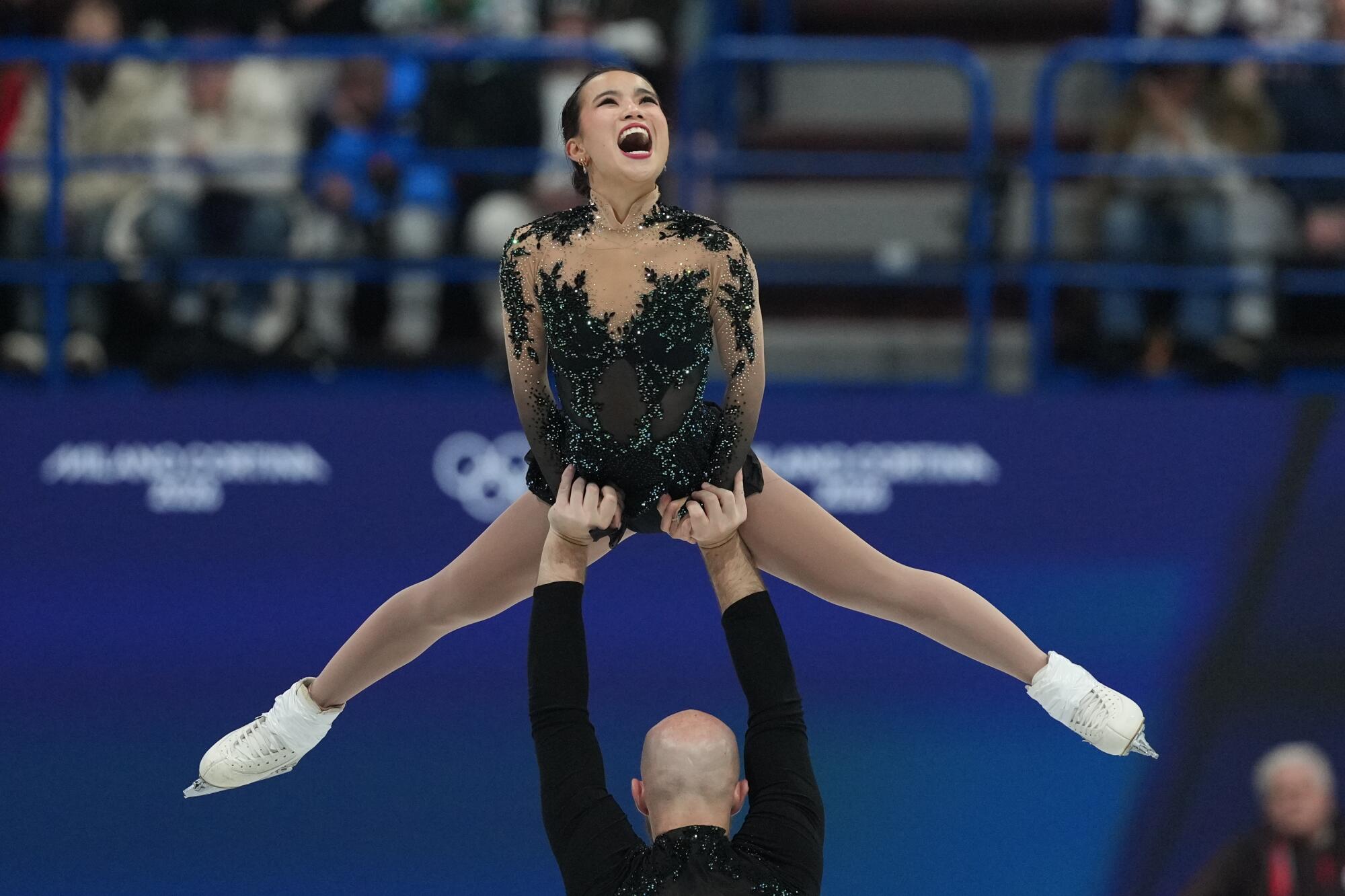
With the first figure skating medal of the Milan-Cortina Games on the line, every skater fought for every fraction of a point. U.S. pairs skater Ellie Kam went deep into a one-legged squat to hold on to the first throw jump. The United States led by five points entering the final day, but still had no room for error as Japan finished first in qualifying in all of Sunday’s disciplines. With the dominance of Japan’s Riku Miura and Ryuichi Kihara in pairs, Kam’s partner Danny O’Shea knew the strategy for the U.S. pair was to simply try to stay as close as possible.

Ellie Kam and Danny O'Shea perform in pairs figure skating during the team competition at the Milan-Cortina Games.

Ellie Kam and Danny O’Shea perform in pairs figure skating during the team competition at the Milan-Cortina Games on Sunday.

(Stephanie Scarbrough / Associated Press)

Kam fought for the landing on a throw loop so hard that she could feel her leg cramping.

“I was like, ‘I’m not going down,’” Kam said, “I got this. We got this.”

They looked at each other before their next element and said “calm.” Their message cut through the energized crowd that cheered louder and louder with each jump. At the end, Kam’s and O’Shea’s celebratory screams simply joined the crowd’s roar. As they saluted the crowd, O’Shea pointed toward Kam to acknowledge her effort.

The pair’s fourth-place finish in the free program was a one-point improvement from their qualifying spot, earning a slim, but vital cushion entering the men’s and women’s free skates.

Instead of sending world champion Alysa Liu back for the free skate after she performed the short program, the U.S. selected the three-time national champion Glenn. The 26-year-old was making her Olympic debut.

On the Olympic stage for the first time, Glenn has tried to embrace the opportunity while treating the competition as if it were any other one. But the larger stage has created additional stress for Glenn after she was asked in a news conference about President Trump’s approach to the LGBTQ+ community in recent years and how it’s affected her personally.

U.S. figure skater Amber Glenn competes during the team competition on Sunday at the Milan-Cortina Games.

U.S. figure skater Amber Glenn competes during the team competition on Sunday at the Milan-Cortina Games.

(Ashley Landis / Associated Press)

Glenn, who identifies as bisexual and pansexual, encouraged people in the queer community to “stay strong in these hard times” and recognized that it wasn’t the first time the community had to unite to “fight for our human rights.” Glenn then received threats on social media after the news conference and posted on Instagram that she would be taking a break from social platforms to focus on the competition.

But it wasn’t the social media hate that rattled Glenn, she insisted. She was simply tired, sore and disoriented from the unfamiliar Olympic team competition format.

All of Glenn’s other competitors did the short program portion of the competition on Friday. She came in with several good days of training at the venue, but did not get the same kind of opportunity to get used to the stage. Glenn fought through a shaky triple axel to open her program and stepped out of a triple flip that prevented her from completing a planned combination for her second jumping pass.

Waiting in the kiss-and-cry, Glenn bowed her head and stared at the ground. She struggled to muster even a fake smile.

“I’m grateful that the team is so supportive.” said Glenn, who finished behind Japan’s Kaori Sakamoto and Italy’s Lara Naki Gutmann. “But I do feel guilty that I could be the reason that we don’t win the gold, and I don’t know how I will ever apologize for that.”

Glenn clasped her hands in her lap waiting for Sato’s score after the Japanese skater performed a clean program that had his teammates in tears. But his technical score was about five points less than Malinin’s. Glenn was the first skater to hug Malinin in the United States’ team celebration, lifting him off the ground as he extended arms out wide.

Source link

Americans poised to win their first Winter Olympics medal

Welcome to your daily review and preview of this year’s Milan-Cortina Olympics. My name is John Cherwa and I’m your tour director for the Games wondering when the United States will get off the schneid and win a medal. Educated guess alert: How about today? Can you say team figure skating?

Saturday was the first day that medals were awarded at the Milan-Cortina Games and not unexpectedly, the host country is doing the best, sweeping all three medal types with a gold in the women’s 3,000 speed skating (Francesca Lollobrigida—before you ask, yes, a grand-niece to Gina) and silver and bronze in the men’s downhill (Giovanni Franzoni and Dominik Paris).

The U.S. squeezed out a 21st in speed skating with Annika Belshaw and 10th in the downhill courtesy of Kyle Negomir.

There is no doubt there is a home country advantage for a variety of reasons: familiarity with the competition venues, easier qualification (the home country gets in every event) and enthusiastic crowds urging them on.

Let’s look. 2022 Beijing, China had 15 medals, only nine in South Korea; 2018 PyeongChang, 17 in 2018, eight in Sochi; 2014 Sochi, Russia had 29 that year to 13 four years earlier; 2010 Vancouver, closer with a 26-24 edge for Canada; 2006 Turin, no edge as Italy had 11 compared to 13 in Salt Lake City; 2002 Salt Lake City, the U.S. had 34 medals in Utah and only 13 in 1998 in Nagano.

Italy had 17 medals in Beijing, meaning it has only 15 more medals to top 2022.

Elsewhere on Saturday:

— The U.S. women’s hockey team beat Finland, 5-0, to go 2-0 in pool play.

— The U.S. mixed curling team, after starting 2-0, lost both matches on Saturday to Britain (6-4) and South Korea (6-5).

— Sweden went 1-2 in the women’s 10K skiathlon as Jessie Diggins topped the U.S. team finishing eighth after a crash on the first lap. The U.S. has never won a medal in cross-country skiing and Diggins was a pre-race medal contender.

— Norway won the women’s normal hill ski jumping competition, with Annika Belshaw being the tops at 21st for the U.S.

— Japan won gold and silver in the men’s snowboard Big Air competition. Ollie Martin of the U.S. was bounced off the stand by the last competitor and finished fourth.

— Despite a mediocre second-place performance by the “Quad God” Ilia Malinin, the U.S. holds the lead with one day to go in the team figure skating. Madison Chalk and Evan Bates of the U.S. won Saturday’s ice dance competition.

NBC GoldZone gets demoted

We have taken the unusual step to demote NBC’s GoldZone (on Peacock) to the SilverZone after a dreadful gaffe on Saturday. In the U.S.-South Korea mixed team curling match, the U.S. rallied with three points in the final frame to tie South Korea sending it to an extra frame. It was down to the last stone to be sent by South Korea with the match on the line. GoldZone, at this moment, cuts to commercial seconds before the final throw. When it came back from the break it went to a canned package on Malinin before picking up figure skating coverage. South Korea won on the last stone and the U.S. and NBC (now) SilverZone lost. Another big gaffe and they could drop to the BronzeZone. Presumably, NBC won’t repeat and pull a Heidi (from 1968) during today’s Super Bowl game.

In case you were wondering

During the Games, we’ll try and answer some questions you might have but didn’t know who to ask. Now you have a spot. We’ll generate a lot of the questions but if you have one, please send to my boss, newsletter editor Houston Mitchell at his email. He prefers to be called Mr. Mitchell as he’s really tired of people saying “Houston, we have a problem.”

In honor of today’s big events:

Why do they indicate winners when only about a fourth of the downhill field has gone down the course? Unlike sports in which the best people start last (like golf, figure skating etc.) the best skiers go first . So, if you are seeded higher than 15th, your chances of winning are small and highly unusual. The seeding is decided by FIS points and a random bib draw of the top 15 skiers. There are two reasons, the course gets choppier every time a skier goes down the hill so the earlier you run the better chance of fresh and fair snow you have. And, the later in the day it is, the less firm the snow is because of the sun.

— What’s the difference between ice dancing and pairs in figure skating? In short, pairs is way more athletic. In ice dance there are generally no jumps or throws as there are in other disciplines. Skaters also have to stay within two lengths of each other, unlike pairs. Ice dancing is also the most scandal plagued discipline because of the subjectivity of scoring since there are few jumps, throws or lifts. There have also been rumors of deals made between countries. There have been fixing scandals in 1998, 2002 and 2014.

Best Thing to Watch on TV today

It’s going to sound a lot like Saturday, but the big story today is the likely first medal for the United States in the team competition in figure skating. It starts with the pairs at 10:30 a.m. PST and ends with the men’s singles, starring Ilia Malinin , at 2:55 p.m. Anything short of a gold will be a disappointment. If you are up early enough, the other big event is the women’s downhill with the return of Lindsey Vonn, who tore her ACL last week. It starts at 2:30 a.m. PST with Vonn being the 13th woman down the hill. If you want to just hang all day, there are four medal events today in snowboard, starting around 4 a.m. PST and going until about 6 a.m. PST.

Sunday’s full Olympic TV and streaming schedule

Sunday’s live TV and streaming broadcasts for the Milan-Cortina Winter Olympics unless noted (subject to change). All events stream live on Peacock or NBCOlympics.com with a streaming or cable login. All times Pacific. 🏅 — medal event for live broadcasts.

MULTIPLE SPORTS
7:45 p.m. — “Primetime in Milan” (delay; after Super Bowl): Figure skating, skiing, luge, curling, cross-country skiing and more. | NBC

ALPINE SKIING
2:30 a.m. — 🏅Women’s downhill | USA
6:20 a.m. — Women’s downhill (re-air) | NBC

BIATHLON
5:05 a.m. — 🏅Mixed 4X6-kilometer relay | Peacock
5:45 a.m. — Mixed 4X6-kilometer relay (delay) | NBC

CROSS-COUNTRY SKIING
3:30 a.m. — 🏅Men’s skiathlon | USA
8:50 a.m. — Men’s skiathlon (re-air) | USA

CURLING
Mixed doubles (round robin)
1 a.m. — Norway vs. Czechia | Peacock
1 a.m. — South Korea vs. Estonia | Peacock
1:55 a.m. — Mixed doubles highlights | USA
5:30 a.m. — U.S. vs. Estonia | USA
5:35 a.m. — Canada vs. Sweden | Peacock
5:35 a.m. — Britain vs. Switzerland | Peacock
5:30 a.m. — Italy vs. Czechia | Peacock
10 a.m. — U.S. vs. Sweden | Peacock
10 a.m. — Canada vs. South Korea | Peacock
10 a.m. — Italy vs. Britain | Peacock
10 a.m. — Switzerland vs. Norway | Peacock
2 p.m. — U.S. vs. Estonia (re-air) | CNBC
4 p.m. — U.S. vs. Sweden (delay) | CNBC
6 p.m. — Italy vs. Britain (delay) | CNBC

FIGURE SKATING
🏅Team competition
10:30 a.m. — Pairs, free skate | USA
11:45 a.m. — Women’s free skate | USA
12:55 p.m. — Men’s free skate | USA
10:30 p.m. — Team competition, final day (re-air) | USA

HOCKEY
7:40 a.m. — France vs. Sweden | Peacock
12:10 a.m. — Czechia vs. Finland | Peacock
2 p.m. — Czechia vs. Finland (delay) | USA
5:30 p.m. — France vs. Sweden (delay) | USA

LUGE
4:30 a.m. — Men’s doubles, training | Peacock
8 a.m. — Men’s singles, Run 3 | USA
9:45 a.m. — 🏅Men’s singles, final run | USA
7:30 p.m. — Men’s singles, runs 3-4 (re-air) | USA

SKI JUMPING
10 a.m. — Men’s normal hill, training | Peacock

SNOWBOARDING
Midnight — Men’s and women’s parallel giant slalom, qualifying | USA
4 a.m. — 🏅Men’s and women’s parallel giant slalom, finals | Peacock
4:30 a.m. — 🏅Men’s and women’s parallel giant slalom, finals (in progress) | NBC
4:30 a.m. — Men’s big air, final (re-air) | USA
7:30 a.m. — Men’s and women’s parallel giant slalom, finals (re-air) | USA
10:30 a.m. — Women’s big air, qualifying | Peacock
3:30 p.m. — Women’s big air, qualifying (delay) | USA

SPEEDSKATING
7 a.m. — 🏅Men’s 5,000 meters | NBC

In case you missed it …

Check out the following Milan-Cortina Olympics dispatches from from the L.A. Times team on the ground Italy:

Doctors explain how Lindsey Vonn can ski at Olympics with a ruptured ACL

‘Quad God’ Ilia Malinin conserves energy in Olympic debut; U.S. still leads team skate

Hilary Knight and U.S. women’s hockey routs Finland, works to avoid norovirus

Italian police fire tear gas in clash with anti-ICE protesters near Olympics venue

Meet the ‘Quad God.’ Why Olympic star Ilia Malinin might revolutionize figure skating

NBC juggles emotions of Savannah Guthrie’s family tragedy, celebrating the Winter Olympics

Italians embrace unity — except with JD Vance — during Olympics opening ceremony

Review: Winter Olympics opening ceremony was a sleek Italian spectacle, as only they could deliver

Photos from the sweeping 2026 Milan-Cortina Olympics opening ceremony

NBC’s Mike Tirico ready to pull off an Olympic-sized feat at Super Bowl

Inside the Milan Olympic village: real beds, free tech and other athlete perks

From cathedrals to Dolomites: Milan-Cortina Olympics pose a massive logistical test

How climate change is threatening the future of the Winter Olympics

Alysa Liu 2.0: How retirement, perspective helped the U.S. star reach new heights

The power of teamwork: Inside U.S. figure skating’s new Olympic golden age

Hilary Knight’s hockey achievements go beyond gold medals and championships

Everything you need to know about ski mountaineering, the newest Olympic sport

Ten U.S. athletes to watch at the Milan-Cortina Winter Olympics

Until next time…

That concludes today’s Sports Report Olympic Edition newsletter. If you have any feedback, ideas for improvement or things you’d like to see, email newsletter editor Houston Mitchell at houston.mitchell@latimes.com. To get this newsletter in your inbox, click here and select The Sports Report.

Source link

Drivers advised to steer clear of the UK’s ‘scariest’ road in winter

The “scariest” road in Britain can be a nightmare to drive up in winter, as it has steep hairpin bends, minimal barriers, and it climbs from sea level to 2,053 feet very quickly

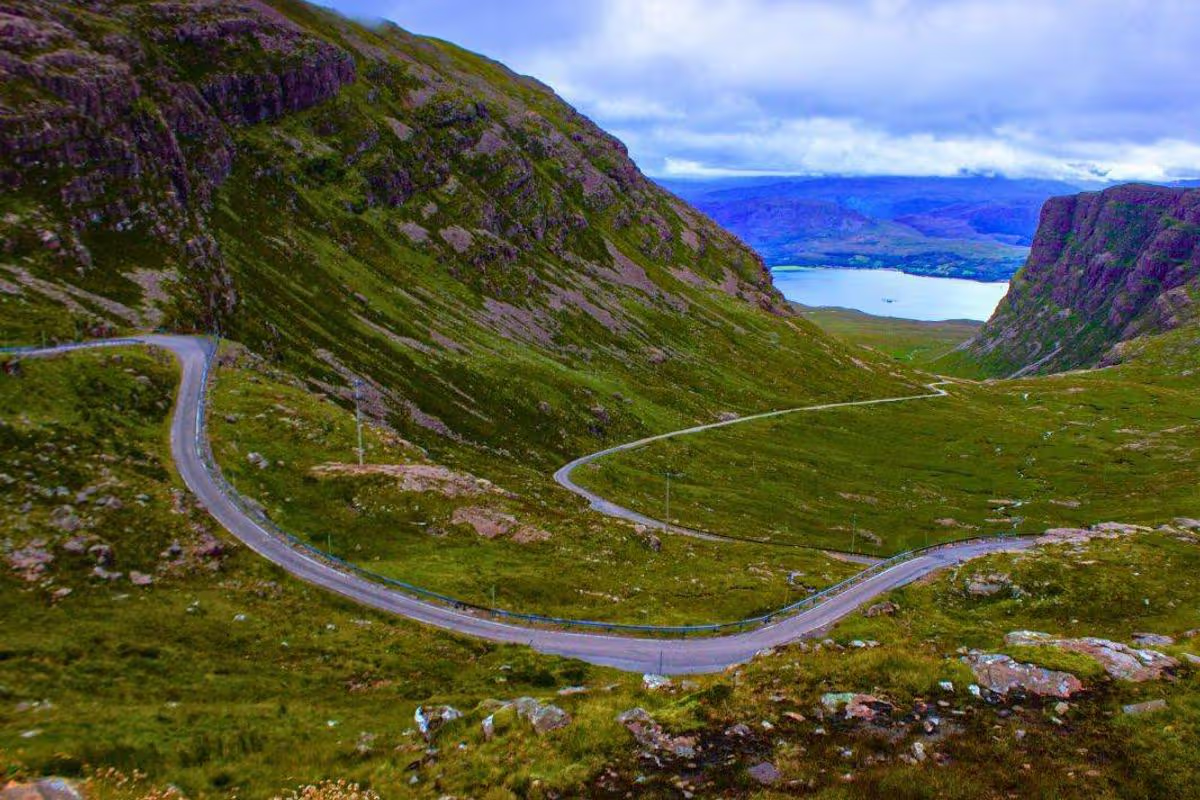
Britain boasts some of the world’s most spectacular countryside, but reaching its more isolated spots often means braving some genuinely hair-raising roads. The Bealach na Bà pass, nestled in the Applecross peninsula of the Scottish Highlands, is widely regarded as the most terrifying road in the entire country.

The route is renowned for its absolutely stunning vistas, where mountains, glens and sea converge in a single panorama, with mist drifting across the peaks. Yet motorists are cautioned against being distracted by the scenery – the narrow single-track road features minimal safety barriers and climbs from sea level to 2,053 feet over a remarkably short stretch.

The route includes several extremely steep hairpin turns demanding exceptionally careful driving, whilst Scotland’s notoriously wet weather only heightens the peril.

During the winter months, the road regularly closes due to snow and ice. Even when conditions are milder, it’s best left to experienced and confident motorists only.

As you initially approach the road after departing Applecross village, a prominent sign warns learner drivers, large vehicles and caravans against attempting the crossing, directing them towards a safer alternative route, reports the Express.

The road appears straightforward for the opening mile before beginning to wind as you ascend the mountainside. Sheep are frequently spotted grazing alongside certain stretches of the route.

Motorists are warned of a perilous drop just off the edge, and the wind, which reportedly becomes increasingly unsettling as you ascend, only adds to the trepidation.

The challenge of manoeuvring around tight bends, avoiding wildlife, and dealing with foggy conditions makes this journey a truly daunting one – made all the more so by the fact that turning back is virtually impossible due to the numerous twists in the road.

However, upon reaching the summit, the road levels out slightly, revealing a stunning vista of the Isle of Skye, one of the most breathtaking sights the Highlands have to offer.

On Tripadriver, Bealach na Ba Road generally receives positive reviews for its scenic beauty, but almost every review cautions that it’s a terrifying drive not suited for the faint-hearted.

One reviewer, Lesley, commented: “Scariest drive in Scotland but the most scenic. This is a wonderful drive, but one which will tax even experienced drivers.”

Another woman advised: “Road probably stunning in fine weather, but my advice is that you need to be able to see the top, and it’s not likely to be covered in cloud or mist, as this was one of the scariest drives I have ever done and it was not something I will be doing again anytime soon.”

A different user added: “Should be avoided if narrow passing places, hairpin bends and steep drops worry you. However, for those who stick with it, the view from the top is absolutely breathtaking.”

Source link

Lindsey Vonn ⁠crashes out; Breezy Johnson wins downhill at Winter Olympics | Winter Olympics News

Skiing icon Vonn cried in anguish and pain after her awful fall high up the course days after sustaining an ACL injury.

Lindsey Vonn’s Winter Olympic dream ended in screams of pain after she crashed out of the women’s downhill, failing in her audacious bid to medal in her favoured discipline at the Milan-Cortina Games.

Vonn’s United States (USA) teammate and world champion Breezy Johnson won the race to claim gold on Sunday.

Germany’s Emma Aicher took the silver medal, 0.04 of a second slower, and Italy’s home ‌favourite Sofia Goggia had to settle for bronze, according to ‌provisional results.

Johnson’s Olympic title, ‌on Cortina d’Ampezzo’s ⁠sunlit Olimpia delle Tofane piste, came exactly a year ‌after she won world championship gold at Saalbach, Austria.

American star Vonn had been trying to claim her fourth Olympic medal despite suffering a ruptured anterior cruciate ligament in her left knee just over a week ago, but her race ended early in Cortina d’Ampezzo.

She cried in anguish and pain after her awful fall high up the course, medical staff surrounding the distraught 41-year-old on the Olimpia delle Tofane piste where she has enjoyed much success in the past.

The 2010 Olympic downhill champion hit the firm snow face first after just 13 seconds of her descent. She then rolled down the slope with her skis still attached, which could likely cause further serious damage to her knee.

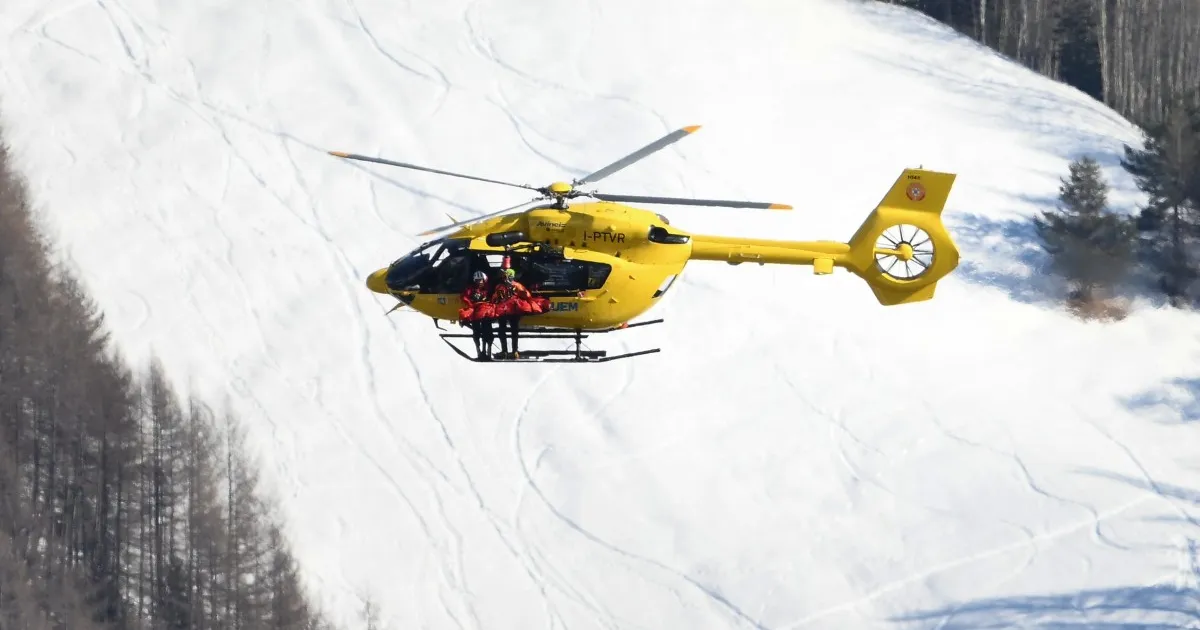
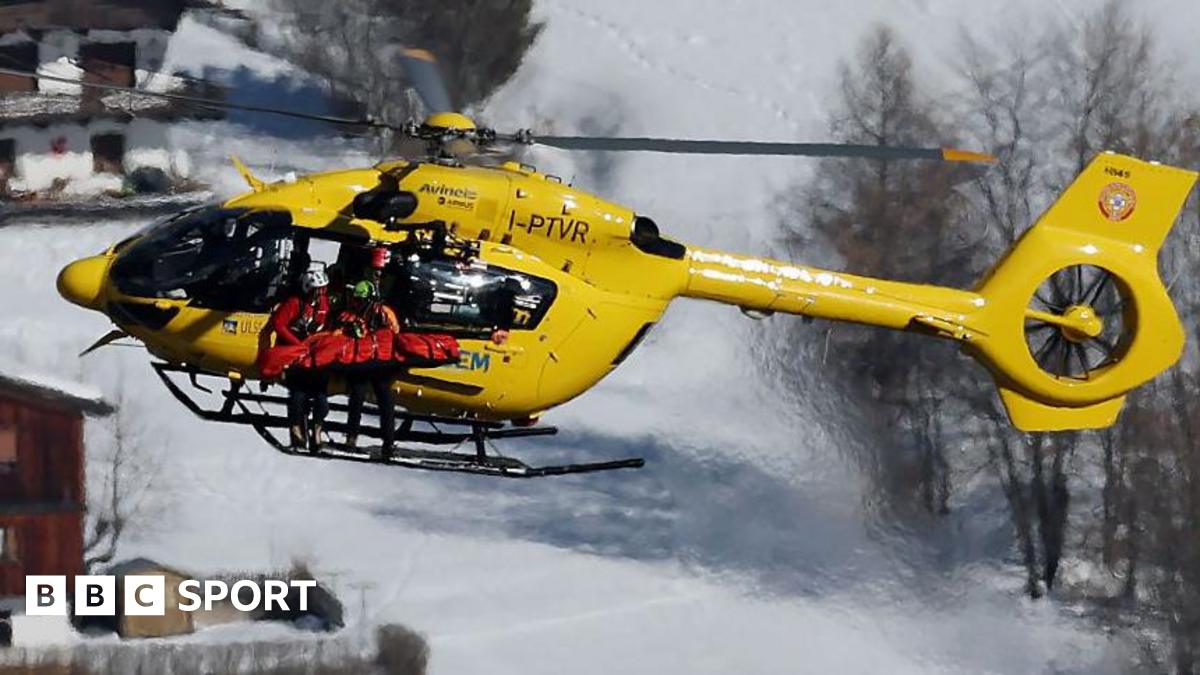
Vonn’s Olympic dream now lies in tatters after her brave effort to achieve the seemingly impossible, an attempt which ended with her being taken away in a helicopter as fans in the stands saluted her with loud applause.

One of world sport’s most recognisable faces and an alpine skiing icon, Vonn has insisted that she could not only compete but win against the world’s best women skiers, some of whom like Aicher are nearly half her age.

Vonn said ahead of the Games that she was planning on also competing in the team combined event on Tuesday and the super-G two days later.

But that now looks unlikely, a potential long lay-off perhaps heralding the end of her comeback to skiing in her early 40s.

Vonn retired in 2019 but returned to competition in November 2024 following surgery to partially replace her right knee to end persistent pain.

Vonn had finished on the podium in every previous World Cup downhill race this season, including two victories in St Moritz and Zauchensee, and claimed two more top-three finishes in the super-G.

But retirement looms for Vonn following a disastrous end to one of the biggest stories of the Winter Olympics.

Source link

Lindsey Vonn crashes out in women’s downhill final at Winter Olympics

Vonn knew the risk she was taking by competing on Sunday and had even hit back at a doctor on social media who claimed the injury was “not a fresh tear”.

She responded by saying her ACL is “100% torn” and had hoped to defy the odds by replicating the Olympic downhill gold medal she won in Vancouver in 2010.

Videos on social media had shown her training in the gym after she said she had no pain or swelling of the knee, while two smooth runs in the build-up to the race had given her, and her team and fans, confidence.

Four-time British Olympian Chemmy Alcott was emotional on BBC coverage and said she “never believed” it would end in this way.

“What we saw [is] that the top of the piste is really hard for a fit athlete. It is brutal, think about her family, her team and herself.

“We have to be realistic – the risk was really high, the risk she takes when she falls will double that. Her body will not be able to take that.”

Alcott added that the long delay would also mean the snow on the piste would begin to melt in the midday sun, and therefore it would be unlikely that anyone would beat Johnson’s time of one minute 36.10 seconds.

Source link

Alleged arsonists damage Italian rail cables as Winter Olympics start

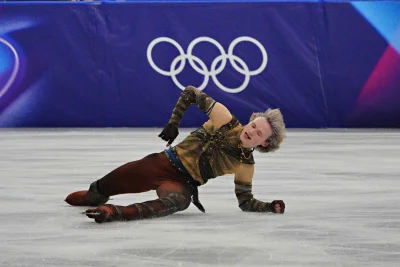
Ilia Malinin of United States slides across the ice during the Men’s Singles Figure Skating Team Event in Milan, Italy, after several fires damaged Italian rail lines on Saturday morning. Photo by Richard Ellis/UPI | License Photo

Feb. 7 (UPI) — Several fires damaged Italy’s northern rail line on the first day of the Winter Olympic Games in what investigators are calling acts of sabotage by arsonists.

Local authorities said three separate fires damaged railroad infrastructure and disrupted travel along the Bologna and Venice rail lines, causing travel delays of up to 2.5 hours on Saturday morning.

Rail service to Venice also was disrupted, and another fire was reported along tracks leading to the coastal city of Pesaro.

Italian railway officials ruled out any technical problems or accidents as the cause of the fires and damage and are treating them as deliberate acts of sabotage.

Investigators found an explosive device and severed cables, which officials for Italy’s Ministry of Transport described as “serious sabotage” that is similar to damage done to French rail lines during the Paris Summer Olympics in 2024.

“These actions of unprecedented seriousness do not in any way tarnish Italy’s image in the world, an image that the Games will make even more compelling and positive,” Matteo Salvini, deputy prime minister and transport minister, told the BBC.

No one has claimed responsibility for the damage that briefly stopped rail service on Bologna’s high-speed line, which was running again by the afternoon.

The rail line is among several that enable spectators to visit various events that are held in an area spanning hundreds of miles in northern Italy’s Alps and Dolomite mountains.

Transportation and anti-terrorism law enforcement teams also are investigating the matter.

Source link

Jeers target US, Israeli delegations during Winter Olympics opening ceremony in Milan – Middle East Monitor

The opening ceremony of the Milano Cortina 2026 Winter Olympics on Friday was marked by audible boos from the crowd as delegations from the US and Israel entered the San Siro stadium, Anadolu reports.

US Vice President JD Vance and Secretary of State Marco Rubio led the American delegation.

As Vance appeared on the stadium’s big screen, waving the US flag, the crowd responded with jeers, according to live coverage of the event.

“There is the Vice President JD Vance and his wife Usha. Oops — those are a lot of boos for him,” an announcer was heard saying during the broadcast.

The reaction followed days of tension surrounding the participation of US Immigration and Customs Enforcement (ICE) agents in Olympic security.

The Department of Homeland Security confirmed the presence of Homeland Security Investigations personnel in Milan, prompting widespread protests and opposition from Italian lawmakers and citizens.

READ: Israel’s Netanyahu again dodges responsibility for Oct. 7 failures, blames army, past governments

“They’re not welcome in Milan,” said Milan Mayor Giuseppe Sala in a radio interview, calling ICE a “militia that kills.”

Thousands gathered in Piazza 25 Aprile last weekend to demonstrate against the agents’ presence and raise concerns about civil rights violations.

International Olympic Committee President Kirsty Coventry responded to concerns ahead of the ceremony, saying: “I hope that the opening ceremony is seen by everyone as an opportunity to be respectful of each other.”

The Israeli delegation, which included nine Olympians and one Paralympian, also faced a “smattering of boos” as they entered the stadium, though the crowd noise was largely drowned out by music.

Additional protests were reported in Cortina d’Ampezzo and Predazzo, where simultaneous parades were held.

Security remains a top concern for several delegations, with increased attention to political sensitivities throughout the Games.

More than 800 athletes have been killed in Gaza since the start of Israel’s offensive on Oct. 7, 2023, as the sports community continues to suffer under bombardment, famine, and the collapse of infrastructure, according to Palestinian officials.

READ: US lawmaker calls for halt to weapons transfers to Israel amid Gaza violence

Source link

Winter Olympics: U.S. women’s hockey dominates vs. Finland

The U.S. women’s hockey team came into the Milan-Cortina Winter Games ranked No. 1 in the world. And two games into group play, it’s shown that ranking might be something of an understatement.

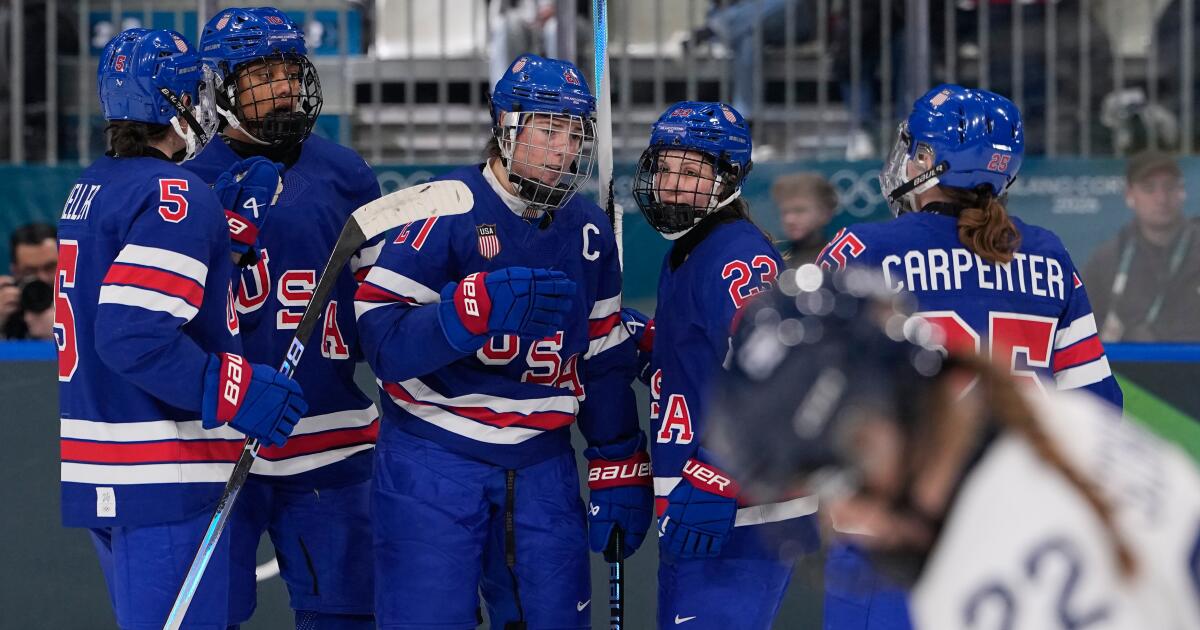
With Saturday’s 5-0 victory over No. 3 Finland, the unbeaten Americans have outscored their two opponents 10-1 and outshot them 91-25. The goals Saturday came from Alex Carpenter, Taylor Heise, Megan Keller, Hilary Knight and Abbey Murphy. Keller and Laila Edwards each had two assists.

In goal, Aerin Frankel faced just 11 shots in posting the first shutout of the Olympic tournament.

Just as in its opening win over No. 4 Czechia, the U.S. eased its way into the game before going ahead to stay late in the first period on a power-play goal from Carpenter. The score came seven seconds after Finland’s Susanna Tapani was sent off for hooking.

The Americans doubled the advantage 2½ minutes into the second period at the end of a beautiful passing sequence that saw Britta Curl feed Murphy, whose cross-crease pass found Heise on the doorstep for the easy goal.

Sixty-six seconds later Keller’s unassisted goal made it 3-0 and the rout was on.

Next came a power-play goal from Knight, her 14th in Olympic play, equaling Natalie Darwitz and Katie King for the most in team history. Murphy closed out the scoring, banging in a rebound at the right post with less than five minutes to play.

With 10 goals, the U.S. is tied with Sweden for most in the tournament while the Americans’ goal differential of plus-nine is the best. It was the 11th straight Olympic win for the U.S. over Finland, the bronze medalist four years ago.

Source link

Winter Olympics 2026: Bruce Mouat and Jen Dodds beat United States to clinch semi-final

Elsewhere, Kirsty Muir enjoyed a confident start to her Olympic campaign, placing third in freeski slopestyle qualifying.

Muir, one of Team GB’s best medal hopes, scored a best of 64.98 from her two runs in Livigno.

That put the 21-year-old behind Switzerland’s Mathilde Gremaud and China’s Eileen Gu – the gold and silver medallists from Beijing 2022 respectively – in the standings.

“I am feeling really relieved. I was really nervous this morning. Putting a good run down in the qualifications was important for me because I wanted to be in that final,” Muir told BBC Sport.

“In the qualifying, it is sometimes more nerve-wracking, whereas, in the final you go all out and you either get it or you don’t. That’s what I am going to be ready for.”

Gu, a triple medallist from four years ago, is one of the biggest global stars at these Games but avoided an early shock after crashing off the first rail of her opening run.

After almost a year out with an anterior cruciate ligament (ACL) injury, Muir has won three World Cup golds in the past year, including two in slopestyle.

The Olympic final takes place on Monday from 11:30 GMT.

Chris McCormick couldn’t match Muir in reaching the men’s slopestyle final, missing out on a place in the top 12 with a best score of 33.90.

The 27-year-old, who learned to ski on Bearsden dry slope, came into his debut Olympics nursing an ankle injury.

“To even make it to the start gate is a small victory,” McCormick – who will also compete in big air – told BBC Sport.

“I really wanted to show my best skiing. But I’m super happy to be here, especially when I think of where I’ve come from, from the dry slope to here, that’s a big achievement. And I’ve had a lot of fun, despite all the pain I’ve been skiing through.”

In Tesero, Anna Pryce made history by becoming the first British athlete to compete in the women’s 10km + 10km skiathlon at an Olympic Games.

Pryce, who switched allegiance from Canada last year, came 42nd – finishing seven minutes and 24 seconds behind gold-medal winner Frida Karlsson of Sweden.

Pryce said she was so excited to make her Olympic debut that she was “giggling at the start”.

“Maybe I should have felt more nervous, I don’t know. But I feel pretty relaxed and maybe that translated into my skiing – which was great,” she said.

Source link

Prep talk: Servite sprinters ready for winter track championships

The track and field season begins in less than a month, and for an early look at who’s gotten faster should happen on Saturday when Arcadia High is the site for the California winter championships.

The meet is run by Rich Gonzalez, who also handles the Arcadia Invitational.

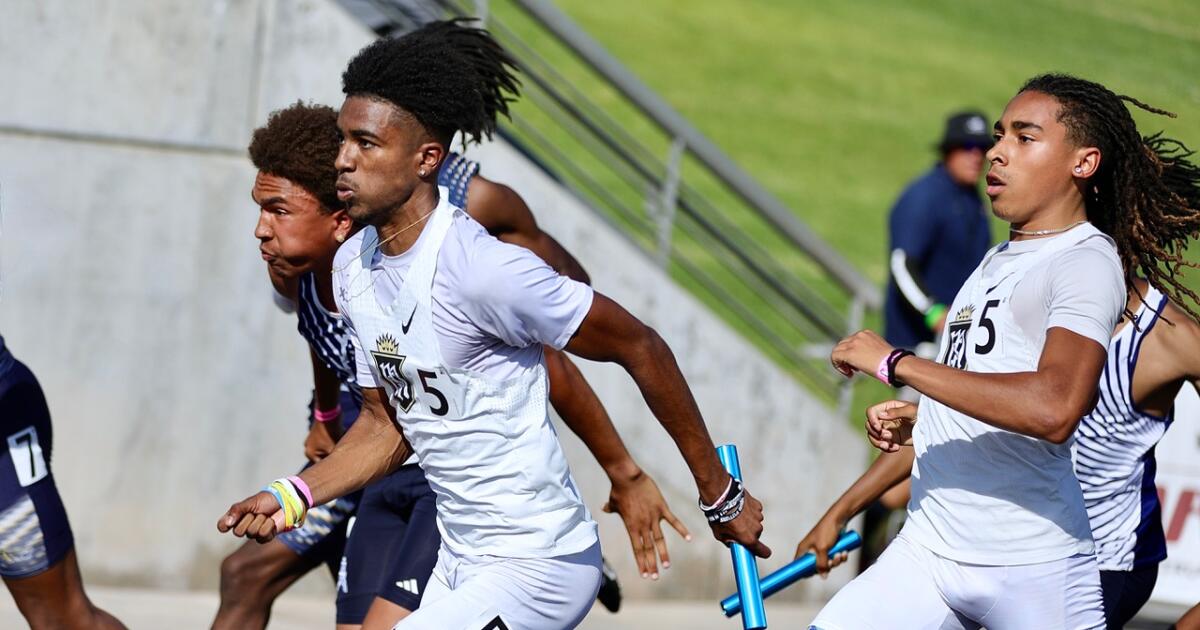
Servite is sending most of its top sprinters to the event, which includes running in the 60-, 150- and 300-meter races. Twins Jace and Jorden Wells have already shown they will be faster in their sophomore seasons. Ditto for Jaelen Hunter.

Another athlete earning rave reviews in the offseason has been Loyola’s Ejam Yohannes in the 200 and 400.

This is a daily look at the positive happenings in high school sports. To submit any news, please email eric.sondheimer@latimes.com.

Source link

I’m a travel expert, this is the 10 best cheap winter sun destinations

WHEN winter drags on and the heating bill lands, most of us start asking the same question…

Where’s warm, easy to get to, and won’t drain my bank account?

Holiday Expert Rob Brooks has done the calculations to find the top winter sun break for BritsCredit: rob brooks

Instead of guessing, I decided to settle it properly.

In my day job at one of the UK’s top travel companies, I built an algorithm to rank the best winter sun destinations for 2026, using the things that actually matter to holidaymakers – price, winter temperatures, flight time, hotel value, popularity and availability.

I made an eqaution and it gave each spot a score out of 100.

Every major winter sun destination went in: the Canaries, Turkey, Egypt, the Caribbean, long-haul and short-haul.

Some familiar favourites scored brilliantly, others just missed out. Here’s the list.

10. Madeira (Score: 41)

A brilliant destination and one of my personal favourites, Madeira scores well for scenery, food and short flight times, but loses points on winter warmth.

Temperatures are pleasant rather than hot with average highs of 20C, which kept it out of the top half of the list.

That said, for travellers who want winter sun somewhere that’s calmer and a bit more of a hidden gem, it’s hard to beat.

I found February B&B breaks at hotels like Golden Residence in Funchal from around £345pp, which is very good value for a smart European city-break-style escape – just don’t go expecting summer heat.

9. Lanzarote (Score: 43)

Lanzarote is one of the most reliable winter sun destinations on the map, and that consistency is exactly why it scores well for availability and flight time.

Where it loses ground is popularity – demand stays high all winter, which naturally pushes prices up compared to less-busy rivals.

Even so, February room-only stays at hotels like THB Royal from £165pp show why it remains a firm favourite – warm with average highs of 22C, easy, affordable and no surprises.

The idyllic Caribbean island country of Barbados ranked within the top 10 – but where did it place?Credit: Getty
Madeira has a wild rugged landscape and a subtropical climateCredit: Getty
You can stay at Lanzarote’s palm tree-lined THB Royal hotel from just £165ppCredit: On The Beach

8. Barbados (Score: 45)

Barbados delivers near-perfect winter weather with average highs of 29C and postcard beaches, scoring top marks for temperature and overall experience.

What holds it back is cost. Longer flights and higher hotel prices mean it’s not a budget-friendly option for most families.

February room-only stays at beachfront hotels can reach £913pp, before food or extras – incredible value for a Caribbean escape, but not one for bargain hunters.

7. Fuerteventura (Score: 48)

Fuerteventura performs strongly for value and space. It’s warmer than mainland Europe with average highs of 22C, quieter than Tenerife, and offers excellent winter deals.

It drops a few points on temperature, as winter highs are slightly cooler than the top-ranked destinations, but it remains a strong all-rounder.

February breaks at resorts like Bakour Fuerteventura La Pared from £220pp just go to show the great value for a relaxed Canary Islands winter escape.

6. Marrakech (Score: 51)

Marrakech scores highly for price, flight time and culture. It’s one of the cheapest winter sun options available and offers something completely different to a beach resort.

Where it loses points is temperature consistency – winter days are warm with highs of 21C, but evenings cool quickly.

That said, all-inclusive February deals at hotels like Marrakech Ryads Parc & Spa from £203pp explain why it just misses the top five but still remains a smart-value winter break.

Morocco’s Marrakech has plenty of stunning souks and grand architecture to exploreCredit: Getty
Bakour Fuerteventura La Pared has plenty of sports courts, tennis and yoga classes availableCredit: On The Beach

5. Gran Canaria (Score: 54)

Gran Canaria is one of the most balanced destinations in the ranking.

It scores well across every category: dependable winter warmth with average highs of 21C, short flights, and a huge range of hotels competing on price.

It may not top any single metric, but it rarely lets anyone down.

February stays at hotels like Cala d’Or from around £200pp show why it’s such a safe and popular winter option.

4. Antalya, Turkey (Score: 57)

Antalya climbs the rankings thanks to exceptional value for money.

Winter temperatures remain comfortable with average highs of 19C, flights are short, and the quality of all-inclusive hotels for the price is hard to match anywhere else in Europe.

I found all-inclusive February breaks at five-star resorts like Side Moon Palace from £145pp – which is exactly why Antalya scores so high.

3. Hurghada, Egypt (Score: 62)

Hurghada stands out for reliable winter heat and strong hotel pricing.

With temperatures regularly reaching average highs of 25C and the mid-haul flight times still manageable, it offers a warmer alternative to Europe without the cost of long-haul.

February all-inclusive stays at resorts like Sunny Days Mirette Aqua Park from £315pp make it warmer than Turkey, but still cheaper than most Caribbean options.

You could stay at Gran Canaria’s luxury-feel Cala d’Or hotel for a week from just £200ppCredit: On The Beach
Sunny Days Mirette Aqua Park in Hurghada, Egypt has plenty of ways to cool off from the heatCredit: Sunny Days

2. Cape Verde (Score: 66)

Cape Verde is the highest-ranked long-haul destination and well deserving of its place at number two.

It scores highly for hot winter temperatures with average highs of 25C, lower popularity and decent value, sitting neatly between short-haul Europe and the Caribbean.

February breaks at hotels like Dunas De Sal Design Hotel from £443pp highlight why it’s growing in popularity in recent years though – proper heat, big beaches and prices that still feel VERY reasonable.

1. Sharm El Sheikh, Egypt (Score: 72)

Sharm El Sheikh comes out comfortably on top.

It scores high across every part of the formula: excellent winter heat with highs of 24C, strong hotel availability, competitive pricing and relatively short flight times.

February all-inclusive deals at resorts like Parrotel Aqua Park Resort from £223pp are exactly why Sharm dominates winter bookings.

Warm, easy and outstanding value – it’s the rare destination that gets everything right at once, and officially the best winter sun destination for your money in 2026.

Analysis based on On the Beach booking data and February 2026 package pricing.

Sharm El Sheikh comes out on top, with stays at the Parrotel Aqua Park Resort from £223ppCredit: On the Beach
Al Sahaba Mosque is a sight to behold in Sharm El SheikhCredit: Getty

Source link

Riad Tarabel Marrakech review: The perfect winter sun weekend city break in Morocco

After some late winter sun? This colourful Moroccan city should be top of your list to explore, with its magnificent palaces, stunning gardens and bustling souks

With its famous medina now a UNESCO World Heritage Site, a labyrinth of souks to explore and luxury riads to stay at, there’s never been a better time to head to Marrakech. Whether you’re looking for a spot of winter sun or want to soak up the culture later on in the year, you won’t be disappointed. We were surprised by how much was on offer – and in fact, your only problem is likely to be not having enough time to explore.

Where to stay in Marrakech

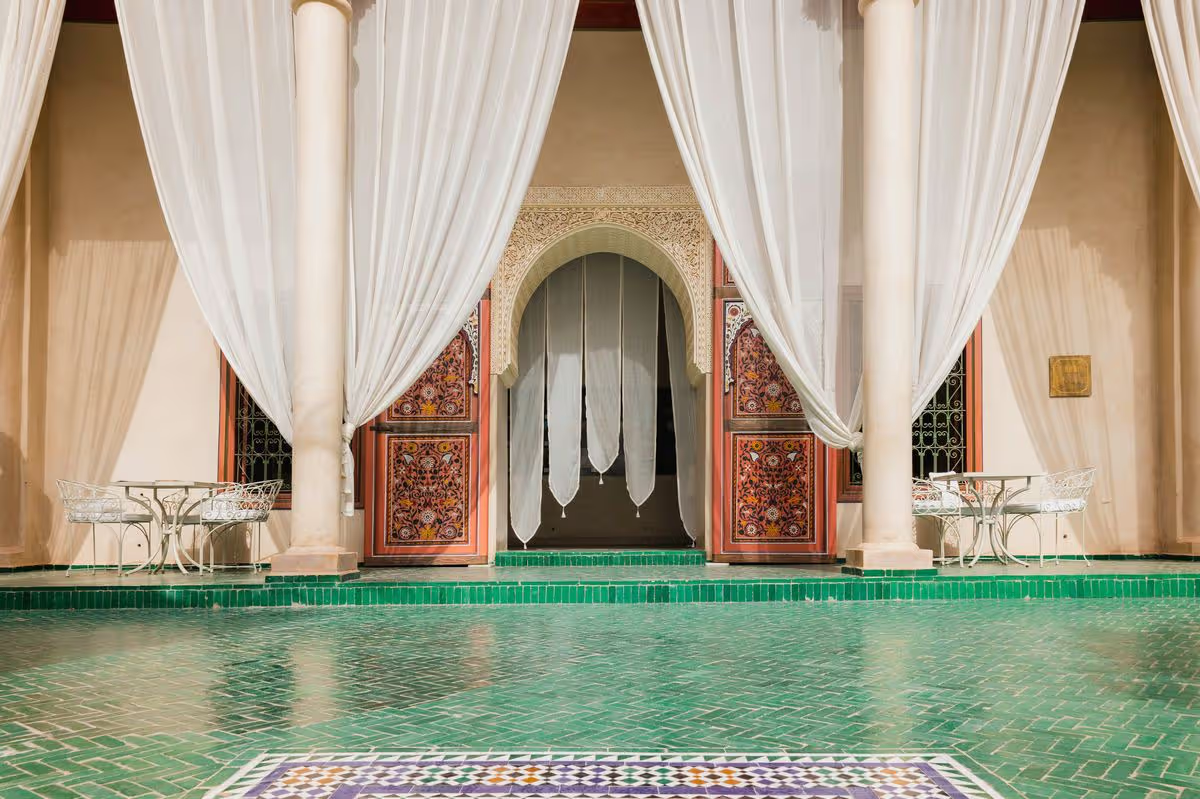
Hidden down a little alleyway, you’d never find Tarabel Marrakech unless you knew it was there, which makes it the perfect place to rest and relax after a long day of exploring. Upon arrival you step into a courtyard filled with orange trees and are welcomed with fresh mint tea, served with the most delicious biscuits. Looks can be deceiving – you may think the riad is small but there are three hid- den courtyards and cosy alcoves to unwind in. One of our favourite features was the mirror which opened up to reveal the hammam and spa, where you can indulge in a much-deserved massage or facial.

The hotel is made up of just 10 individually designed rooms and suites, meaning peace and quiet is guaranteed. If you can pull yourself away from your room, take a dip in the outdoor pool or recline in the sun on one of several roof terraces.

While the hotel doesn’t have a restaurant, it does have a dedicated kitchen team who are on hand to ensure you get to sample the best Marrakech has to offer. We enjoyed a romantic candlelit dinner on one of the many terraces, which was the perfect start to our trip. Our three-course Moroccan meal was bursting with flavour, starting with a trio of salads and sweet meat samosas before tucking into a chicken tagine with a citrus infusion. To finish it was a heavenly molten chocolate cake accompanied by sliced orange with a dusting of cinnamon.

The kitchen is also open for lunch, but it was breakfast that stole the show – we still think about the fluffy pancakes with honey and fresh fruit juice served in the warmth of the morning sun on the roof terrace.

What to do in Marrakech

We’d never been to Marrakech before but had a long list of spots we wanted to visit – but with just two days to pack it all in, we had to be decisive. Just a five minute walk from the hotel and amongst the hustle and bustle of the medina is Le Jardin Secret, a small but stunning garden filled with plants from across the continent. Stop and spend a minute or two under the pergola that sits in the centre of the gardens.

If you love fashion then be sure to head to Le Jardin Majorelle and the Yves Saint Laurent Museum. The garden is an oasis of calm and will have you stopping to take photos at every turn. Make sure you book tickets online to avoid disappointment, and get an early slot to avoid crowds.

And if you love architecture then Bahia Palace is a must. You’ll be blown away by the stunning tile designs on the floors and walls along with the beautifully painted ceilings and wooden doors. Our favourite spot however was Dar El Bacha Museum, which is located just minutes from Tarabel. Set back from the street, you’ll be open mouthed as you step into the courtyard with its intricate tiled floors, handpainted ceiling and the garden full of pomegranate trees.

Stop for a drink at Bacha Coffee, which is hidden inside the museum (although be warned, you may be waiting a while for a seat).

And finally, you can’t spend time in Marrakech without heading to the souk. The little alleyways are lined with small shops selling everything from jewellery and leather goods to spices and rugs. It’s a visual feast and you can easily lose hours exploring.

Hidden hotspot

One of our favourite finds while exploring the city was Ice Mamman. Once you’re finished haggling in the souks or just tired from exploring, this ice cream parlour with a roof terrace has everything from sorbets, snacks and smoothies for you to enjoy. The winning flavour has to be the chocolate ice cream – absolutely delicious!

How much does it cost?

Rooms at Tarabel Marrakech cost around €350 per night including breakfast. Marrakech is served by direct flights with BA, easyJet, Jet2, Ryanair, TUI and WIZZ Air from various locations across the UK, and Aer Lingus and Ryanair from Ireland.

Source link

Winter Olympics opening ceremony review: A sleek Italian spectacle

The Olympics are back, wearing their warm Winter Games gear. Although there were will be a couple of weeks of sports competitions to come, none are possible without an opening ceremony, a combination of solemn official protocol with a fantastic representation of the host country’s culture and character, evoking the Olympic spirit itself. There are few opportunities to mount an entertainment of this scale — not even a Super Bowl halftime show can compare.

This year we are in Italy, for the bi-metropolitan Milan-Cortina games, held in the city’s San Siro Stadium and in the north where the mountains are. The ceremonies, too, were split geographically, with Olympic cauldrons in both cities, with the athletes’ parade further shared with Livigno and Predazzo, national delegations divided according to where their events would be held.

1

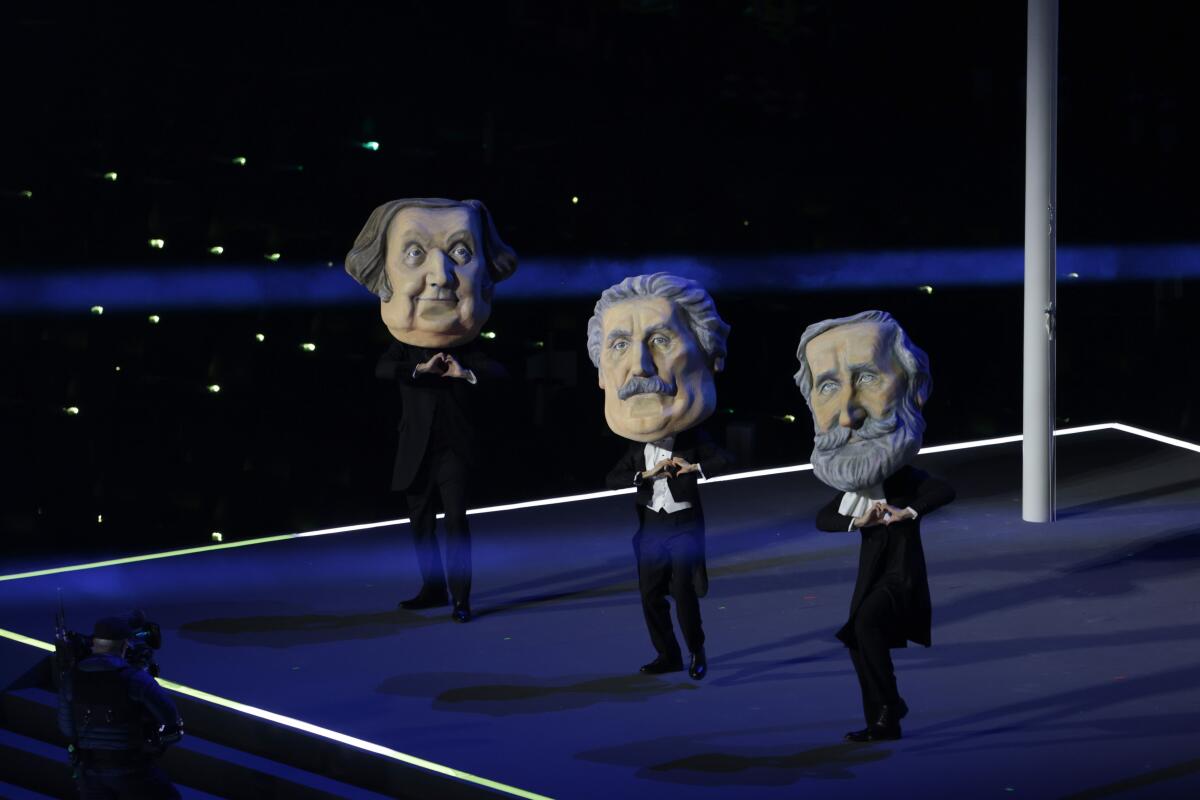
Three dancers in black wearing giant heads of older men.

2

Dancers in white and black leotards surround a conductor in the middle of a stage.

1. Human bobbleheads of Italian composers Rossini, left, Puccini and Verdi. (Robert Gauthier/Los Angeles Times) 2. Dancers on stage in San Siro Stadium. (Robert Gauthier/Los Angeles Times)

The main business took place in the arena. Directed by Marco Balich, who specializes in big shows, it was elegant, in a sleek, clean-lined Italian way, and over the top, also in an Italian way. Color played a great part, the program beginning in white (a balletic interpretation of Antonio Canova’s sculpture “Psyche Revived by Cupid’s Kiss”), moving to to black and white (a nod to Fellini’s “La Dolce Vita” and its paparazzi), and then to a riot of color, as giant floating tubes of paint sent streams of colored fabric stageward.) There were dancing human bobbleheads of opera composers Verdi, Puccini and Rossini, as if they were mascots for Team Rigoletto, Team Tosca and Team William Tell. There were dancing gladiators and moka pots, a phalanx of runway models dressed (in Armani) in green, white and red, to represent the Italian flag.

In white and shiny silver, with an ostrich feather boa and a reported $15 million worth of diamond jewelry, there was a statuesque, statue-still Mariah Carey, who is not Italian, but sang in Italian, the standard “Nel blu, dipinto di blu,” known here as “Volare,” which merged into her own “Nothing Is Impossible.” (She must by now be accounted a citizen of the world.) Why did I find this so moving? I am not someone who ordinarily cares anything about Carey, but she was marvelous in this context.

A woman in a white gown singing on a stage.

Mariah Carey performed the Italian tune “Volare,” before leading into “Nothing Is Impossible.”

(Robert Gauthier/Los Angeles Times)

The parade of nations is also a fashion show; for whatever reason, the cold weather gear is generally better looking than the togs of summer. (As usual, Ralph Lauren designed the American outfits — white puffy jacket with knit caps of a Scandinavian pattern.) As ever, the countries arrived alphabetically (apart from Greece, who always gets to march first; Italy, coming in last as the host country; France, in penultimate position as the host of the next Winter Games; and the U.S., third to last as the host of the games, in 2034, after that). It makes neighbors of Lebanon, Lichtenstein and Lithuania, and so on, equal in standing if not in size. (I have a special fondness for the small delegations from the less imposing nations.) There was an especially big hand for the Ukrainian team, dressed in their national colors.

The second half opened with a cartoon in which an animated Sabrina Impacciatore (of “The White Lotus” and, “The Paper,” which NBC happily did not cross-promote), traveled backward through previous Winter Games before coming to life to lead an energetic production number that traveled back to now. (She should get some sort of athletic medal for this performance.) The Chinese pianist Lang Lang accompanied Cecilia Bartoli singing the Olympic anthem, and the great Andrea Bocelli, flanked by strings, offered a thrilling reading of Puccini’s “Nessun Dorma.” Surrounded by dancers, the Italian rapper Ghali read an antiwar poem by Gianni Rodari.

A woman in a silver and gold leotard surrounded by dancers on a stage.

Sabrina Impacciatore leading a group of dancers during the ceremony.

(Robert Gauthier/Los Angeles Times)

The theme of the evening, and of evenings going forward, it is hoped, was “Armonia,” or harmony, not just between the city and the country (expressed symbolically through dance), but, as a series of speeches made clear, among everybody, everywhere.

“At a time when so much of the world is divided by conflict, your very presence demonstrates that another world is possible. One of unity, respect and harmony,” said Giovanni Malagò, president of the organizing committee, addressing the athletes. Kirsty Coventry, the first female president of the IOC, noted that while Olympic athletes are fierce competitors, they “also respect, support and inspire one another. They remind us that we are all connected, that our strength comes from how we treat each other, and that the best of humanity is found in courage, compassion and kindness.”

And then there was Charlize Theron, of all people, quoting her countryman Nelson Mandela: “Peace is not just the absence of conflict; peace is the creation of an environment where all can flourish, regardless of race, color, creed, religion, gender, class, caste or any other social markers of difference,” This is, of course, exactly what some portion of this nation would call “woke,” and though such divisions are not the exclusive province of the United States, it was easy enough to read this as a message delivered to the White House.

A woman in a black gown stands on a stage with a microphone.

Charlize Theron quoted her fellow countryman Nelson Mandela in her speech.

(Robert Gauthier/Los Angeles Times)

Finally, two Olympic torches were lit two Olympic cauldrons, in Milan and Cortina, their flames at the center of shape-shifting spheres. Almost inevitably, the ceremonies flirted with, or embraced, corniness at times, but even (or especially) when it was corny, it was terrifically affecting. I ran through half a dozen handkerchiefs over the course of the proceedings. Admittedly, I might be unusually susceptible to these things, but I doubt I’m the only one.

Let the games begin.

Source link

Milan-Cortina Winter Olympics officially start with opening ceremony

Feb. 6 (UPI) — A handful of events began earlier in the week — curling, figure skating and ice hockey — but the 2026 Milan Cortina Winter Olympics officially got underway Friday afternoon in Italy.

The opening ceremony started at 2 p.m. EST at Milan’s historic, 100-year-old San Siro Stadium in Milan, a nearly 4-hour celebration of the Games that is expected to include a range of performances, the parade of nations and, finally, the lighting of the Olympic cauldron.

The Milano Cortina Olympics will be the first to include two venues in the opening ceremony and the first to light two caldrons for the Games: one in Milan at the Arco della Pace and another at Piazza Dibona in central Cortina d’Ampezzo.

Organizers have said that lighting two cauldrons is meant to represent harmony between the two cities of Milan and Cortina — which are jointly hosting the Games — as well as other areas that the Games are being held.

In addition to dance, light and special effects shows at San Siro, performances by Maria Carey, Andrea Bocelli, The White Lotus and The Paper star Sabrina Impacciatore, Italian actor Pierfrancisco Favino and Italian singer Laura Pausini have been announced.

Events at this year’s Winter Games have been spread among several towns in northern Italy, in addition to the two towns, which the Olympic ceremony director, Maria Laura Iascone, told NBC News is among the efforts of Italy chart “a new course” and innovate “a new spirit” of the opening ceremonies.

The Big Show

The majority of the intricate, ornate opening ceremony is being held at San Siro Stadium, which opened in 1926, has hosted several World Cup-linked events and is home to two Italian soccer clubs.

The Olympics is set to be its final event before the owners of those two teams demolish the stadium to build a newer, more modern facility for the two clubs.

In addition to San Siro, the cauldron will be lit elsewhere in Milan, and athlete parades are set to be held at other venues in the city as organizers have sought to show off Milan, Cortina and other parts of the country. Overall, there are 13 venues hosting Olympic competition this year.

The two cauldrons — at Milan’s Arco della Pace and Corina’s Piazza Dibona — are in addition to opening ceremony events in Cortina, Livigno and Predazzo.

On top of splitting up the ceremonies, there are multiple Olympic villages that athletes are staying in, a decisions made so that they will not need to travel far between lodging, sporting venues and the opening and closing ceremonies.

Events get underway

The ceremony opened with the Italian Olympic Committee spotlighting the southern European country’s position as a “Winter wonderland,” which included video presentations of mountains and towns that gave way to dance routines focused on community, love and harmony, according to organizers.

The glittery winter look moved toward an ode to Italian operat with actors dressed as Gioachina Rossini, Giuseppe Verdi and Giacomo Puccini performing to Rossini’s William Tell Overture.

Maria Carey, who performed for free, sang the Italian classic “Volare” in Italian blended with some of her song “Nothing Is Impossible,” and wowed the crowd ahead of introductions of the President of Italy and of the International Olympic Committee were introduced.

In a significant tribute to legendary fashion designer Giorgio Armani, dozens of models decked out in loose red, white and green suits — the colors of the Italian flag — filed out into the center stadium.

Model Vittoria Ceretti, who is also known for dating Leonardo Dicaprio, carried an Italian flag out to an honor guard before Pausini sang the Italian national anthem, “Fratelli d’Italia” and Favino recited the Giacomo Leopardi poem “L’inifnito.”

As dancers once again filled the center of the arena, two rings — with actors reclining on them — floated out to the stage. Once the actors got off the rings, they joined three others high above the crowd to form the Olympic rings.

This is a developing story. Please check back for updates throughout the afternoon and evening.

Myles Garrett arrives on the red carpet at the 2026 NFL Honors in San Francisco on February 5, 2026. Garrett won Defensive Player of the Year. Photo by John Angelillo/UPI | License Photo

Source link

‘Crypto winter’: Why is Bitcoin crashing despite Trump’s support? | Crypto News

Crypto markets came under pressure this week when the price of the world’s most popular cryptocurrency, Bitcoin, tumbled to its lowest level in more than a year.

On Thursday afternoon, the price of Bitcoin fell below $66,000 and was hovering at about $62,900 on Friday morning.

Recommended Stories

list of 3 itemsend of list

The fall in the price of the digital asset kicked off in the last weekend of January, when it fell below $80,000.

In October last year, Bitcoin hit an all-time peak of more than $127,000 before falling back to about $90,000 in December.

Following its latest tumble, Bitcoin is currently down by about 30 percent more since the start of the year.

Here’s what we know about what’s going on in the world of cryptocurrency:

Why is the price of Bitcoin falling?

Volatility in other markets is one of the main drivers.

Analysts say a sell-off of global stocks amid geopolitical uncertainty and recent volatility in the price of gold and silver are part of the reason for the drastic fall in the price of Bitcoin.

“Institutional demand has reversed materially,” CryptoQuant, an organisation which provides analysis of global markets to cryptocurrency investors, wrote in a report on Wednesday.

The report noted that US exchange-traded funds (ETFs) – a form of pooled investment – which had been buying up Bitcoin last year, are selling it this year.

Deutsche Bank analysts wrote in a note to clients this week that these ETFs “have seen billions of dollars flow out each month since the October 2025 downturn”, referring to investors in the funds cashing out of them.

Furthermore, they added that specialised US spot Bitcoin ETFs suffered outflows of more than $3bn in January this year, following outflows of about $7bn and $2bn in November and December 2025, respectively.

“This steady selling in our view signals that traditional investors are losing interest, and overall pessimism about crypto is growing,” the analysts said.

Adam Morgan McCarthy, product specialist at Kaiko, an organisation that provides crypto market data and analyses, told Al Jazeera: “The fall in Bitcoin prices has been largely tied to less interest in the markets and lower trading volumes. This leads to less liquidity, so any move higher or lower is exacerbated.”

He explained that the crypto market relies heavily on “hype-driven” cycles where people buy due to a fear of “missing out” on an opportunity.

“This hype forms the foundation of trading volumes, and that is what we mean by liquidity. Essentially, more trading volumes mean more liquidity, as it makes it easier to quickly buy and sell Bitcoin,” he said.

“Right now, that foundation is disappearing and this tends to happen during bear markets or ‘crypto winters’, making it much harder to effectively trade assets, and they become even less appealing then. So it’s quite a vicious circle that leads to these downward spirals,” he added.

A “crypto winter” is an extended period of declining or stagnant prices, something that can be driven by worsening macroeconomic conditions or tightening market regulations, among other reasons.

Volatility in gold and silver prices in the past two weeks has also dampened market sentiment, affecting the price of cryptocurrencies. Analysts say geopolitical instability and the prospects of a rising US dollar have led investors to sell precious metals, resulting in the sudden downturn.

Then, last week, prices came back sharply, with the price of gold hitting a record peak of almost $5,595 an ounce, while silver hit an all-time high of nearly $122.

But this peak did not last long, and this week, the prices of these precious commodities plunged – again – with gold falling to $4,872.83 per ounce on Thursday and silver falling to $77.36 an ounce.

Other cryptocurrencies like Ether, the second-largest cryptocurrency, have also fallen. The price of Ether has fallen by 19 percent this week, closing at $1,854 late on Thursday.

Does this mean ‘crypto-friendly’ policies in the US aren’t working?

The price of Bitcoin soared after United States President Donald Trump’s return to the White House last year, with analysts expecting he would adopt a “crypto-friendly” regulatory regime.

At a Bitcoin conference in July 2024, as part of his pre-election rally, Trump had said the US is the “crypto capital of the planet” and pledged to also create a Bitcoin “strategic reserve” if he became president.

In March 2025, on taking office, Trump announced his government would create a national strategic crypto reserve which would include five cryptocurrencies – Bitcoin and Ether as well as smaller currencies XRP, Cardano and Solana.

In July last year, Trump also announced the GENIUS Act, a new cryptocurrency legislation that would establish regulations and consumer protections for “stablecoin”, a type of cryptocurrency whose value is linked to a fixed currency or commodity.

Then, last month, the US also unveiled draft legislation that would create a regulatory framework for cryptocurrency, which, if signed into law, would clarify financial regulators’ jurisdiction over the cryptocurrency sector.

The US president has a personal interest as his family owns the cryptofirm World Liberty Financial (WLFI).

Last March, WLFI launched its own “stablecoin” – a dollar-pegged cryptocoin backed by US treasuries – called USD1.

But the president’s personal interest in cryptocurrencies and supportive policies have not shielded the digital asset from external market factors.

Have we seen ‘crypto winters’ before?

Yes.

A crypto winter was triggered after Bitcoin peaked in December 2017 and then tumbled in December 2018 due to intense regulatory crackdowns in the US, Canada and other countries, among other reasons.

Another such winter occurred in November 2022 after a peak in October 2021, due to the FTX currency exchange scandal. In November that year, crypto exchange FTX initiated US bankruptcy proceedings after a liquidity crisis prompted intervention from regulators around the world.

In a Thursday briefing note, analysts at Kaiko said the downward trend in prices “truly accelerated” after Trump appointed Kevin Warsh as the new Federal Reserve Chair.

Warsh will replace Jeremy Powell, who Trump has lambasted for not lowering interest rates.

The Kaiko briefing note stated: “Powell’s recent announcement on January 28th that interest rates would remain unchanged, combined with the appointment of the new Chairman, constituted a true turning point, acting as a catalyst for a sharp acceleration of the decline. The reaction was all the more pronounced given that the crypto market, particularly sensitive to changes in the macroeconomic regime, was already weakened,” the report said.

What will happen next?

Hougan noted that crypto winters typically last for about 13 months and assured investors that the current “winter” will not last for long.

“As a veteran of multiple crypto winters, I can tell you that the end of those crypto winters feels a lot like now: Despair, desperation, and malaise. But there is nothing about the current market pullback that’s changed anything fundamental about crypto,” he said in his report.

“I think we’re going to come roaring back sooner rather than later. Heck, it’s been winter since January 2025. Spring is surely coming soon,” he added.
Source link

2026 Winter Olympics: Inside Italy’s massive logistical challenge

History didn’t begin in Italy, but it made a number of significant advances there. The foundations for representative government, the 365-day Julian calendar, modern sanitation, newspapers, roads and the postal system were established in Rome.

Centuries later, the rest of the world is still doing as the Romans do.

But if Rome is Italy’s past, Milan is its present and future.

It is the country’s financial center, home to the Italian stock exchange. It’s the world’s fashion center, home to luxury brands including Prada, Versace, Armani and Dolce & Gabbana. And it has one of the largest concentrations of millionaires in the world, one for every 12 of the city 1.37 million residents.

“It’s a city that’s becoming more global and global,” said Giorgio Ricci, the chief revenue officer for Inter Milan, the city’s top soccer club. “Milano is now a real ambassador of that Italian culture, from lifestyle to design to food and whatever.”

And now, like Rome in the summer of 1960, it also has the Olympic Games.

The Milan-Cortina Games are the first Olympics officially shared between two host cities and the most logistically complex Winter Games ever, taking place over 8,500 square miles of northern Italy. And though most of the medals will be awarded in the surrounding mountains at Cortina d’Ampezzo, Valtellina and Val di Fiemme, Milan will be the beating heart of the Games, much as it is the beating heart of the country.

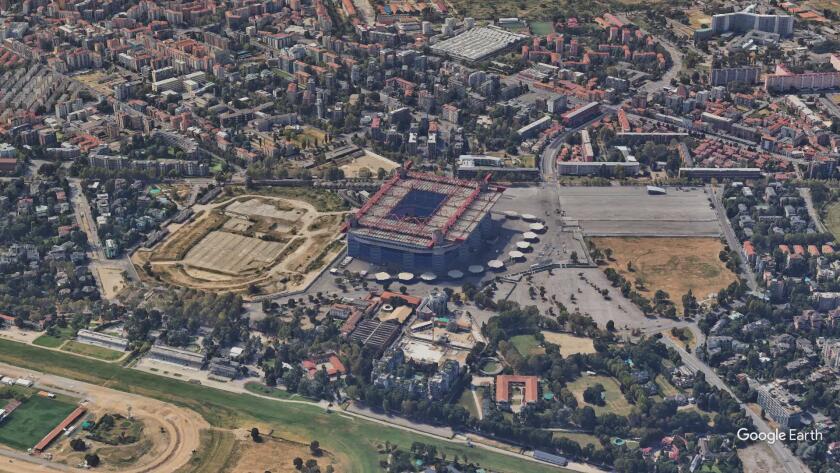
The main opening ceremony will take place at San Siro, the 75,000-seat stadium that is home to the city’s two first-division soccer teams, Inter Milan and AC Milan. Figure skating, speedskating and men’s and women’s hockey will also be held at four other venues across the city.

San Siro in Milan will host the opening ceremonies for the 2026 Milan-Cortina Winter Olympics.

And that will happen, organizers say, whether the venues are ready or not — and one of them is not. The 11,800-seat Unipol Dome, which will be known as Milano Rho Ice Hockey Arena during the Olympics, is one of just two competition venues that had to be constructed for the Games. It played host to the first games of the women’s hockey tournament Thursday despite the fact that construction crews were still administering the final touch-ups outside the building as Sweden was beating Germany in the opener.

“Do we have every area of that venue finished? No,” said Christophe Dubi, the International Olympic Committee‘s executive director for the Olympic Games said earlier this week. “Is it absolutely necessary for the Games? No. Everything that is public-facing, whether for media or athletes, will be first-class.”

Organizers certainly hope so because there’s a lot riding on these Games. If Milan can pull off an efficient, modern, sustainable and technologically “smart” event, it will reinforce the city’s status as one of the world’s top-tier global capitals, one with financial roots and a trendy multicultural image.

Fail in any one of those categories and Milan could suffer significant financial and reputational damage.

A singer busks late at night in Piazza del Doumo.

A singer busks late at night in Piazza del Doumo in Milan ahead of the Winter Olympic Games.

(Robert Gauthier / Los Angeles Times)

The competition is expected to draw 2.5 million people to Milan — many of them first-time visitors — while generating more than $7 billion in economic activity. Much of that spending went to upgrade the city’s and regional rail lines, which are expected to be overwhelmed given the spread-out nature of the Games.

Days before the Olympic torch was lit at San Siro, Milan’s Piazza del Duomo, which fronts the city’s elaborate Gothic cathedral, was packed with Olympic visitors, many wearing sweatshirts and jackets bearing the flags of their homelands. NBC will anchor its 700 hours of linear TV coverage from a temporary studio tower built in the square, with the iconic church as its backdrop.

Around the corner along the Via Orefici, which dates to the Middle Ages, many of the neighborhood’s trendy boutiques have hung neon signs with the Games logo, proclaiming themselves proud sponsors of the Olympics. At night, a singer who calls herself Anna Soprano performs a solo street opera.

However many locals have failed to catch Olympic fever with high ticket prices and fears about traffic, security measures and crowded Metro trains dampening enthusiasm.

An opera singer performs in Milan ahead of the 2026 Winter Olympics.

Buried beneath Milan’s rush to the modern from the Middle Ages — just beyond the Duomo Cathedral, which was begun in 1386, is the massive 15th Century Sforza Castle — lies a more recent history the city would just as soon forget. Milan was Italy’s Munich, the birthplace of Benito Mussolini’s fascist movement.

Yet it later became the center of anti-fascist resistance, with partisans seizing control of the city in the final days of World War II and executing Mussolini, hanging his corpse from the roof of an Esso station in the Piazzale Loreto. Milan marked that day by naming a prominent square in the city’s center April 25 Plaza for the day the uprising that liberated Milan began.

If Milan is modern Europe, some of the competition clusters outside the city, spread from Valtellina on the Swiss border in the north to Cortina d’Ampezzo, 27 miles south of the Austrian border, represent both the rustic and gentrifying Italy.

The scenic Fiemme Valley, site of cross-country skiing, ski jumping, and Nordic combined , is made up primarily of three small villages — Carano, Daiano and Varena — in the Dolomites mountain range. Despite a history of human activity that dates back more than 6,000 years, the area wasn’t officially established as the municipality of Val di Fiemme until the three townships merged in January 2020.

Today it is a major outdoor-sports destination, having played host to the FIS Nordic World Ski championship numerous times; in the summer it is a favored destination of hikers.

Valtellina, a 75-mile-long valley that runs along the Swiss border, will be the site of Alpine skiing, snowboarding, freestyle skiing and the debut sport of ski mountaineering. The region is known as the heart of the Alps and is a premier Alpine wine area, famous for the elegant reds that come from grapes grown on steep, terraced vineyards.

Cortina d’Ampezzo in northern Italy will host multiple events during the 2026 Olympics.

Cortina d’Ampezzo, meanwhile, is a breathtakingly beautiful ski resort and outdoor sports paradise about 35 miles from the Austrian border. Unlike Valtellina and Val di Fiemme, which are rustic and traditional, Cortina is one of Europe’s most expensive ski towns, its streets lined with high-end stores, luxury hotels and Michelin-starred restaurants. For year-round residents, property prices are the highest in the Italian Alps.

It was scheduled to host the 1944 Winter Olympics before World War II intervened, delaying the its arrival until 1956, when 32 nations — the largest to attend a Winter Games at the time — competed in four sports and 24 events. This month it will be the site of the biathlon, Alpine skiing, curling and sliding sports (bobsled, luge and skeleton).

The new $140-million Cortina Sliding Centre, the second Olympic venue whose construction fell well behind schedule, was completed days before the opening ceremony but a cable car intended to carry spectators to the women’s ski events was not expected to be finished in time. That could lead to traffic jams since visitors will have to take their cars more than a mile up the mountain.

Source link