
winning

Sydney Sweeney slammed by UK gold medal winning female athletes over nude sports campaign

After claims she is sexualising women’s sport, the criticism of Sydney Sweeney’s new advert is growing and TeamGB golden girl Amy Hunt explained why she has spoken out

Athletes have come out in force to condemn a sports betting advert featuring a naked Sydney Sweeney as Team GB’s golden girl doubled down on her criticism.

The American has been slammed following the campaign, which sees the 29-year-old with no clothes on as she pretends to play a number of different sports. The ad, for US sports prediction market company Novig, has been bashed with many suggesting sportswomen are still being defined by their appearance – and not their achievements.

British sprinter Amy Hunt, the four-time European champion, made a cutting comment after her race at the inaugural World Athletics Championship in Budapest on Sunday, saying: “Sydney Sweeney, this is what women in sport look like,” in her interview with BBC Sport after.

She is far from the only athlete hitting out. Sydney’s decision to take part has been widely criticised, with retired swimmer Ariarne Titmus saying she understood this type of “bulls**t”marketing” to be a thing of the past.

Water polo silver medallist Tilly Kearns joined the anger, saying, “I absolutely f***g hate Sydney Sweeney’s new sports ad”, while world champion boxer Skye Nicolson said the ad was making a “mockery” of women in sport.

Amy has spoken more about her decision to join the outrage, and appeared on Good Morning Britain to discuss her post-race remarks.

Telling presenters Susanna Reid and Ed Balls about her reasons for speaking out, the star sprinter said there are already enough barriers in place.

“I think when we’re trying to provide role models for young people and young women in sport,” she said. “We really want to show that it’s about what your body can do, not so much what it looks like. I think when we see the stats of 64 per cent of young girls drop out of exercise and sport before they reach the age of 16.

“We don’t need to place any kind of barrier whatsoever in their way in terms of providing the opportunity and the empowerment for them to still exercise, whatever that looks like, professional or kind of just going to do a park run with your friends.

“So it’s about empowering young girls and young women and young people to show that you really can just get out there and you don’t have to worry what you look like. You don’t have to worry about what you’re wearing.”

When grilled on whether the ad could impact how men view female athletes, she agreed and went on: “That was a big thing this year for us with the introduction of new kind of broadcasting regulations, in showing the correct or the more appropriate angles of women competing.

“It’s important to show kind of young people that it’s okay to be whoever you want to be, to wear whatever you want to wear, to look however you want to look, and you can achieve your dreams.”

While some suggested anger should be directed at the betting firm rather than the Euphoria actress, Novig said in a statement that Sydney is not just the face of the campaign, but has joined as “strategic partner and equity holder”.

Sydney finally responded and in a statement, said the campaign was “about embracing a fun idea”. She went on: “The concept is simple: cut through the noise and put the focus entirely on sports. The campaign brings that idea to life with confidence, humour and a playful edge.”

Watch Good Morning Britain weekdays from 6am on ITV

Like this story? For more of the latest showbiz news and gossip, follow Mirror Celebs on TikTok, Snapchat, Instagram, Twitter, Facebook, YouTube and Threads.


Source link

Iran, Oil and a Hawkish Fed: Why the Dollar Is Winning the Week and Losing the Decade

TODAY’S NUMBERS 99.73 Dollar Index (DXY)   ·  4.81% US 10-year Treasury yield   ·  $4,304 Gold, per ounce All three are rising together — the market pricing a Fed rate hike into a war, not a slowdown, a combination not seen in years.

THE HOOK

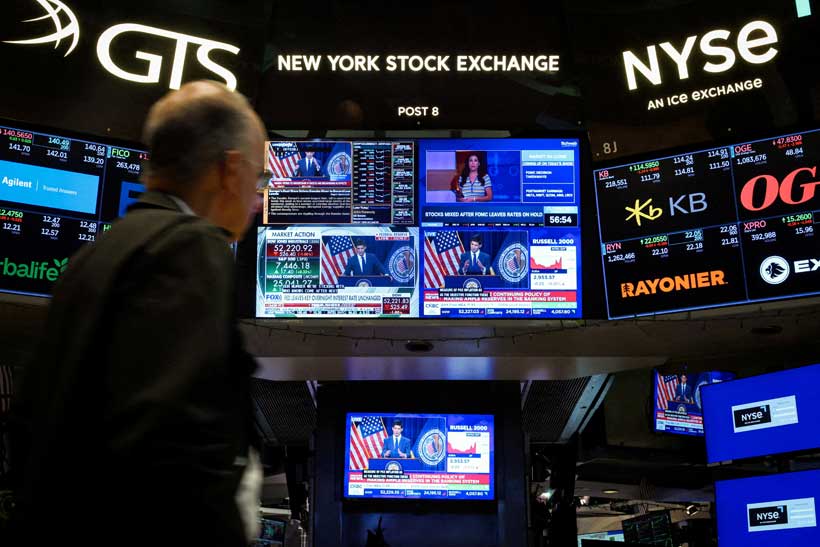
Late Monday, Donald Trump signaled the ceasefire with Iran was effectively over, threatening fresh strikes and casting doubt on the reopening of the Strait of Hormuz. Brent crude jumped past $90 a barrel. By Wednesday morning, the US Dollar Index had climbed to 99.73 — its highest in nearly three weeks — and the 10-year Treasury yield touched 4.81%, just shy of a 52-week high. The reason: traders now put the odds of a September Fed rate hike near 65–70%, not a cut.

THE MECHANISM

The chain runs cleanly enough to name. Iran’s conflict with the US raises the odds of a shipping disruption through Hormuz, which carries roughly a fifth of global oil supply; oil-price risk feeds straight into headline inflation; and a Fed under Chair Kevin Warsh — already fighting credibility questions after an ambiguous hold in July — cannot afford to look soft on prices while a war pushes them up. That is why futures markets have swung from pricing no move in 2026 to pricing a hike at the September 15–16 meeting.

Stay ahead of the geopolitical week.

MD Briefing delivers expert analysis across five global fronts — the Indo-Pacific, energy, geoeconomics, European security, and the Middle East — every Monday morning. Free.

Higher US rates make dollar assets pay more relative to everywhere else, which is the direct channel behind both the stronger DXY and the 4.81% ten-year. The winners are near-term and narrow: holders of short-dated Treasury bills, whose yields rise with the policy rate; US money-market funds; and, oddly, the stablecoin issuers whose reserves sit almost entirely in T-bills and now earn more for holding them. The losers are broader and slower-moving: emerging markets carrying dollar-denominated debt face a double bill, since a stronger dollar raises the local-currency cost of repayment at the same moment their own borrowing costs rise in sympathy with Washington’s. Oil-importing economies — India, Turkey, Japan, the eurozone — take a second hit, paying more for crude in a currency that is simultaneously getting more expensive to buy. Gold, meanwhile, is caught between two forces: safe-haven demand from the war pulls it up, rate-hike expectations pull it down, which is why it sits near $4,304, off its recent peak but still up 21% over the year.

WHY IT MATTERS

The apparent contradiction — dollar strong this week, dollar weaker for the decade — is really two different clocks running at once. Reserve managers make multi-year diversification bets; traders react to a war in hours. The IMF’s COFER data put the dollar at 57.13% of allocated reserves in the first quarter of 2026, down from 72% in 2000, and a recent survey of reserve managers found roughly three-quarters expect that share to keep falling over the next five years. None of that is undone by one hawkish week from Kevin Warsh.

What is new is where the dollar’s reach is actually growing: not in central bank vaults but in stablecoins. The GENIUS Act framework — now the subject of a Treasury rulemaking comment period that closes in October — has pushed issuers to back their tokens almost entirely with short-dated Treasuries, and forecasts from Standard Chartered and Senator Bill Hagerty put potential T-bill demand from stablecoins as high as $2–2.3 trillion. That is dollarization happening retail-first, in emerging-market wallets and crypto exchanges, invisible to COFER. For Washington, a Fed hike timed to a war raises borrowing costs precisely when the deficit needs cheap financing, and when the countries least able to absorb dearer dollars — many of them US partners, not adversaries — get hit hardest. That is a form of collateral leverage no sanctions list ever names.

WATCH FOR

The September 15–16 FOMC meeting is the date that resolves this. A 25-basis-point hike would confirm markets are right to treat this as an inflation fight, not a growth scare, and would likely push the dollar and yields higher still. A hold — especially if Hormuz tensions ease and oil retreats from $90 — would suggest Warsh blinked, and could send gold back toward its highs faster than the dollar can catch up. Either way, watch the Fed funds futures curve shift in the two weeks before the meeting.

Source link

For a winning wellness weekend

SWIMMING through the pleasingly warm water, my bright-pink tow float streaming behind me and a family of ducks paddling in front of me, I glance up at the sky as two herons fly over in perfectly synchronised formation. This is my kind of wild swimming.

I’m taking a dip in the 11-acre lake at Watersedge, a wellness retreat in the countryside near Pershore, 25 minutes south-east of Worcester.

Enjoy a break by the lake in Worcestershire Credit: Supplied by Watersedge Club
Say ‘ahhh’ at the Wild Spa Credit: Supplied by Watersedge Club

My swim session, £10.50, is really friendly and well-organised – with swimmers wearing ID wristbands, bright hats and tow floats, and three lifeguards on boards and canoes in the water with us as we swim one of the 750m, 300m and 150m loops.

Groups breaststroke and chat their way round, while others front-crawl impressively quickly, but there’s a sense of community among everyone.

Hut stuff

Dip and dine in the privacy of The Den Credit: Supplied by Watersedge Club
Sink into the luxe lodge Credit: Supplied by Watersedge Club

Later, I wander across to the Wild Spa, where there are three different temperatures of wood-fired sauna, plus two small hot tubs.

To cool down, there’s an ice cabin, cold-water bucket and, of course, the lake itself. One-hour sessions cost £18.

We’re staying in The Den, Watersedge’s largest lakeside lodge.

The light, airy space has three double bedrooms, two with French doors overlooking the water, two bathrooms, and an outside space with a hot tub, barbecue and fire pit.

Once the final swimmers have left for the evening, it’s a haven of calm, and is equipped with everything you need for a cosy night in – a large, squishy corner sofa, huge TV, a stack of board games and a wood-burner for cooler evenings.

The swish kitchen comes with a L’Or coffee machine, induction hob and cute banquette eating area.

But, as it’s a lovely evening, my partner Steve and I make the 20-minute walk into the village of Bishampton to Ounce at The Dolphin for its Thursday-night Chateau Club, which offers a 16oz fillet chateaubriand for just £20 a person.

Steve declares the perfectly cooked steak to be in the top three he’s ever eaten, and we wash it down with blackberry-rich malbec, £8.40 a glass (Ouncebar.co.uk).

What’s sup?

Tuck in at Ounce’s with a steak dinner Credit: Ounce at The Dolphin/Instagram
Gaze across the water from sunloungers on the lake’s small beach area Credit: Supplied by Claire Frost.

Come morning, there are plenty of farm shops close by, but we’ve booked a breakfast hamper, £50 for six people, full of refreshing juices, juicy sausages and bacon to save heading out.

After our fry-up, we try standup paddleboarding (SUP), £20 per person.

The lake is shallow around its edges, so getting back on the board if you fall off (which I do, with a huge splash!) is fairly straightforward.

Soon we’re paddling around like pros, though our arms definitely get a workout when the breeze picks up and we have to navigate our way back to the jetty.

Keen to stretch out our achy muscles, we join a packed Pilates class, £12.50, in the beautiful studio that juts out over the lake.

Instructor Alex puts us through our paces and we promise ourselves we’ll try the fun-looking bungee fitness class next time.

But for now, I’ve earned a treat – and that’s exactly what I get, thanks to wellness therapist Jen’s blissful 45-minute full-body, hot-stone massage, from £50.

Rested and restored, we gaze across the water one last time from our sunloungers on the lake’s small beach area.

Spotting one of the herons, we find ourselves wishing we too could make our home close to this special place.

FYI

Stays at The Den cost from £300 per night for up to eight people.

Guests benefit from 10% off all activities (Watersedge.club).

Source link