CNN Films revisits a forgotten 9/11 casualty — the restaurant at the ‘Top of the World’
Michael Lomonaco can account for every minute of the morning of Sept. 11, 2001 — including the small decision that saved his life.
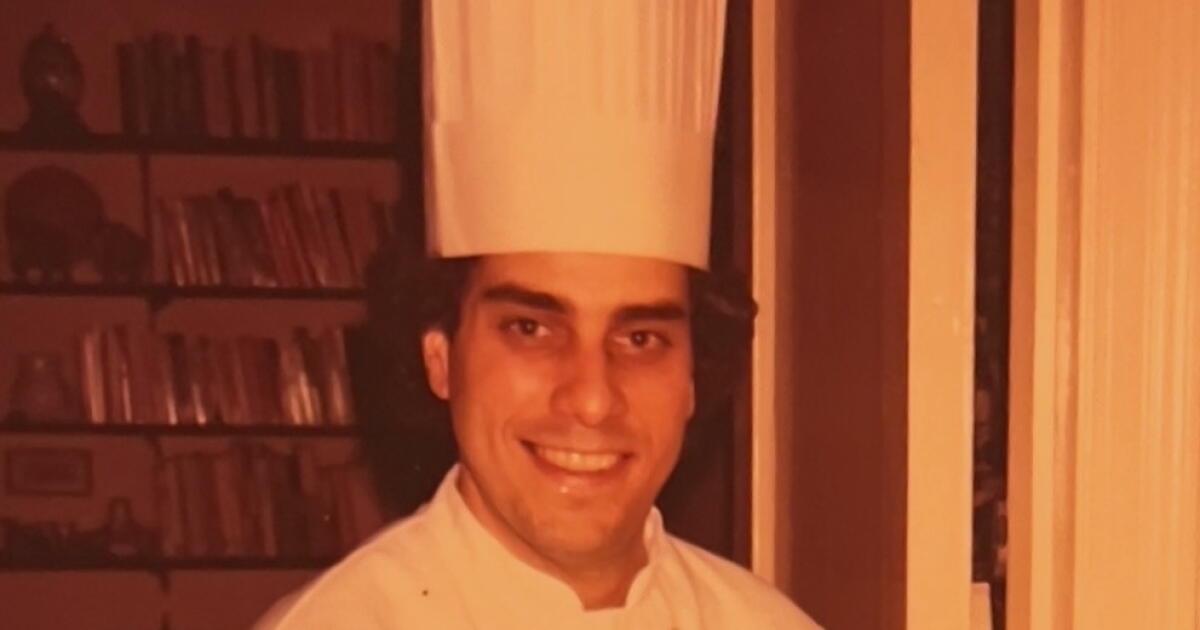
Lomonaco, the executive chef who ran Windows on the World on the 106th and 107th floors of the North Tower of the World Trade Center, was on his way up to his office when he stopped at an optometrist shop on the ground level to have his eyeglass frames adjusted.
He was still inside when American Airlines Flight 11 hit the tower above him at 8:46 a.m.
“I felt the buidling shake,” he recalled in the new CNN Films documentary “Top of the World.” “And I thought that can’t be the subway. That’s impossible.”
Lomonaco was evacuated. From the street, he watched employees of his own restaurant wave a white tablecloth from a window more than 100 floors up. Seventy-nine Windows on the World employees and 91 guests died that morning in the gastronomic soul of the Twin Towers — the one part of the complex that belonged to New Yorkers who didn’t work there, and to visitors from everywhere else.
“Top of the World” premieres Monday at 8 p.m. ET/PT on CNN and begins streaming the following day on the network’s subscription streaming platforms. The documentary short arrives on a double anniversary: 25 years since the attacks, and 50 years since Windows on the World opened on April 19, 1976.
It is the work of producer-director team Betsy West and Julie Cohen, who made “RBG,” the Oscar-nominated portrait of the late Supreme Court Justice Ruth Bader Ginsburg. The film is a production of CNN Films, TIME Studios and Tribeca Studios, in association with Montalto Pictures and Storyville Films, and was inspired by Tom Roston’s book “The Most Spectacular Restaurant in the World.” Actor Denis Leary voices the restaurant’s creator, Joe Baum, drawn from decades of archival recordings.
West and Cohen were reluctant to take it on. Both were working in network television news in 2001.
“There’s like a part of you that doesn’t want to go back there,” Cohen said in a recent interview. “But when we read this book and met some of the amazing people who had worked at Windows over its 25-year history, we realized this was actually a really good way into remembering there was a lot of beautiful stuff in the Twin Towers and like we shouldn’t let that disappear just because it ended so painfully.”
What emerges is a history of how a restaurant transformed the reputation of the monolithic Twin Towers, which received little respect from architecture critics and bafflement from a public that wondered why it was built in the 1970s by the Port Authority of New York and New Jersey as the city was fighting off financial collapse.
“This film tells a story of a restaurant that was very special to New York a time when New York was getting kicked in the teeth,” the Brooklyn-born Lomonaco said in a recent interview.
The World Trade Center operators turned to restaurant impresario Joe Baum to create a dining experience that would draw people to the Manhattan neighborhood largely known for its blocks of stores that sold radios and electronic parts. Baum was known for such New York dining landmarks as the Four Seasons and Tavern on the Green, and his new creation became an immediate hit after it opened in 1976, becoming a magnet for tourists and celebrities alike who came for the eye-popping views through the floor-to-ceiling windows.
At the time of the 9/11 attack, the World was the highest-revenue-generating privately owned restaurant in the U.S.
West noted another draw to the story was the stories of the many immigrants who worked at Windows, which proudly called itself “the U.N. of restaurants.” The film’s focus on the contribution of the foreign-born population to the restaurant industry stands in stark contrast to the image of immigrants conveyed by the Trump White House to justify its deportation efforts.
“Immigrants continue to make a contribution to our country and to the economy,” West said. “This was an opportunity to tell that positive story as opposed to what’s going on in our country now.”
Cohen and West scoured the Windows on the World Facebook page to find surviving former employees to help tell the story. Nathalie Tolentino was a hostess whose family came to the U.S. to escape political upheaval in Peru. Sekou Siby was a line cook from the Ivory Coast, who swapped shifts with one of the workers who died during a morning breakfast held in the restaurant on 9/11. Both talk about how the restaurant changed their lives.
Lomonaco is a central character in the “Top of the World,” as his arrival as the executive chef of Windows in 1997 boosted the restaurant’s culinary reputation. A hot chef who oversaw a turnaround at the 21 Club, another legendary New York dining spot, Lomonaco turned Windows into a destination for American cuisine along with the breathtaking views.
Lomonaco arrived after the restaurant was closed for three years following the first terrorist bombing of the World Trade Center in 1993 that killed six people and injured more than 1,000 but left the towers intact.
Once Windows on the World was gone, Lomonaco was offered high-profile restaurant jobs in other parts of the country. But he had unfinished business in New York.
“I didn’t want to abandon my city,” he said.
In the first days after the attacks, Lomonaco said, he read nothing about Windows on the World; coverage centered on the massive loss of life among the first responders and at the financial firms inside the World Trade Center. But over time, he got attention and support for the families of the employees who lost their lives that day.
Lomonaco and the restaurant’s owners formed Windows of Hope, a charitable foundation that raised more than $22 million to pay for healthcare and tuition costs for the children of the victims. “We were giving checks to people to pay their rent before federal funds came through,” he said.
Lomonaco said he still meets patrons who give him a matchbook or coaster from their visit to Windows. “They feel like they have to give me or send me these little artifacts,” he said. “That’s what has touched me the most.”